
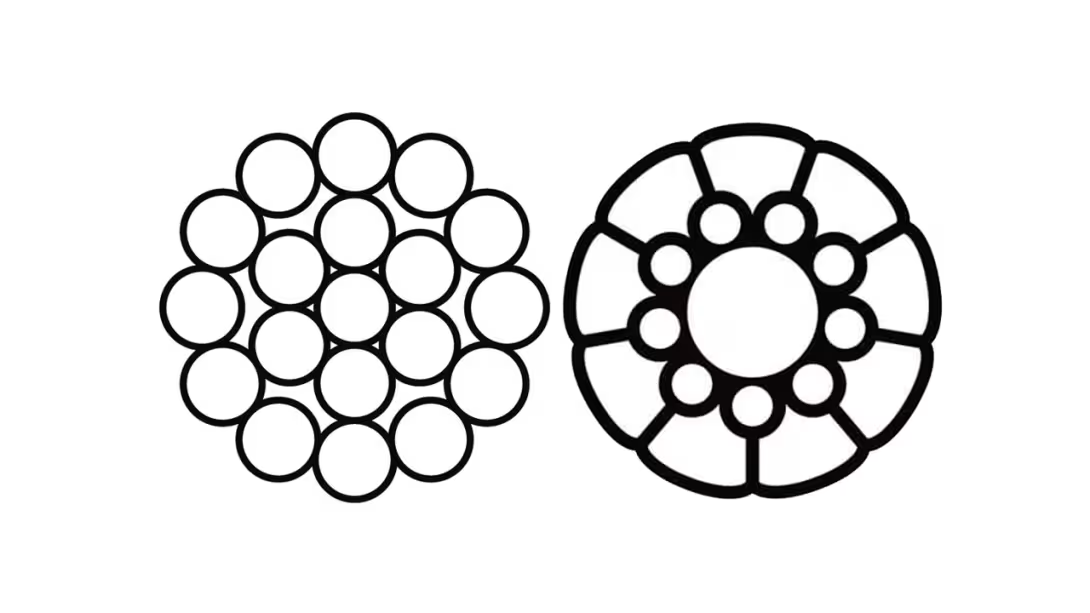
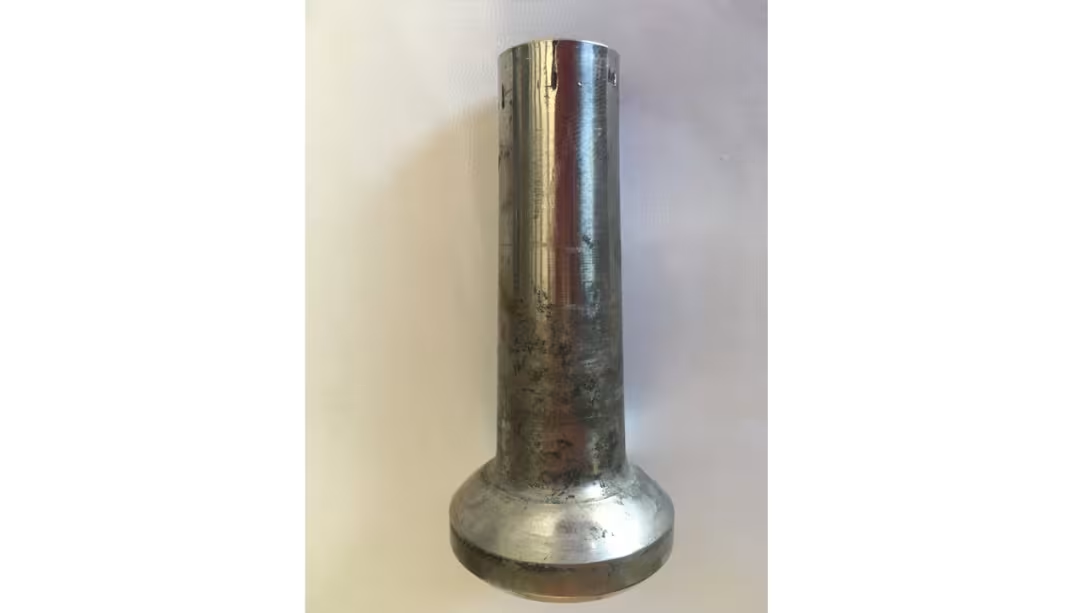
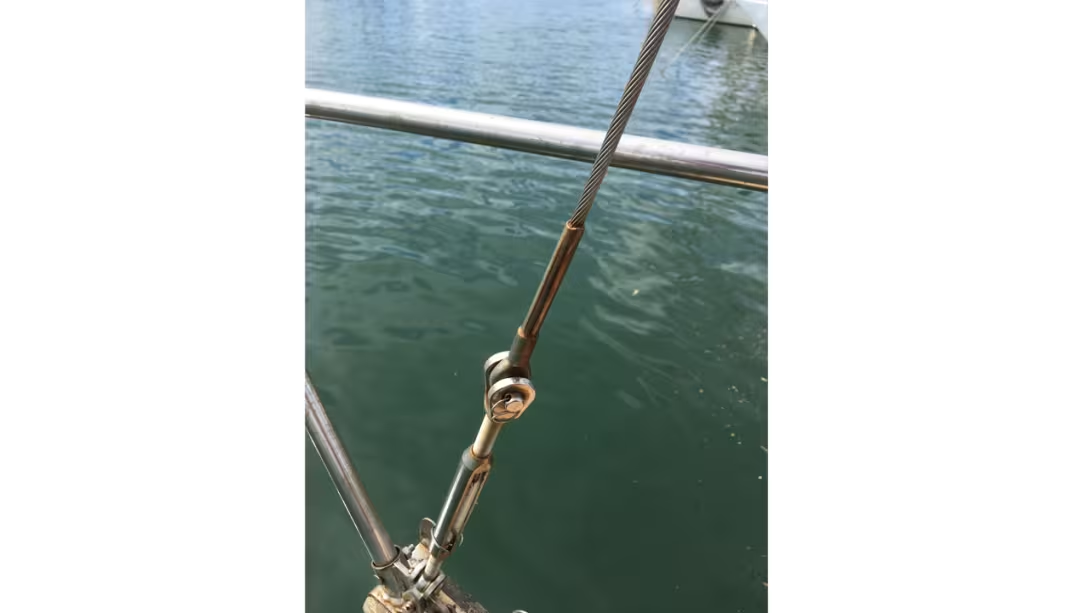
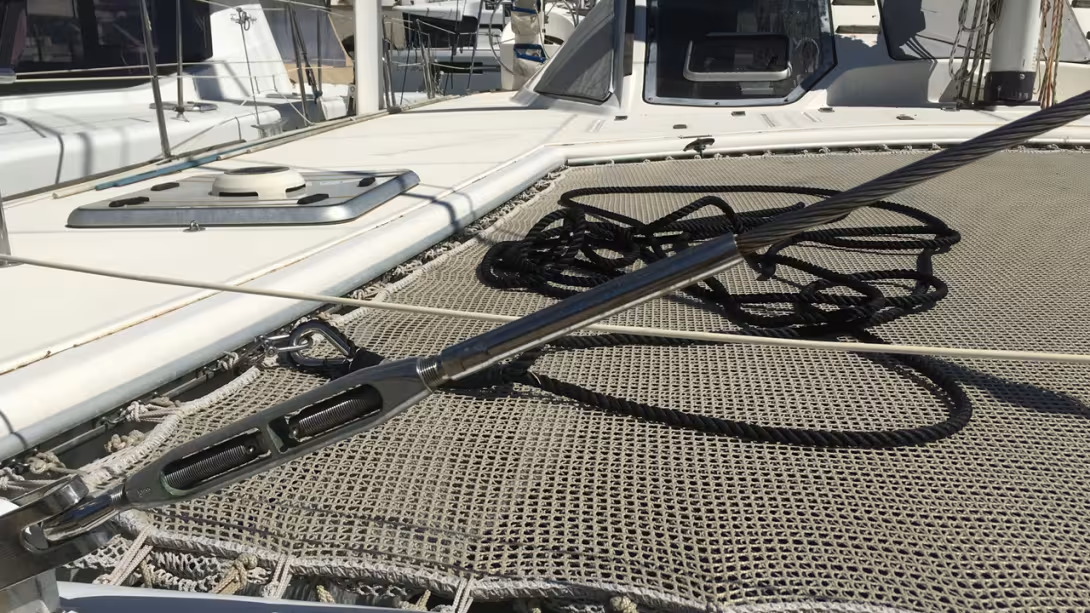
Let’s face it, dismasting is one of the most dangerous accidents that can happen at sea. Not only do you lose your means of propulsion but there is the added risk of serious injury. We don’t always give it much thought, but the state of the standing rigging is essential to ensure safe sailing. Three types of cables used for stays and shrouds. Single-stranded wire such as 1x19; Dyform; and Rod. Single-stranded cable (fig. 1) is the most common type in use for shrouds on modern boats. Its construction consists of an assembly of 19 strands of stainless steel wire: one straight center wire, 6 wires on the inner ring in one direction and then an outer ring of 12 wires in the other direction. The characteristics of this type of cable are an average stretch, good reliability, moderate cost, medium tolerance of the problem of alignment of the terminals, and the option to use manually-fitted terminals. Dyform (fig 2) is an evolution of single-strand, with a better compactness thanks to the fact that the wires that make up the cable are not round but of a trapezoidal shape on the outer ring. For example a nominal 7 mm cable represents a theoretical cross-sectional area of 42.87 mm², but in a 1x19 single-stranded cable, there is only a 29.23 mm² section due to the spaces between the wires, as opposed to 34.16 mm² in Dyform. This better “stacking” of wires implies that for an equal diameter we have better resistance and, at equal effort, a lower stretch. Which is why it is used on boats requiring more sophisticated rigging, while maintaining good reliability due to the multi-strand construction and the least water retention. Rod rigging is reserved for very demanding boats in search of high performance. Its great qualities are its very low stretch and its consistent diameter compared to Dyform or Single-strand. Its main drawback is its relatively short lifespan. It is recommended to be changed at 5 years or 20,000 miles, whichever is sooner. And there must be no compromise here, because a break happens without warning. However, it is rarely used on cruising catamarans, while the previous two types are fitted to 90% of the fleet.
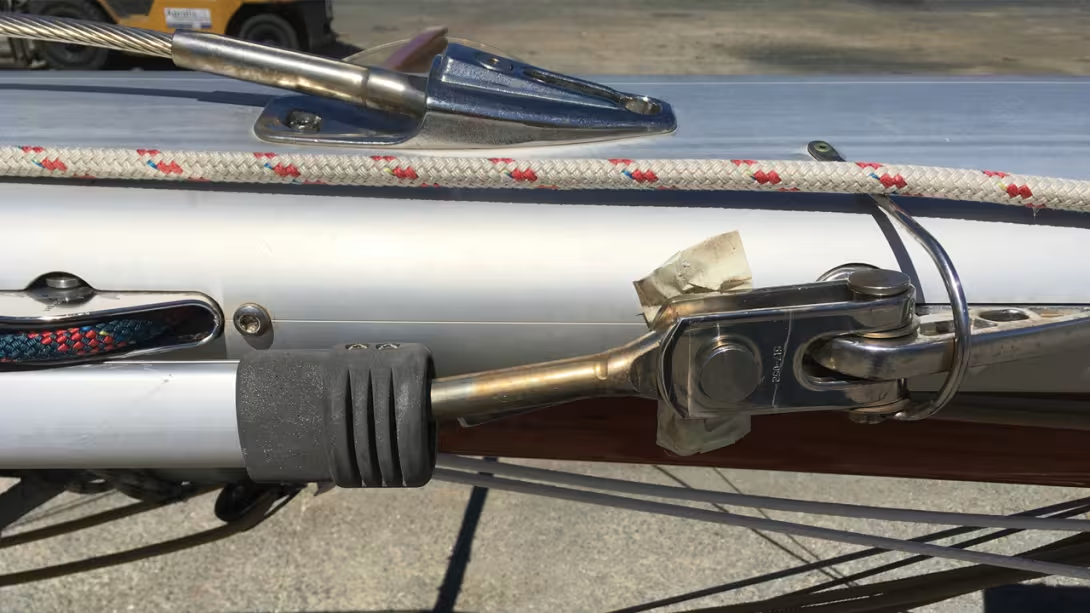
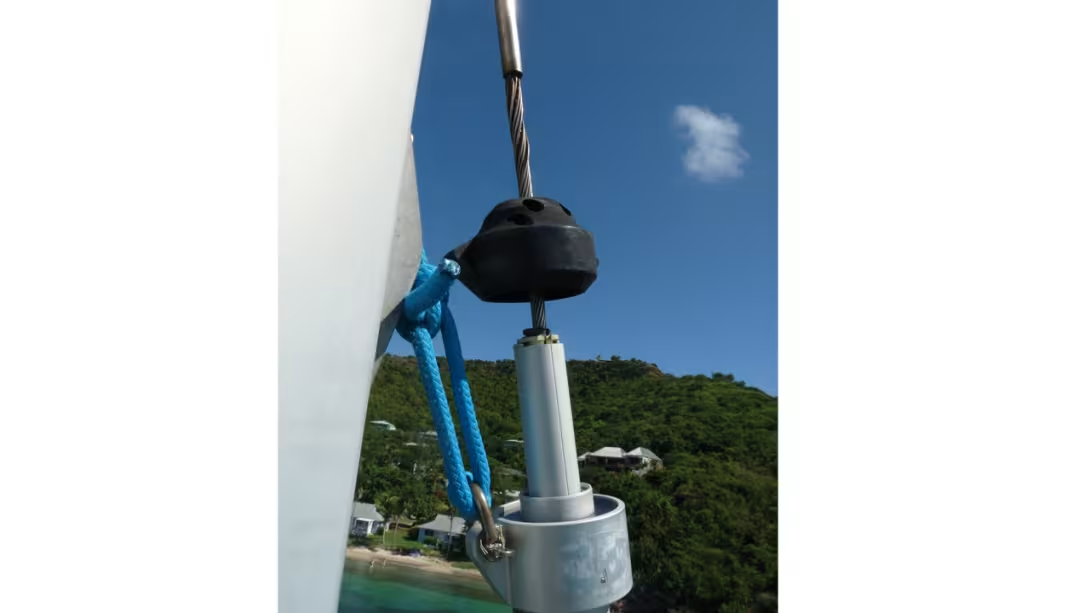
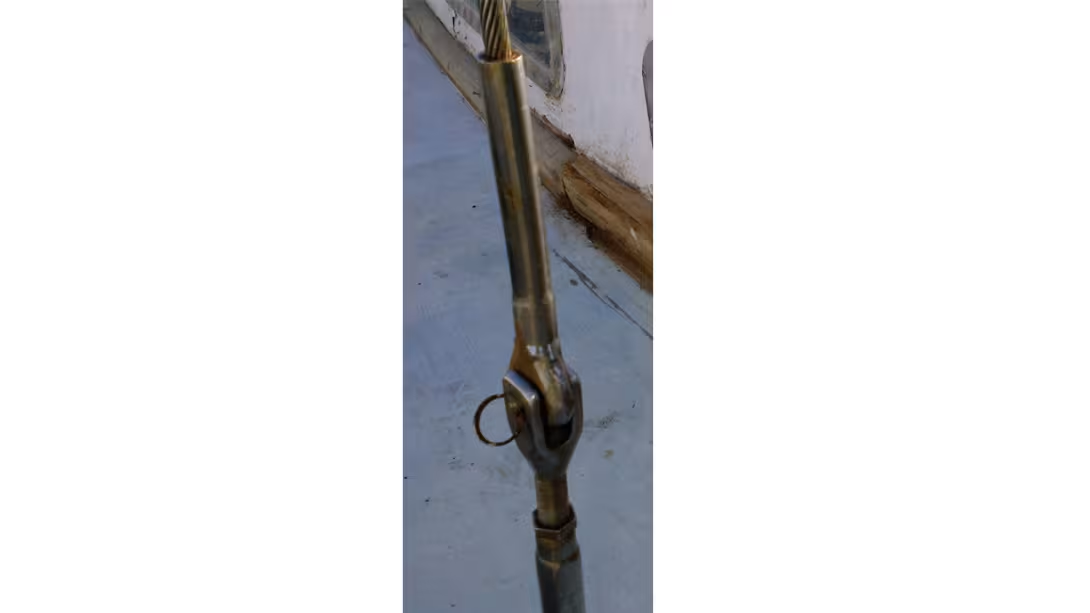
Even though the running rigging is considered as a consumable that must be replaced once it becomes worn, most people tend not to think in the same way regarding the cable stays whose longevity seems to them to be equal to that of the mast. Yet the stainless steel they are made of, despite being a strong material and resistant to the marine environment, is not eternal. It ages without this being noticed and crystallization phenomena can occur which end up causing the clean break of a cable. And this, all without the cable in question being over-loaded. It will occur regardless of the number of times you go out and how many times the rigging is strained, since it will age even when anchored or on the dock, with the wind that generates vibrations. Even with rigorous maintenance of all elements of the stays (turnbuckles, pins, terminals on the mast and on the deck) there is no way of determining, at present, the actual rate of wear. As aging and defects are undetectable by simple means, both mast suppliers and insurers advise you to change your standing rigging, despite seeming in good condition, every 10 years as a precaution. At this point, and if you have owned your boat, or your rigging since it was new, there should be no surprises in store. On the other hand if you acquired your boat second-hand, an investigation deserves to be carried out. To know the age of a rig, you need to ask for the invoices showing the replacement of the various parts. Some rigging suppliers engrave the date of manufacture on the terminals. Whether you get these indications or not, an inspection is still required. This consists of visually checking all swages or crimps of the cables. Looking through a magnifying glass, if you notice any cracks that appear along the swage, there is no hesitation, the stay needs changing. You also need to go in search of any broken strands, and to check the correct alignment of the cables. These must not form an angle where they exit of the mast. This is often the case with T-terminals which work poorly. The examination also involves checking that the turnbuckles are working correctly. They can get stuck if they have not been regularly greased, or at least manipulated once a year. The forestay on which a furler is mounted also requires particularly monitoring. On a catamaran, this can be subject to significant stresses. If the furler doesn’t work so well, it’s often the stay which is stressed when the sail is furled. But it’s also possible that the halyard could be jammed at the masthead (in the event of a problem with the sheave) and in this case the forestay may have been a little distorted. Therefore the swage at the masthead needs investigating. This is where breakages occur when the halyard is incorrectly positioned and the winch has been forced. On examination, if there is any breakage on the stays or if the swages show any sign of damage, then it needs changing. But, and it’s a very big but... the signs of fragility are not always necessarily very visible. Sometimes the break can be on a strand inside. This can be the case if the boat has ever grounded heavily. Also, strong gusts of wind may have caused the cables to stretch, and that's never good. If you are planning an Atlantic circuit and have checked the rigging and reassured yourself, it’s still be advisable to regularly climb the mast for a thorough inspection. This must be done systematically before each major crossing (a trip of at least a week) because even the tiniest little something that’s not right absolutely cannot wait for when you arrive at the next port to be repaired, and that's where we begin to take risks. Then, it is necessary to regularly check swages and frequently and abundantly rinse with fresh water. On the other hand if you’re setting off for a journey of several years around the world, then there must be no hesitation: change everything and leave with it all brand new, but also carry spares...
