All of our readers who have ‘taken the step’ are adamant: once the decision to leave has been taken, the hardest part is done… The rest is just organization! For certain people, it’s about preparing their boss (with tact and consideration) and booking sabbatical leave. Others quite simply resign from their job. Finally, the luckiest people sell off their business, or take advantage of their retirement, and leave with a clear mind, for a period which depends on the sum they have in front of them…
Those looking to leave are all different and have followed many different paths. The only thing they have in common is the wish to leave as a family (or a couple, or even alone) to live differently. On the water, we find all the socio-professional categories represented. From a banker to a multinational manager, via a dentist on early retirement, as well as employees or even Multihulls World journalists…
The itinerary, with which everything begins
Even when trying to leave our ultra-standardized lives, it is essential to have an itinerary. You can’t imagine leaving to cross the Atlantic in the middle of the hurricane season? Or discovering the exceptional anchorages in Asia in the middle of the monsoon? In that case, a little organization is necessary and the itinerary – which you are not obliged to follow to the letter – is an excellent guideline. Especially as your choice of boat will depend for the most part on your crew and on this famous itinerary. Be careful therefore to define it well, so you don’t get things wrong and spoil your dream!
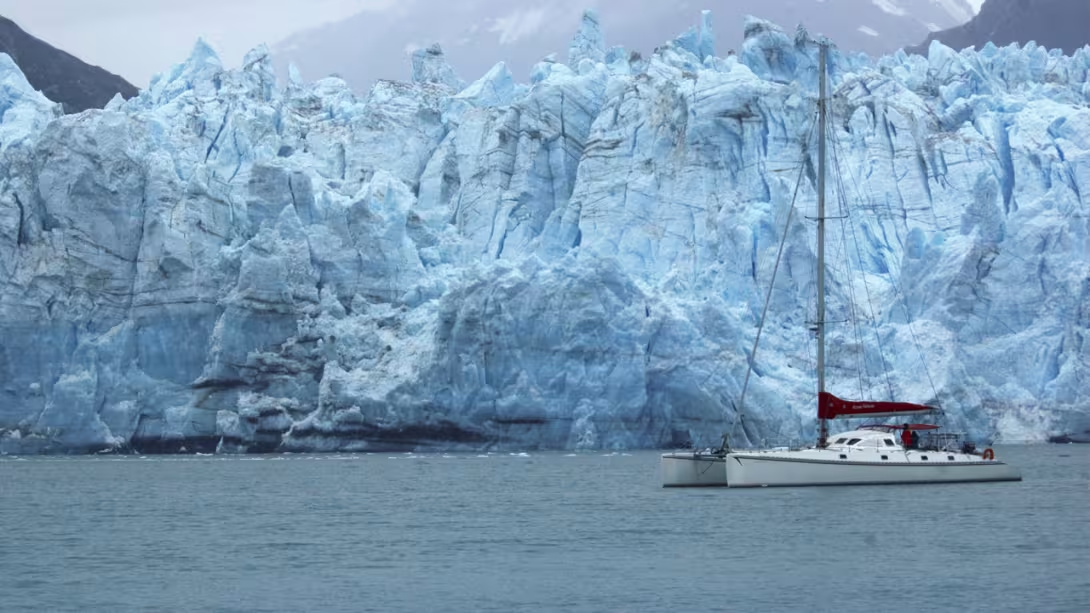
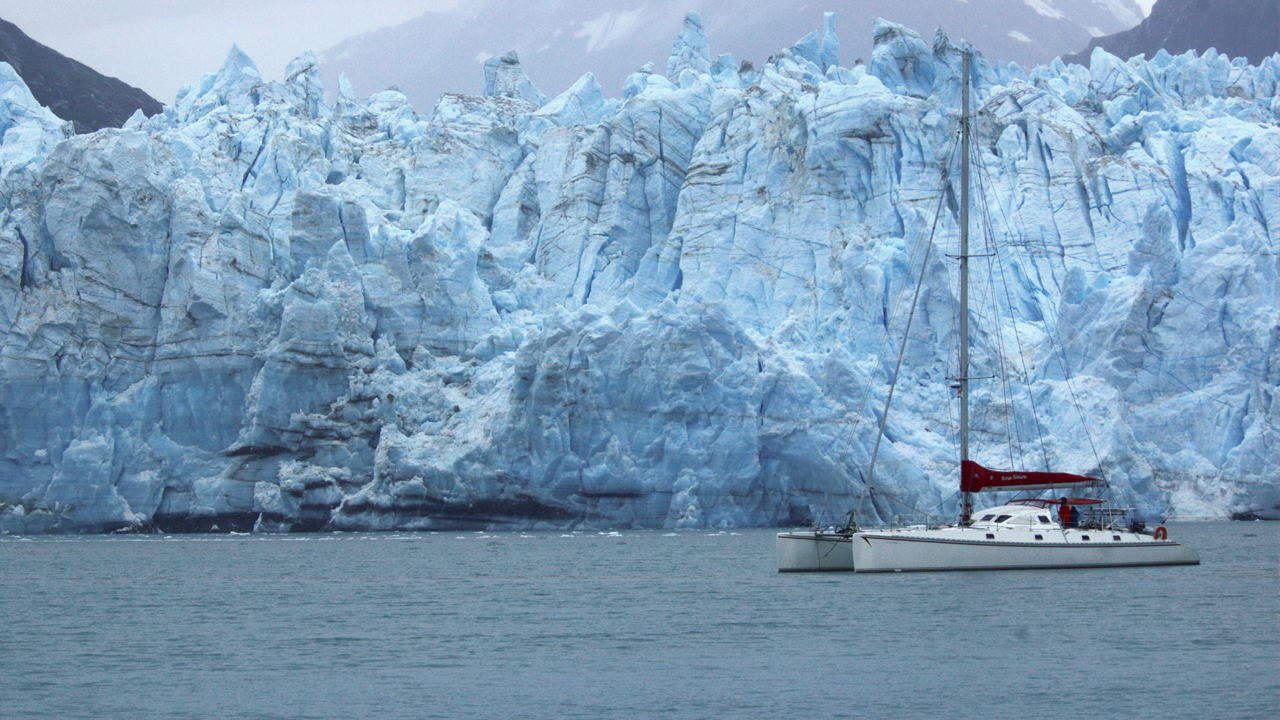
So, a sabbatical year, or the big departure for ‘as long as the wind carries you’? A circuit of the Mediterranean, the Atlantic, the West Indies or even the world? And what about the extremes (south or north) to go and play among the ice?
The traditional sabbatical year is the Atlantic circuit: you leave from the port where you have prepared the boat, then cross the Atlantic, passing via the Canaries, sometimes Cape Verde. You then spend 9 months in the West Indies, before returning via a second Atlantic crossing. The other solution is to purchase your cat in the West Indies and spend your year there: you re-sell the cat locally or in Europe after a return transat, or in the USA after having discovered the wonderful Bahamas. In general, the choice will depend on whether you want long passages or not, as well as the opportunity to find the right boat in the right place.
A Mediterranean circuit is rarer, but offers indisputably one of the most varied destinations. The only drawback is the weather during the winter months, which will be harder to cope with than in the West Indies, where the temperature is fixed at 30°C…
And then for those people who leave for at least three years, there is the mythical round the world trip via the trade winds. A really good adventure, made up of ocean passages, wild, remote anchorages, unique encounters and destinations to discover for the first time.
Whatever your itinerary, it will have to be suited to your boat (it’s hard to envisage crossing the Atlantic on an 8-metre cat…), as well as your crew. Why impose an ocean crossing on your family if some of them suffer from chronic sea-sickness, or are terrified once the land disappears over the horizon? It’s better to do a nice tour of the West Indies which will delight everyone, rather than impose a schedule that your crew can’t (or doesn’t want to) follow…
Financing
To set off on the boat of your dreams, there are just two solutions: purchasing a catamaran or a trimaran (new or second-hand), then re-selling it, or long-term charter. The latter solution is only valid for quite limited periods, and in any case, a maximum of one year. Beyond that, it’s best to buy. For your information, charter of a 40-foot catamaran in the West Indies costs between 50 and 60,000 euros for the year... A tidy sum indeed, but which offers the advantage of not having to find or prepare the boat, and above all, not having to take care of the re-sale after your voyage. A real comfort!
The most classic way therefore remains purchasing then re-selling your boat on your return.
New or second-hand, the purchase of a boat which will be accompanying you for the years to come is therefore the most classic solution.
All that remains is to finance it. And in this case, there is a ‘magic’ product which even allows you to make substantial savings in certain cases – leasing or lease financing. Lease financing is offered to residents of the European Community and Switzerland. You can buy a new boat through leasing but you can also acquire a second-hand boat with this method of financing, on the condition that the whole of the VAT has not been paid. For this, the boat purchased must belong to a company (professional use), or already on a leasing arrangement. In theory, lease financing can only apply to a boat equipped for ocean navigation. If you are a European or Swiss resident and your boat is made available in French waters, the French tax administration will then grant you, in the framework of lease financing, VAT at 10% rather than the traditional 20% tax on the charter payments. Beware, this is only a reduction in the VAT on the charter payments and not on that of the boat purchased. To buy a boat VAT-free, you will have to create a company, and therefore make the boat ‘work’… Let’s return to our future purchaser: he or she will go to see a financial organization which will then purchase the boat of his or her dreams and charter it to them for X number of years (on average between 8 and 12, depending on the lending organization). If the aim is to leave to go and see the coconut trees a long way away, and the boat leaves European territorial waters, the payments will then be totally exempt from VAT. Lease financing has other advantages: as the lending organization is the boat’s owner, its value is not considered to be part of the charterer’s personal assets… Finally, leasing is easily transferable, subject to the agreement of the lending organization, which greatly simplifies the resale of the boat.
This system is so attractive that today almost 100% of new catamarans go through a leasing arrangement and as long as a second-hand boat belongs to a company, it will also be financed by a similar arrangement…the sellers are used to this method of financing and systematically offer it.
Lease financing is therefore a flexible product, financially and fiscally attractive, even though you are not immediately the boat’s owner. But isn’t the most important thing to have the use of it and therefore be able to go sailing?
The choice of the boat
We have seen it: your future multihull has to meet the needs of your program, but also the wishes of those who are going to live aboard it: sufficient number of cabins, capacity to carry the essential load for your way of life aboard, as well as corresponding to the crew’s nautical skills. On the following pages, you will find our selection of second-hand boats, so you can make a judicious choice.
In the multihull family, the choice is huge: from the ocean cruising trimaran to the multitude of catamarans available on the market today. New or second-hand, production model or one-off cat, in ply, sandwich or aluminum, fast or slower, accepting more or less load, there is something for all tastes and all budgets (from 50,000 euros to several million euros!). It’s therefore above all a question of personal choice, and it’s certainly this part of the preparation which will require most time and will cause you the most worries. Because the boat chosen will, for the period of your cruise, become more than a means of transport or your new home, it often becomes a full member of the family. The proof? We often call cruisers by the name of their boat rather than their surname.
Preparation of the boat
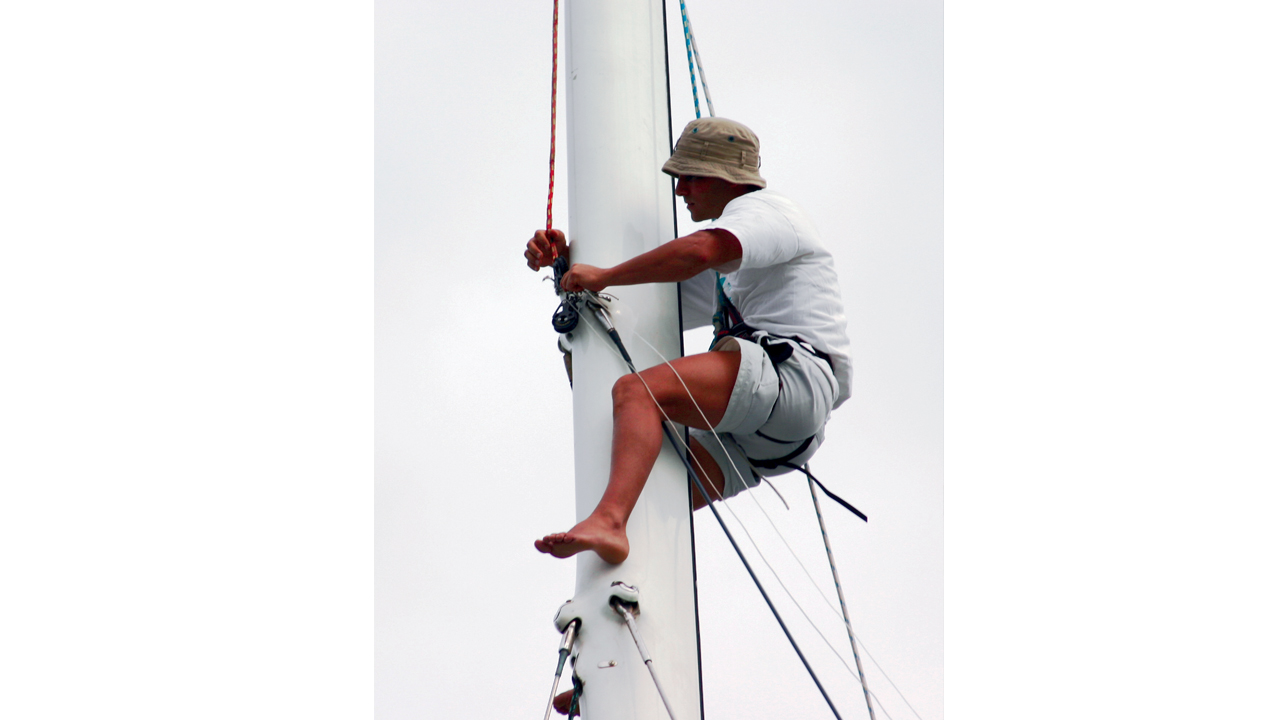
You have a good idea of your itinerary, you know how you are going to finance your purchase, and you have chosen the boat of your dreams. All that remains is to get some training (see the article on medical preparation in this Special Edition) and prepare your boat. The aim of the preparation is to have the safest and most reliable boat possible. Whether you have opted for a brand new boat or one that has several Atlantic crossings under its belt, it is all about leaving with a boat which is optimized, with all the elements tested and functioning correctly.
One of the keys to the success of an ocean cruising program lies in the boat and its skipper getting on well! Over and above its own characteristics, the catamaran or trimaran must meet the owner’s deepest expectations, and this goes well beyond the classic sales pitch.
Do you like to sail in comfort ‘just like at home’? No problem, if you are ready to accept the personal and financial implications required by the multiplication of complex systems aboard your boat. But beware: aboard a boat, reliability is inversely proportional to the amount of equipment embarked… This rule, which has been proven since time began, will oblige you to rigorously hunt out everything which – from your point of view – is not essential to the success of your cruise. Although no one nowadays would seriously envisage doing without a GPS or electronic charts, what about the dishwasher, or the tumble dryer for a Caribbean itinerary? And what can we say about air conditioning, which may be very pleasant in the marina, but if the boat is well-ventilated, is absolutely not when at anchor? These examples can be multiplied endlessly. It’s up to each person to choose according to their wishes and their boat, not forgetting that on a multihull (whichever it may be), weight is the enemy, and that the comfort when living on a boat is not the same as at home. Any error in your assessment here will lead to a boat which is very expensive (to buy and to maintain) and/or unreliable!
The choice of equipment – and here we are already entirely in the preparation of the boat – will therefore occupy a large number of your evenings, and the choice between the ‘for’ and the ‘against’ will be Cornelian. Don’t forget that the aim when cruising is to be as independent as possible. Therefore mainly being capable of producing your own energy.
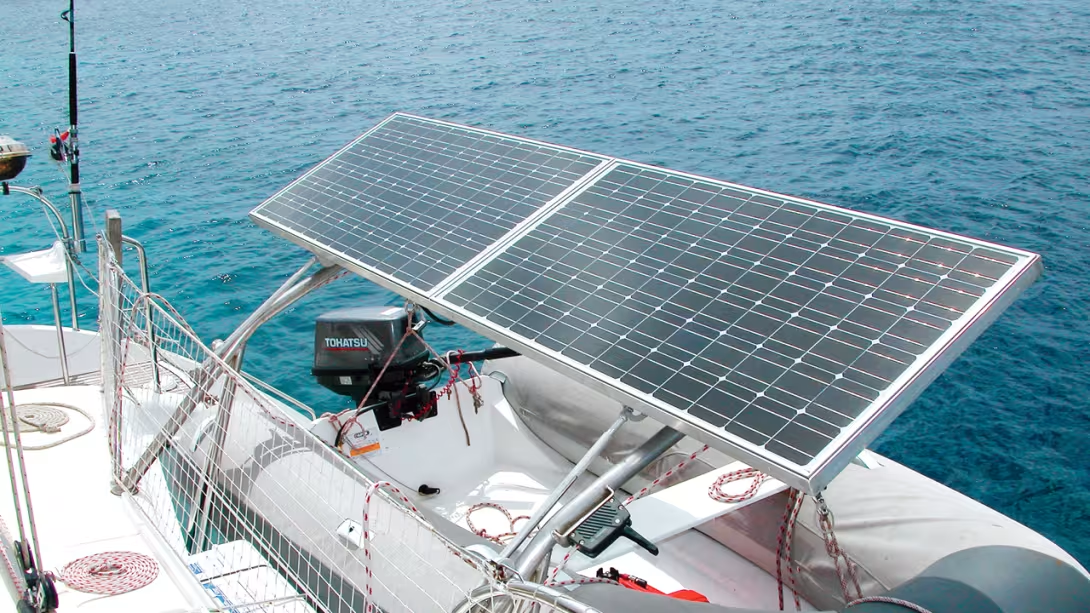
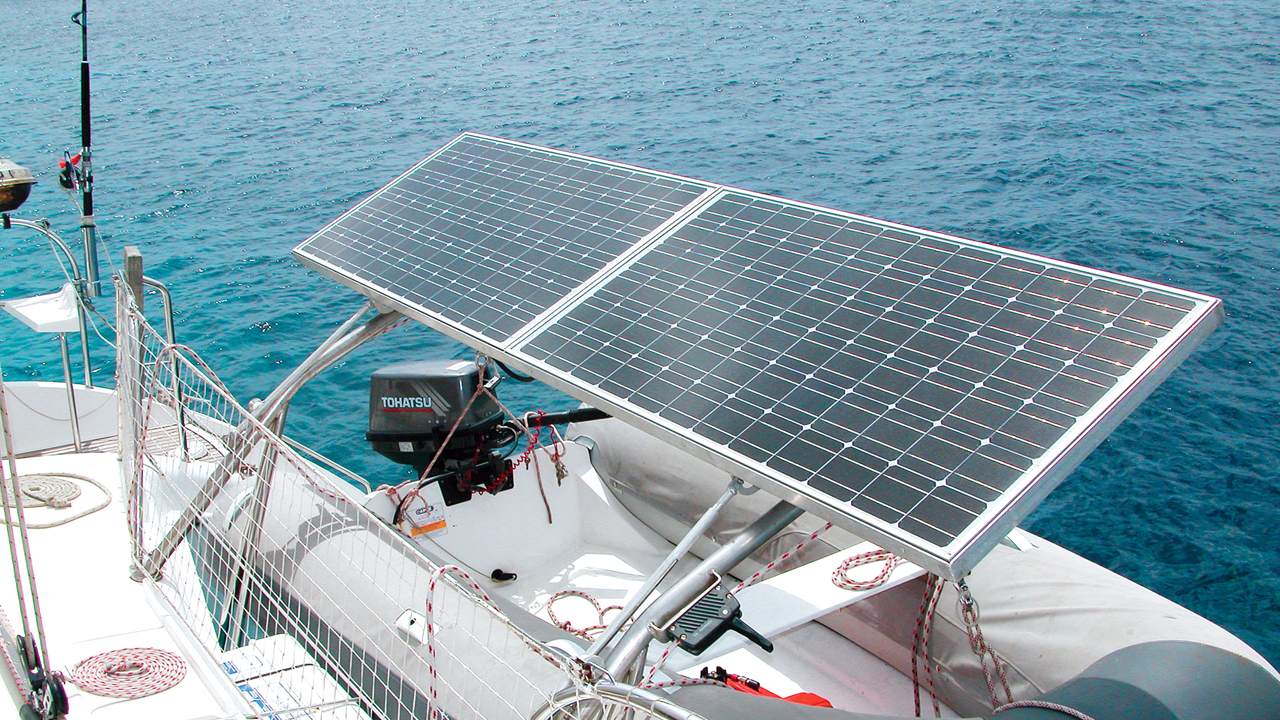
From an electrical point of view, you must draw up a very thorough assessment of your needs and your production capacity. Modern solar panels allow a well thought out boat to be independent, with no problems. How much will you consume per 24 hours at anchor and under way? And how much can you produce? If possible, without resorting to the generator? This simple calculation will allow you to make the right choices. The important thing is to check the electric circuit carefully and change mercilessly all the doubtful, energy-hungry connectors, and to have modern, high-performance batteries connected to your system.
And fresh water? Nobody seriously imagines leaving for a long-term cruise without a watermaker. Easy to use, it just requires a little regular care and for you to have aboard all the spare parts essential for its good health. In return for which, at your stopovers on desert islands, you will only be limited by your ability to get your food from the sea…
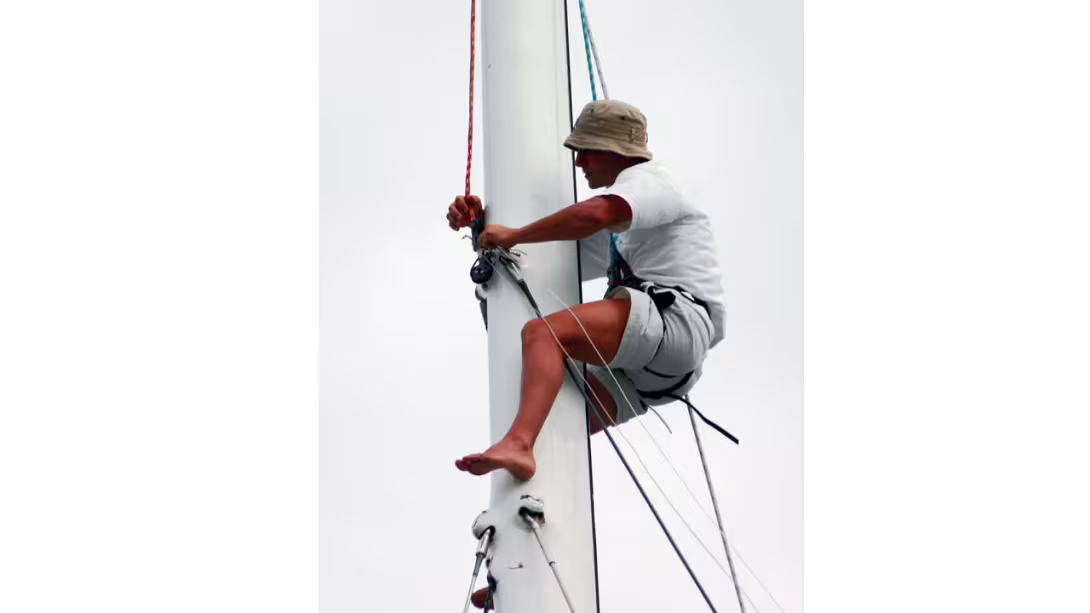
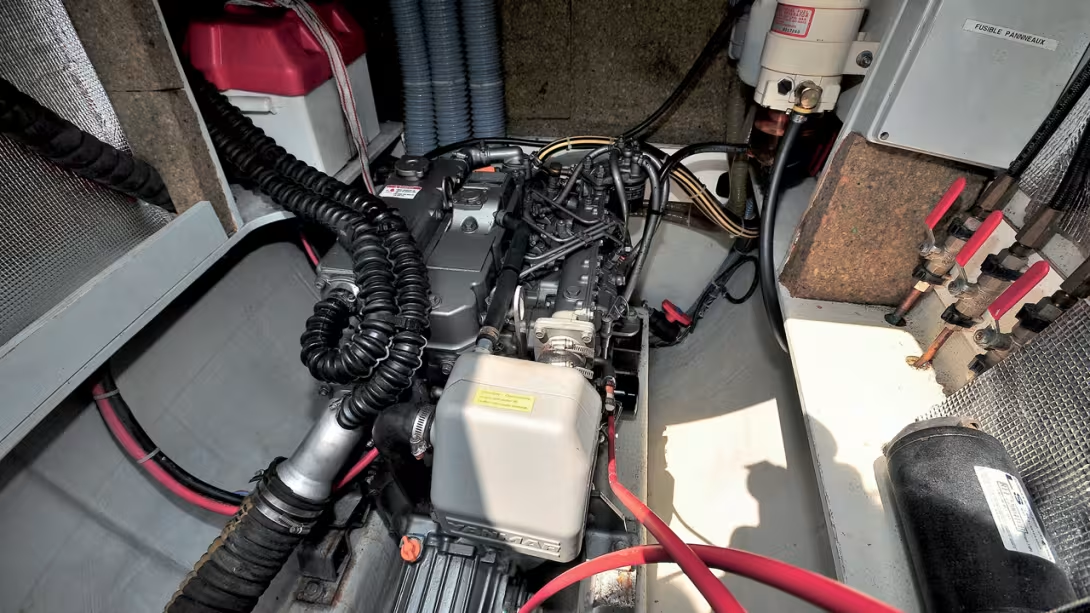
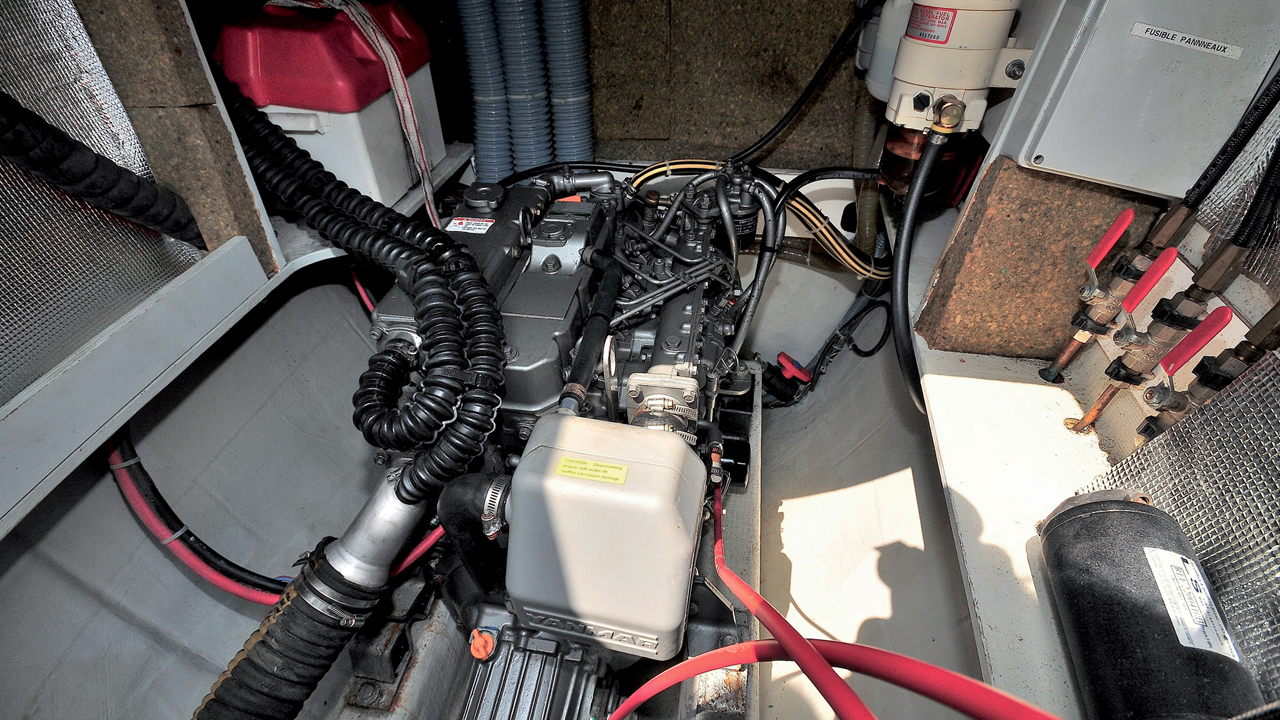
The engines and rig (see our article in this Special Edition about revising the rig) must be inspected by a specialist before any departure for a long-term cruise. Rigging (including the martingale and the bridle for the gennaker) has a life span of 7 to 10 years maximum. In other words, it’s no good leaving for a 5-year round the world voyage with a rig that is already 6 years old… The risk is much too great, and changing it in the middle of a lagoon in the heart of the Pacific will never be easy.
The same analysis for the sails: you are leaving for a long voyage in a sailing boat, therefore…look after your sails. The suit of sails which is ‘as new after a round the world trip, and ready to set off again’ is an interesting concept, but also an insult to your intelligence. A second-hand suit of sails must be checked and passed by a Sailmaker in whom you have confidence. For new sails, choose the cut and cloth carefully, according to your real needs.
On the preparation front, it is also advisable to check or have checked the alignment of the rudders – even on a new boat. Similarly, the transmissions (mechanical or hydraulic) must hold no secrets for you, and fitting the emergency tiller must be possible in under 2 minutes flat!
The deck plan is perhaps the part you will be able to work on most. It must be optimized for your crew, so that each maneuver can be carried out serenely and in all the conditions encountered.
Among the important maneuvers when cruising, there is…anchoring. The anchoring equipment must be (very) carefully prepared. The windlass must be powerful enough for your size of boat, and the path followed by the chain perfectly optimized. For the main anchor, start off with at least 100 m of warp and 60 m of chain. For the secondary anchor: 60 m of warp + 40 m of chain. Finally, a mobile anchor, in aluminum + 5 m of chain + weighted line in a canvas bag will allow you to cope. Quite obviously, the chain and shackles will be of the highest quality, and correctly dimensioned with respect to the boat and the windlass. Take the opportunity to mark your chain with a simple color code every 5 m and every 10 m - practical for knowing how much chain you have paid out according to the depth of water.
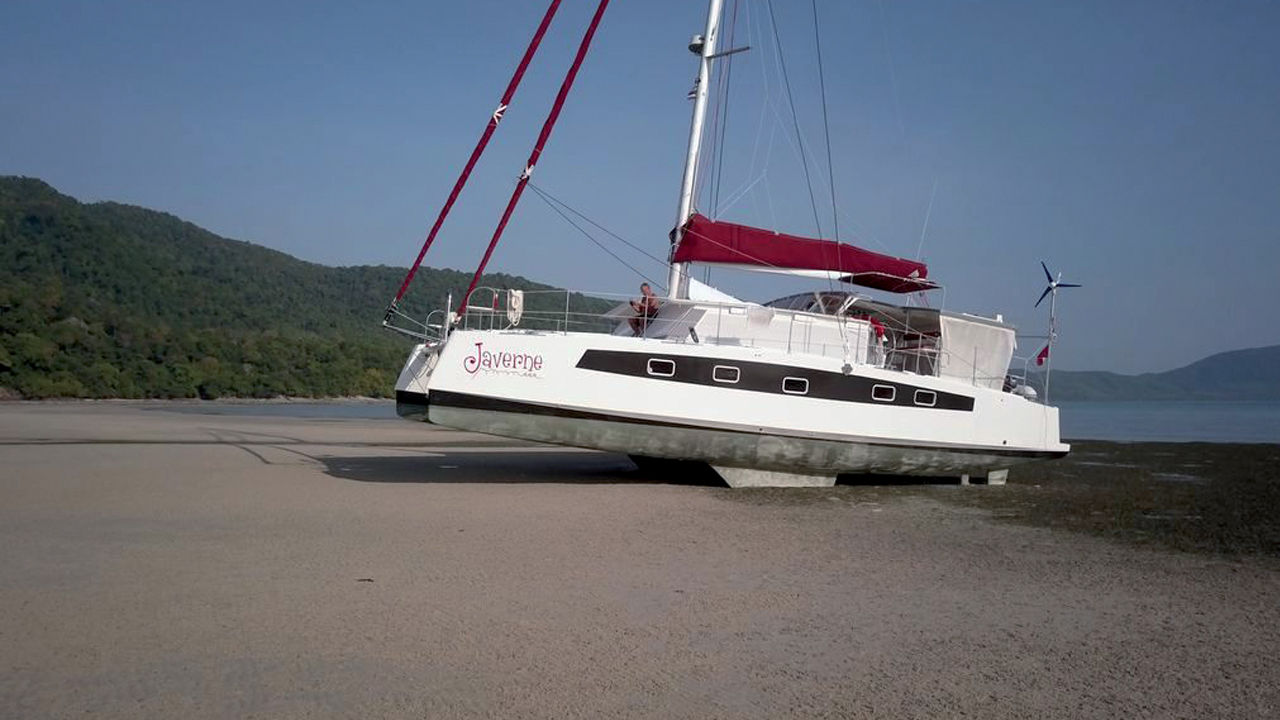
Enjoy cruising, and don't forget to send us your postcards from the other side of the world!