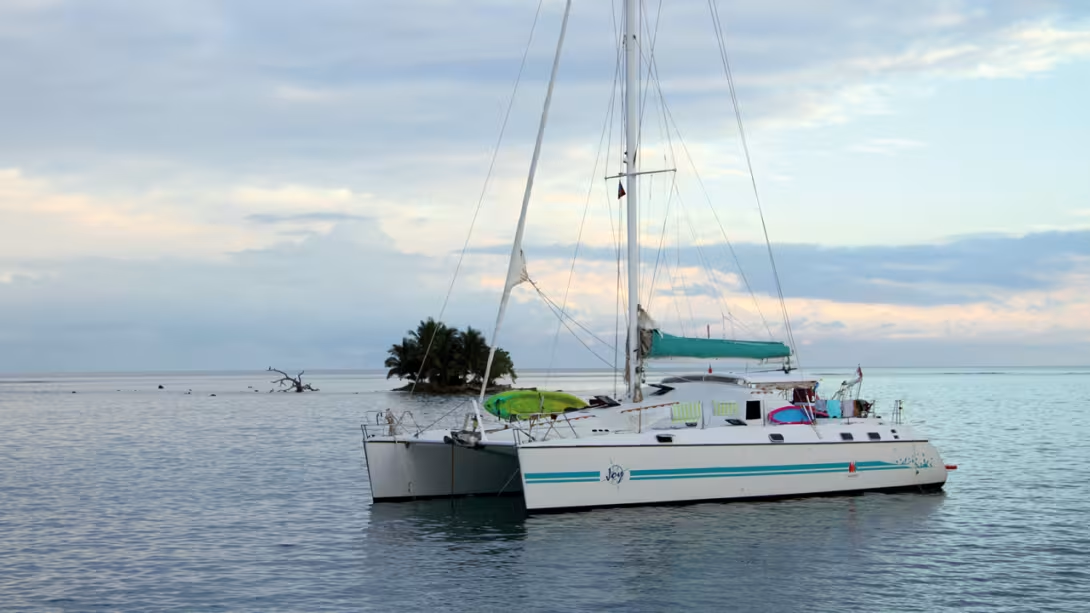
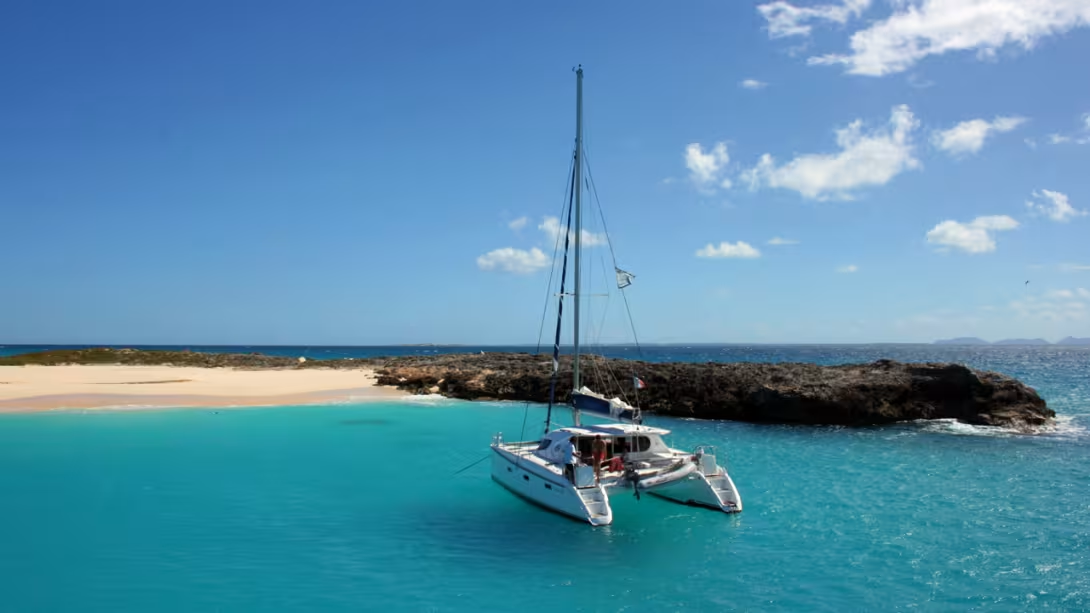
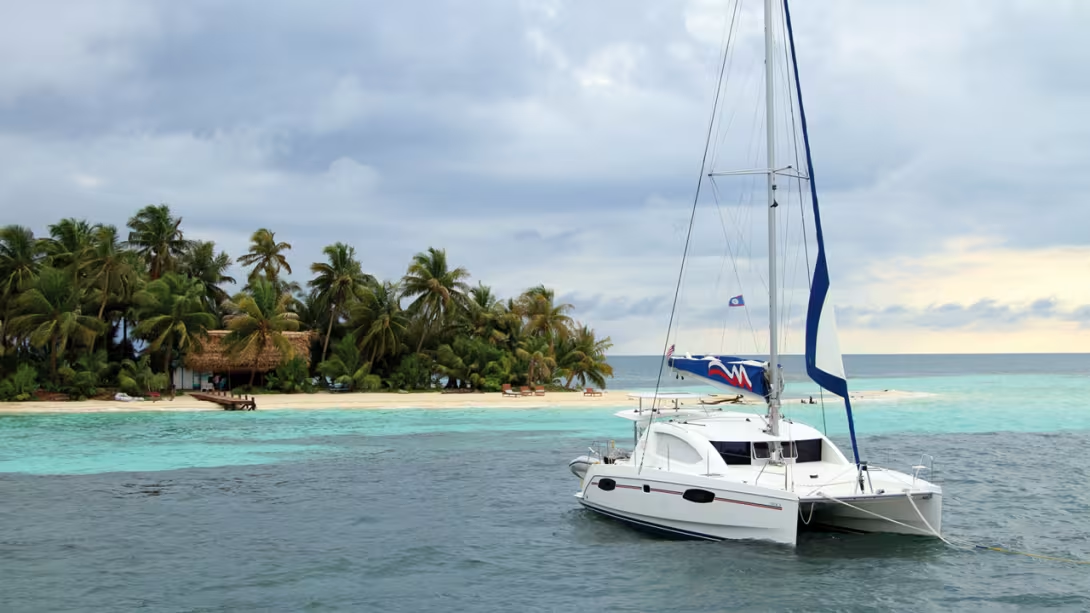
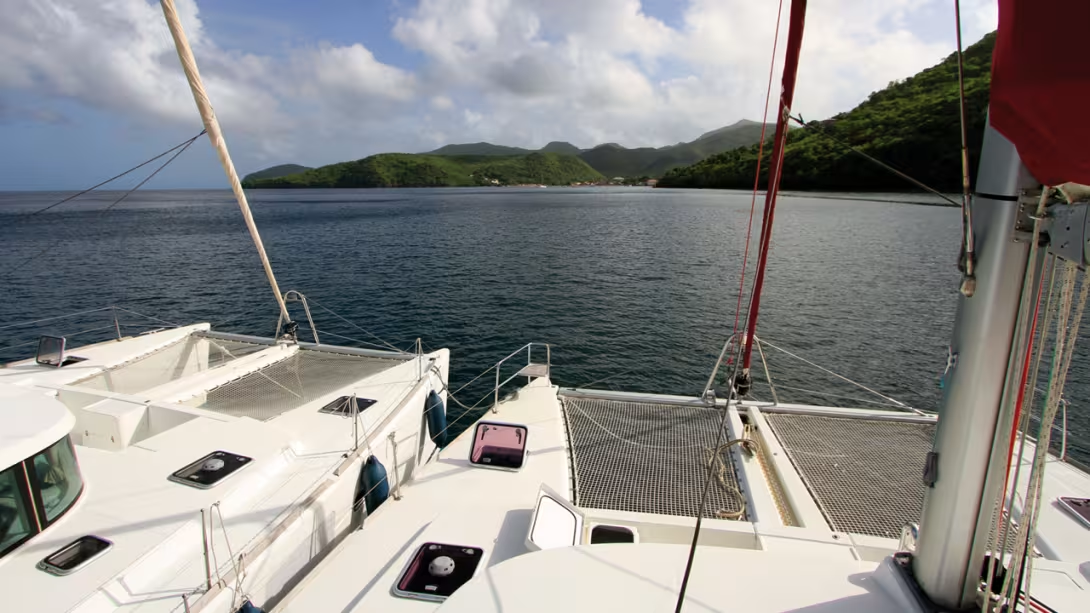
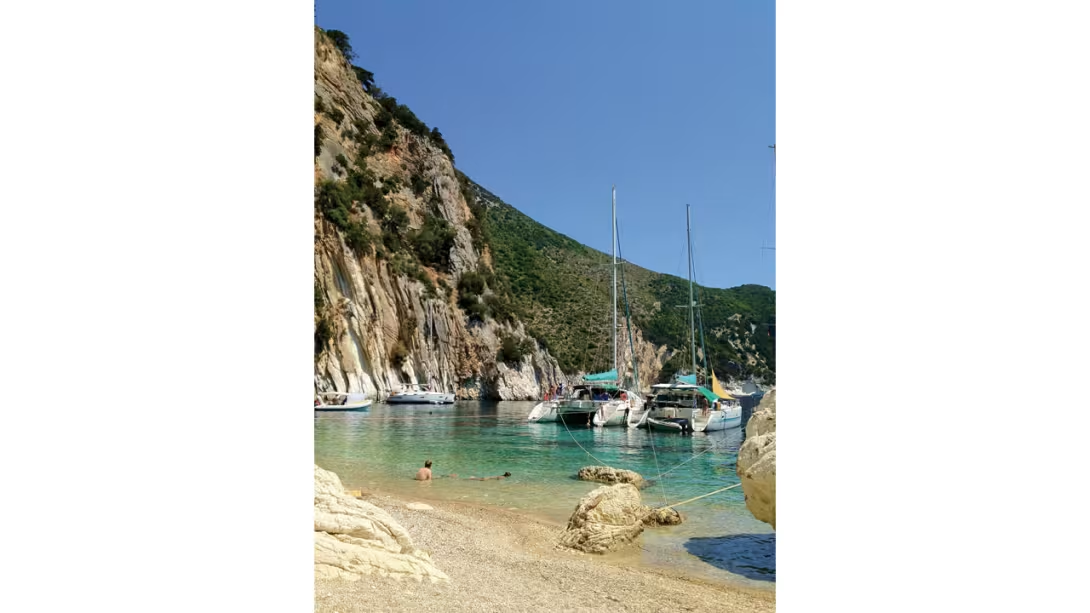
Harbors, docks and pontoons? They’re not really the stuff of multihulls... we are so much better off in a pretty little cove somewhere! So as soon as we’ve filled the water tank and topped up the fuel, we’re heading for the anchorage. Especially since we can get closer to the beach. And as for rolling, well we don’t know anything about that...
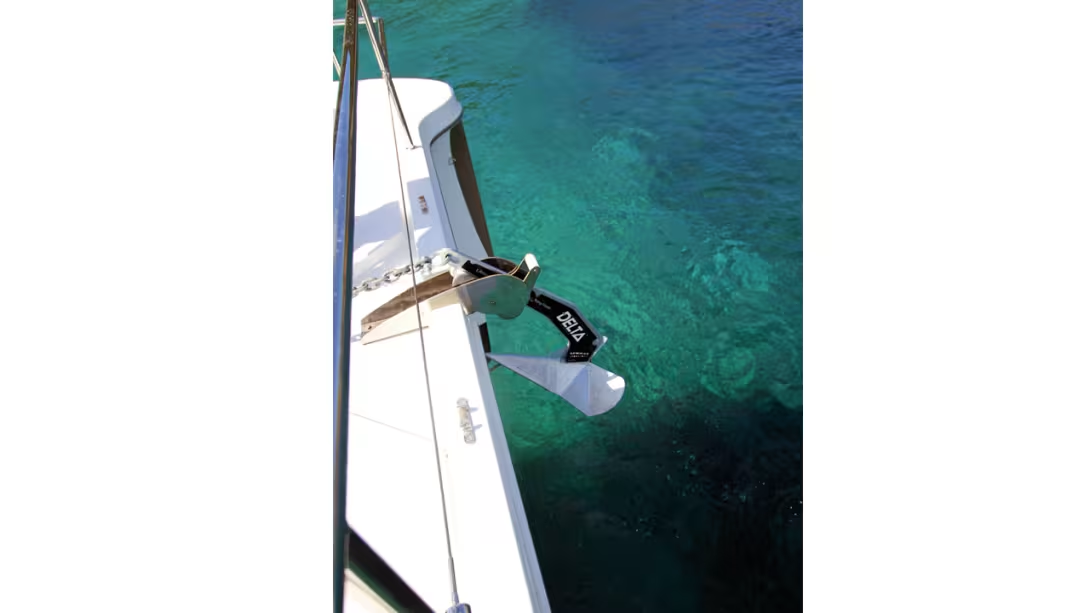
You want a swim, a leisurely stop for lunch, a trip ashore, a tranquil snooze... there’s no shortage of occasions to anchor when cruising. If this operation seems as obvious as it is common, it can also involve an element of risk. In reality, a boat at anchor can get into difficulty much faster than one under way. So how about revisiting the subject, before sailing out to that cove, beach or another lagoon? First of all, know your equipment: the anchor must be heavy enough - and especially have sufficient surface area relative to the displacement of your multihull. The same goes for the diameter of the chain and the rode if applicable.
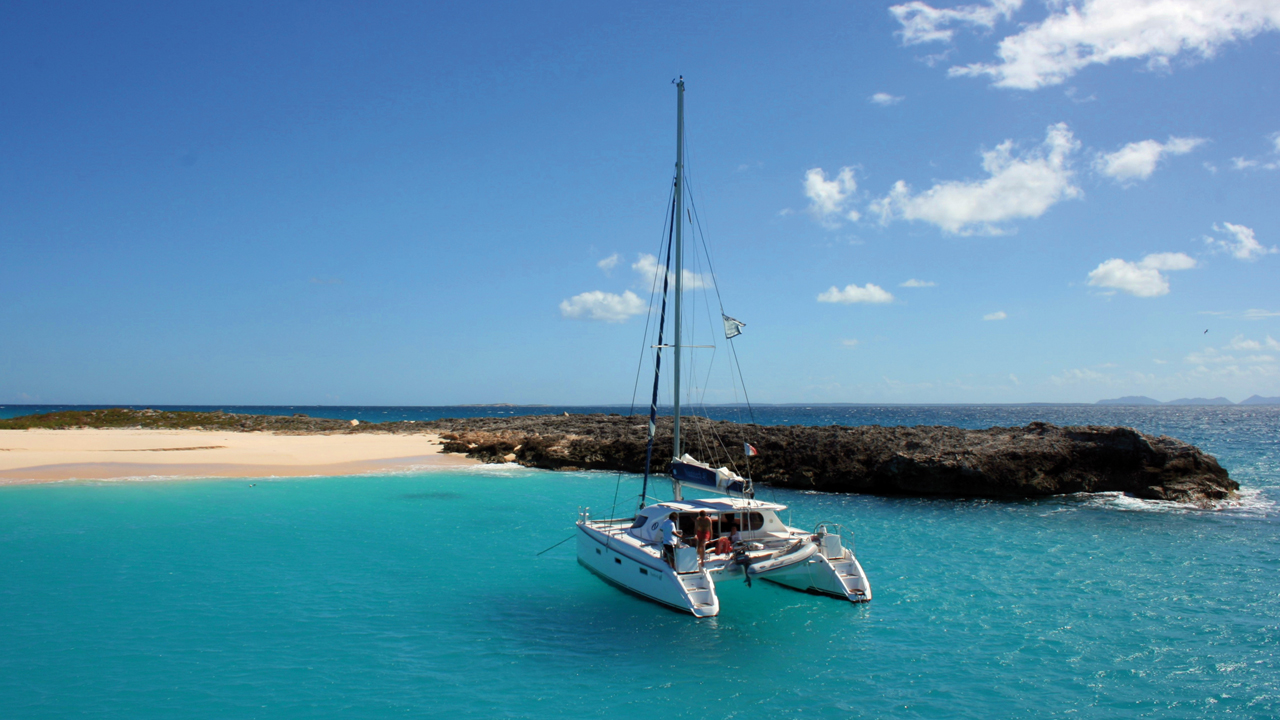
Where to anchor? Firstly, in safe, sheltered waters. Listen to the weather forecast. An idyllic anchorage with an offshore breeze can easily become a surf spot with an onshore wind. Beware of the seabed: opt for sand or dense mud; avoid rocks, small gravel and any sea grass. If the wind turns, you can find yourself 60 meters from where you anchored before swinging. Keep an eye on the plotter! Also beware of other sailboats: a monohull doesn’t necessarily swing the same as your multi. The optimum chain length is five times the height between the seabed and your bow roller. The traditional "three times the depth of water" is totally insufficient, especially in two meters of water. This formula does not take into account the height of the bow roller above the water. If you drop 6 meters of chain at 3 meters from the bottom, its angle of pull will be 30°... which leaves your anchor no chance of holding in the event of a strong wind. In case of doubt, without exception, someone capable of maneuvering the boat will have to stay on board.
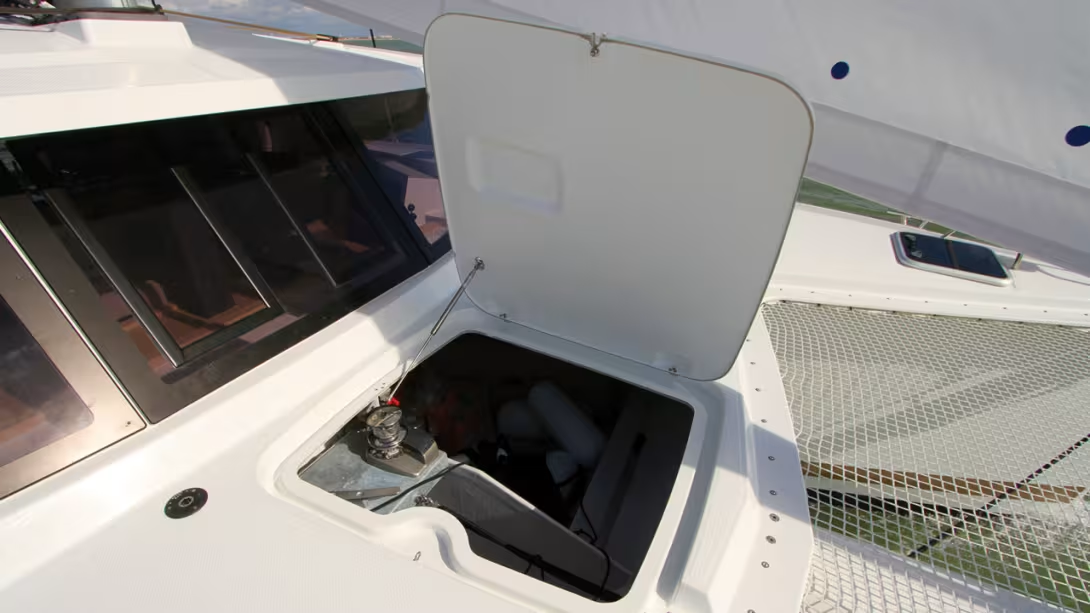
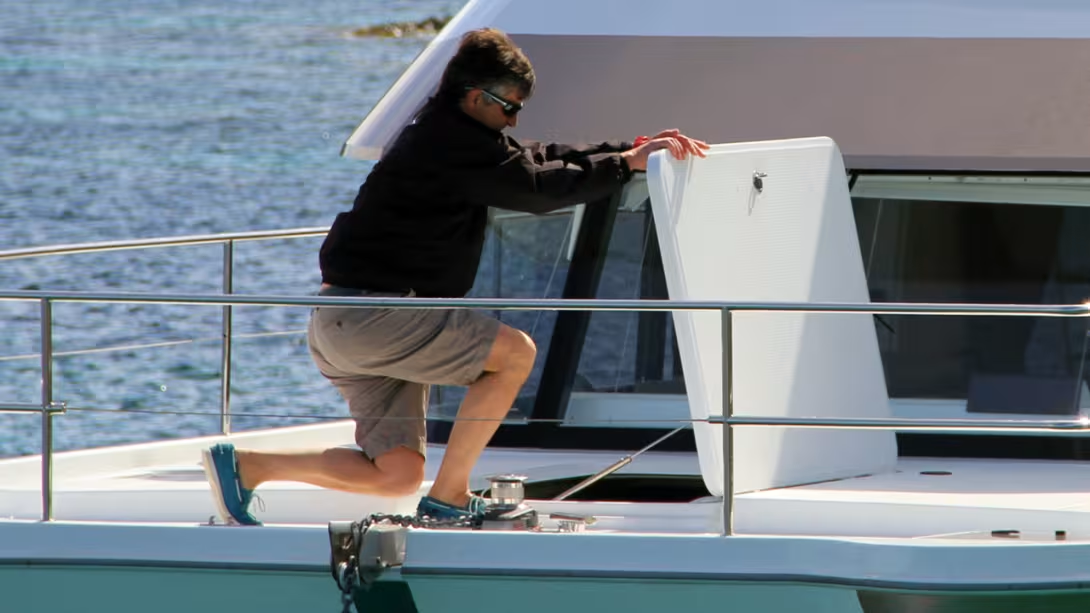
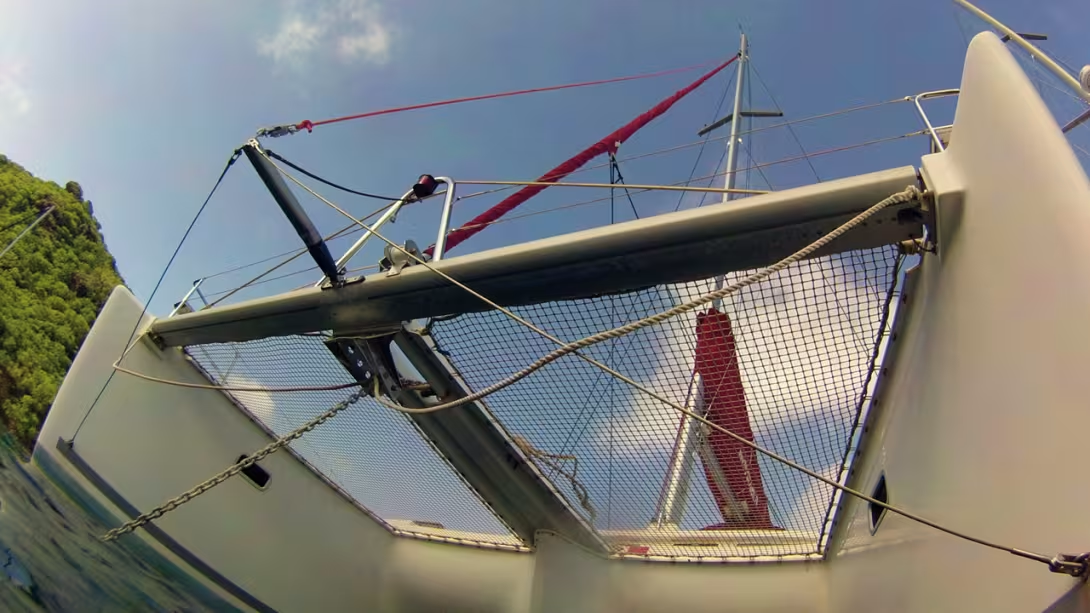
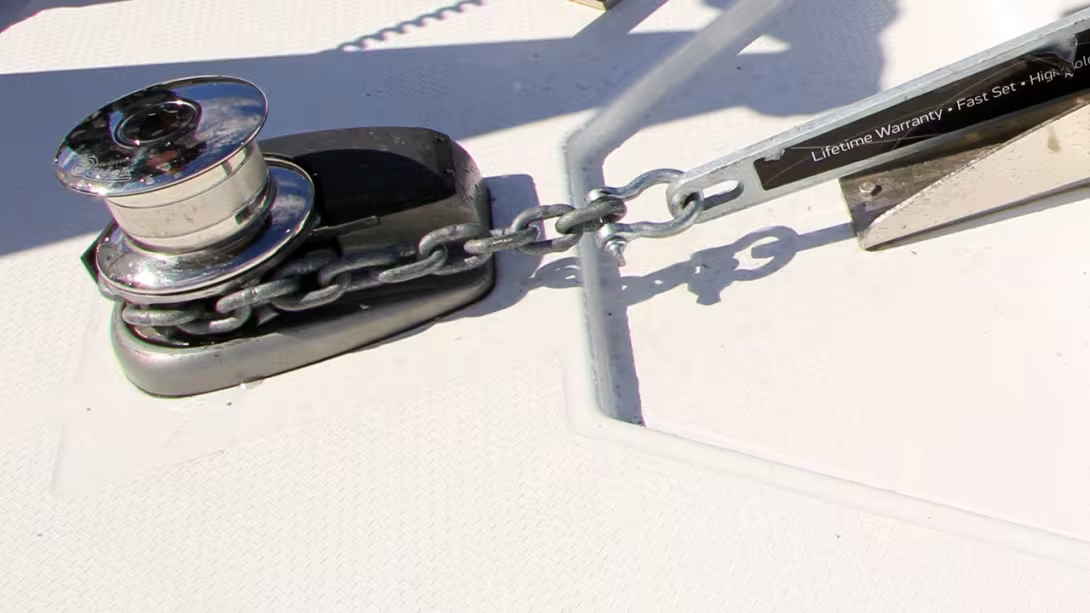
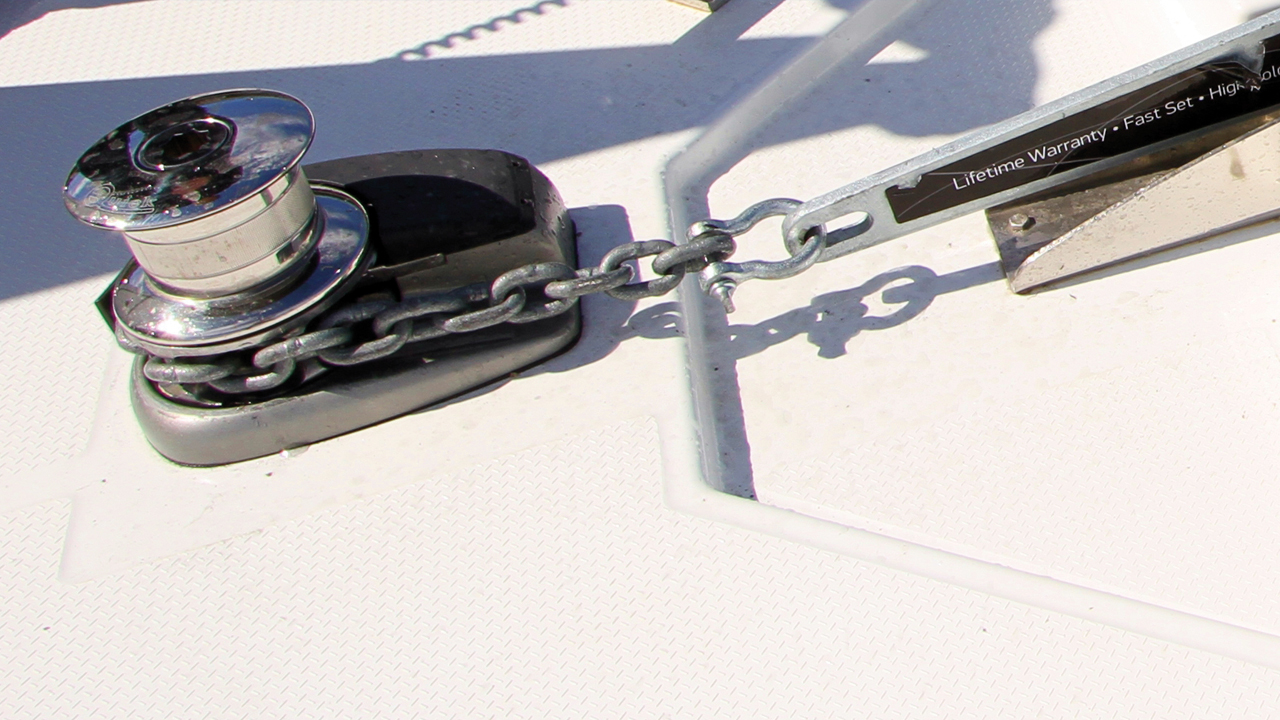
Make sure your windlass is working properly. Is it subject to the chain jamming up? If so, think about spreading it out at the bottom of the locker. Know the location of the fuse: they can frequently trip with too much strain on the chain. Also keep spare fuses in the chart table. Most multihulls are equipped with a rope bridle secured to both bows, to absorb the load of the chain. To set this in place, once you've anchored, you just have to clip the central karabiner of the bridle onto the chain and then ease out a little at the windlass. As soon as the chain is slack, the bride is in action.
In the case of an anchorage which is particularly dense with other boats, or for example, with Mediterranean-style moorings at a dock, it may be useful to rig an anchor buoy, in other words a float and a length of line bent on to the anchor. If it gets stuck, you’ll still be able to clear it by pulling on this rope.
Anchor
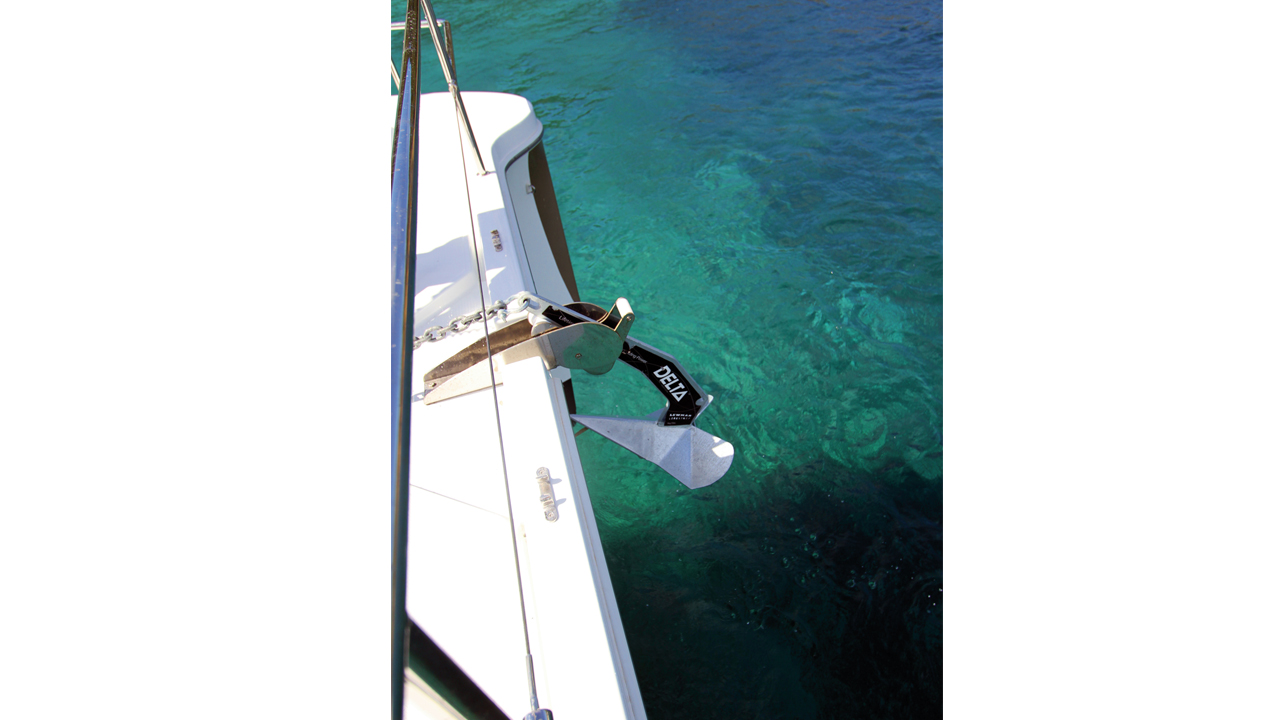
Whether steel or aluminum, flat or plow, articulated or fixed... anchors. There is one for all tastes and all budgets. Some are certainly better than others under defined conditions. Still, the size and to a lesser extent the weight, of the anchor are important factors.
Securing your ground tackle
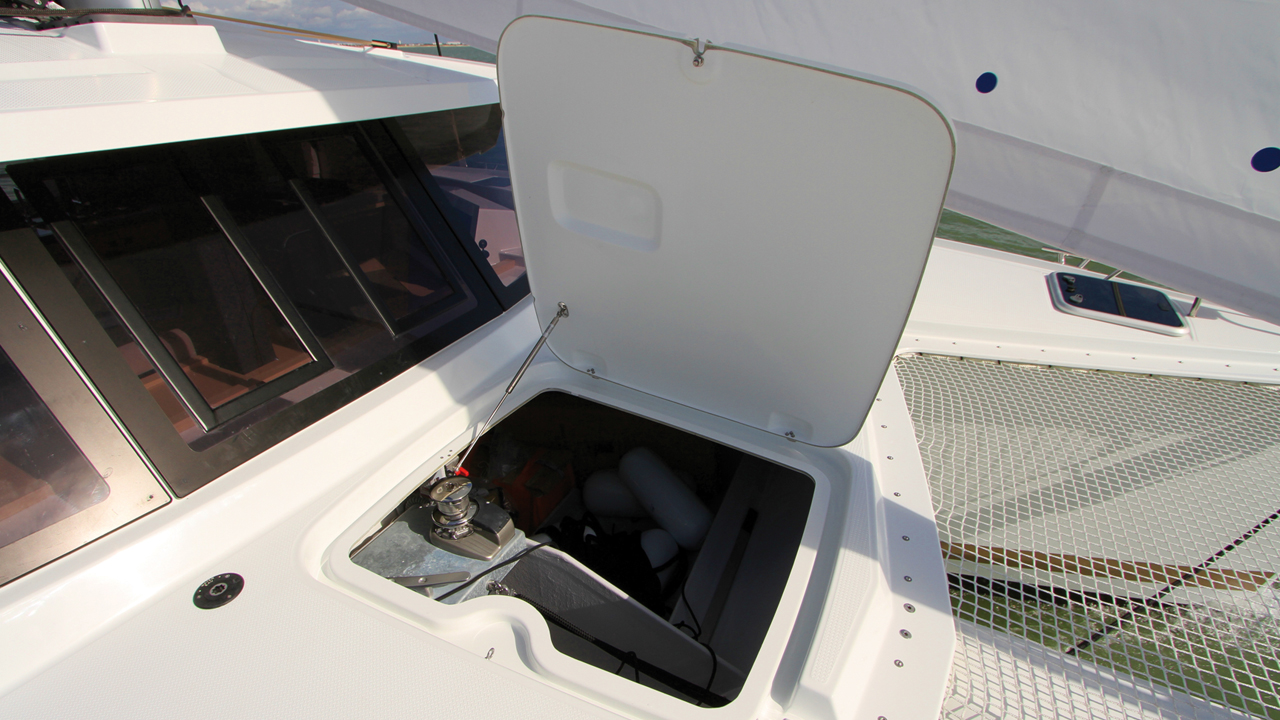
When setting up the anchoring gear on your multihull, consider fixing the bitter end of the chain or rode to a padeye or a cleat. This is your guarantee of not losing your anchor to the ocean! Check this when using your multihull for the first time.
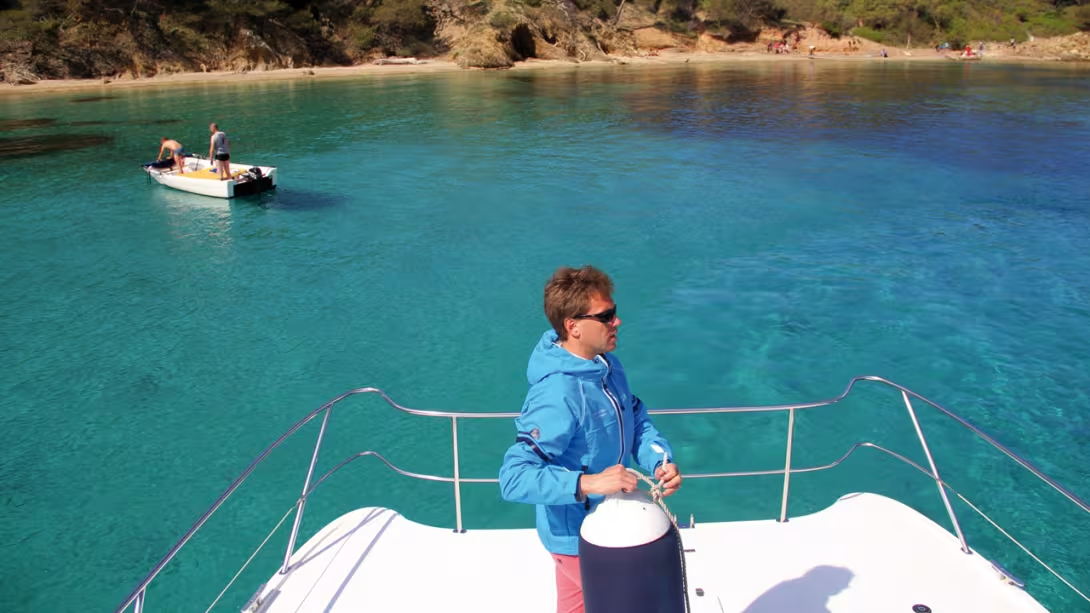
A day anchorage
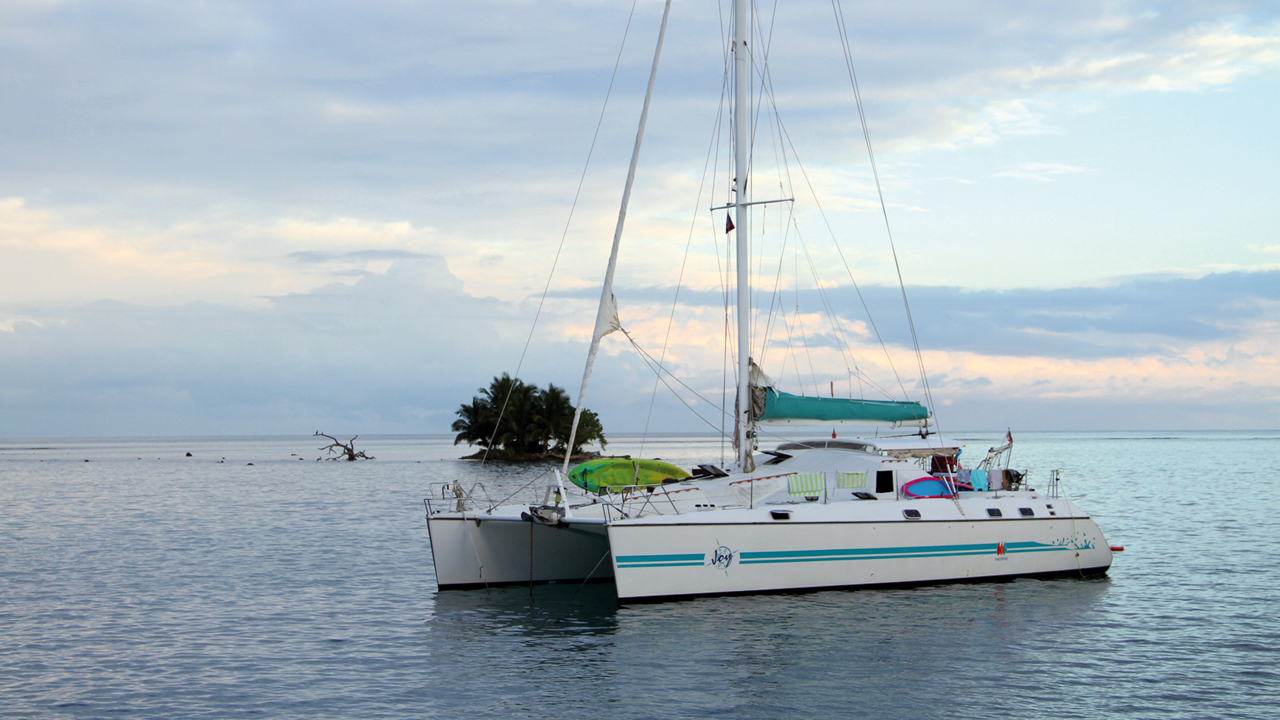
During good weather and calm seas, it may be tempting to anchor near an island or on the edge of a reef. This is ok in the daytime... but think about leaving a crew on board, especially if the bottom is not very clear!
Beaching
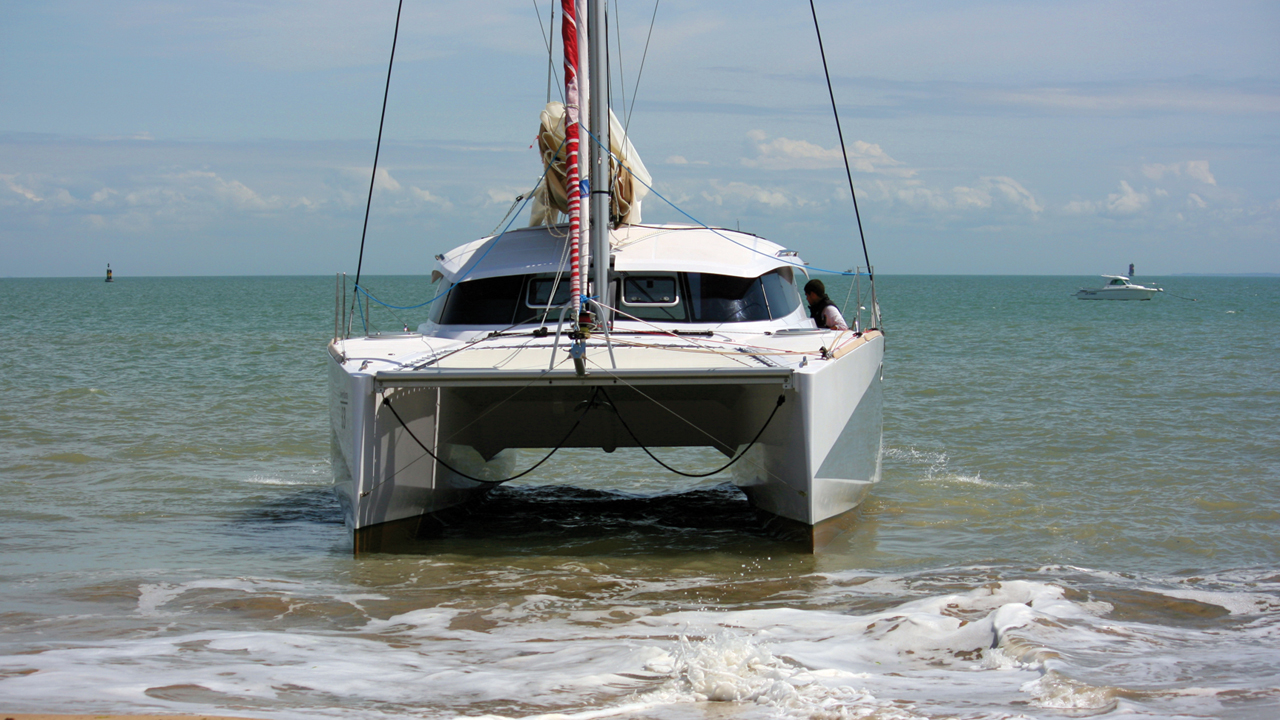
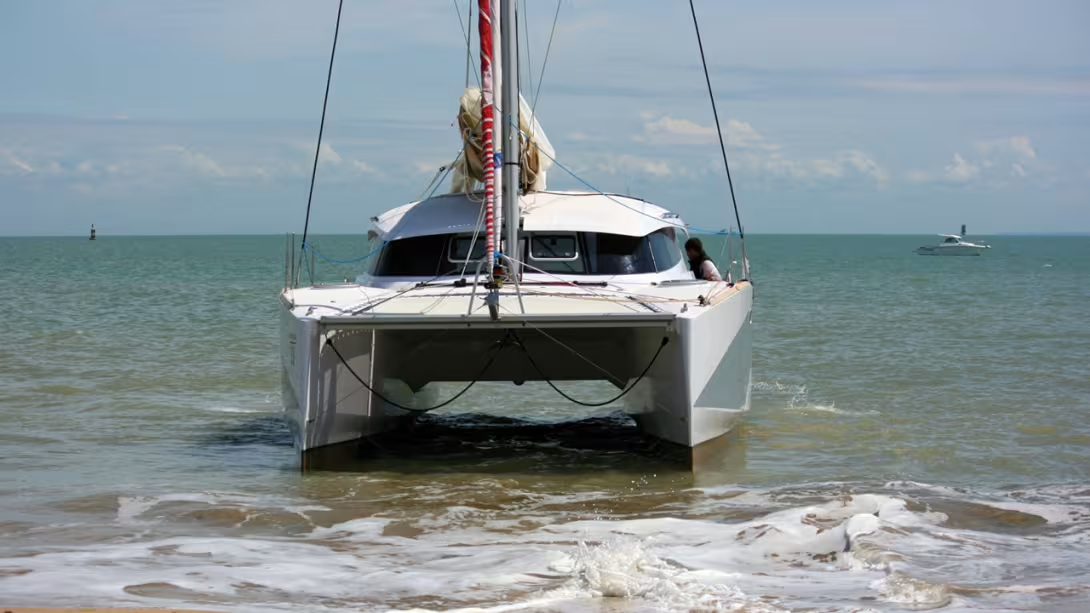
The shallow draft of a multihull encourages one to approach closer to the shoreline, or even to beach the boat. But beware of surf and unpleasant surprises when the tide starts to come back in again. An exercise which should be restricted to all but the calmest of anchorages.
Protection
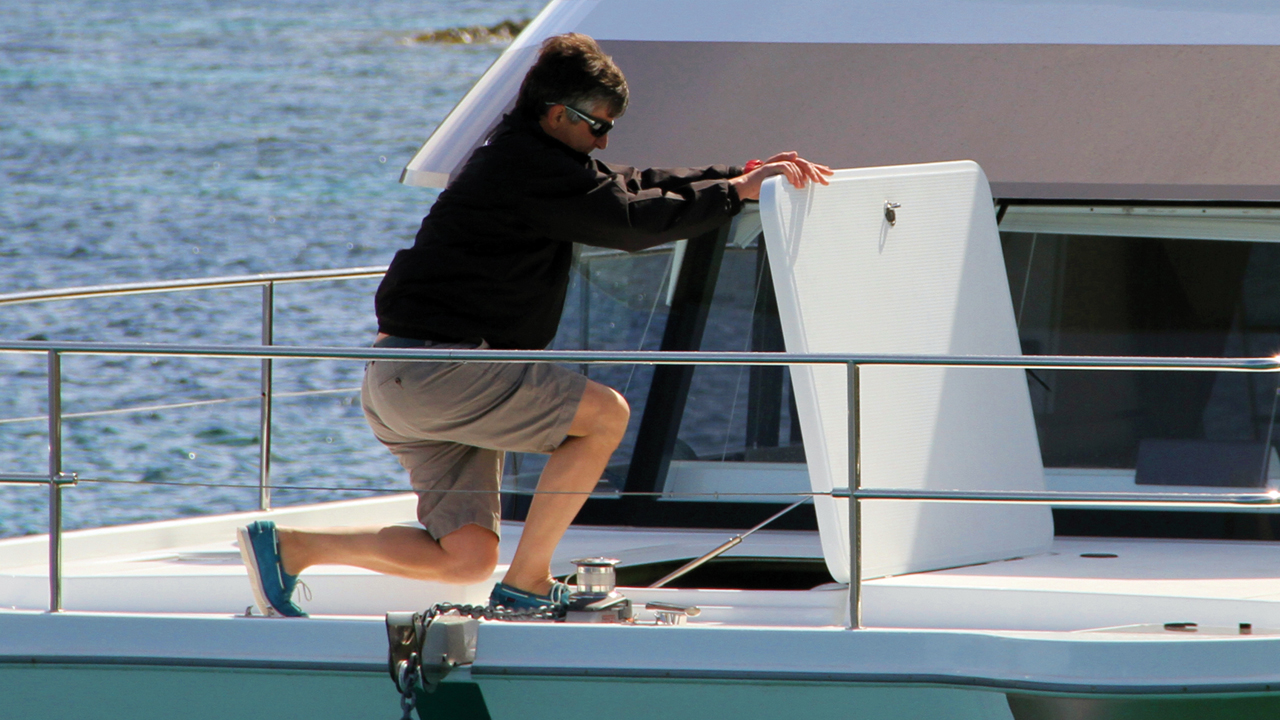
If the chain jumps on the windlass, don’t try blocking it with your bare foot... wearing a pair of closed shoes is (very) advisable. For small boats which might not have a windlass, also wear a pair of gloves.
Keep a good lookout
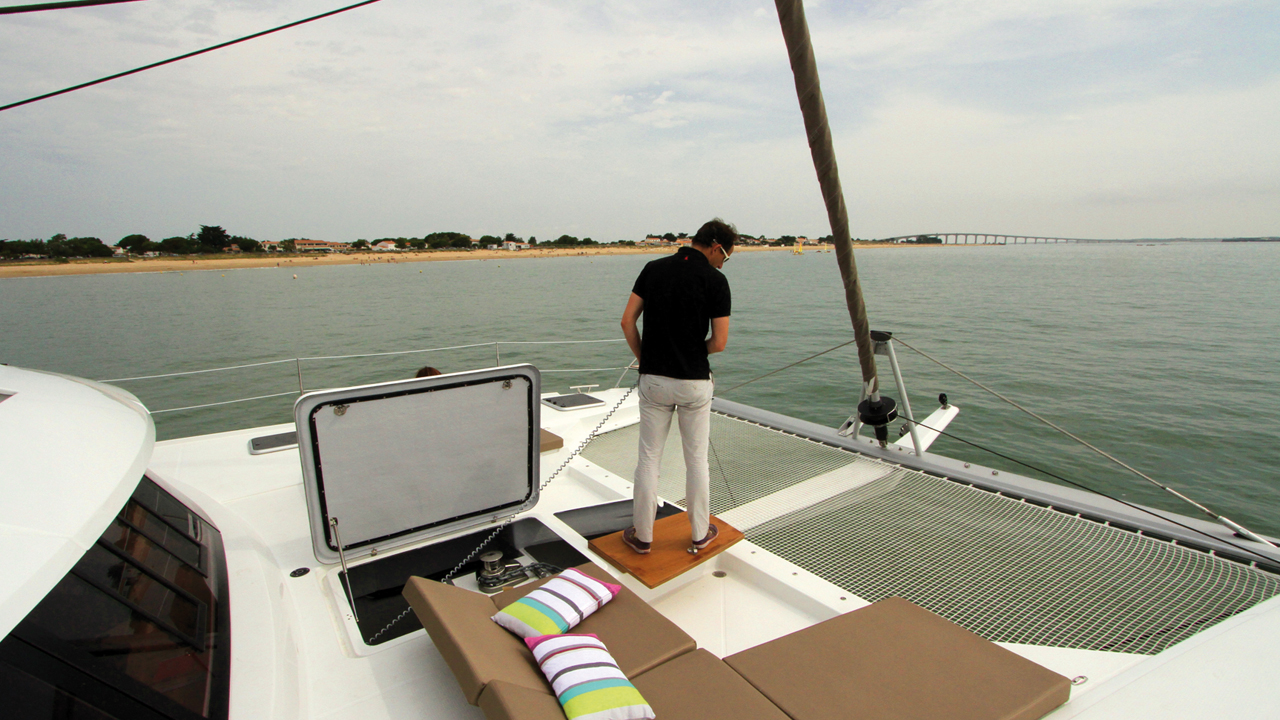
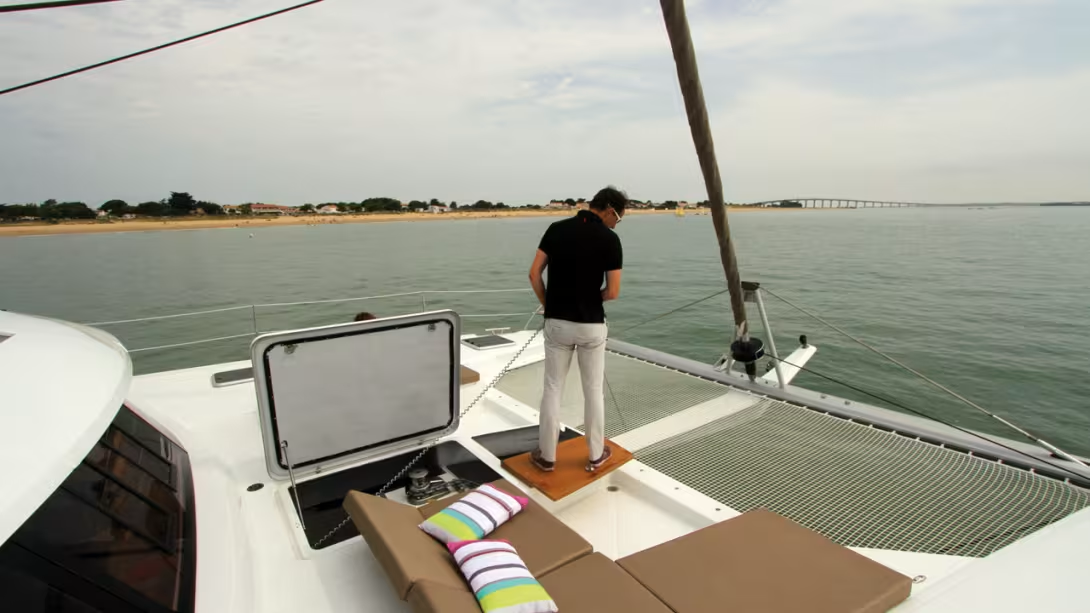
One eye on the water, another on the windlass: this is a golden rule that will save you a lot of trouble. Positioning yourself on the trampoline is often best
Anchor buoy
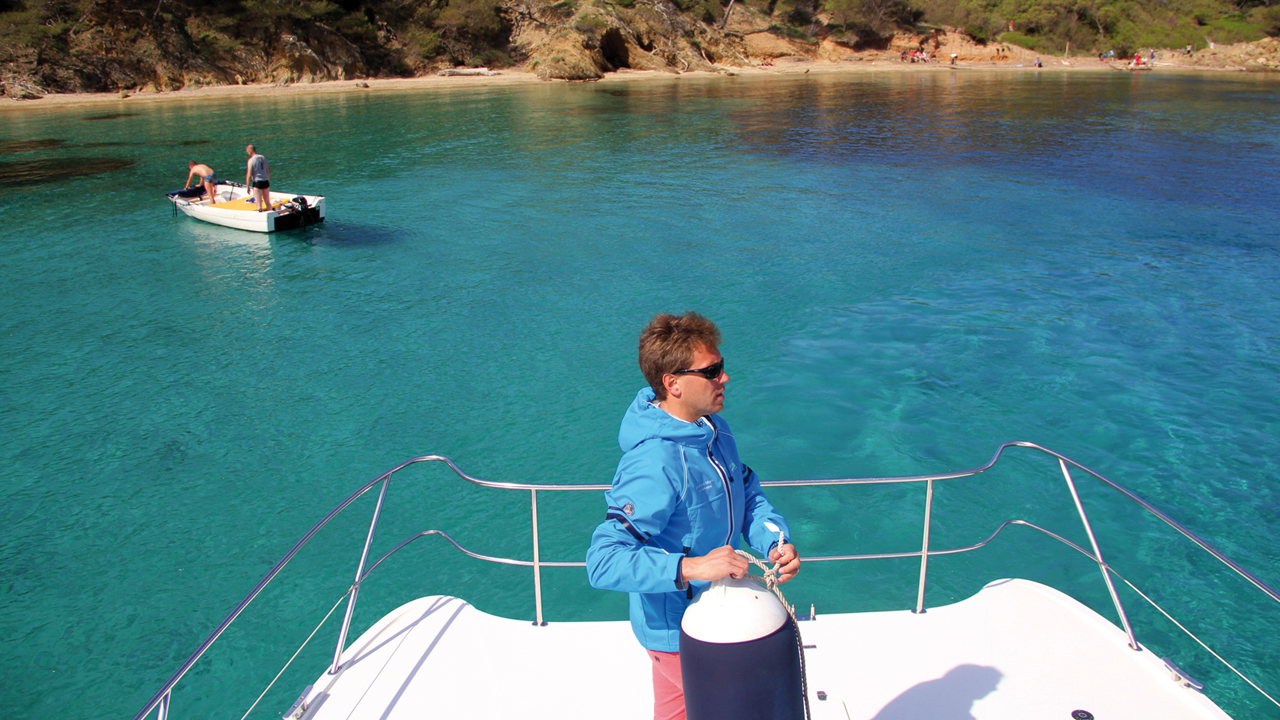
To set an anchor buoy, you need a line just a little longer than the maximum depth of water - remembering to take account of the tide - and a small visible buoy, orange for example. But a fender could do the trick as well!
Bridle
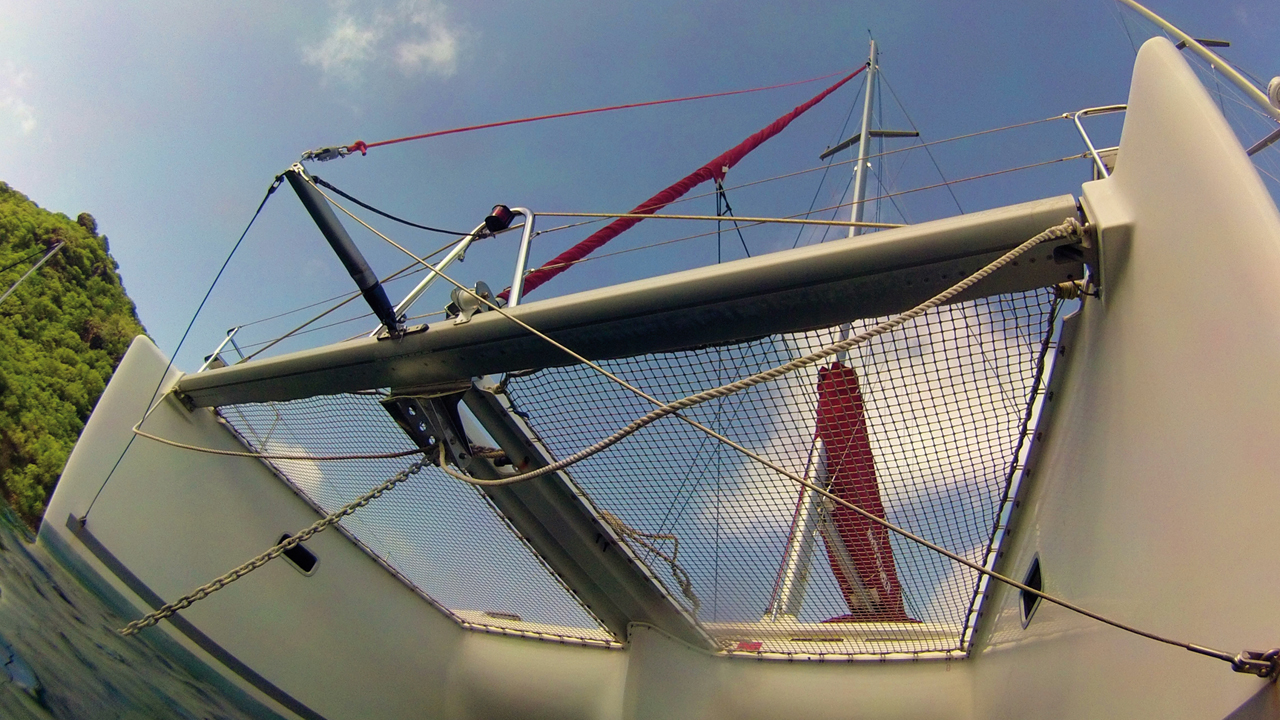
On a catamaran, you can fit a bridle. This has two advantages: taking the strain off the windlass, and absorbing any shock loads from the chain while anchored.
Diving
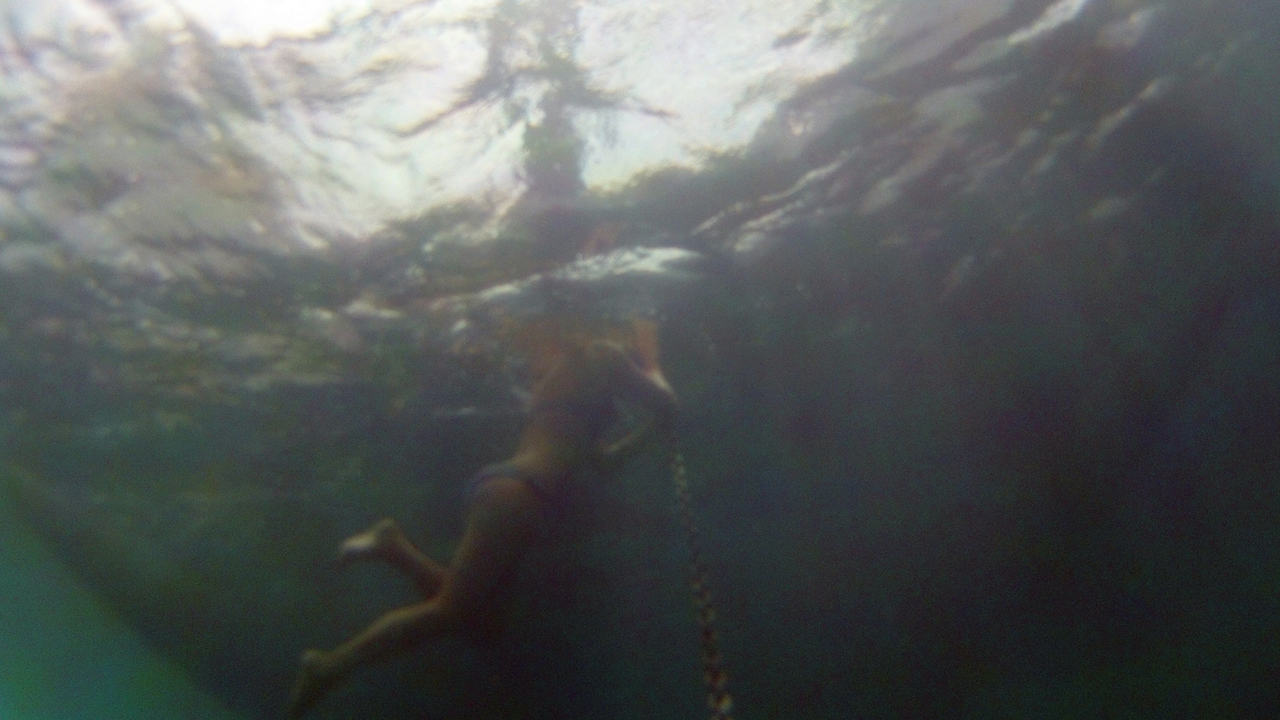
If the water is not too cold and especially if it is clear, a short dive makes sure that the anchor is properly set. And if the depth is reasonable, you might be able to reposition the anchor by hand, for example on sand rather than in seaweed.
Moorings
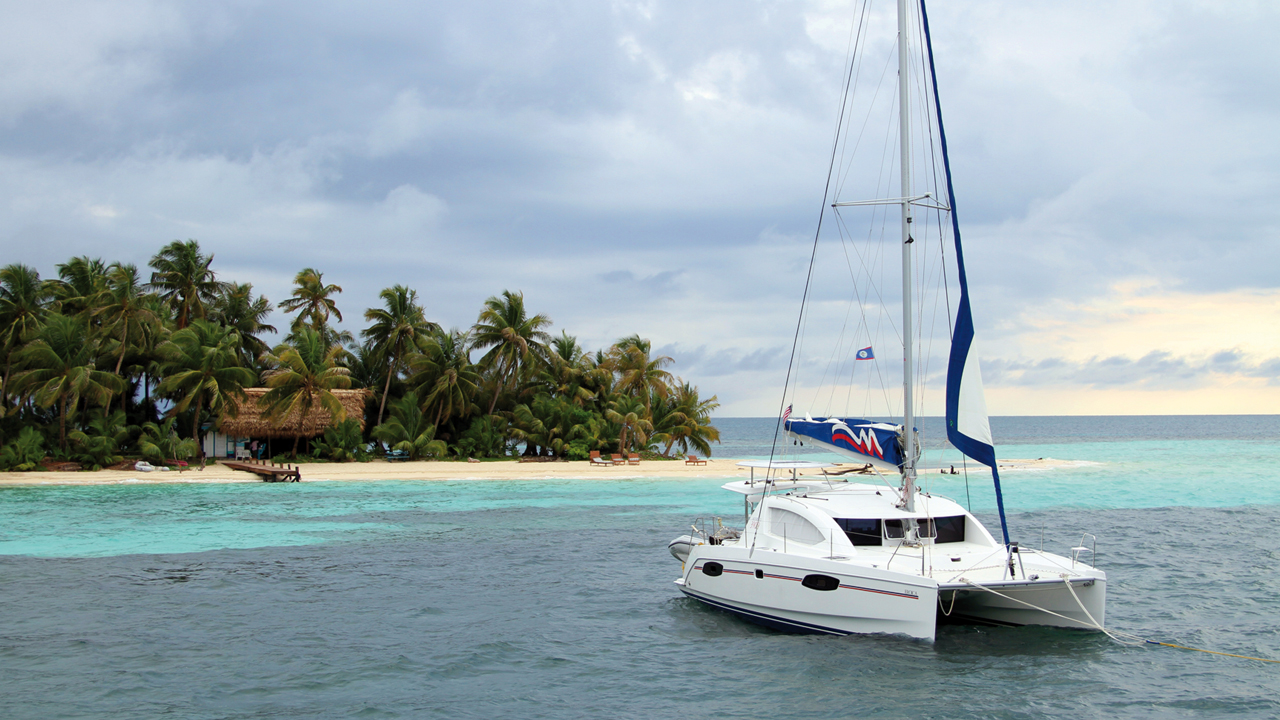
The bridle is also handy for picking up a mooring. If in an exposed location, doubling it up would be a wise precaution.
Alongside another boat
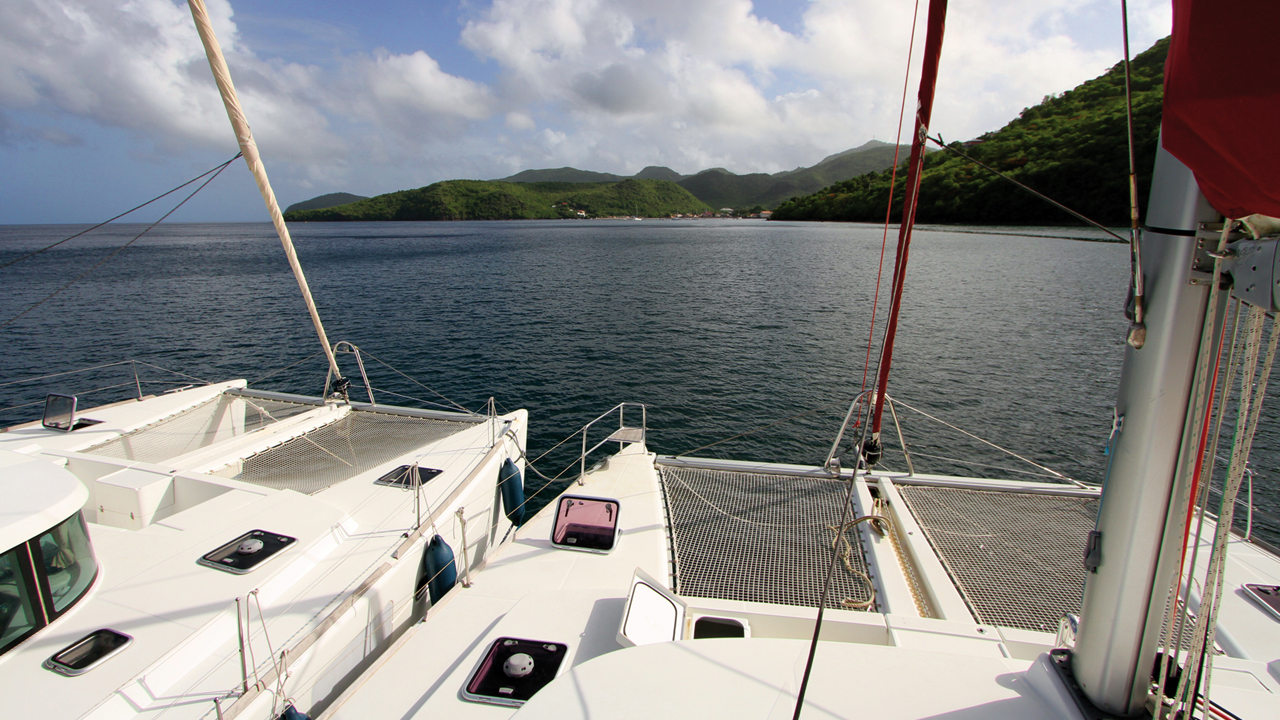
The relatively straight freeboard of a catamaran lends itself well to being tied up to. Holding will obviously be better if both vessels are anchored or moored rather than one. But be careful not to let them get tangled up if the wind turns.
Mediterranean-style mooring
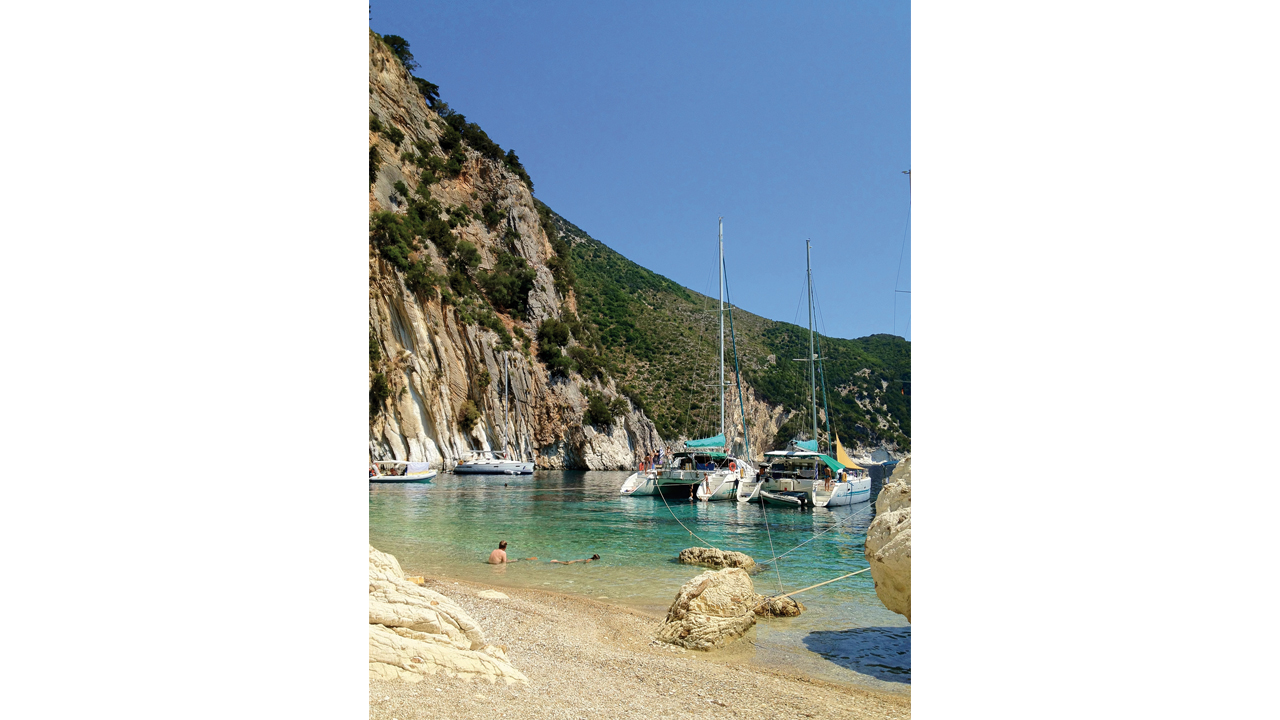
In the Mediterranean, free from tides, we often anchor back to the shore to limit swinging and especially to enjoy the shallower water. Crossing the aft lines over one another makes it possible to perfectly immobilize the boat. A bight of chain can be useful if securing to a rough surface ashore.
Cleaning
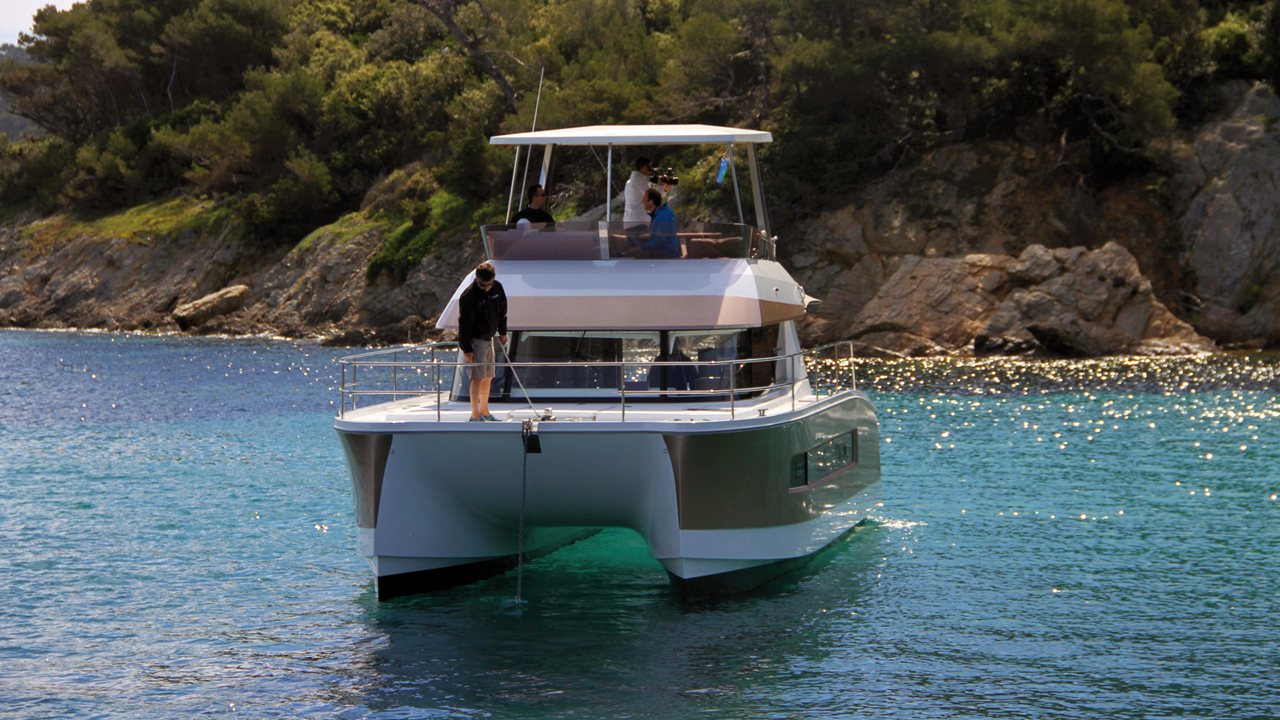
If your anchor is caked with mud or seaweed, leave it slightly immersed and motor at a slow speed. After this self-cleaning, all you have to do is lock the anchor back on the bow roller.