
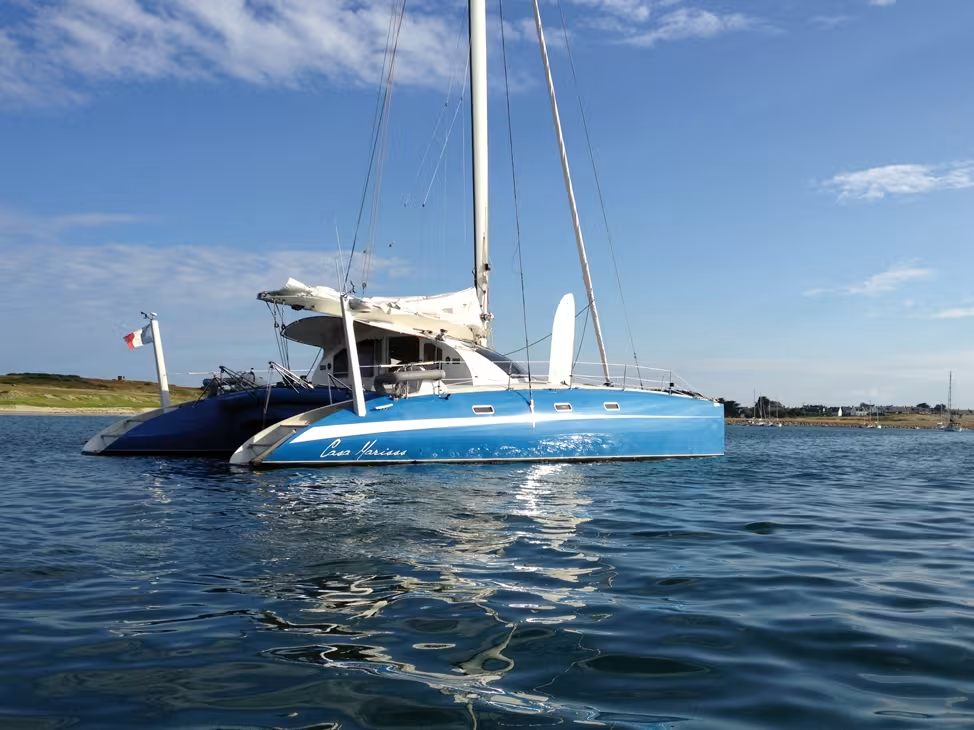
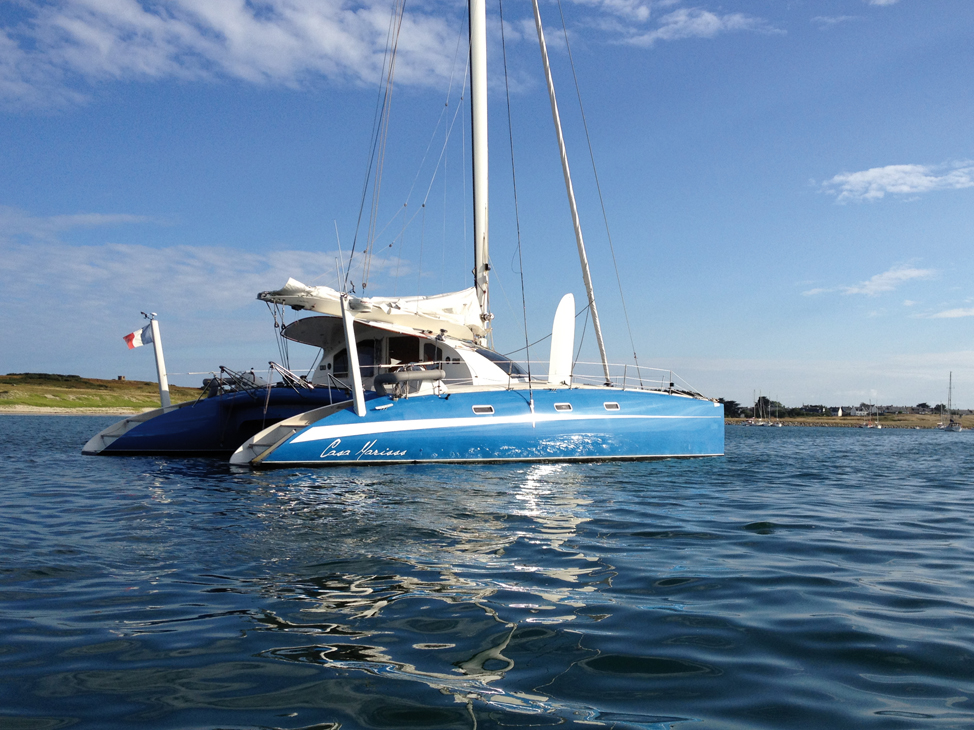
After spending comfortable vacations on some very nice cats, I wanted to find the sensations of pure, fast sailing and go to original destinations within the time limited by my professional obligations. This is how I came to choose Casa Marisss, a Petter 50 by Erik Lerouge; a beautiful epoxy sandwich construction, with Kevlar and carbon reinforcement where needed: very powerful beams, boom and wing mast held by 3 wires (a forestay and two capshrouds). Add 2 daggerboards for upwind work and a pair of Volvos for the doldrums and you get a very efficient cruising boat. The only problem was that this wonderful boat was not designed to be single-handed. But some modifications to the deck hardware did the trick! In July, hanging a right after leaving the Golfe de Morbihan on France’s west coast is a common enough choice, but keep heading north and go where the nights are short, that’s where the adventure begins! Between the tip of Brittany and the Shetland Islands, there is an area where even in summer, depressions mean you’ll be left with memories of being wet and seeing some impressive lighting over the sea. But my summer goal was even farther north: the Faroe Islands!
Morbihan - Newlyn/Penzance: war and peace
And we’re off! July 8th under 2 reefs and 50% jib, in 25 knots from the northwest (great for a northwesterly heading!). After beating to windward for 18 hours, came the pleasure of being able to throw up in international waters. It's upwind at 10 knots and I'm going to miss the Scilly Isles by 10° which puts me at Penzance. So on July 10th, I anchored in the middle of the night close to the port. Calm returns and brings sleep, finally! This charming town is quite different from where I’d hoped to end up. I crossed paths with Newlyn fishermen (and some fisherwomen), but can’t hang about, as the tide is on the way in and we have to go north.
Newlyn - Strangford: the route north…
It would have been difficult to get in, so I decided to leave quickly because the stubborn wind is coming at me from the NW. Luck was on my side, for when I arrived at Land's End, a light westerly wind of 10 knots filled in, allowing me to reach under full sail: 180 m². I’m hoping for a longer and less nauseating leg to reach the Irish “Golfe de Morbihan”: Strangford Lough. I quickly pick up to 12 knots, at least for the moment, and mustn’t slacken off because tomorrow, it’ll be back on the nose again!
Stangford Lough
We made a discreet entry into Strangford Lough on the 11th around midnight. The tide was a big help (with the 2 Volvos on tickover, the log was displaying 11.5 knots). It reminded me of the entrance to the Golfe de Morbihan in Brittany: "you're either on time or you don’t get in"! Not the ideal moment for the Navtex to welcome me with Gale Warnings. An hour later saw us tied up to a Killileigh YC buoy. Need to be careful, we are in Ulster here, and must avoid hoisting the Irish flag in the starboard spreaders. Here it has to be the Union Jack! I couldn’t wait to catch up with the friendly folk in the Yacht Club, who made me feel very welcome last year. Kate Beattie spotted me, calling out, "My God, it’s been a year!" I tell her that I too am happy to see her again! Raymond is here but we didn’t see him right away because of yesterday's regatta victory being followed by excess Guinness. In the evening, Killileigh shuddered under the gusts. The treetops faded into the gray of an increasingly dark sky. The birds stopped flying and this highlighted the paradox of a disturbing night on this reassuring Irish river.
Strangford - The Shetland Islands: passing the Hebrides
Our departure was as discreet as our arrival, aiming at the narrow exit and carefully calculating the time of the tide: This was how I found myself off Belfast under 300 m² of sail. A great sail under spinnaker, 12 knots of wind, and 9 knots of boatspeed! There was just the swell left over from the bad weather and the North Channel to cross! July 14th is “La Fête Nationale” for me, but there were no other French flags in sight on the water. We entered the Sounds, passing in front of Oban and her delicious whiskies, to sneak into the Sound of Mull toward the Hebrides. It was 4:30 in the morning and the sun was rising: we really are going north! The Hebrides stand out with their black mountains, gannets and guillemots accompanying us all day before Casa Marisss heads into what lies north of 57°. The petrels taking off late, our bows to their tails, are so graceful! Their feathers skim the waves, free-gliding, without the slightest effort.
Dolphins are everywhere. When am I supposed to sleep with all this noise?
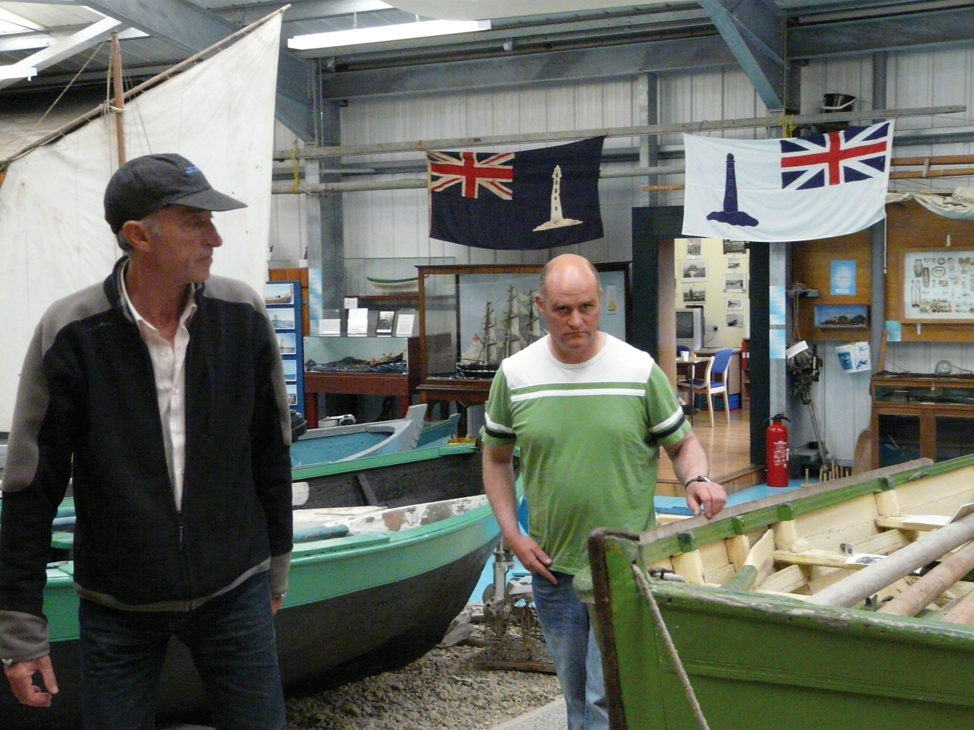
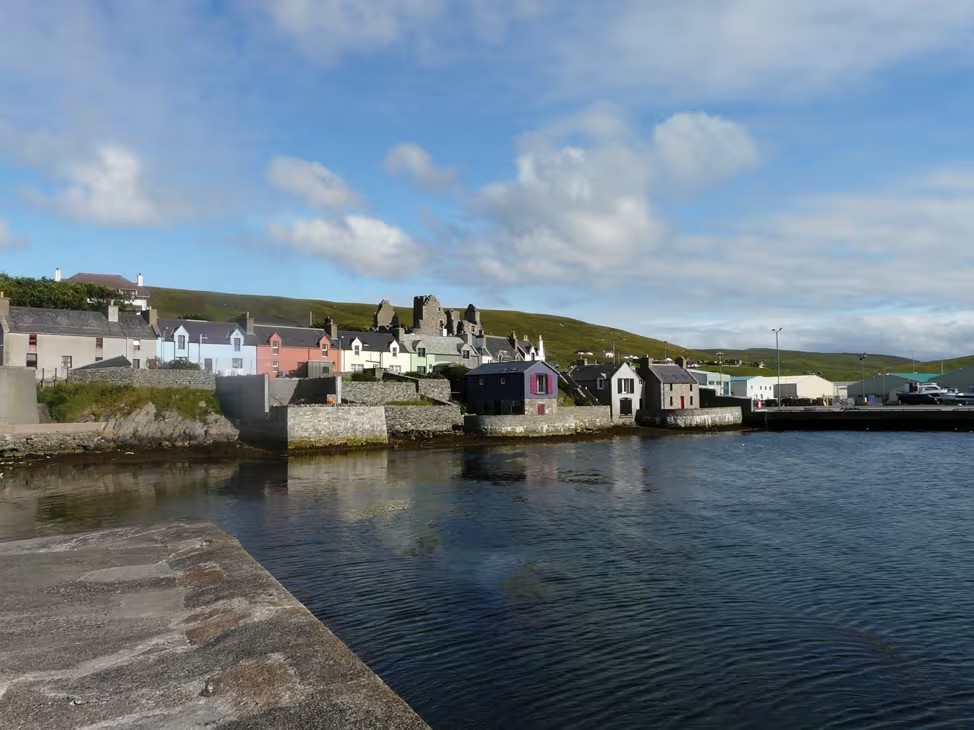
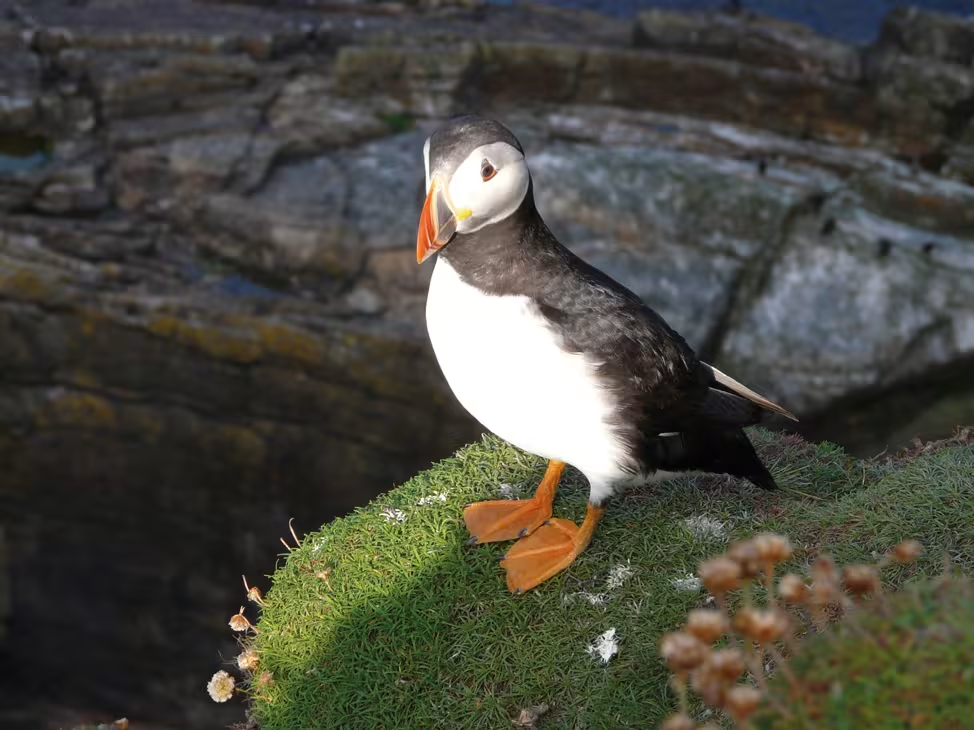
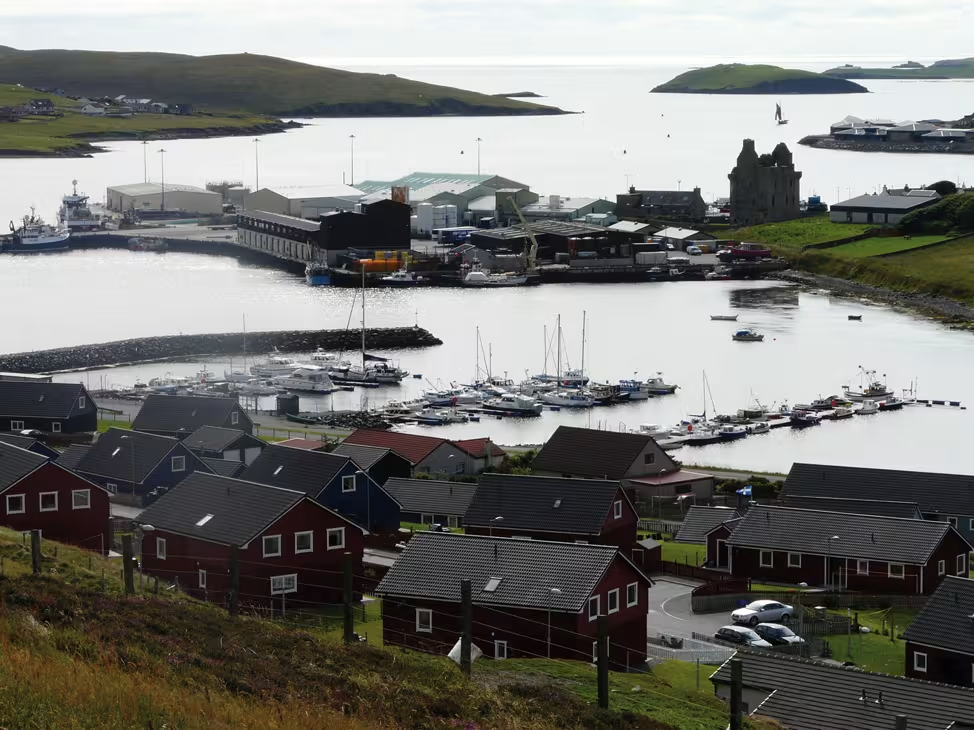
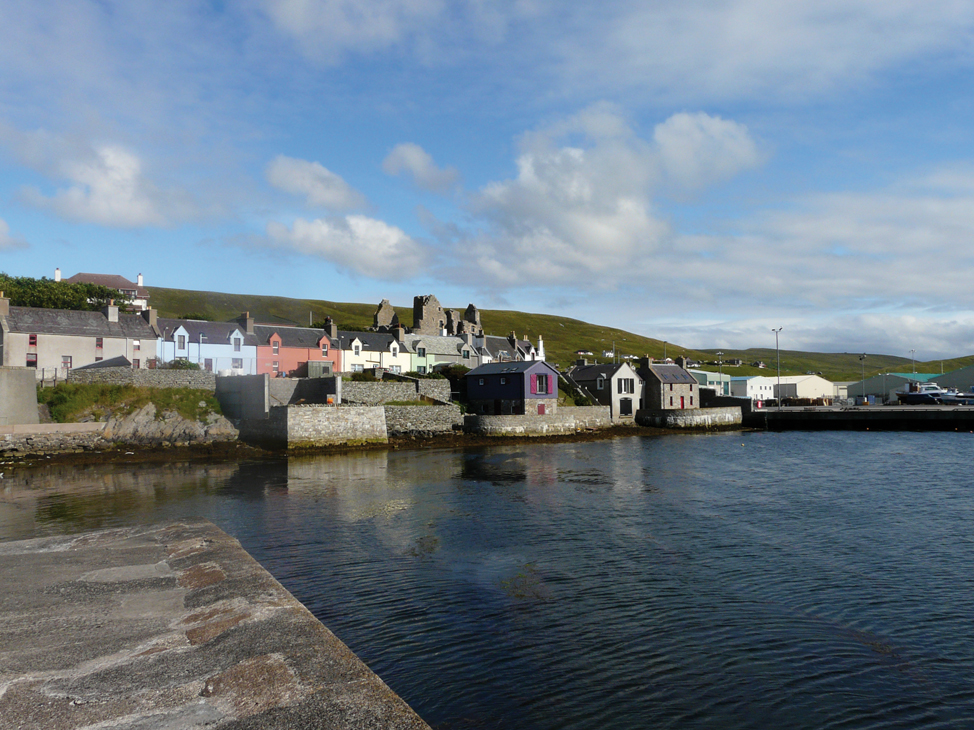
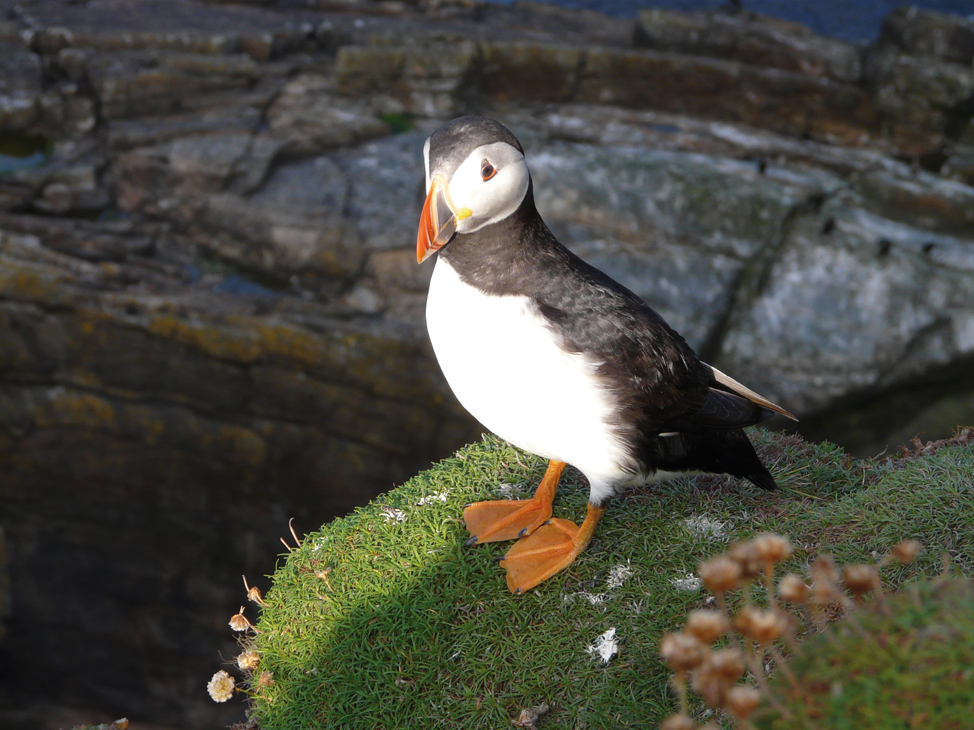
By the 16th, The Shetland Islands were ahead of us in the mist, no wind, visibility 20 meters, radar on standby, a single Volvo at tickover. Luckily, the curtain lifted just before Sumburgh Point in the south of the archipelago for a fabulous display of wildlife: thousands of birds flying, diving and heading back to the cliffs. Puffins, guillemots of all kinds, gannets, and razorbills all seem to mix well in the middle of the dolphins! And so I found myself in the port of Lerwick, capital of the archipelago, alongside a dock fendered with old truck tires. A tip for next time you cruise up this way: plan on having 2 three-meter fender boards to go between your fenders and the tires, it will avoid blackening the boat or banging the dock. The following day’s forecast was giving 35 knots. Should we visit Lerwick? If you know St Malo, divide everything by 3.14 (Scots love round numbers) and you get stone houses built to take on the hostile environment, sloping roofs to contend with the heavy downpours, narrow streets so tight you have to walk like crabs, pretty shops and pretty shopkeepers. Sprinkle on some gray and blue and it's beautiful! We meet people who are sturdy and brave enough to go out on the rough sea to find enough fish so they can buy more sheep. They roll their "r"s, drive on the left, and roll under the tables sometimes as well! It was a rough night, as forecast. A 54' Oyster very harmoniously crewed by 3 of Her Majesty’s finest citizens came alongside, announcing they found the place to be "marvelous"! Their fenders were set too short, and they rode up over my rubbing strake, threatening my more delicate craft. The 3 vexed gentlemen had to get out their boots and oilskins to put everything in order, with the wind gusting to 40 knots.
Lerwick-Uyeasound (Yell): Do you speak salmon?
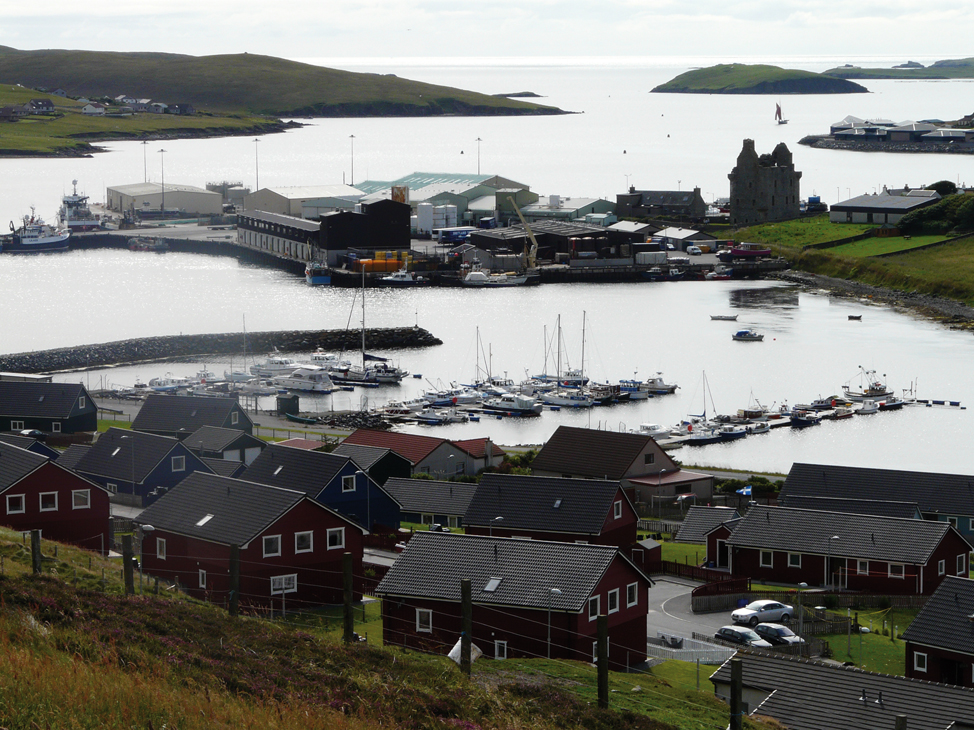
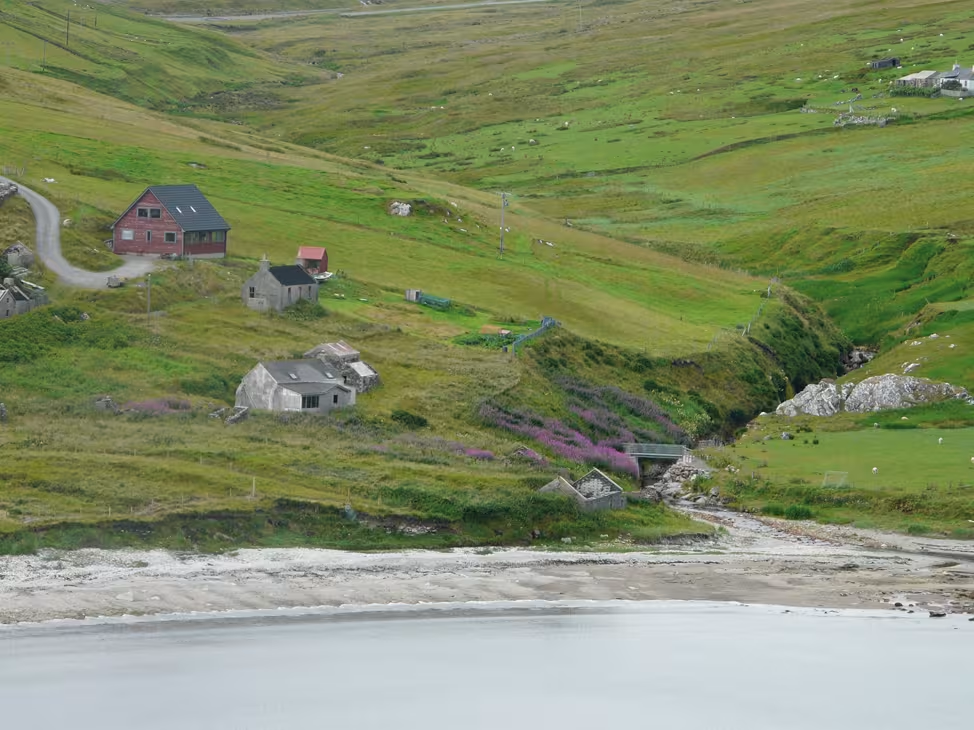
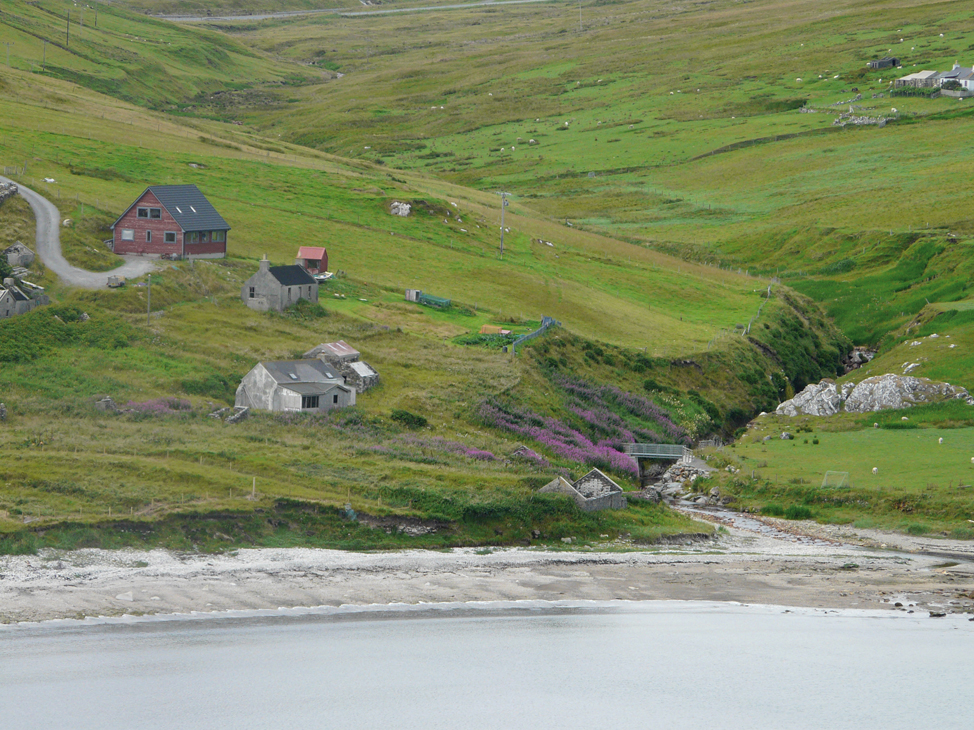
We left Lerwick on a beautiful morning, which gave the little town a “Saint-Tropez look”, with white facades and bluish tints. 40 miles and 4 hours later in a wind of about ten knots I arrived at Uyeasound, on the island of Yell in the North Shetlands, a magical place! I met up with my friend Fred Johnson, the salmon farmer. He saw us coming from afar, under full sail at 12 knots in the Sound. I stowed the canvas, and Casa Marisss snuck into the brand new dock. Fred was waiting to take the my lines. I climbed the small ladder: "Nice to see you!" In short, simple and strong. "What’s new with you? How is your wife?" Questions that received cryptic answers; the important thing here is salmon. It must be said that he has 18,000 per trap and at least a dozen traps! We had a glass of red on board with his brother and his nephew: few words were exchanged, but a smile does the trick for me. I can understand Fred, but the other two had me struggling with their accent, only salmon can follow them I think! They went back to work and then it was like I was in a show: Yell must have 400 inhabitants and many came out to see the strange boat. I was made so welcome that I found myself at the village festival; fish and chips (3 days in a row, and the portions have 5g of cholesterol!). I must say that it was very good, but no, I couldn’t wait for the drawing of the raffle because the wind was rising and the tide falling! Then the next day, Fred took me on his cat! A service boat with a central platform carrying a crane, with a wheelhouse from where to control the two Perkins diesels. We fed the fish and distributed the 4 tons of pellets. I returned with 2 pollock, but then Fred came aboard with a crate of crab and a giant lobster! This left little room for improvisation for future menus. So I had Fred and his brother George at the table. They do not like lobster, that's good! The next day, I became a tourist, thanks to George and his wife Kathleen. We drove up to the northern tip of the Shetlands to see impressive wild heath and cliffs washed by the foam of sea. This former NATO base has now been returned to the birds, where the skuas (raptor-style gulls) reign as masters, robbers of fishermen and divers, and guillemots and puffins are also stealing their fish!
Yell-Tórshavn (Faroes): We made it!
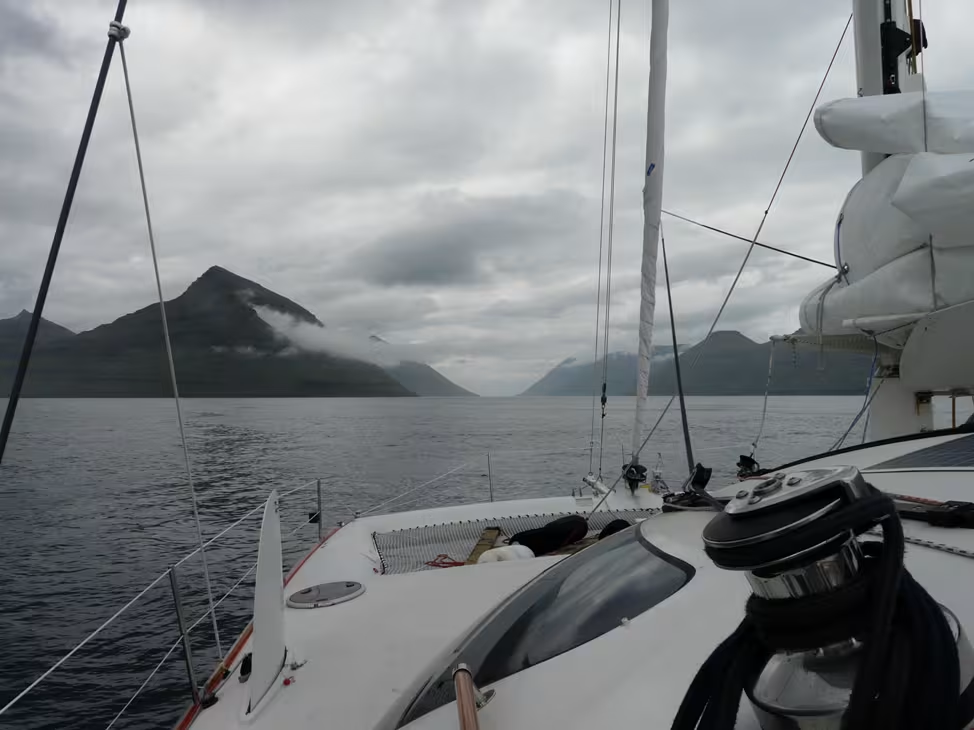
Following a serious check of the standing rigging, winches, tension of the helm control lines, reefing lines, oil levels and various filters, we left the Sound on July 27th, westbound, at dawn, under a layered sky. First, there was a micro-stratus through the cumulus and other nimbus, the full cloud catalog! The sun came and went, the drizzle too, and strange gleams pierced these vaporous masses until the wind dispersed them to clear a silvery horizon. Magic! I'm entering a "no fishing net area”, good at 7 knots for a 220-mile crossing with changing weather. I aimed so hard at the edge of a depression that I missed a little wind on a residual swell. We slid along, over depths of 1,100 m all day long before night fell on me at the same time as fatigue. It was at this moment that a cohort of ghosts resumed their dance on the crests of the waves, letting me believe that I wasn’t alone at sea! I could see other sailboats, a sperm whale, a buoy, the earth, while only small breakers sculpt my illusions on a serrated horizon. The jibsheet groaned on its winch, above my head. That means 12 knots. Knowing such noises gives me as much information as I would get from any of the electronics. The night was very curious as it felt like going back to day mode at random with successive squalls. Around 5am (it was chilly) the Faroes appeared out of the mist! Radiant sun on Casa Marisss, the wind was rising on a flat sea: the speedo indicated 19 knots, and I decided to dump the mainsheet and get ready for the entry formalities.
Tórshavn: long live St.Olaf!
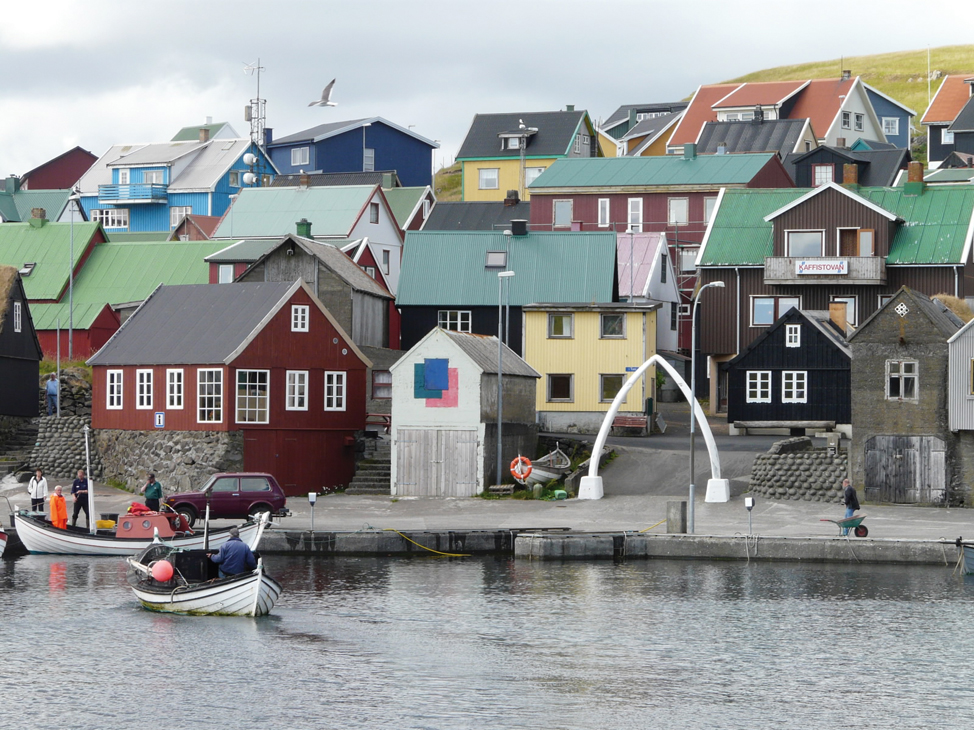
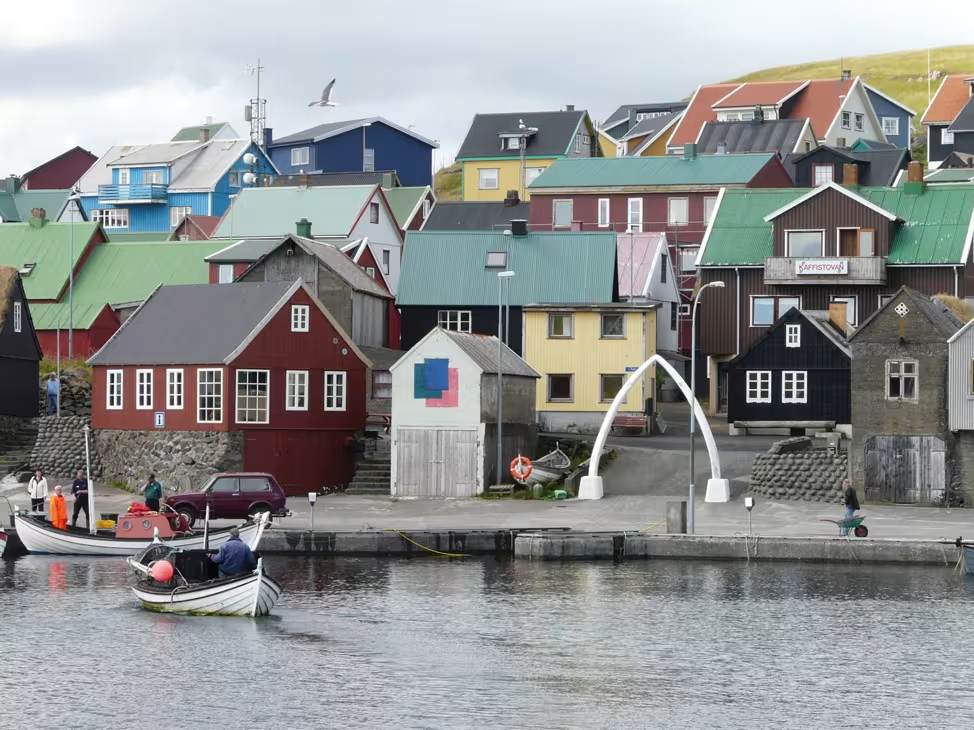
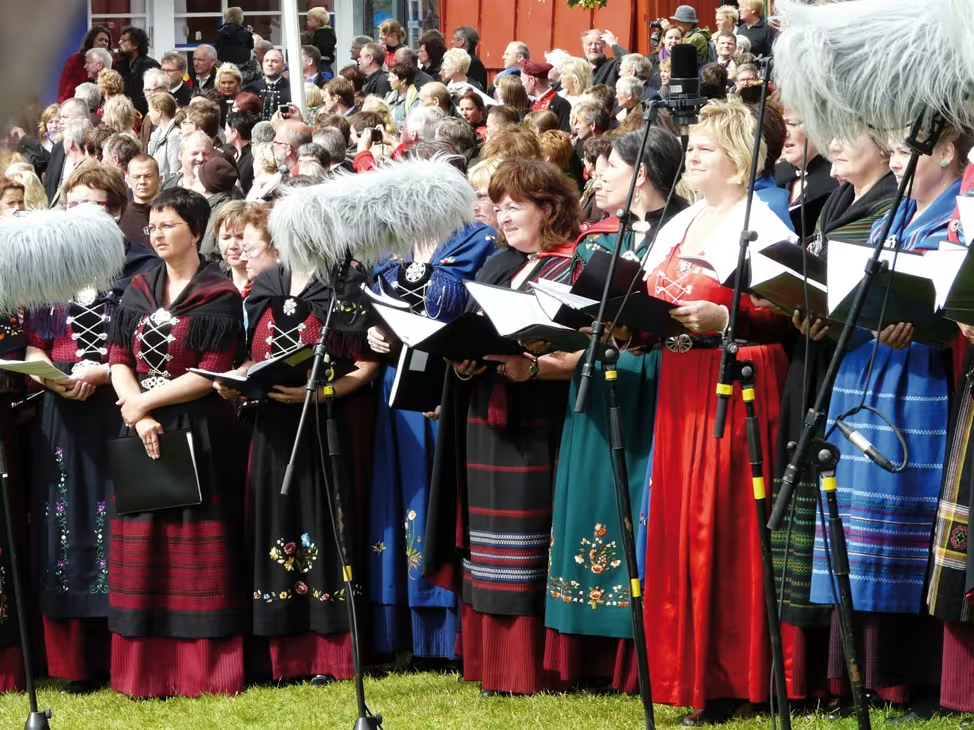
My arrival was complicated by an unforeseen event: July 28th is St Olaf’s day, which meant two days of national holiday: boats everywhere, but no sailing allowed in order to leave the water as smooth as possible for rowing races. So, a siesta, and then a trip into town. The inhabitants are called Faroese, and I’m wondering if they’re in fancy dress? But no, they are in traditional costumes and are engaged in a reprehensible activity: binge drinking. There are empty beer cans everywhere. The women are very beautifully dressed! At the baby stroller park these pretty women are everywhere and they are stopping to chat, the babies babbling at each other while their parents talk at the bar. The sun just fell behind the mountain having cast its final rays over the tops of the village.
Fuglafjørður: may the force be with you.
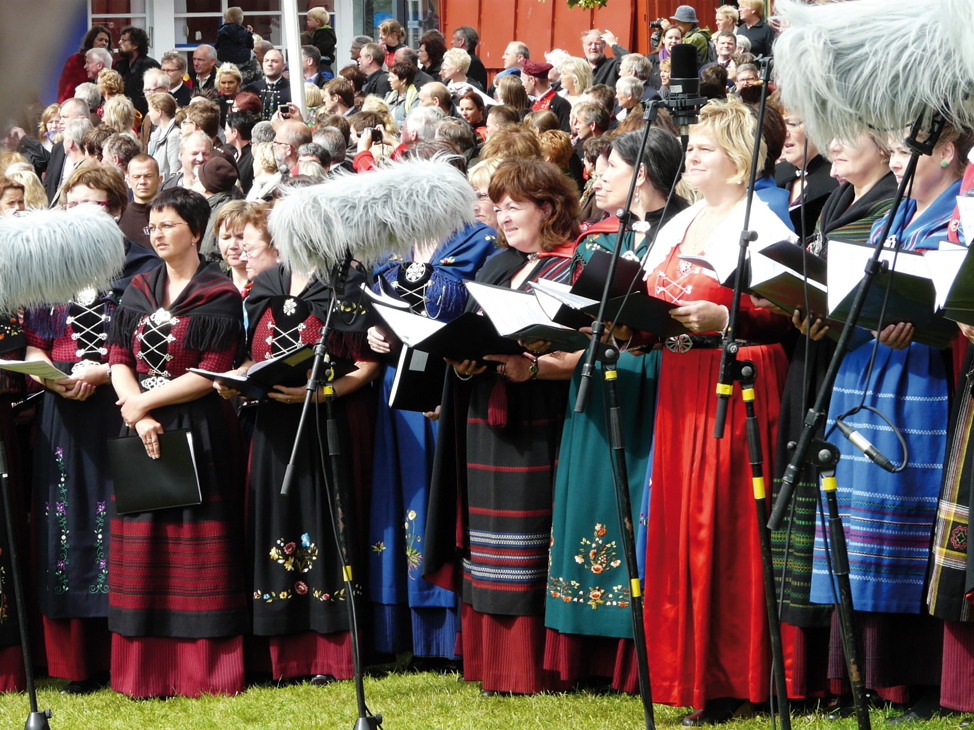
Tórshavn is now to my south, but not without effort, because after the 2 days of fiesta, returning to normal life is a struggle, and also, revictualling is difficult. I confirmed what the charts suggest: isolated small anchorages: so no victuals to be found here. At 100 m from the shoreline, there are depths of 50 m. These observations led me to decide on Fuglafjørður, going alongside a welcoming dock (despite the same truck tires as in Lerwick). The villagers came out to offer me cod. The night doesn’t get completely dark, yet I am not as far north as I got last year, 62°N (and it’s 11°C outside). The sky opened up with stars and the waters of the fjords were frozen, giving a perfect reflection to the mountains.
Klaksvík: When it rains, it pours.
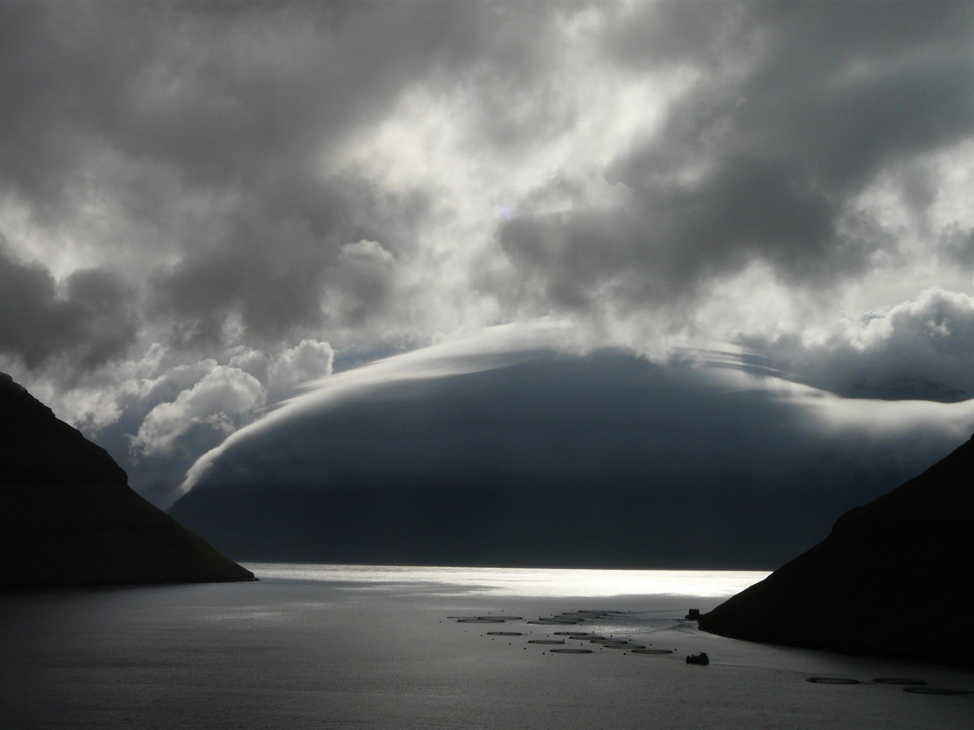
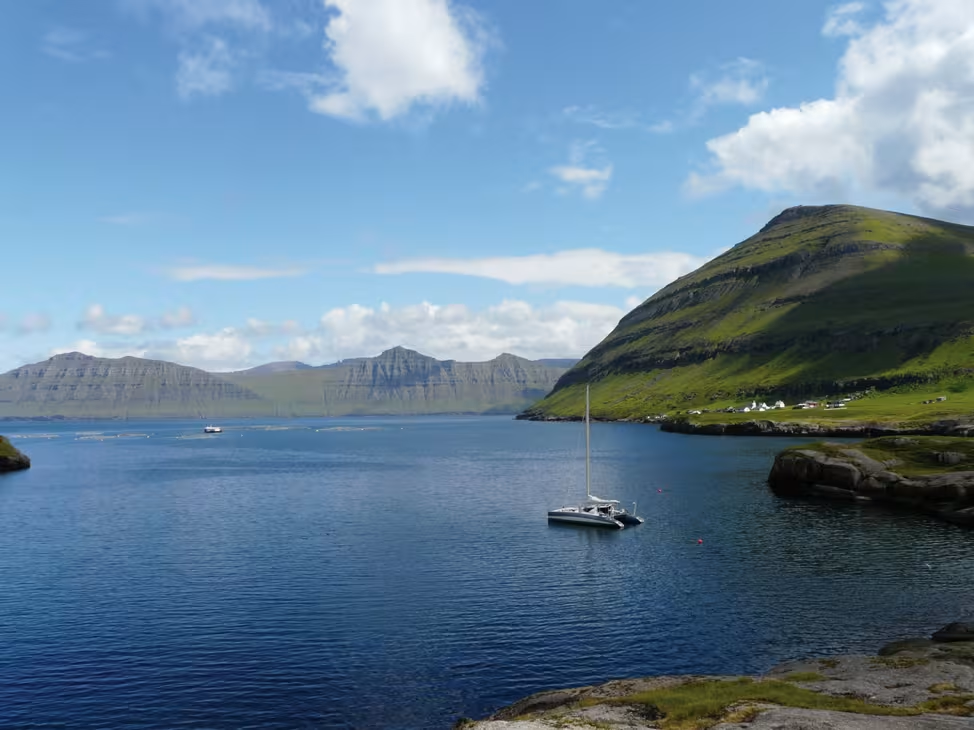
The morning departure was under a warm sun that seemed to be saying "enjoy it!" After some unsuccessful searching for a decent anchorage, each one more sumptuous than their neighbors, fishermen seeing me looking around with depths near 100 m, one eye on the GPS and the other on the sounder, told me of depths of 7m at 80 m from the shoreline (exceptional). Bluecharts and Navionics both said "Unreliable data" which roughly translates as "be on your way, foreigner". Here we were, anchored in an idyllic place but one where I would not spend the night because the rudders are only 20 m from the rocks. The story that follows has something unreal to it, a movie set where I wait behind each rock for a Viking or an elf, a fairy or a witch. The birds felt familiar, except for puffins, which pay a heavy price to the local gastronomic market. It became necessary to seek safer shelter: Klaksvík; guess where? Alongside some tires again! Klaksvík is a major fishing port, below Mount Klakkur, which gave its name to my neighbor on the "pontoon", a 40 m longline fishing boat, 13 crewmen, 40,000 hooks and 50 tons of fish returning from Greenland.
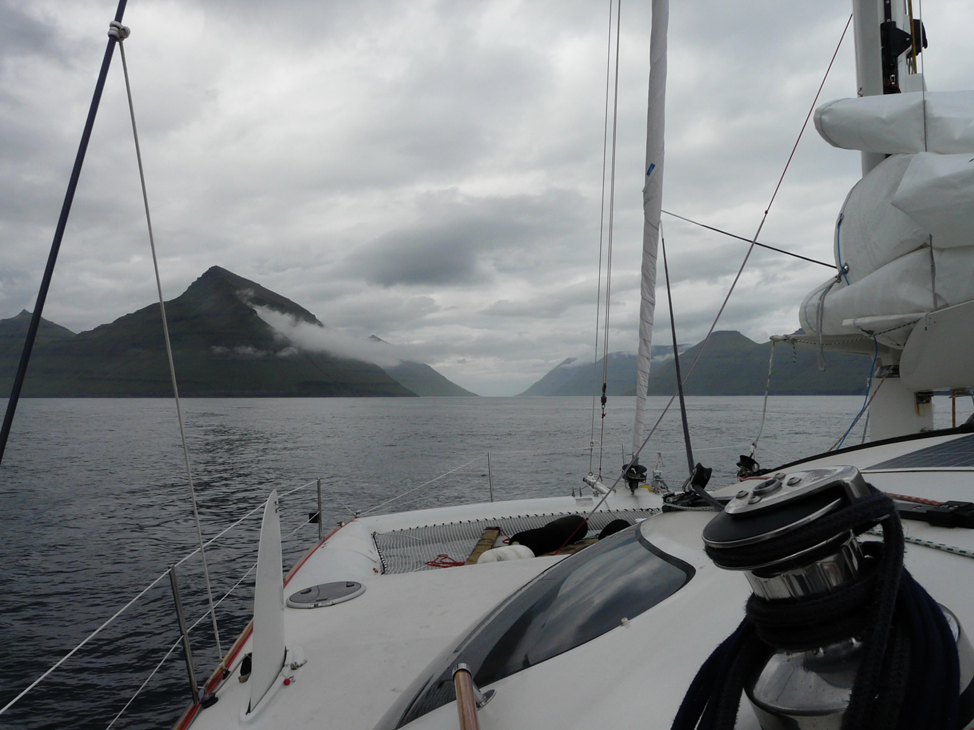
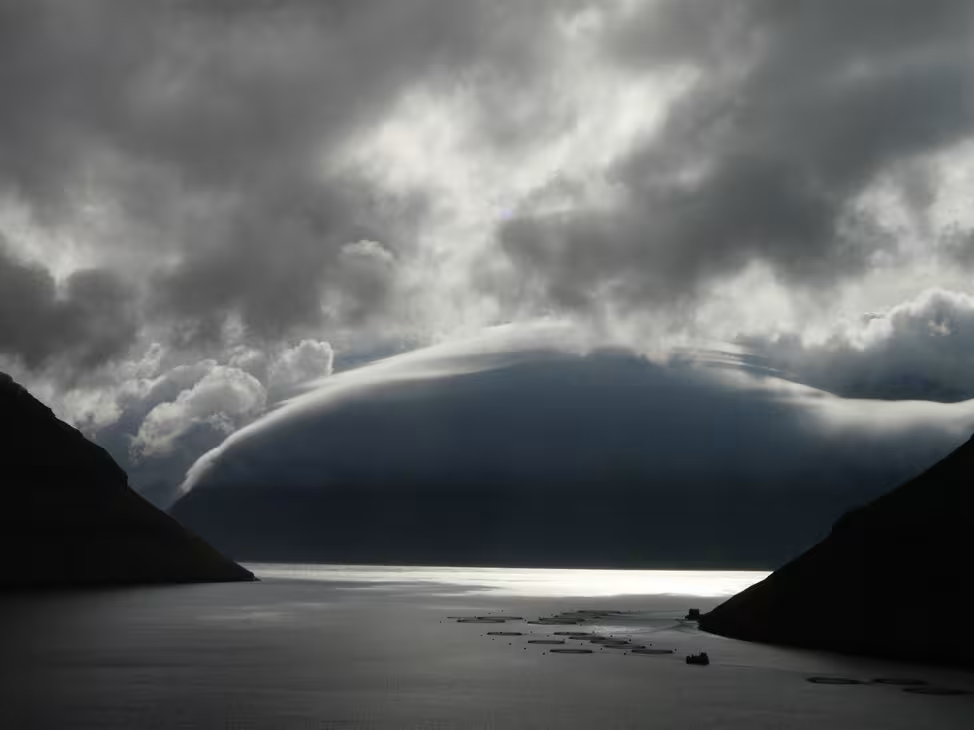
The skipper invited me to visit his ship and then we had a drink back on board the cat, chatting about the North Atlantic. Here we were, Saturday 1st August at 3pm, and it was blowing 35 knots outside! On the dock, everyone seemed to have come out to look at my cat, but the conversations remain nonexistent except offers to crew, so as to be able to take in the 3rd reef. So I decided to try and pass myself off as a native Faroese, but was the only one to be seen in my oilskins under the bucketing rain. It's so beautiful here! After a night where to say that it was raining, would give no clue about this apocalypse, the sun returned from afar! In the Faroe Islands, you don’t need a watermaker, rather just come with a funnel, not too big, a small one will be enough! The fridge was empty, so I got in the dinghy with my fishing rod. Ten minutes later, business was concluded and the fridge full. A strange evening arrived. The sky slowly carried lazy clouds that clung to the slightest roughness. The impression was the same as you get in an airplane, both in the clouds and yet next to them. We don’t look at the landscape, we are simply part of the ever-changing tableau. It is a gigantic scene, diffusing an airy and subtle smoke where I saw the lights of the houses dancing and the lights of the boats, creating an unreal, soothing and mysterious atmosphere.
The waves in the asphalt
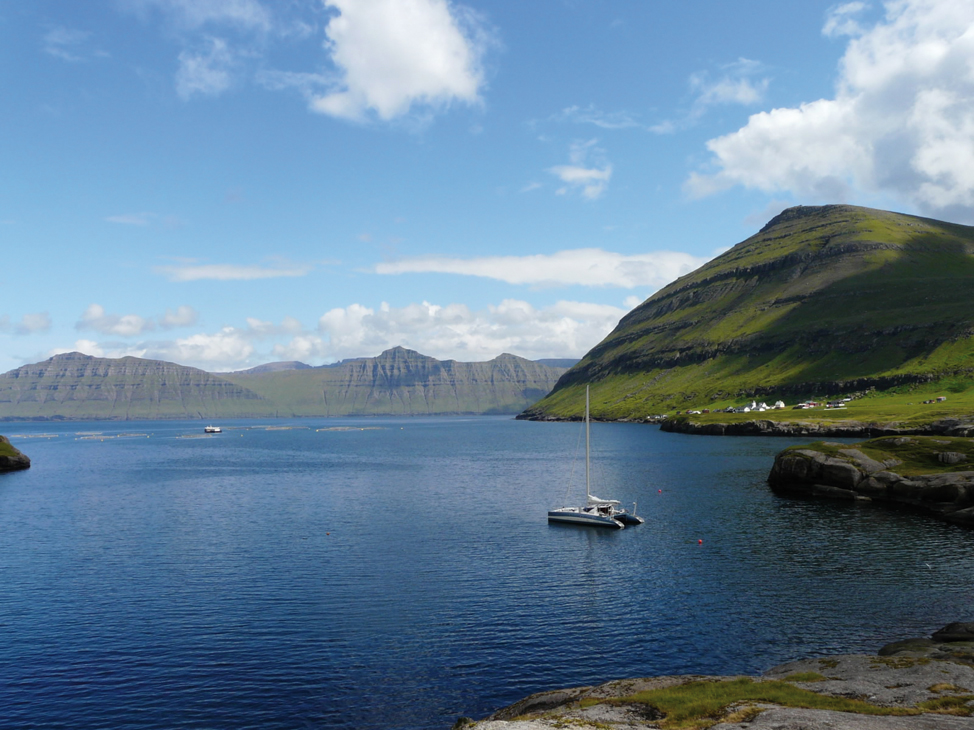
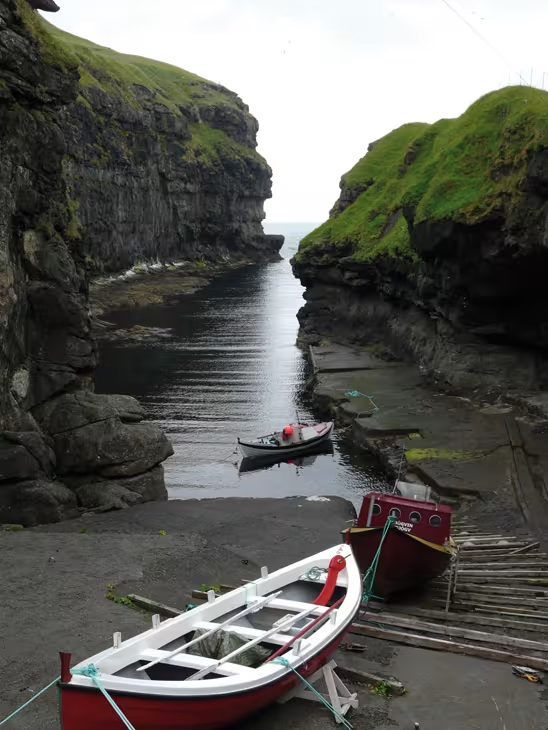
I rented the Harbormaster’s car for the following few days. No forms to sign, just a handshake. Theft does not exist here. I visited fjords and bays, windward and leeward, without any rolling. On the other hand, the roll due to the absence of shock absorbers reminded me of the sea. It was grandiose, another beautiful way to see these islands and the clouds that play with them. I stayed stuck in tunnels which were 1 or 2 km long in which where I expected to discover lost paradise landscapes at the other end. I forgot to tell you about the sounds, with the oystercatchers making the high notes, the eider ducks on bass, the razorbills on drums, all rhythmed in a masterful way by an untiring conductor: the surf.
Tórshavn (round 2): Change sides, new balls please.
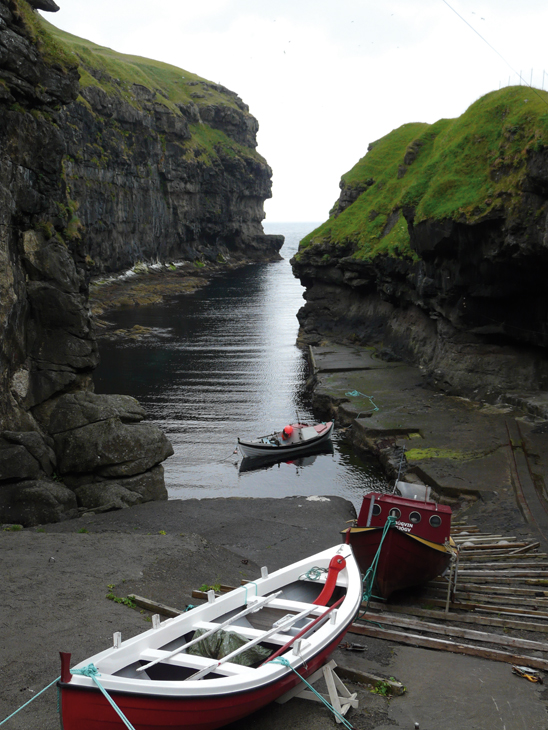
After a few days between the sky and the fjords I was back at sea, bound for Tórshavn where my crew was arriving (by air) for the return trip: my friend Patrick (a free agent), his son and a friend. A trip which will certainly be more relaxed with competent crew members. I revictualled so they could discover some of the flavor of the place: dried cod, dried whale, whale fat and whale steaks. The word whale here designates the pilot whale: they are very abundant and are the main source of protein, along with mutton. I tried it: it's succulent, but consuming it is now discouraged in the Faroe Islands because these mammals accumulate too many heavy metals. The traditions of capture and slaughter will probably end up being lost, thanks to not only to Greenpeace but also pollution.
The return trip: the merits of absence.
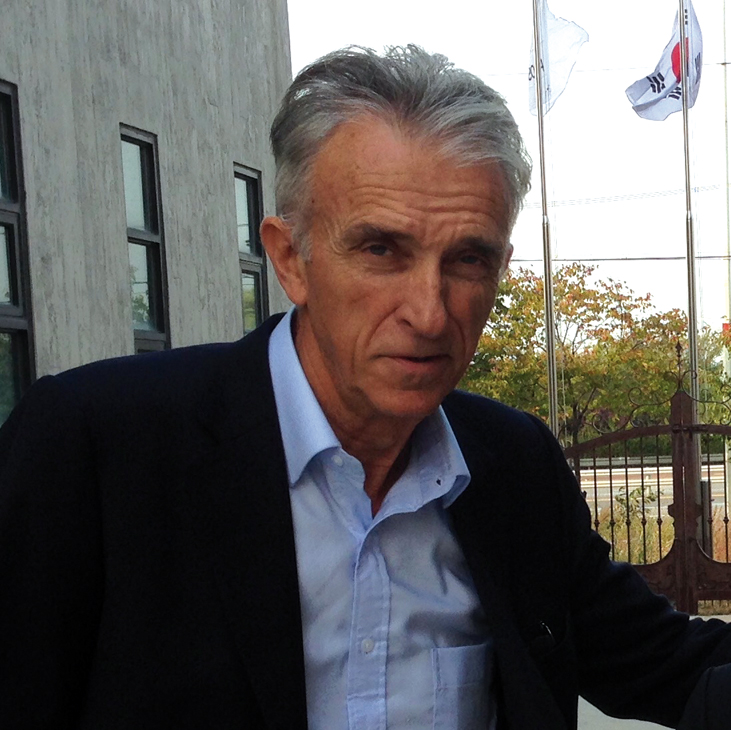
I’ll tell you about the return trip another time. Just know that it was fast, happy, restless, calm, dazzling. Casa Marisss returned to familiar waters, her hulls laden with memories, a long journey of 3,000 miles, a short voyage of discovery where the gray opened willingly to warmer colors. Now you only have to close your eyes to see the fine color of the fulmars, the metamorphosis of the gannets into rockets, the delicate skill of the puffins and the inquisitive whiskers of the seals. The warmth of the people I met was worth the few uncomfortable beats and the downwind legs full of enthusiasm. Hi to you, Kate and Raymond, the Irish of Ulster, thank you George and Fred Johnson, Shetlanders of rough sensitivity for those looks exchanged as I departed and your friendly concerns. What grace you have, moving your working boat so that the big cat could settle serenely alongside your dock? I still have a few miles to savor these exceptional moments before setting foot on home soil and once again realizing that absence makes the heart grow fonder.