
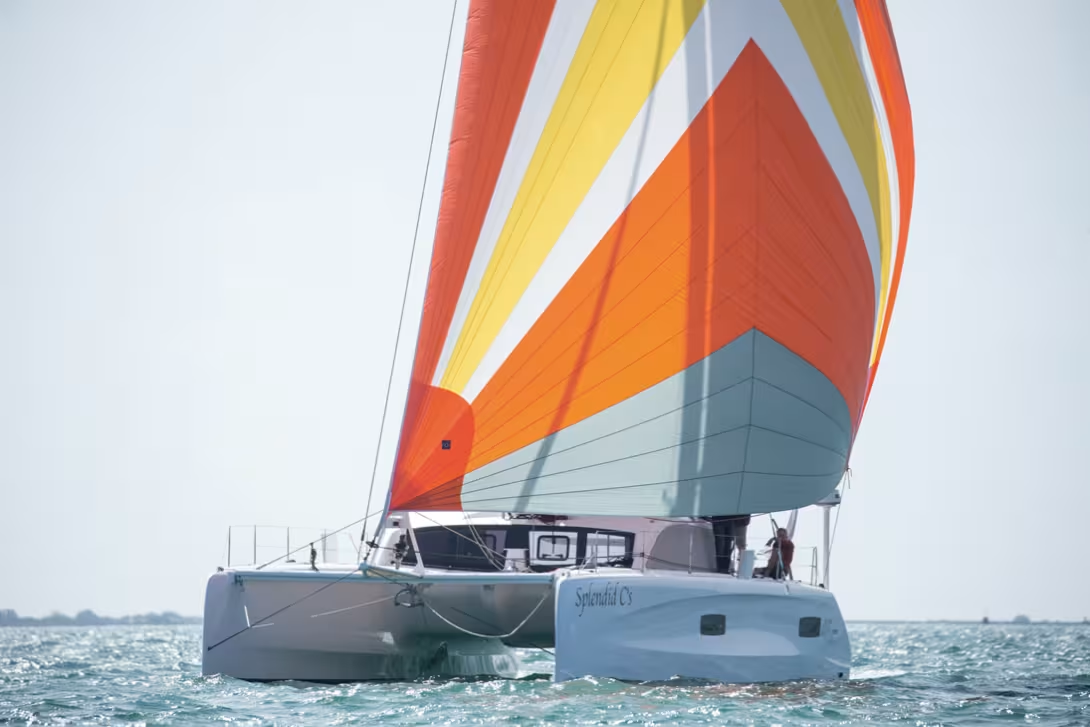
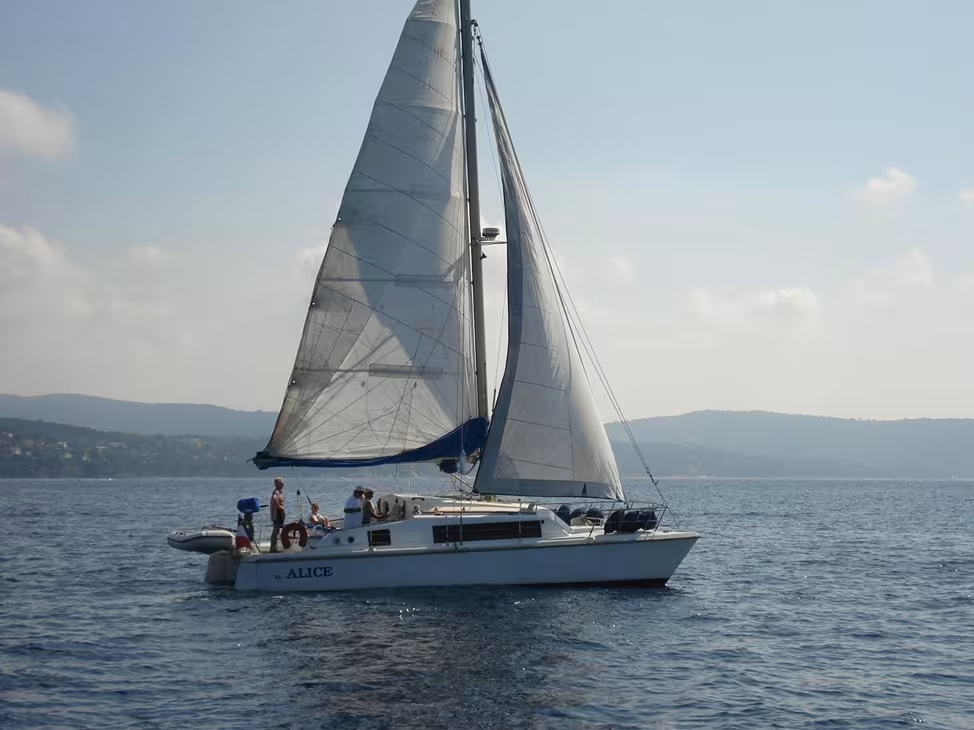
It’s hard to separate the racing world from the fantastic progress of cruising multihulls since 1960; we could even be tempted to say that the catamaran is completely derived from racing. Everything began in England, where the Prout brothers, after having perfected one of the first sport catamarans, the 'Shearwater', a precursor of the first ocean racing multihulls, built the 'Snowgoose', a 37-foot cruising catamaran, which became the first production multihull with more than 500 examples built in its 40-year career. Then at the beginning of the 80s, while catamaran production was almost non-existent, Jean-François Fountaine, after having built Charente-Maritime with a group of enthusiasts from La Rochelle, used this as a trampoline and in 1983, launched his first production catamaran, the ‘Louisiane 37’. We all know what followed. In 1984, the competition department of Jeanneau JTA (Jeanneau Techniques Avancées), after having built Pierre 1er for Florence Arthaud and the Fleury Michons, created Lagoon. A first range of ocean-going catamarans of from 37 to 67 feet saw the light of day from 1987. Here again, we all know what followed. At the same time, it was the turn of Philippe Jeantot, who after having tried with the catamaran Crédit Agricole II, won the BOC Challenge twice and had a catamaran built so his family could follow him at the stopovers. He launched his brand ‘Jeantot Marine’ with a first model, the ‘Privilège’. This privileged link between racing and cruising catamarans is governed by a strong principle - to sail faster, more easily, in comfort and safely - which has continued to develop up until the present day, and it's far from over.
Generic developments
With very long and very restricting passages, ocean racing has been a wonderful laboratory for all the equipment embarked aboard. Although the innovations are a result of the progress offered by technology, they are almost always the fruit of reflection by racers and their development is undeniably down to the competition world. Thus navigation software has been developed for and by the racers. Who among us could imagine leaving for a cruise without one of these electronic wonders? Their refinement and the miniaturization, here again due to the racers – we remember the absence of a chart table aboard Michel Desjoyaux’s Foncia, at the start of the 2008 Vendée Globe – allows very appreciable space saving when cruising.
Hydro-generators also began in the racing world, before starting to equip the transoms of our ocean cruising boats.
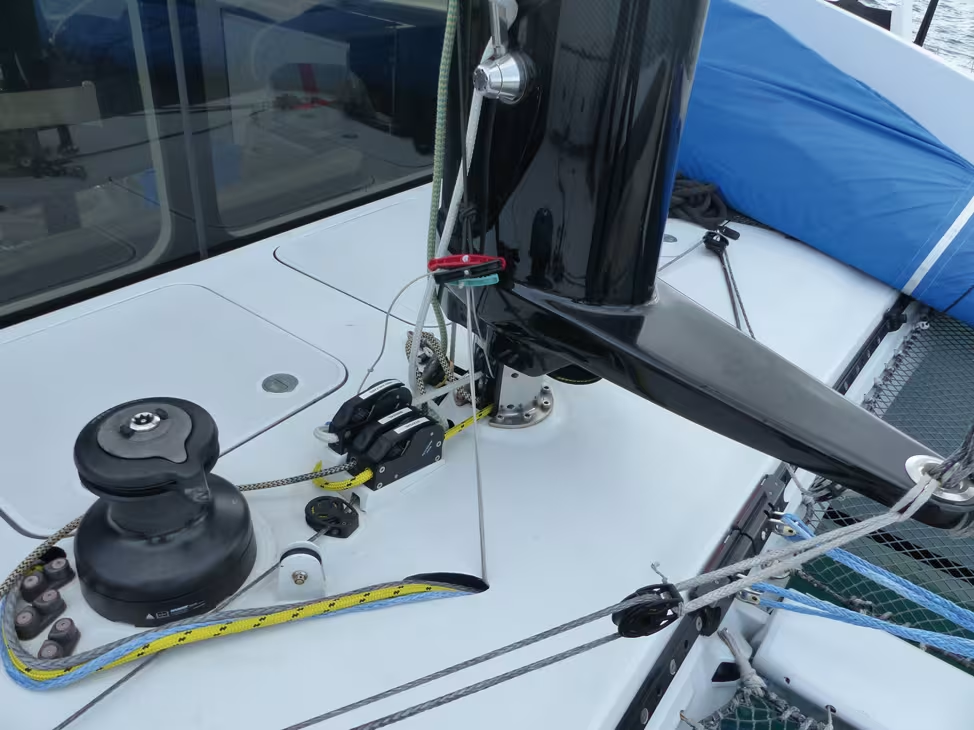
And what can we say about singlehanded or two-up races? The development of the deck plans and fittings necessary to sail these racing machines properly has also greatly simplified our lives when long-term cruising, which inevitably means sailing shorthanded. We can all remember Phil Weld’s roller jibs and mainsail, which allowed him to sail his trimaran Moxie and win the Ostar in 1980, despite being 60 years old. Since then, headsail roller furlers have become widespread, and we find more and more cruising cats with roller furling mainsails.
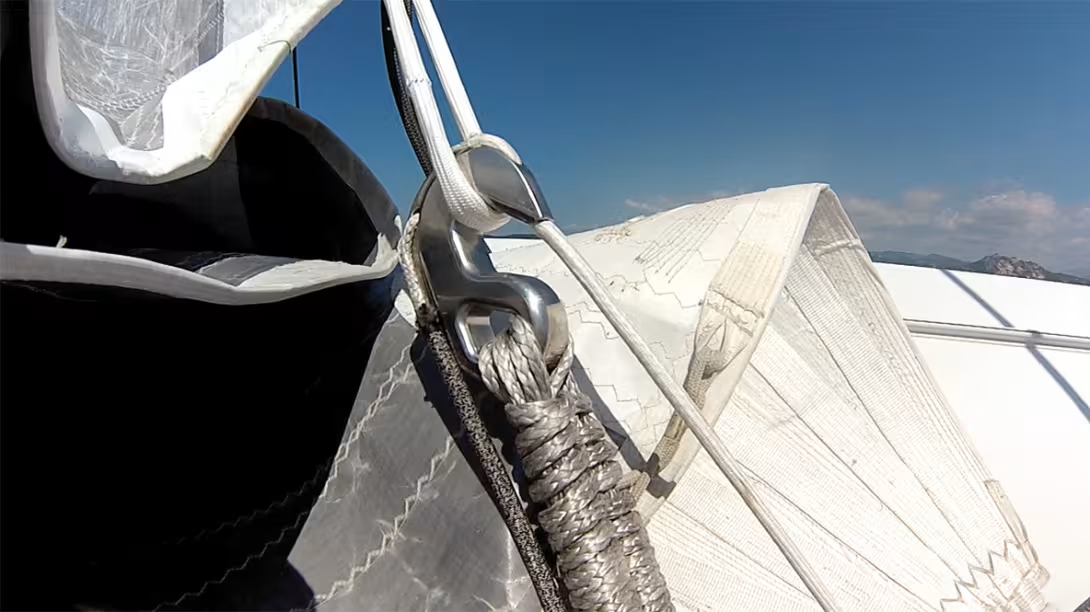
In the same area of sailmaking, square-headed mainsails have become the norm on cruising boats, offering power and ease of use, notably thanks to great fittings and another innovation coming from the racing world, the hook.
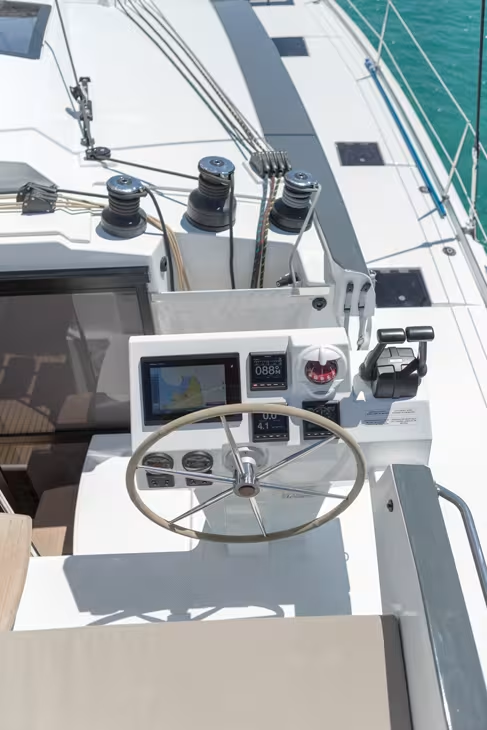
To be able to sail easily as a family crew, the singlehanders’ ‘tricks of the trade’ have greatly influenced the ergonomics of our deck plans, and nowadays, a 50-foot catamaran can be handled singlehanded without leaving the helm, and above all, without needing to be one of the best sailors of your generation.
For Marc Van Peteghem, the famous designer of both racing boats and cruising catamarans: “all the innovations are not always workable when cruising, or only when the optimum conditions combine, which sometimes takes a long time…” This explains why certain innovations only arrive on cruising boats after a long period of adaptation, and some others, never!
Constant, non-exhaustive application
Current production boats no longer have much in common with the pioneers of the 80s. But if cruising multihulls’ modern domestic comfort and ease of handling have not meant sacrificing speed, it’s because certain techniques used to be able to sail faster when racing have been adapted to cruising as and when they have been perfected. This is for example the case for composite materials. They have allowed more rigid, lighter platforms to be built, withstanding better the hydrodynamic and sailing constraints. And the weight saving has allowed the boats to be better equipped, without however increasing too much the sacrosanct laden weight.
But while the polyester/foam sandwich, which originated in the racing world, has become commonplace in our hulls and bridgedecks, the sophisticated materials such as carbon, nomex or honeycomb have only played a very small part on our cruising boats. They are only used for structural reinforcements and, as an option, on certain up market boats, for the masts, the appendages and the accessories. Expensive and above all fragile under impact (apart from the care lavished by a racing team), as well as noisy, these sophisticated materials no longer offer the anticipated weight saving once the insulation – essential when cruising – is fitted.
On the other hand, Franck Darnet, an interior designer well-known in the cruising multihull world, remarked to us that “the ‘competition’ atmosphere that carbon generates can be found aboard, on furnishings and accessories.” But the importance is not just aesthetic: on very sporty and/or luxurious boats, the basins, toilets and chairs in carbon can save up to 70% of the weight of these accessories.
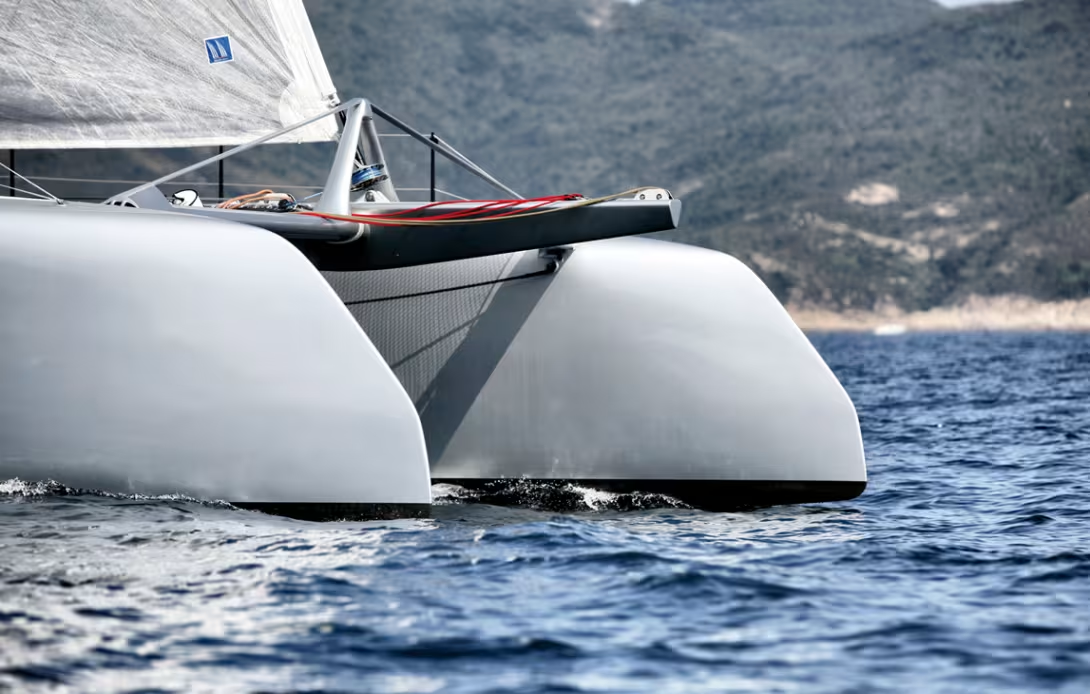
The effects of fashion also don’t hesitate to mimic the hydrodynamic solutions of racing boats. Apart from on a few rare, very sporty multihulls, the only reason for having inverted bows is stylistic, the naval architect Olivier Racoupeau explained to us.
In the field of architectural design, precisely, racing developments are numerous. The progress realized on hulls, where initial stability has little by little replaced part of the ballast in monohulls, has thus allowed them to benefit from a much wider beam. The same applies to catamarans, even though it is less detectable on first glance, as Renaud Banuls explains: “there is antinomy between comfort and performance, between the V-shaped hulls which cut through the water well, and the flat ones which slide well. The longitudinal ‘steps’ in the hulls, which arrived very early in multihulls, came to the rescue, to retain performance while widening the hulls and thus offering better living conditions in the cabins.
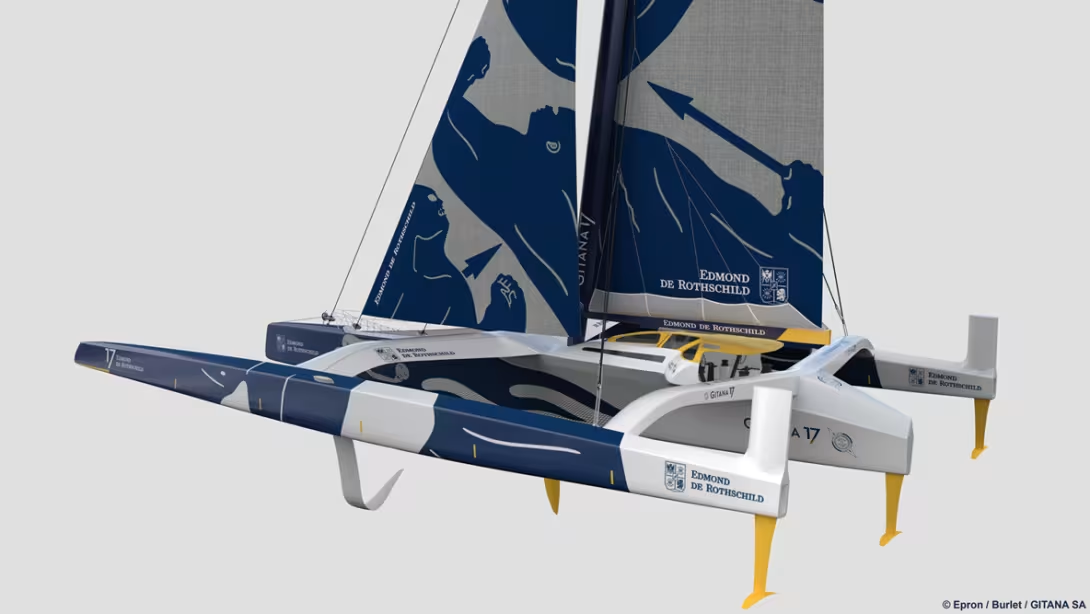
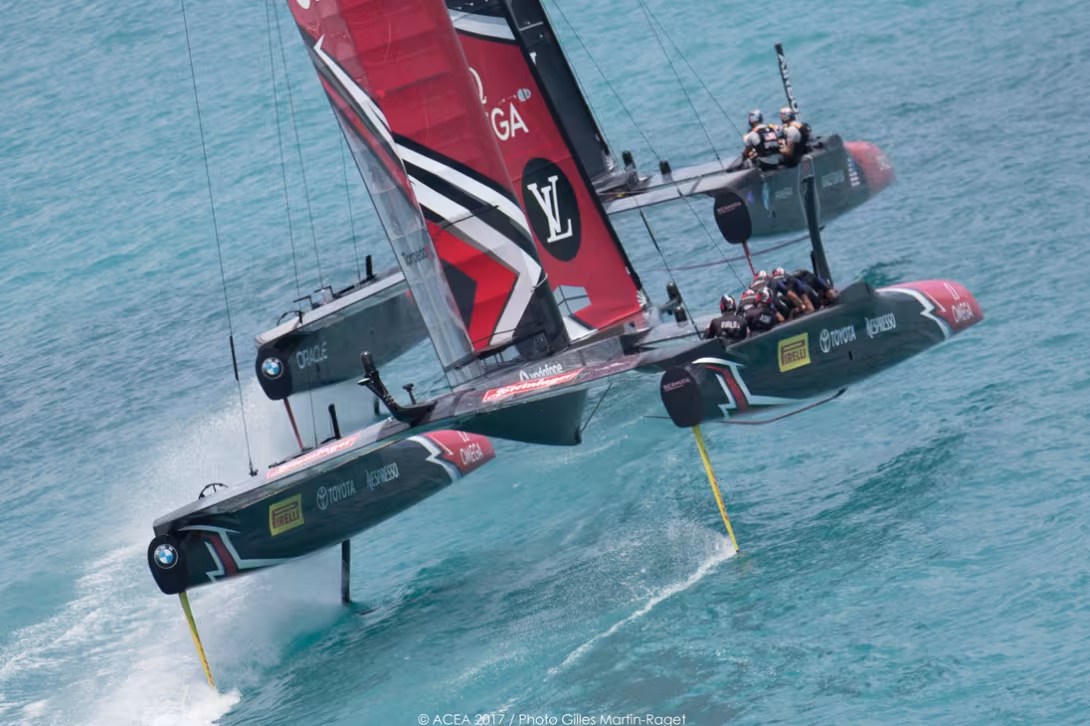
To go fast, the boat must pass well through the waves. Current cruising catamarans have had an increase in freeboard, to limit the impacts of the waves on the crossbeams and bridgedecks. Similarly, progress on rudders and daggerboards is well-known. Both are much more efficient and there is a lot less turbulence. Here again, it’s the work carried out in racing which has allowed these developments. “Thanks to the apprenticeship of racing, the work with the VPLP office allowed us to benefit directly from their huge experience of speed,” explained Yann Masselot (Lagoon/CNB). And this participates in improving the performance of the cruising cats, despite a weight specification which has almost doubled in 30 years… Although retractable daggerboards have only been used on a few sporty ranges for cruising; for racing they have gradually turned into foils. Today we fly round the world, as François Gabart has just demonstrated with his singlehanded circumnavigation via the Great Capes. But as Olivier Racoupeau rightly pointed out to us, although the average speed of racing multihulls has almost tripled in 30 years (26.9 knots average on Idec’s fully-crewed circumnavigation), this is not the case for cruising cats, which certainly sail a little faster, but have rather answered the increasing demand for comfort. The constraints of foils are considerable, and it will be hard to get a heavy cruising catamaran under sail to fly, because getting onto the foils must be done very quickly and needs strong acceleration, so is reserved more for motor boats. In the absence of sails, they are much more stable – one difficulty less. In Olivier Racoupeau’s opinion, we will see foils on our cruising catamarans, but the aim will be to ease the passage through the waves and improve the active comfort accordingly, rather than increasing cruising speeds. Another example of adaptability of racing techniques to cruising.
The wheel turns
And what if the systems designed for sailors sailing with their families could influence the racing world? Let’s take the example of the Ultim class. To make the impressive sail plans on these giant multihulls more usable, and above all to make them manageable singlehanded and more balanced under sail, the architects have revised the rig position. The mast is now re-centered, thus making the foretriangle more efficient. A position that we also find on a number of cruising catamarans. Another development coming from racing? Not so certain… To convince yourself, all you have to do is go back to the beginning of this article, to realize that the first production cruising catamaran, the Snowgoose 37, had its mast positioned above the aft coachroof bulkhead, in the 1960s!
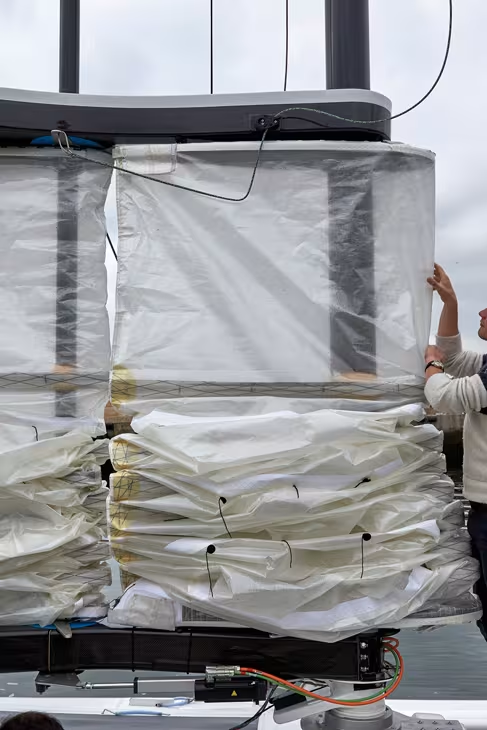
A smaller mainsail, easier to reef and gybe, but also more efficient - this is tomorrow’s challenge for both cruising and racing. And tomorrow? We are seeing certain attempts to adapt rigid wing sails, developed for the America’s Cup, to our cruising boats. The concept was born during the first oil crisis in 1973. The rigid wing was planned to reduce cargo ships' fuel consumption, but the materials available at the time, through their weight and lack of rigidity, didn't allow its development. We had to wait for the optimization of carbon composites and encapsulated cloths to make it possible on Stars & Stripes in 1998, then in 2010 on Oracle. There is no doubt that they would bring a new approach to sailing. Both racing and cruising, there’s no end to the enjoyment we get from our boats…
