
<h2><span style="text-decoration: underline;"><strong>For the engines!</strong></span></h2>
<p><em><strong><img src="/sites/default/files/inline-images/mm186-34-01-match-moteur.jpg" alt="" width="974" height="730" /><br /><span style="text-decoration: underline;">By Daniel Curt</span></strong></em></p>
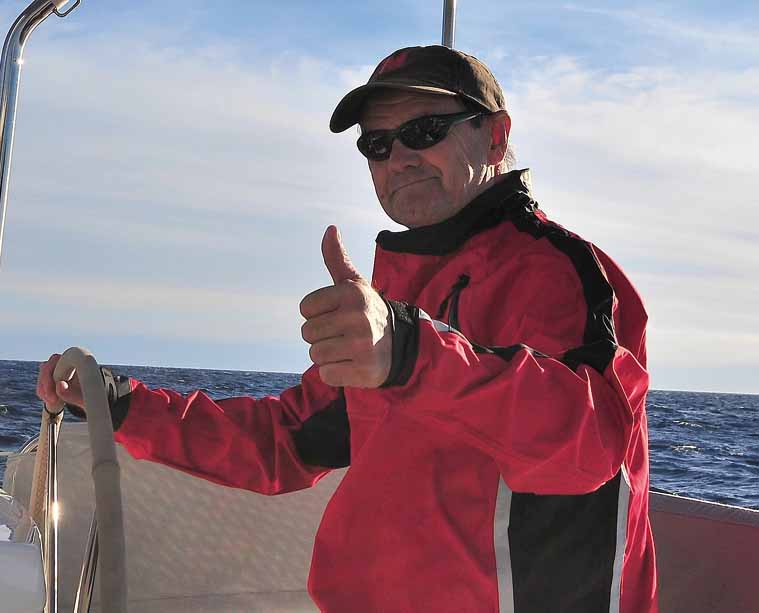
<p><em><strong>Daniel Curt is a sexagenarian resident of La Rochelle whose brain has difficulty resting. Engineering fascinates him, once it touches on solar panels, geothermics and other ‘independences’ to be conquered, as the present day solutions don’t satisfy him! He has invested this creative ability in the design of two multihulls: a 50’ catamaran, with Michel Joubert, and a Power Cat 60’ with Marc Lombard!</strong></em></p>
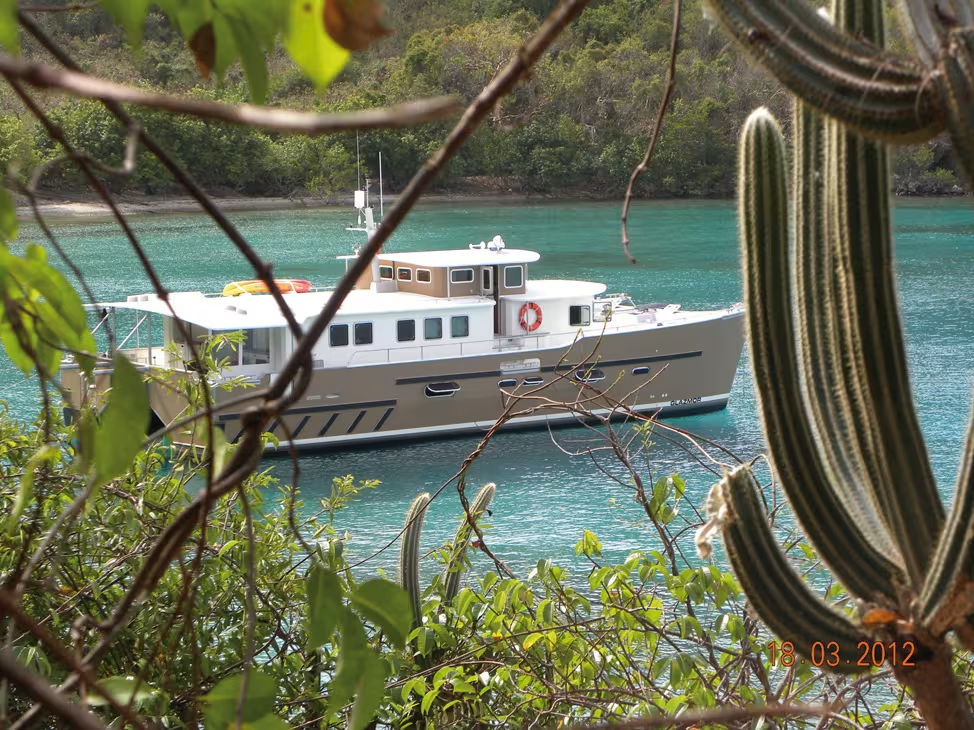
<p>To reply in concrete terms to the question ‘sail or power’? Here is the assessment (in the shape of a eulogy) of my Atlantic 60 (motor catamaran). After the launch in September 2009, a first test sail took us to Norway, via the Caledonian Canal (across the United Kingdom from the Atlantic to the North Sea), with the return via Amsterdam. Not a single mechanical problem; the transmissions, by toothed belt and horizontal propshafts (absence of the vertical component of the thrust), didn’t bat an eyelid, and to date we haven’t had to intervene once (a first-rate idea - Ed). This system has allowed me to offset the engines towards the longitudinal axis (centering and movement around the boat) and raise them to working level (I returned the two oil-change pumps to the supplier, we do it by gravity), reduce vibration, increase the reduction ratio by the diameter of the pulleys, and increase the size of the propellers. Marvelous, you will agree, and that’s not all. Let’s have a look at a simple, but instructive calculation: how much does a full rig for an 18-meter catamaran like ours weigh and cost? Obviously we’re not talking here about rotating carbon masts, exotic sails and electric or hydraulic fittings (and we’re ignoring the maintenance of all this equipment…the hassle of winter lay-ups, with the associated mold and birds' nests in the folds of the fully battened mainsail! Ours weighed 150 kg and therefore remained in position). As we are talking about handling, it used to take me 15 minutes to hoist this famous mainsail by hand (you should have electrified your winches, certain people will reply!). With the Atlantic 60, what does a lay-up in the Antipodes involve? We have to close the boat, and call a taxi to drive us to the airport, that’s all. Let's try a financial estimate of 200,000 euros for this rig and finish off our calculation: with this sum, last year in the USA, I could purchase 285,714 liters of diesel, which gives, taking into account our catamaran’s engines (two 6-liter, 180 hp Cummins turbos, whose consumption is less than 1 liter per mile at 7.5 knots), a range of: 142,857 miles. Compare this with a ‘little’ Atlantic crossing of 4,500 miles! Another relevant argument: I have just sold all my foul-weather gear on-line; I've lugged it from Norway to the St. Lawrence without ever using it (the pleasure of a real cozy, heated wheelhouse!). So, let’s sum up, the sailing catamaran has against it: the investment in the equipment, its compulsory maintenance, its life span and the maneuvers (notably heroic reefing of the mainsail!). On my previous 14.5 m Joubert sailing catamaran, I had to run the engine + autopilot to keep the heaving beast approximately head to wind and try to reef the blasted mainsail, which was as stiff as a board! On the other hand, with my motor multihull: no windage from the rig, no dead weight aloft, no specific fittings, no daggerboards to be managed and a draft of just 1.2 m. No complicated preparation for winter lay-ups, no laborious sail reduction, (or dangerous…even more so as we tend to delay them!), and simplicity in use. Cruising (all seasons) is disconcertingly easy; we correct the route in real time while keeping watch comfortably in the wheelhouse. This good and beautiful motor catamaran exists, it is called GLAZMOR.</p>
<p>PS: just between ourselves, I did however take great pleasure in cruising aboard its sailing predecessor, but I was a few years younger! QED<em><br /><br /></em></p>
<p><em><img src="/sites/default/files/inline-images/mm186-34-02-match-moteur.jpg" alt="" width="974" height="730" /></em></p>
<h2><span style="text-decoration: underline;"><strong>For the sails</strong></span></h2>
<p><span style="text-decoration: underline;"><em><strong><img src="/sites/default/files/inline-images/mm186-35-01-match-voile.jpg" alt="" width="974" height="730" /><br />By Sophie and Robert-Louis Kuhn</strong></em></span></p>
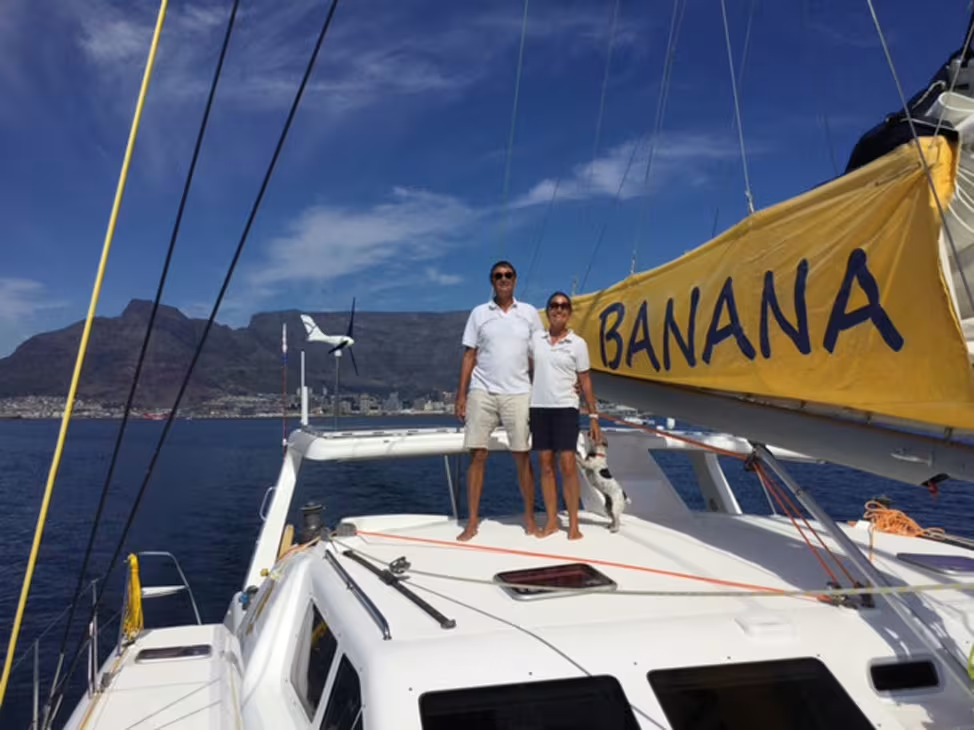
<p><em><strong>They are returning from a 50,000-mile round the world trip. A voyage under sail of course, aboard a multihull and as a family (with four children from 9 to 18). From Cape Town (South Africa) in 2010, the adventure has continued until 2017. Passing from the corporate world to that of the sea, Sophie and Robert show why for them it’s ‘never without sails’. Having become writers, to recount their voyage in the book 'Banana autour du monde' (while their youngest sat the baccalaureate), they are now actively looking for their next boat, in which to set off again in 2019. </strong></em></p>
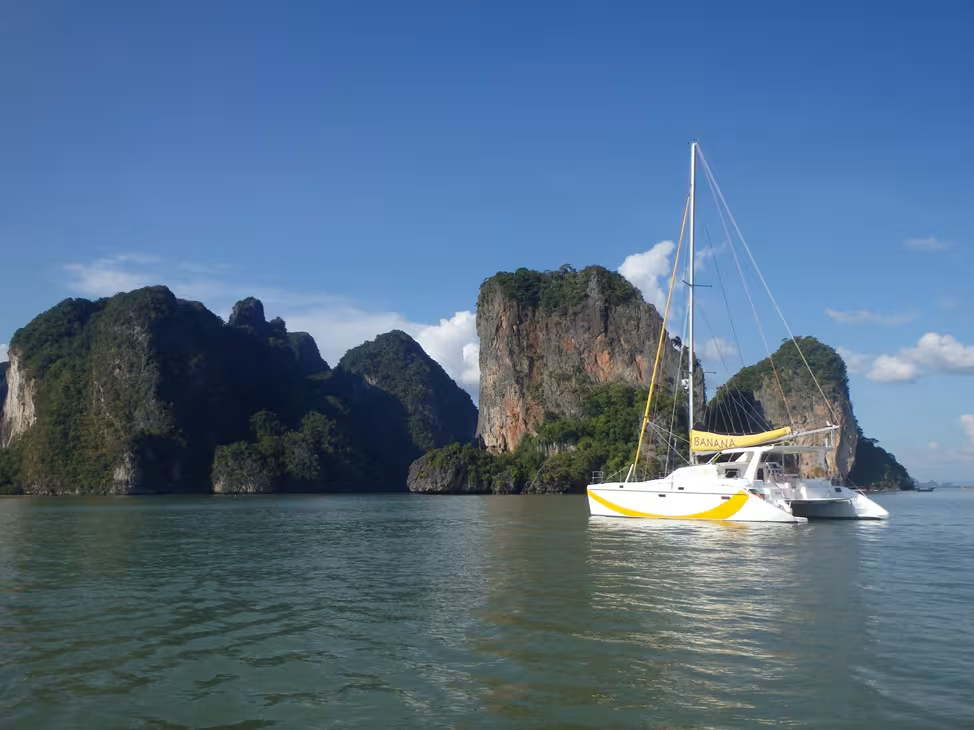
<p>The manner of voyaging aboard a multihull can be summed up for certain people by the question ‘sail or motor?’ After more than seven years afloat with Banana, our catamaran, we still haven't had our fill of sailing; on the contrary, for us the expression can be summed up as ‘never without sails’. We are not talking here about a weekend at sea or a week’s planned holiday in the sun during which the weather will not be as chosen, but of a voyage in a boat. Crossing an ocean other than under sail can be imagined, but not without difficulty on boats of the size of ours. Sail remains the safest means: we have had a few breakdowns in 7 years, but they have been breakdowns of…the engines! The other problems, halyards or reef pendants which break or jam have never been considered as breakdowns, but rather as maintenance. When I think that certain people cruise with just one engine, I am afraid for them, imagining all the breakdowns possible, from contaminated diesel to a line round the prop, via floating plastic which blocks the cooling water circuits. All things considered, they are the brave ones! When the wind gets up, we take in a reef and adapt our point of sailing to the elements; how do you reduce on a motor cat? Sail remains the fastest way; aboard Banana we cover 200 miles and more per day – try to do better with a motor cat of the same size, crossing the Atlantic, the Pacific or the Indian! (unless you are accompanied by a refueling tanker). We set off for each ocean crossing with the tanks full, but never with jerrycans on deck, and have never arrived on the other side with no fuel left. Sail remains the cleanest way: I daren’t even broach the subject, as it seems so inappropriate to burn 10,000 liters of diesel for a simple Atlantic crossing. And we won’t mention the problems of supply for those who cruise off the beaten tracks. I remember a diesel supply episode with our friends from Marick; we had to go and collect 300 liters of diesel in jerrycans with a cart pulled by a donkey. Once the full jerrycans were in the cart, when we climbed aboard, the poor donkey found itself suspended in the air, like on a see-saw. If we had been cruising aboard a motor multi, we would have had to find a full herd! Sail remains the most comfortable way: even though there has been progress in the field, the disadvantage of the engine (in addition to the pollution) is the permanent noise pollution it generates. A little remark on comfort at sea. Sailing to windward in the chop aboard our boats is not too pleasant, but by reducing sail, we cope; in the same circumstances aboard a motor cat it’s the washing machine, and it’s best to be in your bunk rather than on watch! Sail remains the most fun way to cruise: even though we aren’t racers, there is an undeniable pleasure in preparing your route and managing your navigation according to the winds. A straight line isn't the shortest route under sail. Sail remains the classiest and most aesthetic way of getting around; we don’t have fingernails black with dirty oil and we don’t wear diesel as perfume! (I know this is partly false, but no one asked me to be impartial). I’ve rarely seen nice photos of motor multihulls racing, but there are sailing photos in all the best waiting rooms! For Sunday painters or palette professionals, the motor cat is not really an artistically inspiring theme. Our Bananas will therefore always be sailing boats. The pleasure of reading on the trampoline in the shade of the spinnaker is hard to equal. To finish, I haven’t forgotten however that real boats are those which go cruising; whatever their means of propulsion, sail or motor, the important thing is to set off! Aboard Banana, at anchor, around an aperitif, all cruisers like to get together. I would like to re-write this column when I have grandchildren and electric motors supplied solely by solar panels exist. See you in ten years’ time!<em><br /><br /><img src="/sites/default/files/inline-images/mm186-35-02-match-voile.jpg" alt="" width="974" height="730" /><br /></em></p>