
It must be admitted: the first time you charter bareboat, meaning without a skipper, there is a certain amount of apprehension - quite natural – at the idea of finding yourself in charge of an imposing boat. And when you let yourself be tempted by the exceptional comfort and privacy a catamaran offers, it’s often even more impressive. Having to control two hulls rather than one, two engines and a greater beam, and no ballast, for the sailing boats, can unsettle many people. Yet maneuvering a catamaran is not exactly rocket science, and is often even easier than you might think, as long as you have listened attentively during the handover/takeover organized by the charter company.
To help you with your next charter and allow you to prepare yourself effectively, we attended the handover of a Fountaine Pajot MY 37 by the agency Tendance Voile, in the Golfe de St. Tropez.
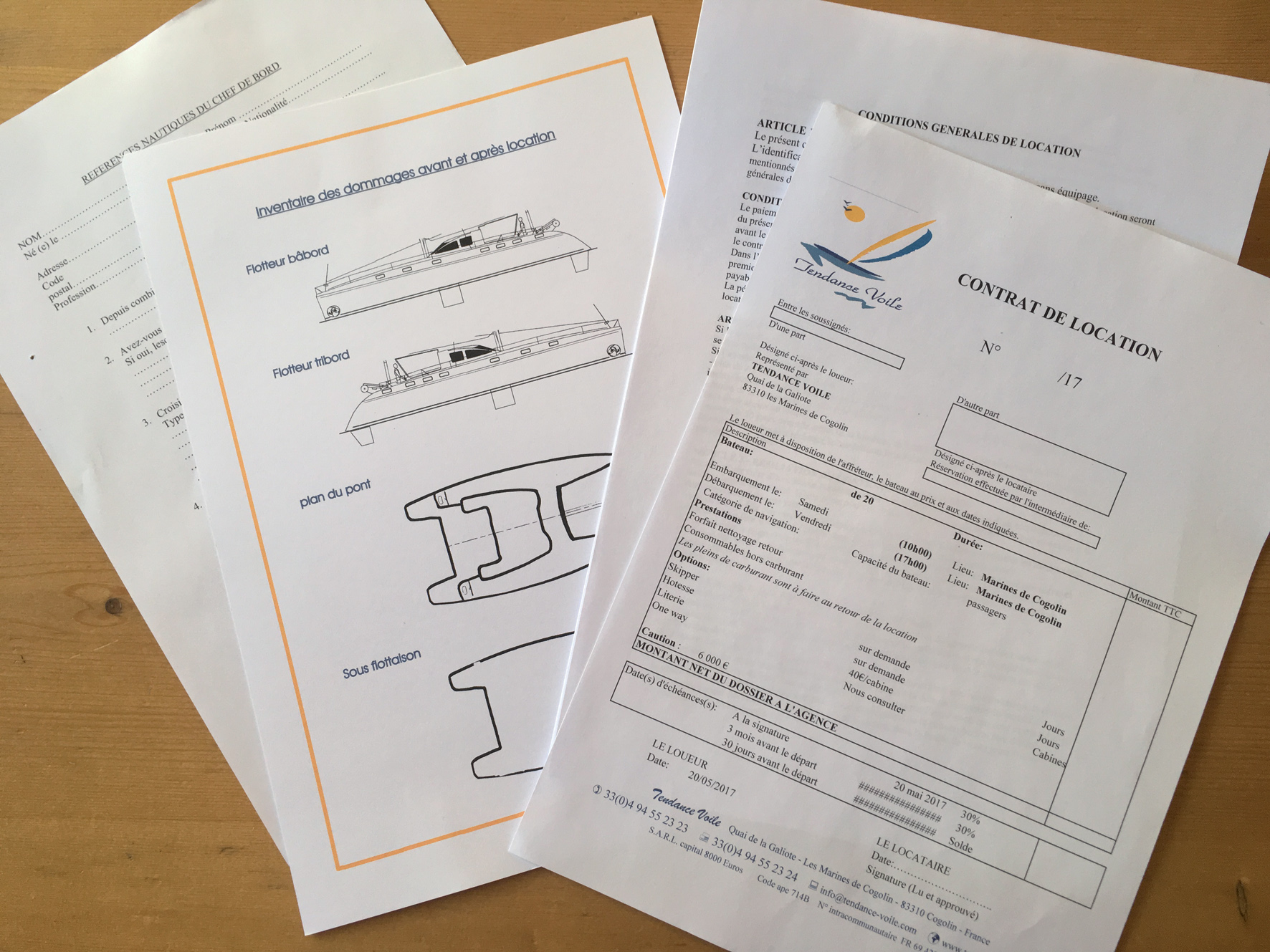
1 – A few documents have to be drawn up before your stay and once you have arrived in the base. They fix the condition of the relationship between charterer and charter company. The charter contract defines your payment method, the deposit and the insurance. In general, the calendar anticipates payment for everything before the start of your stay, therefore particular attention must be paid to the cancellation clauses, depending on your requirements and constraints. For the boat insurance, a few points must be checked: the geographic limits, depending on your program; the purchase of your excess is important, as it avoids disputes in the event of damage, to determine who was responsible, the charterer who made a mistake in maneuvering, or the charter company due to the wear and tear of the equipment. This purchase will often have an effect on the sum of the deposit. You will also be asked to fill in a nautical CV prior to your stay, with your certificates, as well as a crew list. There is no point in exaggerating your nautical skills, as they will be easily checked by the charterer; a relationship based on confidence is to be desired above all. The inventory and the boat condition form are to be filled out at the base during the handover/takeover.
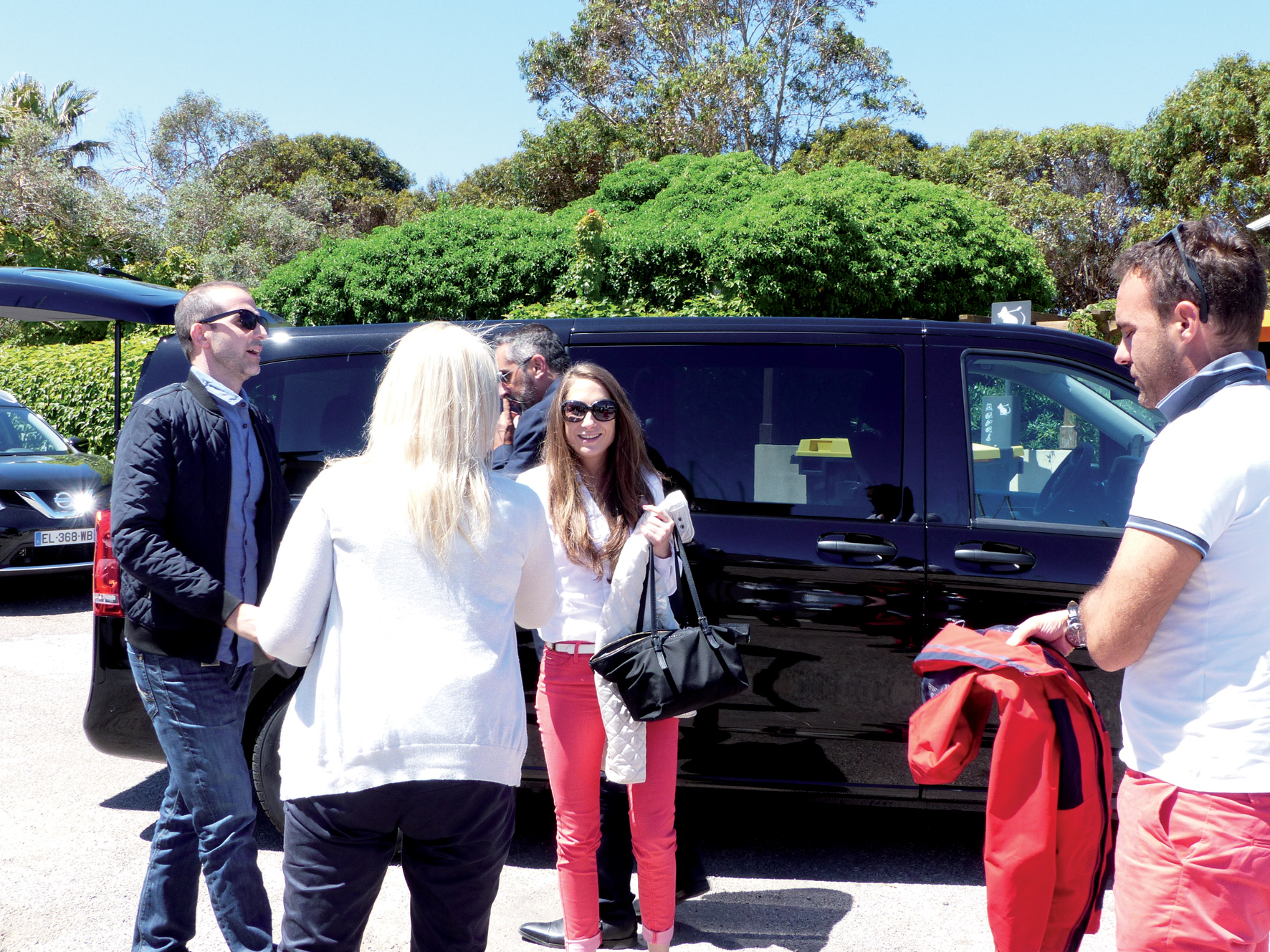
2 - Certain charter companies are also licensed travel agents. This allows your stay to be made even more pleasant, with additional services. Booking an air or train ticket is possible, as is vehicle rental. In the present case, the charter company made a minivan and driver available, to go and fetch the customers from the airport. They thus did not have to worry about logistics after a journey which is inevitably tiring, and arrived relaxed to take over the boat, which was the main aim for the day. In addition, a travel agency has a performance obligation, which is an advantage for the customer…
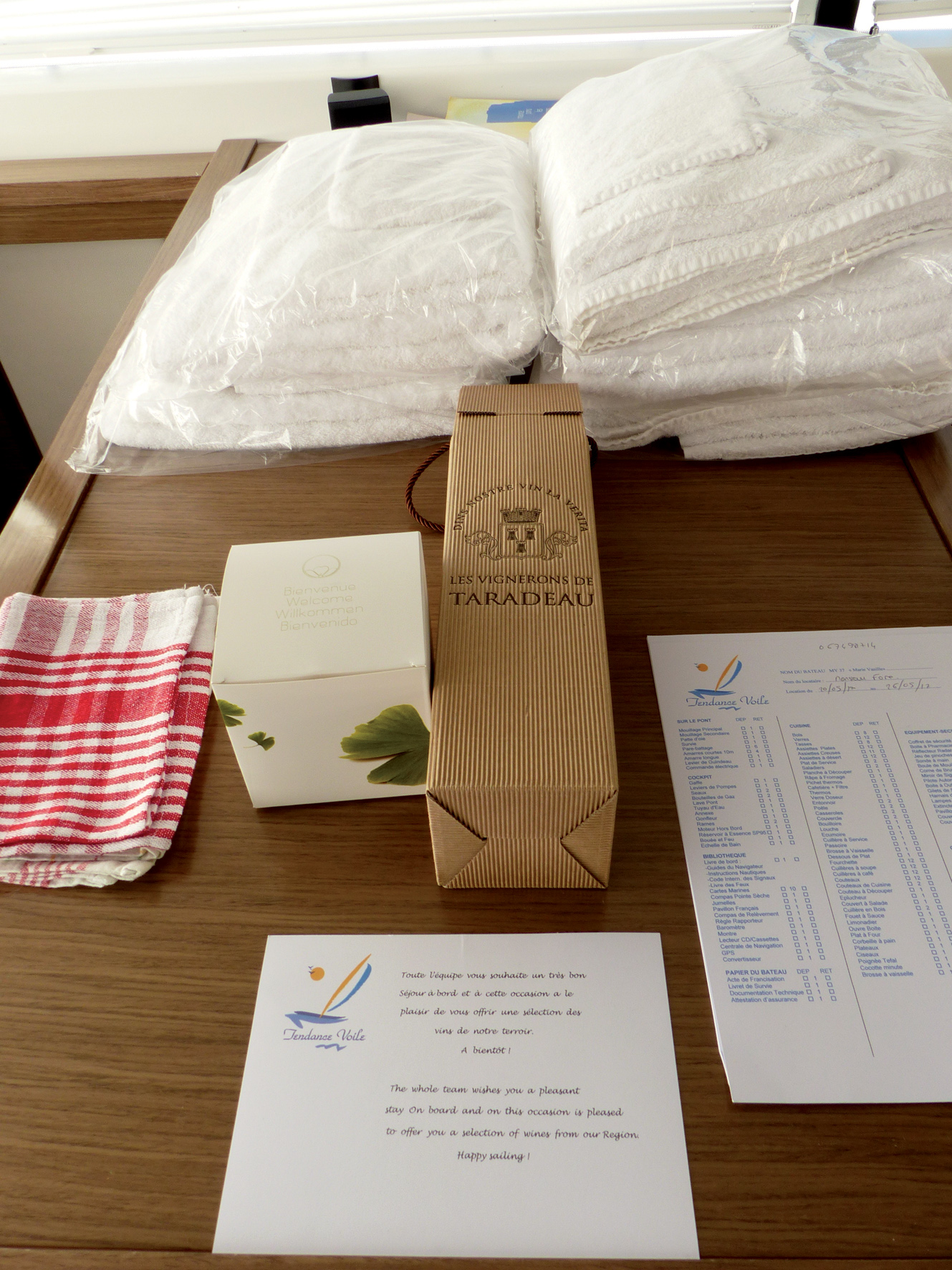
3 – A welcome kit is more often than not made available. To avoid having to carry extra big suitcases or bags of household linen or accessories, it is possible to request sheets, blankets, tea towels and towels in advance. For nautical activities you may also have fins, masks and snorkels (in your size on request) and all other optional accessories. And if you want to take advantage of your boat quickly, you can ask your charter company to provision the catamaran with the help of a list you send in advance.
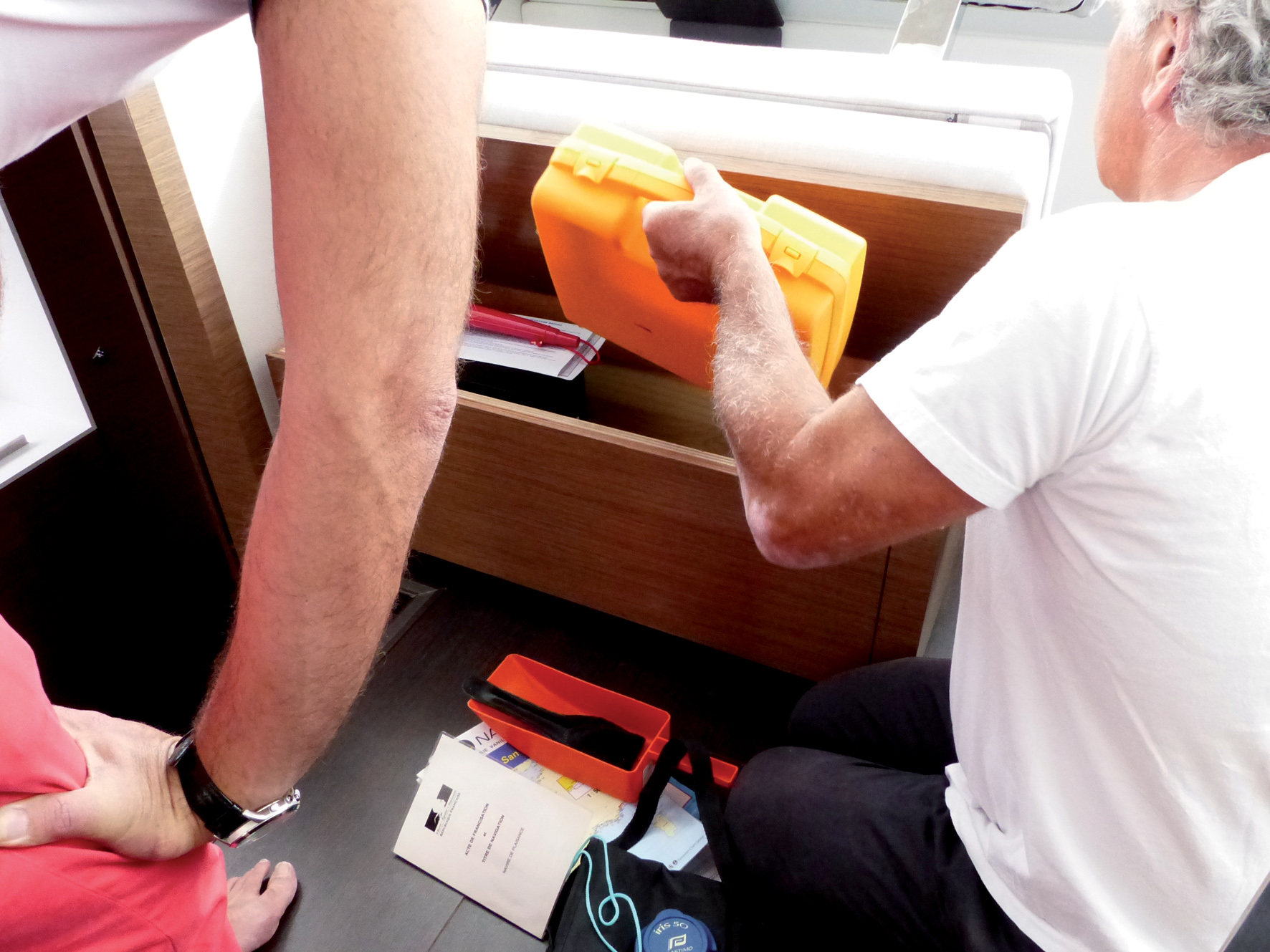
4 – It’s time to move on to the briefing proper, with the inventory, safety, technical operation and driving the boat. For safety, it is advisable to check the pieces of equipment one by one, as well as their locations. To help you remember everything, you can make a little freehand sketch of the boat, marking where the different pieces of equipment, such as the flares or the liferaft, are to be found. The charter company must explain their role and operation. The distress flares and the liferaft have to be handled in a precise way to be effective, but the wooden plugs may prove to be just as important. Finally, the location of the fire extinguishers was reviewed. On this motor catamaran, the engine compartments (more than 150 hp) are equipped with remotely controlled (by cable) extinguishers.
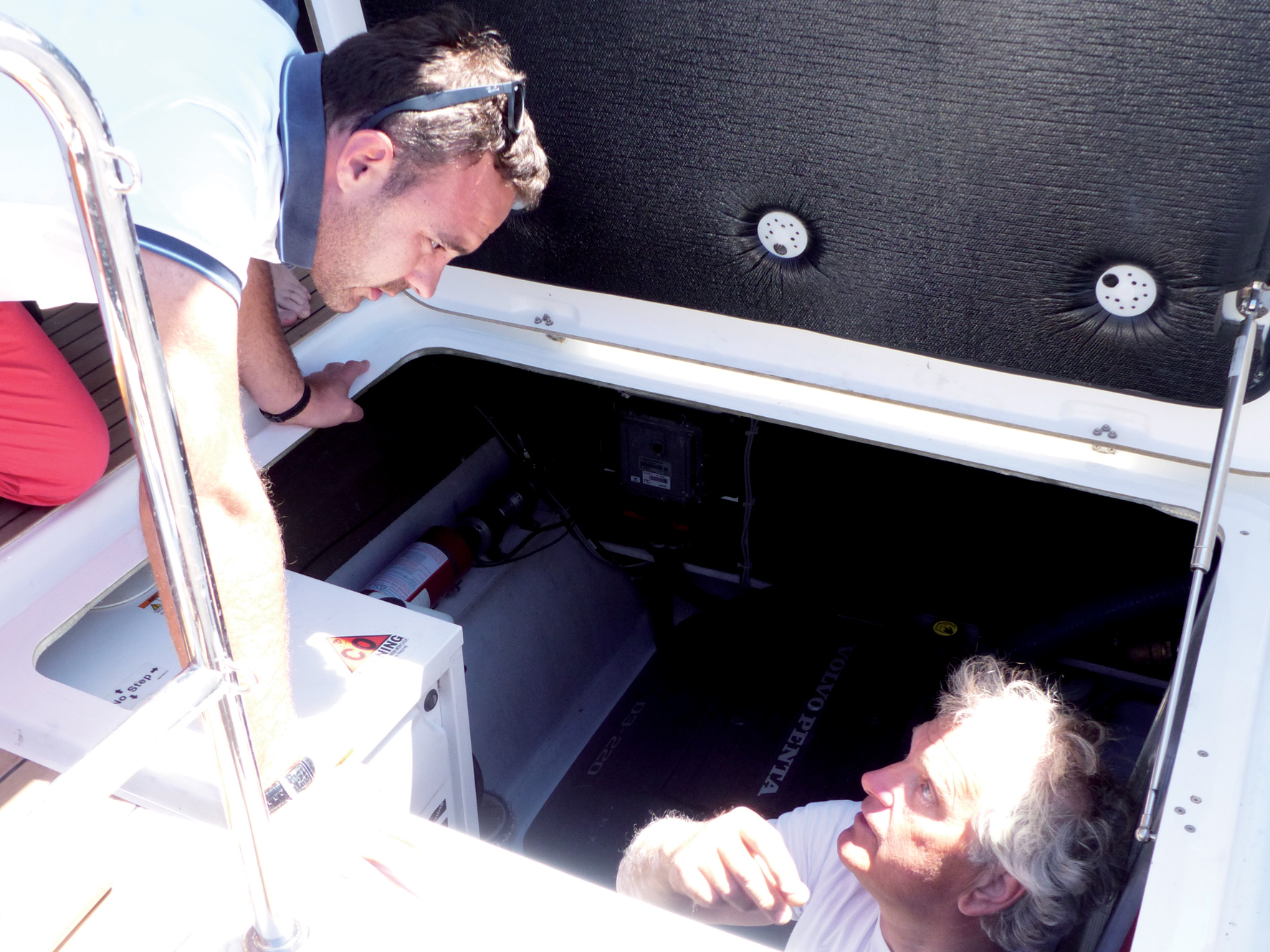
5 – The engine room, the electrical and sometimes hydraulic networks are the nerve centers of modern boats. A detailed visit to the lockers and a clear explanation of each of the systems is necessary. To offer comfort ‘just like at home’, there are many pieces of equipment: charger, inverter, generator, regulator, differential circuit breaker, watermaker… Finally, the hydraulics and the engines deserve a minimum amount of explanation concerning their operation and the locations of various parts. Certain minor breakdowns or malfunctions can thus be avoided or simply solved by pushing the right button, or turning the right knob, without raising stress levels unnecessarily. Concentrating for a quarter of an hour will allow you to find solutions to numerous situations, which thus won’t risk becoming worse…
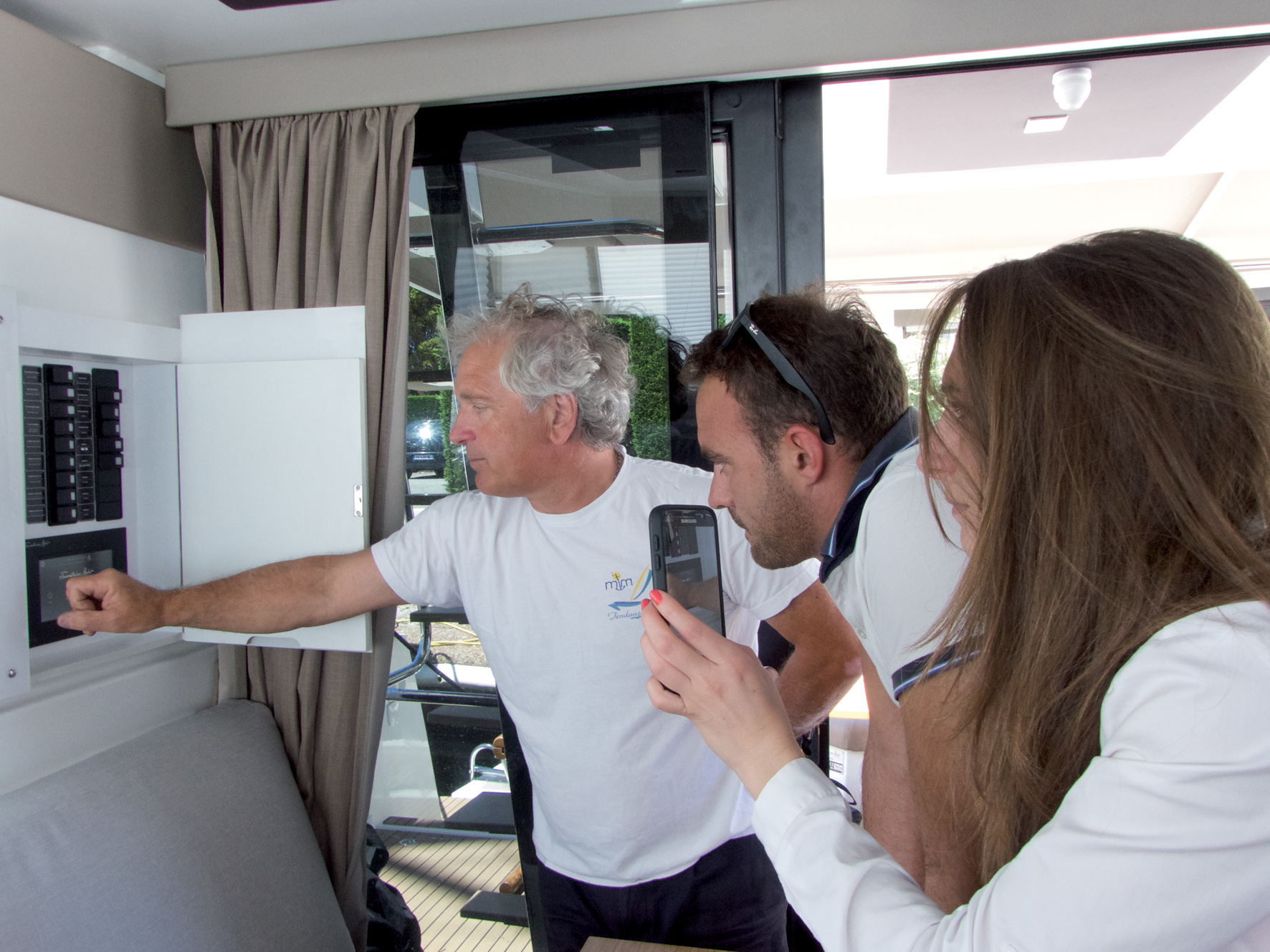
6 – The same applies to managing the vessel’s controls. More and more digital panels bring together all the control functions: water and fuel gauges, navigation lights, radio communication, pressurized water system, heating, air conditioning, domestic appliances, lighting, battery level and recharging, bilge pump, hydraulic unit, multimedia network, etc. Their use may be complicated on a first experience, so you must pay attention to your charter company's demonstrations. A good tip for being certain not to forget anything consists of filming the explanations and manipulations, as shown here during this takeover.
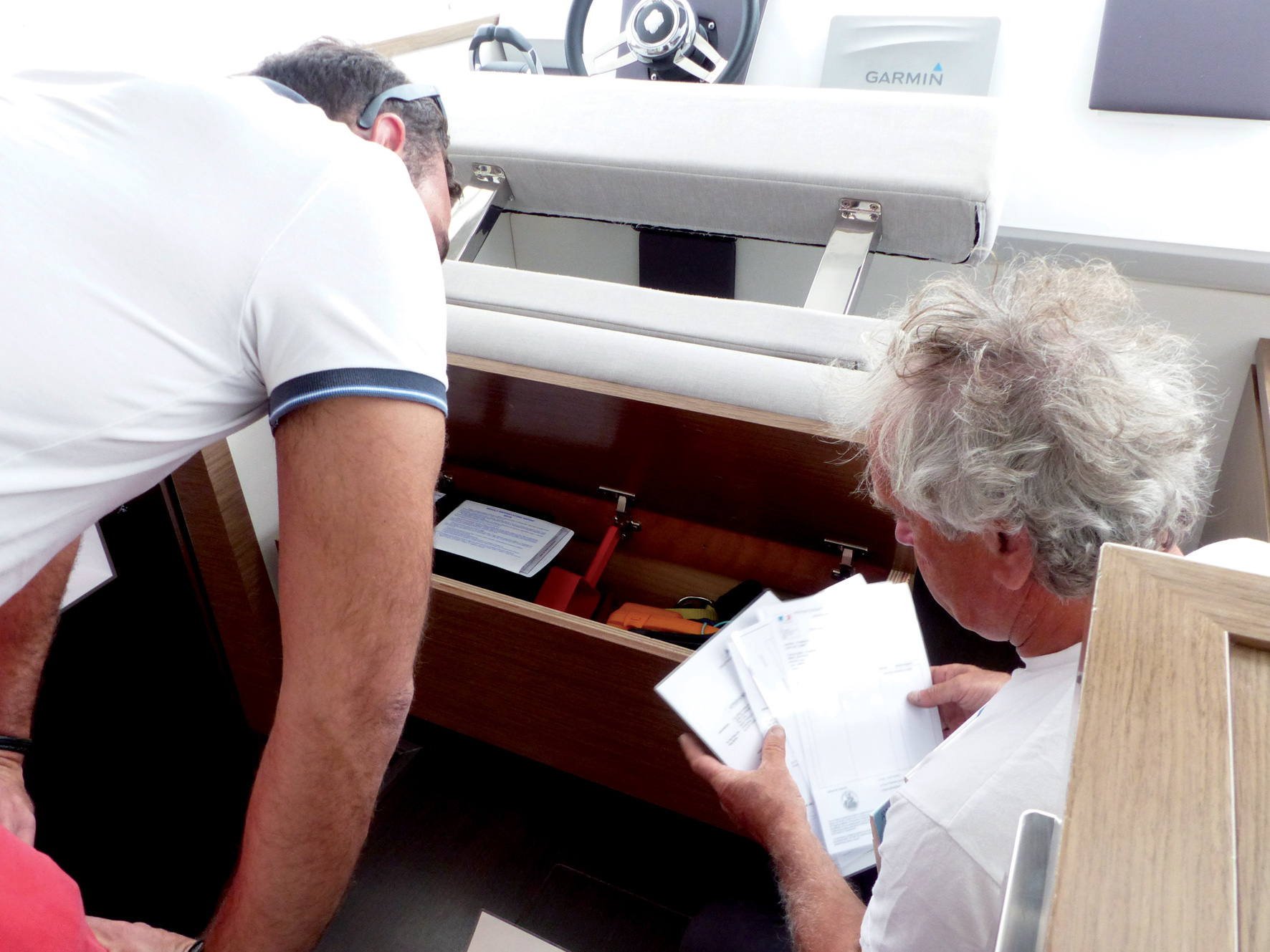
7 – The vessel’s documents deserve to be carefully listed, to check that nothing is missing, and to avoid being caught unawares in the case of a check. The same goes for the navigation documents and the user instructions for the instruments. The charter company will be able to show you the essential functions to plot your position and route and follow the progression from point A to the famous point B. But it is up to you to adapt the instruments according to your wishes and requirements
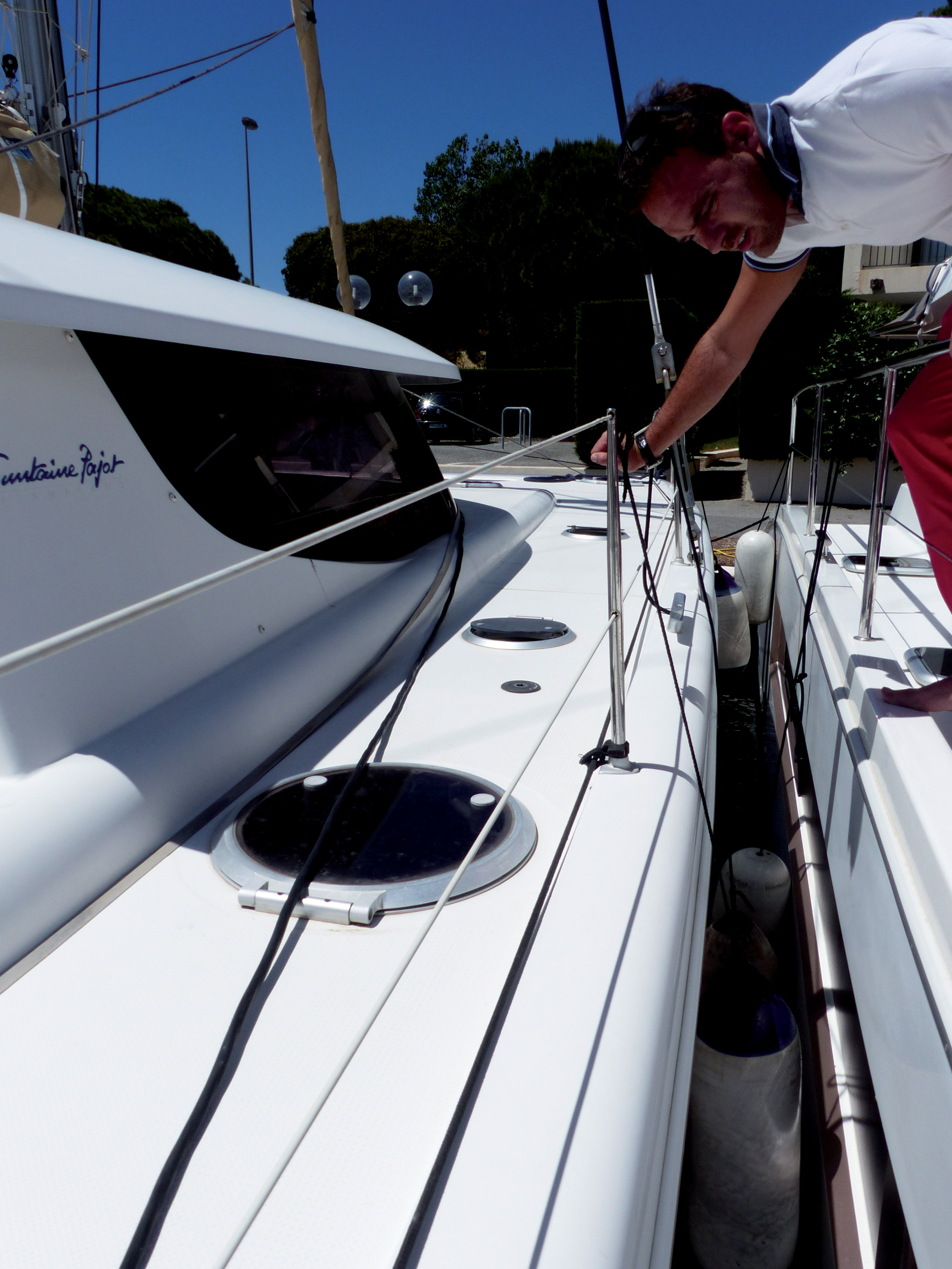 8 – The inventory takes an hour, and deserves to be carried out seriously. Once signed, it will be your only resort in the case of a dispute. This is the moment to check that everything conforms to the charter company’s description, and is in good working order. In addition to the points linked to driving the boat which we saw previously, ensure that there is nothing missing in the various compartments: the dinghy and its accessories (see dinghy basics in this edition), the anchoring gear, the sails and the rigging, the crockery and galley utensils. Check the operation of the showers, the heads, the electric galley equipment, the dinghy and its engine. An inspection of the hull and the superstructure will enable you to fill in the sheet for damage visible before and after the charter. On your return from your cruise, it will be the charter company who will check that you are returning the boat to them in good condition. The refund of your deposit will depend on the comparison between the initial inventory and this final inspection.
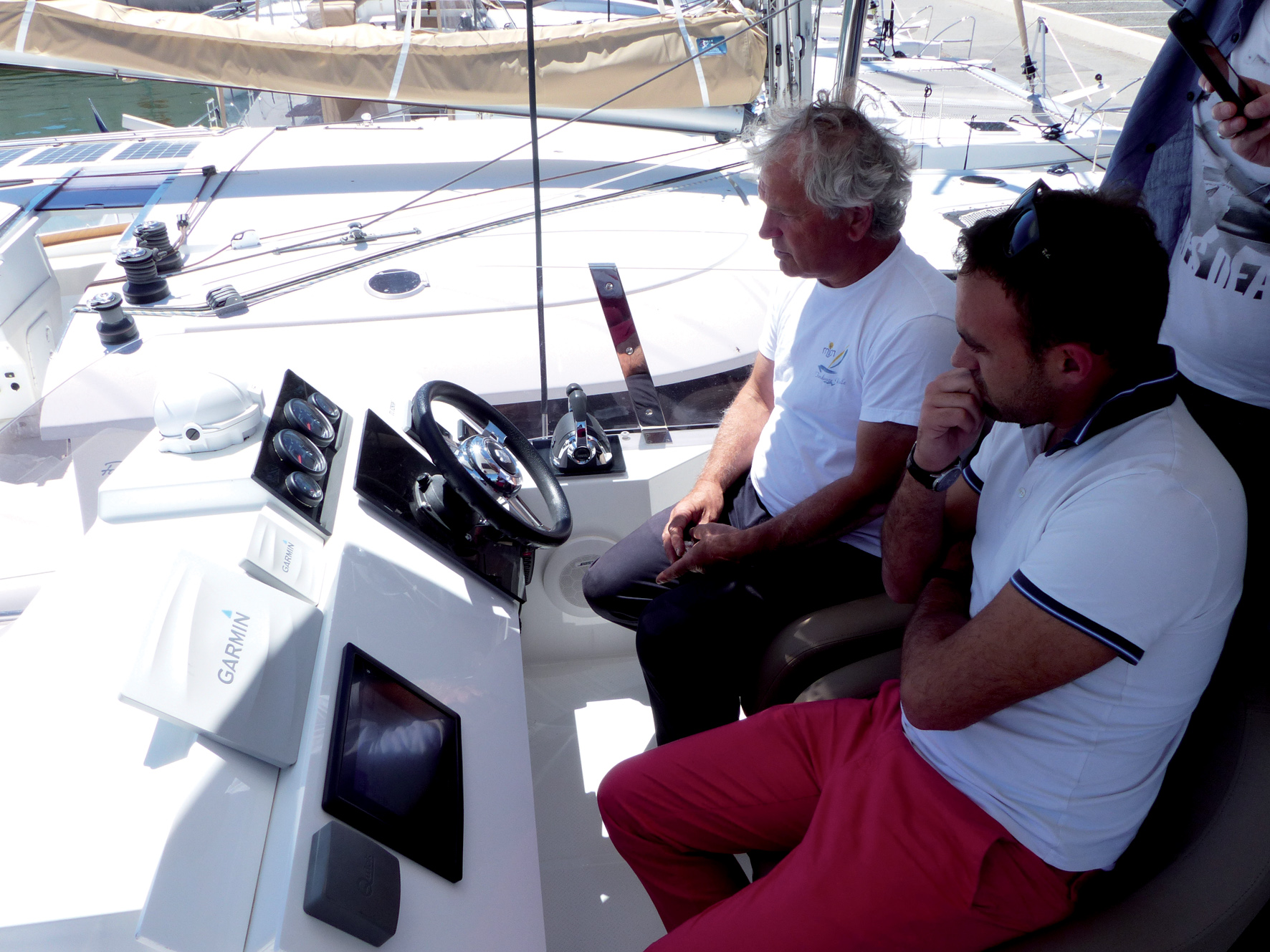
9 – The best moment is taking the controls. The handover takes place here, from the flybridge. The view is panoramic, which greatly simplifies the maneuvers. For those that you carry out in the harbor, don’t worry, the distance between the two engines allows you, by putting one ahead and the other astern, to turn through 180 degrees on the spot. A catamaran is therefore very maneuverable, and this compensates amply for its size. You just have to pay attention to its greater windage, caused by its more imposing superstructure. If it’s your first time, don’t hesitate to ask the company to demonstrate in the harbor and close-to. The new electronic engine controls are sensitive and require a little dexterity and familiarity to use them. If you don’t feel comfortable after this initiation, you can ask for the help of a skipper for as long as it takes you to master the machine, or the charter company may even insist on one if it judges your level to be insufficient to cruise in complete safety.
Happy cruising and enjoy your vacation!
