
In the first part of this dossier (see Multihulls World 155) we saw that the energy needs of a boat equipped with all modern comforts were amply satisfied by means consuming fossil material. Not very ecological or modern, you will agree. Environmental as well as noise pollution has for a long time now driven us sailors to employ technologies using materials which are infinitely available, free of charge: the water, the wind and the sun. The cost of these devices meant that for a long time they were reserved for the elite or eco-purists, ready to accept a domestic sobriety as austere as it is random, but today they are produced on a general industrial scale. These pieces of equipment have been made more accessible to the greatest number of people, especially as once the initial investment has been made, there is no further expense, apart from that dedicated to maintenance.
Although this energy is free, in no case can it be made use of in all situations, as it fluctuates according to the meteorology, and also depends on how and where you cruise. It is therefore essential to select carefully the most effective means of meeting a targeted program. Or, to cover all situations (the most frequent case) and reduce to a strict minimum the CO2 emissions, to combine the three modes of production, using them in turn or simultaneously. This hybrid production allows one means to be substituted for another in the case of a breakdown, and above all allows you to adapt to the circumstances met, or your boat’s characteristics. For a round the world voyage, a whole arsenal of supplies is essential. During ocean crossings, hydro-generators or propshaft alternators are good energy suppliers, especially if you have the trade winds with you. If they are against you, the wind generator will then work at its best, which is not the case downwind or in very sheltered anchorages. If you find yourself in the tropics, solar energy appears to be well suited as the sun’s rays are strong, but the days are shorter, which reduces the range of use. Above the tropics, the days are much longer in summer, which compensates for the sometimes hazy sunshine but the lower temperatures then improve the solar panels’ efficiency. A hazy sky is no longer a problem for modern technology, and when the sky is really dark, the strong winds generally restore the balance with the wind generator.
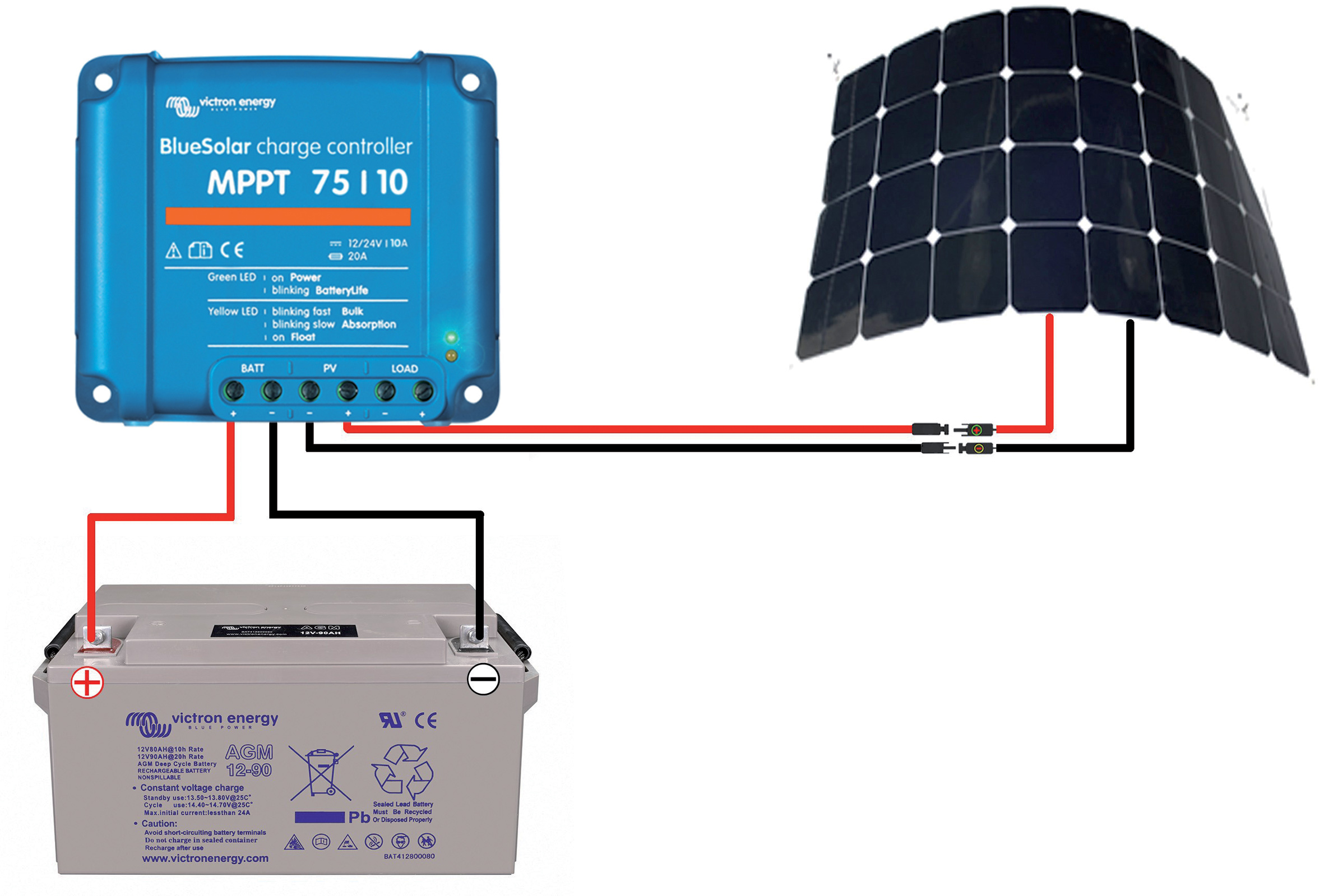
Taking all the means together, you can count on 12 Volt production of from 80 Ah to over 400 Ah per day, depending on the conditions. However, the installation’s homogeneity is of prime importance to obtain good efficiency. The connections, the cable diameter, the MPPT regulator are all parameters for which a professional will be able to advise you effectively.
Hydrogenerators
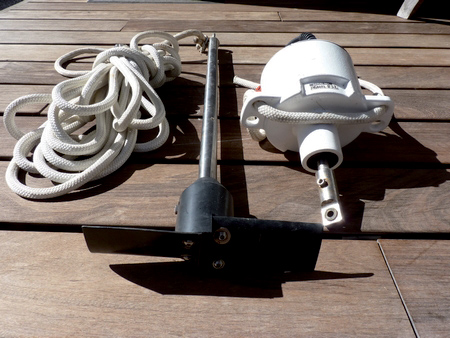
The propshaft alternator allows you to charge your batteries, but it is noisy. The propeller's drag decreases the speed by at least 1 knot, and makes the engine turn over, not running therefore without lubrication, which can cause a few problems in the end. Since the 60s, hydrogenerators have progressed considerably. The towed propeller models, such as the Aquagen, are economical and can be turned into wind generators, but require a bit of work to set them up. There are then the ‘rudder’ models fixed to the boat’s transom, such as the Sail-Gen, but the new generation with a vertical shaft, such as the Watt&Sea and quite recently the Save, is very efficient, easy to use and offers very high outputs for minimum drag. On the Watt&Sea system, several propeller diameters from 200 to 280 mm are available, allowing the recharge/drag ratio to be optimized according to the boat’s speed capabilities. With the big propeller, you can expect from 8 to 10 A from five knots, 20 A between 7 and 8 knots, and up to 35 A at 10 knots. Above this speed the production remains at its ceiling of 35 A. The higher the speed, the smaller the propeller’s diameter should be. Designed originally for racing, this system works very well at high speeds, which makes it very suitable for fast multihulls.
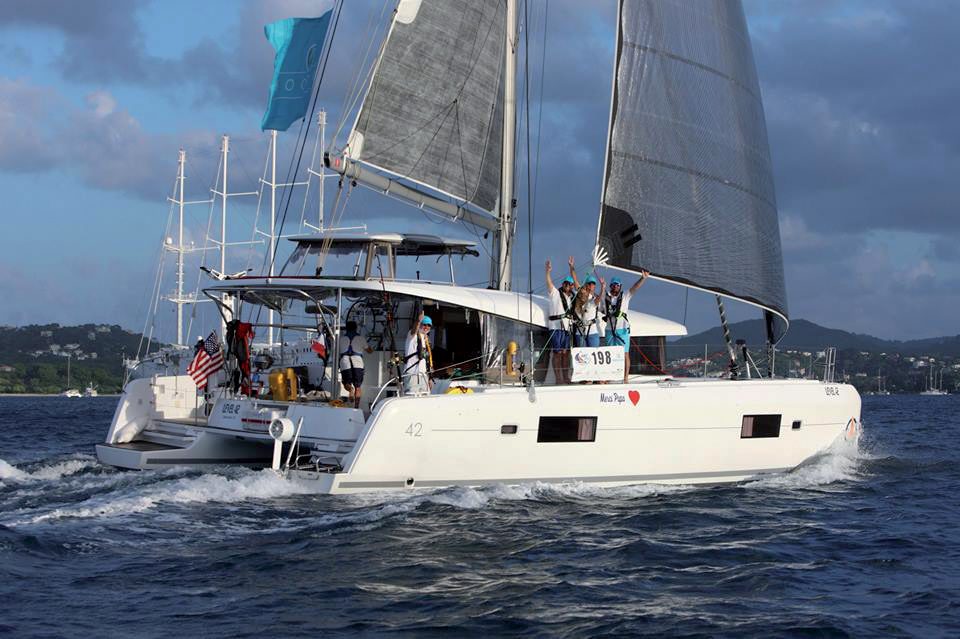
On the other hand, below five knots, the recharging current is almost zero. So, for peaceful cruising multihulls, the Save system with its big propeller in a streamlined tunnel allows a recharge of around 2 to 3 A from 2 knots, and provides 15 to 20 A at around 7 - 8 knots. However, it will no longer work at over 10 knots, but produces 35A at this speed.
Wind generators
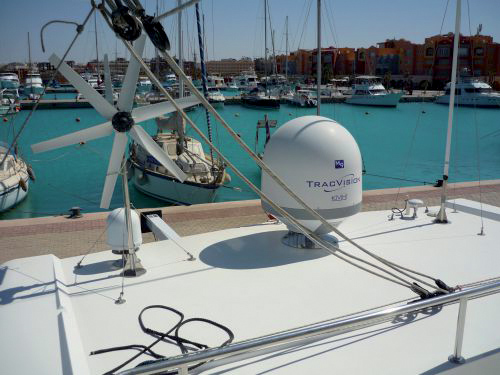
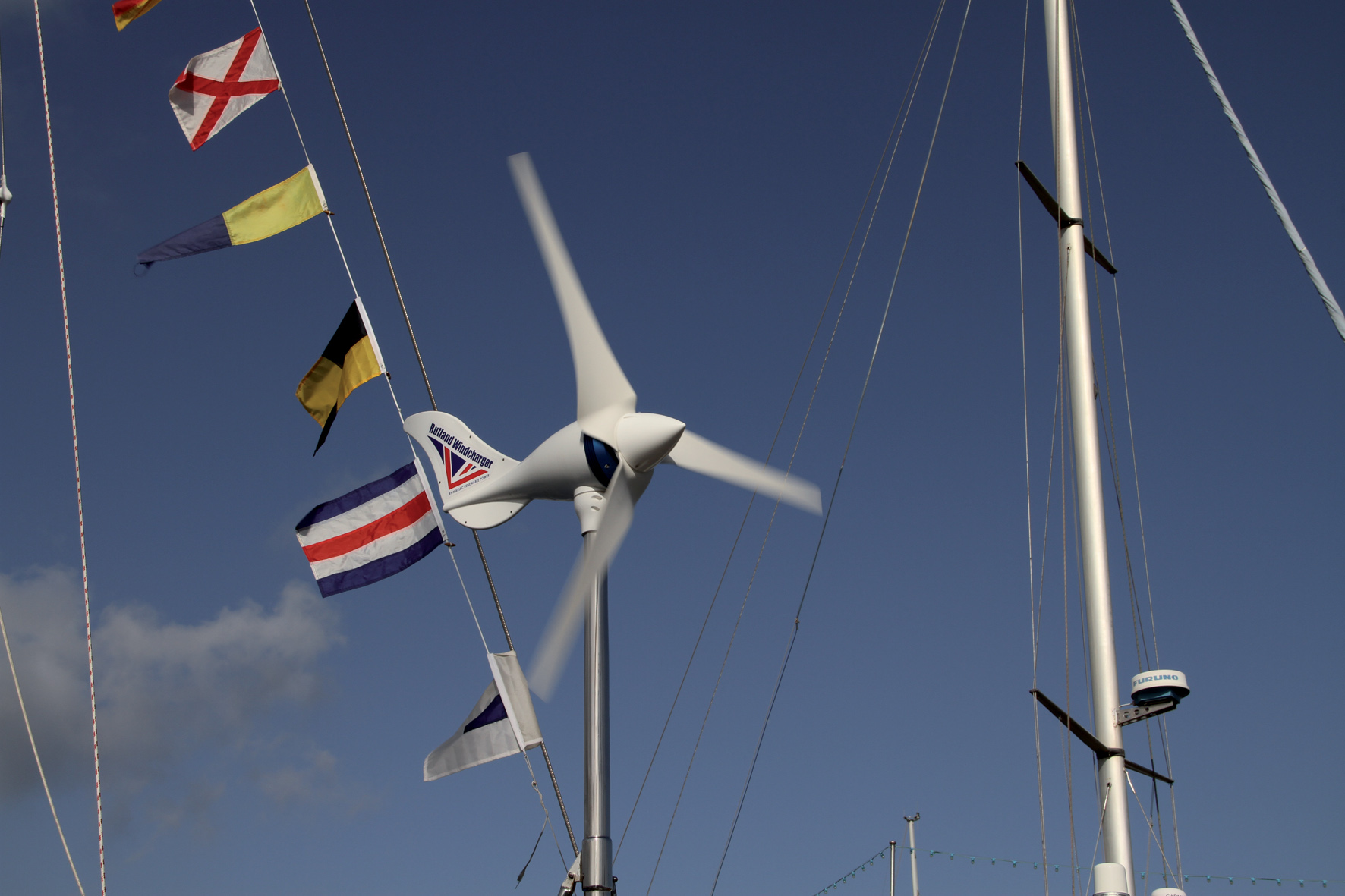
Not very effective when sailing, because of the low apparent wind downwind on the trade wind highways, wind generators are effective close-hauled, therefore over the short distances we agree to cover on this point of sailing, which it must be admitted, is not the most pleasant in a cruising multihull. At anchor, a wind generator can do wonders, and produce 5 A from 5 knots of wind and from 15 to 45 A with a steady 10 to 15 knot breeze. But to be honest, a good anchorage is a sheltered one, where these wind strengths are rarely achieved. The disadvantages lie in the noise produced and above all the vibrations in over 20 knots of wind. Care must be taken with the installation to reduce these phenomena. Wind generators now represent above all an alternative for cruises in areas – or periods – with little sunshine.
Solar panels
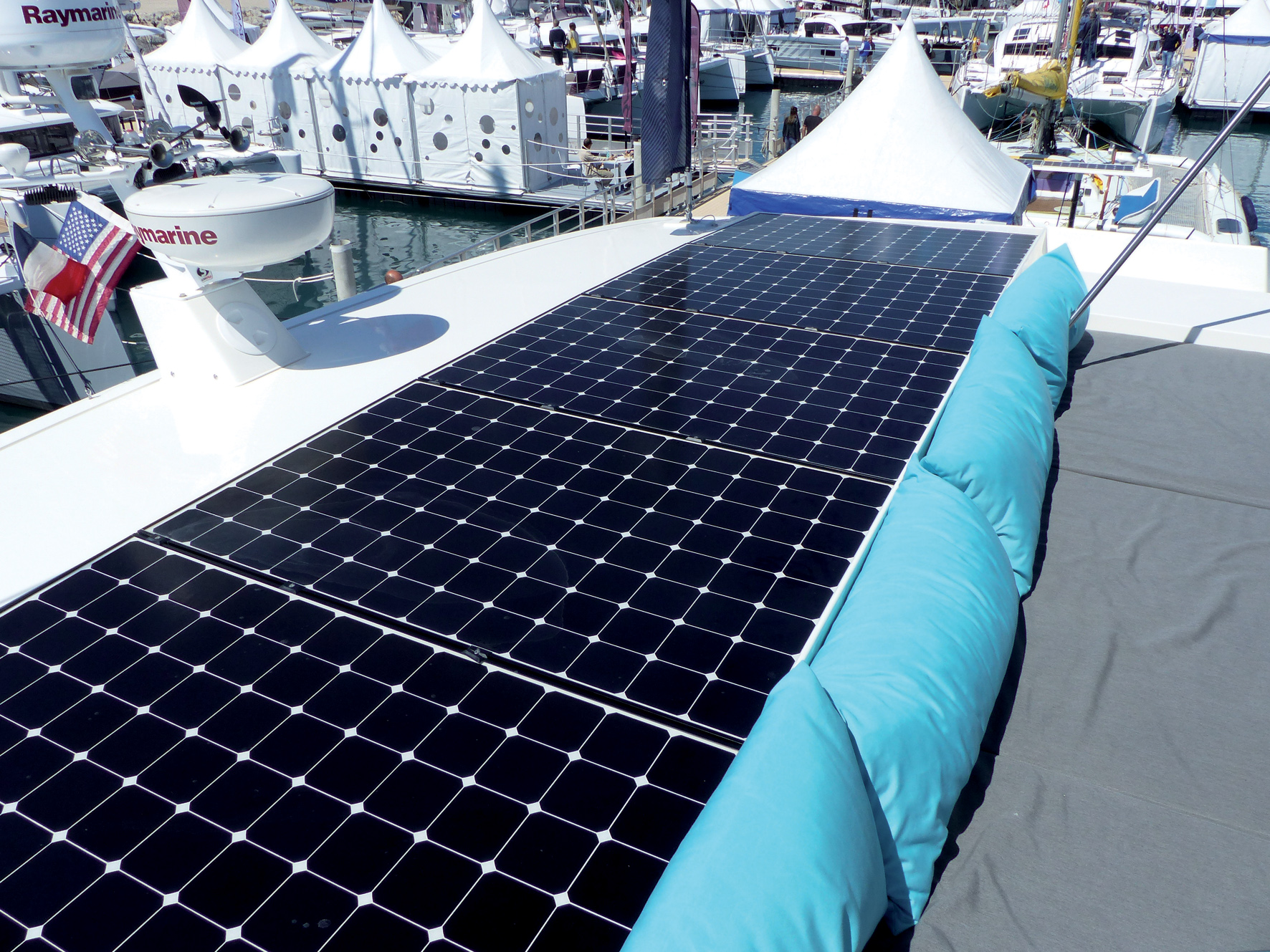
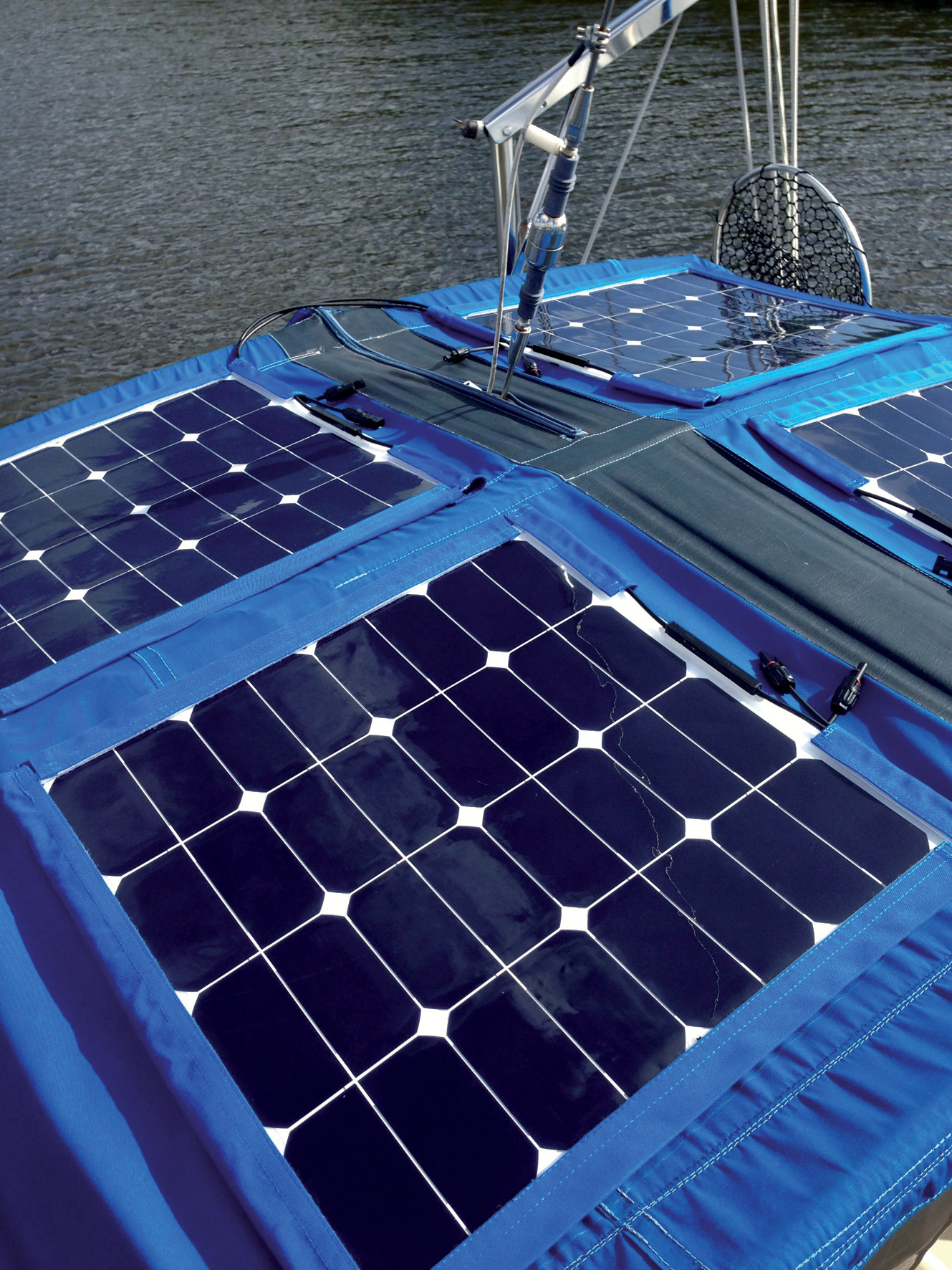
As with hydrogenerators, there has been considerable progress over the last few years. The days of heavy rigid panels requiring strong, un-aerodynamic gantries are finished. Today their weight has been divided by five. Certain semi-flexible panels allow any curve in a bimini or coachroof to be accommodated, and others, completely flexible, can be rolled up and stowed. Two technologies are available: with monocrystalline or polycrystalline cells. The most widespread are those with monocrystalline cells, and with their ‘back contact’ technology, they can stand up to being walked on or to water, which makes them attractive for the nautical environment. Numerous models exist, and for the choice, it is best to favor the model your electrician can easily fit on your multihull, while offering good after-sales service around the world. Various methods of fitting are possible. Certain panels are pre-impregnated with glue, easy to fit on polyester, but to us it seems worthwhile to choose a system which is easy to assemble and take apart, so the panels can be stowed, as well as changed, as their lifespan is not unlimited. Models equipped with holes can be fixed with lugs or press studs on the gel coat. It’s important to cover all the edges with tape to prevent the wind getting under them. For fitting to textiles, Velcro is more practical, but here also, it’s best to sew a hem covering the edges all around the panel. As for production, for a panel of 0.6 m², weighing 1.8 kg and rated at 100 W, you can expect 5 – 6 A. On a catamaran, it’s easy to fit several, given the beam available, which will allow you to collect from 150 to 200 Ah on a nice sunny day.
Photovoltaic films
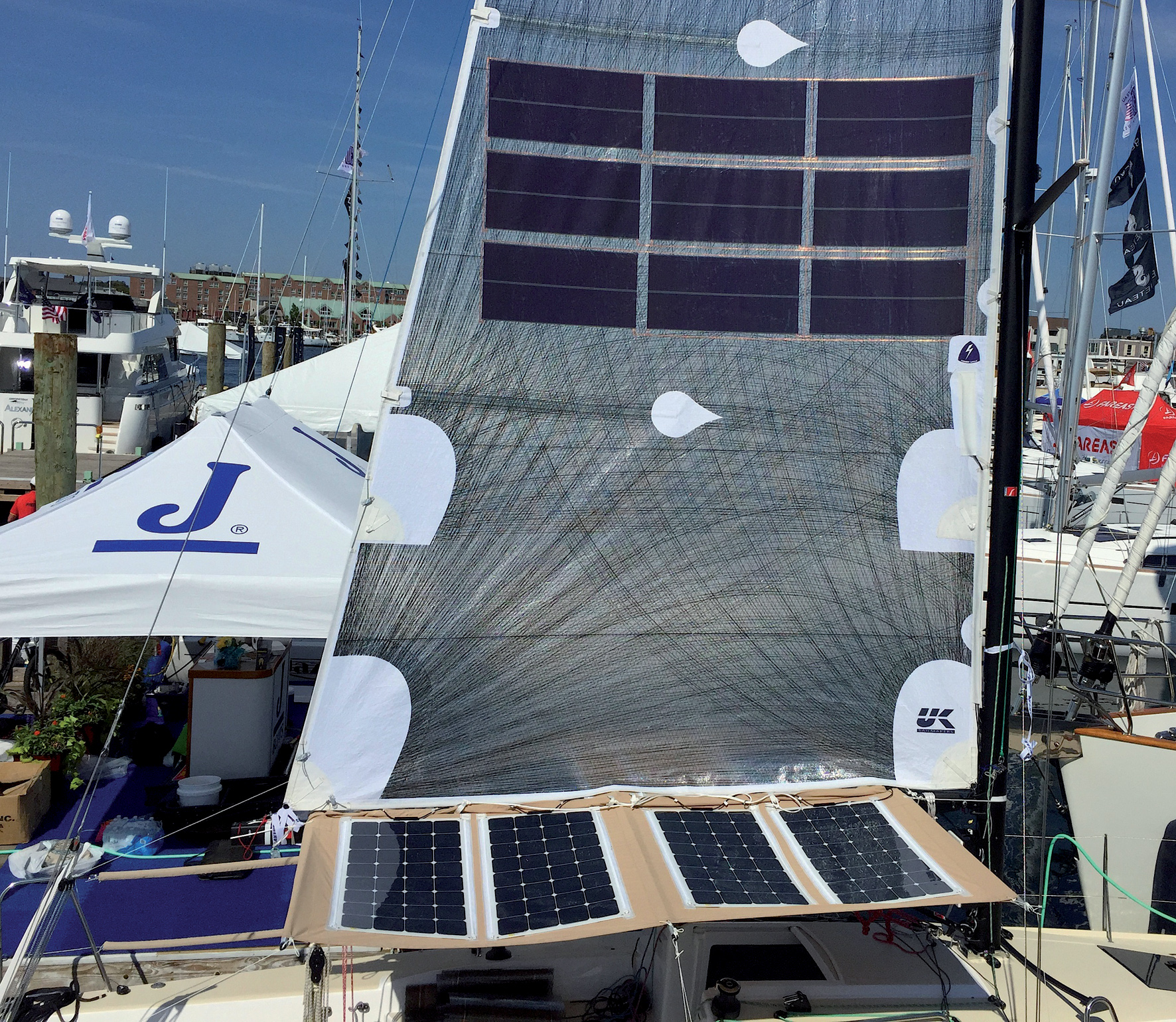
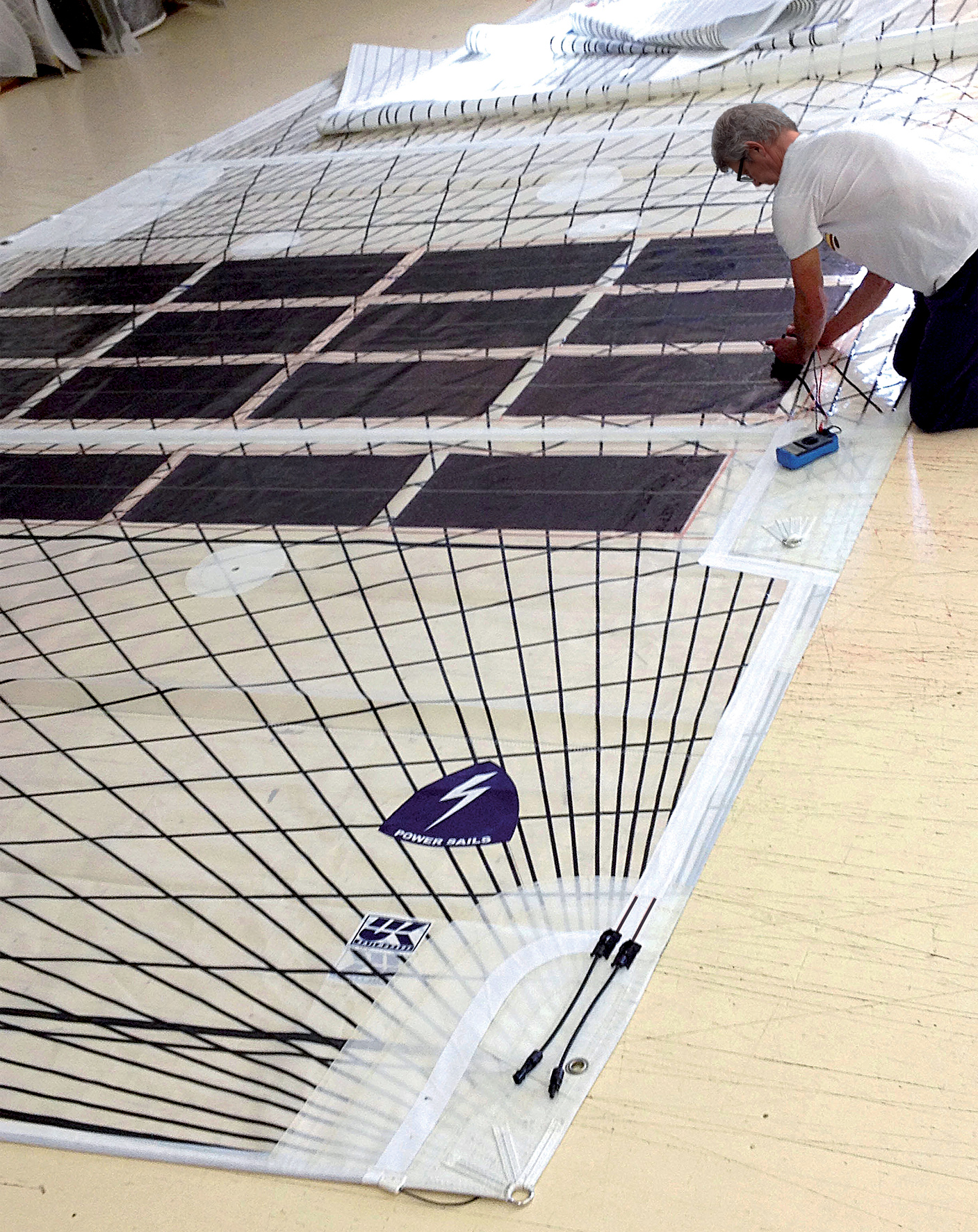
Whilst the panels fitted flat on our boats suffer significant loss once the angle with the sun exceeds 30 degrees, which makes them efficient uniquely in the middle of the day, a brand new technology has been perfected by the Solar Cloth System company, which can remedy this problem. Its founder, Alain Janet, who is also manager of the UK Sailmaker sail loft in Mandelieu, France, had thought, since 2010 – the date at which the curing under vacuum of sails composed of membranes in continuous fiber began – about using the biggest area available on a sailing boat to produce energy. One thing led to another and the photovoltaic film, which can be integrated into woven or laminated cloths, was born. 65 microns thick and weighing 300 g per m², this chemical process can be incorporated into laminated sails (provided that a very precise technological process is used) or adapted to woven textiles, such as Dacron. Very flexible and hard-wearing, thanks to a protective film (10 times more expensive than Mylar), it is very practical to fit, and takes up a derisory amount of stowage space once removed. Although its spectrum of ray capture angle seems to be greater than that of the panels, its use vertically on both sides of the sails or the lazy bags (can also be used at anchor), and horizontally on the biminis and even sun shades allows energy to be collected throughout the day. 0.62m² panels produce 4.2 A, and, given the possible area and the optimization that can be carried out, there is no doubt that these films can be major producers. A certain Antoine made no mistake here, and has ordered a sun shade for his Banana Split's electric dinghy, equipped with this photovoltaic film…