
My love of sailing started 45 years ago when, on my 7th birthday, I received permission from my parents to sail across the lake in our Sunfish. That journey across a lake in northern Michigan was only 1.5 miles each way but apparently left an indelible impression in my memory of challenge and success.
My family later acquired a Hobie Cat and eventually a 26-foot sloop in which we cruised the Great Lakes when I was a teenager.
At the age of 17, I managed to convince my parents to allow me to take my two best friends and sail to the North Channel in Canada for a week. We had a great adventure that we all look back on fondly to this day.
After college, my attention turned to the challenges of marriage, starting a career, and raising a family along with my wife. We occasionally chartered sailboats for Caribbean vacations but sailing took a backseat to life's many other challenges. But once my children were all in college and the remaining rungs to climb in my career dwindled, I returned to my roots and formulated another big challenge: Why not sail across an ocean? While this would not necessarily be a big challenge for some people, I had very little bluewater experience. I had been driving a desk for almost 30 years with only very occasional sailing experiences, and those were generally in tame waters. I'm not sure what originally sparked this tiny flame, but it grew the more I thought about it. After fanning this tiny flame for a few months, I shared the concept with my wife. She was supportive of my wild hair but I suspect a little skeptical that it would ever come to fruition as I was a long way away from retirement at that point and my employer frowned upon vacations much longer than a week. She also made it clear that she did not share this dream. She has enjoyed sailing in the British Virgin Islands and other places that we have chartered boats over the years, but her apprehension increases logarithmically the further away from land she gets, largely, I suspect, due to her lack of confidence in being able to handle the boat if something were to happen to me.
The next challenge was to flesh out this idea. How should I go about this? What kind of boat? How much will it cost? It was time to get an education. I started by devouring books of some of the greats: Joshua Slocum's book about his adventures on the Spray; Bernard Moitessier's commune with the sea aboard his ketch, Joshua; and a bit more obscure, Bill Crealock's Vagabonding Under Sail. These all whetted my appetite and led to reading another twenty books on a variety of sailing topics from Heavy Weather Sailing to Jimmy Cornell's World Cruising Routes.
By nature, I am quite conservative and risk-averse. So, as my idea gradually took shape I realized I should probably find some way to get some bluewater experience. I happened to be reading a book by John Kretschmer and it made a reference to his offshore training excursions. I found his webpage and discovered his bluewater training schedule had an open berth for a 1000 mile, 7-day trip from the BVIs to Grenada and back; I pounced on it. He's a wealth of knowledge as he has sailed, read, written, and been around boats for his entire adult life. I learned a lot through his humble recounting of the many lessons he accumulated over his time attending the school of hard knocks.
After this trip, I had mentally checked the box that, other than figuring out how to get some offshore time on whatever boat I might select before truly setting off, I had the bare minimum experience to start my own adventure. But retirement was still a long way off. It started to dawn on me that waiting too long to realize this dream might mean that it would never happen. Life can so easily throw a wrench in plans like these. What if I was diagnosed with a potentially serious health problem? Or what if my wife was? Either would likely extinguish the flame immediately.
It was time to contemplate jumping out of my corporate "safe spot" and consider leaving the stability of a bimonthly paycheck behind. This was way scarier than heading out into the deep blue; the idea felt more like jumping off of a cliff into darkness. As with many people, a significant part of my self-identity and self-worth were tied to my title and paycheck. Over time I came to grips with my inner voice telling me that while my day-to-day work life was paying the bills, it certainly wasn't making my life richer. Also, crossing the half-century boundary made me start to hear the minutes of my life tick away, so I made the decision to plot a course to depart my career for places unknown, with a brief pause to first cross an ocean in a boat.
My wife and I have been frugal enough over the years to build up a bit of a nest egg for retirement and my plan was to "borrow" money from that to fund the trip with a promise to myself to replenish it by finding new employment once I returned.
The boat
My initial search for boats led me to John Kretschmer's Used Boat Notebook focusing on super-bulletproof full keel monohulls between 20-30 years old; back when boats were seriously overbuilt. My wife and I took a trip to Annapolis to look at some potential boats but rapidly figured out that boats that I thought might be in my price range would need to go through a significant refit before they would be ready to cross an ocean with any confidence. The boats were in the range of $80-120K but my calculated refit cost was often around $50K. It's fairly typical on the resale of a boat that's been refit to receive very little back from that investment. I also had the challenge that I had never refit a boat and was planning to work until the time of departure so I didn’t really have time to oversee such a project. These were major challenges.
About this time, I stumbled across an old article (ironically enough in Multihulls World) that proposed the concept of chartering a boat for a sabbatical to alleviate the pain (and loss) from buying a boat and reselling it in short succession. The article made a lot of sense to me but unfortunately when I searched for companies that offered this type of service there were very few. The few boats I initially found would be fine if I wasn't going to venture too far, but none had the equipment and maintenance level that I would personally require for bluewater passagemaking. As an example, from the wise advice of my mentor, John Kretschmer, I developed an inviolable rule for myself that I would not head offshore with old standing rigging. I also did not want to spend significant time maintaining an aging engine on my trip so, somewhat arbitrarily, made the decision that I wouldn’t venture out with an engine that had over 3500 hours. After initially striking out in my search of locating a viable long term charter boat, I shortly thereafter happened across a new company by the name of Carina-Ulixis that was doing exactly what I was looking for.
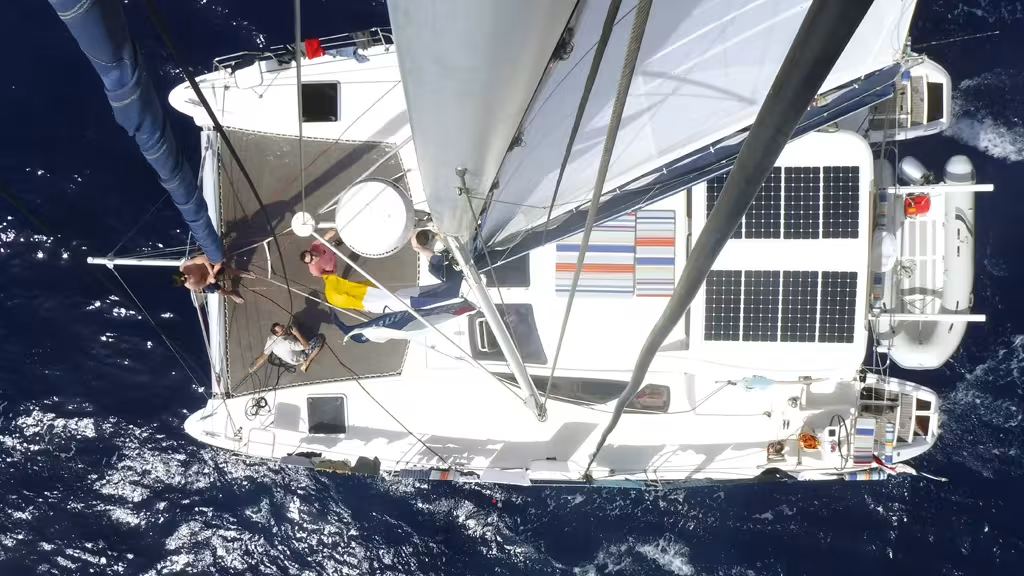
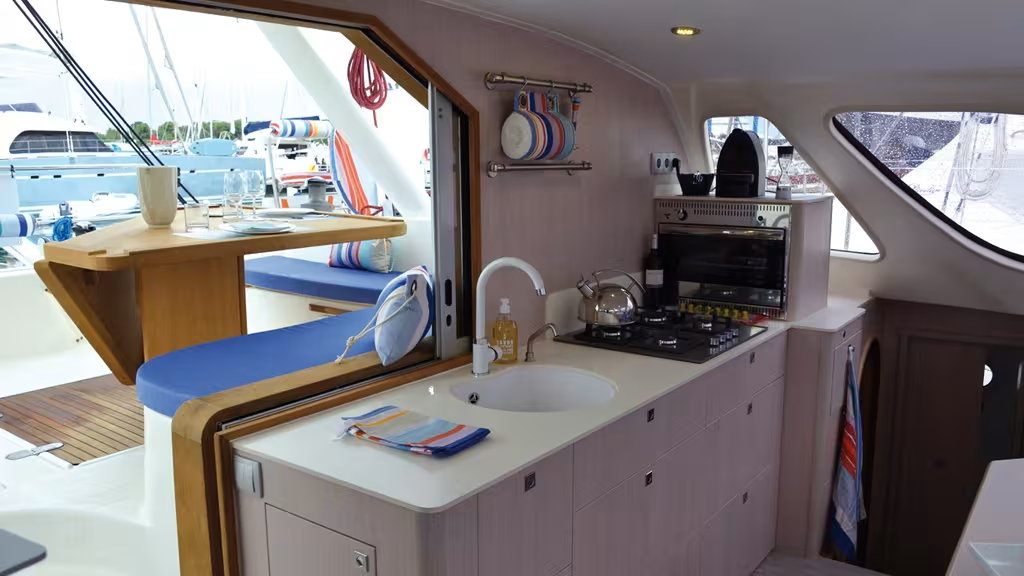
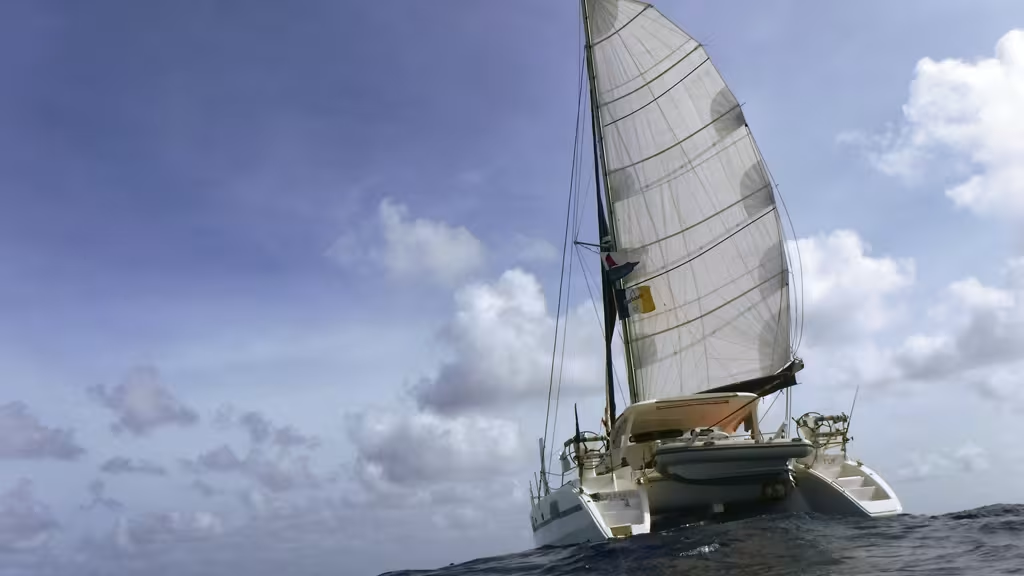
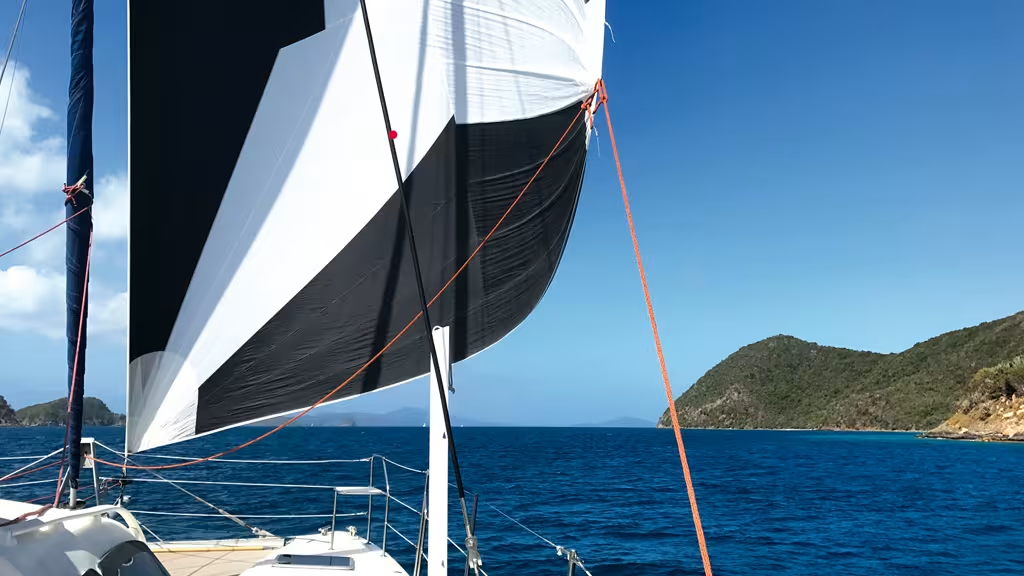
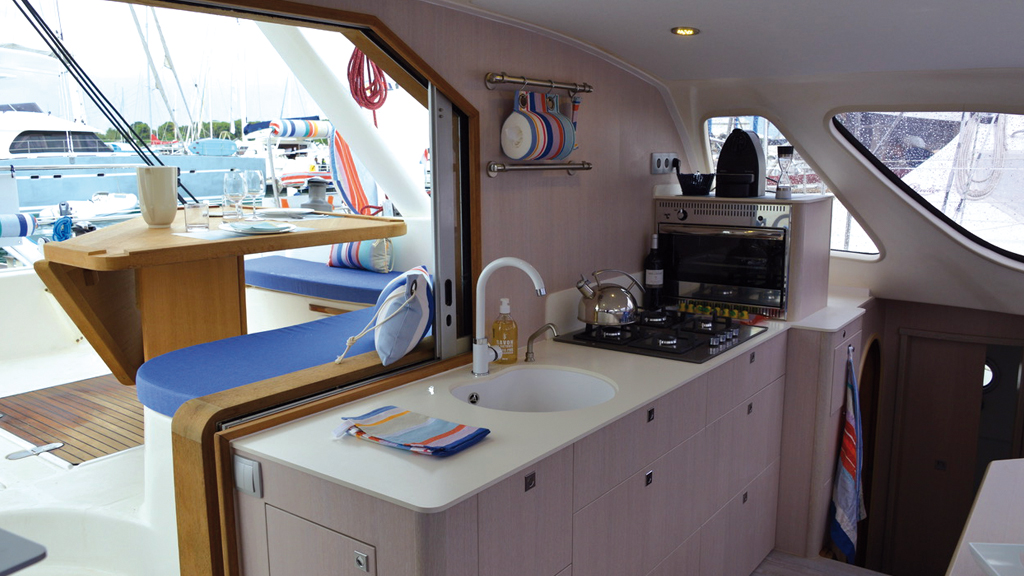
The only problem was that the company was located in France and I had fixated myself on departing from the US; but why couldn't I just do the trip in reverse? I reached out to them and conversed with the owner. They had a 2006 Catana 431 that was in the process of being refit that would match almost all my requirements. And not just a minor refit, a major refit. New engines, new saildrives, new standing rigging, new running rigging, new sails, new electronics, and a new dinghy to name just a few of the items. It also included a water maker and not only a primary autopilot but a backup autopilot as well. There were many signs that cost-cutting accountants were not overseeing this refit. For instance, I had never seen a gennaker and code zero on any of the charter boats I had previously rented. I also asked for some additional equipment to be added to the boat; the owner of the company explained that he was more than happy to accommodate my requests as this was to be “my boat” for the duration of the charter.
We gradually settled on a time period for the charter and the deposit, insurance, charter price and negotiated a cost-sharing agreement for some of the additional items I wanted. The total cost was less than my projected minimum net loss on the boats I had previously looked at purchasing. I also wouldn't have to pay the upkeep, mooring, and insurance while waiting for a boat to sell, nor deal with my anxiety if the boat didn’t sell promptly. With a bit of apprehension, I sent Carina-Ulixis a healthy deposit and started to devise a plan for a trip starting and finishing in the Mediterranean. A rapid realization on my part was that having my first ocean crossing commencing from the Canary Islands to the Caribbean was very fortunate. This is known to be one of the easiest ocean crossing routes and as such is often referred to as “the milk run” due to its simplicity since it is a dependable tradewind route. As a matter of fact, I anticipated more challenges staging the boat from the Mediterranean to the Canaries than crossing the Atlantic, both due to weather factors and my initial inexperience with the boat. For planning purposes, I divided the trip into 6 segments to give me time to go home for several weeks in between each segment as my wife was still working and wouldn't be able to be aboard most of the time.
The trip
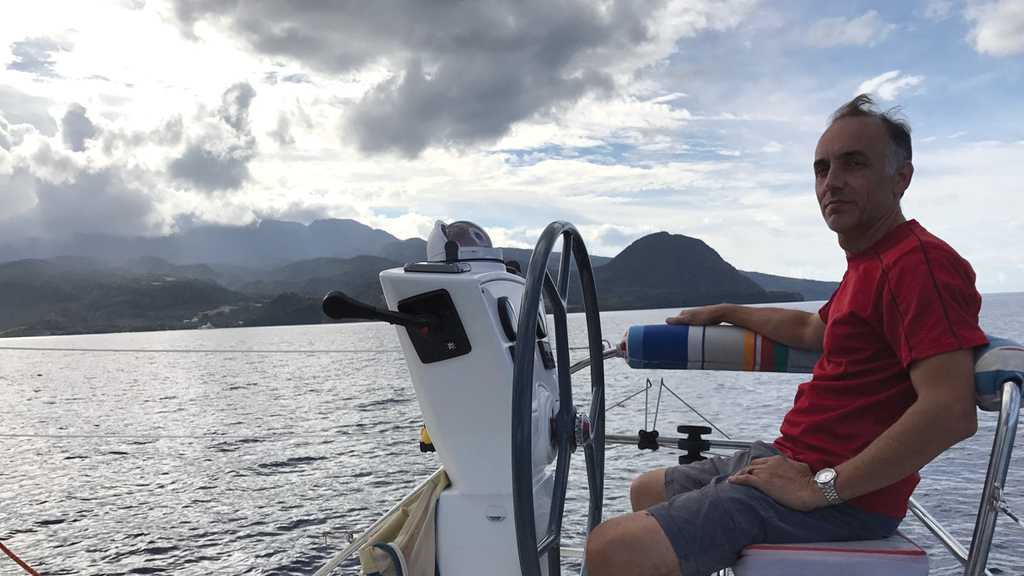
With the deposit paid, I began the process of committing to all the other efforts needed to bring this to fruition. My journey would begin in October 2016 on 10 days of vacation time scheduled with my employer followed by another 14 days in early December. I also notified my employer that I would be retiring effective December 31st. I booked airfare to my anticipated initial stopping points: France, Spain and the Canaries.
As I write this from my home in Dallas, Texas, I have completed half of this nine-month transatlantic-loop voyage.
Segment 1
I arrived in early October in Canet-en-Roussillon, France, the boat's home port, and was very pleasantly surprised to find the boat lived up to its billing and more. Everywhere I looked, everything was new.
After a few finishing touches were completed, our crew of four along with the boat owner, Pascal Pouplier, took the boat out for a sea trial. A few hours later I was satisfied with the boat and apparently, the owner felt he could entrust the boat to me. I initiated the transfer of the balance of the charter fee to Carina-Ulixis and began provisioning for the initial journey toward Gibraltar.
Segment 2
Segment two’s goal was to get the boat from Cartegena to the Cornell rally’s departure port of Santa Cruz, Tenerife in the Canary Islands. In the days leading up to departure a large low pressure system sat off the coast of Portugal causing high winds from the west but fortunately it came ashore and dissipated just in time. When the crew arrived, we had a good weather window so we were able to leave Cartagena immediately. Not needing the time previously built into our schedule for being weathered in for a while, we had time to visit Gibraltar, and then the islands of Porto Santo and Madeira. We arrived in Tenerife after nice sails along the way and very little time beating into the wind. Things were looking up.
Transatlantic
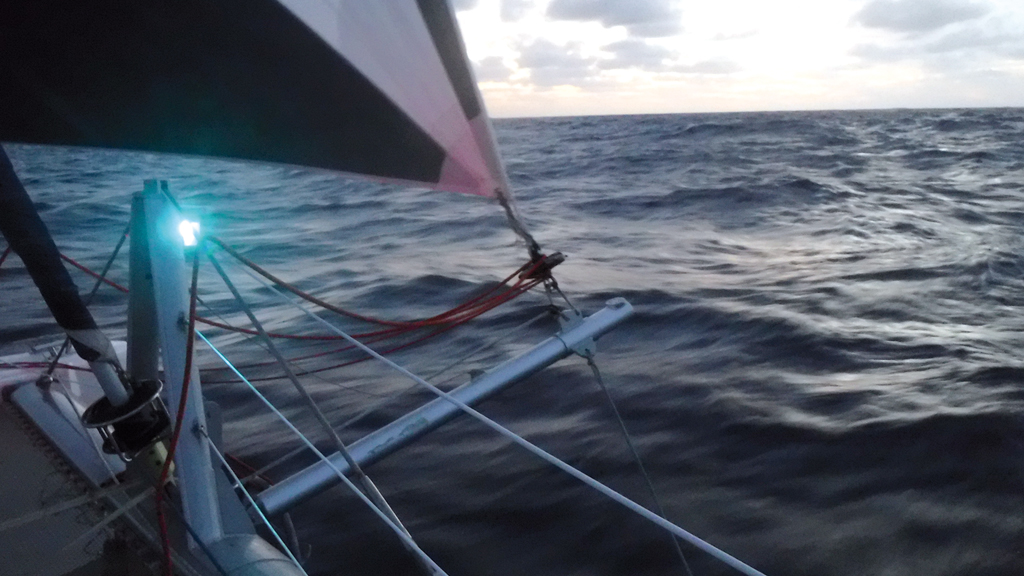
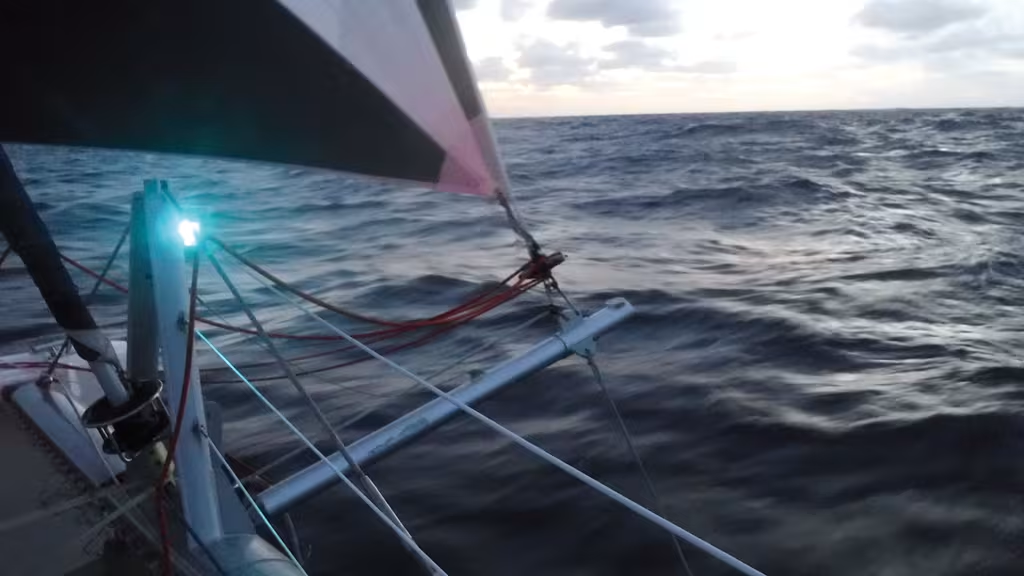
We had a very uneventful crossing; no injuries, no significant equipment failures and no severe weather. The weather was beautiful the whole way other than not having enough wind much of the time. We crossed in 19 days and hardly saw a drop of rain. We managed to catch several mahi-mahi and a tuna, took a mid-Atlantic swim and enjoyed lots of saltwater showers on the stern steps.
One of my most surprising discoveries to date is how well all the crew have worked out. I interviewed each one via email first then via Skype. I turned down about two out of three applicants. Miraculously, every single person that came aboard I can honestly say I was happy with my choice. I certainly can’t say that for all the corporate hiring I’ve done in my past.
Joining the Cornell Caribbean Odyssey rally was really enjoyable with the highlight being to make friends with Jimmy Cornell. Keeping tabs on the fleet of boats on the way across and “racing” to keep ahead or catch up to others gave us something to occupy our minds with in the day after day after day of pleasant weather and easy sailing.
Caribbean
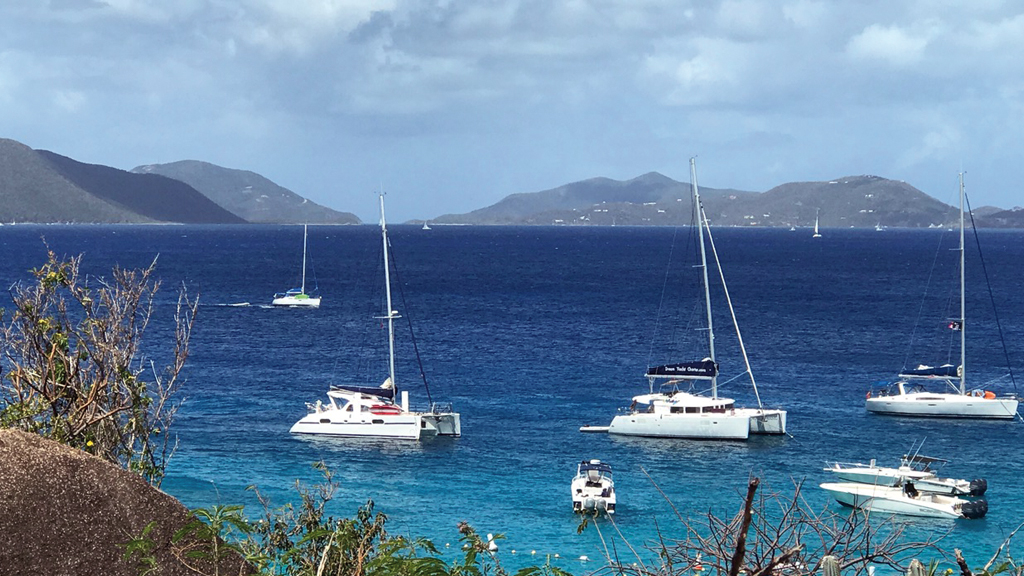
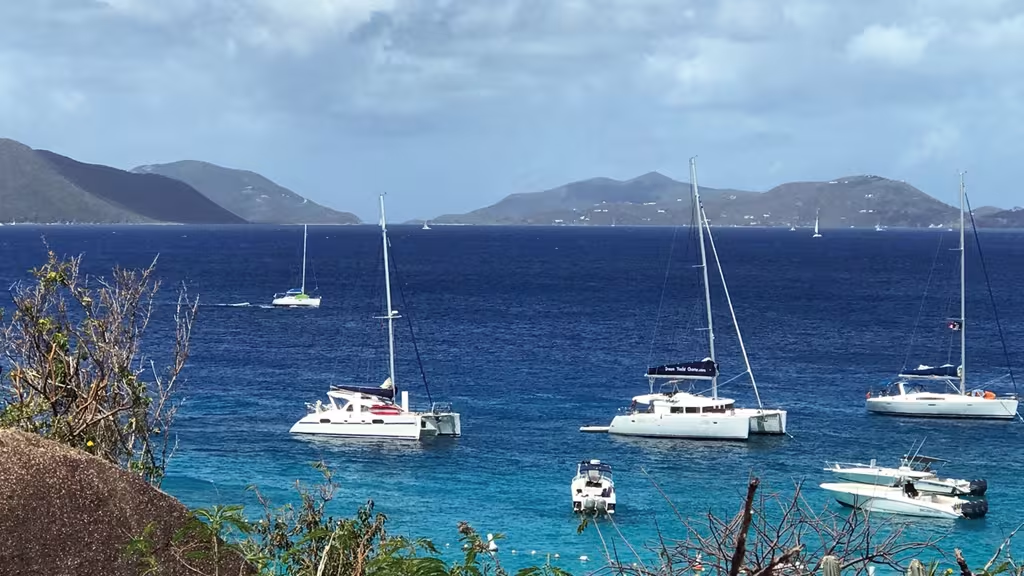
Sailing up the Windward and Leeward Antilles in the Caribbean was a great way to get a feel for the unique culture of each island. The islands visited were: Barbados, Martinique, Dominica, Nevis, St. Barthelemy, St. Maarten, St. Eustatius, and the U.S. and British Virgin Islands. This gave me lots of experience clearing customs and immigration. All went fine until I landed in the US Virgin Islands. I was traveling with my trusty sidekick, Carlos, who is from Madrid. When we tried to check in at U.S. Customs in Charlotte Amalie in St Thomas, I was informed that a foreign national must enter via commercial carrier, not a private vessel, the first time they enter the U.S. each 90 days. As Carlos hadn’t been in the U.S. since a year prior, that was a problem. The agent explained that there was no wiggle room on this. Carlos had a flight later that afternoon so we had to scramble. We hurriedly got underway and beat into two meter swells to get to the BVIs where we cleared Customs and he bought a ferry ticket back to Charlotte Amalie to go through this same customs office. I’d like to be upset with U.S. Customs for this odd rule but, of course, I should have done my homework. Fortunately for Carlos, his flight was delayed by two hours so he was able to catch it.
The next segment will be the trip from the British Virgin Islands to the Turks and Caicos, Bahamas, and then on to Florida. This will be followed by the return trip toward France via Bermuda, then the Azores.
People often ask me for the pros and cons of this long-term charter concept. To date, I’ve mostly had positives. The only real negatives I’m come up with is that there are very few companies offering this type of arrangement, and there is limited flexibility to “bail out” and stop sailing before returning the boat to its home port.
Once I return to Canet-en-Roussillon, I’ll hand over the keys to Carina-Ulixis and walk away. Will that be a day of joy or sadness? A lot of both I predict. I believe I’ll look back fondly on this adventure for many years. If I had purchased my own boat and the sale of it didn’t go smoothly afterward it would likely taint that memory somewhat. I’ve grown attached to the boat and it has the comfortable feel of “my own” after spending so much time aboard. I think, however, I will have had my traveling appetite sated for a while after sailing over 10,000 miles in nine months.
Long-term charter
As Greg has explained very well, even though long-term charter seems to be THE best solution for setting off for less than a year, it is not always easy to find a charter company that can meet these types of requests.
Carina Ulixis offers two boats, a Catana 431 from 2006 and a 47 from 2010, both of them fully refitted. Initially, the boat is completely revised and streamlined. It’s then up to the "temporary owner" to ensure traditional maintenance is carried out, to keep the boat in excellent condition. You’ll need to reckon on €47,000 ex-tax for the 431 and €60,000 ex-tax for the Catana 47, excluding insurance.
