


PREPARING FOR BLUE WATER CRUISING
Aim: to leave, or how to prepare your ocean cruising boat
Atlantic crossing, circumnavigation, round the West Indies or the Mediterranean... The departure and life afloat remain a recurrent theme, an inexhaustible source of projects to be realized. But over the last 20 years, ocean cruising multihulls have developed fantastically. They are bigger and bigger, and equipped with comfort levels which were unimaginable not so long ago. The other side of the coin is that their preparation has to be even more meticulous!
The aim of the preparation is to obtain the safest and most reliable boat possible. Whether you have opted for a brand-new boat, or one with several transats under its belt, it’s a question of leaving with an optimized boat, all of whose elements have been checked and approved.
The aim of meticulous preparation is therefore to obtain reliability, this being closely linked to the quality and above all the quantity of equipment aboard your boat. And thus to the boat’s level of complexity! One of the keys to a successful ocean cruising program lies in the harmony between the boat and its skipper! Above and beyond its own characteristics, the catamaran or trimaran must come up to its owner’s inner expectations, and this goes well beyond classic sales pitches.
Do you like to cruise in the same comfort you have at home? No problem, if you are ready to accept the personal and financial implications that the multiplication of complex systems aboard your boat requires. But be careful: aboard a boat, reliability is inversely proportional to the amount of equipment embarked... This rule, which has been proven again and again since time began, will therefore oblige you to rigorously hunt down everything which is not – from your point of view – essential to the success of your cruise. Although no one today would seriously envisage doing without a GPS, or cartography on a computer, what about the dishwasher, or the tumble dryer for a Caribbean program? And what can we say about the air-conditioning, which can be very pleasant in harbor, but which is absolutely not essential at anchor, if the boat is well-ventilated? We could find an infinite number of these examples. It’s up to each person to make their choices, according to their wishes and their boat, not forgetting that in a multihull (of any sort) weight is the enemy, and living aboard a boat does not offer the same comfort as at home... Any error of assessment at this level will lead to a very expensive (to buy and to maintain) and/or very unreliable boat!
The choice of equipment – and here we are already getting right into the preparation of the boat – will therefore occupy a great number of your evenings, and the choices between the ‘fors’ and ‘againsts’ will be Cornelian! You mustn’t forget that the aim when voyaging is to be as independent as possible, and therefore in a position to produce your own energy.
From an electrical point of view, you must draw up a very thorough assessment of your needs and your production capacity. Modern solar panels allow a well-thought out boat to be independent, with no problems. How much will you consume in 24 hours at anchor or at sea? And how much can you produce? If possible, without resorting to the generator? This simple calculation will allow you to make the right choices. However, you must have checked the electrical circuit carefully, ruthlessly changed all the dubious, energy-consuming connectors, and coupled your system to modern, high-performance batteries.

Another key point in your independence: water. Here we are talking of the (fresh) water you drink, not the salty kind which surrounds your boat! To have fresh water aboard, you have two solutions: have big tanks which offer you limited, but predictable independence, or opt for a watermaker, which will turn salt water into fresh. Here again, everything will depend on your program, and your attitude regarding marinas. If you are allergic to them, and you are leaving for the Pacific, a watermaker is essential. You must lavish regular care on it, and have aboard all the spares essential to its good health. In return for which, when you stop over on an uninhabited island, you will only be limited by your ability to get your food from the sea...
If your sabbatical year is to be spent in the Mediterranean or the West Indies, where the stopovers are close to each other, a watermaker isn’t essential. It’s up to you to teach your crew to make do with the water aboard, by hunting down the slightest excess.
Are you clear about the equipment you are embarking? So much the better, let’s move on to serious matters - balancing the chassis and its ‘engine’. A mast which ‘pumps’ in the seas, a platform which slams or drags its heels, heroic reefing systems or fragile fittings are all out of the question. Don’t hesitate to get help from the professionals to approve this essential part of the preparation. The rigging (just like the martingale and the genaker’s bowsprit) have a maximum life of 7 to 10 years. In other words, it’s no use leaving for a 5-year round the world voyage with a rig that is already 6 years old... The risk is too great, and changing it in the middle of a lagoon in the heart of the Pacific is never easy. So it must be changed before the departure. And if it is still in good health, it must be checked and adjusted by a rigger – not by the friend of a friend who does it every year on his sport cat... As you are working on your rig, take advantage of the opportunity to fit an adjustable tensioner (line + elastic + jammer) to avoid the shrouds shearing through alternate flexions.
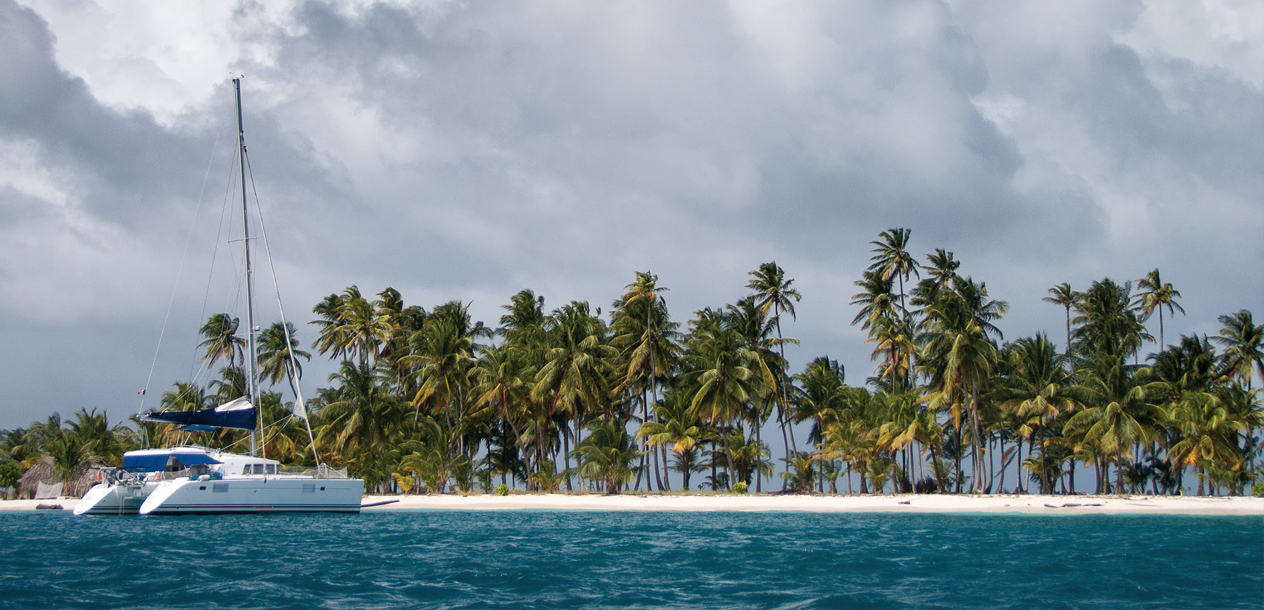
The same analysis with the sails: you are leaving for a long voyage in a sailing boat, so...look after your sails. A sail wardrobe ‘as new after a round the world trip and ready to set off again’ is an interesting concept, but also an insult to your intelligence. A second-hand wardrobe must be checked and approved by a sailmaker in whom you have complete confidence. For a new sail wardrobe, choose the cut and cloth with care, according to your real needs. A square-headed mainsail is certainly attractive and powerful, but do you need that amount of power for a voyage around the world as a family? As you are having deep discussions with your sailmaker, take advantage of the opportunity to find out about easy bags and lazy jacks. Before having cruised, you can’t imagine how useful they can be or on the contrary how they can spoil even the idea of hoisting the mainsail... So don’t hesitate to reinforce them and equip your lazy jacks with blocks so they really are adjustable...
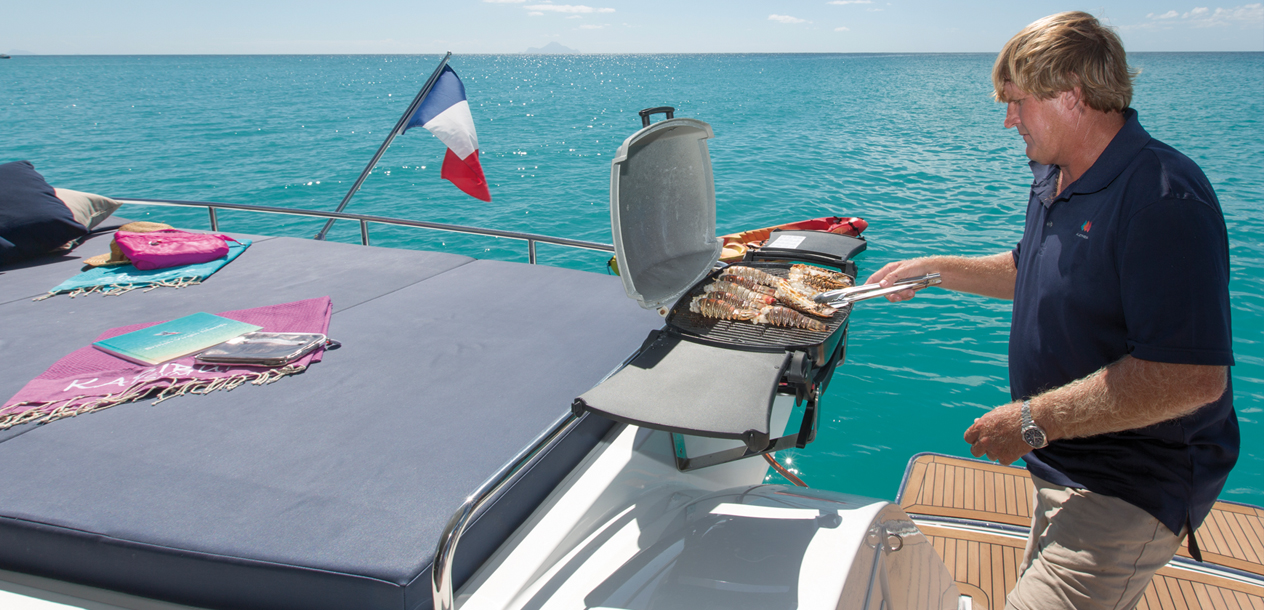
From a preparation point of view, it is also advisable to check, or have checked, the alignment of the rudders – even on a new boat. Similarly, the steering transmissions (mechanical or hydraulic) must hold no secrets for you, and it must be possible to fit the emergency tiller in under two minutes flat!
The deck plan is perhaps the area where you will have to do the most work. It must be optimized for your crew, so that each maneuver can be carried out serenely and in all the conditions you are likely to meet. Winch handle sizes, better quality lines, reduction in diameters and friction, quality of the blocks, jammers, etc... Nothing must present a problem, and each member of the crew must be able to carry out the maneuvers without difficulty.
Among the important maneuvers when cruising is...anchoring. The anchoring gear must be (very) carefully prepared, with a windlass which is powerful enough for the size of your boat, and the chain lead perfectly optimized. For the main anchor, leave with at least 100m of warp + 60m of chain. For a secondary anchor: 60m of warp + 40m of chain. Finally, a mobile setup with an aluminum anchor + 5m of chain + weighted warp in a canvas bag will allow you to cope. Quite obviously, the chains and shackles must be of the highest quality, correctly dimensioned with respect to the boat and the windlass. Take advantage of this opportunity to mark your chain with a simple color code every 5 and 10 meters. This is practical, so you know how much chain you have paid out according to the depth of water.
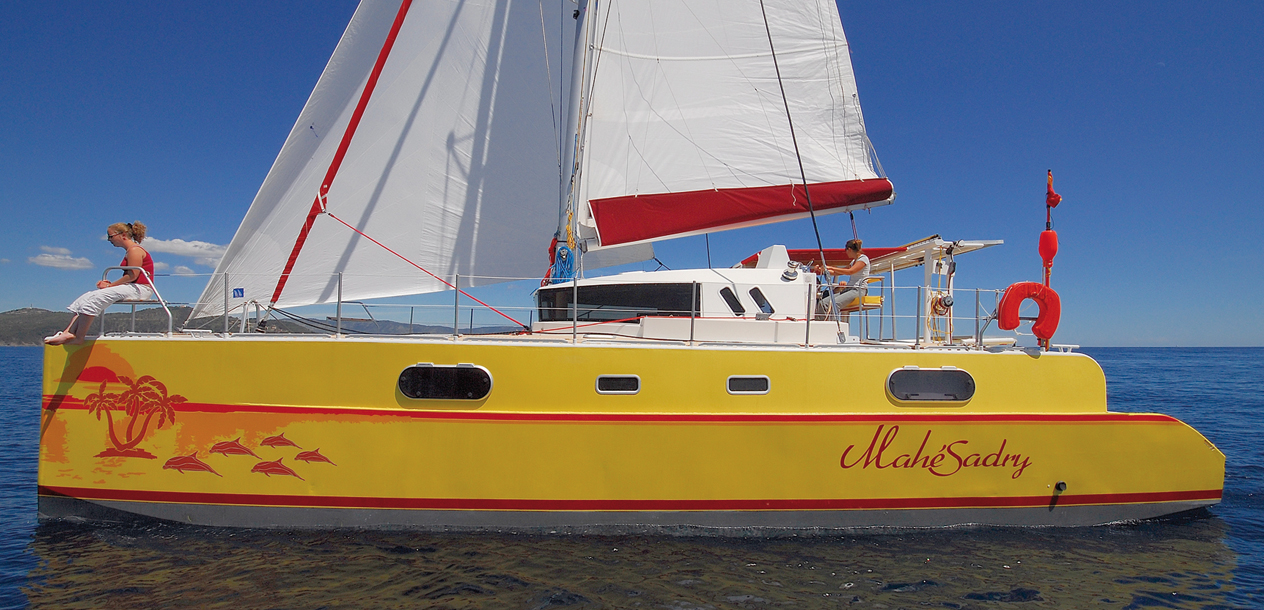
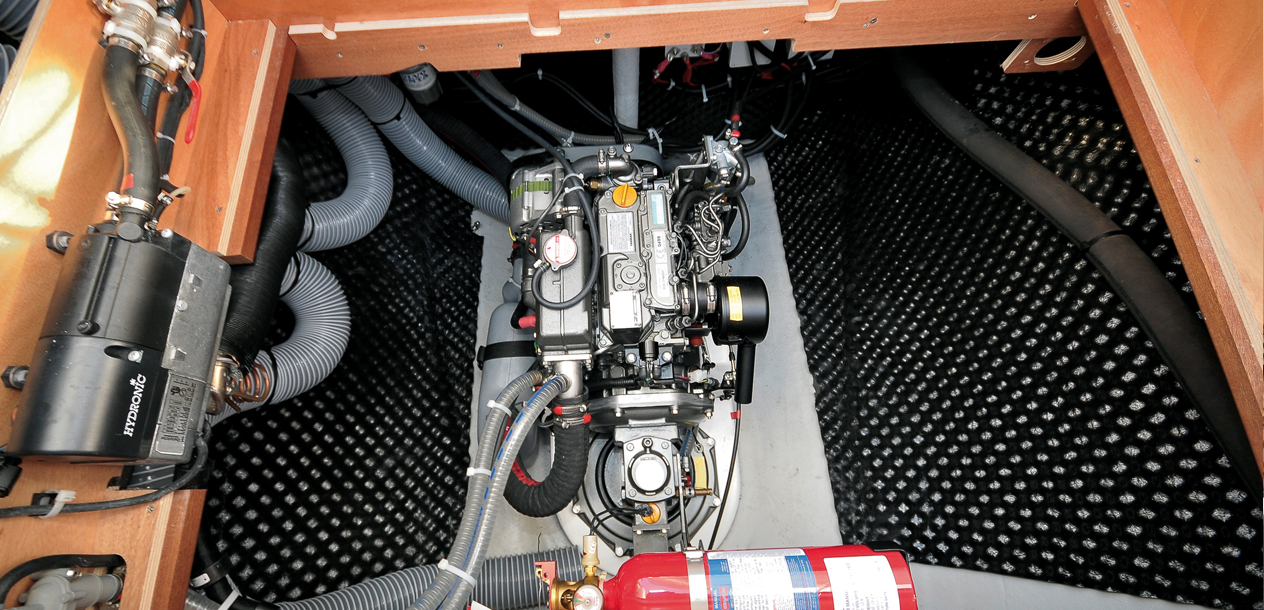
As for the inboard engines, you must show the same intransigence as for the rig. So whatever the seller tries to tell you, a good service is necessary before the big departure, if your boat is second-hand. An inspection, with an analysis of the oil, then the engines and saildrives must be checked over completely by a professional. This entails hauling the boat out and often removing the engines. An essential investment before a big departure. Whether the engines are new, serviced or rebuilt, their maintenance must then be appropriate, respecting warm-ups, regular monitoring of operating parameters, use of semi-synthetic oil and standardized filters. In return for which, your engines will go round the world with no problems.
Before leaving, even and perhaps especially if your boat is new, go to sea for a few days to check out each piece of equipment in real use. Everything must work fully, and operation must be easy and even instinctive. Every incident must be meticulously noted, so that you can brief the fitter when you return to the marina. From the watermaker to the generator, via all the sails and all the equipment – from the ice-maker to the coffee machine, the on-board electronics and of course the autopilot – everything must be used and checked.
Whatever the boat – new or second-hand - and whoever sells you it, and even if you have been the owner for several years, everything, absolutely everything must be checked, tested and modified in moderate weather and to windward in heavy weather, before you set off.
And safety in all that?
All done? Everything has been checked, approved, optimized? Let’s now look at safety. The basics of safety in a boat consist of being able to get your boat back to the harbor whatever the conditions and damage you encounter. The engines have been checked (see above), as has the rig, and you are able to repair the most classic damage to return to harbor independently. Bravo! But a good skipper must also plan for the worst. The fact that multihulls are unsinkable mustn’t allow you to forget good nautical common sense. Therefore the liferaft must be inspected regularly and the grab bag must be in position every time you leave. Each skipper has his or her habits and little quirks. But in the grab bag, we should find at the very least a fully-charged portable VHF, a hand-operated watermaker, an EPIRB, a survival blanket, some total sun block, a bottle of water, some medicines, food substitutes, etc...
A big departure must be prepared
We’re nearly there! Just a bit more work on the toolkit (see following pages) and your boat – as well as its skipper and crew – will be finally ready.
Happy cruising, and don’t forget to send us your postcards from the other side of the world!
Equipment: the essentials
Autopilot:
Essential. It (or they) must be chosen with care. It's what does the dirty work. You will only helm when you want to!
Windlass/anchor
Don’t skimp on this. The windlass and the anchoring equipment are your guarantee of a quiet night.
The choice of anchor must also be given a lot of thought.
Electronics
Who would have the ridiculous idea of setting off without full electronics? The installation must be carefully carried out, and the instructions for use well assimilated before casting off...
Watermaker:
Is there anybody still ready to set off for a voyage in a boat without a watermaker aboard?
Solar panels
The error would be to not have any aboard. Ideally, they will be adjustable and of the latest generation. According to their production capacity, all that remains is to choose your electrical equipment!
Generator
An extra engine aboard... But one which can offer many services. Certain cruisers embark a portable generator, which only comes out of its locker when needed. Everything depends on your electrical consumption, and the level of comfort you are looking for.
Cold
The refrigerator is not a luxury aboard our boats, it is essential. But beware, it consumes a lot of energy. You must therefore choose it well, to obtain the best contents/practicality/consumption ratio. As for the freezer, although it allows you to stock foodstuffs such as meat and to keep your catch for a long time...while providing an ice cube to put in your ti’punch, it consumes a lot of energy.
The dinghy
If your catamaran is your house, the dinghy is your car... You must therefore be able to haul it aboard easily. Choose a strong RIB, resistant to tropical UV and with a good outboard (8 – 15hp), to enjoy it to the full.
