
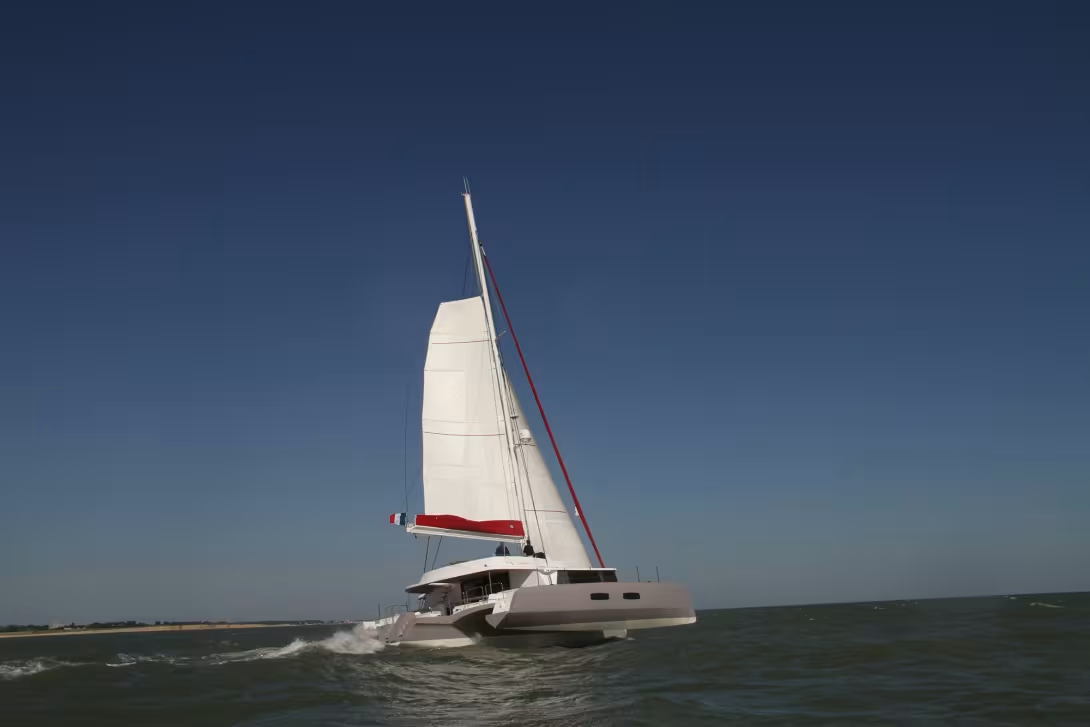
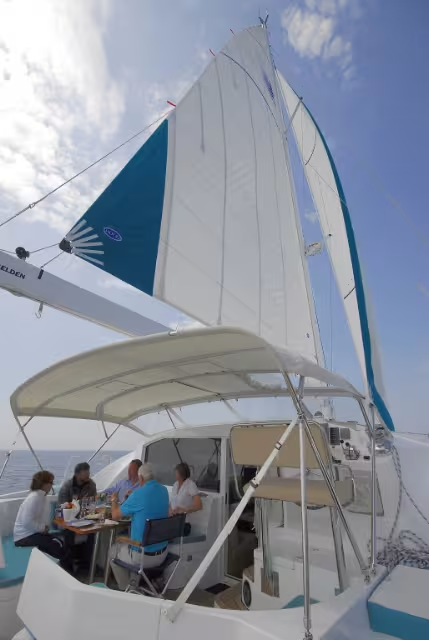
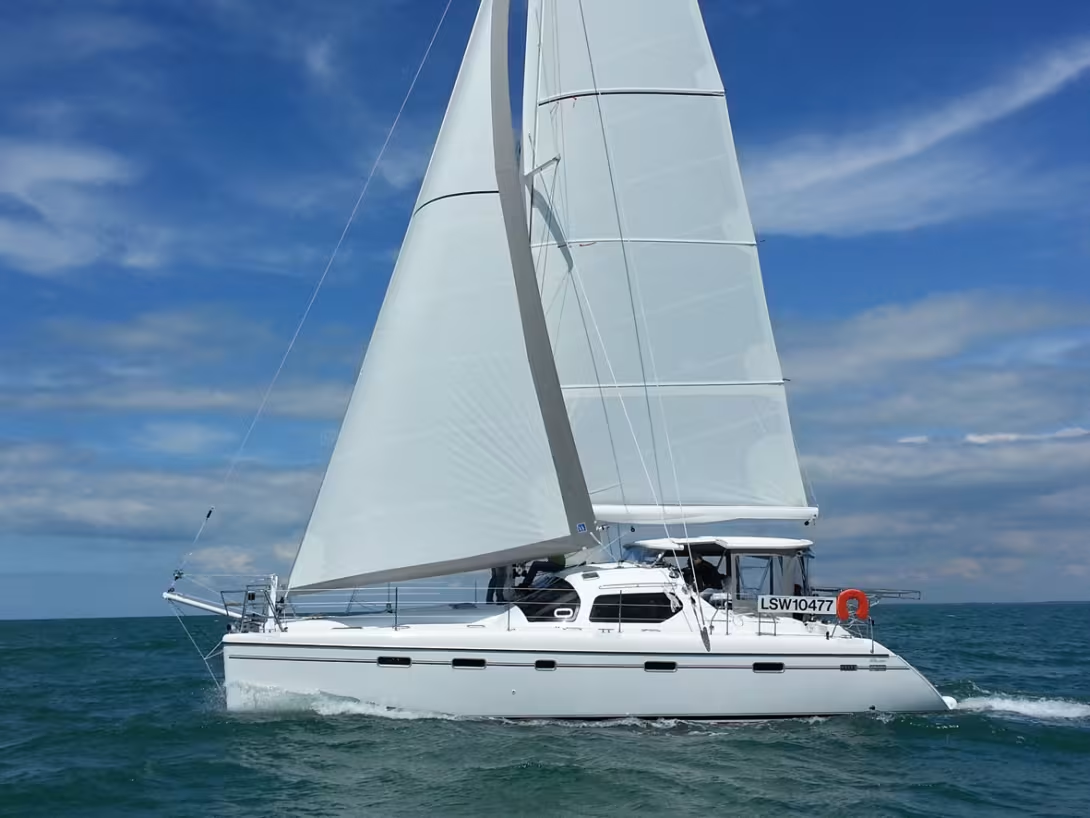
If we are honest, we have to admit that we all have secret thoughts about no longer having to go to the mast foot to hook the tack of the second reef, no longer having to take in the kilometers of the 3rd reef pendant (inevitably the longest), not hesitating to take in the first or second reef, no longer having to untangle the mass of knots piled up at the mastfoot or in the cockpit, and being able to hoist (or rather unroll) without the lazy jacks getting in the way of the maneuver. Better still, without the pendants, lazy jacks and bags, your boat’s lines will be more refined, won’t they? And finally, you will no longer have the task of folding the sail when furling, which aboard a catamaran can sometimes involve acrobatics worthy of a trapeze artist.
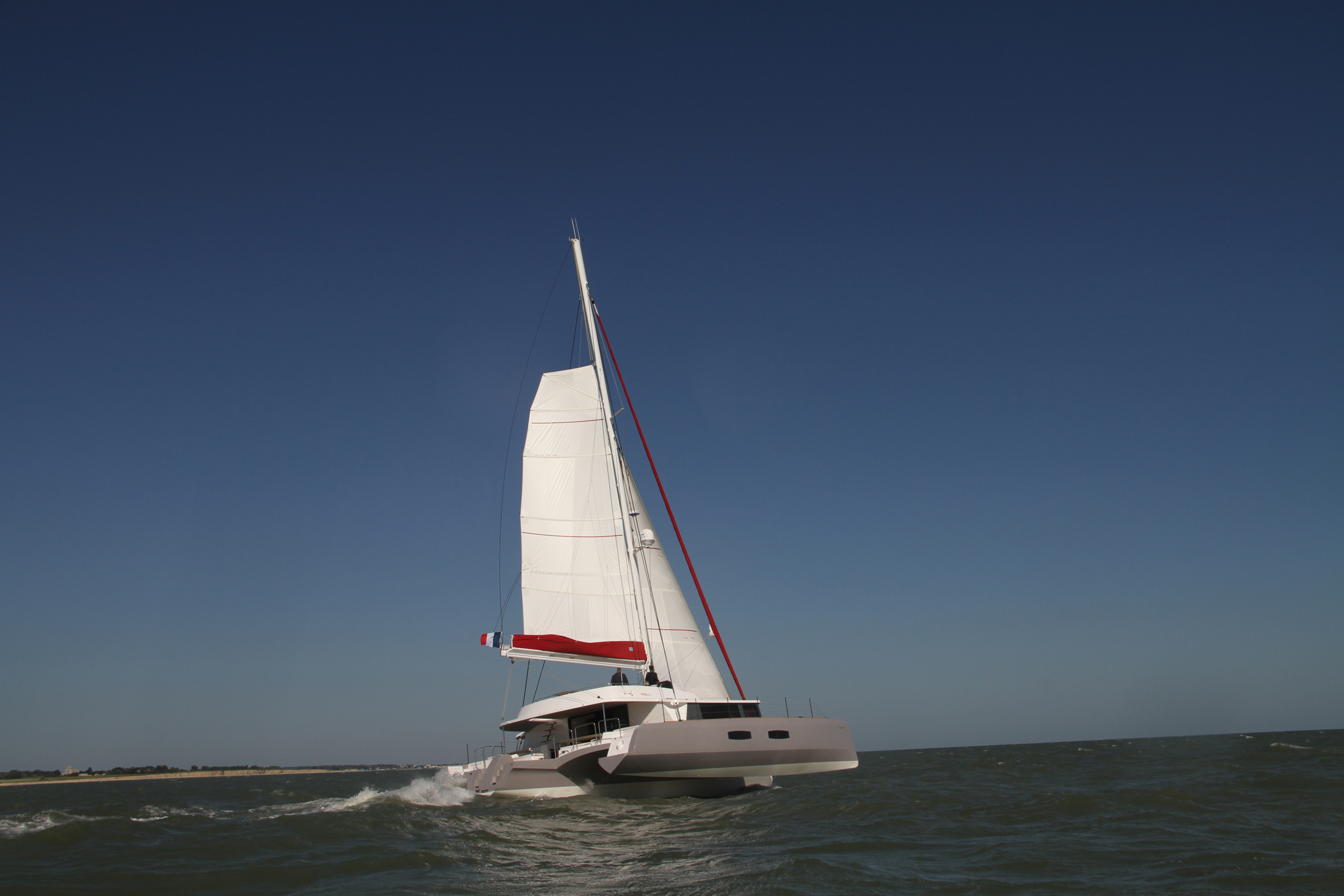
Be honest, this idea has certainly passed through your mind. But you have probably also heard on the pontoon grapevine about a lot of misadventures, which has made you hesitate, or even abandon the idea of putting it into practice. In first place, the (real) risk of trapping the sail in the profile, which can happen following poor handling of the line and the foot rope, which is let out with no synchronization (or lines which slacken off with time) in the mast mandrel. Then there is the raised center of gravity of a roller mast, due to the sail being rolled aloft. Finally, the concave shape of the sail, which loses 15% of its area, is also prohibitive on multihulls, which always have a large roach. For sure, a roller boom remedies these problems, but it also has its own problems. The belly of the sail can cause folds which aren’t absorbed and roll into the boom, its angle with the mast must be fixed, and it requires a rigid gas kicker which is incompatible with rigs situated just ahead of the coachroof. And the bolt rope can roll on itself and is subject to severe chafing.
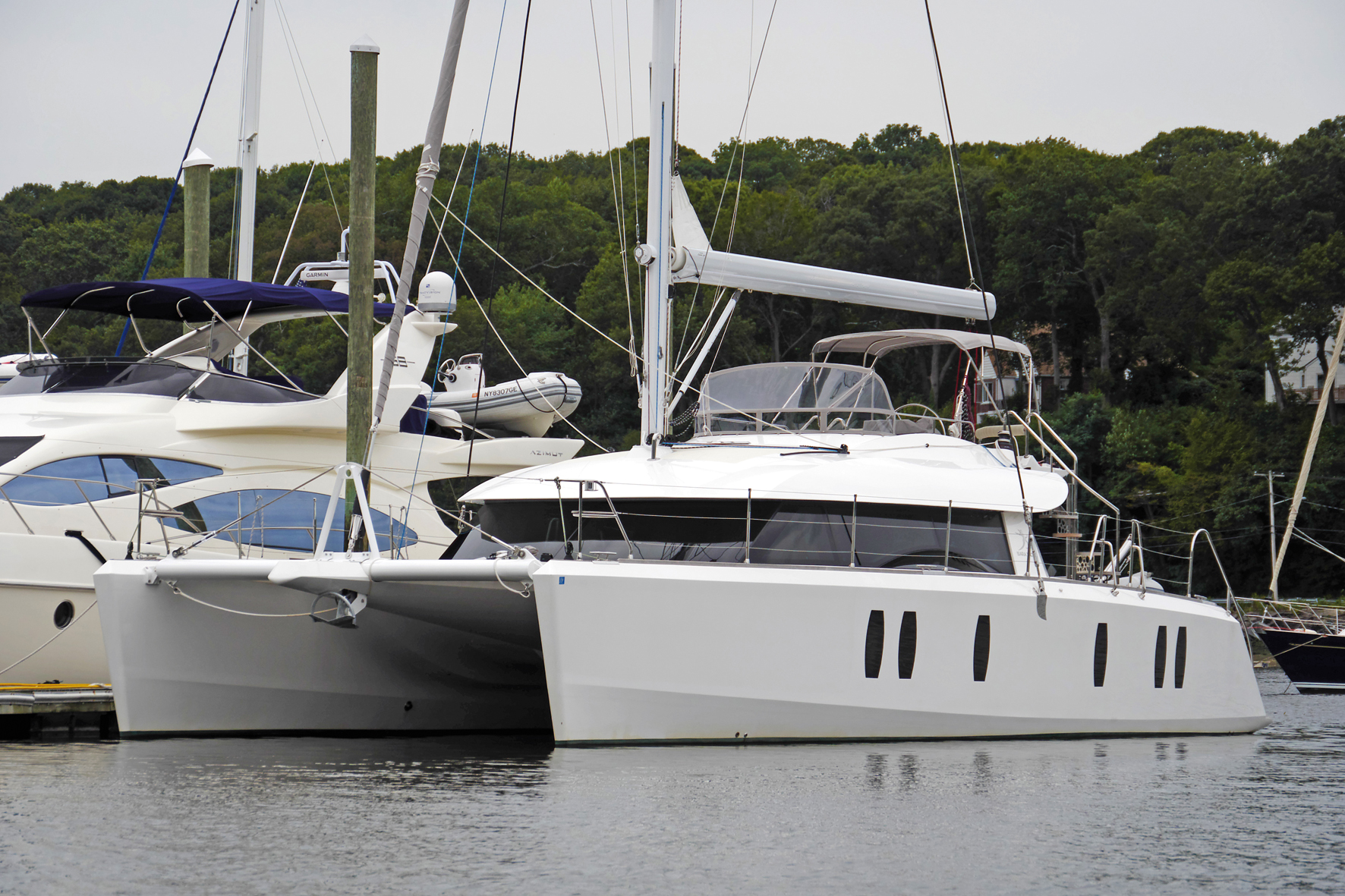
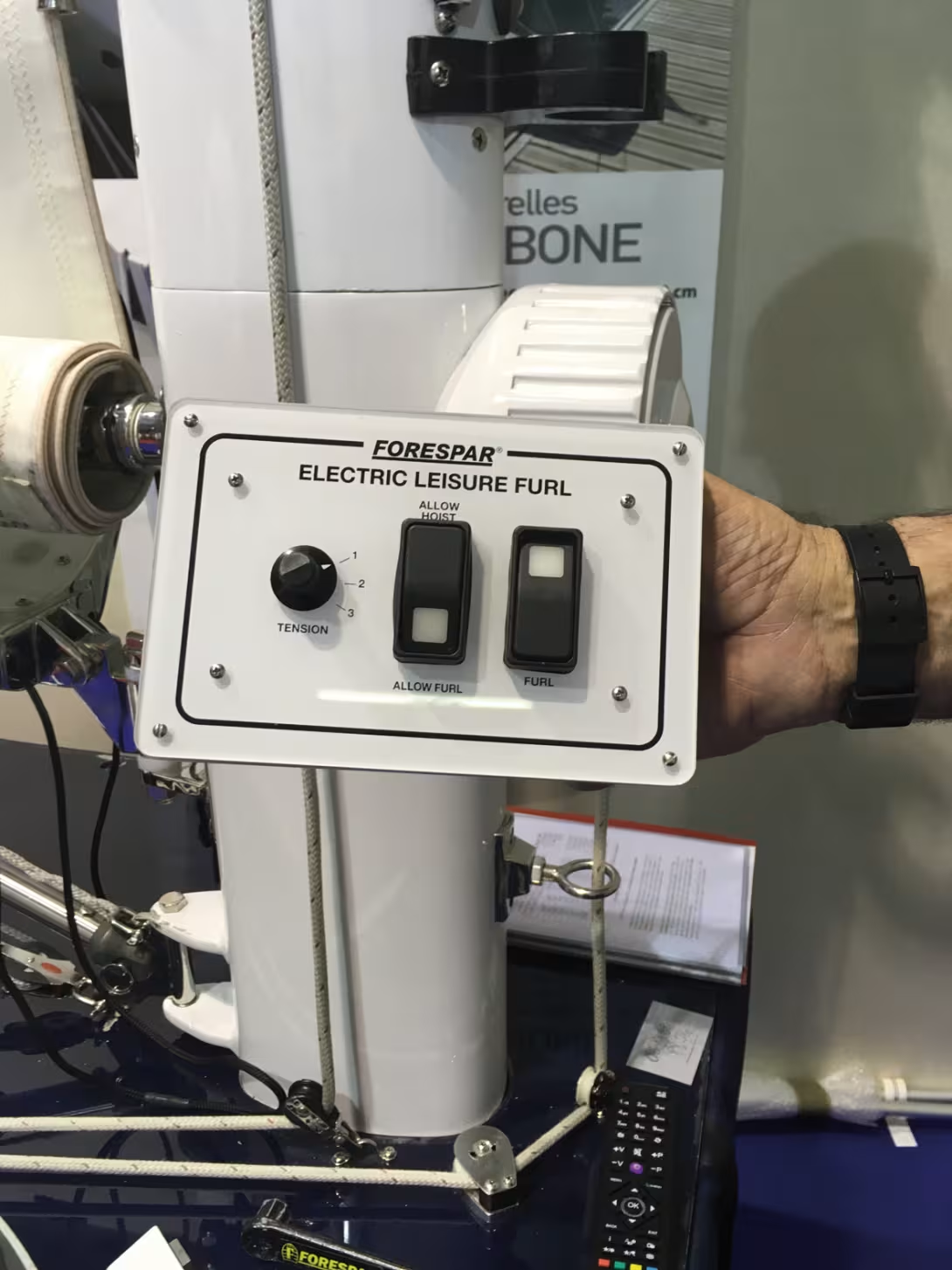
However, technology and developments have allowed the picture to improve considerably over the last few years, and the equipment is now reliable, if certain rules are respected. And with this type of equipment, maneuvers can be carried out singlehanded, which is not the least of advantages when your little family is sulking at the moment of getting under way or reducing sail. Maneuverable with just two lines, one which rolls and the other which unrolls, it’s made even easier, as an electric winch is necessary – it’s impossible to set the sail without the winch with this system, and the time taken to unroll or hoist may seem long by hand. It’s quick and easy, and all you have to do is keep the tension on the line which is being reeled in (pendant, halyard or foot, depending on the case) so that no folds form during rolling, or fit a halyard brake.
What more could you ask for to enjoy the performance of your multihull without needing a large crew?
Roller masts
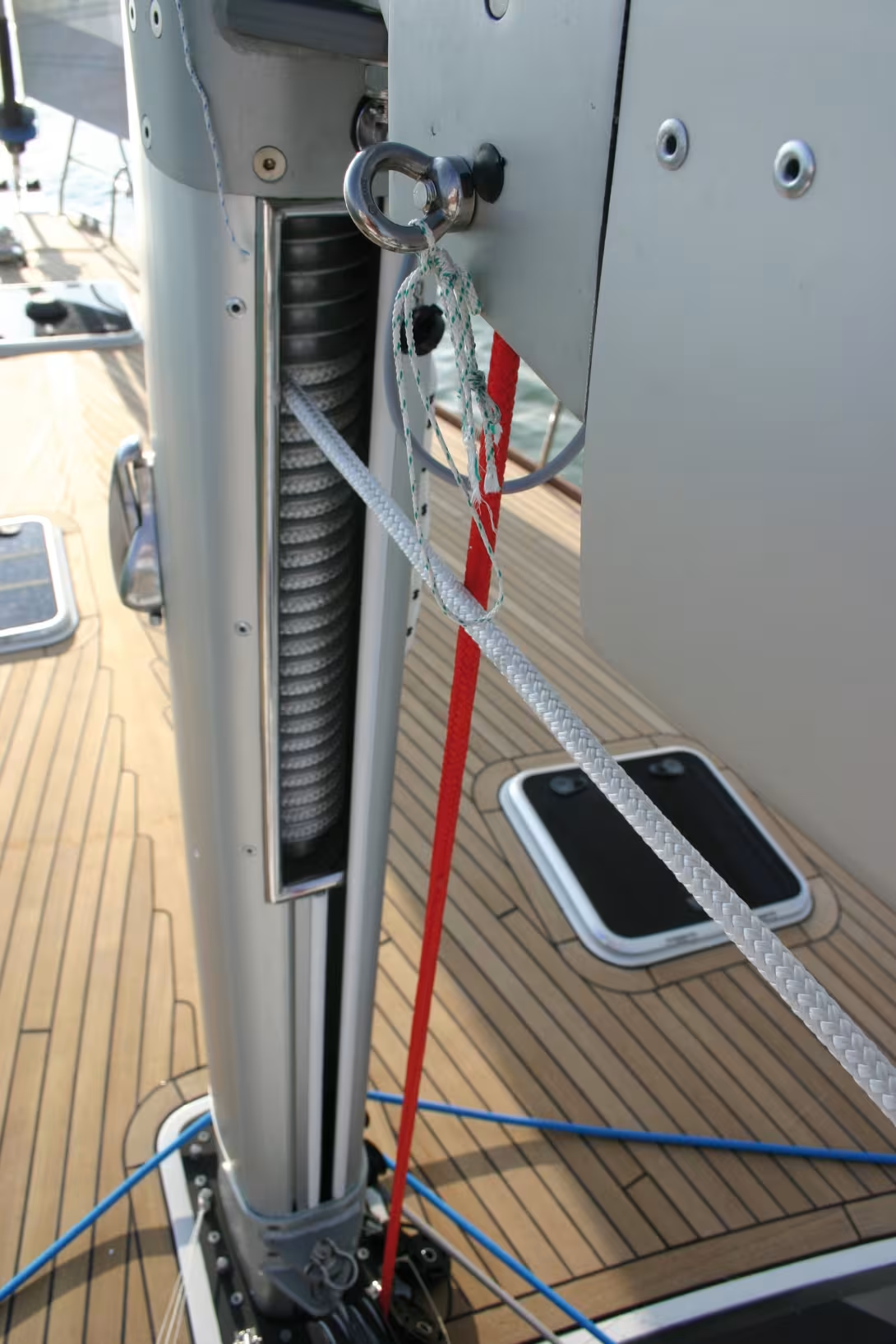
Several manufacturers offer production roller masts. Sparcraft uses an endless screw system with a control line which is led back to the cockpit. As significant progress has been made concerning ropes, stretch or wear are no longer to be feared, stainless steel protection avoids chafe, and the slot into which the sail enters is optimized and covered with a PVC profile, so that jamming is no longer a problem. The Swedish manufacturer Selden has gambled on an external system, with a gearwheel axle at 90° reducing the risks of friction. Electric or hydraulic assistance is possible, and greatly facilitates the maneuver for sizes over 40’. Ideal for boats whose coachroof prohibits fitting a rigid kicker (a good topping lift must be provided), their mandrel allows sails with integrated vertical battens, which have the advantage of acting as a clew when reducing sail (you take in reefs to the level of each batten, which allows the sail to be pulled taut), as well as allowing a sail with an acceptable roach. On the other hand, to make rolling easier, the sail must be cut quite flat. Above 50’, you can always turn towards a custom roller mast. Axxon Composites is offering them in carbon; Reckmann has built a lot in aluminum. All configurations are possible, giving attractive performance for large sail areas and special specifications.
Roller booms
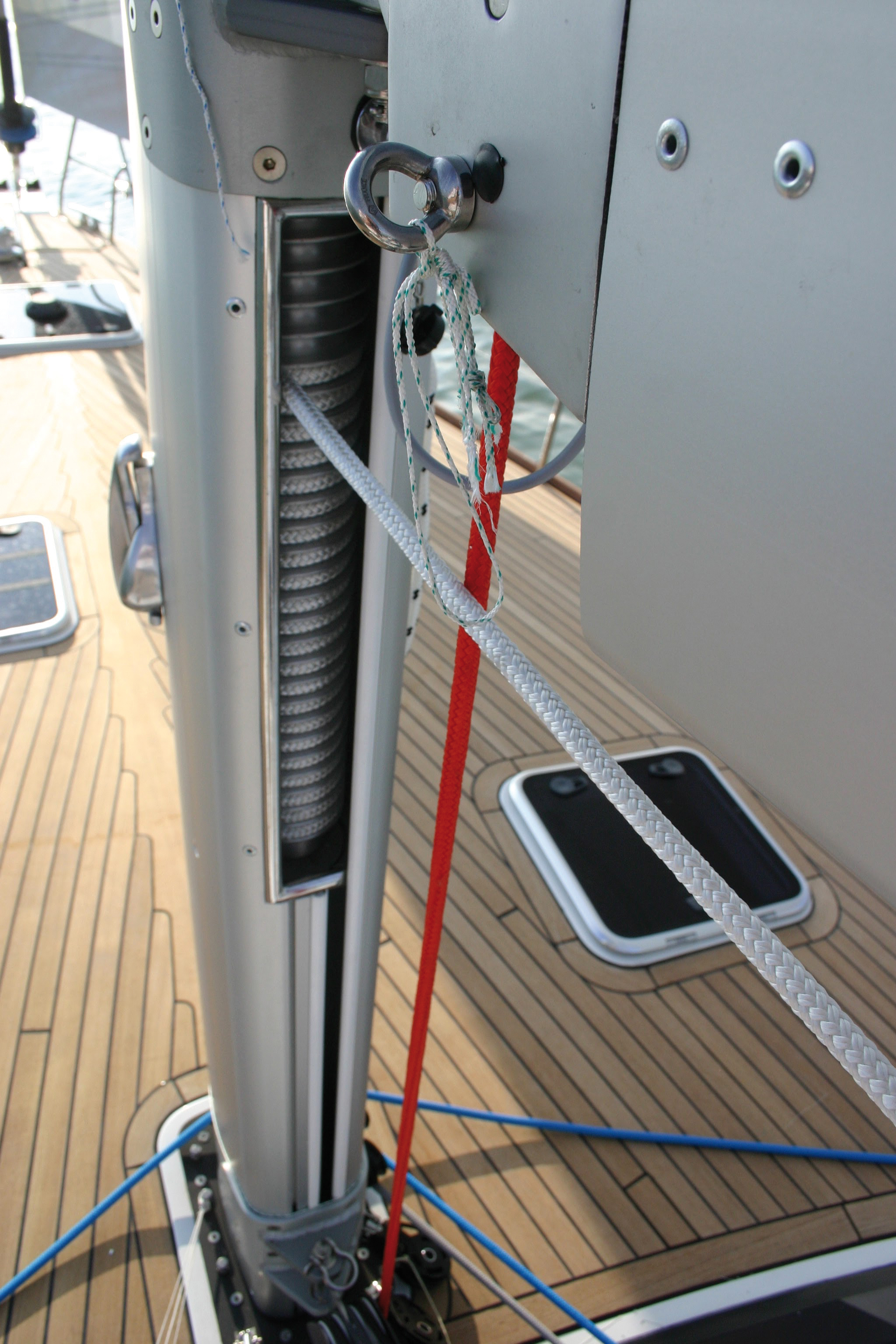
Not raising the boat’s center of gravity, avoiding weight aloft and allowing a heavily-roached sail to be set, the roller boom does not require you to change the mast either, as it is adapted to your profile. The old-fashioned roller reefing systems were the historic precursors of the modern roller booms. Today these systems are perfectly technically mature, and prove easy to use, as well as being high-performance.
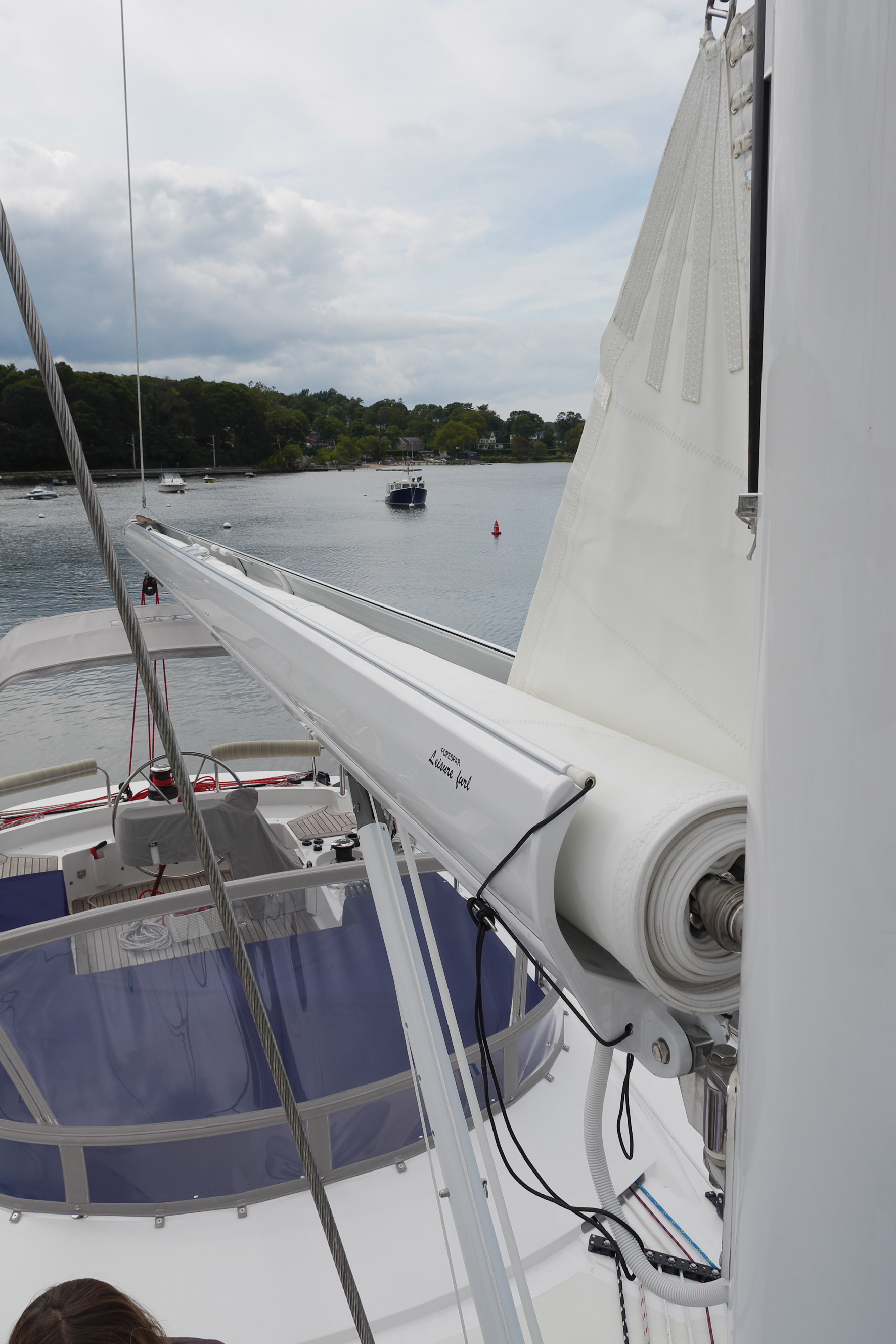
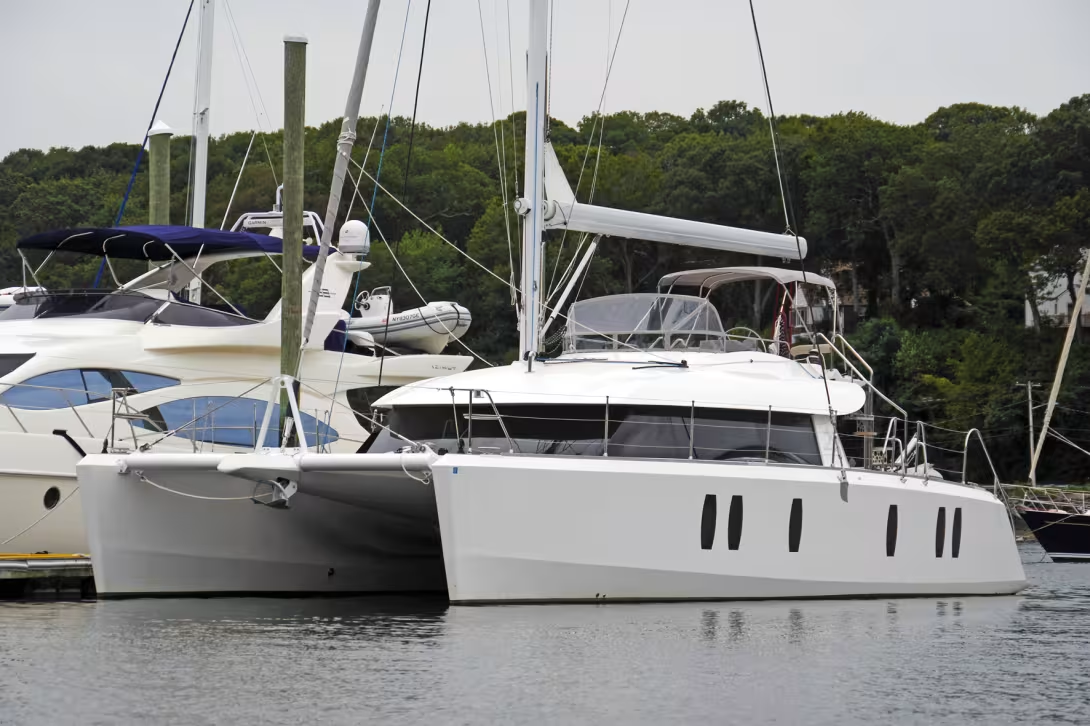
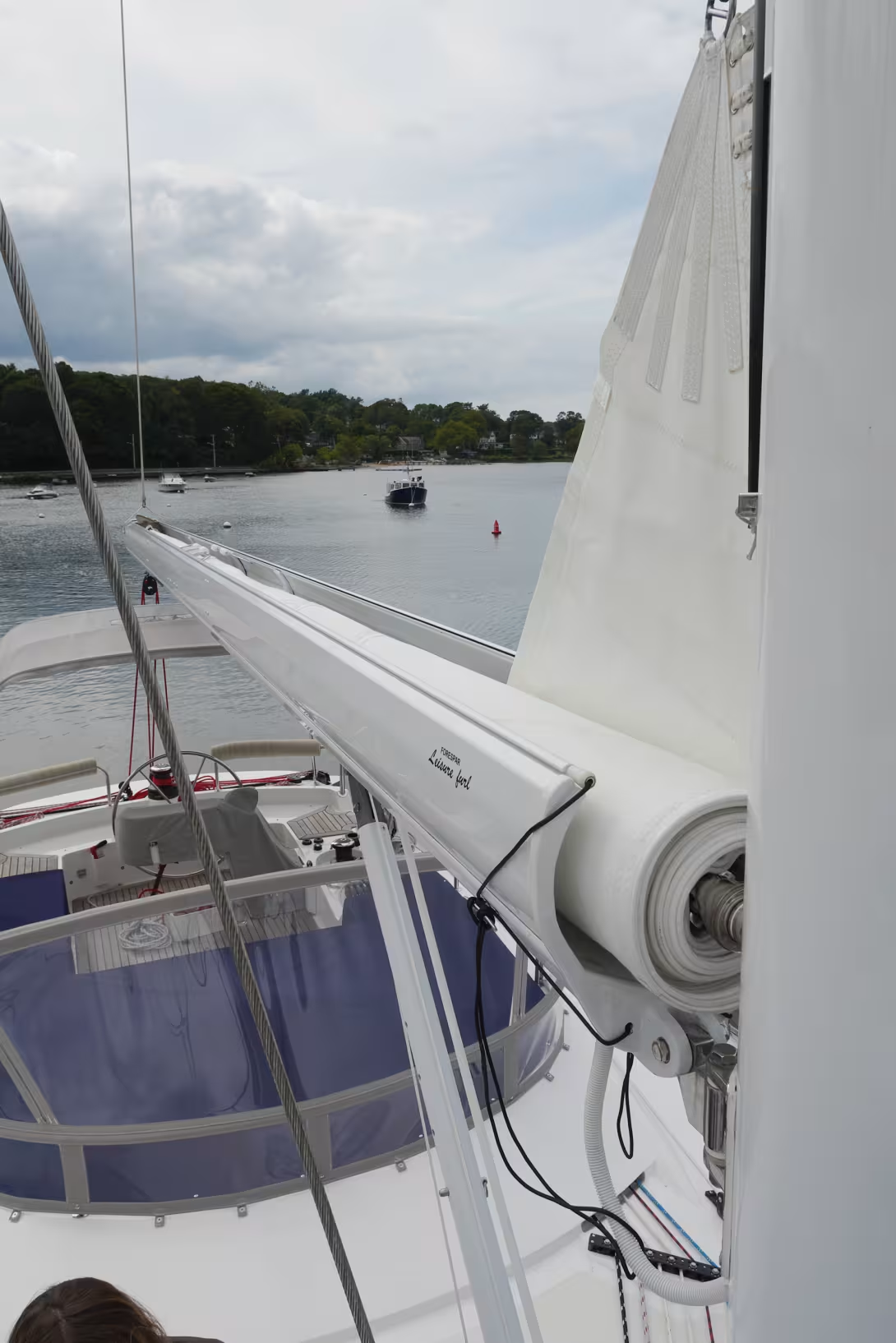
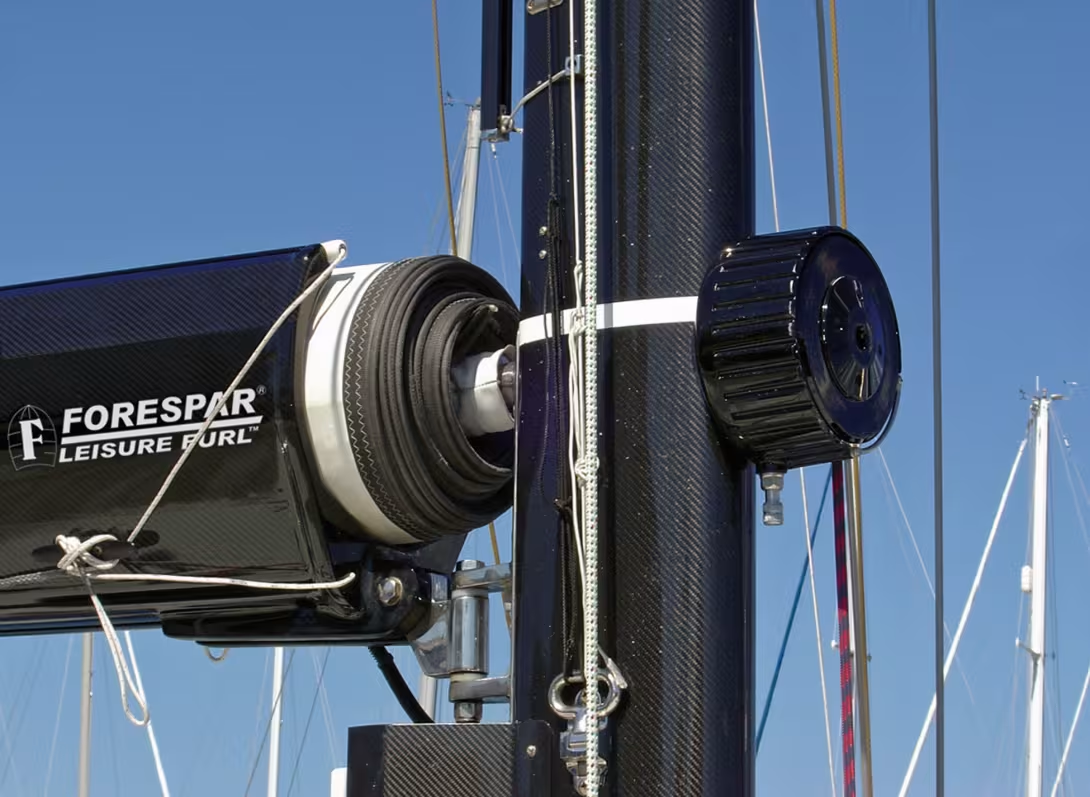
Profurl is offering its Mk4 system for 50’ boats, Pomanette, its Furlboom, and Forespar, its LeisureFurl system. At a time when masts are up on the flybridge and booms are perched higher and higher, this system is attractive, as the weight remains low when sail is reduced. And in the case of a technical problem, the mechanics remain easily accessible. This system’s main constraint is having to keep the spar at a constant angle with respect to the mast, and it is best to have a rigid gas or fluid kicker with a mark so you can be certain of doing this. On the LeisureFurl system, which is available on request in aluminum or carbon, the first part of the track which takes the bolt rope at the level of the gooseneck is flexible, to compensate for undulations of the sailcloth when hoisting. On Profurl’s system, the mainsail’s bolt rope is hoisted in a moving hollow profile fixed to the mast, which does away with the requirement to be head to wind during the maneuver. This type of roller accepts sails with a nice shape (without equalling classic sails), as well as a large roach. Sailmakers must follow the manufacturer’s instructions scrupulously when creating the sails – reinforced bolt rope, reef reinforcement at the level of the battens, fan-shaped batten arrangement, as you roll more leech than luff… The volume of the sail with which the sailmaker can nevertheless be creative must also respect a maximum ‘belly’. As for the masts, and for bigger vessels, there is a good supply of semi or full-custom combinations of roller booms and streamlined mast profiles. Hall Spar with OceanFurl, Southern Spars with Southernfurl, Rondal, Formula Mast, Offshore Spar and GMT Composite are offering very sophisticated made to measure systems with the motor incorporated into the mandrel, and with streamlined carbon masts to house the boltrope gap whilst conserving or even improving the aerodynamics.