The evolution of multihulls can sometimes seem a bit contradictory. Their origins stem from (seemingly) basic ancient techniques and materials, but their extraordinary potential sees them incorporate the most modern components and continually push the boundaries (of speed or living space!) Some traditional creations strive to maintain a link with the original know-how and philosophy (Wharram Designs), combining them with new options offered by digital cutting and wood-epoxy composite assembly techniques. Others, such as Derek Kelsall’s KSS sandwich, provide alternatives to female mould construction, with its excessively stringent tooling requirements. Assisted sail-handling on big boats or boats with very exacting specifications which are looking for increased safety and ease of use, are another area of research and development. This is one of the aspects we wanted to look at in this feature.
Moea, a plethora of innovations never before brought together on a cruising catamaran
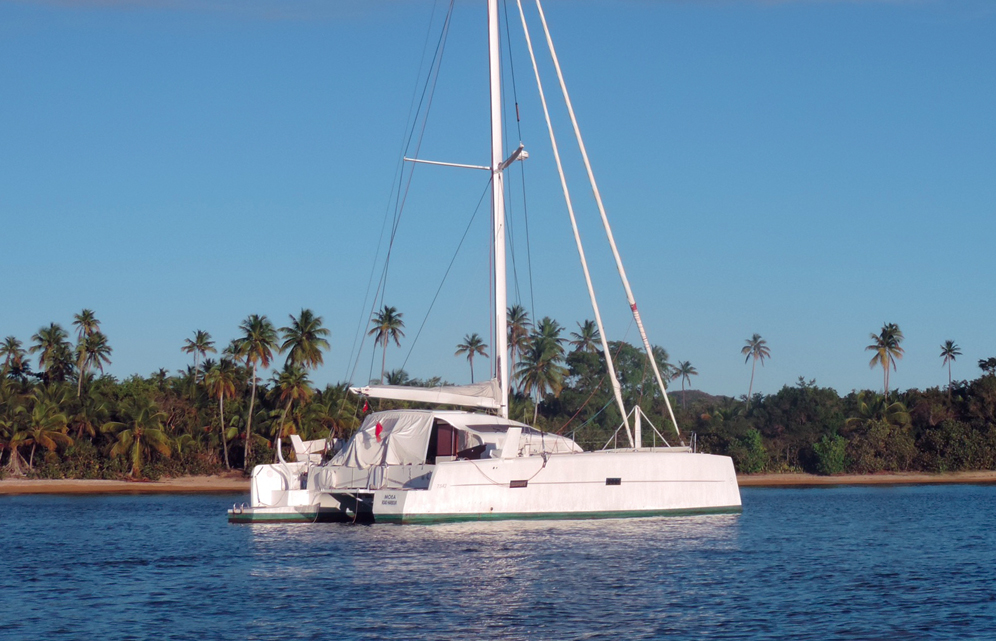
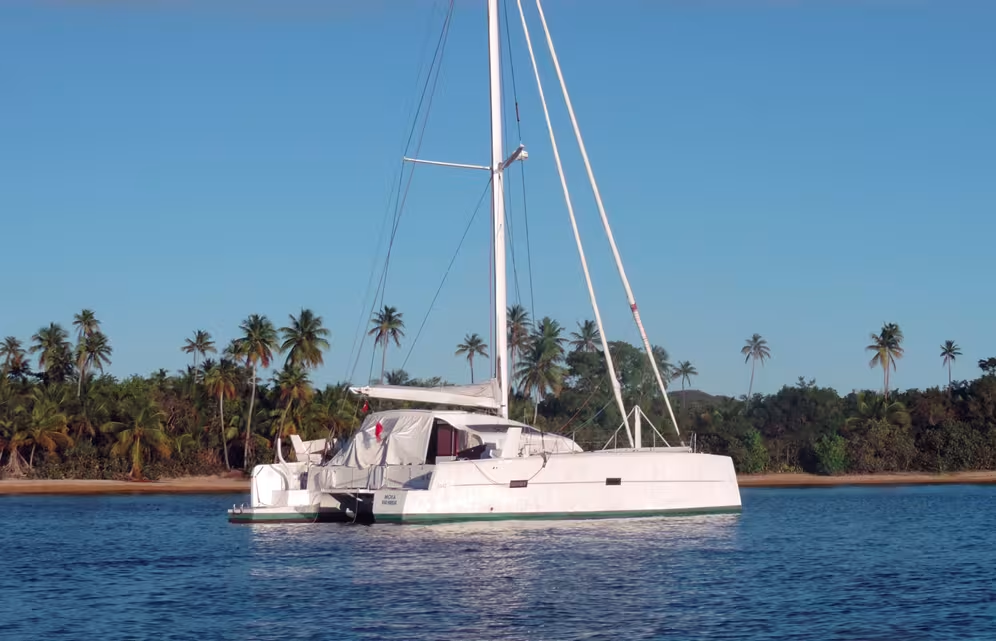
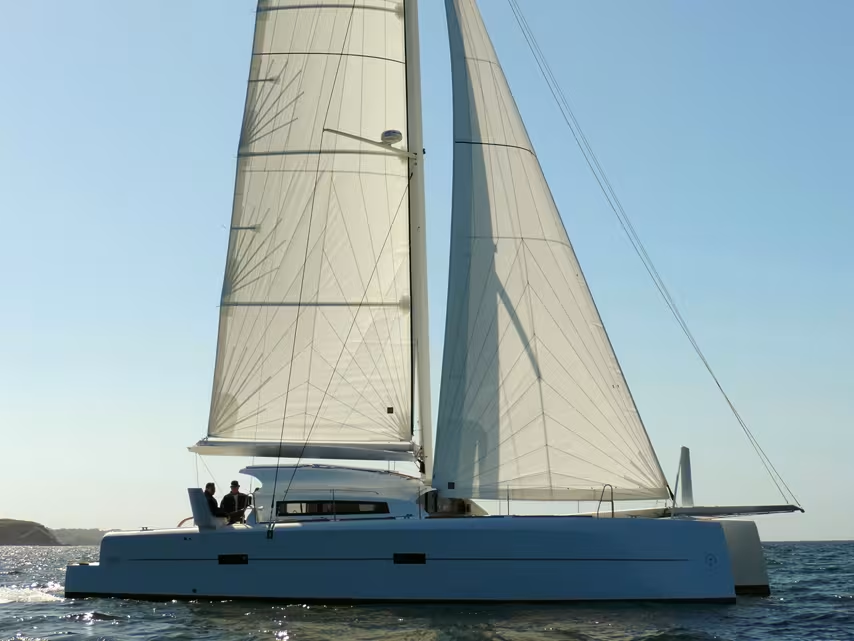
This fast catamaran, exhibited at the International Multihull Show at La Grande Motte in the South of France in 2016, has been chosen for a blue water cruising by a couple (one of whom has reduced mobility). As for us, we chose it as a demonstrator of new developments especially suited to multihulls. In this owner’s collection, it follows a Corneel 26, a Louisiane, an Outremer 40-43(then its evolved version, fitted with a rotating carbon mast, carbon crossbeams and a single daggerboard well!). So the project manager has significant experience, and his physical difficulties have led him into a radical rethink of multihull understanding to achieve a catamaran which is fast, elegant and easy to use. For this, he had to call on a yard capable of getting involved with fairly complex modifications to the basic boat (Marsaudon Composites) and a pair of extremely creative technicians: Thierry Petitjean for the rigging and composites and Maxence Valdelièvre of Tenderlift for the hydraulics and electromechanical systems. The solutions put in place are described here as an example of what could be transposed onto numerous different models where the physical strength of the crew is challenged by the power of the boat; something which is often the case on cruising multihulls.
May the (hydraulic) force be with you!
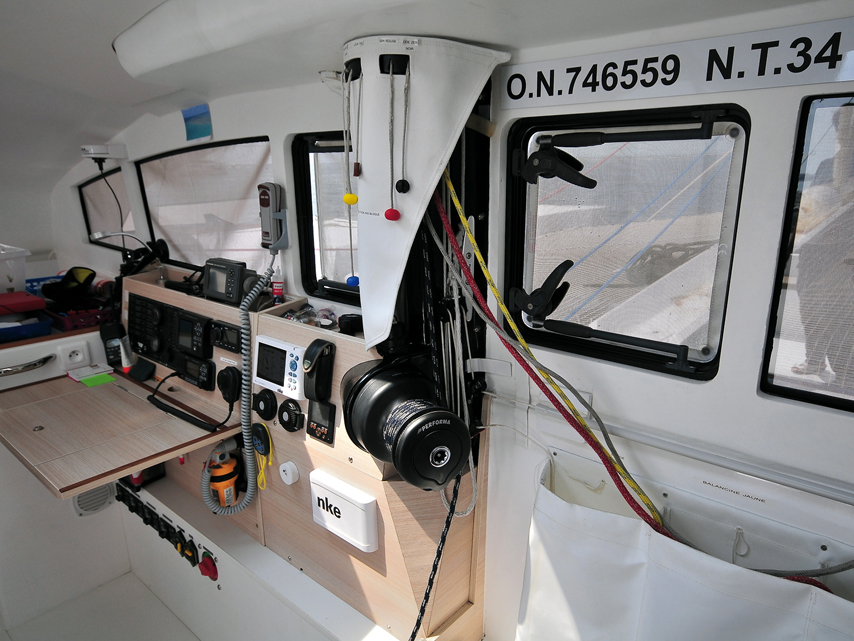
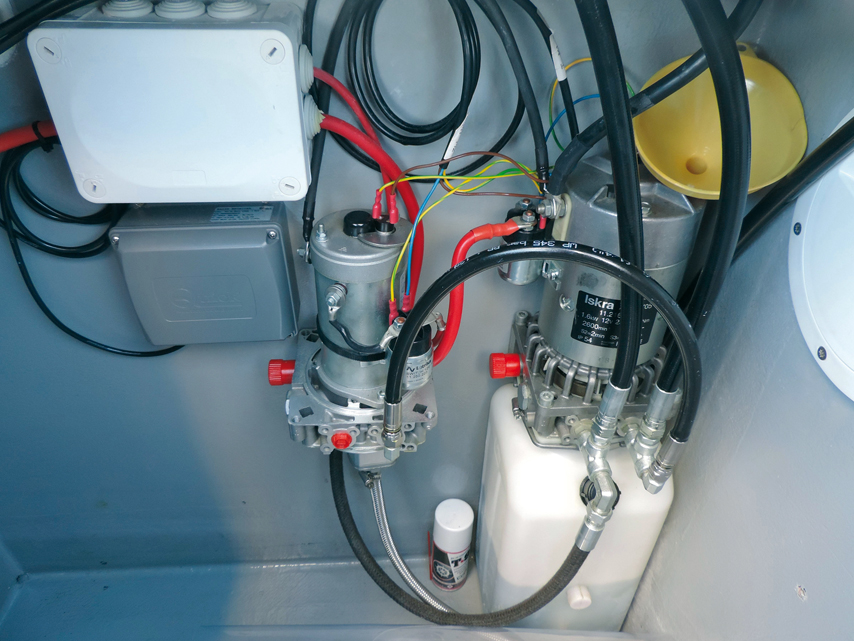
Hydraulics is the art of the movement of energy, and much like electricity, its capacity might be low, but because it can be made available across the complex structure of a multihull, its value can be much greater. If care is taken to install the hydraulic unit close to the battery bank, the benefits can be significant, because a hydraulic hose is 8 times lighter than an equivalent electric cable of large section! This source of remote power is therefore a no-brainer, even before you consider the cost and scarcity of copper. Mechanical action is effected by the intermediary of small rotary motors or rams, all controlled by a low-voltage system from a small waterproof digital console. The electrical signals activate the pump and the required valve: winches, furlers, sheets, travelers, windlass, access ramps, davits and more can be controlled hydraulically.
An easy and readily available source of power
The system also uses one of the characteristics of hydraulics (pressure, or power) to manage the supply of information coming from the whole setup, and can intelligently manage every aspect. Configuring the flow, limiting the power at will, establishing audible load alarms or programming automatic sheet releasing are just some of the significant secondary benefits available. The system also does away with the need to have high amperage electrical systems running about the boat.
A multihull as a demonstrator of hydraulic solutions
I first saw the TS42 Moea at the International Multihull Show at La Grande Motte in the South of France, when I was getting off the enormous Vitalia (ex-Orange II, 38m), on board which we’d been glad of the power of the enormous Harken winches, all hydraulically run by Didier Thollon’s Hyrdraunautic system. I have to admit I was taken aback when visiting Moea and got a chance to analyze the overall concept. Without wanting to sound old-fashioned, I confess to having a certain instinctive mistrust of “revolutionary” technological promises, which sometimes constitute counter-productive investment and which can distance us from the simple pleasures of sailing and interfere with the “get away from it all” which we’re looking for when we go out on the water. With Moea, firstly it’s visually appealing, insofar as artistic requirements blend with technical innovation. As a starting point, this 42 footer is a good-looking boat: the combination of avant-garde structural elements neatly reinforces its powers of seduction! Paradoxically, the perception from the stripped-back exterior shows a lot of creative work has gone into this, and the artistic perfection of the essential elements (compression beam, boom, mast, spreaders, etc.) would not normally be associated with hydraulics.
Sea Trial
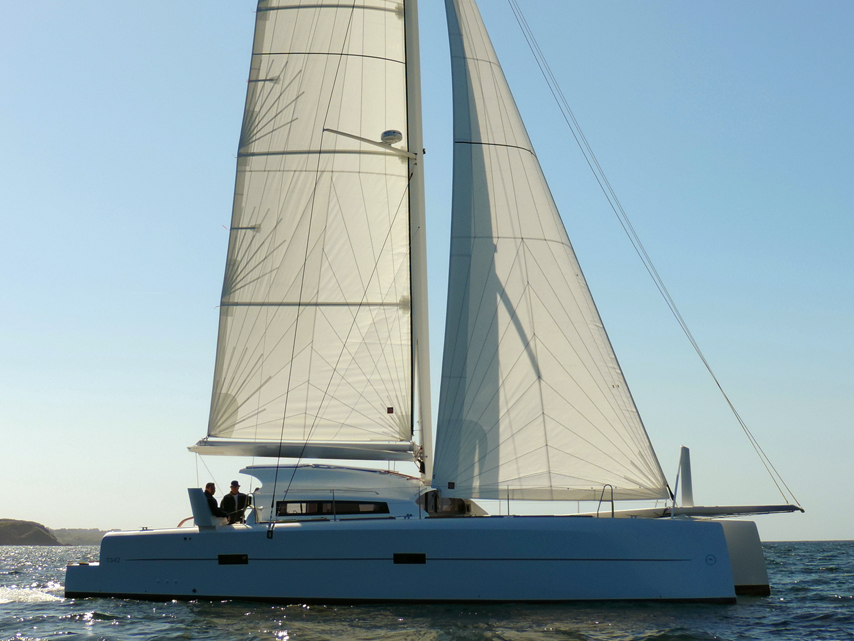
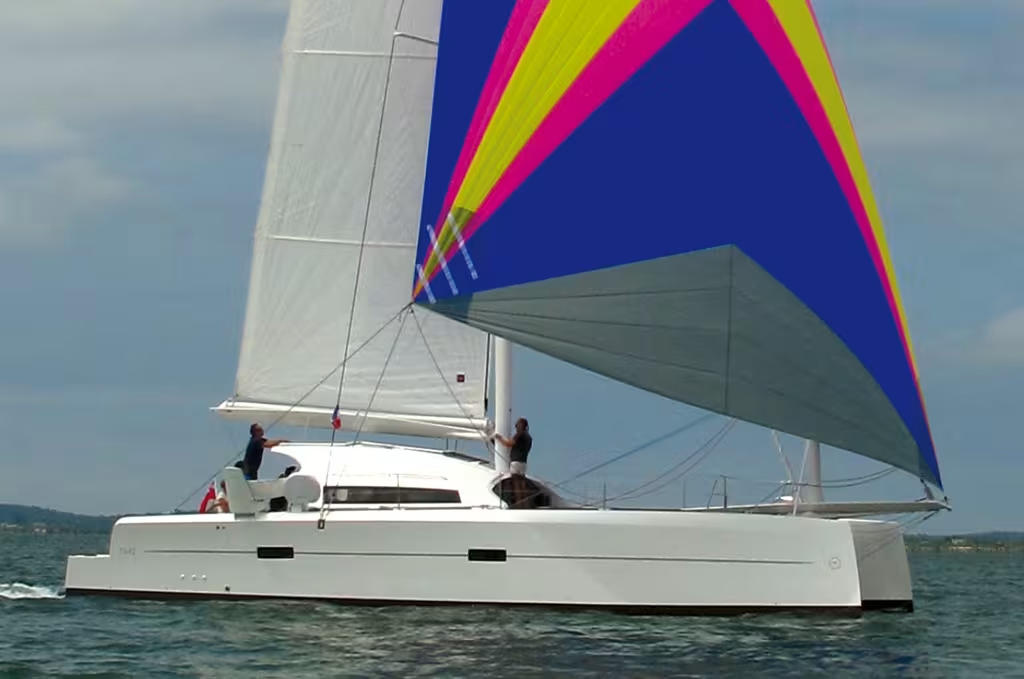
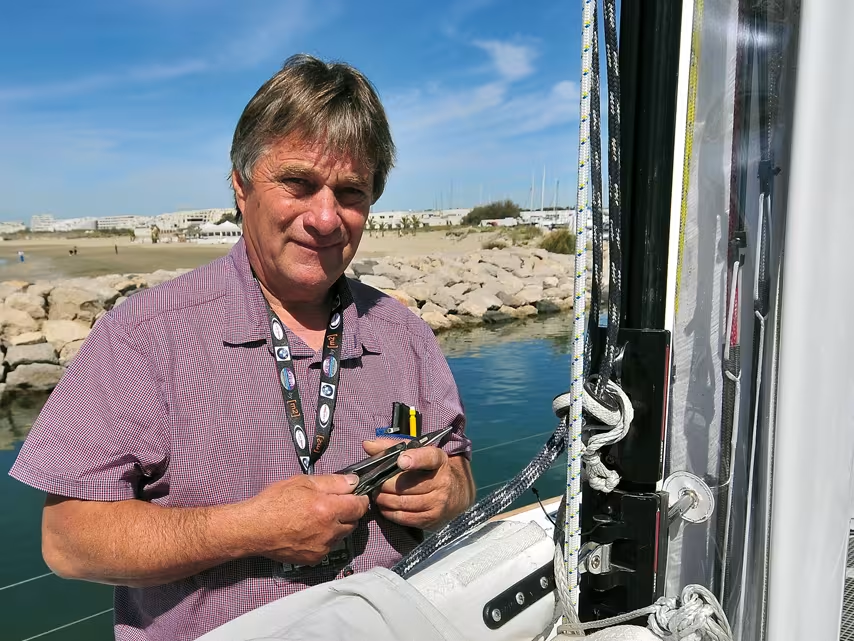
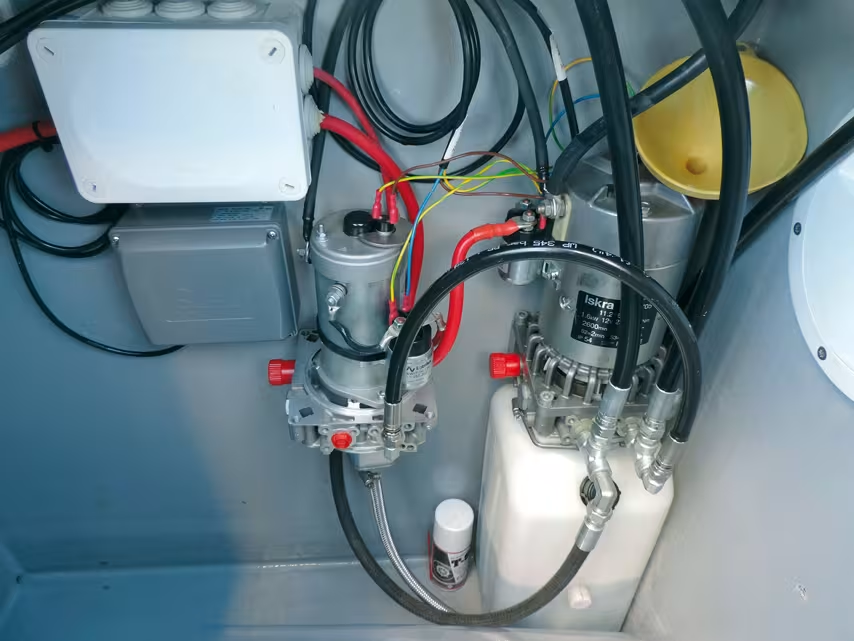
I had a great opportunity to chat to Thierry Petitjean and Maxence Valdelièvre at the Show prior to going aboard Moea, as they were able to help me better understand the explanations from Willy, the owner, who had just completed a tour of Spain under sail, learning exactly how everything works. So we found ourselves in the Baie d’Aigues-Mortes in the South of France on a superb day with the Mediterranean thermal winds progressively strengthening from 4 to 19 knots. We were able to serenely carry out our initial maneuvers, carefully examining each step. The hydraulic pump is located in a locker in the central arm, very close to the (lithium-ion) battery bank. The power unit is small and very compact compared to the agricultural image which springs to mind whenever hydraulics are mentioned. The other surprise came when I saw the rotating motors beneath the headsails: they were miniscule, yet were extremely efficient. The rams for the mainsail housed in the canoe-boom had a long reach, and their carbon-aluminum construction makes them incredibly light, just a few kilos! For hoisting the main, the halyard needs to be loaded on the winch at the bottom of the mast (inside), and then everything is carried out from the starboard helm station: the hoist is very linear, with no jerking or flogging. The apparent ease of the process owes nothing to chance: the spindle around which the mainsail is furled is a carbon custom part which is turned by a rotating hydraulic motor. This mechanism requires precise and creative functioning for setting the mainsail, and this highlights careful design, with a few adjustments to the sails by Delta Voiles. The clear functionality of the deck layout is good, but it took a few minutes to get to grips with what everything does on the boat. The 62m² square-topped main is already gently pushing the boat along in just 5 knots of wind. Next, the Code 0. The sail passes inside the lower shrouds and the sheet comes back to a winch, aft. To unfurl it, the sheet has to be pulled (the winch is automatic of course), and activate the rotating motor, housed in a sleeve at the base of the sail. The speed of the process is staggering, especially when furling away again, often a weak spot with this type of sail if the wind is building. The boat’s reaction is immediate, and this version equipped with skeg keels picks up nimbly against the steadily forming chop. Moea is great fun to helm, well balanced, and the variations shown on the log correspond instantly with the progression of the sea breeze. Typical light airs conditions are reduced to a minimum on this boat, and the speed quickly gets into two figures. But we’re here to see how it all works, rather than let ourselves get seduced by slipping across the water at speed, so we set about gybing, by furling the Code 0 during the maneuver (at this point, it is blanketed by the main). The main is then quickly centered by means of the two sheet rams. On the other tack, we unfurl the solent with the same efficiency. Maxence Valdelièvre describes this system as “Easy Sailing”, and as I begin to understand it more, I can see he’s right. Now there’s a bit more breeze (15 knots), we can test the mainsail reefing. Preparation for this takes a bit longer than it normally would, as we examine each step. First, the halyard is loaded on the winch at the base of the mast (inside still). Next, the fiber jammer is opened to free off the luff, and the furling begins, activated by the windlass remote control plugged into a special socket. The spindle quietly swallows up the main until the desired sail area is taken in (much more smoothly than taking in a reef!). A little turn on the winch to tension, not forgetting to close the jammer, then trim the main with the boom rams, and we’re away again. Throughout the sail reduction process, the crew member in charge of the maneuver has a perfect view of what’s going on thanks to Plexiglas panels in the coachroof. Soon we’ve hoisted the full main again, taking care to keep it well open to keep it empty during re-hoisting.
Conclusion
This highly customized catamaran corresponds perfectly with the exacting specifications devised by her owner. The Marsaudon yard took up the challenge of producing a boat with many modifications (motors set further forward and with propshafts as opposed to saildrives, special layout, completely different forward structure…), and Thierry Petitjean has built some magnificent and innovative carbon elements, while Maxence Valdelièvre hydraulic power controlled using his Easy Sailing system. And the sailmakers at Delta have done a superb job, really investing in producing a square-topped in-boom furling mainsail. The result on the water is beautiful, efficient and great fun to use. The safety which stems from the configuration of the loads and the programmable sheet releasing controlled by hydraulics is an added bonus. The fitting of these solutions on a “small” multihull constitutes an eloquent example of the possibilities of modern hydraulic systems adapted to our world. Maxence and Thierry are now on the case with an O Yachts Class 6, which, if this is anything to go by, should be spectacular!
Moea Specifications
Model: TS 42
Naval Architect: Christophe Barreau
Builder: Marsaudon Composites
Mast: 18.40m
Mainsail area: 62 m2
Solent: 34 m2
Code 0: 90 m2
Code D: 110 m2
Motors: 2 x 30 hp diesel
Transmissions: Propshafts
Watermaker: 240 l/h
Solar panels: 930 W
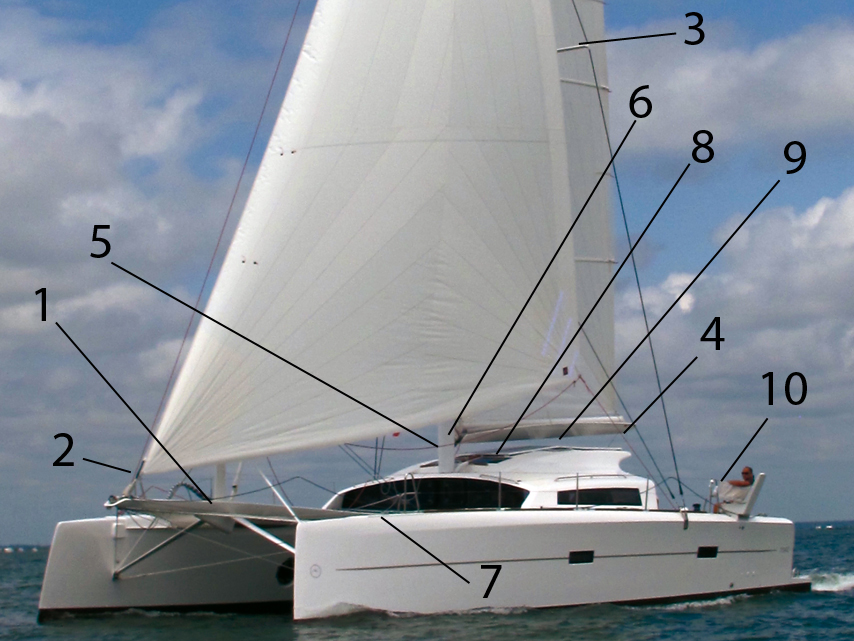
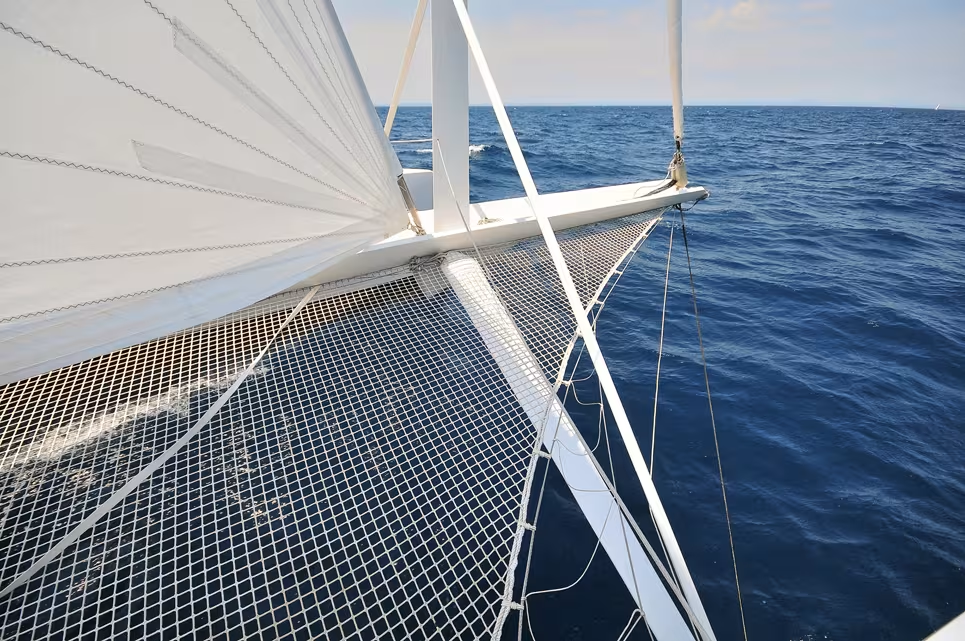
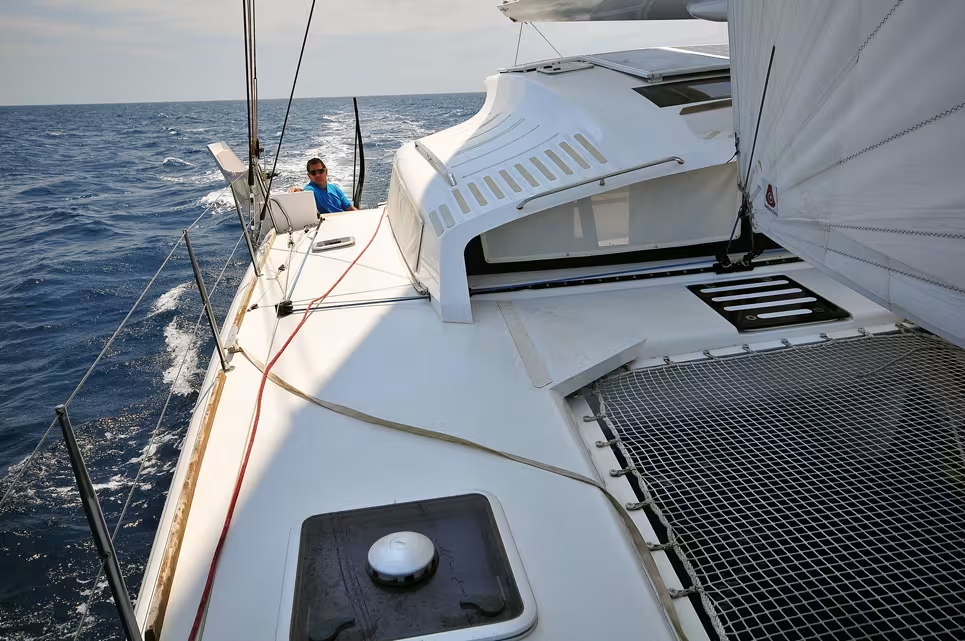
1: Canoe compression beam. The rigid martingale and struts allow for the removal of the transverse forward beam.
2: The furling drums for the foresails (gennaker and self-tacking solent) are managed hydraulically by rotating motors (up to 200 rpm).
3: The geometry of the rotating mast designed by Thierry Petitjean for Moea is very innovative. It allows very open rigging angles with a minimum of compression. The movement of the articulated spreaders at the heart of the system is superb
4: The canoe boom is a work of art: the two mainsheets have no traveler and are secured to two long hydraulic carbon Tenderlift rams which are housed inside.
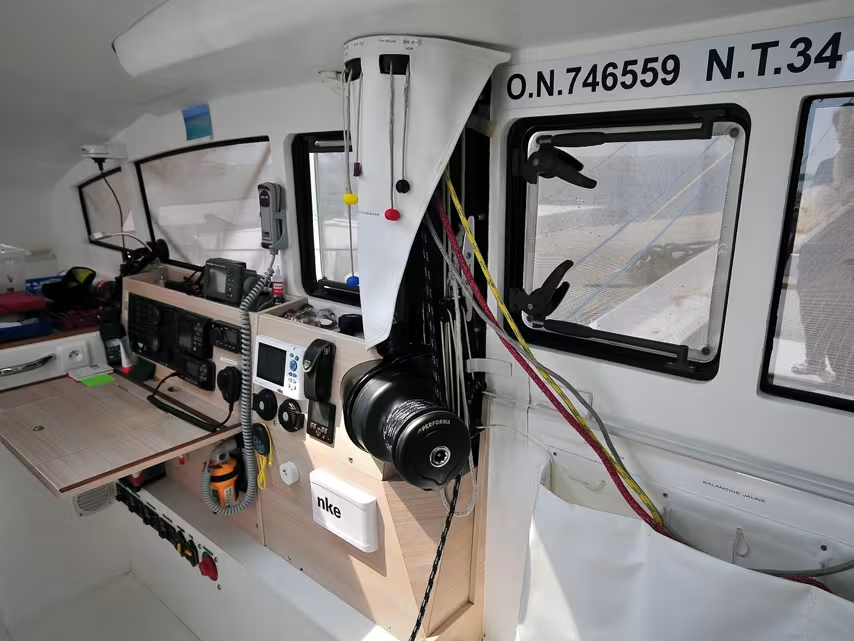
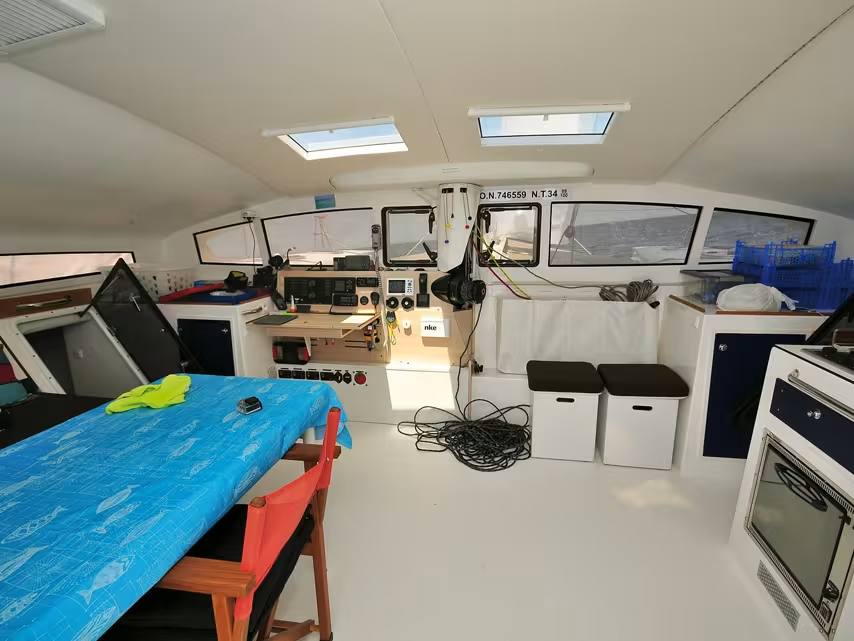
5: The base of the mast is a marvel of ingeniousness. It is home to the magnificent stacking rail for the mainsail batten cars, as well as the jammers located on an interior rack, with a window for visual checks. At the foot of the mast inside, is a sail-handling winch for reefing and hoisting, and also the controls for the jammers. The view up the rig is via two large opening glazed panels in the coachroof.
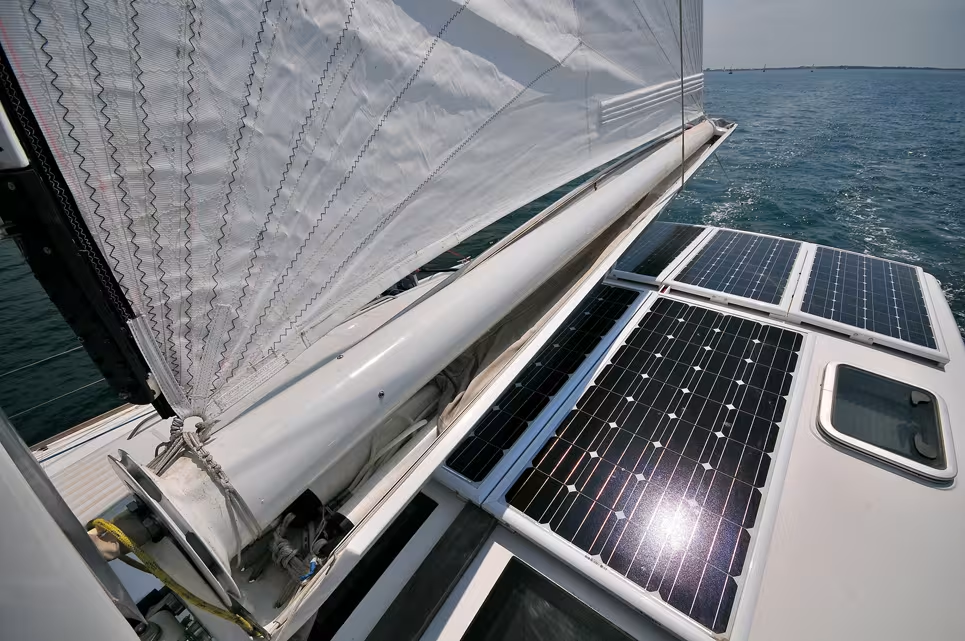
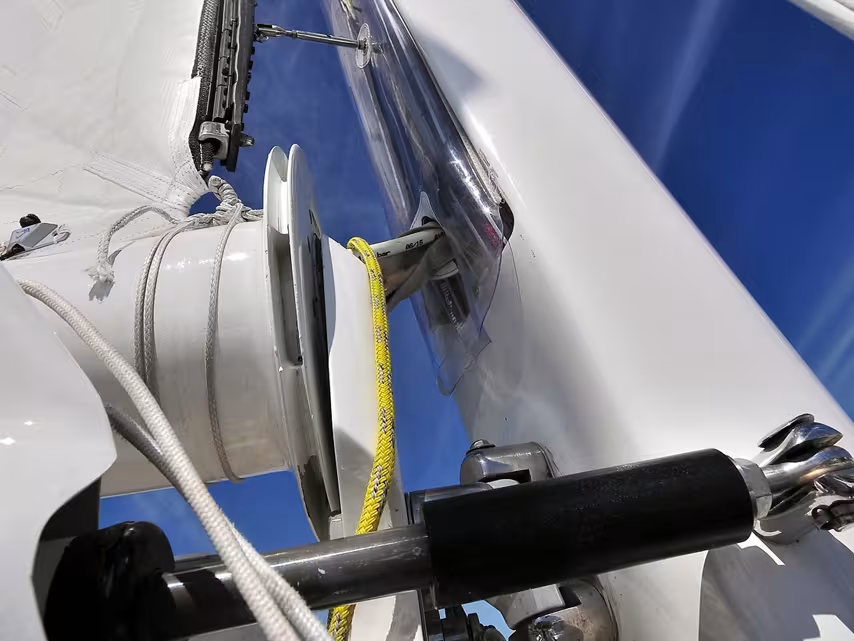
6: A ram for the mast spanner is attached close to the gooseneck, linking the mast and boom to control the angle. The spindle for the furling mainsail is a superb custom part, hydraulically assisted, of course! A manual backup allows for the sail to be furled in the event of breakdown.
7: The hydraulic unit and its two electric motors (for small or large loads) are housed in a locker in the forward beam less than one meter from the battery bank, and the whole thing weighs less than 25kg!
8: A 930W array of solar panels maintains the batteries at an optimum charge and backs up the high-output alternators. The 240 l/h watermaker is coupled directly to the motor.
9: A minus point for any mainsail: the lazy-bag! Petitjean’s solution is once again innovative, with it being a supporting gusset on the boom with two lateral sections which the sail slides into. Quickly and efficiently set up from the mast foot, without needing to climb on the coachroof!
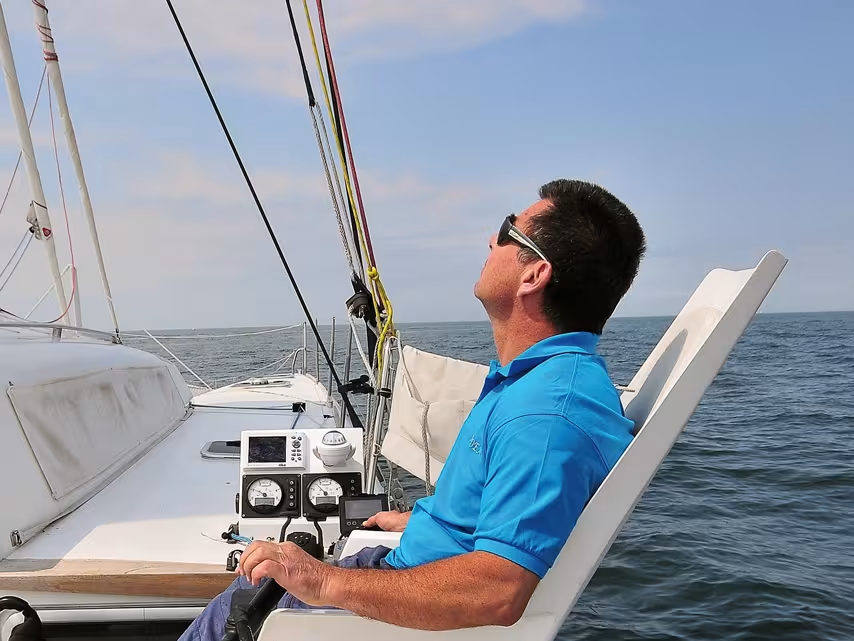
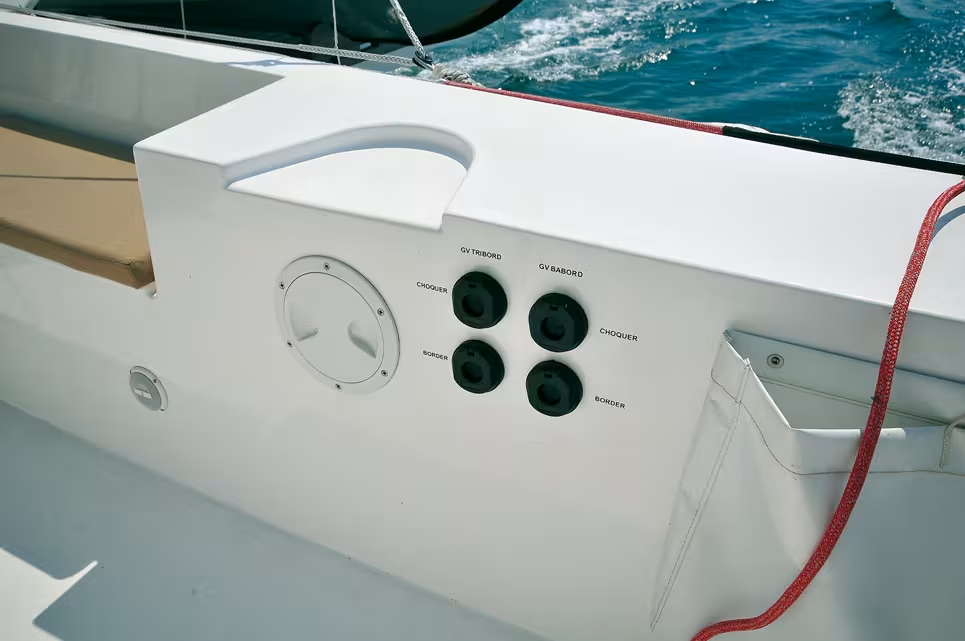
10: The master helm station is to starboard, where there is the control and monitoring screen for all the hydraulic functions, as well as a Panic Button (a jammer) for the foresail, and of course, the controls for the electric motors.
A revolutionary catamaran?
This boat is the world’s first catamaran to bring together so many avant-garde solutions in the same place, making the use of this multihull easier and safer, while maintaining a high level of performance, yet not necessarily increasing the weight.
- Forward structure completely redesigned (forward beam removed)
- Rotating mast with articulated spreaders (reduction in compression and weight)
- Square-topped mainsail with in-boom furling
- Halyard controls at mast foot inside the boat
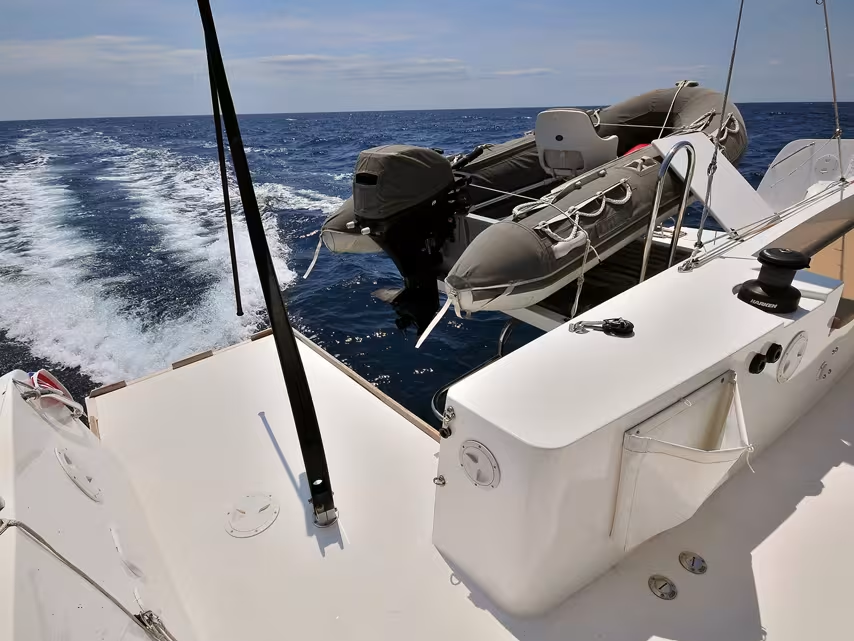
- Mono-ram lifting carbon platform by Tenderlift (very light)
- Configurable monitoring of all the forces on the hydraulic system
- Hydraulic mast spanner
- Interior elevator and access to the helm seat by water pressure lift
- Hydraulic operation of all the winches
- Hydraulic operation of mainsheets
- Hydraulic operation of all sail reduction
- Access and circulation on board optimized for “reduced