Our Favorite Destinations
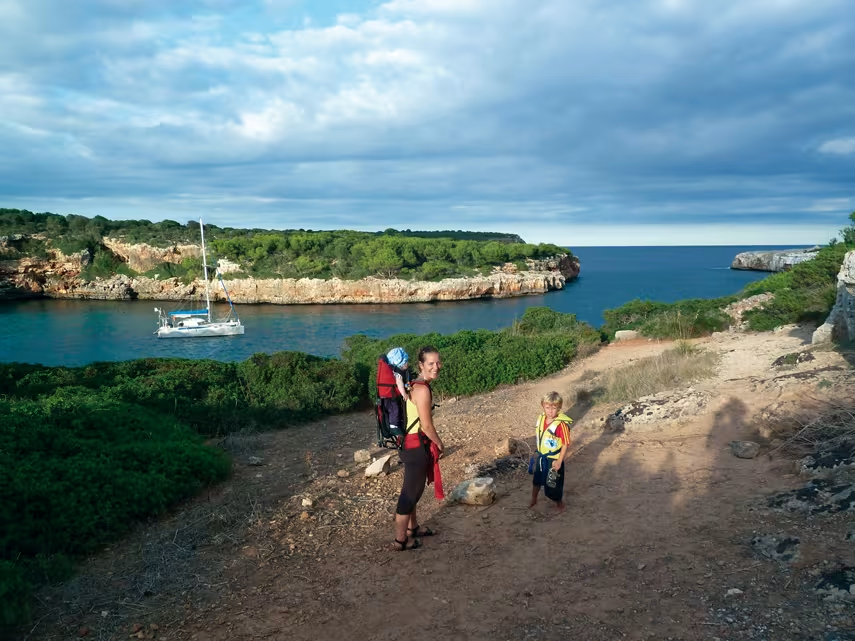
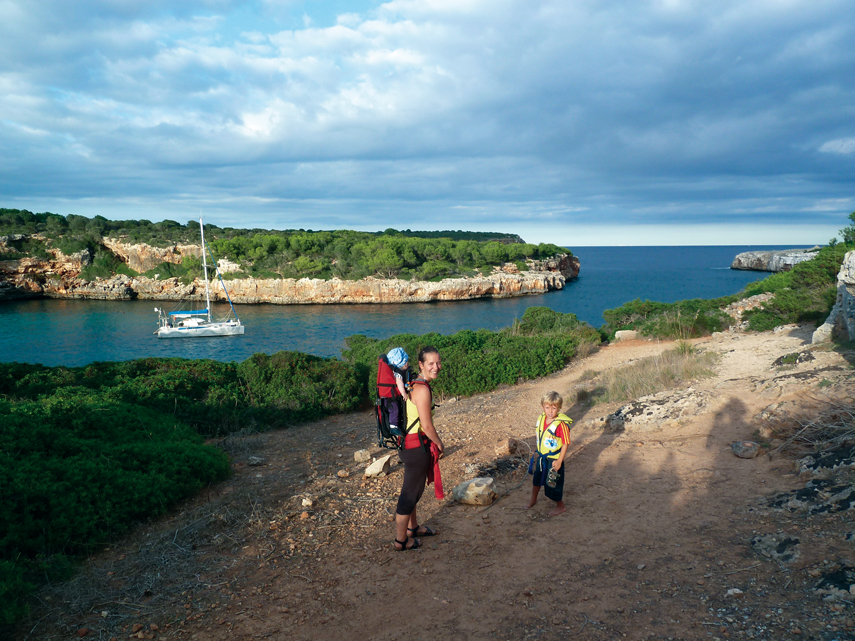
Balearics: We liked these islands because of the climbing, with some spots right over the water. We also enjoyed the long walking tracks.
Canaries: La Graciosa turned out to be the jewel in the early part of our trip. With hindsight, we could have stayed there a bit longer, but we were too curious about what was coming up next! Idyllic beaches and anchorages, meeting other boats on long journeys, surfing, kitesurfing, paragliding, walking on the volcano and a little village a few kilometers away. To the south, Lobos which is opposite Corralejo, isn’t bad either, although the anchorage is less comfortable and further from the beach.
Cape Verde: We spent 3 months here, mainly at Sal and Boa Vista, then around some of the northern islands. The islands aren’t generally ideal for coastal navigation. There’s a lot of wind, usually more than 30 knots and gusts of 50 to 60 knots in between or downwind of the islands. There are very few natural places to shelter. Between the waves whipped up by the east wind, and the Atlantic swell from the west, sheltered anchorages are rare, and going ashore in the dinghy can be pretty lively! Most cruisers will only stop for a short time before crossing the Atlantic for the relative comfort of the West Indies. The reason that we stayed longer in Cape Verde, was because of the exceptional wind and wave conditions. Although desert-like and with no tourist interest, the west coast of the island of Sal has some incredible waves yet it is possible to find a relatively calm anchorage close-by (offshore wind and long period swells). The northern islands are good for walking and general tourism, although leaving a boat unattended in an anchorage is not necessarily ideal.
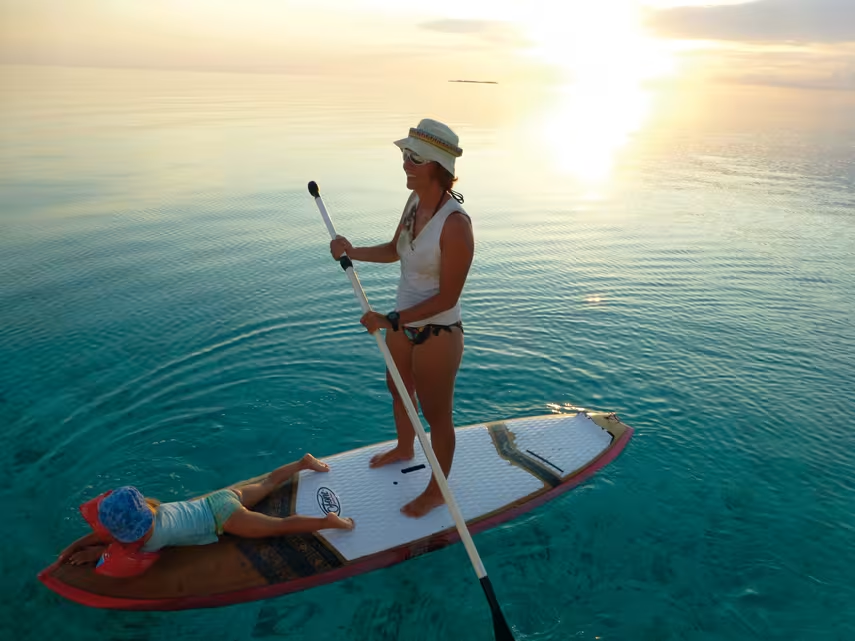
West Indies: After a few months in Cape Verde and then a transat, everything here seemed simple, comfortable, calm and relaxing… It really is a sailing paradise. Lots of islands with lovely beaches, warm waters for the kids, wind-sheltered coastlines and windward coasts protected from the wind by coral reefs. There are marinas, supermarkets, media libraries… our favorites were Spanish Point in Barbuda, the Caret, Fajou and Gosier islets in Guadeloupe and the east coast of Martinique.
Venezuela: We were hesitant because of the formalities and the pirates… In the end it was all very simple, cheap and fabulous. We stayed around the islands offshore to avoid the mainland’s criminality. We had a nice 23 day stopover on Blanquilla Island with visits on foot or in the dinghy to the Americano Bay. There were no entry formalities but the boat was comprehensively searched by the Guarda Costa.
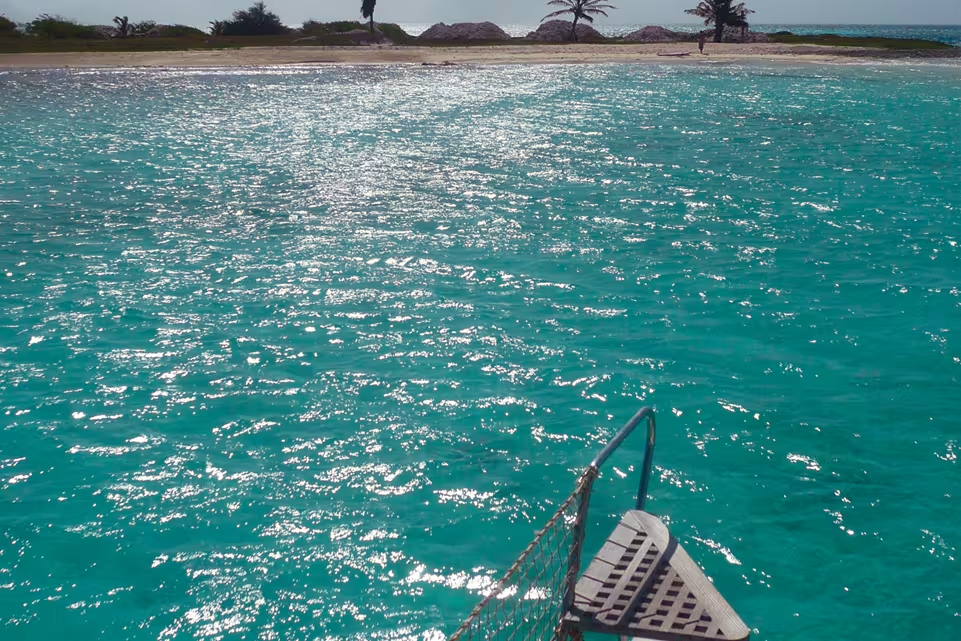
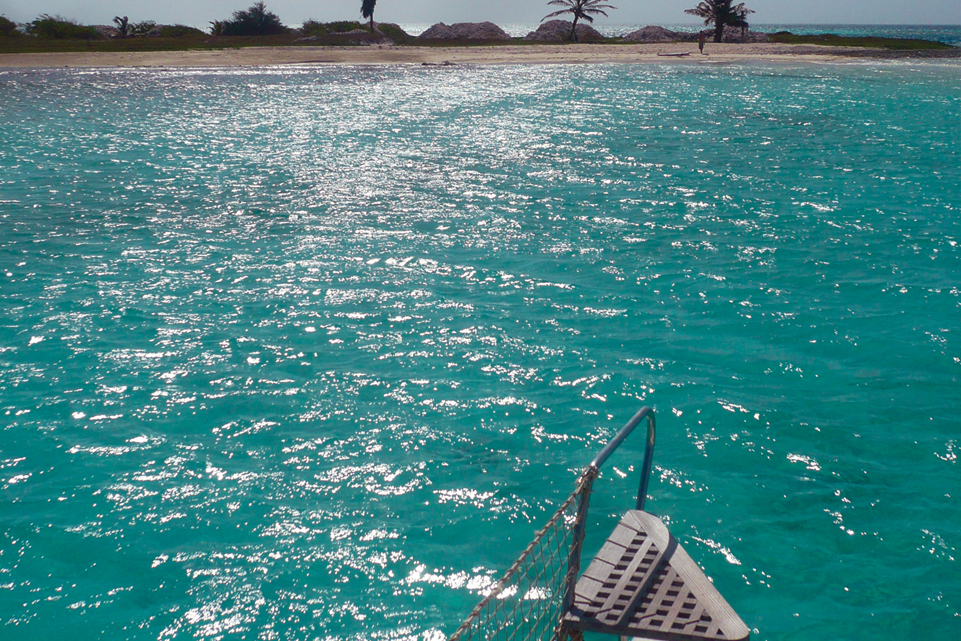
Los Roques, and then les Avez, were undoubtedly the most beautiful places that we visited on our trip. Magnificent coral reefs, tiny islands everywhere, water of multiple hues, both dark and clear, lovely beaches, mangroves full of birds, incredible seabeds full of fish and good wind for kite surfing everywhere.
Bonaire and Curaçao: Not particularly interesting as far as sailors are concerned because of all the regulations relating to moorings. However, they are useful spots for stocking up on supplies and for their direct flights to Europe.
Visits
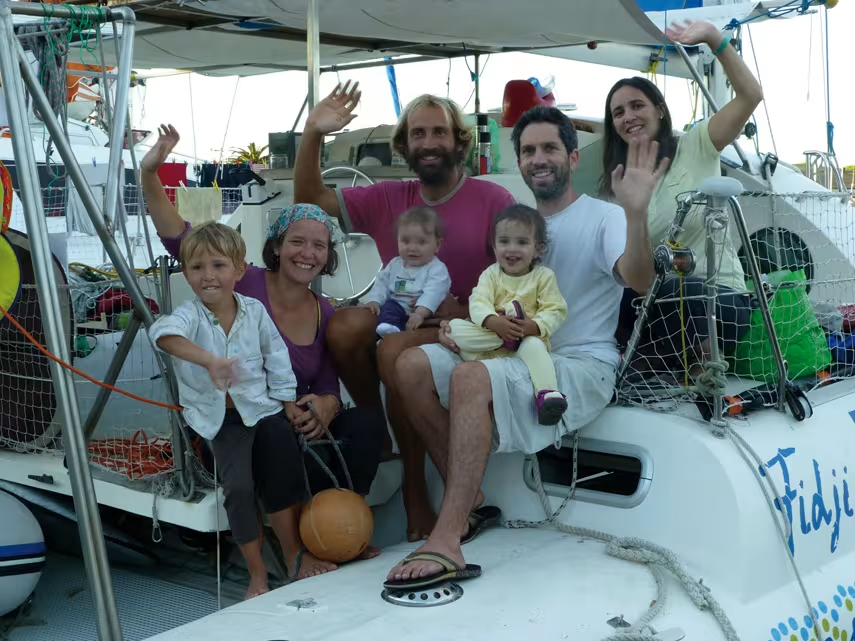
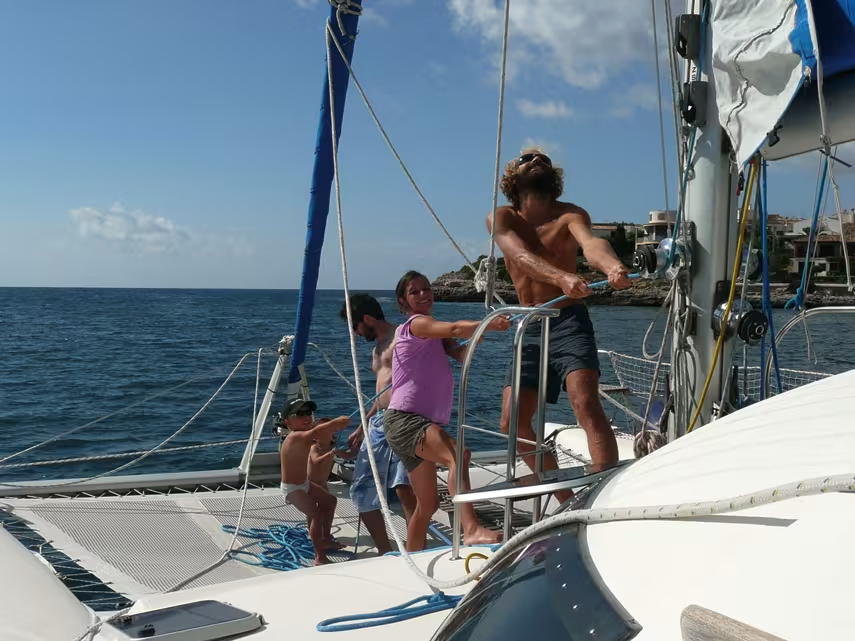
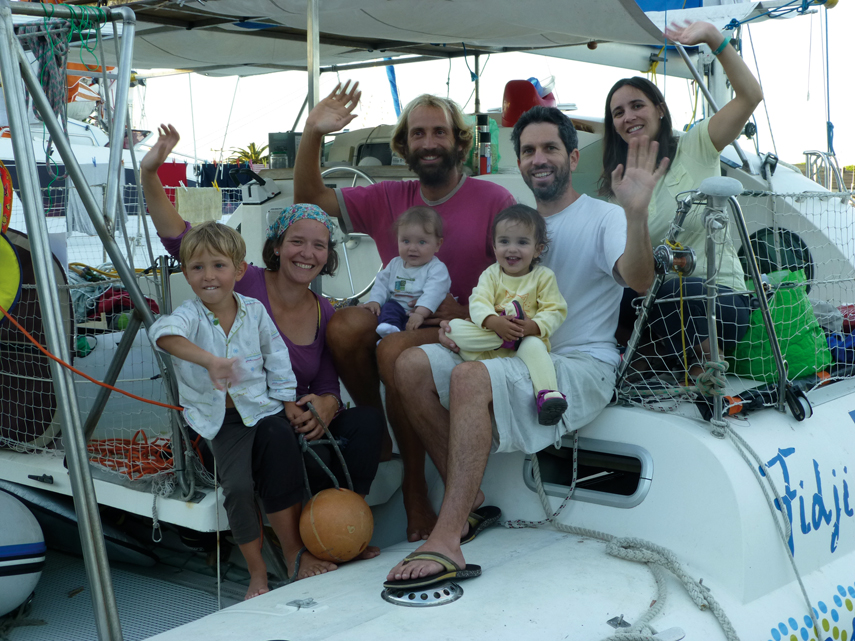
We wanted our trip to be one big sharing experience. Sharing with videos, the blog, schools, but also in terms of sharing with friends and family on board. There were seven of us, but more often than not, we were 9, 10, 11 and even 15 on board! In total 37 people came to spend a week or two with us on board. Sometimes it was a bit tricky managing airline arrivals and departures, but we were still happy to share a little bit of our adventure, and meet up with people in the Canaries, Cape Verde or the West Indies. For them there will be great memories, and for us it kept the journey interesting. Add a few people and the ambiance on board changes completely! These visits were also a good chance for us to get a special delivery of crucial French products such as chocolate, charcuterie or some proper French cheese! There’s nothing better than eating tartiflette in shorts with coconut palms as the backdrop! There were also some other, rather more unusual items that got brought over: an alternator, the hood of a washing machine, a gas cooker, wings for a kite, baby milk etc. Many thanks to everyone and apologies to all those who wanted to join us but couldn’t. Unfortunately, a 39 foot catamaran only has a limited amount of space!
Water
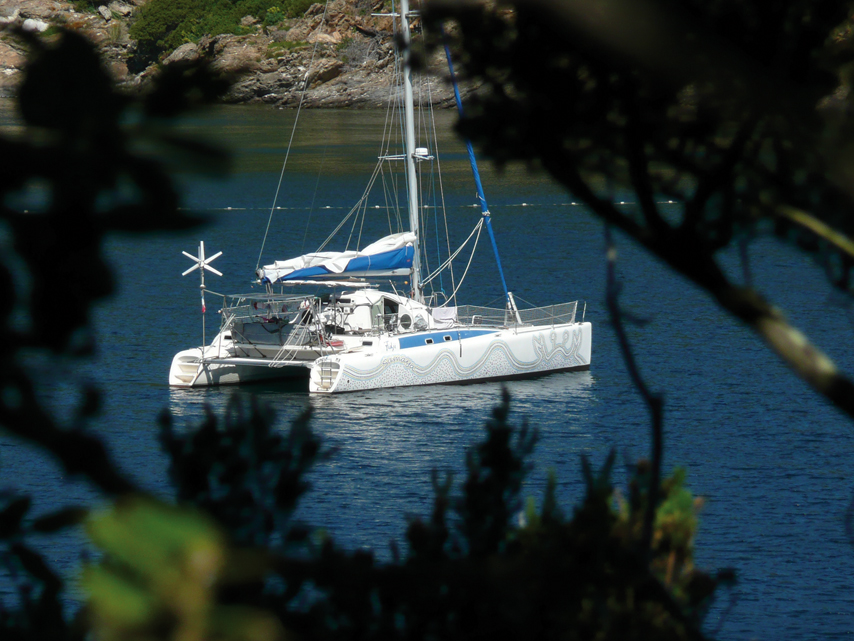
A boat allows us great autonomy as long as you regularly stock up on food and water. To avoid any water problems, we decided to go for a desalinator. It was a “small” Katadyn power Survivor 80, which produces 12l/h and uses 8A. It is therefore easy to use with solar panels and unlike other big desalinators, doesn’t require a generator. We had it running for around an hour per day and only used its water for drinking or cooking. It’s a simple and robust product. We never showered using desalinated water on board, although sea water works perfectly well especially when used with special soap. One trick though, to avoid salt settling on your skin, is to dry yourself with a towel as soon as you get out of the water
Propane
This was one of the great mysteries of the trip! Which bottle worked in which country? On average, we used a 13 kg bottle of gas every month with our regular use of a gas oven to make bread, pizzas, cakes or gratins. We set off with a large French gas bottle but couldn’t exchange or recharge it in Spain. So we bought a bottle in Spain, with the new adapter that went with it. When we got to the Canaries we couldn’t change either of them! We had to take a car to the factory in Gran Canaria to refill them, but they couldn’t deal with the French one as it was too old… In Cape Verde there was a new system, but in Mindelo we were able to refill the bottles, the French one at Shell and the Spanish one at Enacol. Things got easier in the West Indies where we were often in Guadeloupe or Martinique and the bottles are the same as back in mainland France… In Venezuela and then in the ABC islands, we started the same rigmarole all over again! It really is very strange…
Anchoring
Spending only around 10 nights in port during our trip, we obviously spent a lot of time attached to our anchor… sometimes it was anchors! We had two 15kg anchors, and when we had any doubts, we set them up one behind the other: anchor n°1 has 15m of chain; anchor n°2 has 50m of chain, and 50m of rope (the hitching knot can be released when tensioned). And in case there was a risk of the anchor getting blocked on a rocky seabed, we attached a buoy rope. However, despite all these precautions, there were still times when we got into trouble in windy Cape Verde and the 60 knot gusts of wind. For peace of mind at night, there’s nothing better than a good anchor alarm in case of dragging. And for this, our GPS enabled smartphones are ideal! We had one telephone just for this, using the Android app “My Anchor Watch Pro”, on constant charge on a cigar lighter plug. This is a great app, and there is a free version but it doesn’t show a record of the boat’s previous positions.
Charts
The most practical and simple way for speed of use and when outside, is to use smartphone mapping (especially if the smartphone is waterproof!). We used Navionics on our Android phones. We also had an onboard computer with Open CPN or MaxSea, which was running all the time when we were sailing. Watch out though. Although the charts can be very accurate, their positioning is not always perfect. Depending upon your location and the software, we regularly found ourselves to be several hundred meters from the true position. This can be an issue in certain passages when visibility is not good. However, we had downloaded some satellite photos (Google and Microsoft), which we could use offline, and these were always precise. It’s a bit like Google Maps which tells you where you are in a given street, except here it’s telling us where the clumps of coral are! It’s a shame that this type of offline photo isn’t more available and easier to use
Difficult Moments
Here are a few of the more memorable adventures which we had during our voyage. There were certainly others that we’ve already forgotten about! Not many people know that our journey could have ended on the first evening… Having left Port Camargue, we moored up in front of the cathedral at Maguelone. The offshore wind was light but was expected to increase to over 30 knots (still offshore) the next morning. At nightfall we went to drop the anchor right up by the beach so that we would be less buffeted the next morning. We dropped off the grandparents who had accompanied us this far, and picked up Enora, who had brought rum and chocolate to celebrate the departure. At around 3am a southerly wind whipped up and began to push us towards the beach. Everyone was on deck, but we were unable to haul in the anchor which was now in a shorebreak situation. The waves were pushing us sideways towards the beach. The chain was blocking us maneuvering the boat into the right direction and the wind and waves were pushing from the side. We tried to push the back of the boat with the dinghy but to no avail. There was a little moment of doubt when the boat started to list, but by abandoning our anchor we were able to free ourselves. Despite the panic, the captain did manage to attach a buoy to the anchor! We moored a little further away with our back up anchor, and went back to get the abandoned ground tackle in the dinghy the next day. With 40 knots of Mistral and a good session of kite surfing just off the beach… that was close! The journey can now begin!
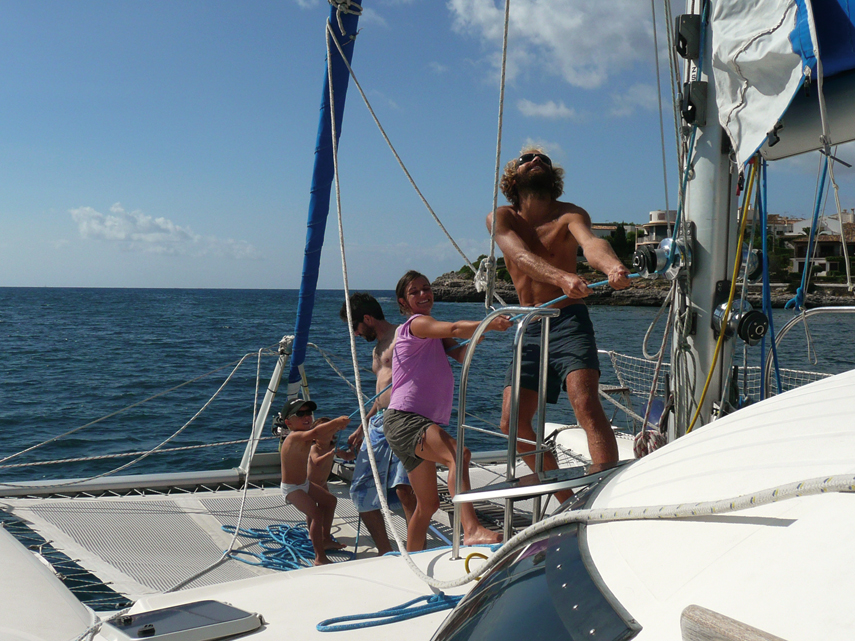
Just off the south western tip of Fuerteventura, in an offshore anchorage in a wild and deserted spot. The tradewinds, which had been reliable, had turned easterly. This anchorage which had been so calm suddenly changed its character, with a strong wind and a violent chop. We tried to extricate ourselves as quickly as possible, but our anchor was blocked. Picture the scene: the captain at the controls, the three crew members on the trampoline and the three children on the canapé in the salon watching what’s happening outside. They watch, and understand that what’s happening is no laughing matter. The chain jumped several times from the windlass and the gypsy. We tried to block it with our “magic hook” so as to avoid losing what ground we had made but instead it was the boat’s forward beam that fell into the chop, pulled under the water by the anchor. We finally managed to free ourselves by pulling on the chain and the anchor buoy rope. We headed off to the shelter of Gran Canaria, although we had planned to sail to Morocco…
There were other events, such as the time the spinnaker sheet took Ben overboard before finally bringing him back on board. There were a few times where the lowering of the spinnaker was a bit challenging, before it finally exploded in mid transat. There were also a few masochistic, failed interludes with the staysail in 50 knots of wind between the islands of Cape Verde etc…
Activities
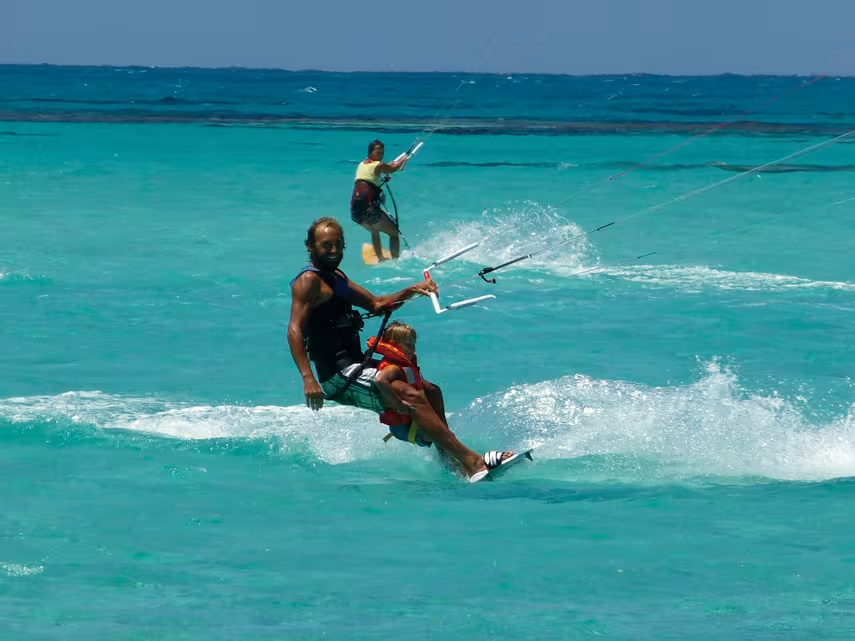
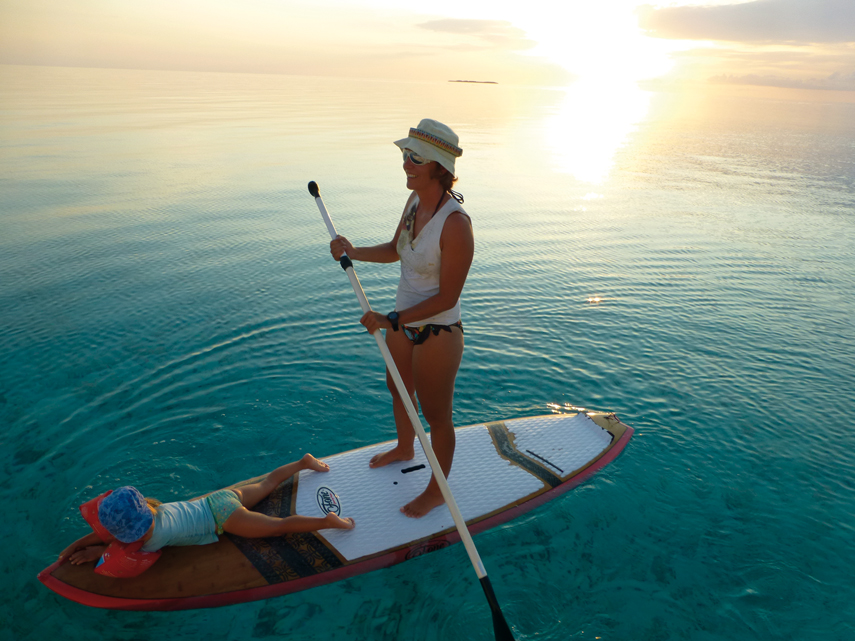
Kite surfing is the main activity on board. The four ever-present adults have been doing it for several years, meaning that we could take off and land on Samaya quite easily, when going for a short or long trip with 1, 2, 3 or even 4 kites, depending upon who was on board. Being able to take off from the boat is a real advantage, and avoids going backwards and forwards to beaches (if there is one).
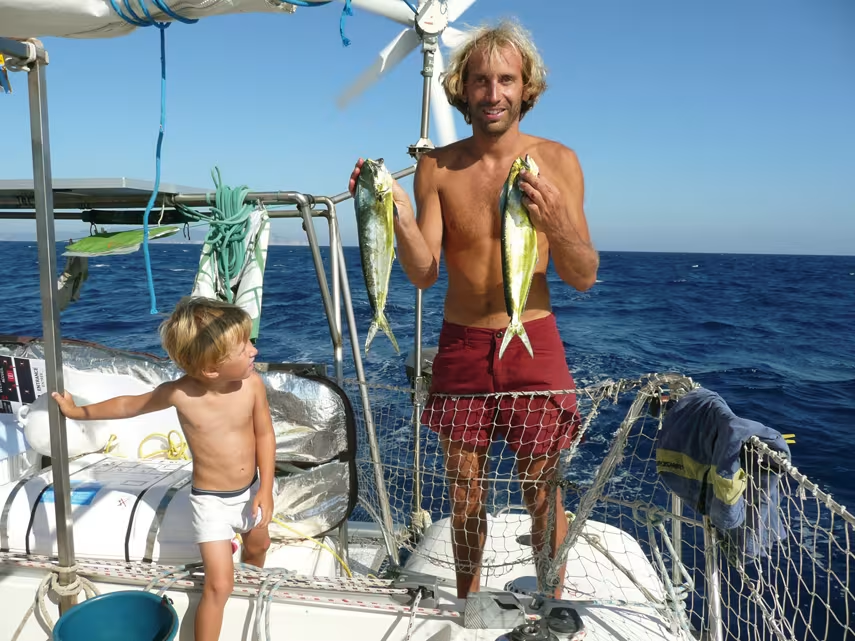
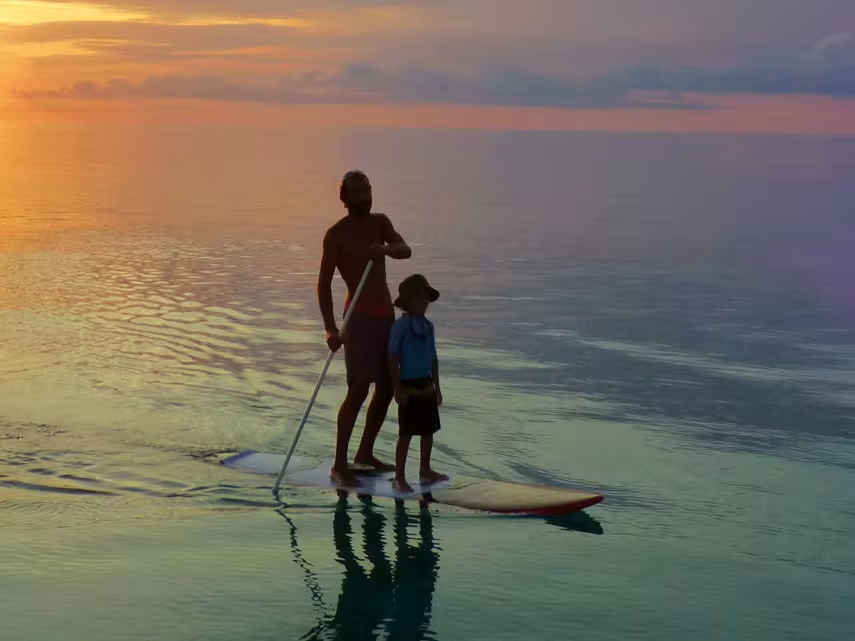
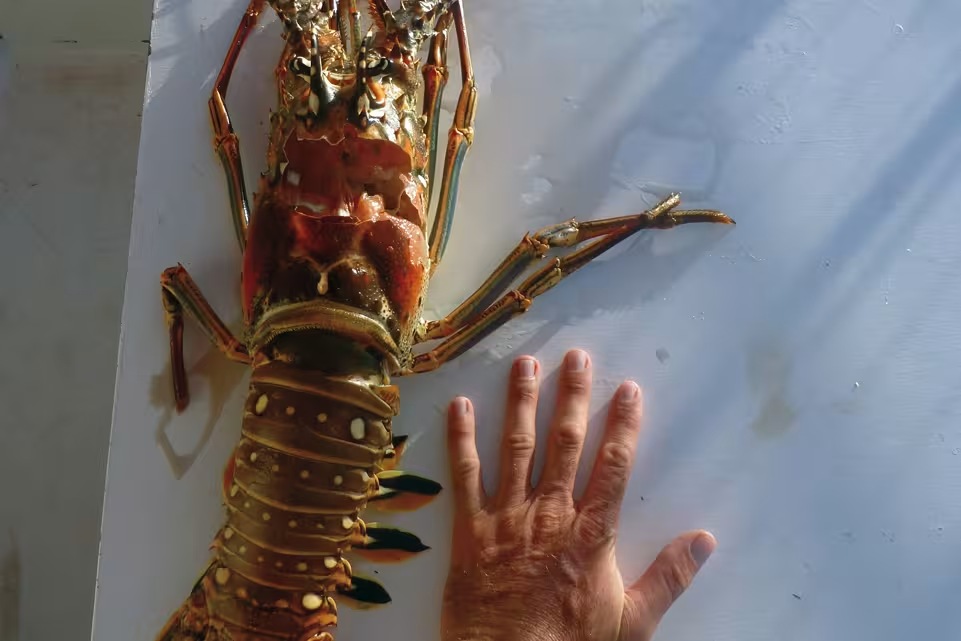
It wasn’t just kite surfing though. In the West Indies, the main activity was snorkeling (mask, fins, snorkel) as well as underwater fishing (hmm, the langoustines!). On land, we did some great walks in the jungle, especially in Cape Verde and around the volcanoes in the West Indies. We also took the paraglider in the hope of doing some flying off the coasts. However, apart from one place off the lovely island of Graciosa in the Canaries, we didn’t really make the most of it. (The paraglider wasn’t our priority, but there was a spot close to the Baie des Anglais in Martinique, accessible in the dinghy, which would surely have been a great place for it. In the Balearics, we mainly did rock climbing. It was great to be able to climb and then fall back into the sea. We also did some long walks there. While sailing, fishing with a trolling line livens up the menu. We have never eaten so much fish, even if we sometimes had to wait ages to catch anything. We tried pretty much every technique: large and small baits, fine line and thick, weights or lures, spoons or octopus head lures, 5 or 50 meters behind the boat. We quite often lost the line, either because it snapped if the fish was too big, or just a handling error or when a maneuver ends up with the line getting caught beneath the boat… though, we loved our cheap octopus lures!
Travelling As Two Families
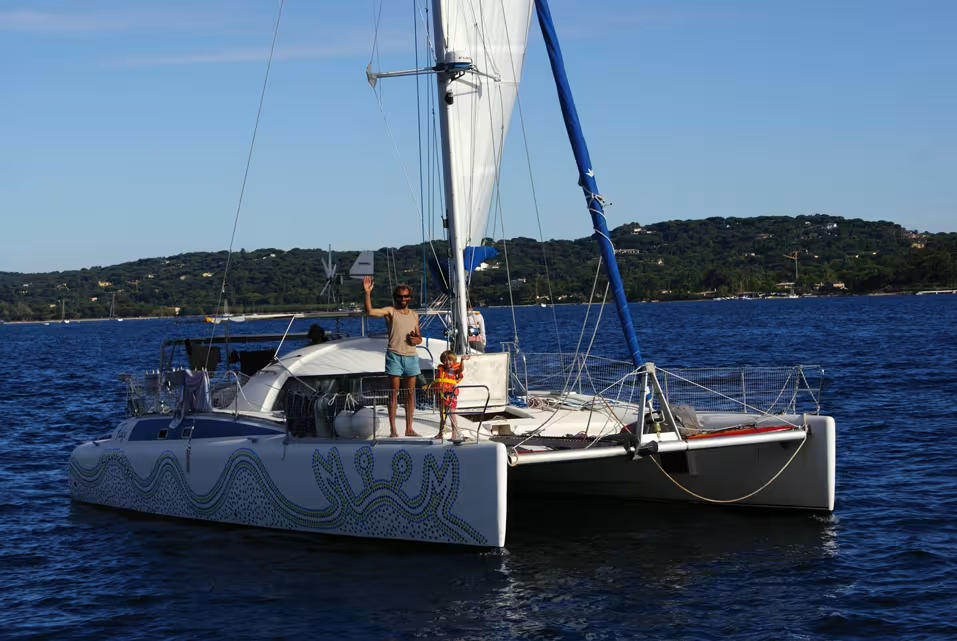
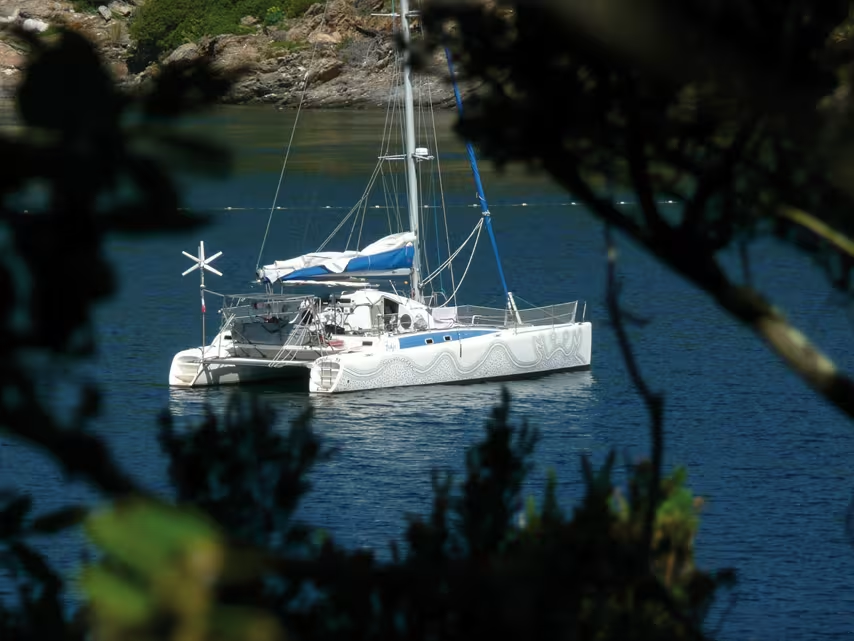
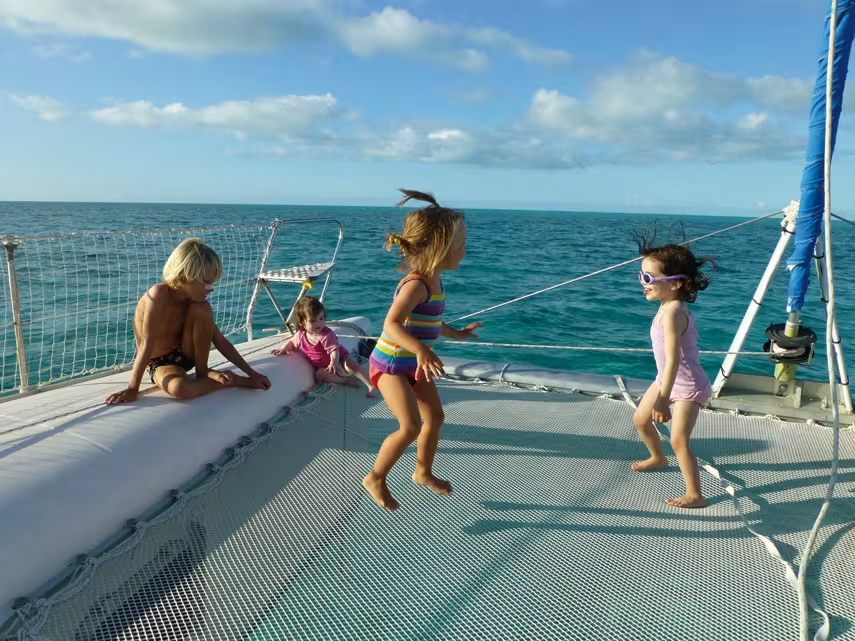
Our two families decided to set off together. The main advantage was that we could set out in a bigger boat, in our case a catamaran with one hull per family. A catamaran is a big plus with children, as they can pretty much go where they want when sailing, as the boat stays flat. Once in an anchorage, it turns into a floating leisure zone. Being numerous also means that it is easier to organize activities like kite surfing, surfing or walking… or even just leaving the boat to the other family if one decides to go and spend a few days on land. As for the sailing, it means that night watches can change over much more frequently! We were really happy with the way things panned out. Obviously there were one or two difficult moments. Sharing your everyday lives in a restricted space is not always easy, but we will keep great memories of our months spent on board Samaya.
Children
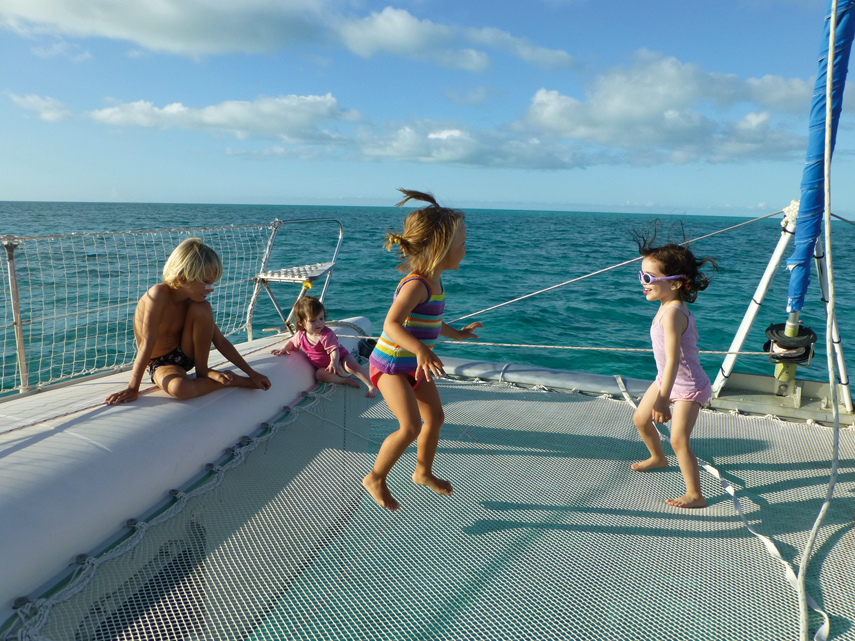
There were three children on board aged 6 months, 18 months and 5 years old. They adapted very well to life on board. They took a while to really find their feet, but once they did, the boat became their home. It was great that there were three of them. They could play together and hardly ever got bored. Obviously there was squabbling sometimes. It’s not always easy to manage the sharing of games especially as they were different ages. There were several activities on board: lego, books, painting, modeling clay, board games, dressing up… and outside there was fishing, swimming, beaches, walks…as well as school, kite surfing and surfing for Eole! For us parents, it was a great opportunity to spend time with the children. However you need plenty of energy to manage the night watches and then the children during the day. We loved watching them grow up on the boat, and we are very proud of the way that they handled the whole adventure!
Health
Our friends and family who are doctors advised us on the on board pharmacy. We therefore set off with a long list of medicines to cover every eventuality. In the end there weren’t too many issues, apart from Mona’s broken collar bone, and a burst ear drum and cracked rib for Gireg. We therefore didn’t use too much of the stuff, apart from Tylenol/paracetamol for the kids and antiseptic sprays for little knocks.
DIY
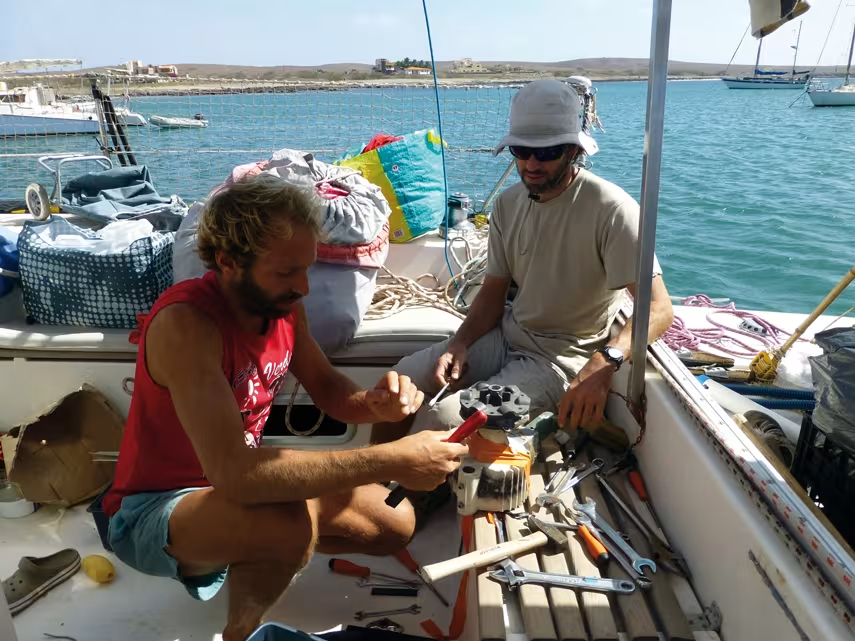
We were lucky to not have any major boat issues throughout the journey. Or at least any problem which would have caused us to have to haul out. Damage to the boat is happening constantly, and it’s inevitable that there will be odd jobs that need doing from time to time. A bit of sewing here, apply a bit of silicon sealant there, and as the kids and adults enjoyed it, it was a pleasure to do. Each person had their own specialities or ideas. One other advantage with a cat is that there are 2 engines in case of a breakdown. So even when there were serious issues, we managed just fine. It started with a gearshift cable which broke in the Mediterranean with one of the engines stuck in forward. Luckily, we realized this out at sea because of the noise that the propeller was making whilst we were under sail. It required a nifty maneuver from the captain (now an expert with one engine) to get into the port of Almeria, and the cable which a local supplier had in stock, was changed the next day.
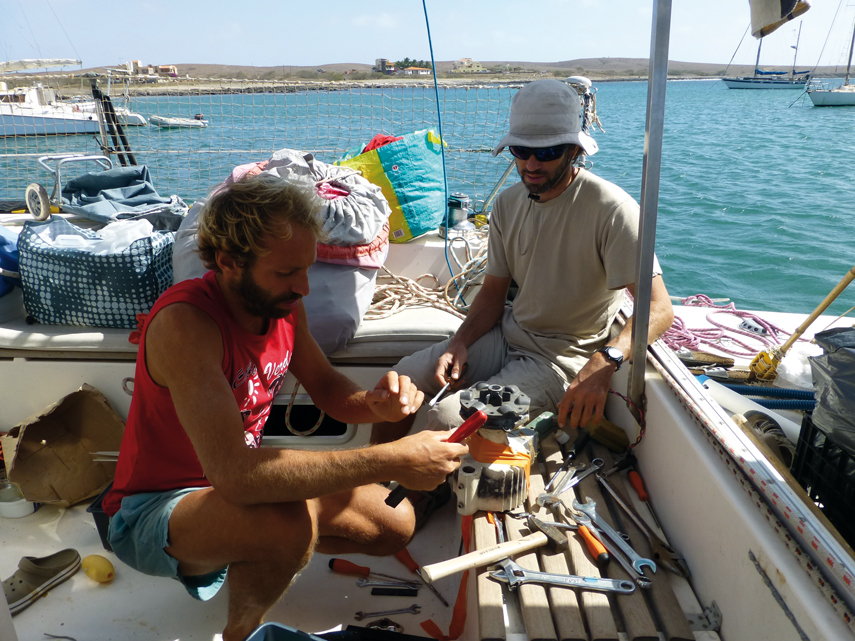
Whilst heading for Morocco, the control unit for the autopilot got hit by a wave, provoking a short circuit and it was out of action for the rest of that journey. We took it to pieces, rinsed and dried it and moved it to avoid another shower and it was as good as new! These little problems can be expensive, and to send it off to be fixed would have been a real pain. In the middle of the Atlantic, one of the rudders jammed because the rudder-tube was bent (luckily above the water line!). For the end of our transat, steering was done partly via the other rudder with a little help from the emergency tiller when needed. When we arrived in the West Indies we expected to have to put the boat on the hard and order the parts that would be needed. However, after two days in the port at Point à Pitre, we managed, to repair everything without taking the boat out of the water, with some resin and a few off cuts from an aircon system. The last major issue that we had was a hole in the diesel tank when we arrived at Blanquilla Island, a deserted isle just off Venezuela. We were alerted to it by the smell of fuel and a trickle of a leak under the boat. We then found a half centimeter hole on the bottom of the tank. Lots of built up muck stopped the leak being larger, otherwise it would have emptied out at sea! We stuck a hastily carved bung surrounded by part of an inner tube into the hole. This cobbled together solution is still in use… We were lucky, because although we had two engines, we only had one tank!!
The Association
After 3 years of roaming around, Samaya is now based near Lorient in Brittany. It is now used by the Cordée-Cordage association which aims to share the possibility of discovering new adventures on the sea and in the mountains. It helps all groups of people, with its services being adapted for each group, such as those in social care or the handicapped. The association is open to all those who love or would like to get to know Brittany, which is as beautiful as it is mysterious.
For more info: http://cordeecordage.blogspot.fr/