



Rent, club or purchase?
Going sailing is already a good thing, wanting to go fast on the water is even better, and sailing on a catamaran is brilliant. A completely subjective study carried out among our readers shows that the great majority of them had already sailed sport cats, more or less intensively. This same study also demonstrated that with advancing age, more and more of us only sail in a more...occasional manner!
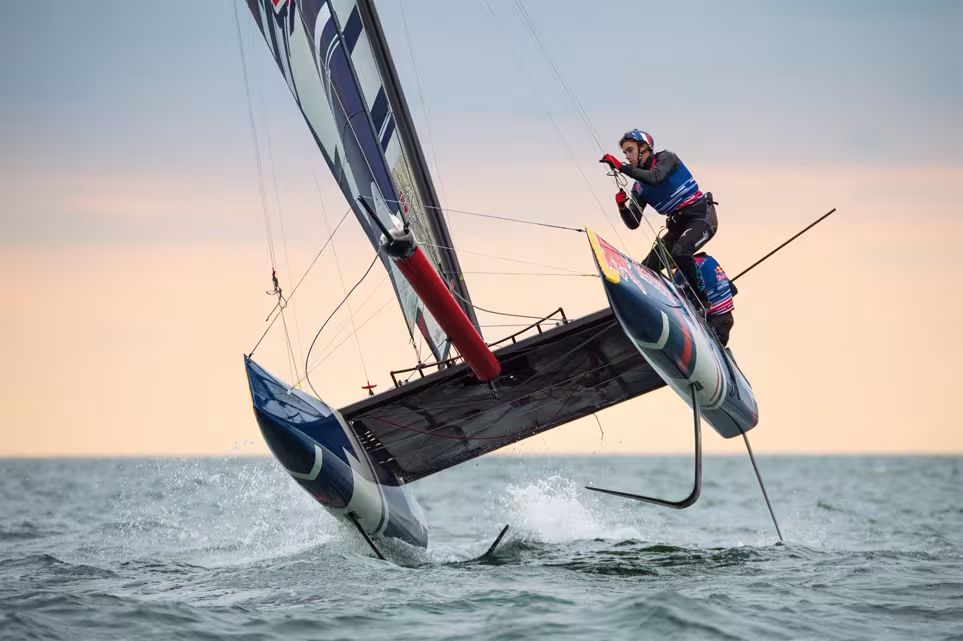
But the good weather is returning, and it’s time for a bit of sport... So, why not take advantage of them to have fun and rediscover the excitement of downwind legs on the trapeze? Especially as the incredible images of the new generation of catamarans with foils, capable of flying over the waves, haven’t left you indifferent. A dream which is now (almost) within reach! (See IFly 15, page 80)
So, shall we get started?
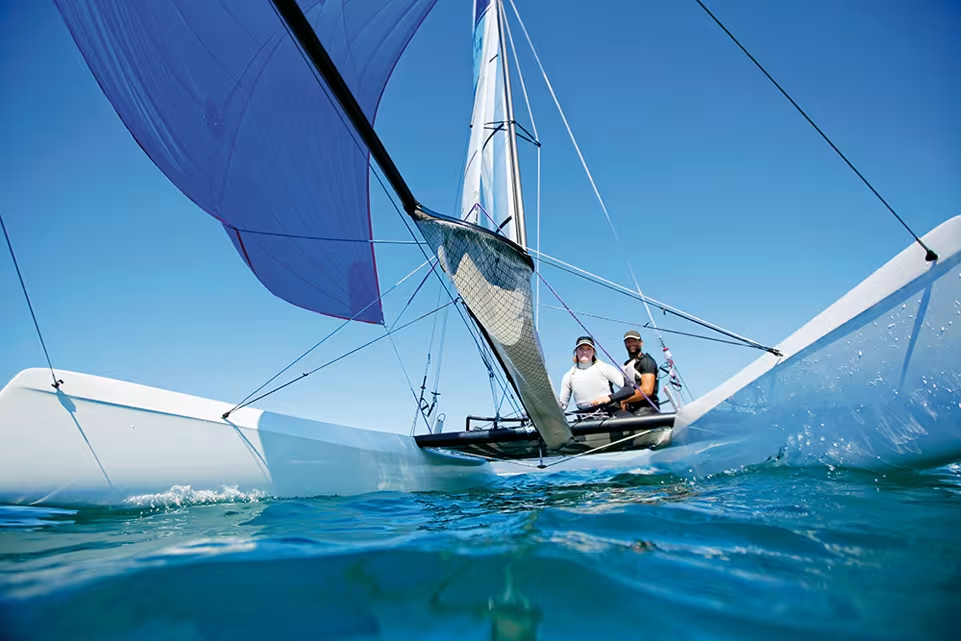
Several solutions can allow you to rediscover the simple but very exciting pleasure that only sport multihulls can offer you. The first and the simplest consists of hiring a good old sport cat with multicolored sails, which you can find on almost all of our holiday beaches. Whether at a holiday club or from a rental company on the beach, you will find a cat which will allow you to find your reactions again. But we have to admit that you will quickly become frustrated. Whether you decided to introduce your children or just discover or rediscover the pleasure of sailing, these boats are often old, sometimes with poor fittings, and are always slower with respect to those sailing around you... And of course, it’s the equipment’s fault, not the skipper’s (in any case, that’s the favorite excuse I give to my children).
Therefore quite quickly, after just a few outings in a rental boat, you will want to go a little further. The best solution is then to enroll in a club, to be able to take advantage of the cats they offer their members, or use the opportunity to make friends with an owner looking for a motivated crew. And in that case, you will be sailing on boats in good condition, with real trapezes and well-cut sails. For a quite reasonable sum, you will thus have access to the club’s fleet of cats, and be able to take advantage of them to practice your hobby as a leisure activity, in competition with supervision, or even on your own. In short, the club is the best!
That’s not enough for you? You want more? You want the latest boat from the drawing board of a brilliant architect, the boat which will allow you to be the fastest on the water?
Then you will need your own boat, one you can tinker with, develop, boost, and improve. At this moment, pleasure becomes passion... Note that you are on the way to becoming a genuine catamaniac!
Buying – OK, but which catamaran to buy?
There are three major families of catamaran: those aimed at leisure sailing, those oriented toward sailing schools, and the real thoroughbreds, intended for racing. It is therefore essential to start by evaluating your level, your potential for progress and your program of use. It’s best to buy a boat you and your crew can handle, rather than the latest foiler which may put you off sport catamarans forever in just one outing.
The hull designs vary greatly, according to the boat’s program. From the cat with stub keels to one with pivoting centerboards, passing via the racer with daggerboards and the very best on foils, there is something for all tastes, all budgets and above all, all levels!
As for the rig, there are also simple ones to start with, those that can be boosted downwind with a spinnaker, fully battened mainsails with or without a boom, and even rigid (or almost) wings, enough for you to feel like an America’s Cup skipper.
For leisure outings, it’s preferable to acquire a catamaran which is robust, easy to use and reliable. It will probably be simplified: with no centerboards, or pivoting centerboards, and no boom. It will have functional fittings: automatic rudders, efficient winch blocks, and a platform beam corresponding to trailing limits.
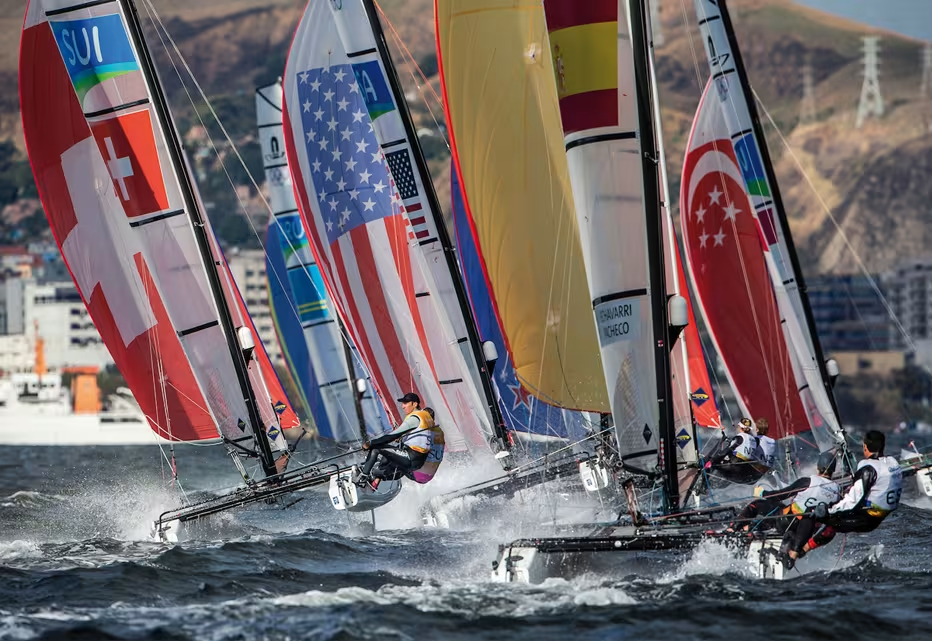
Racing catamarans are powerful, equipped with booms and daggerboards or foils. They are lightweight, but also more fragile, and require intensive maintenance and a sailing level corresponding to their complexity. Their fittings, and more generally all of their equipment, will have been thought out to be above all, high-performance.
And raids?
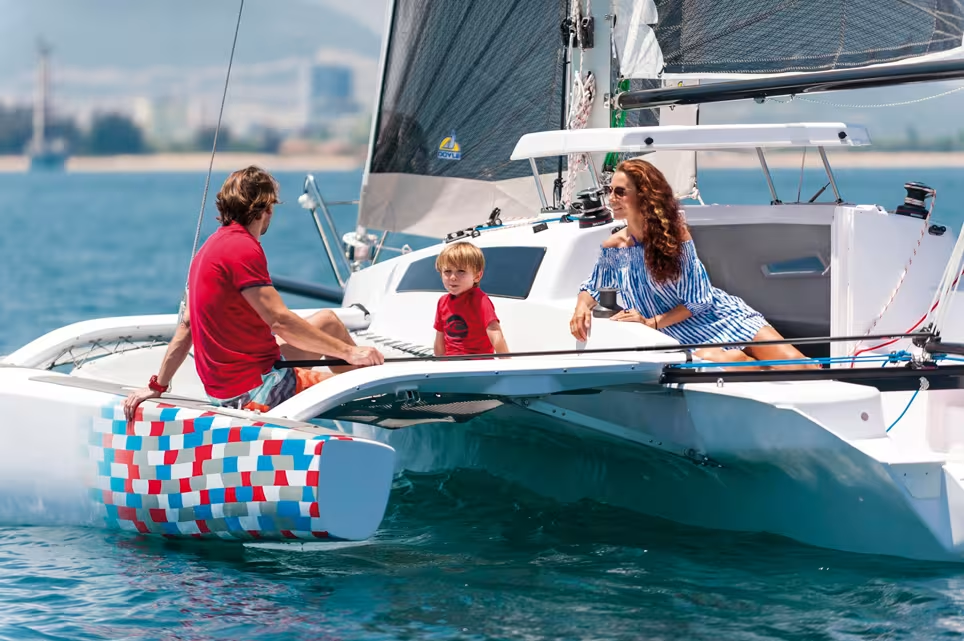
And finally, what if the solution lay in the ‘raid’? With simple boats, offering a minimum level of cruising comfort and excellent performance under sail. Boats which are easily transportable and can be taken wherever you want for the holidays. In this niche, the award goes to the trimarans: easy to handle, offering real liveable volume in the central hull, easy to dismantle and tow, raid oriented trimarans are very fast and fun to sail.
What more could you ask for?
THE DOCTOR’S OPINION:
Sailing in particular, and water sports in general, are not without risks. To avoid problems, it is best to follow these few common sense instructions...
Generalities:
- Know how to swim! It may seem stupid, but every year, the clubs see youngsters arriving who want to sail cats, but who can’t swim... The basic level is to be able to swim at least 50 meters and above all, be capable of diving whilst holding your breath, to extract yourself from underneath the sail.
- If you haven’t done any sport for a long time, pay a visit to a doctor to check your ‘overall condition’. A doctor’s certificate may in any case required by a club. A check up by an ENT specialist is also important: don’t forget that one of the pleasures of sport catamaran sailing is splashing around your boat to right it again!
Before going to sea:
It is essential to eat well and drink lots, cover yourself well, even in summer and especially your extremities (bootees are very useful for not injuring your feet as well as keeping them warm). Think about protection against UV: a lycra top and some water-resistant sun cream will save your baby-soft skin. Glare from the water is very strong, so having sunglasses is often also appreciable. Get unbreakable ones, which...float, and above all, attach them to their owner! As we are talking about essential equipment, a suitable, officially-approved lifejacket is not just useful, it is ESSENTIAL, even for champions and excellent swimmers. Finally, even on a sport cat, you can suffer from sea-sickness. This results from the unusual stimulation of the balance organs (inner ear and vision), increased by cold, fatigue, fear and not eating enough. The symptoms are well-known: nausea, vomiting and weakness, which leave you completely lifeless. You must therefore counter these triggering factors by eating well, having good equipment and looking well ahead.
