
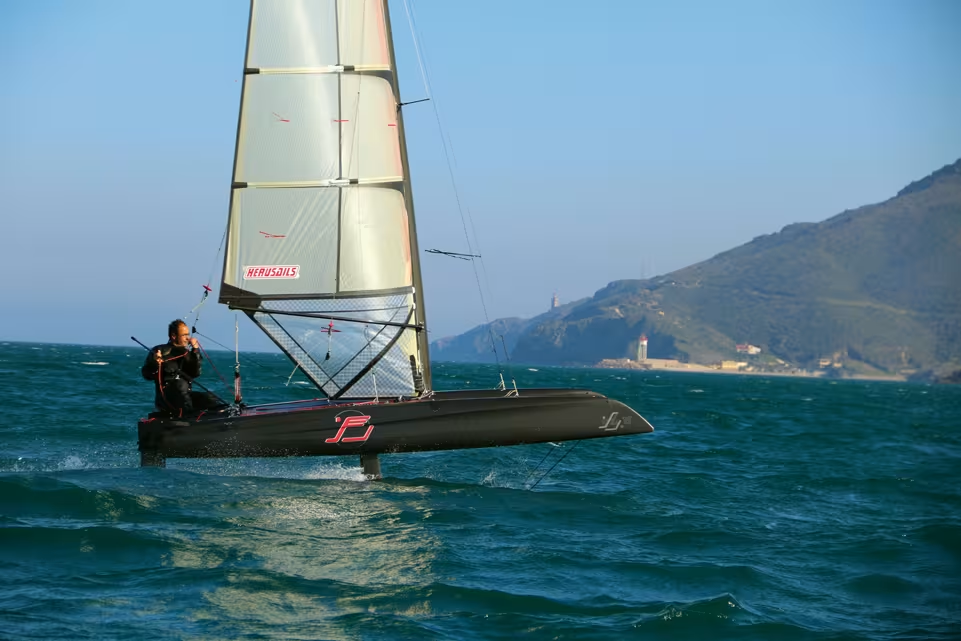
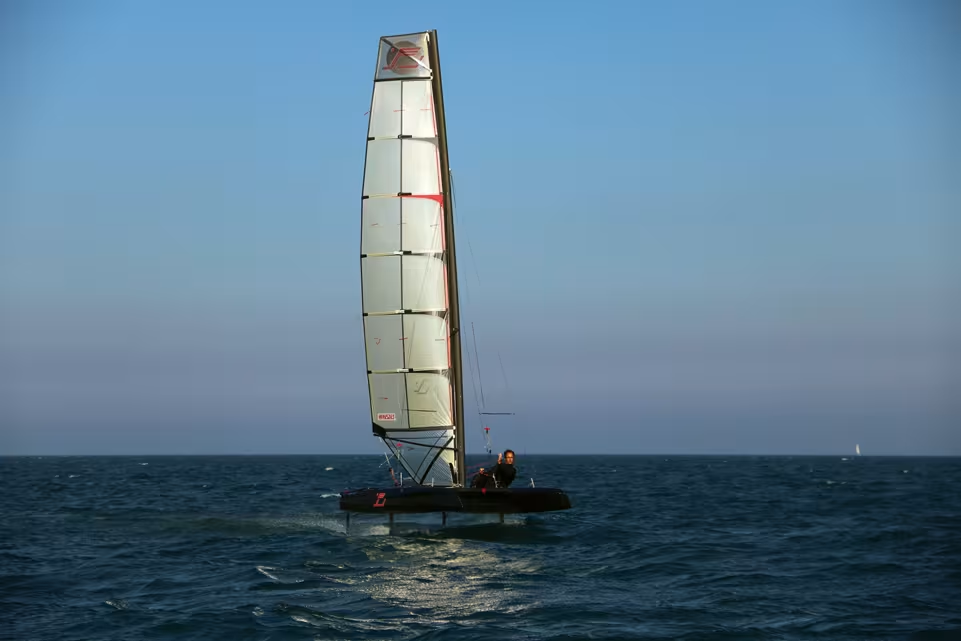
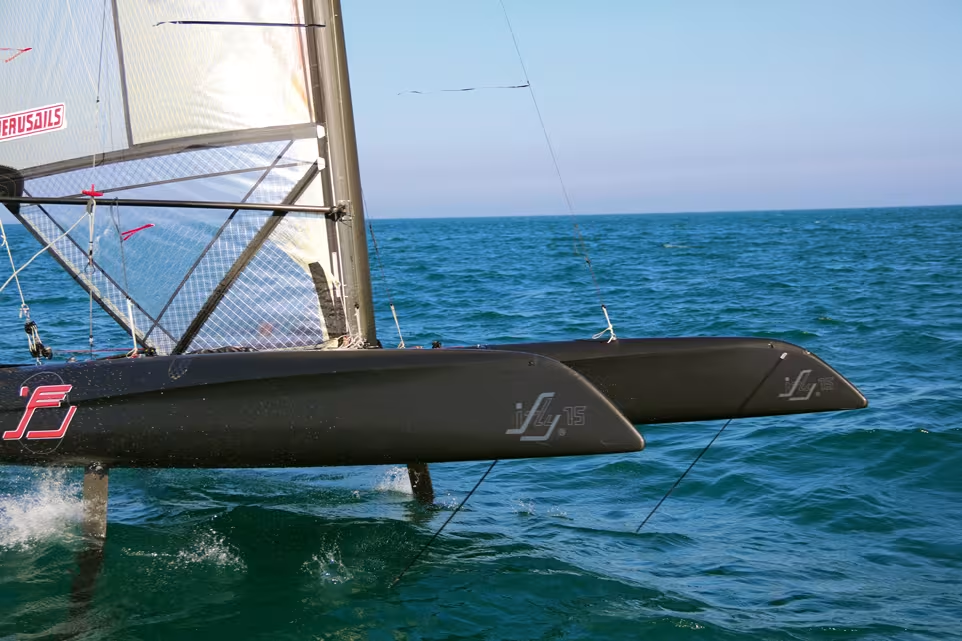
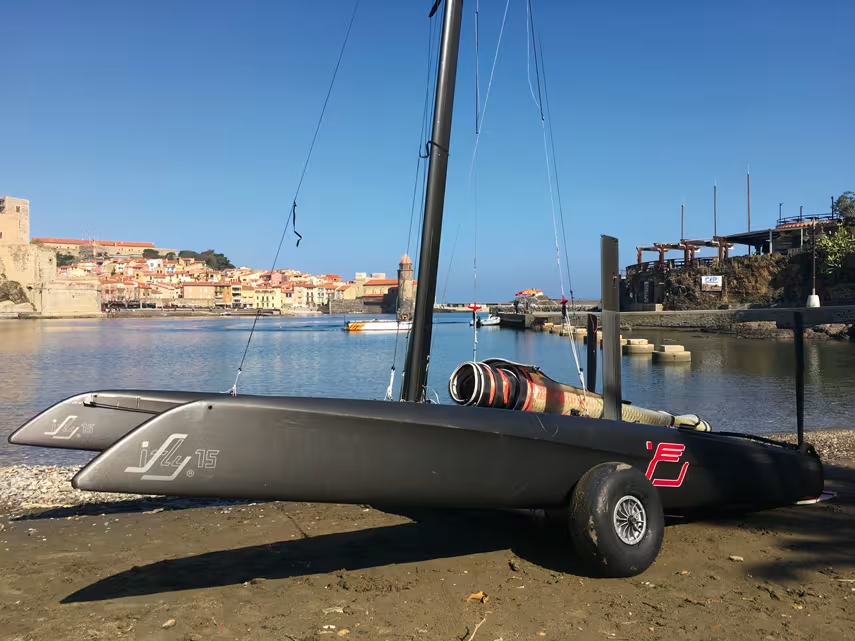

Flying multihulls are not new; Eric Tabarly succeeded with no trouble in 1976, with his Tornado hull attired with two floats. Then there was Paul Ricard, the Hydroptère…and soon kite boards, then stand-up paddle boards with foils. And of course multihulls and now practically everything which races on the water. So, is that it? Foils are within everyone’s reach? Can we have a go too? On the market, in any case, there is a lot of movement in the little world of flying catamarans. And among them, one machine in particular caught our attention. This is the iFly 15. Unveiled at the fall boat shows, the machine’s small size is surprising: under 5 meters for the hulls, 2.55m wide and weighing in at just 90 kg – for the production model, as our prototype proved to be appreciably heavier. At the start of the project, Gilbert Saint-Blancat (a former aeronautical engineer, prominent in the field of foils…) had to be content with designing the carbon T-shaped appendages. Finally, it was also he who designed the wave-piercing hulls. He retained quite slim sections over the whole length, to reach a good compromise between high speed and reduced pitching. The aim therefore is to fly singlehanded or as a duo, easily.
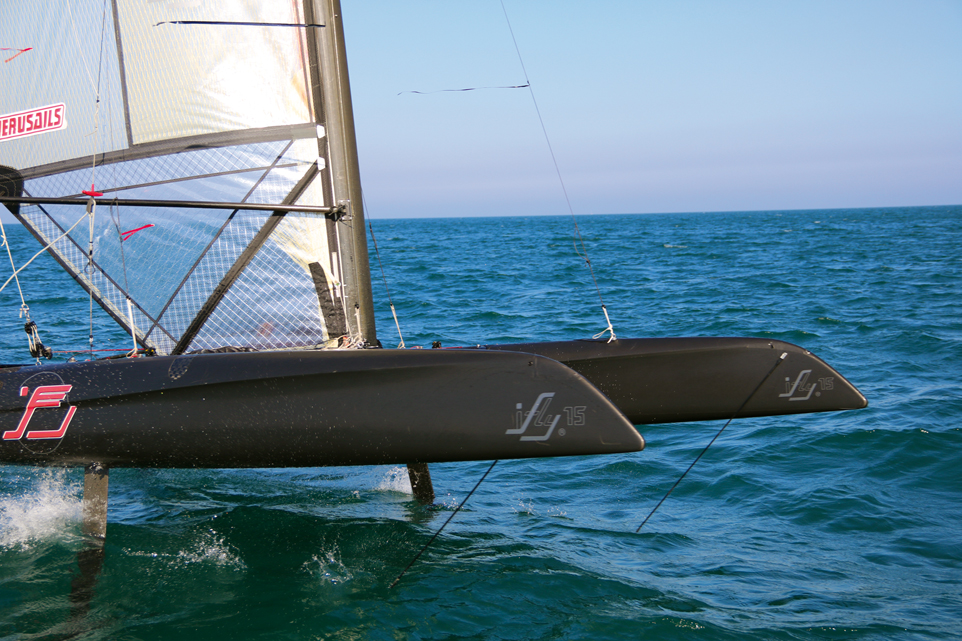
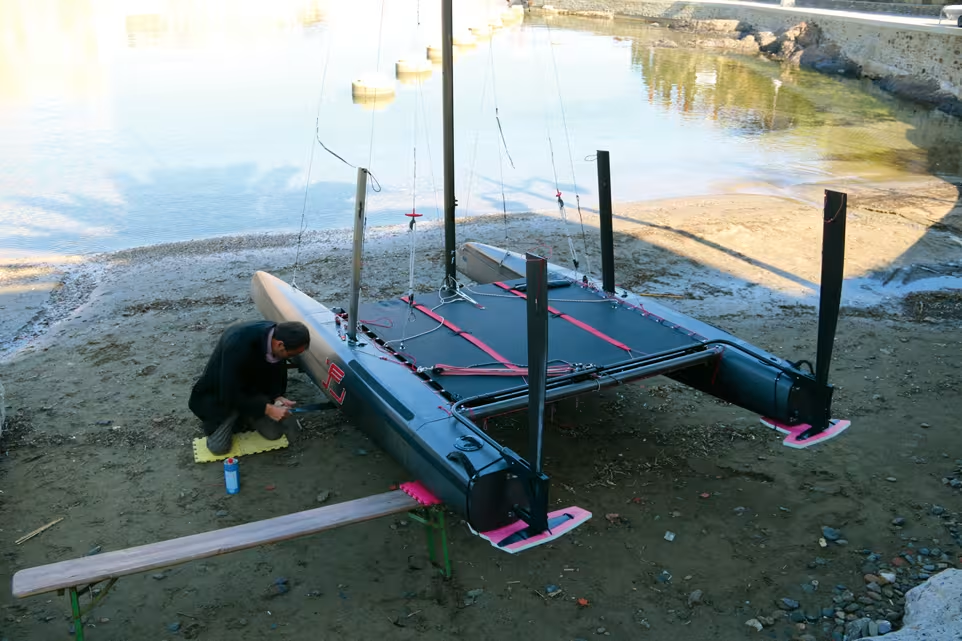
Understand that you will not have to adjust the foils. You fly, steer, trim your sail, and that’s all… Apart from a basic adjustment of the four appendages (two daggerboards and two rudders) which you will learn to master as you sail more and more, the control under sail is carried out automatically, thanks to the flaps in the daggerboard foils. Linked to sensors fixed to the bows, these flaps are able to anticipate the boat’s trim, and even anticipate the waves. The principle is quite simple: if the hull is not flying, the very horizontal sensor controls – via stainless steel and carbon rods – the descent flaps, to provide maximum lift. If the hull is too high, the vertical sensor makes the flap go back up – the lift is weaker. Of course the system would be even more effective if the whole foil was mobile. In this case, we would even be able to obtain negative lift to windward and in theory imagine never having to sit out… Before observing carefully this machine’s behavior in the hands of Michael Miller, its designer, let’s have a glance at the rig and the deck plan. The carbon mast supports a very clever thick mainsail. The whole of the luff is doubled and held by different battens on either side. The bolt rope is equipped with a gusset to create some volume. Once hooked, the sail displays a perfect profile, once the luff tensioning line has been pulled taut. On the double thickness trampoline – the aim is to generate a lift effect – very few adjustments and lines are visible: they are cleverly hidden between the two skins.
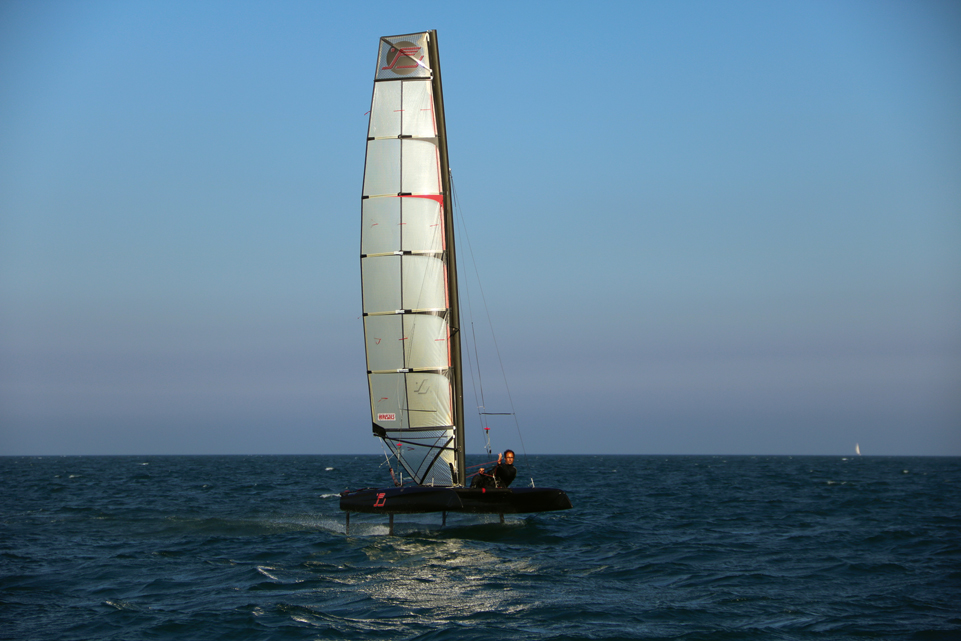
30cm of water is enough for Michael to sail, and even tack. A meter is enough to lower the appendages fully. Even without taking off, the iFly is particularly lively, and tacks on the spot. 10/12 knots are enough for it to take off. Firstly it rears up slightly, then rises progressively…accompanied by spectacular acceleration. During our tests, Michael was sailing at around 20 knots. His GPS has already recorded 28…in just 18 knots of true wind!
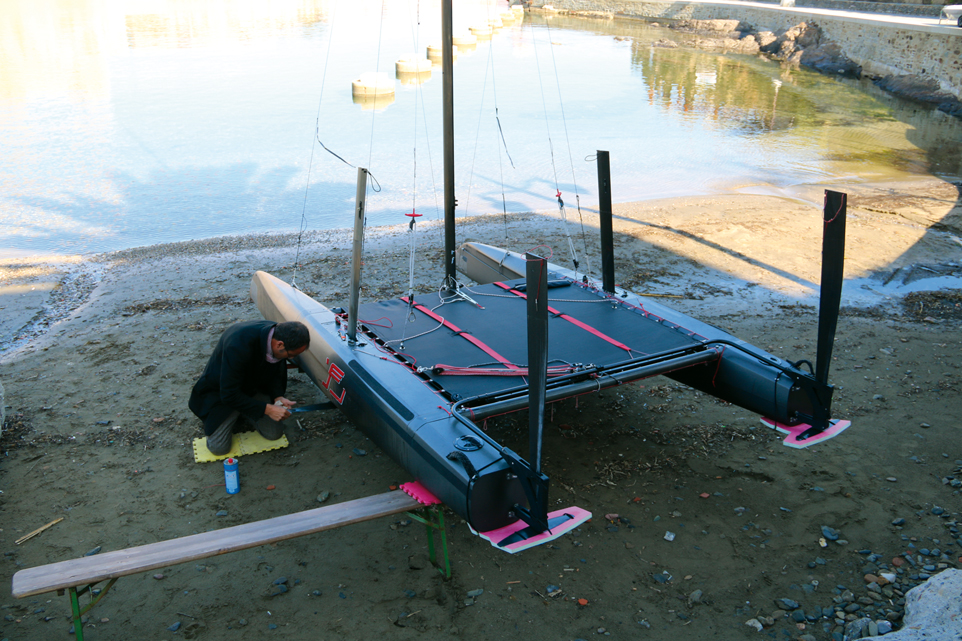
The only problem with the machine is its relative complexity…if, like this sailor, you forget to lock the daggerboards, the stainless studs which control the flaps in the foils quickly bend. And then no more control. And a clearly more physical behavior to handle the trim of our little rocket as a bonus. Until the rudder broke, after the boat reared up spectacularly. Damage which could have been avoided if the rudders had been built in monolithic carbon, and not with a foam filling. This will soon be the case. A good point on the other hand for the iFly 15’s great tolerance, still capable of sailing correctly on the three legs which remained, raised. The next day, Michael even succeeded in flying on one tack, with just three points of support. It remains that this little machine is perhaps still a bit too complex to claim to have the average sailor flying. Why not try to develop fixed foils on the polyester version? Even if it means designing less specialized, more tolerant profiles, it would be worth it, especially as the price of the boat would be more accessible. Because the main principles of this project – singlehanded or two-up sailing, easy transport – are awfully attractive… A last idea from Michael – who as you may have understood, has no lack of them – is to launch a class of 15-foot catamarans with foils. Go on, I dare you…
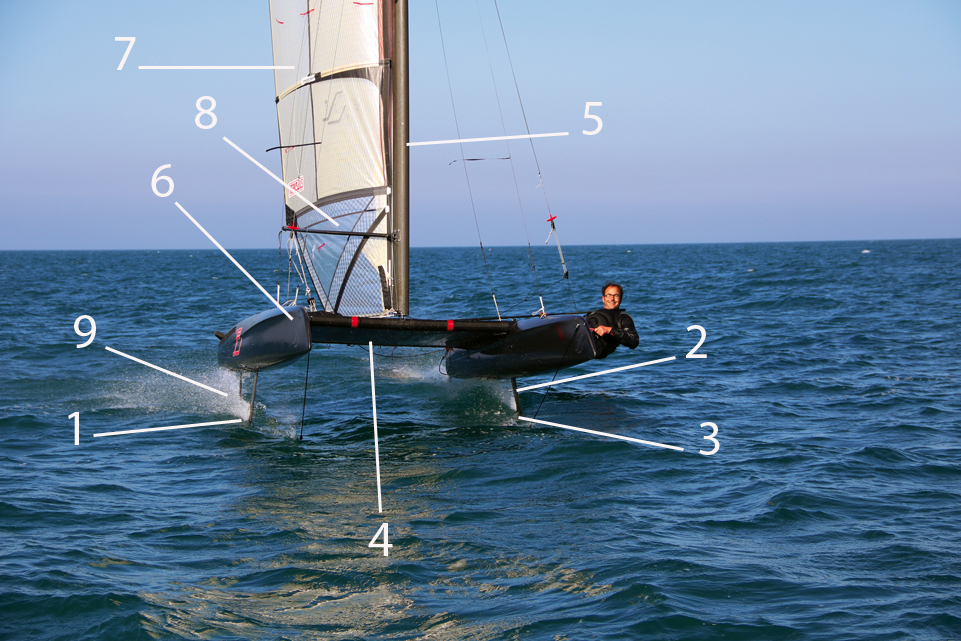
1 – Daggerboard foils: overall adjustment is taken care of by a wheel and an endless screw.
2 – Foil flaps: the foils’ joint is provided by Kevlar threads imprisoned in the carbon.
3 – Sensors: placed as far forward as possible, they automatically control the flaps in the daggerboard foils
4 – Trampoline: made up of two layers of canvas, to ensure additional lift.
5 – Mast: built in carbon, it rotates. Two sizes are being offered: 7.5 or 8.4 meters.
6 – Rig: the eyelets on the bows allow a downwind sail to be rigged.
7 – Sail: its thick profile is ensured thanks to a double skin, a double set of battens and a gusset, which surrounds the bolt rope.
8 – Boom: made up of a half-wishbone in carbon.
9 – Rudders: the optimum incidence is 2° down, to help the boat rear up.
Specifications:
Length: 4.63 m
Beam: 2.55 m
Displacement: 90 kg
Draft: 0.10/1.00 m
Sail area: 12.50 m2 or 14.90 m2
Code F: 10 m2
Material: carbon
Architect: Gilbert Saint-Blancat
Builder: CEC Catamaran
Design: Liane Miller
Price, Eco version: 19,980 € inc tax
Price, Ultimate version: 26,980 € inc. tax