My first transat, in 2000, was a bit of a revelation. Setting out from Mindelo in the Cape Verde islands, we reached Martinique after 17 days’ sailing in total “zen” mode. Here’s what I wrote in my blog when we arrived:
“Thank you to the tropicbird who so often brought us a little pale glow in the sky; to the dolphins, and their cries that we could hear during the night watch; to the sky and her blanket of stars which, even though no longer guiding us, still let us hold a course; to the ocean for everything; to Catleya who made it; to my girlfriend who let me do it; and above all to my crewmates…”
For the transatlantic 2016 version, after years of sailing experience, cruising, racing, etc… I decided to take a different course. The objective was still a transat, but I wanted to go via Cape Verde since these islands had left me with an impression of such wild beauty and memories of the kindness of the inhabitants. And this time, the crossing would be combined with meeting people and with a competition which often belies this trans-ocean rally… A handicap class system allows you to gauge yourself relative to other boats on the ARC rally taking into account engine hours. Let’s see where this leads!
Racing across the Atlantic
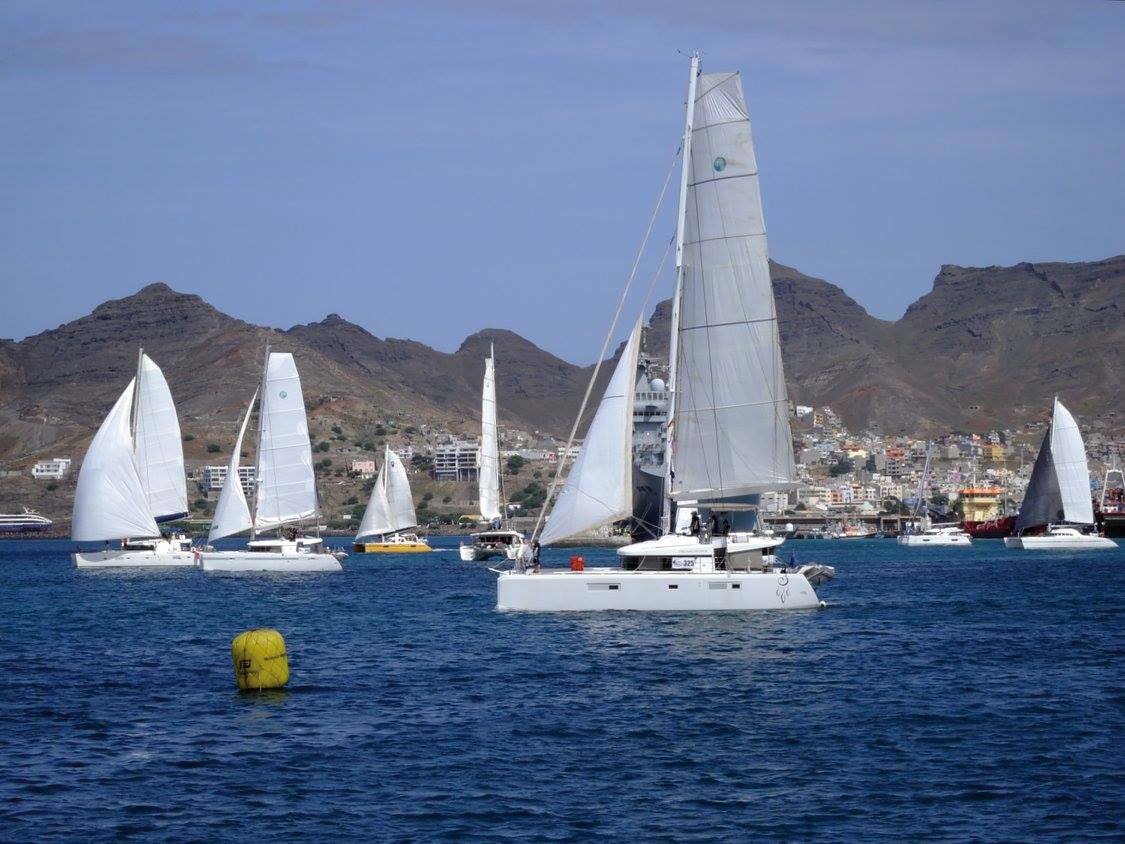
The ARC+ is distinguished from the traditional ARC by its route, organized in two legs: Las Palmas (in the Canary Islands) - Mindelo (São Vincente island in the Cape Verde group), then the transatlantic to St.Lucia.
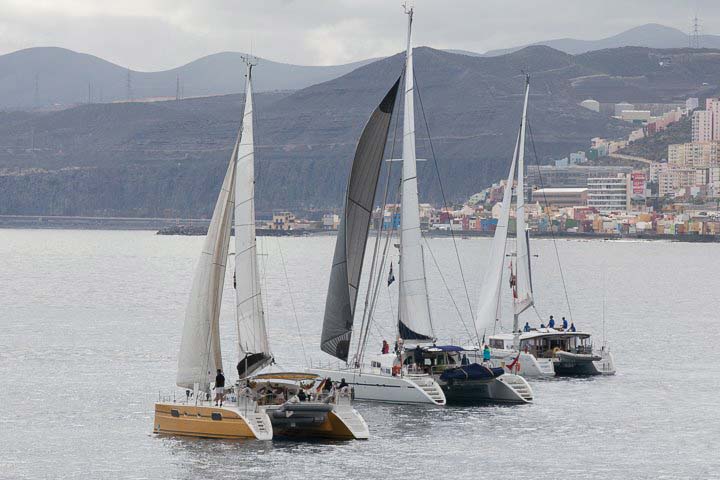
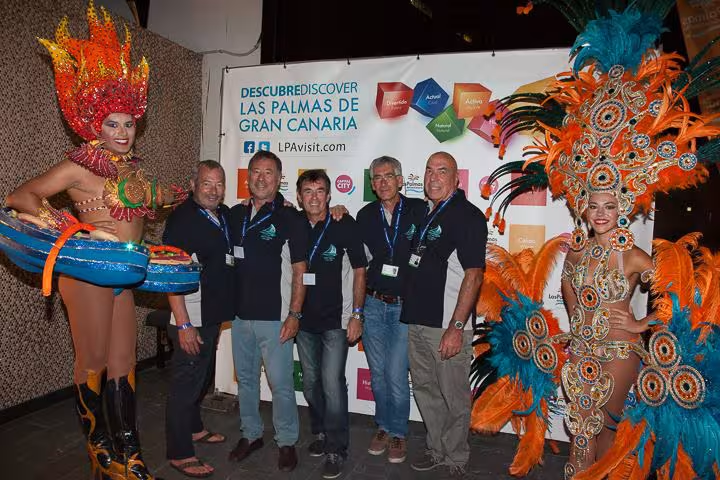
As for meeting people, no preparation is required. There are 75 boats signed up for the ARC+ (Cape Verde route) and 270 for the traditional ARC, which means that there are loads of people. They are enlightening, happy, sometimes crazy. For the rally, there are no complex racing rules like in a regatta, nor any particular limits on the boat’s configuration. On the other hand, the rules relating to safety equipment, based on ISAF rules, are fairly exhaustive and stringent.
You need an EPIRB of course, but also two systems of nav. Lights (even if in reality there’s a lot of leeway…), well-equipped lifejackets, a backup GPS system, lifebelts and man overboard recovery equipment, transocean liferaft, and more. Personally, I added PLBs with GPS, AIS and MOB system: in the event of falling overboard, each PLB would automatically transmit an AIS MOB signal including the position. On board, a black box processes the message received and sets off an alarm if it’s an MOB alarm from one of our PLBs. Lastly, there’s also a waterproof handheld VHF (with GPS and DSC) for the watchkeeper, a radar (especially for squalls) and an AIS transponder.
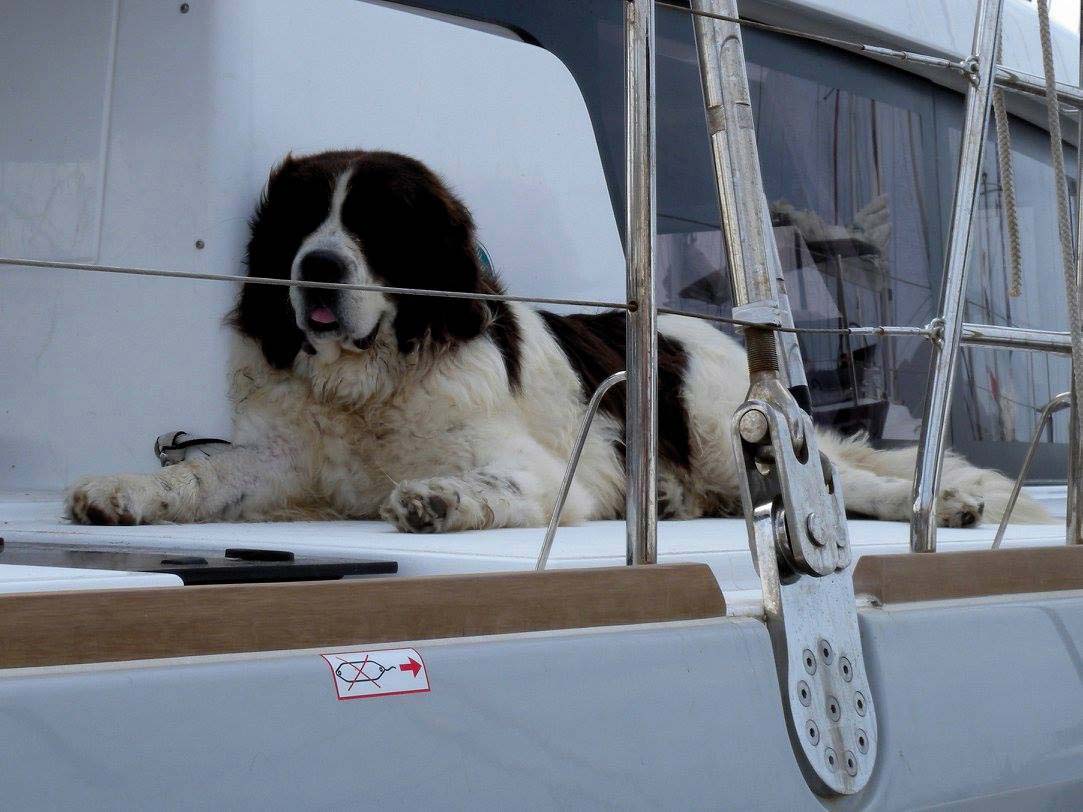
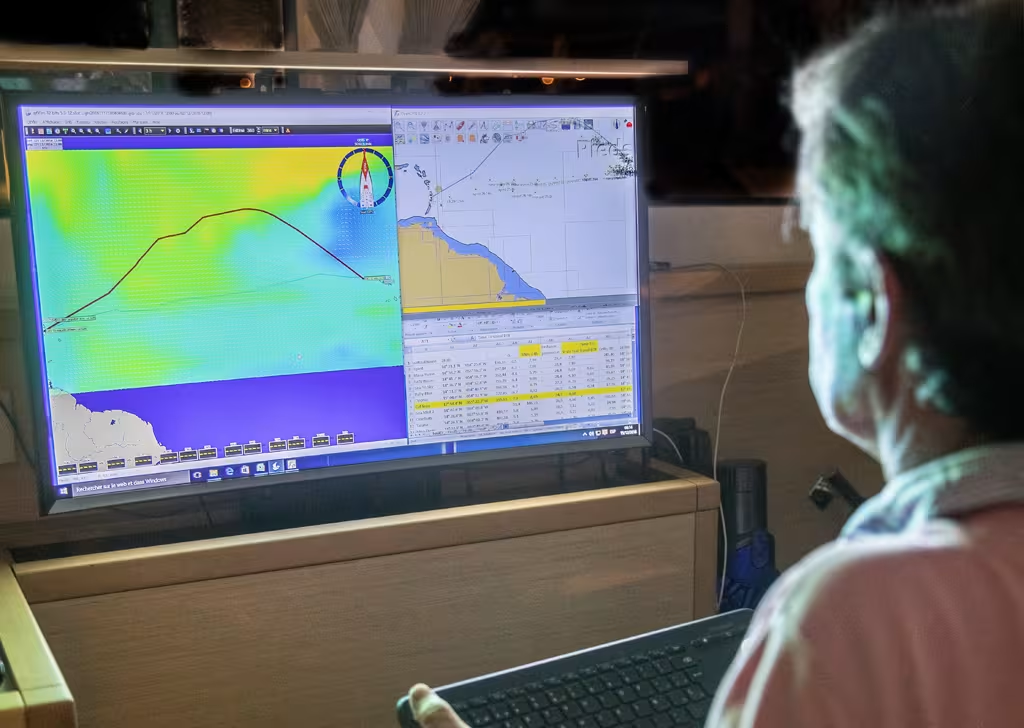
Our Iridium is fitted: this morning I downloaded GRIB files showing fairly calm conditions for the first 24 hours with northeasterly winds, and a bit more air toward the African coast. I did two routing calculations, with and without motor, but the motoring option, in spite of the handicap, looks advantageous for the start. Shame…
On-board organization
The nerve center is in the saloon, organized around the boat’s TV screen. A miniscule PC (an INTEL computer stick the size a big USB key) which runs QTVLM for routing, Open CPN for navigation and plotting positions of other boats, and Excel for calculating their true boatspeed (and not just 24 hour VMG) which gives a good idea of true wind, as well as how the distances between boats is evolving.
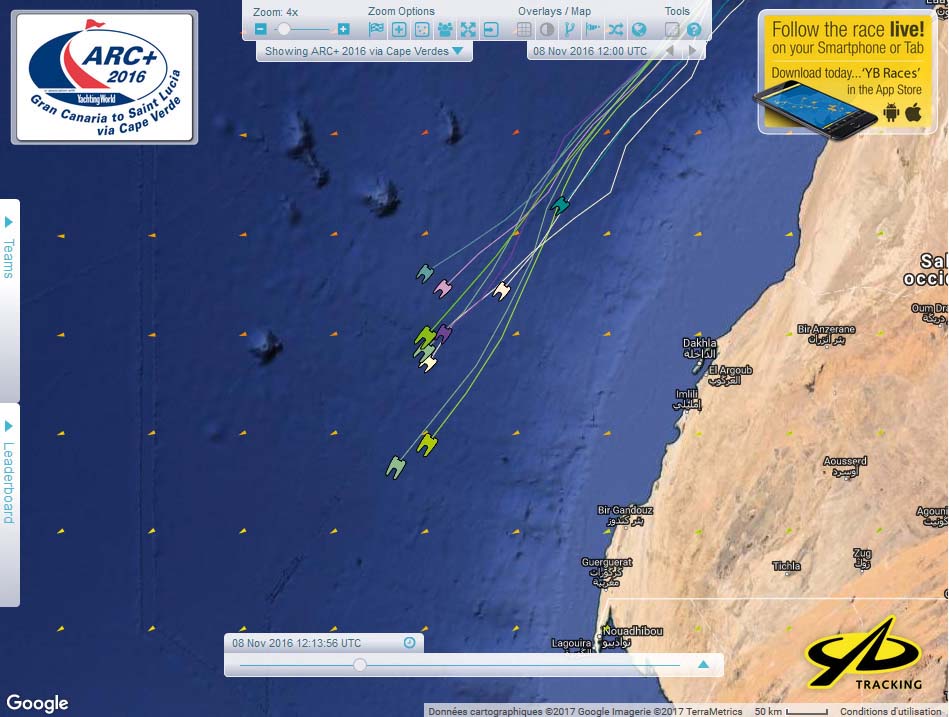
An Iridium GO allows us to get 2 GRIB files a day (be careful to define a large enough area, especially at the start, so you don’t miss an option which might be considered extreme), one ARC weather analysis per day, and the position of all the boats every 4 hours. Note that Iridium now offers unlimited data options for one month with no contract for around US$130.
So the TV screen has become the center of attraction on board, with weather news, placings and positions… not counting text messages and emails between competing boats.
And we’re off!
It’s D-day. We set off to find the start line, and… there’s no wind. Further offshore, there’s light wind from the north. It’s going to be a slow start!
As soon as the committee boat is in position, we head back up, to check out the startline and allow Denis to make a visual check for getting the timing right. You’re either racing or you’re not.
We prepare the Code 0 in case the wind goes southerly again, as we need to wait for it to get up 10 to 15 knots more toward the south of the island, near the airport. We’ve got to be prepared for every eventuality.
Start -5 mins: I start getting ready, make a U-turn on the line and come back upwind for 2 minutes. We’ve chosen the committee boat end for starting on starboard, as this will give us more options.
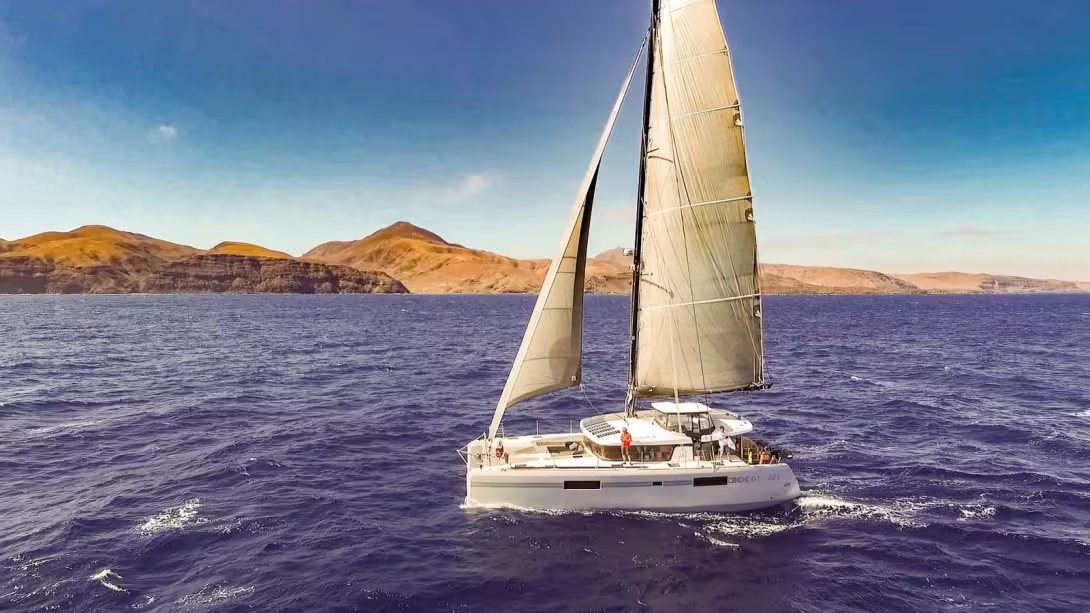
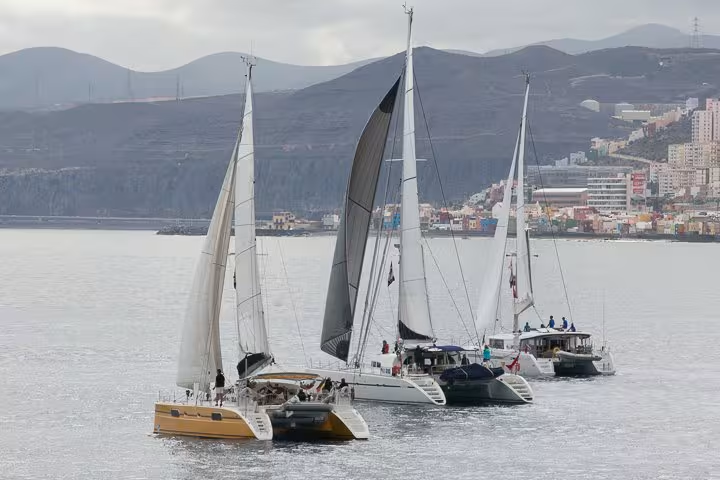
Start - 2 mins: We’ve done it: it’ll be a downwind start… under main and genoa, Cat’Leya is under way (if you can call it that, given the wind strength…), the motors are stopped and we’re first across the line, very close to the committee boat. We hoist the Code 0 (instead of the spi while waiting for some south…). We enjoy the next few hours, close to other boats - Sumore, a Lagoon 570, is hot on our heels, also under Code 0, but the wind is still in the north… Finally our Lagoon 52 starts the “powered” race… we know that hours done under motor are subject to the handicap system (one to two), but given the speed of the boat under motor, we’re better off using them if our speed drops below 4.7 knots. It lasts 24 hours, but thanks to good sail trimming (under motor…) we’re soon in front again.
November 7th 2016: the “regatta” has really started; we hoist the new spi, download the GRIBS and run the routing program to get the full picture, and trim the sails as best we can, night and day. We’ve got ourselves slightly east of the other competitors except for Sumore, who is still right behind us.
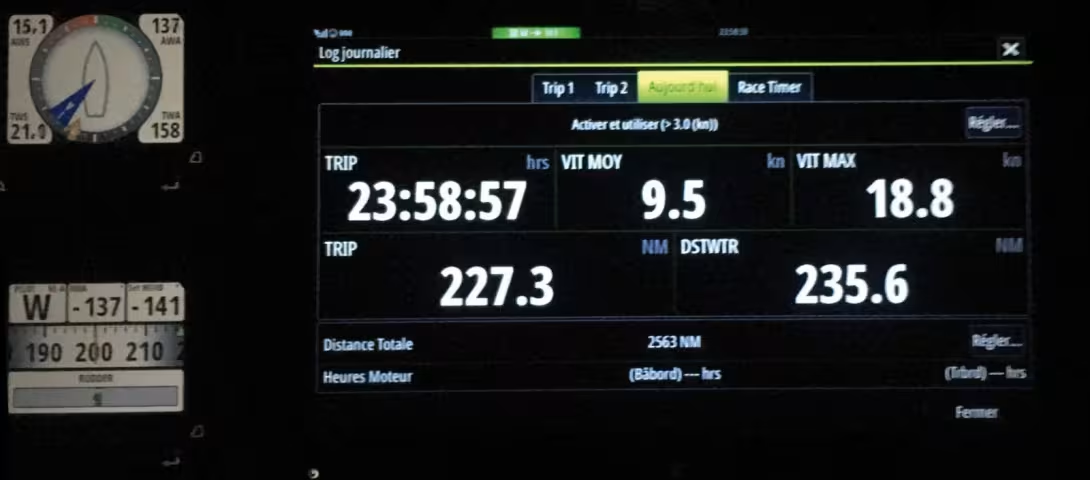
November 8th 2016: We’ve opened up a lead: the second catamaran is now 25 miles behind, and the others, much further - this spi is fantastic. The log shows an average speed of 9.5 knots and 227 miles run! We can surely still do better.
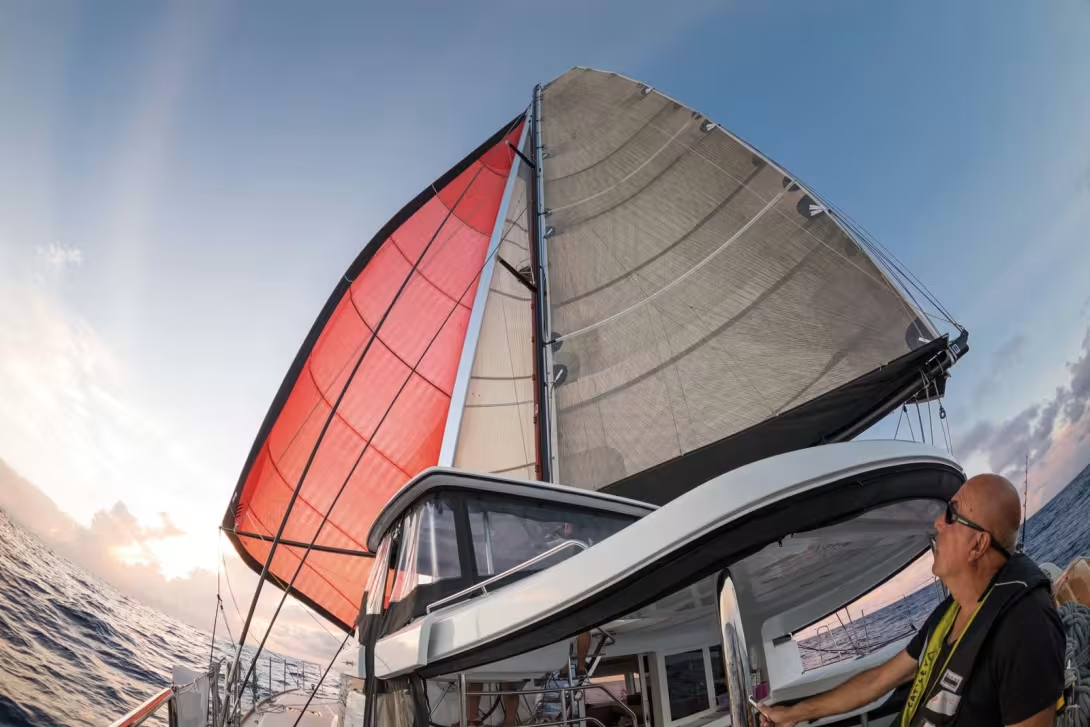
November 9th 2016: To increase our lead, I stay trimming the spi - easing out, sheeting in as Cat’Leya surfs. 19.9 maximum on the instruments… our wake is smoking! Our average climbs to 10.3 knots… Our catamaran is at the head of the fleet, and with a good lead!
Unfortunately the strap at the top of the luff parts… the tensioning line rips the sock halfway down, and now we’ve got a catastrophe on our hands! An hour and a half of battling with it, and with the spi like a trawl, has trashed the bowsprit fitting…
The monohulls are coming back from the west, so we’re going to need to keep on top of things. We make the decision to come back up a bit and refocus on what we can do.
We poled out the genoa and hoisted the jib to close the slot, then the wind was coming aft toward the finish. We’re going slower, but with every mile covered, we’re getting closer to the finish line in Cape Verde…
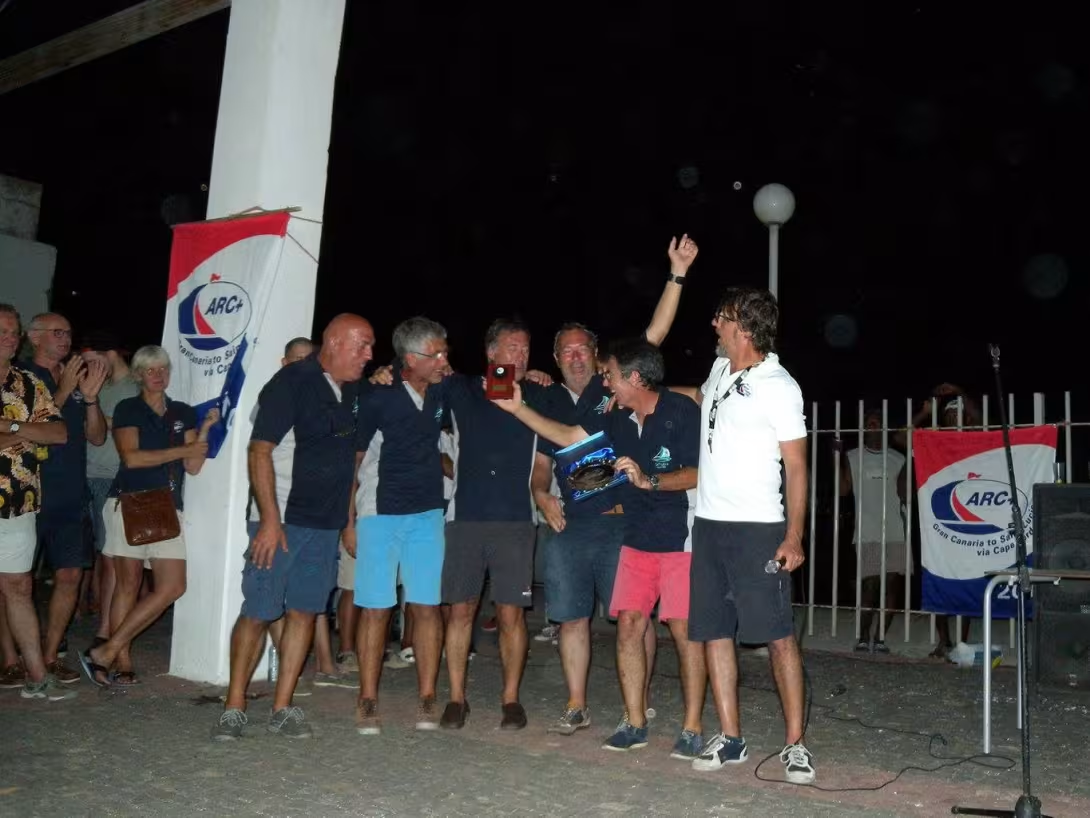
The monohulls are still close… but our decision proved to be excellent, as with an average VMG of between 8.3 and 8.8 knots, we were sure to arrive first! Shortly before 11pm on November 10th, we crossed the line, first out of a fleet of 72 boats. We were warmly welcomed by Anna and the “yellow shirts” from the ARC: champagne and local beer…
The following morning, Mindelo Marina gave us an equal welcome, and not just the marina! With this first leg completed, we now had to prepare for the rest of the voyage, and as a priority, repair the forward beam so that we could fly our second asymmetric spi!
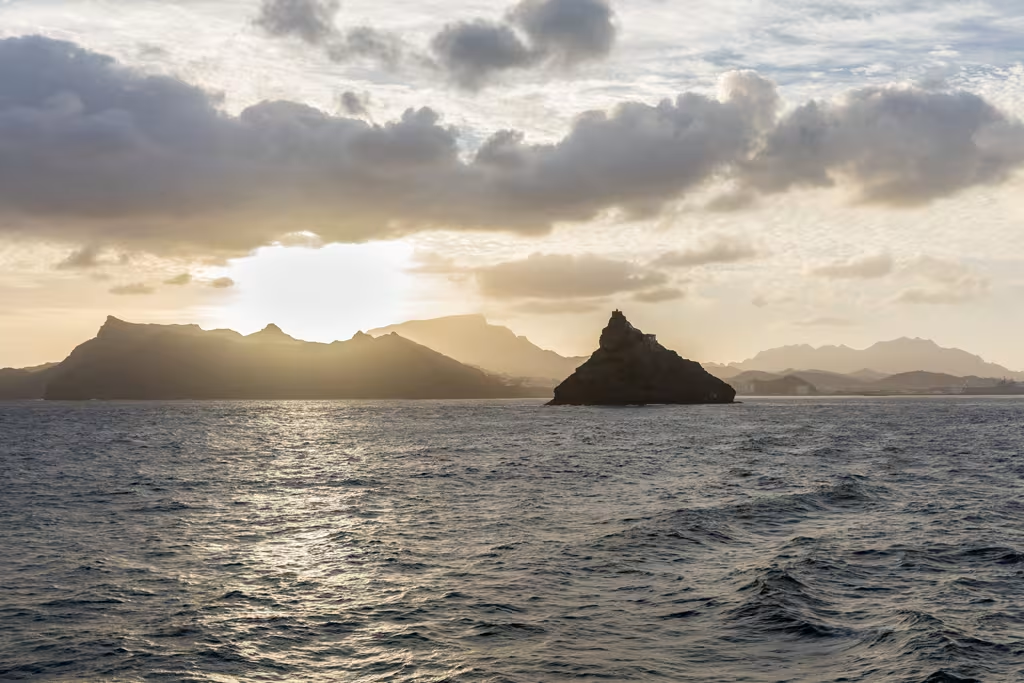
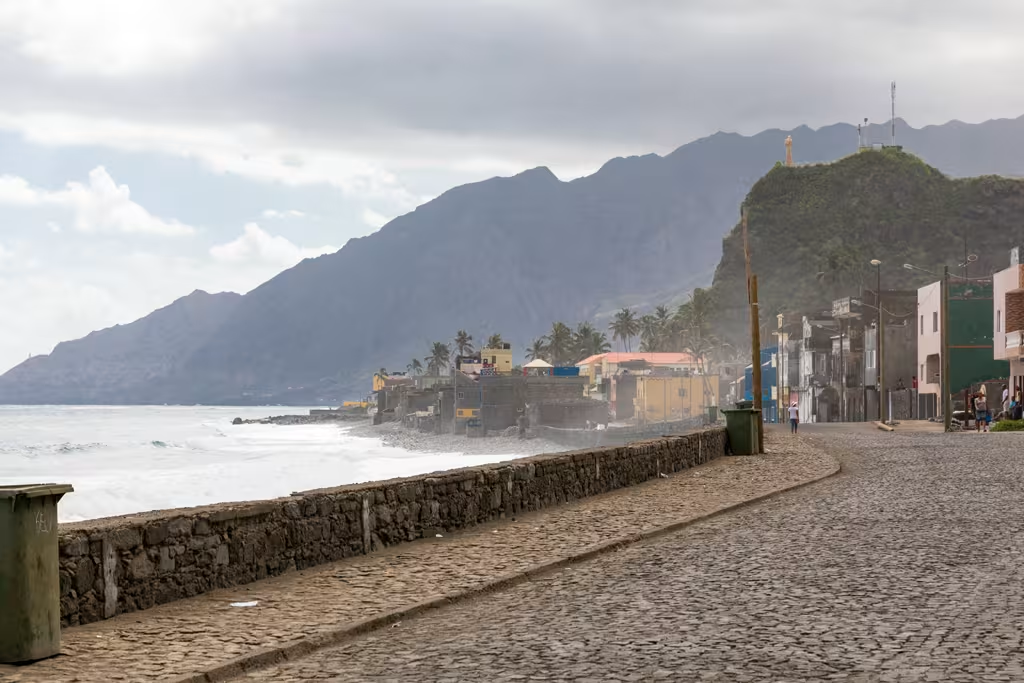
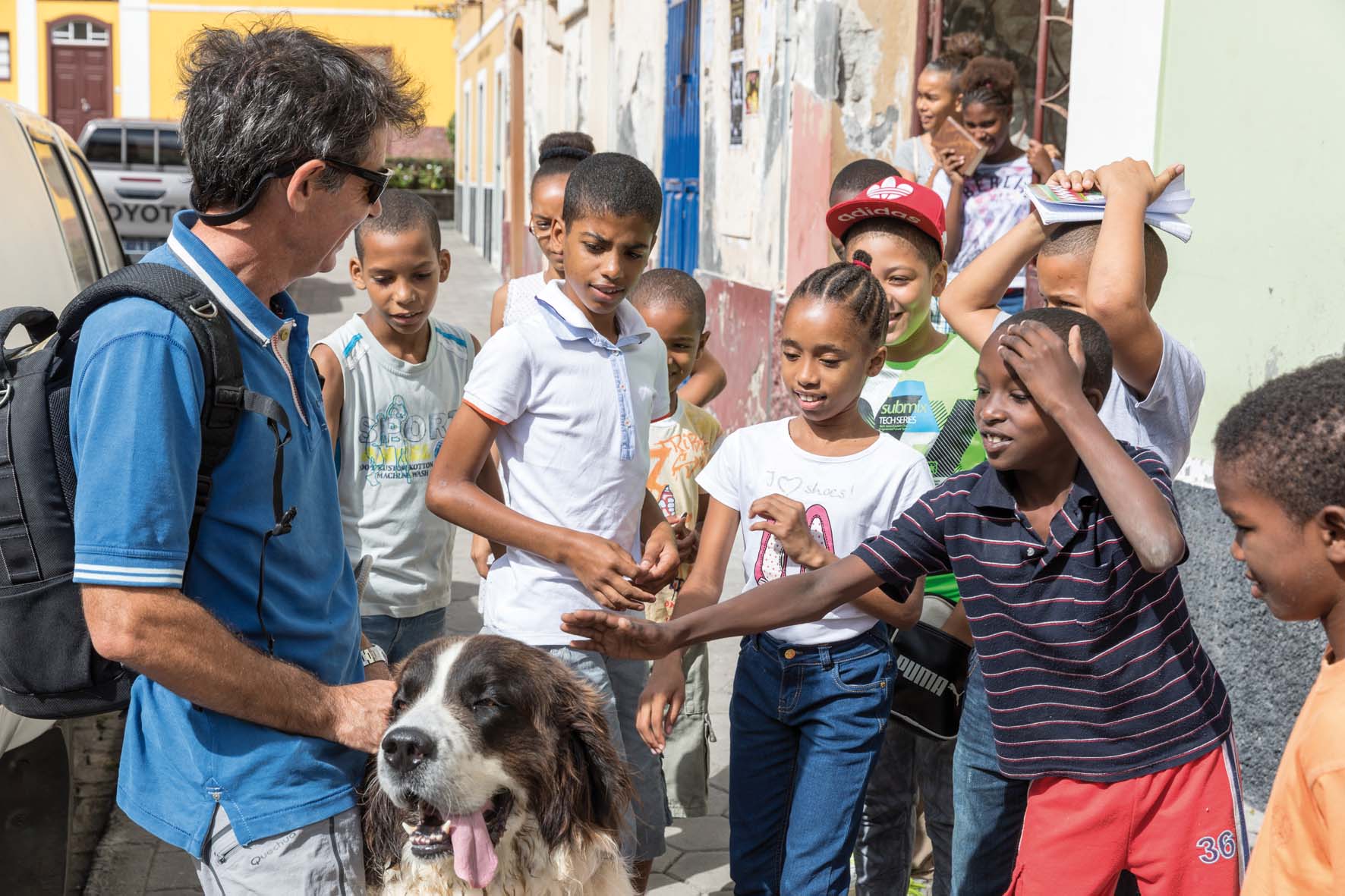
This stopover was also the long awaited opportunity to rediscover the Cape Verdes. 16 years on, Mindelo has changed a lot, but with the excursion organized by the ARC to the neighboring island of Santo Antão, it felt like I had remembered it.
The Transat
Most importantly, a transat is a human adventure. The choice and management of the crew is therefore very important. Four crew in addition to the skipper, means that the skipper does not need to be part of the watch timetable, and therefore available at any moment to help with handling the boat and decision-making. He can also spend time studying the weather, routing, and checking the positions of other boats right throughout the rally. In general the skipper will be the one who knows the boat best. So it’s up to him to;
- strictly organize safety, life jackets and harness lines for going forward, PLBs, and GPS/DSC radio for the night watch,
- organize watches. On Cat’Leya, night watches are 2h30mins long, which limits the number of watches to one per crew member each night. The daytime watches are split between the three crew who are not cooking on that day.
- training the crew in handling your catamaran. Even if they own their own boat, the organization of the deck is going to be different, as is the size of the boat, the work required and so on. For my part, I wrote some technical instructions giving a step by step guide to the various maneuvers, gybing, taking in a reef, etc., which I sent to each of my crew well before the start.
- also training the crew in maneuvers required for a man overboard situation. Everyone had been on the boat in Las Palmas a week before the departure, and each day we had tackled a different subject: sails, man overboard, electronics, motors, etc. in addition to the ARC seminars.
- organize sail changes with a minimum of two crew, always with the skipper present.
- organize life on board, meals, cleaning, etc… to keep up good morale. At 10-14 days, a transat can be long!
-explain the weather forecast, the GRIB files, routing, helping out, positions of the other boats, etc… motivate the crew
- make a briefing every evening for the night ahead concerning the wind conditions, explaining the maximum limits of true wind for the current sail plan, the range of apparent wind angle allowed, minimum distance of squalls on the radar…
This is all essential for everyone’s safety and especially if we want to go faster than the other boats around us.
As for choosing the crew, the most important thing is to properly define and explain to everyone the aim of the transat, which may simply be a question of sharing an amazing experience… but this objective will determine your selection criteria. Beware of websites for finding crew: candidates often have a tendency to embellish their competence and their experience… I once enlisted a “Cape-Horner” who had participated in one of the first Whitbread races… He ended up not being much use… It turned out he had only been the cook on board!
Whoever your choice of crew, allow for at least a week together on board and go for a sail before the start. This will allow you to determine the levels of responsibility that you can delegate at sea. And don’t forget, there can only be one skipper on board!
November 16th 2016, 12.30pm
15 minutes before the start, we managed to replace the damaged part to fix the bowsprit on the forward beam… Now there were just a few battens to replace…
12.40pm: all’s well, we slipped the lines, and have 5 minutes to hoist the sails and get to the start line under motor. This time we were across the line last, under main and genoa.
While we were getting the spi ready, we took a slightly more upwind route, in the gap between São Vincente and Santo Antão, so that we could keep up a bit more speed.
During this time the crew was busy preparing the second asymmetric spi which we had kept in reserve. But this sail can’t take as much wind, so we set a limit of 16 knots true for using it. Once we had got the asymmetric spi set, we bore away taking care to leave Santo Antão sufficiently far to starboard to be out of its wind shadow. The Venturi effect which should extend 50 miles to the southwest was not working. Cat’Leya swapped from one tack to the other as we crossed and re-crossed the fleet… and finally it worked! Little by little we overtook the other competitors. We had a plan to take a northerly route, and we just had to wait to be far enough offshore from Santo Antão…
We did well crisscrossing the fleet in a succession of gybes to make it up to fifth place. We stayed in the gap between São Vincente and Santo Antão, with typical north to north east tradewind conditions, which should pay off if we hang on for another 50 to 60 miles. But today the wind is more easterly, with the Venturi effect between the two islands much less pronounced. As soon as we are clear of Santo Antão’s wind shadow, it’s time to leave the pack and head for our northerly route…
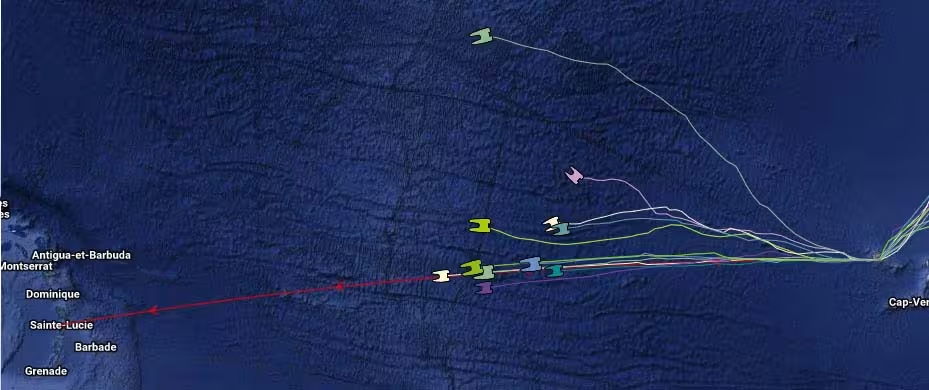
Following a rather successful first leg, and given the very light forecast for the direct route (tropical depression to the west which is blocking the trades), I suggested to the crew that we try and head north to find the wind (latitude 26°N, which is the same as the Bahamas), but this would represent 15% more distance. Everyone was happy with the plan… in spite of my warning that the last few days risked being complicated… During the ARC’s start briefing on November 20th in Las Palmas, the forecaster had warned crews that if they took a northerly route, they would likely be finishing upwind in fairly strong conditions. We had left from Mindelo four days previously, and a weather window still looked possible.
The performance of modern catamarans
While I was preparing for this transat, I enjoyed making weather simulations (with the GRIB files from the time) during the ARC+ 2015, using the polars supplied by the VPLP design team. If we had any chance of winning we would need to improve performance by 7%… That’s a lot, but it must be remembered that the polars are only calculated using a configuration of standard sails: for example, goosewinging with two sails, or twin headsails, and not taking into account the effect of the swell and planning with the wind from behind… Downwind we had been able to try out several configurations depending on the wind strength, the sea state and our course. For example, securing the asymmetric spi to the bow of the windward hull, offering much more surface area to the wind and being better able to make use of the air coming off the mainsail. On the Lagoon 52 SporTop, the capshrouds are swept well aft and it is difficult to open the boom more than 40° to the line of the boat. This configuration allows you to pick up more flux on the foresail. On a beam or broad reach, under asymmetric spi or code 0, we rigged the jib to make more use of the slot between the main and the headsail…
And as for the sails themselves… I devoted 7% of the total budget to sails and additional hardware: this is a lot more than most sailors spend, but I don’t find it so much, as I consider the sails to be the boats true “motor”. So Cat’Leya is equipped with TRILAM Offshore racing sails: mainsail, genoa, code 0 and even the asymmetric spi are laminates (the second one of its type, the first having been made for Tanguy de Lamotte for the Vendée Globe race). Given all this, we needed to be able to precisely measure the catamaran’s performance… I happily recorded speeds and courses in certain conditions and then extrapolated the VPLP polar. Overall, the gain of was around 10% on all points of sail! It was this polar that I used for routing calculations.
During this part of the transat, two other monohulls followed us, one taking the same route as us, east of Santo Antão to avoid being caught in the wind shadow! After the finish we discovered they were being routed from ashore. The further north we climbed, the further we dropped back in the placings, 15th, 25th… and down as far as 56th place! The crew were starting to wonder if the skipper had lost the plot!
And we had to go fast, as the depression in the Atlantic would soon be heading north and we needed to make the most of the wind it would bring (anticlockwise winds on the northern side of the depression would be good for us trying to make westing!)
But I had to reassure the crew that it would pay off in the end!
Behind, Shamal and Mariela (the two monohulls) had thrown in the towel. They headed west, which for me, at that point, would have been the worst possible strategy. A little bit late and they wouldn’t have been able to pass to the north of the depression, but would find themselves becalmed and would then have to motor a lot.
The routing of November 23rd using the GRIBs showed that the lighter conditions prevailed on the direct route… So we were right to persevere, and in any case now had no choice. So we continued to climb up to the latitude of the Bahamas, while everyone ashore was wondering if the skipper had lost it!
I even sent an e-mail to the ARC : “Rally Control, we have just seen whales, penguins, and sea lions… We are wearing our arctic weather gear… Finally, we are heading towards the Chesapeake!” and the reply came back, “keep a look out for icebergs…”
We’ve got wind, the sea is calm and Cat’Leya is going much faster than everyone “down below… Spirits are high and we are climbing nicely up the rankings and were glad to have avoided all of those hours of motoring…
And it was paying off: for the moment, no motor, just asymmetric spi and code 0. I was loving it and Cat’Leya was swallowing up the miles. Not necessarily in the right direction, but in comparison with our friends to the south stuck in the calms, or motoring, we were doing well! In fact in longitude, we were well-placed in relation to the fleet, and this kept our morale up.
Life on board during a transat
Meals follow one after another on board, and they contributed hugely to the pleasure of sailing together. Victualling was mostly done in the Canaries. Various bits of gear on the boat really play a part in on-board comfort: refrigerators, freezer, dishwasher, water-maker, generator, solar panels, a bed each, excellent protection at the helm, etc. But none of this negates good management of the water and the power. Every day, when sea conditions allowed, we ran the generator for around one hour and the watermaker (280 L/h) to restock our supplies.
The further across we got, the more squalls we encountered at night. To start with, they were following the wind, and as long as they were to starboard, we had no worries. Otherwise we had to keep an eye on them on the radar. As time went on, the squalls became more disorganized and this became tricky, and as their trajectories became unpredictable, they increased in size and sometimes rapidly reformed. There’s then no answer, to avoid any risk, you have to wake the crew to drop sail and put the motors on to get out of the way…
We passed just north of the depression which was clearly visible on the GRIBs, and carried on in textbook fashion!
We were hoping to finish in the first ten, but I had to temper the crew’s optimism. Right from the start, I knew the finish would be complicated by a depression crossing the Atlantic…
And then all of a sudden, no mainsail. The halyard had parted! So who had to climb up the mast, all 27 meters above the sea? Me, of course. We motored Cat’Leya downwind to minimize the rolling and pitching movements. It took a few hours to re-thread a new halyard and get going again… But that wasn’t the end of the story: the following morning, the main came down again. This time it was the webbing loop at the head which had come unstitched. We jury-rigged a solution. It had to hold this time!
Land-Ahoy! At last.
The last few days didn’t end up being as bad as we had feared. The arrival of a big depression from the west meant we had to motor a bit to pass ahead of it. This made our descent more complicated, and the last two days we were sailing hard on the wind… November 30th at 9am we crossed the finish line in St.Lucia. We were sixth over the line… and the first multihull!
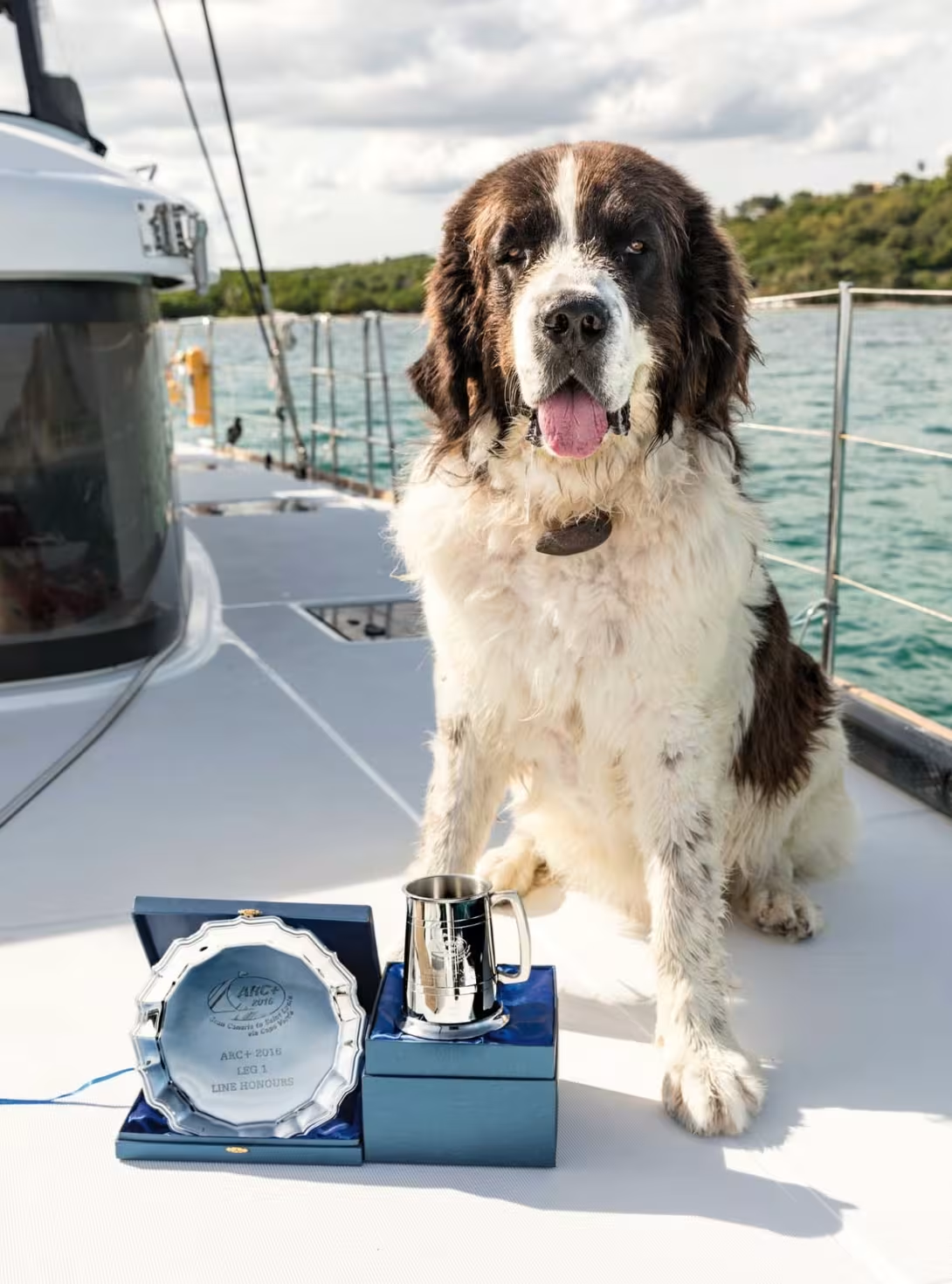
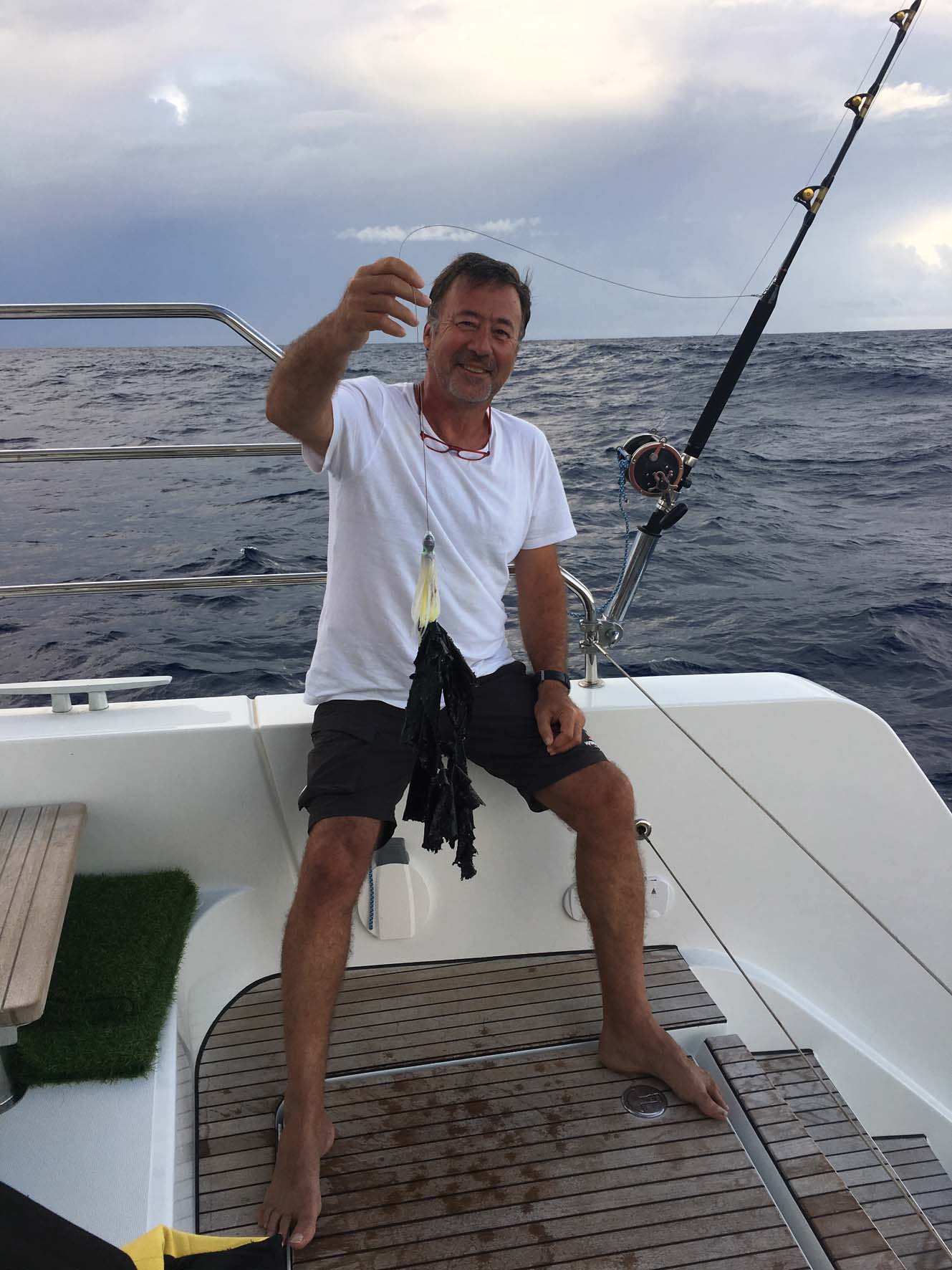
We had covered 2,440 miles at 7.3 knots as opposed to the 2,098 miles of the great circle route, making nearly 450 extra miles in a little under 14 days. We had 12 bites but managed to land just 2 barracuda; a dozen squalls avoided; one broken main halyard replaced at sea; one mainsail head board repaired; 4 new “transatters” on board; 27 excellent meals; and my faithful companion Hadès finally back on dry land…
And now we can take a vacation in the Caribbean!