
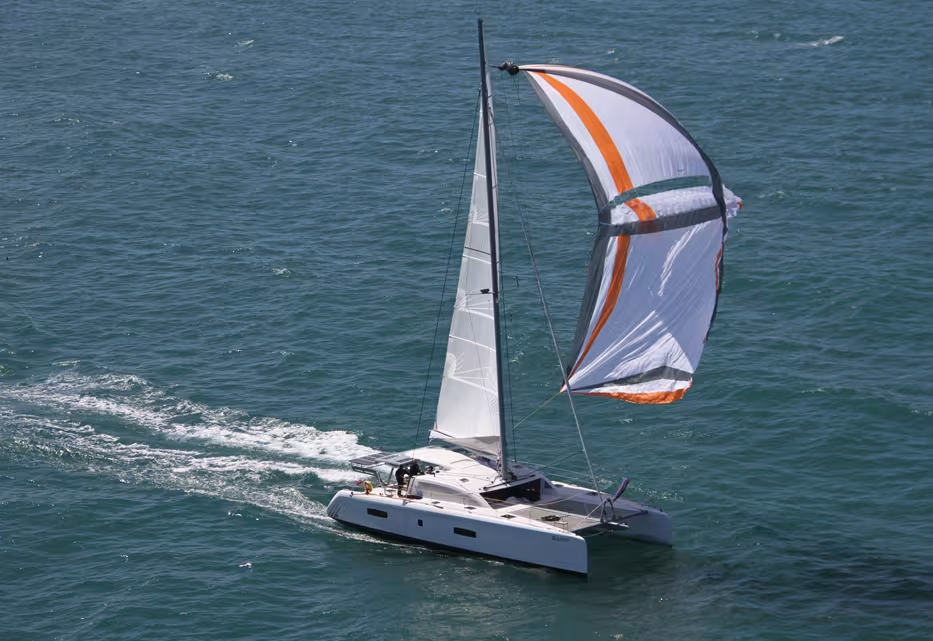

The classic situation: superb stopovers, calm sea, beautiful weather and hey presto, the batten pocket rips, or the slider just above the boom becomes detached ... What can you do in an emergency? Can your sail be salvaged? A compilation of the most classic damage...and the means to repair it.
Skippers who carry a sewing machine on board, or even a needle and thread are rare. For this reason, for repairs aboard, we have limited ourselves to the possibility of making a hole, and the use of light line. Not forgetting Insignia, the famous, very powerful adhesive for sailcloth. Our sailmaker then gives details of the definitive repair of the damaged sail.
Among the most classic damage when ocean cruising, we find a tear in the spinnaker, a slider ripped off the mainsail just above the tack, a reef cringle also ripped, but this time because we had forgotten to undo the knot, the torn batten pocket on a mainsail which has flogged for too long, and finally, the genoa leech torn at the level of the spreaders. And here we are talking about sailcloth in good condition. Because exposure to UV – six months is sufficient – literally burns a sail. A major classic? The genoa rolled the wrong way, with the anti-UV strip on the inside. Not to mention the unfortunate bits of the mainsail, most often the headboard or the foot, which escape from their cover... Take care of your sails, and they will cause you fewer problems!
A tear in the spinnaker
Why does this happen?
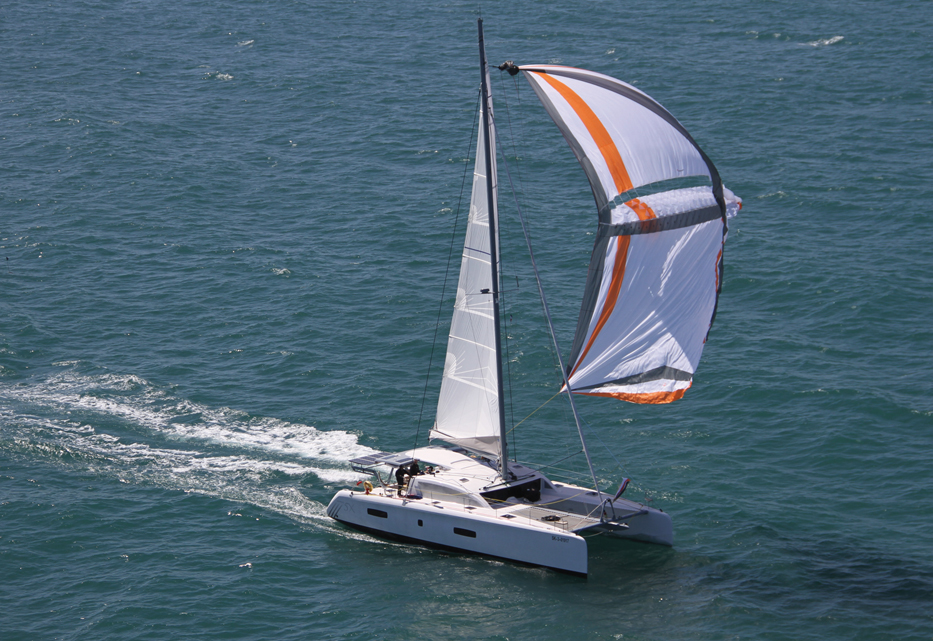
Once hoisted, the spinnaker is only damaged in very strong winds. In moderate conditions, it’s during hoisting and furling that the clevis pins, split rings and spreaders (poorly protected) take great pleasure in tearing the nylon. When gybing, the bowsprit or the radar can perforate the spinnaker.
What can you do aboard?
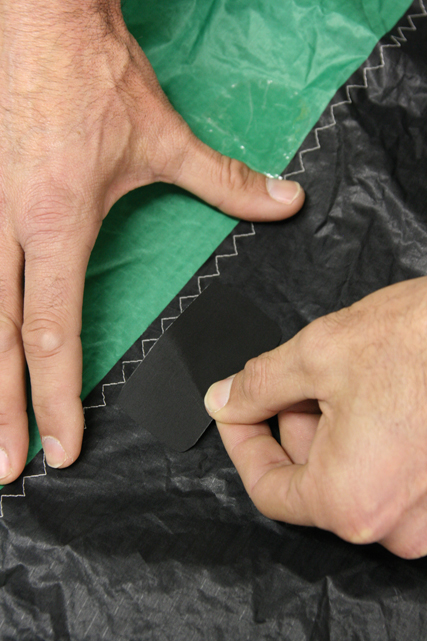
As long as the tear is no longer than 30 cm, the spinnaker can hold out, on the condition that you call Insignia to the rescue! Cut out a patch, round off the corners and stick it on. Do the same on the other side.
The pro’s diagnosis
“The cloth tears most often inside a panel. The stitches stop the process. We have nylon in all colors, to carry out an almost invisible repair. It is also possible to replace one or more panels.”
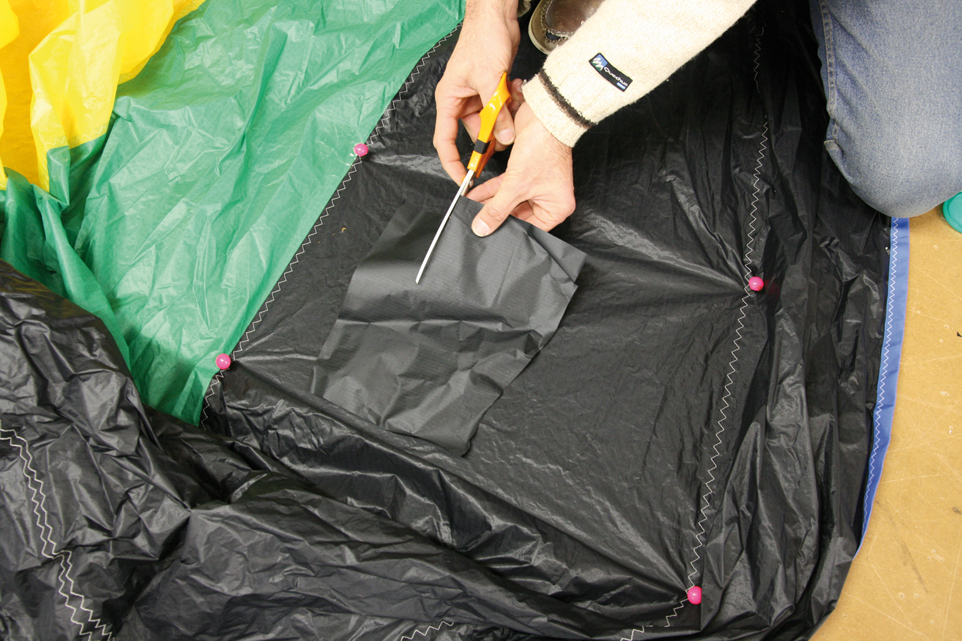
The sailmaker’s repair
Cleaning with acetone before placing an adhesive patch, in the case of a simple rip. For a bigger tear, the nylon is laid flat and pinned out via the stitching holes. A patch is cut out, stuck down and sewn. The old cloth is cut away on the other side.
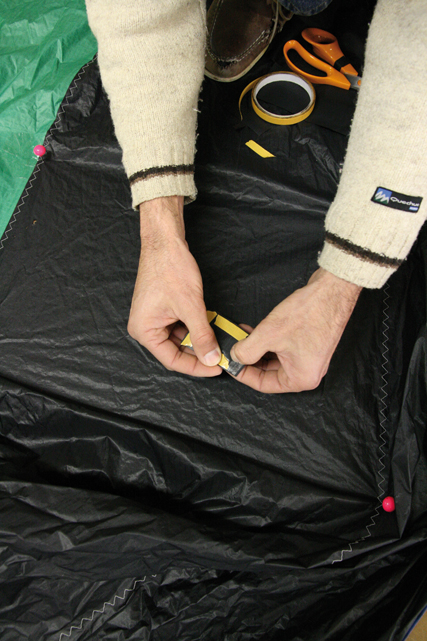
Mainsail slider ripped off
Why does this happen?
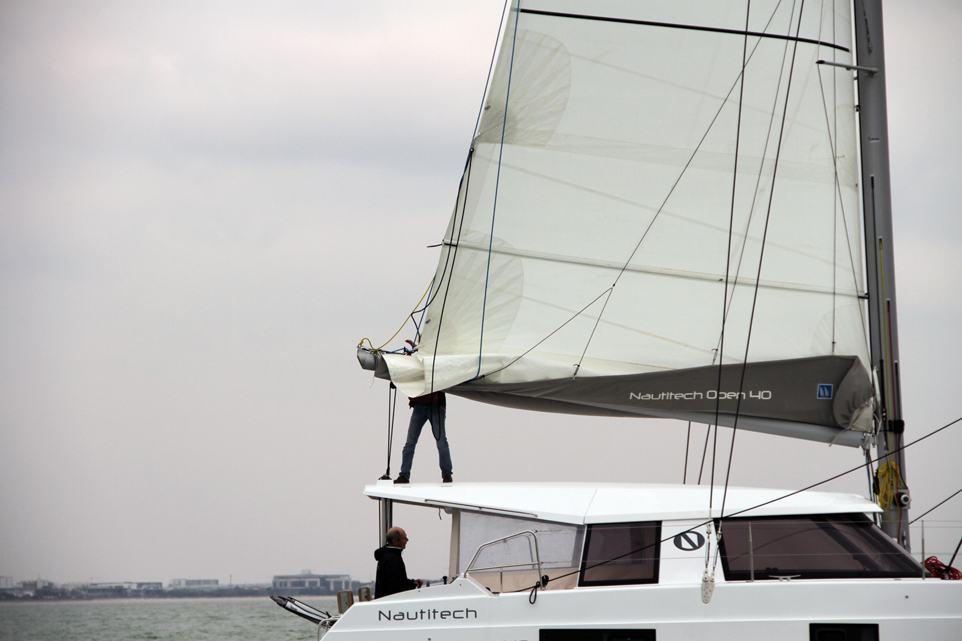
When furling the mainsail, or taking in a reef, if the topping lift is not taken in and the foot is well stretched out, the boom will drop down onto the deck. The last slider then takes a considerable tractive force...until it rips off.
What can you do aboard?
Is the weather fine? Then just remove the damaged slider. But if the wind gets up again, take in a reef a bit earlier than usual, to relieve the strain on the slider above.
The pro’s diagnosis
“A major classic. In almost all cases, the slider torn off is the bottom one. Aboard a sailing boat with no topping lift or rigid kicker, you must remember to slacken off the foot when you decide to furl the mainsail.
The sailmaker’s repair
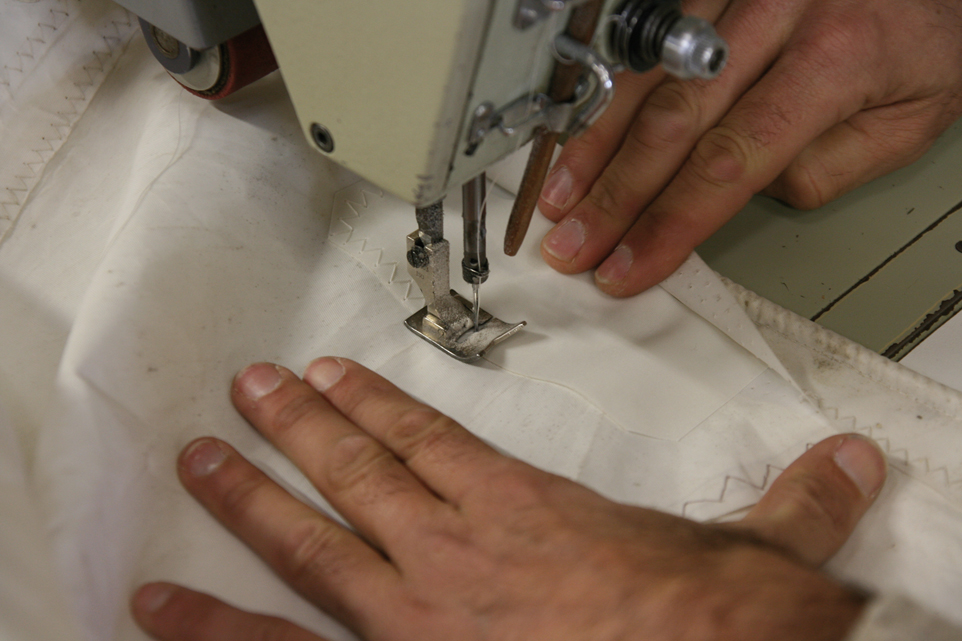
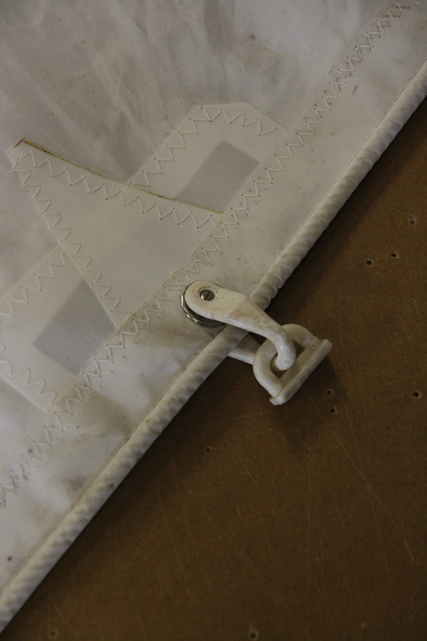
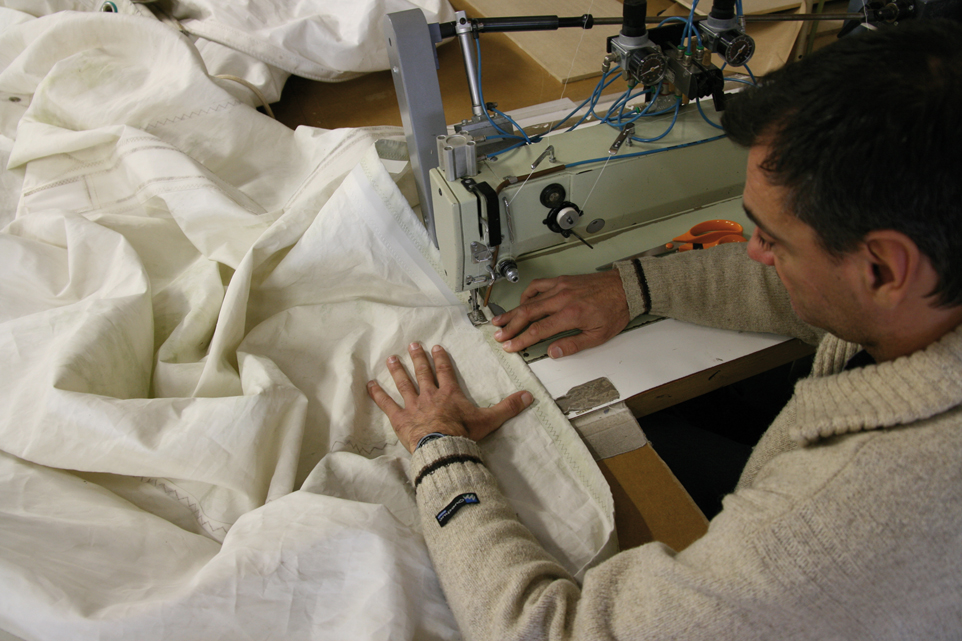
After removing the eyelet, a strip of cloth is sewn over the damaged spot. As for the spinnaker, the old cloth is cut out on the back of the patch. A triangular reinforcement is then sewn before a new eyelet is fitted. All that then remains is to screw the slider back on again.
Reef cringle ripped off
Why does this happen?
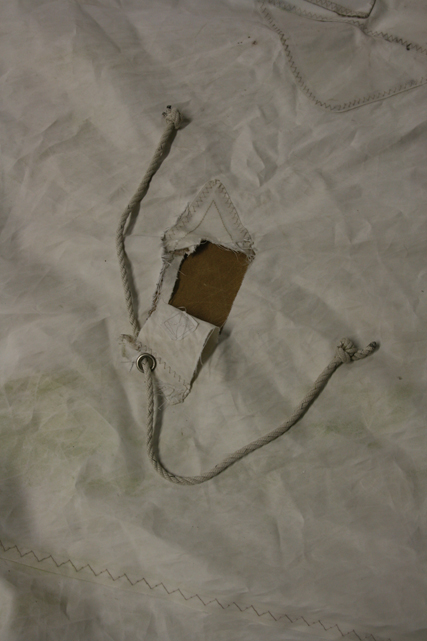
The context: after a long hard leg with 5 rolls in the genoa or jib and one reef in the mainsail, the wind drops. We unroll the headsail, shake out the reef...but the knot in the reefing line hasn’t been untied! No mercy here, the sail is torn.
What can you do aboard?
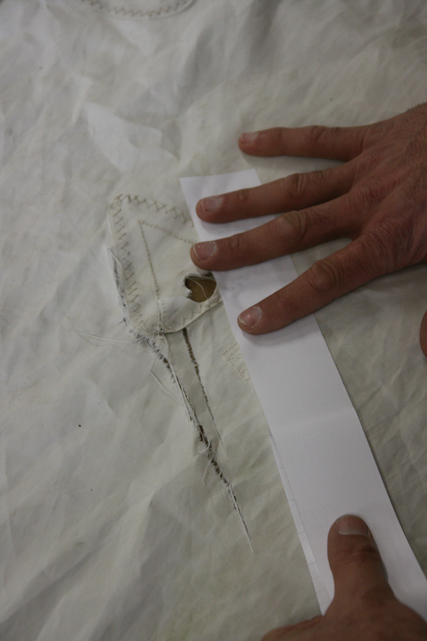
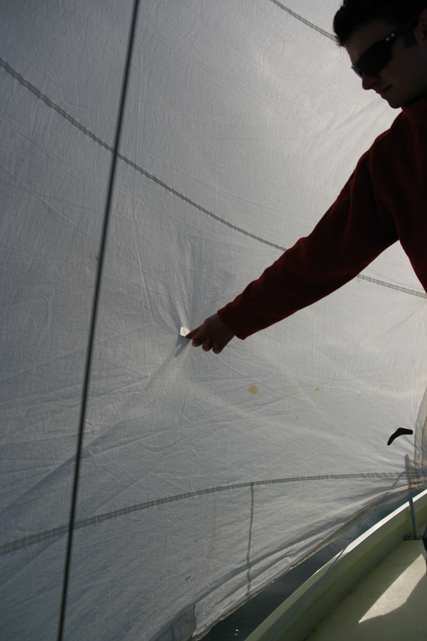
If the tear is smaller than the size of your hand, as in this picture, repair the cloth with adhesive on both sides of the sail, and continue sailing ‘gently’. If the damage to the mainsail is more extensive, take an additional reef (as long as there remains one above your head).
The pro’s diagnosis
“Almost every time, the skipper who brings me his sail claims that the knot was untied before taking in the halyard... Sorry, no, it wasn’t! We offer elastic lines to avoid this classic source of damage.
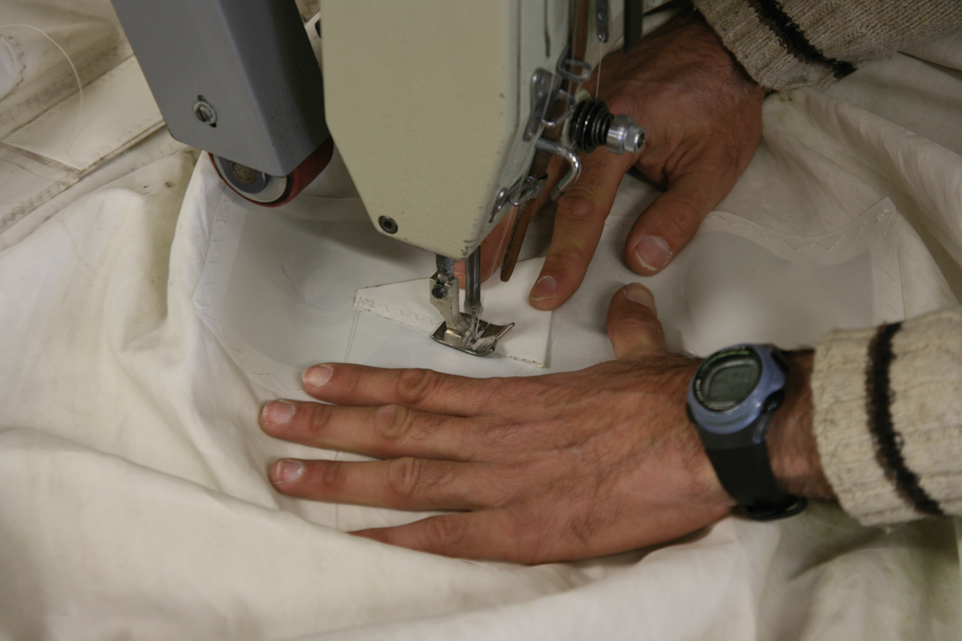
The sailmaker’s repair
A rectangle of sailcloth is cut out, stuck down then sewn. On the reverse side, the old cloth is cut out with scissors. A triangular reinforcement is sewn in place before fitting the reefing cringle.
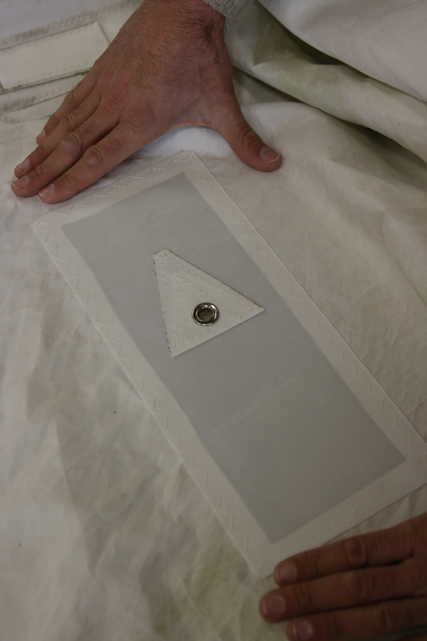
Torn batten pocket
Why does this happen?
Taking too long to take in a reef, or a problem which forces you to slow down: the mainsail flogs, causing violent movement in the batten area...until a batten pocket gives way.
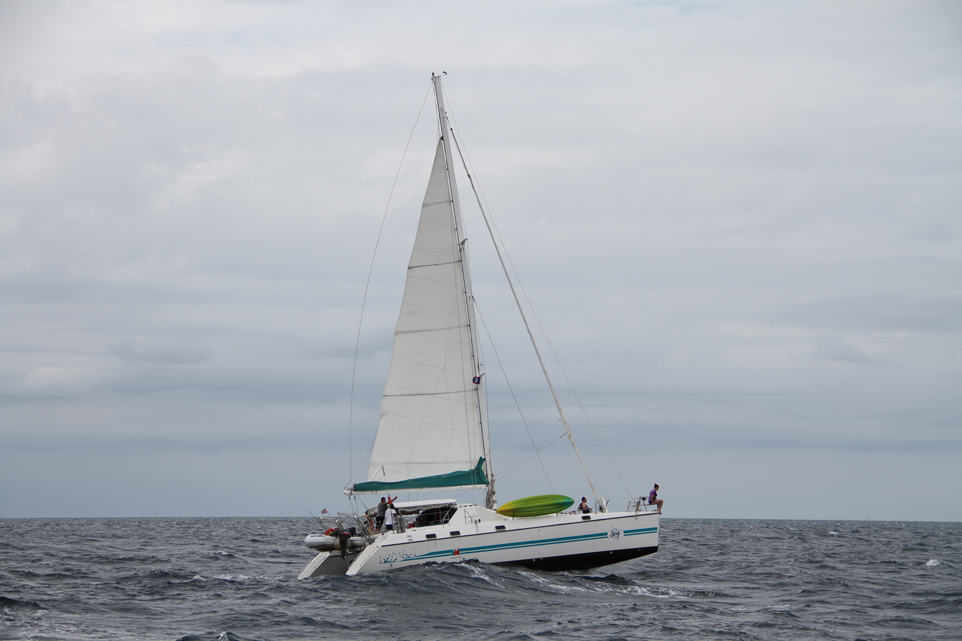
What can you do aboard?
Make a hole in the leech of the sail and the batten. Be careful with the fiberglass dust: it makes you itch! Then pass a simple light line to hold everything together. This solution will hold until the end of the cruise.
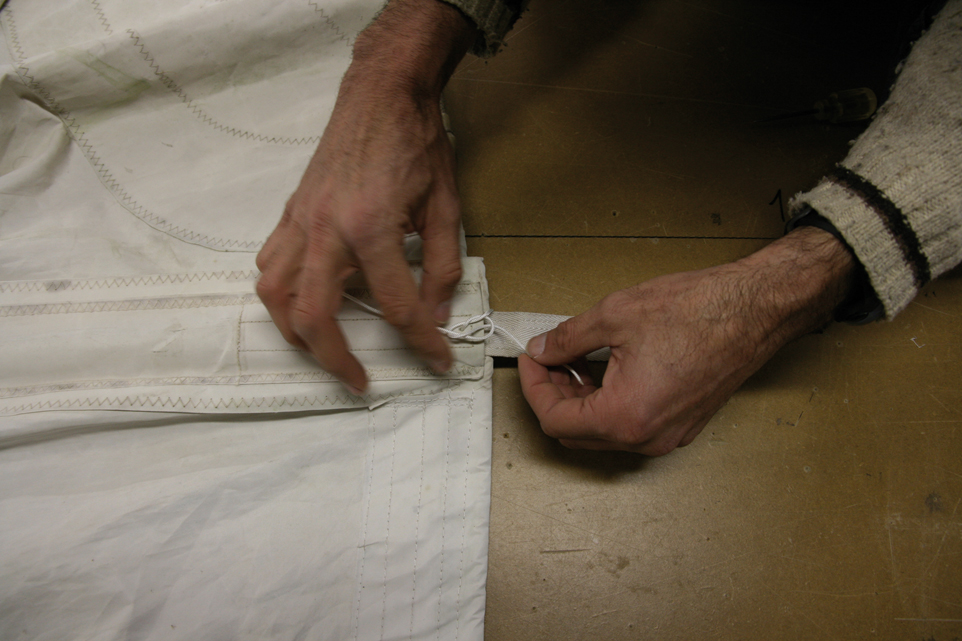
The pro’s diagnosis
“You absolutely must furl the sail quickly, to get things under control again: if the batten moves too far forward, it can puncture the sail for a second time, and even jam itself in the spreaders.
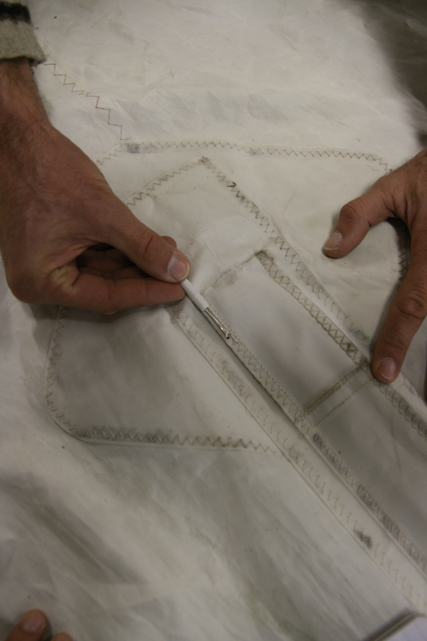
The sailmaker’s repair
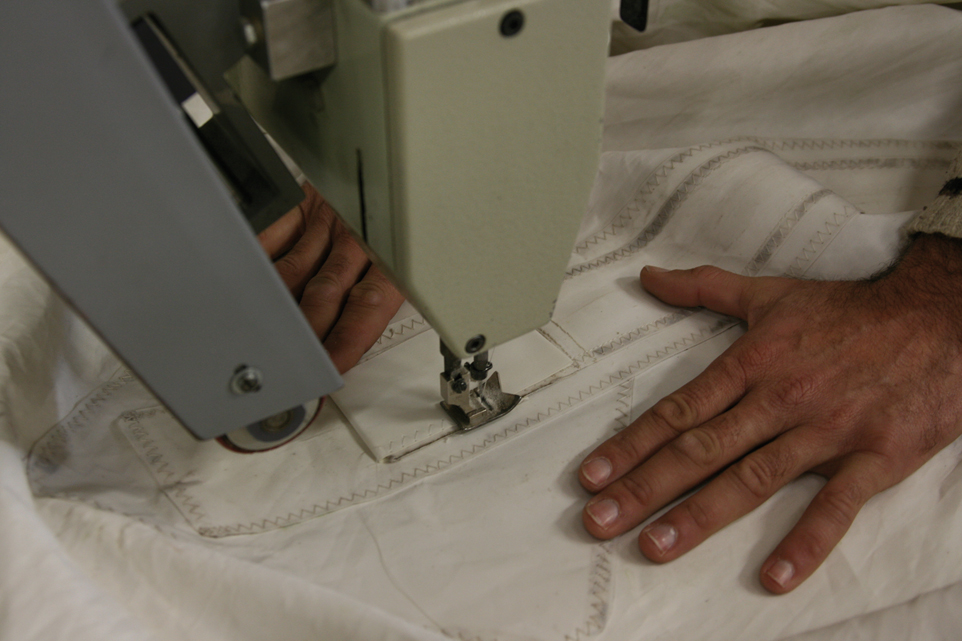
With his ‘quick-unpick’, a kind of needle with a cutting edge, the sailmaker removes the old stitches and the damaged patch. The new patch is cut out double, before being stuck down and sewn.
Torn leech
Why does this happen?
Prolonged flogging for the mainsail, leech line poorly adjusted for the genoa, and above all, poorly protected spreaders are the main causes of tears in the leech.
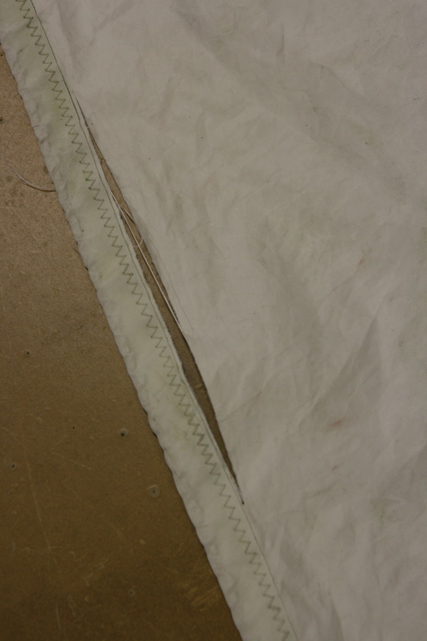
What can you do aboard?
Get out the Insignia again and stick on a long patch, on both sides. Remember to round off the corners of the patch with scissors, to avoid it peeling off.
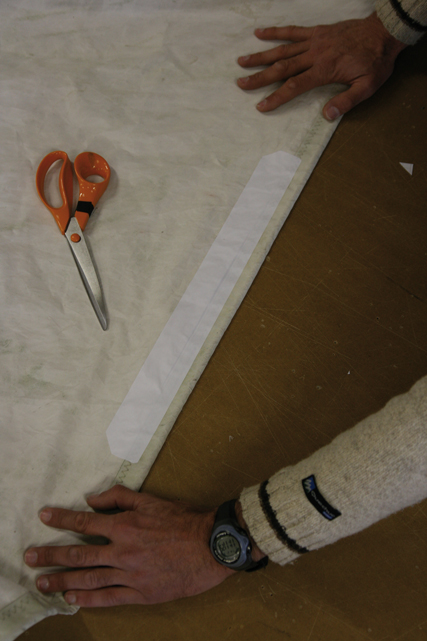
The pro’s diagnosis
“Damage which isn’t too serious, as the tear generally stops at the end of the panel. Aboard, it is essential to protect the ends of the spreaders, the clevis pins and the split rings on the pulpit end of the lifelines, and the bottlescrews of the shrouds furthest outboard.
The sailmaker’s repair
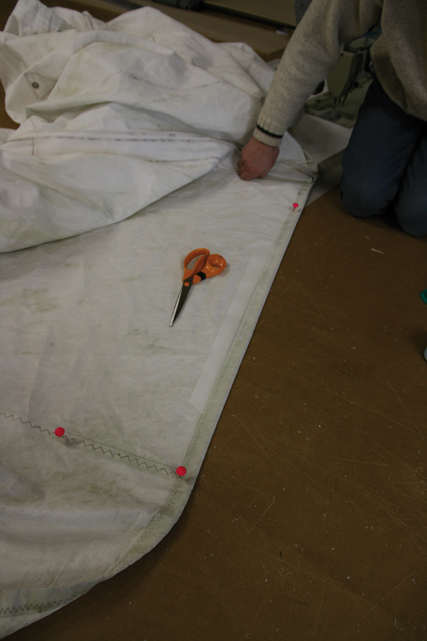
The sail is pinned out flat on the sail loft floor, through the stitch holes, as for the spinnaker. The stitching close to the tear is removed. A long, rectangular patch is stuck down, before being sewn. On the other side, the old cloth is cut away.
Canvas burnt by UV
Why does this happen?
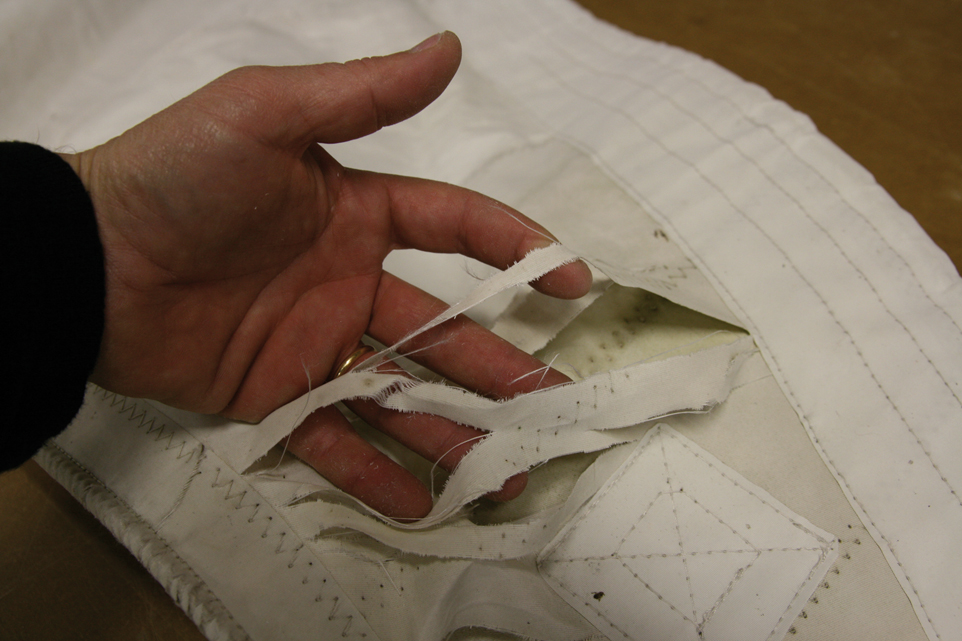
Before tearing, cloth which has been exposed for too long turns grey. Burnt in depth, the sail is ready to explode in the case of a significant force, either significant tension in the halyard, a long period spent flogging, or strong winds.
What can you do aboard?
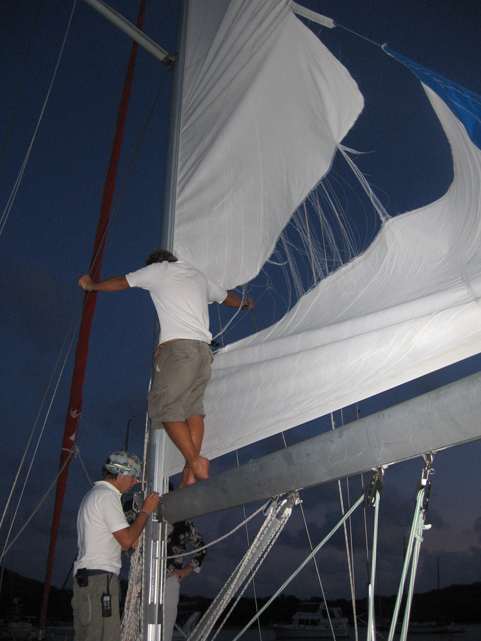
For this lightweight genoa, it’s too late: apart from furling the sail and changing it for another one if possible, you can’t do anything, the cloth is burnt and tears like paper.
The pro’s diagnosis
“If the burnt part is localized, I can replace the whole panel. In the case of a genoa leech, we are obliged to eat into the negative, meaning to cut into the area of the sail until we find undamaged cloth. Enough to make it last another two or three years.”
The sailmaker’s repair
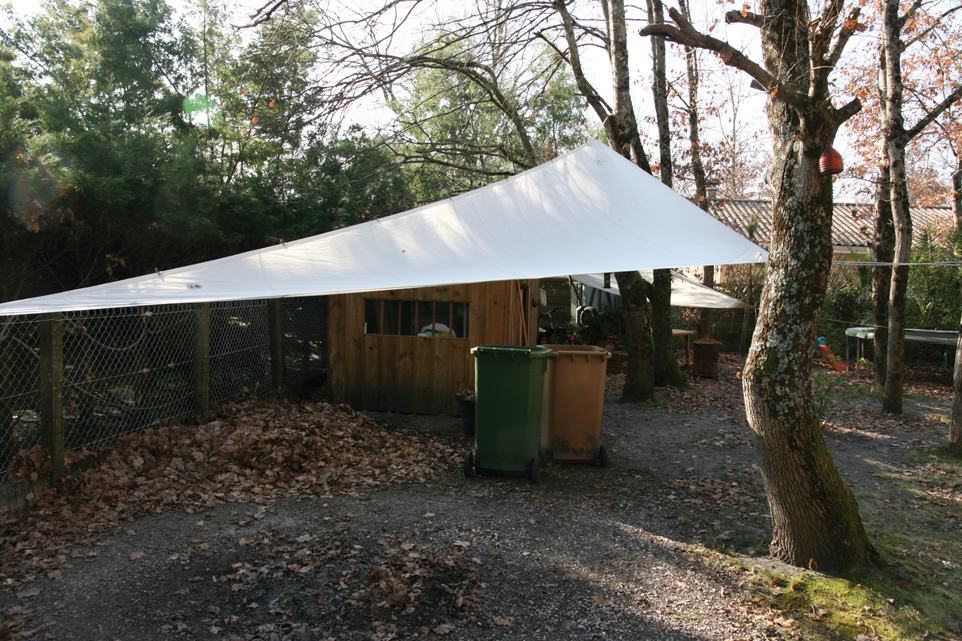
There isn’t one! The sails presented here are beyond repair. But they can have a second life: to bake in the sunshine a little longer in the garden, to provide shade, and protection from the rain.
What you should have aboard
A roll of Insignia, preferable of the same color as your sails.
A knife and/or a pair of scissors
A charged cordless drill and a few bits, or if not, a gimlet
Long-term cruisers will carry a sewing kit and some sailcloth. It’s a good idea also to slip a spare batten in the boom, which can replace your mainsail’s longest batten.
The professional’s opinion Jérôme Dupin, founder and manager of Starvoiles
“The main enemies of a sail are UV and flogging.”
The most frequent wear we notice on sails is due to ultraviolet rays. The first parts affected: the clew of roller furling genoas and the leeches of mainsails, which have been exposed without a cover for too long. Flogging is also lethal for sails. Motoring for long hours with the mainsail filling alternatively on one tack and the other can end up with the mainsail punctured just ahead of the battens. Then errors in use can cause damage. At the top of the list, the line you have forgotten to free when re-hoisting the sail, and the last slider: if the boom descends before it does...there is a risk of it tearing off.