
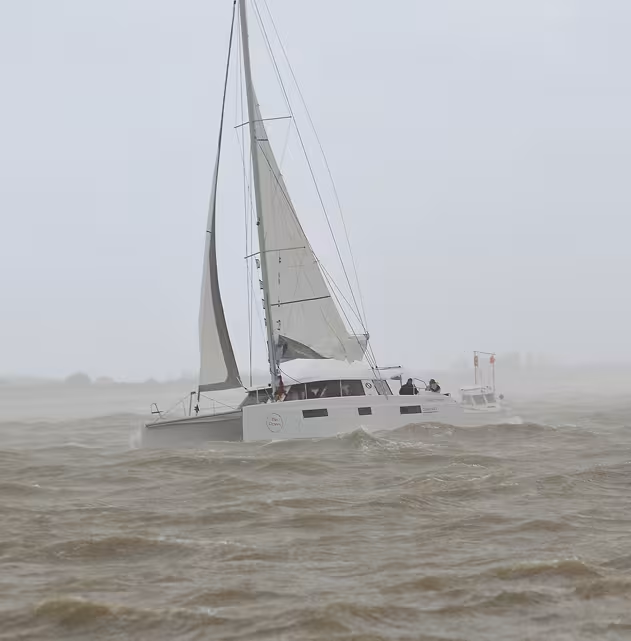

Before taking the decision to leave, and sometimes even during their voyage, most skippers taking their family to the other side of the world ask themselves if they have the abilities, and if they are not taking foolhardy risks for their loved ones. And let’s be clear about this, those people who don’t ask themselves questions about safety when ocean cruising shouldn’t really be afloat...
Risk is inherent in a voyage. It’s a fact. But experience shows that dramatic accidents are extremely rare and almost always the result of a succession of unforeseeable events, and poor reactions by the crew. Hence the importance of leaving with a well-prepared boat and well-trained crew.
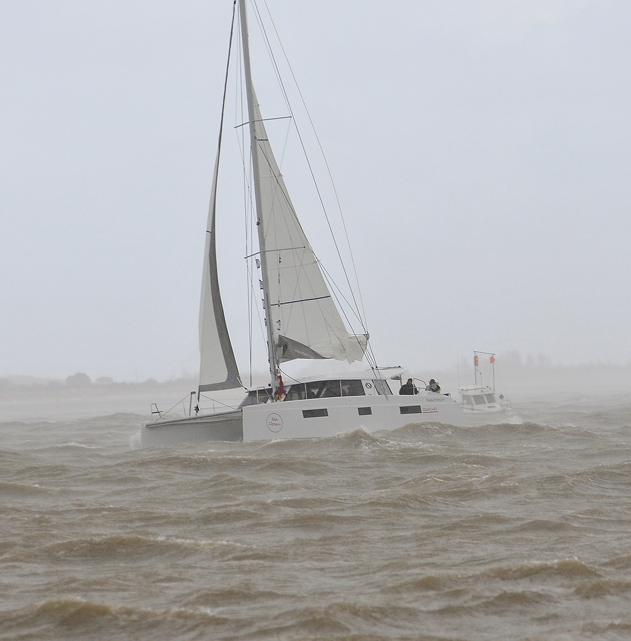
To cruise safely, the skipper must be experienced. And for this, he or she must sail and sail…
Safety – everything should be decided before leaving…
Here at the magazine, we have lost count of the number of families who had never sailed before, but set off on (and returned from) an Atlantic, Mediterranean or West Indian circuit with no problems, and thoroughly enjoyed their voyage. But to succeed, the important thing, whether you are starting from scratch or have a good knowledge of sailing, is to get suitable training for yourself and your crew. Because if there is only one person aboard who is capable of handling the boat, the slightest problem can have much more serious consequences...
This is why most cruising schools insist on training the whole crew, including the children. Thus everyone is capable of reacting in the various critical situations which can arise, such as the start of a fire, a (wo)man overboard, or quite simply to let the skipper rest after a hard night, if it’s just a question of taking in a reef or anchoring when you arrive in the bay of your dreams... The idea here is to allow everyone to be self-sufficient, and as a minimum, be able to recover a man overboard, furl and hoist the sails, anchor, plot a course and of course, call for help.
There are several possibilities for training yourself to sail a cruising multihull. Firstly, you can call on the services of genuine cruising schools, which are equipped with catamarans. Ideally, you should choose one where you will be sailing on a boat similar to the one in your dreams. This will allow you to validate your choice, and to get your bearings more easily. There are then several possible options, from a weekend course to a full week, with several other trainees, or by having the boat to yourselves, and even, why not, for a transat... The aim is, depending on your starting level, to get you to the wonderful, much-envied status of ‘skipper’, and thus independence...
Another solution: you have already bought your boat, and now you have to get to know it. Whatever your sailing experience, setting off in a boat you are not familiar with is no picnic. You are therefore strongly advised to call on a professional skipper, who will be able to help you get the measure of your new boat, and will accompany you for as long as it takes for you to be perfectly comfortable with your boat and its equipment. From experience, crews leaving from Europe with a skipper generally abandon him or her in the Canaries, certain that they have become independent, and with a good knowledge of their subject.
Finally, there is the most frequent case of people who have already sailed quite a lot in monohulls, but who want to reassure themselves and validate their choice of changing to a multihull. In this case, the simplest solution is to charter with a skipper, asking the charter company specifically for a skipper who is a good teacher, capable of teaching you all you need to know.
This is simple, effective, and will allow you to combine something useful (learning) with something pleasant (the holidays). What more could you ask for?
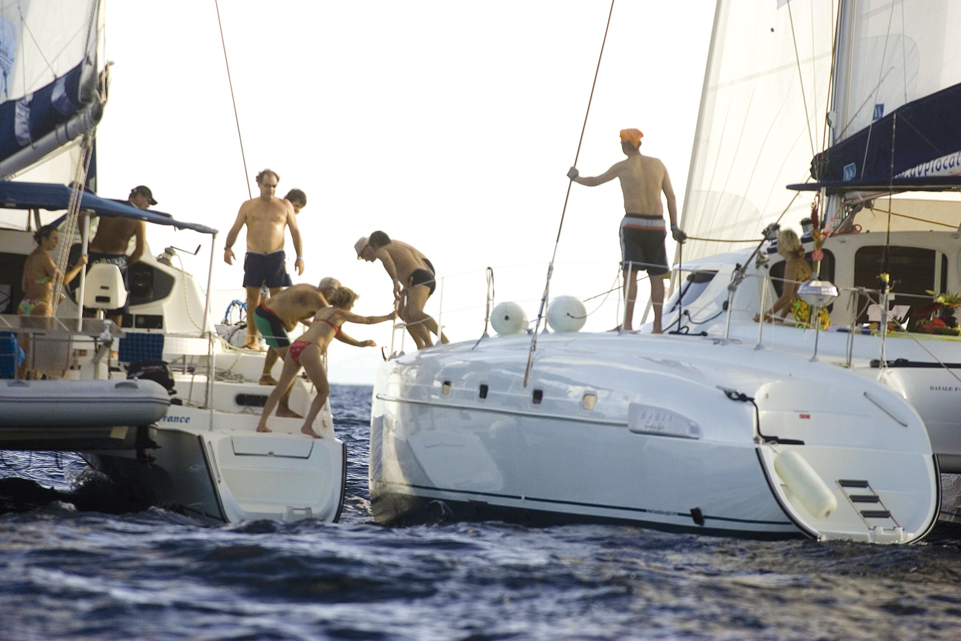
Avoid stressful situations as far as possible. Anticipation is the best friend of the skipper who wants to maintain safety aboard!
The essential courses
When considering ocean cruising, it is unthinkable to imagine going to sea without a good knowledge of the three elements on which your safety rests: the boat, the crew, the sea. You must therefore be able to maintain and repair your boat, look after your crew, and understand your environment.
Certain engine manufacturers or leisure sailors’ associations offer engine maintenance courses. This is a very useful course to do before you set off, to avoid finding yourself stuck in a lagoon on the other side of the world with a simple breakdown...that you don’t know how to repair. During these courses, you will also get useful advice about the spare parts to have aboard. Above and beyond safety, knowing how to maintain and/or repair the comfort elements which have become essential aboard our cruising boats – watermaker, plumbing or electrical elements, refrigeration, etc - will allow you to remain at anchor for longer, enjoying life, rather than desperately looking for an approved repairman in the heart of the Pacific.
When cruising the oceans, a small scratch can easily become infected if it is not treated correctly immediately. A medical course is therefore strongly advised, and will above all reassure everyone.
The final essential point for a successful project is a good knowledge of your environment. Meteorology is a subtle art, and you are advised to have a good knowledge of it when ocean cruising. You must be able to understand the weather files received aboard, as well as interpret them correctly, then know how to analyze them according to your own observations.
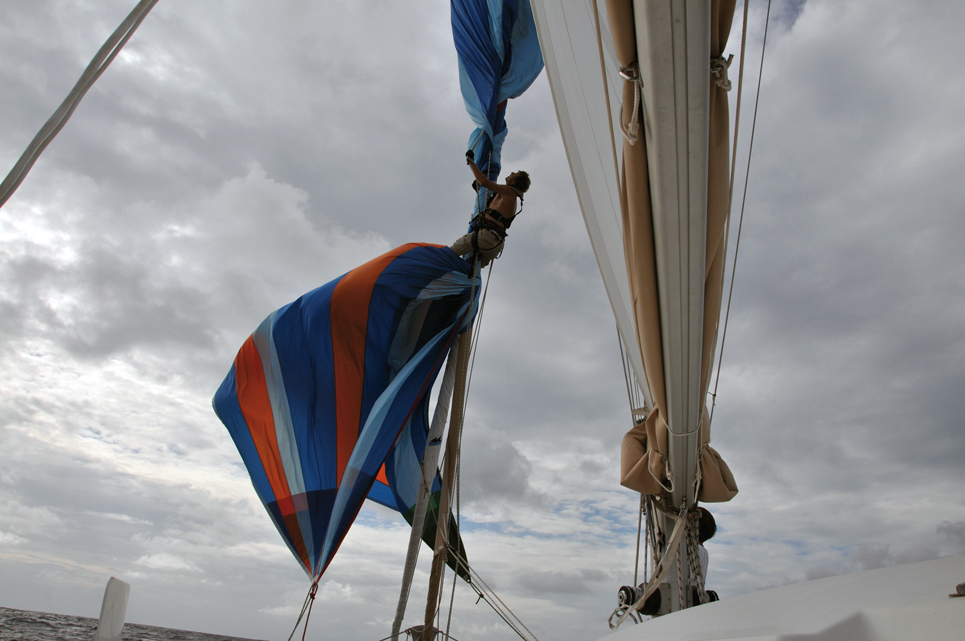
When sailing, anything can happen. You must know how to react quickly and correctly, without taking any risks.
And preparation?
Training is thus the be all and end all of safety aboard. But it will only be relatively helpful if you leave with a boat which is poorly prepared or not built for the cruise you have planned.
Before going to sea, it is essential to make sure your boat is in good condition. It must be perfectly seaworthy – structure, rig, engines, with full equipment for the cruise envisaged (safety and navigation equipment, documents, etc), serviced, maintained, up to date, and you must be familiar with their use. Well-known sailors make it a point of honor to remain independent in all circumstances, including after an accident, which means long preparation backed up with experience and a good dose of inventiveness.
The boat must be equipped to anticipate, with respect to the planned cruise. If you are a fan of all things high-tech, and your boat has a lot of this kind of equipment, you must nevertheless be able to manage without any of the aids you have fitted aboard. Taking in a reef without the help of electric winches, knowing how to position yourself on the chart without needing to switch on the GPS, or anchoring without the help of the windlass shouldn’t worry you. We would go even further and say that it is essential that you know how to do these things...
Navigation aids, such as the on-board electronics are...an aid to navigation. Over-equipping the boat may reassure the crew, but in itself, it is never a safety factor aboard. For navigation, as for everything else, safety is first and foremost a state of mind, nourished by caution, anticipation and humility. The only watchword worth anything is independence. No equipment must do something for you that you are not capable of doing yourself.
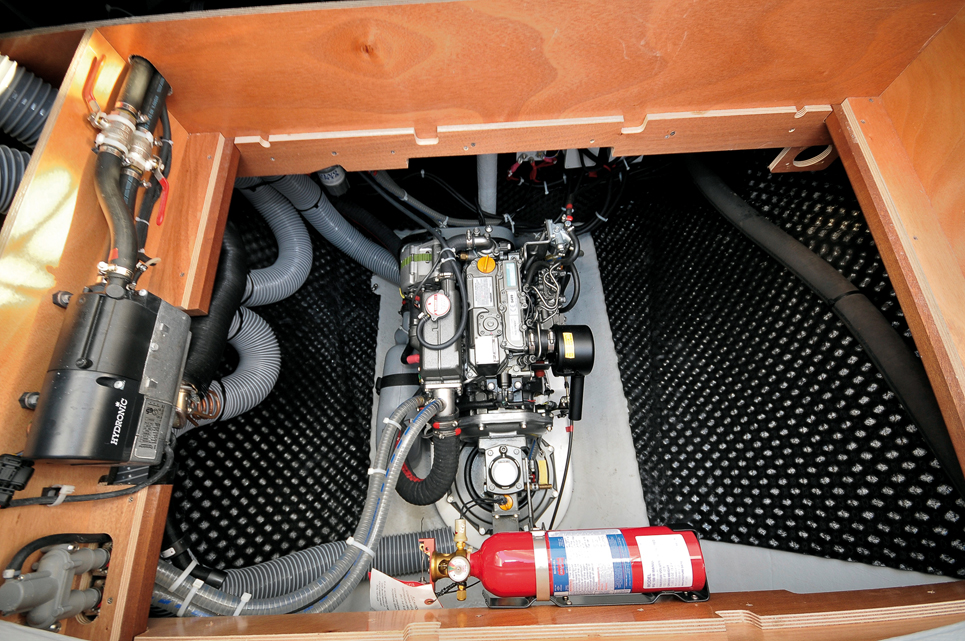
A layman is lost when faced with an engine. Yet after a coherent training course and equipped with the right tools and essential parts, everything can be repaired…
What makes a good skipper?
Being a good sailor, capable of sailing fast and far is not enough when blue-water cruising. A good skipper must also, and above all, be capable of listening to the needs and wishes of the other members of the crew. Life aboard a boat can be stressful for those who aren’t used to it, and there is no point in adding to this stress. Even – and especially – in an emergency, shouting must be prohibited aboard, and the skipper’s calmness, even if it is only a pretense, is essential for everyone’s safety.
Being clipped on aboard a boat is not negotiable, especially in a family crew. The skipper/dad must set an example...
And if after you have prepared your boat, your crew and the plan for your cruise a doubt remains, don’t set off. When the skipper asks him or herself: “will it or won’t it?” it’s time to turn around or remain in the harbor. Turning back is also part of independence...
A final point, but not the least important, is that it is useless to wait for the crew to ‘mutiny’ before you change your plans. Everyone aboard must be able to put forward their point of view, even the youngsters... And decisions involving everyone must be taken by a vote, so that everyone feels really involved in the family adventure.
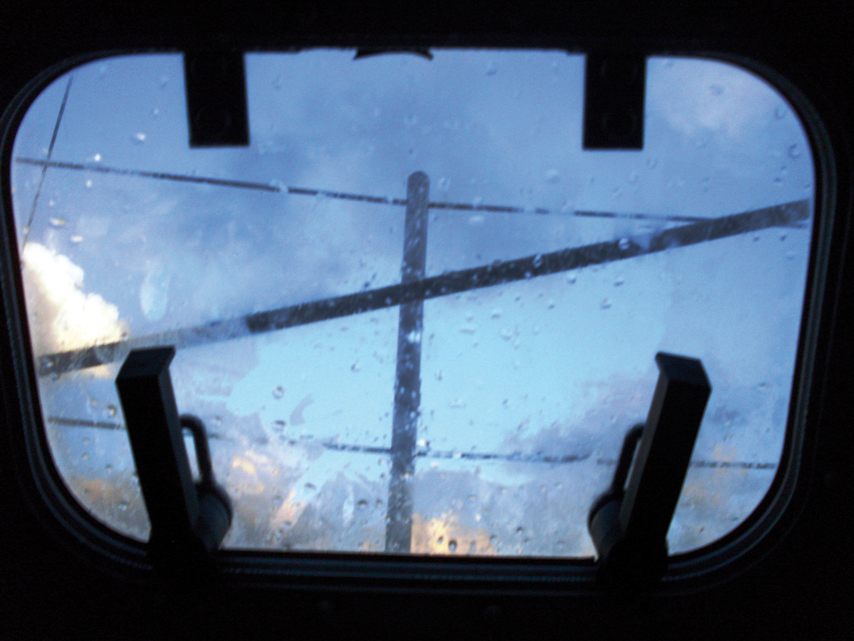
Bad weather can quickly frighten people at sea. Knowing how to read a weather file, and anticipate a deterioration in the conditions can get you out of tricky situations…
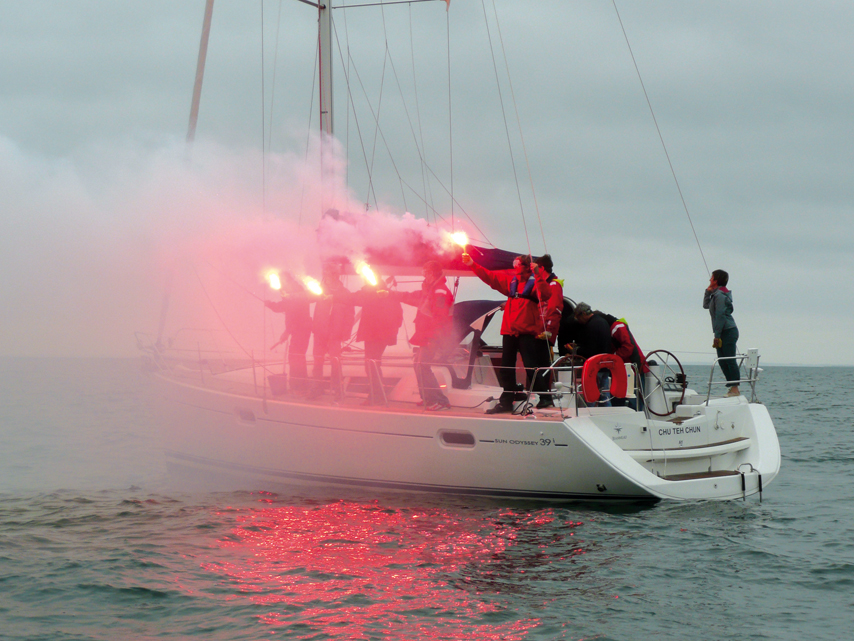
Safety is everyone’s business aboard a boat, hence the importance of getting good training for the whole crew.
