

Electricity
First things first, let's start with the electricity. To avoid fantasies and delusions, and without using complicated formulae or abstruse figures, let's go over the basics. Three facts need to be established: an estimation of your consumption, an evaluation of your storage capacity, and your means for recharging. In 'Sailing' mode, consumption is quite easy to estimate. Two items can however significantly alter the total in this mode: the automatic pilot and the frequency of use of the radar, two major consumers which must be monitored. Everything then is a question of your way of life. Do you want to live 'just like at home', or will you seize the opportunity to adopt a more responsible, less consumerist attitude? Although the arrival of LEDs has almost freed us from any constraints in terms of lighting, the multiplication of the number of screens and even worse, air conditioning, have again updated the crucial question of electrical self-sufficiency. Before rushing into the expensive purchase of a generator, a third internal combustion engine aboard, requiring additional fuel and maintenance, let's have a look at alternative sources, or those already aboard.
First of all, there are the on-board engines. Although their standard alternators are not very powerful, they can without doubt be changed for more powerful models, or doubled up. Is the charging time still too long? An electronic box called an alternator booster maintains a high battery charging rate for as long as possible until they are fully charged.
Solar panels, the now essential companions on our nautical voyages, have progressed enormously in terms of efficiency over the past ten years, while their price has halved in the last four years! Rigid or flexible, we can put them everywhere: on the davits, the bimini, the coachroof... On stormy days with little sunshine, they can be supplemented by the faithful wind generator, whose noise pollution in the anchorage is now just (or almost) a bad memory! The development of the blade shape and precision mechanics have helped this aspect.
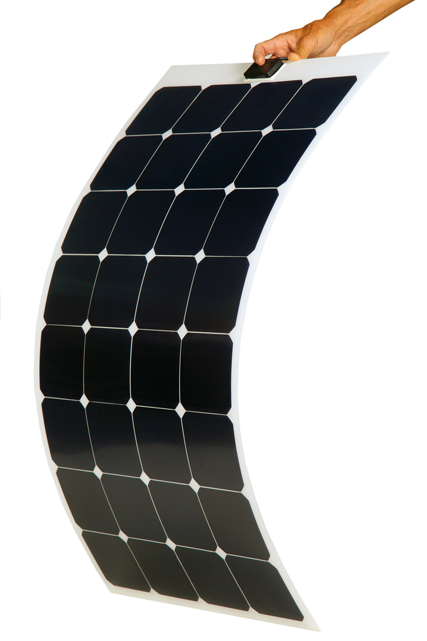
To fill up with energy, nothing is better than solar panels: they are efficient and silent, and you can find all types - flexible, rigid, adjustable or fixed!
Finally, the last trump card for mile-eaters is the hydro-generator. Various models are available, favouring robustness or the low effect on the performance of your proud steed, which will all turn your multihull into a power station, once you have reached speeds of 7-8 knots. Ideal on an ocean voyage or one of at least a certain distance, but of course completely inoperative in an anchorage!
But once you have produced all this electricity, you must be able to store it. The revolution in this field, as in many others (such as motor cars, aeronautics or telephony), is called Lithium-Ion technology. A slow development, as the cost is significant, but one which should accelerate, as prices have dropped by 20% in two years, and they could lose another 35% over the next ten years. Apart from their very light weight (3 to 4 times lighter than our traditional batteries), their compactness is a precious advantage in the limited space of a boat, even a multihull, whatever its size. Better still, Lithium-Ion batteries can be discharged to 20% of their capacity and recharged much faster than a gel battery, and can withstand four to five times more charge-discharge cycles, up to 3,000, thus increasing their life span by the same amount. More capacity in less space, lighter, rechargeable faster and lasting longer _ all that prevents us seeing these batteries becoming essential equipment aboard is the prohibitive final cost. Or at least it was up until now, because to the already high purchase price had to be added, in the case of a refit, that of numerous peripherals (charger, alternator, battery management system...) which had to be changed for specific, compatible models. Today, perfectly interchangeable Lithium-Ion batteries, called 'plug-ins', are appearing on the market, which require no other modifications to the system. If this is validated long-term, the choice will quickly become essential.
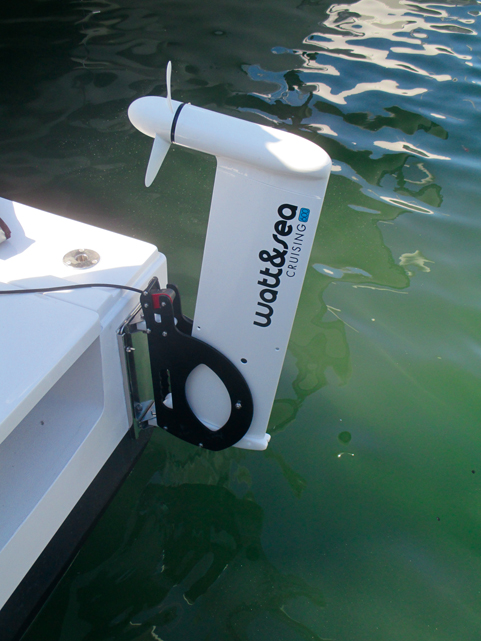
When sailing, the hydro-generator solution can be worthwhile.
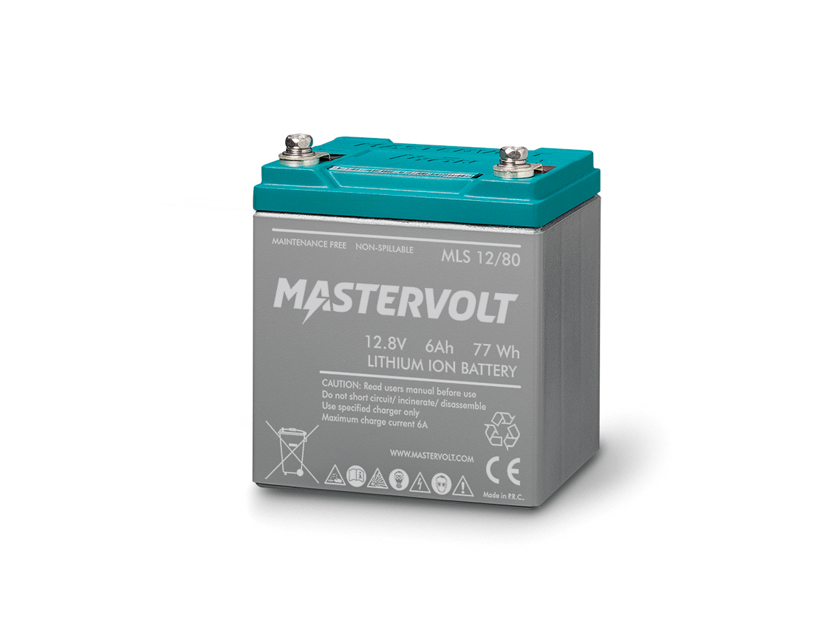
The new batteries are not just more high-performance, but also lighter and with an unequalled life span.
Water
Now the electricity dossier has been dealt with, let's tackle the simplest, but without a doubt the most crucial one, that of water. Whatever the water tank capacities, they are not infinite, and speed aficionados don't like the idea of carrying a ton of water permanently. Although for long passages extra tanks can temporarily increase the usual reserves, you must have the space to stow them _ above all not in the forepeaks, as you risk completely upsetting the boat's trim and thus reducing its safety in rough seas. Watermakers have therefore inevitably colonized the lockers under our berths, or our technical areas! They must be deliberately chosen oversized (at least 100 l/h), as we know that in warm waters, their production will be far from the advertised nominal capacity. An essential piece of equipment therefore, in order to remain independent, but one which has a few counter-productive disadvantages: the need for electrical energy to make it work, mechanics which require frequent maintenance, purchase of spare parts... Fortunately, there is the rain. The coachroof area on our catamarans or, why not, our solar panels, should allow us to collect a few dozen litres of water during tropical squalls. A little observation, astuteness and diy suffice to obtain a very effective water-collecting system aboard your catamaran. All that remains is to pray for a lot of rain...but not too often either!
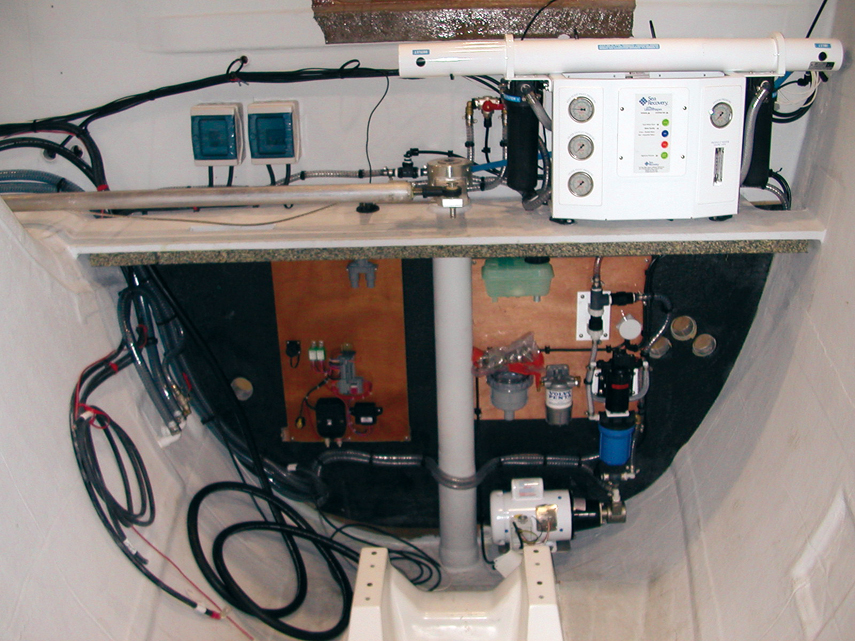
A watermaker is essential, to allow you to obtain fresh water from sea water. Perfect for being as independent as possible.
And financial independence?
Beyond the technical aspects, finances remain at the heart of the matter. If leaving for a long-term voyage were reserved for people with private means, society would be even more unfair than we think it is, and it's already bad enough as it is. Fortunately numerous solutions exist, alternatives to a providential win of 1.5 billion dollars on the Powerball. Starting with a sabbatical year, to be negotiated with your boss or your associates. A year which can also be turned into a few months, if your professional activity is highly seasonal. Free time which can also be interspersed with work periods, if important events occur. Affordable air tickets and means of communication whose performance curve is inversely proportional to their ever-decreasing costs (the price of a minute's communication by satellite has been divided by ten over the past twenty years) have opened the way to new ways of working.
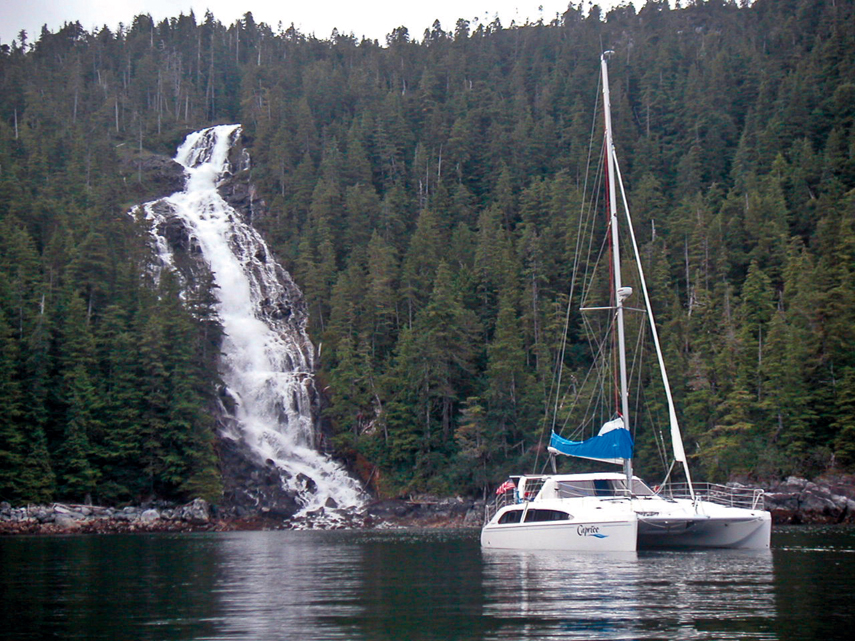
Wherever you sail, it is important to be independent to enjoy it to the full…
But also
But be careful, self-sufficiency doesn't mean returning to the Stone Age... Thus certain cruisers can't envisage living aboard without a washing machine: more for the sheets and bath towels than for clothes in the most popular case of a cruise in the tropics. These people don't want to have to visit a port to do the washing, search for a laundromat, find change, etc... Others on the contrary see it as a good opportunity to explore the towns and villages visited, to use the rudiments of the local language, to ask for directions, or a place to leave their bag while the washing is being done, to drink a coffee, meet some new people...
When you produce your own water and electricity without (too much) help from fossil fuels, the utopia of complete independence is close. So be careful not to spoil things with your trash. This begins with your provisioning - take care to apply the 'minimum and recyclable packaging' criteria to your purchases. Let's not clutter the small islands with our waste, and let's feed the fish with everything we can no longer consume, and which will they will enjoy.
Independence is also freedom. That of imposing as few constraints as possible on ourselves. Especially that of essential appointments, which at best require uncomfortable sailing, and at worst taking risks with the weather conditions. We haven't left everything behind, taken professional and financial risks, been as much envied as taken for madmen/women, to impose 300 miles to windward in the trade winds on ourselves, just to pick up the mother-in-law from the airport. There are airports everywhere, let her manage by herself to meet us where we are! This is also independence!
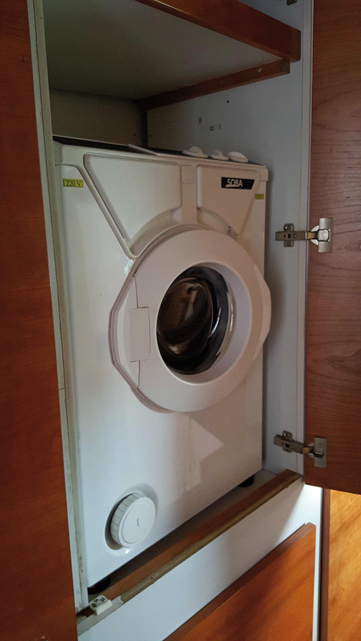
Being self-sufficient is good. But you don't have to give up modern comforts for it!
