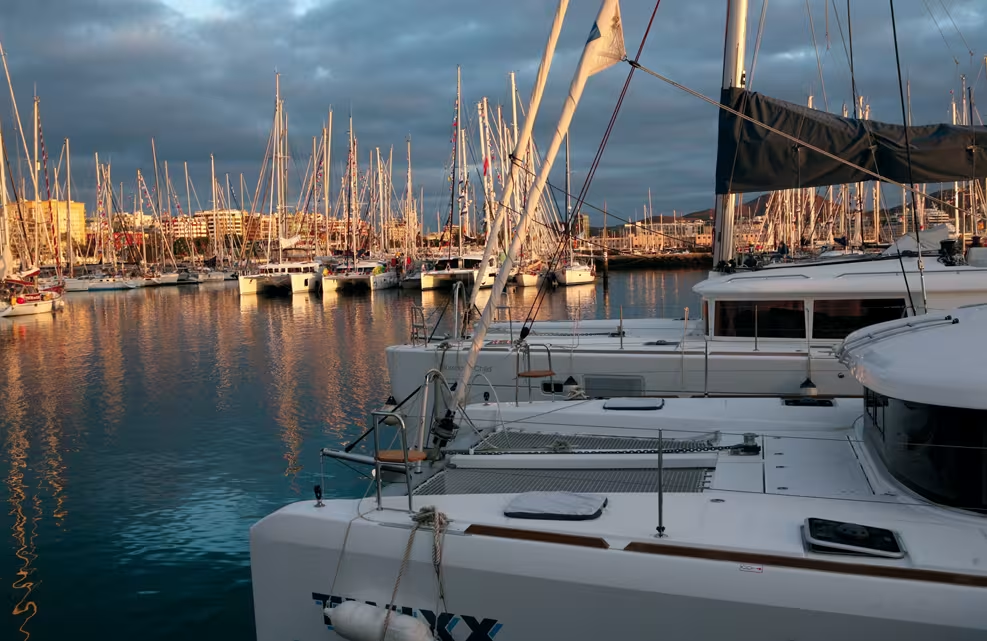
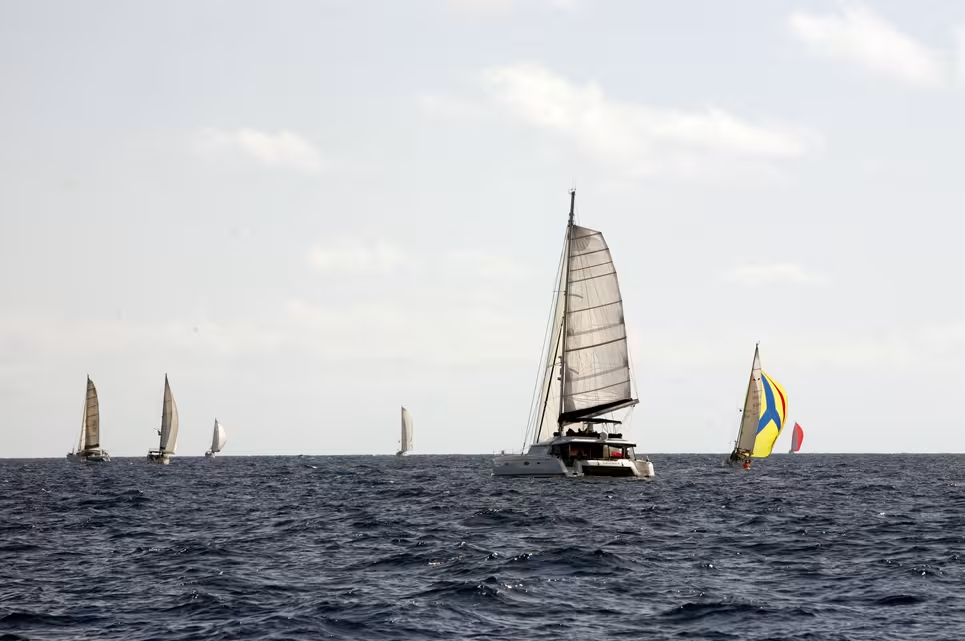
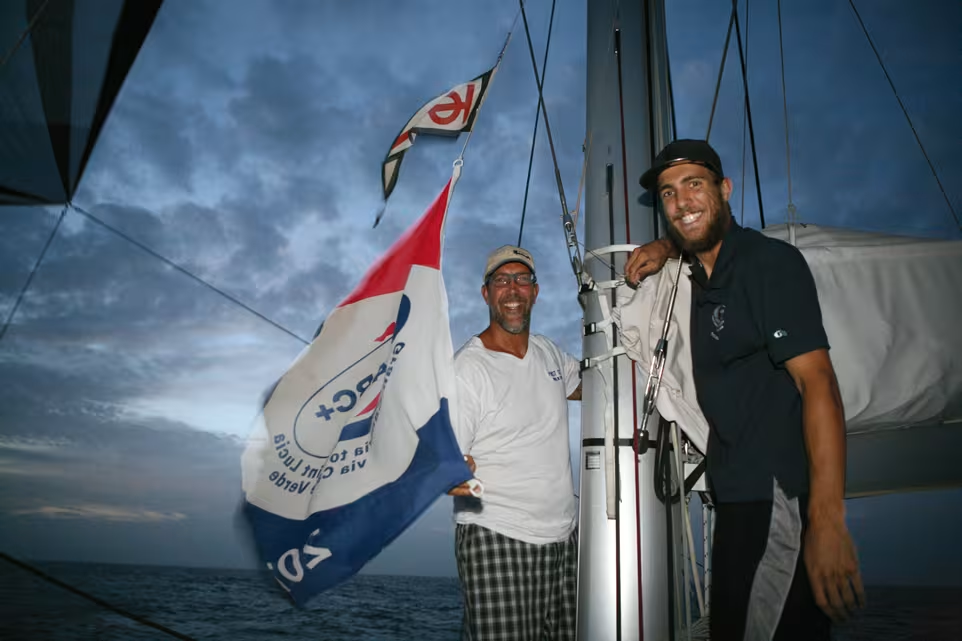
Las Palmas marina, in the Canaries, was agitated. More than 80 boats of all nationalities had met up to cross the Atlantic, via Cape Verde, as part of the ARC+, a new option offered to participants in the ARC, which generally crosses directly to St. Lucia. The departure was just three days away, and when I embarked aboard First Step, the Lagoon 400 S2 belonging to Martin and his son Micha, chaos reigned aboard. The welcome was convivial, even though I felt a certain amount of tension, linked to the imminence of the departure and the list of things to do, which was growing longer. Like many participants, this father and son were going to cross the Atlantic for the first time. This voyage, a kind of initiatory trip, would reinforce the bonds which unite them. At 24, Micha was at a crossroads: he would either return in a year’s time to take over the family business, or decide to find his own way. Since their departure, 4 months earlier, from the Baltic Sea in Germany, everything had gone well, and the 2,000 miles they had already covered had created a harmony between them. After endless preparations: provisioning, checking the spare parts aboard, small repairs, and above all, stowage, it was time for the big departure. “I bought this catamaran new,” Martin explained. “However the number of things to be prepared on a new boat has amazed me. I thought that everything would be simple... I intend to sell the boat when we return, that’s why we are quite fussy about maintenance.”
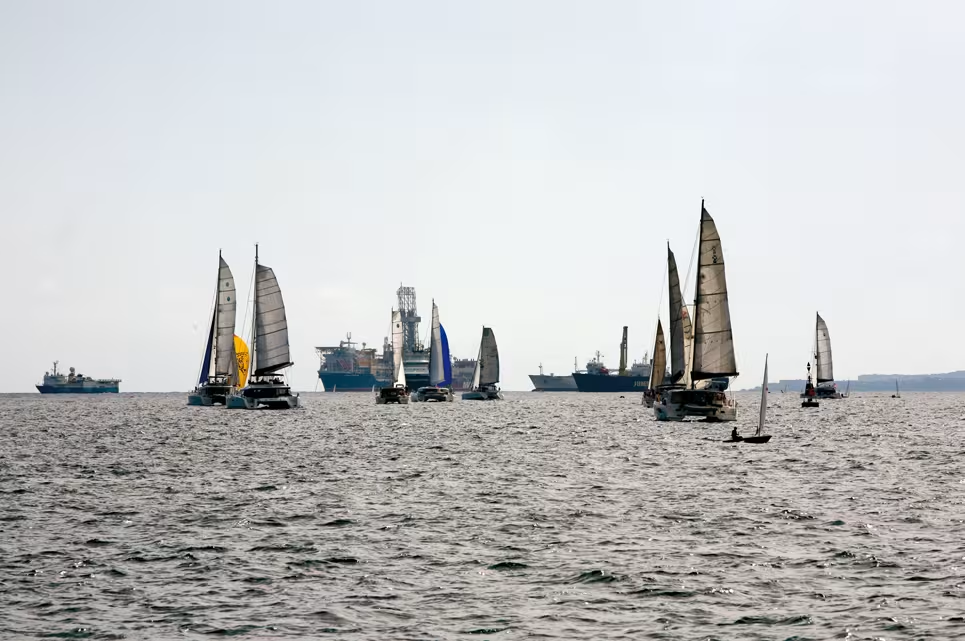
It was true that since my arrival two days earlier, Martin and Micha had put more effort into polishing the hull and renovating the stainless steel fittings than dealing with the purely technical details. The last day was dedicated to checking the Iridium and reception of the e-mails which would allow us to get weather information at sea. A general briefing was held in the local Yacht Club, and finally Martin and Micha applied themselves to painting the boat’s name on the jetty wall, as is the tradition! As soon as this work was completed, we finally cast off. Leaving the marina was a very emotional moment. The foghorns added to the palpable tension. The trade winds were present – 25 knots on the dial! And in the right direction: 210°, directly towards Cape Verde! However we had to slalom between the enormous cargo ships at anchor off Las Palmas, and the other competitors. We decided to hoist the Parasailor, a kind of magic spinnaker whose tube nicely replaces a spinnaker pole and which allows the boat to sail deep downwind, at 160° to the wind. “First Step” gathered speed, and we were soon sailing at 6.5 knots in a sea which was still calm. A myriad of dolphins leapt joyfully around us; it was a magic moment. Next to us, the Camper & Nicholson 48 “Lerina”, one of the only two French boats entered in this rally, unrolled its genoa; we would see them again in Cape Verde.
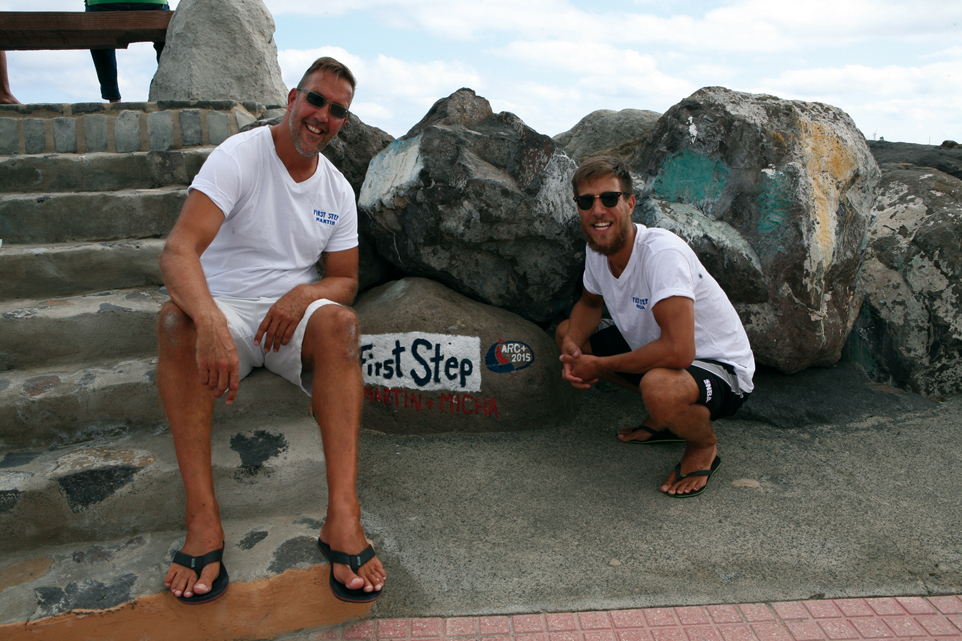
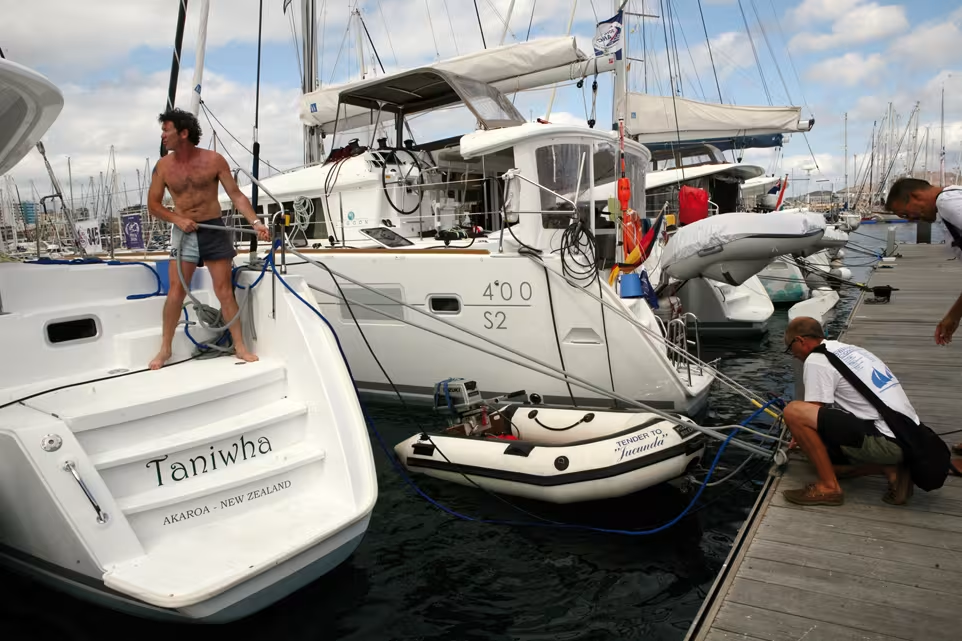
It’s the tradition: you must paint your boat’s name on the jetty wall before setting off.
Life on passage
We got our bearings aboard. The three of us each had our own cabin with heads; we didn't get in each other's way. Whilst we were exploring the numerous functions of the Raymarine instrument system, notably the MOB button, which my hosts had never tested, we heard an enormous craaack, and saw the Parasailor collapse, fortunately only partially. We hurried to furl it and found that the stainless steel halyard guide had failed. This part had just been refitted by a team in Las Palmas – well done lads! Martin was furious. We therefore decided to hoist the mainsail with the first reef, and unroll the genoa. Of course we couldn’t follow the same course, and spent the whole of the first night with our bows pointing towards the Sahara and Mauritania. In the evening, we organized four hour watches; I would be on deck from 5am to 9am the following morning. Before going to bed, we took in a second reef, as the trade wind was blowing at a steady 25 knots, with regular gusts of over 30. The autopilot worked perfectly and the cat remained comfortable, despite the increasing swell. As planned, at 5am I took over the watch from Micha, who had shaken out a reef during the night. At around 6.30am I in turn decided to shake out the last reef, as the wind had dropped to 15 knots. The operation was carried out downwind, with no problems. But at around 10am, whilst the rest of the crew were still sleeping, the wind suddenly got up to 23 knots. Under full sail and at 90° to the wind, the Lagoon raced down the swell, surfing at 12 knots! So I decided to take in a reef, which was tricky in these conditions, downwind, as I didn’t want to damage the equipment. I therefore luffed, whilst sheeting in the genoa, took in the reef and got back on course. Everything went well, but Martin had been woken during the commotion of the maneuver. He was worried; he wasn’t used to guests deciding to reduce sail on his boat on their own...
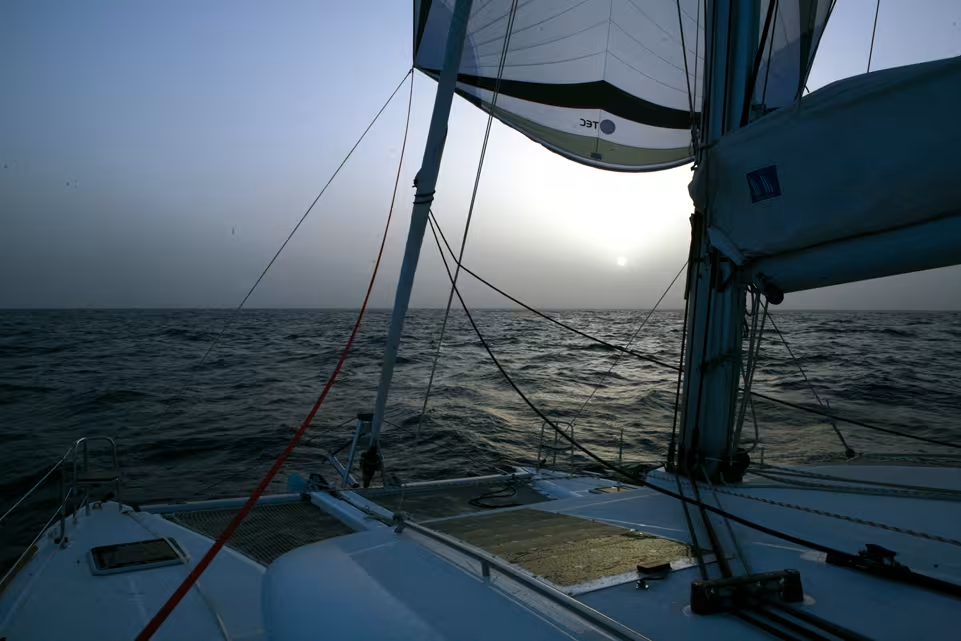
During the day, Martin had to carry out repairs – between the hydrogenerator which was not giving as much output as it should and one of the winches which required his attention, I felt that his morale was going up and down like a yoyo. On the third day, we hoisted the Parasailor on the Code 0 halyard, and in strong, steady trade winds covered up to 180 miles in 24 hours, not bad for a cat as comfortable as this one. With the swell sometimes reaching 4 meters, we surfed, surrounded by flying fish. Aperitifs and card games punctuated daily life, the watches followed each other smoothly and I spent whole nights contemplating the stars, in mild trade wind conditions conducive to meditation. There were no more problems to spoil our pleasure. Every day, we downloaded a weather forecast in plain language, provided by the organizers, as well as the positions of the other boats. Because although my hosts weren’t motivated by sporting aims, a classification would nevertheless be published at the finish, between all the catamarans, who were allowed to use their engines, and between the few monohulls which had chosen to enroll in the race category, and would avoid using the iron topsail. Even though the racing aspect was not very serious, I noted that Micha and Martin were getting into the spirit, and liked to at least keep up an honorable position. On the evening of the sixth day, the coasts of Cape Verde appeared on the horizon, in a haze of Saharan sand, already described by the first sailors - an ochre colored sand which also covered the boat. Welcomed by the ARC staff, we tied up “First Step” in Mindelo marina and set out to sample the tasty lobsters in the local bar. No problems with the formalities; the organizers took care of everything! Despite a few problems at the start, this passage finally left us all with some excellent memories. Meanwhile, one of the participants had sunk, following a non-identified leak; the crew were picked up by a cargo ship. Which put our little problems into perspective!
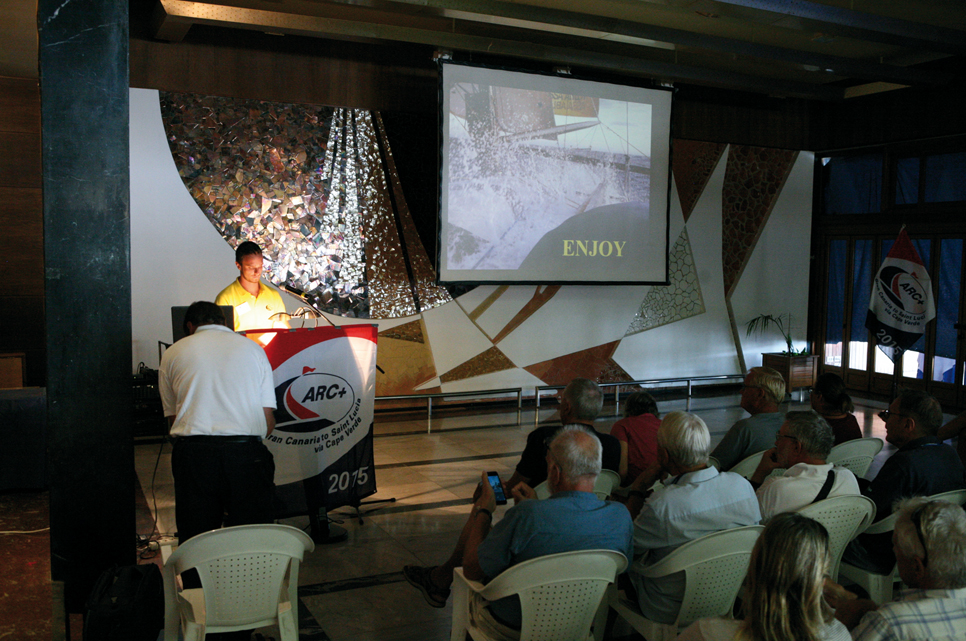
The organization’s briefing before the departure allows you to get into the swing of things and get all the essential information.
Crossing with a rally - and why not you?
First of all, a few figures. Of the 259 boats entered in the ARC this year, 38 were multihulls, including one trimaran, a French Neel 45, La Caravelle. In the multihull fleet, Lagoon had the lion’s share, with 20 boats of all sizes, from the 380 to the 620. Which goes to show that all multihull owners can be tempted by the adventure. Moreover it was entertaining to note the disparities between the stories and aims of the different crews. Aboard Lir, a Fountaine Pajot Victoria 67 chartered by a British sailing club, just four people – plus a 500cc motorbike secured in the cockpit and an exercise bike on the flybridge – occupied the vast area, whilst I counted eight crew, mostly built like rugby forwards, and at least fifteen jerrycans of diesel, aboard the Lavezzi 40 from the Cook Islands, Sea Fantasy. You meet certain crews whose members didn’t know each other previously, recruited on the internet by a captain on a solo sabbatical year. Some boats stop in the West Indies, others set off to sail around the world. Some crews have the urge to race, and enter this category, whilst others come above all for the cruise. A few will be celebrating their twentieth crossing, whilst for many, this will be a first. In all, 44 different nationalities were represented – young, old, men, women, children... So, why not you? The World Cruising Club is not the only structure offering this type of rally. Its founder, Jimmy Cornell (portrait in MW N° 146), has left and has created Cornell Sailing, which offers numerous ‘Odysseys’. The advantages of the rally formula, (which may put off certain cruising sailors anxious to protect their share of wild adventures, dreams and solitude), are numerous: firstly, the organizers provide lots of information to help you prepare your voyage. And as we often remind you, good preparation is the key to a successful voyage. Provisioning, technical preparation, practical and tourist information about the possible stopovers, weather – the concept can save you quite a bit of time, especially as the organization provides real assistance locally, in case of damage or various needs. Having a marina berth booked at the finish also offers a certain comfort, and the customs formalities are greatly simplified. The ARC, like most rally organizers, requires its participants to acquire a quite exhaustive list of safety equipment – restricting, but never excessive. Nowadays, is it not obvious that you should envisage this type of passage with at least a satellite phone and an Epirb? It’s true that the entry fee (around 900 euros for a catamaran such as First Step) and the safety equipment constitute a significant additional budget. But when you have invested in a sailing boat for a long voyage, this extra cost can prove to be a real advantage for the success of your project when you are not completely sure of yourself. Knowing that there are other boats around you when you are on the high seas is also reassuring. We recently saw on the social networks a video of a sailing boat entered in a rally sinking because of a non-identified leak. The crew was picked up by a participant close by. And certain waters with a reputation for being dangerous will be safer in a fleet. Finally, the rally provides a certain amount of conviviality, with various aperitifs and evenings in which of course no one is obliged to participate, and whose social side will appeal to some but frighten away others... And it is now official, a rally reserved exclusively for production multihulls, the Multi-Transat, will set off from the Canaries on 12th November 2016, with as usual a pure racing category and an ‘Open’ category, with limited but accepted use of the engines. Multihulls World is of course a partner in this wonderful project, and we hope to see a lot of you on the start line...
More information on:
www.cornellsailing.com
www.worldcruising.com
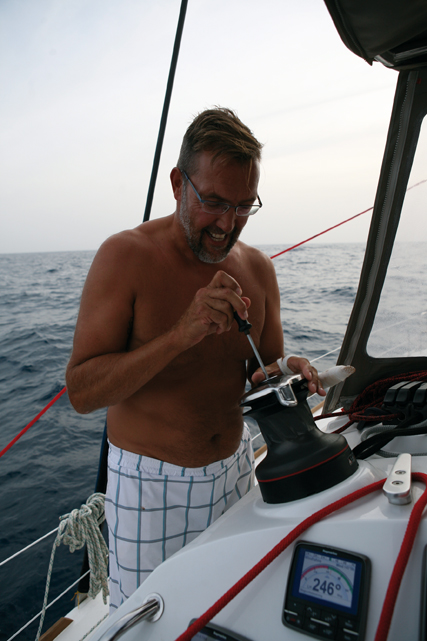
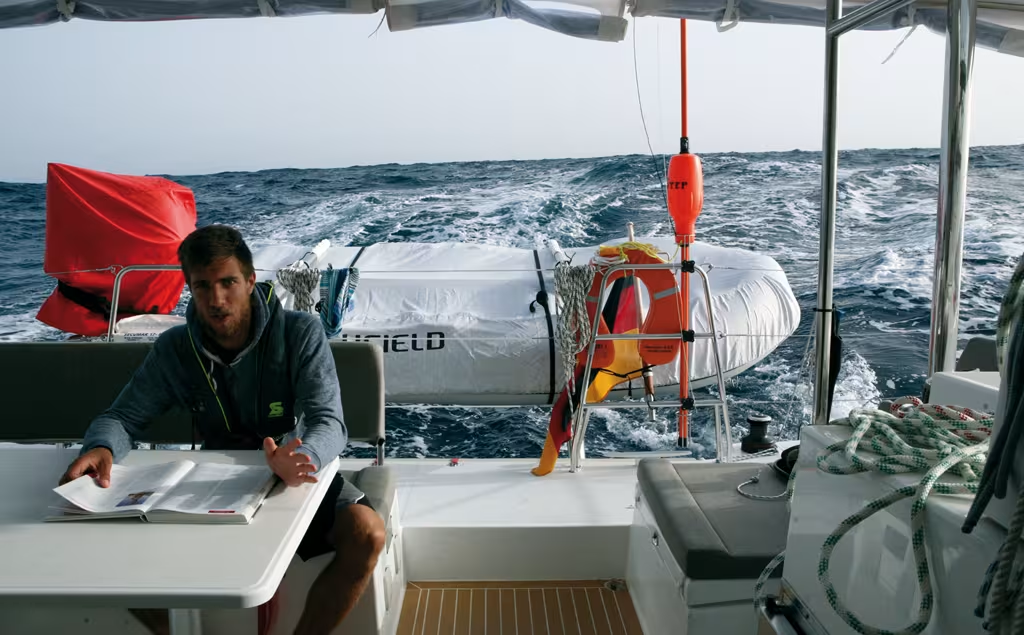
Life on passage also involves repairs, maintenance, odd jobs…