
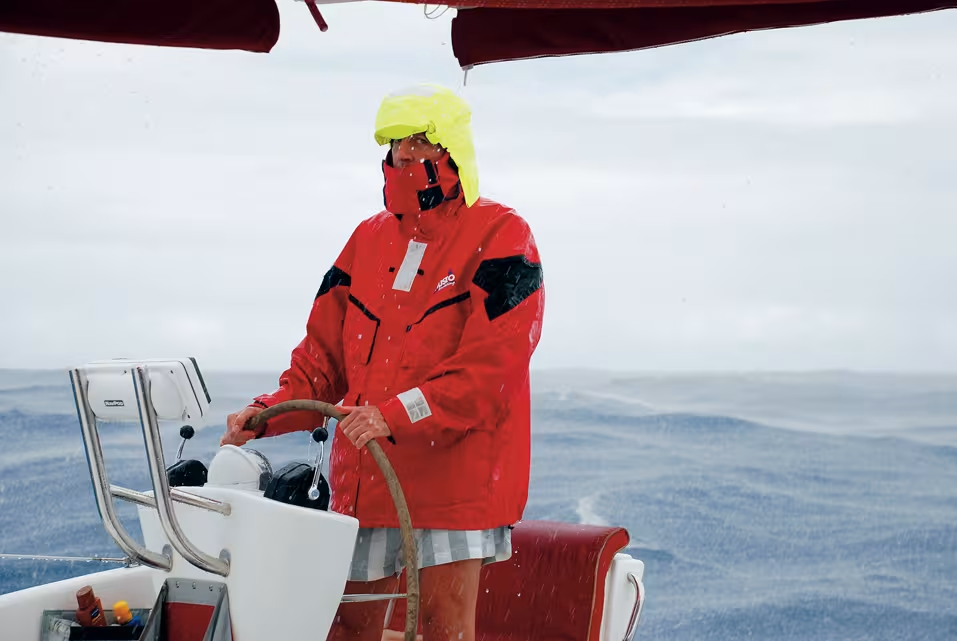


We asked some well-known skippers, experienced sailors, novices, family crews and others who only sail with their buddies...and we found THE golden rule for organizing watches aboard. And this rule, from which no one can escape, is that there are no rules! On the other hand, there are numerous parameters to be taken into account and just as many good ideas amongst which you can pick and choose to turn these moments into unforgettable memories for the whole crew.
In the past, the hey-day of sailing ships, the day was divided into four periods of six hours, a quarter of the day. The French have retained the word (un quart) to denote a watch, whatever the duration finally opted for. Opinions diverge between two and four hours, and are sometimes quite firm. And what if, just like the singlehanded sailors who test their optimal period of sleep, you were to try to find your ideal watch duration? Too short, and those off-watch don’t get enough rest. Too long, and boredom starts to set in, despite the wonderful show offered by the sea, the waves, the plankton, the stars, the moon, the ships, the coast, the sails, the washing-up, the bread to be baked, or the latest season of your favorite series! But it is fatigue which you must be able to detect, as this is what reduces vigilance. Similarly, although a majority always prefer the same time slot and get into their rhythm, others like to switch the watch times, so that it’s not always the same people who have to get up in the middle of the night.
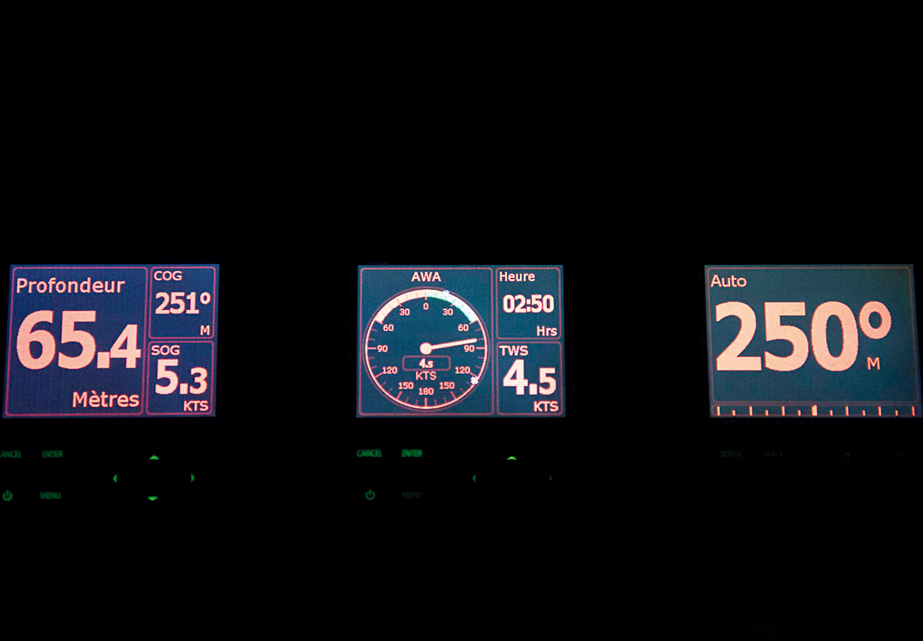
Light weather at night...the red glow from the instruments is enough.
Although sometimes limited to night time, many leisure sailors don’t hesitate to organize their whole life aboard to correspond with the rhythm of watchkeeping. The idea being to always have one person responsible for the boat, as well as its safety. How many collisions have happened in broad daylight, with each person depending on another, so that finally no one is actually keeping watch? Even though the rules can be more flexible during the day, always having a ‘watch leader’ who knows that the boat’s safety is his or her responsibility is an idea to be remembered. A practice adopted during crewed ocean races, as are the three statuses: on watch, stand-by and resting. The idea? Next to the active watch is a watch on stand-by, ready to intervene, give a hand with a maneuver, a reef, whilst the resting watch will really be able to sleep with peace of mind. Does that not require a large crew? No, not necessarily, because just like the duration, the composition of a watch can vary, and being on watch alone is less worrying when you at least know that there is a crew member on stand-by, who is resting and sheltered, always with shouting range, ready to rush on deck in a few seconds.
Because the key word, especially at night, is safety. And here everyone is in agreement about respecting these 10 golden rules:
- Evening briefing: communicate the developments in the weather situation expected during the night, and anticipate the planned stages (arrival at the coast, passing close to a buoy, marine traffic expected...). Update this information at every watch change.
- Keep radio watch on the VHF, channel 16, switch on the AIS and run the radar as often as the visibility requires (notably for the squalls in the trade winds).
- Remind everyone of the collision regulations and keep them visible, and the principles of the navigation lights of different types and sizes of boat.
- Never maneuver outside the cockpit without being watched by another crew member.
- Clip on to maneuver on deck.
- Anticipate reductions in sail area more than ever.
- Wear inflatable lifejackets and individual mini beacons (or life tags).
- Check the boat’s navigation lights, and provide head torches for the crew.
- Provide something to eat and drink to the crew’s taste and suited to the climate.
- Finally Gentlemen, it is strictly forbidden to answer the call of nature overboard!

Sunset, the children take over for a few hours…
All that’s fine, but how many of us should there be? At one moment or another we have to face our responsibilities, and give a recommendation. Three. There should be at least three of you. We are talking here about crossing oceans. Yes, there must be no fewer than three, three hour watches. That gives 6 hours' rest every night, and with a good siesta during the day, the body will cope. Next, should there be one or two people on a watch? It’s certainly better with two. But it’s better to be alone than to have two people on a watch who don’t get on, or don’t have the same approach to sailing at all. Putting a young, self-taught racing fan along with a retired sailor who has done all the courses at the most conservative sailing schools guarantees that you will be woken up in the middle of the night, in a panic, just to...settle a purely theoretical debate! Thus it’s better to be fewer aboard than to embark crew at the last minute who may very quickly prove to be incompetent and dangerous, and will become millstones round your necks rather than being of assistance. One captain even went as far as shutting the crew member responsible for losing his brand-new spinnaker (on the first night of a long Atlantic crossing) in his cabin (true). Affinities, biological rhythms or quite simply habits or sailing skills - the composition of a watch is just like a big mixing desk. It’s up to the skipper to set the cursors in just the right position for harmony to reign aboard.
But let’s do the sums: three watches of two, plus the children...but that’s far too many people! Yes, without a doubt, but there are solutions. Give the children some responsibility (from 10 years old) on a short, ‘easy’ watch (9pm to 11pm, the nights are long in the tropics), and turn the saloon into a dormitory, for children and adults. There is less noise than in the hulls, the ventilation is better in hot weather, it’s reassuring for the ‘little ones’, and the adults can be immediately operational at the slightest request. With 5 crew and more, it is possible to adopt the ‘sliding’ system of watches. The first crew member starts alone, then does the second half of his or her watch with crew member B, who continues alone, then wakes the third... This of course leads to a bit more movement in the boat, but you spend two thirds of your watch time with another crew member, and the rest periods are lengthened.
The most ‘exotic’ account we came across was from a couple and their two children. Having chosen to cruise as a family, with no help from additional crew and with the children not standing watches, Madame was on watch until midnight or 1 am. Then Monsieur took over until the early morning. He woke all the family for a breakfast together, then went to sleep until midday. A little siesta in the afternoon or evening and the cycle was repeated. Surprising? Yes, perhaps. But everyone was happy with it, found a balance and serenity, and that’s the most important thing. Having confidence in each other, respecting one another - life at night aboard a boat is nothing less than a microcosm of society, but one in which you have the power! Are you worried? Well go sailing now!
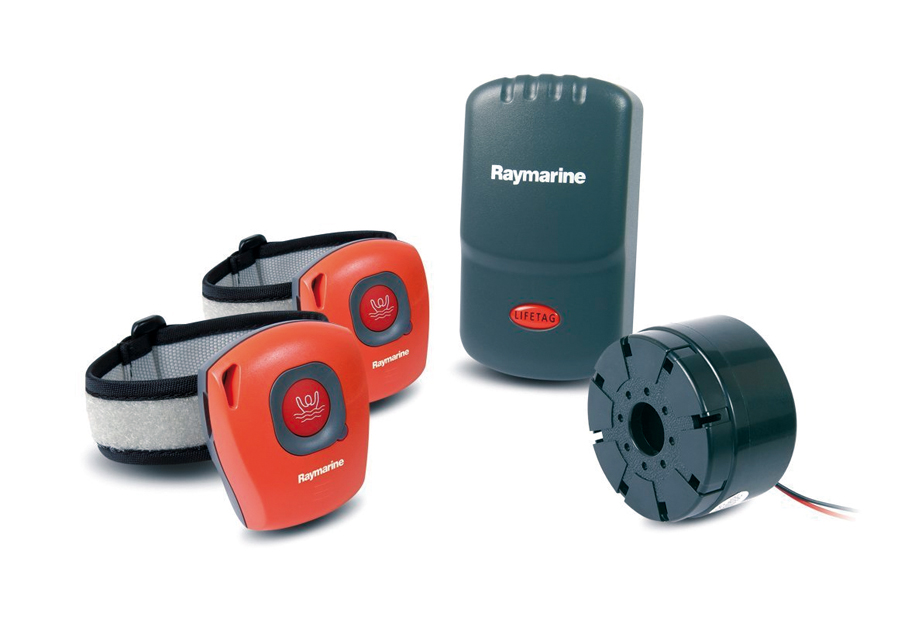
Safety requires that you wear a lifejacket when alone on watch, or a system such as Raymarine’s Lifetag, which gives a warning if someone falls overboard.
ORGANIZING WATCHES ACCORDING TO THE CREW
Crew: 2 couples (A-B-C-D) + the children
2100-2300 Children + an adult on stand-by
2300-0100 A
0100-0300 B
0300-0500 C
0500-0700 D
Crew: 1 couple (A-B) + 1 crew member (C) + the children
2100-2300 Children + an adult on stand-by
2300-0130 A
0130-0400 B
0400-0630 C
Crew: 5 adults (A-B-C-D-E)
2100-2300 A
2300-0000 A +B
0000-0100 B
0100-0200 B + C
0200-0300 C
0300-0400 C + D
0400-0500 D
0500-0600 D + E
0600-0800 E
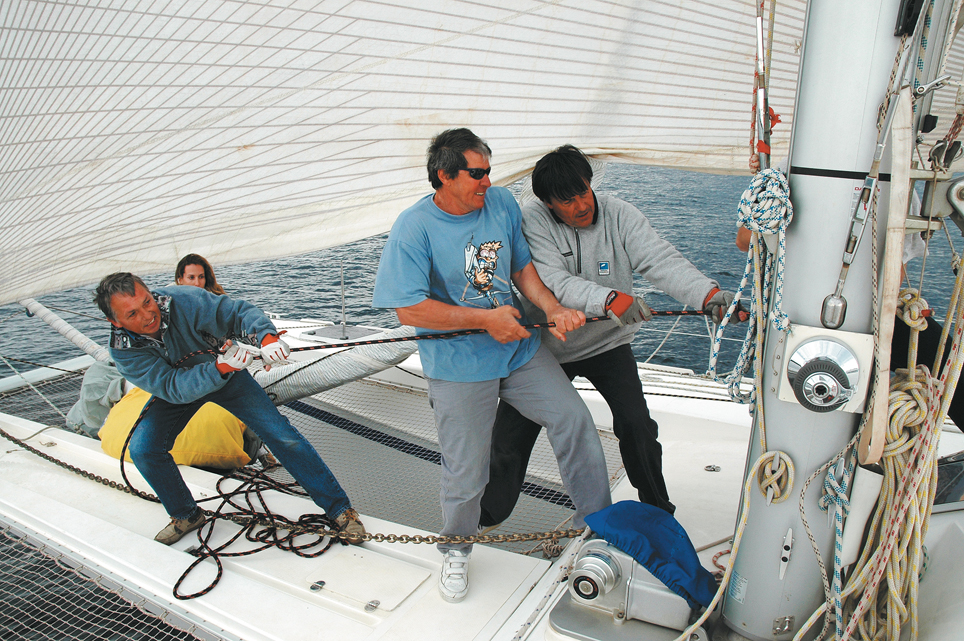
Some maneuvers require more hands: those who are off watch must then come and help, so everything goes well.