
The Crossing: Myth or Reality?
To set out on a Transat crossing is never something to be taken lightly. To be alone in the middle of the sea with only the waves as your horizon will always be a defining moment, as well as a tense and sometimes anxious one. But when that crossing involves an ocean, then the trip inevitably takes on a mythical quality. There are certain crossings which seem to have a mythical reputation: the Mediterranean, the Atlantic and the Pacific… You love sailing out at sea, so obviously you want to take on your own "Route du Rhum". An ethnologist at heart, you know all about the Kon Tiki expedition. Or perhaps you're a Greek scholar and dream of following in the wake of Odysseus and his eternal quest? Whatever your goal: TransMed, TransAt or TransPac, they all need a lot of determination and organization before they can become a reality...
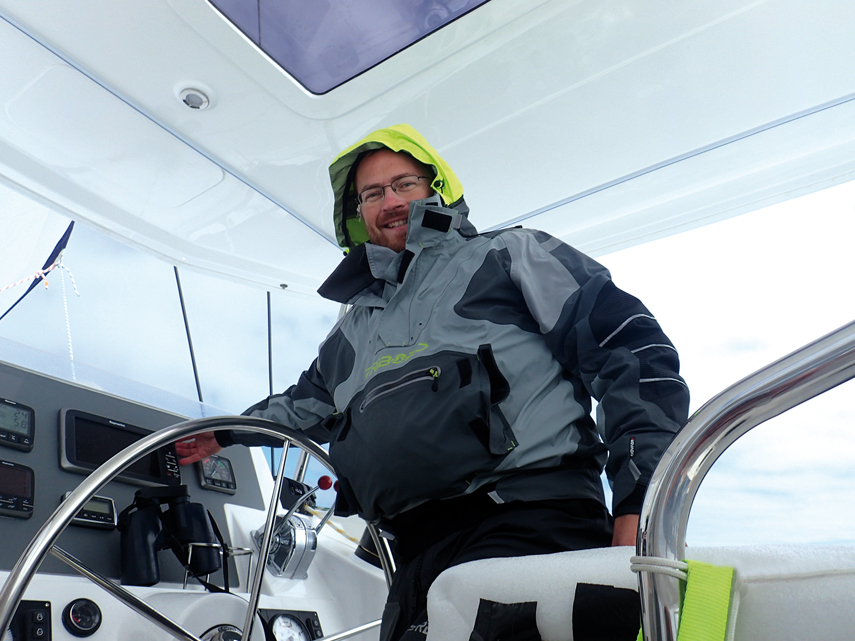
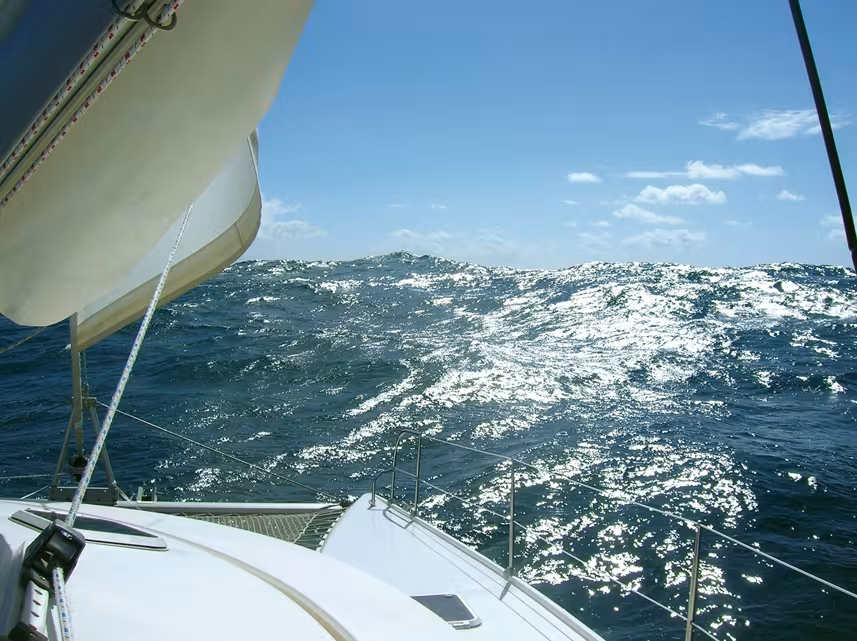
A Transat is all about setting out for the sunshine of the Caribbean. However, life on the open seas can get pretty wet…
The Crew, the Boat and the Timing: Crucial Decisions!
Depending upon your chosen route, the sea conditions, the wind, your boat and of course your crew, crossing the Atlantic or Pacific will take between two and four weeks. And for a novice, it's often the length of the journey which can initially be a little daunting: Will we get bored? What are the kids going to do? The weather? How do we avoid any storms?
Let's face it: when you look at old prints, or any number of Hollywood disaster movies, the sea is a dangerous place, where there are constant hurricanes and huge waves capable of destroying New York! Yes, hurricanes exist, and so do freak waves and tsunamis. But if you leave at the right time, with a favorable weather window, the risk of encountering a hurricane is zero, and that of hitting stormy winds is negligible. The real danger in a boat comes first from the land (unlikely on a Transat or Transpac we agree), and collisions with other boats. The risk of a collision although real, is slight, especially given the huge area in which you will be sailing. The same goes for any UFOs (Unidentified Floating Objects, usually containers lost by container ships). Being vigilant and alert on board should cover this risk. To ensure this, good organization of your watches is essential (see following pages).
The choice of date and weather window are therefore essential, especially when ocean sailing. As regards the hurricane season, you need to avoid leaving too early or too late. For a transat, it's worth waiting for the Trade Winds to start blowing. That way you can really profit from a fair wind, which is so much more enjoyable… The worst scenario is having to set off to honor a particular date at your destination. With modern communications, you can also receive up to date weather reports during your crossing which will help you to plan your route. And on that subject, if you're not that comfortable interpreting the charts, why not employ the services of a router?
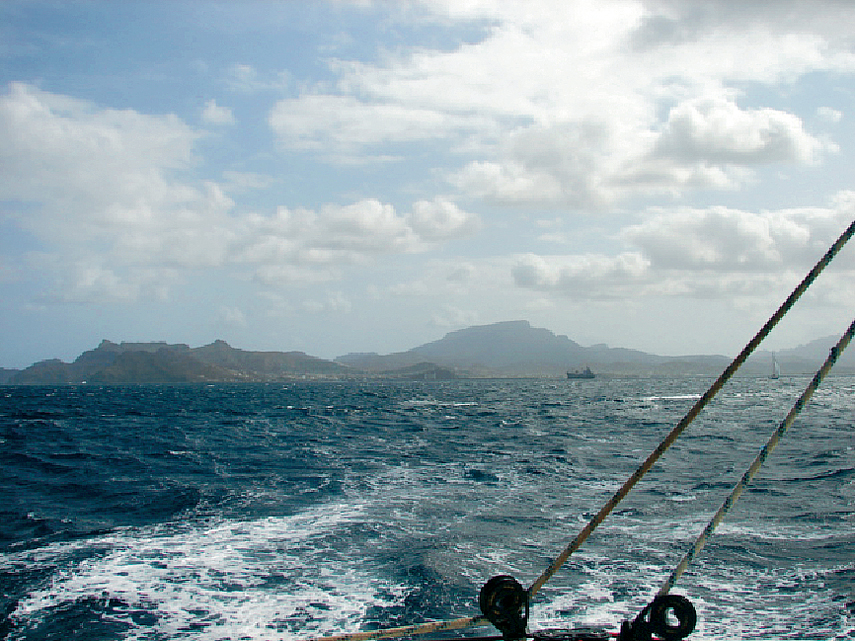
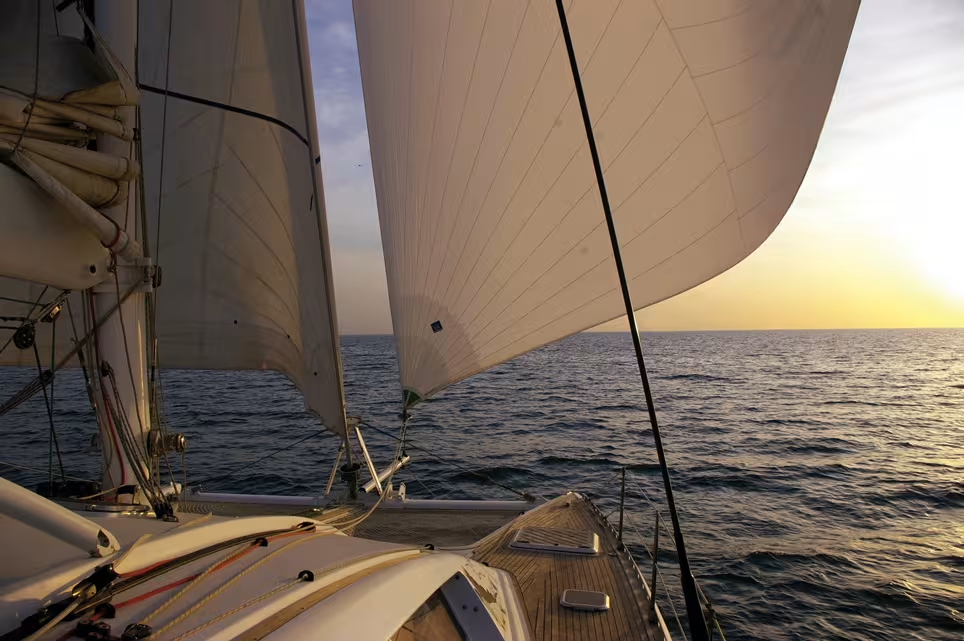
The last sight of land. Soon there will just be sea for a horizon, and that will last for two weeks… Your transatlantic crossing has begun!
Captain forever…
A good captain needs to choose a good crew - QED! And a crossing can only succeed if your fellow crew members are on the same wavelength as you. A family Transat is often Dad's idea. It's often his dream of doing one which gets the ball rolling. It allows him to live out his teenage dream and enjoy an intense, shared family moment at the same time. If the rest of the family buys into the idea, then it's great. But is it what they really want? You might dream of following the sun over the horizon, but what about your other half and the kids?
For the vast majority of readers who we have spoken to, everything usually goes smoothly. However, for small children who aren't old enough to take part in any maneuvers, the time can drag on, and the famous "are we there yet?" line can become a bit of a pain, especially when it starts just a few hours after your departure… In this case, why not arrange to meet your family on the other side and enjoy some idyllic anchorages in the Caribbean and do the Transat with a group of friends? This can be great, but as long as you know them well. As our colleague François says: "What might seem to be a fun character trait in someone whilst in port, might turn into something which really annoys you after three days spent in the pressure cooker of the relatively confined space of the boat…"
So when choosing the crew, you need to make sure that there are enough people so that watches don't become interminable and you must only take people who have already sailed and who have the same motivations as you.
So, you know when you're leaving and with who? Right, now you need to choose the right boat so that the adventure can begin. We know, thanks to Laurent Bourgnon in 1986, that it is possible to cross the Atlantic on a sports catamaran. And our friend Alessandro di Benedetto showed us that a sports cat could cross the Pacific too. But is this realistic? For peace of mind, the minimum requirement should be a 35'-38' multihull. Whether it's a catamaran or a trimaran that you're looking for, there's currently plenty of choice on the market. The best policy would be to go for a 38 footer, which will offer much more comfort when you're being pushed along by the Trade Winds. And you need to be able to store a certain amount, so as to be able to make the most of life on board. Indispensable!
As with many things, rather than the size of the boat, it's the preparation of the boat and its crew which are vital.
From the outset, it's worth remembering a few basic principles. Even if you are to be part of a rally, with dozens of other boats, or competing in a race with back-up boats to deal with any problems, once you're out at sea, between Brittany and the Med, the Canaries and the Cape Verde islands or the Caribbean and Brazil, you will be alone and should only ever count upon yourself. That's when you'll be pleased that you prepared well. Motors, rigging, halyards and sheets must be properly serviced, and anything which isn't up to scratch needs to be changed. You must take with you all the most important spare parts.
On top of all the usual tools, (wrenches, hammer, screwdrivers), always have enough oil on board to be able to do an oil change on the motor and the gearbox or saildrive. The same goes for the filters and pre-filters. Also, take a full set of belts and water pump impellers. Take a book about the basic workings of a diesel engine. WD40 is of course a must.
Make sure that in your tool box you have a filter wrench as well as a drainage pump. Take lots of absorbent paper such as kitchen roll, and washing up liquid which is great at absorbing diesel odors. In between oil changes, keep the empty cans so that you can use them to recuperate the old oil. You can then keep them on board until you find somewhere that collects used oil. Have a couple of spare jerry cans of fuel, so that none of the tanks ever run dry. An automatic filling hose will help to avoid splashing it everywhere when you are filling up.
Think about taking a good selection of coupling pins, split pins etc. You can also take a length of flexible wire which corresponds to the longest section of rigging, with the corresponding terminals, which means that you will be able to cope with any rigging problems for the length of the crossing. Even if the flexible wire doesn't have the diameter of the one that's causing the problem, it will be able to secure it. Another useful tool is a turnbuckle, which can be useful in a number of ways. The same goes for a small reel of Vectran which can be used as a strap if you have a malfunctioning shackle.
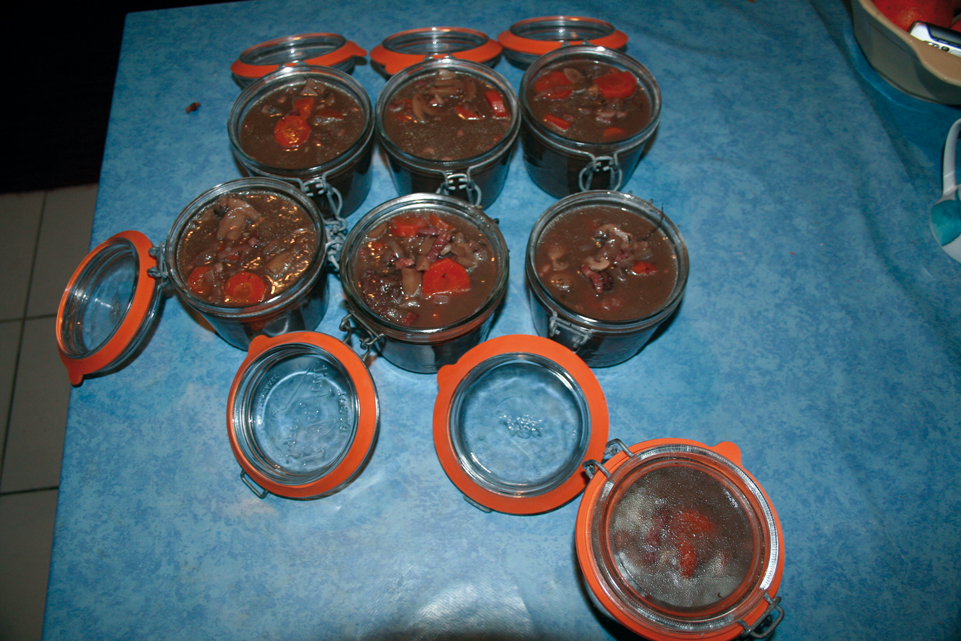
A well-prepared boat is vital. Don't forget to organize your supplies properly. It's essential for ensuring a good atmosphere on board!
The Storeroom: The Essential Element in Any Crossing?
Unless you've never done a Transat, it's difficult to imagine the importance of food during the crossing. Yet, whether you are sailing with French, American, English or Scandinavian crews (or any other nationality), the quality and the variety of the food offered by the "cook" is in direct proportion to the general level of contentment aboard. It is therefore vital to prepare your supplies carefully, and before setting off to check and re-check that you have the necessary quantity and variety of foods for your trip.
Everyone has their own way of stocking up on supplies. However, unless you have a qualified chef on board, the best way to manage it is to meet up and pool your ideas of what people like to eat, and what recipes are relatively easy to prepare out at sea. You can then make your list of necessary ingredients to go into the chosen recipes that will suit everyone, based upon the length of the journey. At this point it is worth mentioning that some journeys end up taking longer than initially planned!
It's also crucial to draw up a menu plan which uses up the most perishable ingredients first, and the most "durable" will be used towards the end of the trip. Don't forget either, that at sea we tend to snack regularly, and that we also need at least 1.5 liters of water per day. And whilst on the subject of water, in the same way that you need to take extra diesel to avoid running out of fuel, it would be mad to think about leaving for several days at sea and counting solely on your desalinator. Setting off with a good supply of water is absolutely indispensable.
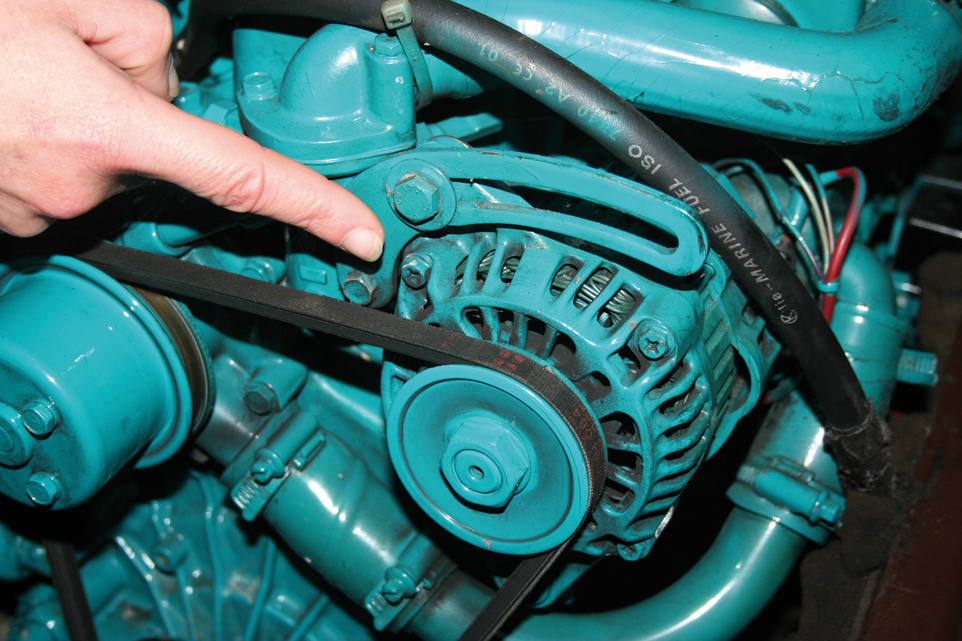
Before setting off, it's imperative that you carry out a full safety check. From top to bottom…
A Transat Is A Life-Changing Moment That Will Stay With You For Ever…
A few years ago, a couple who had toured around the Atlantic with their two children, recounted their adventures aboard "Bonne Etoile" for us. Their experience summarizes pretty well the feelings of many of our readers. This should be read and re-read:
"After 24 hours' sailing, nobody was seasick any more. Thank goodness! We try to get into a rhythm: meals at fixed times, all together at the table; a shower every day; a siesta in the afternoons; an inflatable pool filled with seawater for the girls; sunbathing for the parents and a sundowner at the end of the day… The sea is calm. A long swell stretches for miles, pushing us gently towards our destination and a breeze fills our sails. I am totally relaxed. I've definitely got my sea legs now. I now know what it's like to feel totally at home on a boat. I know that it's possible! I can do as I like!!! I now understand what other sailors who have crossed the Atlantic have told me: "the hardest part is behind you. After Cape Verde you'll get the Trade Winds. It's a walk in the park. A wonderful time to spend as a family!"
On the 10th day we arrived at Fernando de Noronha. It was 3am and still dark. We decided to wait until the sun was up… At around 4.30am, the first rays began to appear, and allowed us to advance towards Fernando with a little more confidence. The silhouette of the island starts to appear, and we are filled with joy. We almost have tears in our eyes, but the stress involved in anchoring means that there's no time for emotion. We still haven't really come to terms with what we have just been through. It's now 7am local time, and we dock in the port of Fernando. That's it, we've done it! It's a huge moment in our lives… I'm proud of Jacques, who has managed to get the boat to do exactly what he wanted. We found out later that many more experienced skippers wishing to arrive and moor in Fernando or Salvador de Bahia, are obliged to dock in Fortalezza in the north of Brazil. I'm proud of my little girls who were so well-behaved and patient during the crossing. They did their first Transat aged just 2 and 4 years old! That's pretty amazing! Looking back, I'm just happy to have succeeded in this challenge…"
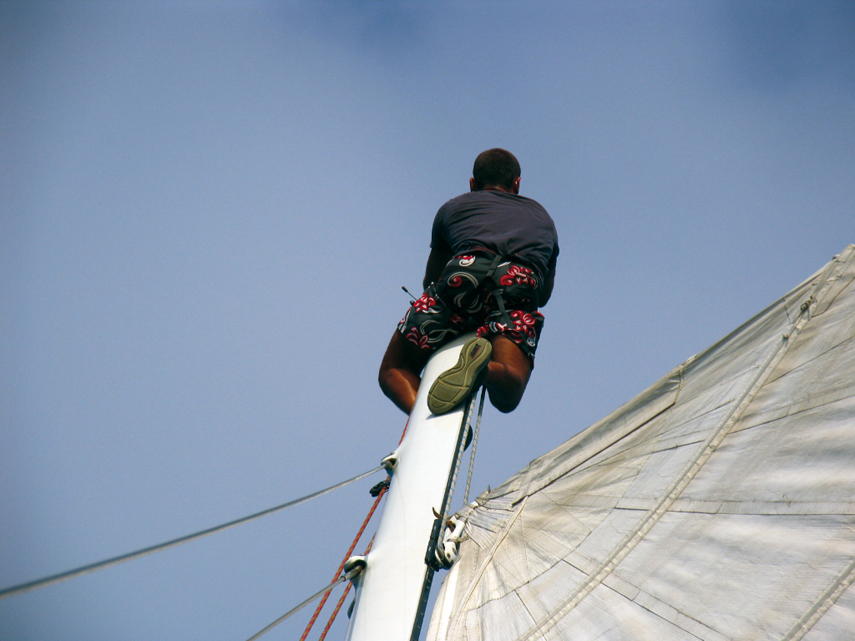
… up the mast !
A Unique Experience
Regular Multihulls World readers will already be aware: Jimmy Cornell, the creator of the original ARC Transat, which allows over 200 boats to cross the Atlantic each year, and the organizer of many rallies around the Atlantic and the rest of the world (the renowned Odysseys), has just launched a new rally. It will be a Transat for production multihulls, the MultiTransat. Multihulls World is of course partnering this event, and we hope to be celebrating the departure of this new style of Transat from Tenerife when the boats depart on November 12th 2016. It should be a lot of fun, but it's also a competition with different classes. To make it as representative as possible, there will be two categories. The first will be for those who want to race and they will not be allowed to use their motors. The second category, called Open, will allow a certain number of hours of motorized propulsion. Whatever the rules, the idea is that the crews can all party before departure and after arrival, and in between to do whatever they can to beat their friends…It's a transatlantic race.
However, the idea of a Transat is to reach the other side. Jimmy Cornell has chosen Barbados as the destination for this unique rally. In fact, in 2016, Barbados is celebrating 50 years of independence and there are lots of festivities planned. The welcome from the Barbados yacht Club will no doubt be up to the high standard that its reputation suggests.
A Transat just for Multihulls: You've dreamed about it. We've done it!
More info: www.cornellsailing.com