An alternative route to the traditional circumnavigation
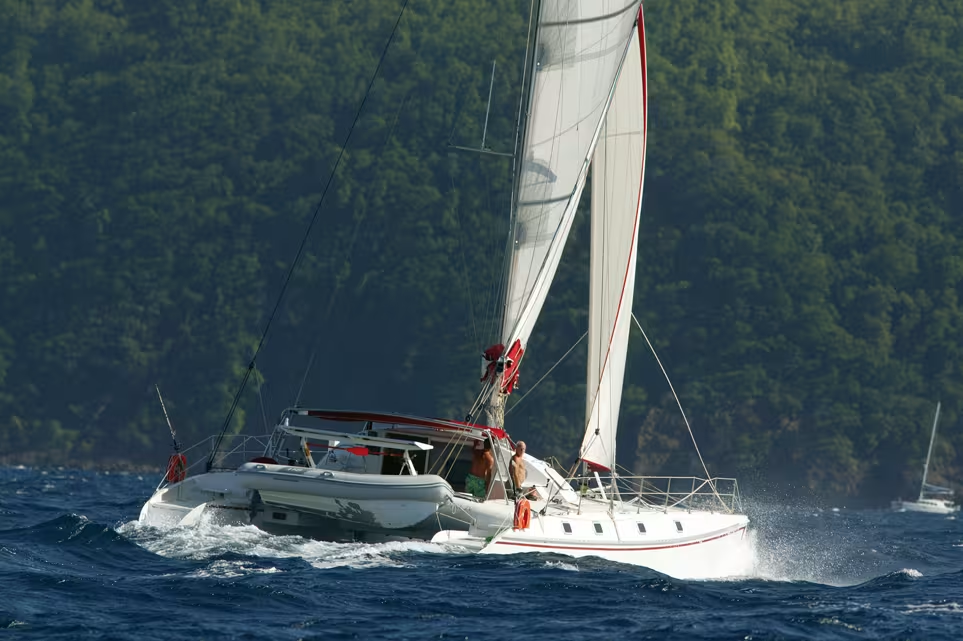
Corneille wrote “that for souls nobly born, valor doesn’t await the passing of years”, and the voyages of Jean-François Raymond brilliantly demonstrate that age has nothing to with ambition and that you need to look elsewhere for motivation… or alibis. Aged 65, the owner of Rose Noire gave in to an irrepressible desire to go cruising under sail. Two Atlantic circuits, then a trip round the Pacific took his Outremer 55 Light from the Mediterranean to Polynesia and then on to Alaska. Partly carried out in the company of the cruising family on board the Freydis 46-50 Grainedo, this amazing 3rd voyage, after two Atlantic circuits offers a neat alternative to the traditional circumnavigation.
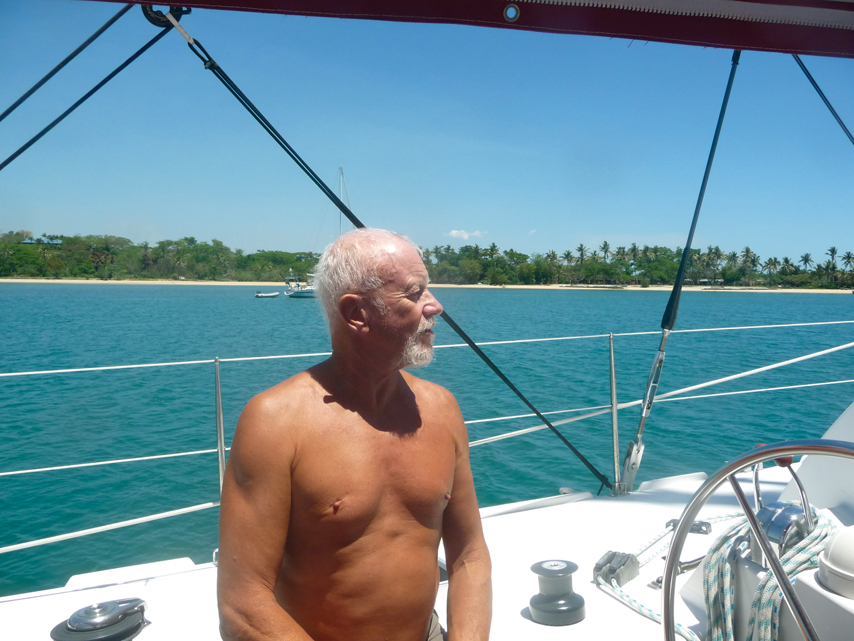
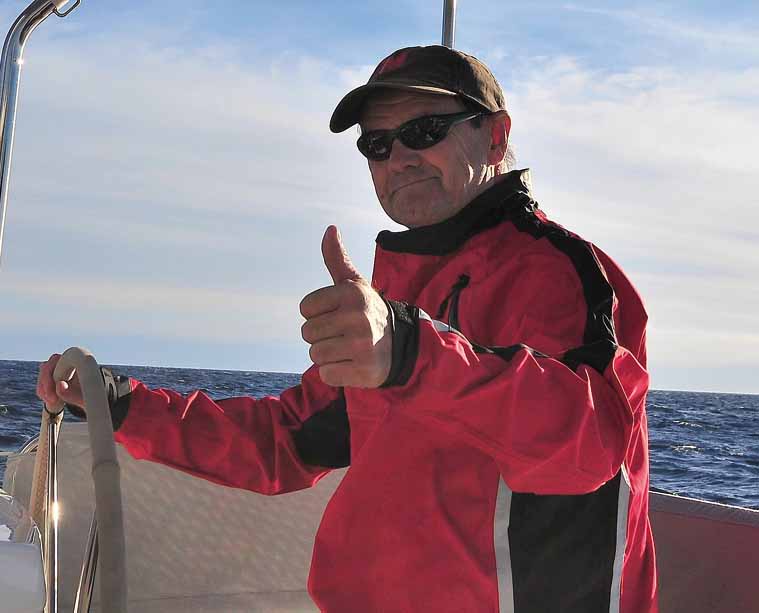
Jean-François, who has enjoyed some great voyages.
Two Atlantic circuits prior to the big journey to the Pacific
The story of this third voyage is one of a 42,000 mile trip led with passion, wisdom and skill… in short: effectively! Jean-François ordered his boat in April of 2005, and Outremer delivered his 55 Light one year later. From May through July 2006, the happy owner completed fitting out the interior, and then had a shakedown sail for a couple of weeks in August to check everything was working properly. September and October saw the finishing touches, and then he set off for an Atlantic circuit via the Canaries, the West indies, Bahamas and Azores, returning to Sète in the South of France on June 18th 2007. One year later, Jean-François set off from Sète again for another Atlantic tour of the same duration. This was followed by much cruising in the Mediterranean between Corsica, Sardinia, Tunisia and the Balearics… In total from 2006 to 2011, Rose Noire covered 28,605 nautical miles.
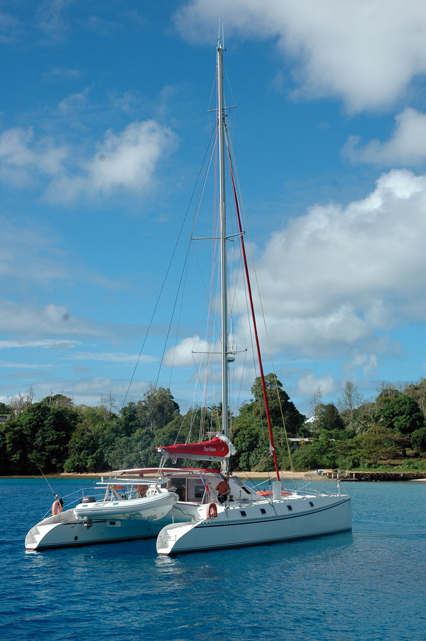
Voyages which have taken Rose Noire to tropical anchorages.
Why go round the world?
Jean-François set off again in 2011 for an atypical voyage from the Mediterranean shores of France to the Pacific, sailing via Las Palmas, Martinique, Cuba, the San Blas islands and finally Panama. The journey lasted from November 7th 2011 to April 10th 2012. He traced a route across the Pacific from the Las Perlas islands to the Marquesas, the Tuamotus, Tahiti, Suwarrow, Tonga, Fiji, and reached New Zealand in early November 2013. After over-wintering at Whangarei (NZ) and five months back home in France for the skipper, Rose Noire set off again in April 2014 for the Austral Islands, the Tuamotus and the Marquesas, before deciding to team up with Grainedo as buddy-boat to return via Hawaii and make Alaska by late June. The two catamarans sailed together as far up as 59°02'N, before turning down to San Francisco, then to the Sea of Cortez via Los Angeles, San Diego and Mexico. Next Rose Noire sailed to Costa Rica with two stops in Mexico, before re-transiting the Panama Canal on February 20th 2015. Returning to Cuba via the Colombian islands of San Andrès and Providencia, he then set a course for the Bahamas before a return Transat via Bermuda and the Azores. On July 4th, Jean-François and Rose Noire arrived back at Sète after 42,294 miles in four years… And Grainedo arrived in La Rochelle, on France’s Atlantic coast, half an hour later!
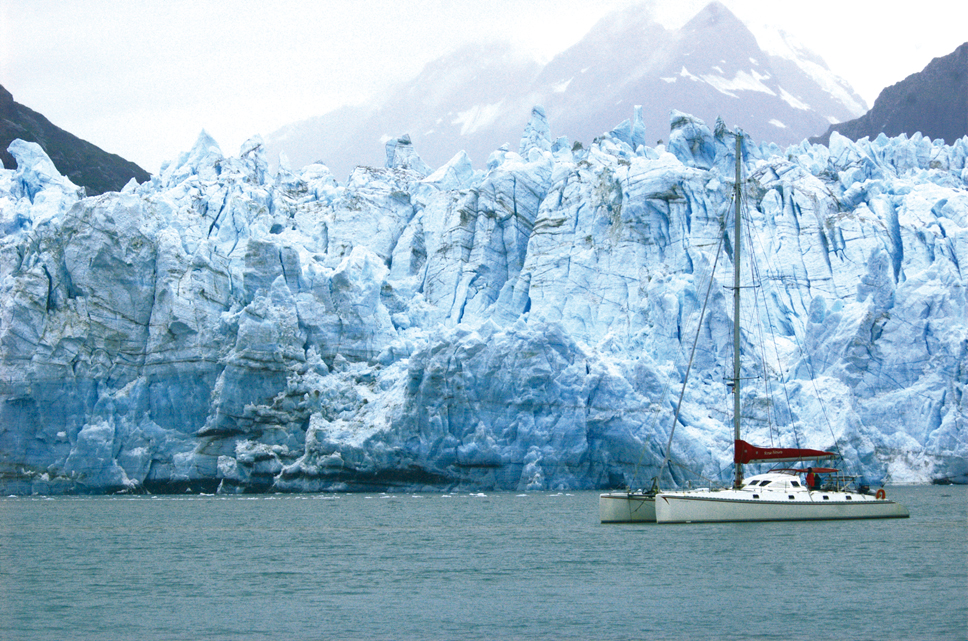
… to the frontiers of Alaska!
The 3rd voyage of the Rose Noire
Sète - Panama: 7,670 miles
Panama - Marquesas: 4,012 miles
Sailing in French Polynesia: 5,119 miles
Polynesia - Fiji: 2,497 miles
Fiji - New Zealand: 1,326 miles
NZ - Alaska: 7,900 miles
Alaska - Panama: 6,547 miles
Panama - Bahamas: 2,640 miles
Bahamas - Sète: 4,584 miles
Total 42,294 miles
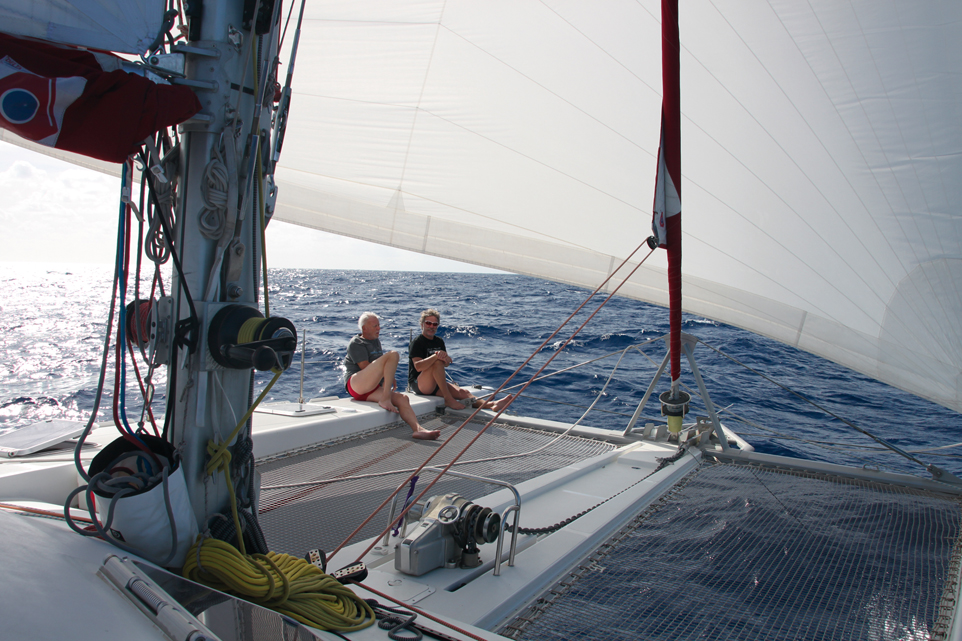
Isn’t blue water cruising great?
Top tips from the skipper (who contributed with great skill - Ed.)
1. Anchoring :
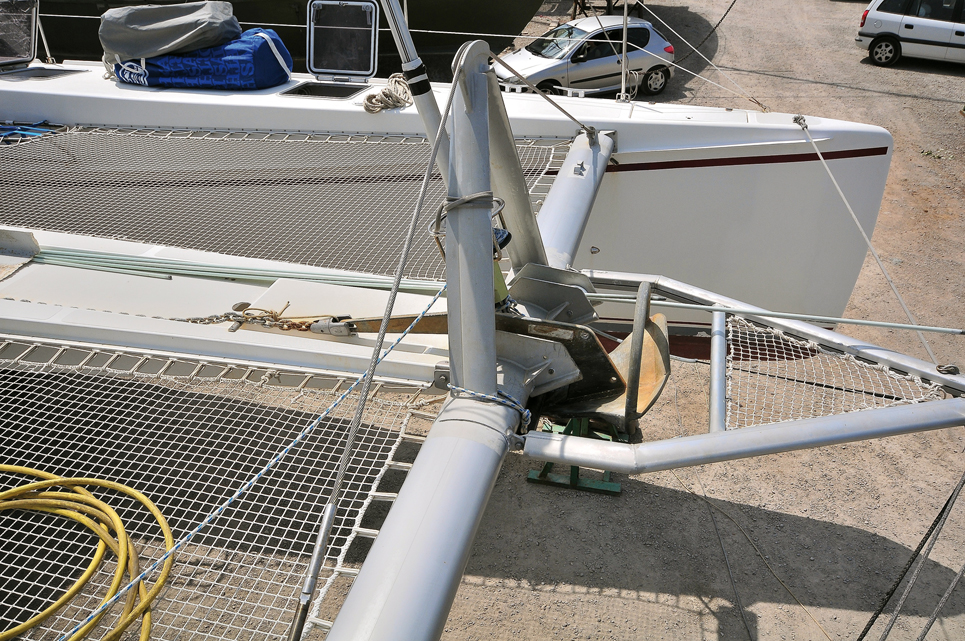
Never look to save wait with your ground tackle. On the contrary, go bigger than you would normally, just to be sure! During a circumnavigation you’ll spend 90% of nights at anchor as opposed to only 10% alongside a dock. Rose Noire was equipped with 65 meters of 12mm chain, a 40kg Rocna anchor and a 1,500 W windlass. The circuit breaker for the windlass must be easily accessible and fully insulated, otherwise it won’t be used. I’ve seen several boats where the windlass started by itself due to a short in the remote control (the rubber covers of the foot switches end up degrading
2- Dinghy
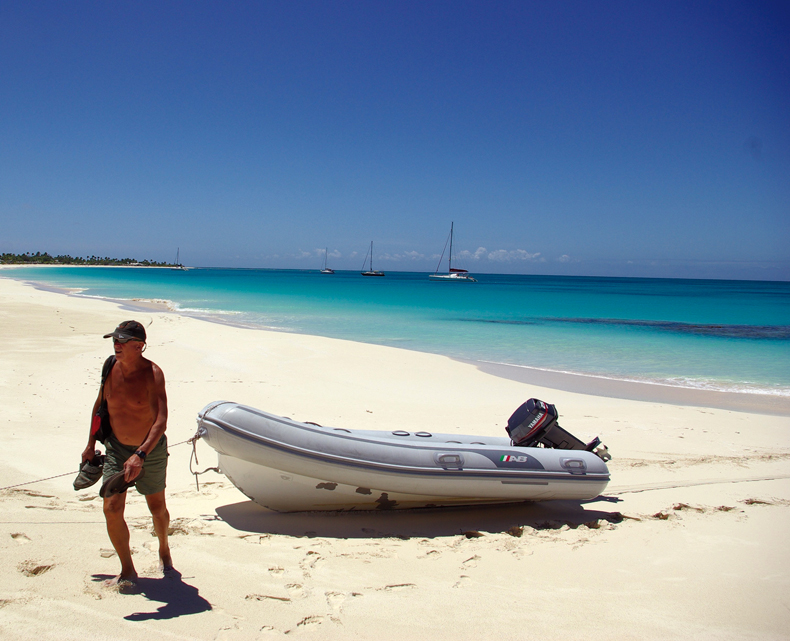
The dinghy must be of sufficient size and suitably powerful to allow you to make longer trips and get back on board against a strong wind and sea.
3- Energy
Energy is critical. You need multiple charging sources: Solar panels, wind generator, hydro-generator, even a generator. Self-sufficiency, cold storage and comfort all have their price. On Rose Noire, there were six 105A house batteries and two 70A starter batteries, two 80A alternators, 340W of solar panels and a 6kVA Fischer Panda generator.
4- Water
Water is also very important. But thanks to watermakers, it’s no longer a problem. With a generator, you can make 100 liters an hour, but without, it would be better to choose a smaller model with more economical consumption and which can run for longer, if you are only charging with solar panels and a wind generator. On a cat, if you have a hard-top bimini, you can also collect rainwater, which can make a significant difference. It’s useful to have a separate small tank of 30 to 40 liters for keeping good water for drinking and cooking. Mine was fed using a footpump in the galley.
5- Freezer
A freezer is great, but uses a lot of power. Do not have one which is too big. You can do without. You can also keep your refrigerator set at +3°C and a coolbox foodstore at +10/+12 even +15°C big enough for keeping vegetables fresh. Small plastic containers stowed in a dark, well-ventilated spot are also good for storing fruit and vegetables.
6- Cooktop
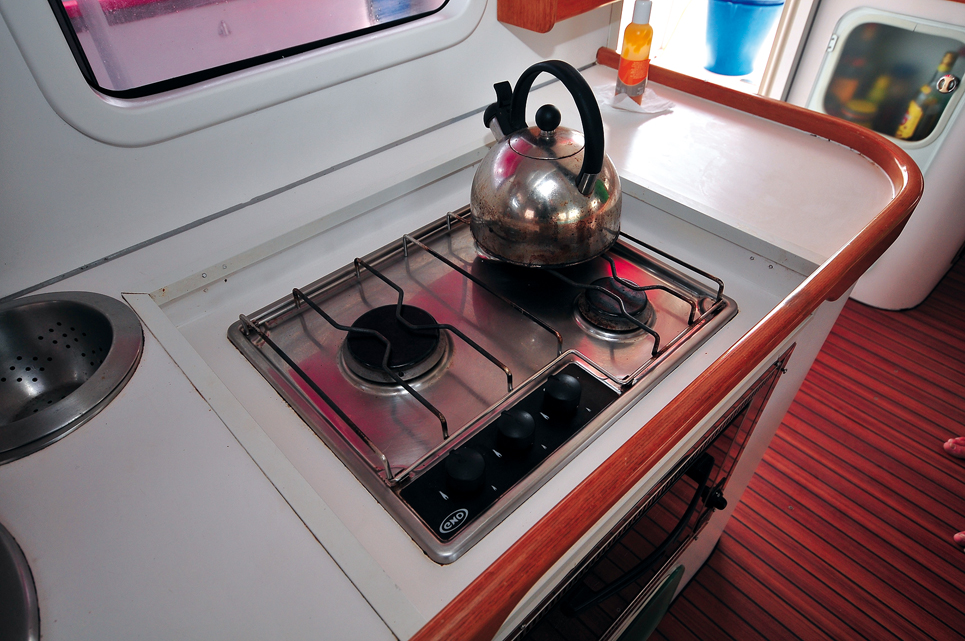
Even though a cat doesn’t heel, it does move, and pots can have a tendency to slide off the cooktop. Rather than use pot-clamps, a fiddle a few centimeters in height can stop them sliding off!
7- Trashcan
A large trashcan (100 liters) is very practical, but not in the galley (odors and germs)! The countertop trashcan works in conjunction with this one in a cockpit locker!
8- Pre-filter
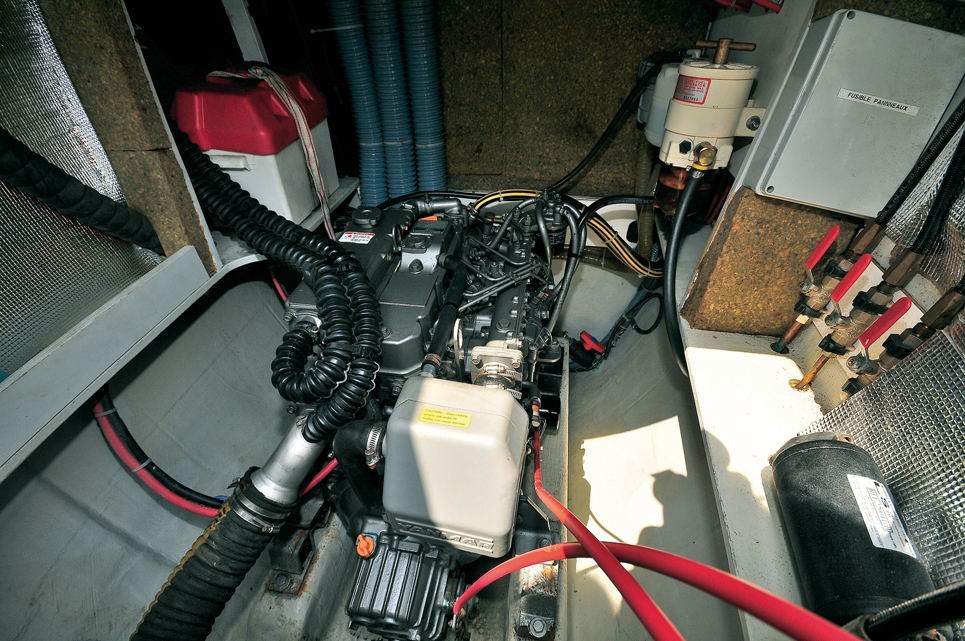
Between the diesel tank and the motors, a large-capacity pre-filter is essential. It needs to be well-located with a glass bowl which allows you to see any impurities and to bleed it as well. The motor-mounted filter is insufficient. If it’s too dirty, the motor will stop, and that never happens at a convenient moment.
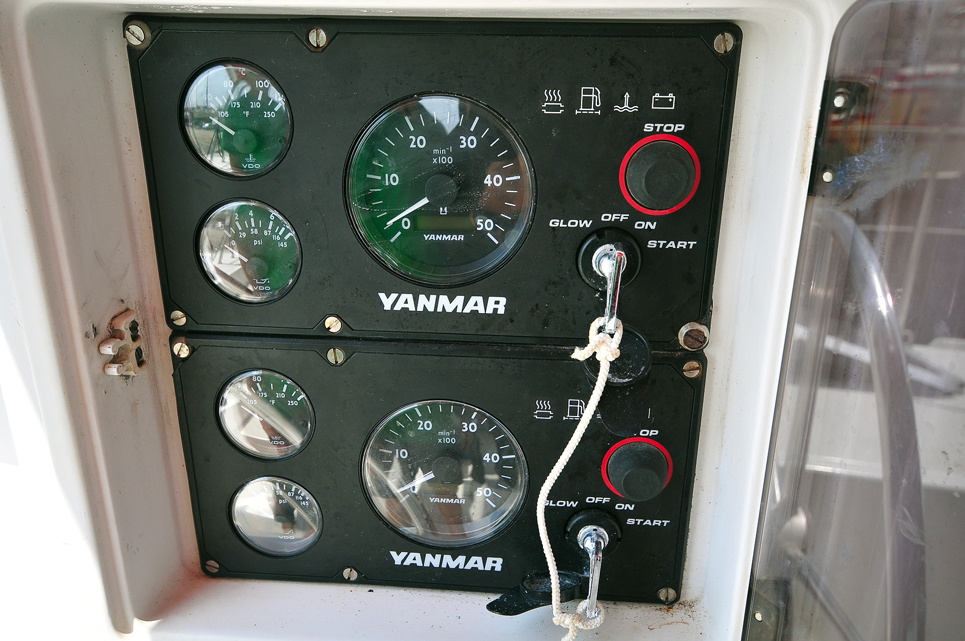
9- Control panels
Engine alarms go off when the situation is serious! Control panels are available with oil pressure and temperature gauges which allow you to keep an eye on engine function. Back in 2006 there was no difference in price with Yanmar. Essential!
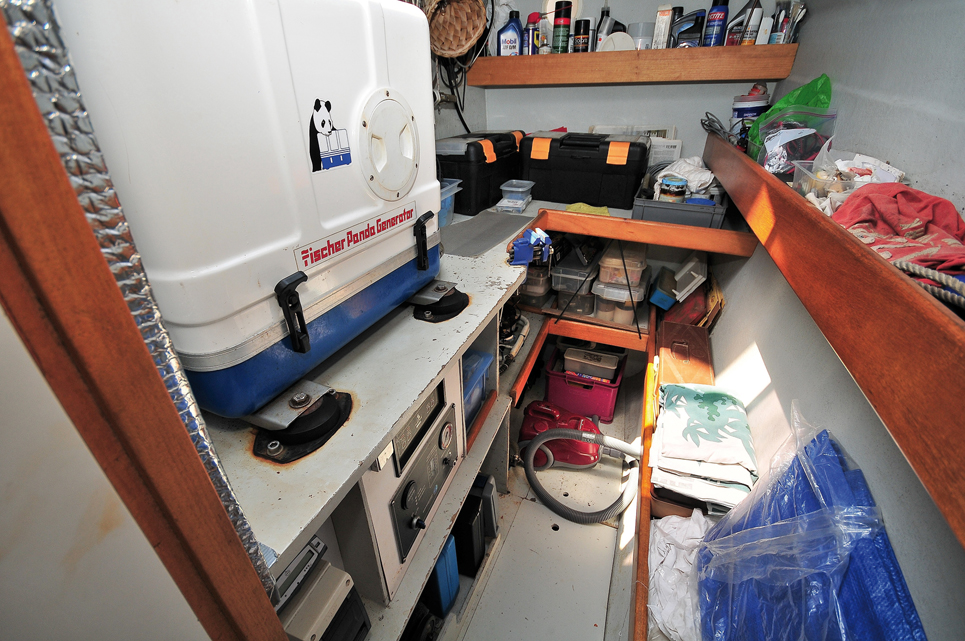
10- Workshop
A workshop space is very practical. All the secondary mechanical equipment can be installed here - desalinator, generator, etc, with easy access for maintenance. Spare parts and tools are not scattered about the boat. When doing any maintenance work, the salon shouldn’t be taken over.
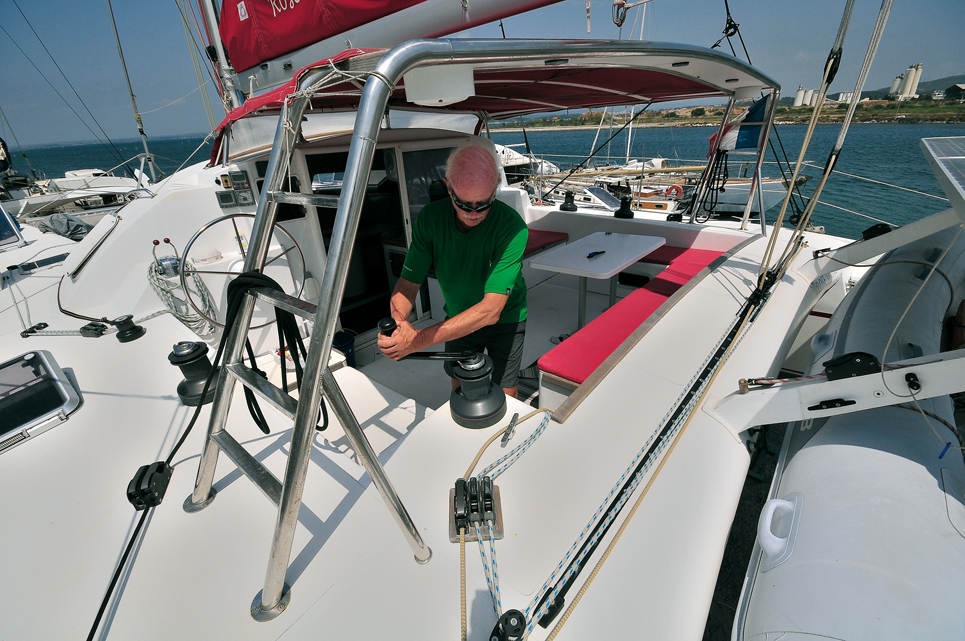
11- Sail handling
Sail handling needs to be easy. The less rope there is in the cockpit, the better. Good positioning of the winches is vital. You need to be able to grind the winch while straight, at a good height, so as not to wreck your back, have enough power and not be unbalanced out of the cockpit. A winch solely for the mainsheet traveler seems like a good idea to me. The mainsheet should never be fed through a clutch (other than for the traveler car) unless this is of the automatic quick-release type under load. You have to be able to dump the mainsheet at any moment. Like this, you can gybe easily, even on your own.
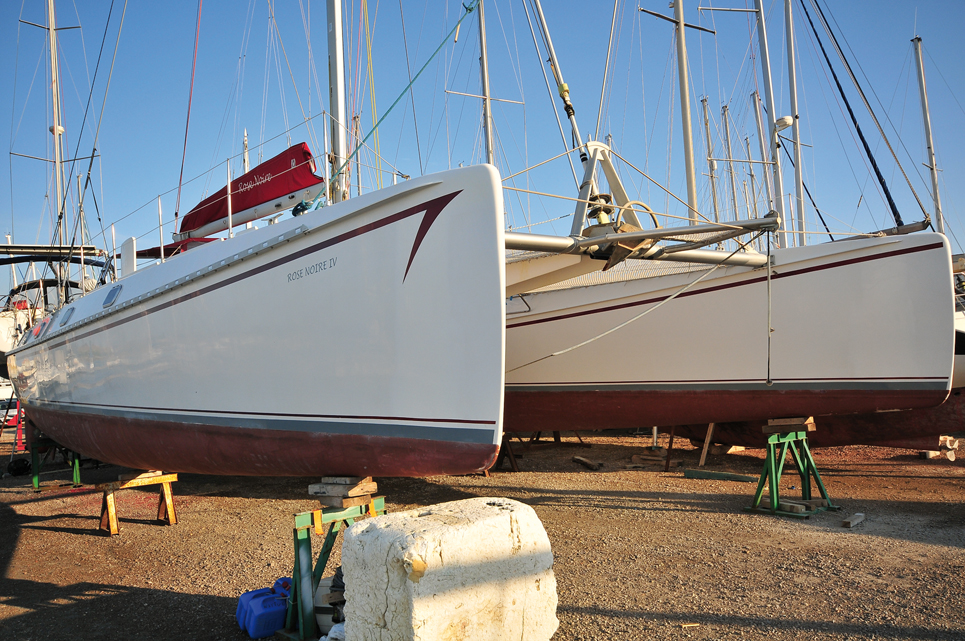
12- Weight
Be careful with weight. The boat must stay light! It’ll sail better and suffer less. With good speed you can make your crossings shorter, or play the weather forecast and avoid a depression (or at least get away from its center). A light boat goes well in light airs, allowing you to make good speed on a flat sea, in good weather and without having to resort to the motors. I also modified the bows of my Outremer 55L to help with this, and the result was an extra knot and no more spray!
13- Electric seawater
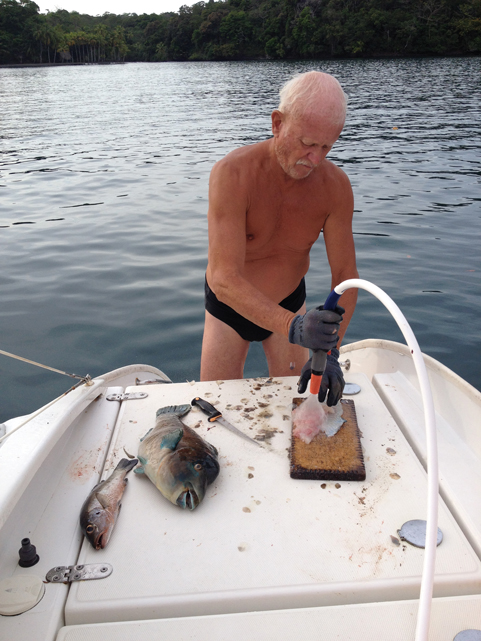
An electric seawater deckwash pump and hose are extremely useful. For washing the anchor chain, the deck and fish you have caught. It’s better than hauling buckets (and losing them and being dangerous!).
14- Autopilot
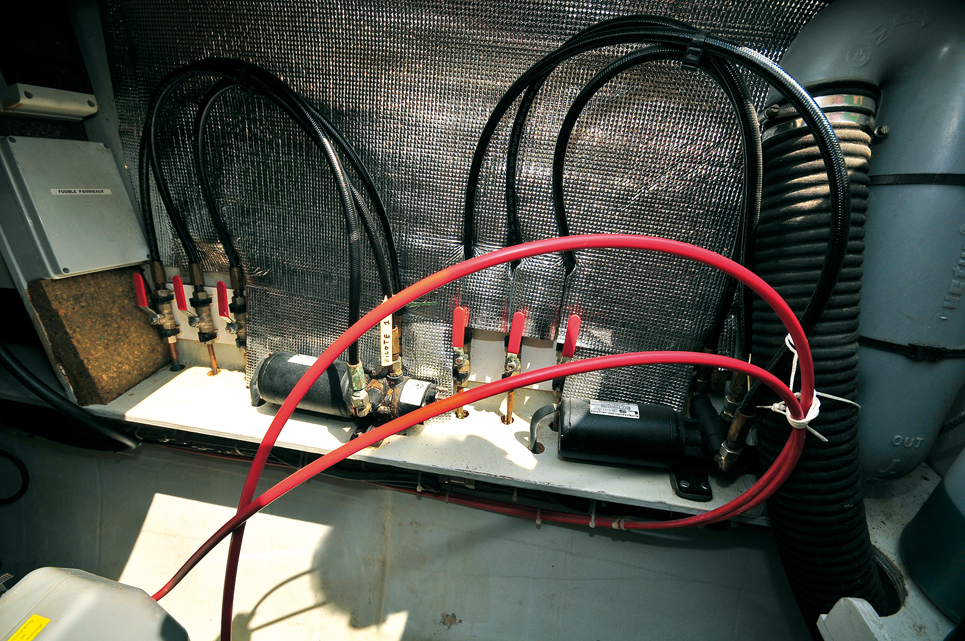
An autopilot breakdown during a crossing is a difficult hazard to manage, especially if you are single-handed. It’s crucial to have two pilots completely independent of each other. If one fails, you fire up the other.
15- Chart table
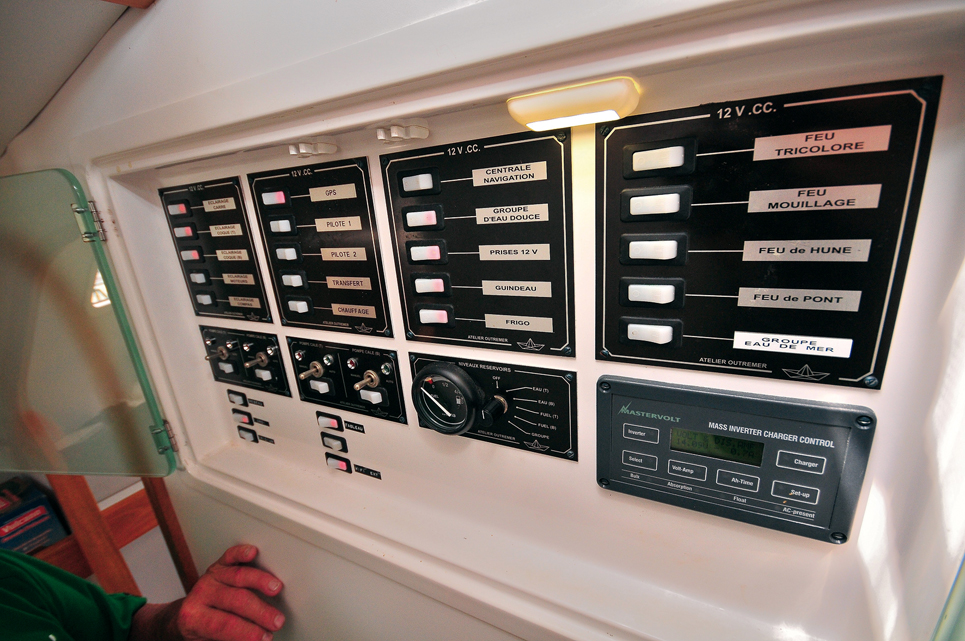
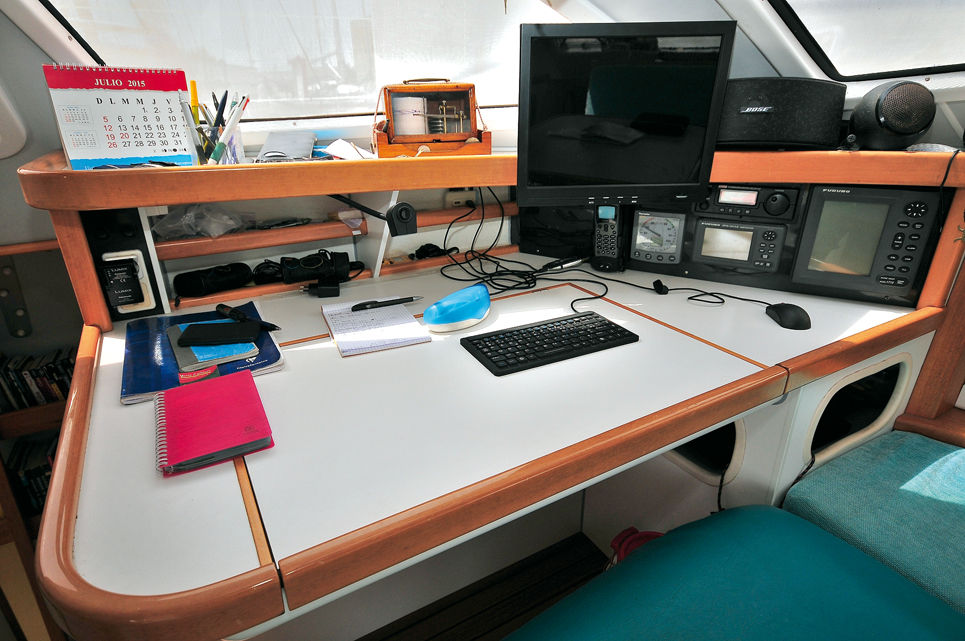
The chart table still needs to be of a decent size, even if most navigation is electronic these days. It’s an area which serves as a desk, for writing, sending emails, studying the weather forecast and so on - you will spend a lot of time here. What I did was shift the electrical panel into the neighboring companionway to keep this area and its functions clear.
Caption
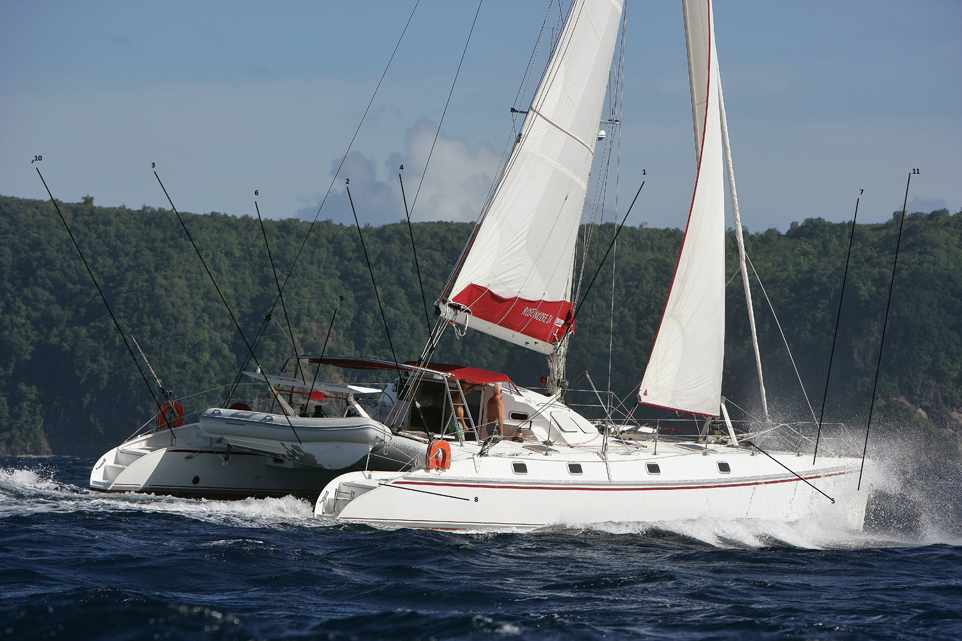
1: Reinforced gooseneck fitting
2: Engine control panels, complete with oil pressure and coolant temperature gauges…
3: A good-sized, hard-bottomed dinghy with a decent motor for getting back to your boat even in a strong wind
4: Mainsheet tackle with good quality blocks to reduce effort and allowing for quick dumping of the main (Here, Harken Black Magic or equivalent in other makes)
5: Serious ground tackle (40kg anchor, minimum 65 meters of 12mm chain + oversized 1,500W windlass)
6: Generous solar panels (here 350W)
7: The workshop occupies the forward part of the starboard hull
8: Emergency steering
9: Adjusting the mainsheet traveler as well as having the sheet coming back to a single console (to port) with a well-designed position for use
10: A salt-water pump and hose for a deckwash. Propellers are shaft-driven and there are two independent autopilots installed
11: The way the bows ride through the waves is a comfort-factor on a catamaran, as well as performance and safety. The design and fitting of the two false bows were a great success