If one believes the Holy Scriptures, in antiquity, the Hebrews were already rotating their crops; unfortunately, this worthwhile seven year labor has fallen out of fashion with today's farmers, but 21st century sailors are rediscovering the practice in a different context. To the eternal question of how to choose a boat, there are some new answers. Here are some knowledgeable and contradictory views...
I WOULD CHOOSE LONG-TERM RENTAL By Éric Vasse: Sailor and Manager of Punch Cruises in Martinique
Aha! The sabbatical, a chance to set off for a long time and to just let go! Cipango, Miladou Madoulou… or les Saintes come to mind perhaps; right, let's cast off! We've all thought about it, but what are the various choices? For me it would obviously be a multihull, and in the Caribbean for the fantastic sailing conditions! But how exactly do you go about it? Which boat to choose: a new cat or trimaran, a good second-hand or charter boat? (it does exist, even for a few months). Buying a new boat requires having a large budget (even when leasing), but it also means that you have a guarantee, can choose your options, and take delivery of the boat at the shipyard. For some people it's the only way to go. Buying a used boat can look like more of a risk, but it can also be a chance to find a compromise, or discover that hidden gem in a chaotic market place, and to hope that you fall on your feet. Those who manage to resell their boat at a not too-discounted price are rare, when all the extra costs like research, expertise and preparation (which are often underestimated) are taken into account. But a new option has now appeared on the market: long term charter. There are two possible sources for your boat: The first is from private owners who are offering a boat with which they have already travelled or have just returned from a trip, although the lack of a formal contract can be risky. (This is what happened to Richard, who had planned his project around a Bahia 46 chartered from a private individual, and who found himself without a boat two months before his departure, despite the fact that everything had been arranged: time off work organized and apartment rented out!) There are still not that many professionals offering multihulls on long term charter. Some have come to the end of charter contracts, and aren't always fitted out in a contemporary style as the charterers would like. Others have boats which are just for this kind of rental. They are set up to allow for a maximum amount of autonomy, and to be able to make the most of anchorages for as long as possible. This new charter product has several advantages: it allows one to work out one's budget more easily so that there are no surprises, and it means that at the preparation stage, the charterers are in contact with real professionals. What is indispensable, necessary, comfortable, not needed, depending on the route and the regions being visited? This isn't always easy when you are setting off as a family for several months and assuming a different set of responsibilities to those of urban life. Even if the sailing blogs are full of useful information, the transition is never easy! This formula also allows for you to benefit from assistance throughout the duration of your cruise, wherever you are. Now that's useful, no? It's very reassuring to be able to contact your charterer and share any issues that you may have, get their technical or logistical help by telephone. On top of all these important points, the one factor which will determine your choice between purchase and charter is the length of your planned trip. In my experience over the last few years, I have learned that if the trip is due to last more than 9 or 10 months, (a school year), then it is well worth looking into a purchase, as renting starts to become too expensive, and loses its interest. However, for a 6/8 month period there's no contest. Knowing what your budget will be in advance is very comforting and is far preferable to all the hassle of purchase and resale. As ever, any tips from experienced professionals who know this area of the business are always useful. For example: chartering a nearly new 40' catamaran for 8/9 months will cost you around €50000, which includes assistance throughout the trip (Open 40 owner from Punch Croisières). Set this against the amount lost from a purchase and resale of a new boat, which is around 15% in the first year. Take the example of a well-equipped 40' production catamaran costing €380,000 ex taxes. It will often be quite difficult to sell because the price will be so close to the price of a new one (-€57,000!). For second hand boats the annual loss is around 7%, on to which need to be added the costs of research, preparation and any new equipment, which cannot always be written off. For a used boat costing €180,000, assume around €20,000 which doesn't take into account insurance and annual fees, never mind the delays and surprises that can arise when reselling.
My advice? Charter and start sailing!
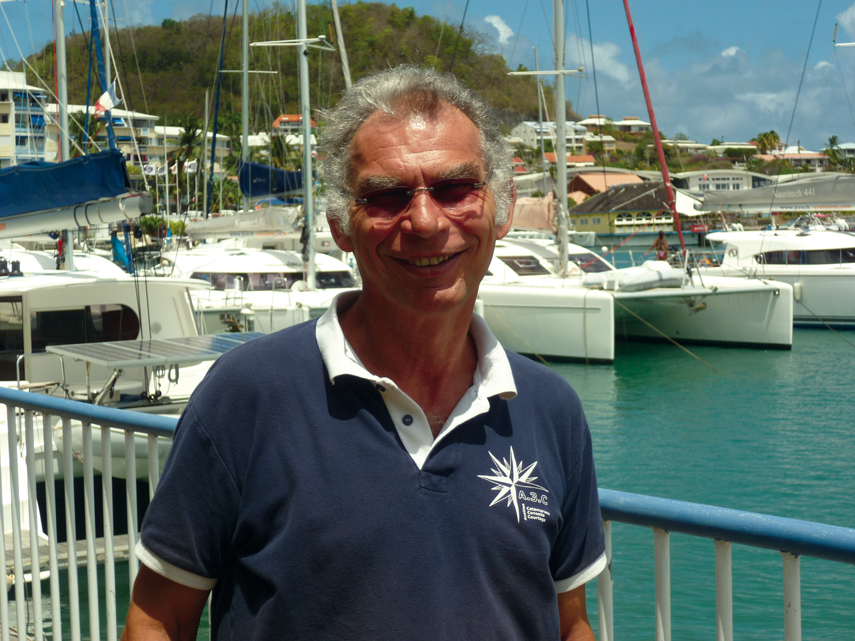
I WOULD VOTE FOR THE PURCHASE OF A NEW OR SECOND HAND BOAT. By Philippe Merceron, multihull sailor and agent for Fountaine Pajot in La Rochelle
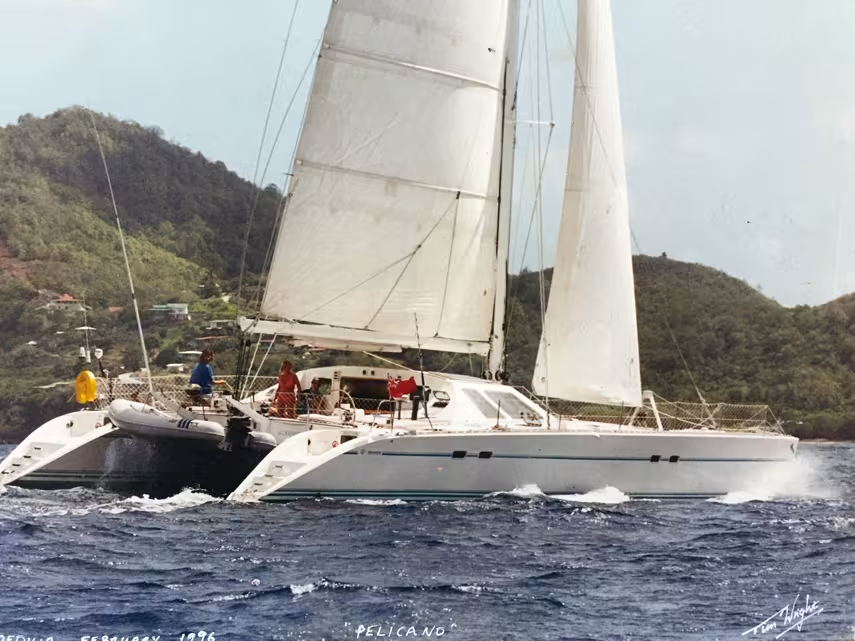
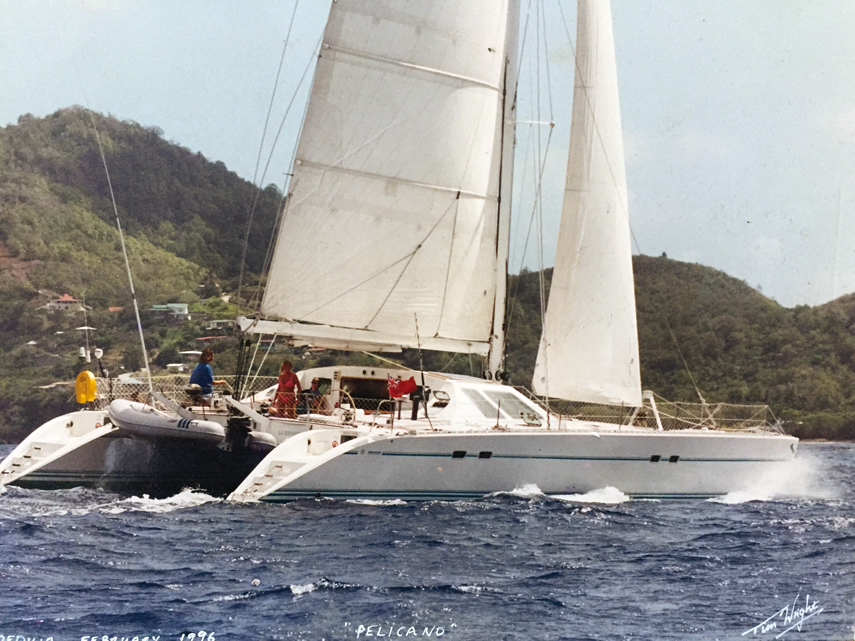
Setting out for a sabbatical year (or years) is not something to be taken lightly. Nor is it something which is decided upon in the heat of the moment (mind you..!). It's an adventure which requires proper preparation to make sure that everything goes smoothly, and the experience ends up being one of your best memories and not a nightmare. What's for sure is that the choice of boat is where the whole thing begins, and which I think should be seen as a separate stage in the planning. Should you rent or buy? Given that a production catamaran can be chartered for the equivalent of a school year for €40-50,000, it's a definite possibility, but in my opinion is only worthwhile for relatively short periods, probably less than a year. Beyond that it starts to become impossible or too expensive. So, charter or purchase? Without hesitation I recommend purchase. Whether it concerns a new boat or a good second hand one, (and the budget is just one of several criteria when making your choice), you should take your time and enjoy this part of the process, giving yourself the best possible chance of having a successful trip and not making any decisions in haste. Some would say that to set out with a fixed return date is only "half" setting out, but at least you set out! With this in mind, I suggest to those interested in a long trip to think about really making the most of their dream trip, and how they can benefit financially from their purchase: with intensive use for one or two years, before then using it simply as a family boat without necessarily thinking about a resale (maybe this implies the purchase of a smaller vessel than initially planned). I have been sailing since the age of 13 on various boats and have chartered for years. I have concluded that charter is better adapted to the learning period. You can learn the joys and the pitfalls of sailing, and work out the things that are missing or those that are not necessary. Twenty years ago, when I set off, I could never have imagined casting off on someone else's boat! The whole adventure began with the purchase and preparation of the boat. I wanted to know well in advance what the boats qualities and downsides were, as this was crucial to the whole idea of this life changing event. How could we forget the trip to Malta to sign the sale contract for the catamaran which would become our floating home for the next three years? Or the discussions with the owner who was so pleased that his boat would be joining a family and not a charter fleet. And then taking delivery of Pelicano at Port Camargue in the middle of winter with no heating! The former skipper explained all of the little problems that he had encountered with the boat (it was very informative but by the end of the day I was quite disheartened!). But this was part of the game: I needed to get to know the boat and any of her downsides if I wanted to be prepared. I started by dismantling all the winches, and checked all the spare parts. Next I checked the motors and the generator... within a few weeks I had become a proper mechanic! Later on, having a bit more confidence in myself, I had confidence in my boat. Having always sailed monohulls, it was time for the first maneuvers in a 9 meter wide catamaran, and all the attendant anguish! I didn't want to have to lose my insurance no claims bonus or pay for a few layers of gelcoat, so it was time to apply myself. At last we were just about ready...a few goodbyes to friends and family and on a 1st of April we set off. The Mediterranean didn't disappoint. 50 knots of wind outside the Rhone delta and dead calm arriving in Bandol. No material or moral damage so it had been a success: we had set off for three years! The next objective would be to teach our year old son to walk.
I hadn't thought about travelling around Europe at the end of our voyage, so we spent the first 9 months of our trip discovering her. Avoiding war-torn Croatia, we went through the Corinth Canal, crossed the Peloponnese and visited Antalya in the east of Turkey before ending up in Gibraltar. It was here that we prepared our first transat. Our first destination was Guadeloupe, and we then sailed around the Caribbean islands for the next two years, from Cuba to the San Blas. We twice thought about going through the Panama Canal, but the presence of our young son on board made us put that off.
Ten years later, I saw our boat docked in Martinique. The new owner allowed me to go on board, and I can assure you that the emotion that I felt was comparable to the happiness which I felt throughout those three years. The cat was called Pelicano and was a lovely epoxy Lagoon 55 and it was our real home!
My advice? For all of these reasons, and many more which often come from the heart rather than the head, I say buy and go!