



Maintaining your outboard once a year is the minimum. The recurrent problem with dinghy engines is that the engine does not run enough. During long passages, or stopovers in harbors, corrosion has time to set in and seize up the moving parts. There is a risk of breakages and breakdowns within a period which is finally quite short: a new motor which is little used and never maintained can be fit for the scrap yard in less than five years. The salt is to blame; it obstructs the cooling circuit, jams the transmission elements, the bolts and all the parts which should turn, such as the fixing screws. The best thing to do is remove the salt from your engine regularly – as long as it is easily transportable – by running it in a large container (a garbage can, for example) full of fresh water. Motors which are used on lakes are obviously less prone to premature ageing. Discover with us the points on your outboard which must be checked every year.

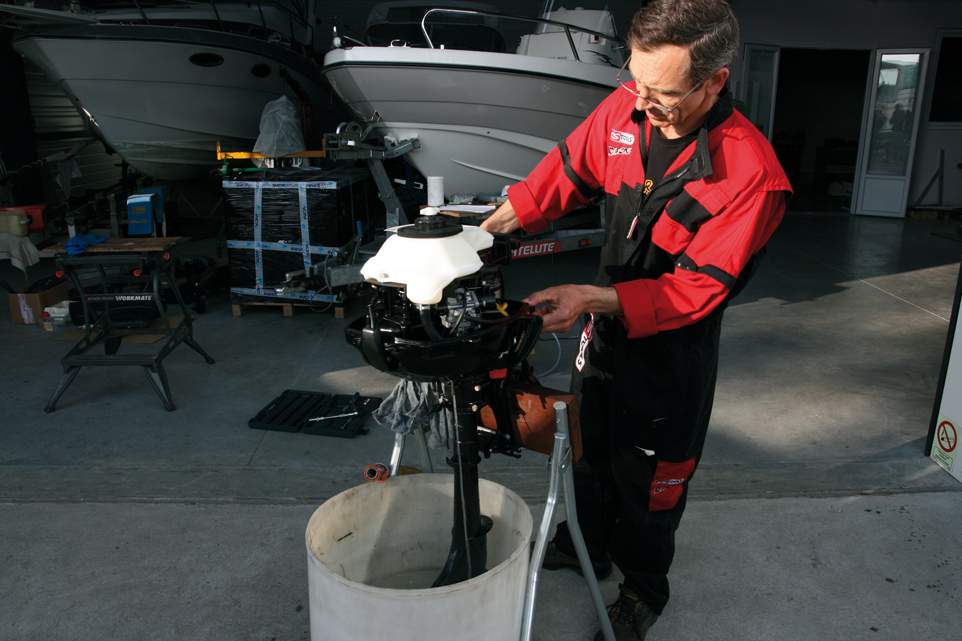
Run the engine in fresh water to eliminate the salt. An operation which should be repeated as often as possible, and at least once a year. Be careful if your container is not very big, as the water temperature can rise very rapidly.
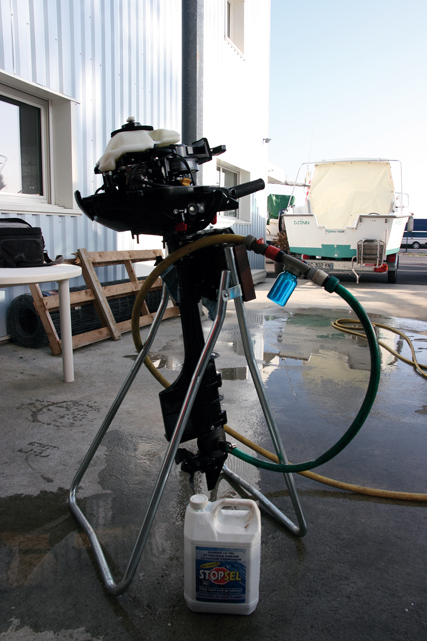
The water is emptied and replaced with a salt-removing product. On certain motors, the product can be ‘injected’ directly via the cooling water intake holes.
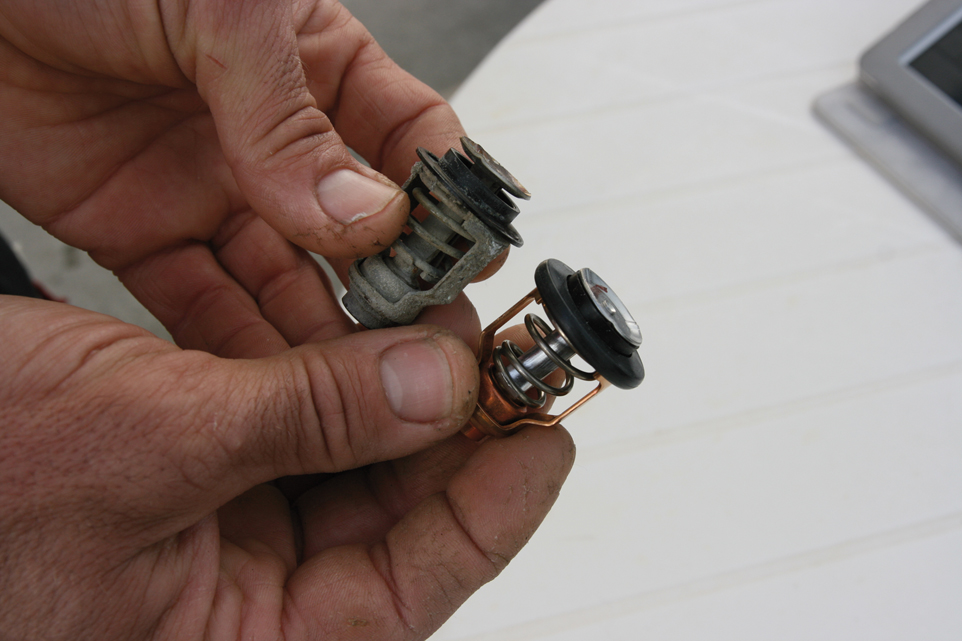
Check that the thermostat is working by putting a finger on the cover. It will be cold at first, then will heat up suddenly. If it remains cold, it must be dismantled and checked. Cleaning in an acid bath. If the thermostat remains jammed open – again because of the salt – it must be changed.
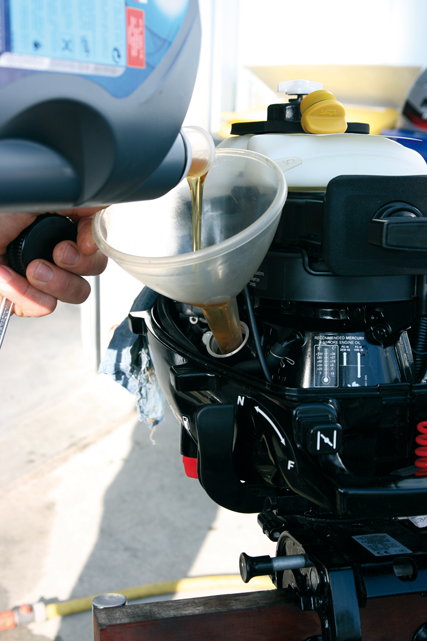
Oil change – for 4 strokes: on a big engine, every 100 hours. On a small motor, it must be done every year, preferably at the end of the season. The engine must be warmed up so the oil becomes more fluid. There is no oil filter on low powered outboards.
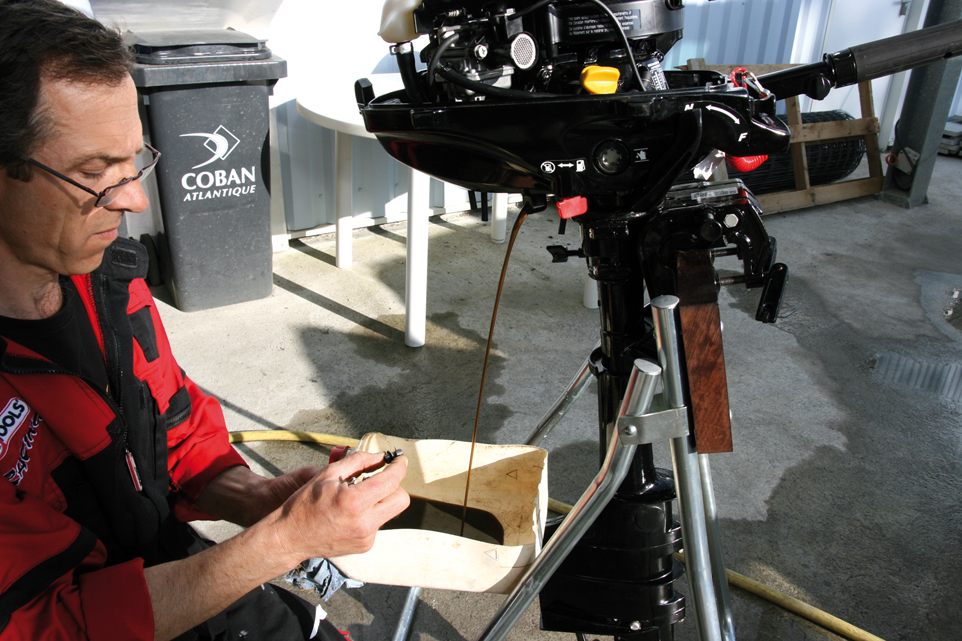
Remember to check the condition of the plug and the washer. The quality and quantity of oil are marked on the engine block. Remember to add some oil after having run the motor. Don’t over-tighten screw threads, especially on aluminum or plastic parts.
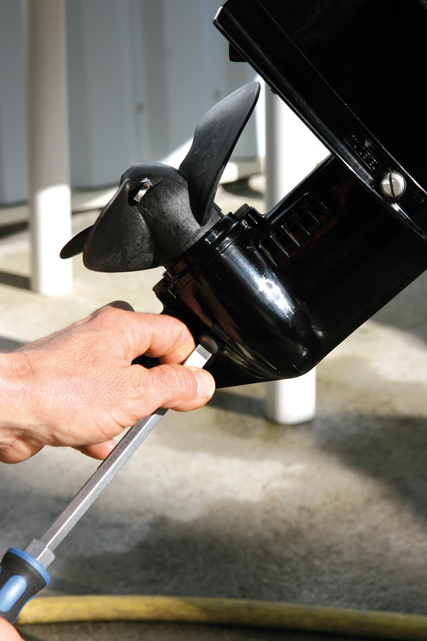
Remove the two screws: the oil which runs out must be clean. If there is any emulsion or even worse, clear water, obviously there is a water leak. And then there is the classic problem: fishing line round the shaft at the level of the propeller, which ends up by cutting the lip seal...
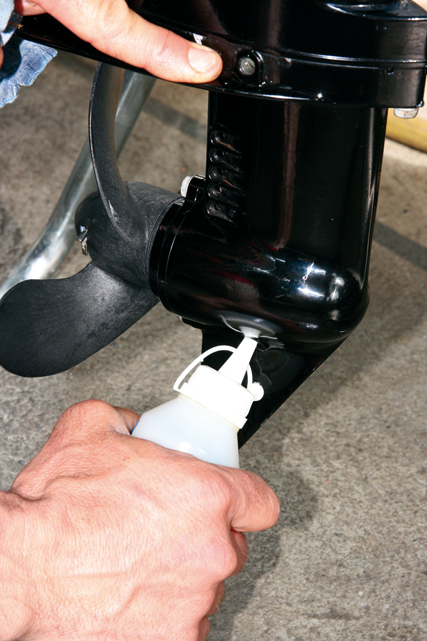
Let the oil drain. Check the washers once again and of course the screw heads, to avoid difficulties when dismantling later. Using an oil can or a special pump, fill the housing with special transmission oil. Clean the plugs and prepare them, ready to be refitted.
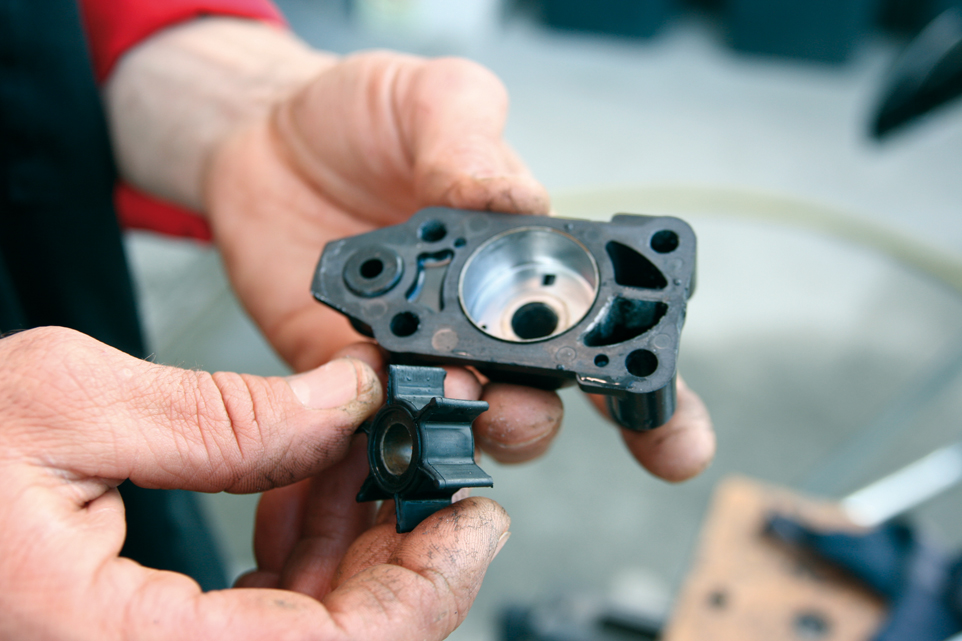
Ideally, the water pump should be checked every year. Remove the propeller foot, not forgetting to slacken the forward/reverse shaft. Check the impeller, refit with a little Vaseline, and grease the groves in the transmission shaft. Take advantage of the opportunity to remove the propeller.
Grease all the moving elements, such as the axles and pivots, which are just waiting to jam up. Use marine grease. Don’t forget the fixing screw: two months without moving and they are seized…
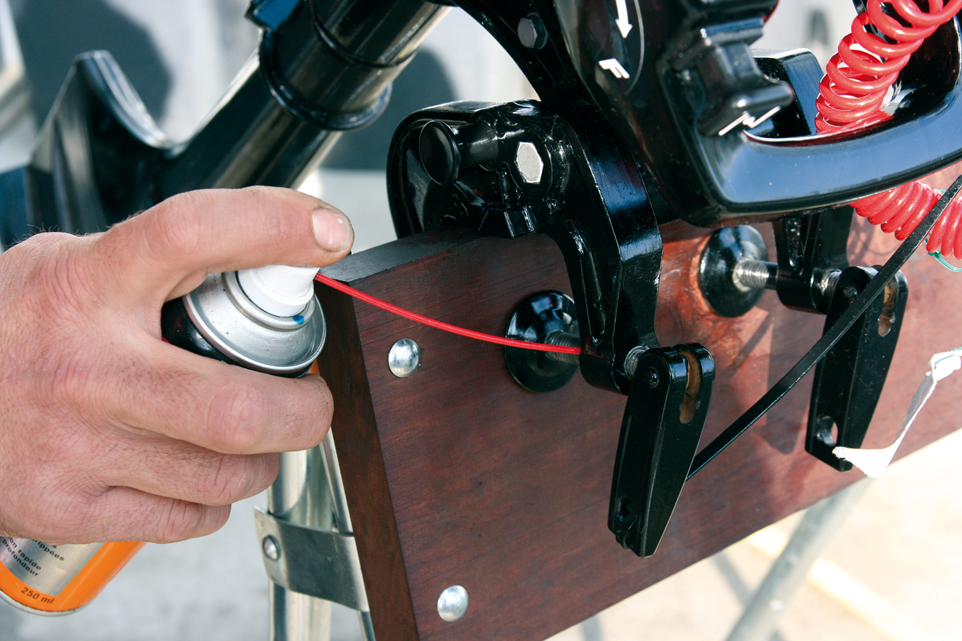
Remove the spark plug and spray in a special anti-corrosion product. Each manufacturer has its own product: don’t use WD 40, as it is not oily enough, but on the other hand, it is perfect for the engine block. Spray for three or four seconds. Pull the starter two or three times, then replace the spark plug.
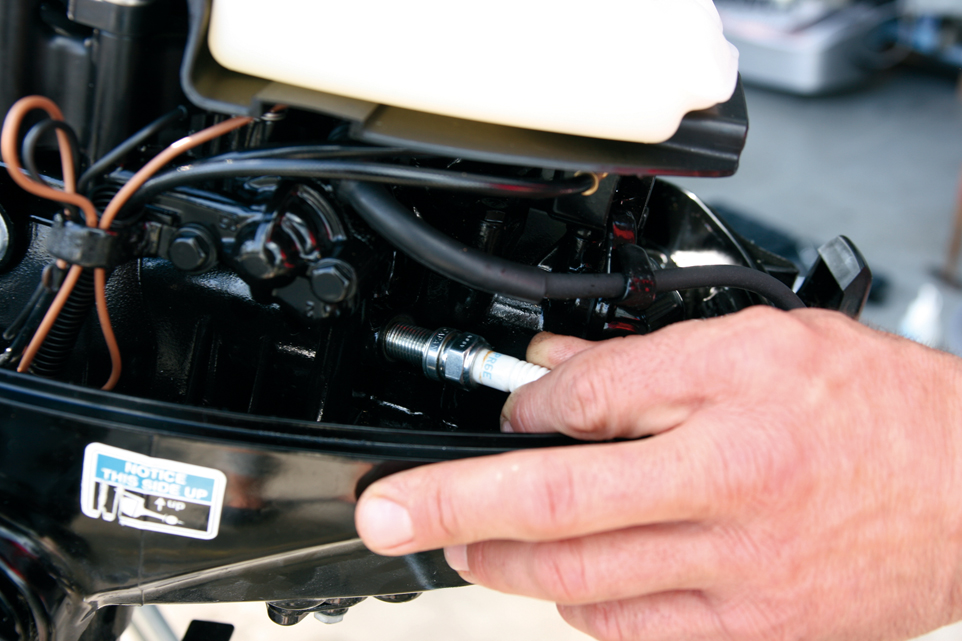
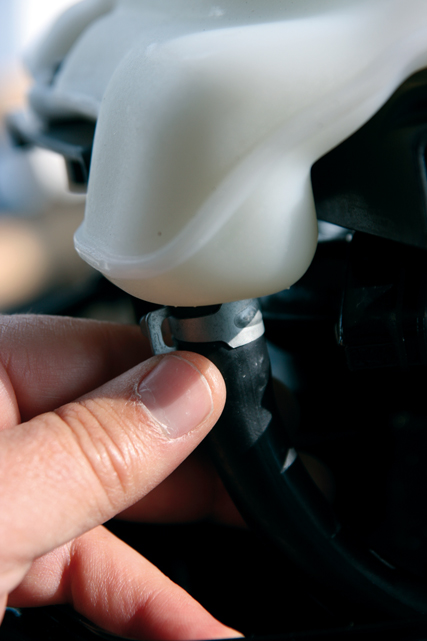
If the motor is not going to run for a long time, it is best to empty the carburetor: turn off the fuel tap and let the motor run until it stops. For the fuel tank, there is a choice: either treat the gas with a stabilizing product, or empty it by removing the flexible pipe at the lowest point.
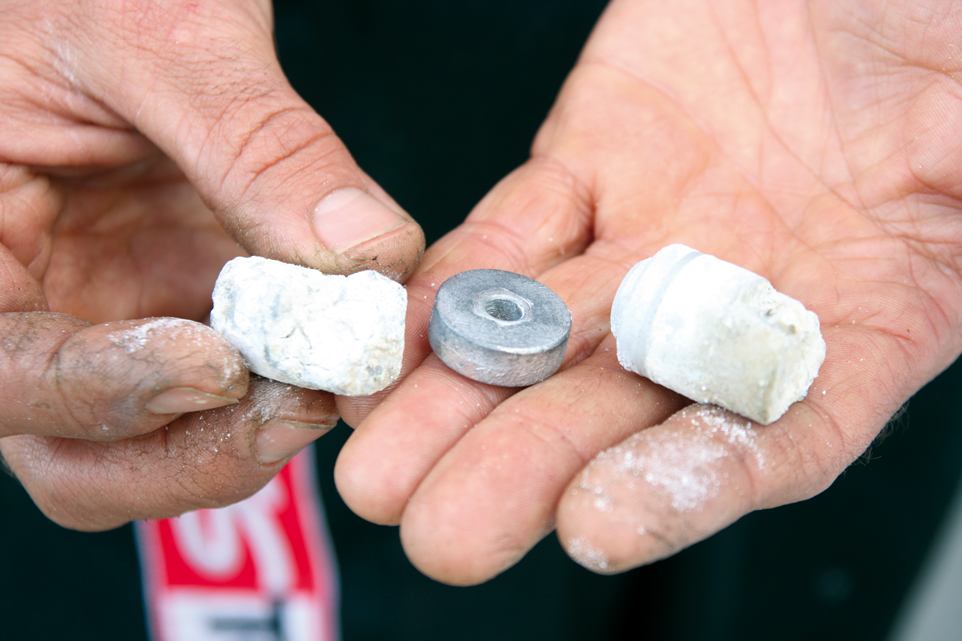
On the biggest motors, we find 7 or 8 anodes. Here we only have one. Even if it appears satisfactory, remove it to check that it is not perforated like that on the left and the right, whose inner surface is disintegrating.
The professional’s opinion Eric Courbouin, manager of Courbouin Plaisance.
A service begins with an overall inspection of the motor’s appearance: a bent leg or a damaged propeller should awaken some suspicion. The worst treatment for a motor is to remain ‘salty’ for months, without running, hence the importance of running it in fresh water before periods of inactivity. Unleaded gas can’t be kept for long: after two months it turns, loses its qualities and deposits form. There is no point in storing large cans of it in your garage – what’s more, it’s dangerous... When the engine isn’t going to run for a while, the carburetor must be emptied. As for the spark plugs, it is best to have a set aboard, but there is no point in changing them every year if they are in good condition.
My tools: assortment of flat and Phillips screwdrivers, a large container, such as a garbage can, open-ended and box wrenches, plug wrench, pliers...