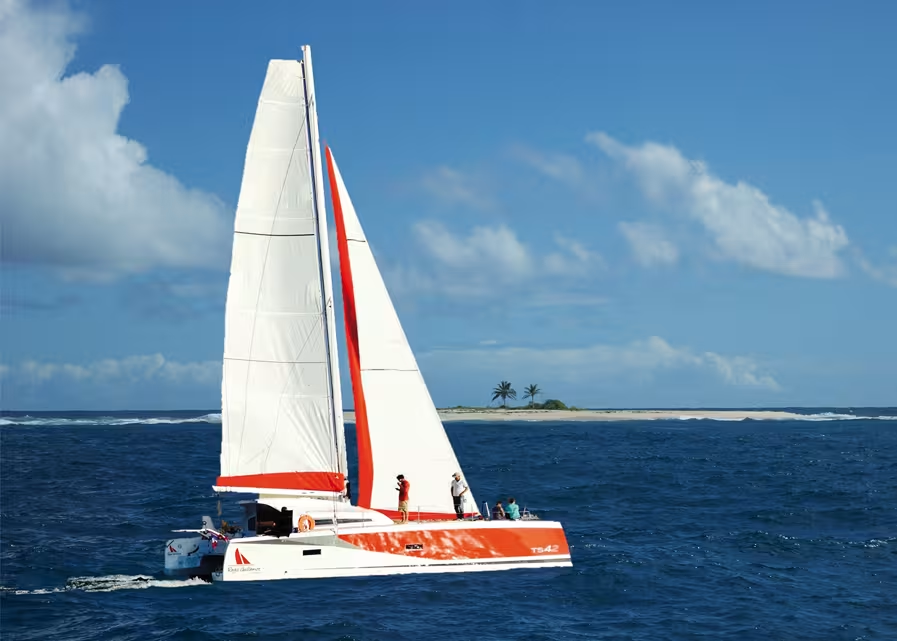


First of all, to choose the right propeller, a few bits of information need to be collected. The boat’s displacement, hull shape, windage, all more important than on a monohull , are of course the first things to establish. Closely followed by the motor characteristics: graphs showing torque and power developed for a given level of rpm, type of gearbox and reduction ratio are all essential so that a real propeller specialist can work out your optimum prop, an appendage which is all too often overlooked. Be careful not to fall into bad habits inherited from years of monohull sailing. Twice the power installed in each hull does not equal the same power installed in the same-sized monohull. Also, if you really want to get to the heart of the matter, your expert should be able to provide further essential information: maximum torque on the propeller, and maximum diameter. And now you’re getting into a really in-depth debate, beyond the comprehension of mere mortals, but which can have big repercussions on the performance of your multihull. A good propeller is always going to be a very good investment. It is the only thing which can compensate if your boat feels under-powered. And in the case of increased power, it will always have a positive effect on fuel consumption, potentially resulting in a significant reduction.
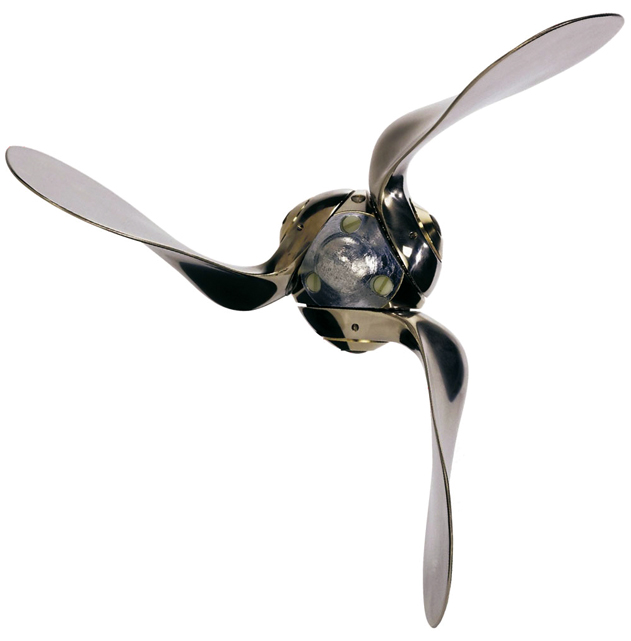
What makes matters get even more complicated is that we like a propeller which offers maximum effect going astern, not just ahead, for maneuvering in harbor. We also want efficiency in the form of low fuel consumption if we have to motor long distances in light airs. And finally we want as little drag as possible when we’ve got the wind in our sails. One further asset would be in they could manage to avoid getting snagged on any of the debris which is sadly drifting around in our oceans. In theory what we need is a propeller shaped like a duckbill when we’re under sail, and a three or four bladed fixed prop for long distance motoring or maneuvering in tight spaces. Simple eh? In years gone by we have been happy with two-bladed fixed or folding propeller, as that seemed to be the best possible compromise. Thankfully a few brilliant minds developed controllable pitch propellers. Eureka! They found a solution to the question of working as well going astern (better than a fixed prop) as going ahead, dramatically reducing the braking effect they cause when they are not in use, and can even be optimized for the speed at which they are turning. Since then, three-bladed folding propellers have become the norm on the majority of our sailboats.
All that’s needed now is the choice of material. Bronze takes the lion’s share, but that’s undoubtedly because stainless steel versions are considered to be prohibitively expensive. As for propellers with composite-built blades, they still have a certain fragility, meaning that they are not necessarily recommended for the fastest multihulls. But watch out, the future is just beginning, not only in terms of materials, but also on our future boats which are likely to be electrically powered: Propellers will of course always provide our propulsion when going along under motor, but will also be “receptors” of energy to recharge our batteries when we are under sail. New compromises and new design shapes to be optimized. In short, this 19th century invention which we thought would last forever is still discretely, and interestingly, evolving.
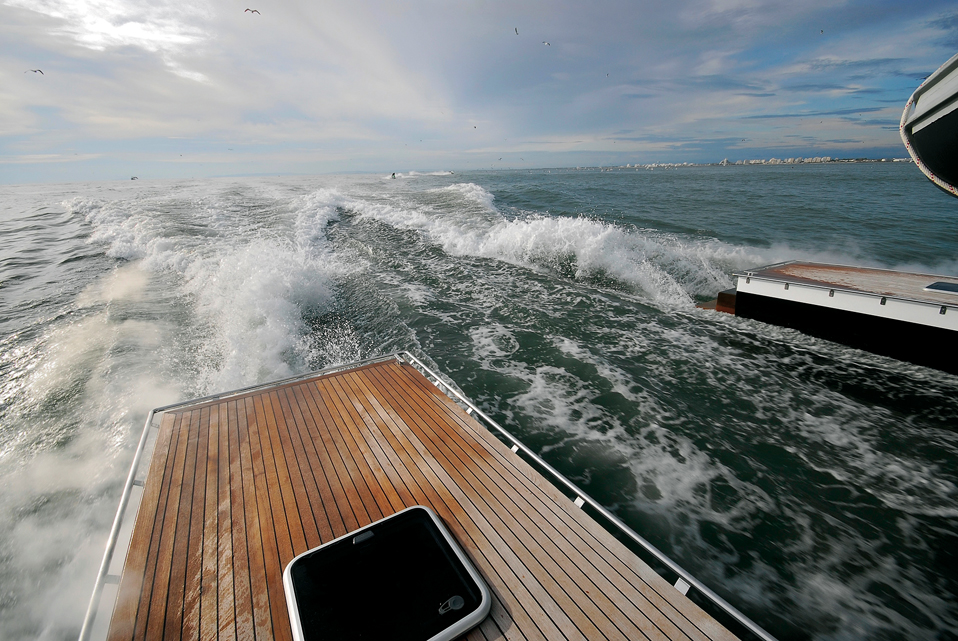
But once under power, the props have got to push you along!
Fixed Propellers:
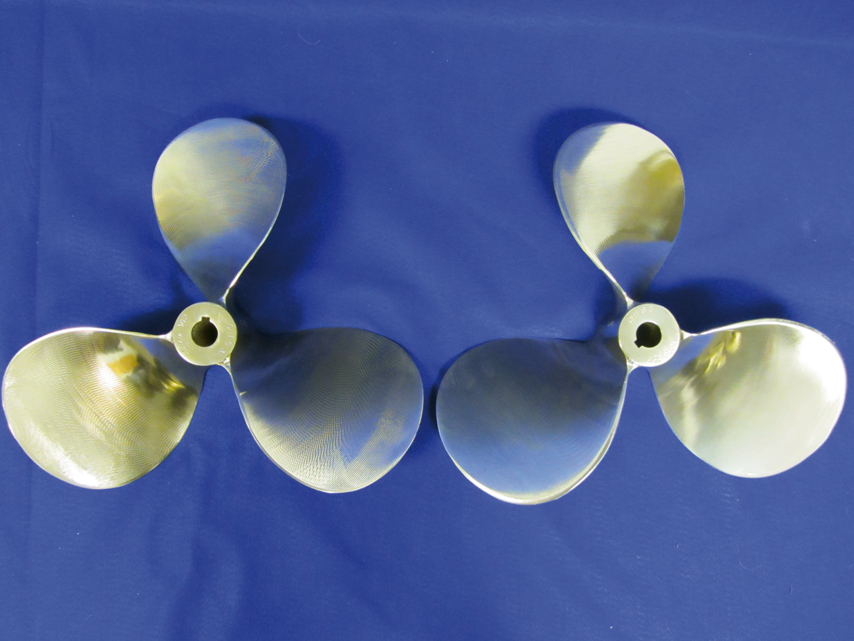
They are the Rolls-Royce of props for going long distance under motor. Three or even four-bladed for perfect balance, giving less noise and vibration, they can take your boat to the other side of the world with the regularity of a metronome. Well-designed and perfectly adapted to your boat, and above all to your motors, they make the best possible efficiency, at the lowest engine speed, for the lowest possible fuel consumption. But if they are the most effective under power, it’s when under sail that they reveal their downside. Significant drag can really slow you down. The amount strain created can also be significant. In effect, the pressure of the water generated by speed only serves to make the propeller want to turn. Stopping it by putting it in gear, in addition to the fantastic water-brake that creates, can lead to a wrecked motor in extreme cases. If you leave it free to turn, the drag will be less and the risk of serious problems reduced, but the rotation of the shaft or the saildrive will result in mechanical wear and less performance.
Price: around €500
Plusses:
Long term performance
Performance going astern
Economic
Minuses:
Detrimental drag under sail
Risk of wear when under sail
Risk of breakages when under sail
Folding Propellers:
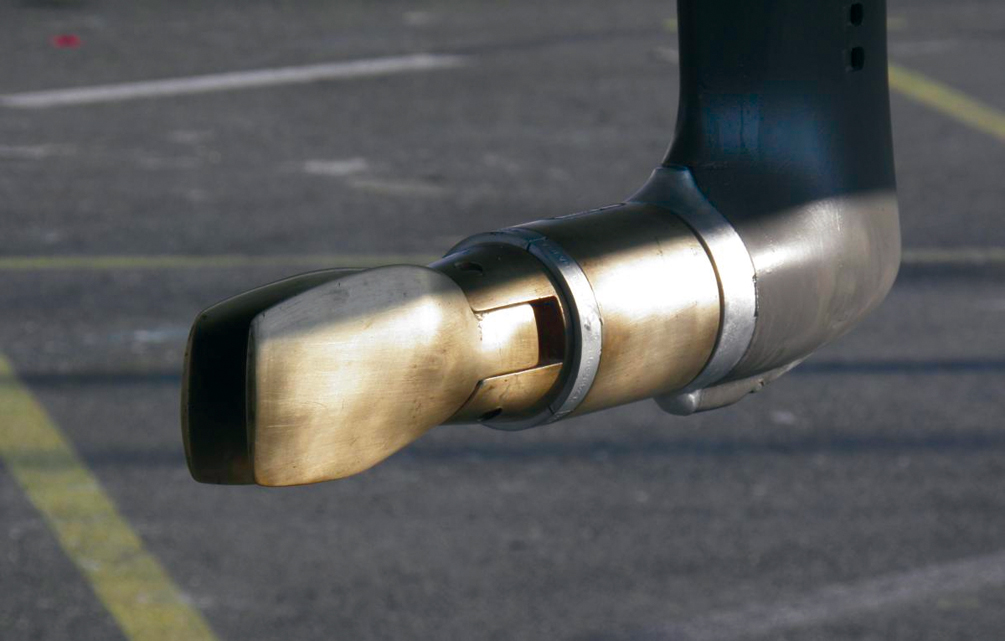
The famous “duckbill” prop which seems to take ages from the moment you engage astern to the point you eventually stop. For those who spend most of their time racing, they are a good solution, and can be pretty much forgotten about when under sail, given that they have about 85% less drag then a fixed-bladed equivalent. Under power, you might not notice much difference when you are motoring toward the start line in very light airs, and you don’t really give it much consideration if you are motoring into the wind or a choppy sea, even if you have to gun the motor to get to line on time. But the worst is when you engage astern when you are a couple of feet from the dock.
Price: from €500 to €1,000
Plusses:
Low drag when under sail
Affordable
Simple
Minuses:
Low power
Performance going astern
Performance in a big sea
Variable-pitch propellers:
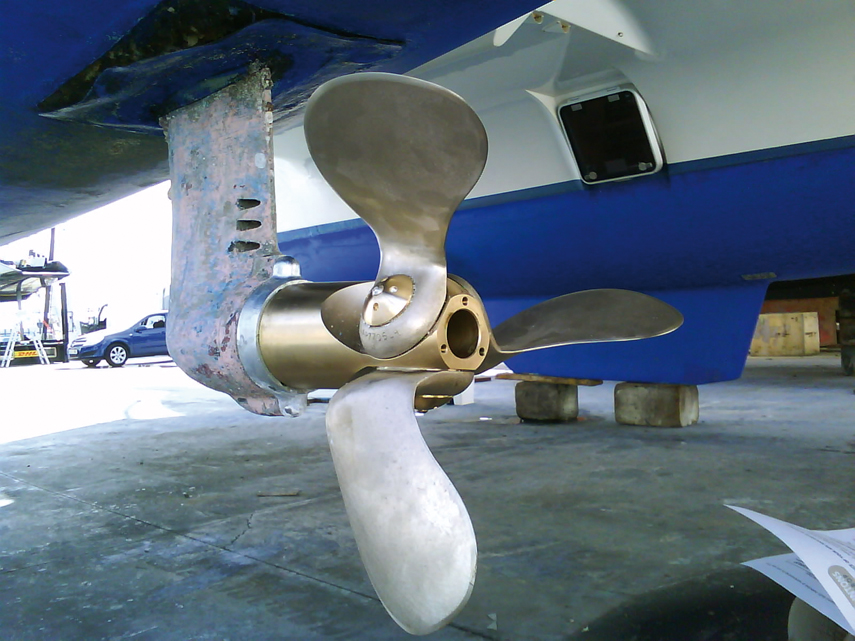
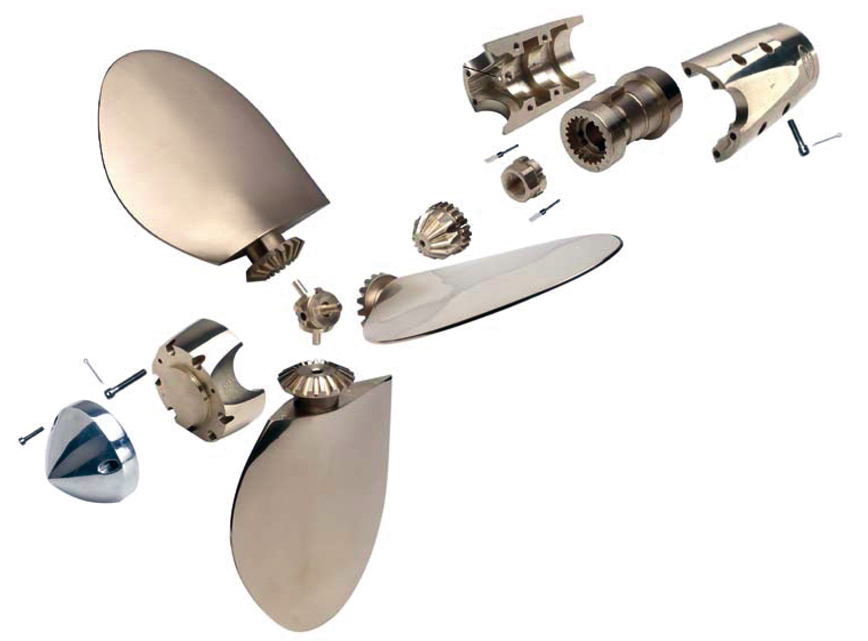
For those of us who love performance under sail, yet become a little stressed when we have to maneuver our beautiful multihull which suddenly seems to have grown in size, into the microscopic slip which has been generously allocated to us, it is without doubt the holy grail of propellers! Thanks to their variable-pitch blades, they are as effective astern as they are going ahead. When under sail, their finesse means they can be forgotten about as they move to their feathered position. For the fastest multihulls, an eye should be kept on the stability of the prop once it is closed up at high speed. Even for those who don’t always get into double figures, the hydrodynamic shape in this mode can vary from one model to another. In effect there are a number of manufacturers in this top-of-the-range market: Autoprop, J-Prop, Max-Prop, Varifold, Flexofold, and others. Each manufacturer offers their own innovations, qualities to attract you, or not, depending on how they are suited to your requirements, and how much you know about the subject: automatic change of pitch, or manually controlled so as to be perfectly suited to your needs (long passages, or coastal cruiser/racer program for example), the use of a flexible coupling as a shock-absorber, which should be obligatory if you want to conserve your gearbox, especially with a saildrive, integral zincs… And the last advantage, but not the least, once feathered, these props have the least tendency to get hooked on stuff floating in the water (fishing nets, seaweed, rope, plastic bags, etc.)
Price: from €2,000 to €3,000
Pluses:
Performance
Multi-purpose
Low drag when under sail
Minuses:
Price
Mechanically delicate
Fine tuning adjustments need to be worked out
With many thanks to Jean-Michel Arnaud and Guy Saillard for their precious advice.