

<h2 class="sous-titre">- How long have you been interested in powercats?</h2>
<p>In the mid 80’s I built power catamarans in South Africa and understood back then the advantages of speed, stability, space and economy with a catamaran. In the early 2000’s I made the decision as CEO of The Moorings to introduce Leopard Power Catamarans into The Moorings charter fleet in the British Virgin Islands and ever since then have been working on new power cat models including the past 3 years I have been developing the Aquila power cat brand distributed globally by MarineMax.</p>
<div class="article-image"><img src="/sites/default/files/inline-images/interview-motor-cat-lex-raas-01.jpg" alt="Interview Lex Raas - catamaran à moteur" height="590" />
<div class="caption">
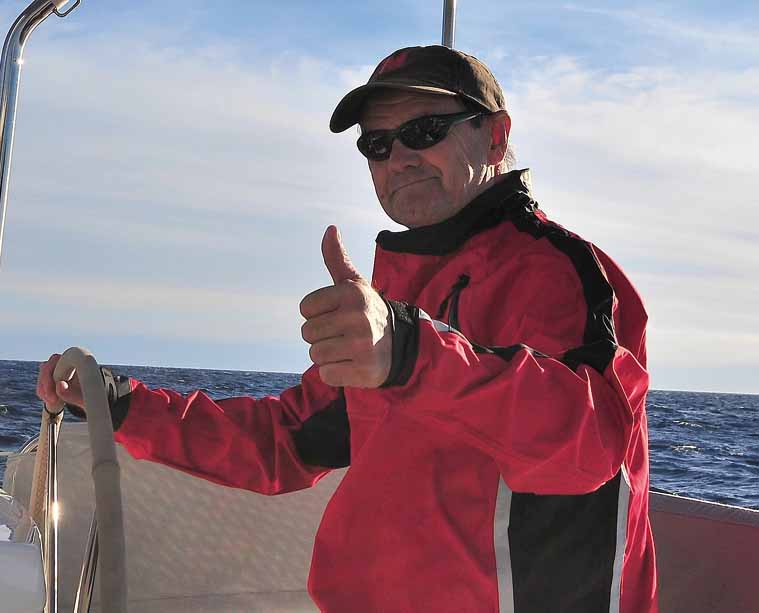
<p>Lex Raas has always believed in catamarans in general, and power cats in particular…</p>
</div>
</div>
<h2 class="sous-titre">- For you personally, is this more linked to business or pleasure?</h2>
<p>I can state… fun, fun, fun ! I have always been a strong believer in catamarans, however what has kept me very focused on power catamarans has been the reception of family, friends and customers when they step on board a power catamaran. I have been fortunate with companies supporting my conviction, The Moorings, Sunsail and now MarineMax. My lovely wife Carol sailed with me for many years on monohulls… however when we go cruising now…. a power catamaran is her request (or should I say demand:-) who am I to argue !</p>
<h2 class="sous-titre">- How do you see these types of boats developing: charter fleets, owners’ versions?</h2>
<p>I believe we are only just getting started. Pontoon boats in the USA have been the fastest growing sector and in reality these are catamarans, why has this flourished.. space, stability and economy. The market is evolving fast, we are working on various new models under the Aquila brand and with the distribution strength of MarineMax we plan to introduce very exciting concepts in the coming years. As for charter, in MarineMax Vacations, our Charter business in the BVI, we are seeing exponential growth and even more exciting is that new folks are discovering the ability to charter. This is a well known concept in the sailing industry but not in the power boat industry. Our new Aquila 44 has seen 5 units ordered for private ownership in December. The huge owners cabin and the excellent balance of accommodation and space all round is attracting long range cruisers and also weekenders. While power cats remain a niche now, just as sailing cats did in the 90’s, we are about to see even more growth in power catamarans than sailing catamarans.</p>
<h2 class="sous-titre">- The range of these boats is often limited by their (too?) high performance. Do you think that models aimed more at the expedition market need to be developed? Is there a market for them? How do you see the demand for this market?</h2>
<p>Our focus we believe is correct, a power cat that can long range cruise very efficiently in the 7 to 9 knot range but has the ability to cruise at 15 to 20 knots when necessary. We know there is a place in the market for this type of boat and it is already invented,the demand is already here. Once customers step on board and discover a well designed power cat they are quickly convinced.</p>
<h2 class="sous-titre">- The speeds proposed by the builders (in excess of 20 knots for most models) seem to be copying those of monohull motorboats. Do you believe this is just imitating them, so as not to upset people or because you daren’t offer a slower pace of sailing?</h2>
<p>There is a request for sure to travel over 20 knots and this customer will always be there and it is simply upgrading the engines, however we are finding that many folks want efficiency and are in fact considering long range at lower speeds. However as already mentioned, the ability to accelerate to 15 knots cruise and 20 knots top speed is a comforting thought. We are seeing many sailing catamaran owners taking an interest in our Aquila catamarans. The reality is that main stream sailing catamarans are quite slow with large sails to Handle and therefore the owners often find them selves motoring and not sailing the majority of the time. I have studied this in the BVI and most sailing cats on charter never actually sail. In my opinion there will be many sailing cat owners transitioning to power cats.</p>
<div class="article-image"><img src="/sites/default/files/inline-images/interview-motor-cat-lex-raas-02.jpg" alt="Interview Lex Raas - catamaran à moteur" height="590" />
<div class="caption">
<p>More and more charter companies are offering power cats: a craft for making the most of life…</p>
</div>
</div>
<h2 class="sous-titre">- Which parts of the world do you think are best suited to the development of powered multihulls?</h2>
<p>This is a global trend, Asia Pacific countries have no tradition of monohulls and in fact are very accustomed to outrigger powerboats therefore the space offered for comparable size and price is very attractive on a power cat. Everyone said that sailing catamarans would never work in the Med due to their beam and that was proven totally incorrect. There will also be various offers for narrow catamarans to answer to this. Fundamentally power cats are relatively less wide than sailing catamarans. I predict a slow global growth in all markets except North Europe probably.</p>
<h2 class="sous-titre">- From a technical point of view (design, motors, propellers, electronics...), what do you feel are the most important areas where significant developments can be made?</h2>
<p>Hull shape,accommodation and aesthetics will see huge changes in the coming years. I am a strong believer that foils will also become more developed that the recreational side will evolve. If we can get that figured out properly we are talking about efficiency gains of over 20% and of course a smoother ride….. what is not to like ? This is an exciting time for power cats as it is growing and will continue to grow.</p>
