
Before the beginning of the 70s, the choice was simple – there wasn’t one! A propulsion unit consisted of an engine, and a propeller, linked by a stainless steel propshaft, passing through a more or less watertight stern gland. This unit had the advantage of being basic, which led to a certain reliability, as well as easier maintenance. When the saildrive arrived on the scene, just like any sudden technological change, it initially ran counter to the nautical common sense of numerous sailors. The disappearance of the eternal stern gland, replaced by a large hole in the hull, made watertight by a simple neoprene joint, fed the fears of the most pessimistic amongst us for a long time. Forty years later, having proved its reliability, this solution has won unanimous support amongst the most representative builders. Without at this stage unveiling the advantages it provides to us humble leisure sailors, its compactness of course appealed to architects looking for extra space, but above all it won the support of production managers, quick to save on the tedious propshaft/engine alignment phase. To sum up, the saildrive is so much easier to fit, that its success was guaranteed by the builders’ economic interests.
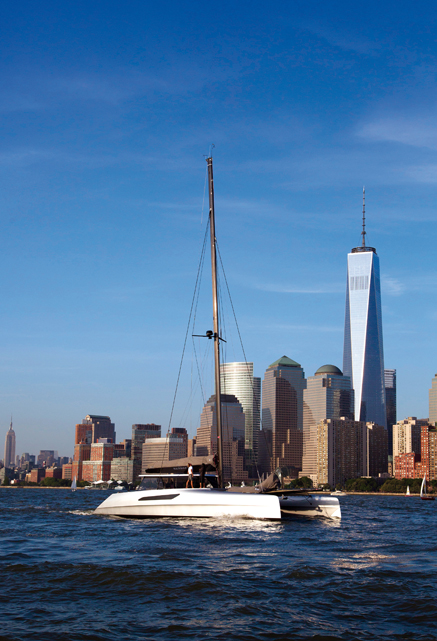
Even sailing boats sometimes need engines…
The latter, prompted by the phenomenon of a fast-growing ecological conscience, however (too?) quickly took an interest in electric propulsion, or more precisely at the time (almost 10 years ago), hybrid propulsion. As the batteries and the non-polluting means of charging them (solar panels, wind generators...) didn’t then allow them to offer a realistic range, the presence of a generator aboard remained necessary. On our cruising catamarans, this already allowed the number of internal combustion engines aboard to be divided by two! But the technology was not satisfactory, the various suppliers not in step, and despite the leadership of a large group, reverse gear was quickly engaged. Since then, technological developments, led by the car or aeronautic industries amongst others, have today opened up new horizons. Specialists have appeared, and are offering turn-key solutions which have already attracted several builders of one-off boats, but not yet the principle market leaders.
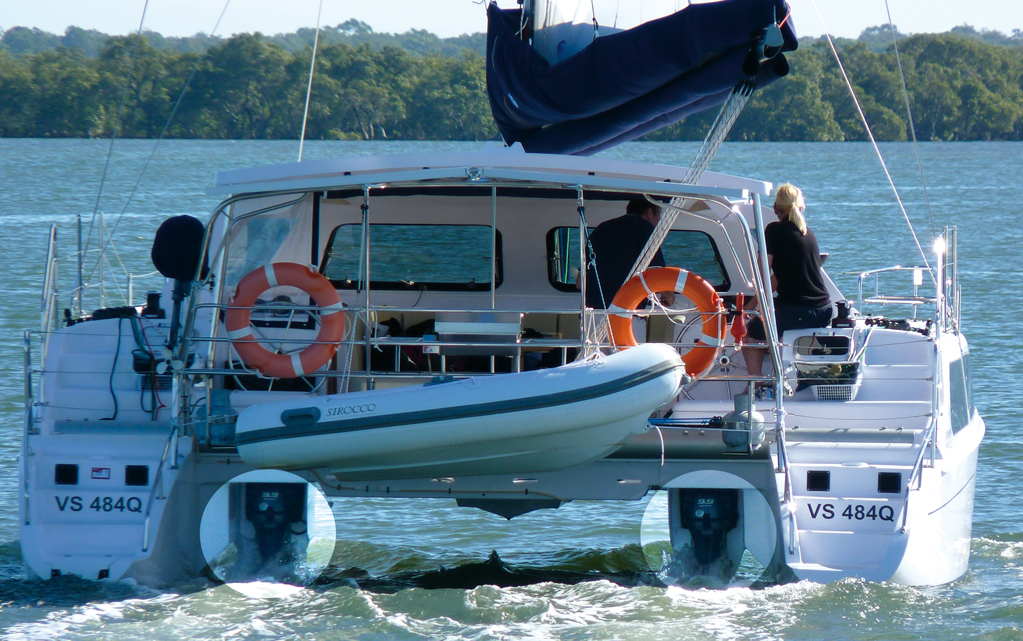
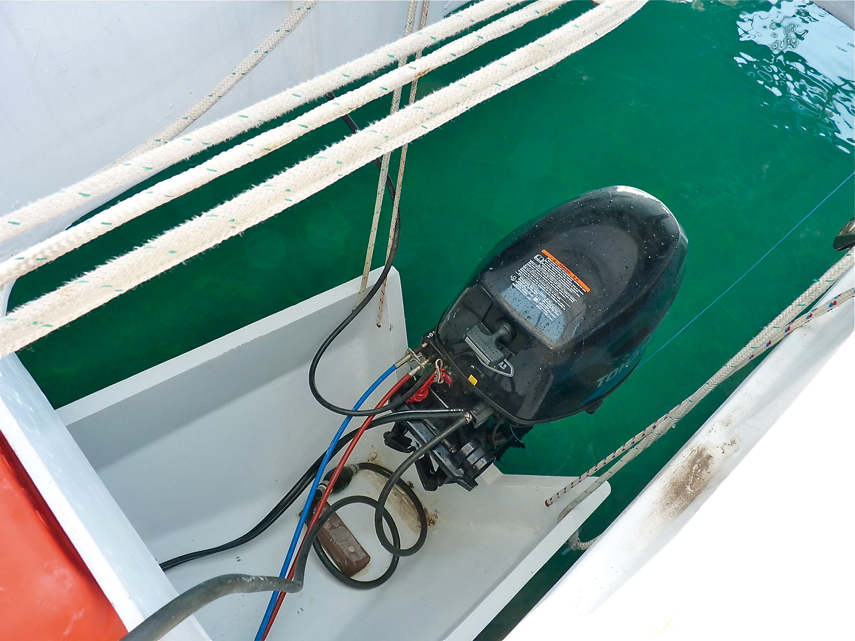
As the prices have started to soar, certain skippers and even builders have been tempted to return to simpler set-ups. One or two outboards on brackets represents a simple, lightweight and economical solution for multihulls under 10 meters. After having being abandoned for many years, some builders are taking a renewed interest in them, for the advantages mentioned above, but also because the improved reliability of the four strokes of yesterday and the arrival of electric outboards of tomorrow, opens up new horizons.
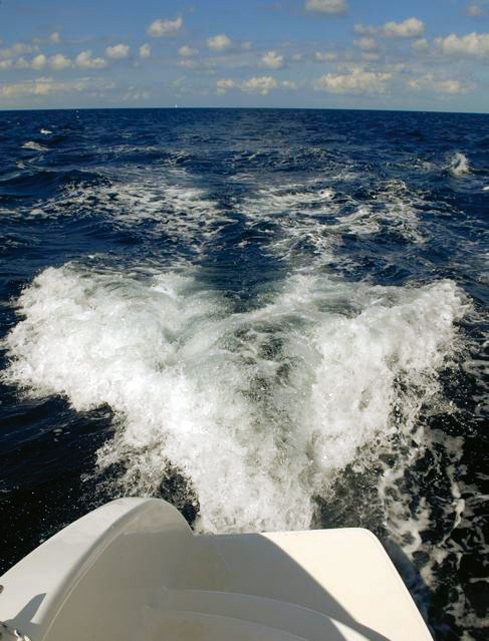
What power!
Propshaft
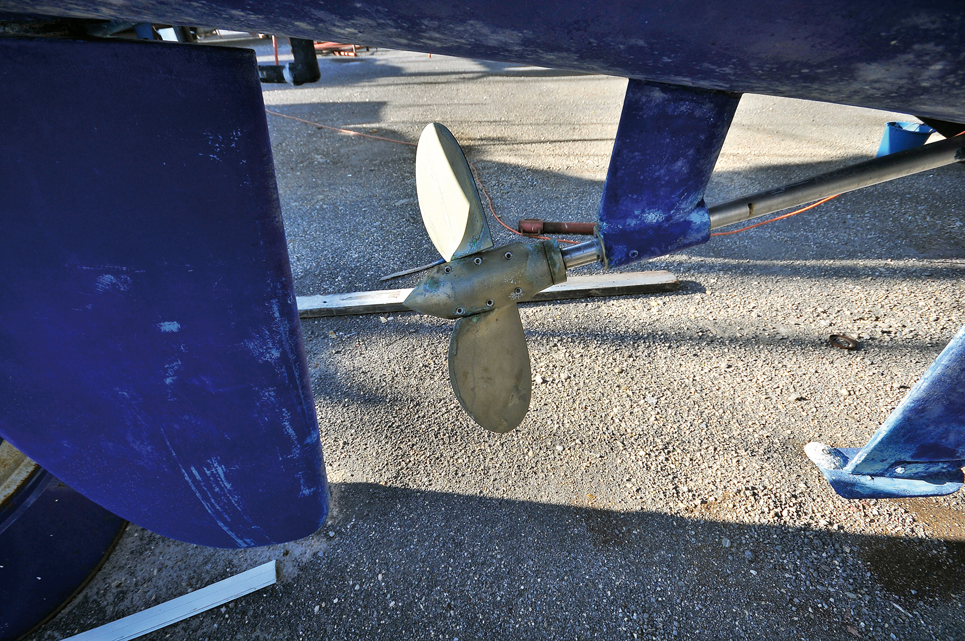
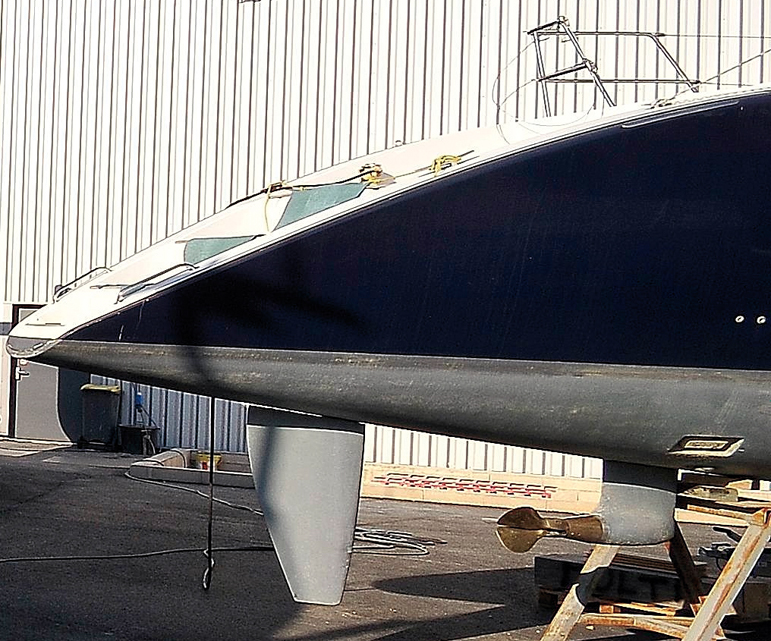
Tradition sometimes has its good points! Wherever you are in the world, no diesel mechanic, even one who is not a marine specialist, will be put off by your stainless steel propshaft, whose simplicity is only equalled by its reliability. Purists will say that its slight inclination (7 to 10 degrees) reduces the efficiency of the propeller it supports. You can answer that you are not looking for the last tenth of a knot under power, and that moreover this is amply compensated by the absence of complex returns, which always absorb lots of energy. On the other hand, you appreciate its low drag under sail. Of course you moan from time to time about stern glands which always let a small amount of salt water into the engine bays, which you like to keep immaculate. But the idea of easily being able to change the propeller, the anode, or even remove the engine without having to lift the boat out of the water will reassure you from your blue-water cruising standpoint. In any case, for the proud owners of large multihulls, the traditional propshaft was a natural necessity, as saildrive technology wasn’t suited to high powers (100 hp and above).
The plusses: Simplicity, reliability, maintenance
The minuses: Watertightness, possible vibration, longitudinal size
Saildrive
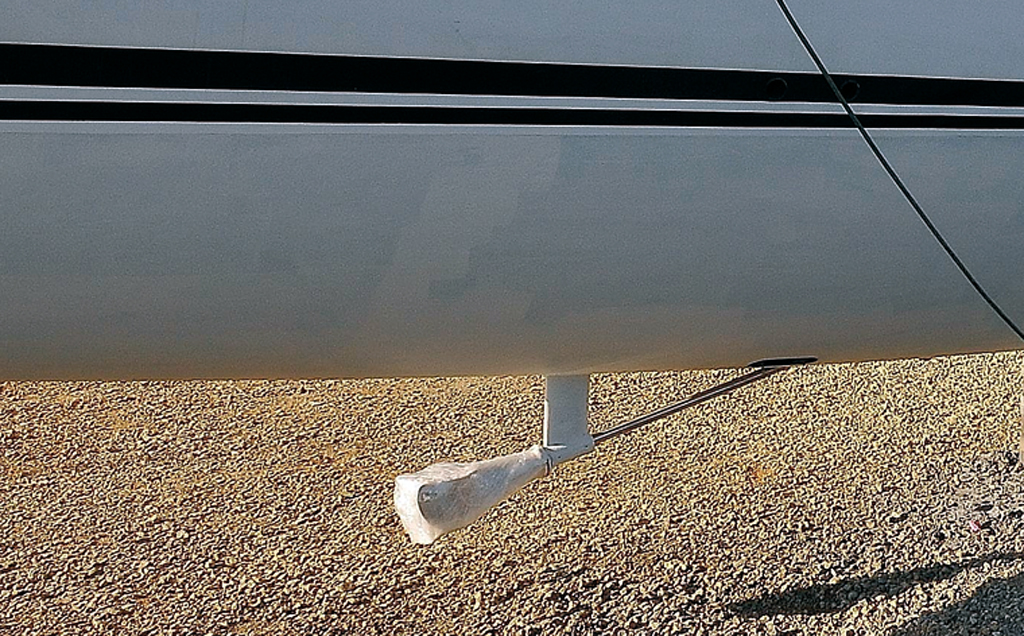
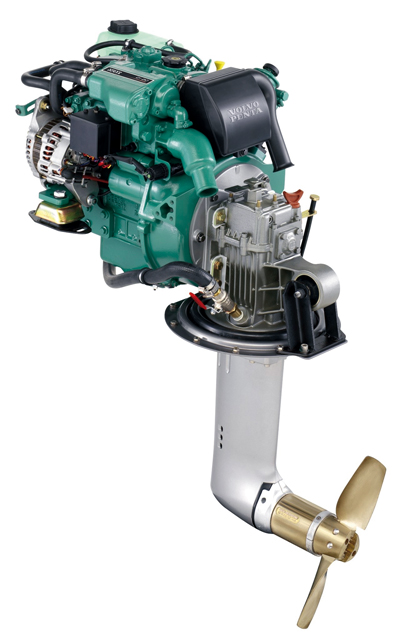
On modern cruising multihulls, following the example of their distant racing cousins, we no longer look to center the weight, but to move it aft. You will have seen how the nacelles have moved aft and the sugar scoops grown smaller over the last few years? Fortunately, the compactness of the engine/saildrive units allows them to be kept in engine bays which are completely independent of the aft cabins. What a development in comfort this offered, freeing up the space under the berths of any source of heat, noise or worse, foul odors. Not to mention the main advantage of this technology, the drastic reduction in vibration! No more alignment problems, no more propshafts bent by the first lobster pot you approached too closely. As it is well clear of hull, the propeller can be of a larger diameter. It already operates on a perfectly horizontal axis which favors thrust; its efficiency will thus only be improved. On the other hand, it will inevitably be a folding model, so as not to worsen the already significant drag generated by the leg itself. Although it has less to fear from mooring lines and other ropes, the saildrive’s enemy is fishing line, which severs the propeller axle joint, allowing sea water into the oil lubricating the complex mechanics of the leg. Regular ‘mayonnaise’ checks and a system of oil changing from above (thus without having to lift the boat out of the water) are essential!
The plusses: Compactness, comfort, fitting
The minuses: Maintenance, drag, large hole in the hull
Electric
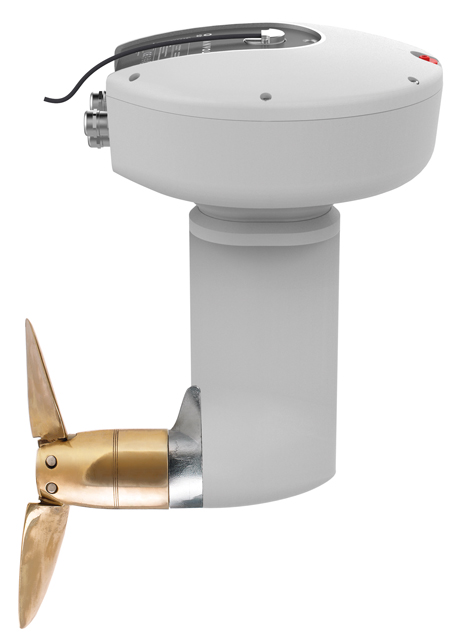
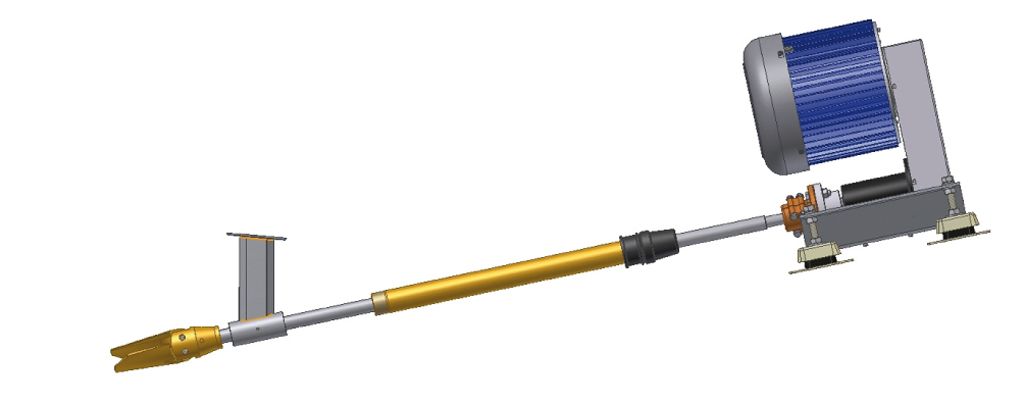
Cruising under power in complete silence, and without the slightest smell of exhaust fumes. We have to admit that although this has remained a dream for a long time, we are getting closer and closer to reality. For a car, the production of the electricity necessary for its propulsion merely moves the problem of energy generation to the power stations, which are for the majority still very highly polluting. Our sailing boats can produce ‘clean’ energy, through solar panels, wind generators, or when sailing either through specific systems such as the Watt&Sea, or by turning its propellers into hydro-generators. Magic! The power is immediately available, maintenance costs are almost zero, the life span of the motors is exceptional, they are easy to fit and compact, there is no winter preparation, no consumable spares...so where are the problems? Well, there are fewer and fewer of them, but there are still one or two. Firstly, the choice has to be made between a large battery bank, and a generator which is certainly reassuring, but turns the ideal, 100% electric mode into diesel/electric. Then in the first case, although each element taken individually is perfectly reliable, the interaction between the various components is complex, requires lots of electronics and safety, and needs to be made more reliable, especially in the marine environment. The skipper of a very attractive, up market catamaran thus equipped admitted that this year he was very happy to have reached an 80% availability level. Translation: the system works on average eight days out of ten, and is therefore broken down for the other two days! We would like to bet that when we reach 99.9% (and this will come quickly), all the builders will be offering this system. In the meantime, when replacing the engines, especially for a coastal cruising program, this is an option which we can start to envisage seriously.
The plusses: silence, absence of maintenance, power
The minuses: reliability, range, complexity
Outboards
It would be a shame not to think of them! Firstly, the most recent generation of four strokes, coupled to an electric start system, has relegated to the ranks of bad memories the exhausting and stressful hand starting sessions of our youth! Then the possibility of lifting them when sailing is a real plus point for the purists: significantly reduced drag means gaining several tenths of a knot. Here again, outboard brackets with an electric or hydraulic ram are a real must, and once lifted, give us the pleasure of pure sailing. Similarly, being able to store them under cover for winter and take them to your favorite mechanic for a service is a real plus point, once you have equipped yourself with the means to carry and transport them, as they are very heavy. Unfortunately, every rose has its thorn, and gasoline compared with diesel is one. As it is inflammable and sensitive to external pollution, it is advisable to be prudent and attentive. A problem which the electric models which are starting to appear on our waters will remedy. Finally, reconciling deep immersion of the propeller to avoid any cavitation with the bridgedeck height necessary to reduce impacts with the waves to a maximum is like trying to square a circle.
The plusses: lightweight, can be lifted, transportable
The minuses: gasoline, fragility, difficult positioning