A little history: 36 legendary years, and a passion which remains intact
1978: Michel Etevenon was an advertising man who felt that ocean racing needed reviving. He created a transatlantic race, leaving from St Malo, destination Guadeloupe. There were 38 boats at the start, of which only a quarter were genuine racing boats. But the legend had begun, and this first edition stood out, with a finish which would go down in the annals of ocean racing. After 23 days at sea, Mike Birch, aboard his little trimaran, Olympus Photo, beat Kritter, the big 21-meter monohull, skippered by Michel Malinowski, on the line, by 98 seconds! This tiny difference after an Atlantic crossing was to have enormous repercussions, and monohulls would never again beat multihulls in a race... A new era had been born.
Unfortunately, this first edition also saw the disappearance of Alain Colas, aboard Manureva, the former Pen Duick IV. Amongst the other participants, we already found Poupon, Arthaud, and Pajot, who would later add their names to the record...
Four years later, there were 52 boats on the start line, all equipped with an Argos beacon, which allowed them to be followed. A plus for the skippers’ safety, as well as for communication. For the only time in the race’s history, the competitors had to round a mark in Martinique. 1982 was the year of Rosière, Guy Delage’s proa, which folded up on the start line... But it was above all the year of the first giant multihulls, one of which (Eugène Riguidel’s William Saurin) measured 27 meters, and five others, Olympus III (Robin Knox Johnston), Britanny Ferries GB (Chay Blyth), Jacques Ribourel (Olivier de Kersauzon), Elf Aquitaine (Marc Pajot) and Charente Maritime (Pierre Follenfant) measured from 18.29 to 25.91 meters. Marc Pajot (on his catamaran which cracked and obliged him to stop in Martinique!) won, ahead of Bruno Peyron. We now knew that to win, you needed a giant multihull...
1986 was a transitional year. To win, you had to have a multihull, and it had to be a big one! Hence there were ‘only’ 33 boats at the start, but 13 of them were over 23 meters long... Amongst the multihulls, the battle between the trimarans and the catamarans was fierce. Supporters of two hulls were still in the majority (13 cats) as against the 9 trimarans entered. 1986 was also the year of the first foils. But for this 3rd edition, the Atlantic proved to be particularly difficult, maltreating the multihulls’ structures: Loïck Peyron, Paul Vatine, Hervé Cléris, Olivier de Kersauzon and Tony Bullimore quickly abandoned, then it was Dominique Marsaudon’s turn. Then came a tragedy; Loïc Caradec, aboard his giant cat Royale, capsized. Florence Arthaud arrived on the scene, only to discover that the Breton skipper had disappeared. Philippe Poupon won at Pointe à Pitre, two weeks after the start, ahead of Bruno Peyron, who seemed to be the eternal second.
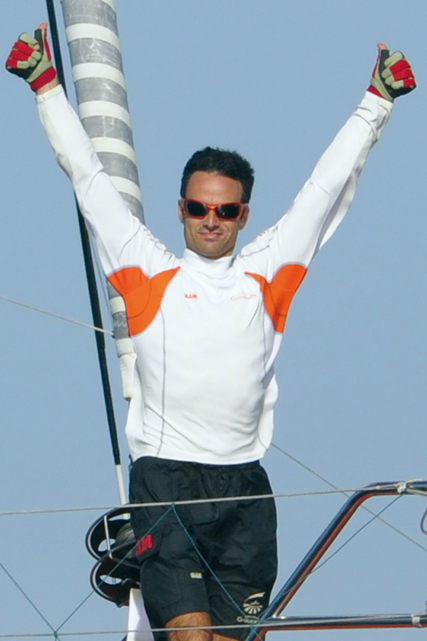
Who will take Franck Cammas’s place on the top step of the podium? Answer between 9th and 11th November…
1990: the giants were banished. In 1978, the Route du Rhum was created as a reaction to the English banning giant boats in their Transat (in 1976, Tabarly had won it aboard Pen Duick VI – 22m – ahead of Alain Colas’s Club Med – 72m!!!). But after the disappearance of Caradec in 1986, the size of the boats in the race was limited to 60 feet.
These new boats, all carbon, were lighter, stiffer and also much faster! But this limitation forced Bruno Peyron, Francis Joyon and Hervé Laurent, with their 65-foot boats, to forgo the race. Just 31 boats appeared at the start at St Malo, with nevertheless four new boats: Pierre 1er (Florence Arthaud), Fujichrome (Mike Birch), RMO (Laurent Bourgnon) and Fleury Michon IX (Philippe Poupon). As in each year, the depressions got the better of the most reckless, and there were many stops in the Azores. Handicapped by damage, Florence Arthaud hung on, resisted, persisted and crossed the finish line as a great winner, ahead of Philippe Poupon, and a certain...Laurent Bourgnon. The image of the ‘petite fiancée de l’Atlantique’, the first woman to have beaten the men in a race, on her beautiful golden boat, went round the world. The Rhum really is a race which creates legends!
In 1994, there were only 24 boats on the line, 12 monohulls and 12 multihulls. For the first time, the monohulls and the multihulls raced separately, even though in the minds of the general public, there was only one winner: the first to Pointe à Pitre. Florence Arthaud couldn’t defend her title, as her trimaran had been bought by Steve Fossett, who renamed it Lakota. He finished 5th. Made faster by the Vendée Globe, the monohulls were quick, particularly to windward in strong winds, and at the finish, two monohulls followed the two multihulls of Laurent Bourgnon (RMO) and Paul Vatine (Région Haute-Normandie). This was also the year that weather routing became widespread.
1998 saw the number of participants grow again, with almost equality between monohulls (18) and multis (19). For its 20th anniversary, the race entry was evenly balanced, and it would have been a brave man who tried to forecast the result before the start.
As in each edition, the Atlantic depressions caught out both boats and sailors, and abandon followed abandon: Yvan Bourgnon, Victor Jean-Noël... The surviving skippers chose radically opposed options: Francis Joyon went south (as far as the Canaries!), followed later by Loïc Peyron; Paul Vatine went north. It was however the middle route which was to prove the winner, a trajectory followed by Laurent Bourgnon, Alain Gautier, Marc Guillemot and Franck Cammas. Bourgnon won it for the second time, followed by Alain Gautier 3 hours later and Frank Cammas at 11 hours. Behind, Marc Guillemot, Loïck Peyron and Francis Joyon shared the places of honour. Six boats finished within less than 30 hours; when we said that the entry was evenly balanced...
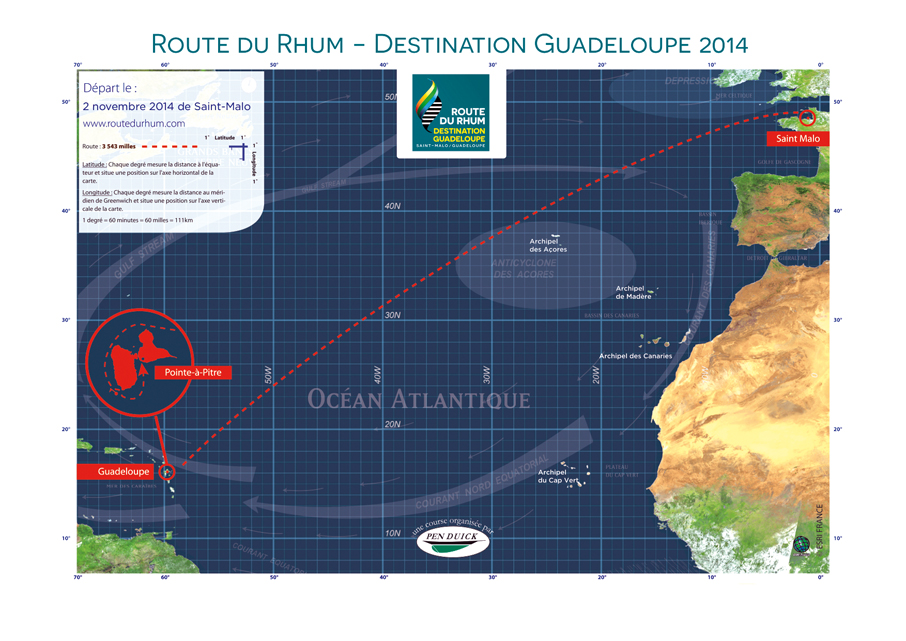
As in 1978, the 2014 route goes from St Malo to Guadeloupe...
In 2002, everything came together for a good race... There were 58 boats at the start, including 18 60-foot multihulls, the famous Orma 60s, genuine nautical Formula Ones. But once again, the weather had decided that the Rhum had to be earned! Of the 18 60-foot trimarans, only three crossed the finish line, and then only after having stopped for repairs.
The storm off Spain was Dantesque. On the second day, Bertrand de Broc abandoned and turned back, quite simply because it didn’t feel right. Bravo! A few hours previously, off the Ile de Batz, Frank Cammas aboard Groupama had capsized, and Jean Le Cam had embedded his boat in the upturned trimaran. It was however just the beginning, as one after the other, the boats capsized or broke up. Only Michel Desjoyeaux (Géant), Marc Guillemot (Biscuits La Trinitaine) and Lalou Roucayrol (Banque Populaire, the only boat not to make a stop!) crossed the finish line. The biggest disappointment was certainly that of Stève Ravussin, who, aboard Technomarine, had the race in the bag...when he capsized. In the small multihulls, Franck-Yves Escoffier (Crêpes Whaou! 2) won, ahead of Anne Caseneuve (Yachtingcasino.com) and Hervé Cléris (Vaincre la Mucoviscidose).
There were 74 boats at the start of the 2006 edition, and as if to excuse itself for the previous edition, the weather conditions were exceptional. Downwind only, which allowed Lionel Lemonchois on Gitana11 (the former Orma 60 trimaran Belgacom) to win after a crazy week at an average of 19 knots, at the same time shattering the record for the event in a time which still hasn’t been beaten. Behind we found Pascal Bidegory on Banque Populaire and Thomas Coville on Sodeb’o. In the 50-foot class, Franck-Yves Escoffier won for the second time aboard a brand new Crêpes Whaou!, the second to bear the name, followed by Eric Bruneel on his Trilogic and Victorien Erussard’s Laiterie Saint-Malo. In the 40-foot multihulls, Pierre Antoine won aboard Imagine Institut des Maladies Genetiques (former Cotonella); he was the only one to finish the race, after Charlie Capelle and Ross Hobson had abandoned.
2010 saw the return of the giants. A return to its origins for the Rhum, which no longer set a length limit (but which continued to ban the proas???). Since 1990, the boats had been limited to 60 feet, but the new rules allowed 9 ‘Ultimes’ to enter and aim for the victory. Franck Cammas entered, aboard his Groupama 3, the trimaran with which he had just beaten the round the world record, fully crewed. 31.5 meters to race singlehanded across the Atlantic – even with a mast ‘cut down’ from 41 to 37 meters, it seemed to be a crazy challenge, when faced with the singlehanders’ trimarans, such as Idec and Sodeb’O. 84 sailors (24 in multihulls) enjoyed the relatively mild conditions at the start of this edition, which saw Franck Cammas take the southern route (the northern route was too dangerous on his huge trimaran), where his boat’s power downwind made the difference, to take the victory.
In the Multi 50s, Lionel Lemonchois (Prince de Bretagne) again wrote his name in the event’s records, ahead of Lalou Roucayrol (Région Aquitaine- Port Médoc) and Loïc Fequet (Maître Jacques). There was no 40’ multihull class in 2010; they were relegated to the ‘Rhum’ category, the ‘ragbag’ class created by the organizers for all the boats which didn’t fit into the ‘noble’ classes. A shame...
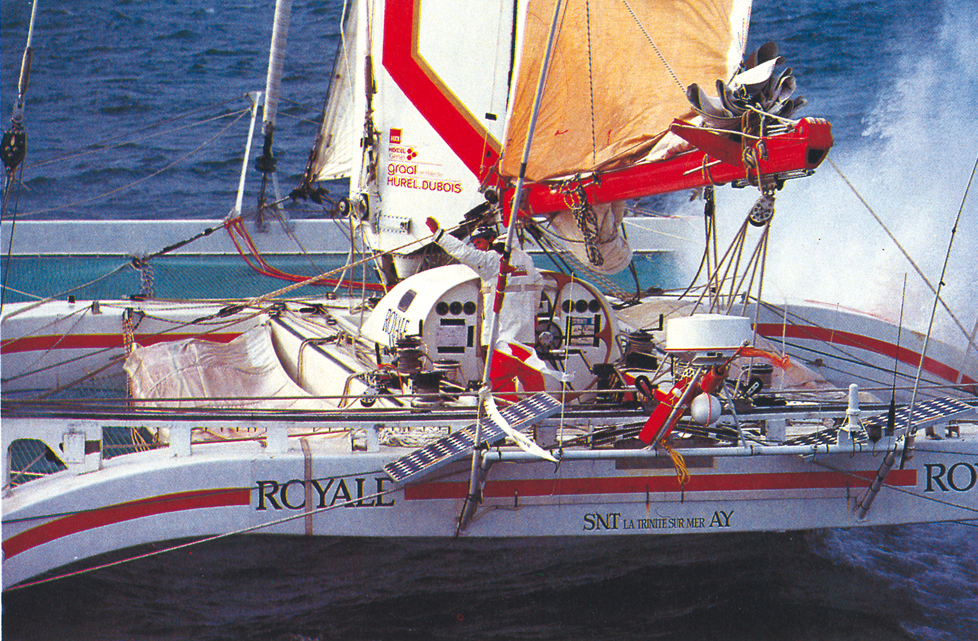
1986; the disappearance of Loïc Caradec in Royale brought an end to giant boats for 20 years. From 1990 onwards, the size was limited to 60 feet.
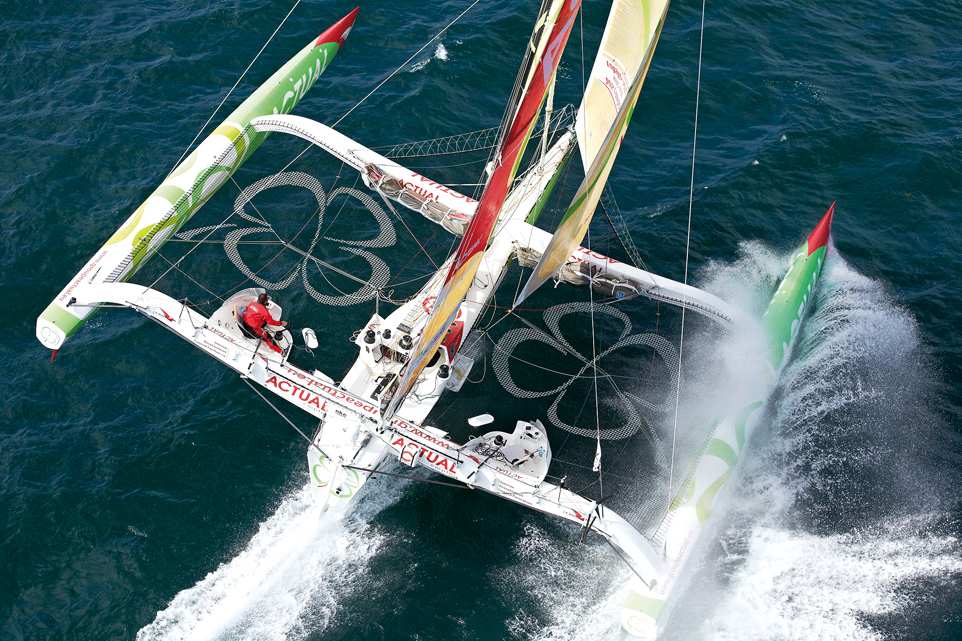
Victim of damage at the end of August, Actual will nonetheless be a serious candidate for the victory in the Multi50 class.
2014: The opposing forces
An ultimate race
The ‘Ultime’ class is that of excessiveness, where there are no limits, just as the pioneers of the Route du Rhum had wished. At the start this year we will find Spindrift 2, the biggest trimaran in the world, designed to sail with a crew of a dozen experienced sailors (the boat is currently the fastest around the world fully-crewed, in 45 days). The skipper, Yann Guichard, will have to excel himself to get his 40-meter boat to the finish – the mainsail alone measures 365m²... But in the last edition, Franck Cammas proved that setting off with a big boat (Groupama 3, which became Banque Populaire V) was a winning solution! Banque Populaire V is therefore holder of the title, but unfortunately its skipper, Armel Le Cleac'h, injured his hand at the end of August and has had to withdraw. If the boat really is to be at the start, we still don’t know who will be at the helm, as we go to press. The boat has the potential to win, but it will need a hugely experienced skipper to sail it... To be continued!
Thomas Coville’s new Sodebo (31 metres) has just been launched, after a huge amount of work. It must be said that the basis of this trimaran is none other than Olivier de Kersauson’s Geronimo, of which finally there remains very little. If Thomas has time to perfect his new racer, he will inevitably be in the battle for final victory. In the Ultime class, Lionel Lemonchois’s Prince de Bretagne 80 will also be at the start (see our on-board test in the following pages). The skipper is the only one to be able to try and write his name in the events records for the third time... We will also find Francis Joyon’s Idec on the line – he has clearly indicated that he will be out to win – and at least three MOD 70s, specially prepared for the occasion. Sidney Gavignet will be at the helm of Musandam Oman Sail, with which he is now completely familiar. The Multi 70 Edmond de Rothschild, skippered by Sébastien Josse, has also been particularly pampered this winter, and the boat, now equipped with new appendages, will be out for victory if the weather conditions are complicated for the bigger boats. After his capsize, Jean-Pierre Dick has decided to dedicate himself once again to monohulls, and the Vendée Globe. His MOD 70 Paprec Recyclage has thus been entrusted to Yann Eliès for the Rhum. The sailor’s aim is clear – to beat the other MODs, and, why not, try for a place on the podium?
There will therefore be at least 8 Ultimes at the start, to do battle and try to beat the event record, which still dates from 2006 (Lionel Lemonchois, in 7 days 17 hours).
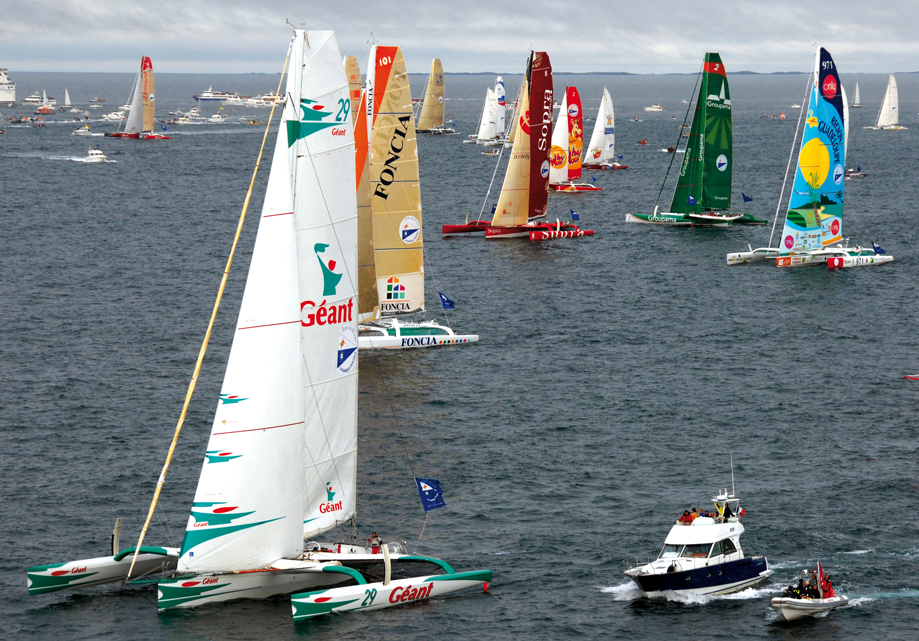
2002; the race has started. In a few hours’ time, the carnage was to begin in the Orma 60 fleet…
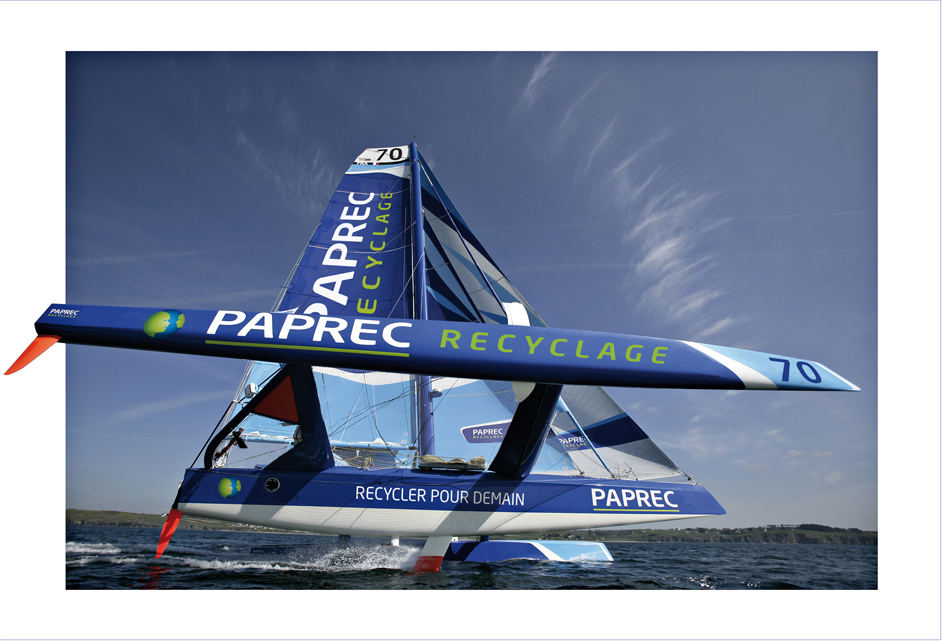
There will be three MOD 70s at the start, and they could well play a leading role if the weather conditions are fickle…
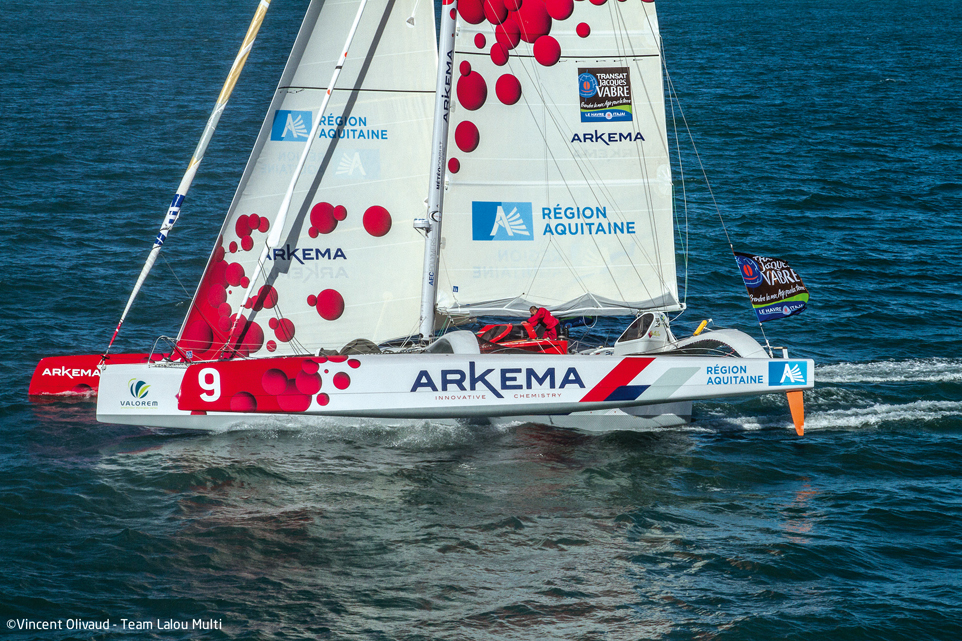
Lalou Roucayrol has often shone in this race, which he hopes to be able to add to his record in the Multi50 class…
Multi50
There will be 12 Multi50s setting off to tackle the Atlantic. The Multi50 class is really exciting, as it allows professional skippers and pure (but particularly experienced) amateurs to race together in boats of either the latest generation, or their venerable ancestors... Needless to say, there will once again this year be a battle at all levels, and you mustn't fail to follow the class throughout the event.
Amongst the leaders, we will once again find the latest generation boats, and any forecast, between Actual, Maître Jacques, FenêtréA-Cardinal, Arkema Région Aquitaine and Rennes Métropole/Saint-Malo Agglomération (winner of the last edition), is almost impossible. Quite apart from the fact that the Rhum is a special race and that behind, there are lots of good sailors ready to take advantage of the slightest error by the favorites, or difficult weather conditions.
The boats entered in the Multi50 class:
Vers un monde sans SIDA – Erik NIGON
Groupe Olmix – Pierre ANTOINE
FenêtréA-Cardinal – Erwan LE ROUX
Nootka – Gilles BUEKENHOUT
Maître Jacques – Loïc FEQUET
Actual – Yves LE BLEVEC
NotrePharma.com – Jean-François LILTI
Rayon Vert – Alain DELHUMEAU
Delirium – Hervé de CARLAN
Arkema Région Aquitaine – Lalou ROUCAYROL
Rennes Métropole Saint-Malo Agglo – Gilles LAMIRE
PiR2 – Etienne HOCHEDE
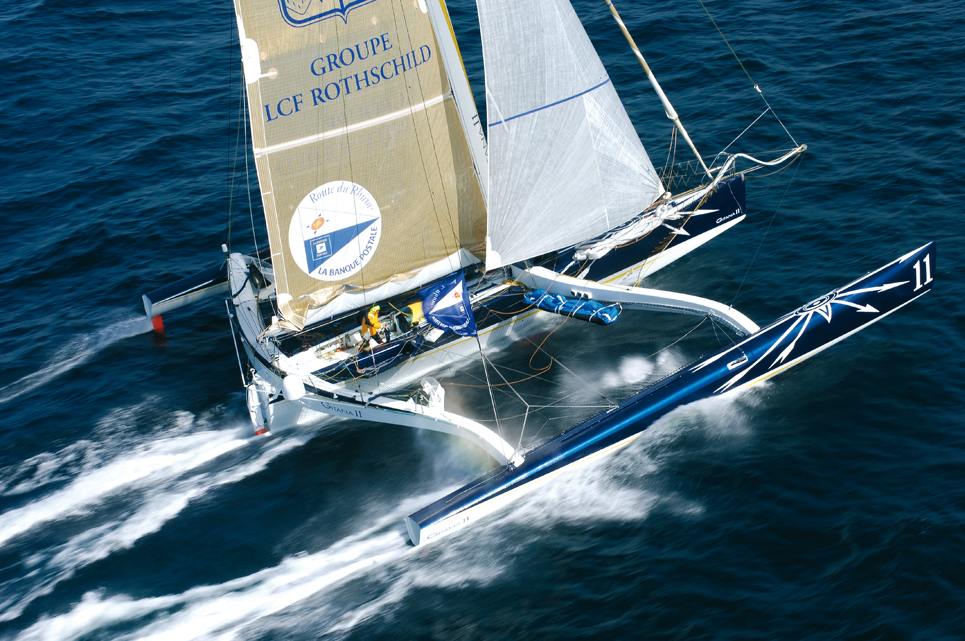
The record established in 2006 by Lionel Lemonchois still stands. Will it be beaten this year?
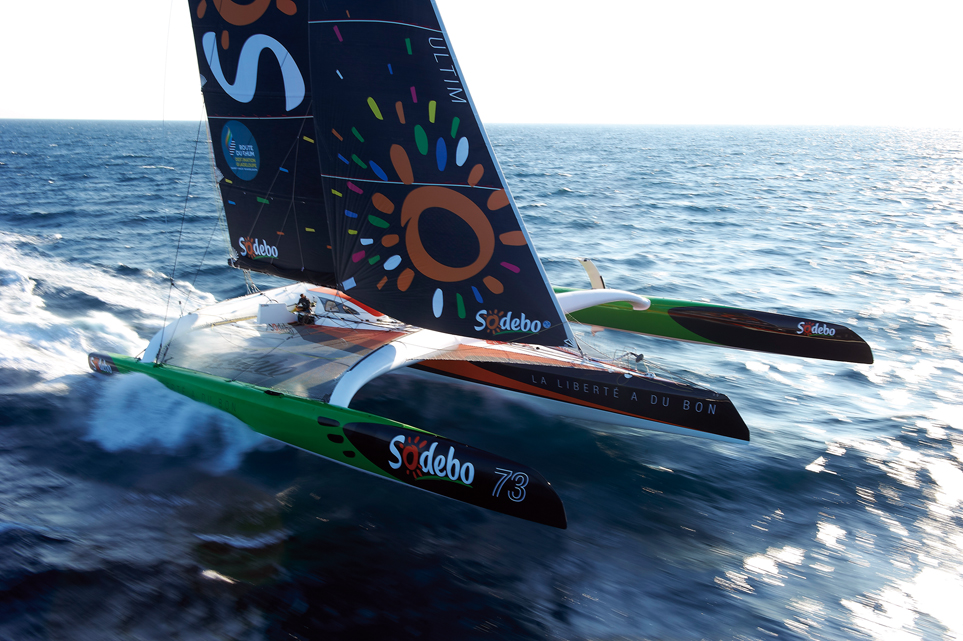
Thomas Coville’s new trimaran has only just been launched, but the first tests show that the boat has a good pedigree, and the skipper is a pure competitor...
Rhum Class
To celebrate the tenth edition of the transat, there will be a few nice surprises on the start line, starting with the three sister ships of the first winner, Mike Birch’s A Capella, Olympus Photo. Loïck Peyron will be starting one of the rare races he has never won in his A Capella ‘Happy’, just for the pleasure. The battle with Charlie Capelle and Jean-Paul Froc on these three historic boats will be superb. And as nice surprises never come alone, there will also be Kriter V at the start, the boat which finished second in the first Rhum, 98 seconds behind Olympus Photo. Will history repeat itself?
And then it will give us great pleasure to see Patrick Morvan again (remember Jet Services, the North Atlantic record...), who at 69 will also be sailing the Rhum just for the pleasure, on a little 40-foot trimaran. Anne Caseneuve is tackling the adventure of the Rhum for the 5th time. In doing so, she will hold the record for the number of participations by a woman. After 5 months’ work, her 52-foot trimaran Aneo has just been re-launched, and Anne is training flat out to win in the Rhum class... The battle will be heated!
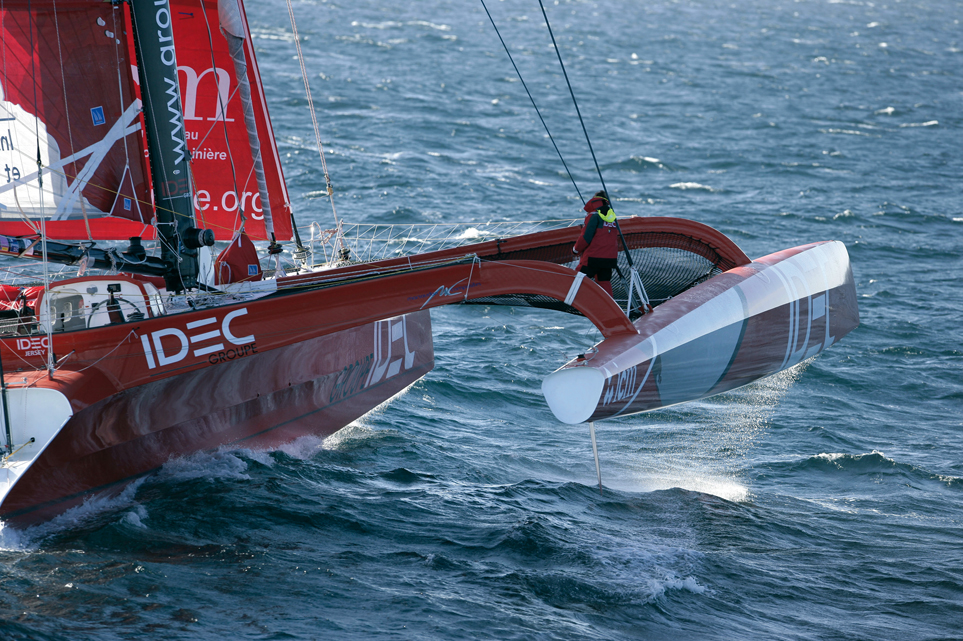
It’s the oldest boat in the Ultime fleet, but he knows it by heart. Francis Joyon is there to win, and he has made it known!
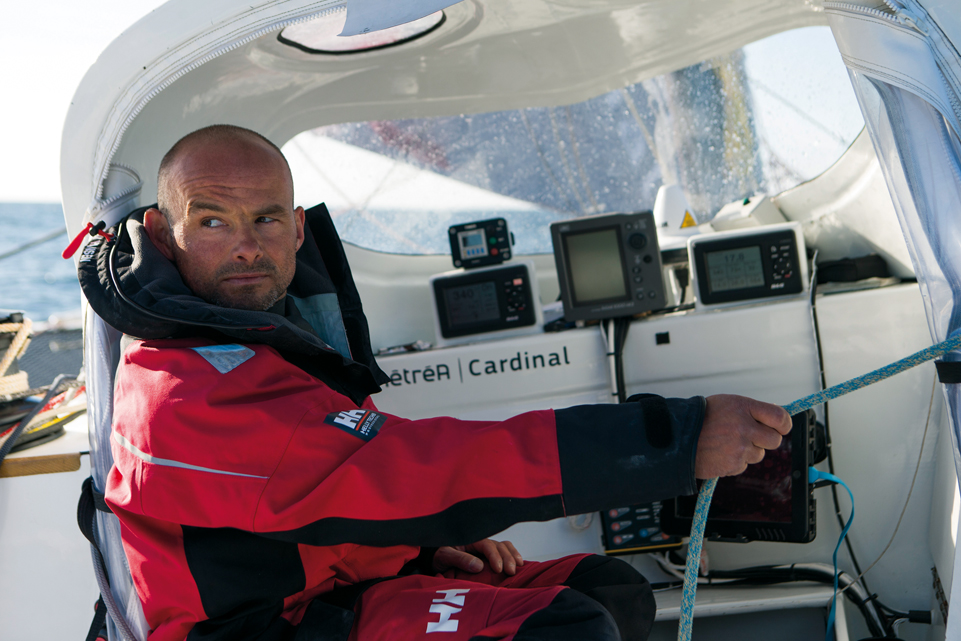
During a Route du Rhum, concentration has to be at a maximum 24h/24h. It’s impossible to relax during the whole race – the penalty is a capsize!
The winners
1978. Mike Birch in Olympus Photo (Walter Green-designed 11.5-meter trimaran), in 23d 6h 59’ 35”.
1982. Marc Pajot in Elf Aquitaine (20-meter Sylvestre Langevin-designed catamaran) in 18d 1h 38’ 00" (after rounding Martinique).1986. Philippe Poupon in Fleury Michon VIII (22.8-meter Irens-designed trimaran) in 14d 15h 57’ 15”.
1990. Florence Arthaud in Groupe Pierre 1er (18.28- meter VPLP trimaran) in 14d 10h 08’ 28”.
1994. Laurent Bourgnon in RMO (18.28- meter VPLP trimaran) in 14d 06h 28’ 29”.
1998. Laurent Bourgnon in Primagaz (18.28m VPLP trimaran) in 12d 08h 41’ 06”.
2002. Michel Desjoyeaux (Géant, 18.2m VPLP trimaran) in 13d 07h 53’ 00”.
2006. Lionel Lemonchois (Gitana 11, 18.28m VPLP trimaran) in 7d 17h 19’ 06”
2010. Franck Cammas (Groupama 3, 31.5m VPLP trimaran) in 9d 03h 14’ 47”.
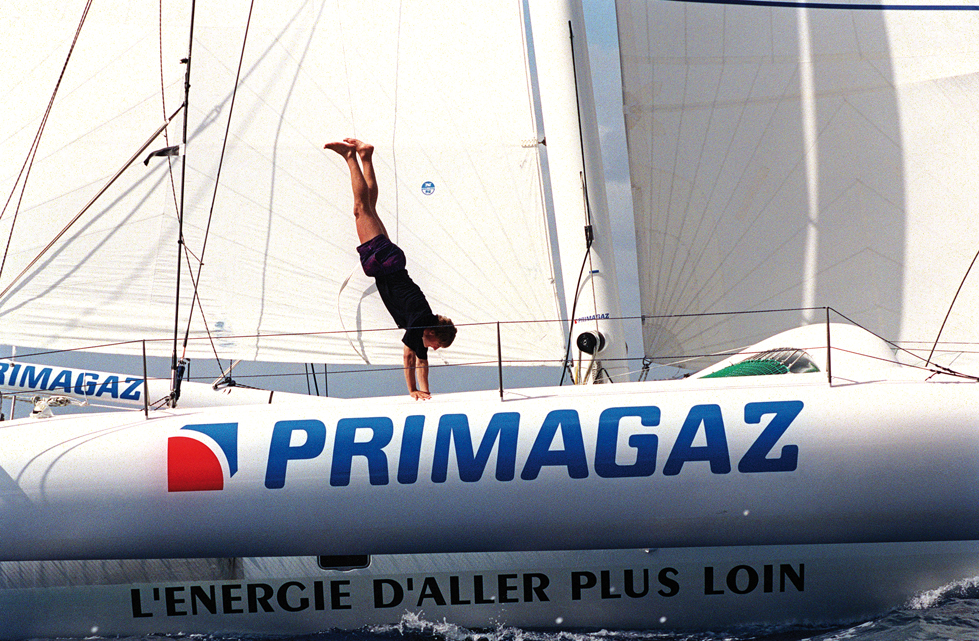
1998; second victory for Laurent Bourgnon. He had already won in 1994.
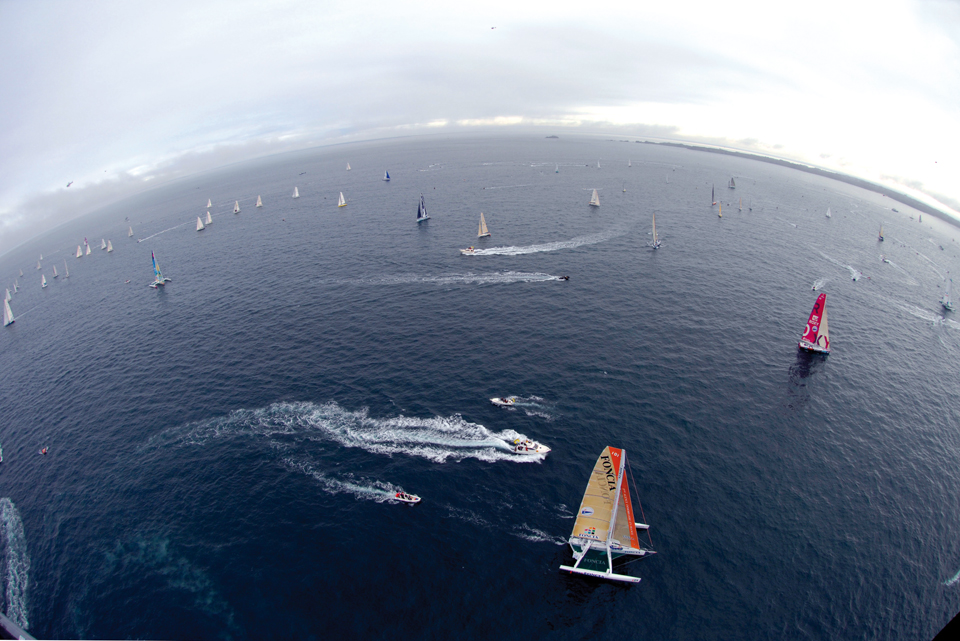
Starting the Rhum is already an adventure in itself, as this transatlantic race, which 'starts in winter and finishes in summer’ gets its share of frightening storms…
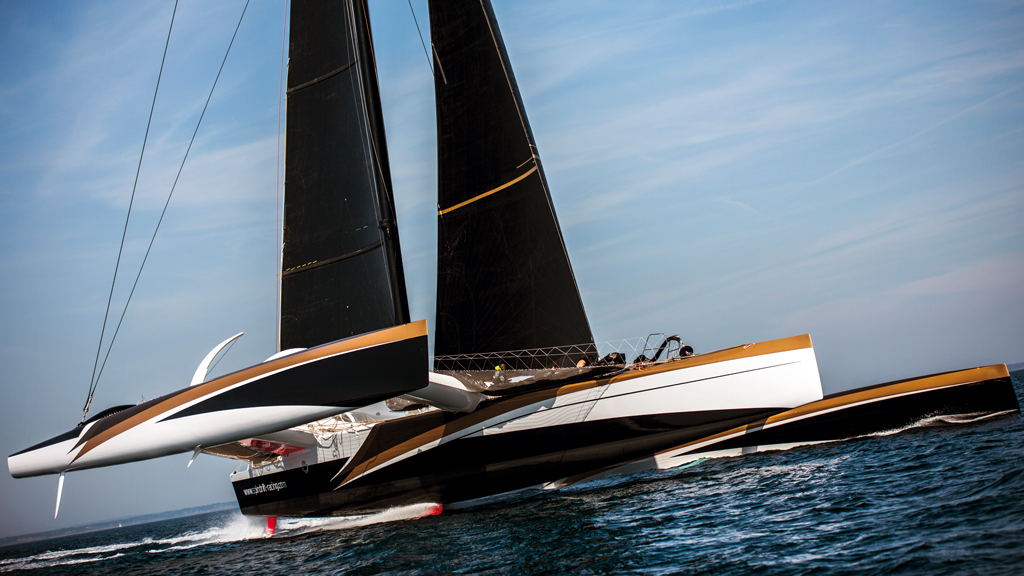
Yann Guichard will be at the start in his 40m trimaran... The giants are back in the Rhum!