A tense Red Sea crossing
Cat’Leya is heading west again, and getting ready to celebrate eight years of sailing when she reaches the Mediterranean. She has to cross the Gulf of Aden and then sail up the Red Sea, but the current situation in the Middle East is forcing Jean-Pierre and his crew member Mladen to be extra vigilant...
Image
Image
Image
Image
Image
1
/
1
Publié le
01/08/2024
Par
Gilles Ruffet
Numéro :
197
Parution :
Sep.
/
Oct.
2024

Where: Red Sea
Multihull: Lagoon 52 SporTop
Blog: www.sailingcatleya.blue
At the beginning of March, a few sailing boats reached Port Suez thanks to the help of the navies of the numerous countries mobilized to guarantee freedom of navigation in the Red Sea. The Houthis seem to be targeting only merchant ships, particularly those from countries they consider enemies, as well as those bound for Israel. So we decided to try our luck. The first step was to register with the military organizations: Mica-Center in France, MSCHOA (Maritime Security Centre - Horn of Africa), which coordinates European naval forces, and UKMTO (United Kingdom Maritime Trade Operations). You then have to follow their instructions and send them a daily position report.
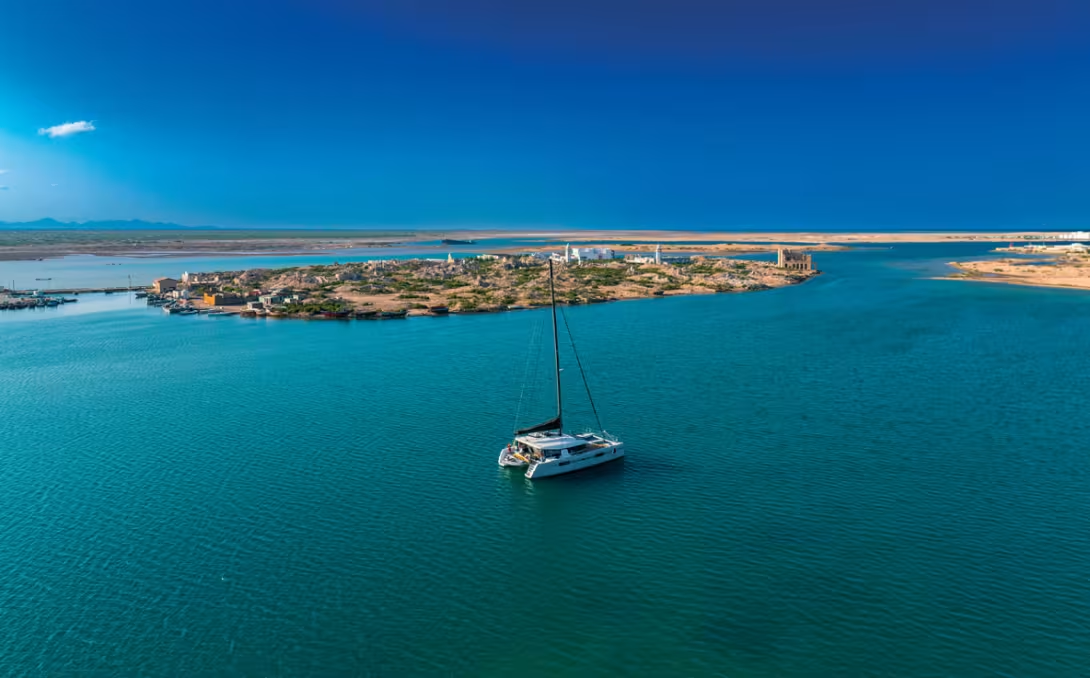
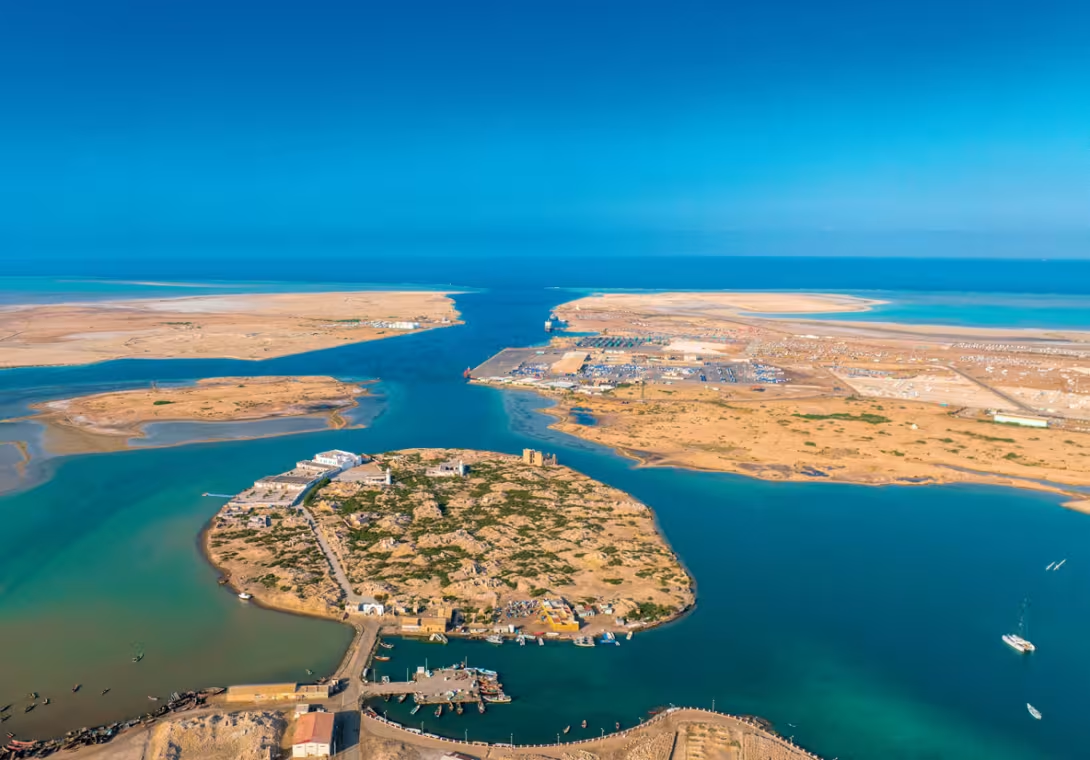
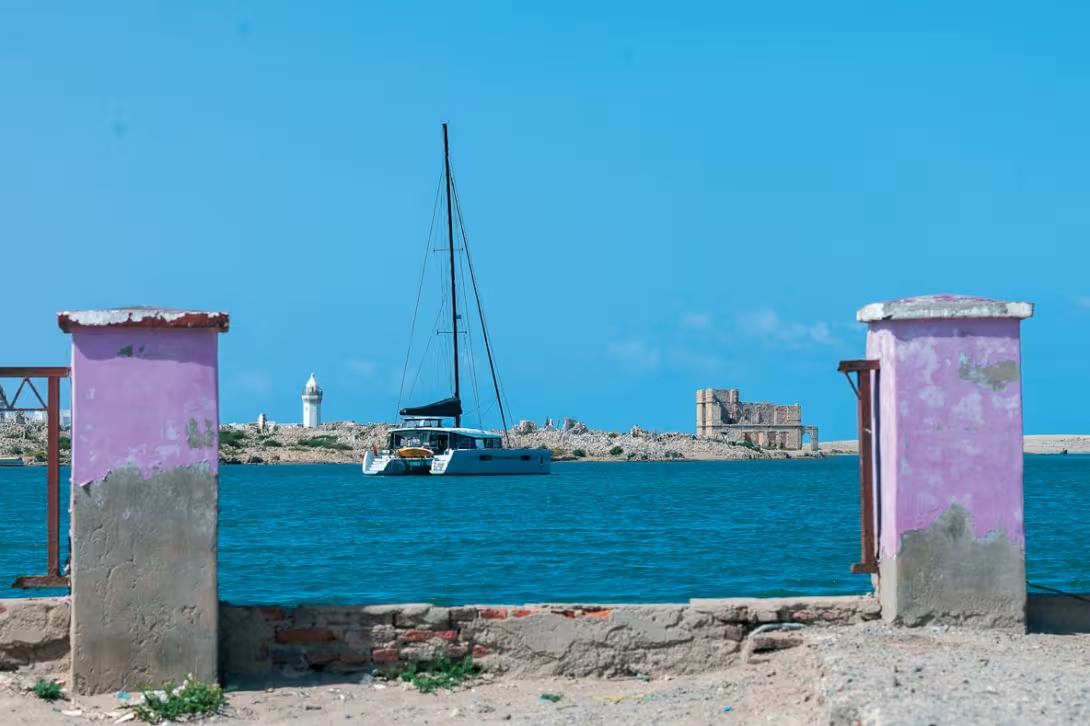
We left Malé at the beginning of March. It was easy sailing with a downwind breeze and calm seas, with occasional calm spells under power. A week after our departure, we were abeam of Socotra, before positioning ourselves four miles south of the IRTC (Internationally Recommended Transit Corridor), which runs along the southern coast of Oman and then Yemen, in order to set a course for Djibouti. We entered the dreaded Gulf of Aden, where from time to time a radio announcement with a strong Japanese accent urged us to report any suspicious movements or vessels. After a short three-day stopover, we set off again for Suakin, in Sudan, almost 600 miles further north. This is the second and riskiest part of the journey. We passed through the Bab El Mandeb strait (barely 10 miles wide) at the entrance to the Red Sea. We then had to stay on the navigation track while avoiding Eritrean territorial waters, where, it seems, the coastguards tend to be rather overzealous with any sailboats that venture too close. Once we reached the latitude of Saudi Arabia’s southern border, we could consider ourselves out of danger. Four days after leaving Djibouti, we entered Suakin. It’s a magnificent site, an island linked to the mainland by a small bridge, in the middle of a highly protected natural harbor that’s easy to access, which explains the city’s thousands of years of prosperity. Our next stop was Marsa Oseif in northern Sudan, very close to Egypt. We weren’t expecting any more surprises in terms of the weather, but ideally, we were hoping to avoid the northerly wind, which can blow very hard and cause rough seas. It would be better to have calm conditions, even if it meant straining the engines. The following day, we left Sudan for a 300-mile sail towards Egypt and Soma Bay, where we stopped for a few repairs before setting off again for Port Suez. These last 200 miles were rough, with short, choppy seas and the wind on our nose: just like being in the Mediterranean! So Cat’Leya is one of the rare boats to have crossed the Red Sea this year - Those Gauls are crazy!