
Our videos:
| Start Day-3 | Start Day-2 | Start Day-1 | Start D-Day |
 |
|
|
|
The first thing we noticed on the marina pontoons was the growing number of multihulls: there were 33 in 2021, 37 in 2022, 44 last year and 45 this year, out of the 140 boats registered for the start. This brings the number of two and three-hulled yachts taking part to 32% - compared with 28% in 2023, when 156 yachts were entered. The most represented multihull brand this year is Fountaine Pajot with 8 examples, followed by Outremer and Lagoon - with 7 and 5 catamarans respectively.
More generally, these transatlantic rallies are always well attended, even if the edition we’re following this year shows a slight decline in favor of the ARC+. Launched in 2013, this rally leaves Las Palmas two weeks ahead of the ARC and includes a stopover in Cape Verde, which seems to be very popular before reaching Granada. The “traditional” ARC, meanwhile, is celebrating its 39th edition and has always set off from Las Palmas. The finish line is in Rodney Bay, Saint Lucia. It’s interesting to note that the format proposed by the organizers, which incorporates safety checks, training modules and comprehensive checks, has become even safer with the advent of satellite internet – thanks to Starlink. Crews with little or no experience of ocean sailing, of which there are now quite a large number, can benefit from assistance that would have been unimaginable just a couple of years ago...
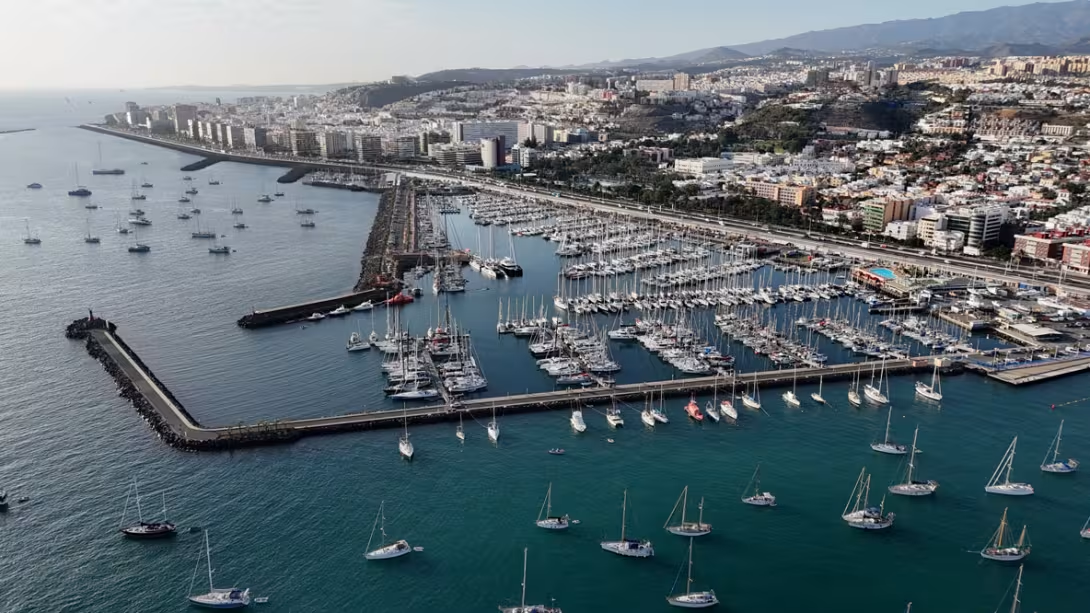
In port, the last three days were devoted to final preparations for the multihulls and, of course, victualing - fresh supplies are only taken on board the day before. This is also the day for cleaning fruit with water - it is then hung in well-ventilated nets.
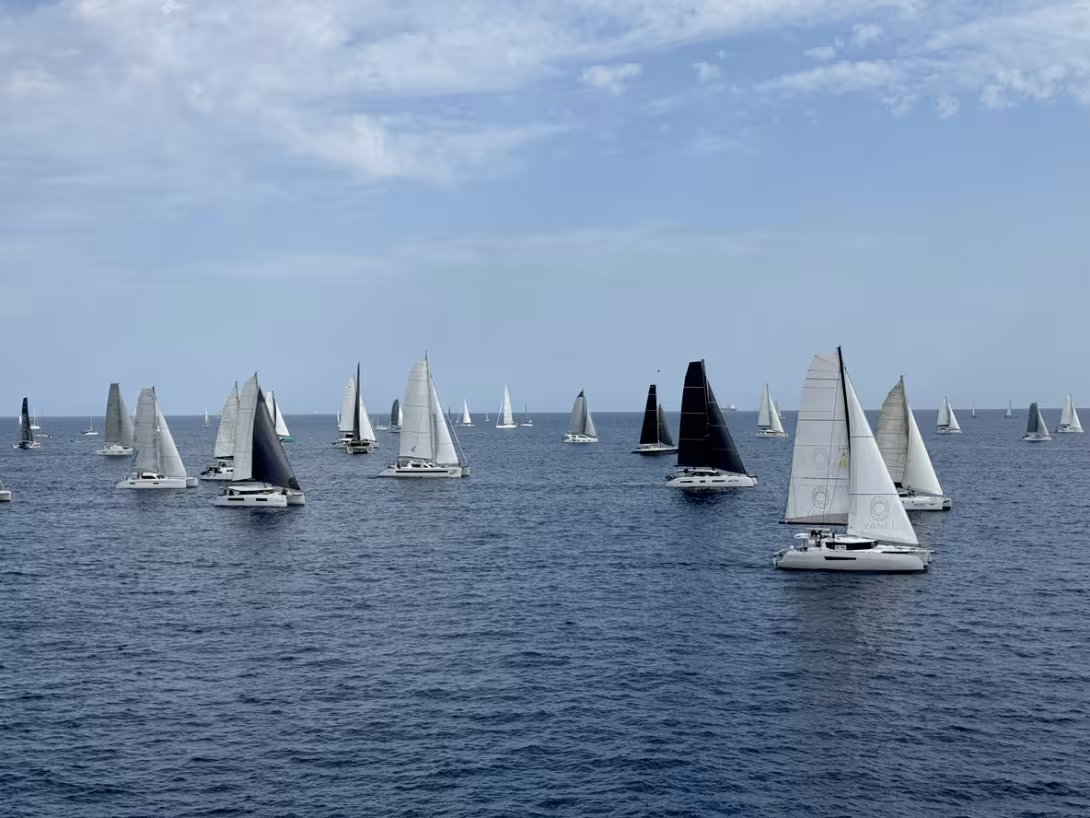
Sunday November 24: only a few clouds on the sky and an absence of wind... a trickle of south-easterly air decided to settle over the start line. The whole multihull fleet was ready to set out across the Atlantic, with the exception of one of the Outremer 55s, which had a few technical issues - fortunately, it was able to be hauled out thanks to the brand-new 850-ton travelift, inaugurated just a week previously.
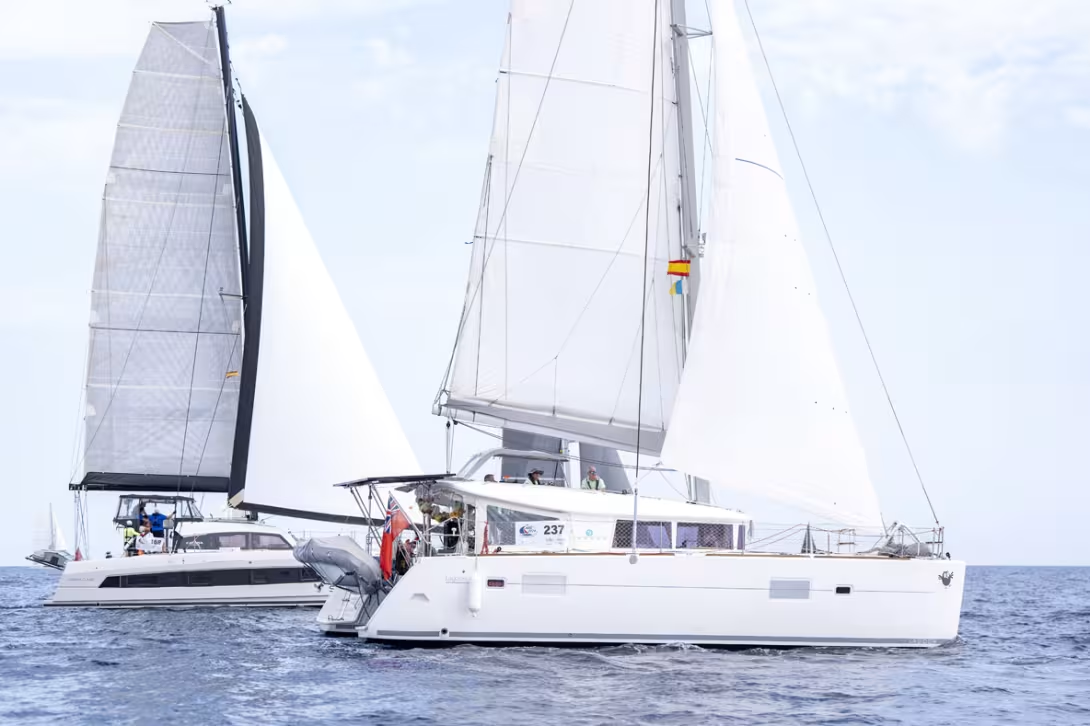
At the start, it was Mark and Penny Belcher’s Lagoon 400 Two Hoots (UK) that crossed the line first, followed by Kenneth Frantz’s Elba 45 My Cherie Amour (USA) and Francesco Rongoni’s Neel 47 trimaran Ferdinand (FR). Then, as if by magic, the wind shifted to the northeast and began to strengthen: the trade winds at last!
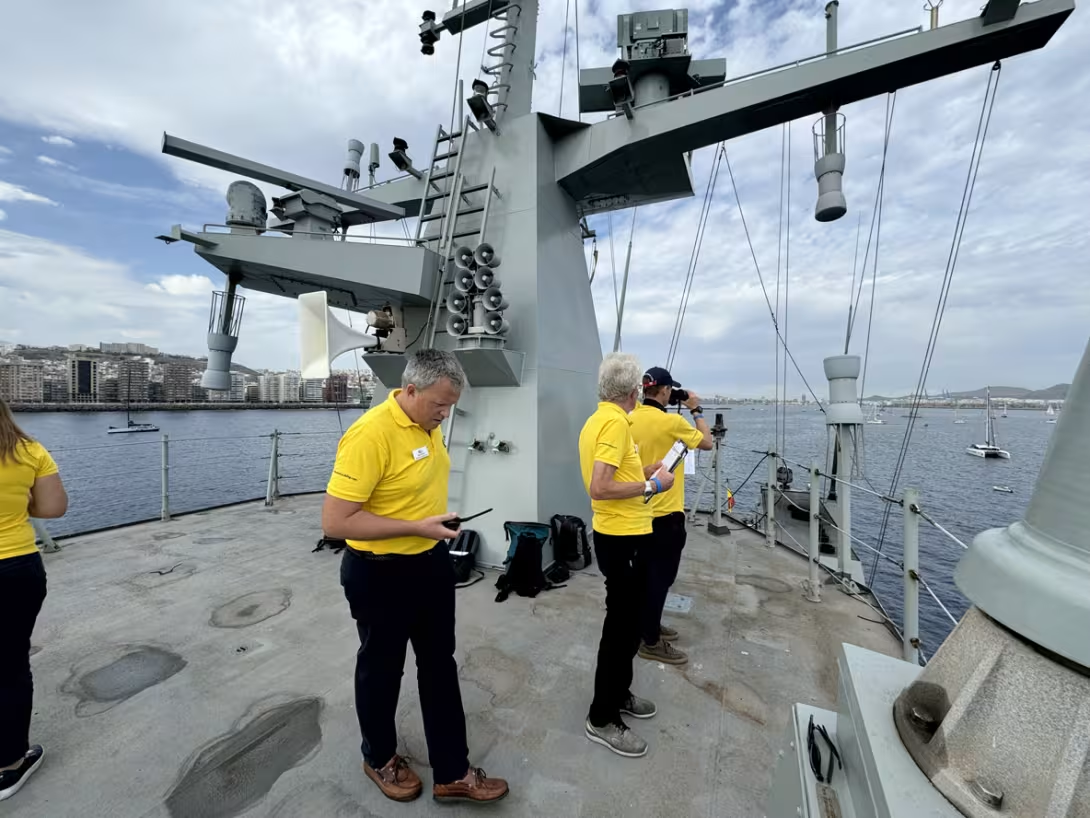
On the deck of the Spanish warship traditionally chartered as a committee boat for the start of the event, Paul Tetlow, the new director of the ARC, didn’t hide his relief as soon as the final start was made: just 5 days ago, the weather forecasts were predicting a strong southerly flow which would have compromised the start - to the point where a three-day delay was even being considered.
Weather and Route
The ARC’s weather guru, Chris Tibbs, explained that the southerly winds were in fact lighter than had been predicted earlier, and notably, that this unfavorable pattern for the start of a transatlantic rally to the West Indies was settling in: “The sailors’ choice will be the classic route to Cape Verde, with initially less wind than usual to St. Lucia”. Paul Tetlow reminded everyone that “The ARC is a marathon, not a sprint”. He also had a word of advice for crews: “Take advantage of the lighter conditions to settle into your routine and just enjoy the experience.”
The majority of the fleet set out heading south, in search of stronger winds.
The ARC in Figures
Number of nautical miles to cover: 2,700
Number of crew: 820
Number of nationalities represented: 42 (18% British, 12% Swedish, 11% German; the other most represented nationalities are American, Italian, French, Swiss and Canadian.)
Number of children under 16 years of age: 15
Youngest skipper: 26
Oldest skipper: 79
Oldest crew member: 83
Number of pets on board: 5 (3 dogs and 2 cats)
Number of boats at start: 140
Number of catamarans: 43
Number of trimarans: 2
Smallest yacht: 34’9” (10.59 m)
Largest yacht: 115’5” (35.18 m)
Event record: 8 days and 6 hours set in 2016 by Rambler 88 (USA)
From the Smallest to the Largest: All the Multihulls Registered for the Start of the ARC
1 C-Cat 38
1 Lagoon 400
2 Lagoon 42
1 Leopard 44
1 Nautitech 44 Open
2 Elba 45
1 Vision 444
1 Bali 4.6
1 Lagoon 440
2 Leopard 45
1 Pitturazzi
1 Saona 47
1 Tanna 47
1 Lagoon 450S
2 Excess 14
2 Neel 47
1 Salina 48
1 Excess 15
2 Catana Ocean Class
1 Privilège 510
1 Lagoon 51
2 Leopard 50
1 Aura 51
1 Outremer 52
1 ORC 50
1 Lagoon 52
1 Outremer 55 Light
1 Xquisite X5 Plus
3 Outremer 55
2 Outremer 5X
1 ORC 57
1 Samana 59
1 Catana 65
1 MC75
1 Sunreef 80
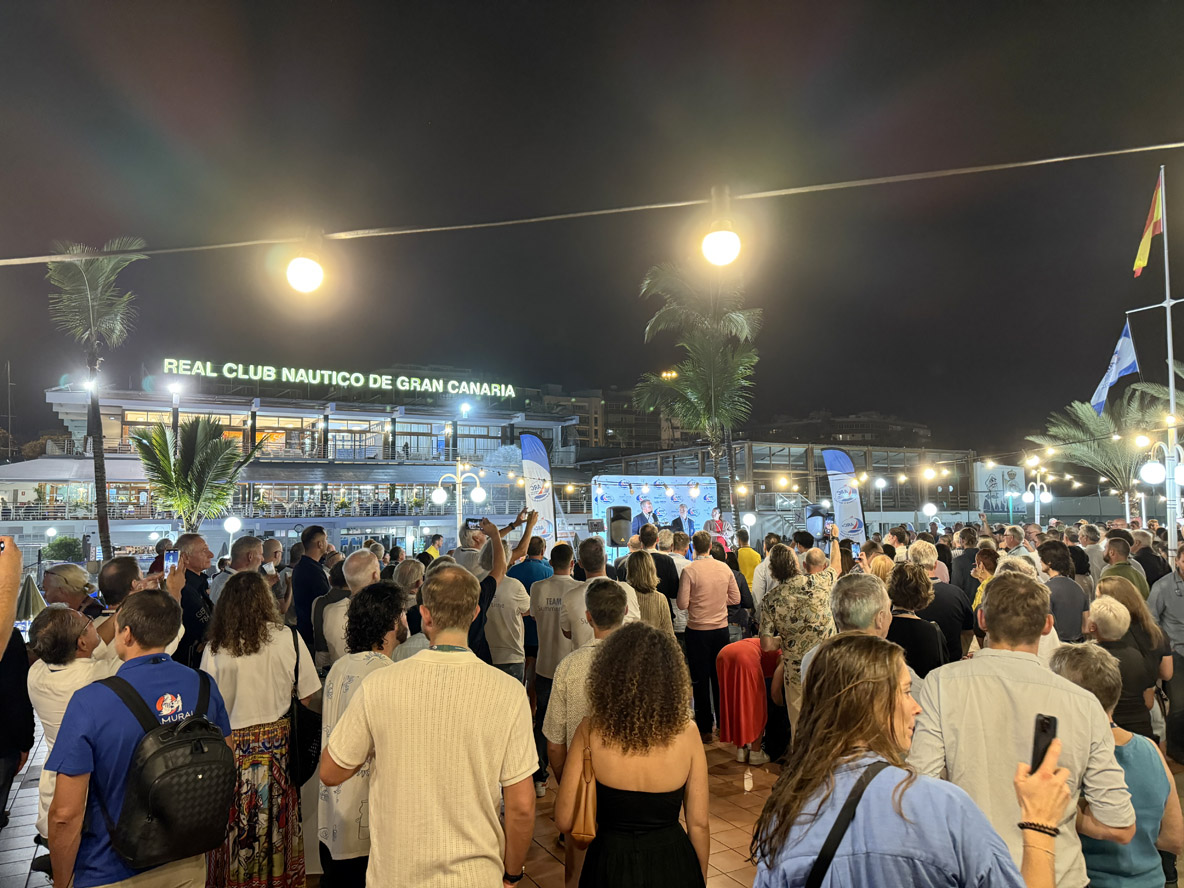 The traditional farewell party attracted over 800 people.
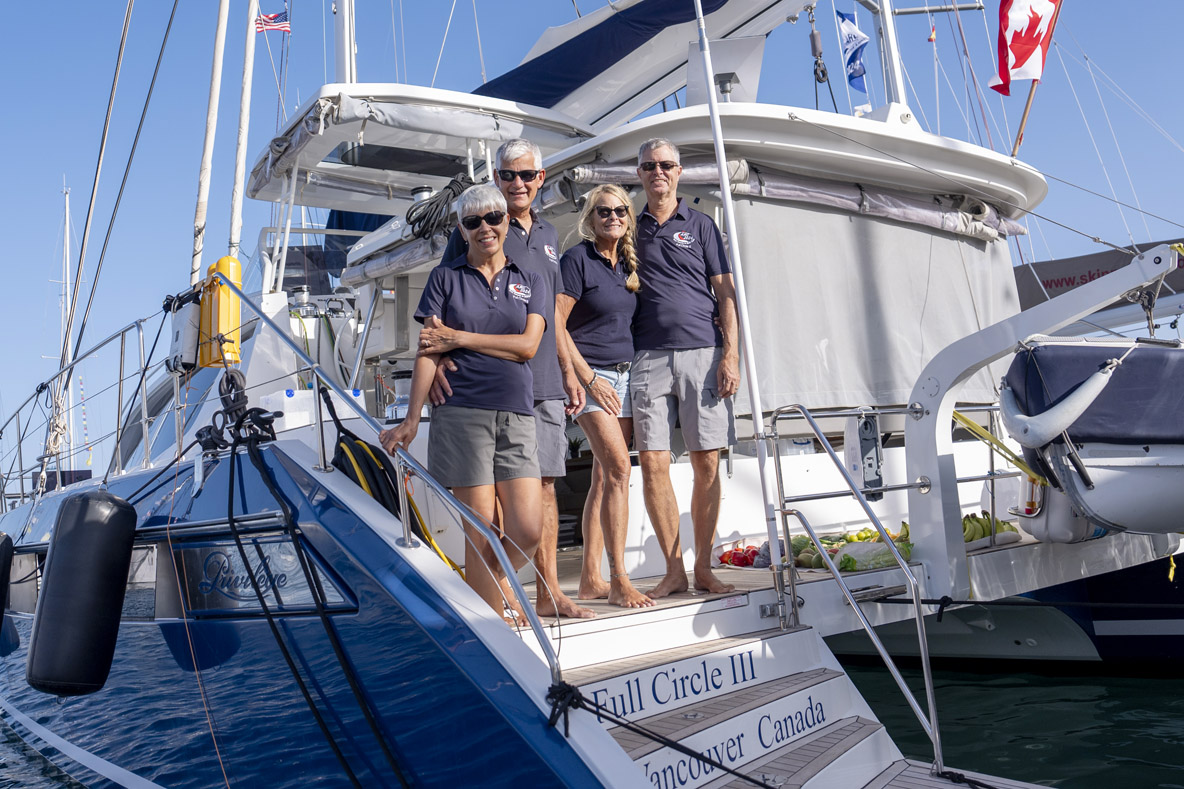 The Canadian crew of Privilège 510 Full Circle III ready for the start of their Atlantic crossing.
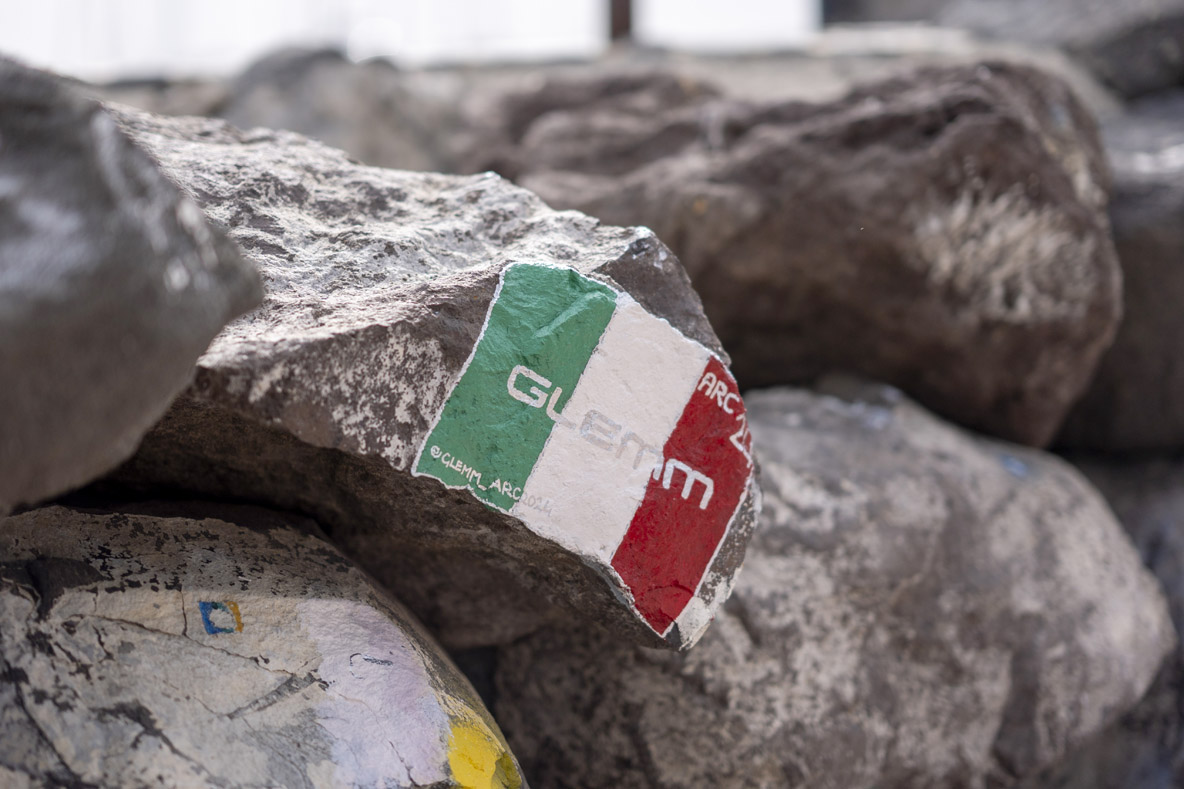
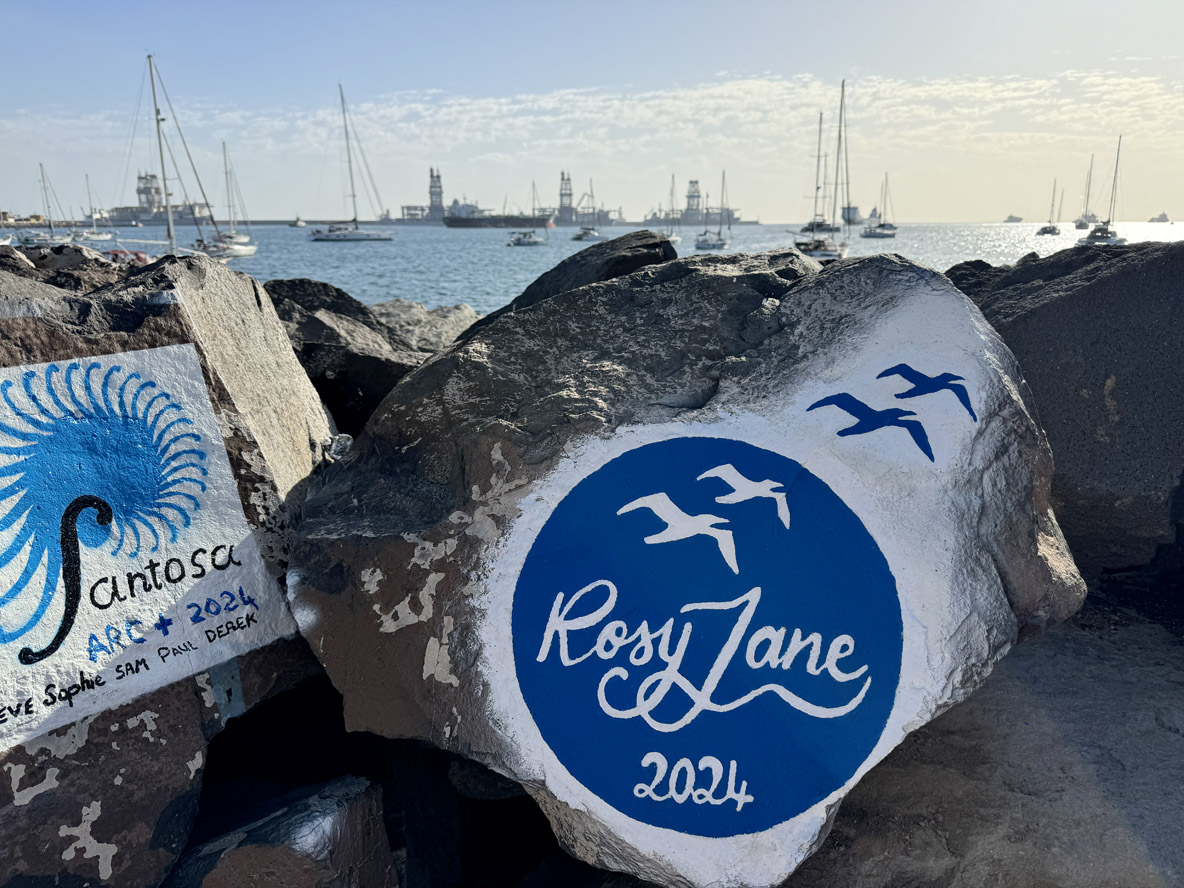 An enduring tradition: painting a reminder of your visit on the sea wall.
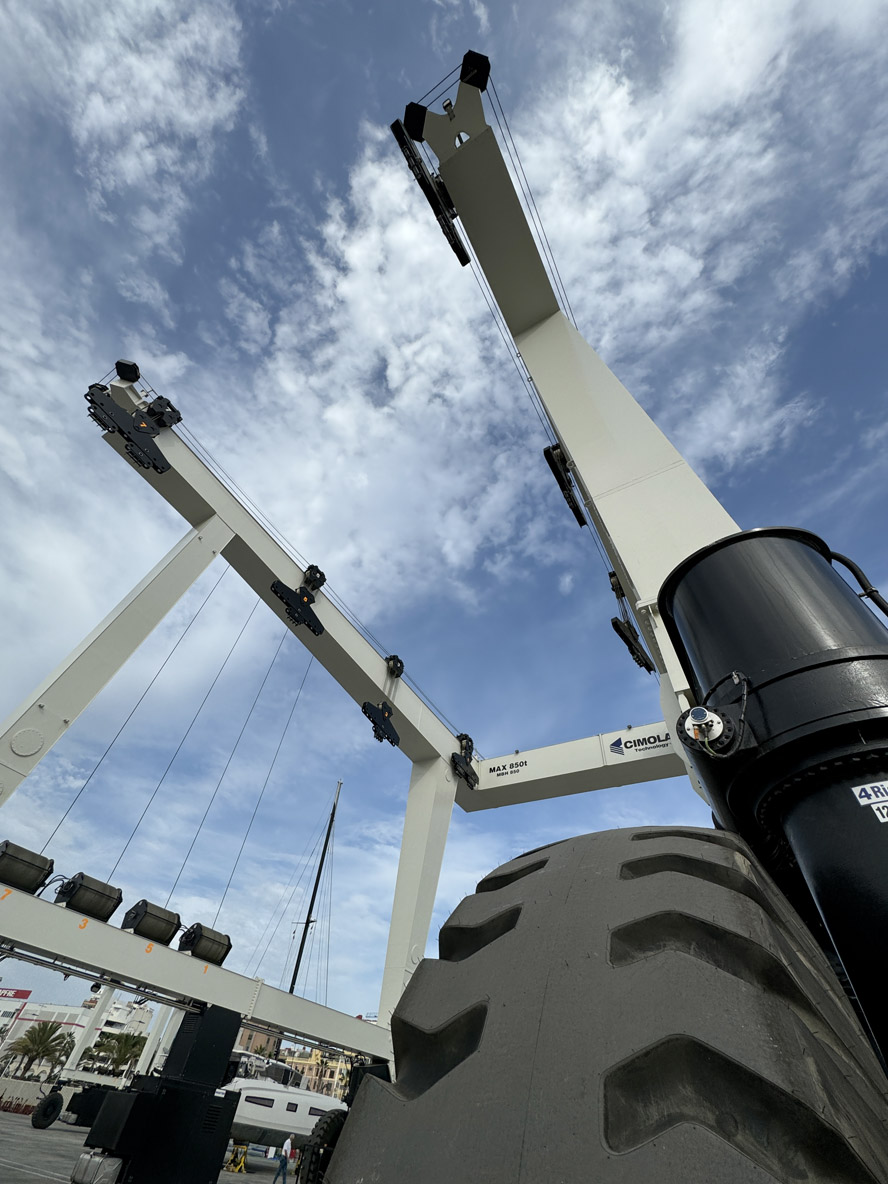 Something new! Las Palmas now has a travelift capable of hauling the largest multihulls out of the water.
