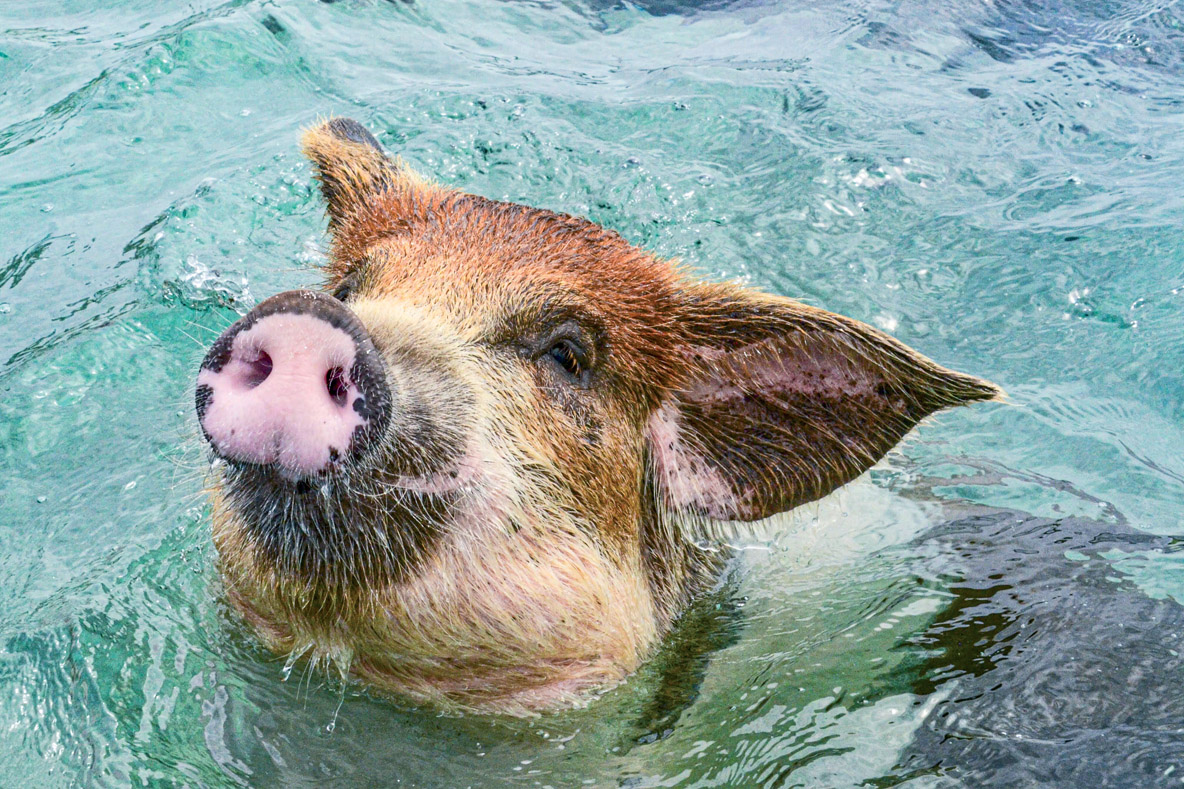
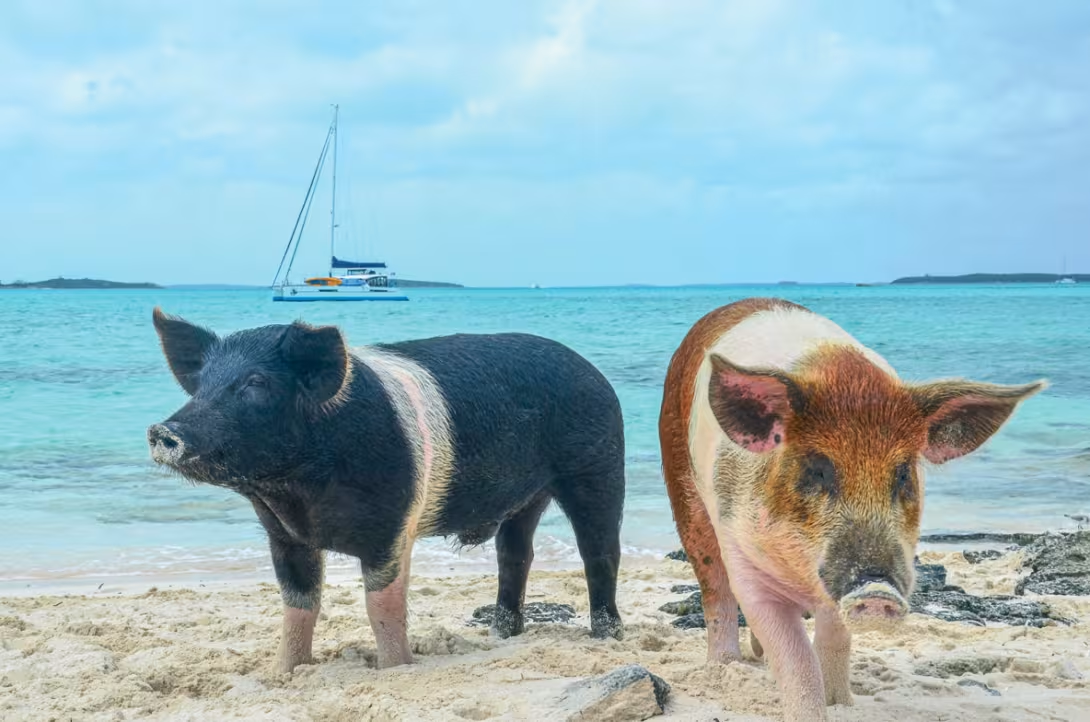

Picture the scene: you’re just pulling up to the beach with the dinghy, when all of a sudden, some jovial grunting catches your attention. Behind a bush there’s a surprise: an army of pink, grey, brown and black pigs swarm onto the beach and jump into the water without a moment’s hesitation. And... yes, these mammals are swimming towards you!
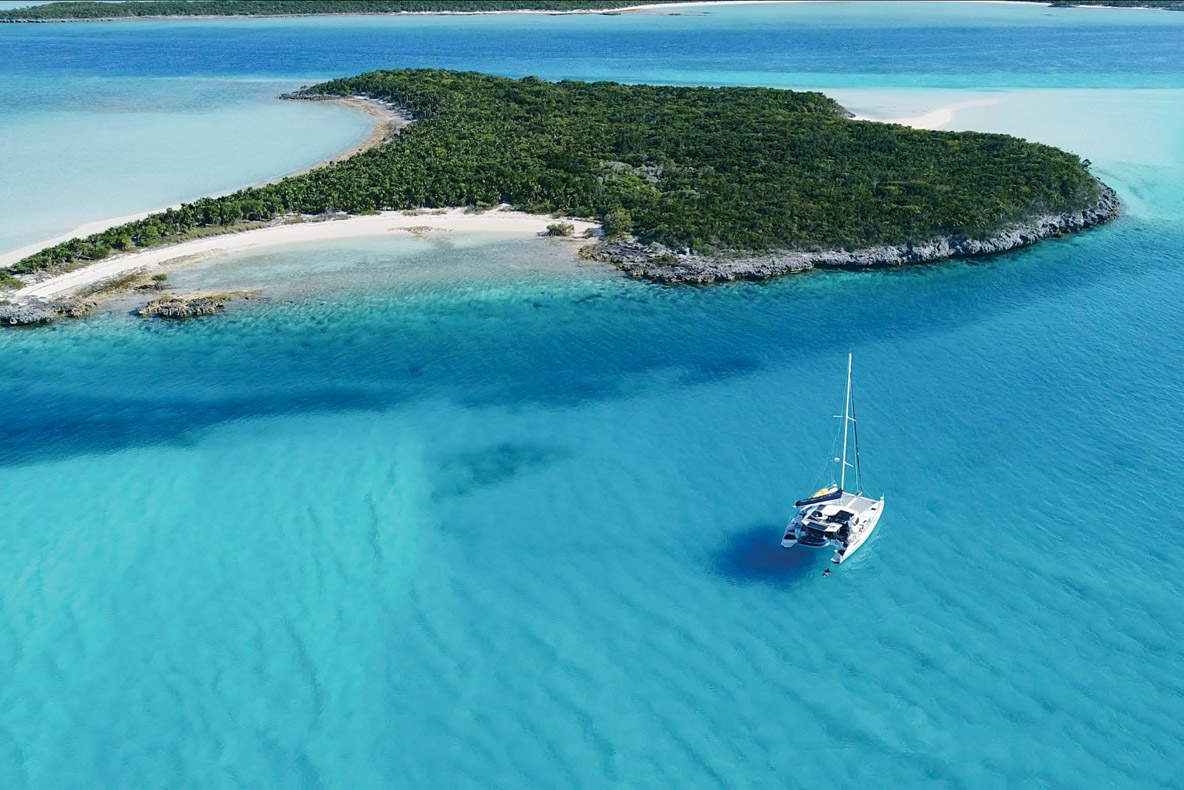
They’ve become stars in the Bahamas. They live on a small island in the Exumas archipelago, southeast of Nassau, where they spend their days exploring the beaches, basking in the sun and swimming in the crystal-clear waters. They live the dream all year round that few can afford, even for a week...
How did these pigs get here? Some say they were abandoned by sailors, others that they are the descendants of pigs rescued from a shipwreck.
Whatever the case, these cheerful creatures have adapted perfectly to their island life and are now more or less protected.
We approach Pig Beach (well what else would you call it?) with an unusual welcoming committee. This is when it’s a good idea to feed the pigs some vegetables (especially carrots). When they’re swimming, these particularly voracious animals are content to beg for food with their mouths wide open. They’ll sometimes put a paw on your dinghy, but they can’t do more than that; they’re so heavy that they’re unable to climb aboard. However, if you arrive on the beach with food on board, the pigs will take your dinghy by storm! And even if you do manage to disembark with food, you risk being jostled or even bitten, as the pigs are in such a hurry to eat. What’s more, any food you drop on the beach will end up full of sand, again due to the pigs’ incredible appetites. These animals don’t carry their food into the water to rinse it off and then enjoy it in peace... no, they pounce on anything that’s edible and, in their frenzy, ingest large quantities of sand - eight pigs have already died as a result.
On the other hand, if you approach without food, the beach stars are quite accommodating; they appreciate being petted and may even pose with you for selfies. It makes you wonder whether they weren’t trained for this...
This gang of swimming pigs turn a simple day at the beach into a memorable and hilarious experience, which is particularly popular with children.
If you happen to be in the area, be sure to pay them a visit, ideally outside the tourist season (November to June).
Anchorage
24°21.726’N - 76°36.057’W
You’ve probably heard of the shallows in the Bahamas. It can be difficult to navigate freely between the islands with a draft of over two meters. Fortunately, this is not a major problem for our multihulls!
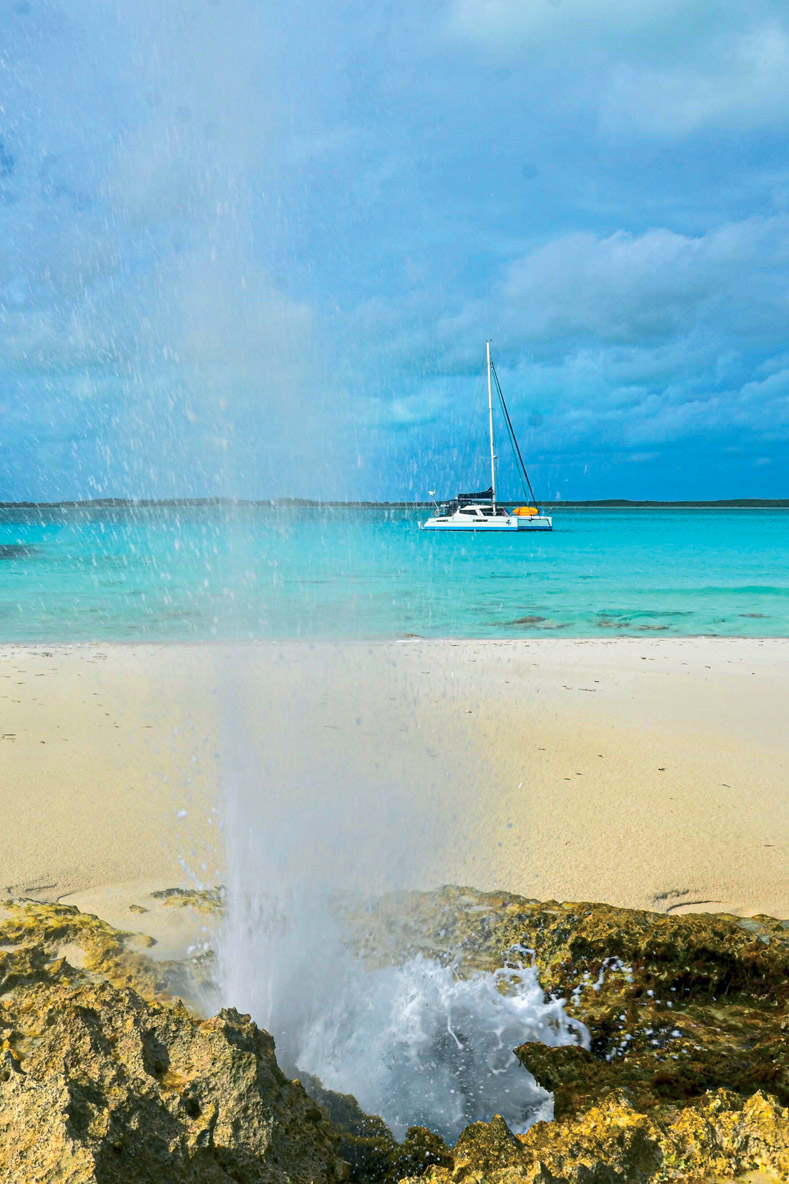
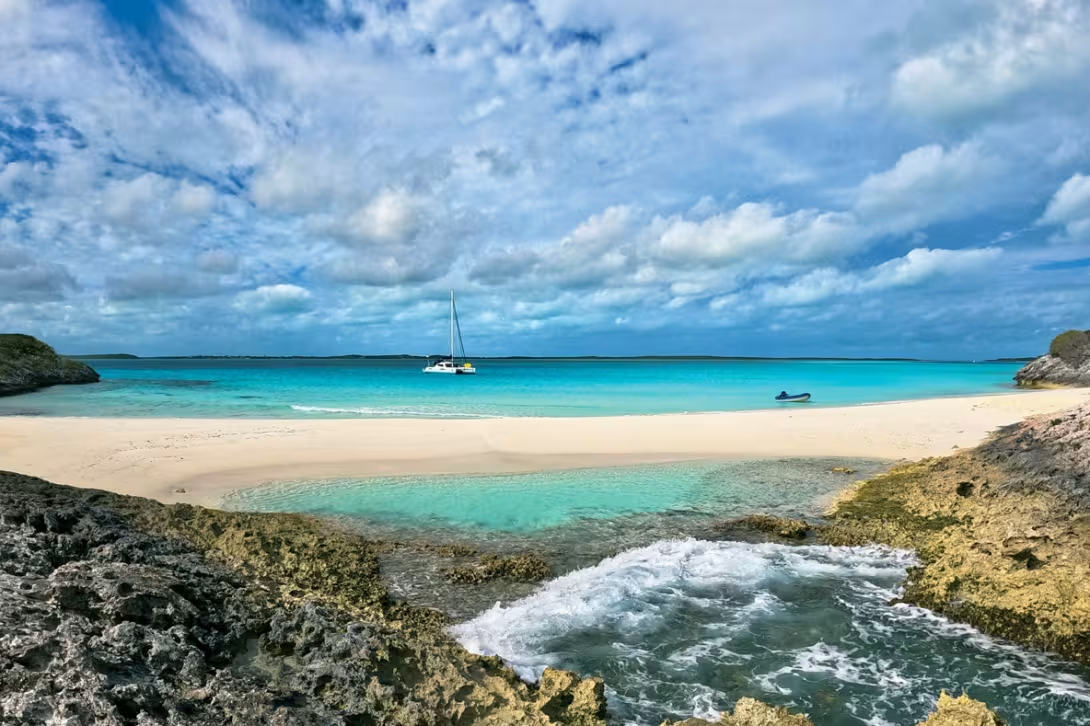
Most of the Exumas’ anchorages are absolutely fantastic and are protected from the easterly swell. Your keels and/or rudders will practically touch the white sandy bottom, which isn’t necessarily a problem since the tidal range never exceeds three feet/one meter. The water is so clear that you can see your anchor 100’/30 m ahead. Some anchorages in the channels can be subject to relatively strong currents, but this is not at all the case at White Beach.
Apart from giving you the GPS point of this anchorage, I don’t know what negative things to say - except perhaps to alert you to the presence of many tourists in high season.
Weather
Dry season (November to April)
During the dry season, weather conditions are generally stable and favorable for sailing. The easterly trade winds offer moderate breezes of 15 to 20 knots. Seas are often calm between the islands and reefs. Rainfall is relatively rare. Temperatures are very pleasant in November and from March onwards; on the other hand, from December to the end of February, you may be surprised by chilly nights - the record cold in Nassau is 6°C (43°F), recorded on Tuesday January 20, 1981. On the other hand, water temperatures never fall below 22°C (72°F) between January and April and can reach as high as 31°C (88°F) in August.
Hurricane season (June to November)
The Bahamas are located in a region which (unfortunately) is frequently hit by Atlantic hurricanes. The hurricane season runs from June to November, with peak activity between August and October. During this period, vigilance is essential, as relatively safe shelters are few and far between, and some hurricanes can be devastating. Who can forget Dorian, which wreaked havoc in the northwest of the Bahamas on September 1, 2019, with winds in excess of 170 knots and surges of up to 16 feet (5m). During this season, the climate becomes wetter, with frequent showers and occasional squalls that can be violent. Winds are more variable than during the dry season, and seas are frequently rougher. Unsurprisingly, the weather during this period is tropical, hot and humid.