
While it may seem obvious that we are still a long way from leaving the fossil fuel era behind us, it’s only natural to ask ourselves about the overall impact of our sea travel. According to a French study by Ademe (the French Environment and Energy Management Agency), 2.9% of the world’s greenhouse gas emissions come from the maritime sector, 87% of which relate to the commercial maritime transport of goods and passengers. To put these figures into perspective, the yachting sector accounts for less than a tenth of these maritime emissions, or a tiny 0.03% of total pollution... While such a low figure could lead to a less enthusiastic approach, many shipyards are reacting by offering more environmentally-friendly boats. We regularly discuss multihulls equipped with electric motors - even though these models currently account for only 2 to 3% of sales. That’s a figure that also needs to be put into perspective when considering the automotive industry: 18% of vehicles sold are now electric!
The aim is to replace the fossil fuel used for propulsion and life on board with green energy. Looking at manufacturing, this comes down to two main factors: the materials used in the construction (resin, fiber, wood, fabric, metals, foam) and all the other energy consumption generated by the construction itself.
Customers are now more aware of environmental issues
Some sales managers say that while interest in all the new green technologies is evident at boat shows and dealerships, these green options are still not doing the business when it comes to signing orders. There are still uncertainties about the autonomy of electric propulsion, and there are questions about the reliability of new construction materials. Without the support of buyers, nothing is possible. Despite the legal ultimatums to reduce emissions, the rise in energy prices, the scarcity of certain raw materials and shortages of many other products all justifying the need for change, it is the benefits in terms of enjoyment, reliability, savings and overall coherence that will ultimately convince sailors. The marine industry, aware of the need to acquire the expertise required to bring reality and new technologies closer together, has organized itself to harmonize a methodology and tools aimed at measuring the impact of a boat’s life cycle (LCA) and in particular, recreational boating. Under the aegis of the European Boating Industry (EBI), 17 leading manufacturers have joined forces to develop a scientific calculation standard to guide this survey for boats under 24 meters/80 feet in length. This LCA will be based on a shared methodology, a database and an assessment tool to enable all manufacturers, from major shipyards to small and medium-sized businesses, to commit to eco-design and to deliver the environmental transition that is needed in the boating industry.
Multihulls: the frontrunners in eco-design
While the marine industry as a whole is lagging far behind the automotive sector, it’s actually multihulls that are changing first. There are several reasons for this: this market is driven and monitored by men and women with a vision that is often far more progressive and pragmatic than that of the monohull world. Secondly, the very low drag of a catamaran or trimaran means lower energy requirements. The large surface area available for installing solar panels is also a plus, as is the dual (or even triple) powertrain, which optimizes the efficiency of the sailboats’ hydrogeneration. So multihulls are the ideal way to sail cleaner, but they still need to be built greener!
Bio sourced and recyclable component products
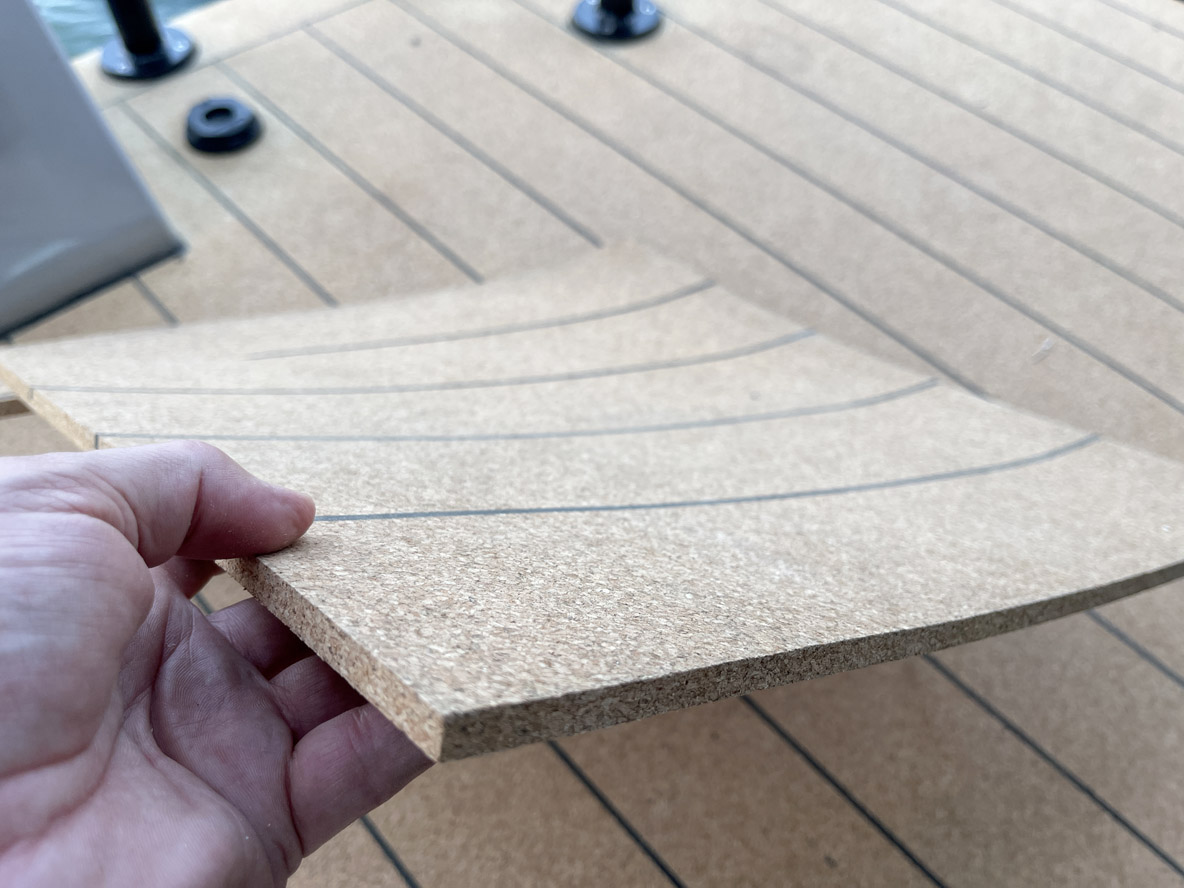
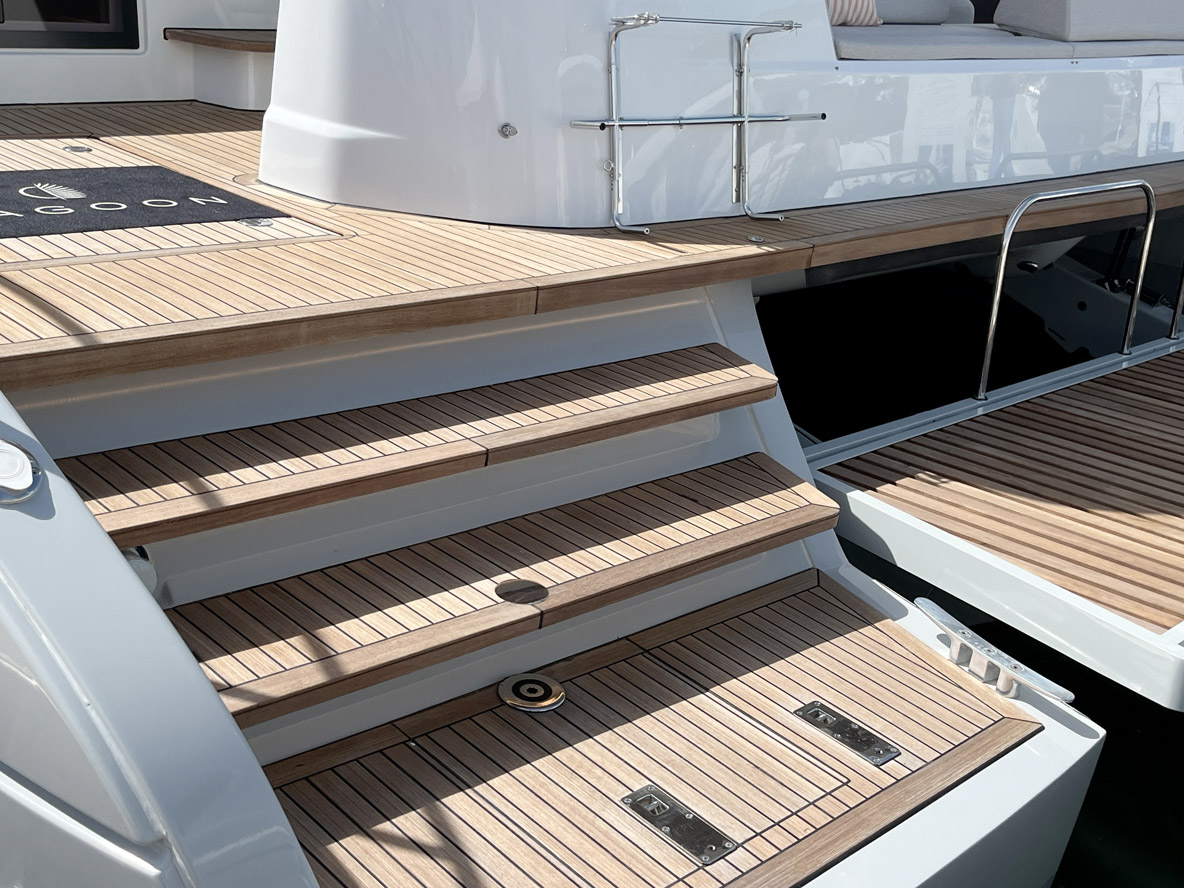
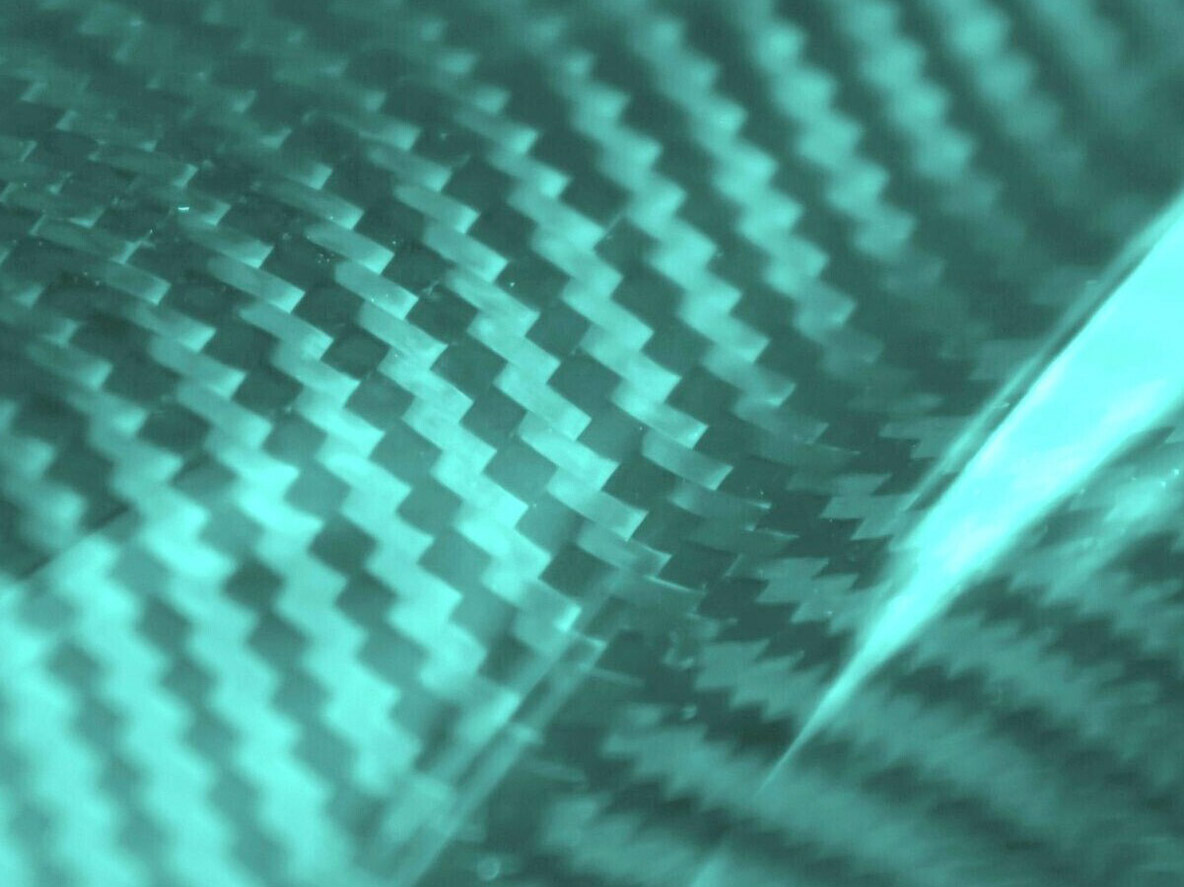
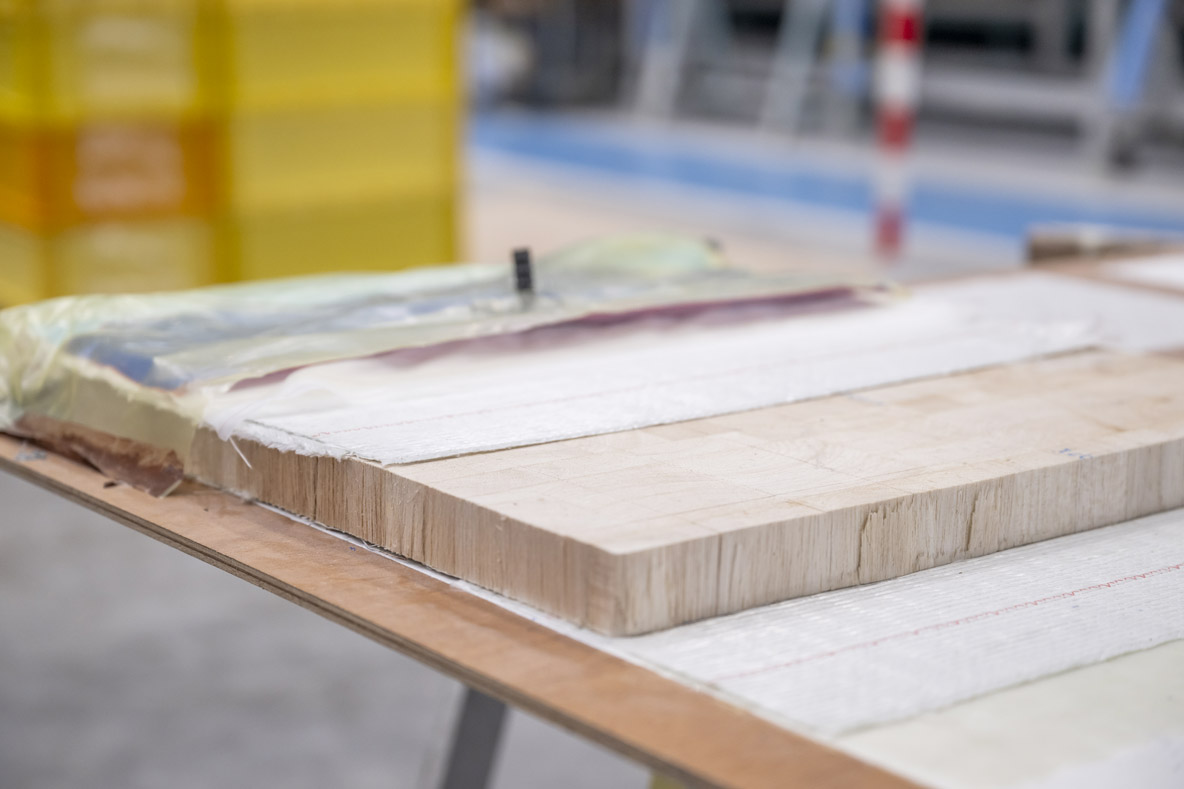
Part of our carbon footprint is generated by the materials we use to produce our multihulls. The aim is to build with materials that have a short regeneration cycle, are less polluting and/or recyclable. The new yards created to build green multihulls aren’t just using electric propulsion; they’re making sure they use materials that have a lower environmental impact. This is the case of Windelo, which uses basalt fiber and PET foam to make the hulls and structures of its catamarans. The downside is that this fiber is three times more expensive than fiberglass. As for PET foam (obtained through recycling), it needs 30% more density to offer the same resistance as traditional foam. A mix of materials is therefore used in order to maintain an acceptable weight to performance ratio. For medium-sized production yards, the risk involved in choosing alternative materials is already greater because their reputation has been well established using conventional materials, which are inevitably difficult to call into question. Nevertheless, NEEL Trimarans has introduced new materials. On the 43, a num- ber of non-structural parts in the fittings, such as the counter-moldings, have adopted a rather unusual sandwich, incorporating a 300 g/m² glass/flax cloth and a cork core. Prestige Yachts also uses recycled PET foam for the hull cores and balsa for the decks. At Outremer, after having built Roland Jourdain’s 5X (partially) in flax fiber, they are still exercising a degree of caution before adopting this type of innovation across the board. It’s hard for brands to go backwards in terms of performance. The aim is to move towards more virtuous cycles, but only if we can offer products that are equivalent to current standards, if not better, and at an attractive price. Damien Jacob, Sailing Product Manager for the Bénéteau Group (owner of the Lagoon and Excess brands), tells us that it’s not easy to find the right setting for the cursor. “We are gradually using more natural fibers and bio-based resins. From the 10% used today, we want to set a target of 90% in 30 years’ time. Small parts (deck panels, furniture) are produced in this more environmentally friendly way. At first glance, this may seem derisory, but on the scale of the Group, the sum of all these small parts is equivalent to more than a hundred completed boats. In partnership with Multiplast, we are also producing around twenty yachts using Arkema’s Elium recyclable resin. This requires us to adapt our know-how, because we need to find the right balance between weight and stiffness. Once the test periods are over, mass production of some of the models using this resin is envisaged in the short term”. In theory, it will be the largest units that will be equipped, so as not to have too great an impact on prices. It should be noted that Bénéteau now systematically uses iroko instead of teak, which seems to have been very well accepted by customers. For the sandwich that make up the decks, balsa is back in favor instead of foam. As for cork, it is establishing itself as an non-slip decking material as well as an insulator.
A more environmentally friendly approach to production
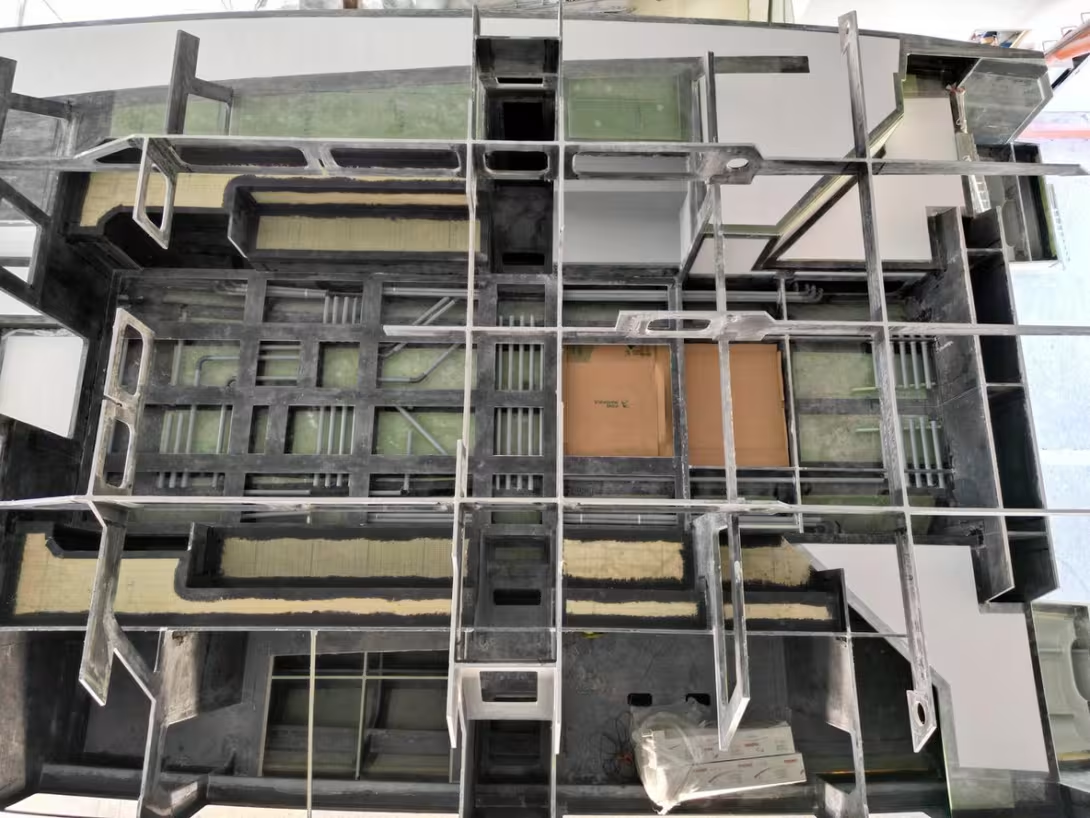
Multihull construction is very energy intensive. It requires very large heated and lit workshops, machinery needs to be powered, employees need to be moved around, a whole range of logistics is needed to transport the component products and, finally, to deliver the boat to its purchaser. It is all these physical flows of people, objects and therefore energy that need to be taken into account when establishing the carbon footprint, which itself will serve as the basis for eventually reducing emissions.
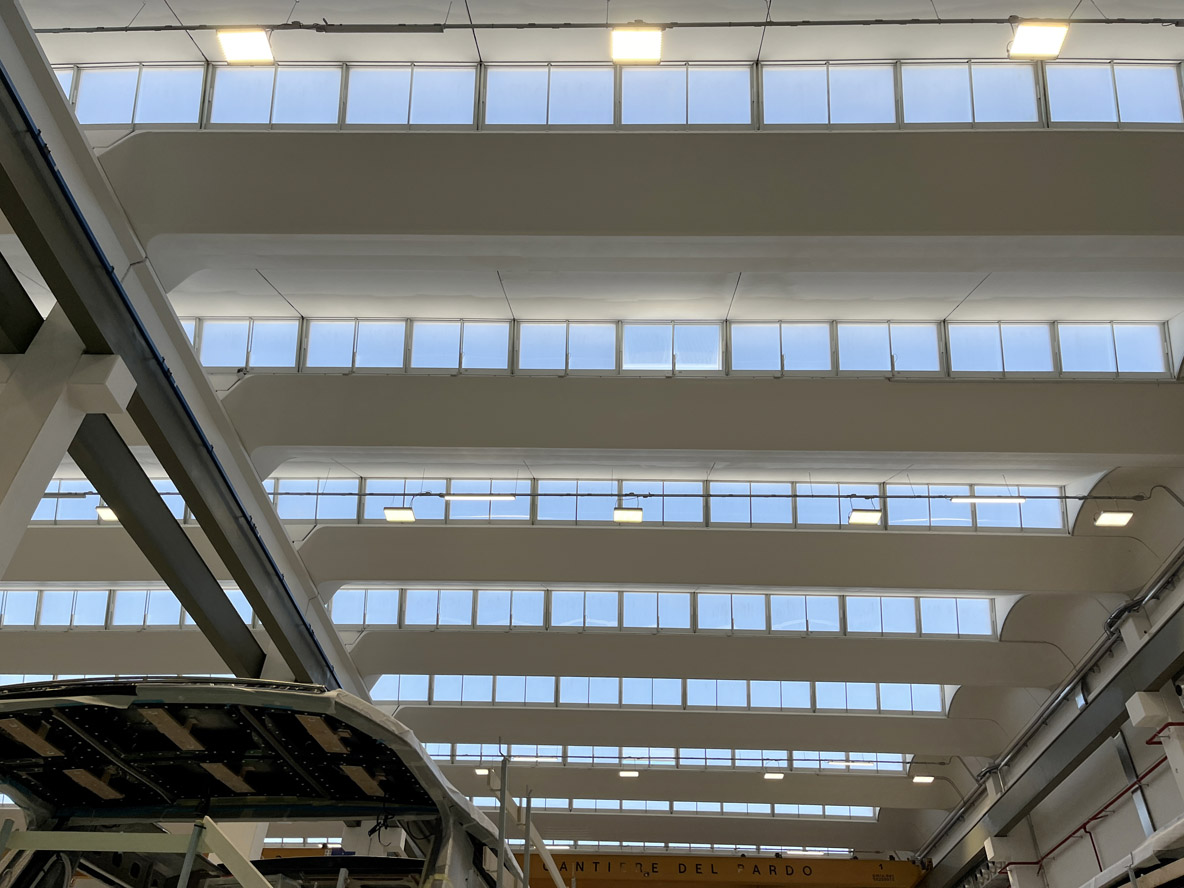
The shipyard visits we have been able to make around the world over the last 12 months have shown us that environmental issues are being taken seriously by manufacturers. The new workshops are now built with insulating panels for the walls and roofs, and energy savings on certain items are as much as 25%. Humidity and temperature control systems are becoming increasingly sophisticated. Environmental quality charters are beginning to be drawn up and applied to service providers, subcontractors and suppliers. Reducing the environmental footprint of the marine industry is therefore a series of challenges and initiatives, both large and small. It involves inventing sound technical solutions, creating partnerships and making both human and financial investments.
Life on board: Producing green energy
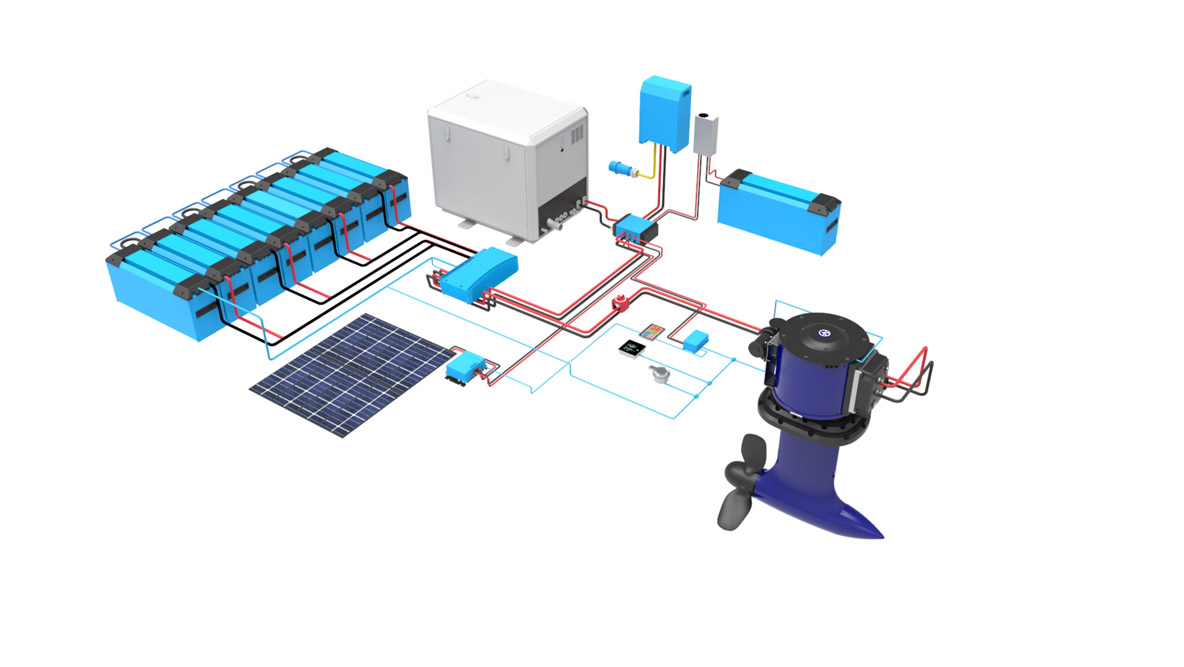
Let’s be honest: without even considering powering the electric motors, the energy requirements aboard our multihulls are clearly on the rise. The domestic equipment on a modern catamaran or trimaran of 45 feet or more includes washing machines and dishwashers, induction hobs, multiple fridges, multimedia, electric winches, sometimes air conditioning, not to mention any compressors for the equipment. Consumption on board can easily reach 20 kWh per day.
Understandably, the shipyards have begun to cover the available surfaces with solar panels on the coachroof and bimini. The Lagoon 51 boasts 3.4 kWp. The same goes for Fountaine Pajot, with the Aura 51 boasting 2 kWp. As for the New Windelo 50 and 54, they have benefited from completely redesigned foredecks and coachroofs to integrate solar panels more effectively - up to 5.68 kWp.
A surface area of 4 to 5 kWp of solar panels is enough to cater for life on board without switching on the generator.
On electrified yachts, it is also possible to draw on the engine battery bank, which is often in the region of 100 kWh. On the new Sunreef ECOs with their PV cells, this solar energy contribution can reach up to 200 kWp, enough to power all the luxury on board without having to use the generator.
The hydro-generation offered by electric propulsion when sailing is interesting, but for the time being, only multihulls capable of sailing at more than 10 knots can boast good recharging capacity. At 8 knots, you can count on 0.3 and 0.6 kW, not much more - which is still enough for an ‘ energy-saving’ power supply.
Wind generators, which were very much in vogue until the early 2000s before being somewhat neglected, are once again popular with sailors, who recognize their high efficiency in well-ventilated anchorages and their obvious advantage in bad weather when solar panels no longer provide any power...
As for the fuel cell, it obviously offers hope - that of replacing diesel with a clean fuel - but the supply of hydrogen to our multihulls still presents challenges in terms of logistics, finance and safety.
fibers.