
Caring for your carburetor (Part 2)
Proper maintenance of the fuel feed system can help prevent breakdowns. In this second feature on outboard motor maintenance, we’ll be taking a closer look at the traditional maintenance operations, as well as what to do in the event of mechanical failure.
Image

Image
1
/
1
Publié le
26/09/2023
Par
Olivier Barret
Numéro :
192
Parution :
Nov.
/
Dec.
2023

In addition to all these precautions, we strongly recommend that you dismantle the carburetor once a year for proper maintenance. Outboards can easily stall due to a clogged carb. Having a carburetor maintenance and repair kit on board, including replacement gaskets and jets, will mean you can get back under way as quickly as possible.
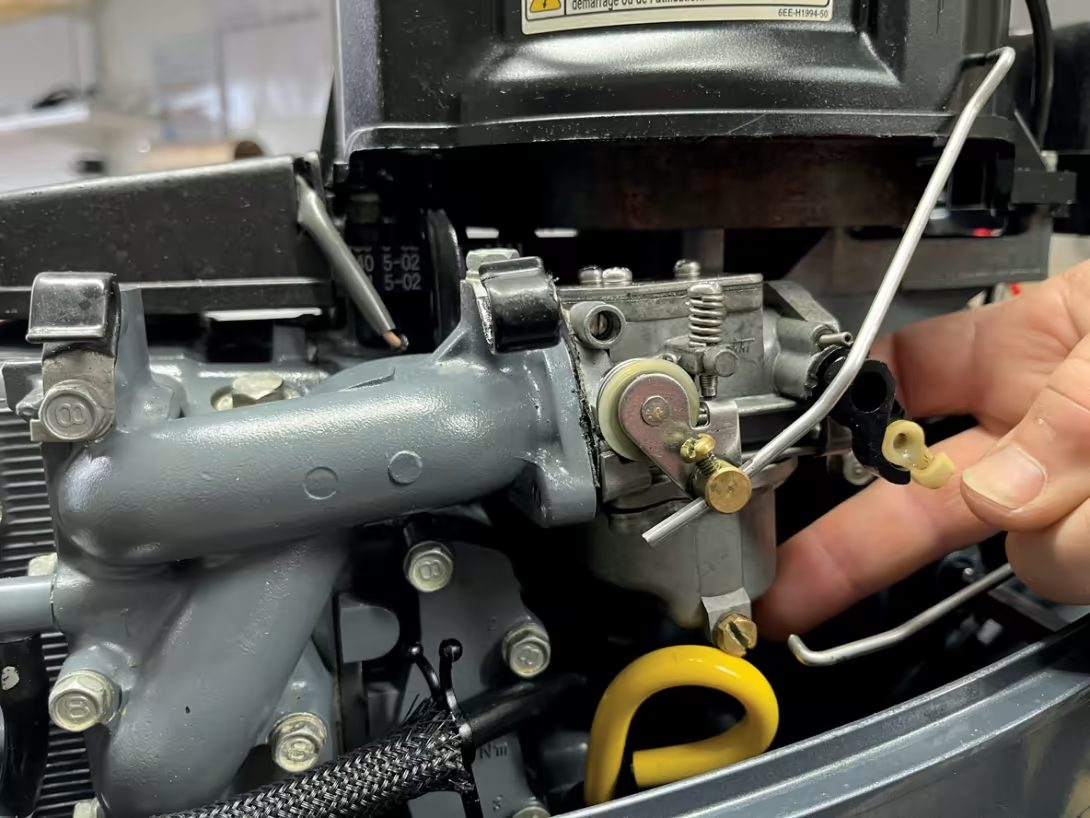
Philippe Bauer, from Tendance Voile, dismantled the carburetor on this 8HP Yamaha to give it a good clean and change the gaskets and seals. His advice is to take photos during disassembly and be tidy when removing components. We start by draining the bowl after having emptied the fuel lines.
1/ The fuel filter can be seen under the intake hose. In the event of an engine problem, you can start by cleaning it and changing the filter if necessary.

2/ The carburetor is now removed - after removing the air intake hose.
3/ Now it’s time to disconnect the fuel inlet and remove the air intake housing.
4/ Next, separate the fuel bowl from the carburetor body, taking care to put the bolts and other components in a pot or jar.
5/ The jet (tube with a slotted head) vaporizes the fuel and can be liable to become clogged with dirty gasoline. If the motor won’t idle properly, it’s often because the jet is clogged. Unscrew it and blow it out (blow it out by mouth if you don’t have access to a compressor). Don’t use a needle, as it could damage the jet.
6/ The fuel bowl we see here isn’t that shiny. After disassembly, a good cleaning with WD40 is called for... As for the seal, it has to be changed and replaced by the new one supplied in the kit.
7/ Once the jet is clean, it can be reassembled by screwing it in as far as it will go - be careful not to overtighten, as this may damage the top
8/ Then reassemble the bowl, taking care to oil the seal you’ve just changed. Be careful, too, with the brass screw heads: they’re fragile. One last blow with the airline through the air intake hole is recommended.
9/ Now it’s time to refit the air intake housing and fuel inlet hose on the carburetor. Clean the inlet manifold thoroughly before reseating the carburetor, to ensure you get a good seal.
10/ After reconnecting the air hose, it’s time to reattach the choke linkage by squeezing the control lever.
11/ Finally, replace the fuel linkage rod, taking care not to disturb the mixture screw or the idle screw. Your well-maintained motor is now all ready to go!
