Our video: 
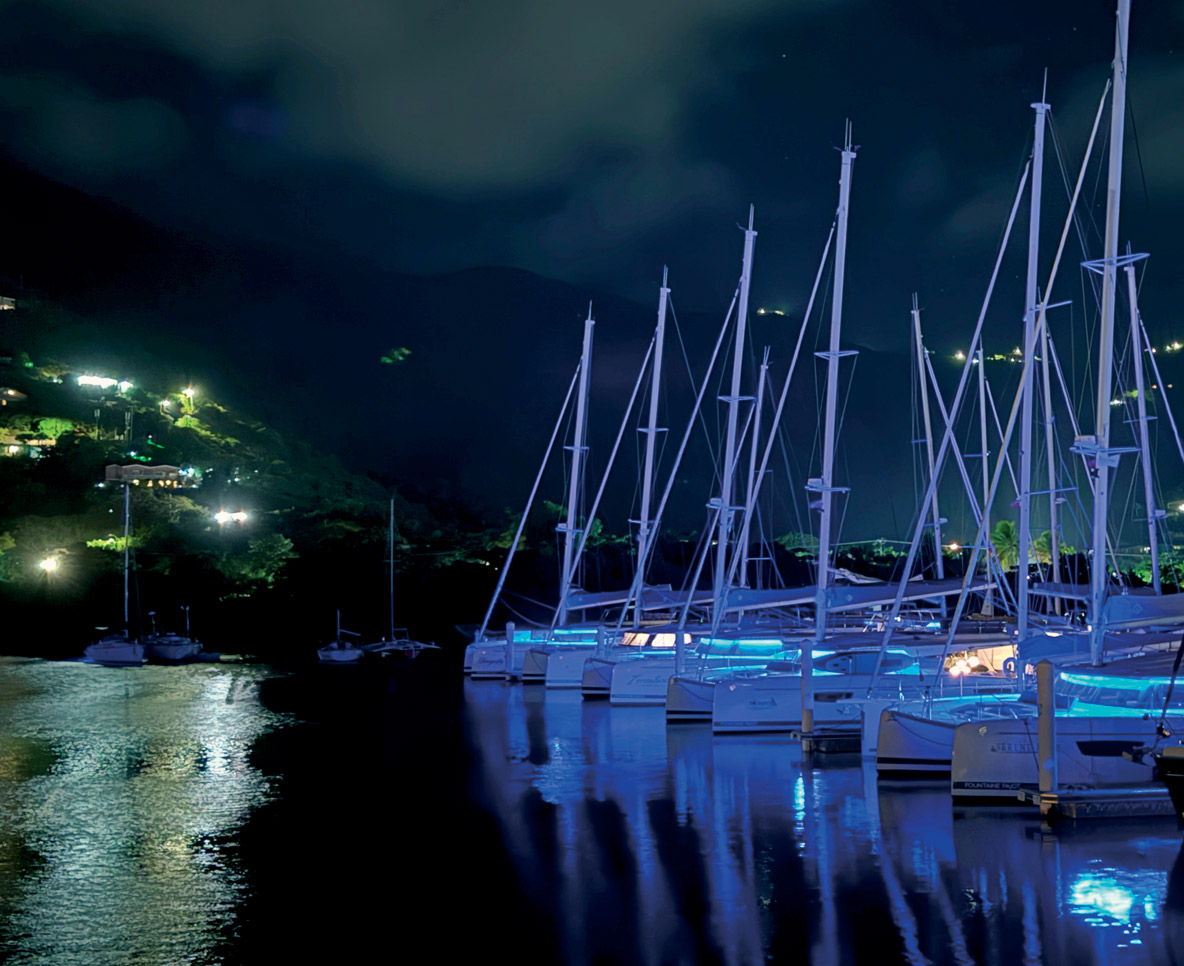
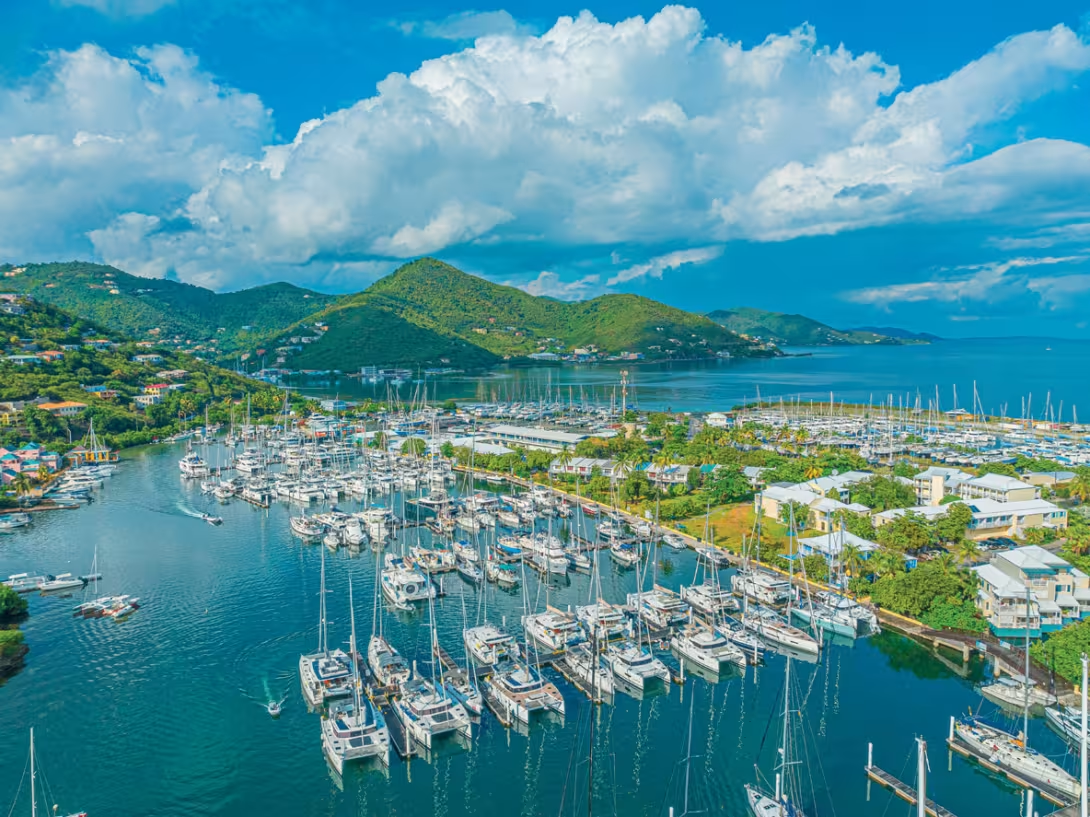
From the picturesque Beef Island airport, a cab took me to Nanny Cay, just a few miles the other side of Road Town, the capital of the BVI. It was already late and Waypoints Yacht Charters’ base had been closed for a few hours - but the brightly lit Tanna 47 Ojala was waiting for me on pontoon C. Alone on board for the first 24 hours, I got my bearings and installed my indispensable “remote office”. The first challenge for the itinerant journalist in me was to solve the Wi-Fi problem (see editorial); not so easy in the BVI, where the prepaid Holafly e-Sim card proves inoperative - but fortunately reimbursed afterwards. I adapted to the coffee table (a larger, lifting tabletop is available as an option) by raising my keyboard and mouse on top of the cardboard box of my “traveling screen”... I could have sat in the cockpit, but there was no wind and it was very hot in the harbor. So I made the most of the air-conditioning, since we were connected to the pontoon. Obviously very efficient in these sweltering tropical conditions, but unfortunately also very noisy. As for the rest, this recent catamaran was impeccable and perfectly prepared; I opted for the starboard aft cabin. A good choice... except when the generator was running - but I couldn’t have known that! I promise that’s all I’ll say about the Tanna: the week I was about to spend aboard would confirm the undeniable qualities of this model (see inset).
24 hours after my arrival, Romain Motteau, Managing Director of Fountaine Pajot, joined me on board; the next day, it was Jay Pennington’s turn, Operational Manager of Waypoints’ American bases, to bring his bag aboard; Jay took over the aft port cabin - it has direct access to the cockpit, which is very practical when you’re signing on as Captain!
Day – 1 or 1 ?
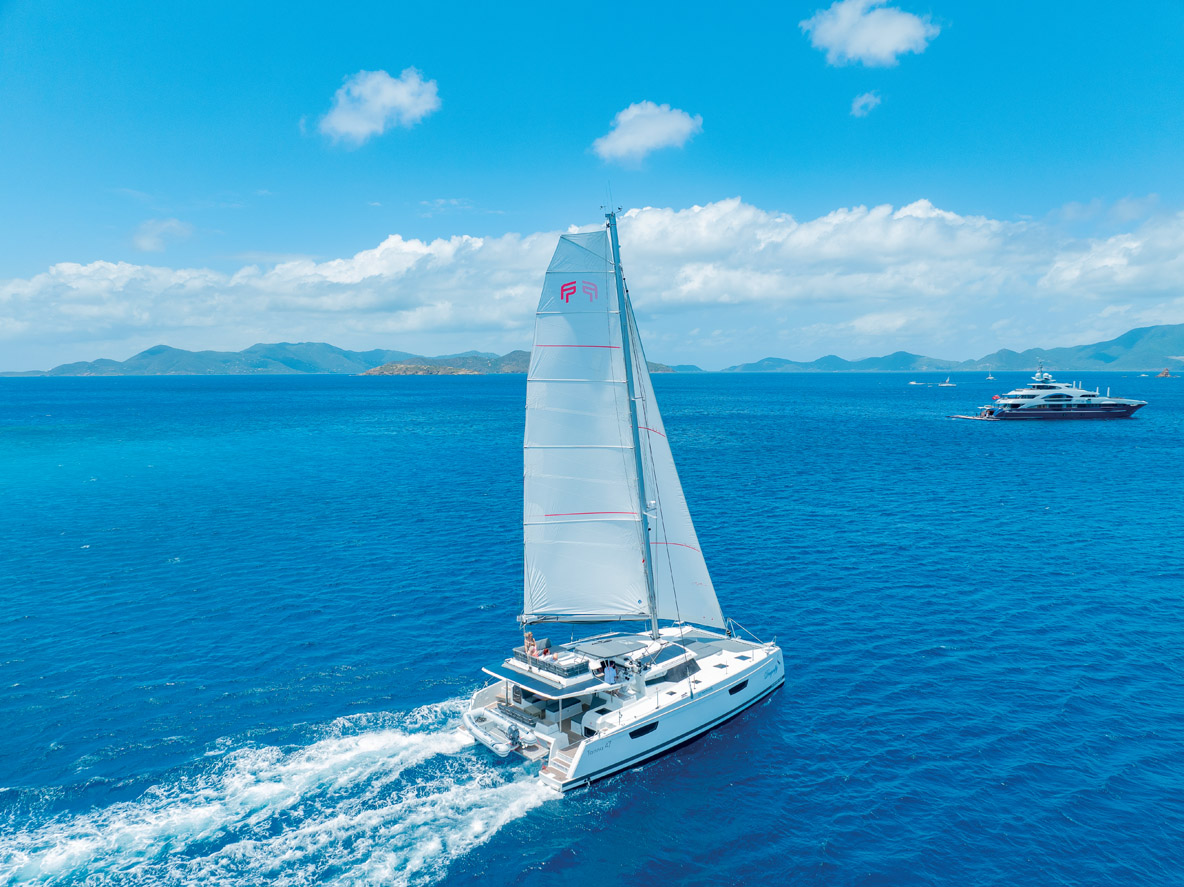
Arriving early for an event that brings together a large number of multihulls has its advantages: you can take part, for example, in a long-awaited photo shoot. While Fountaine Pajot usually provides generous photo and video productions at the launch of each of its new models, there was a bug with the Tanna 47, released at the end of the Covid-19 period. In fact, it’s the only model in the brand’s catalog whose exterior photos are limited to a few shots at anchor, with the Ile de Ré bridge in the background... The aim of this upcoming release is to shoot some beautiful photos and videos under sail. For the occasion, Romain Motteau, Managing Director of Fountaine Pajot, is in charge - or rather, at the helm: for this outing, he has chosen to use Dragonfly, one of the most recent Tanna 47s in the Waypoints Yacht Charters fleet. Romain is supported by Laurent Fabre, vice-president of Atlantic Cruising Yachts, and my Captain Jay to maneuver the catamaran as best as possible. A few extras are also on board. The sky is divided between clouds and sunny spells; the sun is already high in the sky as we leave port, but the trade winds are already well established. We’re just about at the limit of what we can do with the drones, and the wind is set to pick up again over the next few days - so let’s get going! For my part, I’m in charge of taking images from the chase boat. The aim is to sail off the rocks called The Indians. A hectic first shoot gets underway, followed by tacks in the entrance to The Bight, a vast natural harbor on Norman Island. The chase boat crew then drops me off aboard the Tanna. We share a picnic lunch a few yards from the Treasure Point caves. The spot is perfect for wingfoiling, a fact not lost on Romain. Unfortunately, the wings he’s just rented are punctured, so we won’t be able to keep the edge much longer.
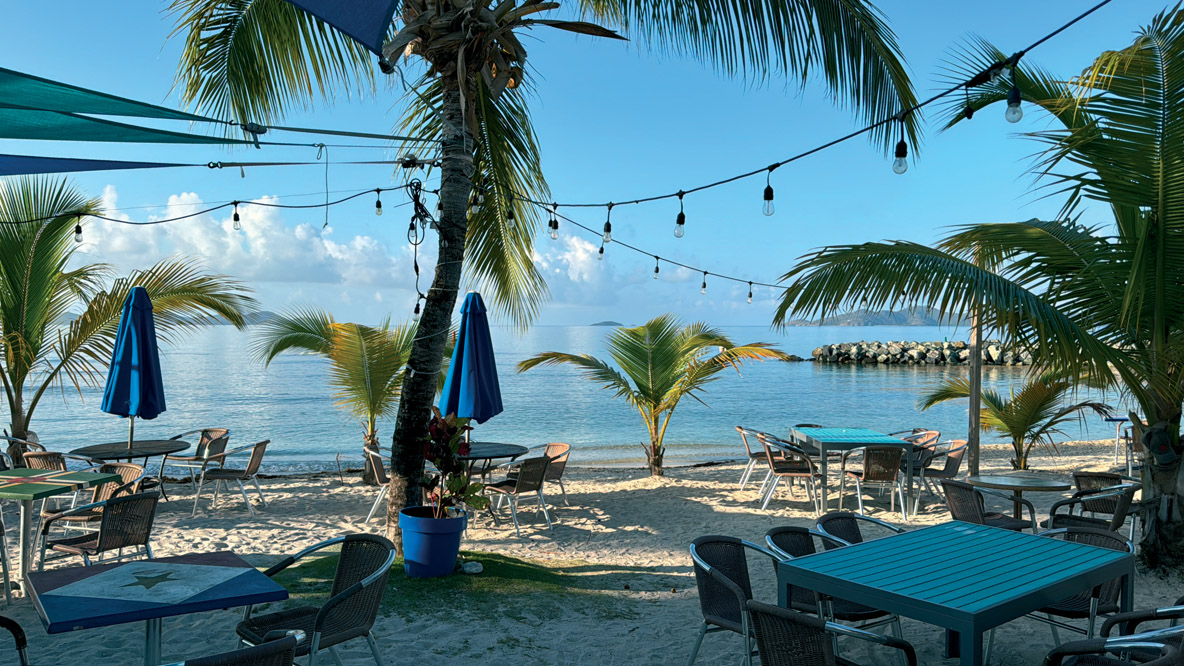
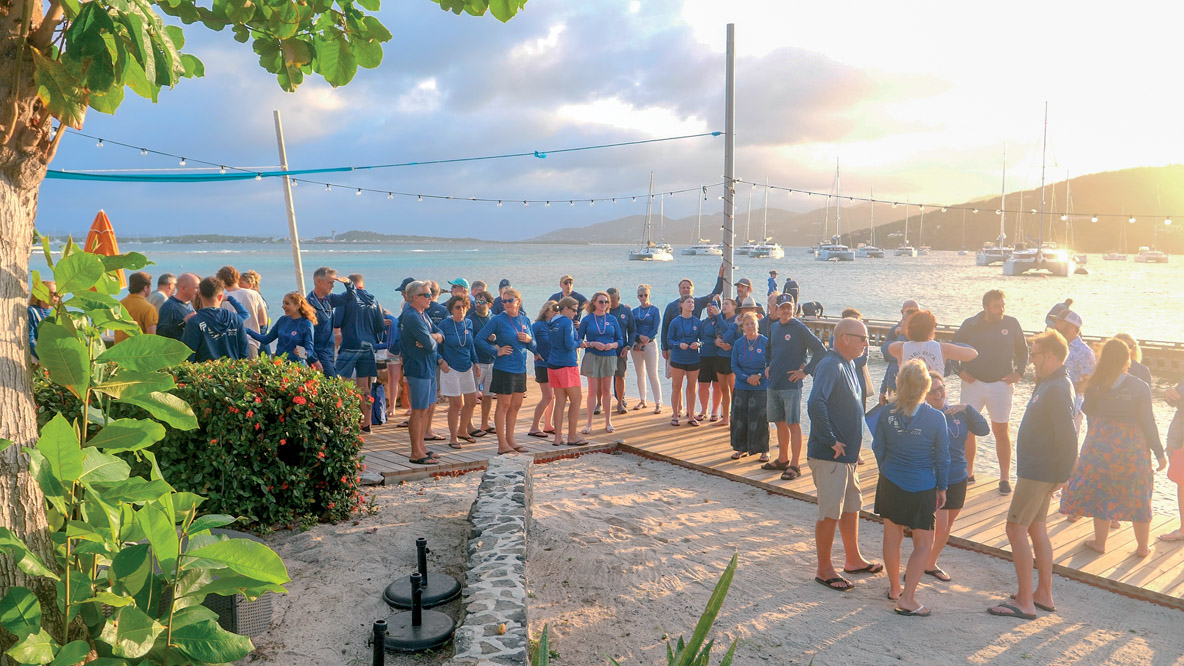
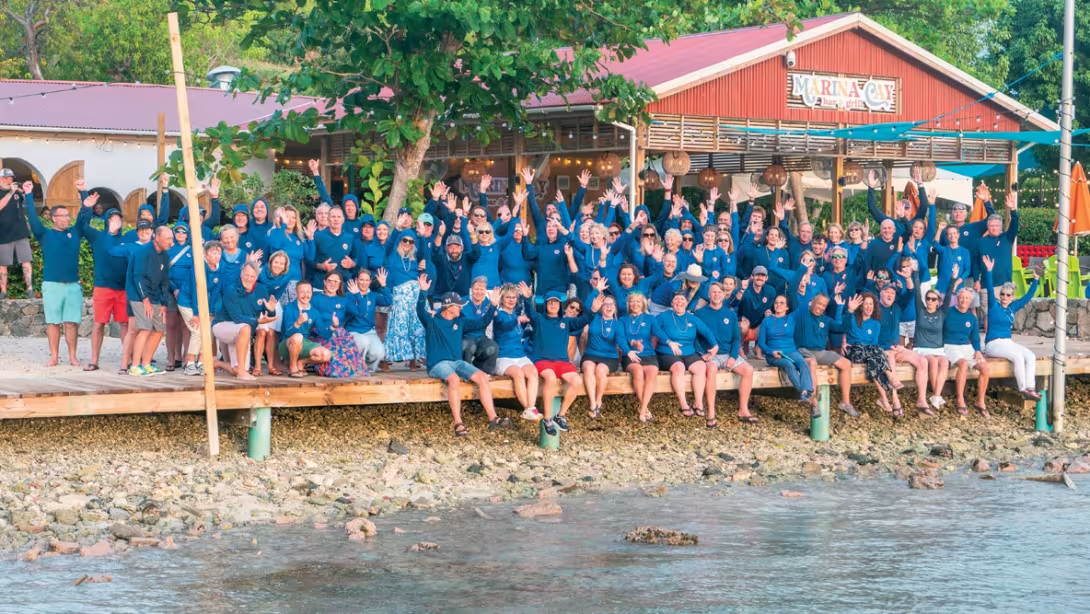
We’d have loved to stay a little longer in this anchorage, but the Fountaine Pajot Owners Rendezvous was imposing its timing: it was time to welcome the 120 participants for a first evening at Peg Leg’s beach bar-restaurant, on the base of Nanny Cay. To begin with, I met Mary and Ann who were boarding Ojala; they both work for LaVictoire Finance, an American company specializing in boat financing.
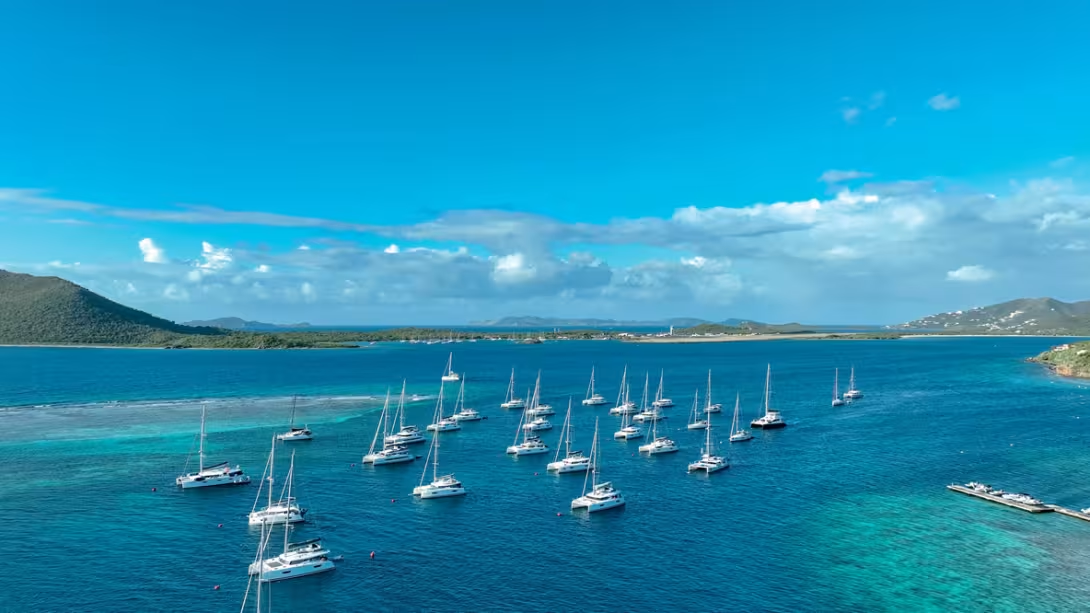
Before sunset, I had time to discover the 25 catamarans attending the event. The vast majority are owned by American owners and operated on a charter basis (mainly by Waypoints Yacht Charters and Navigare). Almost all the models in the current range are represented - the Samana 59 and Thira 80 are missing. The largest catamaran attending is an Alegria 67, owned by Dr. Keith L. Black, a renowned neurosurgeon based in Los Angeles.
In the midst of this very recent fleet, I did spot a Hélia 44 with its suspended mini-vegetable garden: now that’s a proper Owner’s catamaran! The builder and organizers say they would like to “open up” the event to more owners living aboard, from Europe and beyond. However, it’s difficult for the BVI to accommodate more than 30 multihulls together on a buddy boat basis.
Day 2
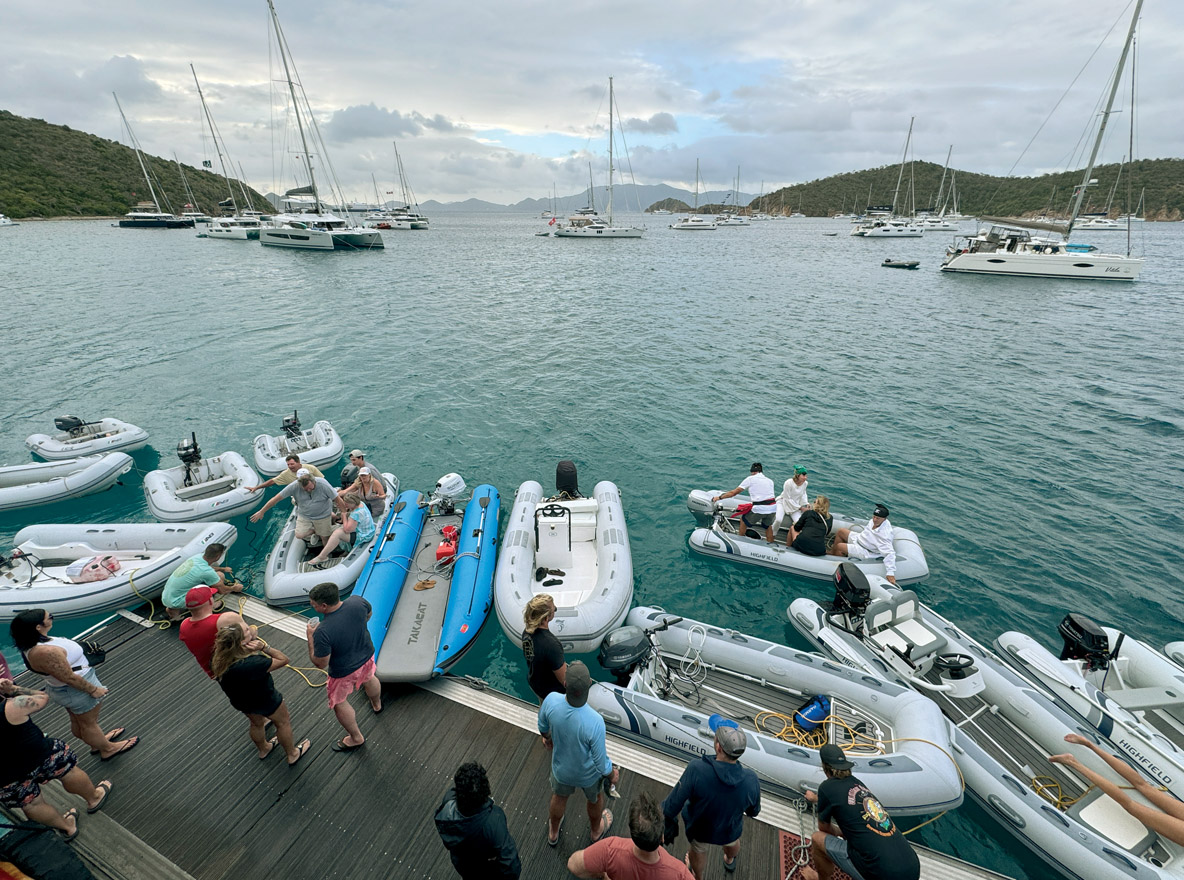
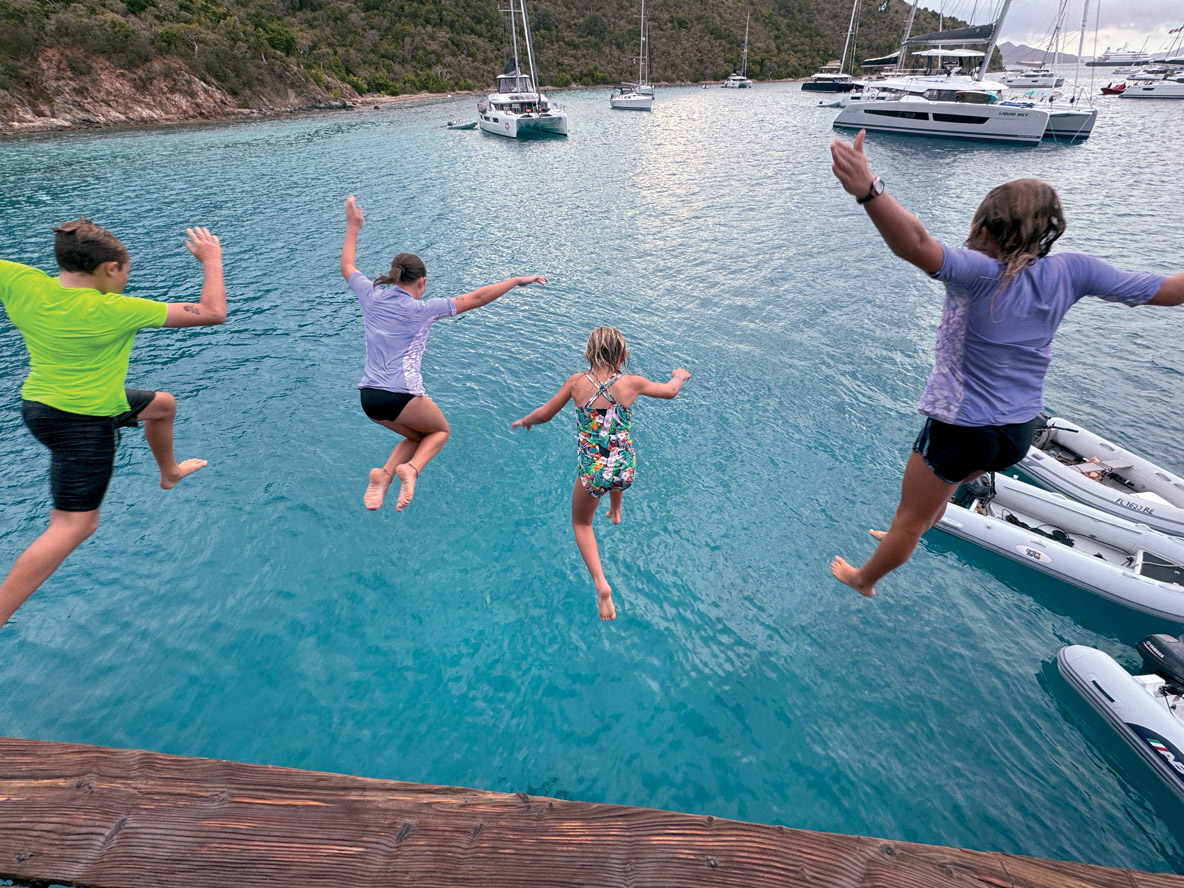
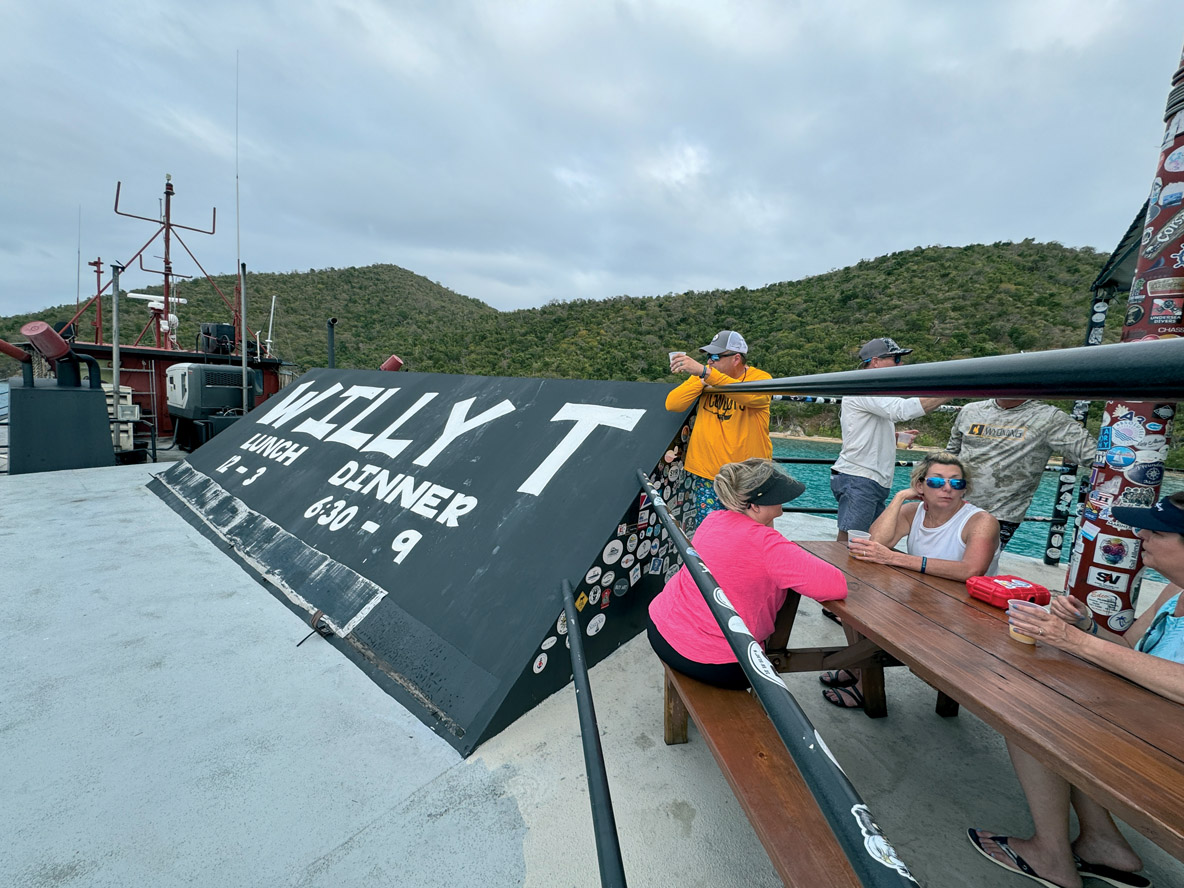
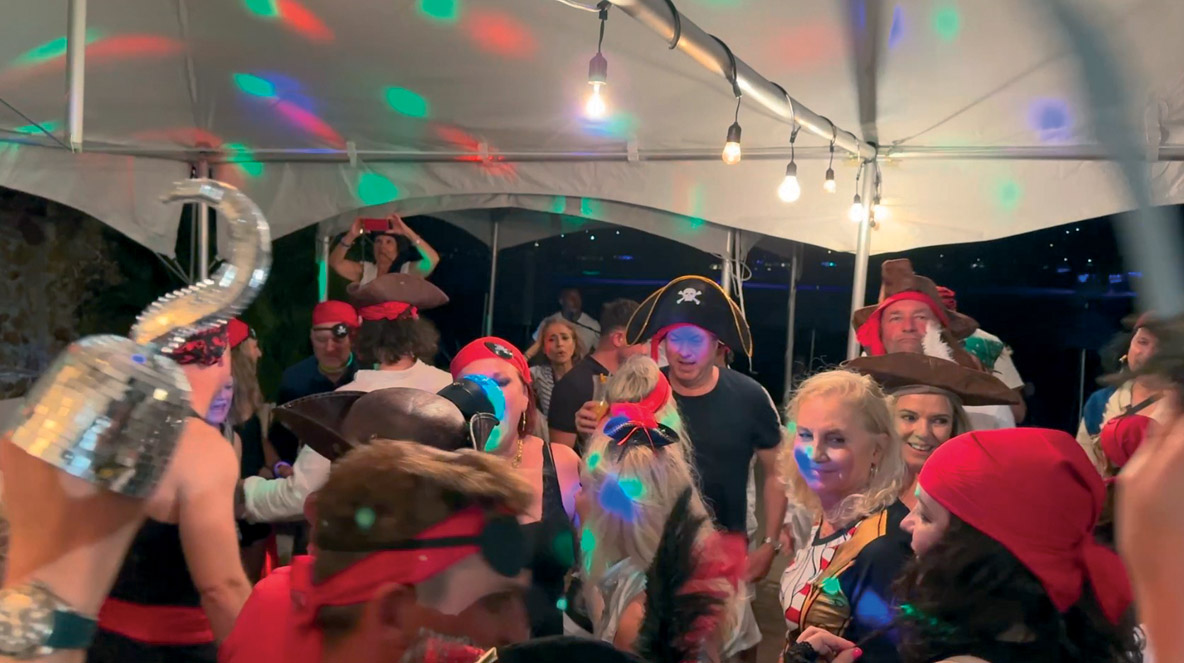
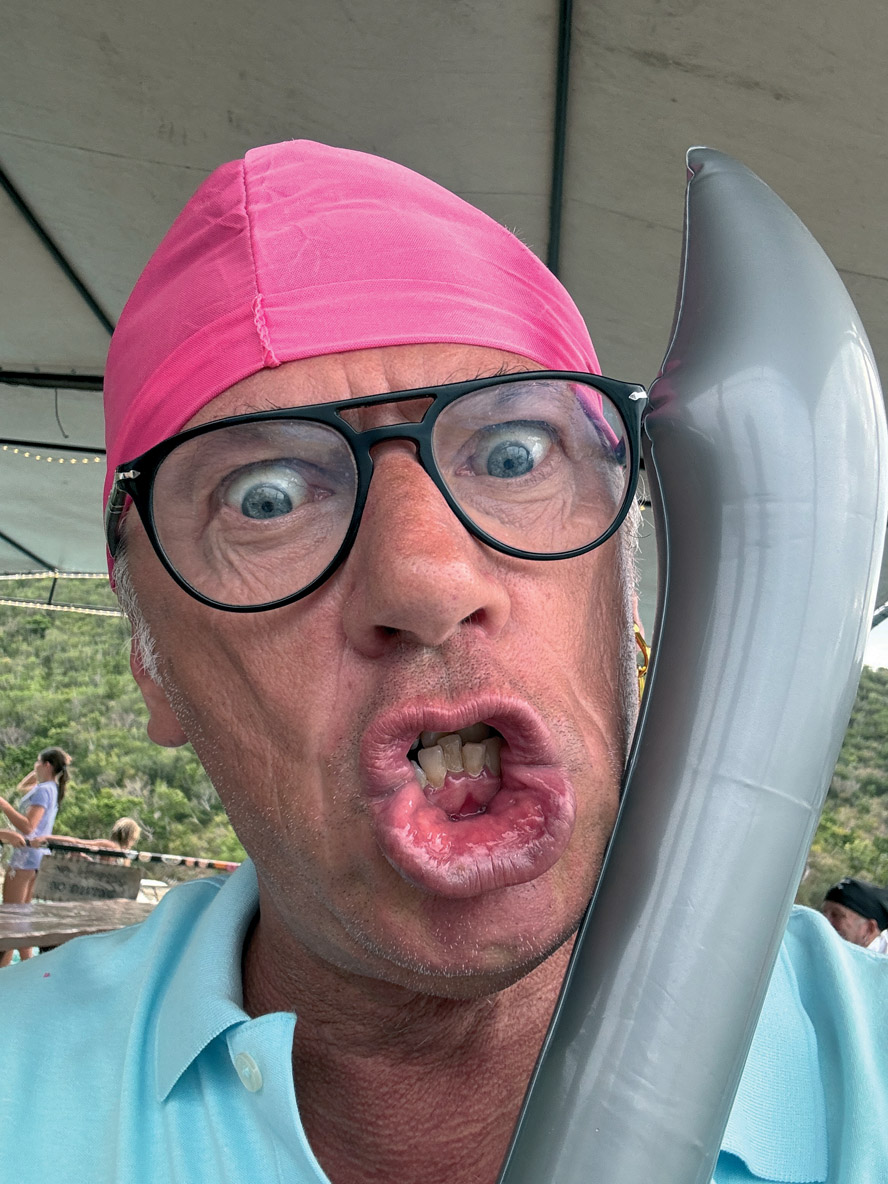
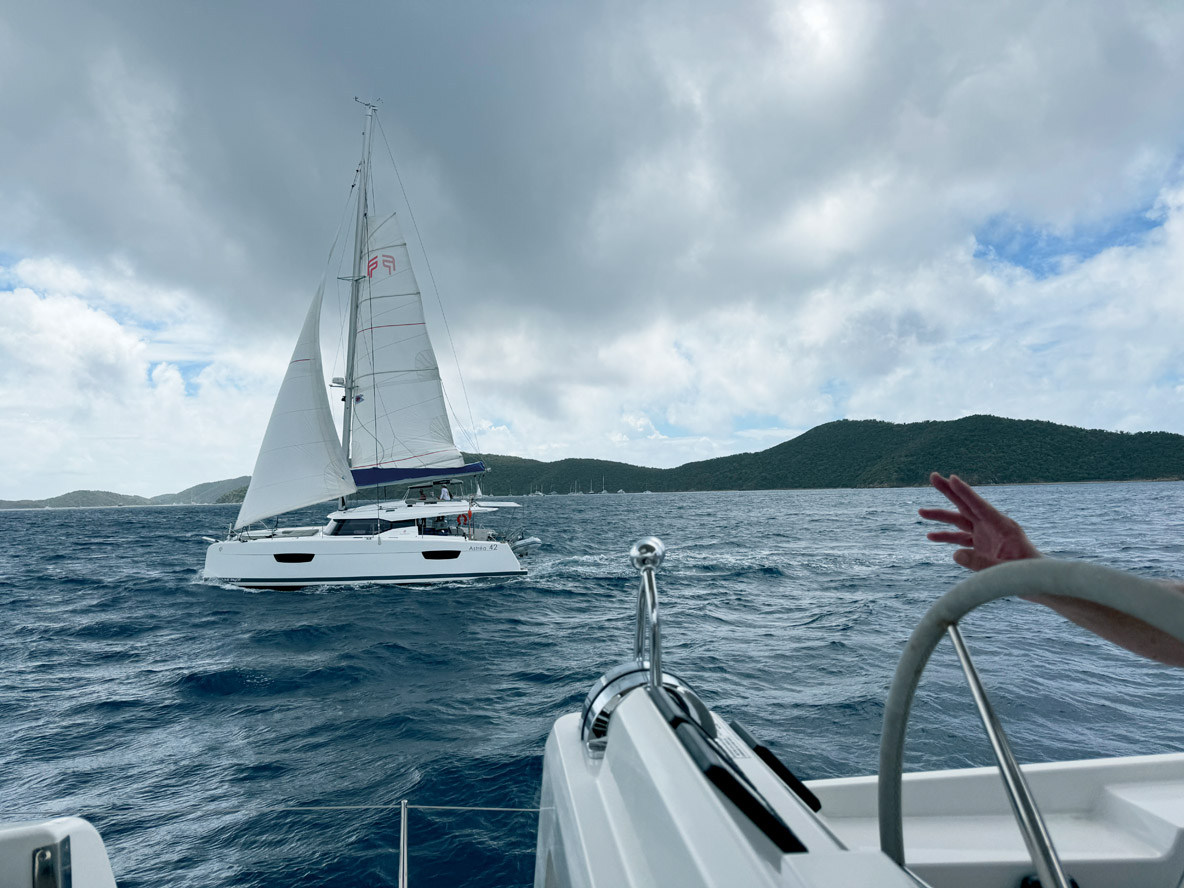
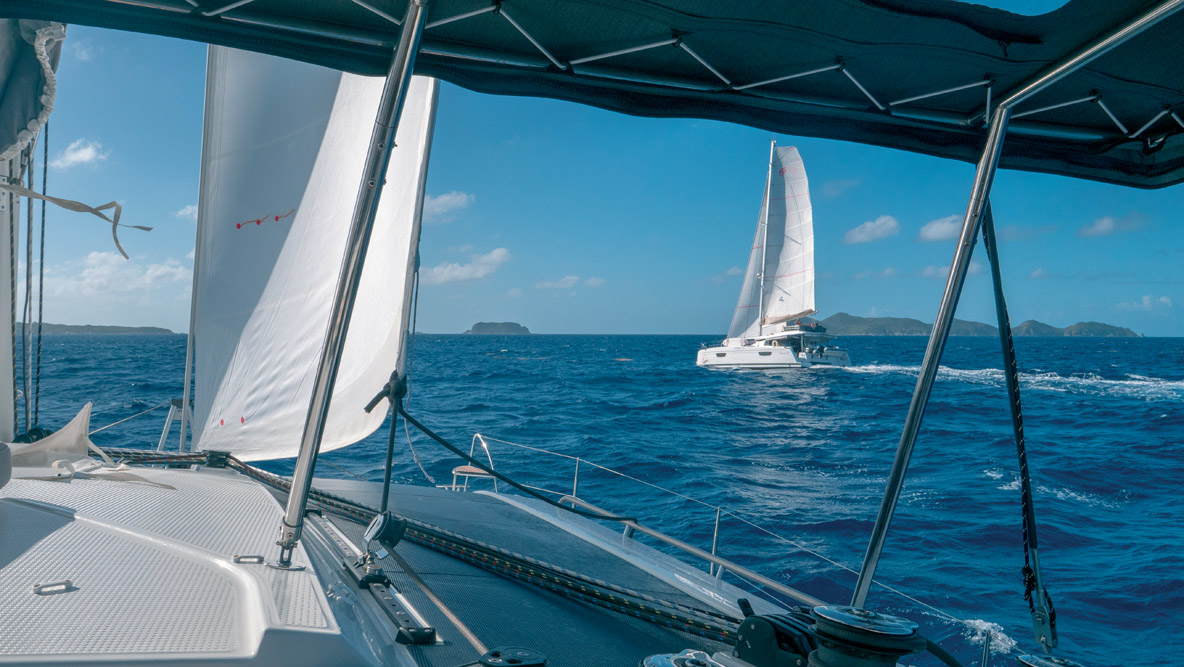
The program for the Owners Rendezvous gave pride of place to evening events; during the day, the only imperative was to get to the next stopover. I quickly opted for a formula that would brighten up these short delivery trips: buddy boating with another Tanna 47 - it was to be Dragonfly, whose Franco-American crew was looking forward to keeping score. We set out from Nanny Cay mid-morning with the wind blowing between 20 and 27 knots, so we took in one reef and four rolls in the genoa. Dragonfly opted for the same sail configuration; the theoretical distance to sail was relatively short, as we were returning to Norman Island, which we had discovered the day before. But this time, we were stopping in The Bight. Dragonfly and I agreed to venture further upwind to Peter Island. We met up to share some delicious burgers. Due to the strong trade winds and heavy easterly swell, many relatively exposed anchorages become impassable - and it’s only logical that most boats head for perfectly protected shelters in the late afternoon. In short, there were no more moorings available near the beach when we met up with the flotilla in Norman. No matter, we find ourselves just a few boat lengths from a strange boat overhung by a large pontoon and overlooked by a terrace: welcome to the Willy T! This floating bar is a veritable institution in the BVI. By 5pm, the dinghies are already being counted by the dozen. Most customers are jumping or diving, stepping over the big “No jumping - No diving” sign without batting an eyelid. Mary and Ann are getting ready for the privateer costume party. I thought I’d be spared this kind of get-up as a journalist, but no: I’m treated to a full kit, complete with costume jewelry and plastic sword... let the party begin at The Bight at Norman Island, a grand establishment partly privatized for this Fountaine Pajot evening.
Day 3
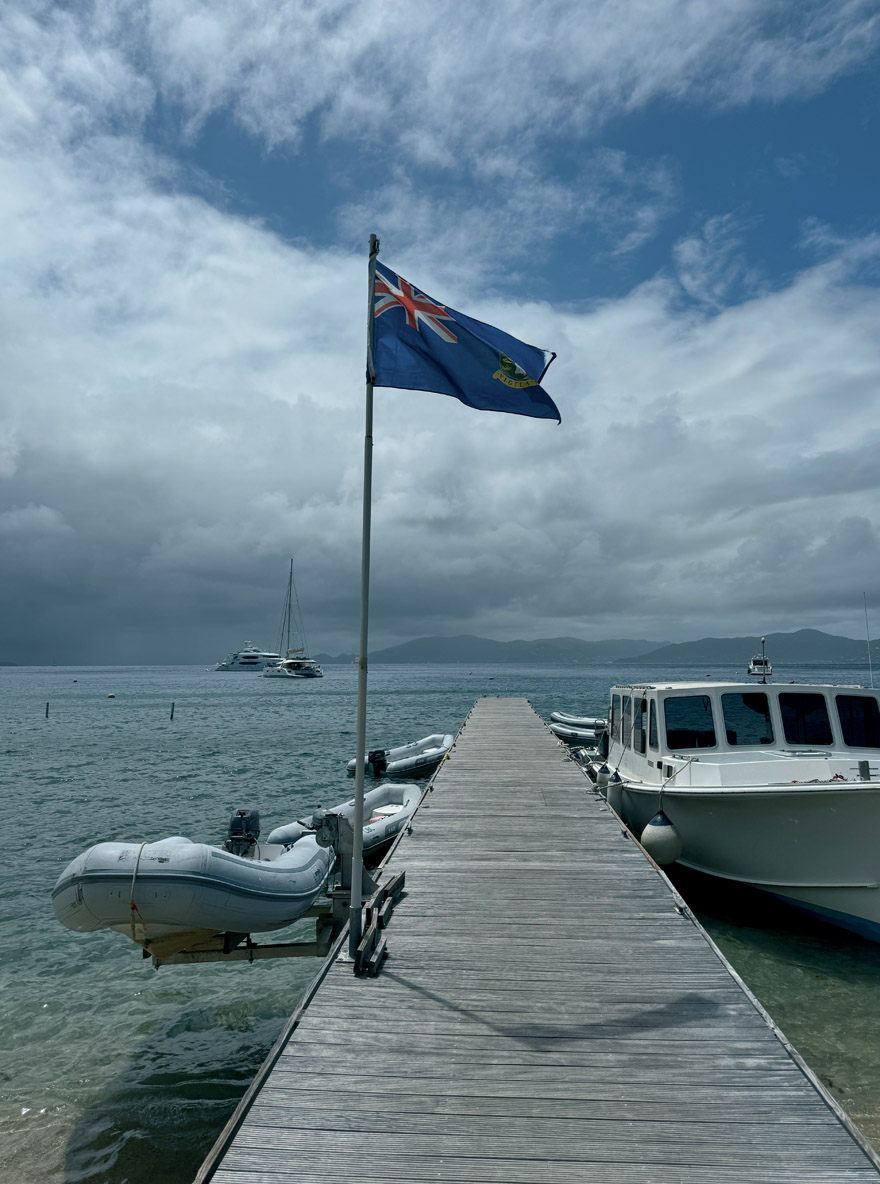
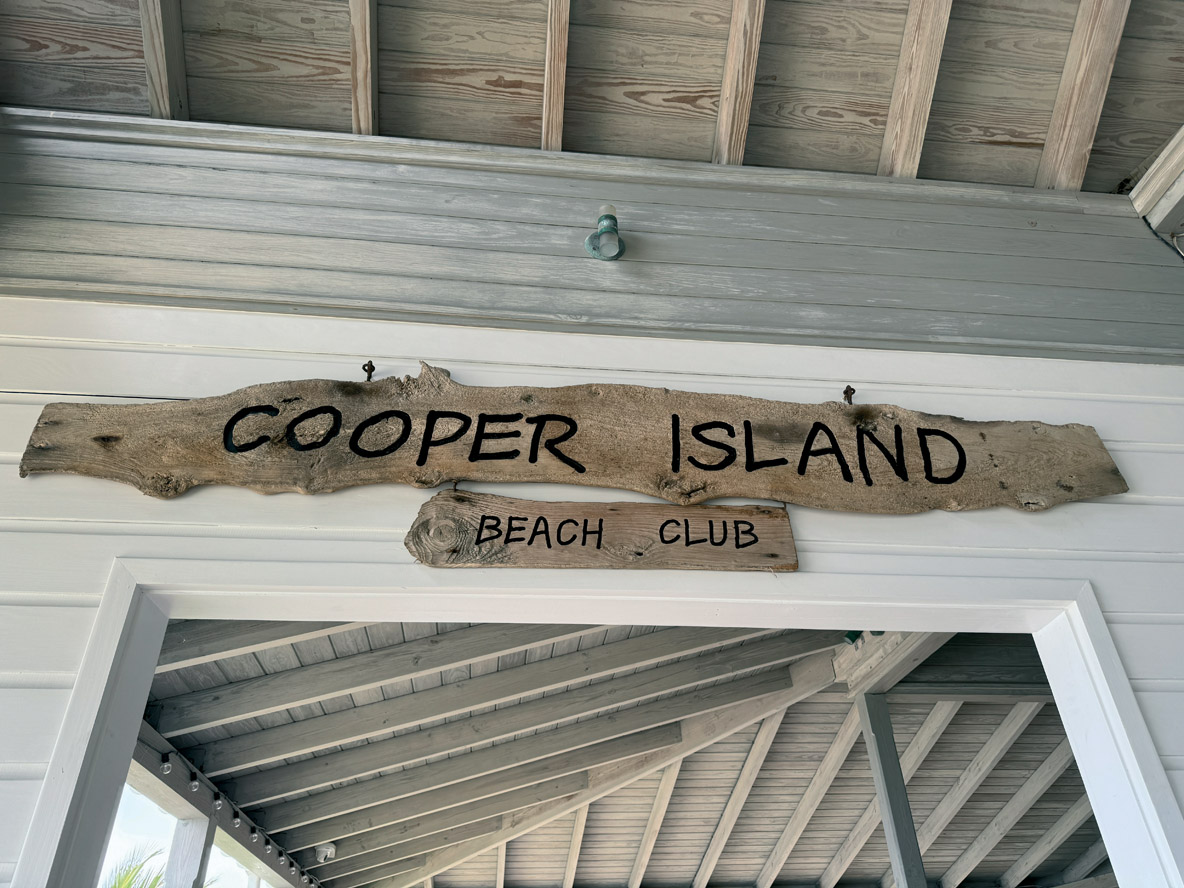
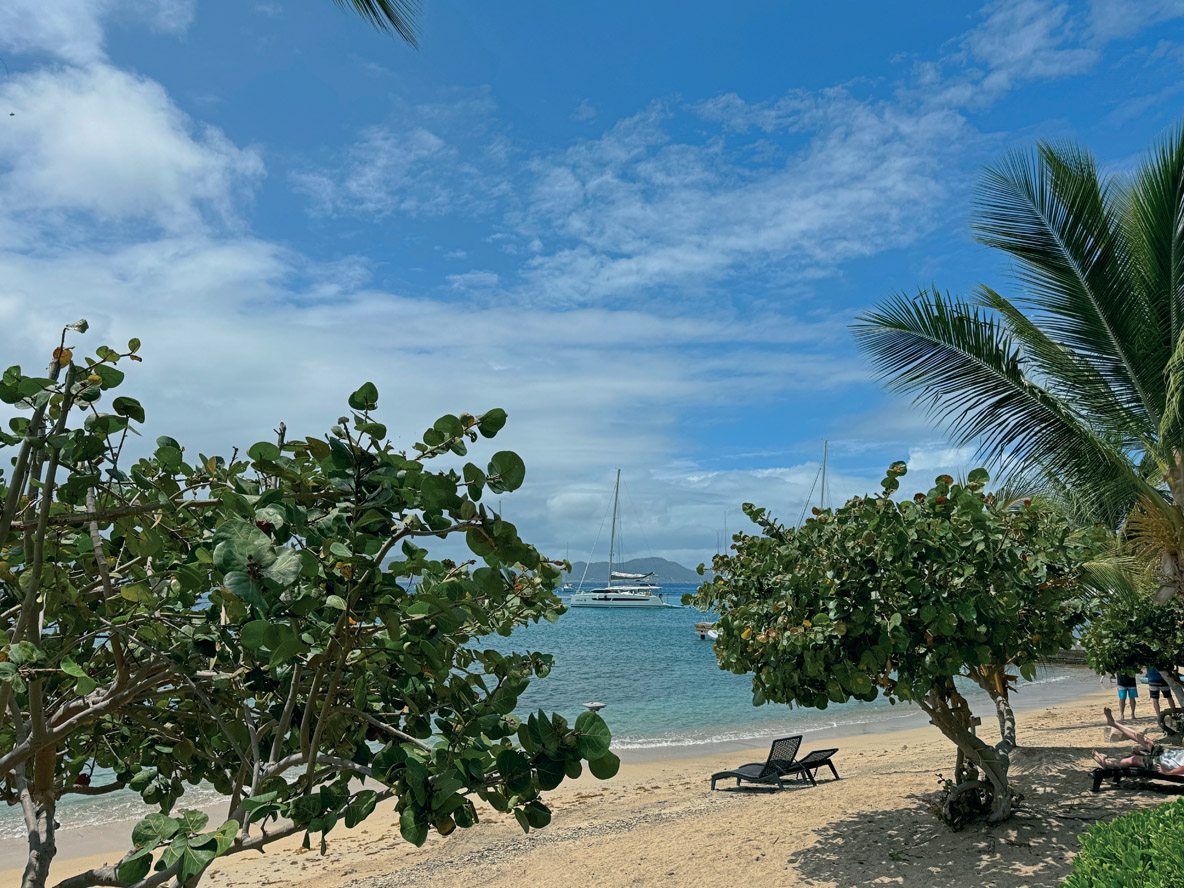
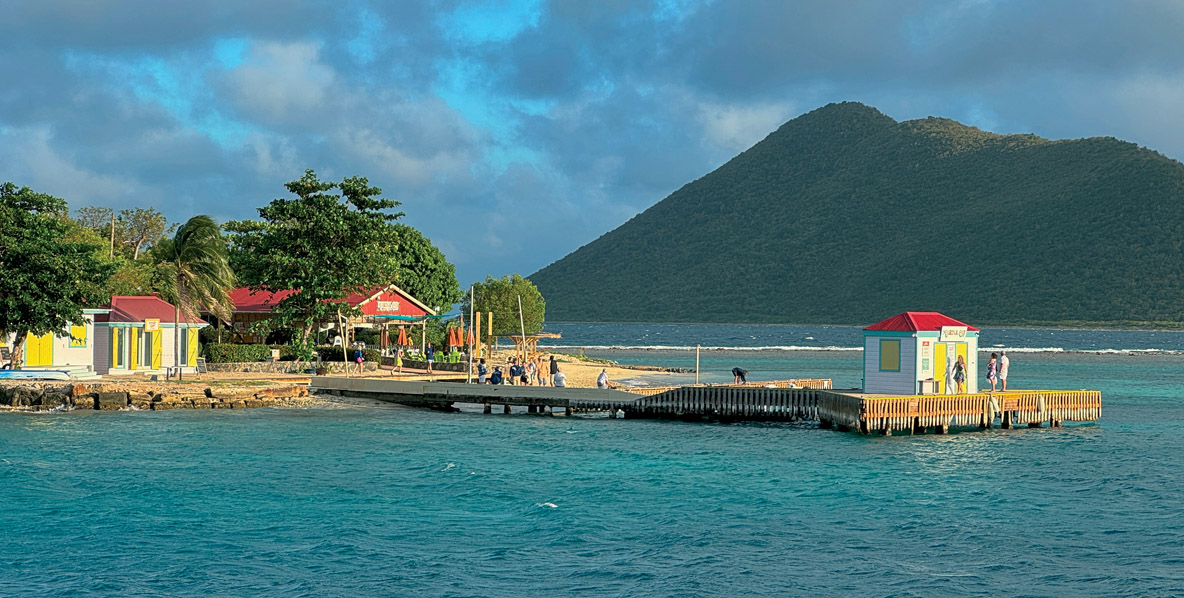
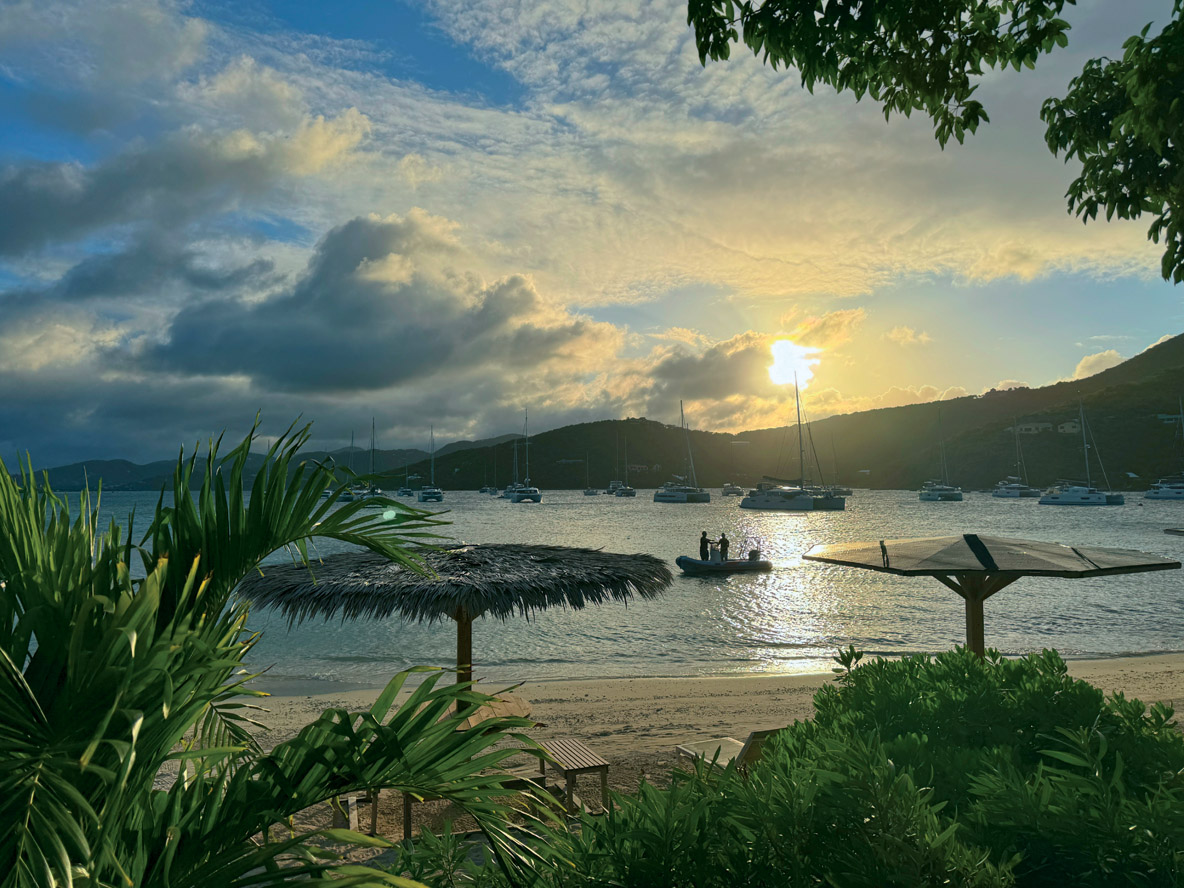
Today’s plan is to reach the easternmost tip of Tortola. The wind, still blowing from the east-north-east, doesn’t let up, so we decide to make another stop at Peter Island and then discover Cooper Island. This small island is home to an upscale hotel, restaurant and rum bar, both open to visiting yachtsmen. The anchorage can be rolly and subject to unpredictable gusts, but it’s a very attractive stopover. In the early afternoon, we set sail again for Marina Cay; this tiny islet less than a mile northeast of the airport has long been famous for its Creole-style bar-restaurant and gas station. In September 2017, Irma, the most powerful hurricane ever recorded in the Atlantic, reduced these facilities to rubble. The gas station was rebuilt, but soon ceased operations. Today, Marina Cay is back in operation, with its charming beach, straw umbrellas and, of course, its restaurant. At the end of the day, the light is magnificent thanks to its westerly exposure. The anchorage is vast, with a large number of moorings. Fortunately, 25 of them have been reserved for us - but beware of the traffic of boats and tenders at night. After dinner and a nightcap aboard Dragonfly, we returned to our cabins.
Day 4
Our final stop on this Fountaine Pajot Owners Rendezvous BVI 2024 was Virgin Gorda. This island, 6 miles east of Tortola, has two major attractions. To the south, the famous Baths, with their huge beige and pink rocks forming mini-pools, caves and other mysterious labyrinths, is a must-see... provided that anchorage is authorized. Further north, numerous passes through the coral lead to two gigantic lagoons with translucent water. Our evening rendezvous is to the far east of the main lagoon, but we’re keen to sail and do a bit of sightseeing if we can. The goal is to reach the Baths - right in line with the wind. The Dragonfly crew got up a little earlier than us, managing to leave the anchorage 20 minutes ahead of us. The wind was steady at 15 knots and set to increase a little; we hoisted the mainsail high and unfurled the whole jib, determined to catch up with our sistership. Jay was at the helm, and I was in charge of maneuvers and tactics. My Captain was more of an electronic weathercock and I’m more of a genoa trimmer, but our duo seemed to work. For Mary and Ann, it’s finally the weekend (it’s Saturday); they can let go of their computers and enjoy the flybridge. I can’t put my racing instincts aside; I’m fiddling with the jib track and mainsheet traveler position. Ojala works well and we enjoy pushing her a little when the wind picks up to 20 knots. We got on the right tack to quickly catch up with and then overtake Dragonfly. As we approached the Baths, Jay pulls out his binoculars and scans the beach: the red flag prohibiting anchoring is flying in the wind. At first glance, given the rather measured surf, it seemed surprising that the moorings were “unusable”. In reality, they’re just giant screws buried in the sand, whose hold is uncertain when the swell gets involved. A few weeks ago, a 42-foot catamaran ended up at the feet of bathers, its starboard hull punctured...
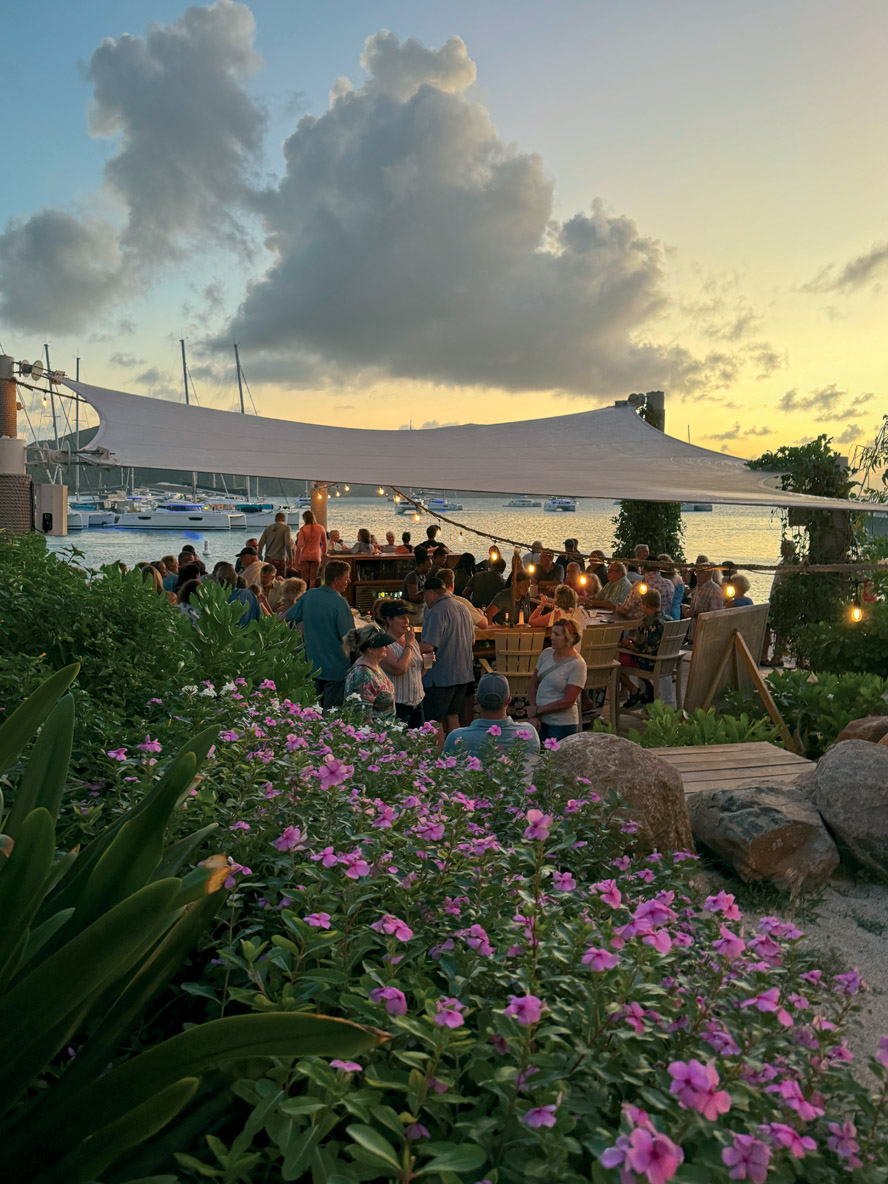
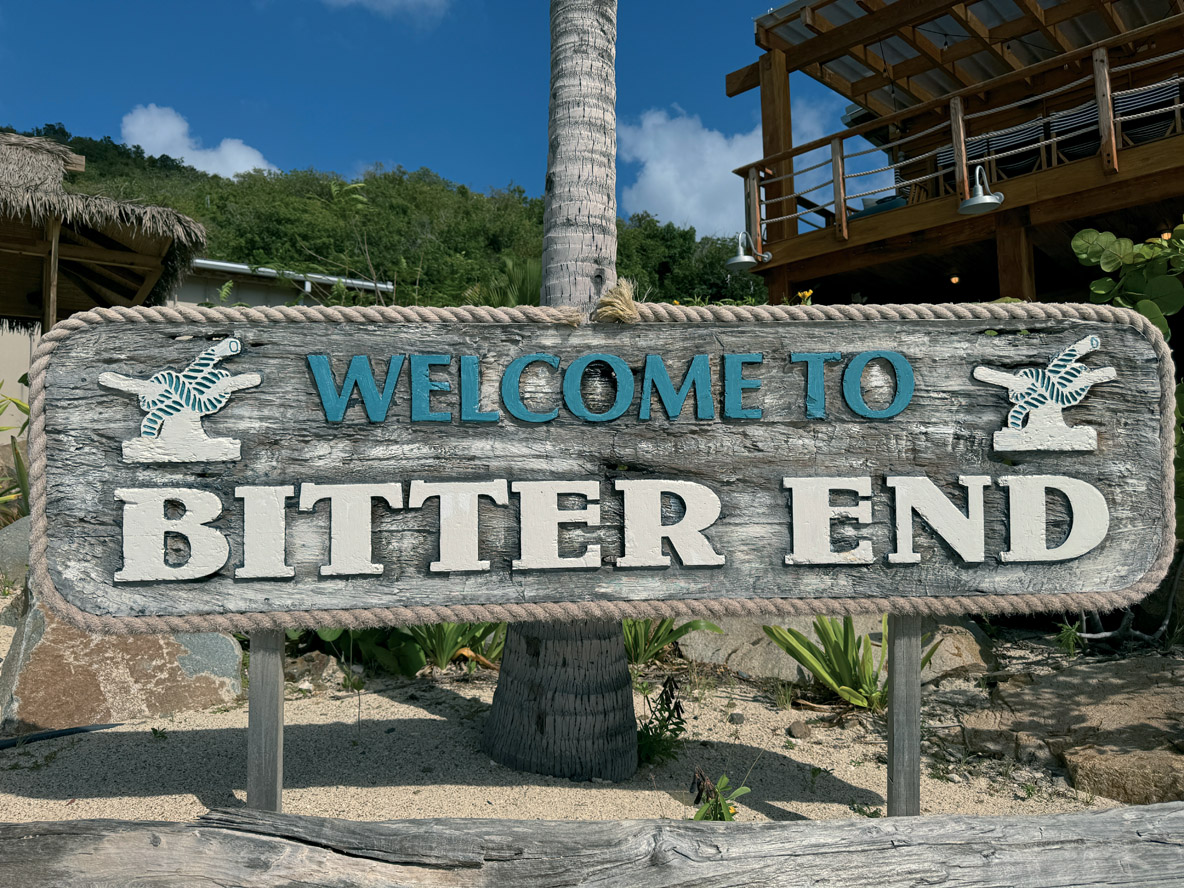
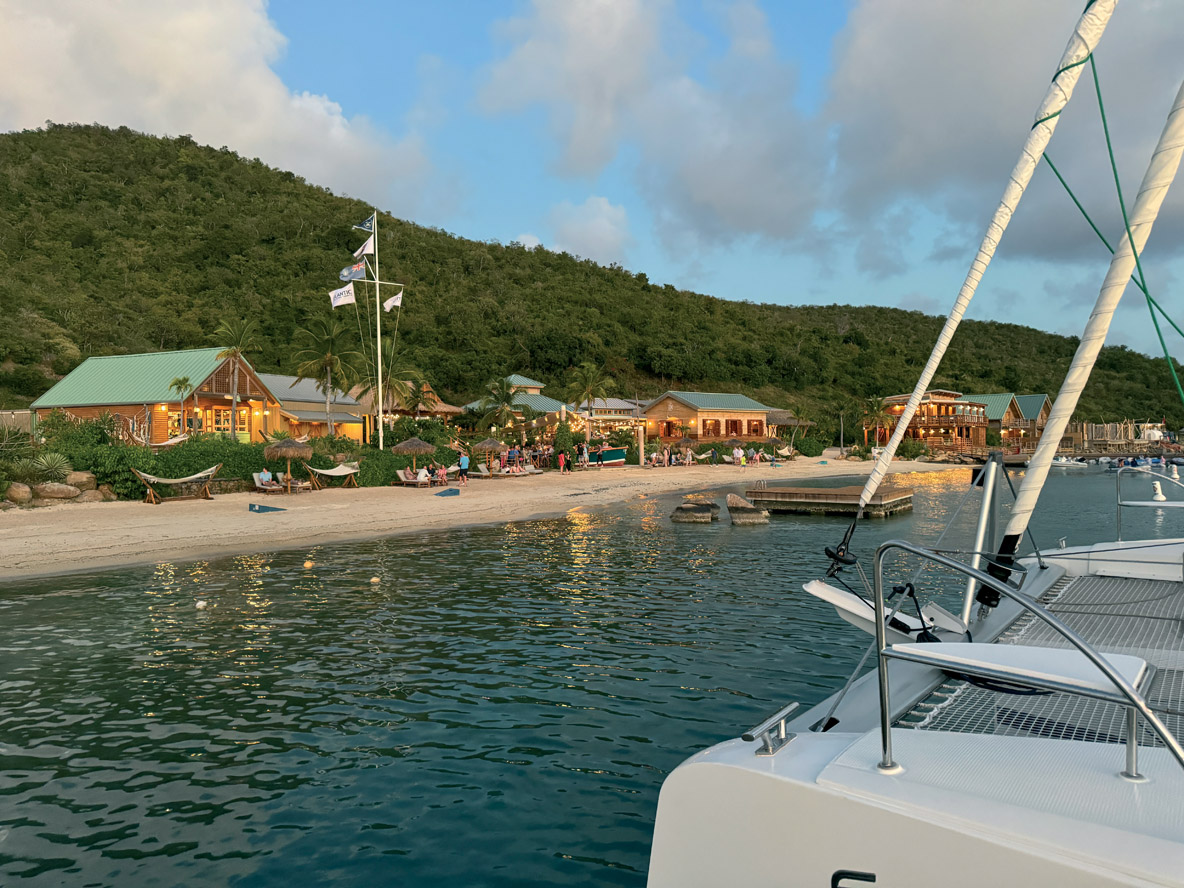
We alerted our friends on Dragonfly to re-launch a “leg 2” towards the widest entrance to the lagoon, just north of Virgin Gorda. The course is now a little tougher, at 30° off the wind to starboard. It obviously became necessary to regularly realign ourselves on the course by making relatively short tacks. Ojala and Dragonfly were peaking at over 10 knots under the effects of the coast, which was forcing the wind a little. Our crew soon regained the advantage thanks to better-placed and faster tacks. Once in the lagoon, we anchored in the lee of Prickly Pear Island before reaching the extraordinary marina of Bitter End. Within easy reach by dinghy, it’s impossible to miss Saba Rock - a movie set with two old red telephone booths planted amid coconut palms and turquoise water. The final evening opened at the boat-shaped bar, facing the sunset, and continued with dinner, prize-giving and dancing... The Fountaine Pajot Owners Rendezvous was drawing to a close, but most of the catamarans continued their cruises to the islands of Anegada and Jost Van Dyke... there’s so much to do in the BVI!
Tanna 47: Comfort and easy performance!
Typically, a multihull test might take a short day, sometimes a little longer if the test forms part of a delivery trip... though this can be a bit frustrating and leave you unaware of certain aspects of “day-to-day” life (how the galley and showers work, and so on). The least we can say is that I was well provided for during the Fountaine Pajot Owners Rendezvous - BVI 2024, spending a full week on board. I also had the chance to sail in excellent wind and sea conditions (meaning, for a multihull tester, more than 20 knots and some real chop!), which wasn’t the case for my first test of the Tanna 47 in La Rochelle – when the wind barely deigned to exceed 5 knots...
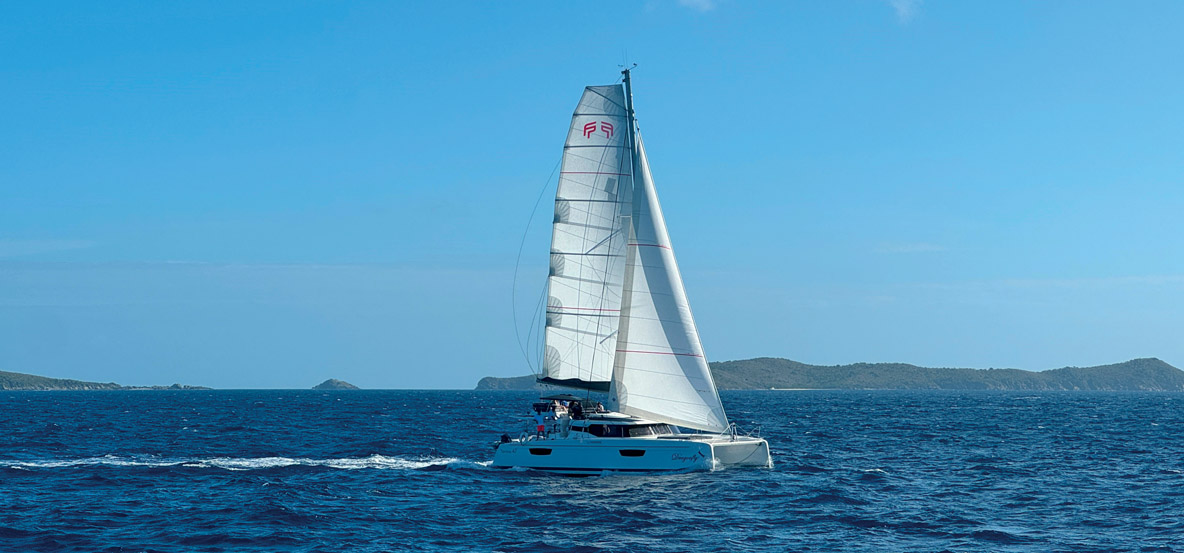
Along with the owners, the trade winds were also in attendance - sometimes even reaching 25 knots. Most of the time we sailed with one reef in the main and 4 rolls in the genoa, except on our passage to Virgin Gorda when we had everything up. I recorded peak speeds of up to 10.5 knots on a close reach and an average of 8 knots close-hauled, at 50/55° to the true wind. The twin helm and maneuvering stations proved to be devilishly effective when tacking, even (and especially!) in racing mode. The Tanna 47 always proved to be sound and structurally rigid, and her crew hardly ever got wet. The extended flybridge was much appreciated, notably when conditions got a little lively, with the cockpit proving to be perfectly protected.
The nice, clear nacelle offers plenty of space and everyone was able to appreciate the comfort of their cabin. The aft cabin on the port side communicates directly with the cockpit, which is a guarantee of privacy.
In conclusion, the Tanna 47 offers a level of comfort equivalent to that of a larger catamaran, while giving the impression that it can be sailed like a smaller model - a family crew will never feel overwhelmed, as sailing maneuvers are so easy and fun.