What is Hydrogeneration?
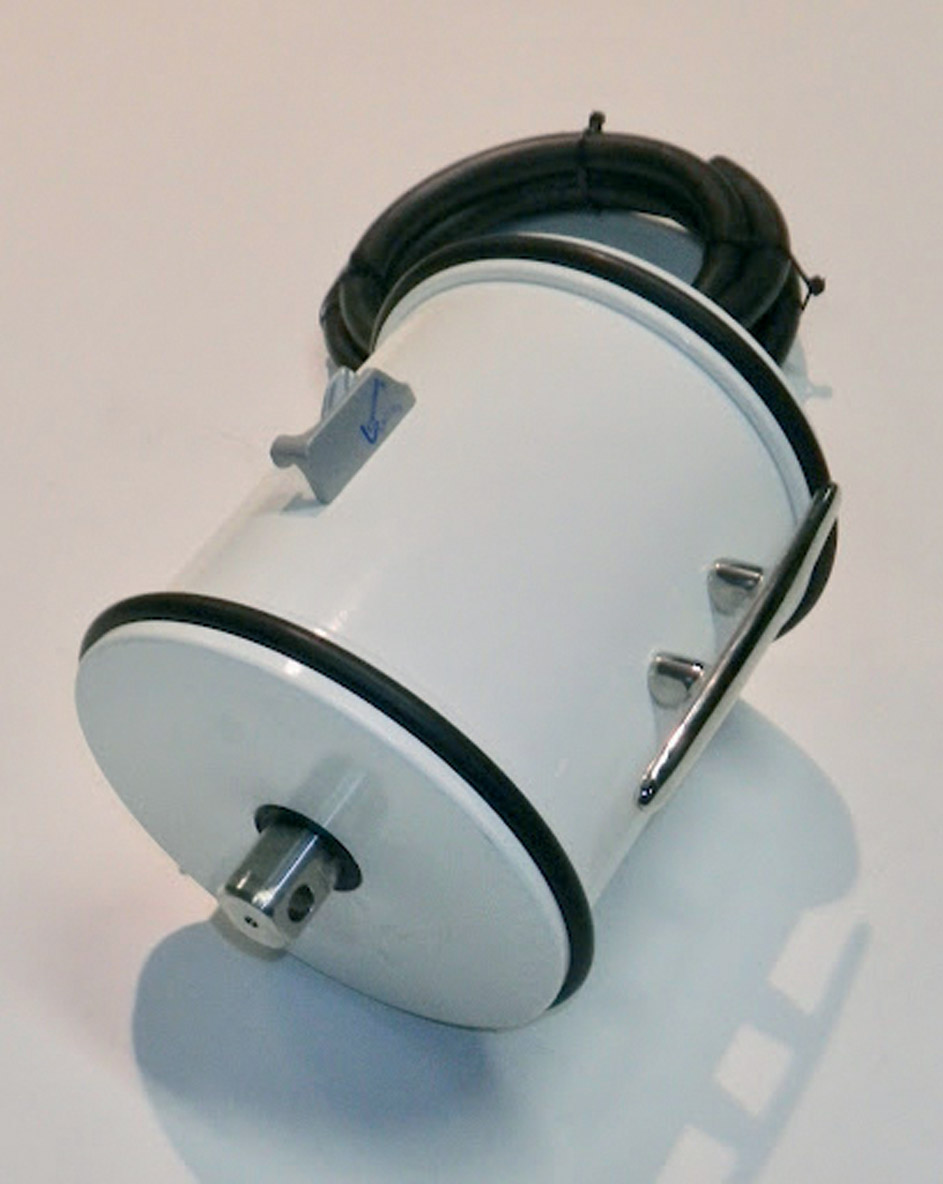
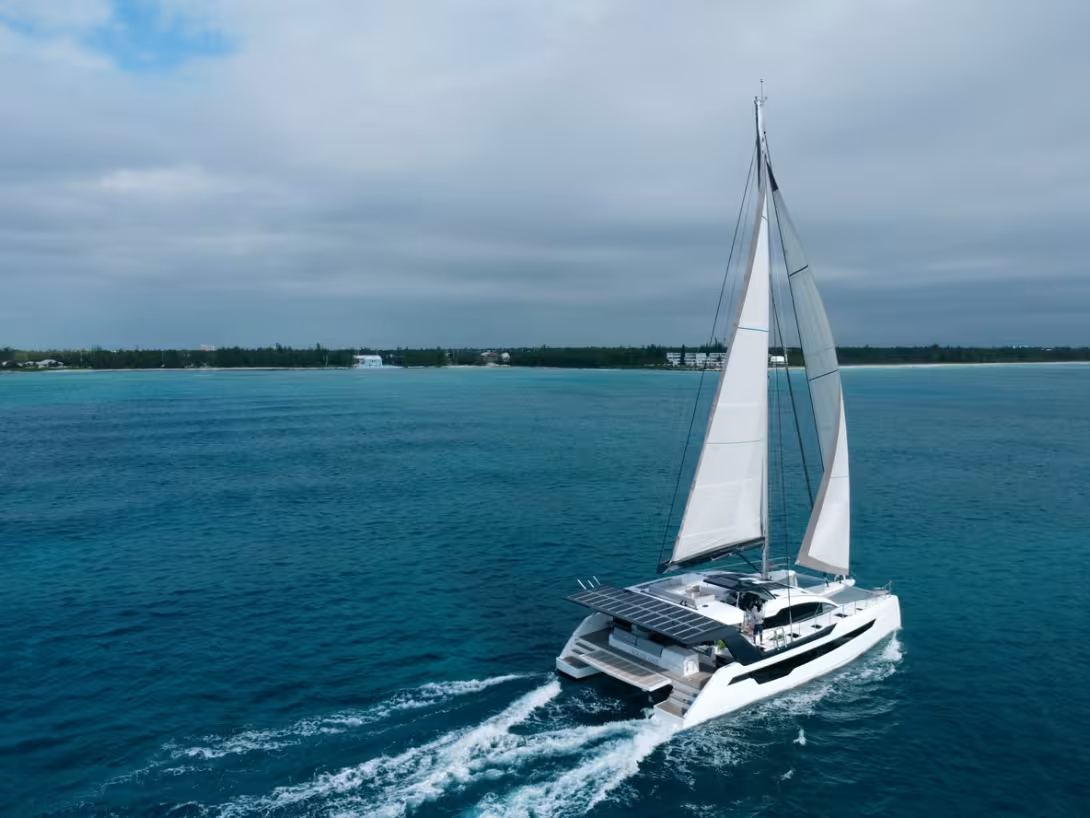
Hydrogeneration involves using the movement of the multihull through the water to generate electricity, usually by turning a propeller connected to an alternator or a reversible motor. This can be a very efficient way of recharging batteries during long passages under sail. The first attempts at Hydrogeneration date back to the 1970s, but it was not until 20 years later that commercial solutions appeared, and finally in the 2000s that the boats’ engines themselves began to be used in reverse mode, i.e., when the motor isn’t actually running, it can be driven by the propeller in the opposite direction and becomes a generator.
There are several Hydrogeneration systems on the market.
Four Different Systems
Towing Propeller
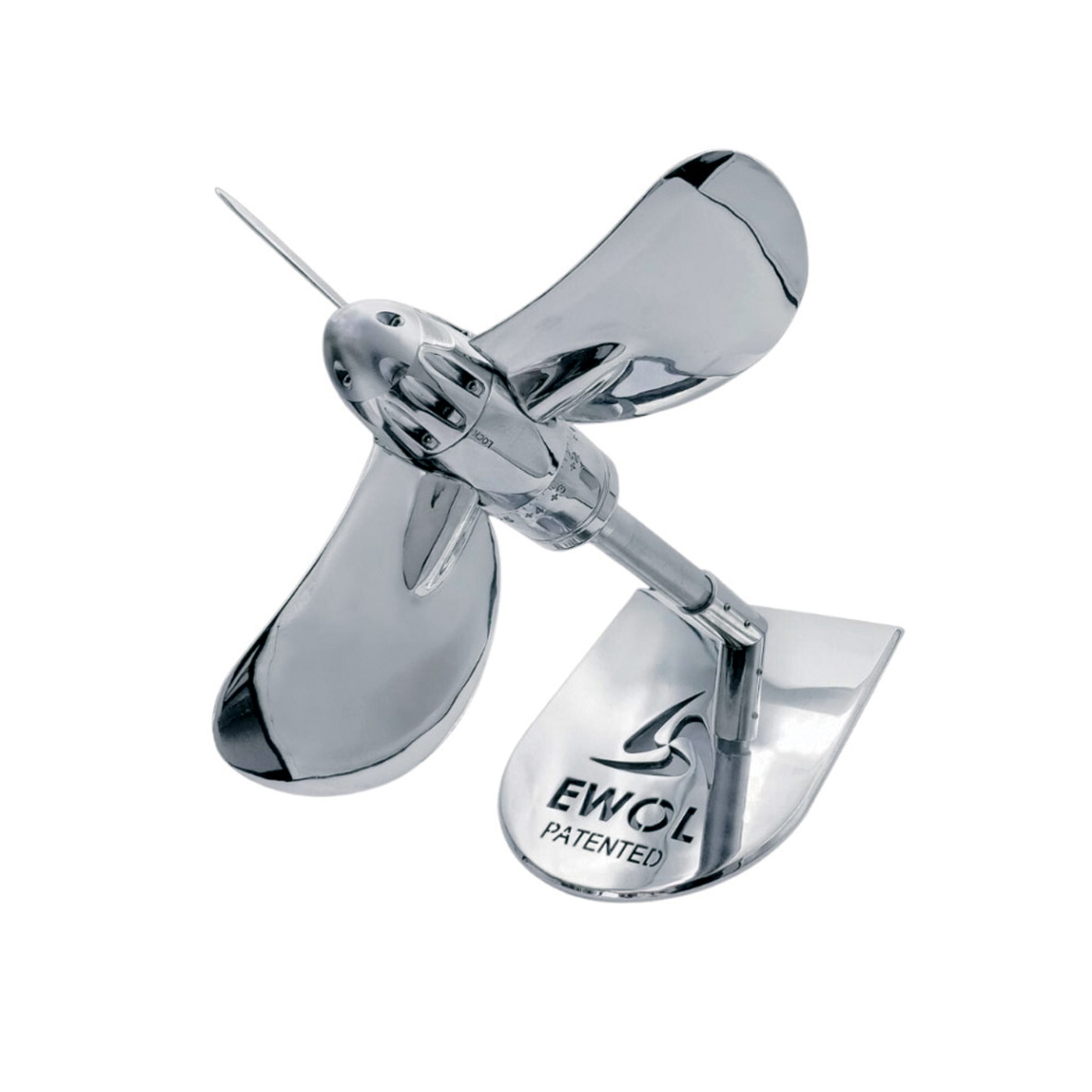
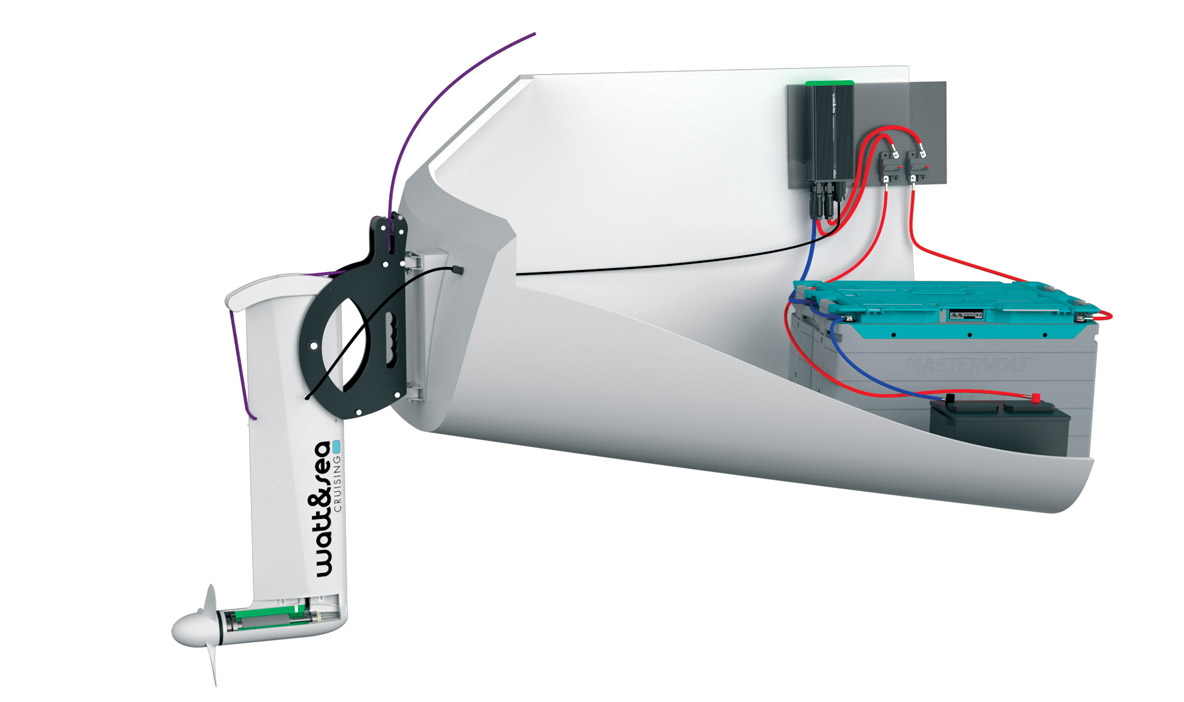
This is a small propeller mounted on a swivel arm at the rear of the multihull and connected to an electric motor to generate electricity. Either a folding two-bladed propeller, a three-bladed propeller optimized for drag, or an automatic variable pitch propeller is used to maximize efficiency. The towed propeller is easy to install as it is an independent system. However, the cost ($ 1,000 to $ 3,000 remains somewhat high.
Hydrogeneration by Towed Turbine
This was one of the first systems used: it consists of a small turbine attached to a line and towed behind the multihull. The main advantage is once again its simplicity of installation and a decent return. However, it creates significant drag and there is a real risk of loss or entanglement of the line during bad weather or when tacking or gybing, for instance.
Hydrogeneration propeller integrated into the inboard engine
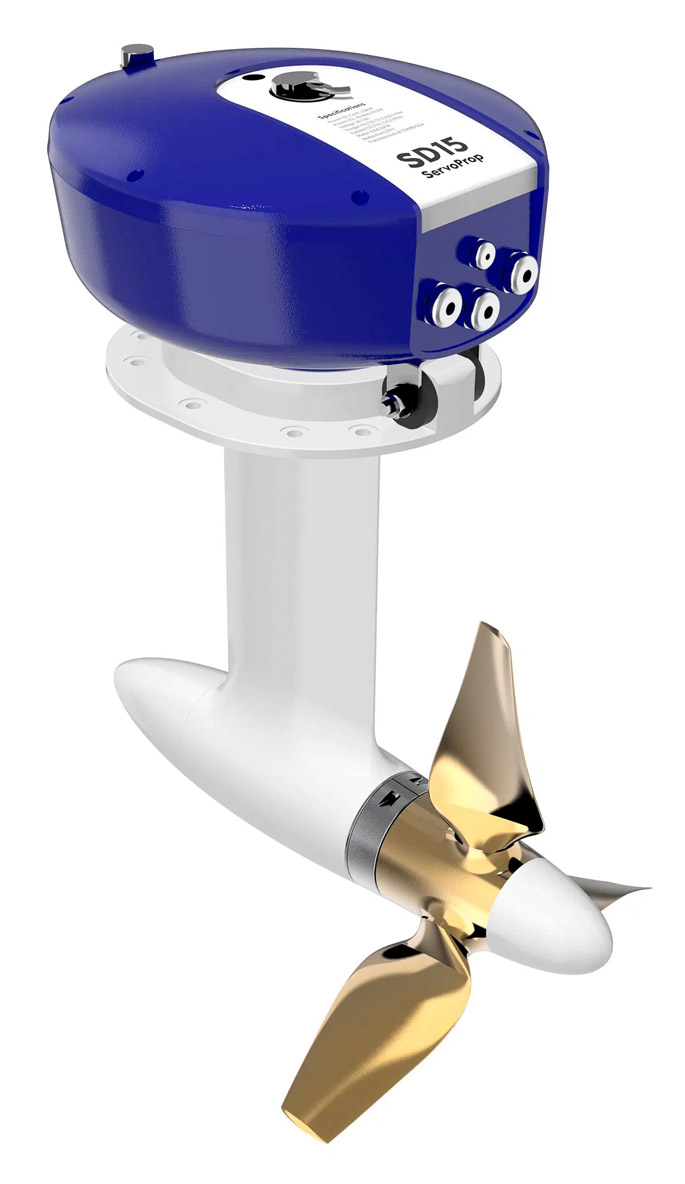
This is the most widely used system today, as it is often installed directly in the factory during boat production. It consists of an electric motor that can operate in reverse mode and a specific propeller. The advantages are obviously that the system is integrated and operates almost automatically or on demand, at the touch of a button. This technology ensures that the batteries are recharged regularly, and the propellers used limit drag. The downside is that the multihull must be equipped with a suitable electric motor and the entire system must be designed and installed at the factory from the outset.
Hybrid Hydrogeneration/Submersible Wind Generator
This is a system that works using a submerged wind generator or a special turbine that also operates in generator mode. This technology is found on some racing sailboats, but its use is still relatively limited.
Components and Efficiency
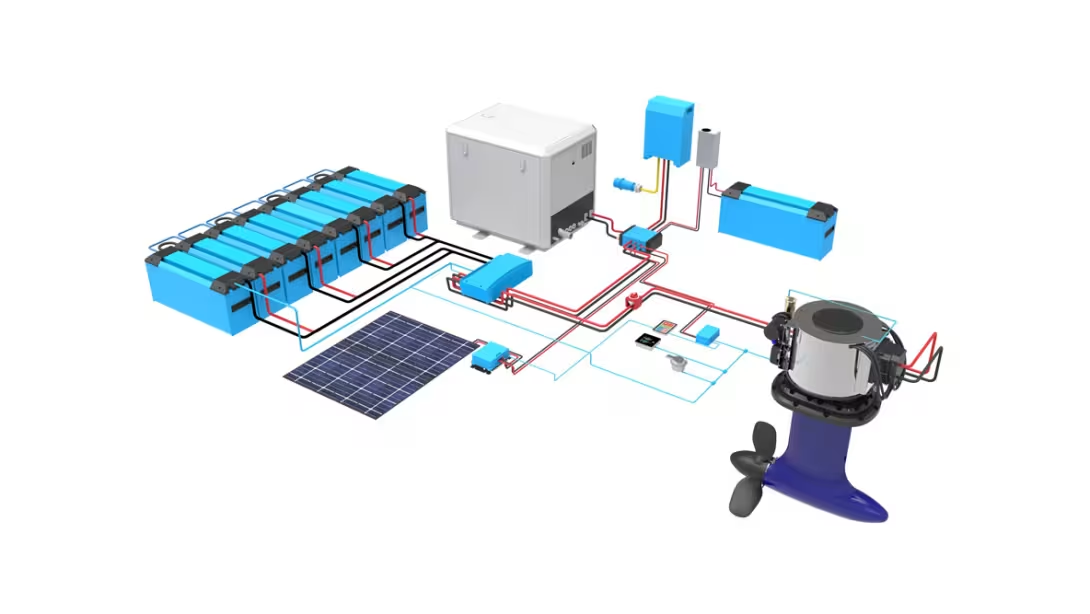
For the system to work, it must consist of an electric motor that can be reversed to become a generator, a special propeller that turns under the effect of the water flow while sailing, batteries to store the energy, and a controller to manage the transitions between propulsion and generation modes. As for performance, the figures vary greatly depending on the type of propeller, the motor used, and even the shape of the hull. However, here are a few figures: it is estimated that at a speed of 5 knots, a catamaran can produce an average of 100 to 200 W, 300 to 500 W at 7 knots, and finally around 800 W at 10 knots.
Which Propeller?
For your regeneration system to work optimally, the choice of propeller is essential as it will influence the electrical power produced, the drag and, of course, the efficiency of the propulsion when the catamaran or trimaran is actually using it to move along under power. In most cases, the choice is made by the manufacturer, but you can always make a specific request to the manufacturer or upgrade your system at a later date. There are three types of propellers available on the market:
Fixed Propellers Optimized for Hydrogeneration
Fixed propellers designed for multihulls with a hydrogeneration system are capable of operating in reverse mode. They are primarily designed for electric powercats, where drag is obviously not an issue—but, on the contrary, promotes efficiency in both propulsion and hydrogeneration modes. These propellers can deliver up to 1 kW at 10 knots. With no moving parts, they are also very reliable. To be effective, the propeller must still be perfectly sized to produce optimal efficiency. The main drawback of the fixed propeller is therefore drag, which can result in a speed loss of more than one knot.
2 or 3-Blade Folding Propellers
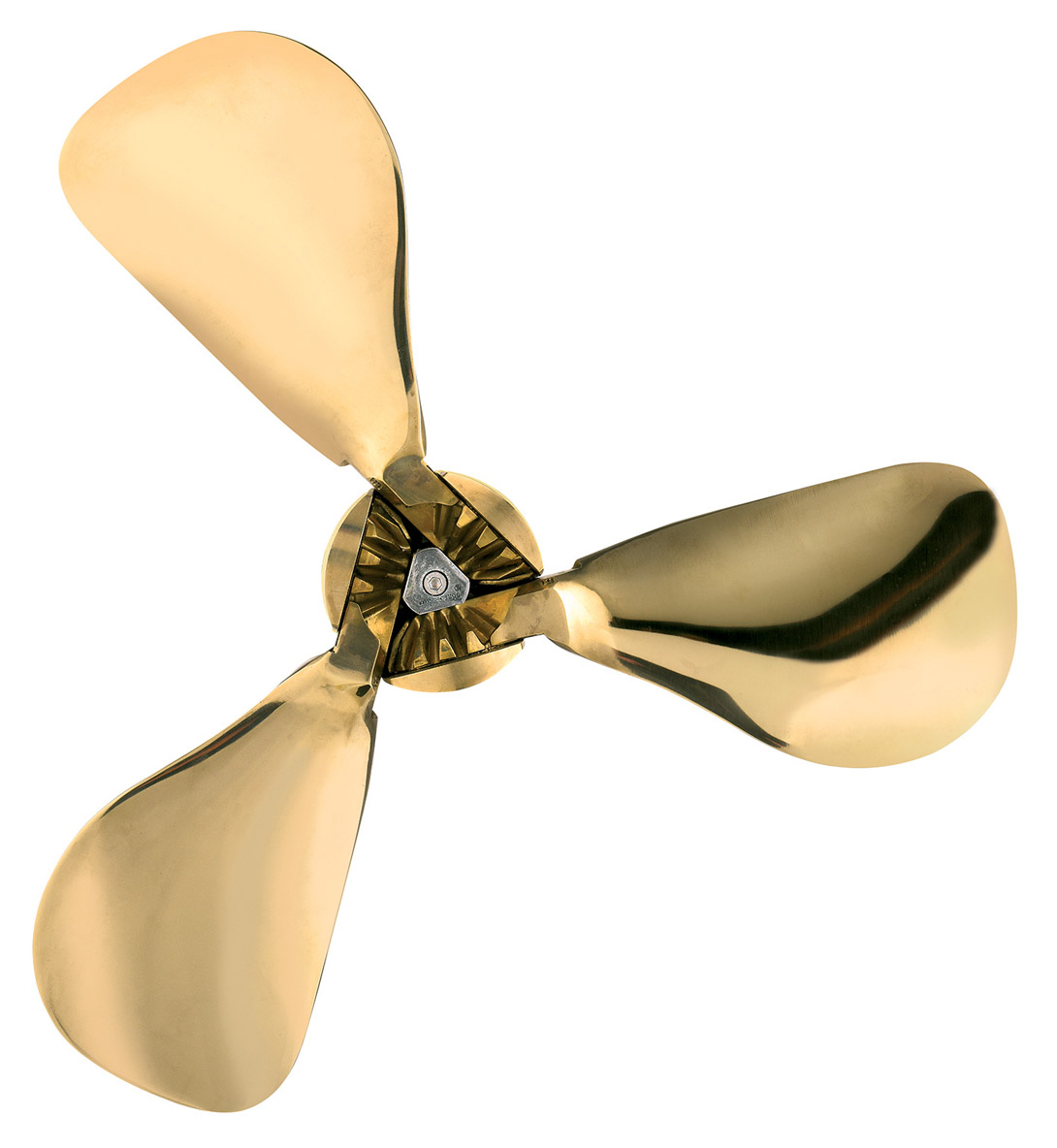
As their name suggests, these propellers feature folding blades that have long been used on sailboats. They are now available in two or three-blade versions. The choice between two and three blades is primarily a matter of compromise, as a three-blade propeller will provide more thrust and better efficiency in hydrogeneration mode but will also generate more drag when not folded. Conversely, a two-bladed propeller will have less thrust and offer lower efficiency in hydrogeneration mode, but also much less drag. However, their main advantage is that they reduce drag and therefore have little impact on the performance of multihulls when there is no need to recharge. On the other hand, these propellers are less efficient in hydrogeneration mode than fixed propellers and can also be a little fragile.
Variable Pitch Propellers
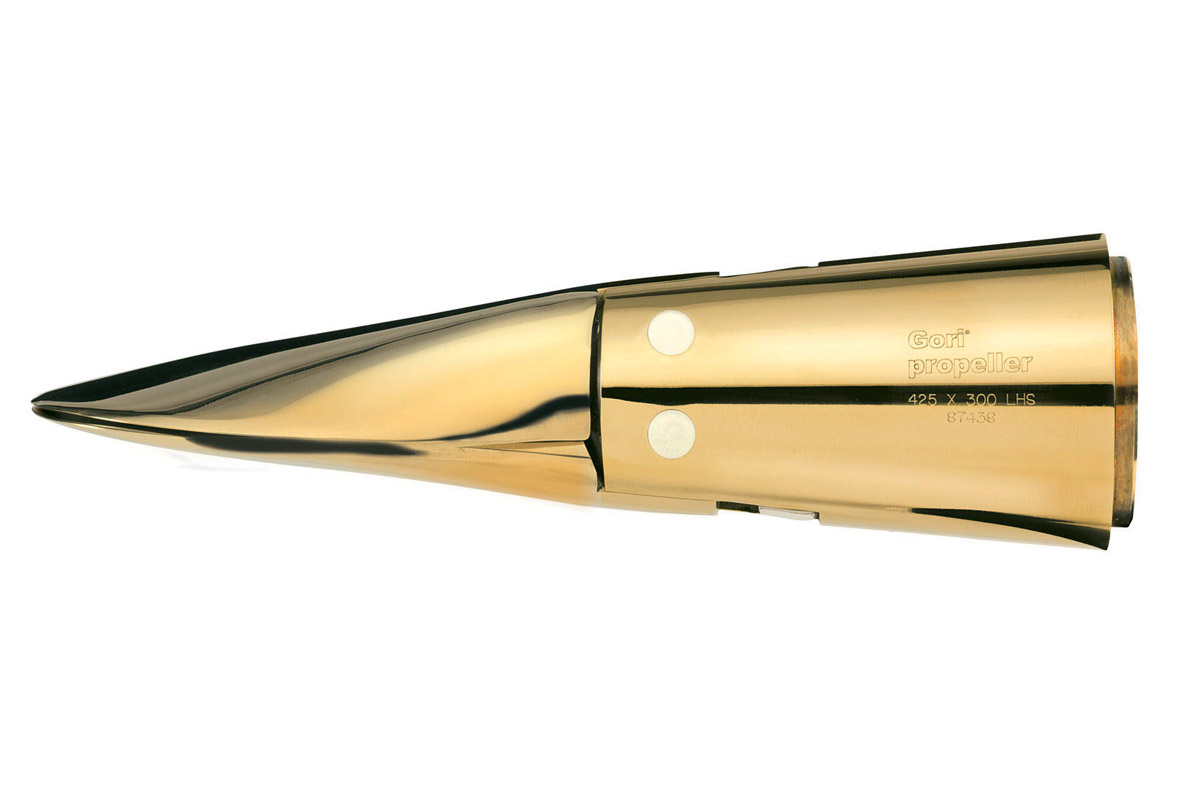
To adapt to different types of boats and multihulls, variable pitch propellers allow the pitch of the propeller to be adjusted manually in a fairly simple manner. This allows the pitch to be adjusted according to the weight or type of hull. These propellers are also available under the name Overdrive, as with Gori. What’s more, some of these propellers are also foldable and some even have mechanisms that make it very easy to change modes (propulsion, reverse, hydrogeneration). The main advantage of a variable pitch propeller is, of course, its adaptability, as you can simply adjust the pitch to suit your boat. The technology is also quite efficient without creating too much drag, offering a good compromise overall. On the downside, this type of propeller is often quite expensive, and their mechanisms require more maintenance.
Hybrid Propellers
The latest innovation in this field, hybrid propellers are something of a jack-of-all-trades. They can do everything—and do it well! They can be folded to reduce drag and have a locking function that offers almost the same advantages as a fixed propeller, both in propulsion and hydrogeneration modes. These propellers are completely new to the market, so it is still too early to comment on the real advantages and disadvantages of the technology, but it looks promising.
Criteria for Choosing a Propeller
Once you have all the information you need, it’s time to make your choice (or perhaps discuss it with the manufacturer), and to do that, you need to ask yourself the right questions.
The Type of Multihull
A sailing catamaran and a powercat will not have the same requirements. In the case of a powercat, you generally don’t have to worry about drag, so you can opt for a fixed propeller. On the other hand, for a sailing multihull, drag will be the main criterion.
The Dimensions of your Multihull
Assuming that you have a multihull with a hydrogeneration system, you will need to know the size and weight of your boat. This information will help you determine the pitch you need and therefore what is available on the market.
The Type of Sailing
You will then need to decide what is most important to you: performance or cruising and comfort. In the first case, you will need to opt for a propeller with the lowest possible drag and therefore a folding model with two or three blades. If comfort is your priority, you will probably be more inclined towards a propeller model that is very efficient in hydrogeneration, even if the drag is slightly higher.
The Required Hydrogeneration Power
Not all propellers are the same, and not all multihulls require the same hydrogeneration power. You therefore need to determine in advance how much power you will need and what role hydrogeneration will play in your energy sources. If it is only a supplement to solar panels and generators, you will be less demanding. On the other hand, if hydrogeneration represents a significant part of your basic energy, don’t hesitate to compare the performance claimed by each manufacturer.
The Reputation of the Brand
This may seem unimportant, but it is a criterion that counts, especially if you opt for a complex propeller. A reputable brand with a good track record will be preferable, as it has already proven its expertise. Similarly, if you have a problem with your propellers on a small Caribbean island, it will be easier to get help if you have chosen a well-known brand with a large network of dealers and technicians.
Proprietary Systems
While brands such as MaxProp and Gori can be adapted to different motors, others do not offer this flexibility. If you opt for a Torqeedo, Ocean Volt or Naviwatt system, you will almost certainly have to choose a propeller from the same brand. The advantage is that all the components of the system are then perfectly optimized to work together, which is generally a good thing.
The Budget
Last but not least, the budget. Hydrogeneration is a complex system that can cost from $ 1,000 to sometimes more than $ 10,000 (including batteries), depending on the power, the components used, and the complexity of the technology adopted. Here again, you will need to compromise between your desires and what fits your budget.