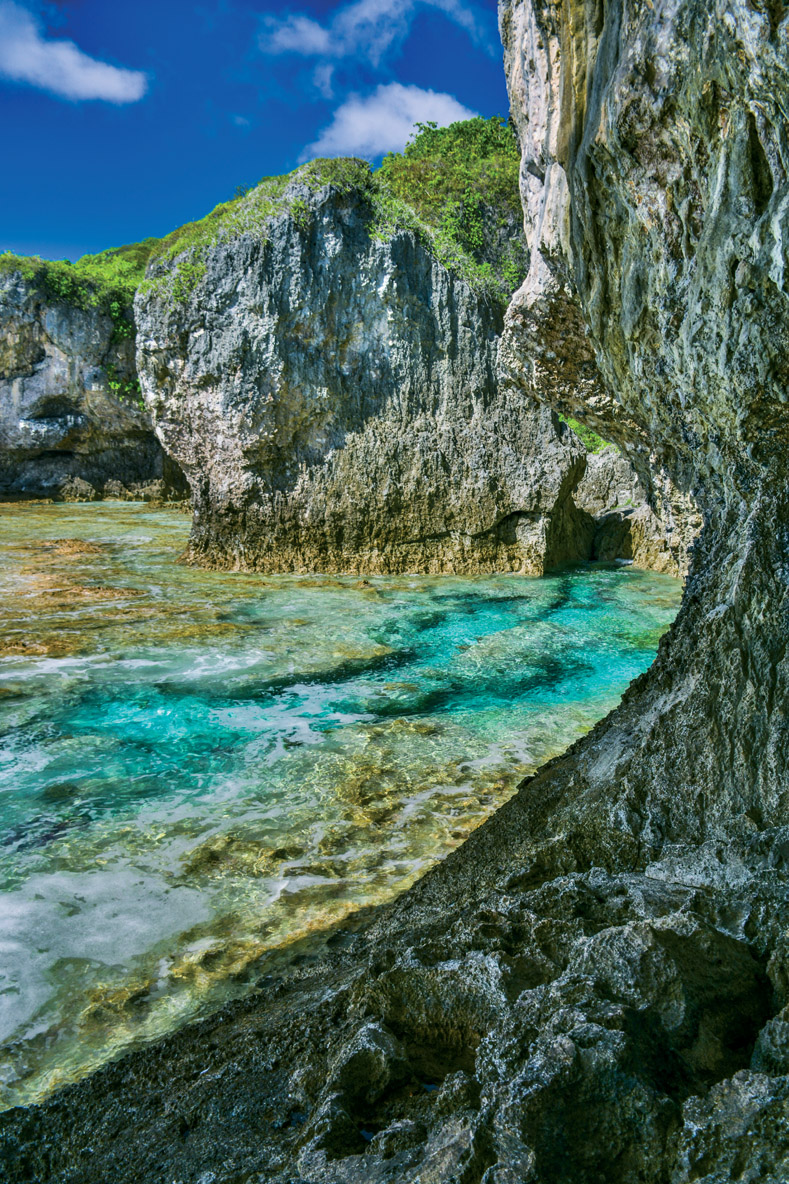


A final wave drives our catamaran onwards, and with it our fatigue from a week at sea. We discover a calm and relaxing bay, and we float on translucent waters over a bed of coral. The seabed is carpeted with astonishing biodiversity. Huge crevasses sink into the water, and a few large shadows disappear into the darkness...
Ashore, the locals seem very discreet. Nobody wanders around, everything seems dead. Perhaps this is due to the importance the locals attach to their dead. There are dozens of cemeteries all around the island. Some graves date from the 19th century.
Other, more recent graves have become fully equipped cabins. If the deceased loved motorbikes and barbecues, it’s highly likely that his family will be sharing a barbecue around the grave on a Sunday lunchtime; even the deceased’s favorite two-wheeler will be brought along specially. These gatherings are perfectly organized - a marquee is put up and deckchairs are set out. This culture reminds me of the Philippines, where it is imperative to celebrate the passing of a loved one.
The cleanliness of the environment, on the other hand, perfectly reflects the culture of New Zealand: public toilets are installed on the beaches and every- where there are clear signs and rules for visitors.
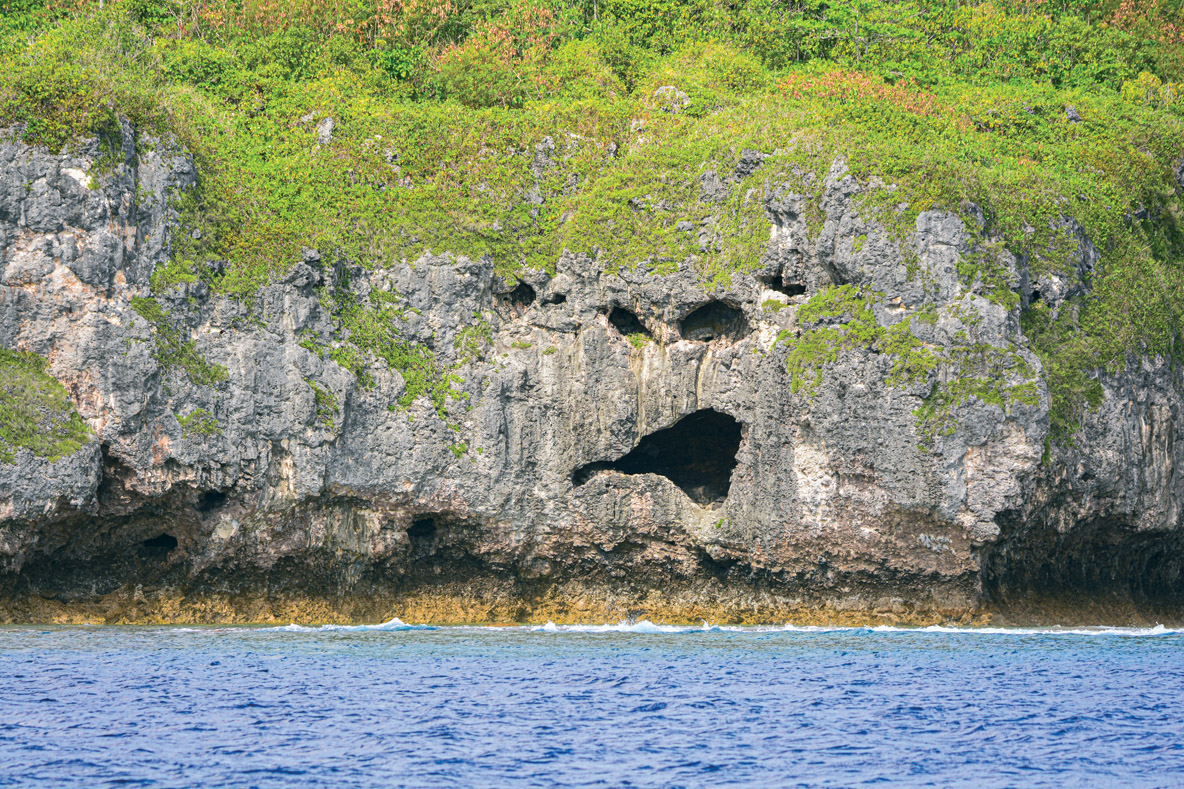
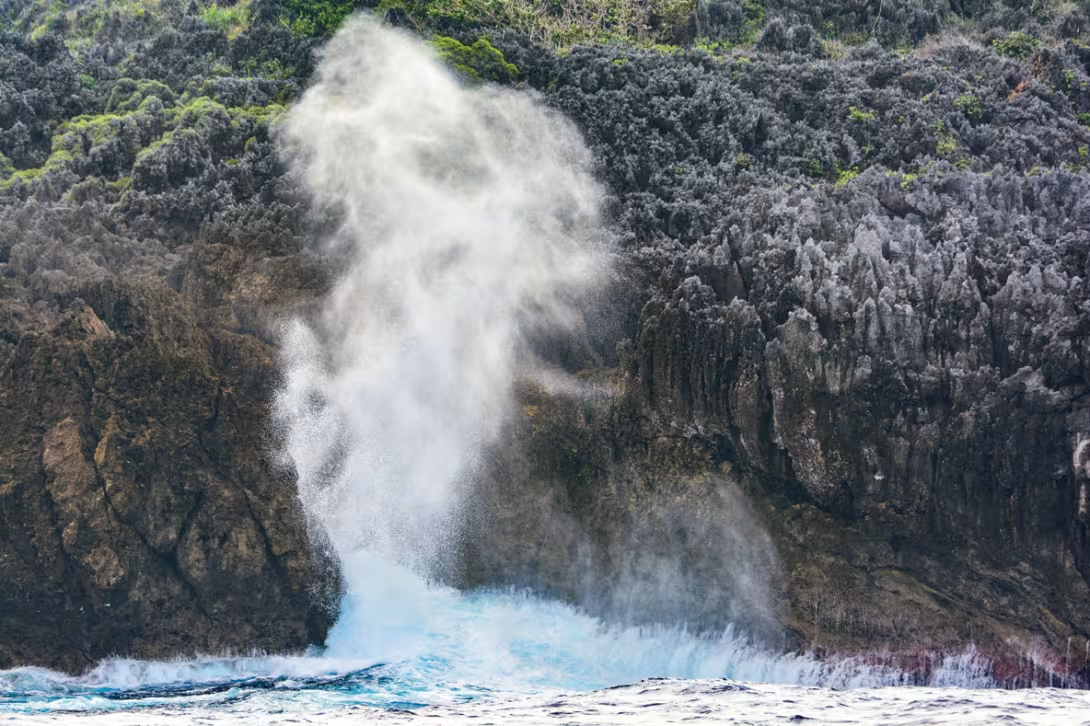
All the scenery here is breathtaking. Every time you stop off when travelling around the island, it’s worth it. There are not many beaches. Mostly, there are prominent cliffs and damp caves. The island’s interior is very green - lush forest covers part of this volcanic rock, but most of it is farmland. In short, this land has a certain air of mystery about it: a splendid stopover!
Anchorage
19°03’.210 S - 169°55’.432 W
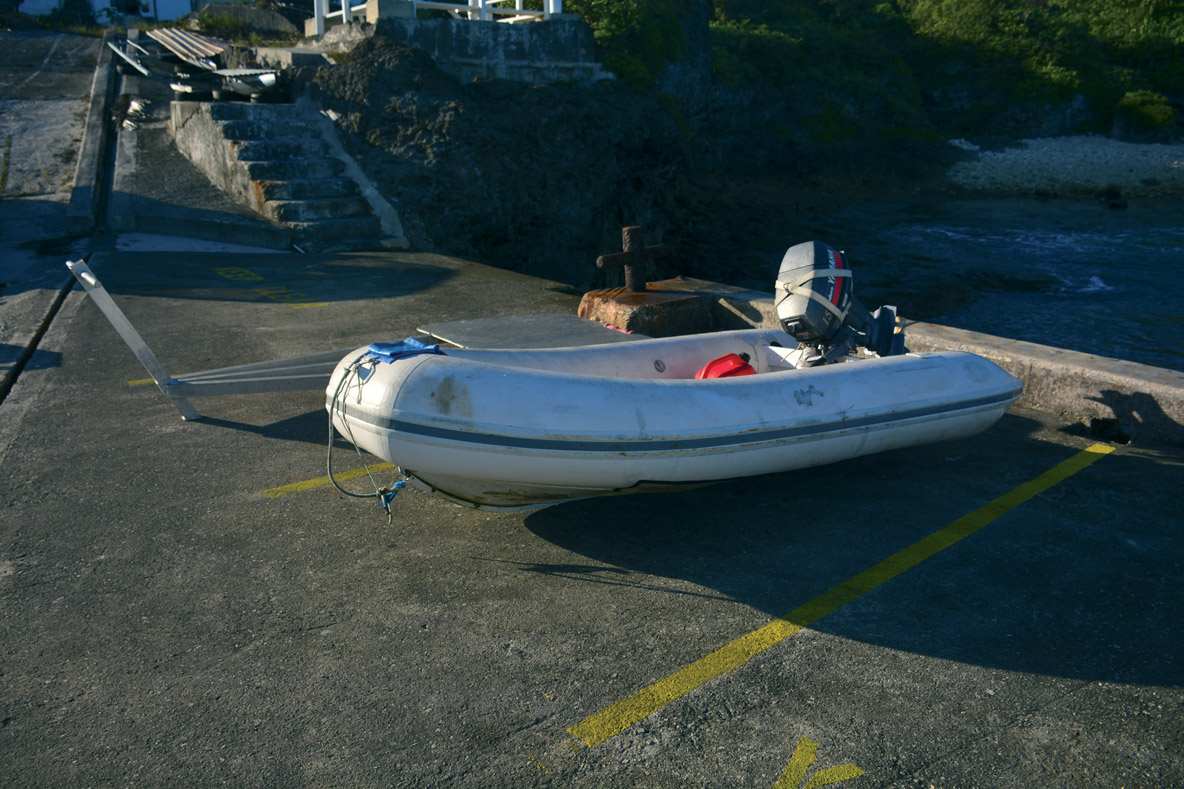
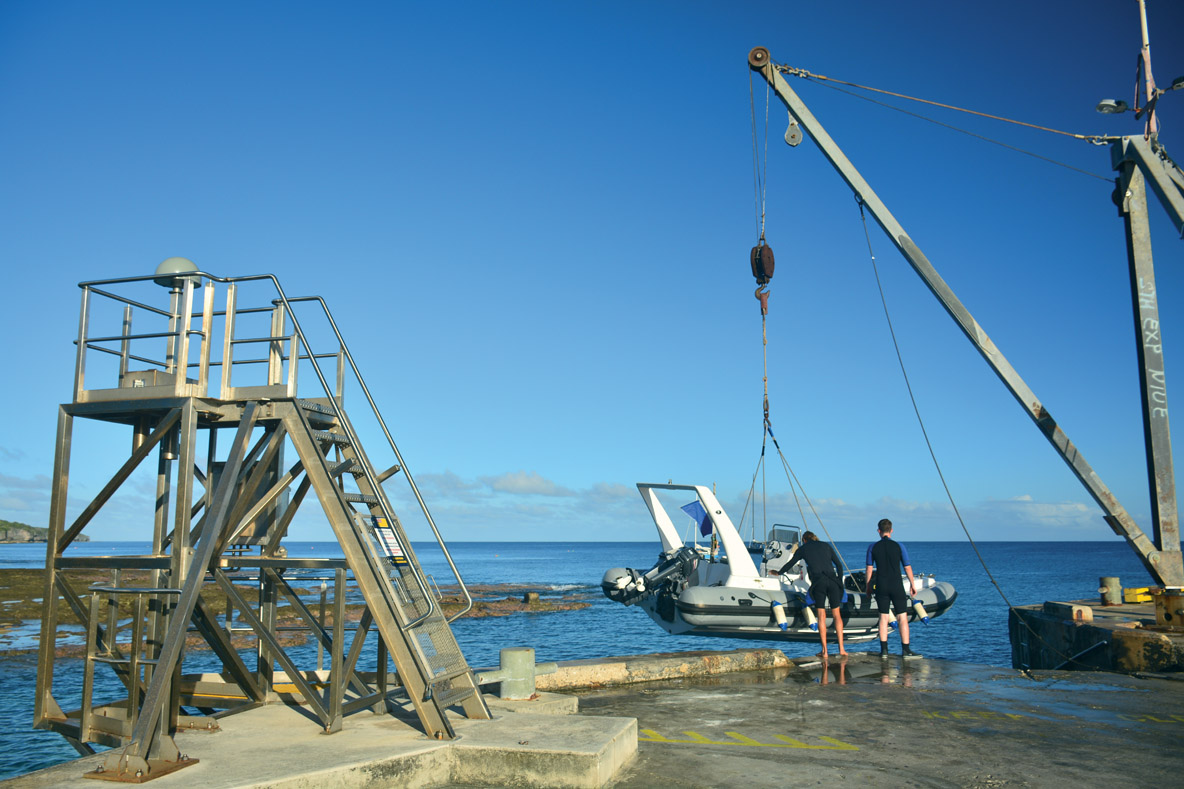
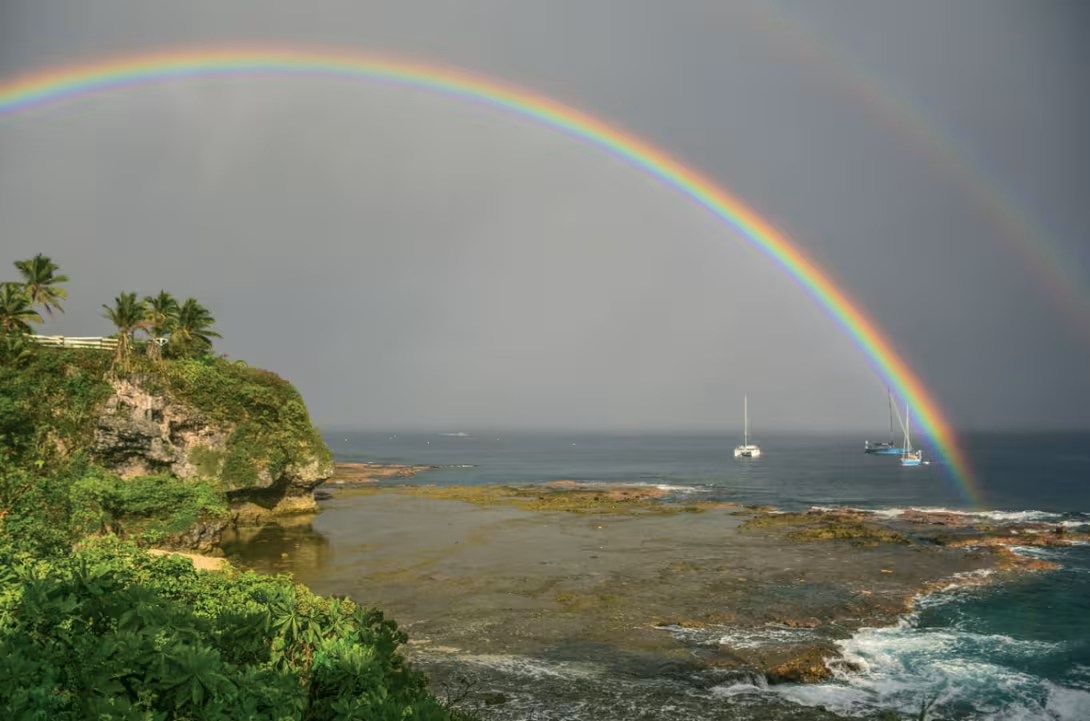
The anchorage is in fact a mooring field. It is well protected, with easy-to-reach buoys. What’s different here is that you raise your dinghy with a crane and then park it on the dock at Alofi, a rather unique method that (so far) I’ve only experienced in Niue. It’s quite a pleasant spot, with a view of lush vegetation and beautiful cliffs. The water is particularly clear - it’s an ideal spot for snorkeling or diving!
Weather
The rainy season extends from November to April. This period is characterized by higher temperatures and humidity. Squalls are very frequent and sometimes intense. It’s not uncommon to experience 40 knots... This is also the cyclone season, so take care when sailing at this time of year.
The dry season runs from May to October. Temperatures are cooler, squalls less frequent and the days are sunnier. Weather conditions are therefore more stable, with winds and seas generally calmer and influenced by a moderate easterly trade wind.
The forecasts can sometimes be quite different depending on the models used; in this part of the world, I recommend the GFS model, which seems to me to be the closest to reality, particularly in the event of a cyclone