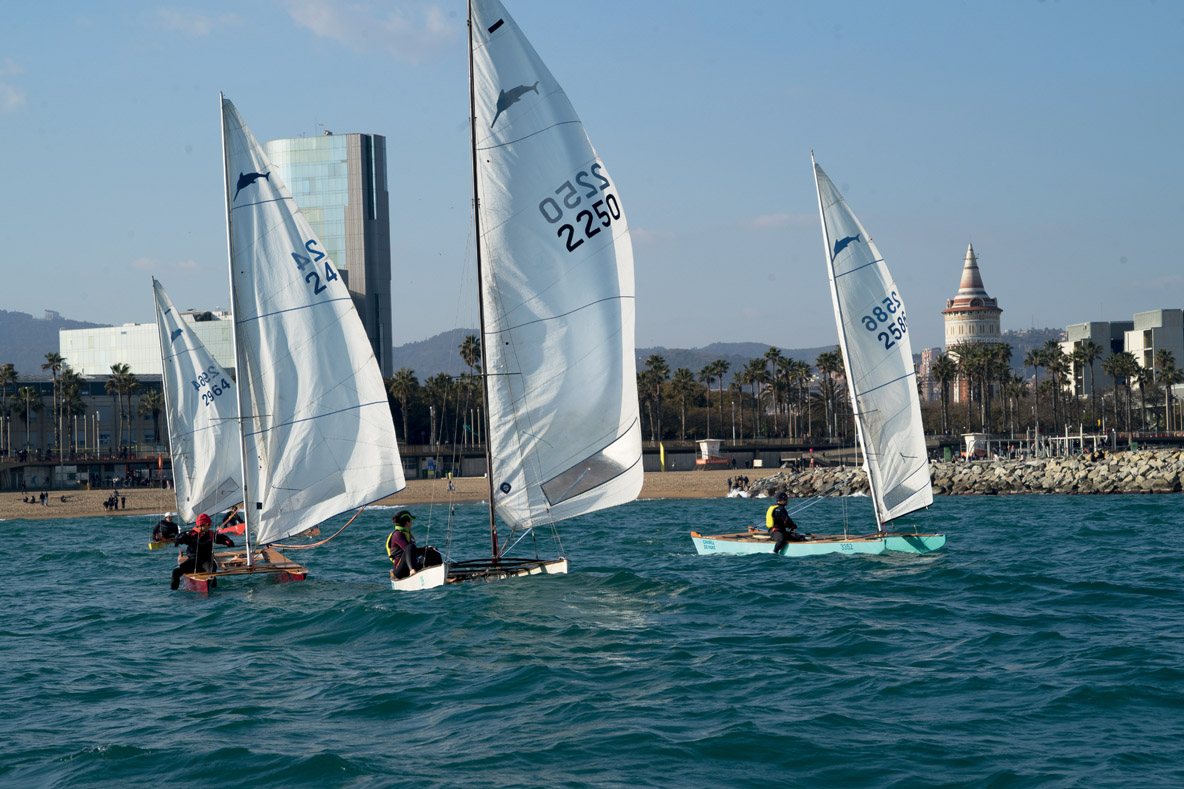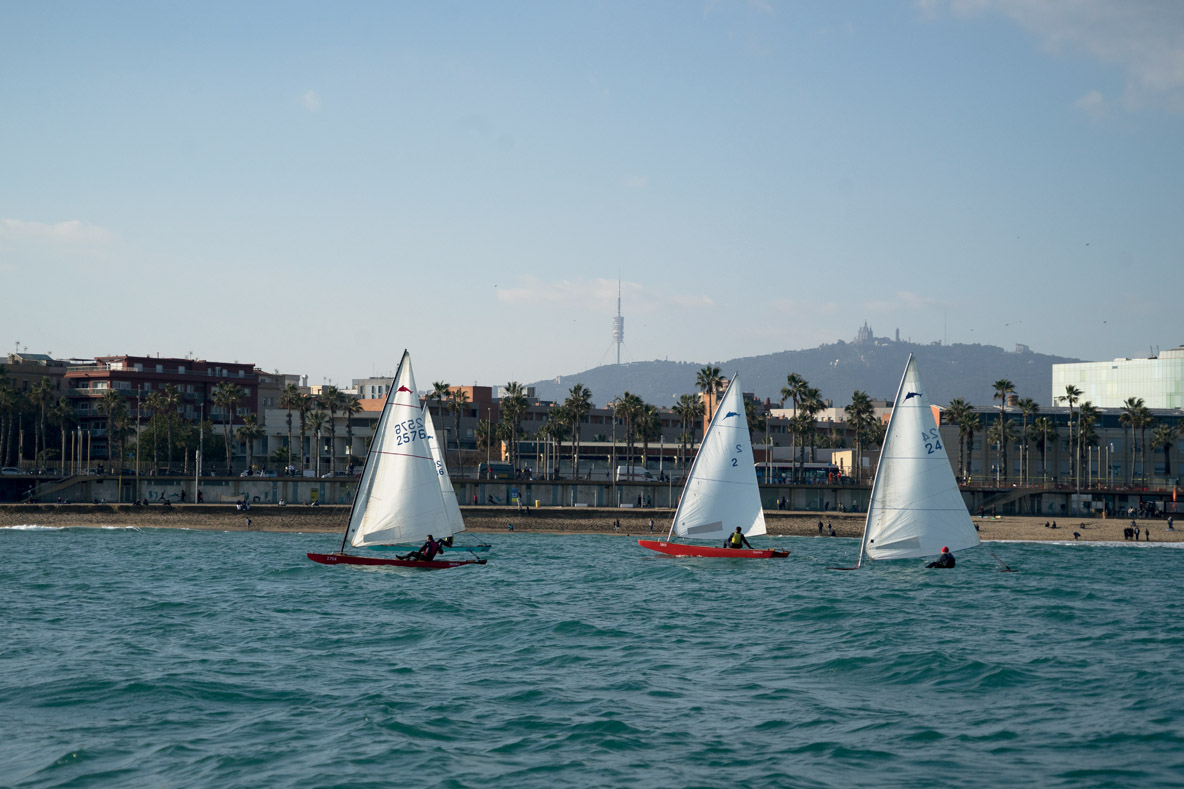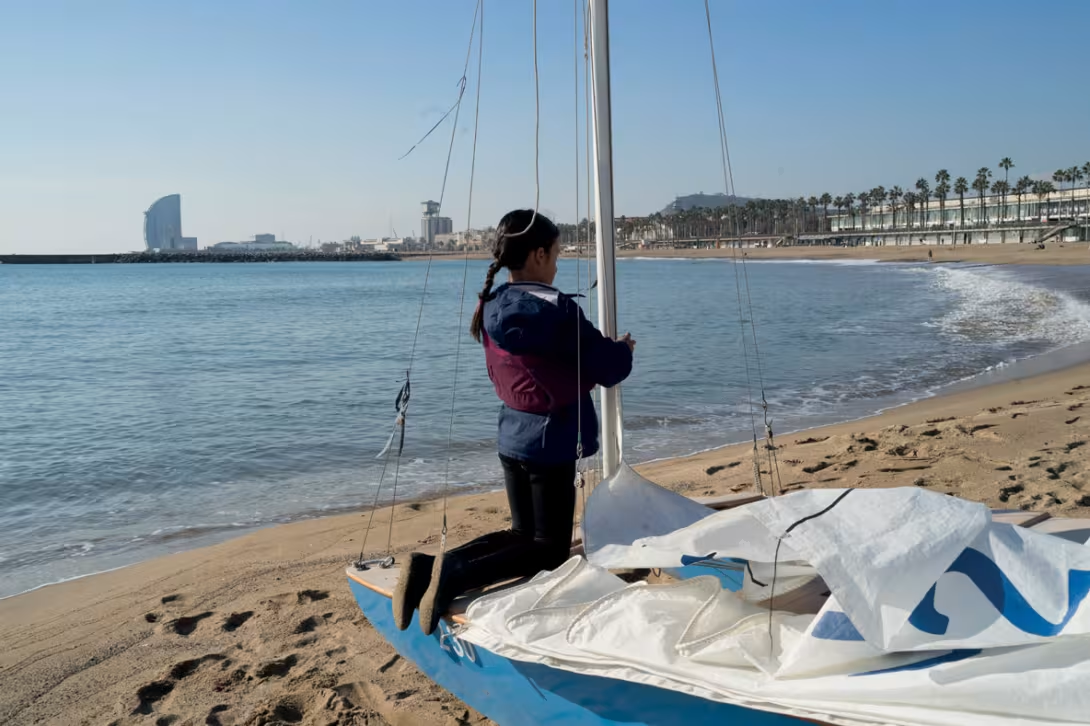
With less than a quarter hour to go before the race’s first warning signal, there are still no boats in sight on Somorrostro beach, close to Port Olimpic. The course markers have been laid, the sea is calm, the wind is blowing 225° at 10 to 15 knots, and the sun is shining. All that’s missing are the participants in one of the five weekly races organized by the Club Patí Vela Barcelona. Where other committee boat crew might be starting to get impatient, the race director is very chilled: “You’ll see, everyone will be on the line on time. People leave the office for their mid-day break and quickly get to the club. Time to change and they’re ready to sail!” Indeed, in less than five minutes, some twenty sails appeared and were approaching the starting line, located half a mile off the beach. The speed with which the “sail-skates” can be put to into action means that the customary 2-hour Spanish lunch break can be used for tacking back and forth with the backdrop of the Sagrada Familia Cathedral and the city’s emblematic skyline. An idyllic setting... and a lively atmosphere too: rounding the marks can give rise to some great battles, and while the level of competitors is uneven, the enjoyment is shared by all!
Patí vela: 150 years of history
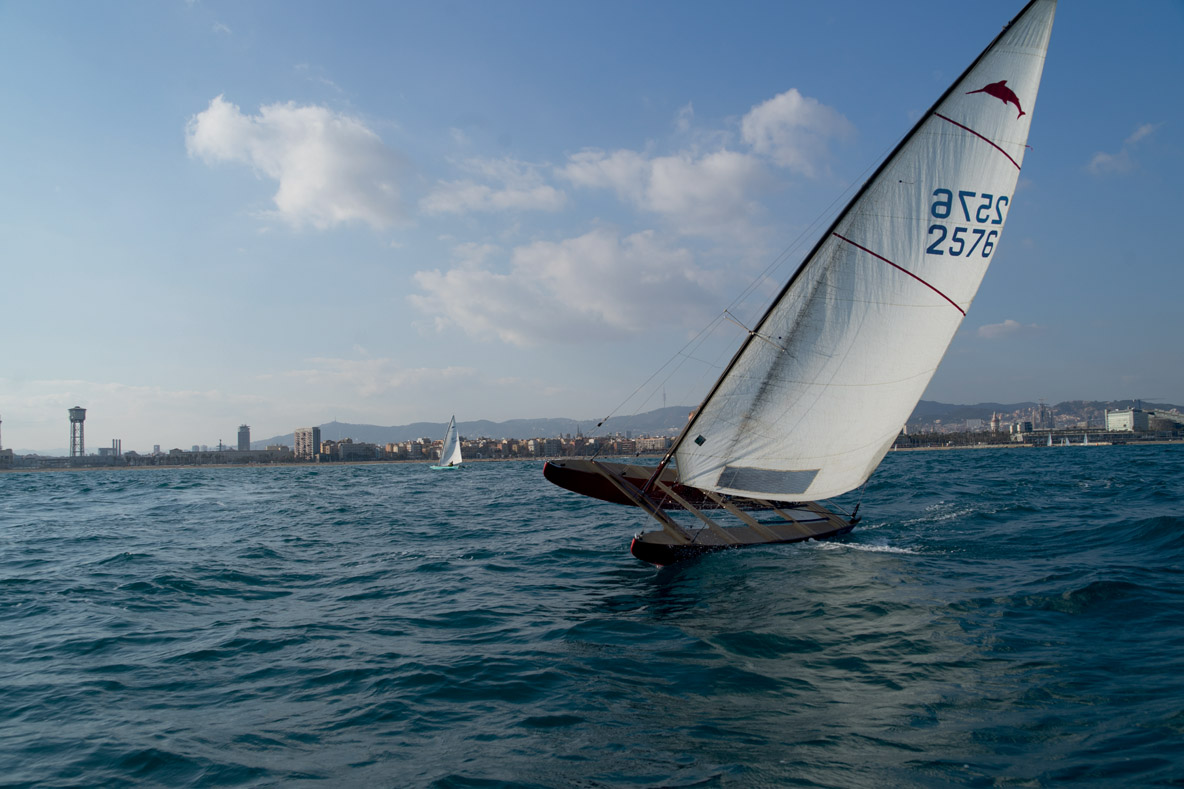
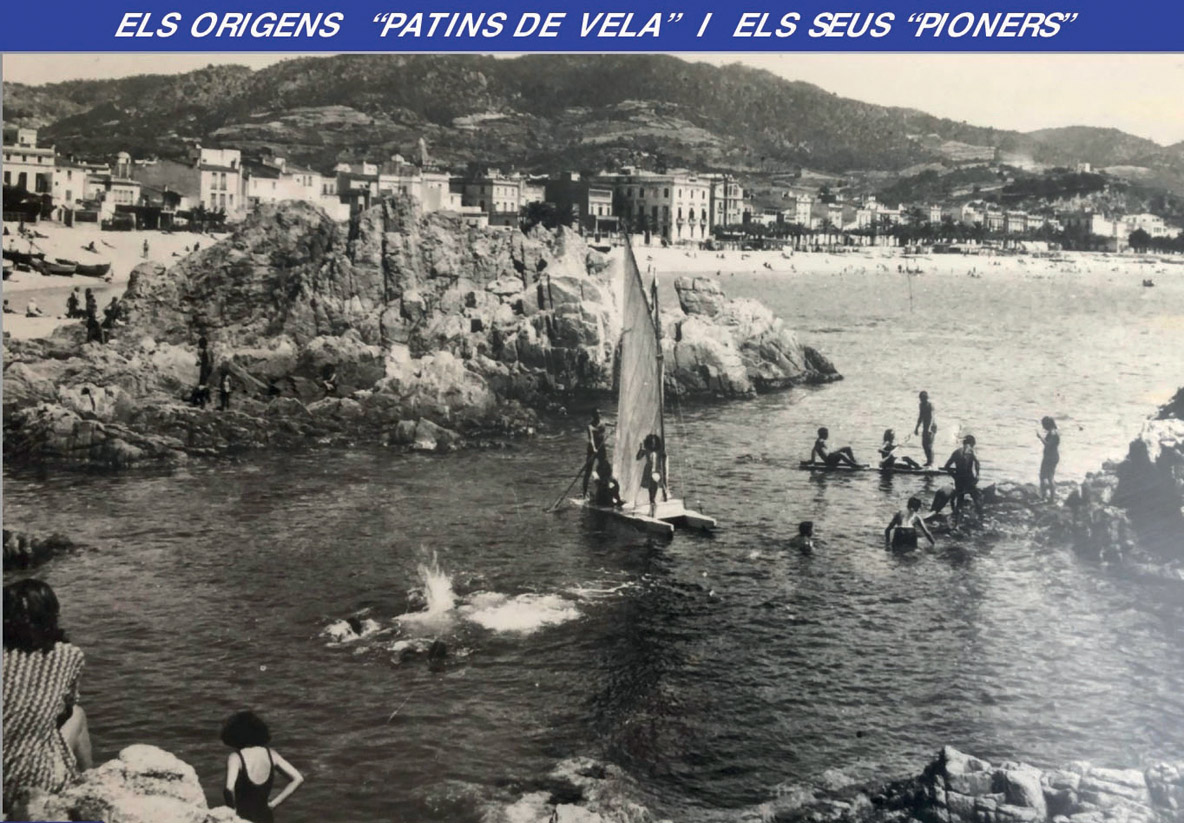
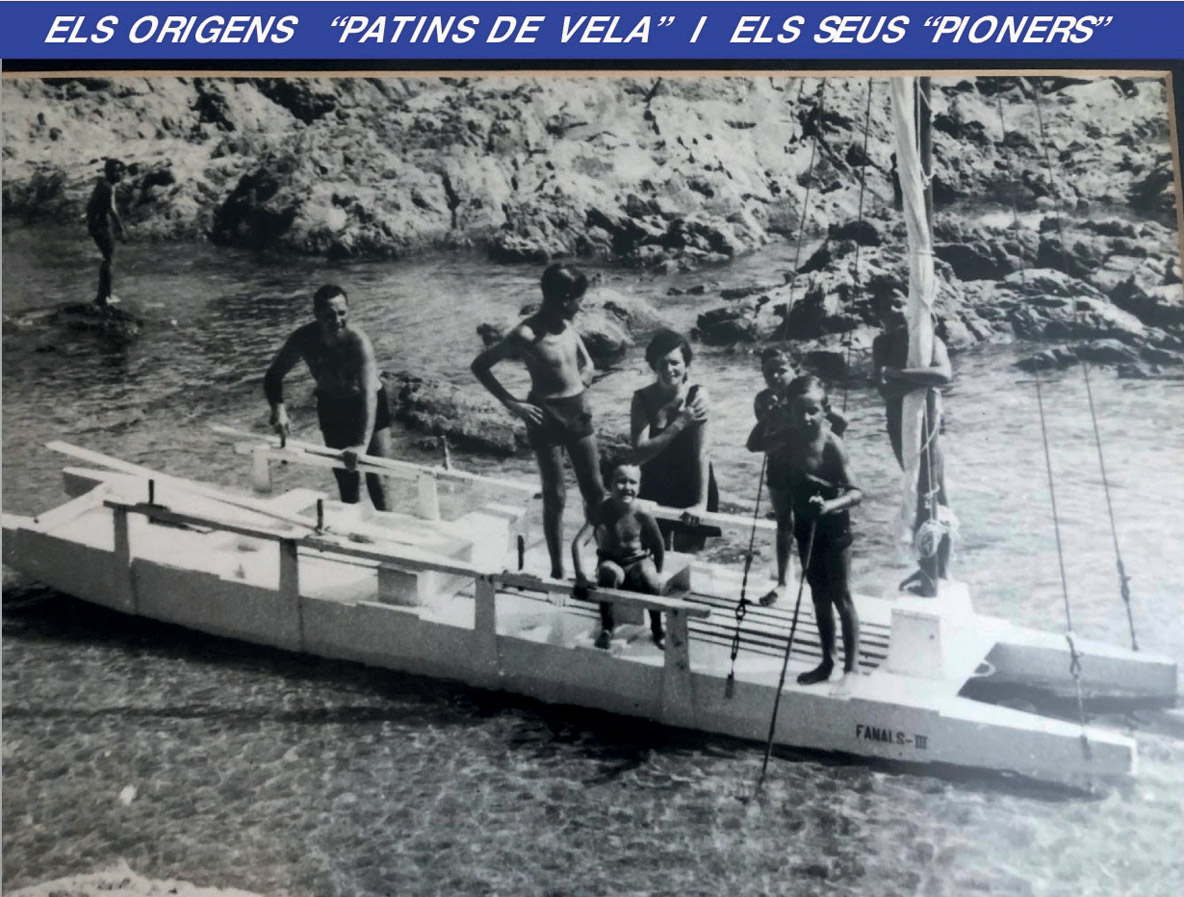
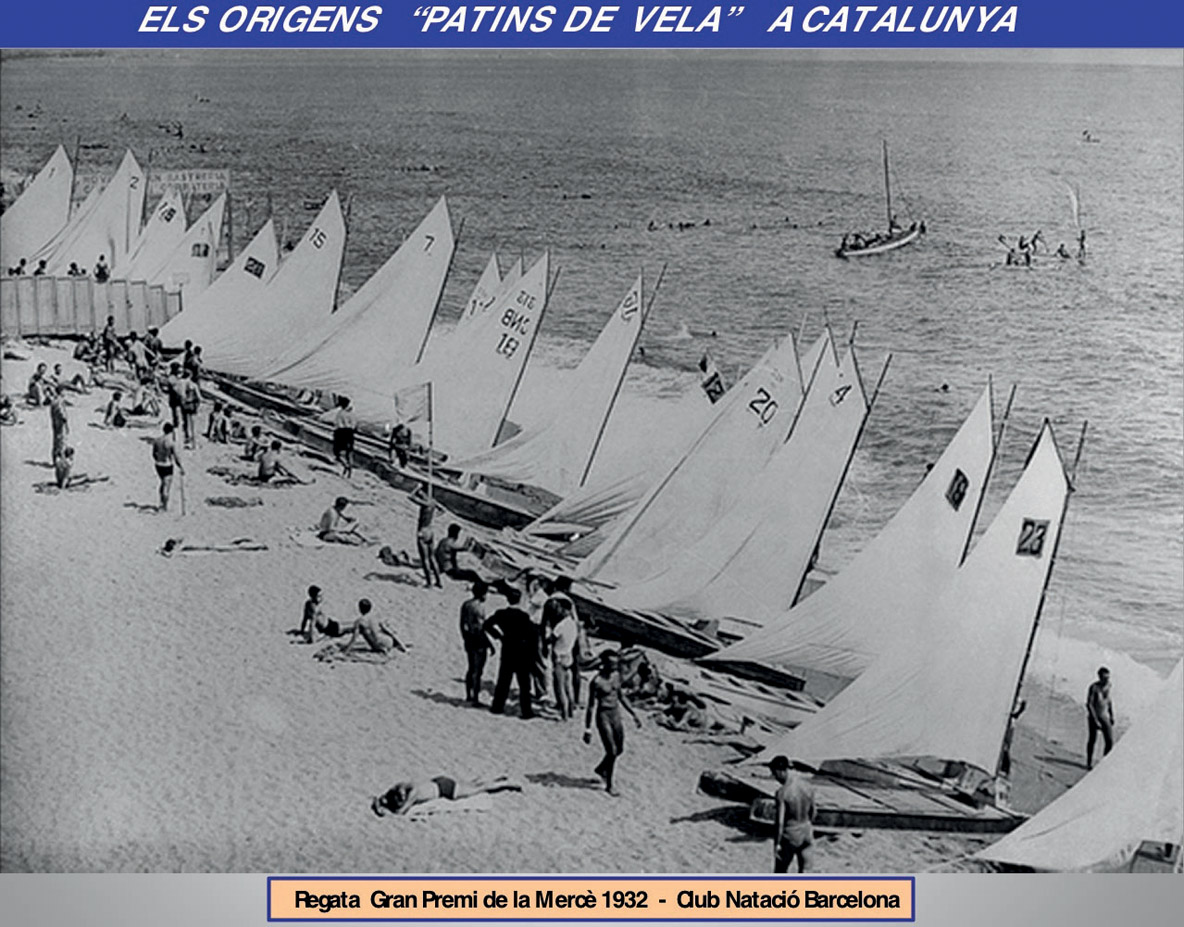
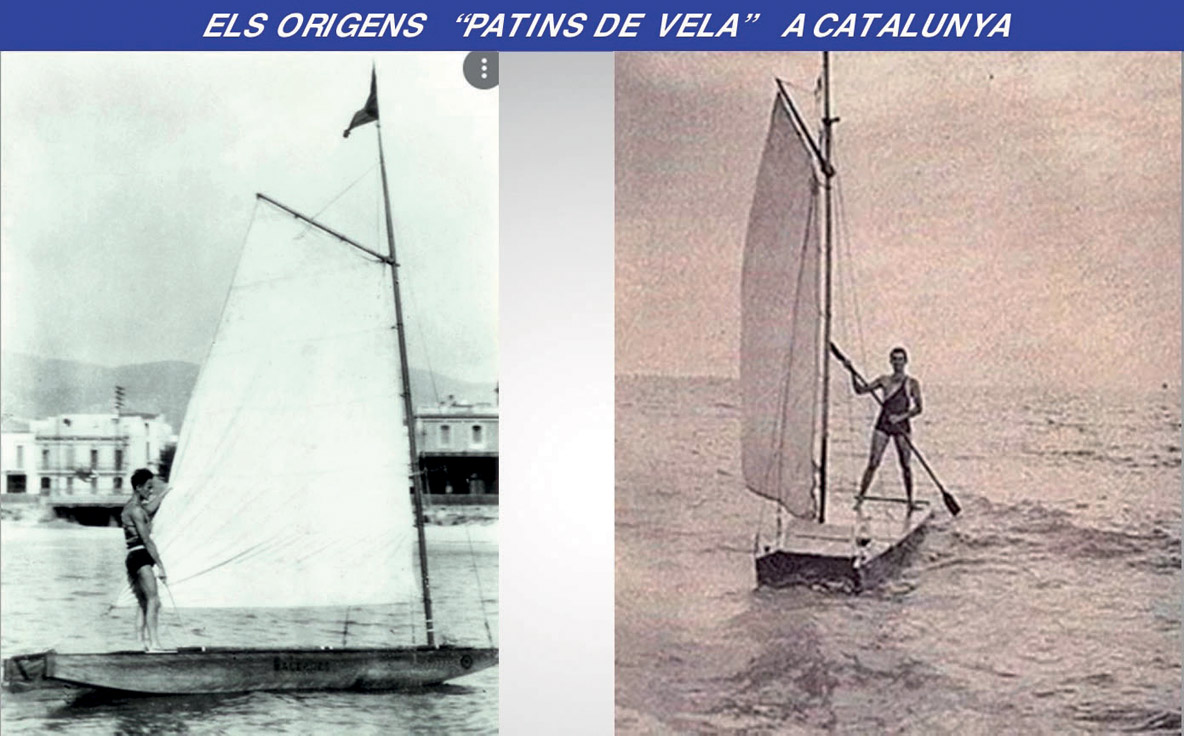
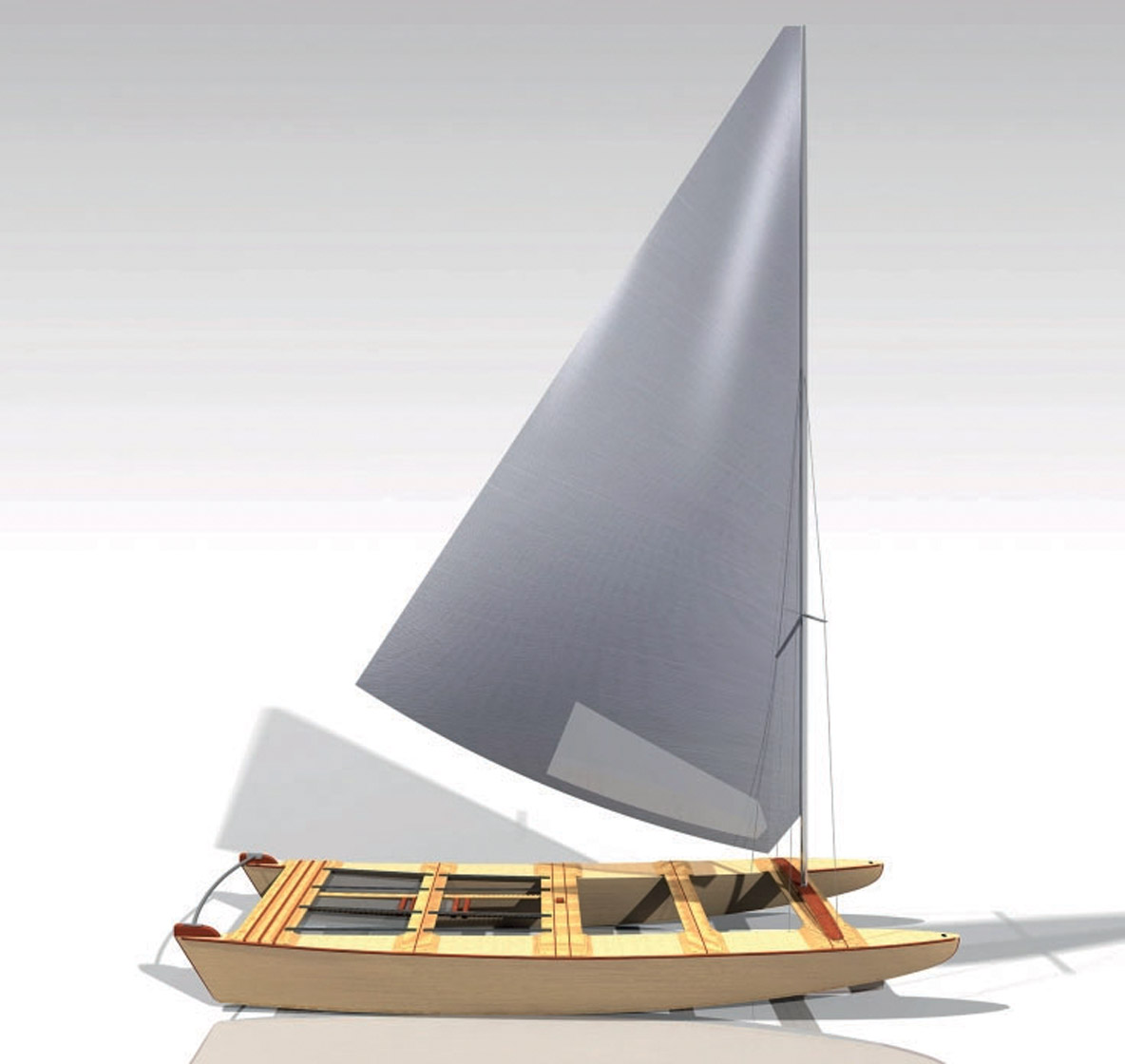
Originally created by Carlos Geli in its primitive form (without a sail), the patí was used to row away from the shore to bathe in less polluted water offshore. The first race took place in 1871, and the industrial boom of the early 1920s accelerated patí production. The small multihull gradually gained in popularity for its simplicity and authenticity: devoid of daggerboards and rudders, it has the distinctive feature of having a perfectly flat bottom, like a pair of skis, so that it can be pulled easily across the sand, even over reasonable distances. The addition of a sail – lateen-rigged at first - soon gave rise to the first racing in Catalan waters, with a wide variety of boats in terms of weight and size. Once the civil war was over, in 1943, the Mongè brothers, residents of Badalona (on the outskirts of Barcelona), brought together all existing Catalan patís to compete in a single regatta where the aim was to find out which one performed best. The two brothers’ skate came out on top, becoming the one-design version of the minimalist catamaran. Still handcrafted today, these sailing skates have evolved very little since then - a wooden or GRP multihull measuring 18’5” (5.6 m) in length, 5’3” (1.6 m) in beam, with a lightship weight of 195 lbs (89 kg), and 135 square feet (12.6 m²) of Marconi-type sail on a mast culminating at 21’4” (6.5 m) high.
Rudders, daggerboards, boom, battens? No, thank you!
“Sailing in its simplest form”, as Rafael Figuerola Camps, the largest patí builder and president of Club Patí Vela Barcelona, explains. This slightly bohemian 40-something, son and grandson of fishermen, never gave up on his dream of developing this Stradivarius of the seas, designed entirely by hand. After years of apprenticeship, the opportunity to set up shop in the heart of the Catalan capital led to what is now an 8,600-square foot (800 m²) boatyard, complemented by a three-quarter acre (3,000 m²) outdoor area capable of storing the 150 patís belonging to club members, a repair workshop and a waterfront restaurant. “Our project goes beyond the simple production of multihulls. We have a desire for social community, of which the Catalan patí is the epicenter. We run courses for all age groups and social categories thanks to very accessible prices. That’s very important to us!”
Over 100 pieces of wood
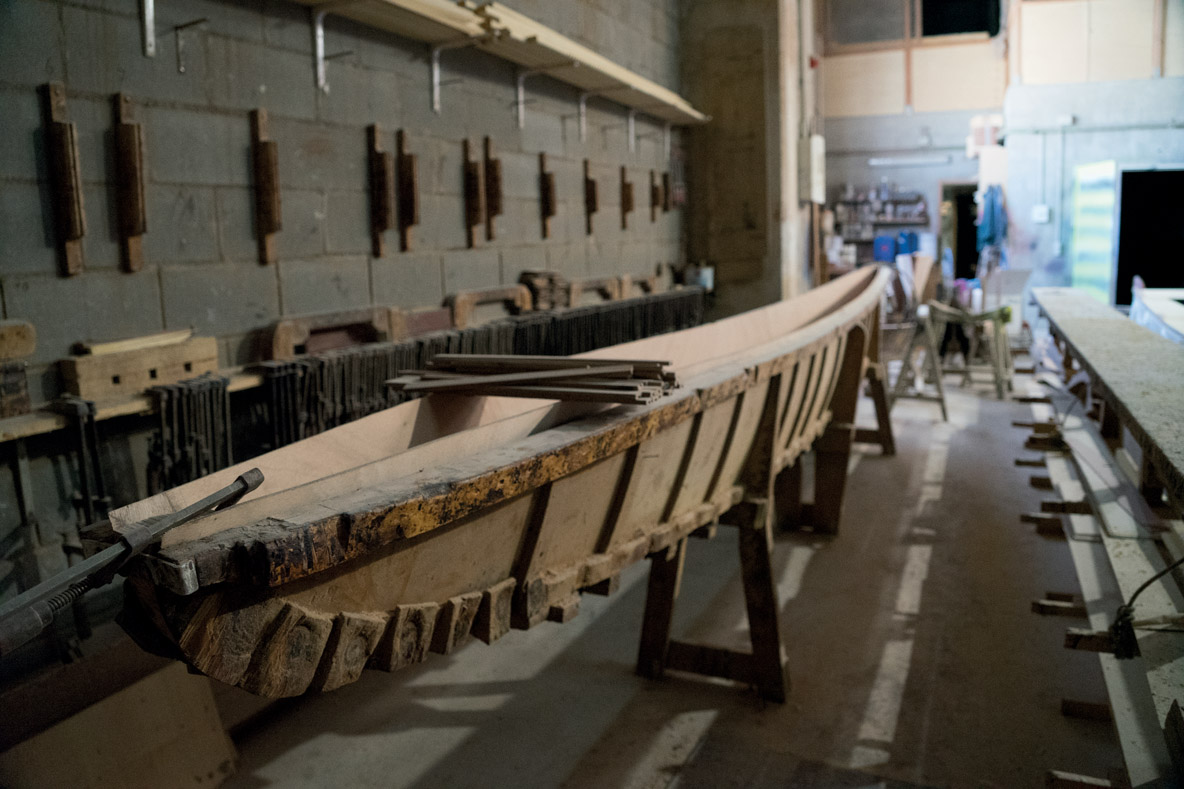
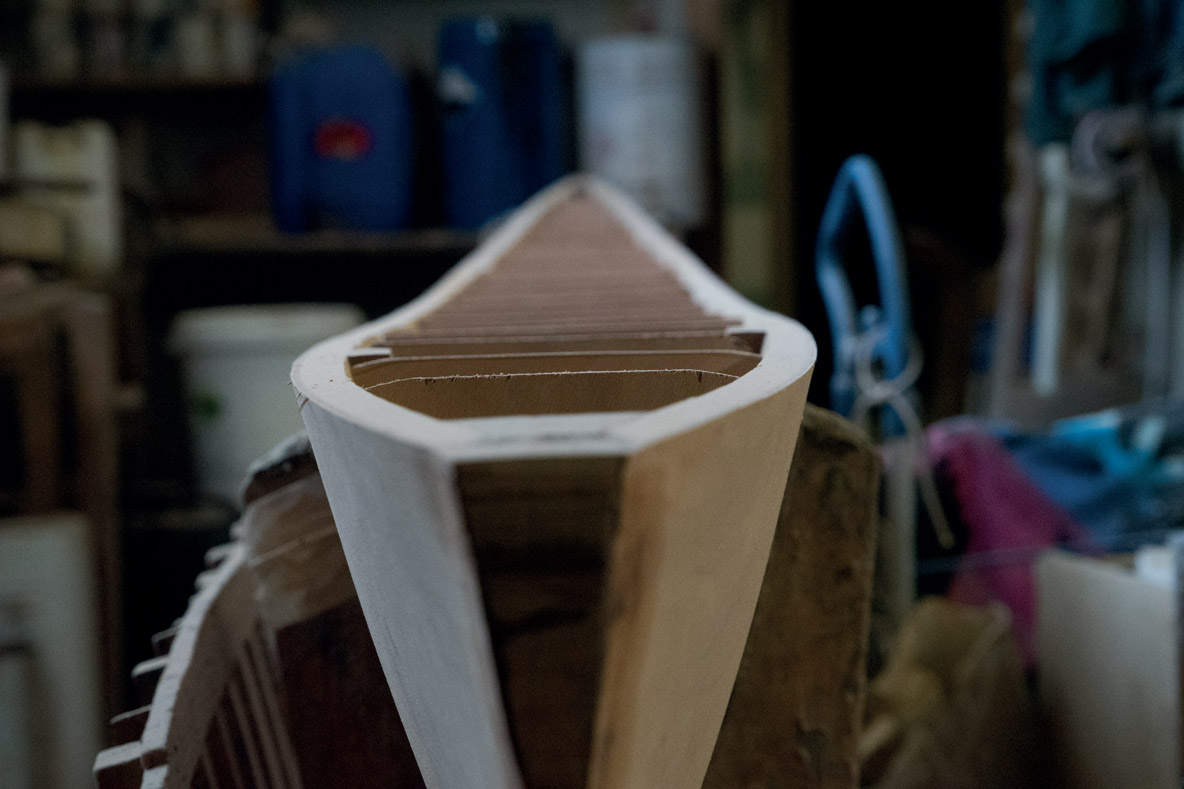
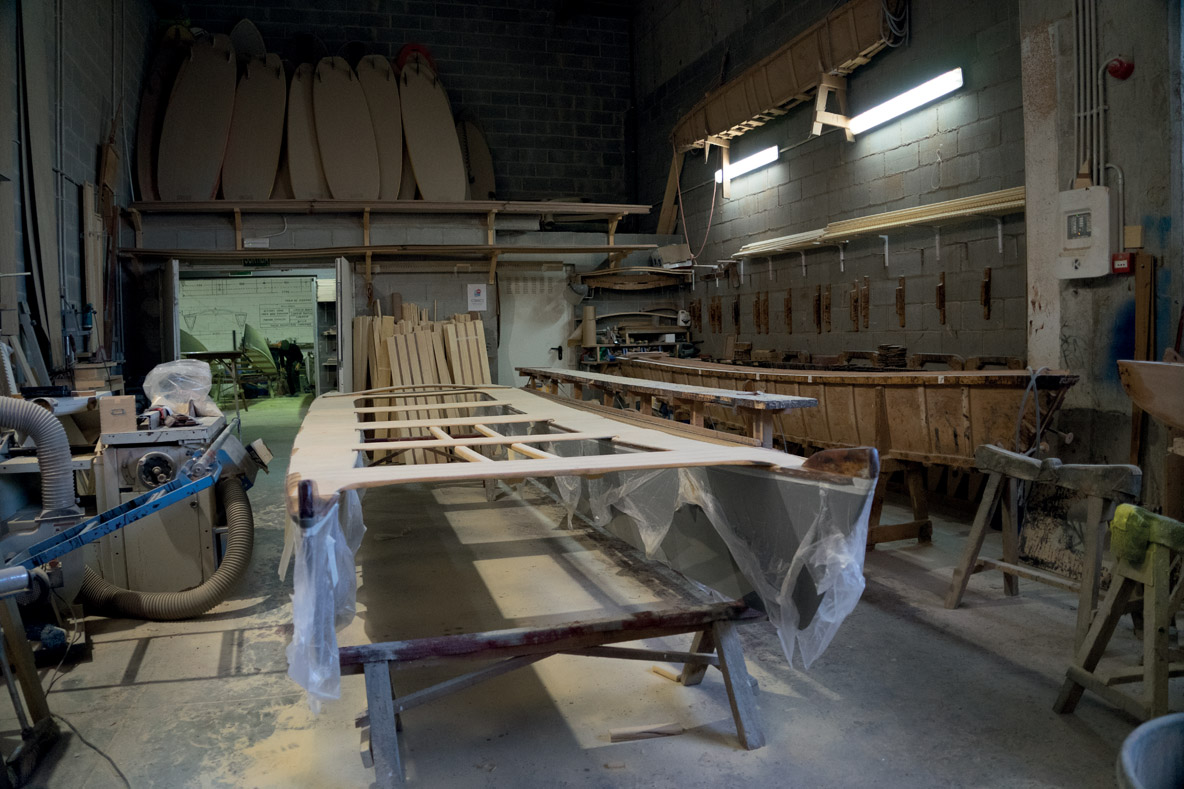
The frame is splendid, but the goal is to create these unique models composed of over 100 pieces of wood. Although the “skates” can be made in GRP, wood remains the noble material, the soul of these high-performance boats. Since the 1930s, wood has been shipped in from the former Spanish colony that is today Equatorial Guinea - and is now blended with wood of more varied origins. The craftsmanship remains the same, with a boat that is constantly weighed during the build process to ensure it meets the standards set by the class.
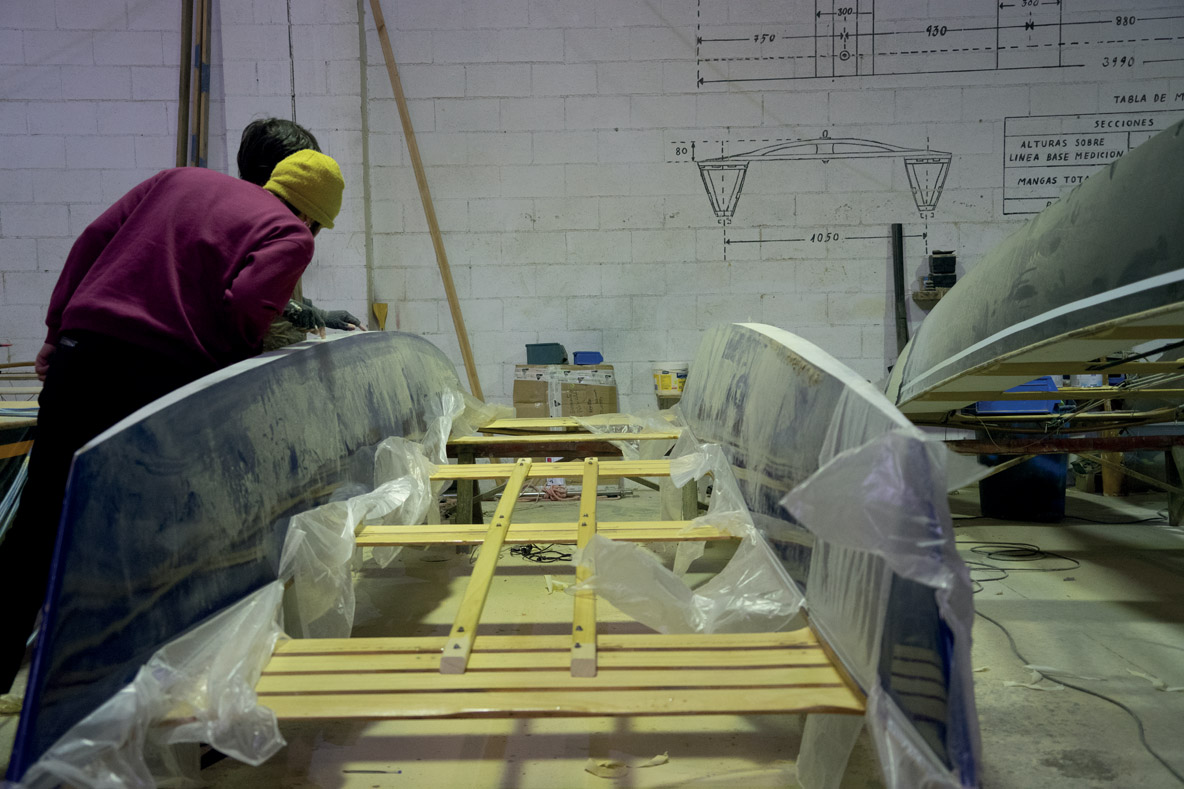
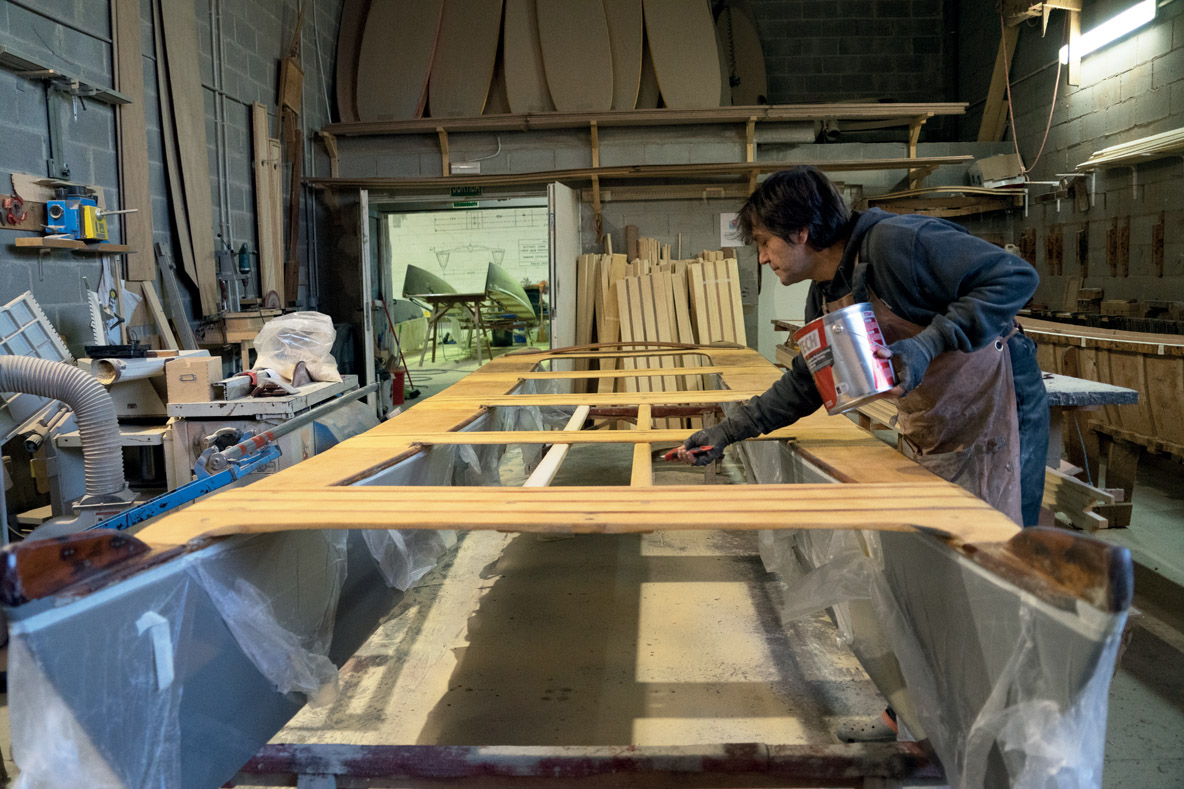
All components are carefully adjusted, as the wooden parts used in construction never have the same weight. The 62/64 lb (28/29 kg) hulls are assembled in an original mold dating from 1948. Once the floats have been made up, the 5 benches that form the cross-sectional structure are chosen and determined so that the total weight is 170 lbs (77 kg) before the varnishing stage. The customization of the construction comes in the form of the athwartships benches. A featherweight sailor will benefit from a light bench to give a more flexible boat, while the larger sailor might want to count on a more rigid structure. Rafael continues: “A flexible Catalan patí has a mast that opens up the wind flow, creating less pressure higher up. As a result, you don’t need to dump the sheet as often as you might, so you gain in speed.”
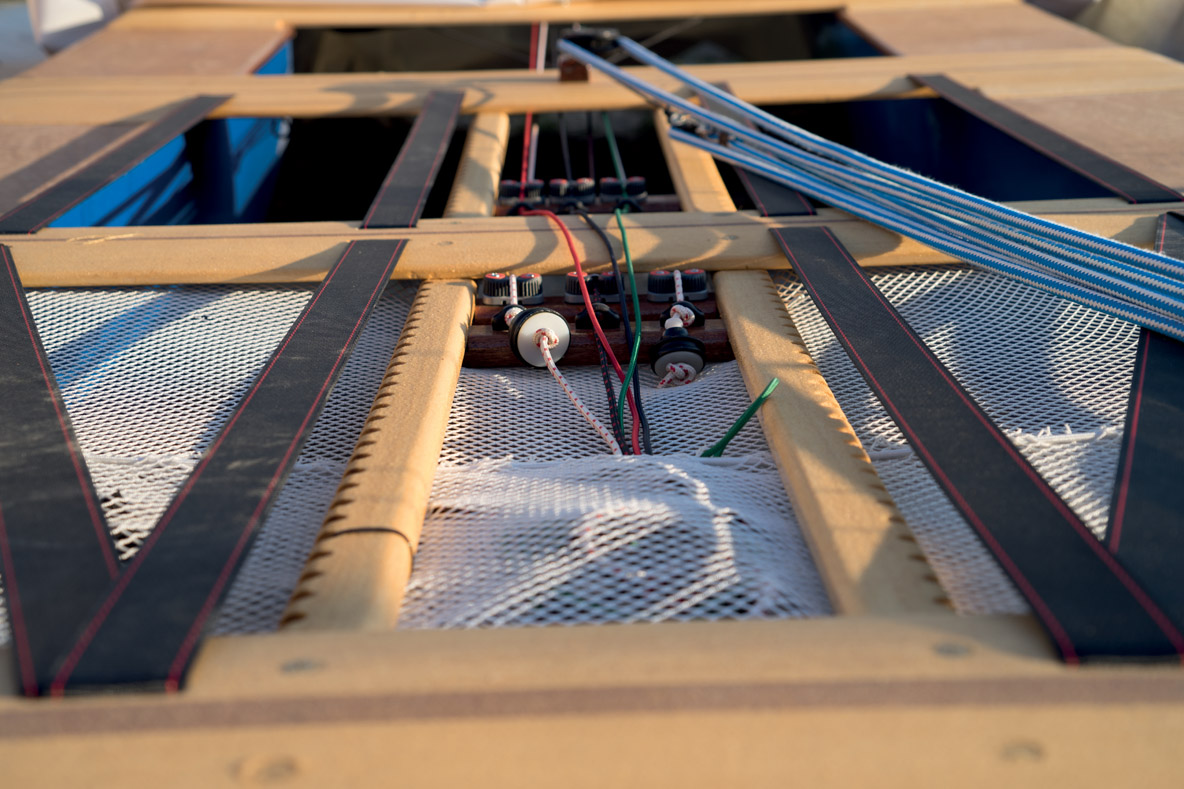
The deck is then completed with the stepping of the aluminum mast and Dacron® sail, as required by the class rules. Once the varnishes have been applied, a non-slip coating of wood shavings is added. The final stage is making adjustments to give an all-up weight of 195 lbs (89 kg), by adding 100 or 200-gram (3½ or 7 oz.) correction weights.
All in all, it takes no less than three weeks to build this one- design multihull which is unlike any other. The base price is around €8,000, fluctuating according to the price of wood. This low price can be explained by the constant desire of sports leaders and the boatyard managers to popularize and develop the sport as much as possible.
An extremely fun platform
This sport brings together young and old, men and women from all walks of life, and enables them to get together on these extremely fun platforms. The absence of a keel, the flat bottom and the light weight of the patí make this catamaran extremely easy to transport. Whether by hand or with the help of electric trailers specially designed by the club, launching and rigging is quick and easy.
The three cunninghams used for mast rake and stiffness, as well as the sail draft adjustments, are fixed and led back to the center of the boat. As for the sheet, it’s a 4-purchase shackled to a mainsheet horse at the stern and led forward to a central block.
Despite its apparent simplicity, the Catalan patí is actually very demanding to sail. The absence of a tiller requires you to shift your weight fore and aft and means constant sail trimming. Agility and balance on deck are key to good sailing, not to mention the strength required to trim a 130-square-foot (12 m²) sail. Of course, your thigh muscles and abs are also called upon to counterbalance the sail... And a good attention span is required to anticipate gusts and waves. But what about steering?
The best bit: what about steering?
There are two main ways to steer this rudderless catamaran. The first is weight variation across the hull. When you move forward on one of the floats, the patí luffs up, which is what we’re interested in for tacking. Then, you have to move to the shrouds, supporting yourself on the mast with one hand and keeping the sail sheeted in with the other. When the sail goes through the wind, you need to step back and back the sail with your bodyweight. The patí goes through the tack and starts off again in a very reactive manner.
To gybe, weight is shifted aft, making you bear away. You then put a foot or leg in the water and force the boat down. Once the sail has gybed - without any risk, since there’s no boom - you move forward again to align yourself with the wind and get on your new course.
The second method involves sail trim. If you ease the sheet, the boat will bear away, and if you sheet in, the boat will come more on the wind. The combination of the two methods gives you very fine control of the patí. Playing with the mast rake also modifies the overall profile, with the mast leant slightly forward when sailing downwind and aft when sailing upwind.
To hold a fixed course, taking into account the sensitivity of trimming, sheeting-in, easing sheets, shifting forward or aft, it is sometimes sufficient to lean one way or the other or stretch to slightly shift the center of gravity on the multihull and modify its trajectory. The “patinaires”, the Catalan name given to sailors who sail these craft, will tell you, “A patí doesn’t move by itself, you have to convince it...”
The boat’s low weight, generous sail area and two flat-bottomed hulls make it an extremely playful multihull in terms of responsiveness, speed and planing ability. Flying a hull is always a source of fun and is visually as impressive as ever.
Worldwide appeal
The Catalan patí’s ability to beach when heading home makes it a highly prized craft in sandy, non-tidal or foreshore sailing areas. This is why they’re to be found in the Mediterranean as well as in more northerly waters, as a single person can transport the boat to the water with a trailer. The expansion of the patí a vela has gone global, and today, these sailing skates can be found in Balearic coves as well as in Germany, Sri Lanka and even South Africa. The highest concentration of patís, however, is seen on Spain’s Mediterranean coast.
Handicap: A protocol for the visually impaired
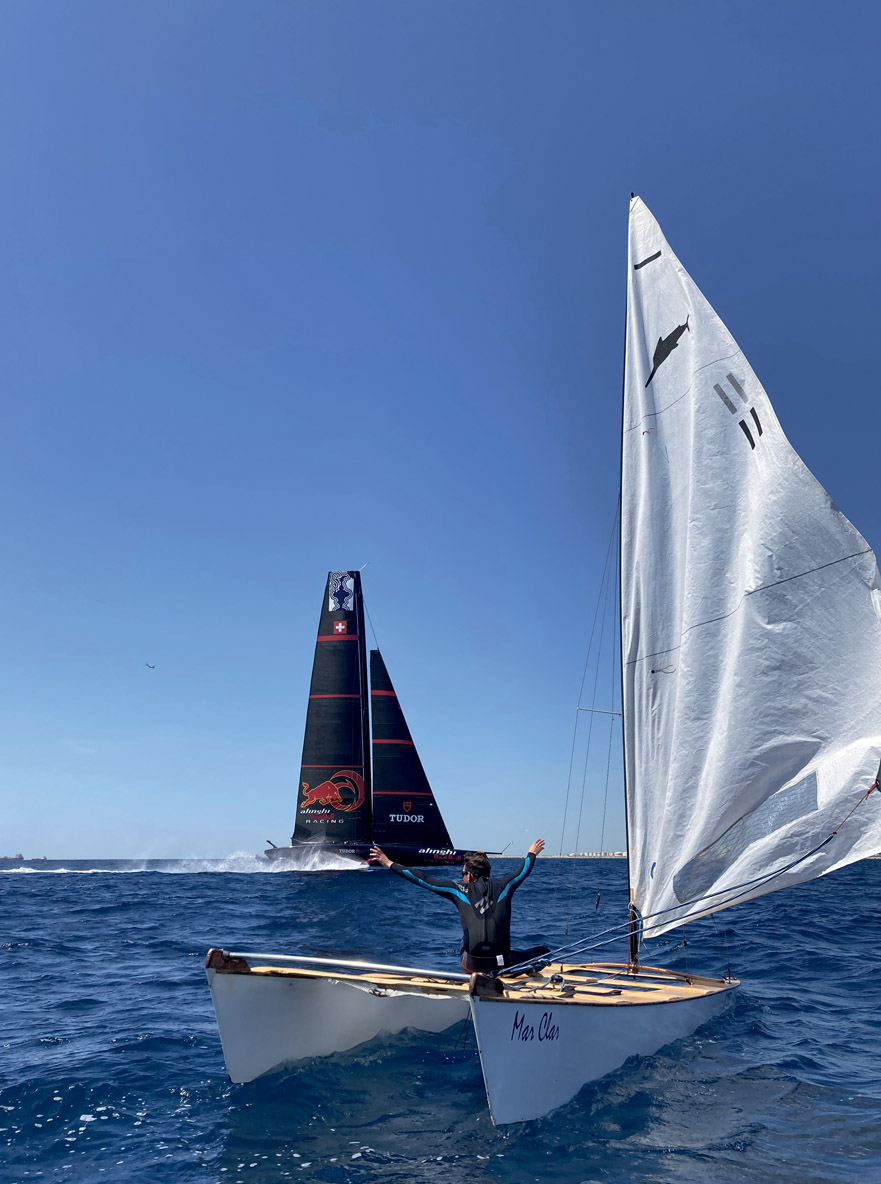
A moving encounter between two exceptional skippers, Arnaud Psarofaghis on Alinghi and Dani Pich on his patí.
Dani Pich recently lost his eyesight, but his love of the sea and of the patí a vela has never diminished. He now sails on a boat donated by a club member, thanks to sound signals emitted by a follower boat, which tells him where the race marks are. He is working with the Barcelona School of Nautical Studies to develop the patí’s sailing protocols, so that other disabled people will one day be able to enjoy this unique craft. Recently, the AC75 Alinghi Red Bull crossed the bows of Dani’s patí. In an almost surreal timeless moment, the two skippers greeted each other, and continued on, gliding along each in their own way...
The patí a vela from A to Z
Barcelona boatbuilders:
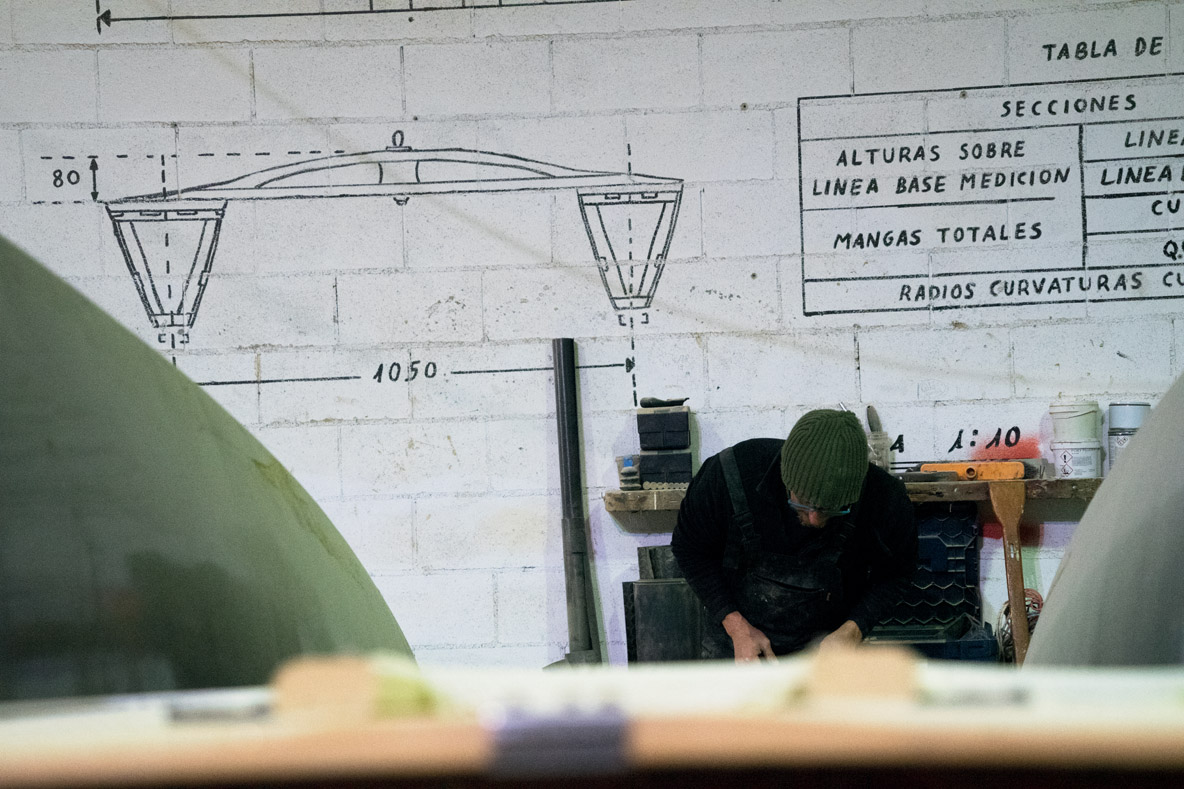
The space made available by the City of Barcelona authorities since 2011 houses the Barcelona yard, its school, a panoramic restaurant and is intended as a social community space united around the patí a vela. On the walls, enhanced reproductions of the patí construction plans enable the craftsmen to follow to the letter the construction standards that have remained unchanged since 1943. The molds for the floats date back to 1948 and are still used in the construction of the boats supervised by Rafael Figuerola Camps.
Second-hand market:
On second-hand websites, a patí can be found for around one to two thousand euros, depending on the condition of the hull and rig. It is recommended to go directly to a yard to discover refitted and affordable units, while having access to a warranty and credibility at the time of purchase.
Models:
The most popular model is, of course, the one that conforms to the class rules:
Length: 5.60 m (18’5”) - Largeur : 1.60 m (5’3”) - Unladen weight: 89 kg (196 lbs)
There is also a Junior version measuring 3.98 m x 1.40 m (13 feet x 4’7”). You can also find models predating the creation of the one-design with slightly different dimensions and weights.
Fleet:
While the exact number of patí a vela is difficult to quantify, the 350-member International Patí a Vela Owners’ Association gives us a bit of an idea just how widespread this multihull is - it can be found in all four corners of the globe.
Rafael Figuerola
Owner of the Patí Vela Barcelona boatyard and President of Club Patí Vela Barcelona
“We’re on the premises where the Patí a Vela, the Catalan sailing skate, is made,” explains Rafael. “In this club located next to Barcelona’s Port Olimpic, we make everything that goes into the patí. We receive a tree cut down, then gradually saw it into different parts, shapes and sizes, and from there, using a mold dating from the late 1940s, we build the two floats of the boat, which are then assembled with 5 benches. Then it’s time to apply (many) coats of varnish, add a little non-skid to prevent slipping, and finally install four lines and two blocks. The only thing left to is head for Somorrostro beach, which is right next door...”