
While the first charter companies began to appear in the 70s, it wasn’t until 1985 that the first catamarans began to feature among the rental fleets. Models that have long since disappeared from the catalogues were pioneers: the Louisiane or Marquises from Fountaine Pajot, the Kennex, the first-generation Leopard, the Nautitech catamarans built by Dufour for VPM... Chartering in the West Indies was boosted by the democratization of air transport. In the USA, The Moorings, founded in 1969 by Charlie and Ginny Cary, added catamarans to its fleet for the first time in 1990, before stepping up a gear in 1997 by signing a partnership agreement, (that’s still in force today), with the Robertson & Caine shipyard. The same year saw the launch of the Lagoon 410, followed two years later by the Lagoon 380, two models which reinvented the multihull concept and helped the brand that had recently been acquired (1995) by the Bénéteau Group to literally take off.
Professionals: Comfort and Security
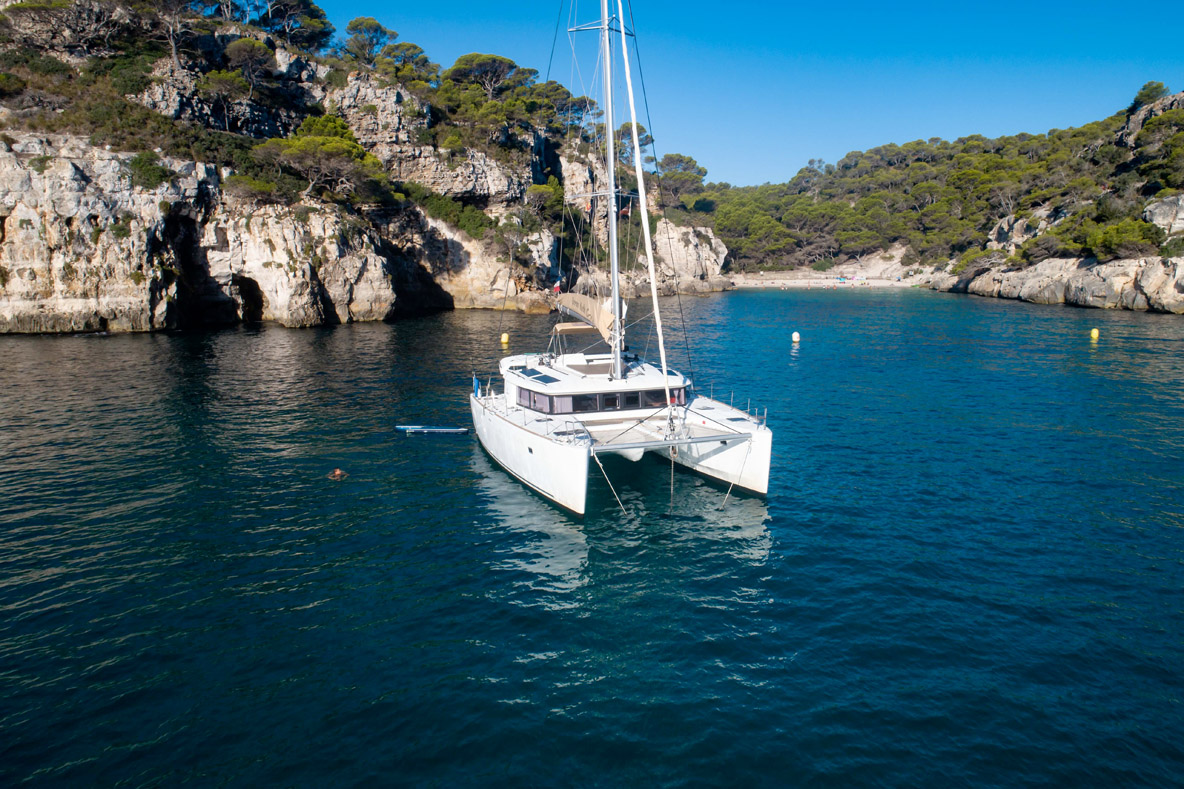
Today, multihulls make up the majority of the fleets of the world’s leading charter companies - several hundred each. From 40 to 60 feet, there’s a wide choice. You can choose from 3 to 6 cabins, opt for a simple, very comfortable or even luxurious multihull, and with or without a crew. It’s hard not to find an offer that meets your expectations and budget. The major charter companies have up- to-date fleets, made up of units no more than 5 years old, which is the duration of the management/leasing contracts of the owners who entrust them with their multihulls (see our article on this subject on page 106). It’s also in the interest of the charter companies that the catamaran or trimaran on which you embark is perfectly maintained to maximize its use. Everything is checked at every change of charterer - engines, sails, electronics, comfort and safety equipment. Let’s be honest: few Owners do so much before setting out on their own. And even if a problem should arise on departure or during your cruise, here again the importance of the structure of the major operators is their strength. In addition to a 24/7 assistance number, in the event of a serious problem immobilizing the chartered multihull, the technicians know how to intervene quickly or, in extreme cases, find a replacement solution within their fleet. The latter may even be upgraded in terms of size or services - within reason, of course. Even in cases of force majeure, as we saw during the terrible tsunami in Thailand in 2004 or Hurricane Irma in St. Martin and the BVI in 2017, the major charter companies were able to relocate or rearrange their fleets and offer alternatives for affected customers. The market’s leading companies operate from dozens of perfectly equipped bases, always located at the heart of an extremely attractive sailing zone. On arrival, shuttles services are sometimes organized to pick you up at the airport. You are welcomed aboard your multihull by qualified staff who provide a full briefing. This includes an exhaustive tour of the unit you’ve chartered to make sure everything’s running smoothly, and a reminder of all the safety instructions. Base staff also provide excellent advice on local sailing conditions and the best spots - as well as those to avoid. The prices charged by the professionals may seem high, but they include a number of services such as cleaning, provisioning and insurance, as well as guarantees that the work will be carried out properly. What’s more, in the early or late season, you can find very competitive prices and last-minute promotional offers, while avoiding the overcrowded anchorages of the peak periods. Finally, like all major companies, they are highly aware of their e-reputation, so they make a point of offering clear, detailed contracts and quality service from A to Z.
Private Rentals: Plenty of Choice and Low Prices
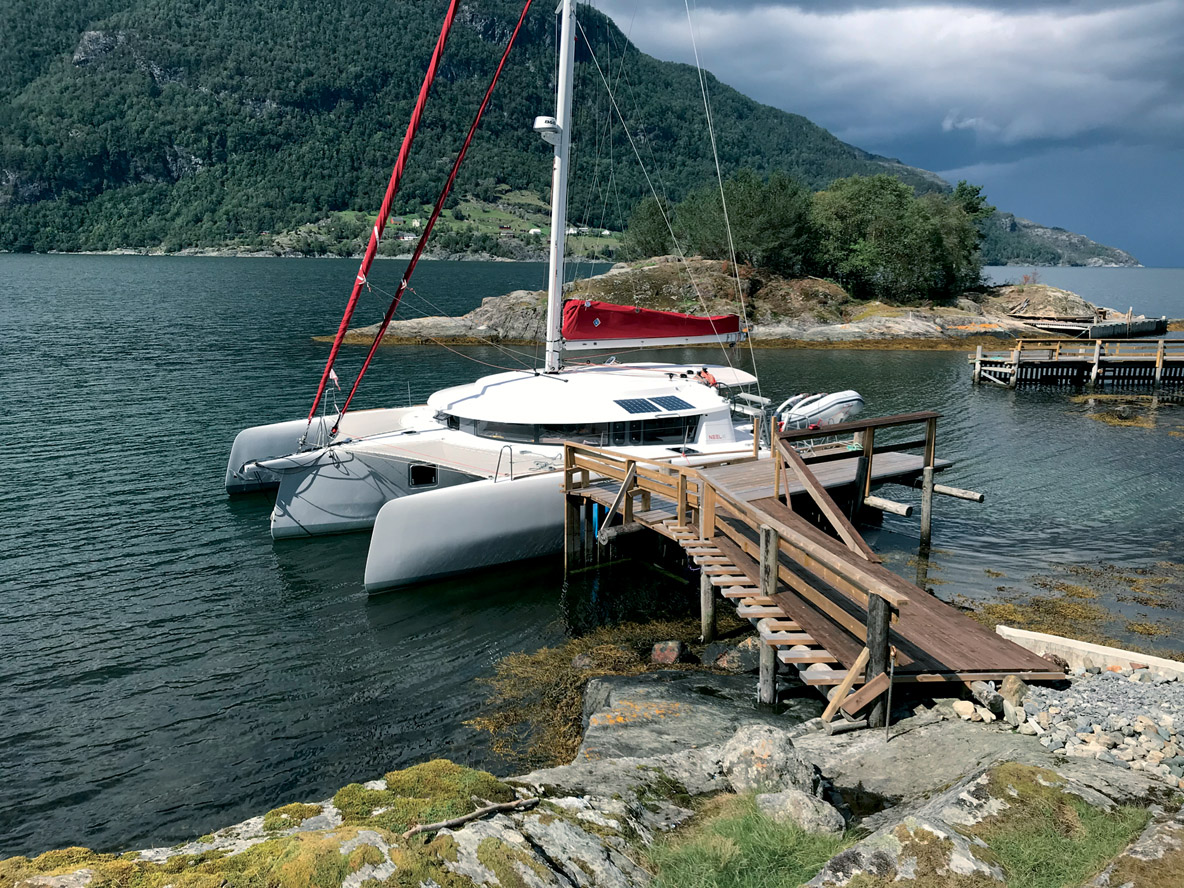
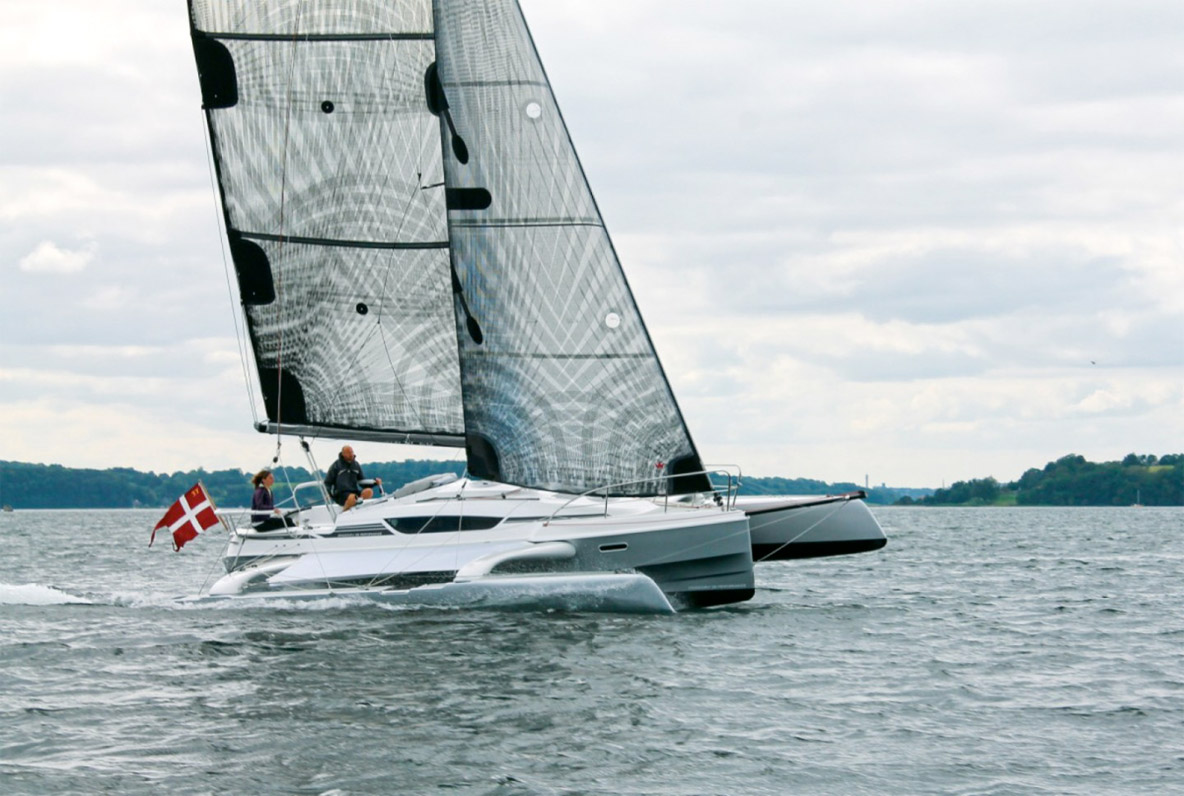
If the world of the big charter companies seems ideal, then why would you rent a multihull from a private individual? The first reason is the desire to find unusual boats and destinations that are off the beaten track. Among the big charter companies, 80% of the fleet is dominated by the Big Four manufacturers: Lagoon, Fountaine-Pajot, Bali and Leopard. If you look hard enough, you’ll find Nautitech, Excess, Aventura and even Neel, which has had the audacity to launch a dedicated Trimaran Yacht Charter subsidiary. So there are some rare exceptions, but in general the range is rather limited. But if you’d like to get your log up to double figures on an ultra-light catamaran with daggerboards or a Dragonfly, you’ll have to look a little harder. What if you want to set off in a more rustic atmosphere, on a rally-raid or coastal camping trip on a trimaran that’s less than 23 feet (7 m) long? It’s not so easy to sail as a couple, either, because instead of the usual version with four cabins and as many bathrooms, you’ll probably prefer an owner’s hull more akin to a comfortable hotel suite. The same applies to destinations. Yes, French Polynesia is magical, the Caribbean in winter is a must, and the charm of the Mediterranean in summer is eternal. But it’s also very crowded - and so “déjà vu”. What about whale-watching at the mouth of the St. Lawrence, touring Irish or Scottish distilleries, discovering New York by sea or sailing up a Norwegian fjord? In these contexts, if there’s a single multihull for charter within 500 nautical miles, you can be sure that it belongs to a private owner, and that your next vacation on the water could be truly unique! But the argument that most often wins the day is financial. Prices quoted by private owners can be significantly lower than those charged by professionals. Admittedly, they don’t include all the services and support offered by the big established charter companies, but if you’re an experienced sailor, you don’t necessarily need them. What’s more, a private owner is often more inclined to negotiate their price, especially in low season or for longer-term charters. Some even offer the possibility of chartering for several months at a time, which offers the chance of doing an Atlantic circuit, for example, a service that is only just beginning to catch on with professionals.
Of course, renting from a private owner has its limitations. The quality of the multihulls on offer can vary considerably, from a 20-year-old catamaran to one fresh out of the shipyard, from a meticulous owner to a more casual one. Without regular maintenance by professionals, some multihulls may not be in perfect condition. So, you’re not entirely safe from a nasty surprise or an unfortunate set of circumstances. By definition, a private owner cannot offer the same guarantees as a professional in terms of maintenance, equipment reliability and, even less so, assistance. In the event of a technical problem, you may have to deal with the repairs yourself, or wait for a local professional - often overstretched in high season - to intervene. If major damage renders the catamaran you’ve been dreaming of all winter unusable on departure or during your charter period, there’s virtually no chance that a private individual will be able to offer you a replacement solution. Finally, pay close attention to the insurance offered. What happens in the event of a last-minute cancellation, with no alternative solution? There is clearly a certain amount of risk involved, but it can make for some wonderful human stories. Because, along with the price - which is the other strong point that comes up in many testimonials from happy charterers - the direct relationship with the Owner often allows for greater flexibility and a more human approach. For example, greater flexibility on departure and arrival times: “Your train is delayed, and you won’t be arriving until 11:00 pm? Don’t worry, the keys will be in the anchor locker. Have a good night’s sleep on board and I’ll see you in the morning - I’ll bring the croissants!” Some unusual options or equipment can be made available on request.
An Owner will often be able to give you expert advice on the best anchorage for wing foiling, or the right time and route for mackerel fishing. What’s more, by renting from private owners, you’re making a direct contribution to the local economy, and supporting owners who invest personally in their multihulls and their region. You don’t necessarily have to fly to the other side of the world to enjoy a great vacation on the water! The difficulty today is getting in direct contact with Owners... Why? Because interfaces capable of connecting Owners and Charterers have taken over - these are the platforms we’ll be discussing below.
Online Platforms - The New and Easy Way to Charter your Catamaran
In 2012, in the well-organized two-dimensional world of boat rental, the first Internet charter platforms appeared on the scene - not unusual given that the collaborative economy and the sharing of goods and services on the web were starting to emerge. The pioneer was an American company, Boatsetter. Its aim was to make boating affordable and accessible to all, by connecting its customers with qualified owners and skippers. In 2013, GetMyBoat followed suit, with the ambition of covering the whole world. The same year, on the other side of the Atlantic, the French company Click&Boat launched a hybrid platform that integrated both private and professional offers. A year later, in 2014, SamBoat was created following the same model.
Offering new visibility to individual renters, these platforms also quickly won over smaller companies, who saw an opportunity to gain visibility alongside the giant players in the sector. Even the latter have come to regard these new marketplaces as indispensable. The platforms marked the beginning of a new era for the boating industry, making the charter market more accessible and, above all, more transparent, as offers are easier to compare. These new media also open up the market to a wider customer base, thanks to the ease of use of their applications. With their user-friendly interface, you can search, compare and book a multihull anywhere, anytime, according to your own criteria of destination, size and budget. It’s now possible to book your next vacation’s catamaran or trimaran at the touch of a button, on your smartphone, while having drinks with friends or on your morning coffee break. Without offering all the guarantees of a professional charter company that owns its bases and manages its fleet, the platforms have a validation process for the owners and multihulls that they market, to ensure a minimum level of quality and safety. They also offer insurance to cover charterers in the event of a problem, which provides a degree of peace of mind when the rental is from a private individual. In this way, the platforms are helping to bring the service levels of private renters closer to those of professionals, with rates inevitably tending to follow suit: everything has a price...
But their greatest strength lies in the breadth of their offer. By pooling private and professional offers, the platforms give us access to an absolutely unique variety of models and destinations. With the competition out in the open, prices can be particularly competitive, with the added benefit of dedicated customer support before and during your charter. However, despite all the precautions taken and checks carried out, the quality of service can vary greatly from one charter to another. In situ, there is no physical presence: charterers must manage the relationship with the owner directly, and they must handle any technical or logistical aspects themselves. As a result, services such as cleaning, maintenance and reception can vary widely. You should also pay close attention to the general terms and conditions of sale. While the platform offers a standard framework for cancellation conditions, security deposits and insurance, owners may or may not choose certain options, which means you need to read the contract carefully before validating your reservation. Another disadvantage is that all members have to adapt to the platform on which they offer their multihulls, which reduces the flexibility of the private rental offer, as it no longer offers the same level of personalization or flexibility as a direct charter. However, the rating systems set up by the platforms provide a high degree of transparency, pushing up the quality of the overall service. This encourages charter companies, both professional and private, to take the utmost care of the multihulls they offer, and to pay particular attention to their service quality and customer relations so as to achieve good ratings, which in turn tends to create a virtuous circle
Whether you charter a multihull from a professional, a private individual or via an online platform ultimately depends upon your priorities and your budget. If you’re looking for peace of mind, full service and solid guarantees, professionals are pretty much the way to go. They offer recent, well-maintained units, efficient service and the security of being able to change multihulls or bases in the event of unforeseen circumstances. On the other hand, chartering from a private owner is often more affordable and can offer a more rewarding personal experience. But you need to be aware of the wide variety on offer, and the likelihood of having to fend for yourself in the event of a technical problem. By bringing all this together in one place, online platforms have opened the way to interesting compromises, with a wide choice and competitive rates. In any case, one thing is clear from the multitude of offers which are now so readily available: there’s bound to be a solution that’s just right for you, ensuring your dream vacation on two or three hulls!