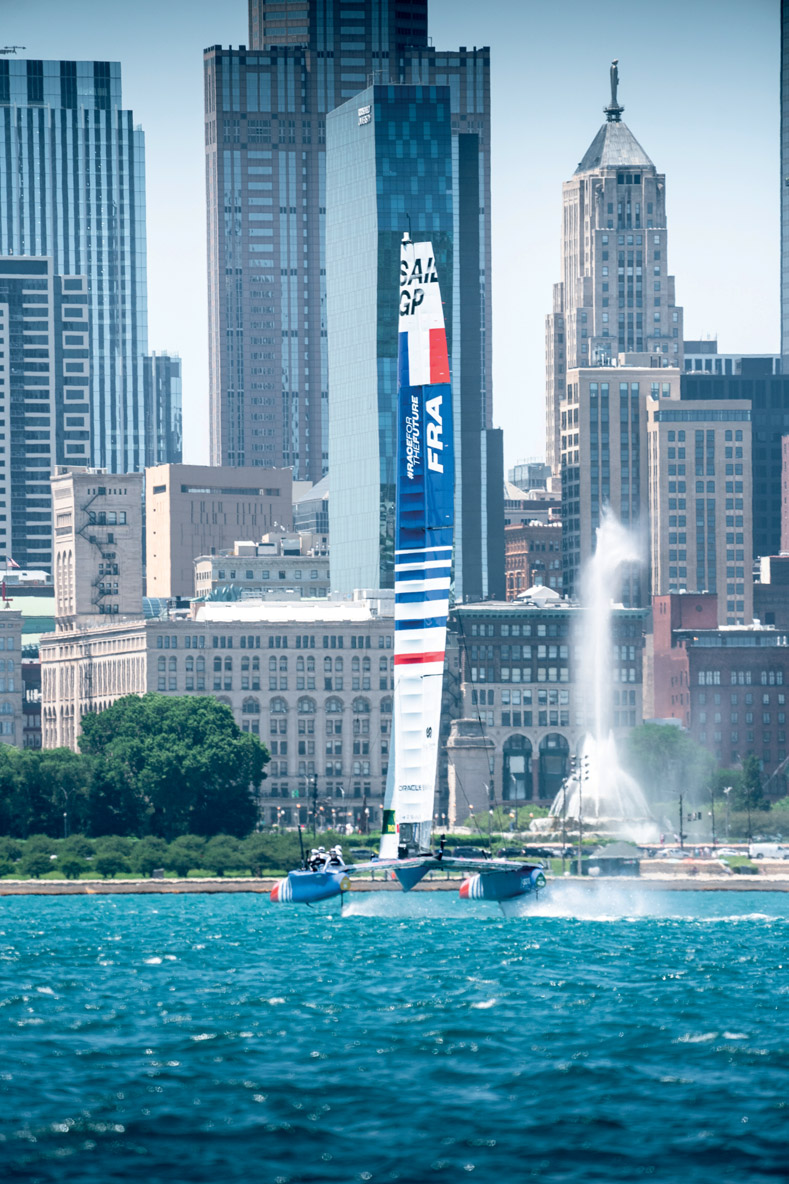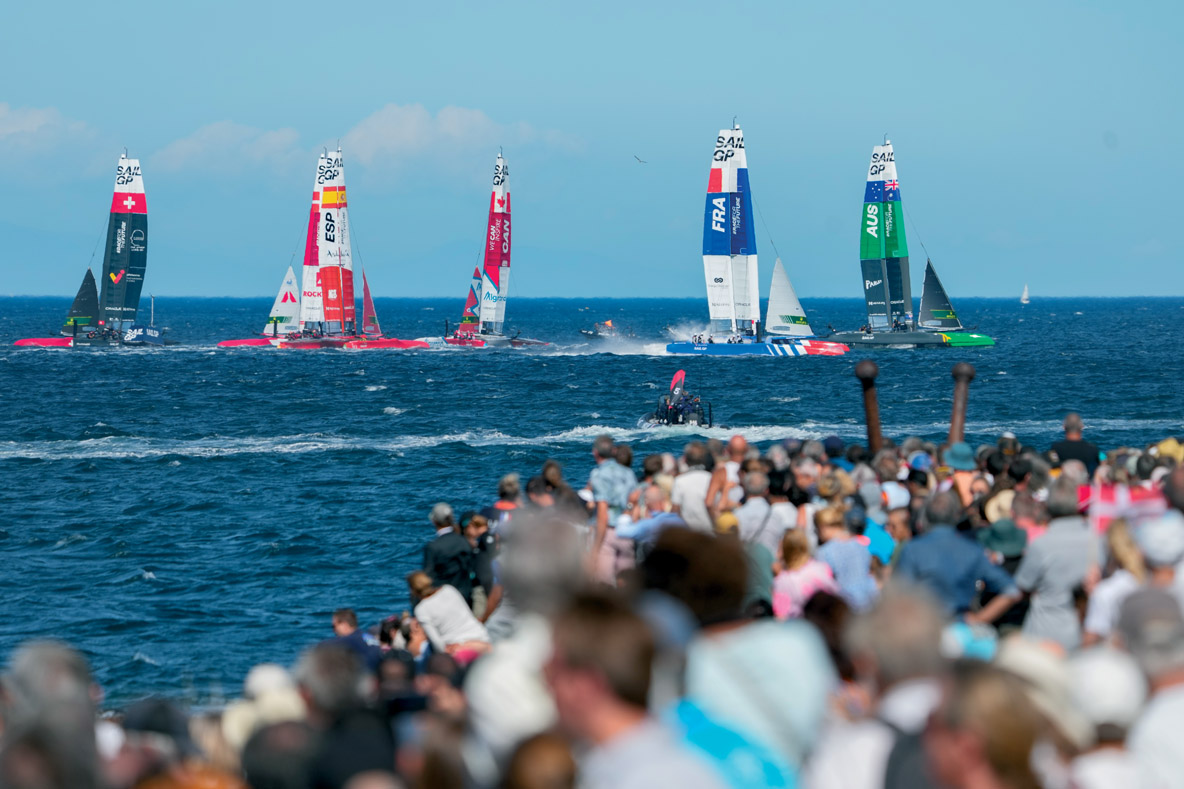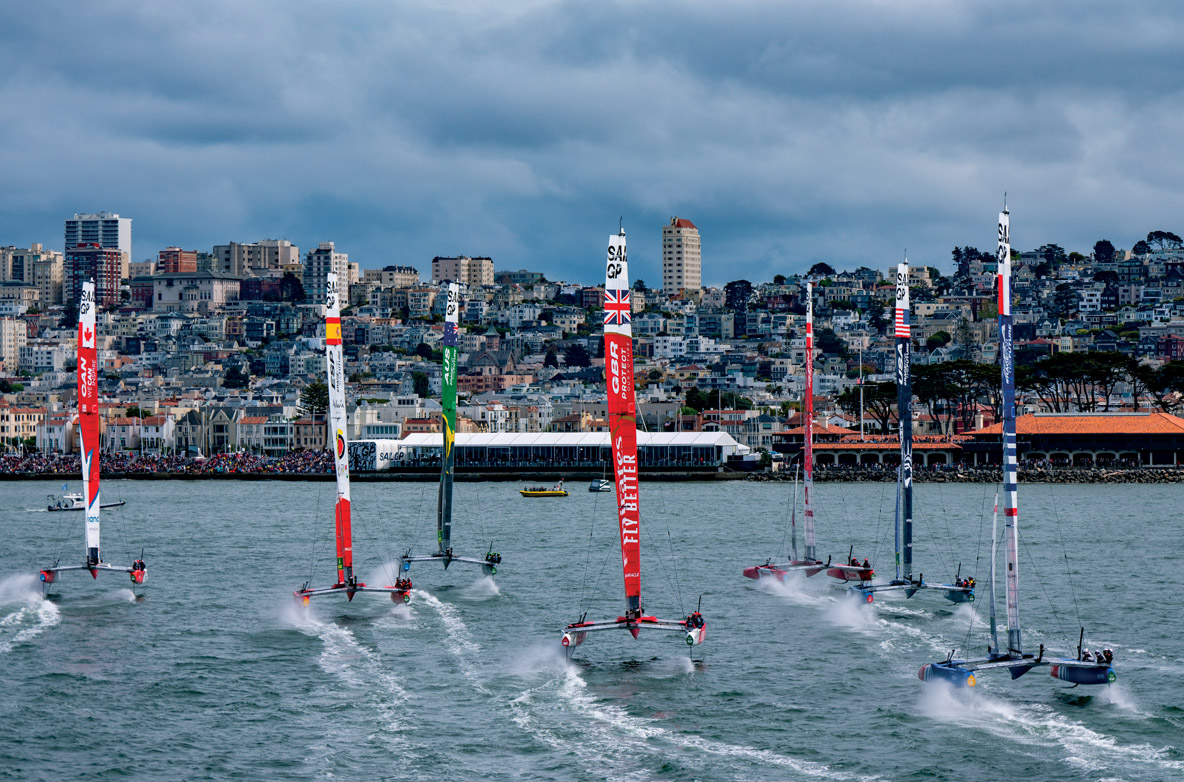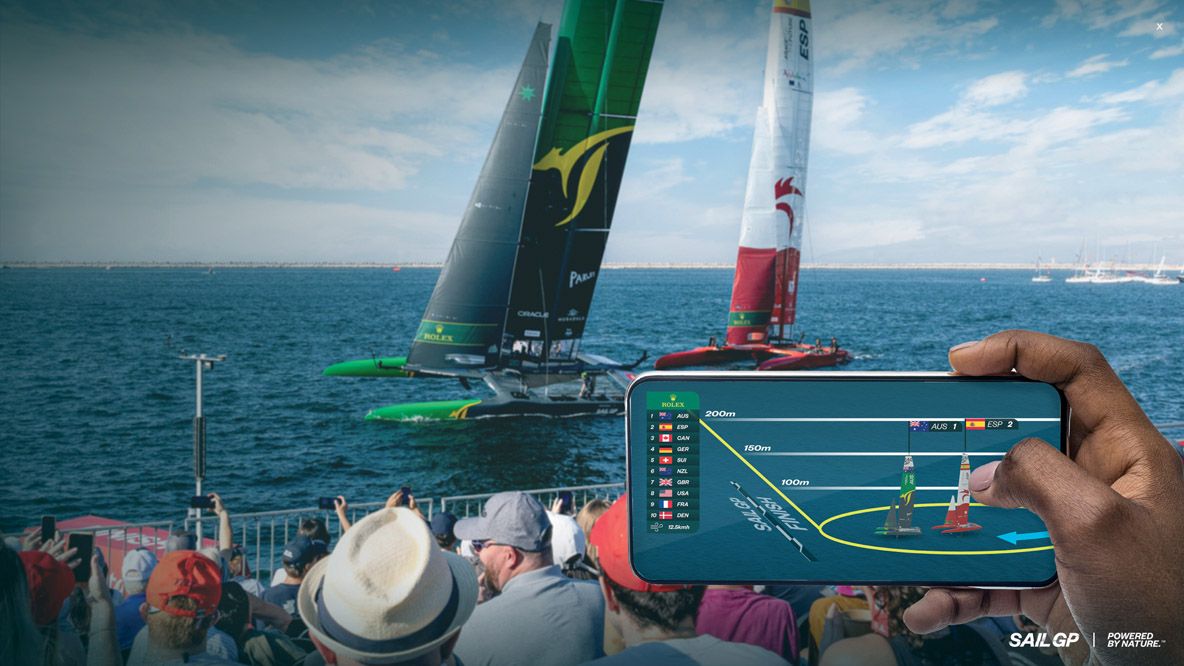
Have you ever followed a “traditional” sailboat race from the shore? Generally speaking, it’s very monotonous, and you can’t really understand what’s going on... Seen from a distance, the boats move slowly (with the exception of the fastest multihulls, to which we’ll come later...) and sometimes pass each other without you realizing exactly where the course is taking them. And above all, how can you tell who’s in the lead?
Fortunately, a little over 10 years ago, something clicked. The great regatta that (finally) revolutionized everything was the 34th America’s Cup, held in San Francisco in 2013. The grandstands set up on the quays and the shoreline were packed with spectators, and the media broadcast the ballet of ultra- high-performance catamarans, the AC72s, on screens the world over. Equipped with a rigid wing, these multihulls flew side by side at unprecedented speeds, tacking within short distances of the quayside. To hear the comments, for the first time, sailing novices were beginning to understand the races. What’s more, all the spectators enjoyed watching these machines fly around such a tight perimeter, a bit like a stadium. There is a before and after San Francisco. In 2017, the 35th America’s Cup being contested in Bermuda used the AC50, a smaller catamaran, but just as fast as the 72, as its craft of choice. One of these rocketships was to reach a speed of 47.2 knots. Then, as is customary, the winners imposed their rules for the following edition. And, in this case, it was Team New Zealand who won the cup and dictated a switch to hydrofoiling monohulls for the following event, which would introduce the AC75.
The birth of an extraordinary international championship
Two major players from the America’s Cup were Larry Ellison, founder of Oracle, and Russel Coutts, five-time America’s Cup winner and director of the BMW Oracle Racing Team. The two men, disappointed with the outcome of the previous edition, wanted to continue sailing AC50s, but in a more predictable, regular and, above all, far less costly context than the America’s Cup. The SailGP concept was born: a competition that orchestrates fleet racing in a fast and furious mode. A horde of flying catamarans, led by famous sailors in the world’s most beautiful waters, would compete in a well-followed and well-funded annual championship. The idea was to copy F1 Grand Prix motor racing, but for on the water...
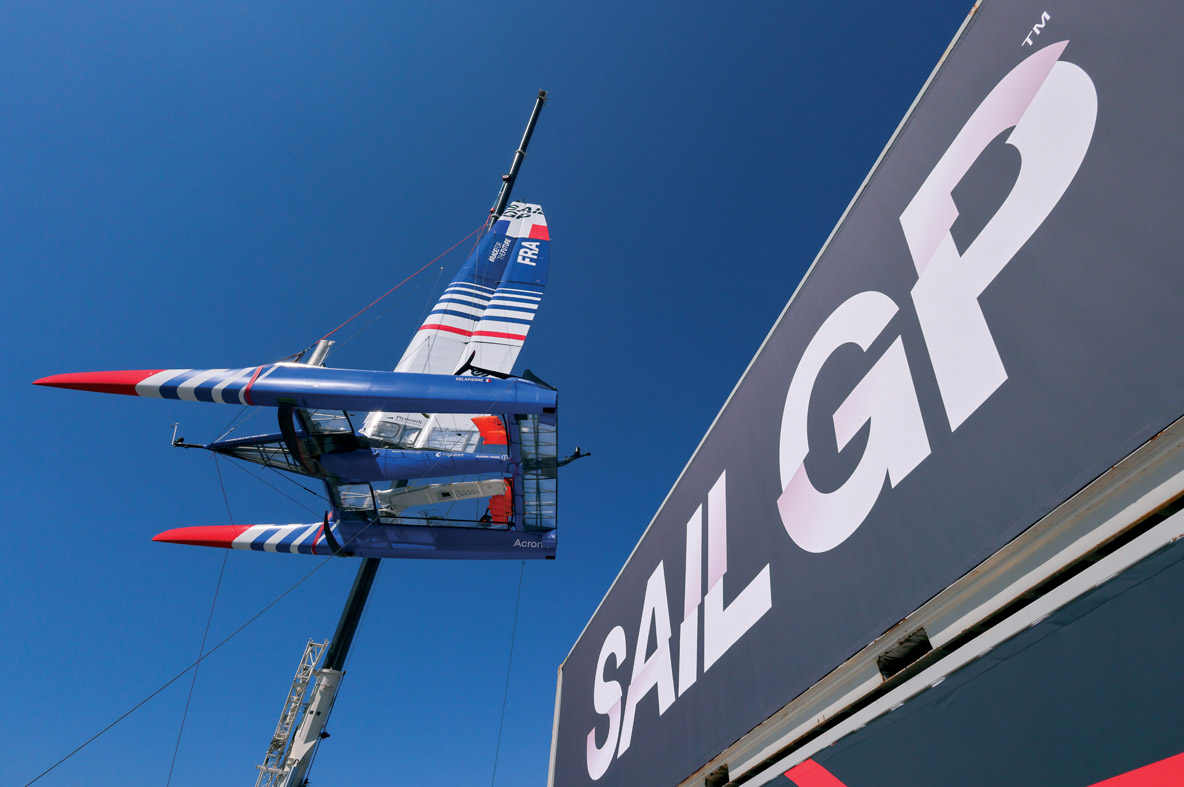
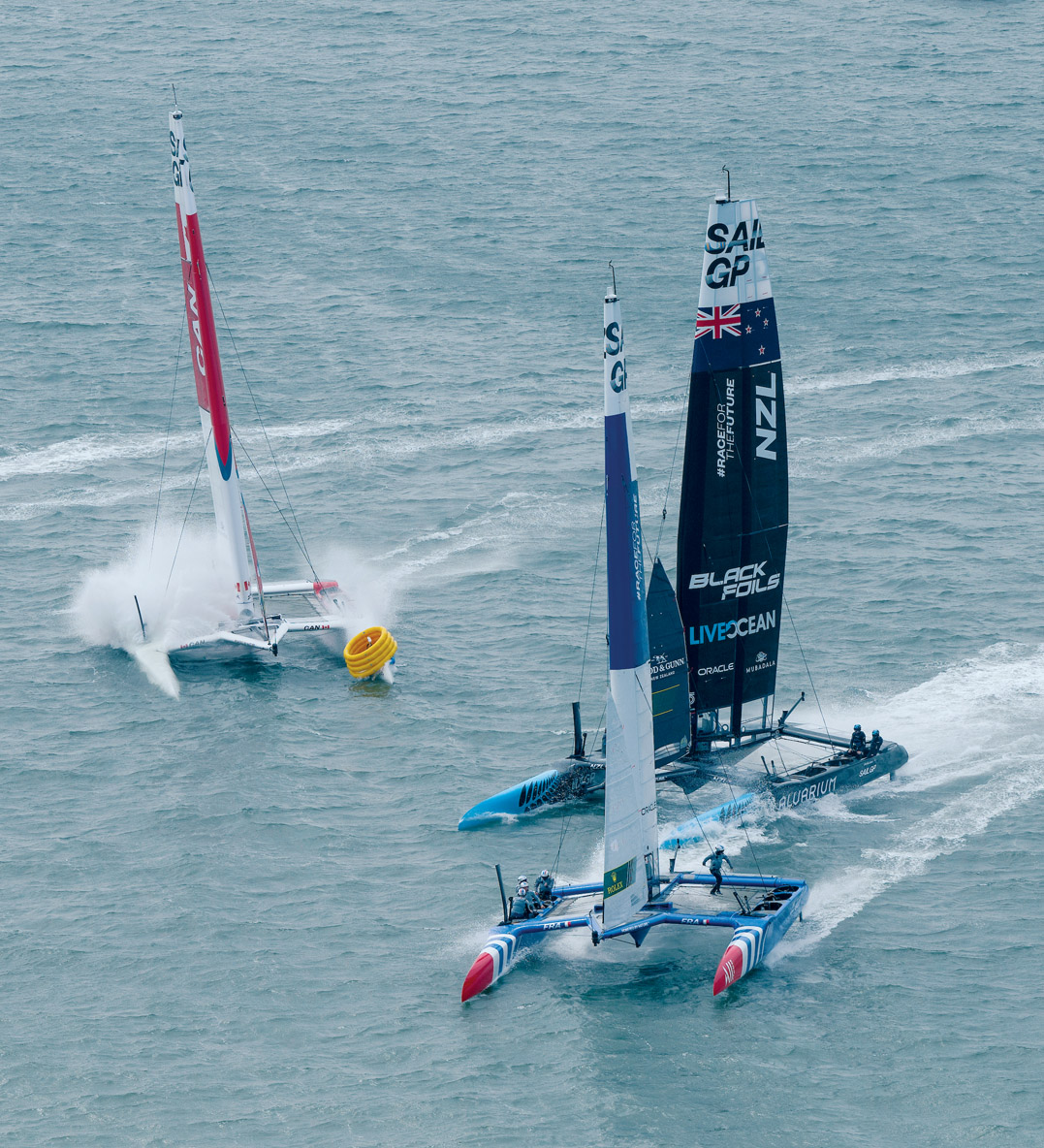
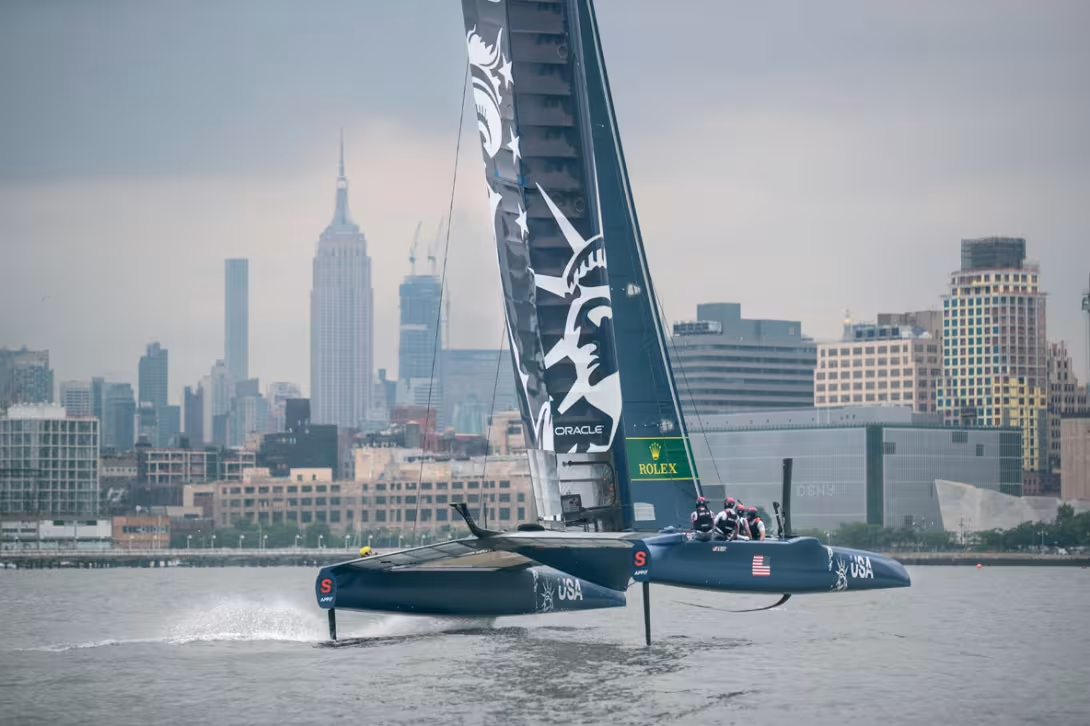
To achieve this, Larry Ellison and Russel Coutts got their hands on the three remaining AC50s (six had been built in all). The catamarans were then modified to improve their performance. During the Cup, these catamarans were sailed by a six-man crew, four of whom, on winches or “bicycles”, activated a hydraulic power unit to operate the foils and trim the rigid sail. Renamed the F50 (F for foil), the new one-designs now incorporated a hydraulic power unit that supplies the energy required for the duration of the race. This evolution allowed the number of crew members to be reduced to five, and maneuvers to be carried out even more rapidly, creating highly impressive footage and images. Based on these specifications, four new F50s were built by Core Builders Composites in Warkworth, New Zealand, to form a fleet operated by American, Australian, British and French crews. Two other F50s were reserved for China and Japan - who ultimately did not join in. The new SailGP circuit kicked off its first season in mid-February 2019 in Sydney, followed by San Francisco, New York, the south of England and finally Marseille in France. This first edition was an instant success. From 2021, Denmark and Spain join the circuit. With each passing season, the circle of contenders expanded. At the start of the 2023-2024 season, ten teams were on the startline, including Germans, Canadians, Swiss and New Zealanders.
An evolving one-design... but controlled!
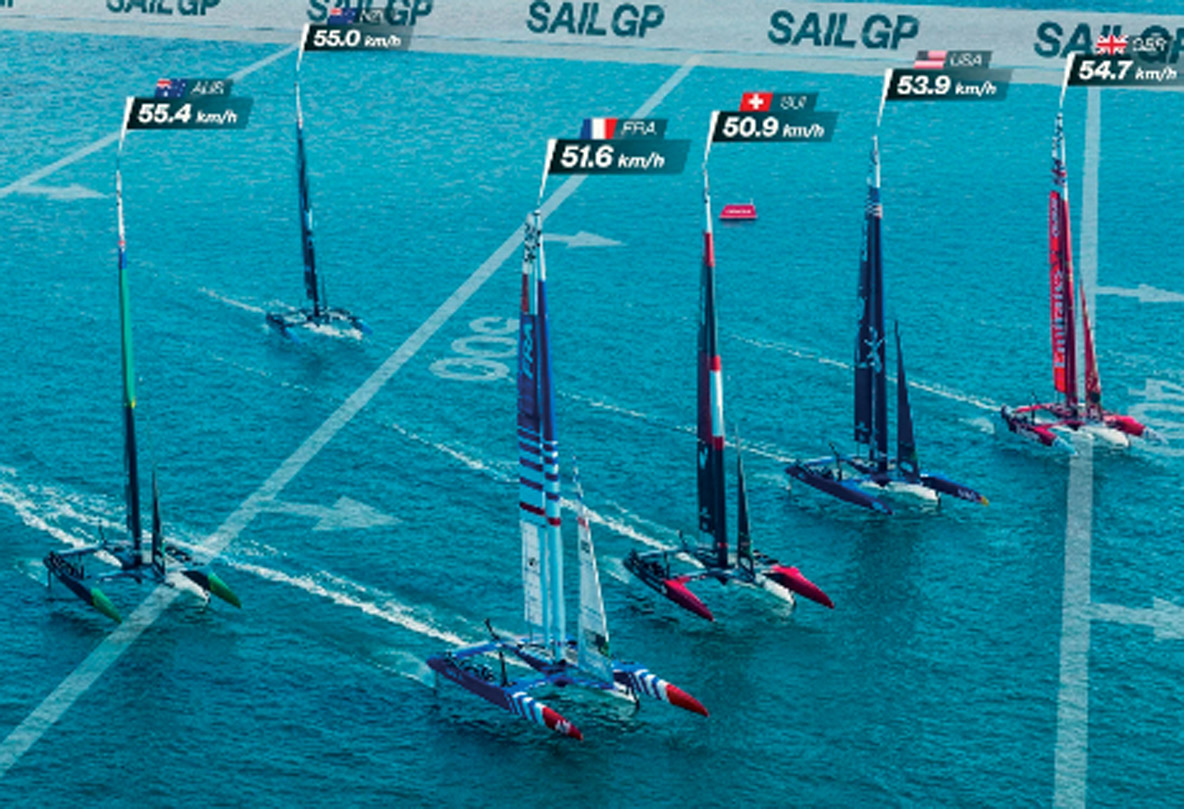
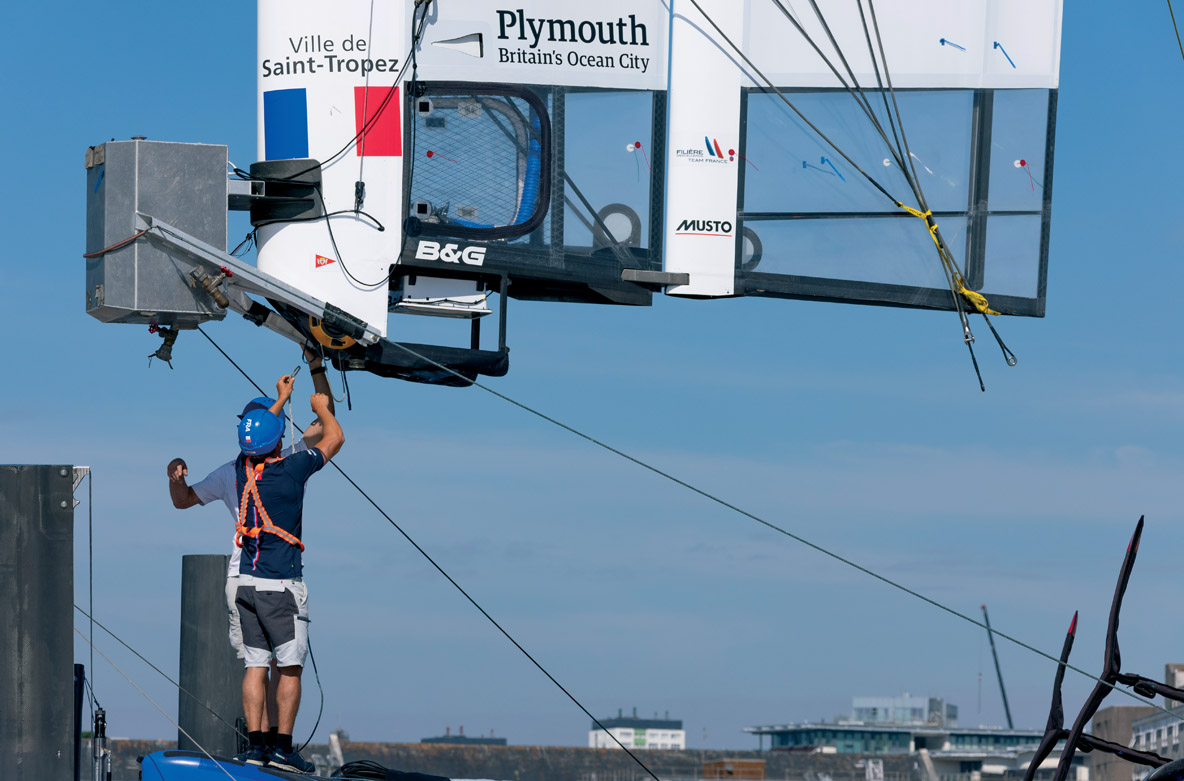
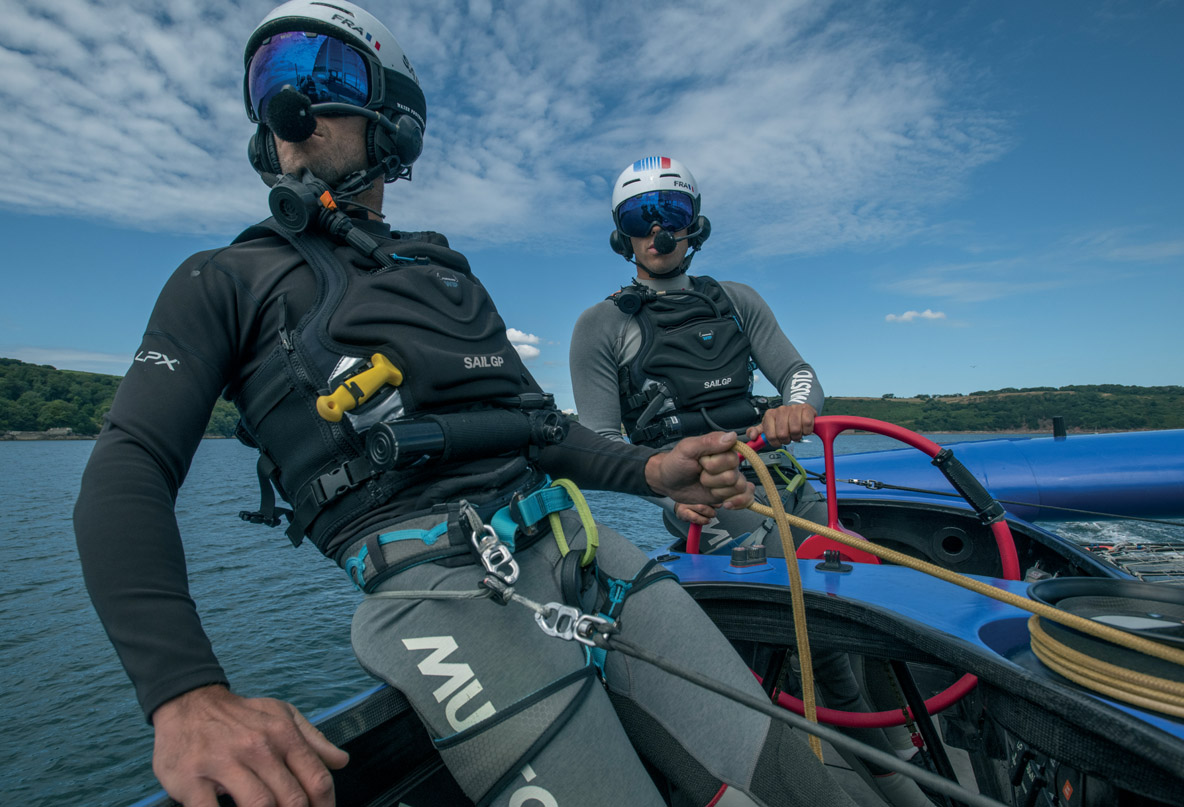
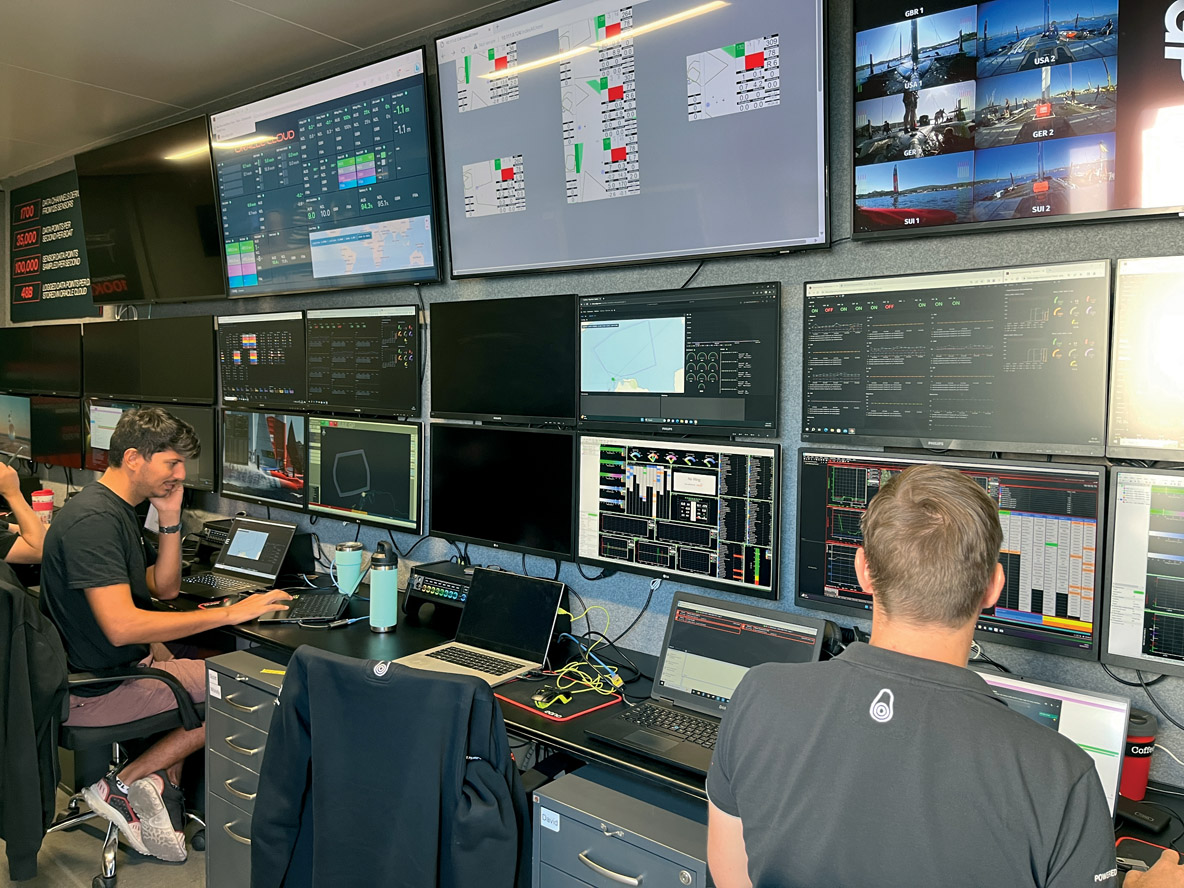
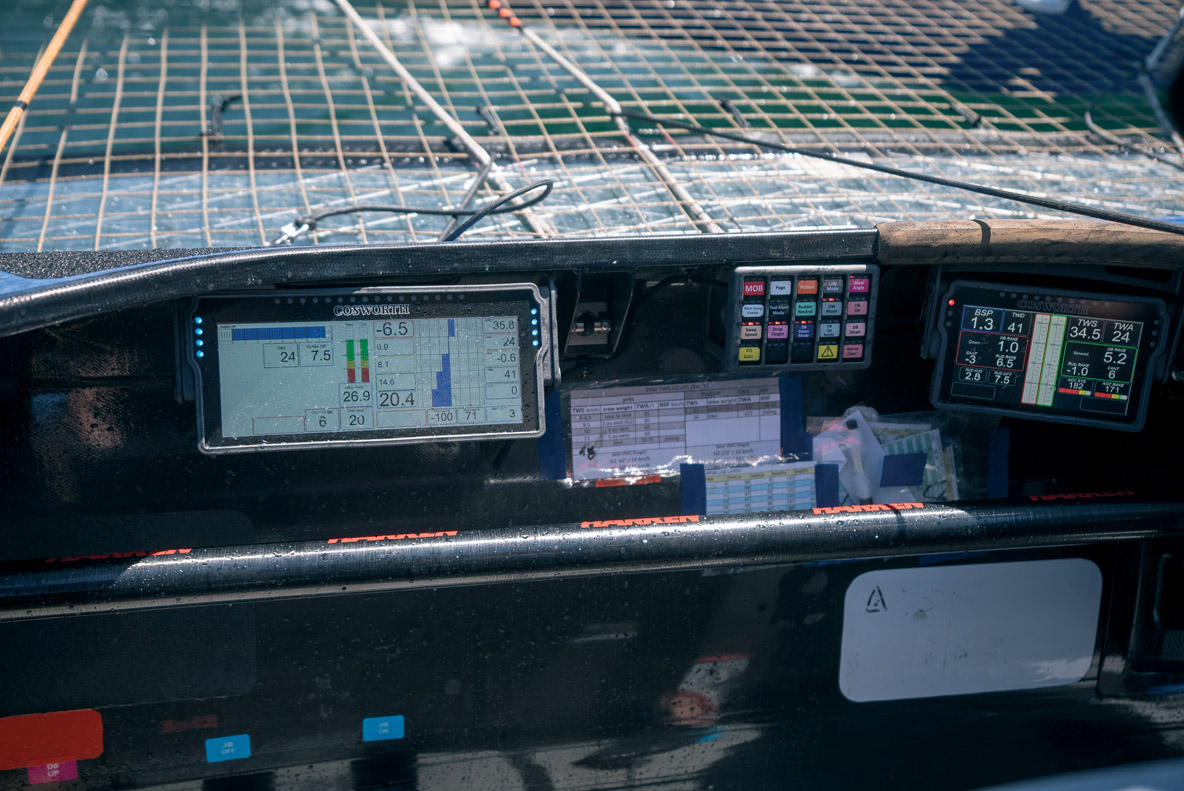
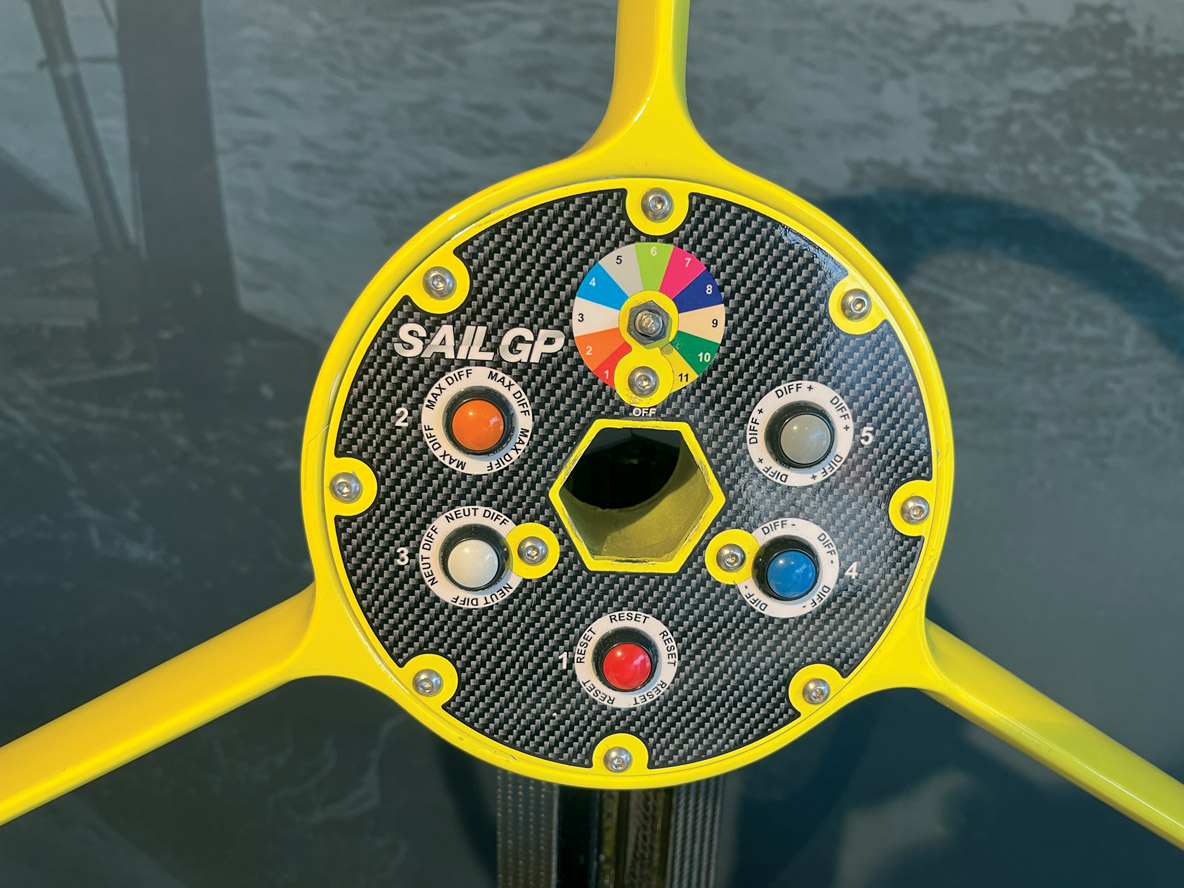
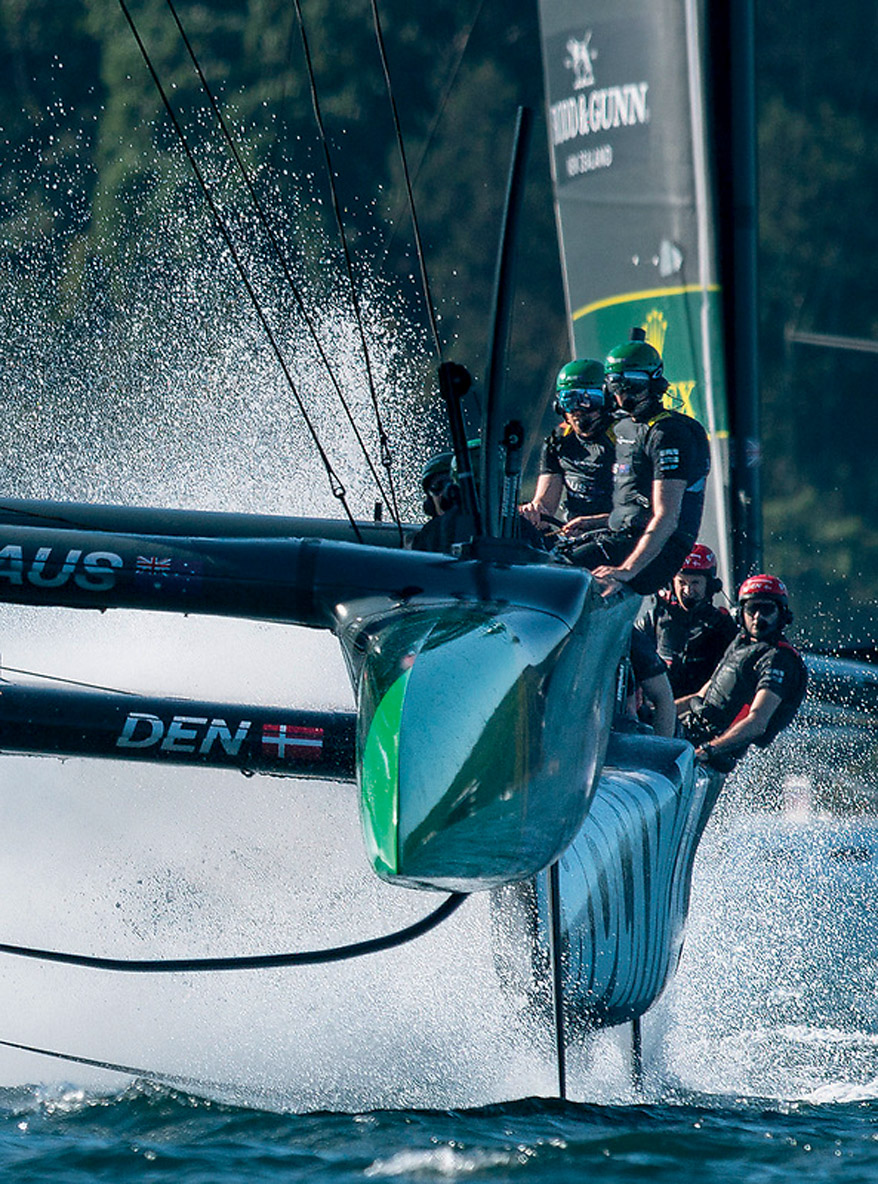
While the broad architectural lines of these F50 one-designs have remained faithful to the platform of the old AC50s, the technology has been refined and it continues to evolve. Unlike most other one-design classes, which are governed by very strict rules that rarely evolve, the F50s are constantly being developed, and modifications are applied simultaneously to all competitors. This keeps technological inflation under control, while improving overall performance. The F50s are built, maintained, rigged and handled by the SailGP organization, and teams are not allowed to modify them in any way. The different wing heights of 18, 24 or 29 meters (60, 80 or 95 feet) are determined each day by the race director according to wind strength, and the catamarans are made available to their teams just before each race. Also worth noting: the number of training days is the same for everyone. Some teams buy the franchise for around $25 million, others are 50% independent, with SailGP paying the other half. Operating a team represents an annual budget of seven million dollars, but all benefit from an identical catamaran, with only the adjustments they apply to training and racing being at their own initiative. More unusually, the crews share all their on-board data with the other competitors on a daily basis, who can then analyze it and do with it as they wish. The Oracle platform is no stranger to this sharing of knowledge, and one might even say that it accelerates it: the 160 sensors installed on each F50 enable more than 2,500 pieces of data to be transmitted per second. In total, over 48 billion pieces of data are transmitted to the SailGP cloud every racing day. This benefits performance optimization, as demonstrated by the 54-knot speed achieved by Team France in 2022. The F50s are crewed by four to six people, depending on the weather: a driver (helmsman), a wing trimmer, a flight controller and one or two grinders. In order to concentrate on the controls, the helmsman is relieved of tactical duties. Since 2021, each crew must include at least one woman in charge of strategy (the tactician) - in reality, this female crew member is often multitasking.
Reducing the global carbon footprint
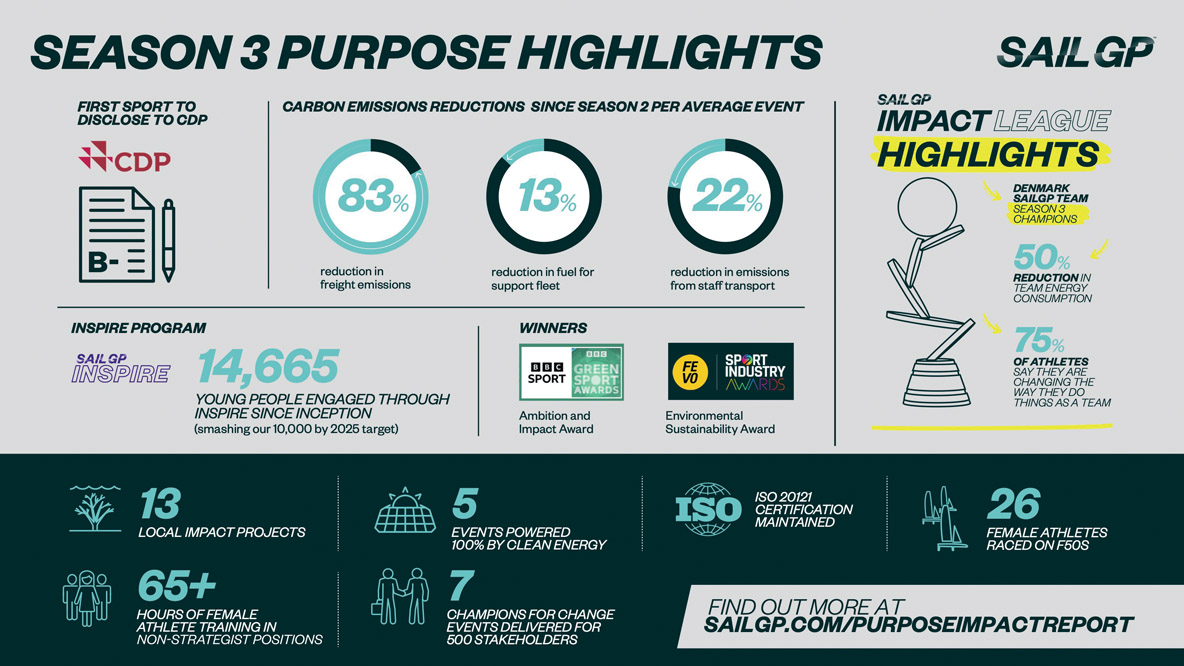
SailGP has other ambitions beyond competition and spectacle: “We want to be the most sustainable and motivated sports and entertainment platform in the world. We are fighting for a better future and are convinced that sport has the power to change the world”, argue the directors. On the face of it, this is no easy task: the multihulls are built from carbon (which is difficult stuff to recycle), and the various actions involved, such as moving 150 containers around the world, reassembling all the tents and infrastructure needed to set up these F1 boats at each stage, not to mention the numerous journeys made by technicians, journalists and the public, are not, on the face of it, low-emission activities.
SailGP is well aware of this and is adopting resolutions to encourage the reduction of its carbon footprint. From season 2 in 2021, the Impact League created a second ranking that rewards the positive actions taken by SailGP teams to reduce their carbon emissions and help accelerate eco-responsible behavior in sailing. SailGP has taken numerous initiatives to reduce emissions. For example, EODev hydrogen fuel cells are used to power the stands. The buoys that mark the course are remote-controlled. Thanks to their electric motors, they will position themselves on their respective marking points and no longer even need to be anchored...
On a different note, and in a spirit of education, children are introduced to sailing through visits organized at each Grand Prix. “One of our objectives is to rejuvenate the image of Club racing by motivating young people to get involved in sailing,” says Andy Thompson, the organization’s general manager in charge of marketing.
Worldwide coverage attracts powerful sponsors
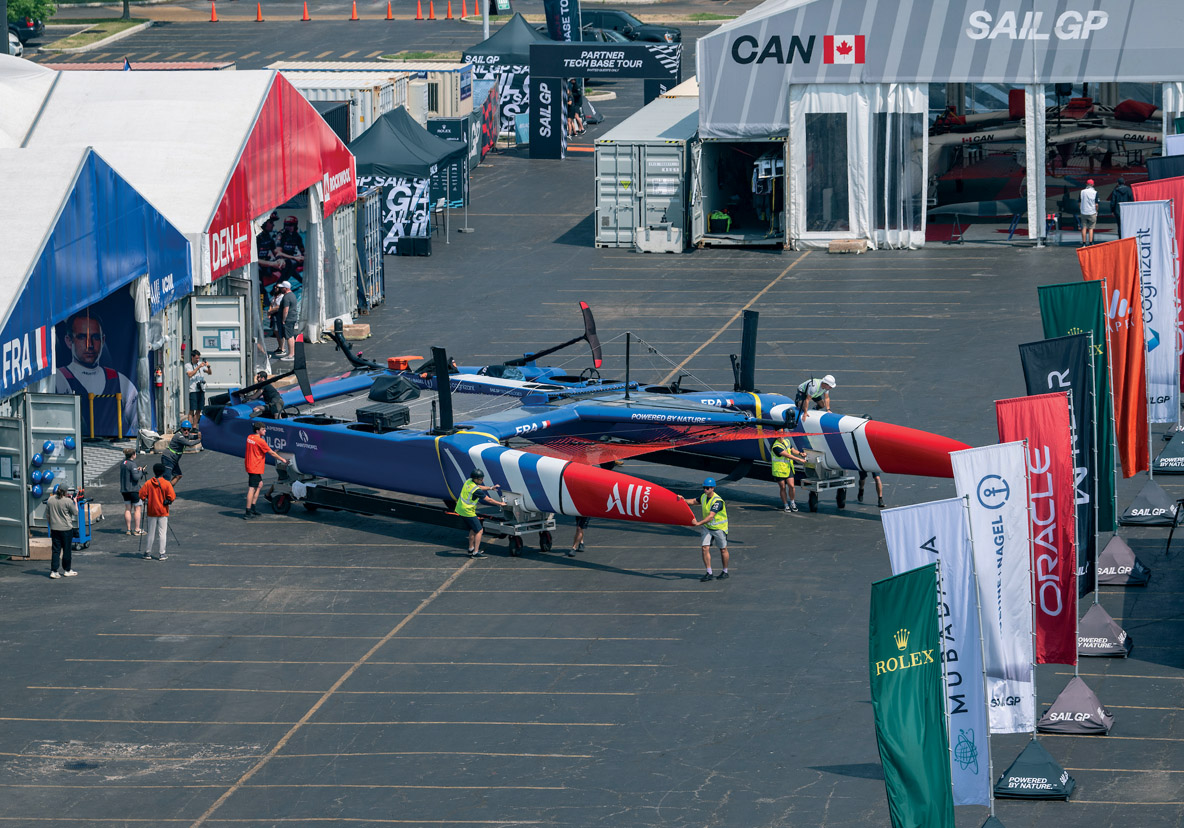
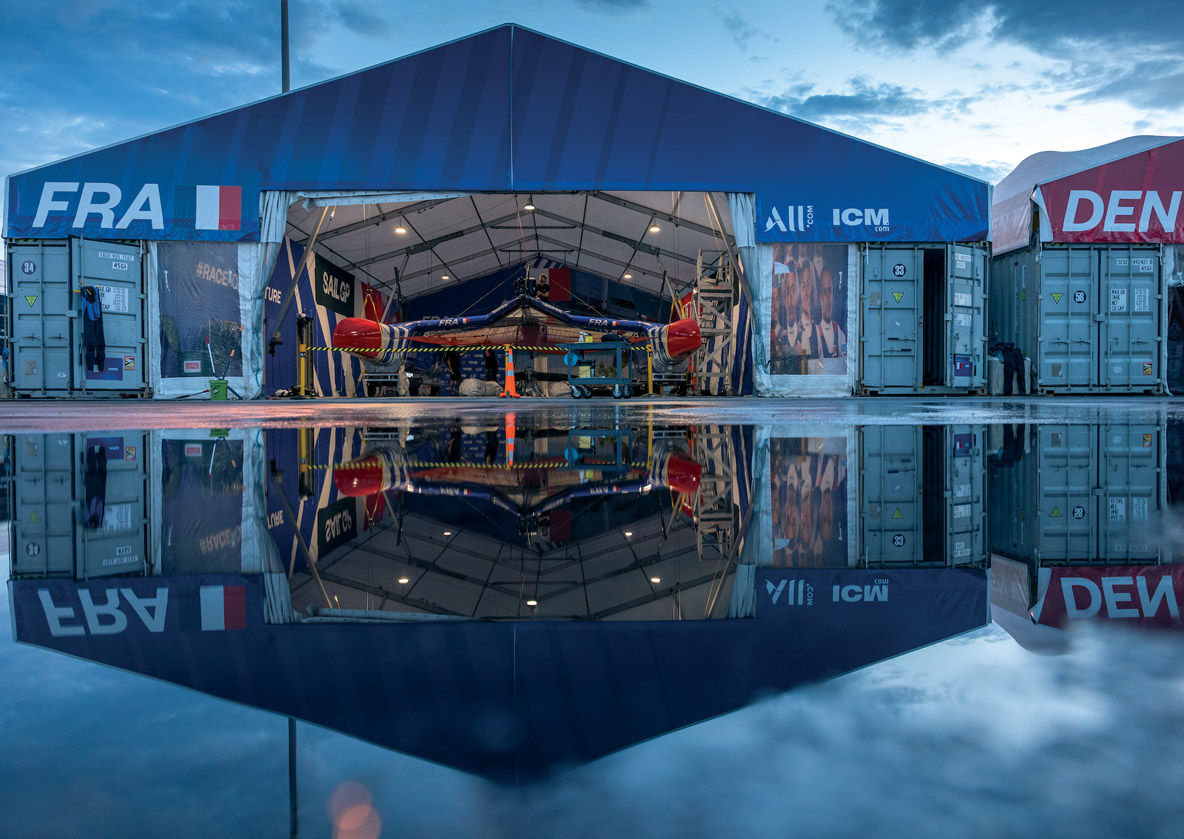
During our two days in Saint-Tropez, we were able to gauge the excitement and frenzy surrounding the F50s as we explored the base. The world’s elite sailors are well represented... It’s a meeting place for Olympic champions, America’s Cup winners and other international sailing stars - Ben Ainslie, Jimmy Spithill, Tom Slingsby, Peter Burling - and it attracts a lot of people. In fact, the start of the fifth 2024-2025 championship has been postponed until November due to this juxtaposition of crews. For many of them, the SailGP circuit is the antechamber to the America’s Cup, like Quentin Delapierre, the skipper of Team France who pilots the AC75 of the French challenge Orient-Express Racing Team in Barcelona. The paying grandstands are packed during the three days of racing. At the end of the races, the skippers are systematically interviewed, and all images are broadcast live on giant screens. VIP lounges are also set up on the dockside. In other locations, such as Cadiz, part of the seafront promenade is set aside for the general public, who can enjoy the show free of charge. To ensure that as many people as possible can discover the circuit, SailGP has signed agreements with TV networks all over the world. Over two hundred territories are covered, and during the third season, 117 million viewers followed the races. Enough to attract sponsors, you might say! If Larry Ellison finances part of the budget with Oracle, the partners historically involved in sailing - Emirates, Rolex or the Accord Group with its Orient-Express brand - are logically well represented, but there are also many institutional partners joining SailGP.
So, yes, this show on two hulls and four foils is not yet the most sober in terms of emissions, but the momentum is there and above all the contract is fulfilled: this event definitely has the wind in its sails!
SAilGP in figures
- 1 woman on board each catamaran as tactician
- 2 podiums, one for sport, and the other (the Impact League) for the planet
- 2 foils enable the catamaran to fly above the water
- 3 hours of live broadcasting for each Grand Prix weekend
- 6 or 4 crew on board during races, depending on wind strength
- 10 nations represented: France, Switzerland, Spain, Denmark, the UK, Germany, New Zealand, Australia, the USA, Canada
- 10 F50s, the world’s fastest flying catamarans
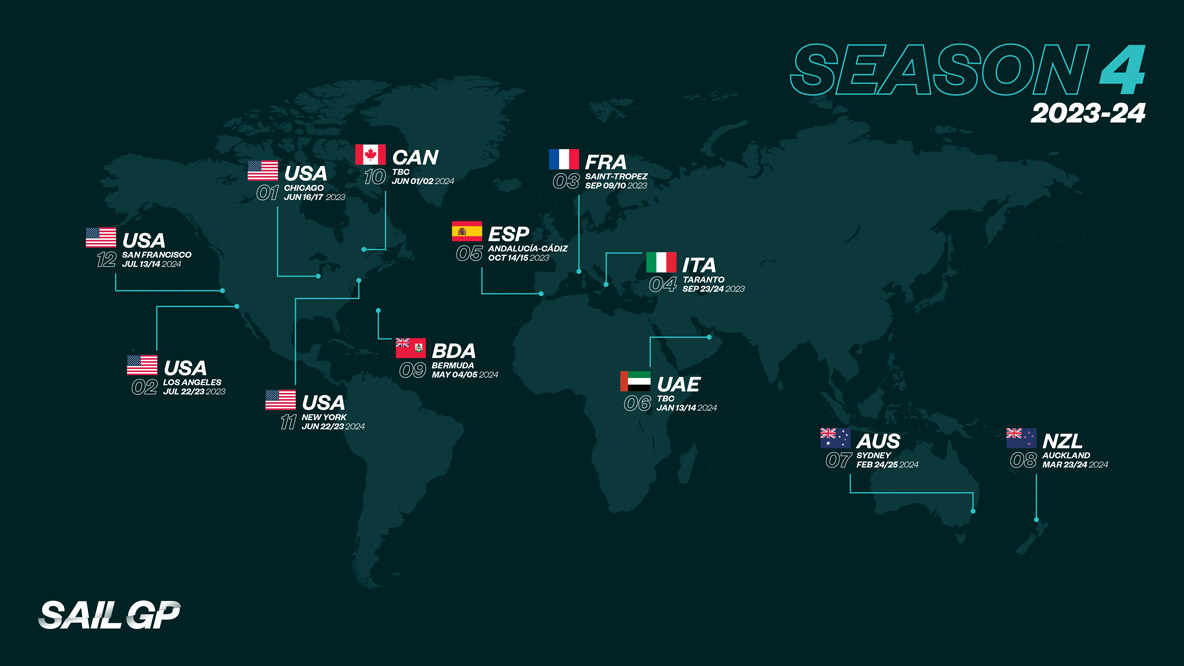
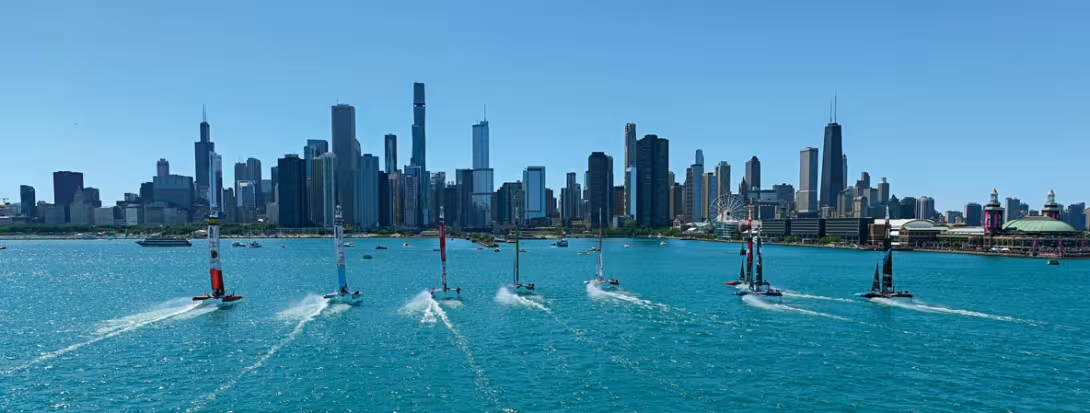
- 12 Grand Prix events around the world, on legendary waters such as in Chicago, Los Angeles, Saint-Tropez, Sydney, Auckland, Bermuda, New York, San Francisco...
- 15 meters long, 8.8 meters in beam (50 feet x 29): all F50s are identical
- 15 minutes: the maximum race time
- 18, 24 or 29 meters high (60, 80 or 95 ft): the mainsail is a rigid wing that can be switched according to the strength of the wind
- 53.96 knots: the speed record set by the France SailGP Team during the Range Rover France Sail Grand Prix in Saint-Tropez in 2022
- 2018: the year the SailGP circuit was created
- 1 million dollars: the prize money for the winner
- 48 billion pieces of data per racing day were collected during season 3
A SailGP event from A to Z
- At each Grand Prix, there are six fleet races before the final that determines the event champion. The event ranking totals the points scored by the teams throughout the event, and the three highest-ranked teams on the leaderboard at the end of the fleet races qualify for the match race final.
- The championship ranking is recalculated after each event, with the three highest-ranked teams at the end of the season qualifying for the Grand Final.
- The winner of the grand final is crowned champion of the SailGP championship, while the other boats participating in the grand final will be ranked in the season championship according to their place at the end of the Grand Final.
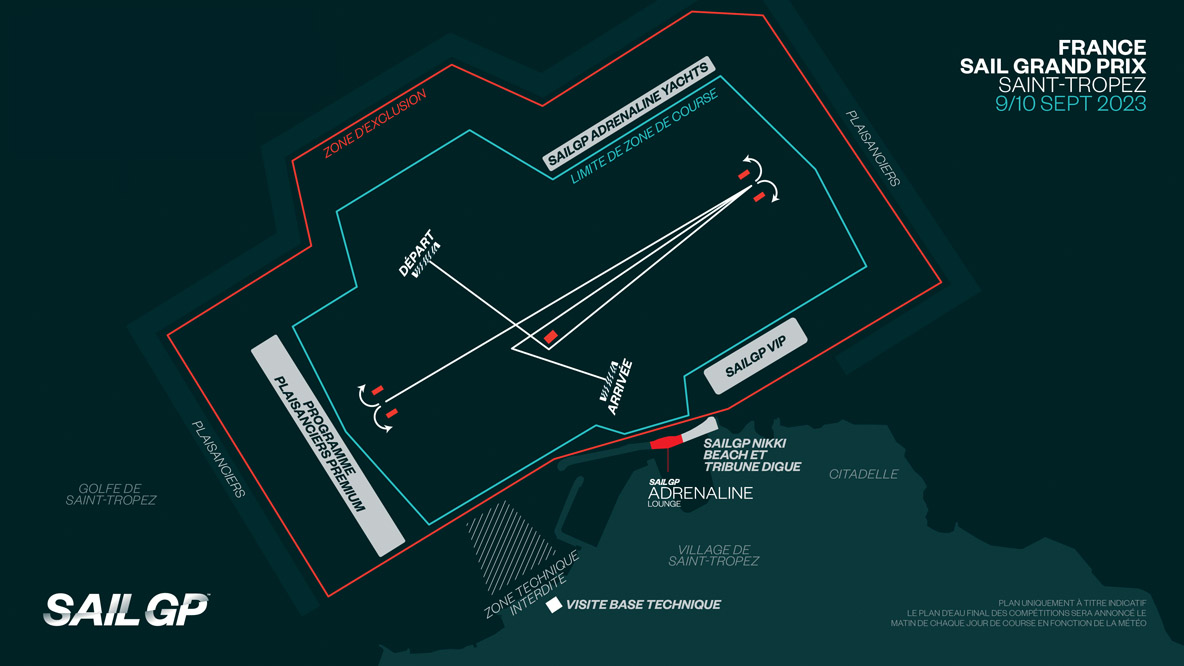
- The race course is delimited by virtual boundaries. Crossing them entails a penalty. However, no penalties are imposed during the start phase.
- Two gates delimit the length of the course. These gates are marked by two buoys, and boats must pass between the two buoys to pass through the gate. The start and finish lines are also marked by two buoys.
- After crossing the start line, boats sail a leg with the wind on the beam, called reaching, followed by a downwind leg. This is followed by an upwind leg, then another downwind leg and an upwind leg. Depending on wind speed conditions, a new downwind leg and an upwind leg can be added.
The race finishes with a downwind leg, followed by a reaching leg to cross the finish line.