
Last year, the major shipyards attempted to measure the carbon footprint of their multihulls but failed to reach a consensus on the methodology. Between the construction phase, the product’s lifespan, its use and its dismantling, the distribution of CO2 emissions raised various questions, and indeed divisions that could discourage certain technological developments and generate a degree of complacency. The marine industry has now got its act together, having agreed on an accounting standard that is recognized by all, including the regulators. In line with this momentum, the range of more environmentally friendly multihulls is expanding again this year in the shipyards’ catalogues, with the first 100% fossil fuel-free models, in terms of their use under way, now available.
From Diesel to All-electric?
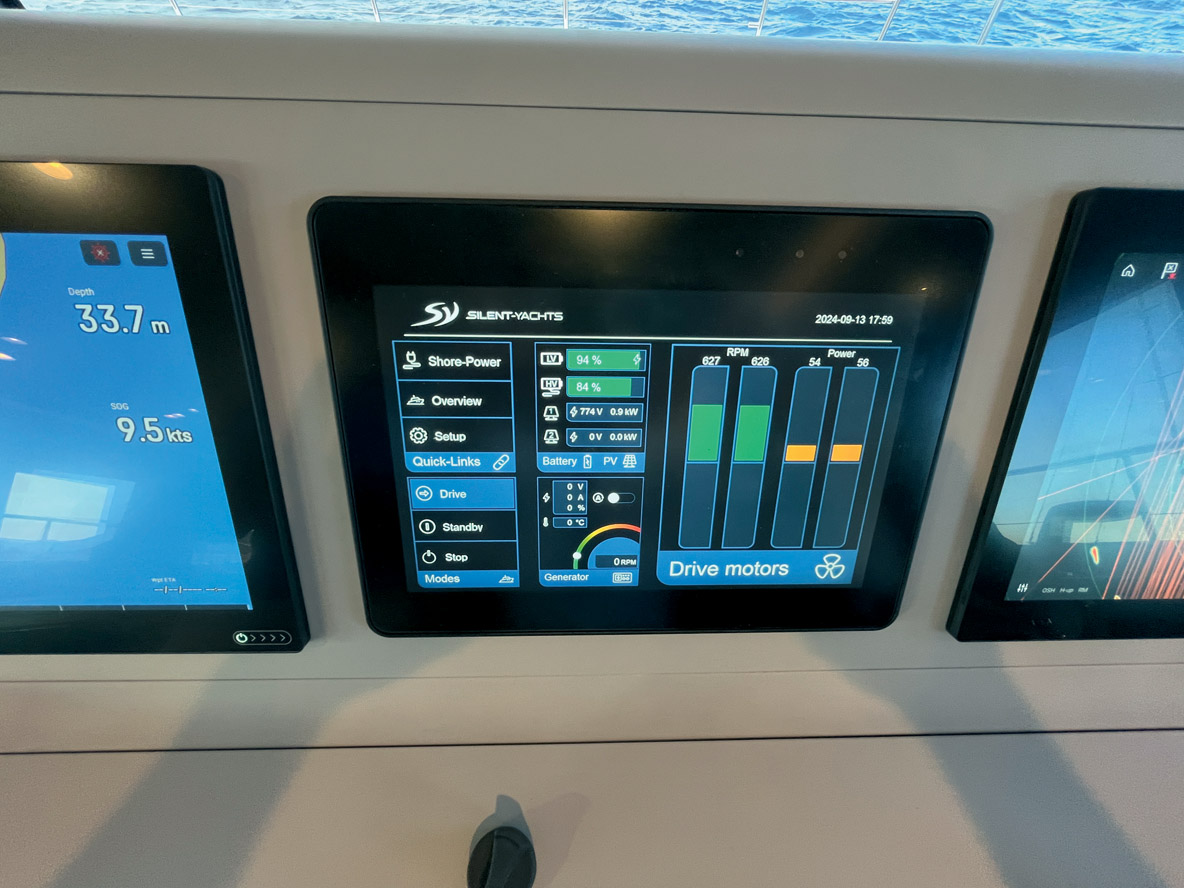
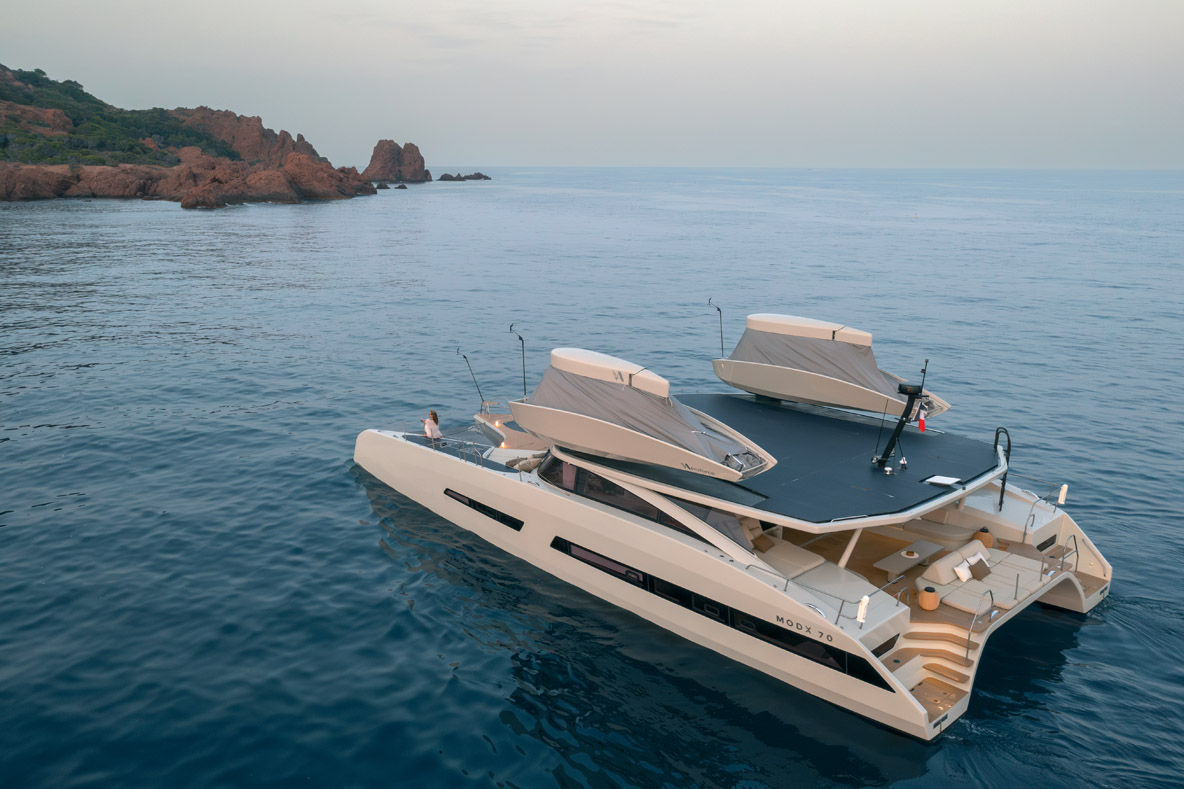
In 2018, we titled our first article dedicated to the ecological transition of recreational boating ‘What energy will we be using in 2025?’ (MW Special Issue #12). At that time, witnessing the first multihulls equipped with electric motors, we looked ahead to the medium term of 2025, predicting that we would still be using an energy mix that included biofuels. Ultimately, it seems that the future of recreational boating lies in electric propulsion. Some coastal multihulls, such as the Orphie 29 and more recently the Milikan Boat M9 (tested in this issue), have managed to do without a diesel generator – but only for daytime coastal use. However, for heading offshore, as demonstrated by Jimmy Cornell’s abandoned attempt aboard the Outremer 4.Zero, the challenge remained daunting... until the ModX70 (reviewed in this issue) proved itself by sailing from Lorient to La Grande-Motte (2,000 nm) in early spring, powered solely by its telescopic inflatable wings and electric motors.
The Steady Rise of Forever Green...
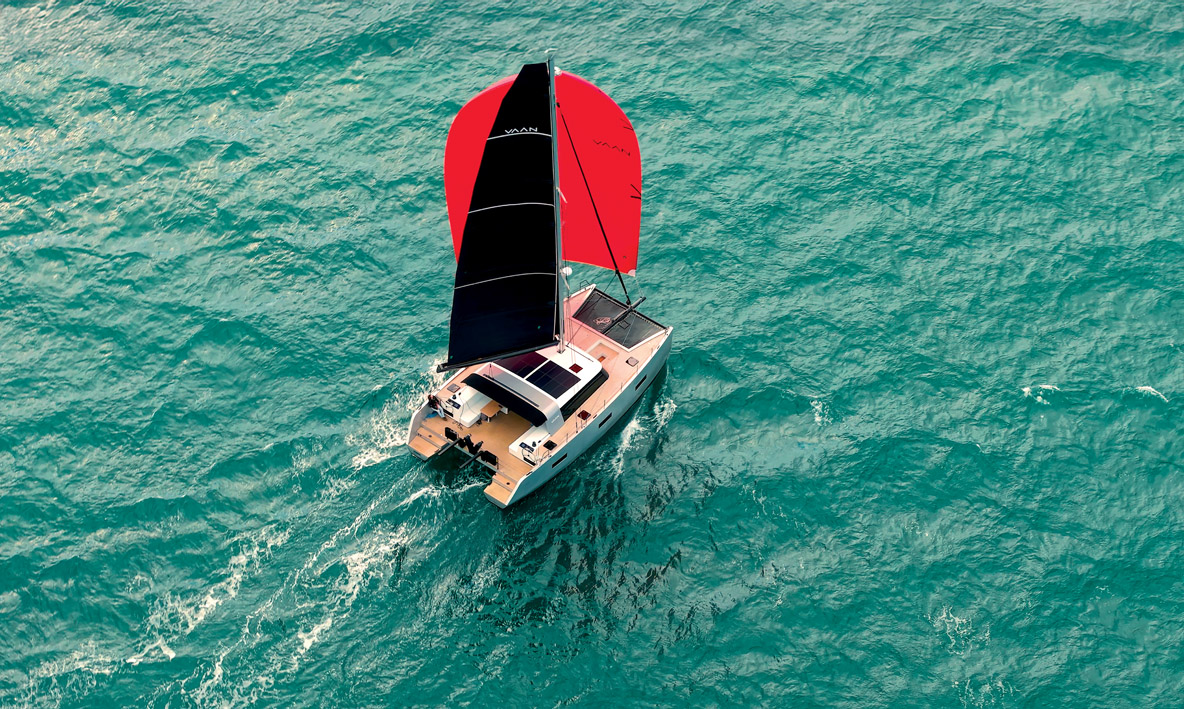
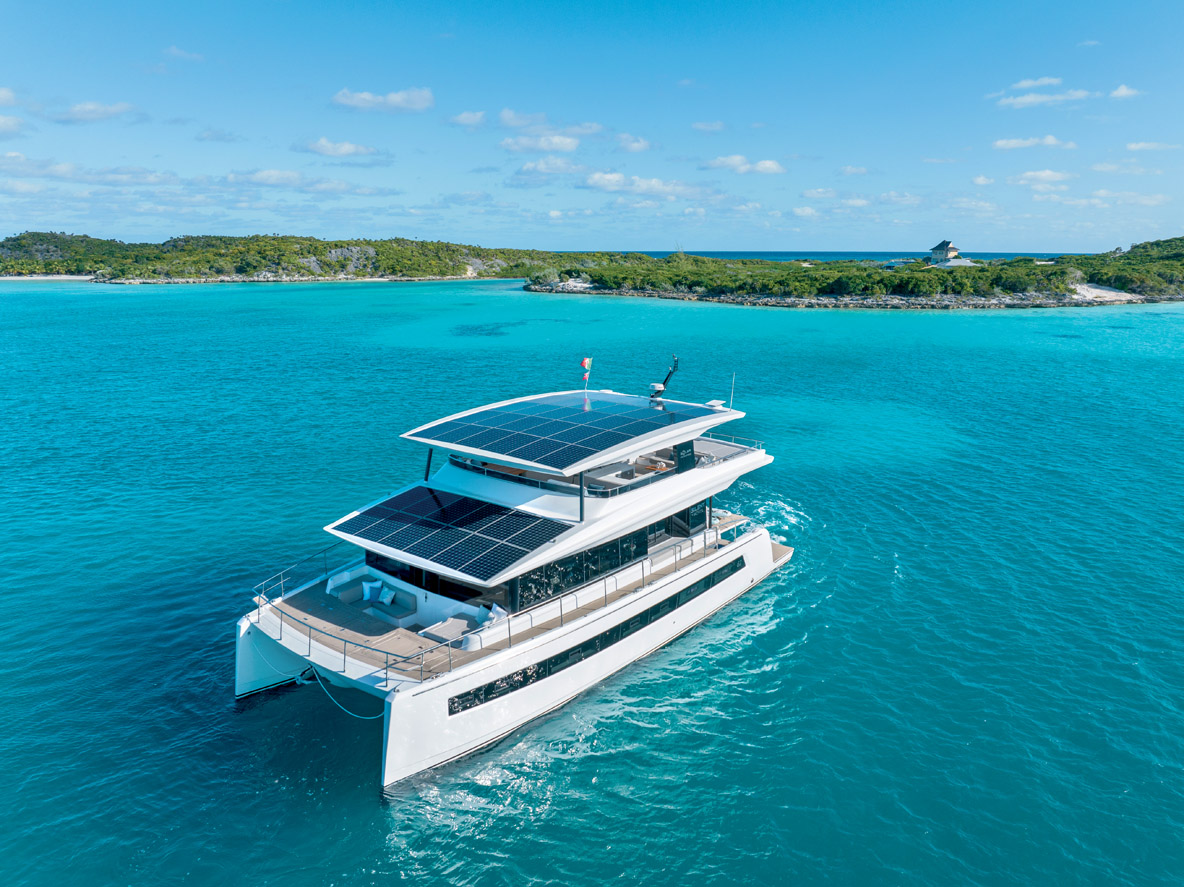
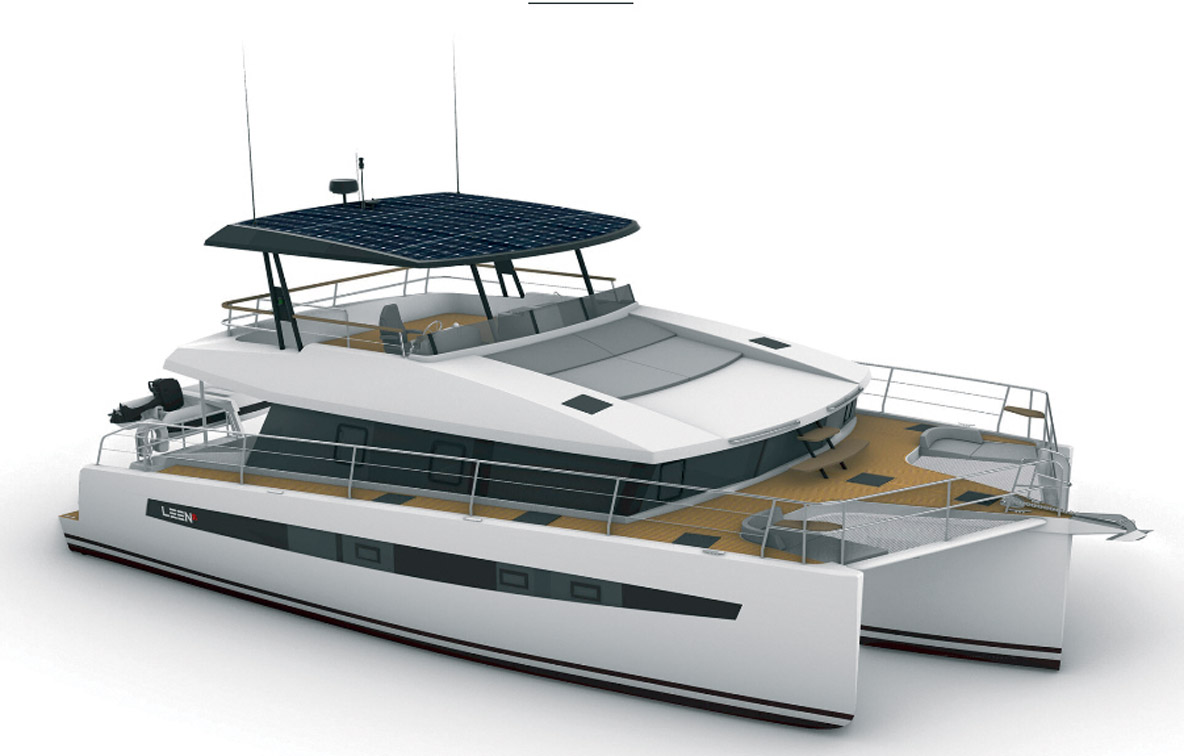
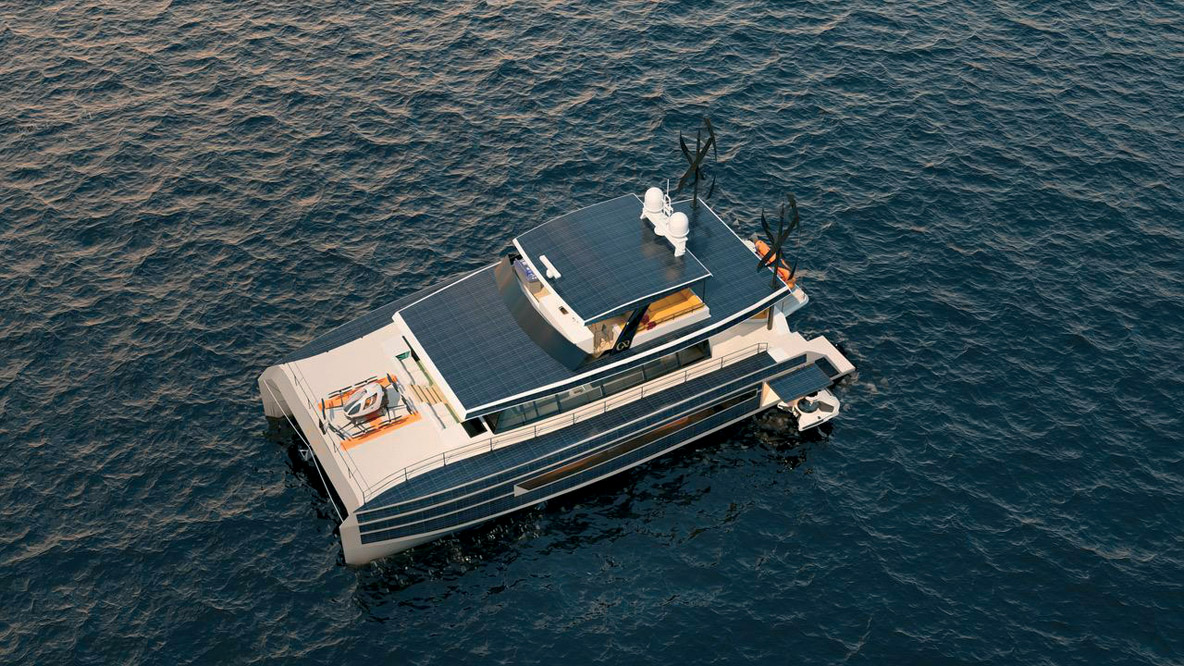
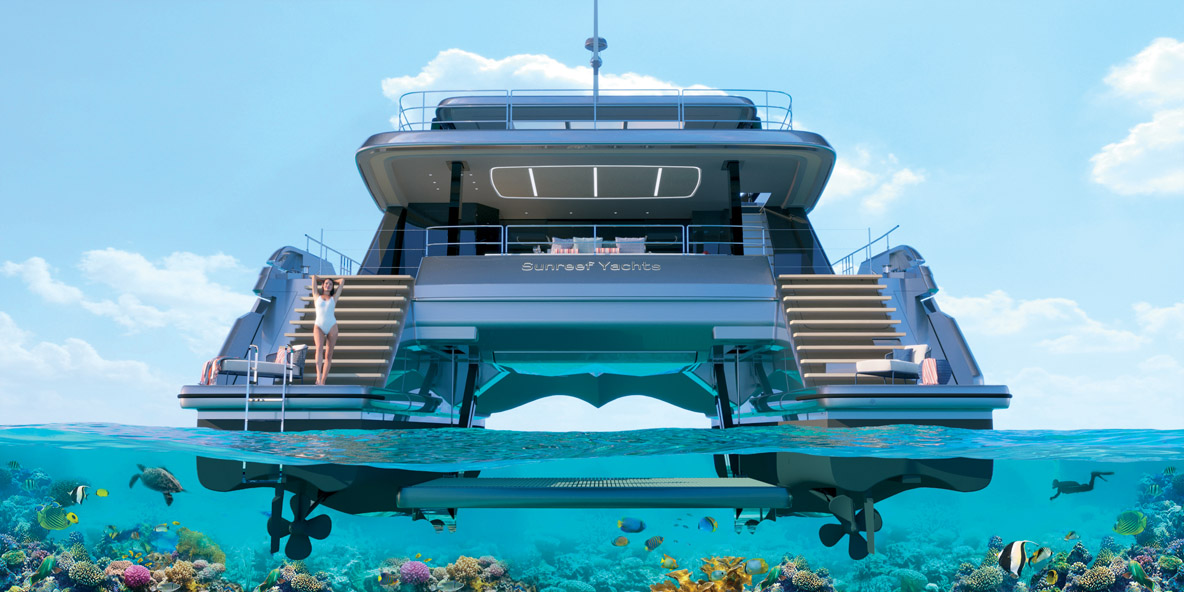
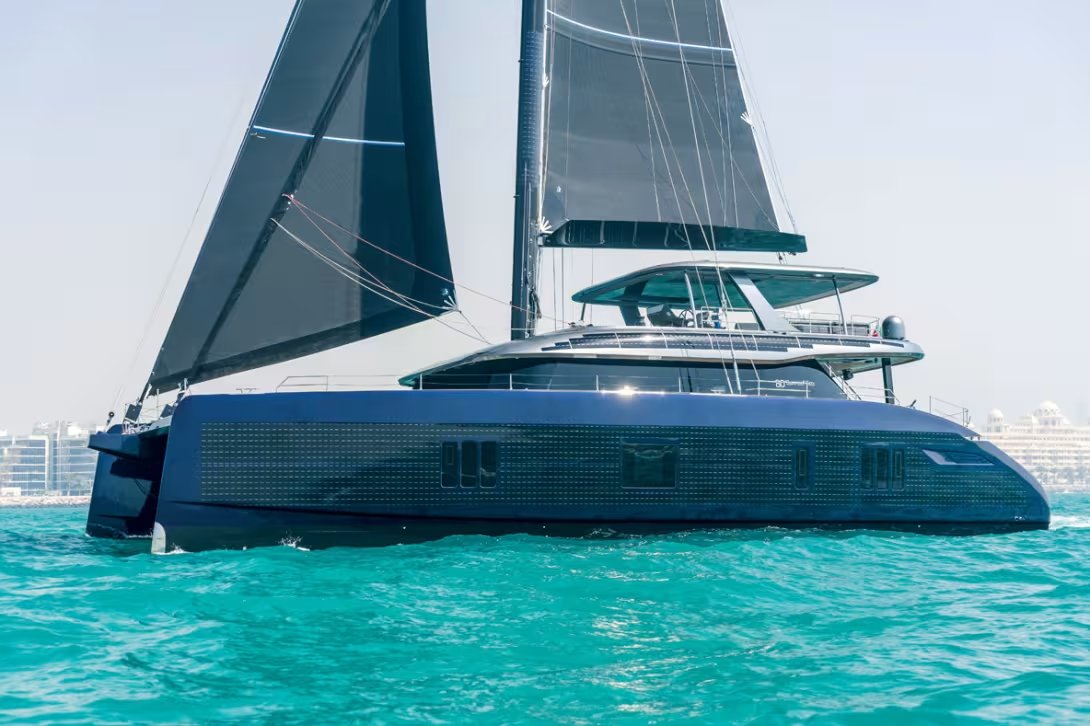
Over the past seven years, we have witnessed the arrival of greener options. Initially, it was mainly brand names producing very small series that ventured into this area – with the exception of Lagoon, as mentioned at the beginning of this article, whose somewhat discouraging experience was detailed in MW Special Issue #18. Broadblue Catamarans and Ita Catamarans were among the first manufacturers to offer hybrid versions. But the real daredevils are undoubtedly the brands that launched complete ranges of hybrid models right from the start, such as Sun Concept, Serenity Yachts and, of course, Silent Yachts, thanks to the support of customers who were brave enough (given the low returns on hybrid technology for recreational multihulls) to sign an order form. In 2022, Forever Green pressure has stepped up a notch: other trailblazers such as Antares Yachts, Maverick Yachts and Slyder Catamarans are now also offering hybrid versions. At O Yachts, Leen Trimarans and Rapido Trimarans, experiments with dual combustion/electric engines are underway. Other manufacturers are committing to a dedicated range, such as Sunreef Yachts with its Eco versions, which incorporate internally developed electric motors and offer solar cells integrated directly into the hulls, mast and boom. The venture has been a success, with around ten models delivered to date. Brands such as Vaan Yachts, Whisper Yachts and Windelo are joining the pioneering manufacturers mentioned above – they designed their catamarans to be environmentally friendly from the outset, eliminating any possibility of internal combustion motors in their engine compartments. The major leaders in the sector are working behind the scenes but remain cautious; they are waiting for demand to be confirmed and, above all, for the technology to be streamlined, perhaps with the entry of major engine manufacturers into the market.
... Finally Gaining Ground in 2023
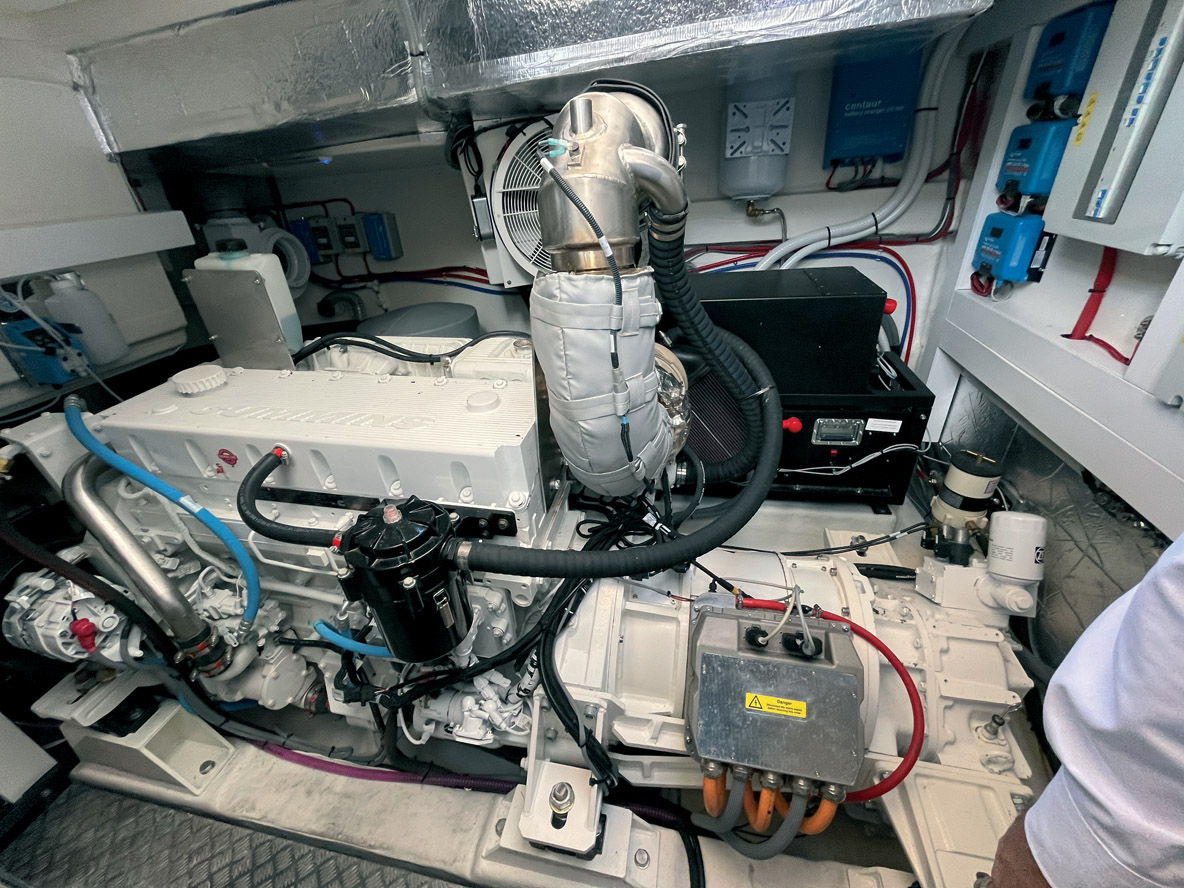
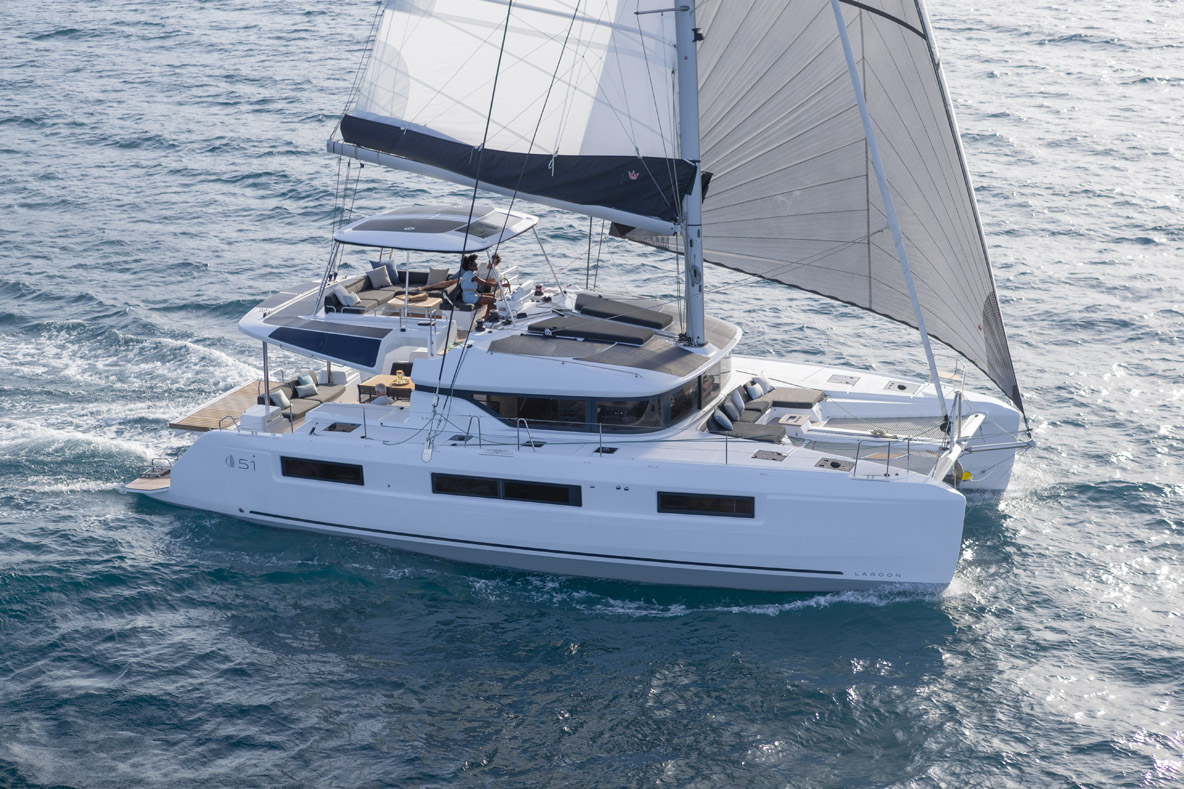
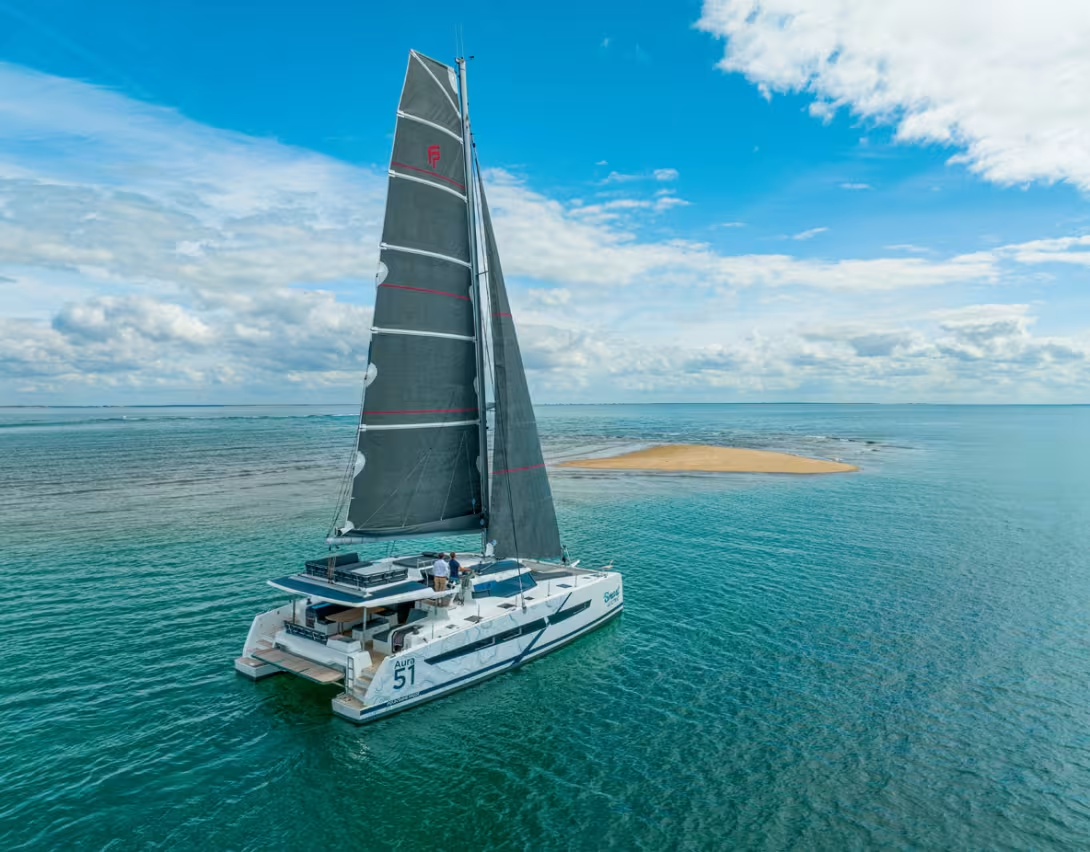
In 2023, brands offering small multihulls such as Libertist, Xquisite Yachts and Windpearl Yachts did not hesitate to offer electric outboard motors on their transoms, thereby benefiting from the Forever Green label, whose logo appears in our annual Buyer’s Guide. Other manufacturers such as Andaman, Aventura Yachts, Chantier de l’Arsenal, HopYacht, Max Cruise Marine, Ocean Renegade and Voyage Yachts are, more or less discreetly, betting on hybrids. And Outremer Catamarans has finally approved its 4.Zero for its catalogue. But the most notable event is the arrival with great fanfare of one of the world leaders in the field: Fountaine Pajot is implementing an ambitious business plan called Odysséa with the aim of reducing carbon emissions through a comprehensive industrial approach. Thanks to technology developed in-house in partnership with suppliers approved by the program, the Aura 51, followed by the Astréa 42 and Elba 45, are equipped with a hybrid system with integrated management. With the help of engine manufacturers who now offer parallel-mounted hybrid (combustion-electric) propulsion systems, HH Catamarans is equipping its 44 and has seen its order book fill up with more than forty units ordered. The now established players in the Forever Green segment – Silent Yachts, Sunreef Yachts and Windelo – are also expanding their ranges.
It’s worth noting that the Bénéteau Group is (discreetly) continuing to develop prototypes and, in particular, that Excess has just launched a hybrid version of its famous 11 – a drivetrain that will also be offered for the Excess 13.
In terms of reducing polluting emissions, high-performance sailing multihulls capable of motoring in light airs are proving very popular. Xavier Desmarest, CEO of the Grand Large Group, proudly announced that one Outremer owners has just completed a round-the-world trip using only three full tanks of fuel!
From Sailing... to Construction
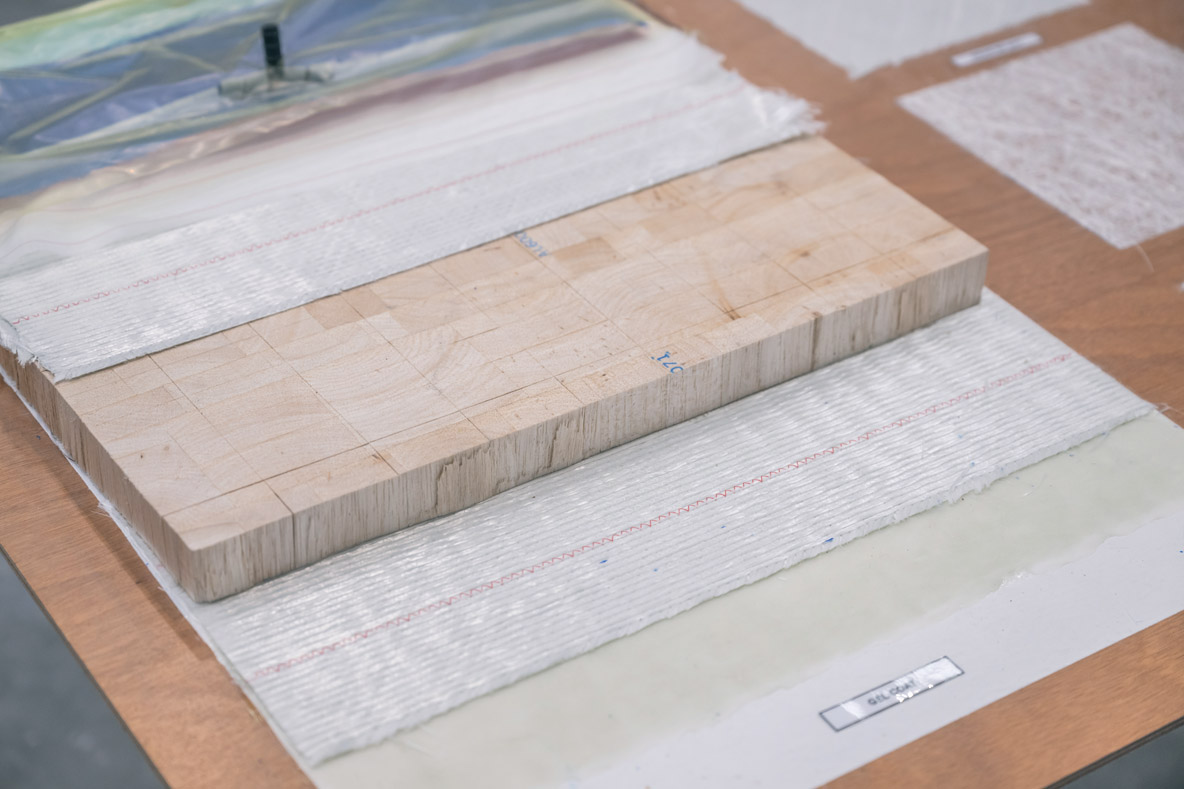
The transition to more environmentally friendly boating is not just about sailing while reducing carbon emissions: the construction of our multihulls remains highly polluting, as demonstrated by Fountaine Pajot through its collaborative platform ODSea Lab. Now, the materials and procedures used in construction are under scrutiny. Lagoon, with the power of the Bénéteau group behind it, is seeking to develop the use of bio-sourced or recycled materials for certain components on their multihulls, such as panels and furniture.
Neel Trimarans is experimenting with this formula, but structural parts are still currently ruled out because they fail to meet certain standards. Outremer Catamarans has produced an experimental 5X in flax fiber for Roland Jourdain, but has not rolled out this approach for its customers, citing an additional cost of 35%.
Nevertheless, since 2023, the Grand Large Yachting group has been one of the first participants, along with the Catana Group and Fountaine Pajot, in an initiative aimed at calculating CO2 emissions throughout the life cycle of a leisure boat – from its initial construction right through to finally being scrapped. To achieve this, the parties involved have established a common methodology for carbon footprint assessment, covering material sourcing, manufacturing, use and dismantling, based on international data that is widely accepted. A universal calculation tool has been developed in partnership with ICOMIA (International Council of Marine Industry Associations). The sailing and motor categories have been differentiated, as have the boating programs and levels of equipment. A database of around 30,000 materials referenced by suppliers and equipment manufacturers – who will receive an eco-score – has been set up. The aim of this complex process is to validate a procedure for calculating CO2 emissions that will serve as a benchmark for the eco-design of multihulls. The goal is to establish authority among manufacturers and their suppliers, anticipate future environmental standards and, of course, offer buyers a means of comparing products from an ecological perspective.
With Blue Boat Horizon, Is Recreational Boating Ahead of the Car Industry?
This global initiative, led by Guillaume Arnauld de Lions, former president of the “Association pour la Plaisance Eco-Responsible” (Association for Eco-Responsible Recreational Boating), represents a considerable challenge, with no fewer than eight environmental criteria included in the calculation methods. “We have to follow the recommendations of key international standards such as PEF (Product Environmental Footprint) and rely on thoroughly verified and internationally validated data from engine manufacturers (INEC). In short, it’s a huge task,” admits Guillaume “Life cycle assessment (LCA) is the cornerstone of our approach, because the stakes are high for the future of the industry,” he tells us. Ultimately, an environmental rating could be assigned to each multihull model. If the marine industry manages to implement and validate this complex eco-score, it will be ahead of the automobile market! This prospect is not Utopian, judging by the enthusiasm of the key players in the sector. In 2024, the EBI (European Boat Industry) followed suit with twelve other manufacturers. Under Guillaume’s leadership, in 2025, it was the turn of the American NMMA (National Marine Manufacturer Association) to join the group, now called Blue Boat Horizon. The number of participants has grown to more than twenty manufacturers who all contribute to a budget of around € 600,000 per year, which will increase to more than € 1,000,000 for the finalization of the development tools scheduled for 2026.
Everyone Has Their Own Green Approach
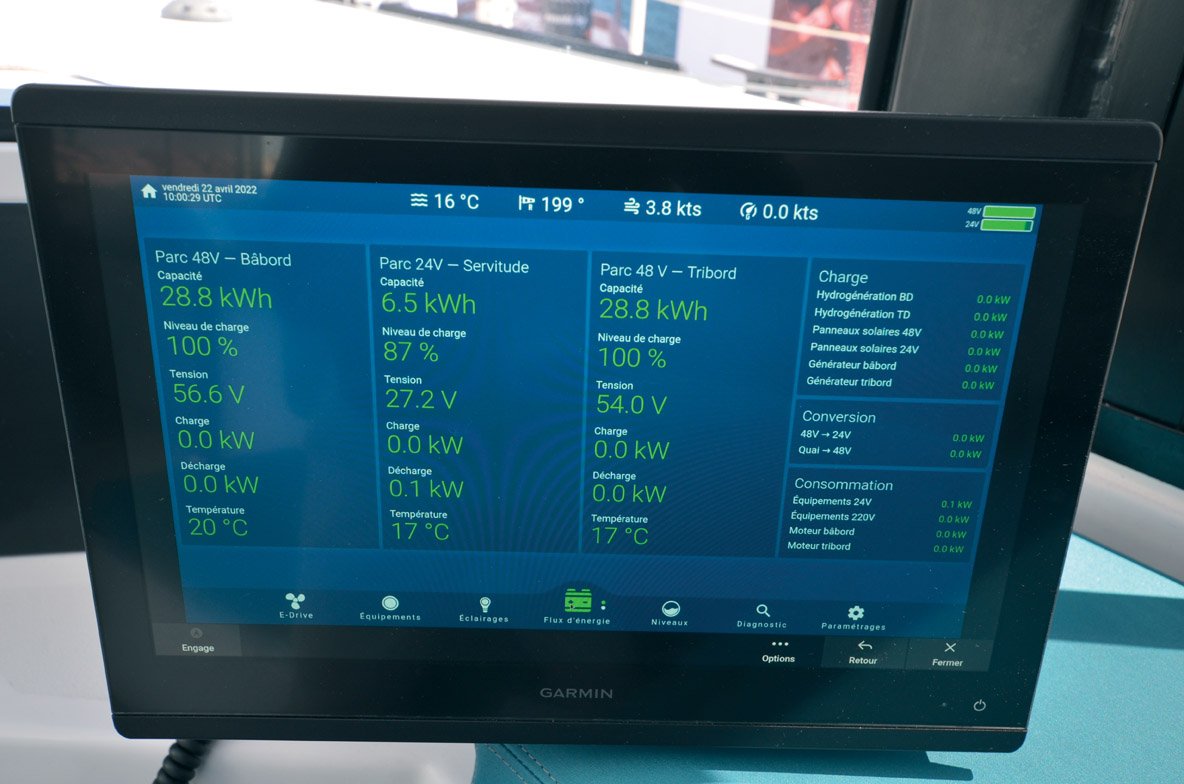
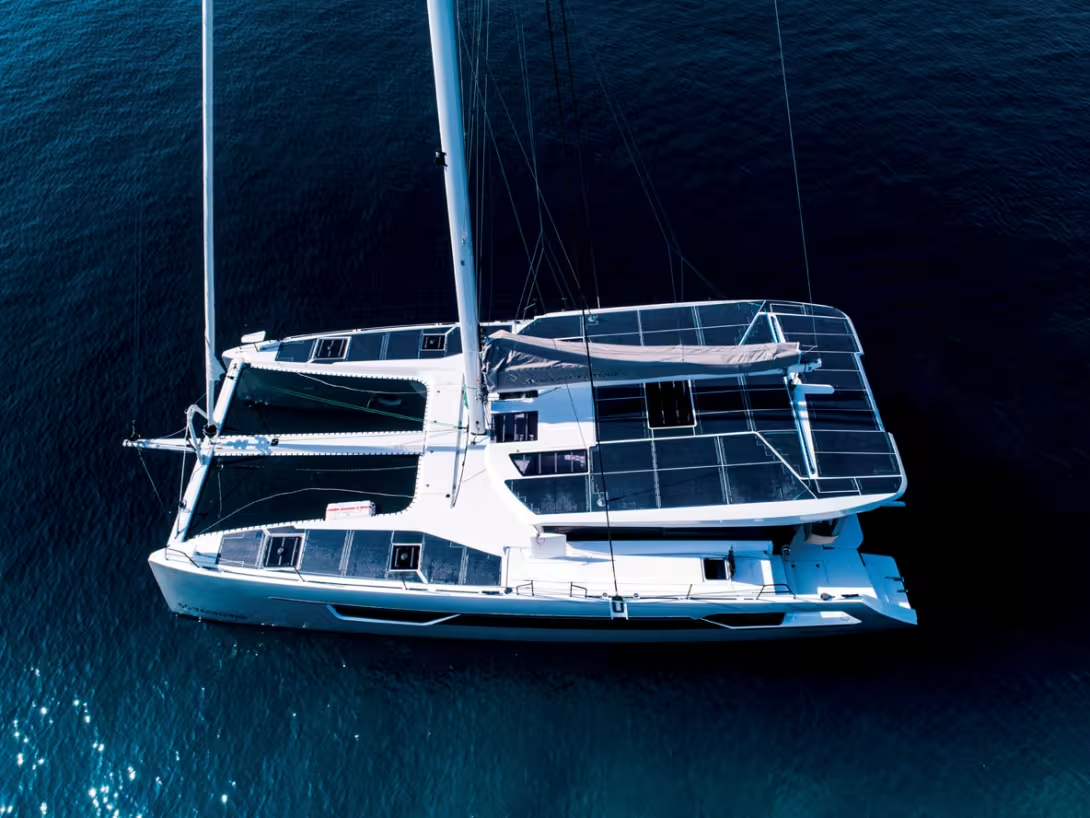
Blue Boat Horizon’s approach is already proving to be a real catalyst for decarbonization in the recreational boating sector. This year, all the major players in the multihull market are now responding, even those who do not yet offer electric models. Nautitech Catamarans’ environmental approach, for example, is integrated right from the design phase of its upcoming 41 S. It is based on carefully considered material choices, optimized manufacturing processes and an architecture that prioritizes repairability and longevity. This is the concept of “intelligent reshaping”, i.e. the ability of the multihull to adapt to its owners over time. At Prestige Yachts, they simply point out that, for equivalent size and comfort, a monohull will consume 30 to 40% more fuel than the new models in the twin-hull M range. Domestic consumption on board is also changing. Like many other models today, a package called Silent Mode or Eco, depending on the brand, is automatically offered. The aim is to enjoy all the comforts on board for 12 hours (and air conditioning for at least 6 hours) without emitting any CO2. These packages usually consist of solar panels on the flybridge, hardtop or deck, a larger lithium battery bank, a more powerful generator and inverter (24 V / 230 V / 5 kW), and increased hot water tank capacity. With the New 44, Fountaine Pajot has gone one step further: 2 kWp of solar panels have been seamlessly integrated into the coachroof and the rear of the bimini. The power output can even be increased to 2.3 kWp by choosing to integrate additional panels on the forward trampolines! The integrated hydro-generators generate 1 kW per propeller at 8 knots, and if you add one (or two) wind generators, you can add another 600 W to your battery bank. With optimized equipment and hybrid propulsion (2 x 25 kW), the New 44 offers 3 to 4 days of complete autonomy and up to 12 hours with the air conditioning running. The manufacturer therefore promises a 46% reduction in CO2 emissions during the catamaran’s planned 20-year operational life. It’s worth noting that significant progress has been made in the management systems for the entire electrical circuit. This is the case at Windelo, which has just released an update to its in-house system. The history of energy consumption and production is integrated into the interface, which is also becoming easier to access remotely via Starlink, for example. But the brand’s customers point out that seaworthiness is also very important: “Aboard the Windelo, between 80 and 90% of the time, we sailed at wind speed.” This clearly encourages sailors to avoid using the engine, with average speeds of 10 and even 12 knots at times, providing almost 2 kW of hydrogeneration.
An interesting approach is that taken by Emeraude Multicoques, which has become – among other activities – a hybrid solution integrator. This formula, which has already proven itself with a Neel 47 and a 43 (tested in this issue), can be extended to other models.
What About Charter?
The world leader in yacht charter, Dream Yacht, has invested in several Elba 45 and Aura 51 ODSea+ models. With one season under their belts, the managers of the bases in Italy and Sardinia have noticed that these electric catamarans require much less maintenance. Any maintenance that is required is also easier to perform and much more economical than that of the same catamarans equipped with internal combustion engines. On the other hand, the technical side of the handover takes three times longer (a minimum of one hour instead of 20 minutes). Customers are not yet used to all-electric boats and their energy management, which is different from those with internal combustion engines. Care must be taken when charging the batteries via the management interface; very often, during the first two or three days, customers call the base for assistance. Then the rest of the week goes smoothly, with the crew delighted when they hand back the boat, especially as the cost at the fuel dock is on average three times lower! For day charter, Chantier Naval de l’Arsenal has developed the one shape process for its Day 1 boats, which eliminates the need for molds and thus reduces emissions. One of its latest catamarans, Samba, is equipped with two 25-kW Joool Pods in addition to its Yanmar diesel engines. The captain assures us that during initial tests, fuel consumption was halved when 10 kW of power was added with the electric motors. This also allows him to maneuver “cleanly” in port and at anchorages.
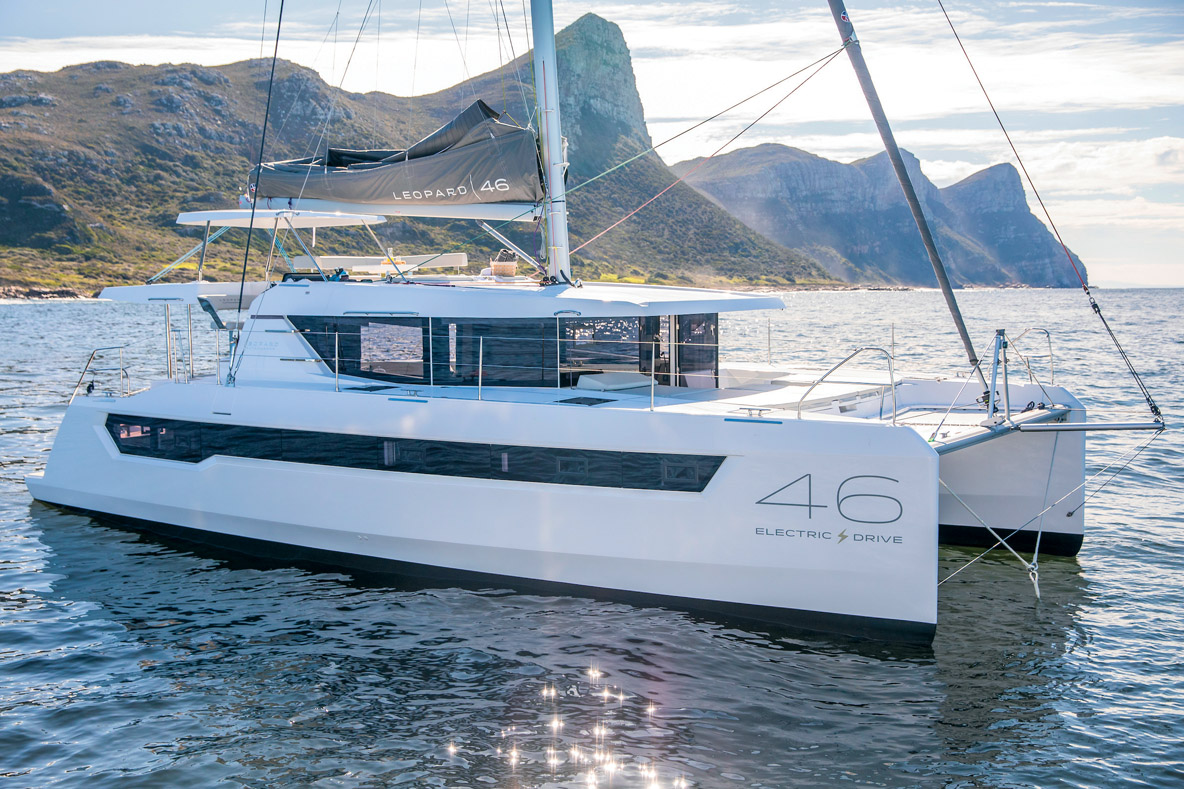
Leopard Catamarans, which has been rather cautious on the subject up until now, is offering an electric version of its new 46, but for the time being, the brand is only offering it to owners and not (yet) for charter by its operators Sunsail and/or The Moorings.
Booming Demand
“Customer demand for electric boats, and especially for more environmentally friendly sailing, is growing rapidly,” says Steven Guedeu, sales director at Fountaine Pajot. In fact, the brand has already delivered around 20 ODSea+ electric catamarans.
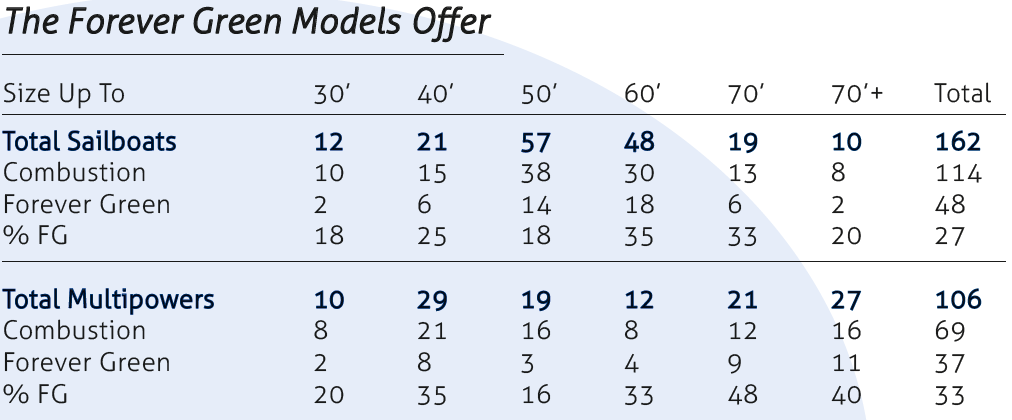
This demand is fortunately matched by an explosion in supply. Of the 162 multihulls featured in our 2025 Sailing Buying Guide, 48 are now hybrid models bearing the FG (Forever Green) label.
Multipowers are also not lagging behind when it comes to energy transition. 38 of the 120 models in our latest Power Buyer’s Guide feature the green leaf symbol indicating that they are available with hybrid or all-electric drivetrains. Among the manufacturers of motorized catamarans and trimarans that are focusing on electric power, are some of the shipyards already mentioned above, as well as Alva Yachts, Archipelago Yachts, Chantier Naval Hervé, Cosmopolitan Yachts, Earthling, GreenPower Boats, GRE Yachting, Herley Boats, Lightwave Yachts, Nova Luxe Yachts, Pinball Boat, Roto Nautica, Symphony Marine and Ultimate Catamarans.
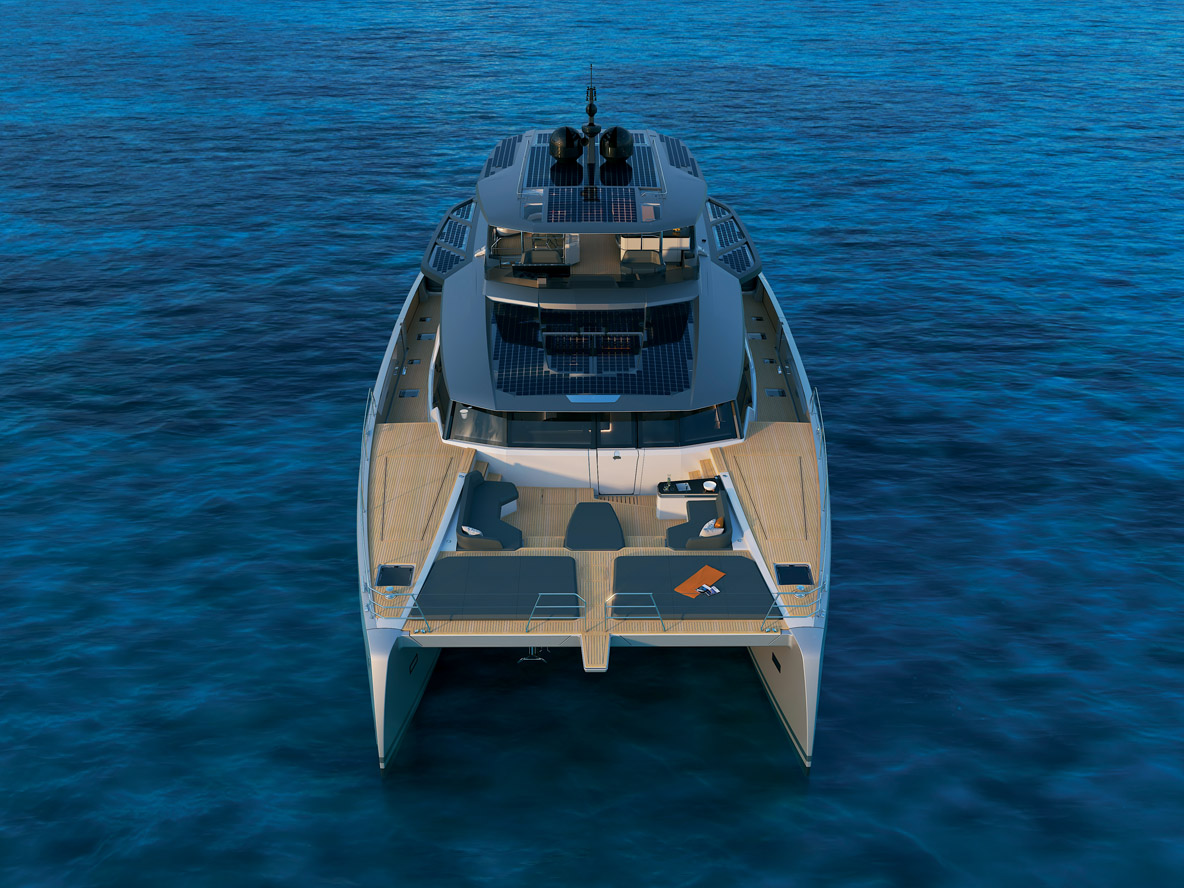
It is worth noting that the proportion of Forever Green multihulls rises from 20% for those under 30 feet to nearly 40% for multipowers over 70%. There are two reasons for this: firstly, the additional cost of electric propulsion is easier to absorb on the most expensive models – i.e. the largest ones. For example, while a green installation can account for more than 30% of the price of a multihull under 40 feet, it will only account for a little over 20% for certain 50-foot-plus models. It is also worth noting Sunreef’s omnipresence in the world of multihull superyachts and the widespread availability of green options across the manufacturer’s entire catalogue.
The electric revolution is therefore well under way and will become a reality as soon as the price of the equipment – batteries in particular – falls significantly. A virtuous circle that is beginning to take shape as orders increase... As for the development of hydrogen/electric power, already addressed by Fountaine Pajot, GRE Yachting and Sunreef Yachts, it will remain dependent upon the access to hydrogen in ports. One thing is certain: the future is becoming more electric every day!