
It’s been almost 20 years since electric propulsion began to make an appearance in the engine compartments of our multihulls and given the low percentage of green units ordered today compared to diesel (see our article on eco-production in this issue), we have to admit that this “new” technology poses some serious challenges for shipyards and boatbuilders in the marine leisure industry. Lack of confidence, still-limited performance and dissuasive pricing are the first obstacles identified to the widespread adoption of more environmentally friendly boats - at least when they’re sailing.
In fact, we’re a long way from the boom currently being experienced by the automotive industry - a trend, however, that has been weakened by the end of certain government subsidies.
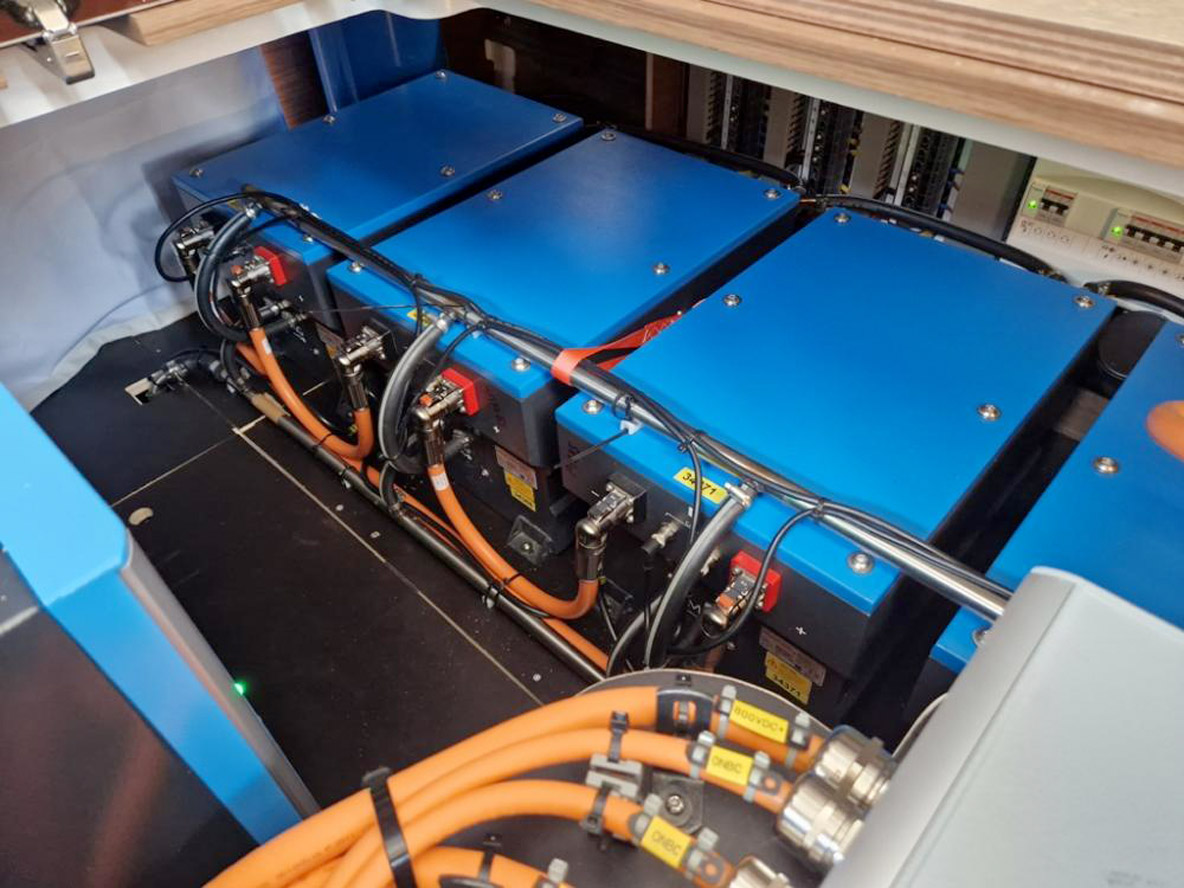
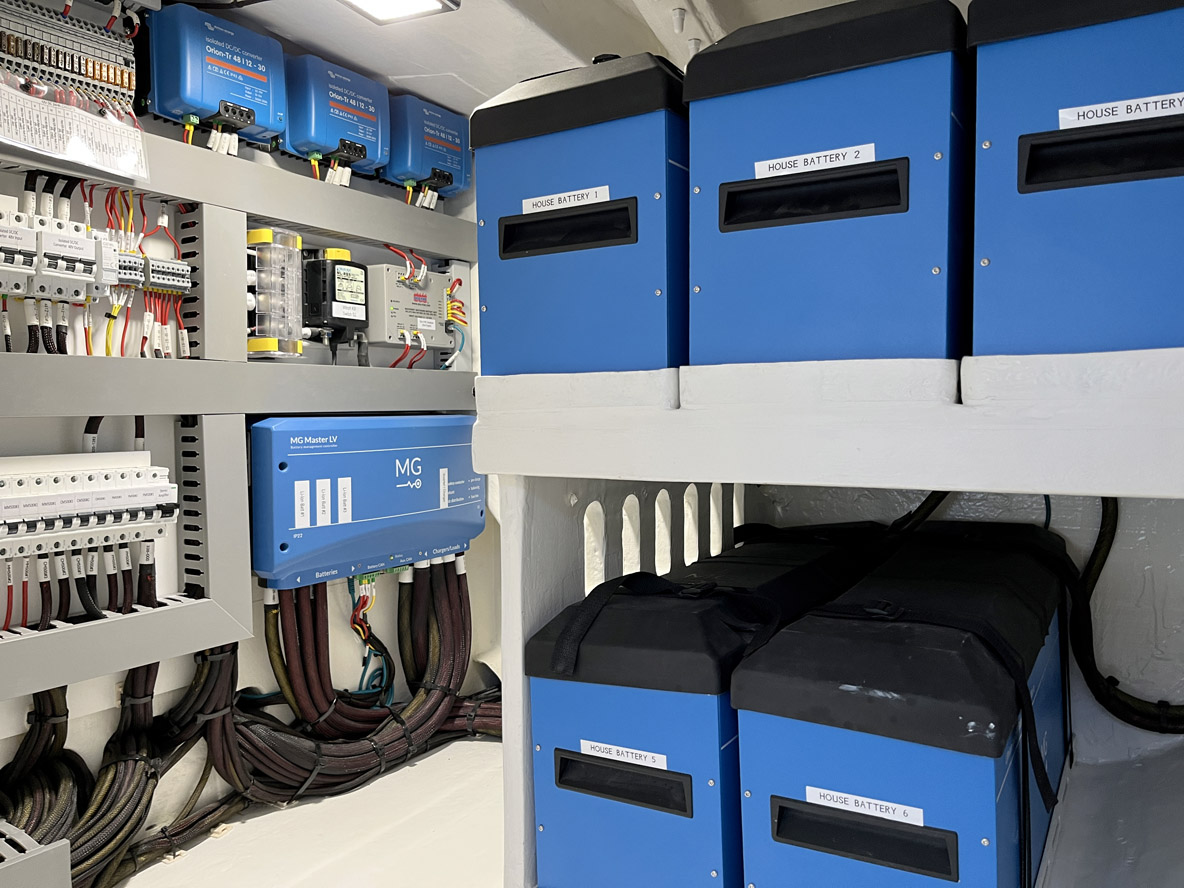
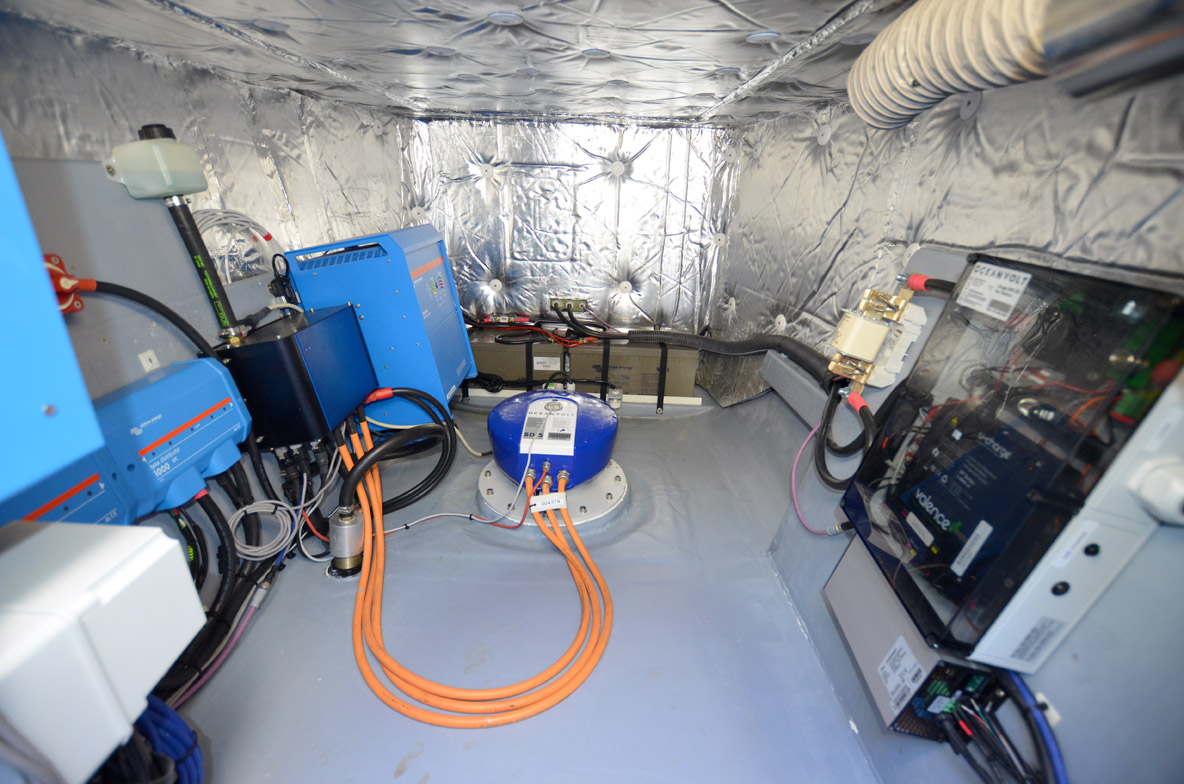
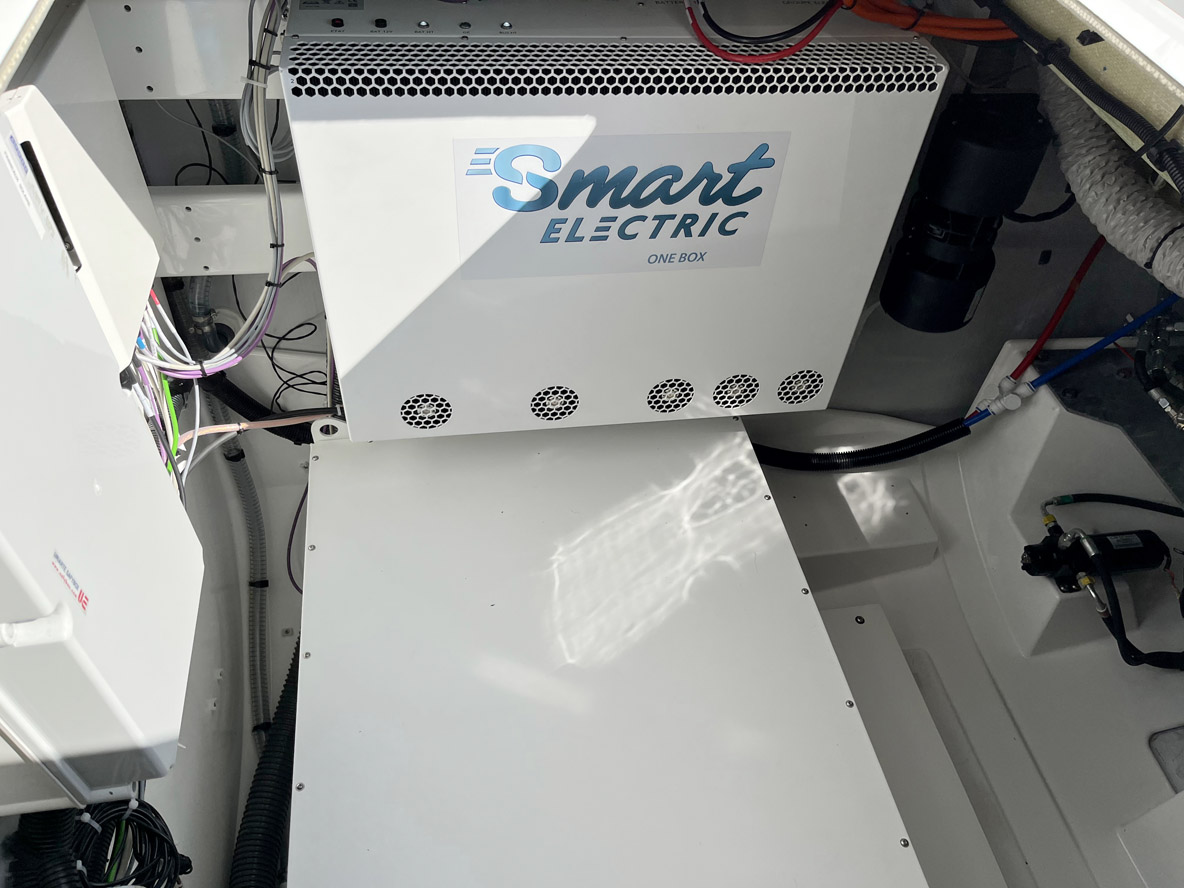
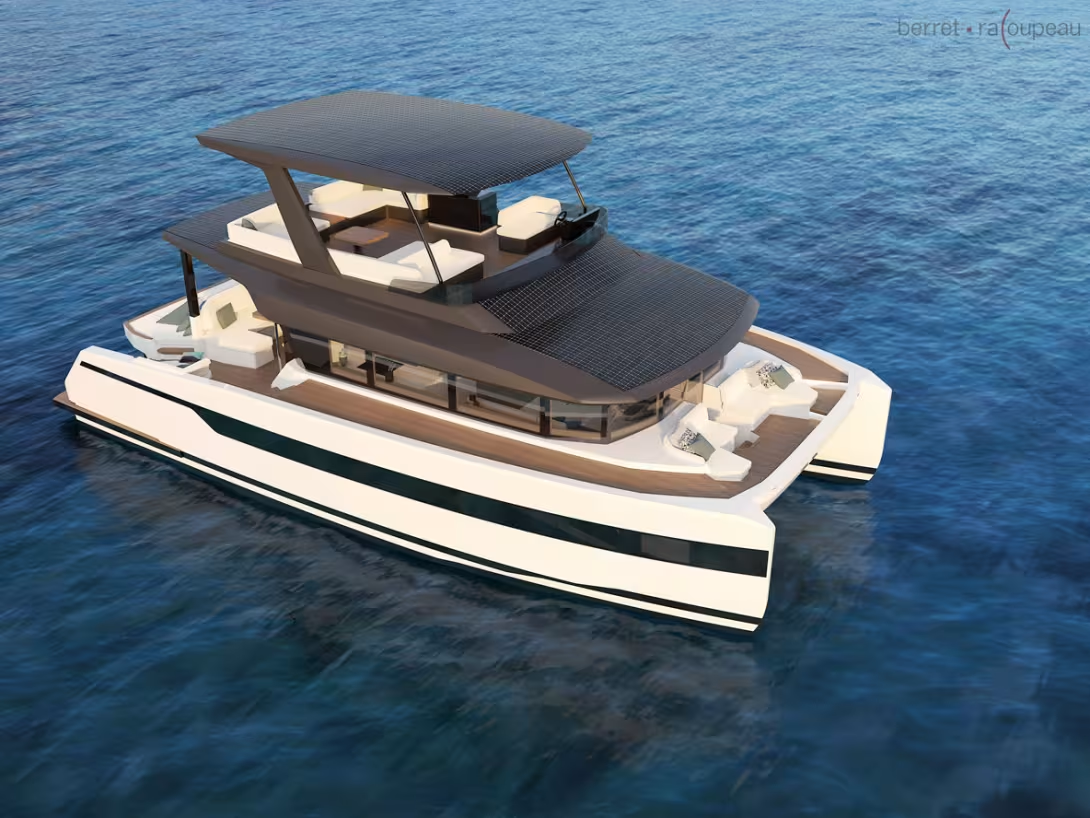
Apart from a handful of small-scale attempts by independent sailors, the first brand to embark on the electric adventure on an industrial scale was Lagoon, back in 2006. Around a hundred Lagoon 420 hybrid diesel-electric yachts were produced. The technology was not yet fully perfected, especially in terms of electronic management. As a result, the after-sales service had its work cut out... The brand manager at the time was Yann Masselot, and he tells us that he had to spend a lot of time on his own helping customers on the other side of the world! And above all, performance, with a maximum of six knots, wasn’t up to the level users were used to with internal combustion engines. In 2008, the hybrid option was withdrawn from the catalog. We then had to wait almost ten years for electric motors to reappear on production catamarans. Outremer and ITA Catamarans installed Oceanvolt motors, while Gunboat and Excess have opted for Torqeedo motors. Both brands offer electric drive systems for standard catalog installation. At the same time, two equipment manufacturers have developed and are offering turnkey concepts based on a development specifically dedicated to an electric powertrain. Silent Yachts and Windelo, the former for powercats and the latter for sailing catamarans, have met with success, with a few dozen units already sold. Moving on to superyachts, Sunreef has launched its ECO range, which includes both sailboats and multiyachts, all covered with solar panels integrated into the structure of the hull and coachroof. Two years ago, as part of its Odyssea strategic plan, the Fountaine Pajot Group embarked on the same internal development process, taking control of equipment manufacturer Alternatives Energies. The brand offers the Smart Electric concept on 4 of its sailing models, with pod-mounted motors and an in-house management system that includes lithium-iron-phosphate batteries, which are more reliable over time and, more importantly, recharge quickly. This is the latest technology used in the automobile sector. The group’s objective is to achieve carbon neutrality by 2030, with 50% of units delivered in the Smart Electric version by 2027. Although in a more served fashion than in the automotive industry, the energy transition is well underway in the world of boating, with lesser-known manufacturers such as O’Yachts, Slyder and Whisper, to name just three, jumping on the bandwagon and even making hybrid-electric drivetrains an essential part of their marketing strategy. And most recently, the Chinese-American brand HH launched its 44 with a parallel hybrid system.
But why hybrid-electric?
It’s important to point out here that, for the moment, no mass-produced ocean-going multihull is available with a full electric powertrain without the backup of a diesel generator to provide the necessary energy if required. Unlike day sailing, where batteries can be recharged in the evening from shorepower at the dock, a cruising catamaran can’t rely on the sun’s rays alone to store the energy needed to run its electric motors. In this respect, only high-performance yachts like the New Windelo 50 and 54, the HH44, or the ITA 15.49, which can regularly sail at speeds of over ten knots, are able to operate their propellers under sail and generate two or three kilowatts per hour, thus increasing their range in full electric mode. But even these models need to be fitted with a generator, as calm conditions and heavy cloud cover can occur on passage or when cruising. Jimmy Cornell’s Outremer 4X prototype, with no generator, highlighted the difficulty of doing without this power source.
Given the current state of technology and infrastructure, this carbon-based back-up is the only option for meeting the energy needs to keep the electric motors running continuously - that is, until the fuel tanks run dry. Nevertheless, the all-electric challenge remains an objective for many shipyards, starting with Zen Yachts, whose forthcoming 50-foot catamaran, available in sail or power versions, intends to be 100% green.
Of course, hydrogen and fuel cells are available to replace regular fuel, but we’re still quite a way from long-term development and affordable access. What’s more, the availability of the fuel in yachting marinas is still virtually non-existent (see article in this issue). So it’s reasonable to assume that, unless you’re satisfied with your GPS showing 4 knots (unlimited range on electric-only power at this admittedly limited speed is now offered by all full-electric cruising multihulls, even powercats) just with the contribution of solar panels, sailing as we do today at a minimum average speed of eight knots is only feasible aboard a diesel-electric hybrid.
Technology adapting to emerging regulations
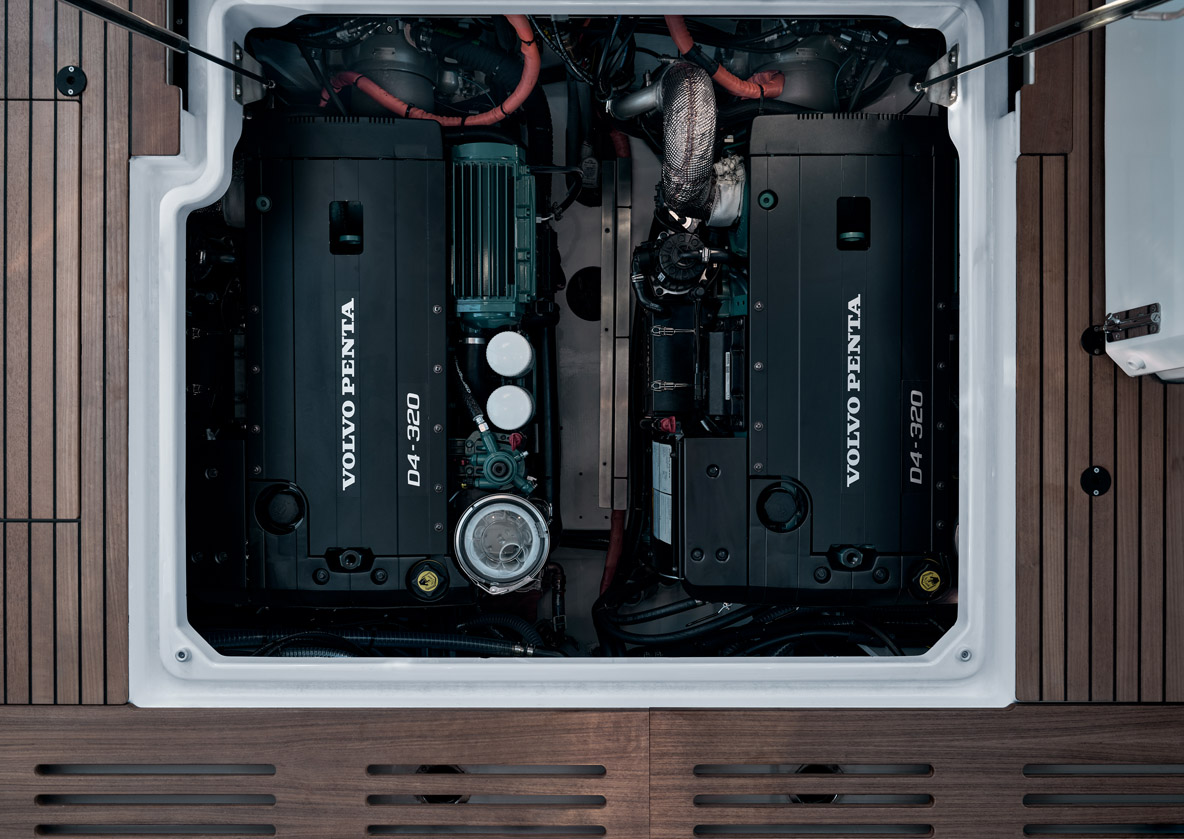
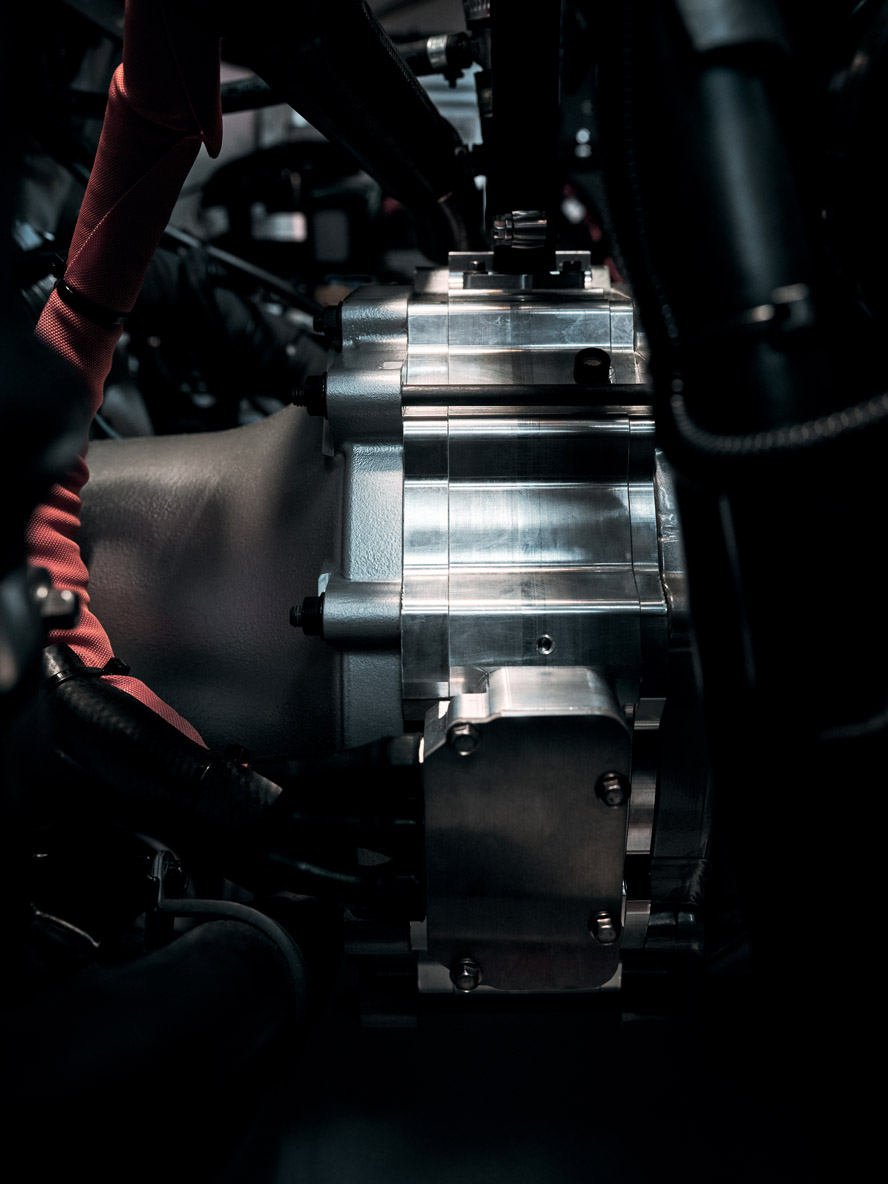
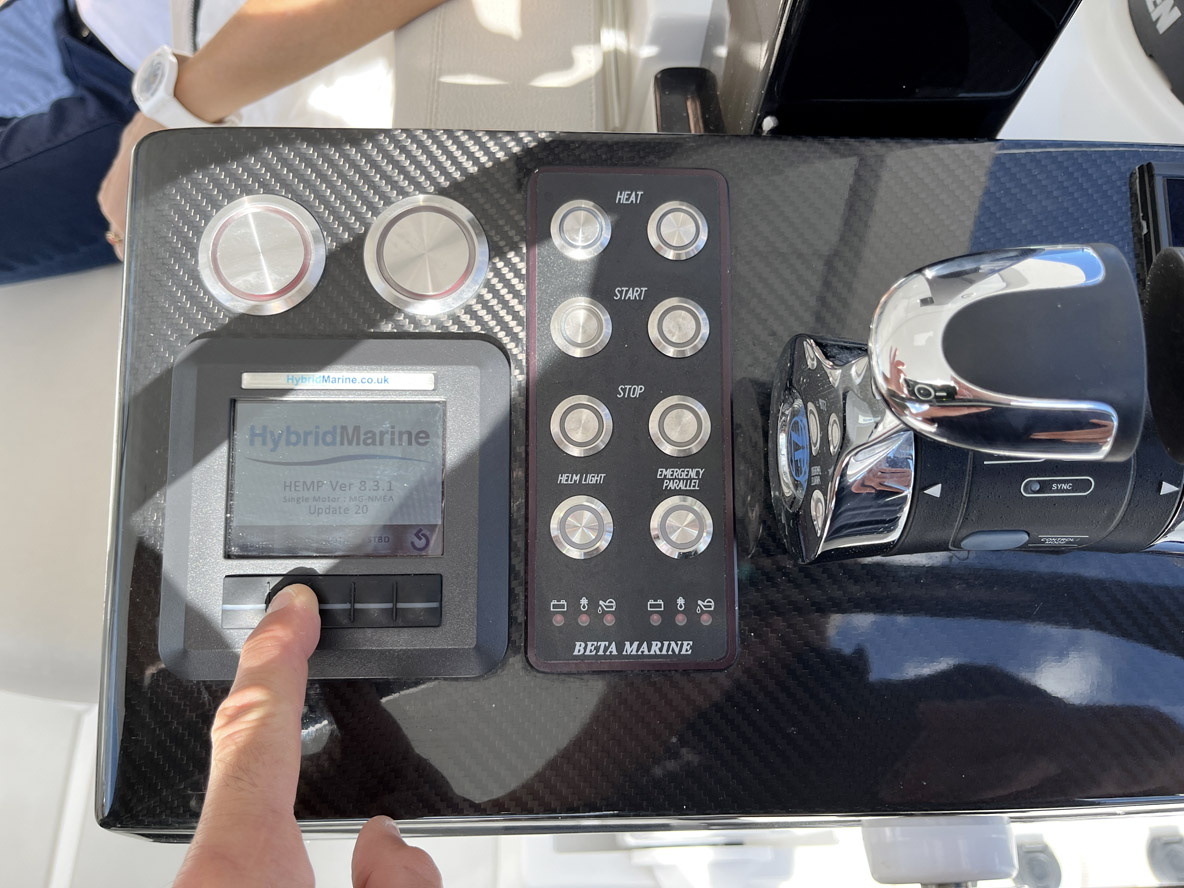
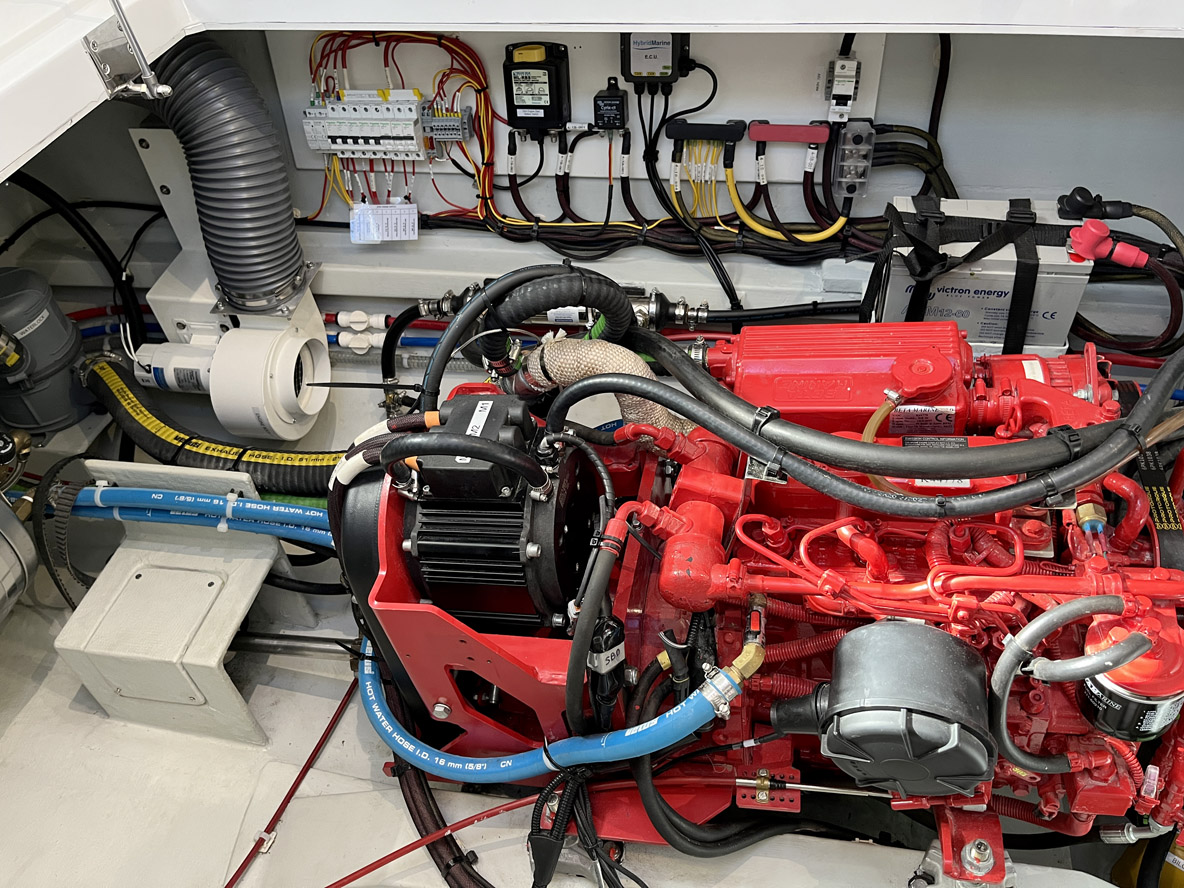
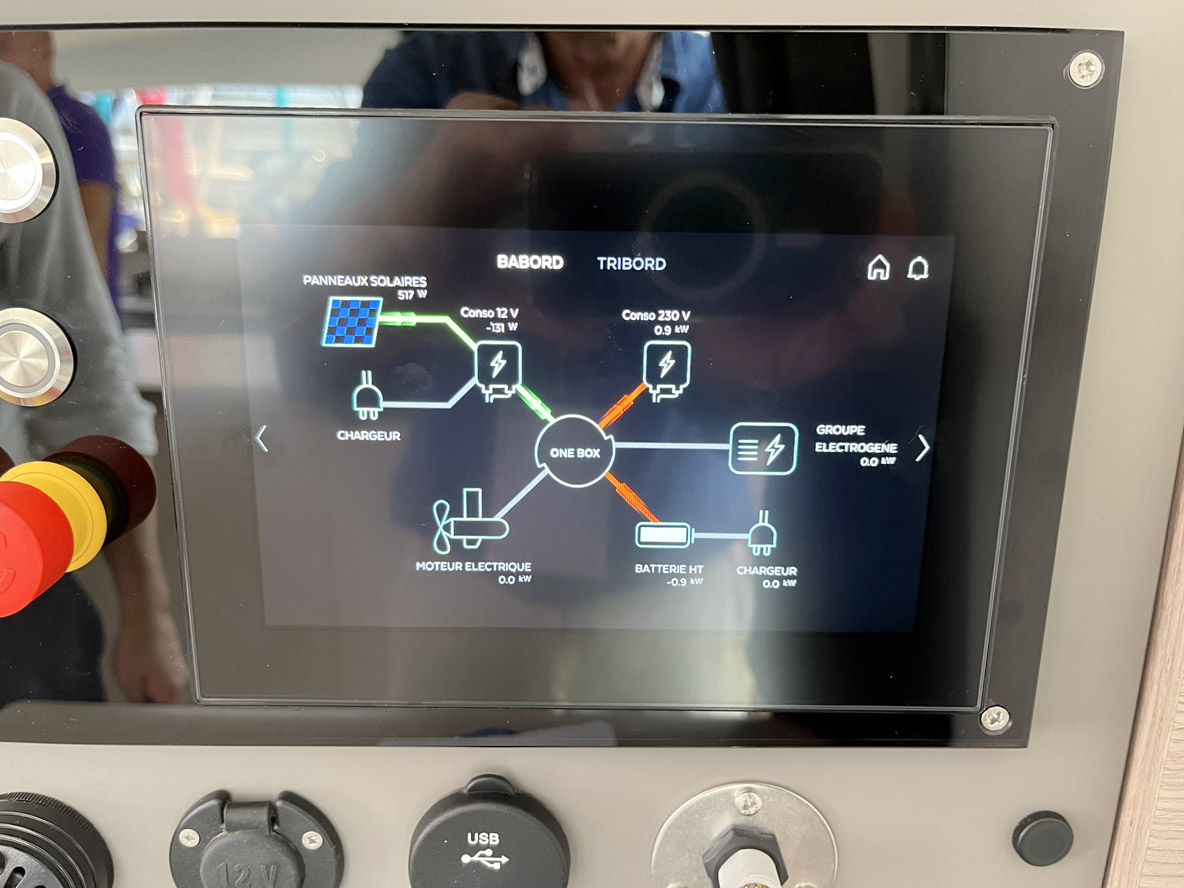
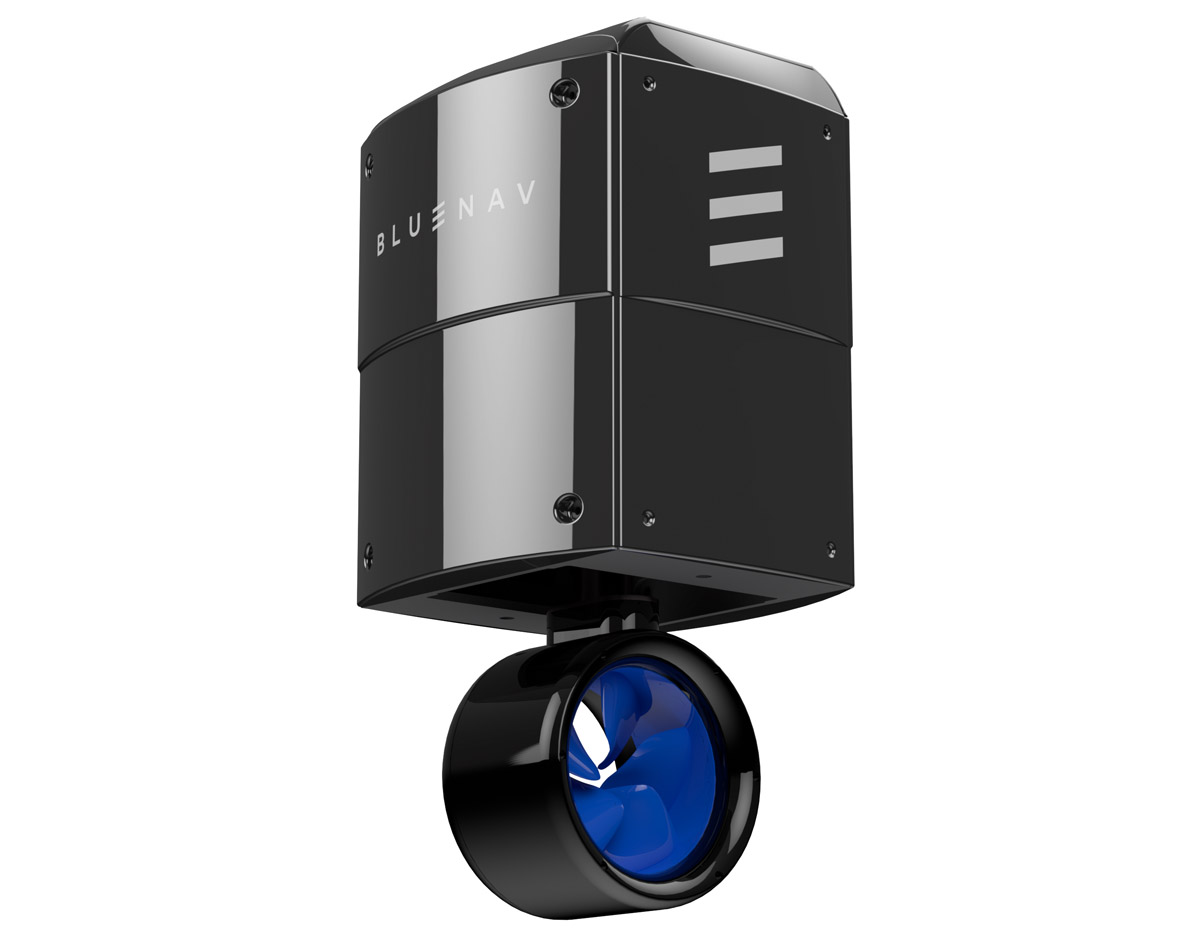
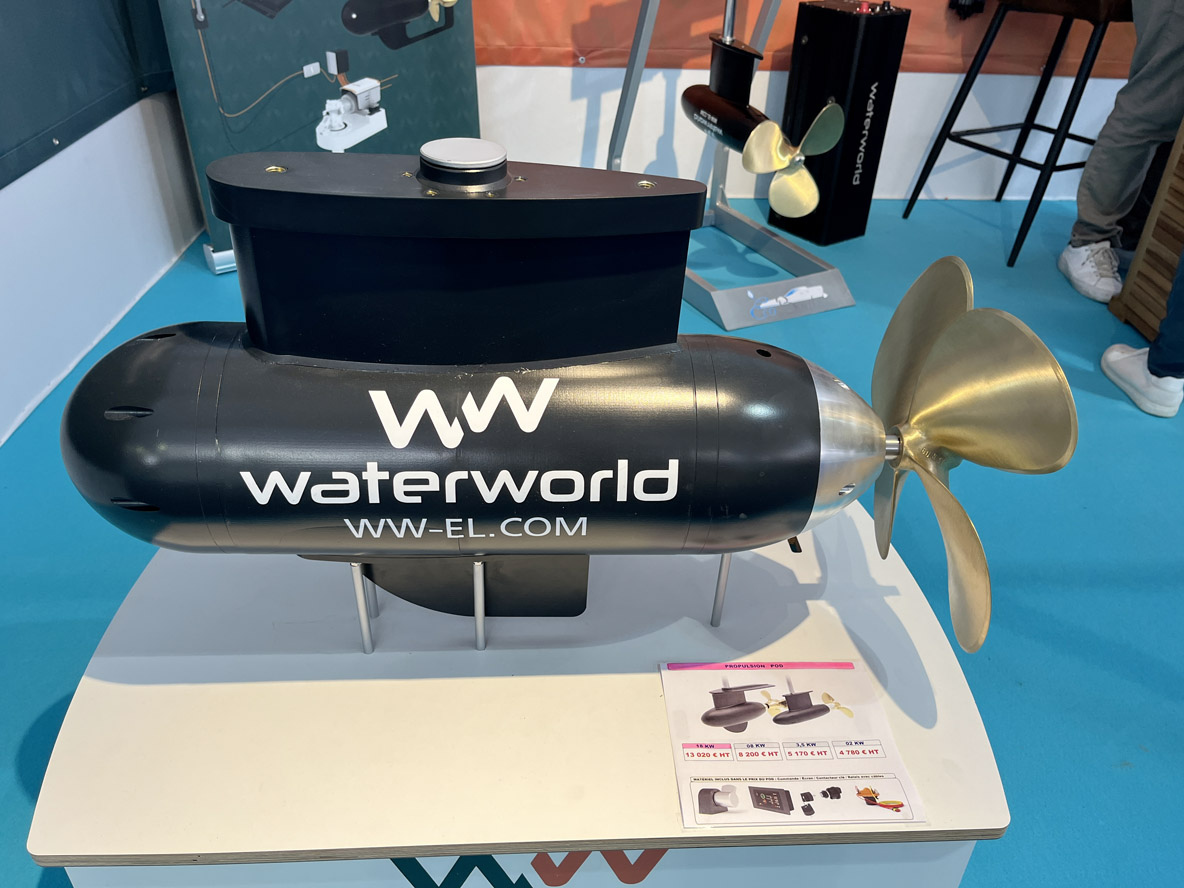
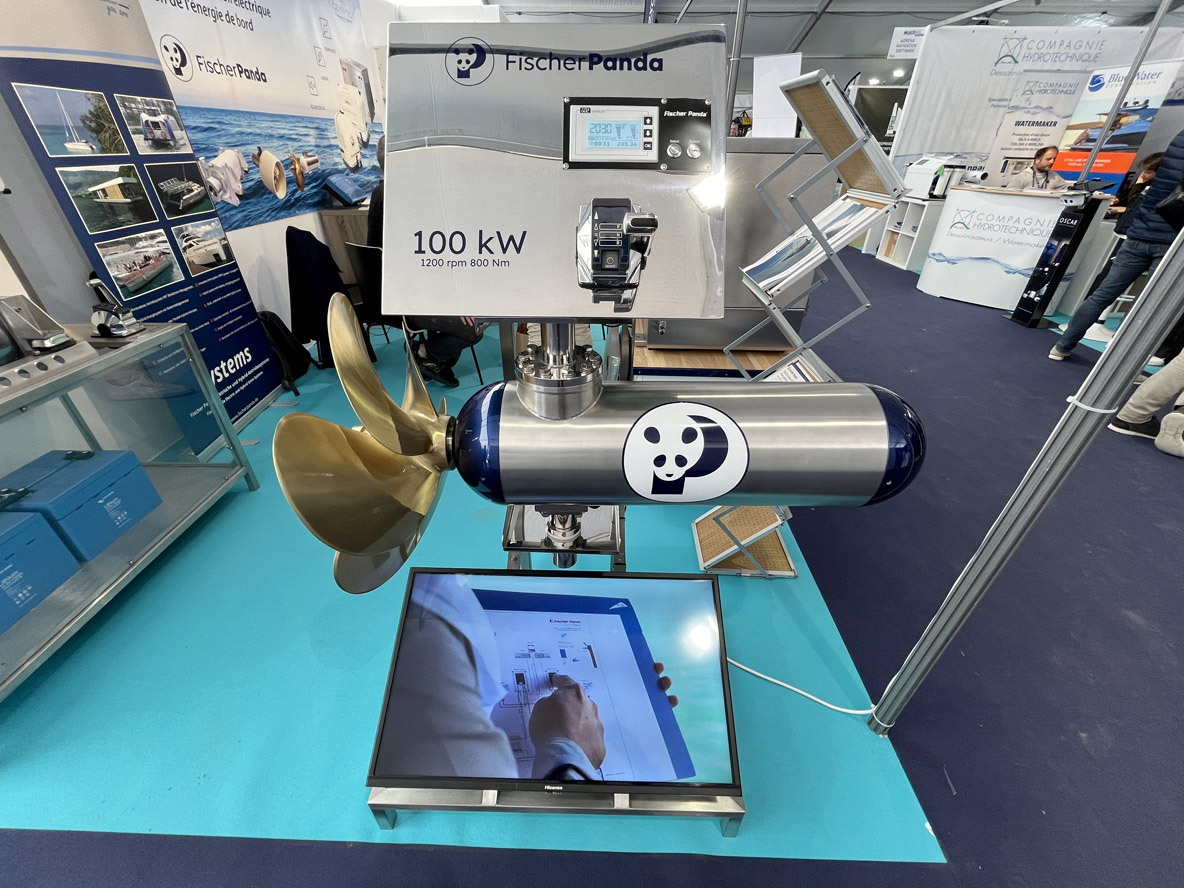
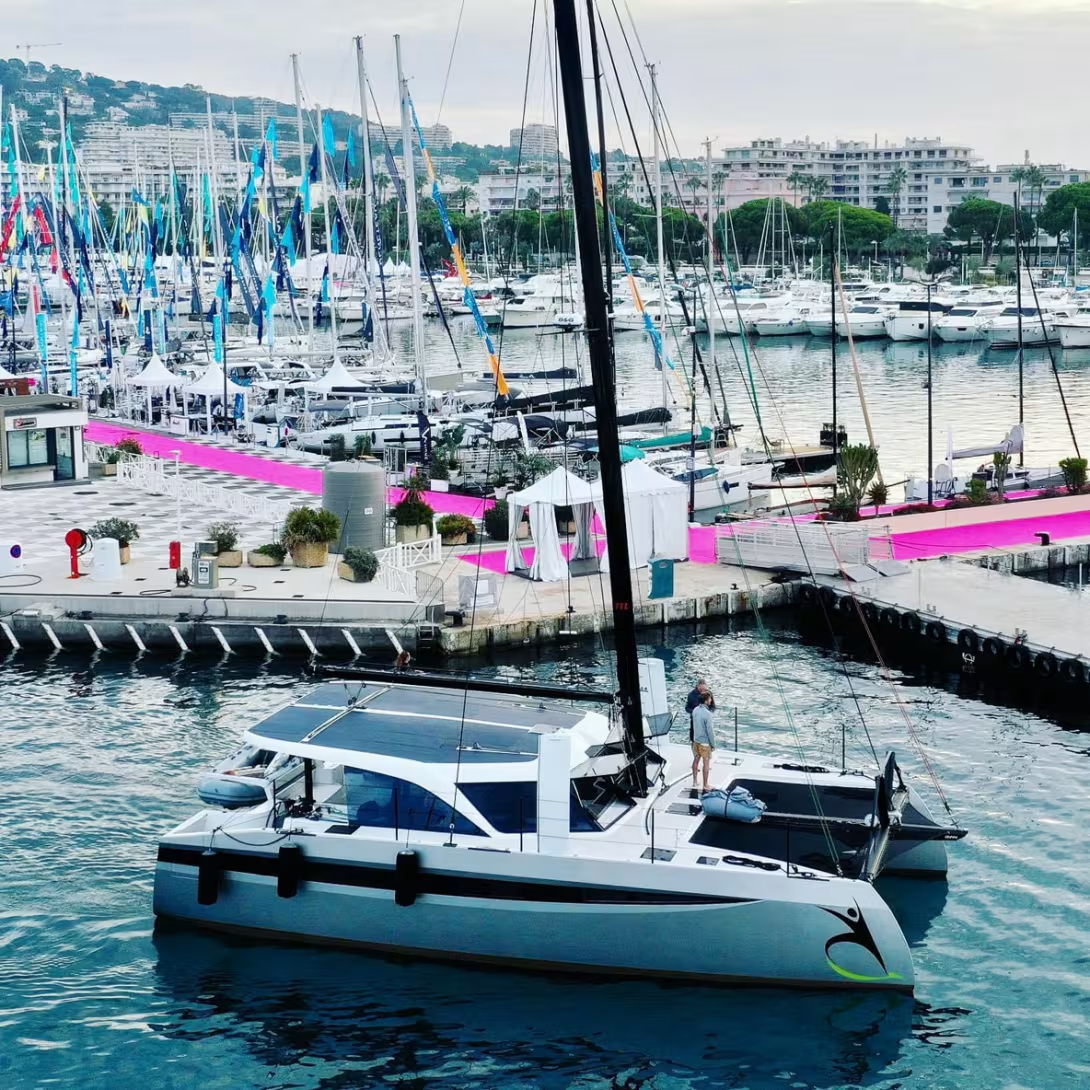
Over the past year, parallel diesel-electric hybrid drivetrains have begun to appear on the market. Volvo, for example, has developed a propulsion system based on its Penta D4 and D6 engines to which electric motors are coupled. These enable the boat to leave port cleanly and silently. Once offshore, the internal combustion engines take over to cruise at speed. This type of drivetrain is particularly well suited to powercats targeting speeds in excess of 20 knots, and to large sailing multihulls in need of power. The Prestige M8 could be equipped as early as 2025 or 2026. At Beta Marine, a 10-kW motor can be coupled to a 30 HP Kubota base. These drive units are fitted aboard the new HH44. With its 50.4 kWh of lithium-ion battery and 4.1 kWp of solar panels, the 44 is capable of sailing 18 miles at 7 knots, or around three hours’ range in full electric mode (see our test in MW196). The HH can then switch to internal combustion mode for longer passages under power. But why go to such lengths if you’re going to end up switching to diesel once offshore? Quite simply because the most fragile and abused area of the marine ecosystem is the coastline. In the short term, bans on CO2 emissions in ports and in certain anchorage areas will certainly be implemented. Parallel hybrid powertrains therefore respond to these most immediate concerns. In a way, we’re validating a step-by-step energy transition. Not polluting coastal areas, but maintaining speed and range offshore, while waiting for electric technology to evolve. And it seems to be working. Despite the relatively high price of these high-tech catamarans, HH Catamarans has announced orders for around forty 44s, 80% of them with hybrid power! It’s a sales score that marks a turning point in the world of Forever Green multihulls. As part of this trend, some brands are offering products better adapted to changing regulations and/or technical constraints. To avoid using saildrive systems, which proved noisy on the Excess 15 electric prototype, the Waterworld brand offers motors with rotating pods that provide remarkable maneuverability, as well as reduced noise and vibration. These products are equally well-suited to replace or complement existing internal combustion engines on pre-owned boats. This is a second facet of the energy transition, which will inevitably be in line with evolving regulations: at some point, we’re going to have to retrofit or adapt existing boats! The BlueNav brand advocates and anticipates this sensible transformation, offering a range of motors that can convert any type of boat into a hybrid or 100% electric boat. It has developed an auxiliary hybrid-electric range, BlueSpin, designed to adapt to all varieties of boat architecture and to complement existing internal combustion engines. Three systems are available, which can be integrated into the hull, affixed to the stern or grafted on beneath the hull. Their installation, whether on a new or used multihull, does not call into question the existing ICE system, and allows you to benefit from both drivetrains. Installation does require the intervention of skilled technicians, but here too, some conventional engine professionals are reorienting and organizing themselves to offer these new services to boaters.
When charter sets the example
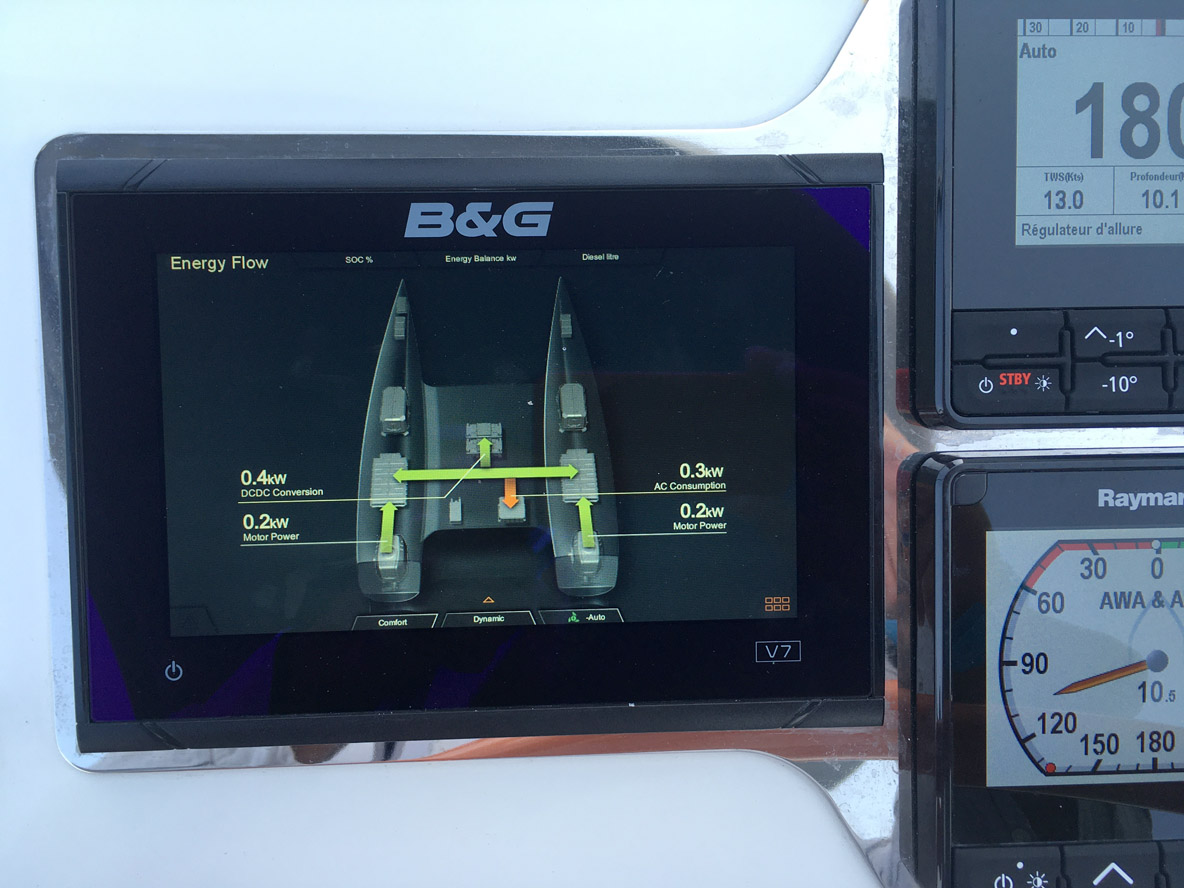
Discovering cruising with a hybrid- electric drivetrain without having bought a catamaran is now an option, thanks to charter companies that are committed to the process of decarbonizing the boating industry. Dream Yacht Worldwide is undoubtedly the pioneer in this field, with the world’s #1 charter company having purchased a dozen Smart Electric units from Fountaine Pajot (Aura 51, Elba 45 and Astréa 42). Cabin charter specialist Tradewinds has integrated two Samana 59 TW6e (one with a hydrogen fuel cell, the Aurora) and an Aura 51 TW5e into its fleet. The aim of these two charter companies is to replace their fleet of diesel-powered catamarans with Smart Electrics within the next ten years. And given the experience they’ve already gained, it looks like a genuine possibility. First of all, customers get to grips with the boat in a well-supervised manner, and in theory, the support of the technical base is never far away, which is very reassuring for boaters. When cruising in full electric mode, it’s best to limit speed to 5 knots. This gives a range of three to four hours, or fifteen or twenty miles, which is more than enough for most short coastal hops. It’s completely silent, with no vibrations to disturb life on board. But if you need to complete a windless passage between islands, for example, you may be tempted to increase speed to 7 or even 8 knots. At this speed, full electric autonomy is reduced to just one hour, but the generator starts up as soon as the batteries fall below 20% charge. Recharging the boat’s batteries you’ll need for spending the night at anchor can be carried out at the same time as going along - assuming this doesn’t take up all the power. This is calculated by the management system, which can be configured to suit your way of sailing. And there’s more good news from this hybrid operation. The first concerns comfort: the generator, isolated in a cocoon deep in the bilge, is much more discreet and emits infinitely less vibration than a pair of diesel motors installed at the after ends of the hulls. Sailing at night can also be less tiring for the crew. The second pleasant surprise concerns fuel consumption. With renewable energy sources (solar panels, wind and hydro-generation) and a single combustion engine, diesel consumption is much lower. Firstly, because you can sail in full electric mode; secondly, because the more efficient electric motors need 50% less power than the internal combustion engines to propel the multihull; and thirdly, because a catamaran like the Aura 51 Smart Electric, with only one diesel motor (the 32-kW generator) instead of two 55-kW regular diesel engines, will obviously consume no more than half as much. Put into the perspective of a week’s sailing, with 30 hours spent under power, depending on speed, you save around 200 liters/ 50 US gallons of diesel. The standard bill of €800 for the combustion-powered Aura 51 will be much lower with the Smart Electric version - under €400. For customers, this is a strong argument in favor of the energy transition! Over the duration of a cruise, 200 to 300 liters (50-150 US gal) of diesel are saved, 6,000 to 10,000 liters (1,500 to 2,500 US gal) for a standard year, and 33,000 to 55,000 liters (8,700 to 14,500 US gal) for the total duration of operation within a five-year contract system. In terms of emissions reduction, saving 55,000 liters of fuel is equivalent to not emitting 14 tons of CO2, or 8 return trips from New York to Paris.
Less maintenance and lower cost
The final advantage for the investor is to benefit from contract offers optimized for a hybrid powertrain. Mathieu Fountaine, Managing Director of Fountaine Pajot, tells us that, for the first catamarans, which sailed a lot (particularly during the tests conducted over the last two years), the first maintenance work was only carried out after 2,000 hours of sailing. Maintenance was also simplified and inexpensive. For charter companies, these maintenance savings, combined with a sharp drop in expenses during delivery trips, enable them to recalculate a more attractive charter management/leasing offer. The idea, of course, is to reduce or even absorb the cost of this technology (around 20% more than an equivalent ICE version), and ultimately to attract multihull owners looking for more environmentally-friendly sailing vacations.