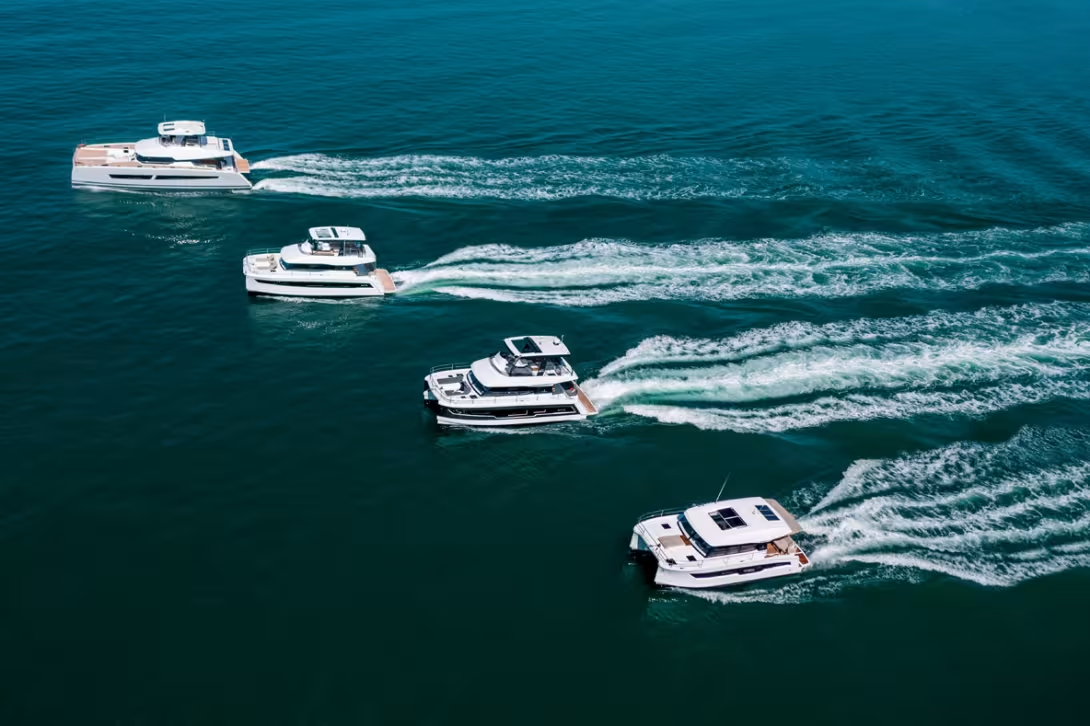



When it comes to buying a boat, the drivetrain factor should not be overlooked, especially as more and more manufacturers are moving into electric and/or hybrid power... Equipment manufacturers offer several choices. A range of different powers, brands and transmission types - which is what interests us today.
When repowering a second-hand multihull, you may also ask yourself the question: shaft drive, sail drive or pod?
Here’s an overview of the available solutions, with their advantages and disadvantages.
Propshaft transmission
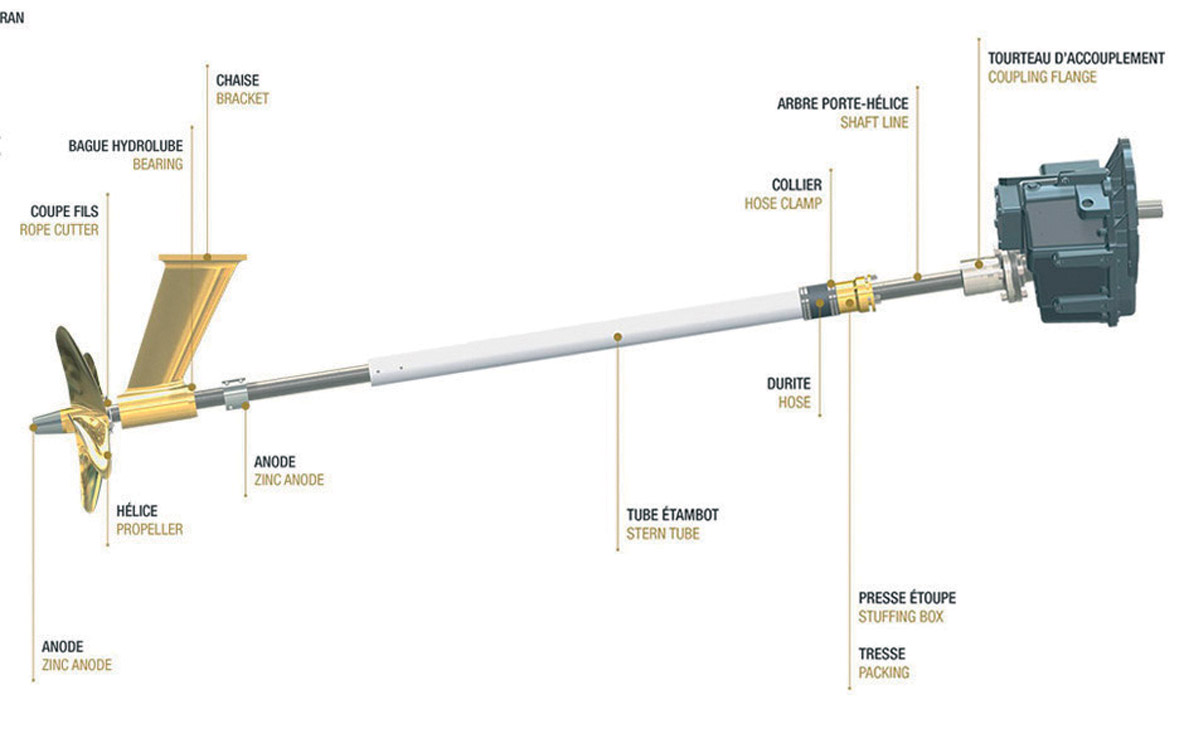
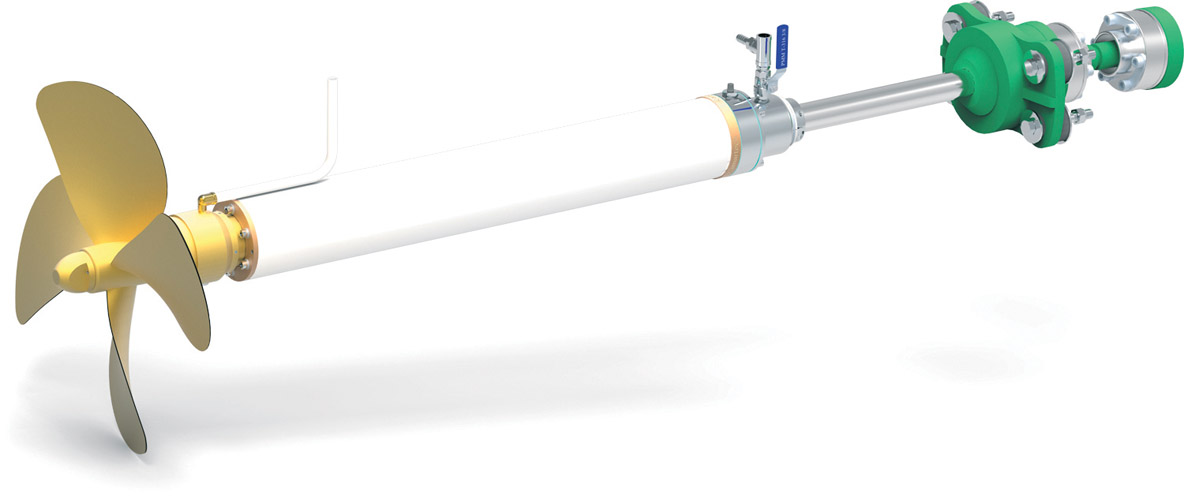
This is the oldest and most traditional of transmissions. The principle is simple: a shaft is connected to the motor, positioned either more or less centrally in the hull, while the propeller is at the other, after end of the shaft. The further forward the motor, the greater the efficiency, since the line of the propeller shaft is at the closest angle possible to the waterline.
This system is simple and fairly reliable. It does, however, require a little more maintenance, particularly for the stern gland or stuffing box, and when it comes to alignment.
Advantages
- Reliability
As a simple solution that has been in use for a very long time, the in-line shaft is reliable and durable. The relatively small round hole in the hull limits the consequences of water ingress.
- Maintenance
Once again, thanks to the simplicity of the system, maintenance remains simple and, above all, inexpensive.
- Good long-term performance
Provided you have a sufficiently torquey engine, the in-line shaft offers decent performance when underway, but no dazzling acceleration.
Disadvantages
- Space requirements
To operate efficiently, the shaft must be at the closest possible angle to the waterline. In modern, shallow hulls, this often means installing the motor a little further forward, leaving room for the propshaft, which takes up space on board. A wider angle means reduced efficiency and increased vibration.
- Potentially higher vibration and noise levels
Shaft-driven propeller transmissions are notorious for their vibrations. A problem that can be partly solved with proper installation.
- Precise alignment required
With a propshaft, the engine needs to be perfectly aligned. Failure to do so can result in additional vibration, friction, lower-than-normal efficiency, and even damage to seals or stern glands.
Saildrive transmission
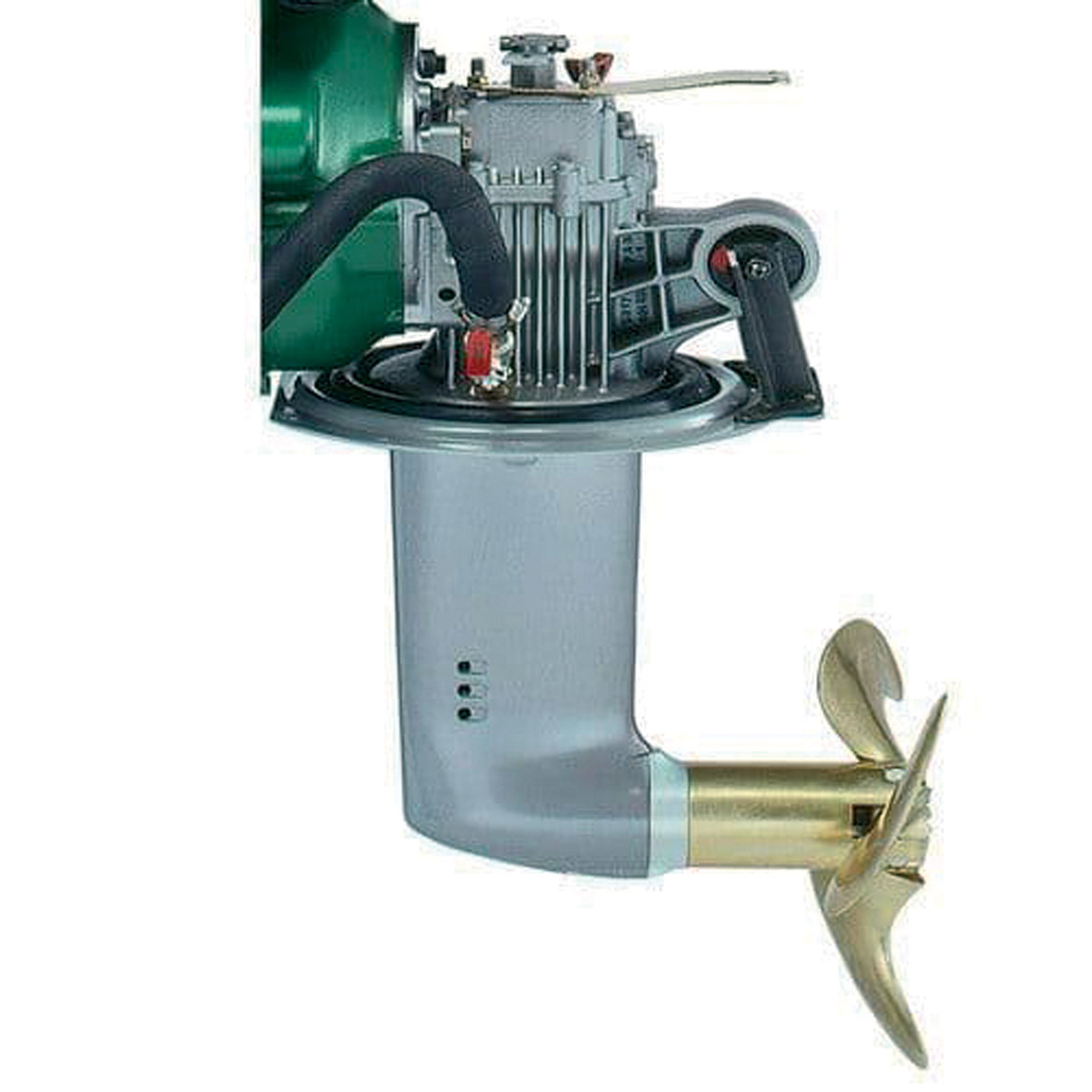
Though an ever-increasingly widespread option, saildrive transmission is also a little more complex than the shaft-driven prop. The motor is connected to a short shaft, which is connected to a gearbox on a vertical shaft outside the hull, which is itself connected to a final gearbox that drives the propeller. This system is in use more and more by boat builders, as it saves significant space on board.
Advantages
- Space saving
This is the main advantage of this transmission. In fact, thanks to the short shaft connected to the motor and the two gearboxes, most of the system is located outside the hull. This saves space on board multihulls, aboard which, habitable space is ever more in demand.
- Easy installation
Installation of a sail drive transmission is relatively easy, as no alignment is required and the system is usually supplied complete, ready to be connected to the engine.
- Less vibration
More modern and equipped with a gear system, this transmission vibrates at lot less than a conventional propeller shaft.
- No stuffing box
Stern gland problems are the stuff of yachting legend. A saildrive doesn’t have a stuffing box or stern gland, making recurrent leaks a thing of the past.
Disadvantages
- Maintenance
As the saildrive is a more complex system, maintenance is logically more demanding than for a shaft line. The oil in the system should be drained at least once a year. The various seals and rubber parts also need replacing every 5 years or so.
- Overall cost
Once again, the complexity of the system has consequences... both on the overall purchase budget and on the cost of maintenance - and finally some of the operations require the expertise of a professional.
- Fragility
In the event of impact or incidents such as a line caught in the propeller, the saildrive can be damaged, jeopardizing its watertight integrity. This can result in water entering the gears, degrading the oil. A severe shock can result in a water leak that is more difficult to seal than would be the case with a conventional propeller shaft.
- Performance
Compared to an in-line system, power loss is greater with a sail drive due to the gears. On the other hand, thrust is always horizon…
- Limited power
A saildrive system is incapable of handling significant power. In fact, power ratings rarely exceed 50 to 70 HP (150 HP now aboard the Lagoon 60), which is more than sufficient for most sailing multihulls up to 50 feet, but clearly insufficient for larger units and multipowers over 40 feet.
Pod transmission
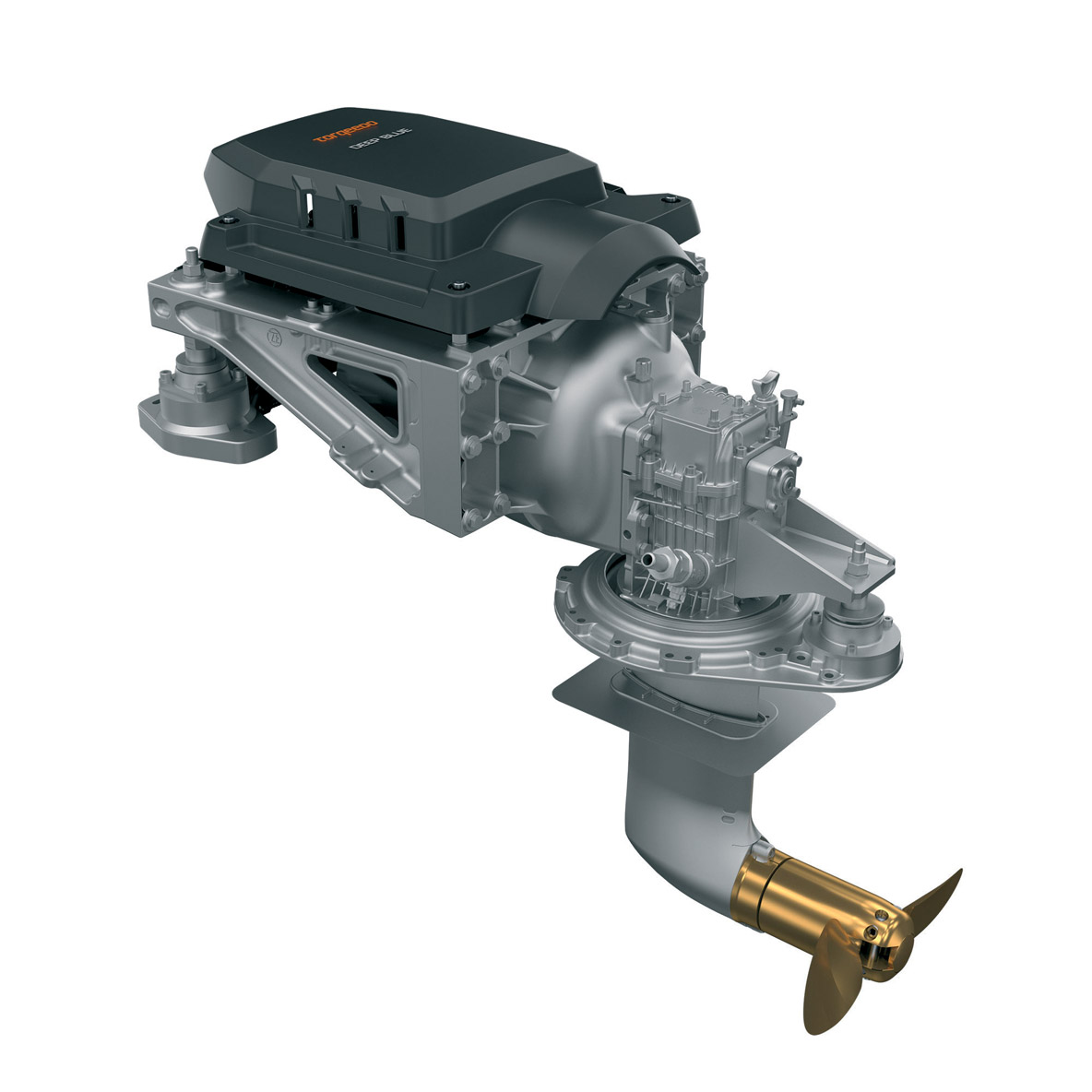
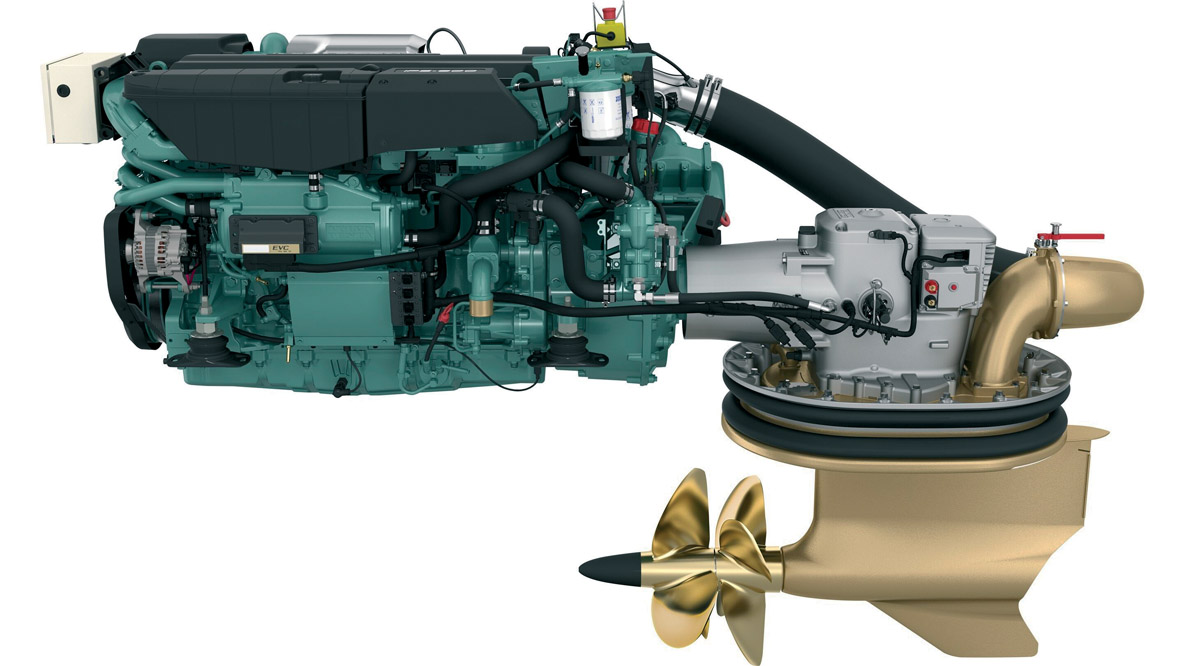
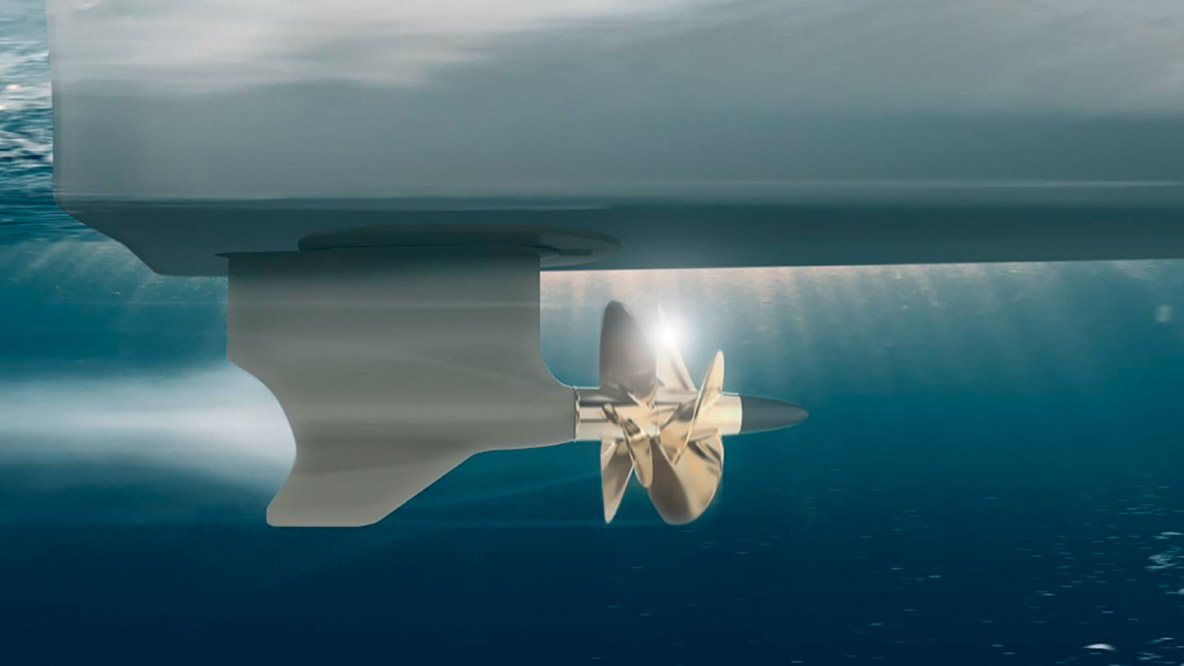
The latest generation of transmission, the pod drive, is directly inspired by large cargo or cruise ships. Unlike other types of propulsion, where the propeller is completely aft of the boat, pods are positioned further forward, through the hull. The forward-mounted propeller works like an aircraft, towing the boat, or pulling it along, rather than pushing or propelling it.
This system improves the boat’s balance and weight distribution. The fact that the propeller is more centrally located also helps to improve maneuverability, as the multihull virtually turns around an axis that is as close as possible to the center of the hull.
The best-known and most widespread of these systems is the Volvo IPS, but Mercury also offers a version called Zeus.
Finally, pods are also popular with electric motor manufacturers
Advantages
- Maneuverability
Located close to the multihull’s centerline and able to rotate 360 degrees, the pod offers excellent maneuverability.
- Fuel consumption
Being highly efficient, the pod system also consumes less power, reducing fuel consumption.
- Reduced vibration and noise
Thanks to its technology, the pod system significantly reduces noise and vibration, a plus for comfort.
Disadvantages
- High initial cost
A technologically advanced system, the pod drive is also much more expensive to purchase than other drives.
- Specialized maintenance required
The pod system, and in particular the IPS, requires extensive maintenance by a specialized technician, which is not always easy in some parts of the world.
- A specific hull required
For the system to work efficiently, manufacturers need to design a specific hull, which implies an industrial choice at the outset.
- Exposed propeller
As the propeller faces forward, it is naturally more exposed to impact than on a conventional system, where the propeller is protected by the daggerboards or keels and sometimes the rudders.
Outboards
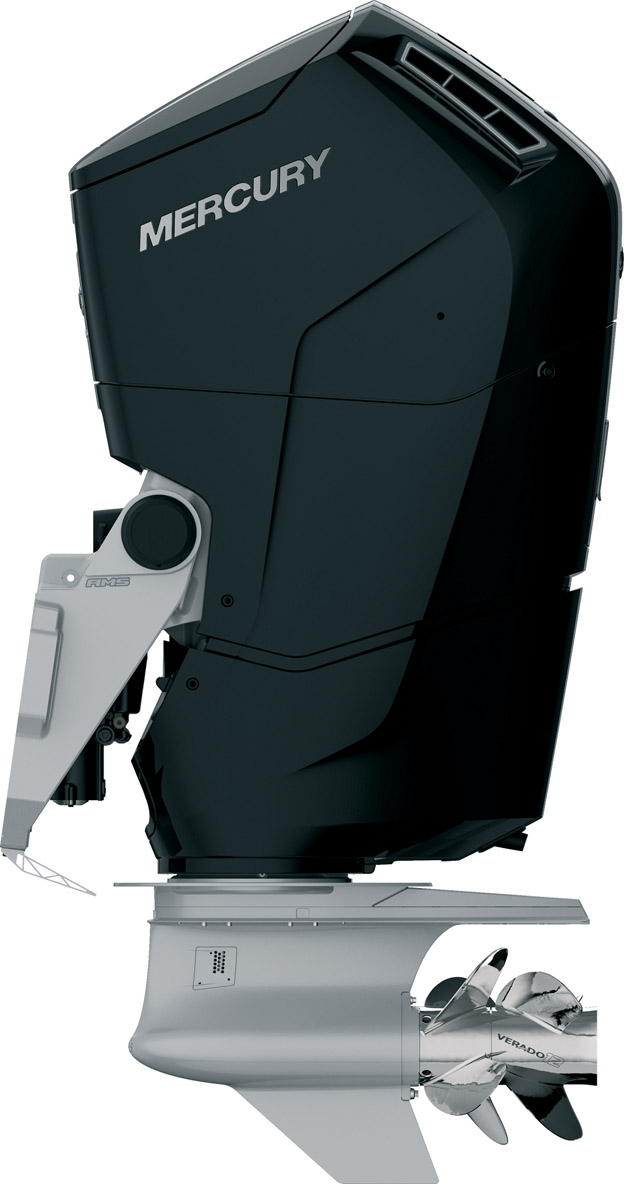
With the significant development of the 20 to 40-foot powercats sector, many units are now powered by outboard motors. As a powertrain, this kind of motor is also a coherent choice aboard a small sub-30-foot sailing multihull.
The principle is simple: a motor with a drive leg and propeller is attached to the transom to propel the multihull.
Advantages
- Easy installation
Installing an outboard motor is fairly straightforward, and even more so today with electric steering, which reduces wiring. All you have to do is connect it to the battery and fuel tank, and you’re good to go.
- Space-saving
The fact that the motor is located on the outside of the hulls means that the space on board can be used for other things.
- Wide choice of power ratings
Today’s outboard motors are available from 2.5 to 600 HP, giving you plenty of room for maneuver and enabling you to tailor the power perfectly to each multihull.
- Maintenance
Located on the outside of the hull, the outboard motor simplifies maintenance. In recent years, engine manufacturers have made great strides in making routine maintenance operations even easier, while keeping the multihull in the water.
- Price
Although prices have recently risen, outboards are still relatively affordable, given the power they deliver.
Disadvantages
- High fuel consumption
Compared to the rather reasonable fuel consumption of inboard diesels, fuel consumption skyrockets as soon as the engine is pushed a little.
- Aesthetics
It’s all a matter of taste, but the outboard motor protrudes from the multihull and is not always well integrated into the lines; the inboard motor, on the other hand, remains invisible.
- Precise installation
To work perfectly, an outboard motor must be properly installed on the hull. This means that the motor must be installed at the right height on the transom, that the torque tab must be correctly adjusted, and that the choice of propeller must be adapted to the multihull and its use.
Which system to choose?
The choice of drivetrain for a multihull depends on a number of factors.
The first is, of course, what the manufacturer offers. In some cases, you have a choice, in others, the model you’re interested in is offered with only one option.
Simplicity and reliability
The other criterion concerns your program and where you’re going to sail. For long-distance cruising and sailing in faraway places, it’s best to opt for a simple, reliable system that you can work on yourself. You can also choose your stopovers according to the network of professionals who can intervene on your transmission. For shorter, more local voyages, the choice is less important.
Budget
Budget is another point to consider, as the difference between a shaft line and an IPS, to give just one example, can be quite substantial. When calculating your budget, don’t forget to include maintenance over three years, to get the full picture.
Comfort
Saildrives and pods offer appreciable sailing comfort in terms of both maneuverability and vibration, which can be important for some boaters.