More than any other resource, water on board is a necessity. We use it for drinking, but also (and especially in quantity) for washing ourselves, washing dishes and cleaning the boat. As a reminder, for drinking, 2 liters (just over 2 quarts) per person per day are required, but you’ll see below that freshwater consumption on board, again per person and per day, is 30 times higher than that! To avoid having to stop off too often or, worse still, to ration your water, the best solution is to install a watermaker, a tried-and-tested system that is constantly being improved.
What defines drinking water?
According to the WHO (World Health Organization), water is considered drinkable when it contains no more than 1,000 ppm salt (1,000 particles per million). In the case of a watermaker, the result is generally between 100 and 600 ppm, depending on the temperature of the water pumped, with a good average of around 400 ppm. In addition to these satisfactory values, the other positive aspect of a watermaker is that it produces water of excellent quality and pleasant taste, thanks to the absence of chemical treatments.
How a watermaker works
The main reason why seawater is unfit for human consumption is its salt content, which is around 1,000 times higher than in the fresh water we consume. The basic idea is therefore quite simple: take seawater, filter it to remove salt and bacteria, and transform it into fresh, drinkable water.
At this stage, we need to distinguish between two desalination methods: evaporation and reverse osmosis. The first solution is mainly used by commercial boats and certain large yachts, and is designed to produce service water, i.e. non-drinking water. To produce drinking water, the second method, reverse osmosis, is preferred.
What is reverse osmosis?
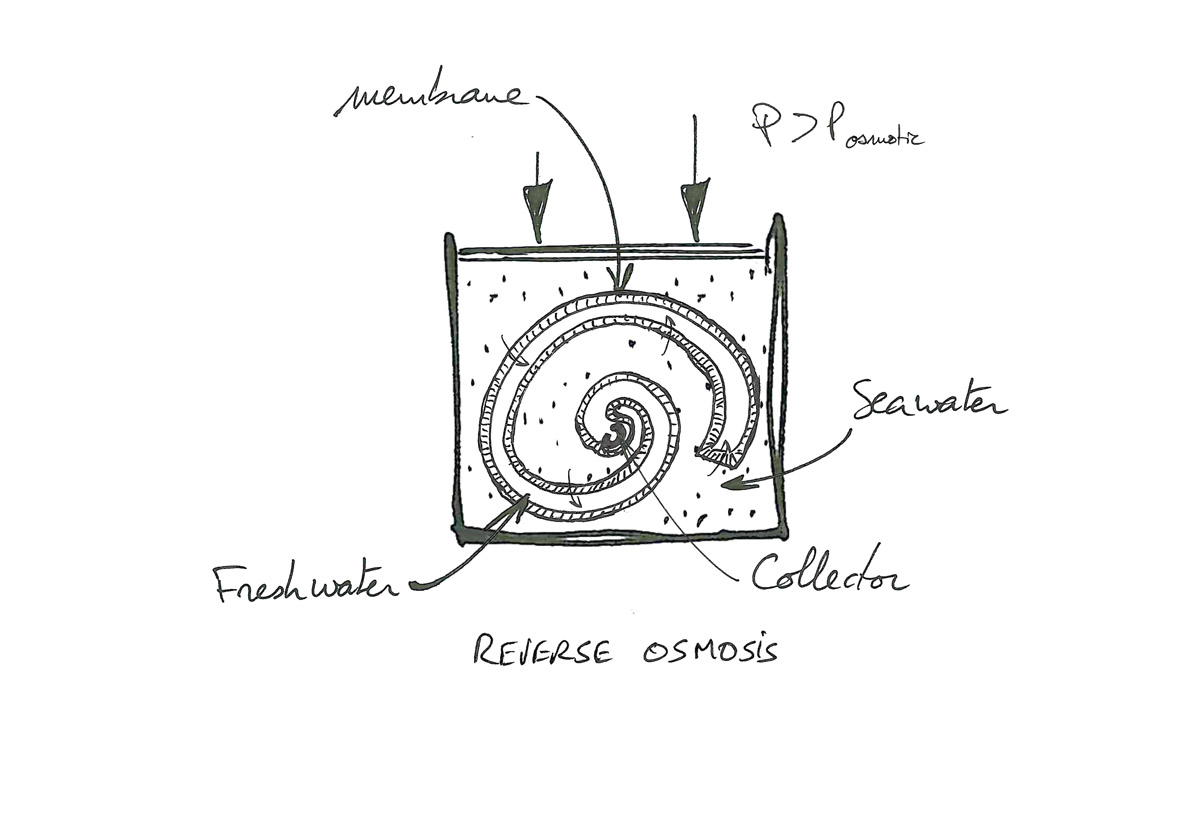
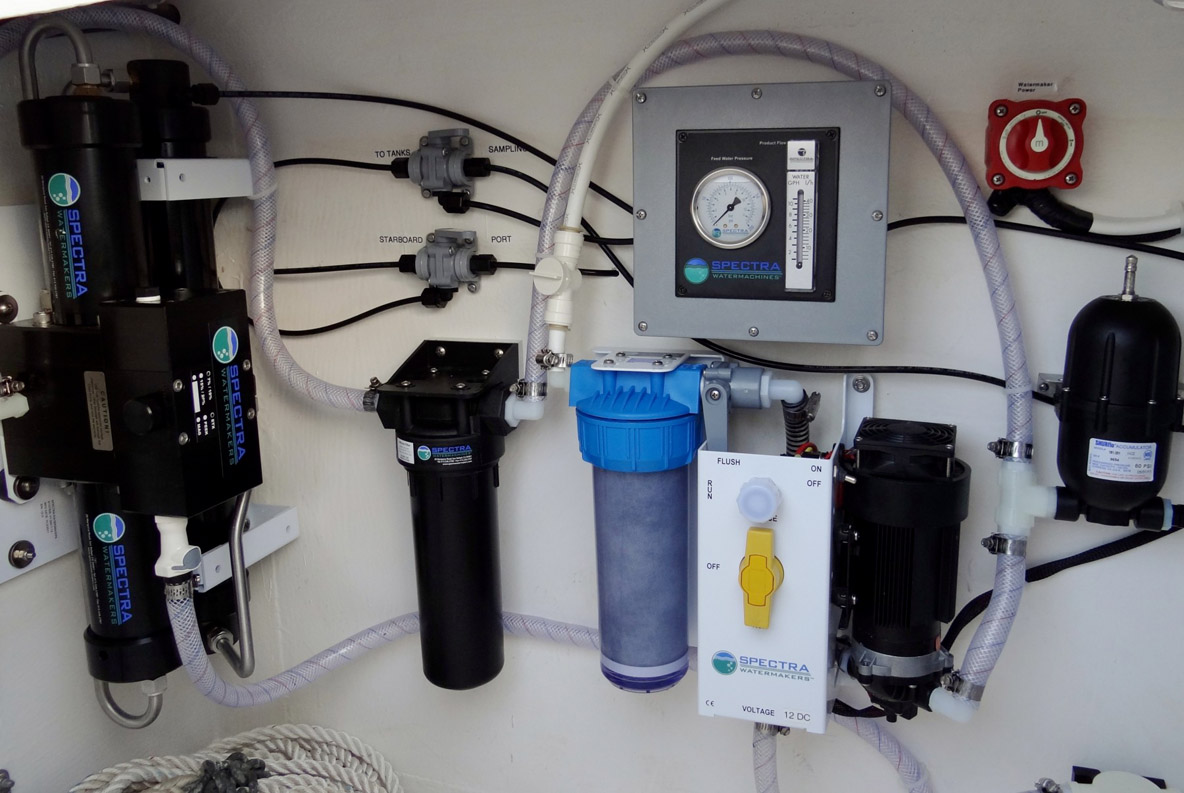
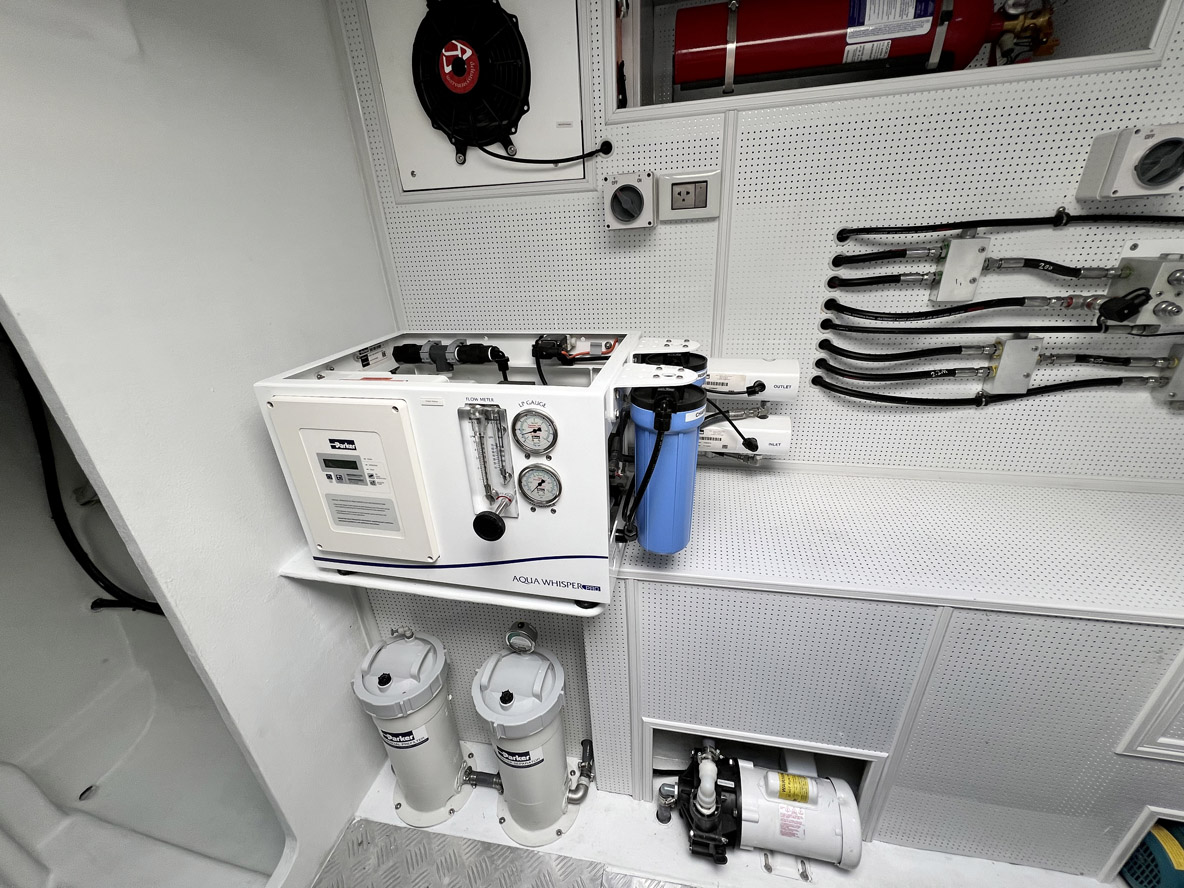
Reverse osmosis is a natural phenomenon enhanced by technology. Simply put, osmosis occurs when two liquids of different densities are separated by a membrane. This membrane can be natural, like our skin, or artificial, as in the case of a watermaker. The phenomenon of osmosis means that the less dense liquid seeks to cross the membrane to join the denser liquid. Applying pressure to the denser liquid (salt water) reverses this process, filtering out salt and bacteria. The watermaker thus consists of a pump, a series of membranes and usually a few filters.
The pump draws in seawater, which then passes through the various membranes to lose its salinity and be filtered. Since water molecules are generally smaller than salt and bacteria, the process is highly efficient.
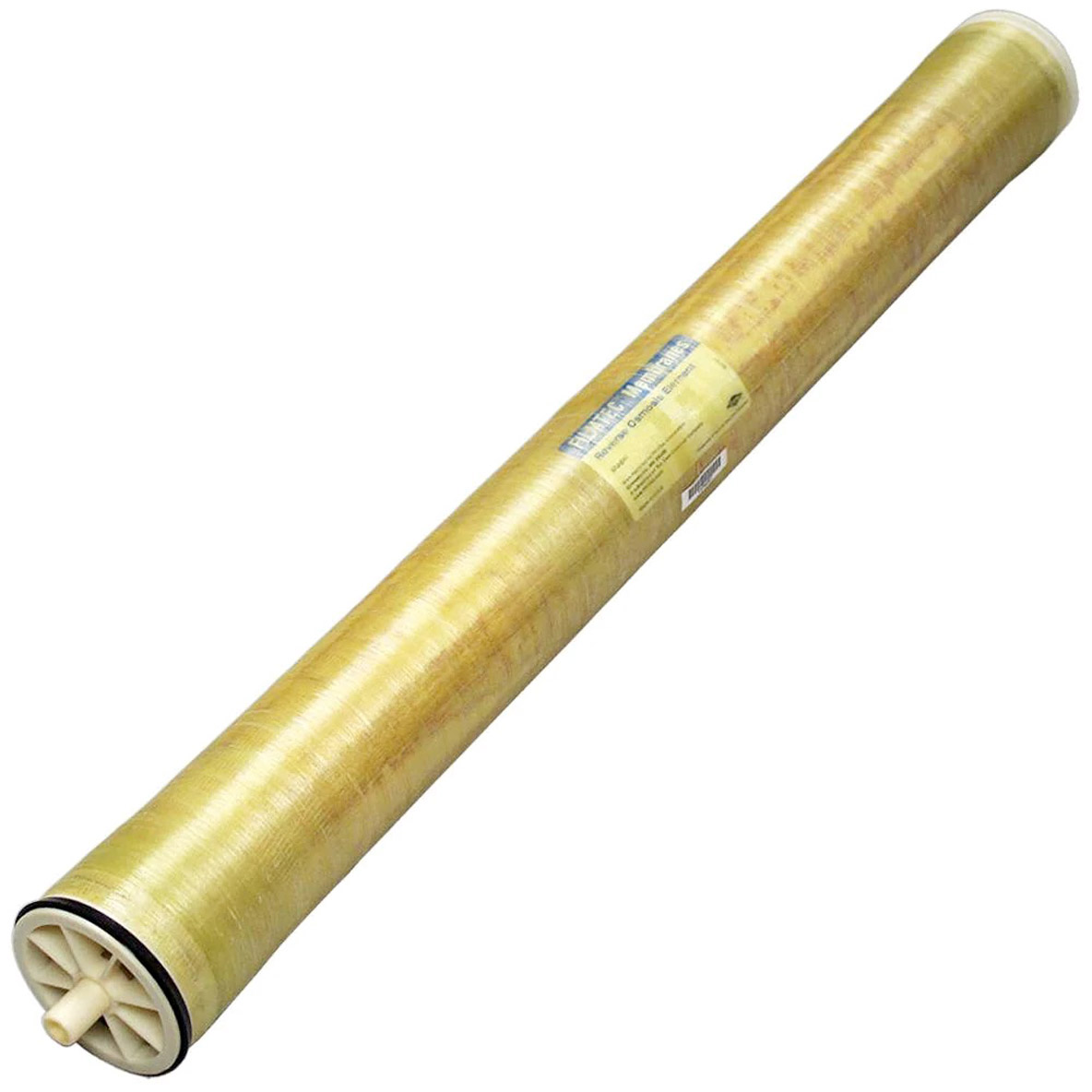
The membranes, made mainly of polyamide films, expand or contract slightly with temperature, letting water through but blocking salt and bacteria. This phenomenon of expansion explains why the performance of a watermaker varies according to sea temperature. In concrete terms, a watermaker will have a higher output in warm water, but on the other hand, filtration will be less fine, which can let bacteria through. To overcome this problem, more membranes and filters can be added.
On average, a small watermaker is estimated to achieve an efficiency of 15%, i.e. 100 liters (26 US gal) of water must be pumped to obtain 15 liters (4 US gal) of drinking water. However, this efficiency can be as high as 30% for larger systems.
Another important point is to maintain a constant pressure (around 60 bar/870 psi) to ensure optimal operation and prevent the membranes from clogging, which can happen if the pressure is too low. To control this pressure, various systems are available on the market, such as expansion tanks, pressure switches to control and avoid overpressure, or flowmeters to obtain a constant pressure. Once the water has passed through the membranes, it passes through a number of filters to remove the last impurities and any unpleasant taste.
Here again, watermakers are equipped with a number of systems to ensure optimal operation, starting with a salinometric sensor which, as its name suggests, measures the amount of salt in the water produced to ensure that it is fit for consumption.
Membranes and filters
The membrane
The membrane is an essential component of the system, since it is the one that will carry out the reverse osmosis process. Most membranes on the market are made of polyamide film. This is generally a film wrapped around a cylinder. Although this technology is now the standard, it is not very efficient: to produce 10 liters (2.6 gal) of water, you need to pump between 40 and 100 liters (10-26 gal) of seawater, depending on the model and sea temperature. Other materials, such as graphene, are beginning to emerge, but are still at the prototype stage.
Filters
The number of filters and their characteristics vary according to the type of watermaker and the area in which you’re operating. We start with pre-filters, of 5, 20, 30 or 80 microns. The purpose of these filters is to remove the bulk of impurities and thus protect the life of subsequent filters. We can then install a plankton filter, which stops suspended particles larger than 100 microns. Then there’s the activated carbon filter, which improves the taste and odor of the water. The mineralizing or re-mineralizing filter is also important, as the water leaving the watermaker is devoid of mineral salts. The oil/water separator filter should also be considered. The list is not exhaustive and depends above all on your installation and use. A configuration that should be discussed with your installer.
Several power supply systems
To operate, a watermaker needs energy, and there are various solutions for this.
- A dedicated electric motor
This is the most common solution; it includes a low-pressure pump and a high-pressure pump driven by an electric motor. It’s a simple, reliable and competitively priced installation. On the other hand, its power consumption is quite high, so it requires a good source of energy on board.
- An energy recovery system
In this case, a medium-pressure pump is relayed by a hydraulic amplifier that recovers energy from the seawater and sends it to the membrane. A slightly more complex system that consumes less energy but is more expensive and more complex to maintain and repair.
- A watermaker coupled to the boat’s engine
Some watermakers can be directly connected to the motor. In this case, it’s the engine that runs the watermaker. The main advantages are the reliability of the unit, higher output and attractive pricing. On the downside, however, it requires the use of an internal combustion engine to produce drinking water, and installation is more complex.
- Generator power supply
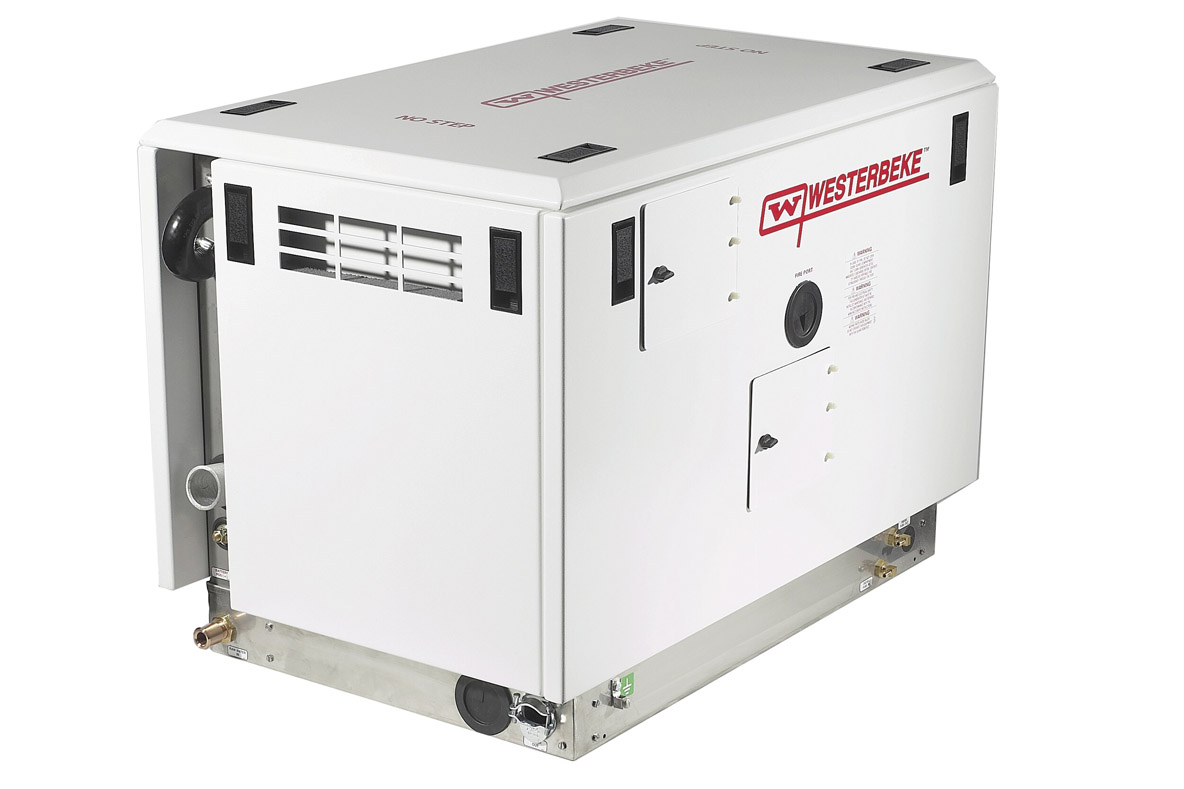
This last solution is similar to the first, but unfortunately results in carbon emissions: a generator is used to power the watermaker’s electric motor. This works for small watermakers. A unit producing less than 100 liters (26 US gal)/hour already requires a 200-to-300-watt generator and a set of batteries to go with it. For larger systems, the solution becomes even less attractive, requiring a very large generator and a much larger battery bank.
How to choose your watermaker
Once you’re familiar with the principle and the different systems, the choice of a watermaker should be based above all on two criteria: your need for fresh water and the type of installation possible in your multihull.
Define your use
If you only use your multihull at the weekend, or if you live aboard, your water requirements will differ. Similarly, the amount of water used depends on the number of people on board.
Figures vary widely, but average use is considered to be around 60 liters (16 US gal) per person per day, including showers. Then there’s the washing machine, dishwasher, galley and icemaker. This average consumption can of course be lower if you’re eco-responsible, or on the contrary, be much higher aboard a multiyacht where comfort is paramount. However, for a large multihull with six people and a crew of two, this quickly rises to 400 or 500 liters (100-130 gallons) per day, which means you’ll need to pump around 5,000 liters (1,300 gal) of seawater every day. It’s worth pointing out here that desalinating seawater generates brine, a concentrate of warmer, saltier seawater that is obviously harmful to the environment, even if freshwater discharges tend to balance things out...
It’s up to you to calculate the capacity of your installation, bearing in mind that for a 60-foot unit, the minimum is a unit producing 150 l (40 gal)/h.
Watermakers of all sizes
Once you’ve defined your needs, you’re going to start looking for the perfect model. Before doing so, think about it, or talk to the manufacturer if it’s a new multihull, to find out how much space is available on board for the installation.
However, while just a few years ago, desalination systems were still relatively bulky, more recent models are much more compact. However, there’s no need to believe in miracles: the smaller the watermaker, the lower its efficiency. Conversely, larger installations are only justified for very large units with high freshwater requirements. The trick is to find the right balance, with a unit perfectly sized for your multihull. You can also opt to install two watermakers, one in each hull, if you have enough space. Some boats also feature a second watermaker, which uses the evaporation method to produce fresh service water unsuitable for consumption.
The right model for on-board power generation
As mentioned above, depending on the system used, watermakers are more or less energy intensive. You therefore need to know how much power you have on board, so you can choose a model whose consumption won’t blow the circuit every time it’s used, and how you intend to operate the watermaker.
Simplified maintenance
The good news is that a watermaker does not require extraordinary maintenance (see below). Nevertheless, should a technical problem arise at sea, it’s a good idea to opt for a system with simplified maintenance. This may involve rinsing the membrane, replacing the filters or troubleshooting the electronic connection. Some models feature a display and interface for easy troubleshooting and basic maintenance. There are even models with a smartphone app that allows you to monitor the status of your system in real time, including pressure, water flow, volume of water treated or number of days until filter replacement. In the event of a problem offshore, this kind of support is much appreciated.
A well-known brand with a good dealer network
The last major consideration is the brand! You may be tempted by an extra gadget or a super-attractive price, but you also need to consider the dealer network. In the event of problems a few thousand miles from your homeport, it’s good to know that you’ll find a local professional capable of dealing with your setup.
The main manufacturers
When it comes to choosing a watermaker, the market is as rich as it is varied, with dozens of manufacturers, many of whom have remained very small.
Here’s a non-exhaustive list of the most widely recognized watermaker brands.
Blue Water Desalination
The American company Blue Water has been offering watermakers for over 30 years and has a worldwide network. The range comprises models from 32 to 536 l/h (8.4 to 140 gal/h).
www.bluewaterdesalination.com
Dessalator
Present on the market since 1999, and based at Antibes in the South of France, Dessalator occupies an important place. The company offers models for all boat sizes, from small sailboats to commercial vessels, with capacities ranging from 30 to 2,000 liters/hour (8 to 525 gal/h). The brand has around twenty representatives around the world and equips numerous shipyards right from the factory.
www.dessalator.fr
HP Watermaker
Based in Milan, Italy, HP Watermaker offers a wide range - from small equipment for a small multihull to large shore-side installations. HP Watermaker has developed interfaces so that its products can be controlled directly from on-board screens.
www.hpwatermaker.it
Parker
Based in Ohio, USA, Parker has been in business for over 100 years, specializing in filtration and fluid management. The brand offers watermakers of all capacities, including models producing up to 13,000 liters (3,400 gal) per day.
www.ph.parker.com
Sea Recovery
Established over 30 years ago, Sea Recovery is the world leader in reverse osmosis watermakers. The brand offers models producing from 27 l (7 gal)/h to over 1,000 l(260gal)/h.
www.searecovery.org
Schenker
Founded in 1998, Italian manufacturer Schenker specializes in energy recovery models. The company offers a complete range, from small, basic models to those capable of equipping multiyachts up to 80 feet. Another strong point is that the brand is distributed in 34 countries, a good insurance policy in the event of a problem with the system.
www.schenkerwatermakers.com
SLCE
Through its Aqua-Base brand, SLCE develops a complete range of watermakers from 30 to 300 liters per hour (8 to 80 US gal/hour). It offers two technologies, one with a high-pressure pump and the other with an energy recovery unit.
www.slce-watermakers.com
Spectra
American company Spectra made a name for itself in the 1990s with the Clark pump, the first energy recovery pump designed specifically for small-scale desalination. This pump is highly efficient, reducing energy consumption by up to 75% compared with conventional systems.
The range includes models producing from 22 l (5.8 gal)/h to over 75,000 l (19,800 gal)/h, and the brand has a worldwide sales and technical service network.
www.katadyngroup.com
Maintenance: Easy peasy!
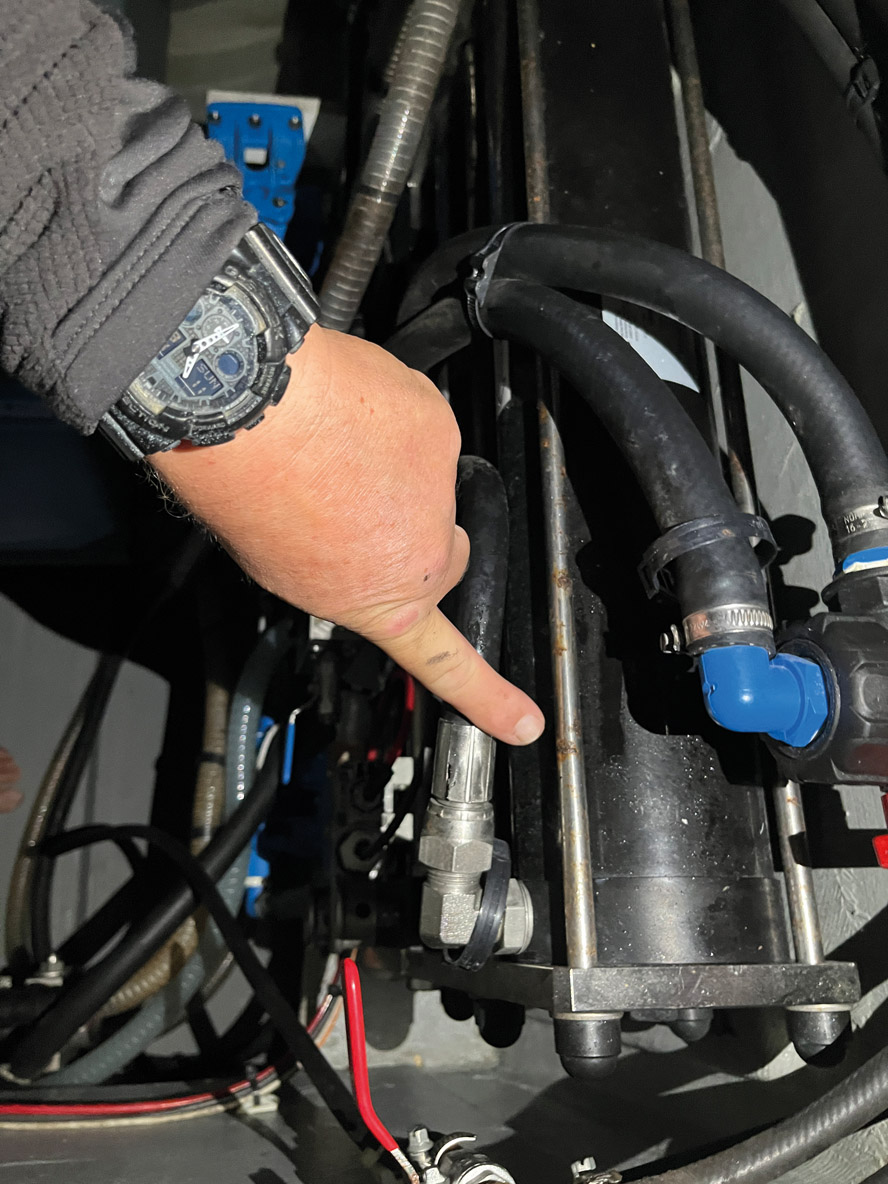
Unlike some on-board equipment, a watermaker doesn’t require a great deal of maintenance.
For routine maintenance, simply check the circuit regularly for leaks, and the pump’s oil level if it’s a lubricated model.
Filters should also be regularly checked and replaced (approximately every 100 hours). This operation can be made even simpler thanks to certain apps that show you the state of the system in real time.
The membrane also requires little maintenance, although it should be rinsed from time to time. For example, if production is 20-30% lower than normal, the system needs to be rinsed, or even chemically cleaned with appropriate cartridges.
Rinsing should also be carried out when use is low. When the watermaker is not in use, bacterial fauna can develop and clog the membrane microporosities. To avoid this, you can also run the system at least once a week.
If the boat is winterized, the watermaker should also be winterized, using a specific antifreeze product.
Finally, like all components of this kind, the membrane must be replaced every three or four years, an operation that costs an average of €600 to €1,000.