
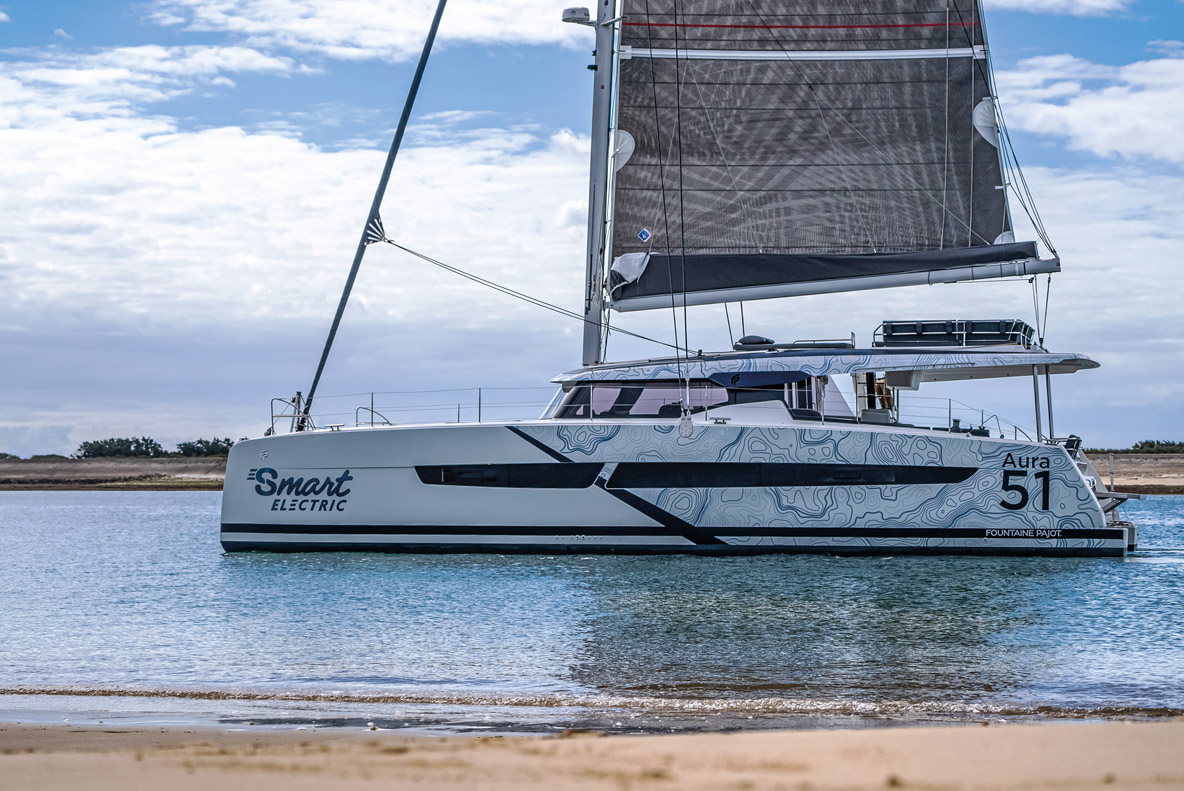
Electric propulsion is progressively making its mark in the automobile sector, and it was foreseeable that the marine industry would come to follow this trend. While many multihull manufacturers already offer zero-emissions motors, the next step was to shift up into mass production... This is now being achieved, as we saw at the Cannes Yachting Festival, where the very first Aura 51 Smart Electric was on display.
Infos pratiques
- Le chantier : Aura 51 ODSea
- La fiche technique
-
 Découvrez notre vidéo exclusive
- Financez votre Aura 51 Smart Electric
- Assuez votre Aura 51 Smart Electric
- Articles autour du Aura 51 Smart Electric
- Test location: La Rochelle, France
- Conditions: 6 to 10 knots of westerly wind, slight sea
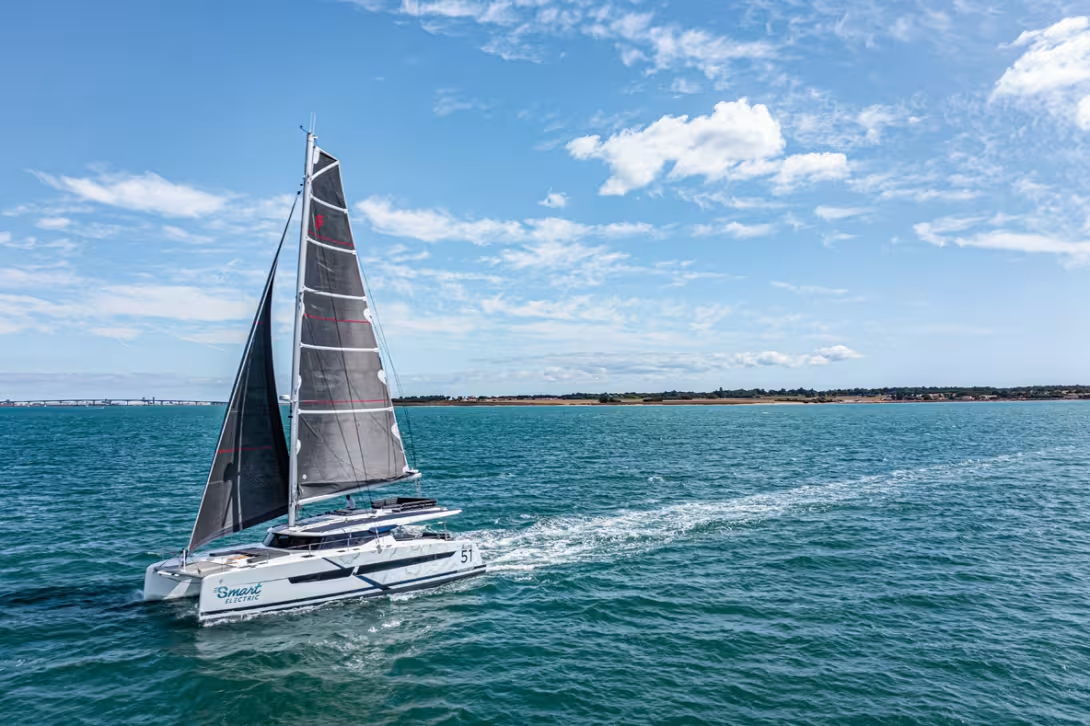
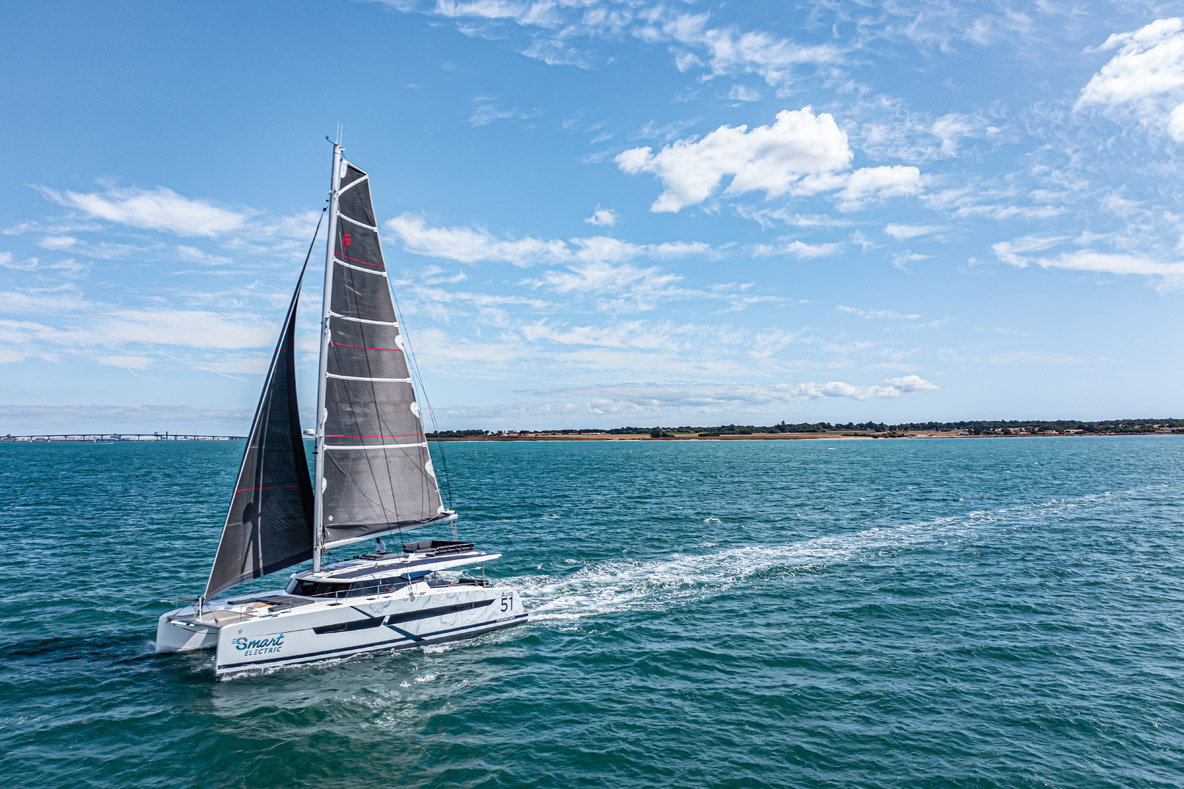
This particular catamaran is one that we discovered as a preview in La Rochelle a few months ago, so it was already familiar to us. It had lived its first life as a prototype in the internal combustion engine version, in order to obtain all the necessary approvals as soon as possible. Immediately after the photo shoot organized last spring off the Glénans islands in Brittany and our test in La Rochelle - see MW184, the Aura 51 #1 came back to the shipyard to undergo a kind of transformation - switching from combustion to electric in just over a week! The objective of this article is not to describe again the behavior under sail, the deck plan and the fittings of this new 51-footer (very successful by the way) but to describe the brand-new electric version.
Electric… why do it?
Aboard our multihulls, the internal combustion vs electric debate is much less virulent than it is where cars are concerned. For those who don’t want to think about it too much, laws and directives should, in the medium term, be more or less the same in both worlds: no more combustion in the city, no more combustion in anchorages and protected areas. This will eventually put everyone (more or less) in agreement. Beyond the constraints, sailing electrically will allow you to reduce, according to the calculations determined by Fountaine Pajot, 80% of the emissions through a 20-year use of a catamaran, including its construction. Contrary to the car, the idea is not really to hook up to the shore power to recharge the batteries, so for now, this imposes the presence of a generator. And means we are forced to talk about diesel power again... but the hybrid configuration chosen by most manufacturers has many advantages. First of all, you only need one internal combustion unit on board, as opposed to three (if there is a generator in addition to the two engines). Then, the balance of consumption at an equivalent speed is rather to the advantage of the generator (from 0 to 30%). On the mechanical side, finally, a generator and two electric motors have the advantage of simplicity - maintenance is both easier and cheaper. But the ambition of electric sailing catamarans is to consume as little fossil fuel as possible. To achieve this, these boats have two significant advantages: 1) The catamaran configuration allows for a very large surface area of solar panels - impossible for a monohull to compete. 2) Sailing allows, thanks to the electric motor, recharging by hydrogeneration.
A shipyard committed to being forever green
Fountaine Pajot’s objectives in terms of reducing their carbon footprint are particularly ambitious, both for the manufacture of catamarans - new materials, green energy, waste reduction and treatment - and for generalizing electric propulsion. Within the next five years, the yard is already planning to produce half internal combustion and half electric boats and is aiming for “zero emissions” by 2030 – and that is, like, tomorrow! The Aura 51 Smart Electric is the first catamaran in this program, to be followed very soon by the Elba 45 and the Astrea 42. There’s still a question mark concerning the Tanna 47 in a Smart Electric version because the forward locker is a bit too small to accommodate a large generator. As for the Samana 59, a prototype of this model will be used for testing a hydrogen fuel cell…
Advanced technology... but accessible technology!
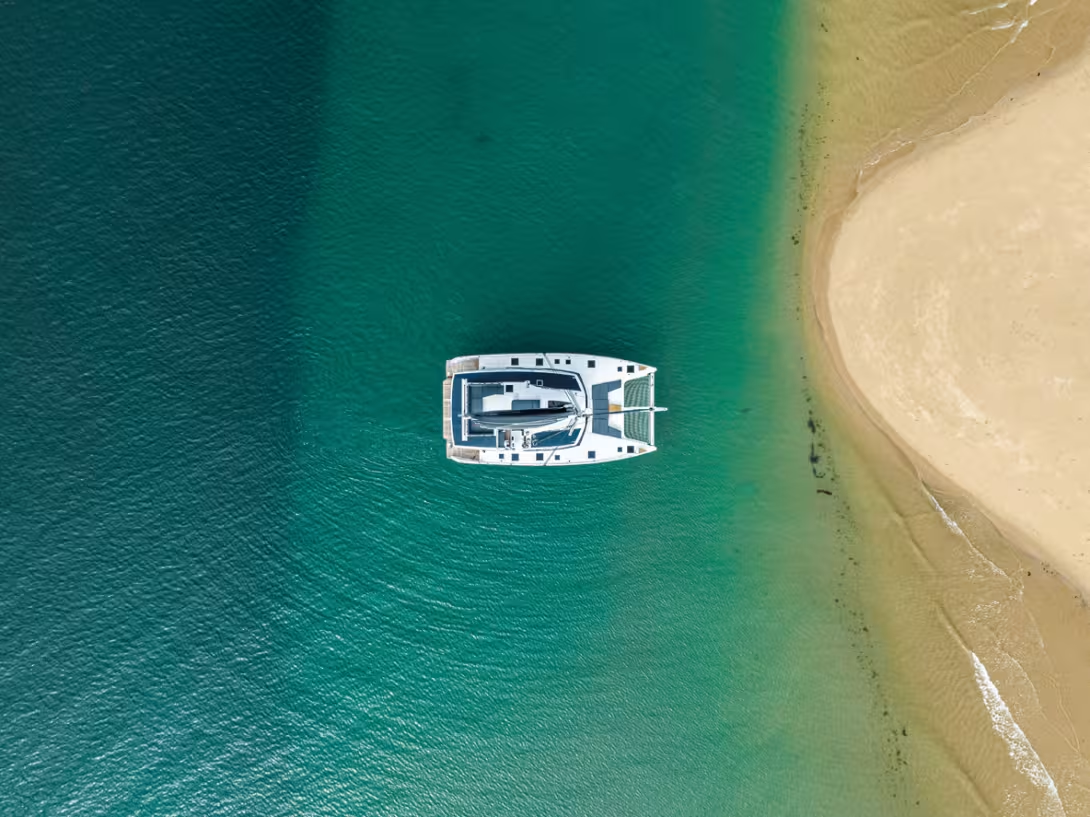
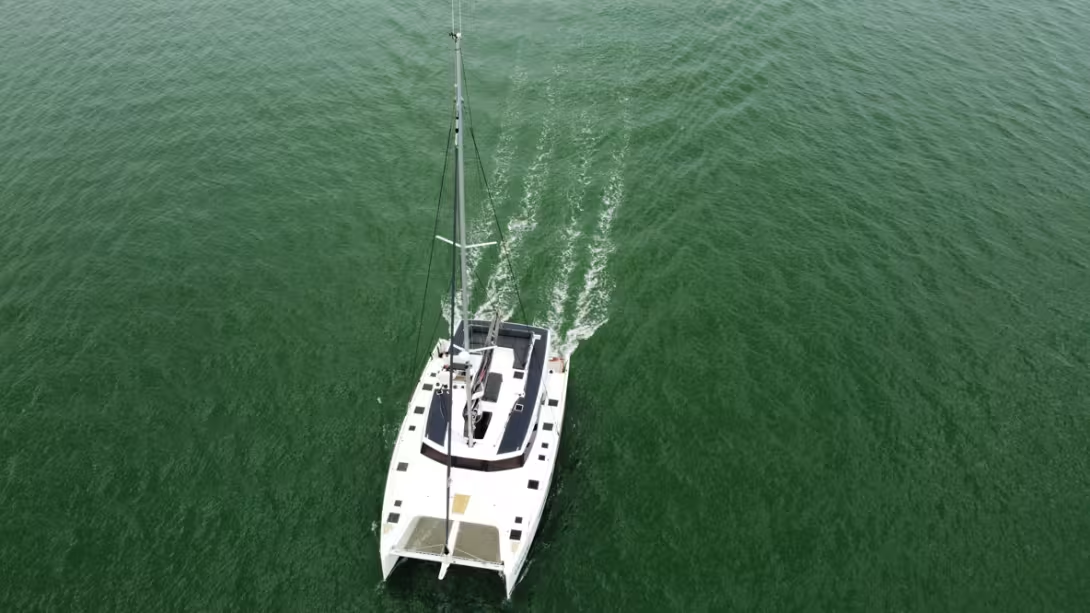
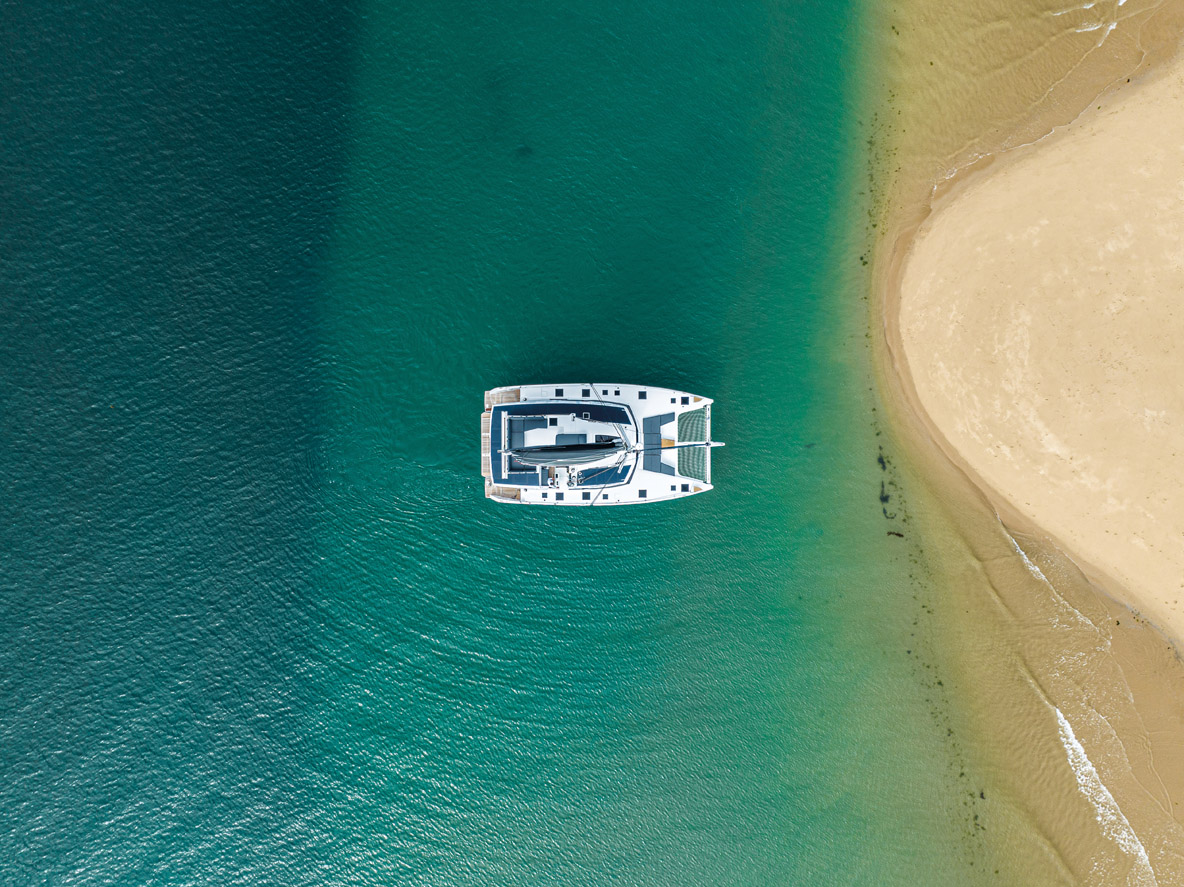
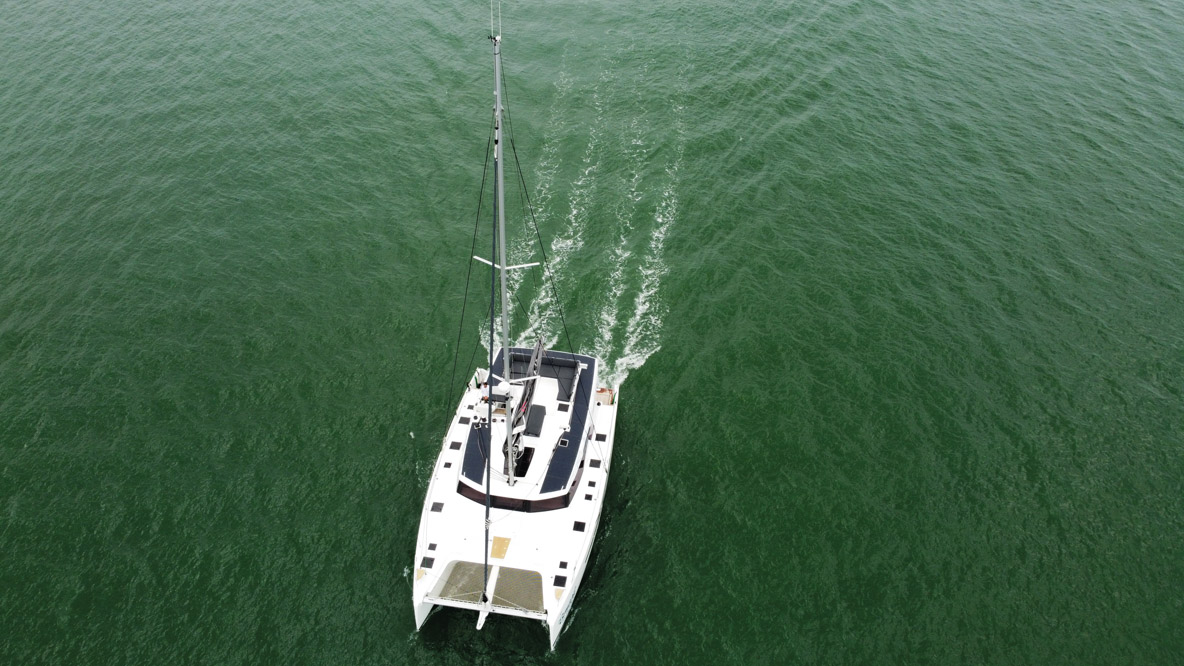
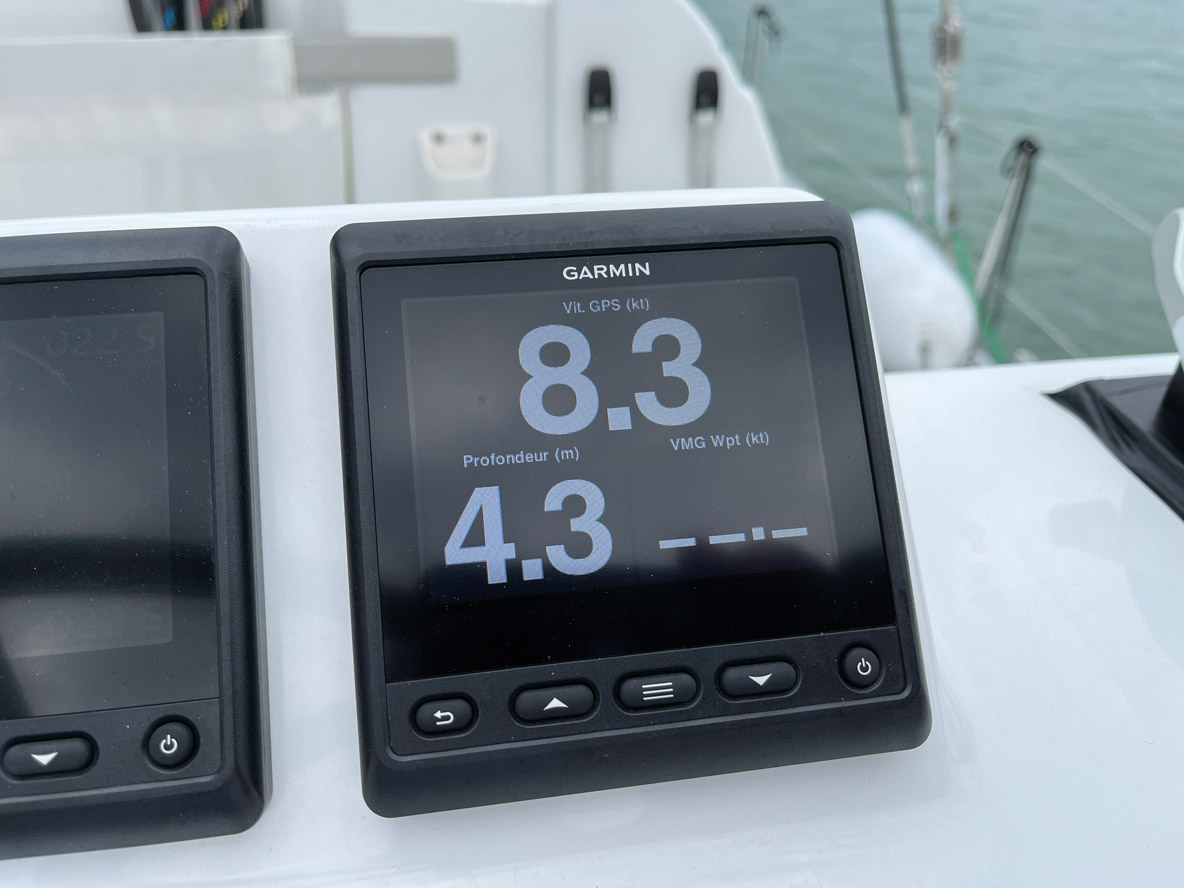
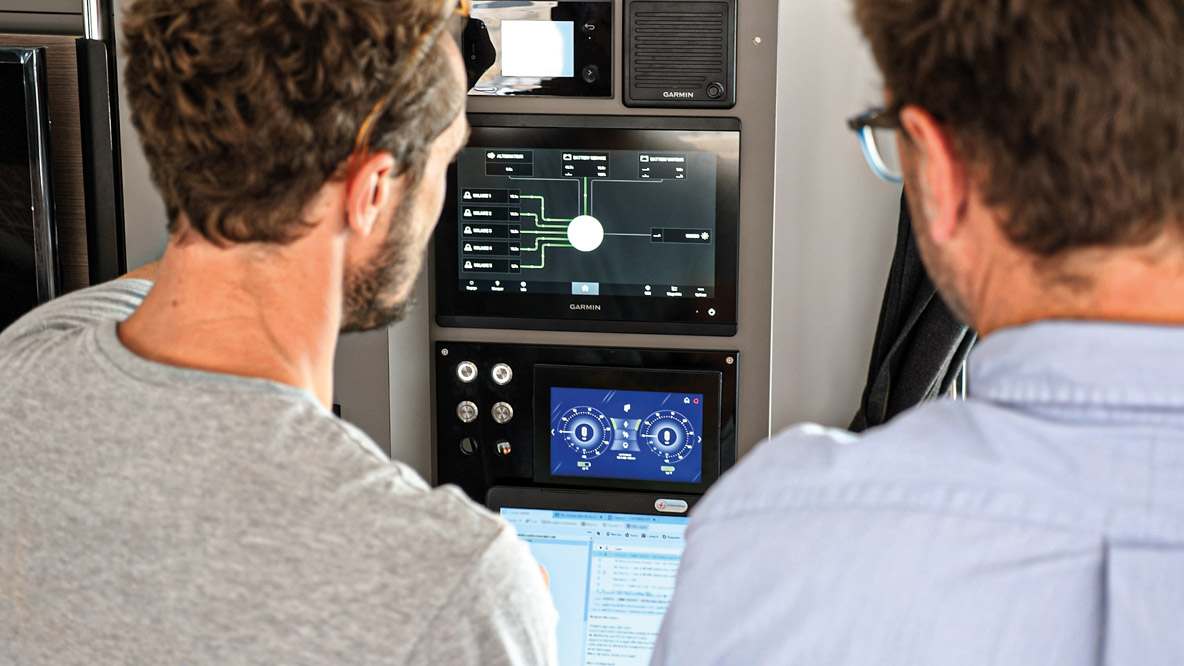
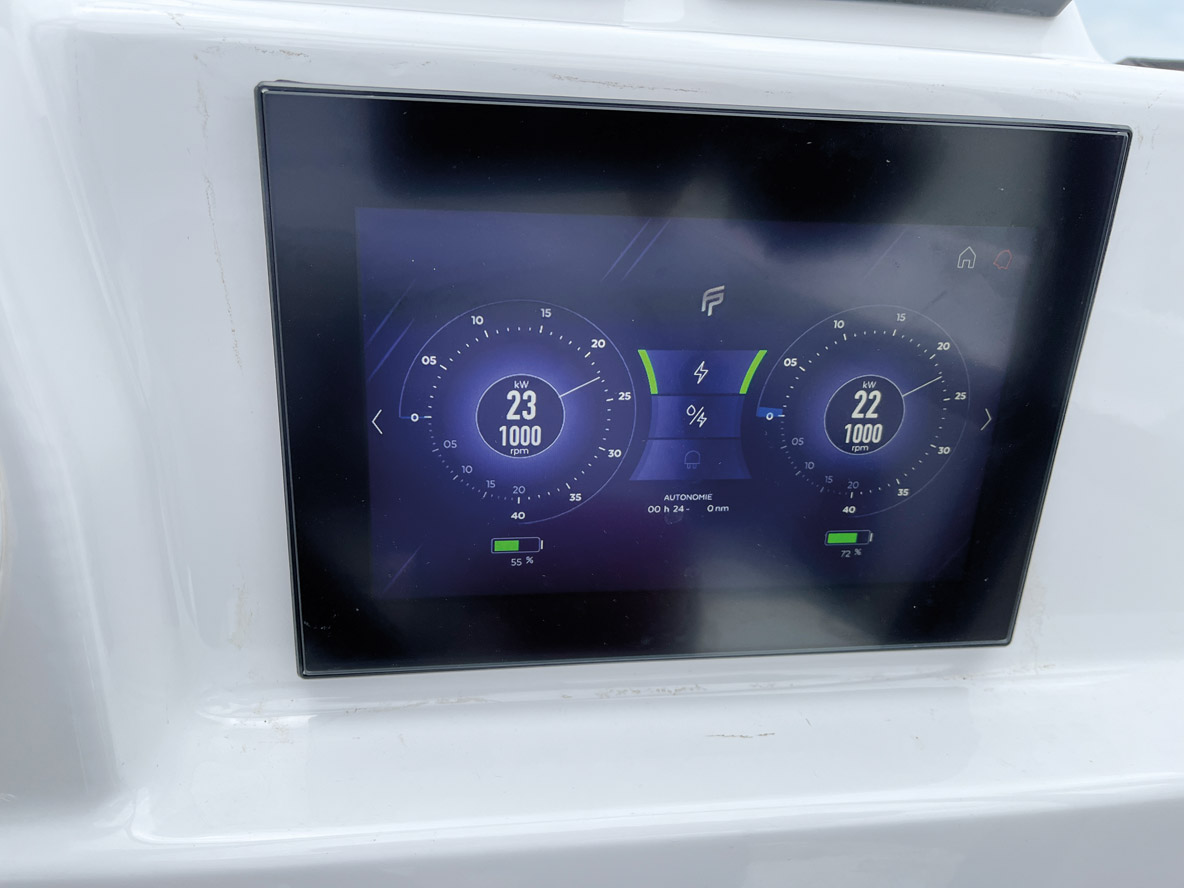
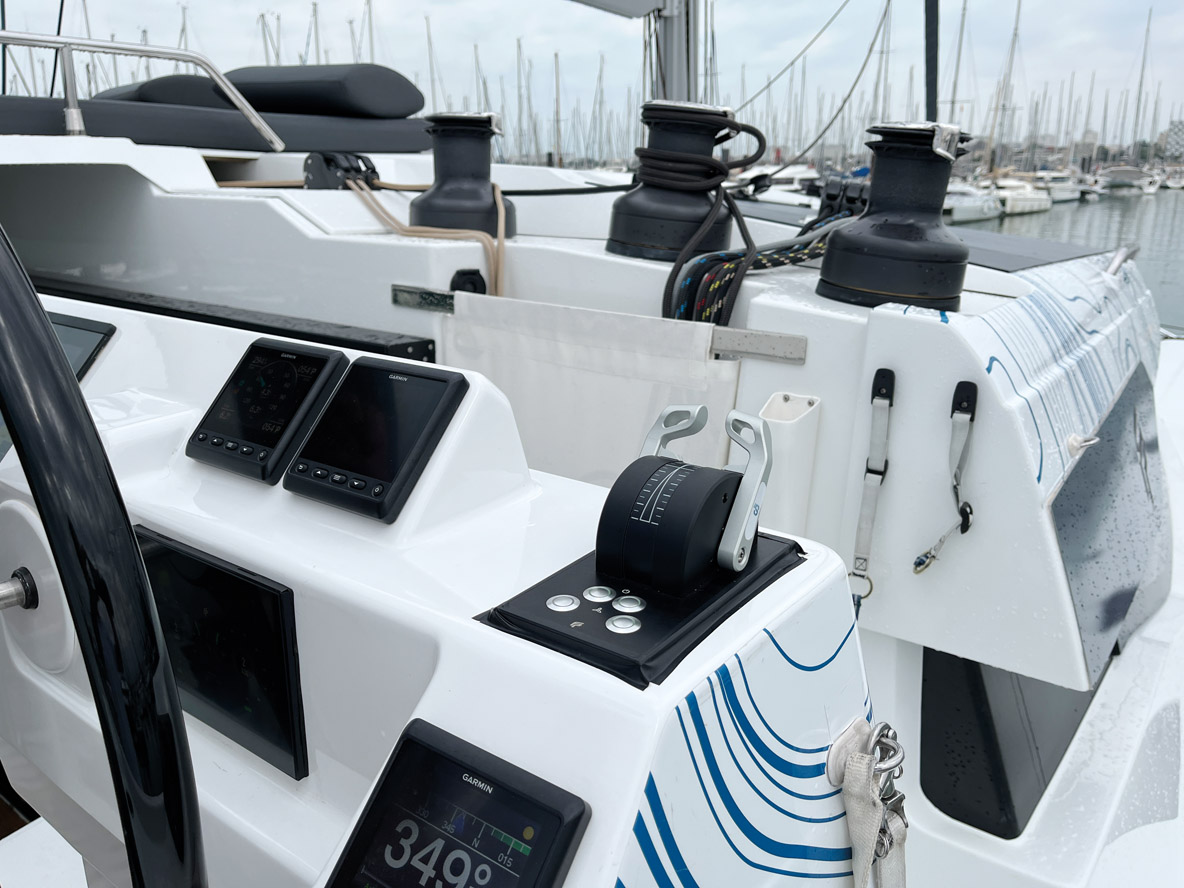
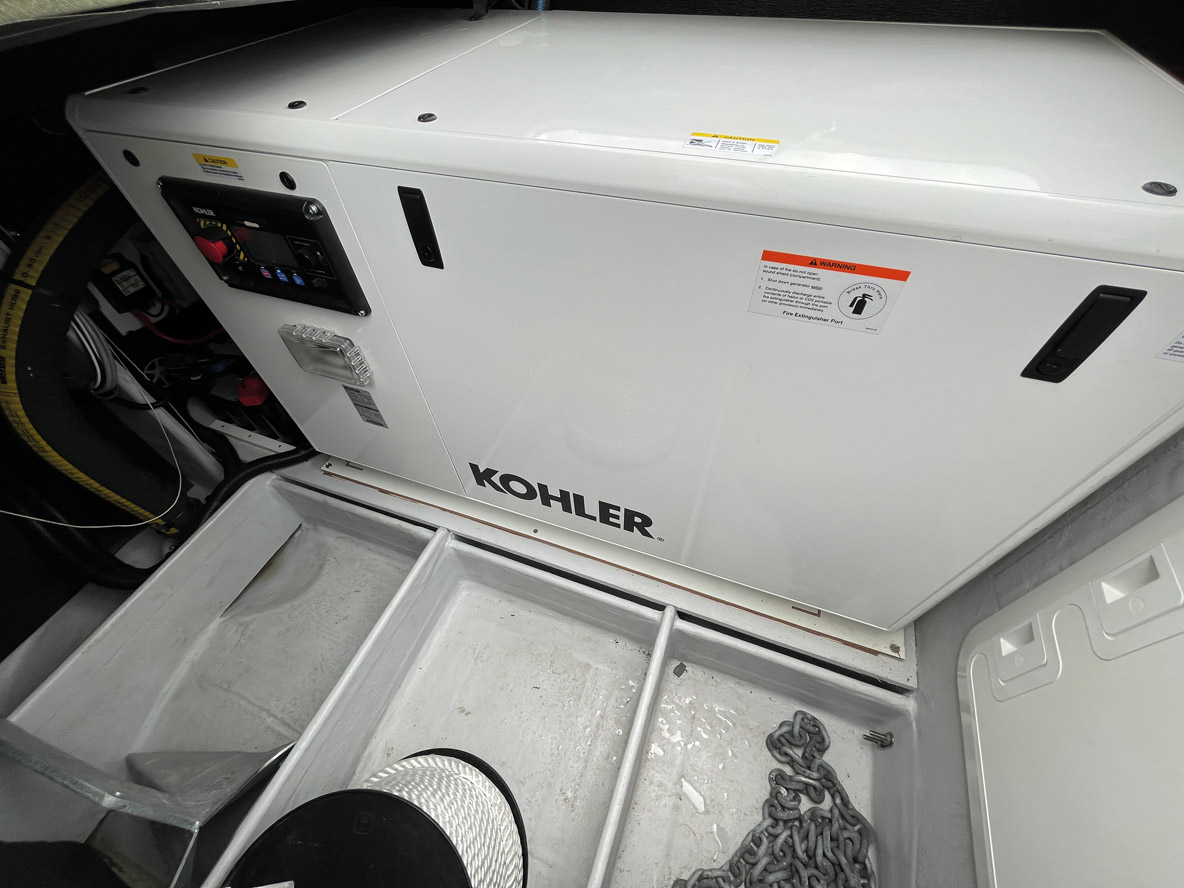
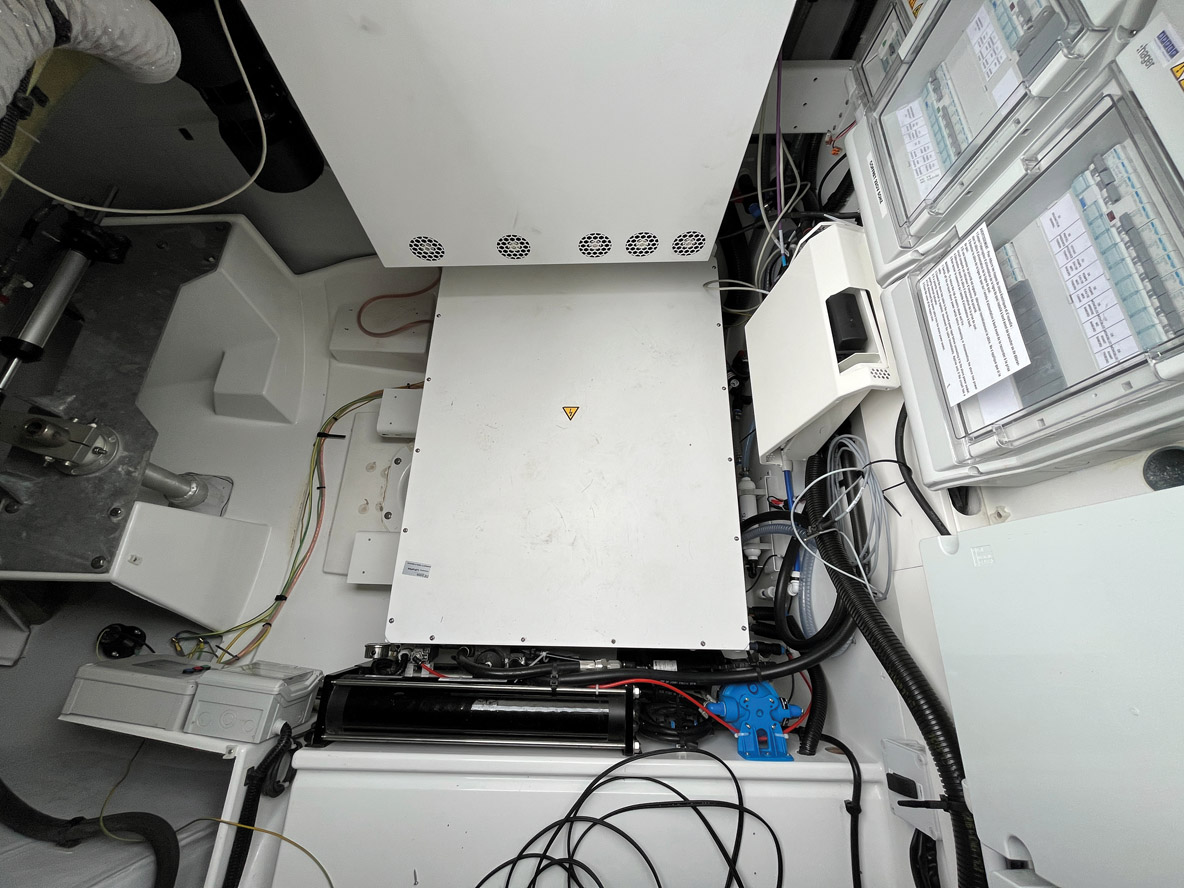
The two 75 HP Volvo lumps have been replaced by 21 kW batteries and 25 kW pods (so the motors are actually beneath the hulls). Converted to HP, that makes 2 x 34. While this figure is much less than the standard 2 x 60 HP and much, much less than the optional 2 x 75 HP, what’s got to be taken into account is the much higher torque of an electric motor - and the fact that, typically, we aren’t running the diesel engine flat out to achieve its full potential. We are always surprised by the absence of “neutral” with electrics. Here, the lever is pointing up, and nothing is happening... but the motors are ready and waiting to help you get out of port. Maneuvers are easy, responsiveness is excellent and... what silence! You can barely hear a hiss, maybe it’s a little louder at a certain rpm. At full throttle, we were making 8.3 knots, which is pretty decent - but ultimately far too fast in the overall scheme of an electric program. In full electric mode, you can last less than an hour at this speed. On the other hand, you can run for two hours at 6 knots - and even four at 4.5 knots. The principle is therefore to advance as much as possible under sail, but why not get the motor involved? In fact, with the lever just slightly engaged, and if the wind picks up a little and the catamaran accelerates, the motor switches from “propelling” to “charging” without you touching anything! It’s a bit like an electric car, after slightly flatlining, taking advantage of a never-ending downhill stretch to recharge its battery. The solar panels (all 2,000 Wp of them) also play a role in the recharging. With “normal” consumption, you can be self-sufficient at anchor. In the large forward locker, an imposing 32 kW generator has been installed. So big that there’s barely enough space for gennaker next to it. When the generator is running, you can hear it a little bit at anchor but almost not at all when sailing. With its support, you can sail at 6.5 to 7 knots while maintaining the batteries. The whole system is controlled by software specially developed by a supplier to the shipyard... and now integrated into the Fountaine Pajot Group. This software allows for controlling the whole system. It incorporates a completely new interface capable of managing not only propulsion, but also the consumption and production of energy in real time. The system is very similar to those found on electric cars - Fountaine Pajot even intends, within a year, to rival the best system currently available in terms of fluidity and ergonomics - Tesla of course. The main menu is particularly intuitive and user- friendly: it shows the power consumption and recharging status on a dial. It is immediately clear whether the balance is positive or negative. What’s even better is that under sail, by adjusting the hydrogeneration with the throttle, you can optimize the charging.
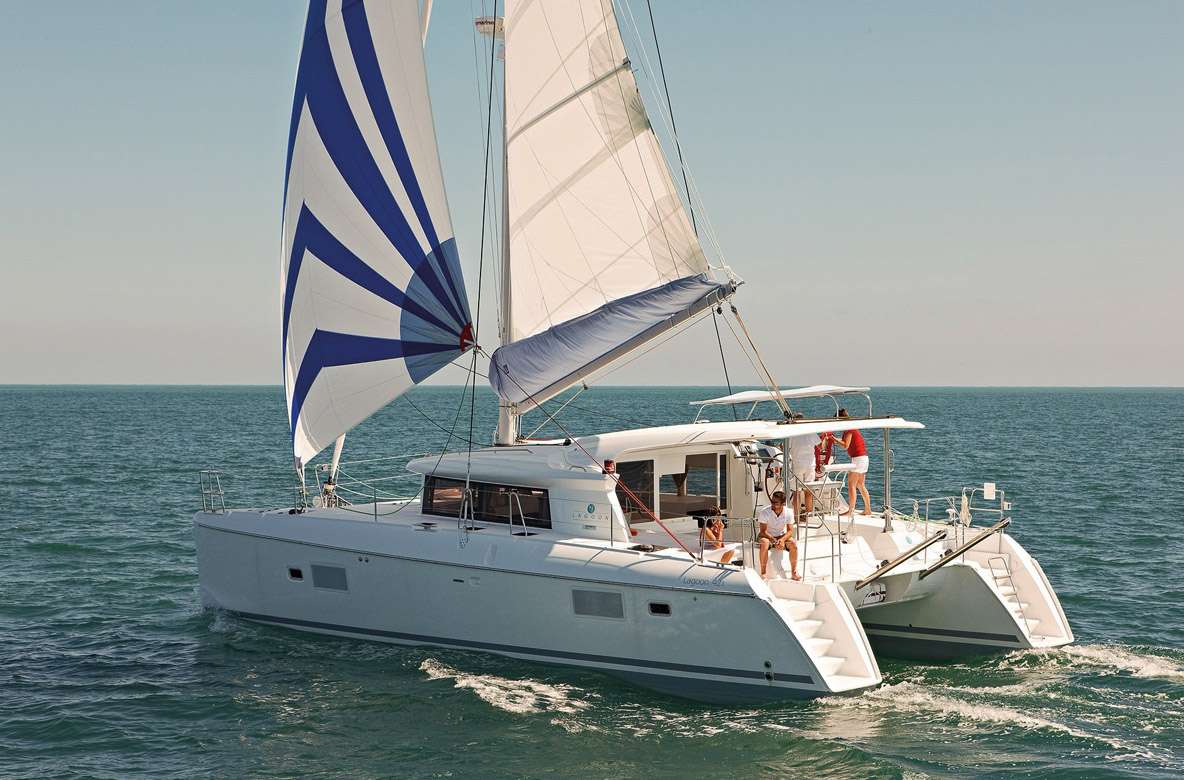
Lagoon 420 The pioneer of the electric series production
 |
|
Mathieu Fountaine : “A 1,750 nm test!”
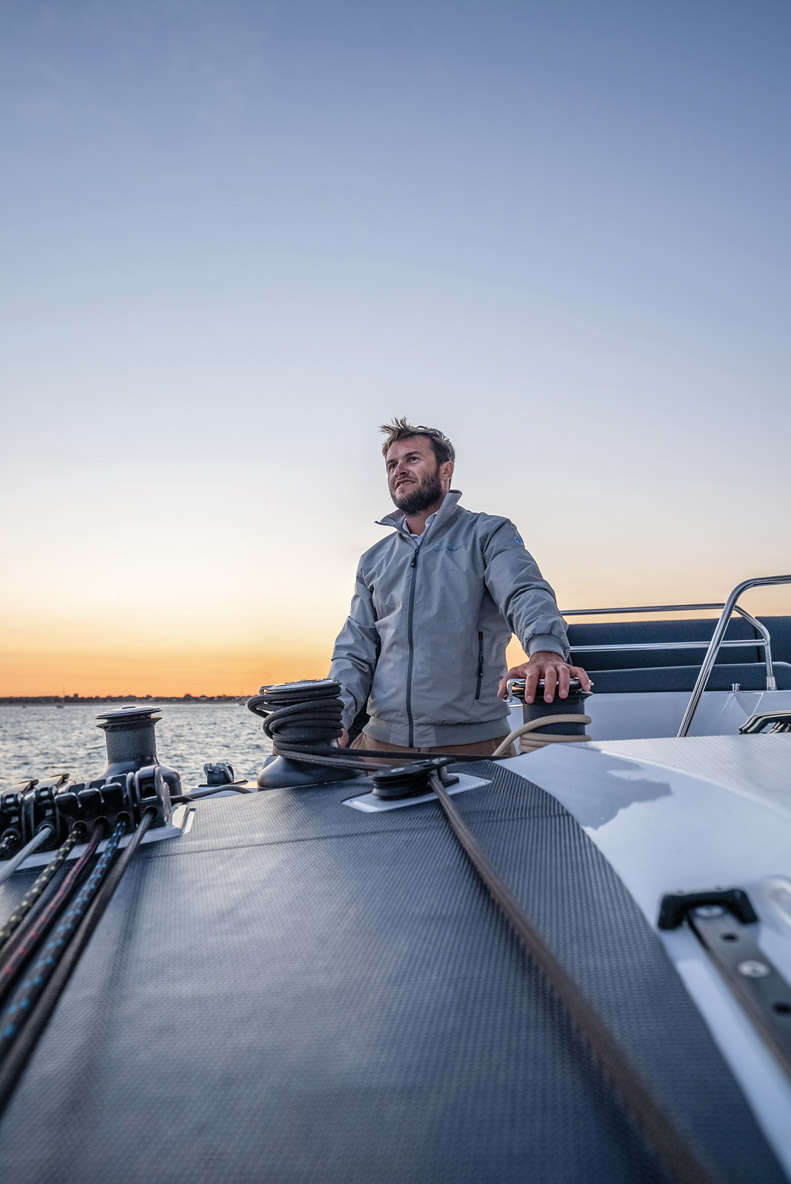 |
The delivery of the first Aura 51 Smart Electric from La Rochelle to Cannes during the summer was, of course, an opportunity for a full-scale XXL test. Mathieu Fountaine, development director at Fountaine Pajot, tells us more. “We organized three legs with stopovers in Lisbon and Palma to ensure easy rotation for the crews. The first leg in the Bay of Biscay, which was very windy, allowed us to sail for five days without ever turning on the generator. The second leg, to the contrary, saw very little wind”. We therefore opted to use the hybrid mode. We were pleasantly surprised to find that we saved 15% of fuel compared to traditional propulsion. For the last stage of the voyage, it was my turn! And we had more time. A day of strong headwinds allowed us to make sure that the catamaran was able to keep up to 5 knots under power. There are still a few small improvements to make to this prototype for the forthcoming production models, such as the reliability of the tank gauges and the management of the generator’s standby mode, which still consumes 0.4 Ah. But the result of these 300 hours’ use of the motors (hydrogeneration included) is for me very positive overall. |
Electrical propulsion: How much does it cost?
|
|
|
Technical specifications
- Builder: Fountaine Pajot
- Architects: Berret Racoupeau Yacht Design
- Length: 51’ (15.54 m)
- Beam: 26’6” (8.08 m)
- Draft: 4’4” (1.32 m)
- Displacement: 39,900 lbs (18.1 t)
- Sail area: 1,658 sq ft (154 m²)
- Mainsail: 1,023 sq ft (95m²)
- Genoa: 635 sq ft (59 m²)
- Berths: 4 to 6 double cabins + forepeaks
- Fuel: 2 x 119 US Gal (2 x 450 l)
- Water: 238 US Gal (900 l)
- Solar panels: up to 2,000 Wp
- Batteries: 2 x 21 kW/h
- Generator: 32 kW
- Drivetrain: 2 x 25 kW
- Performance under power
- User-friendly interface
- Silence under way, particularly appreciable in the aft cabins
- Range still insufficient in 100% green mode
- Soundproofing of the generator could be improved
- The generator takes up almost the entire volume of the large forward locker