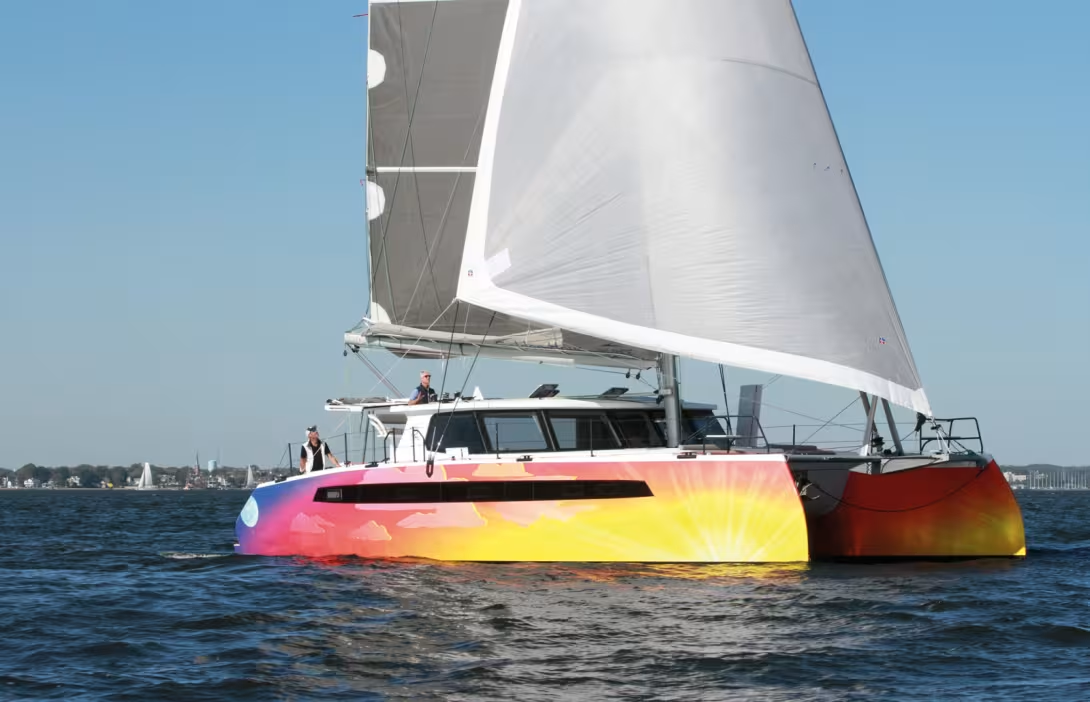
The latest addition to the Balance Catamarans range, the 482 is a multihull that combines performance and ease of use. Two adjectives that may seem contradictory, but thanks to the talent of the design team, they make sense. We had the chance to test this catamaran in the Chesapeake Bay, off the coast of Annapolis, with its relaxing simplicity.
Test location: Annapolis (Maryland - USA)
Conditions: 10 knots northeast wind, 3 people on board, slight chop
Infos pratiques
- Le chantier : Balance 482
- La fiche technique
-
 Découvrez notre vidéo exclusive
- Financez votre Balance 482
- Assuez votre Balance 482
- Articles autour du Balance 482
The Balance Catamarans brand is slowly approaching its 10th anniversary and now has seven models ranging from 44 to 76 feet, all with a common philosophy: to offer a unique experience at sea by providing maximum comfort and versatility while producing high-performance multihulls that remain easy to handle for a couple. In short, a sailor’s catamaran designed by real sailors and not only by 3D design software. It has to be said that Balance is the brainchild of some very talented people. The owner of the brand, Phil Berman, is a former Hobie Cat world champion, a renowned racer and even the author of a few reference books in the catamaran field. He has also sold numerous catamaran brands for several years, notably French models. To design the 482, Phil joined forces with Anton du Toit, a South African naval architect who is also widely recognized. Finally, for the manufacturing, they worked with veteran catamaran builder, Mark Delany, who runs Balance Catamarans in Cape Town, and also builds the Balance 442, Balance 750 and custom Balance Catamarans over 62 foot.
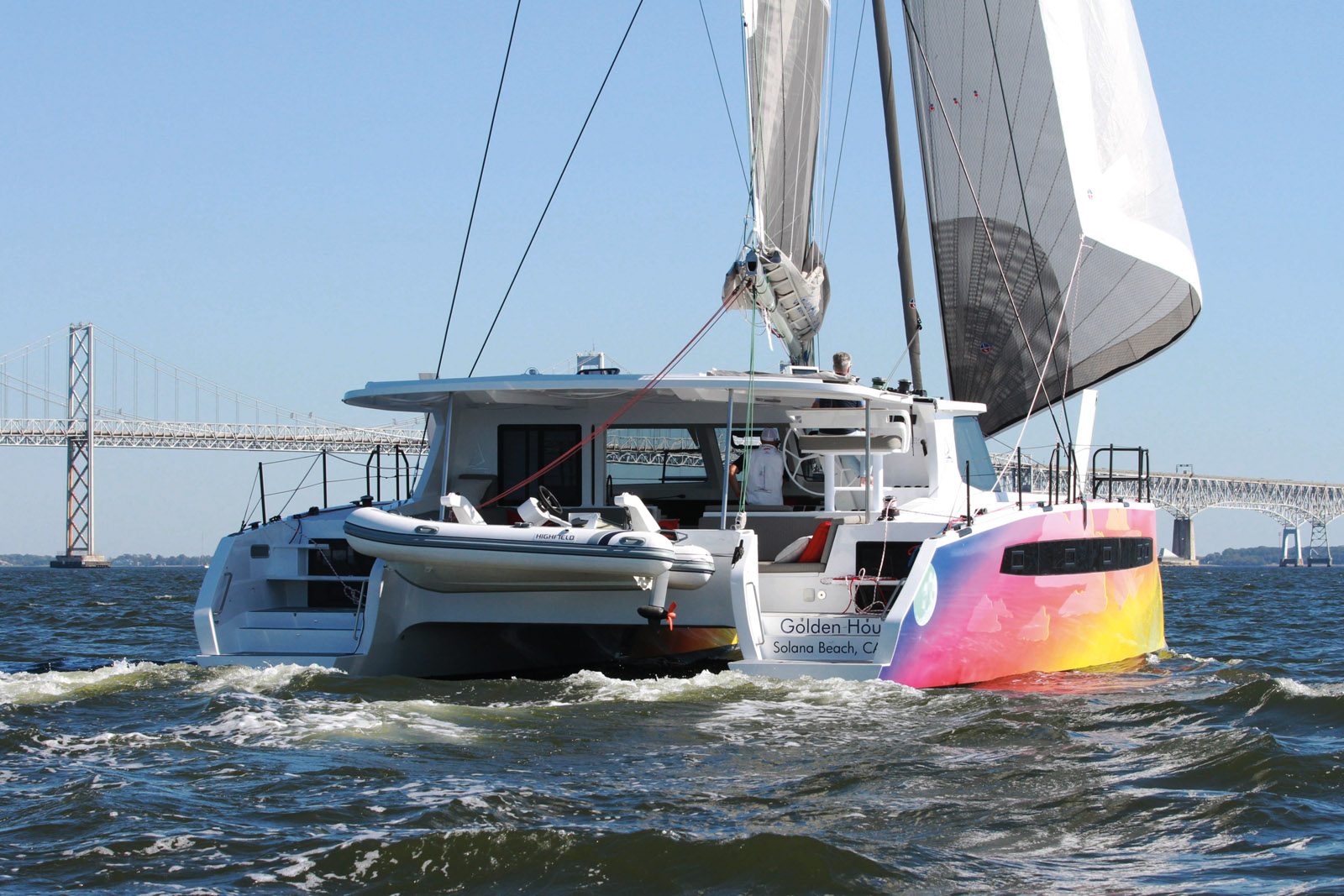
With its screecher of nearly 785 sq ft (73 m2), the 482 is able to sail as fast as the wind when it’s blowing at 10 knots.
Three talented people for the design
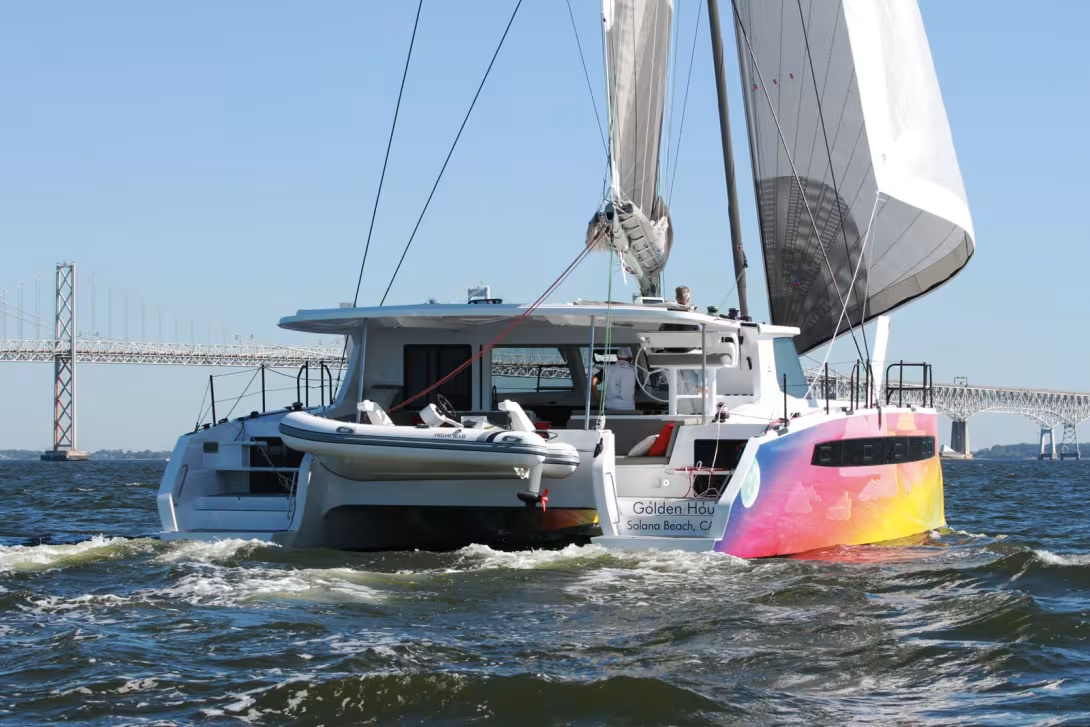
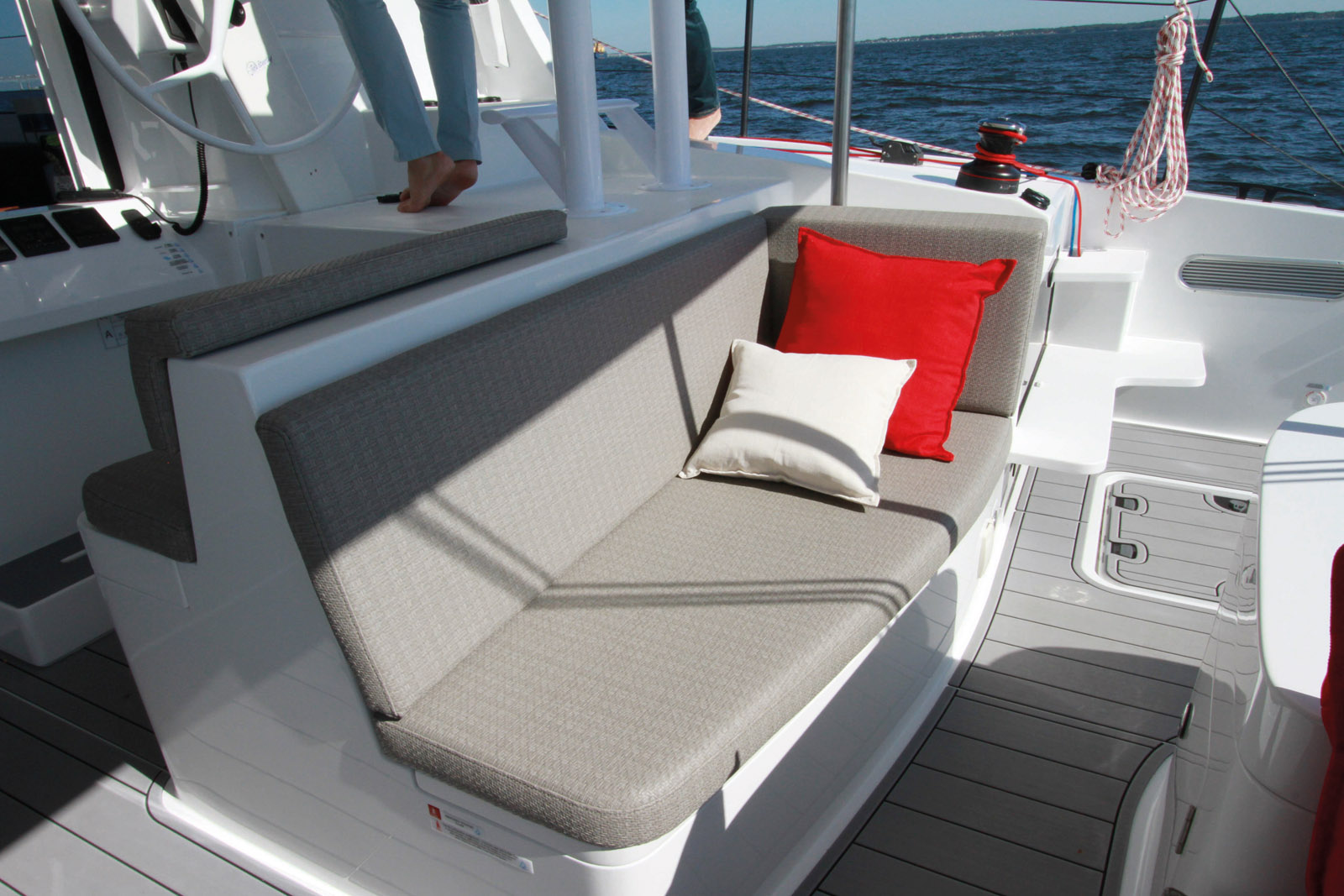
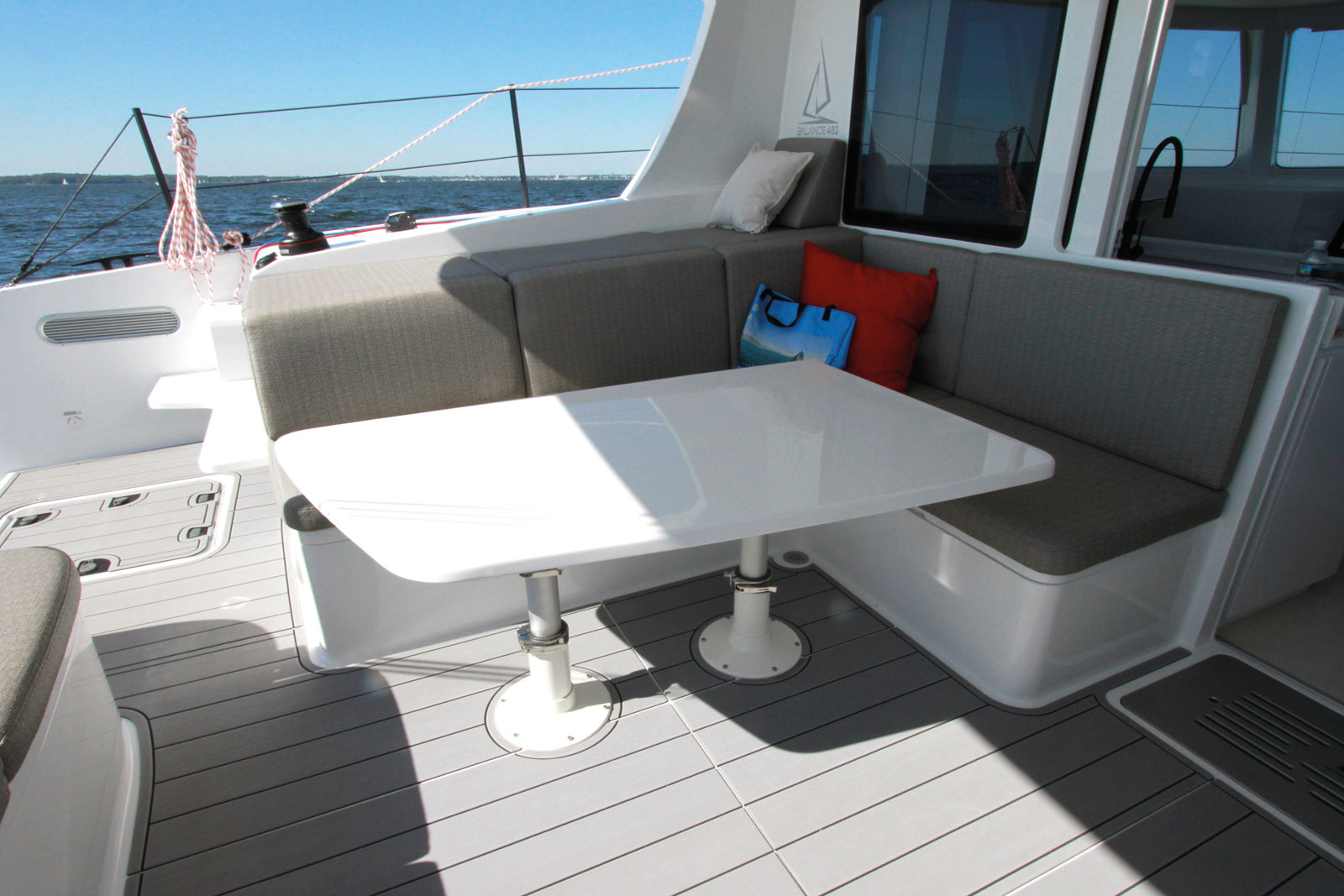
The 482 comes in between the (soon to be) 442 and the 526; this new model competes in the highly competitive 45/50-foot sector. The general idea is the same as that of the other models of the brand, namely a multihull which must be powerful, but also easy to handle for a couple or a small family. As Phil Berman says, “I wanted to design a boat that I could sail with my wife without it being stressful.” Aesthetically, the 482 has the same characteristics as the other models in the range, namely long, tapered hulls with a fully inverted bow, highlighted by long hull windows that accentuate the sporty look of the boat. As far as the rig is concerned, no carbon mast or flashy parts, but a rational choice as much in terms of budget as in terms of performance. Not to spoil anything, our test model, hull #1 in the series, had a magnificent covering honoring its baptismal name, Golden Hour. On the technical side, the catamaran is crafted in sandwich construction, uisng E-glass with a PVC foam core and carbon fiber for local support and reinforcement structures, which allows it to remain light while benefiting from excellent rigidity. To get on board, the easiest way is still to go via either of the sugarscoops. Not very long, these platforms are on the other hand rather wide and include a storage compartment in the second step. The cockpit is like the rest of the catamaran, i.e. very versatile. On the port side, there is an L-shaped sofa with a table in its center, which can be transformed into a sun lounger. Another bench seat, against the transom, accommodates three people and, just next to that, a place is reserved for the grill. Finally, there’s a third, aft-facing seat, perfect for admiring the wake or sharing good times with the other people on board.
 |
 |
Just aft of the helm seat, a lounger with an uninterrupted view over your wake.
The cockpit features a height-adjustable table and L-shaped seating area.
The décor is zen and modern
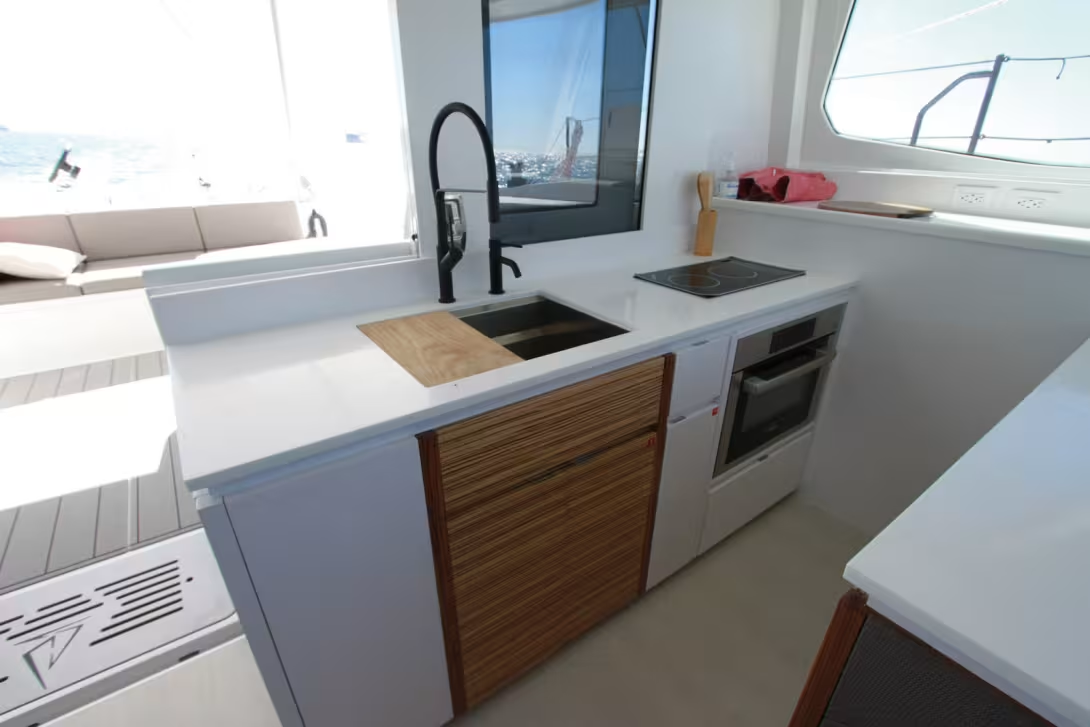
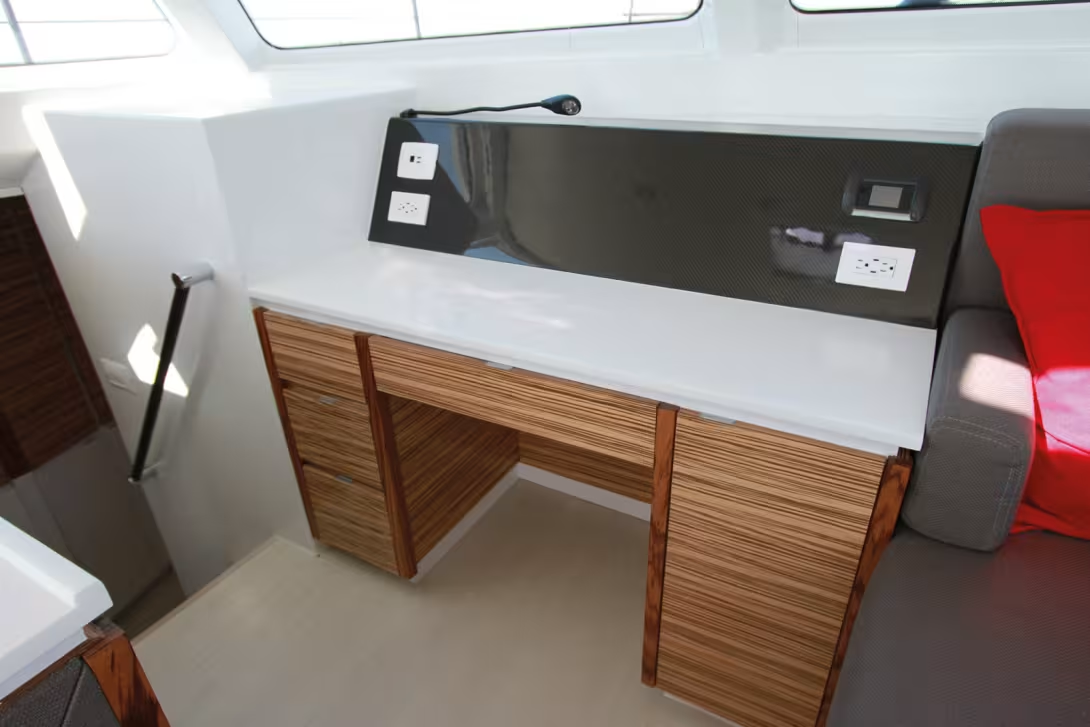
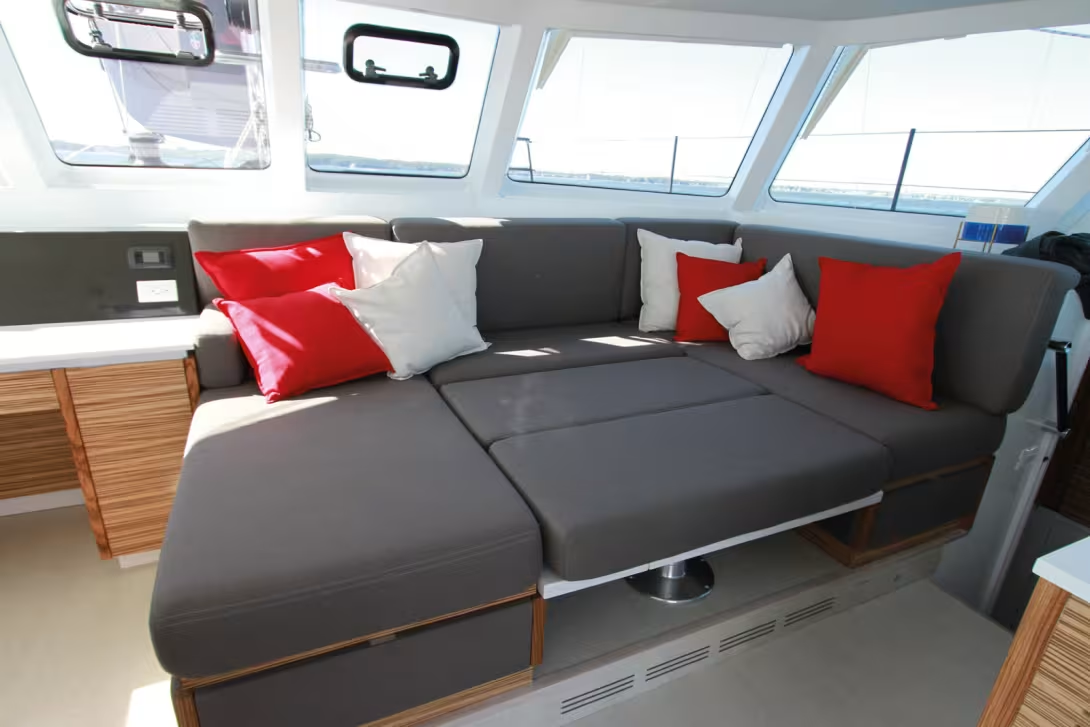
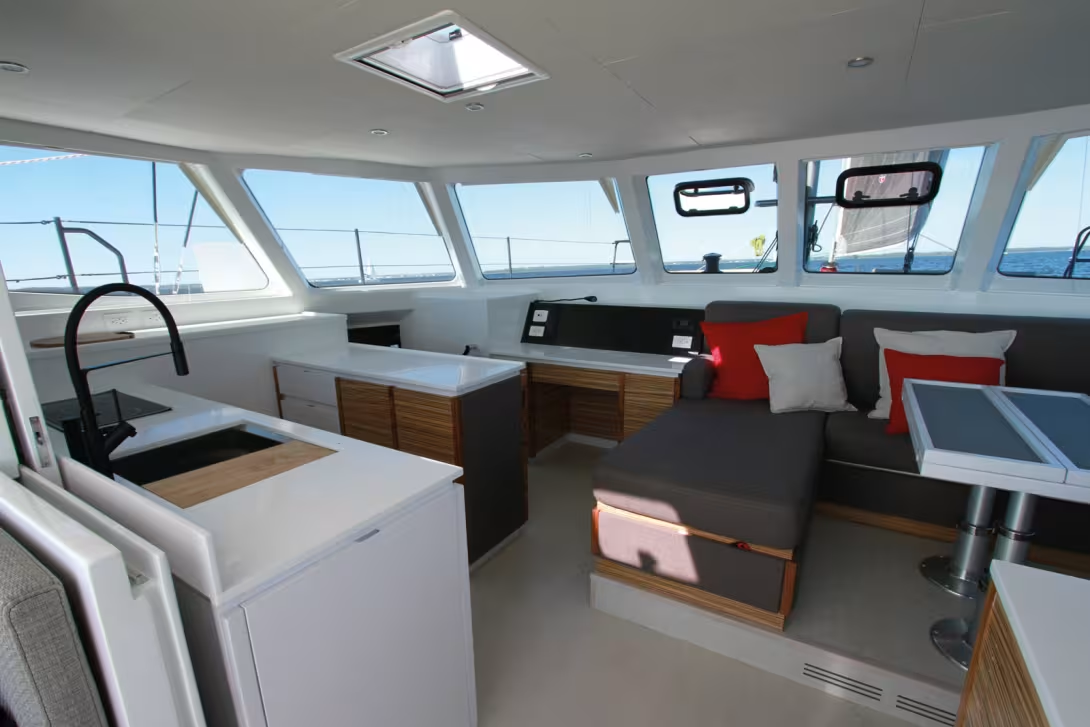
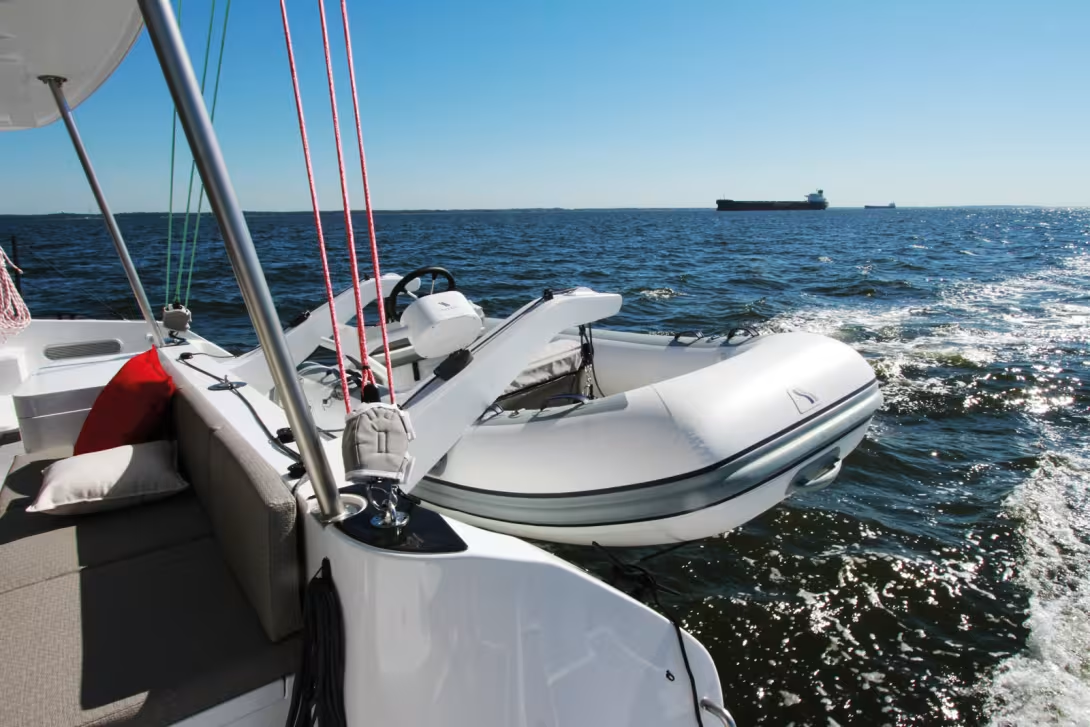
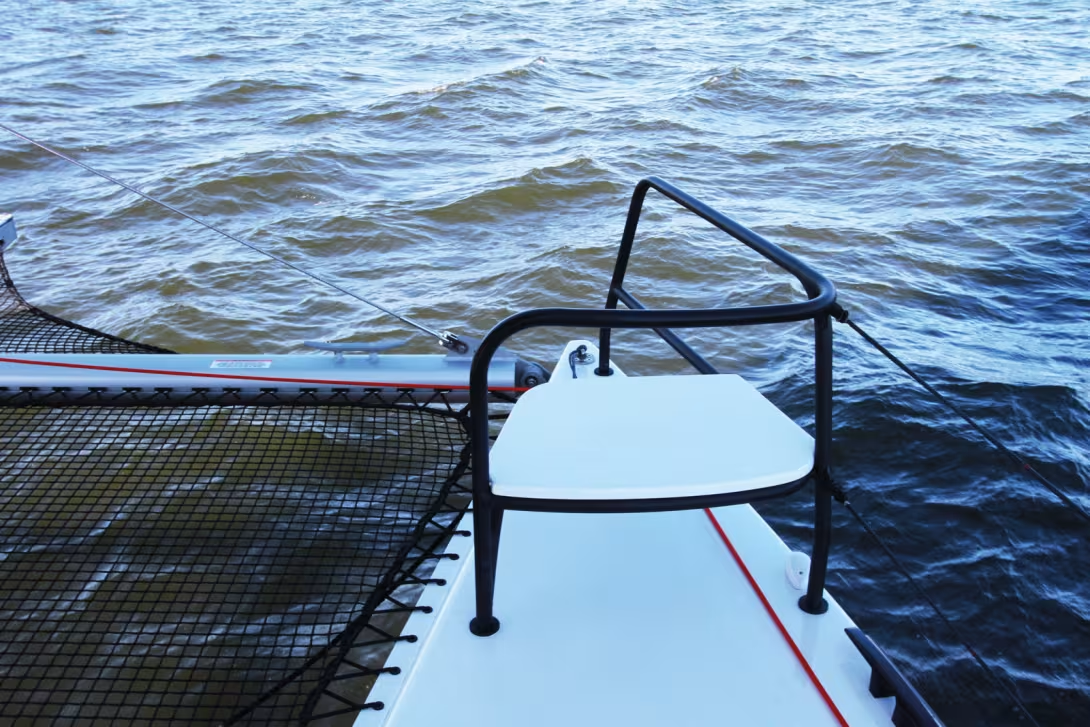
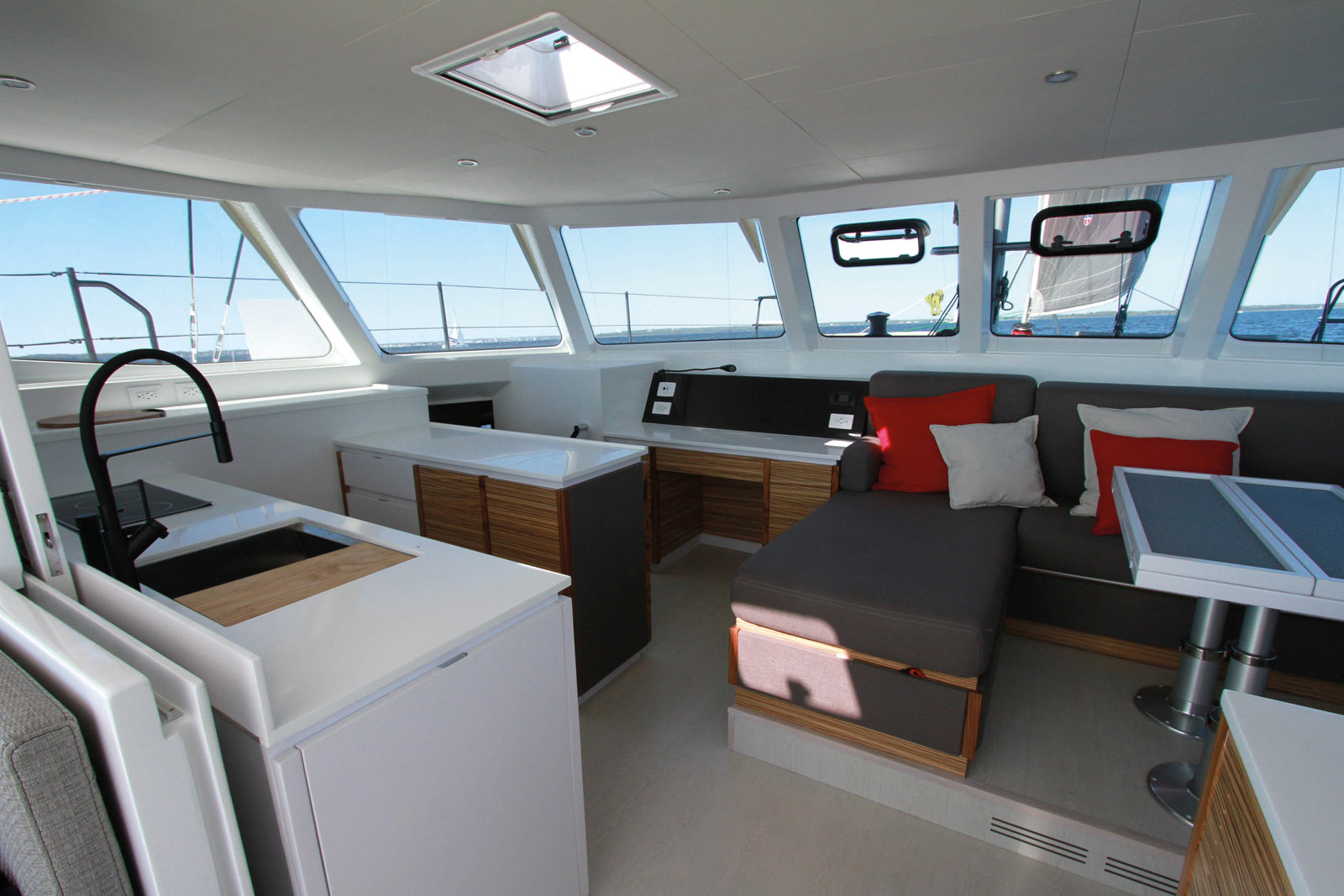
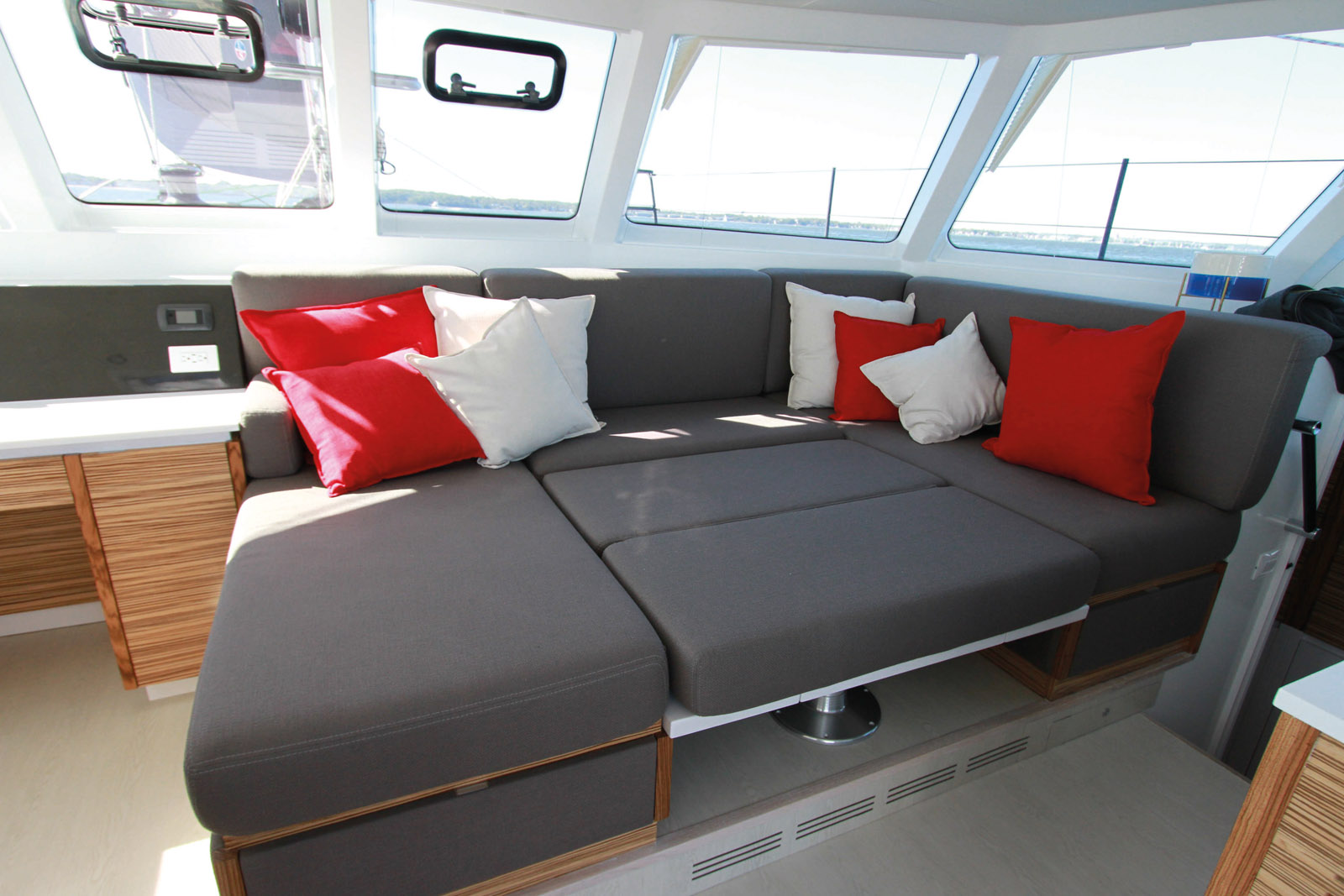
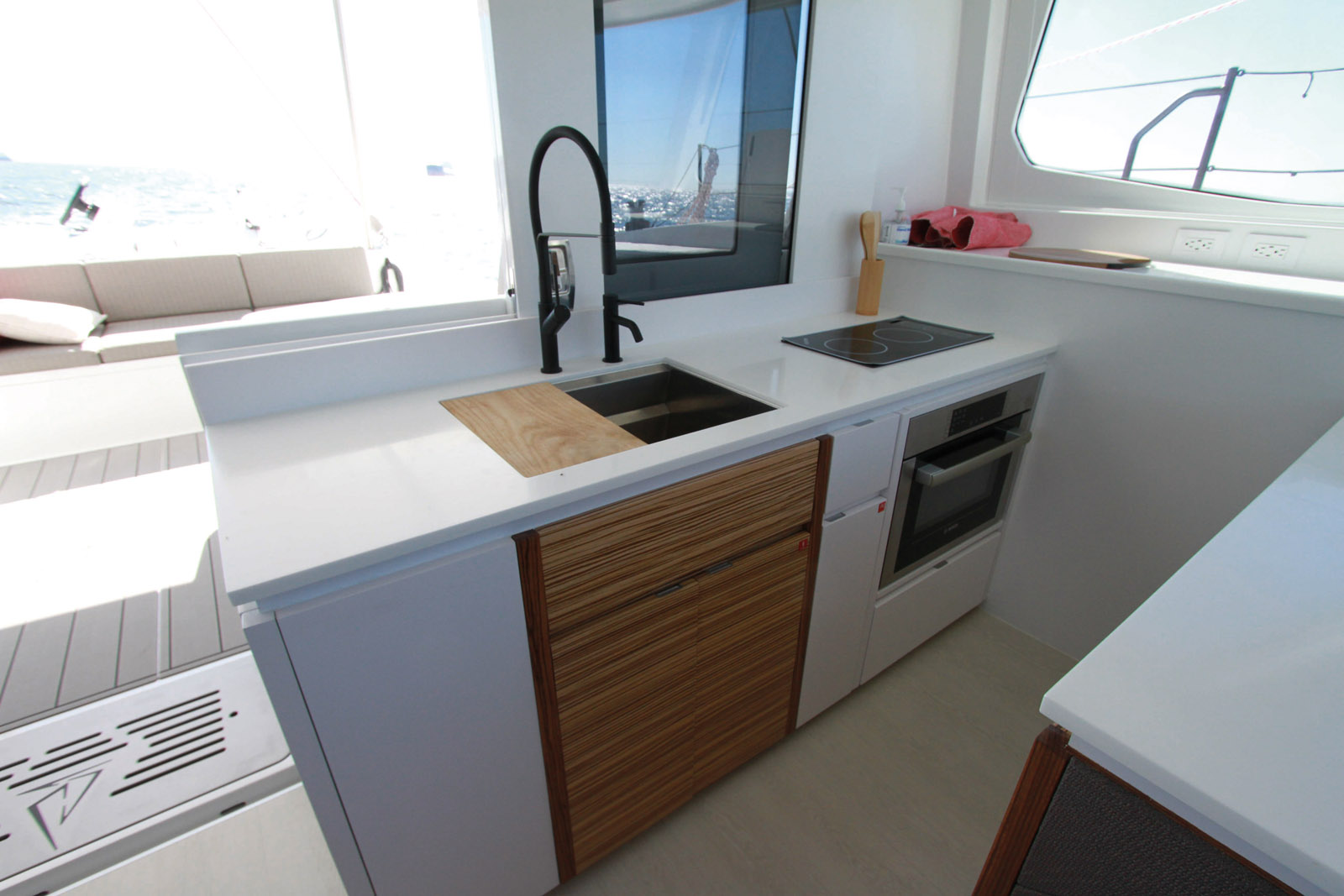
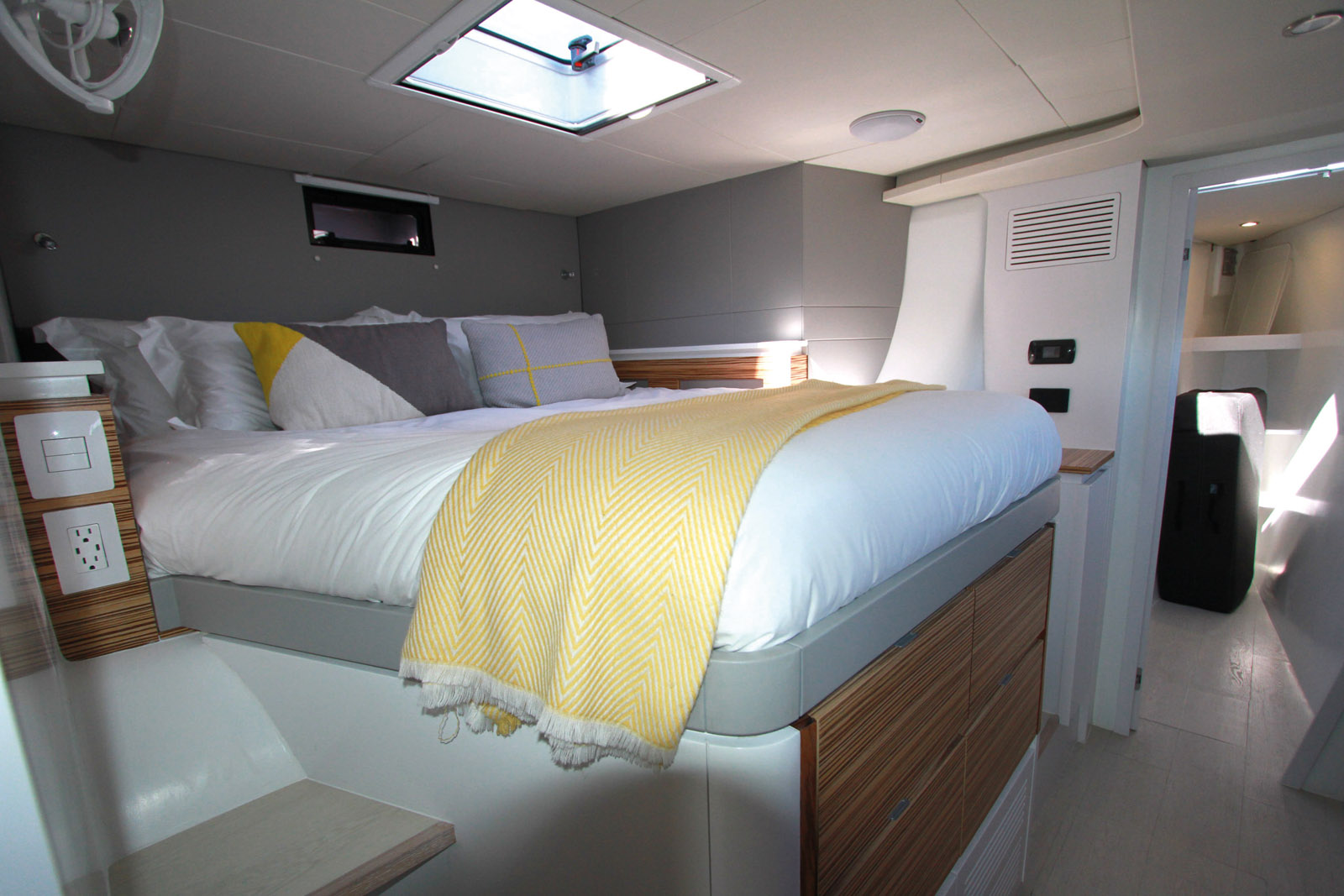
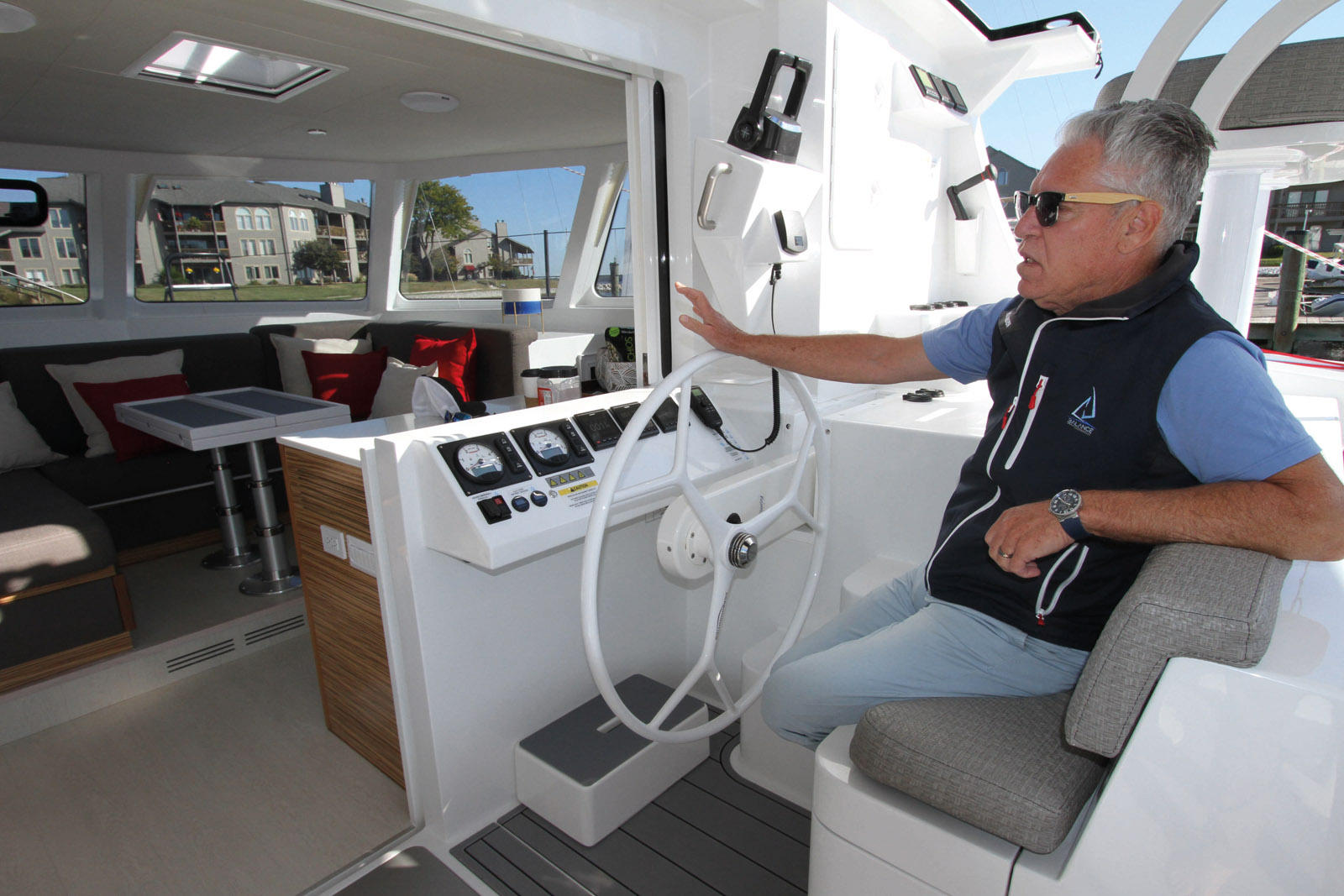
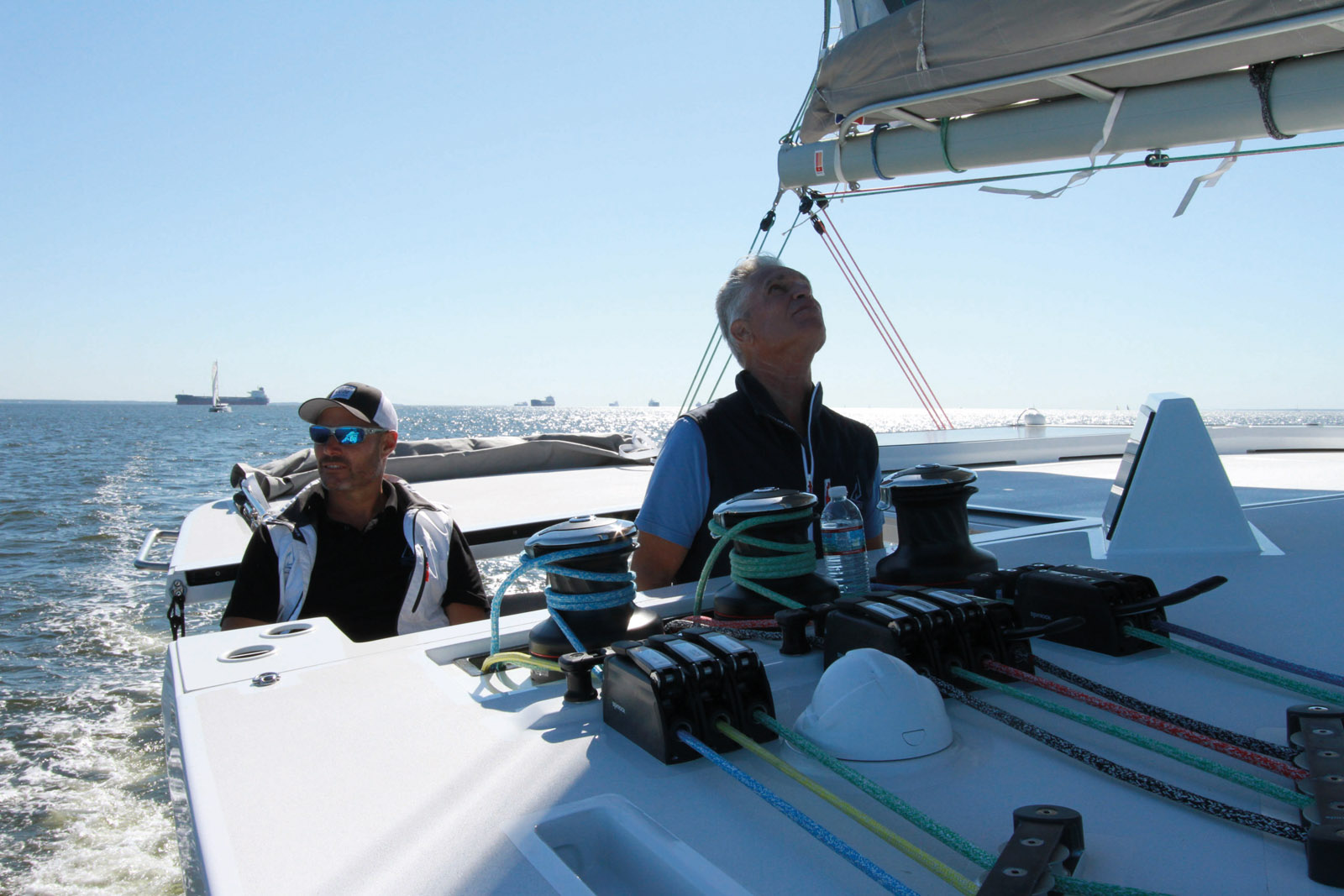
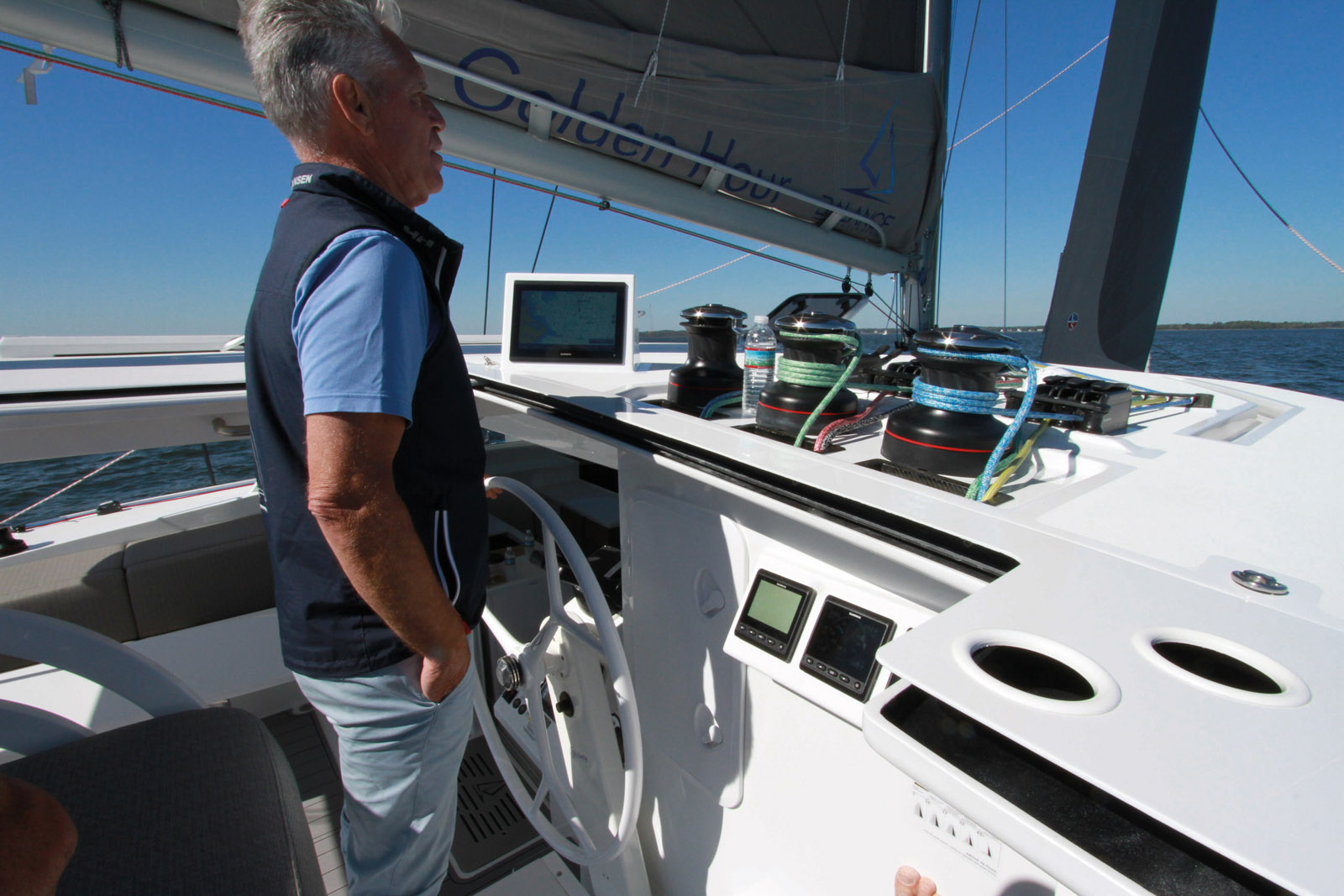
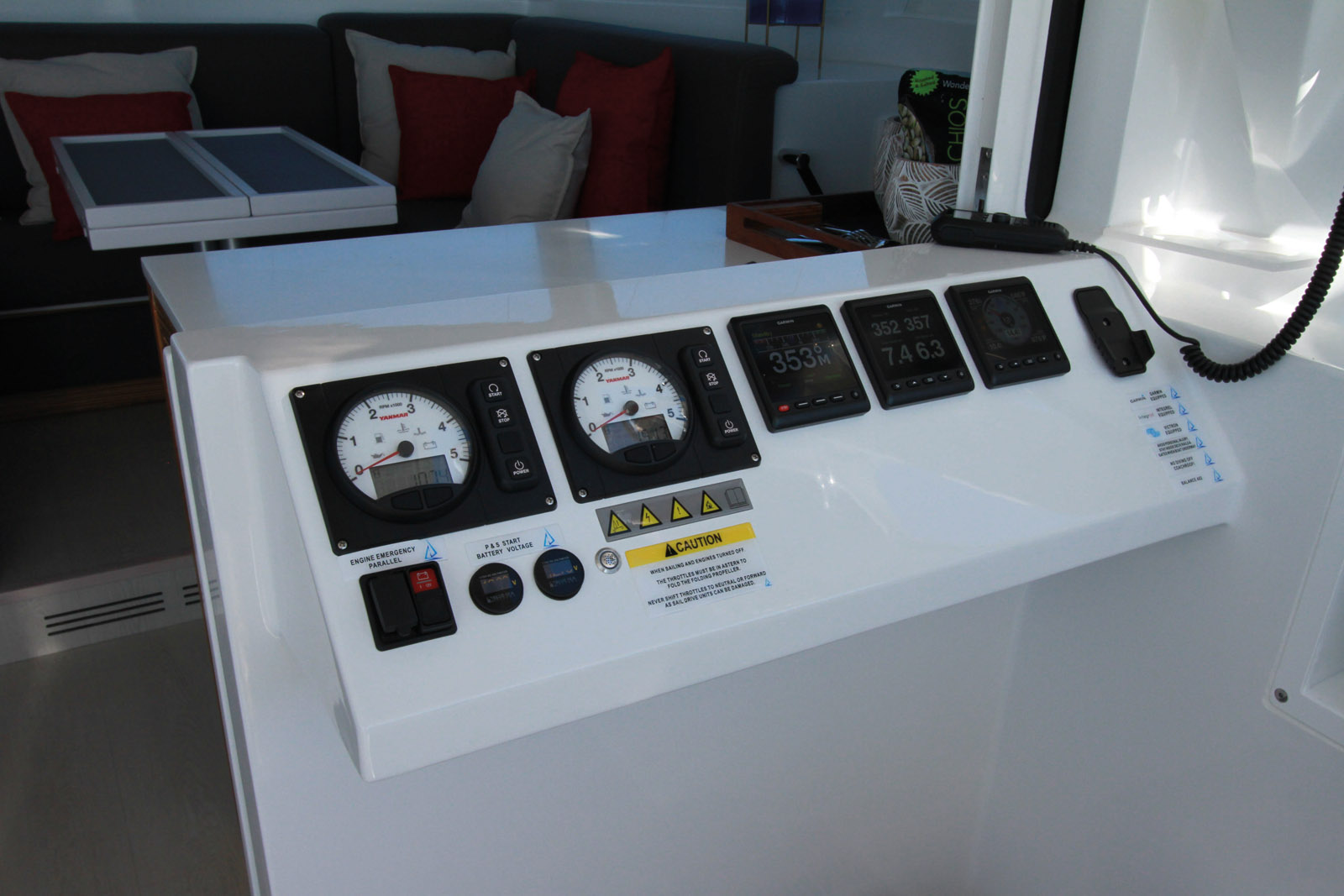
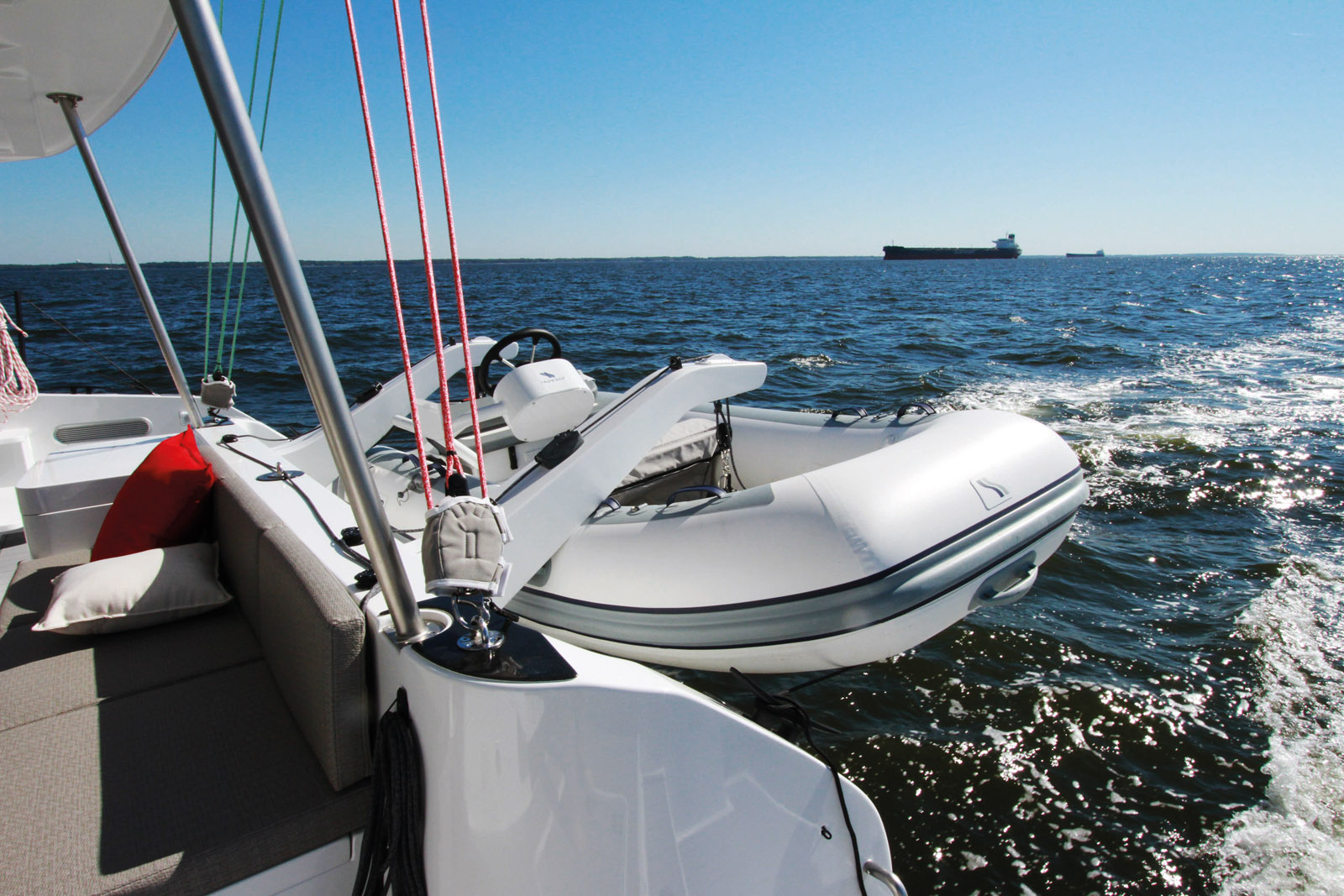
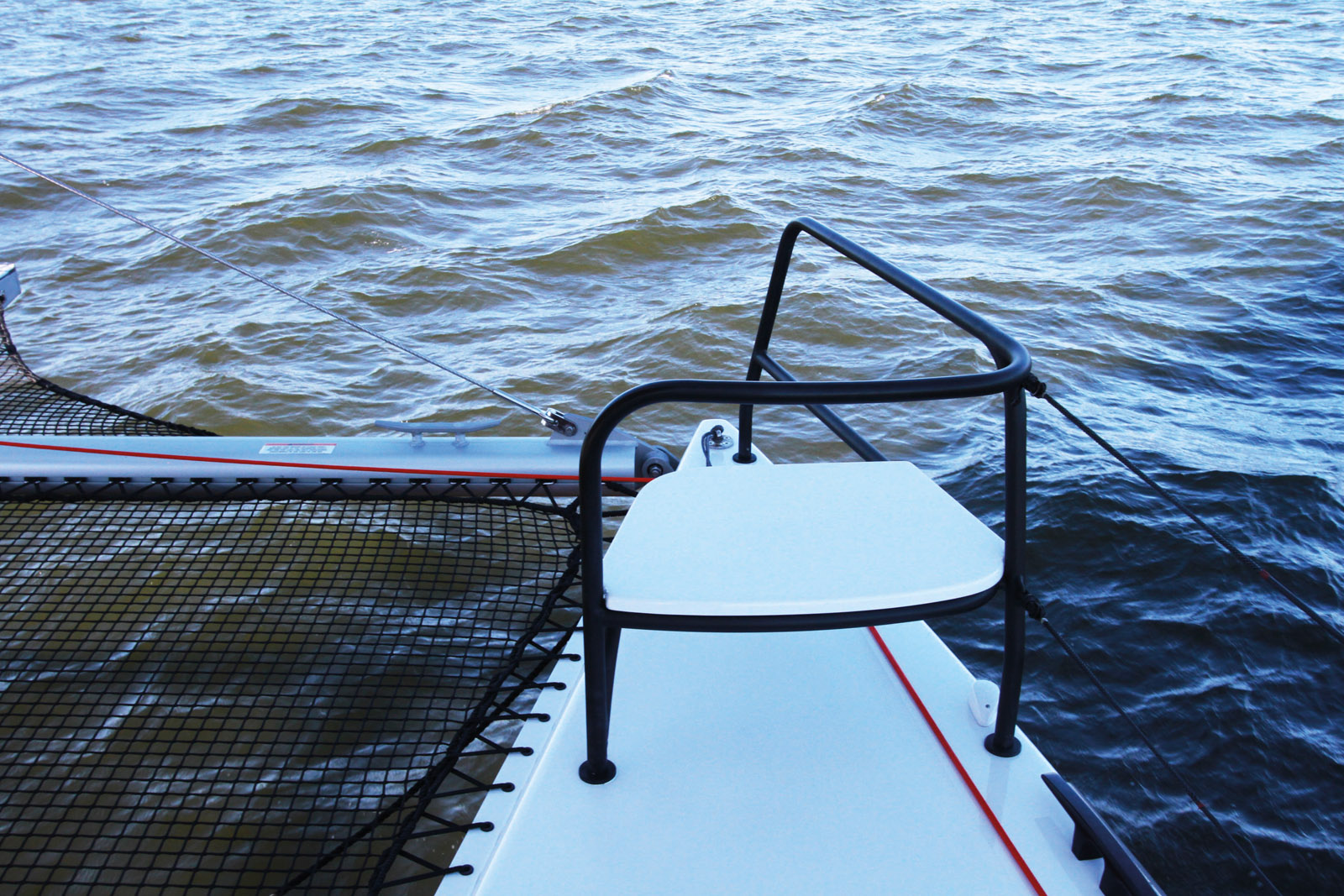
Another element of this cockpit, the helm station, is one of the hallmarks of Balance catamarans. Indeed, to favor conviviality or simply to be able helm out of the sun or rain, the helm station pivots from top to bottom and vice versa. The operation takes just a few seconds, without any special handling. In the upper position, you can sit back and enjoy an unobstructed view of the rig and your surroundings. You can also add a small soft top to stay under cover. In the lowered position, you are sheltered under the cockpit roof, you have a comfortable bench seat, all the navigation electronics in front of your eyes and an excellent view forward through the main deck since there are no obstacles in the way. In addition, the skipper is located in the middle of the cockpit, which means he can share time with the rest of the crew. The last element of the cockpit, two davits support a dinghy with a maximum weight of 472 lbs (214 kg - including the motor). In practice, you can accommodate a 12-foot dinghy (3.65 m), which is more than enough to go back and forth to shore. The separation between the cockpit and the main deck is achieved with windows and a sliding door. When all the windows are open, there is almost no difference between outside and inside, especially since the floor is at the same level. You can then close some or all the windows to enjoy more privacy at night. This main deck is built around a large L-shaped sofa on starboard and a galley on port. The sofa can be transformed into an extra bed if needed while the galley has a central island, all the necessary appliances and even a sink with an integrated chopping board. Finally, let’s mention the small desk that also serves as a chart table, a nice addition to this space. Relatively simple, this interior is bathed in light thanks to the large bay windows so that even inside, you can enjoy the view. Regarding the night space, the catamaran is available in three or four cabins. During our test, we had the owner’s version (three cabins). On board this version, the owner’s quarters are located in the starboard hull and include a double bed with a storage room, a large bathroom with a separate shower, the latter even benefiting from a porthole overlooking the sugarscoop. On the port side, the space comprises two cabins and a bathroom with separate shower. In addition, this sleeping area is full of storage compartments, perfectly integrated in the bulkhead, to the point of being forgotten. It is important to note the beautiful simplicity of the layout. Without being stripped down, the decor uses simple lines, light colors and modern materials that almost give a feeling of serenity. And if the Balance 482 features the essentials without unnecessary overload - thus sparing itself the risk of less tasteless decor - it doesn’t shy away from offering a few practical details, such as the 48-volt outlets everywhere or the small porthole above the bed which, thanks to an air sleeve, allows the cabin to be ventilated without getting water in, which is rather clever. Outside, except for the cockpit, the Balance plays a traditional card. No forward deck with table, but a trampoline that keeps the boat light and two small benches integrated into the pulpits on the bow of each hull - the perfect spot for watching dolphins. There are also two large storage compartments with cushions on the lids to provide a modest but comfortable seat. Another interesting detail: a small well is built just at the foot of the mast to avoid the halyards trailing everywhere.
 |
 |
 |
 |
The nacelle is generously glazed; the main deck on the starboard side is slightly raised; and the table can be lowered to form a watchkeeper’s bunk or an extra bed.
The galley faces the cockpit. It features a chopping board integrated with the sink, and a central island.
As with the nacelle, the builder has chosen simple and tasteful d cor for the cabins: natural light is generously distributed everywhere.
One helm, two helm stations!
Phil Berman, founder of Balance Catamarans, presented his new model at the Annapolis Sailboat Show. These pictures illustrate the two helm positions offered - the movable helm can be adapted to these two positions. This feature, developed on the Balance 526, has proven so convincing that it has become a Balance hallmark. Other manufacturers have been tempted, such as Outremer with their 55. The complete instrumentation is installed on the lower level. On the upper level, a folding bimini top protects the helmsman from the sun or rain.
 |
 |
 |
 |
A simple and efficient rig
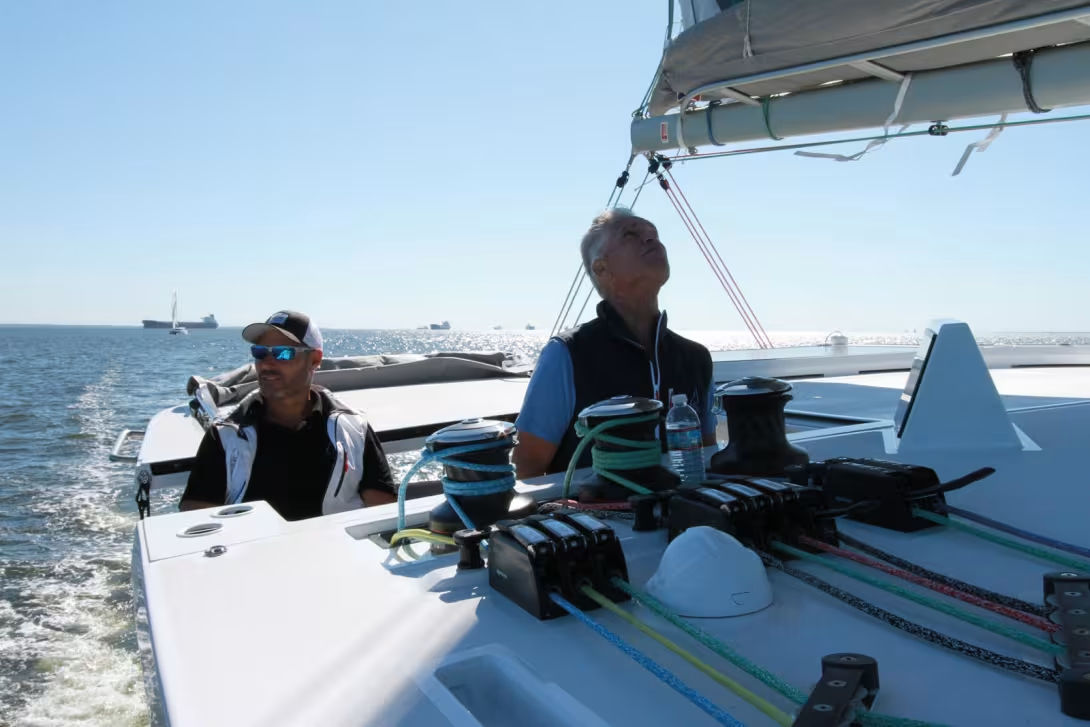
Relatively conventional at first glance, the rig has a few surprises in store, such as the boom, which has a sort of receptacle to hold a lazy-jack. All the halyards come back to the helm station with three electric winches, a console and wells for ropes everywhere, it is really well thought out. Finally, as a bonus, the screen on the left of the helmsman allows you to see the rig from a camera installed at the masthead. Dynamically, the 482 has two daggerboards for a maximum draft of 7.2 ft / 2.2 m (3.8 ft / 1.16 m) with the daggerboards raised). For those who wish, there’s a version with fixed keels also available. In the standard version, the boat is offered with a sail area of 1,431 sq ft / 133 m2 which is already more than correct for this category. An area that can obviously be increased by adding a screecher and a spinnaker. With a displacement of just over 24,250 lbs / 11 tons lightship and 33,069 lbs / 15 tons laden, the sail area to weight ratio upwind is quite interesting. Moreover, we can trust Phillip Berman’s talent for designing hulls that drag very little water. In fact, the result is quite astonishing; as soon as we left the harbor, where the other boats were continuing under motor, we hoisted the mainsail (964.44 sq ft / 89.6 m2). In spite of a light wind oscillating between 7 and 11 knots, the catamaran immediately takes off. With the foresail unfurled, the speed increases and at 60 to the wind on port tack, almost a close reach, the GPS data, several times, nearly reached the wind speed, around 9 knots. A first impression that was confirmed when sailing on a beam reach. There’s no doubt that this catamaran is fast. However, speed does not mean extreme conditions. Whatever the speed of the Balance, the helm remains very smooth and the catamaran really well “balanced”. The way the boat holds its course is also perfect and the 482 is very reactive to the slightest request. A long run on a broad reach confirms our first impression of ease. As far as maneuvers are concerned, though you can operate largely by staying at the helm, we gybed to measure the accuracy of this catamaran’s design. A slight movement of the helm was enough to gybe smoothly, without the boom threatening the head of any of the crew members. The result was a great feeling of ease even for a crew that wasn’t necessarily expert. In addition to the standard sails, the 482 can be equipped with a sportier wardrobe. A storm jib, a screecher and an asymmetric spinnaker are also among the options available. To get out of the marina or for windless days, the Balance is equipped with two 57 HP Yanmar engines. Sufficient for the use of this catamaran, they are also very discreet thanks to an optimal installation. The electrical production is ensured by a generator and by solar panels installed on the coachroof. An installation which allows you to be self-sufficient for longer passages. As for the equipment, like the general design of this model, it includes all the essentials and sometimes even a little more, but without being excessive, because the Balance 482 is designed above all for sailing.
 |
 |
Les deux bossoirs supportent un peu plus de 200 kg – un dinghy de 3,65 m et son moteur seront stockés ici pendant les navigations.
The 482 does not have a rigid foredeck but has two trampolines that extend on either side of the bowsprit. A seat has been fitted to each pulpit.
Conclusion
There’s no denying it, this catamaran really seduced us! After a few miles on board, it was difficult not to be enthusiastic about its marine capabilities, its performance and its ease of use. What’s more, its wellthought- out layout means that you quickly feel at ease on board, almost like at home. Capable of satisfying the family man as well as the competitive sailor, this multihull offers a versatility that is rare on the market - this is certainly why, even before its release, thirty-five units have already been ordered.
Les + :
+ Performance
+ Ease of use
+ Very accomplished design
Les - :
- Foredeck a bit spartan
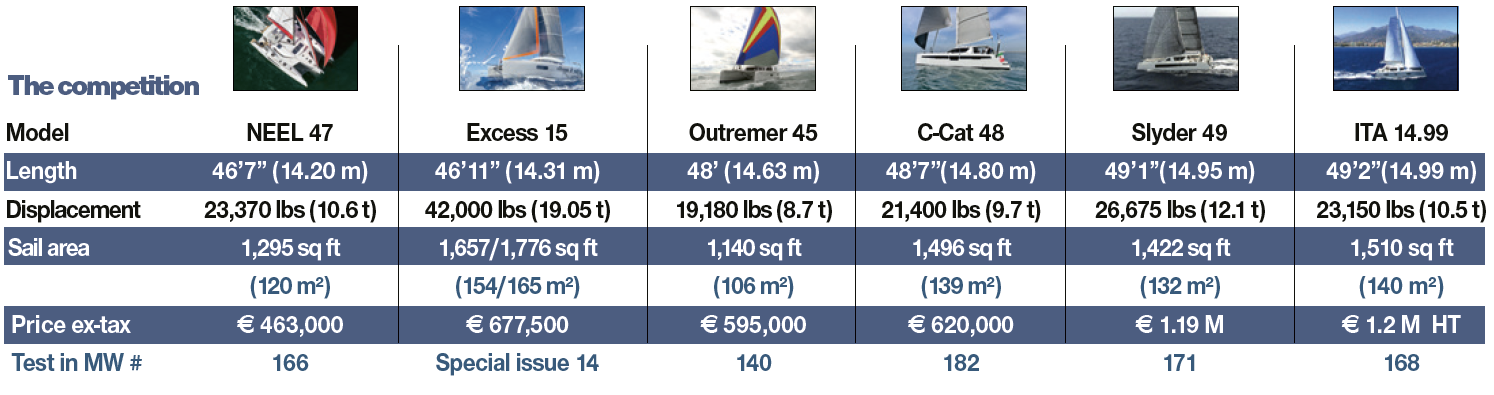
- High price
TECHNICAL SPECIFICATIONS
Shipyard: Balance Catamarans
Builder: Jonathan Paarman (South Africa)
Designers: Phillip Berman and Anton Du Toit
Overall length: 48’2’’ (14.71 m)
Waterline length: 48’2’’ (14.71 m)
Beam: 25’9’’ (7.90 m)
Draft: 3’8’’ / 7’2’’ (1.16 / 2.20 m)
Air draft: 71’.4’’ (21.76 m)
Light displacement: 24,945 lbs (11.315 t)
Sail area: 1,431 sq ft (133.1 m2)
Mainsail: 964 sq ft (89.6 m2)
Genoa: 468 sq ft (43.5 m2)
Storm jib: 108 sq ft (10 m2)
Code 0: 85 sq ft (72.9 m2)
Spinnaker: 1,971 sq ft (183.1 m2)
Engines: 2 x 57 HP Yanmar
Fuel: 2 x 10⁵ US gal (2 x 400 l)
Fresh water: 2 x 10³ US gal (2 x 390 l)
Black water tank: 2 x 16 US gal (2 x 61 l)
Sleeps: 6 (8 in the 4-cabin version)
Price: US$ 1,157,310 ex-tax in standard 3-cabin version