On some multihulls, the call of the open sea becomes as obvious as it is compelling. Once under sail, this new Balance 580 glides so easily and comfortably at over 10 knots that you wish it would never stop...
Infos pratiques
- Le chantier : Balance 580
- La fiche technique
-
 Découvrez notre vidéo exclusive
- Financez votre Balance 580
- Assuez votre Balance 580
- Articles autour du Balance 580
Conditions: 15 to 20 knots of wind, sea state slight
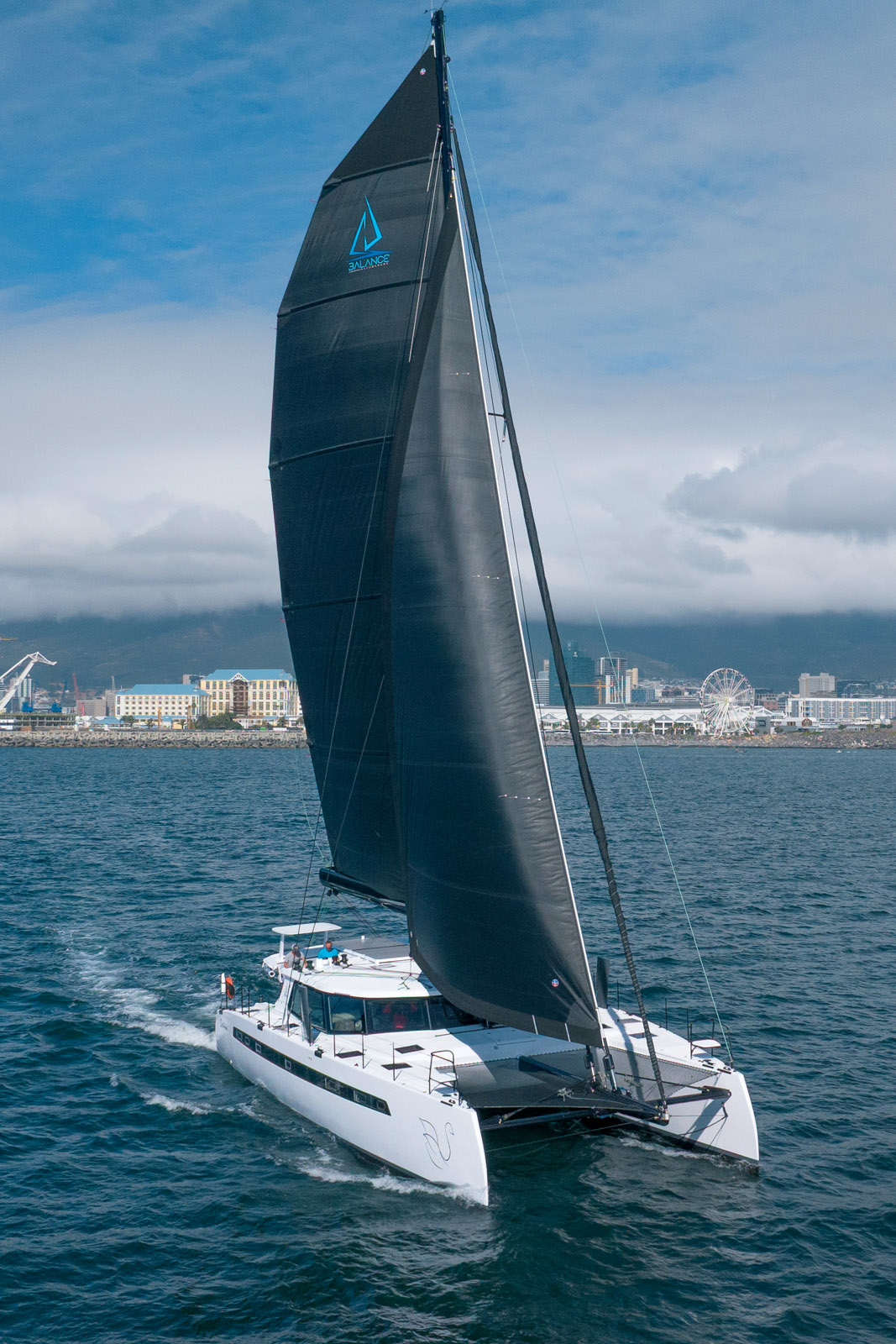
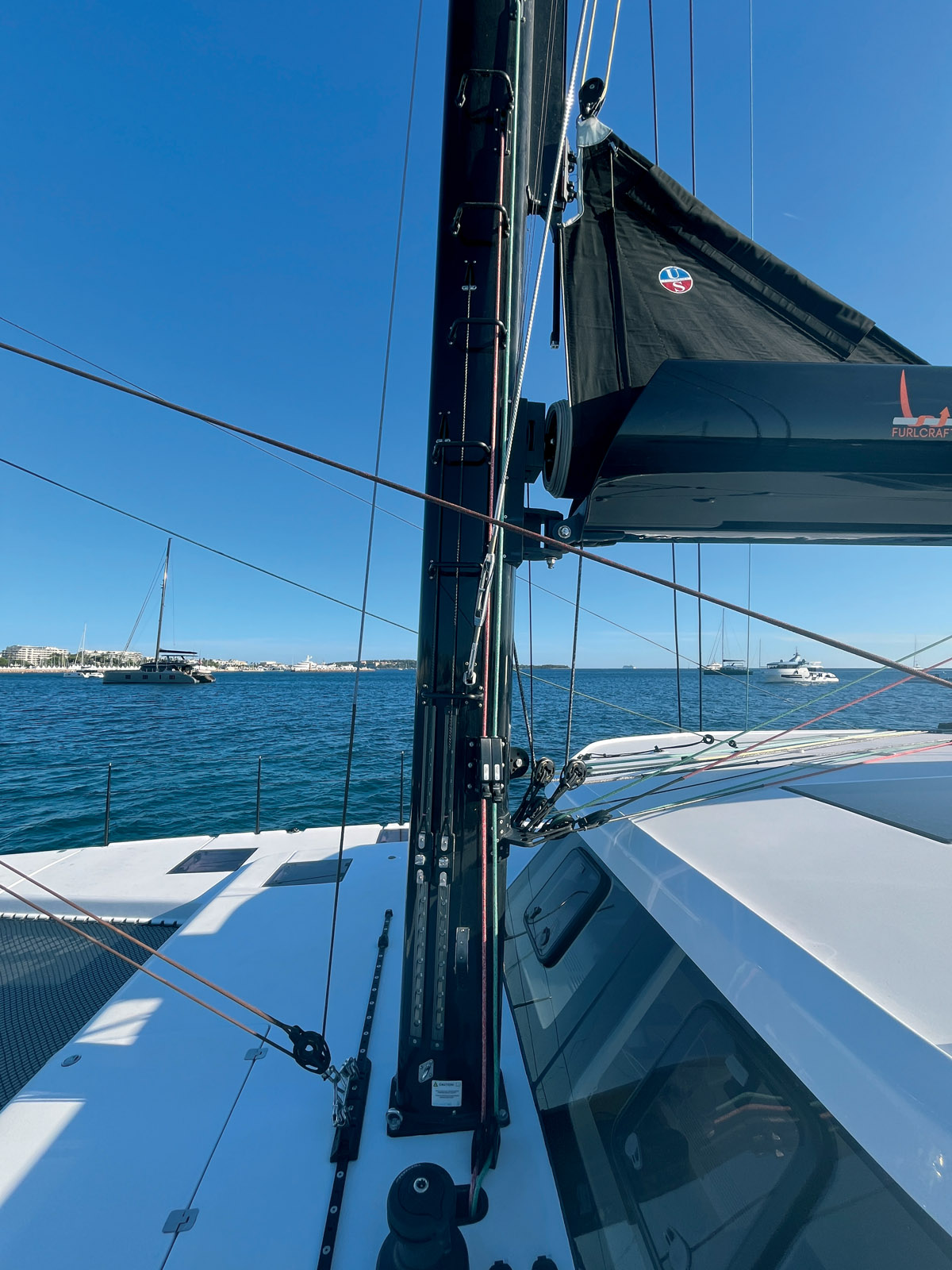
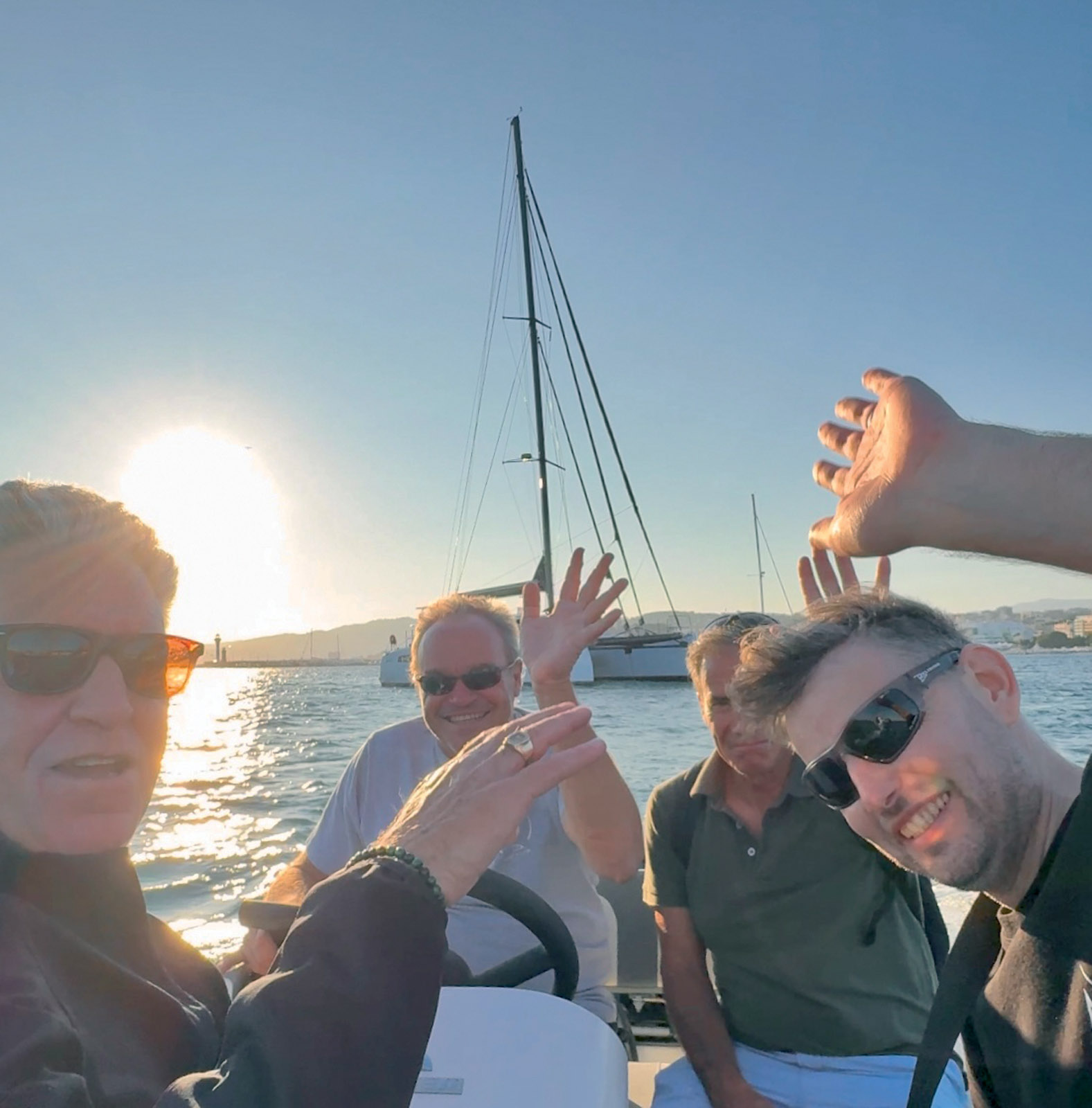
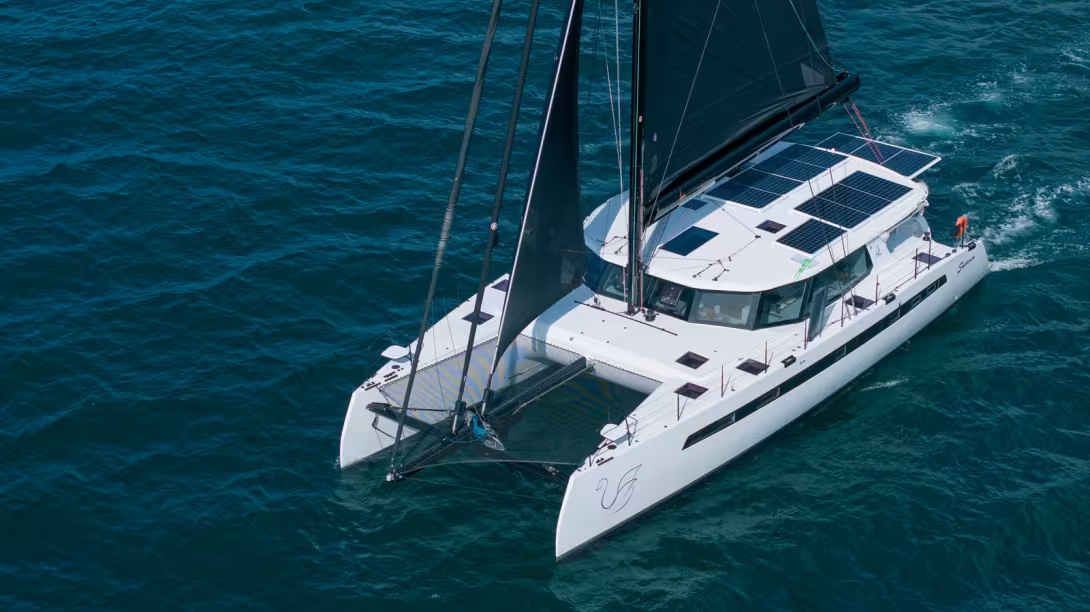
The Balance 580 was anchored a stone’s throw from Cannes’ famous Carlton Hotel. Like many of the multihulls around us, this new South African-built model was waiting to take its place at the Cannes Yachting Festival. Seeing it from the tender, there was no doubt about it: the target market segment is undoubtedly fast cruising, as evidenced by the very taut lines, the inverted bows, the sleek cutter rig with its three headsails with electric furling systems, the bridgedeck clearance and finally a discreet coachroof with no flybridge... All indicators of a desire for speed, ease of handling, and elegance. Phillip Berman, former Hobie Cat world champion and founder of Balance Catamarans, extended us a warm welcome. He was quick to confirm these very ambitious specifications, which can be summed up in a few words: making speed accessible to all (not financially, unfortunately...), while enjoying total comfort and a very high level of safety. This was a status that Phil had developed for himself from the very beginning of the Balance adventure in 2014: he already wanted to go fast, sailing two-handed with his wife. Of course, Phillip is no novice, but it was important that his wife, who was less experienced than him, could helm safely during her watch—and even enjoy herself. Looking a little closer, we saw that this model— hull #2—is equipped with a furling boom in addition to the electric furling headsails mentioned above. Stéphane, the skipper who has just completed the 7,200 miles from St. Francis Bay, where the shipyard is located, told us that the owner is an octogenarian yachtsman for whom effortless maneuvering is essential to continue sailing. After his 42-day delivery trip, the captain reported that there were no problems to speak of, apart from the minor adjustments that a new boat always requires.
Above All Else, the Pleasure of Sailing
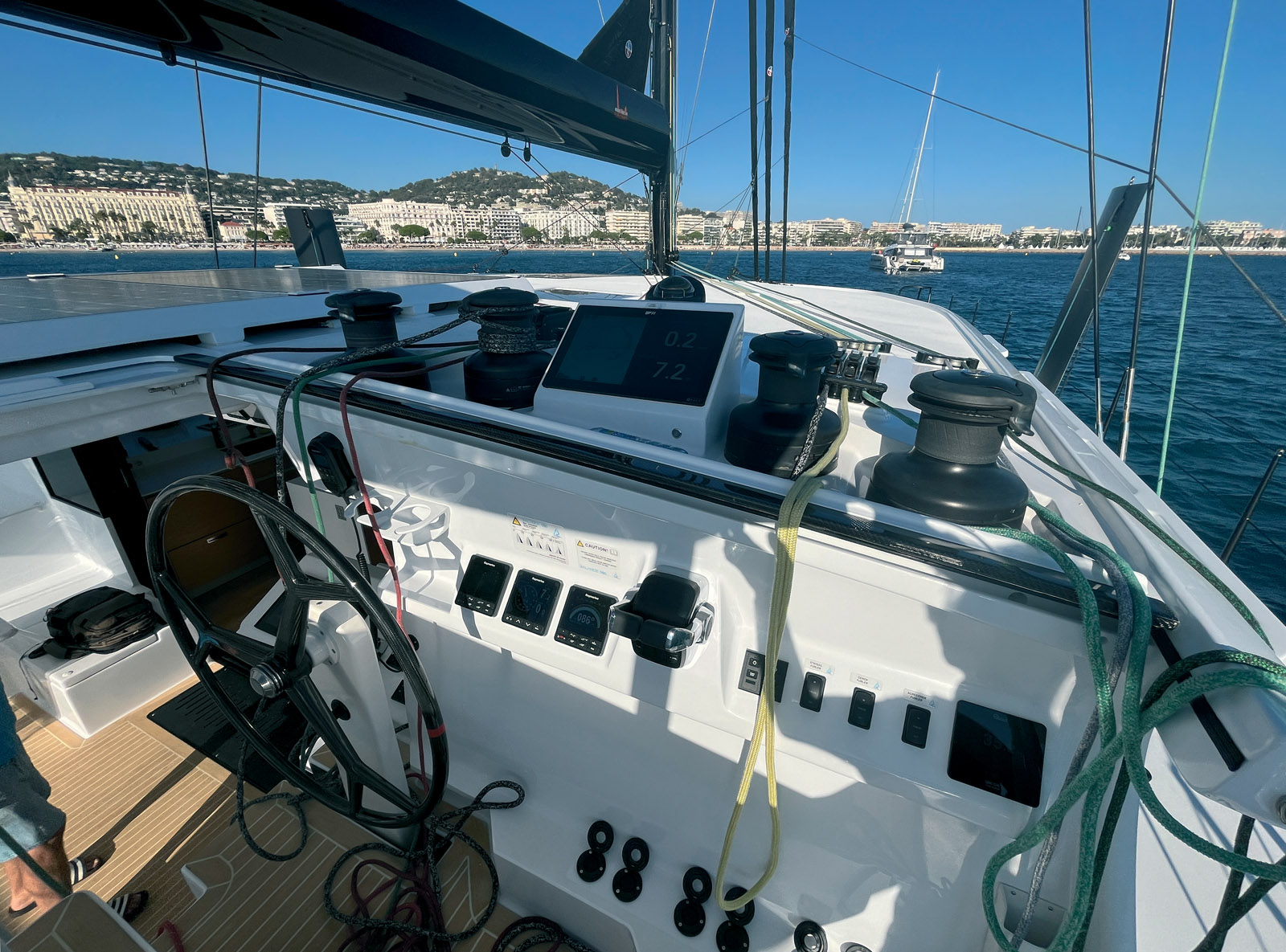
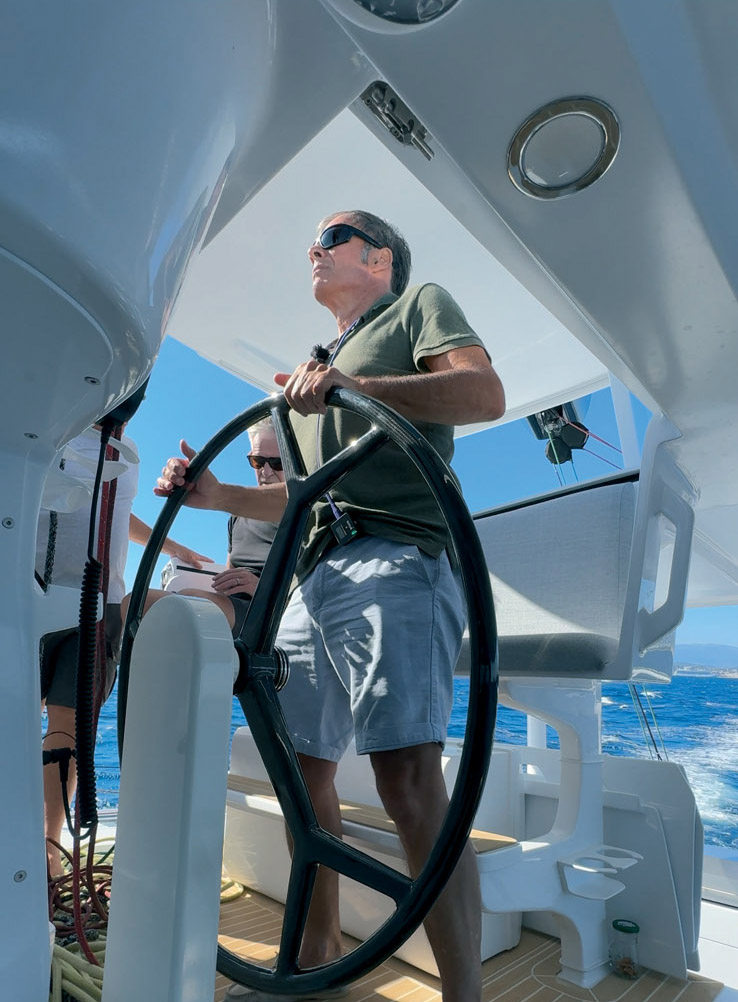
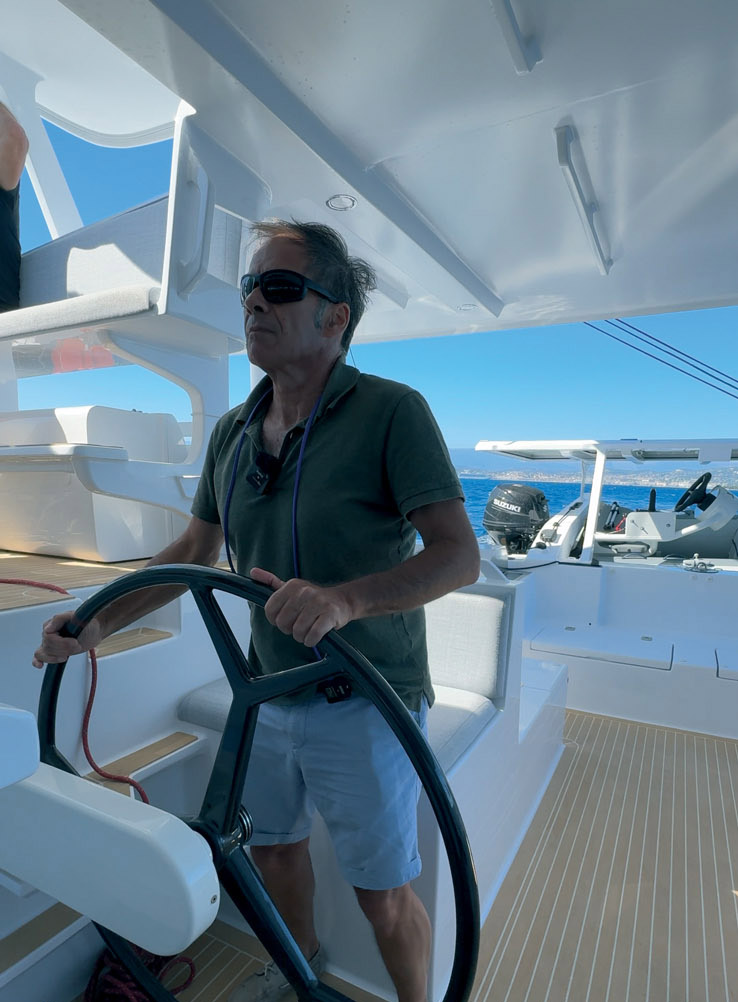
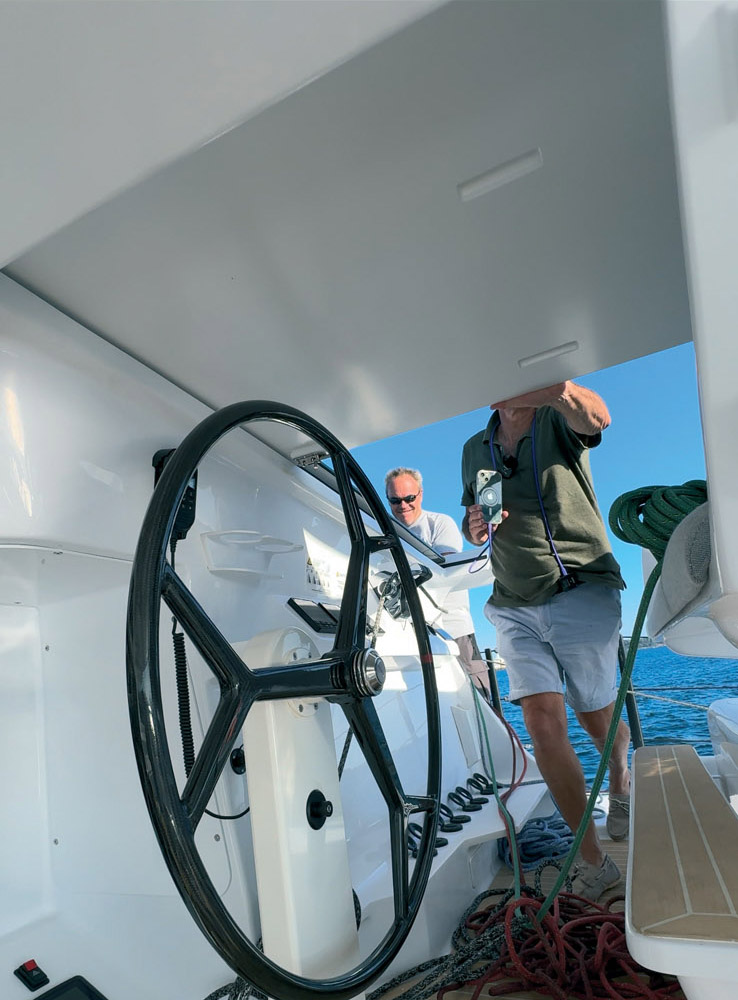
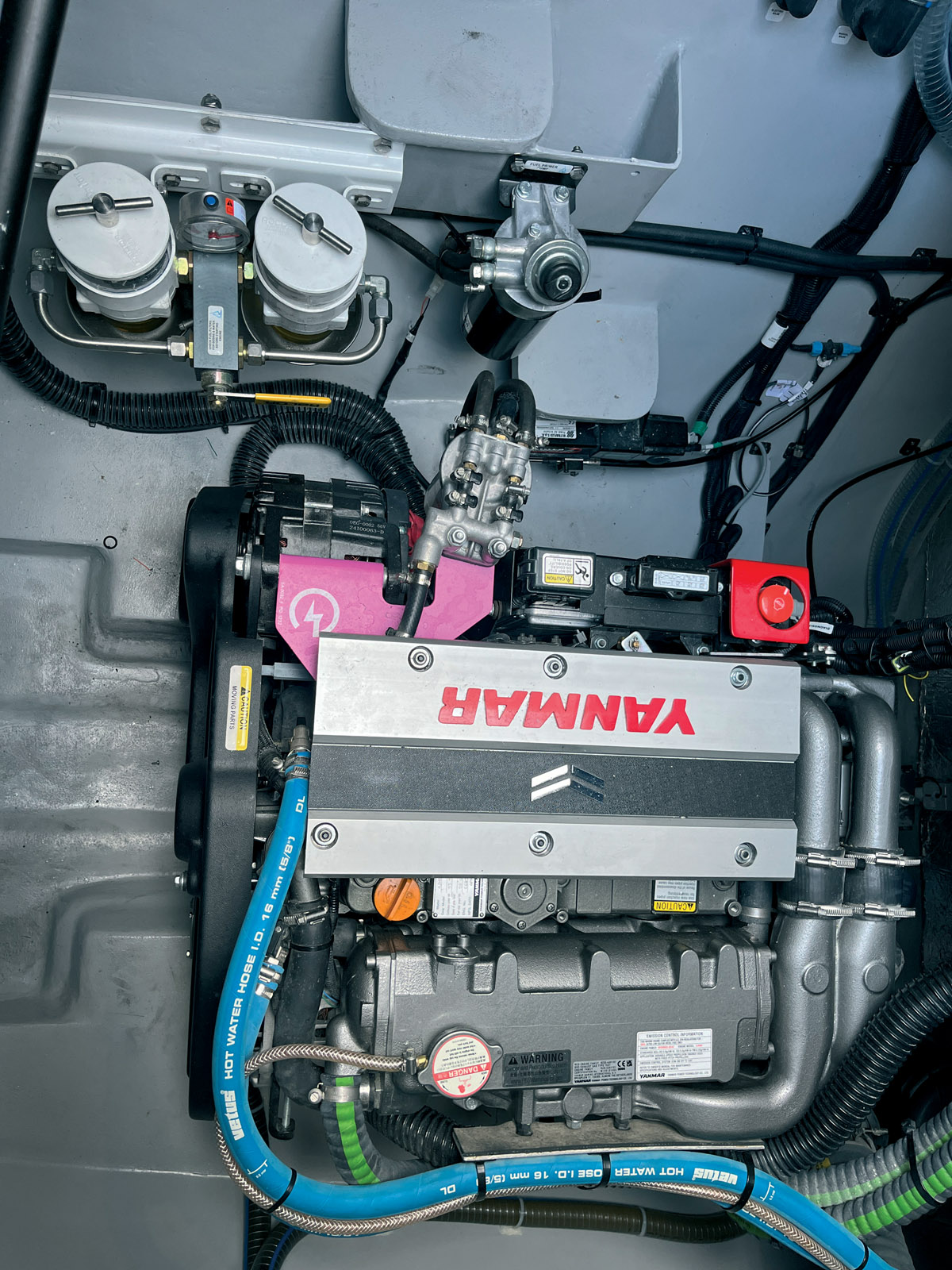
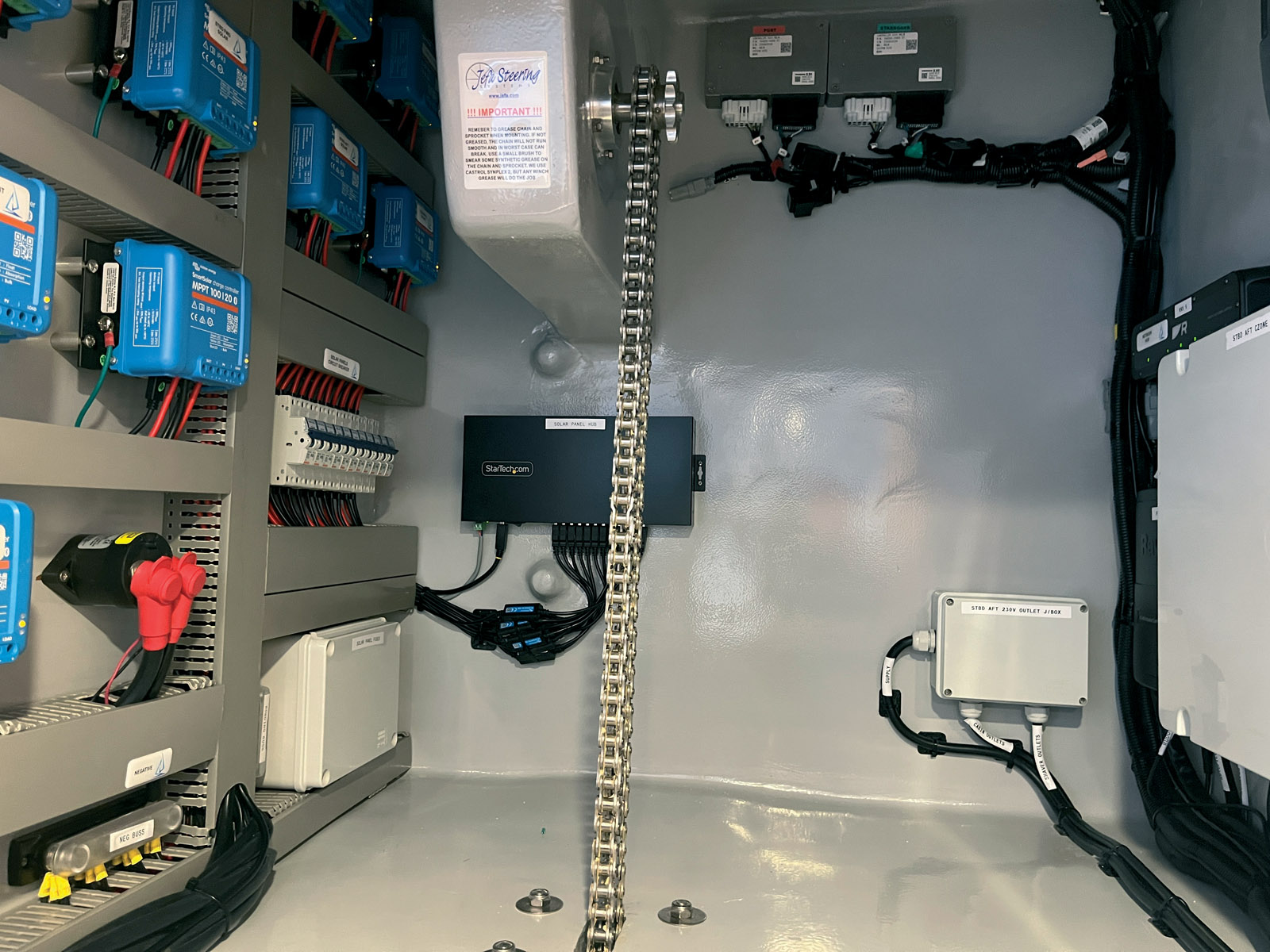
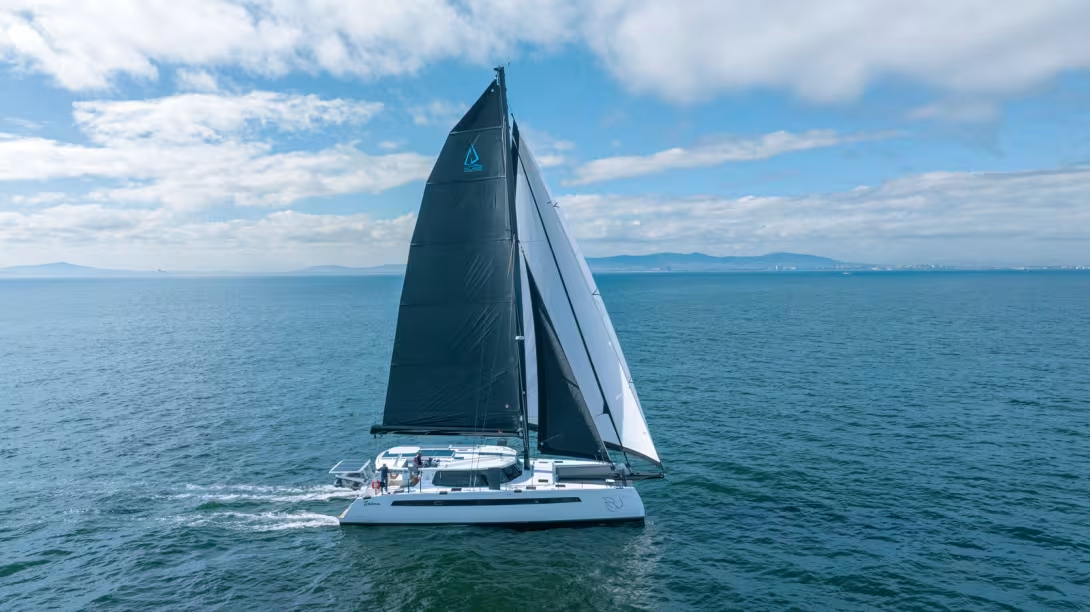
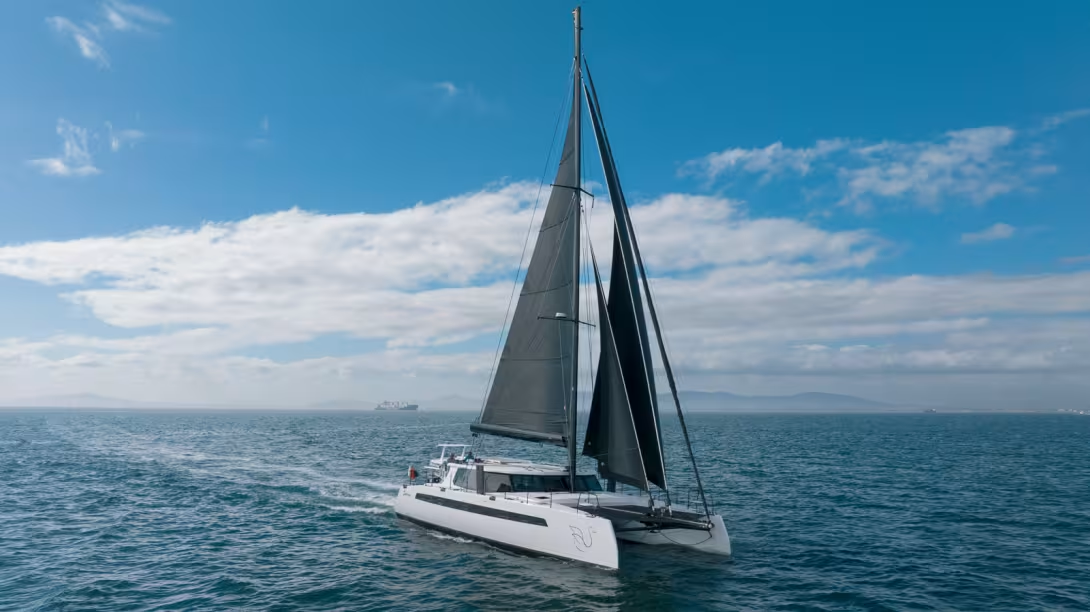
Typically, when writing an article reviewing a multihull, we’d start with the construction, then the layout, and round it off with the actual sailing. Well, not this time, because Phillip suggests we take advantage of a good 15 to 18 knot breeze. No hesitation, we ought to get out there before it dies down, as it usually does in the evening in this bay. The twin 57 HP motors were fired up (they’re barely audible), the anchor was quickly raised onto its roller, and we put ourselves head to wind - the mainsail was hoisted/unrolled in just two minutes. The furling system in the boom prevents the sail from being square-topped, but doesn’t preclude it from having a decent roach - more than enough for fast cruising, as we quickly discovered. Barely tacking to catch the wind, the 580 quickly accelerated to eight knots - the tone was set from the very beginning. Next, the genoa was unfurled in no time. We bore away slightly to gain a bit of sea room. At a good angle, we were effortlessly maintaining 10 knots. We decided to bear away more and hoist the 1,940-square-foot (180 m²) gennaker, which is also mounted on an electric furler. All maneuvers are performed from the helm station, except for the gennaker sheet, which is trimmed from the aft cockpit. Phillip handed me the helm and suggested I set a course at 90° to the apparent wind. Despite almost three and a half thousand square feet (320 m²) of sail area and 18-knot gusts, the Balance handled the canvas with disconcerting ease. We were making between 11 and 12.5 knots without any apprehension, despite the rather tight angle. The bows began to cut through the waves and spray generously, yet the pressure required on the helm for course-keeping remained minimal. The precision of the steering is extraordinary, and what’s more, the balance of the helm is superb: I let go and... it continues in a straight line! At this speed and loaded with sail as we were, it was simply amazing. I was beginning to understand that this catamaran definitely lives up to its name. Alongside me, the shipyard staff smile knowingly. Of course, the two symmetrical daggerboards, which can dive to 11 feet (3.4 meters), help to fine-tune the balance, but the overall architectural work and the design of the rudders in particular are clearly successful. As for the chain transmission and linkage, they are perfectly adjusted. The autopilot therefore never strains. Stéphane tells me that he felt very calm during the long delivery trip. After a tack under self-tacking staysail (we never failed to go through the wind), we picked up again at 40° to the apparent. Then under genoa, my editor Emmanuel van Deth (who couldn’t resist the call of the Balance) got his turn to enjoy himself, often exceeding 13 knots. The longitudinal trim undulated smoothly in the chop, without any slamming. We tested the 3-position steering system, which allows the catamaran to be controlled “from below,” in complete shelter when the large protective cover is pulled down.
As I went inside, I noticed not only the rigidity of the platform, but also the total absence of any squeaks or creaking.
Construction by Artisans
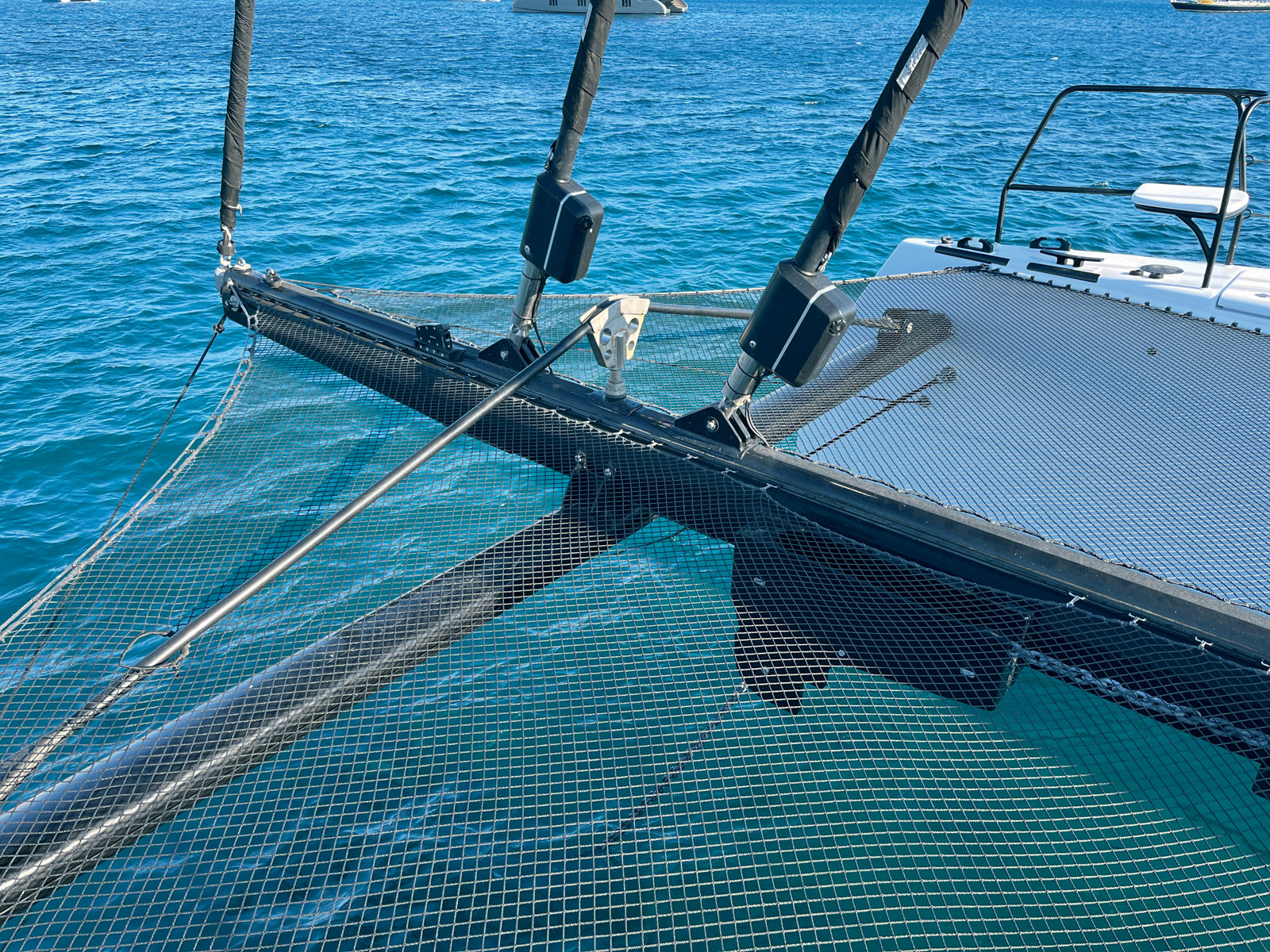
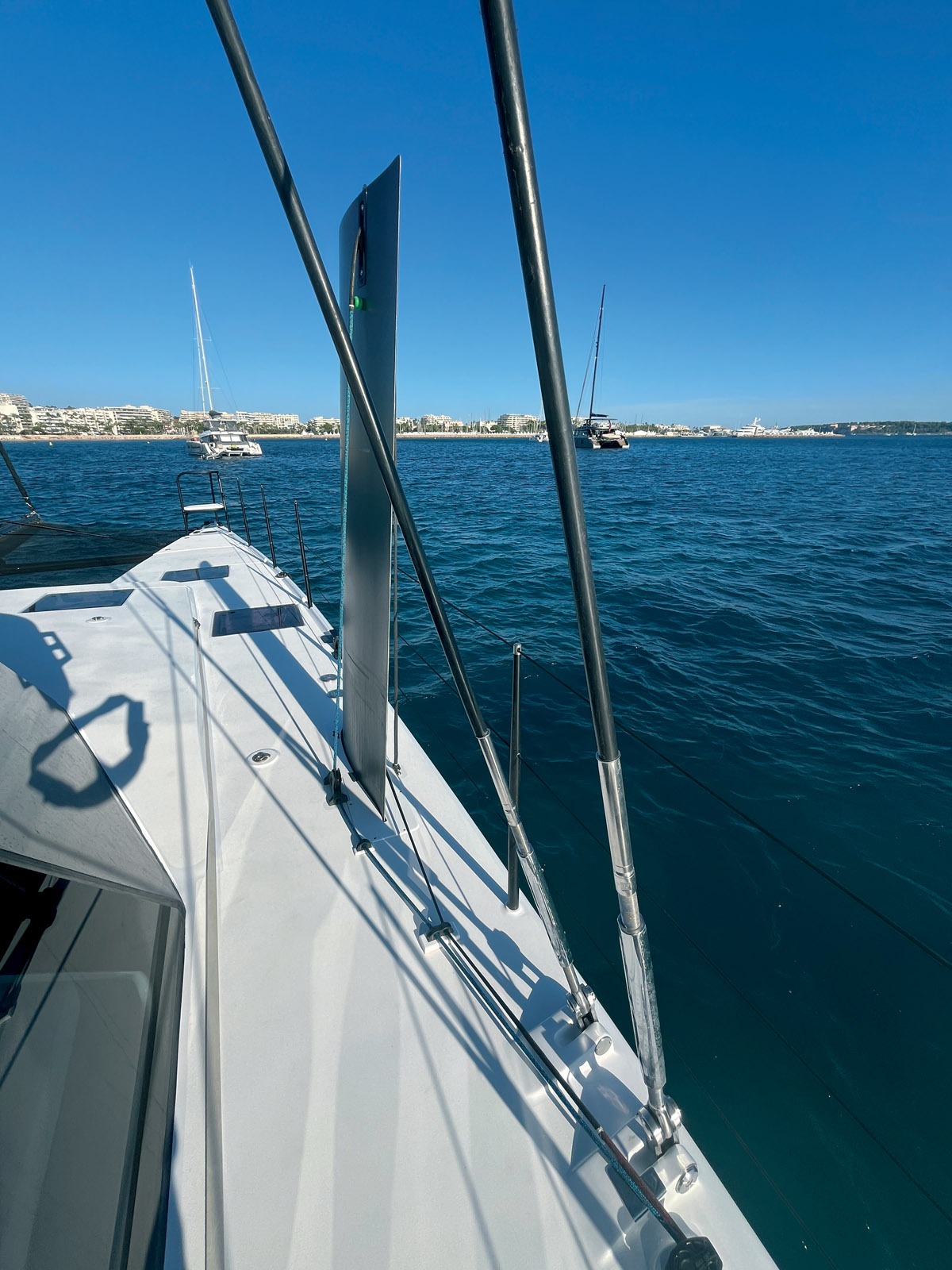
To achieve such a successful result, a great deal of expertise is required, of course, but also a perfectly mastered overall design upstream. Phillip collaborates with Anton Du Toit for the design and Jonathan Paarman for the manufacturing in his workshops in St. Francis Bay. While the first 580 was made entirely in carbon (a weight saving of almost 4,000 lbs (1,800 kg) that is only really justified if you want to race), this second example is made of fiberglass/closed-cell foam composite vacuum-infused with epoxy resin. The thickness of the sandwich is very important - this is what guarantees the excellent stiffness. All parts subject to stress (porthole frames, hull stringers and beams, bulkheads and beam joints, mast foot, etc.) are reinforced with carbon fiber. There are no pre-built modules here: every piece of furniture, equipment, and closet is assembled on site and glued to the structure according to best practice. The deck hatches and injection-molded lockers are generously sized, so you can sit or walk on them without a second thought. South African constructions aren’t known for their robustness for nothing! However, the weight is kept under 17 metric tons lightship. It’s not the most radically light in this size, but the compromise for an ultra-fast and comfortable cruiser is more than convincing. In terms of spars, whether it’s the forward beam/martingale/bowsprit assembly or the mast itself, the first two models opted for aluminum. The masts are made by Sparcraft with a height of over 88 feet (27 meters).
The boom on the 580 #1 is made of carbon, while our test model was equipped with a furling system designed by Sparcraft. We found it to work very well, apart from a small adjustment to the track that needs to be made. The manufacturer recommended using two sheets (leeward and windward) rather than a hydraulic downhaul to maintain control of the angle of the boom to the mast and optimize furling. A Hall Spars carbon mast is available on request, with no price specified at this time. But as Phillip says, “once we’ve made one, it will become standard.” A few small details, such as the coachroof handrails, the shroud chainplates, and the davits for the dinghy (a 3.40 m/11-foot Highfield) attached to the hull, are as pleasing to the eye as they are effective. It’s beautiful work, and we highly recommend checking out the videos of it.
Semi-custom Layouts Almost Straight from the Catalog
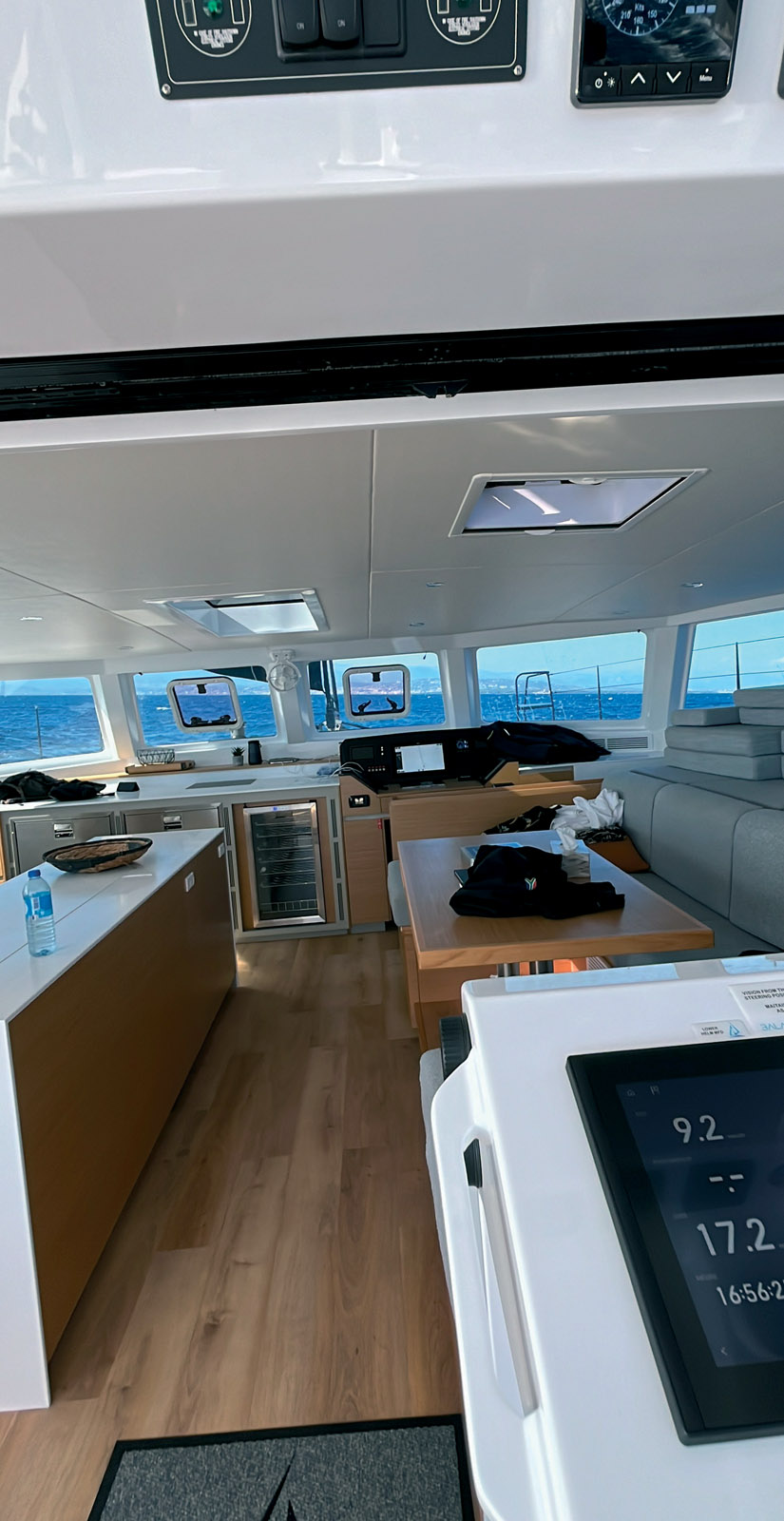
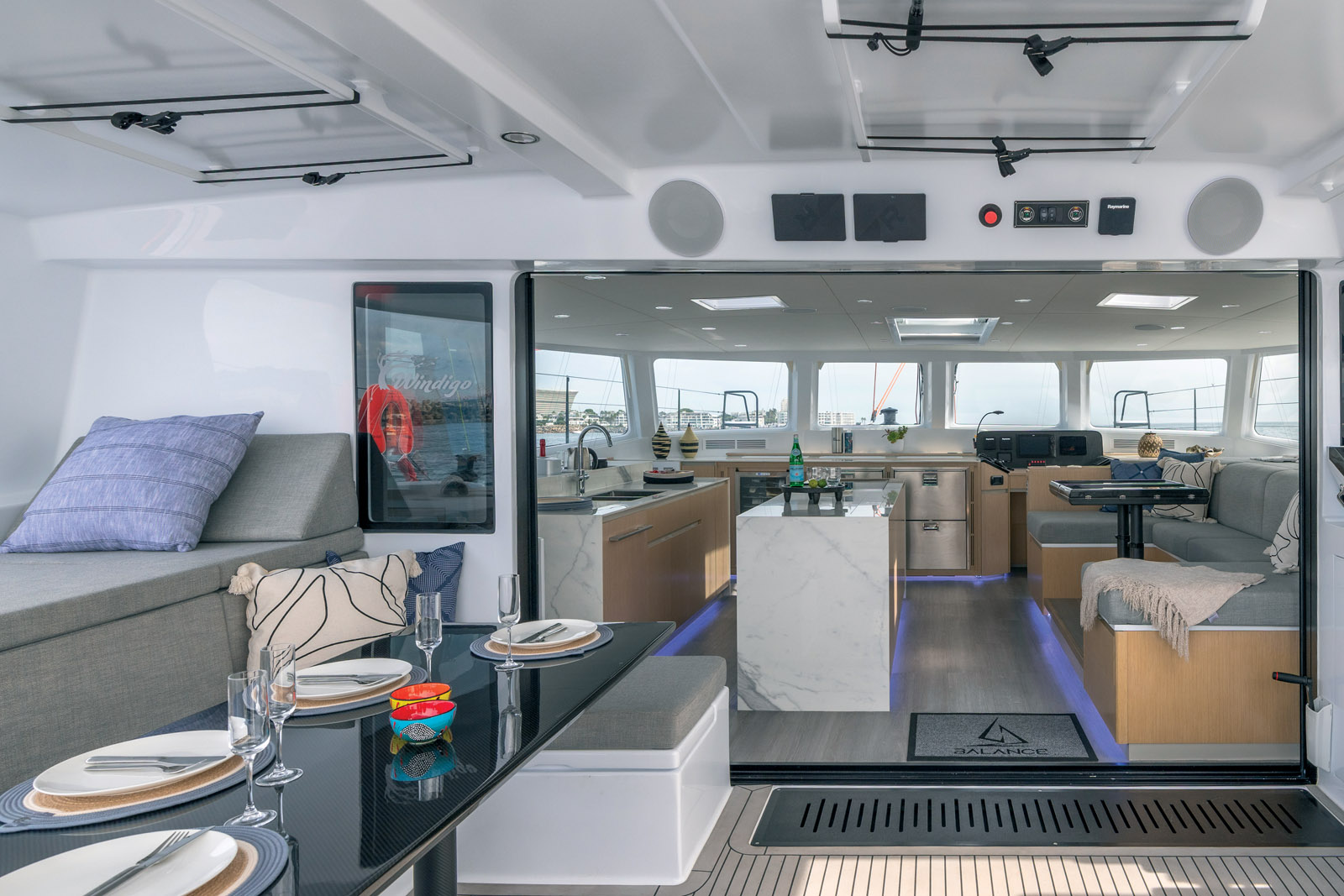
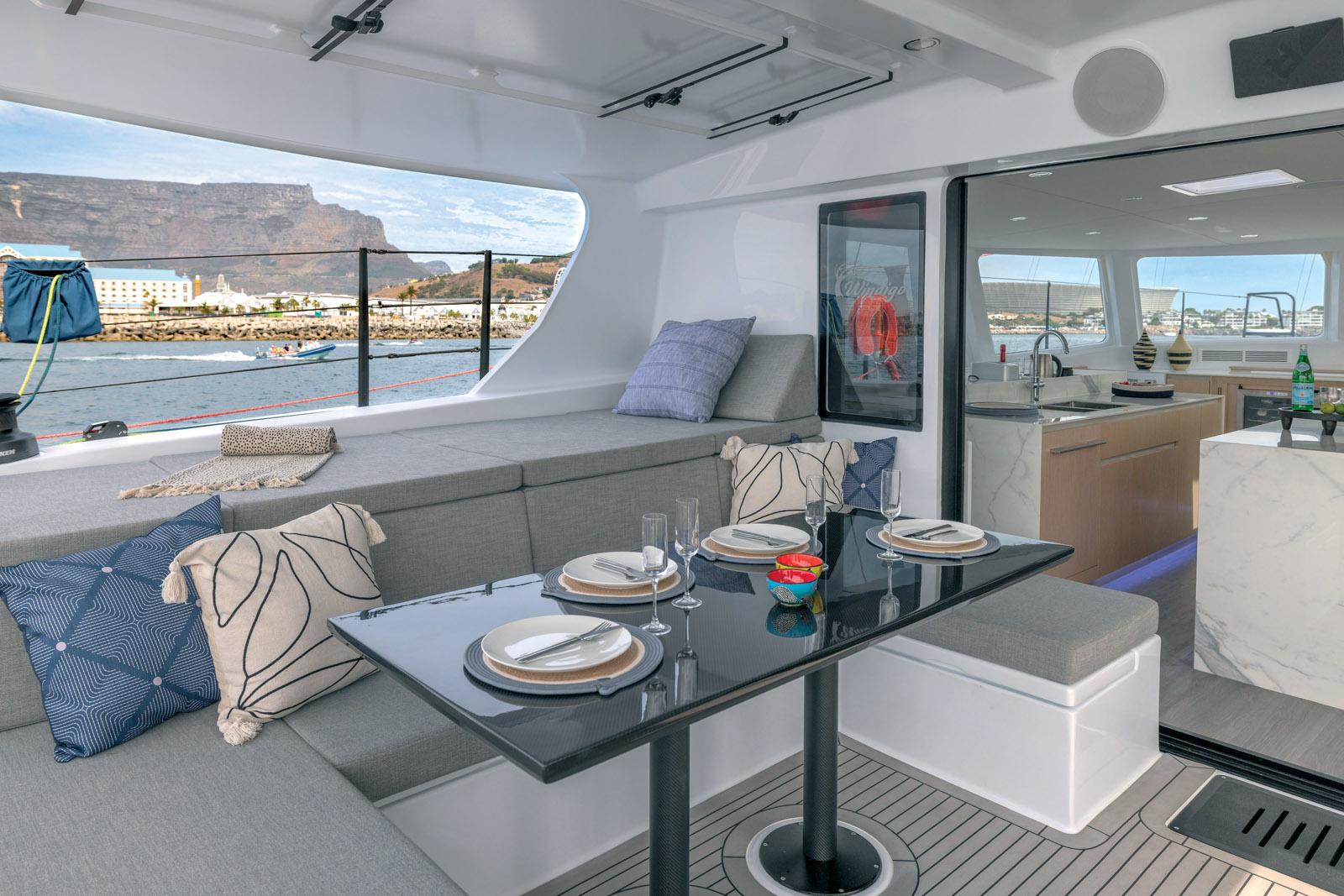
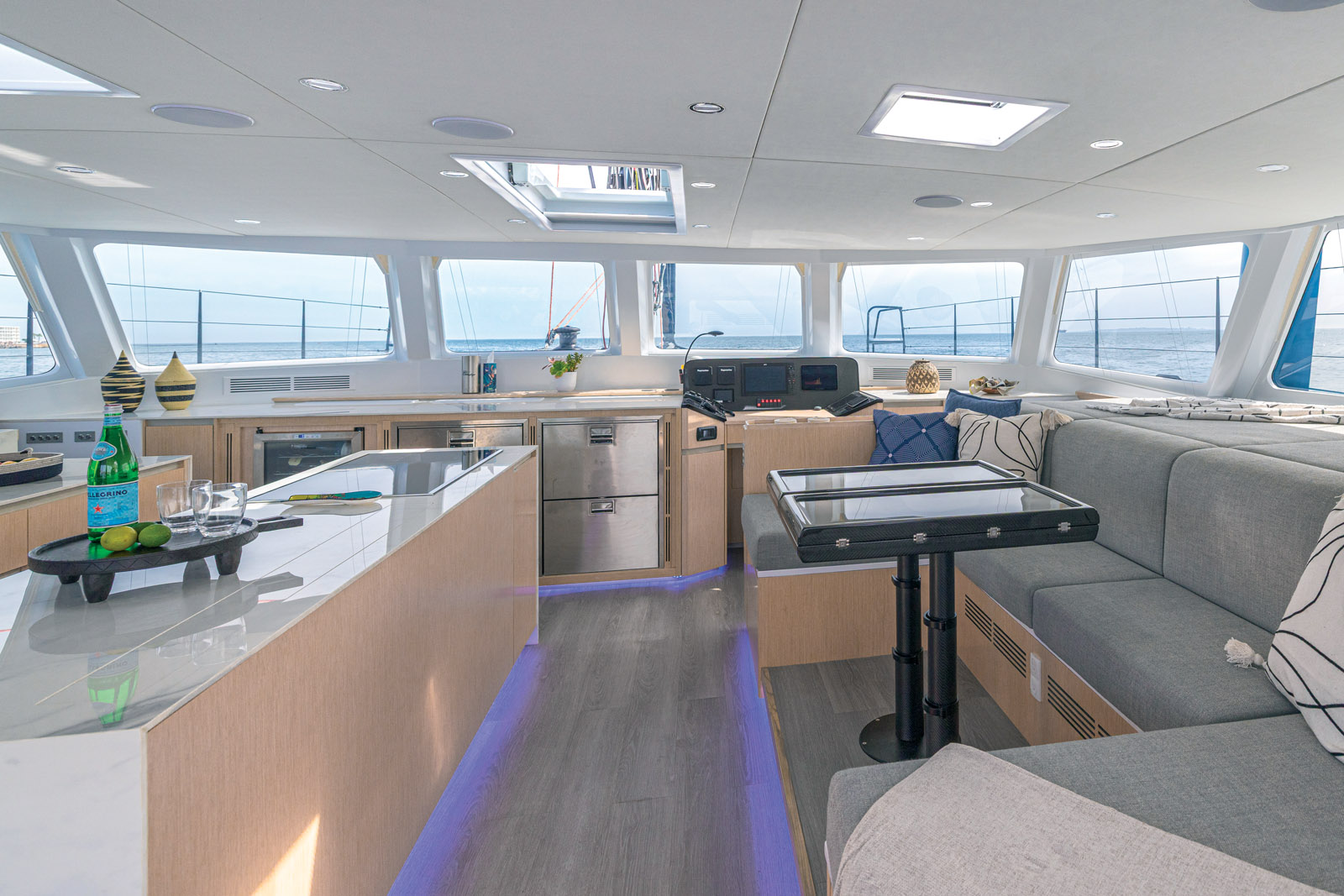
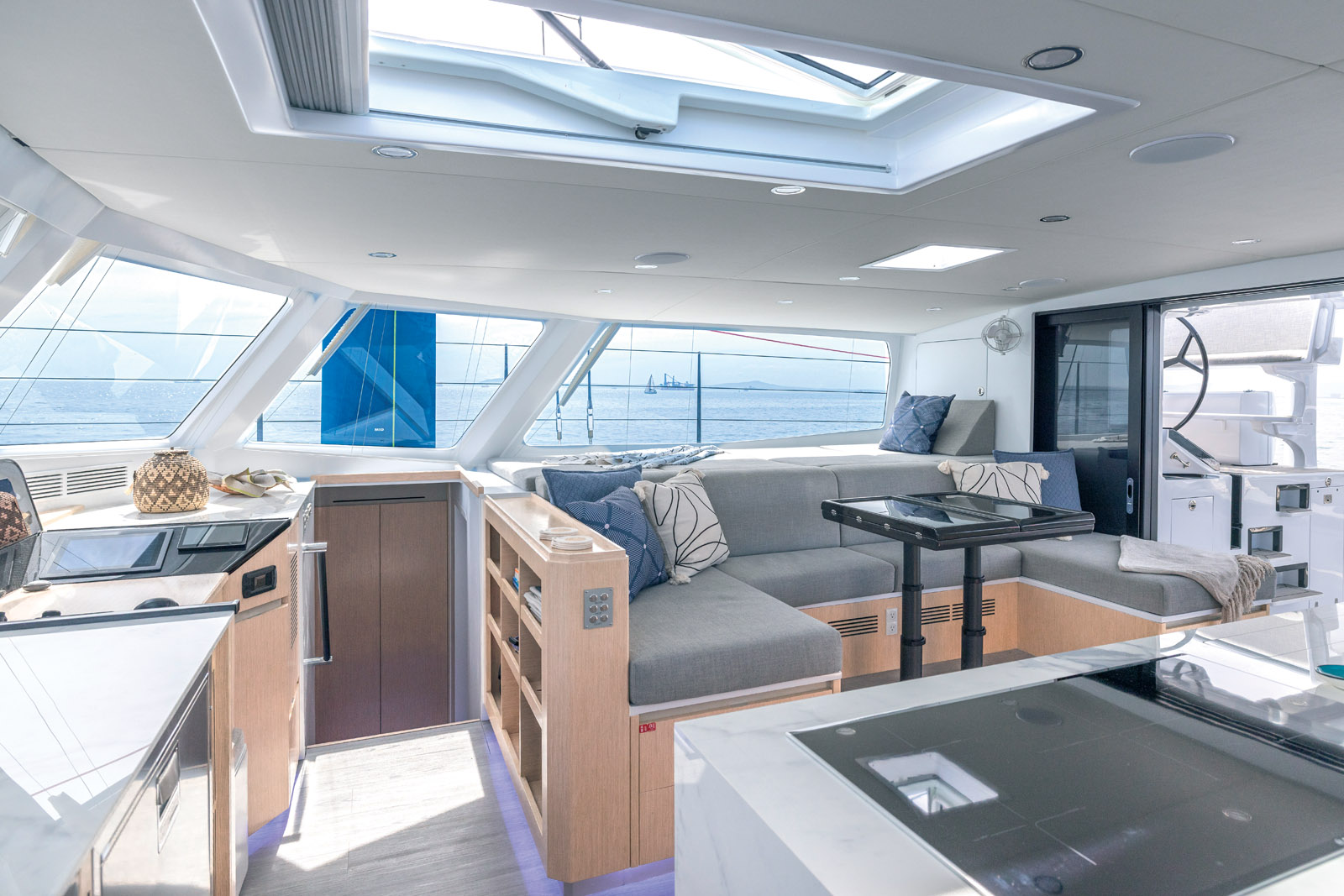
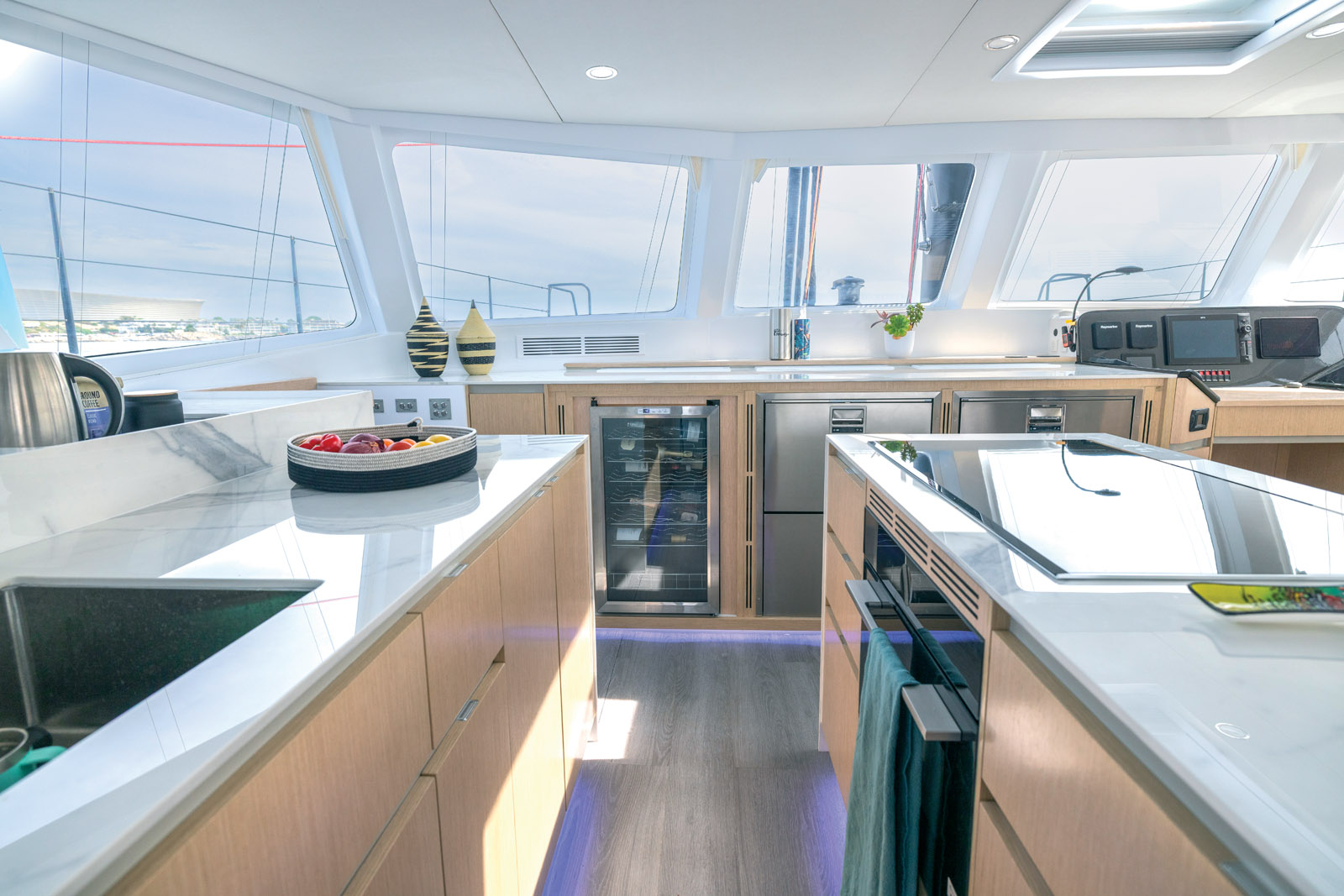
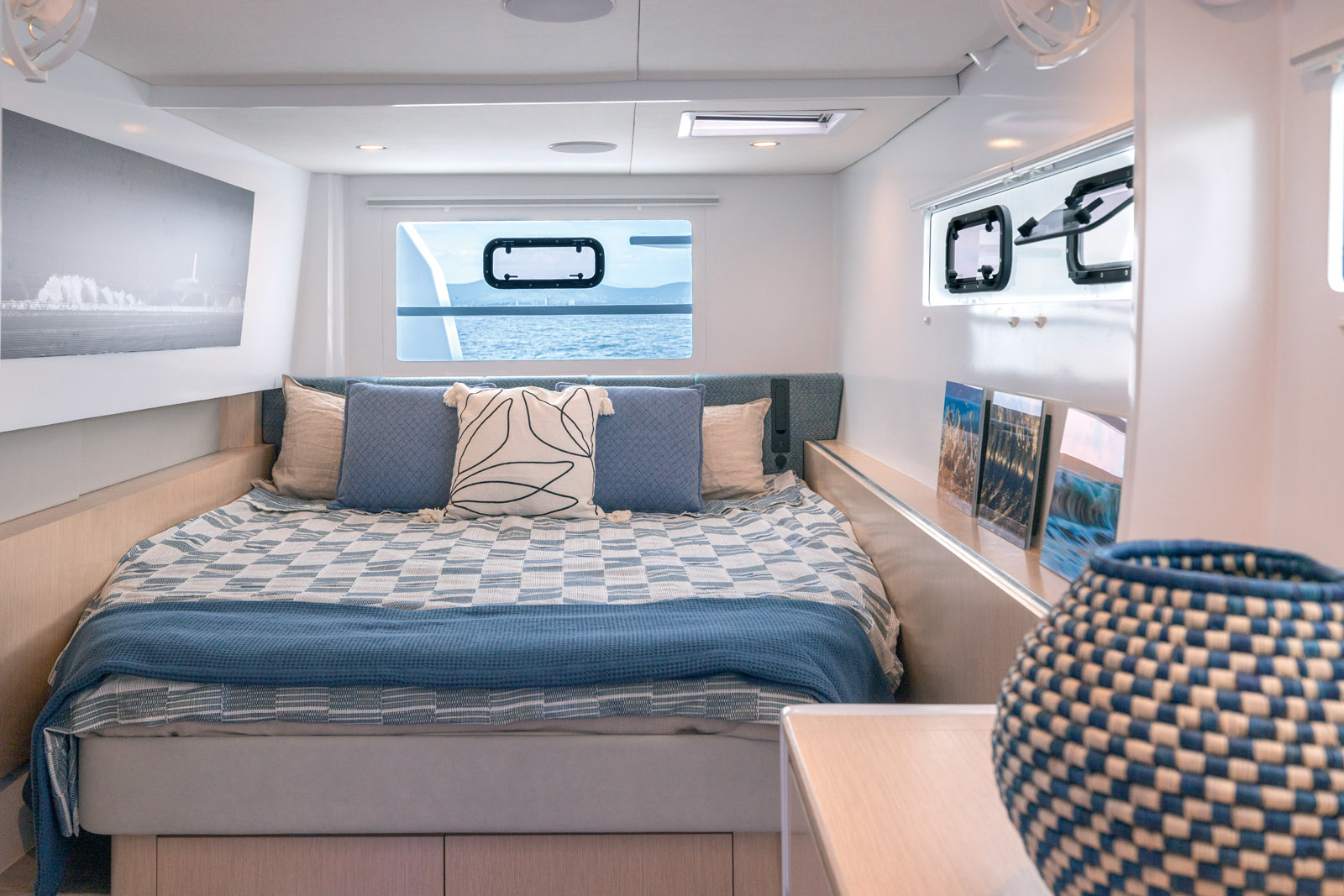
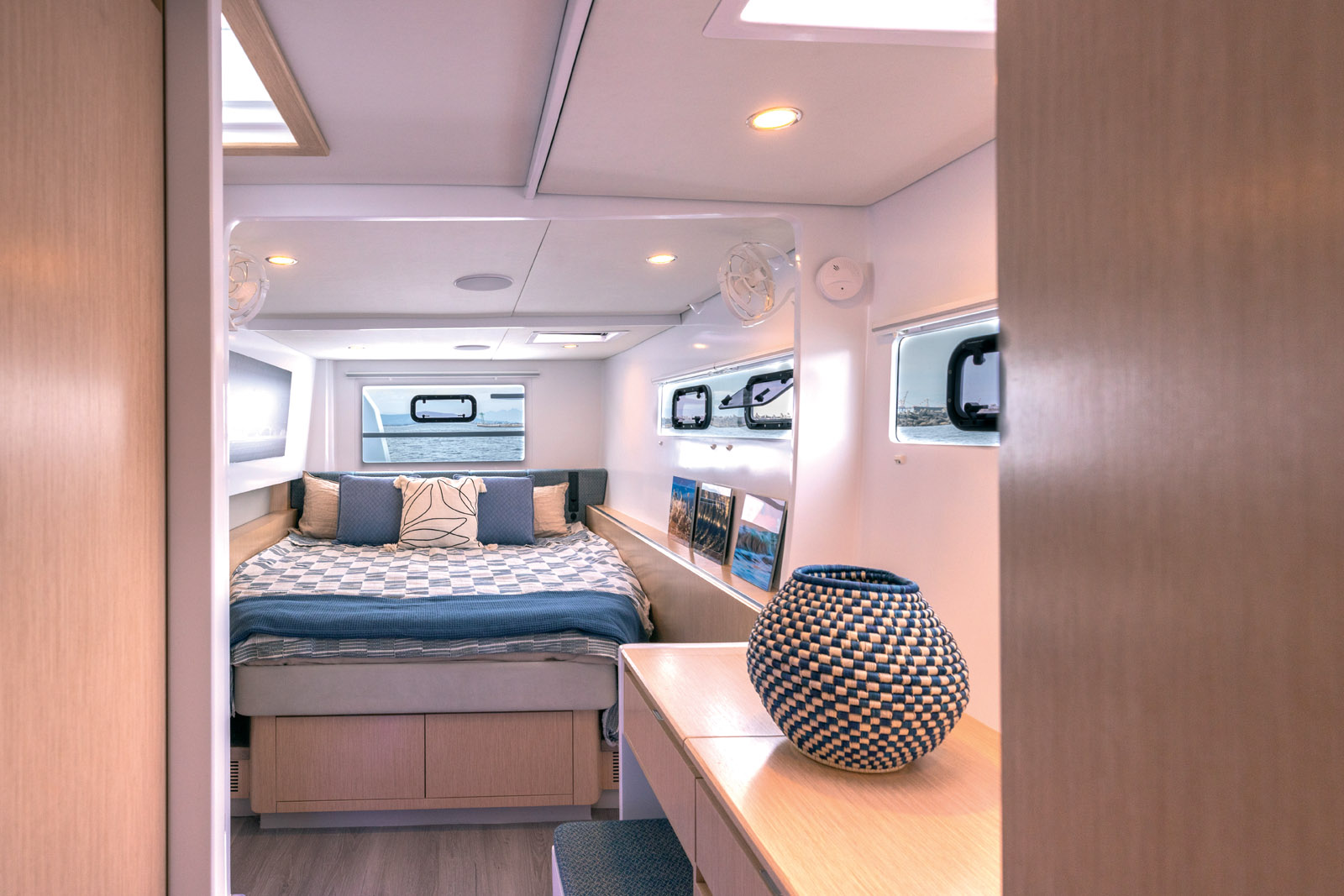
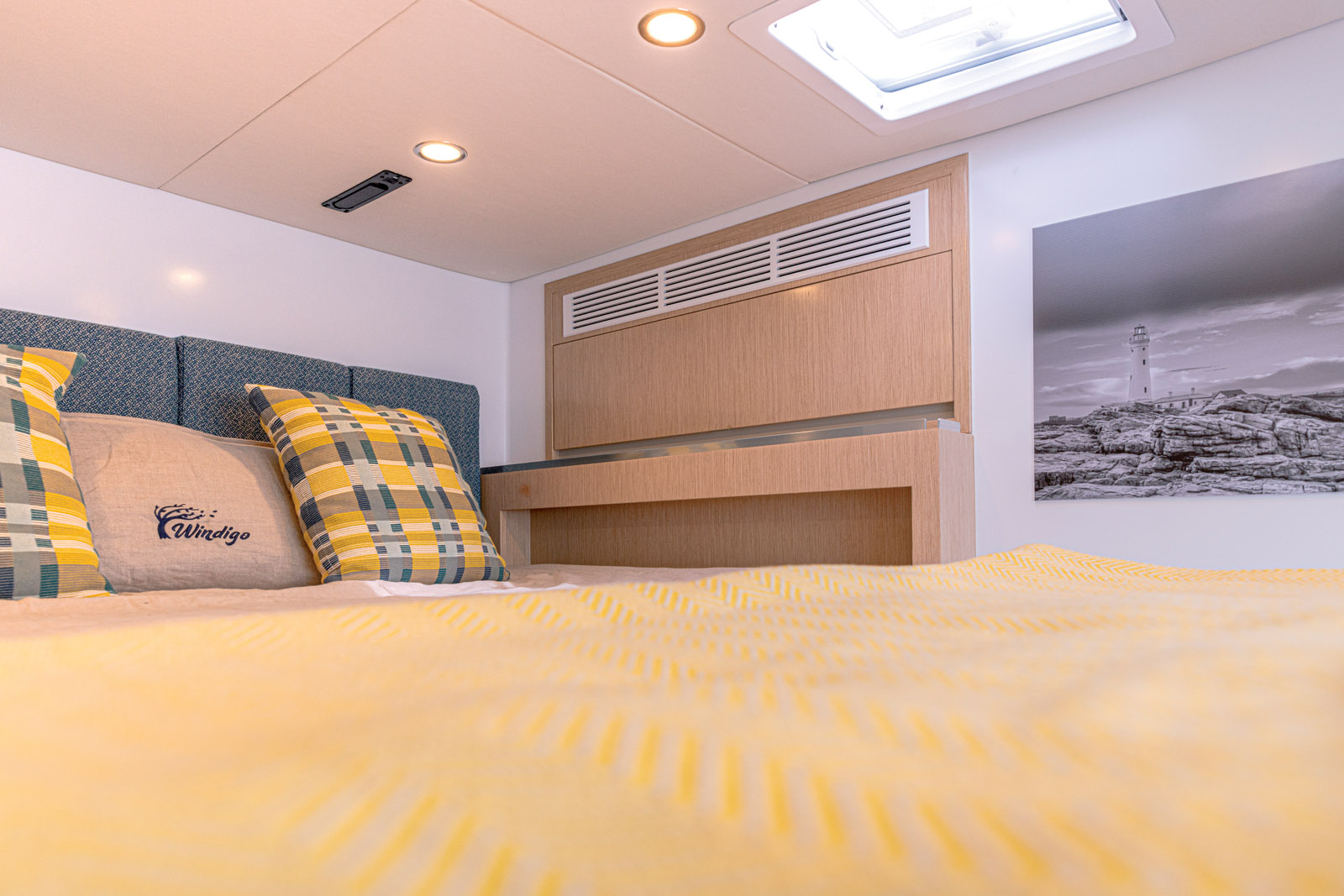
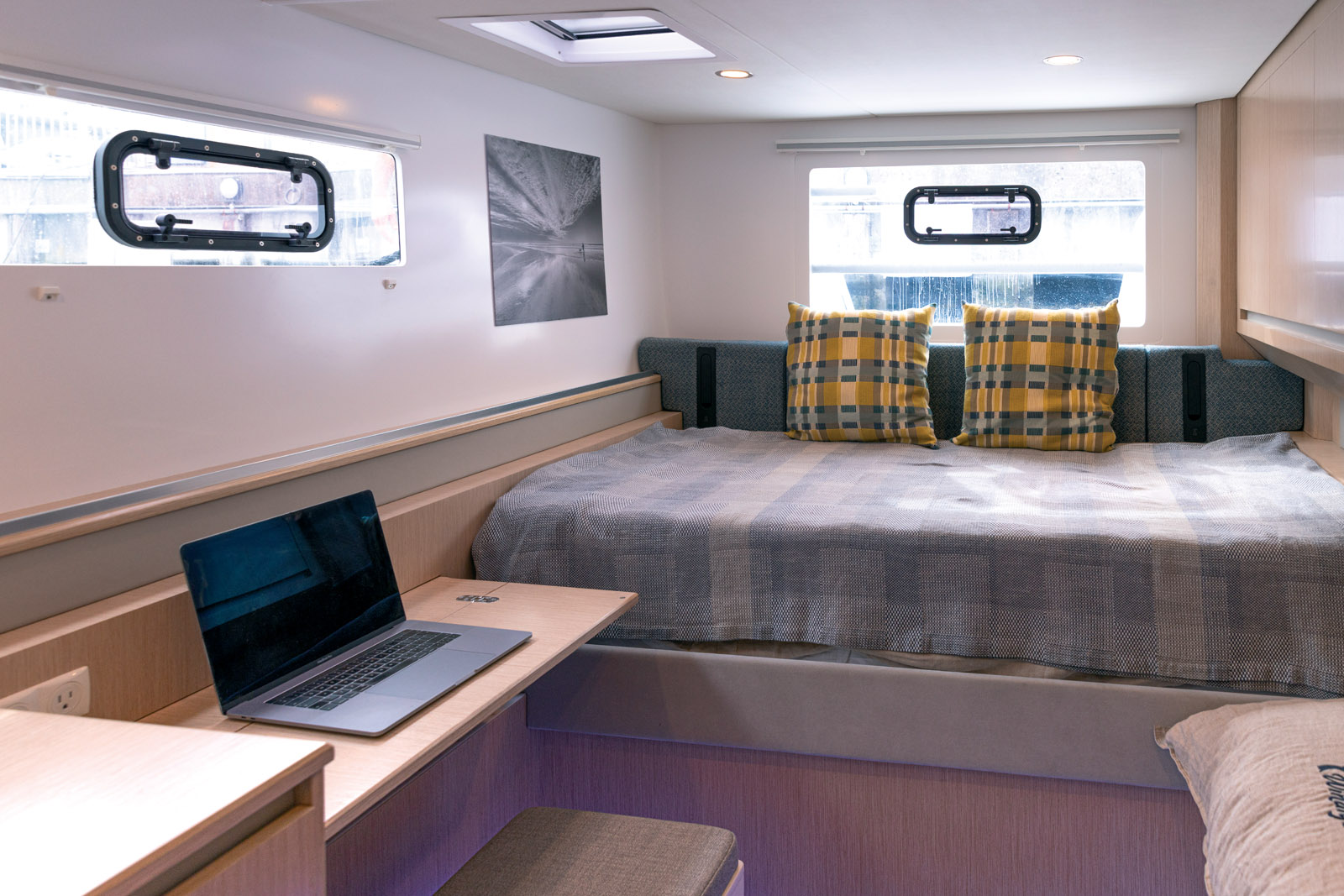
Three, four, or five cabins are predetermined to meet the expectations of different customers. In the latter case, one of the cabins is located in a forepeak, but the bathroom is very spacious - something the skipper will appreciate. The bathroom in this same hull is shared by the two guest cabins, while on the other side there is a full-length owner’s cabin or a slightly smaller one, complemented by a VIP cabin forward. The option of an office cabin is also available. There is ample storage space. As for the nacelle, two layout options have initially been designed. The one with the galley along the port side and its central island seems to us to be the most appropriate, although the width for moving around is a little limited. A great feature is the platform that raises the table and preserves the 360° view when seated. Similarly, we felt that the option of two high, foldable stools, which can be used both on the island and at this table (which is at the same level), was missing when it came to time for aperitifs. But it is the flexibility of the shipyard that will be able to fulfill your requests and suggestions of this kind, such as the placement of the dishwasher, refrigerators, washing machine, or even the multimedia screen. All these little details will create an interior in which you feel comfortable - that’s the magic of a semi-custom build, no two Balance 580s will be exactly the same. The outdoor space is fairly traditional, and you’ll find yourself on a proper cruiser equipped with a barbecue, a sink for fishing, sun loungers, etc., rather than an all-out speed machine capable of reaching over fifteen knots - and yet the Balance 580 does just that, and very well!
Conclusion
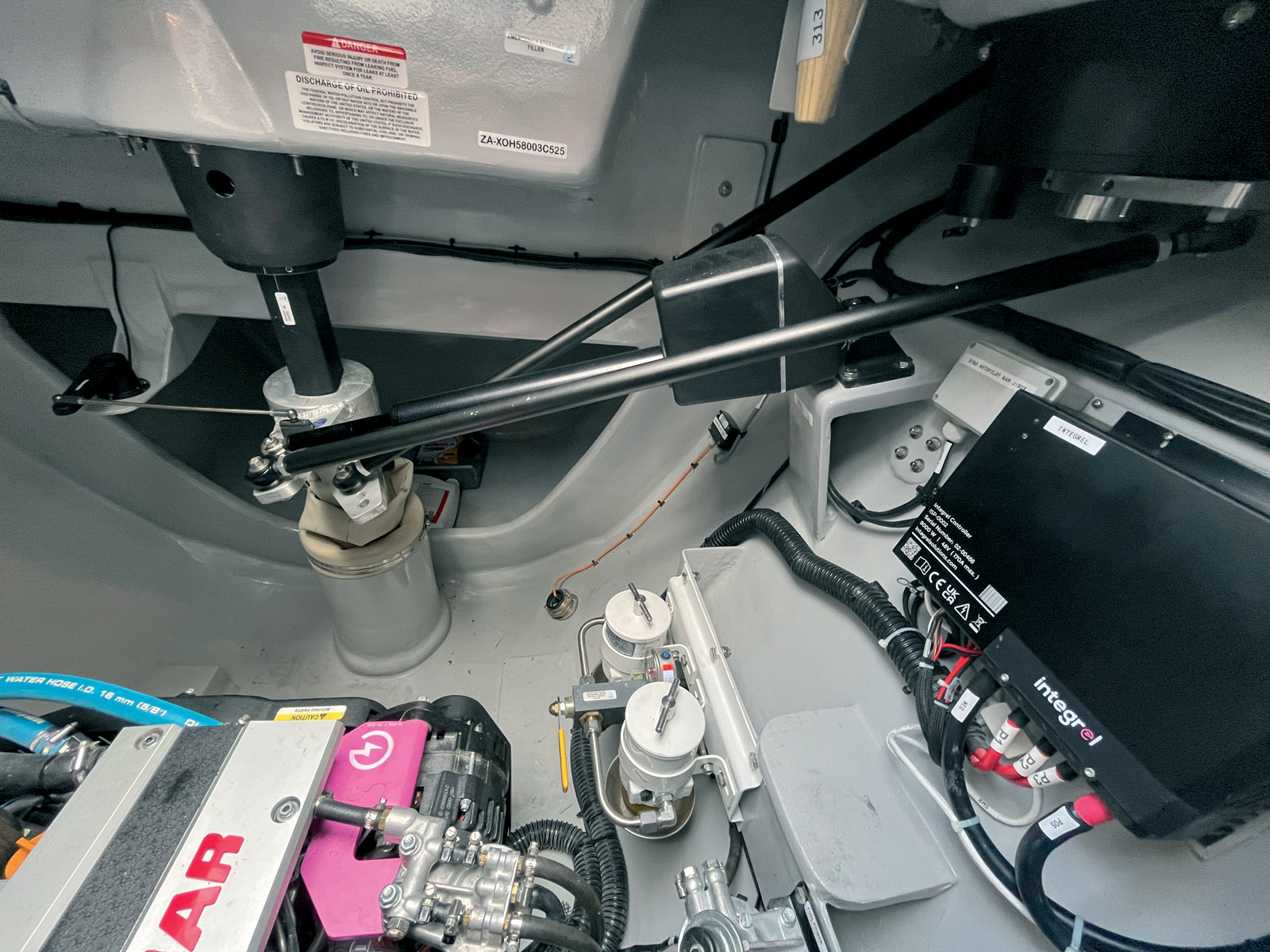
As you can see, we were won over by the Balance 580 - certainly one of the best-performing models in the range to date. Speed is combined here with ease of handling and intelligent comfort. There is no ostentatious luxury: this is a sober and solid catamaran designed for long passage-making. Of course, a blue water vessel as this isn’t going to come cheap, with a price tag of no less than $3.5 million, but this is understandable given that no less than 50,000 hours of work are required to build it. Another plus point is the optional hybrid propulsion system, which significantly reduces fuel consumption and, above all, generates energy when under sail.
A true cruising catamaran, fast and safe
Lightweight, robust, and semi-custom construction
Slightly narrow galley passageway
Requires a very precise program to be established
Technical specifications
Architects: Phillip Berman/Du Toit Yacht Design
Interior design: Balance Catamarans
Length overall: 58’4” (17.78 m)
Beam: 28’3” (8.6 m)
Draft (daggerboards): 5’5”/11’ (1.65/3.35 m)
Lightship displacement: 36,800 lbs (16.7 t)
Laden displacement: 47,820lbs (21.69 t)
Drivetrain: 2 x 57 HP
2 x 15 kW
Batteries: 51.2 kWh
Solar panels: 3.4 kWp
Mainsail: 1,345/1,518 sq ft (125/141 m²)
Self-tacking staysail: 215 sq ft (20 m²)
Genoa: 855 sq ft (79.5 m²)
Gennaker: 1,345/1,937 sq ft (125/180 m²)
Spinnaker: 3,347 sq ft (311 m²)
Fuel: 2 x 132 US gal (2 x 500 l)
Water: 2 x 79 US gal (2 x 300 l)
Prices in US$ ex-tax
Standard price (aluminum mast and spars): 2,990,000
Price of the boat we tested: 3,300,000
Options in US$ ex-tax
Performance Cruising Pack: 410,340
Full carbon construction: 312,600
Custom flush deck panels: 109,509
High modulus carbon mast: on request
Dual Integrel 30 kW motor: 80,336
Dive compressor: 20,516
Additional 9.6 kW battery: 23,228