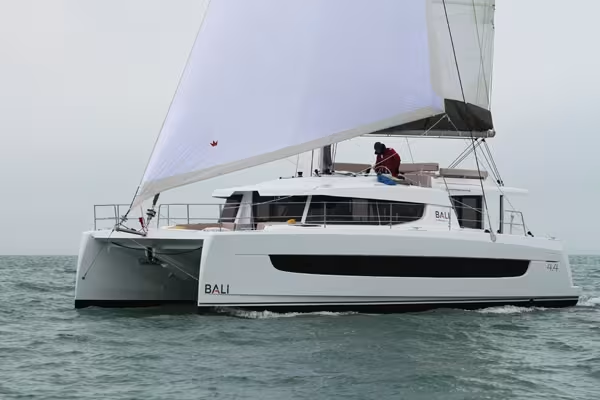
This new 4.4 is in some ways a replacement for the Bali 4.3, but particularly the 4.5, the very first model in the Bali range. Aboard this catamaran, more than ever dedicated to comfort and family vacations, all the attributes of the Bali DNA are to be found - tilting door, opening side bay windows, rigid foredeck, and large chilled capacity. As a bonus, with the size of this model being closer to the 4.6 than the 4.4, there is a forward door, a flybridge and aft platform.
Test location: La Rochelle, France
Conditions: North-easterly 8 to 15 knots, very light chop
Infos pratiques
- Le chantier : Bali 4.4
- La fiche technique
-
 Découvrez notre vidéo exclusive
- Financez votre Bali 4.4
- Assuez votre Bali 4.4
- Articles autour du Bali 4.4
We got the chance to try this new Bali as a preview... and very early in the season, too. But that didn’t prevent us from enjoying the hedonistic spirit intended by the designers of this catamaran. But it wasn’t all easy: persistent fog, freezing temperatures and especially frosty ropes didn’t make for very inviting sailing! On the dock, Boris Compagnon, Sales Director of Catana Group, and Kahina Oussadi, from their communication department, showed no discouragement: they came up with a few spare electric heaters and hooked them up to the mains, giving us a few more degrees of warmth inside. Of course, all this meant that we weren’t going to be taking advantage of the “open space” mode, one of the big features on every Bali model. No, this time we were keeping everything closed! And I have to admit that this “winter” configuration is also very convincing - the XXL area of the nacelle and the big windows are very pleasing.
 |
 |
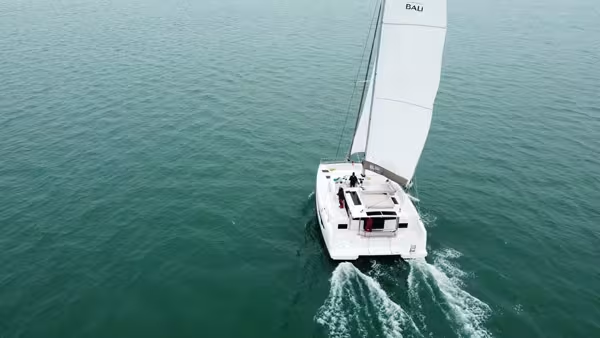
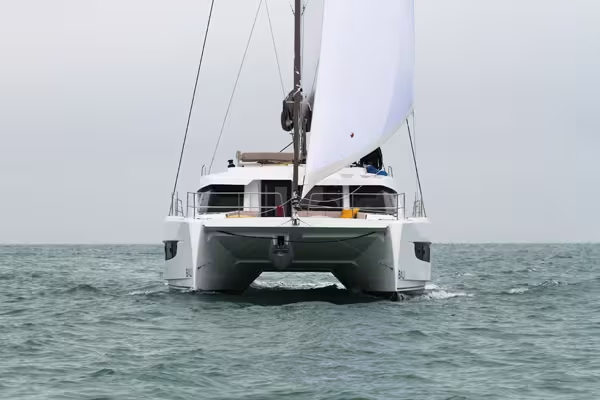
As soon as the gennaker is unfurled, it turbocharges this platform that was designed primarily for comfort.
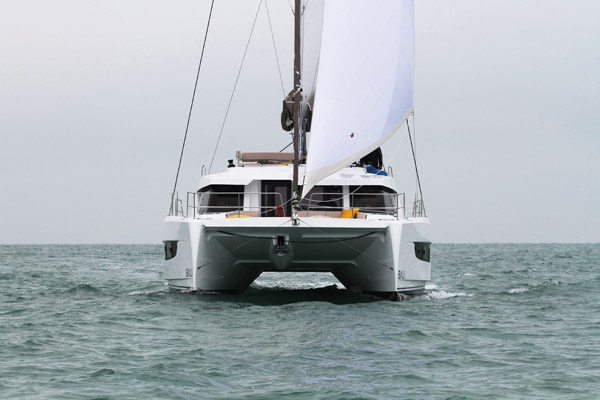
The outboard chines and the 45° angle of the inboard topsides provide maximum agility while maintaining favorable waterline beam.
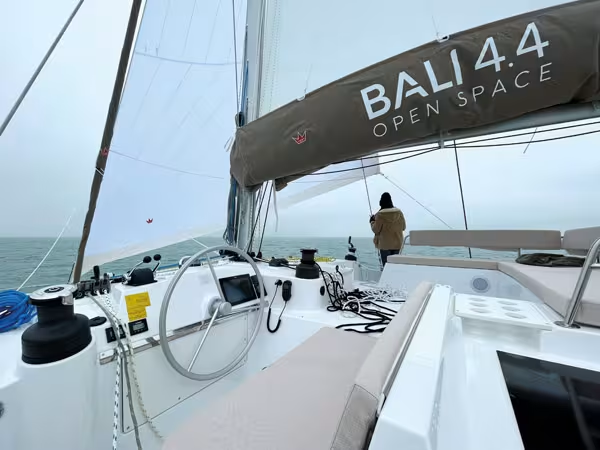
Deck plan designed for relaxation yet remains very functional
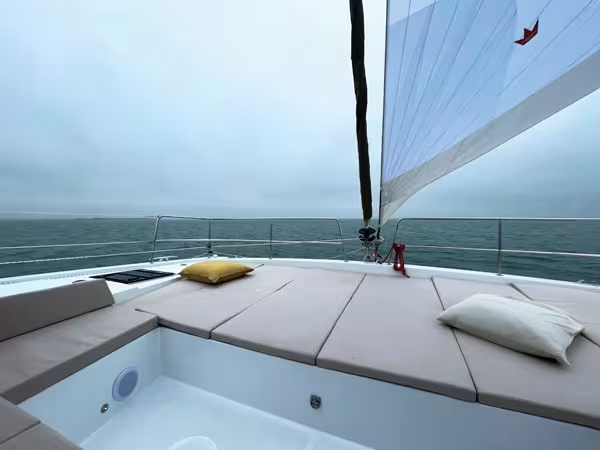
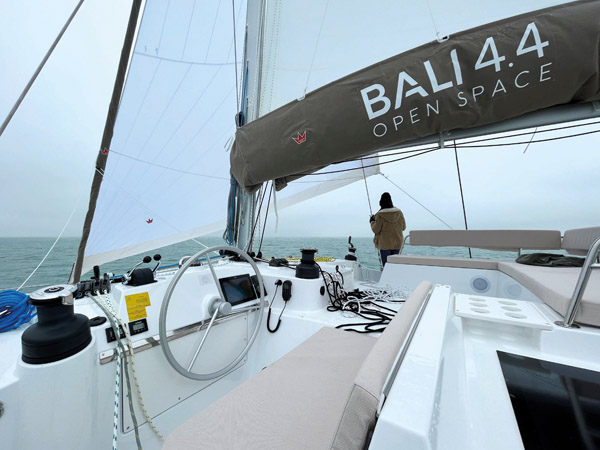
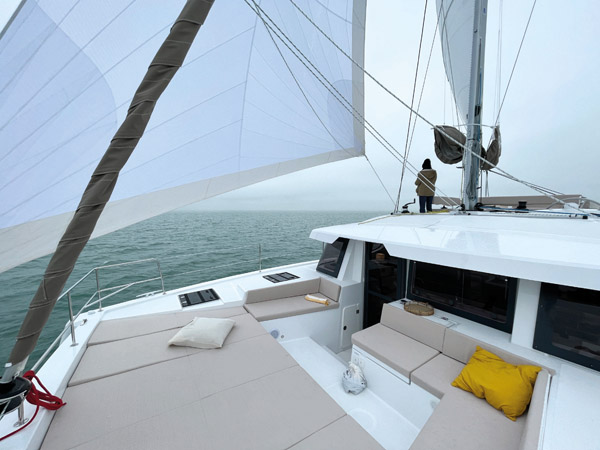
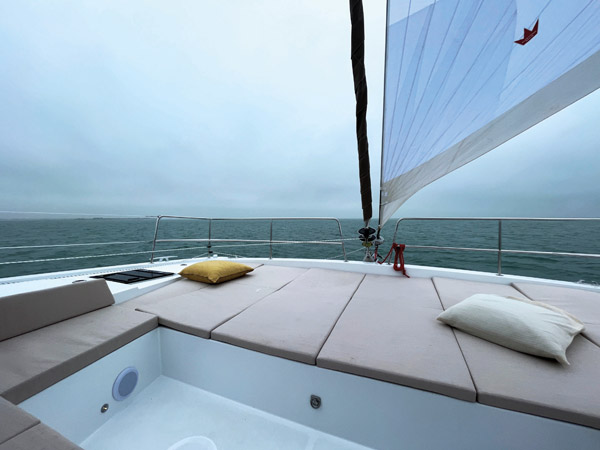
Volunteers were, however, required to step out onto the frosty deck to try and release our stiff-as-a-board mooring lines. And once clear of the dock, retrieving the fenders wasn’t so easy either - frozen clove hitches are a nuisance too. We managed to avoid getting wet, but it was a close call. We entered the Chenal des Minimes channel under engine, our particular model being fitted with the optional twin 57 HP Yanmars. It was straight away apparent that the motors propel the boat with little effort, given we were up to about 7 knots at 2,150 rpm – aided only a little by the north-east wind, as we hardly noticed any difference when turned and heading into it. A quick visit to the aft cabins allowed us to confirm that any engine noise is well contained - nothing like the memories I have of the last Bali I tried, the Catspace. In fact, Olivier Poncin, the head of Catana Group, confirmed that he has asked his teams to deal with the soundproofing. Despite the cold, the halyards and sheets manage to run over their respective sheaves, round the winches and through the clutches. Though the deck layout has been designed specifically for relaxation with a maximum area of rigid deck space thanks to the integral foredeck and the mobile platform that perfectly extends the sugarscoops, it remains perfectly functional with fluid circulation everywhere. Underfoot, the composite sandwich is very stiff, proof of careful and generously sampled construction. Up on the flybridge, accessible from both sides, maneuvering is simple: everything happens from the helm station, which is offset to port. At 4 feet (1.23 m) wide, the seat is comfortable. The view forward is good, somewhat less-so looking astern. The rest of the flybridge is fully equipped, but the designers wanted to limit the height of the boom - in fact, the lazy bag is easily accessible, and the mainsail area is larger. Up front, the hard deck is entirely covered with sunbeds. This looks good - though perhaps not the thing for the day of our test - but opening the lockers is more complicated with all the mattresses. The aft cockpit, if one can define it as such, is home to a large bench seat of 8’8” (2.63 m), the sugarscoops and the hydraulic platform.
 |
 |
 |
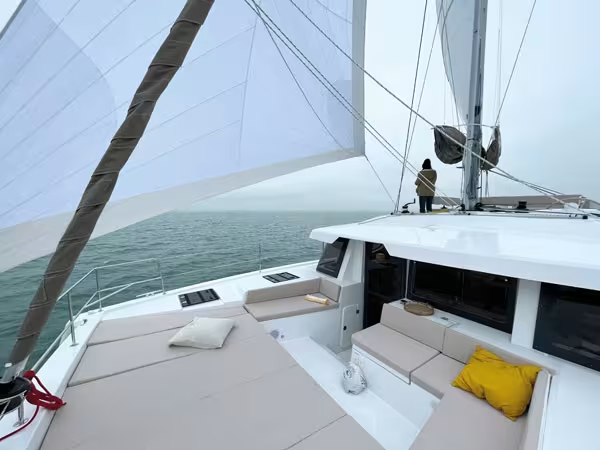
The flybridge is home to the helm/ maneuvering station and huge lounging area.
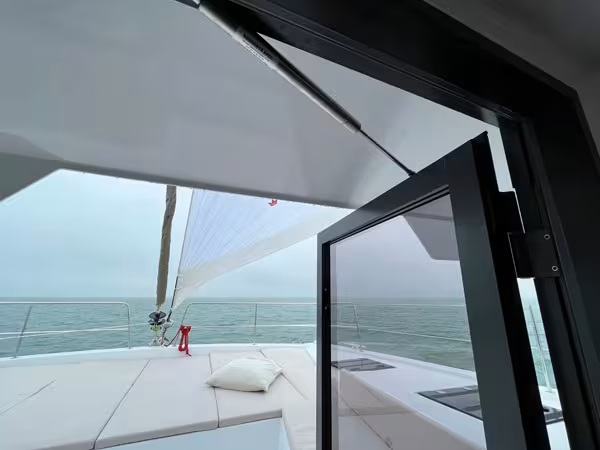
The foredeck can be entirely covered by sunloungers.
The indispensable Code 0
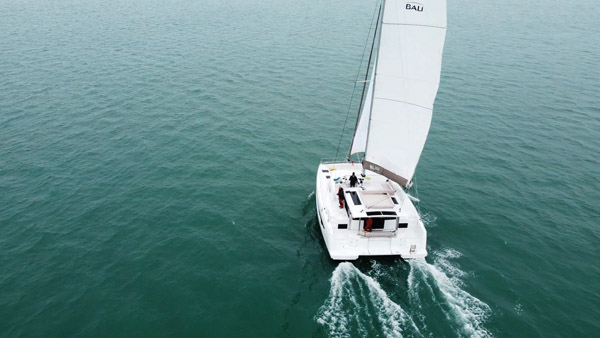
As soon as the mainsail was hoisted and the Code 0 unfurled, we trimmed the traveler and the sheets. With the wind oscillating between 8 and 15 knots on the beam, our boatspeed was between 7 and 8 knots with a few peaks at 9 knots during little gusts. When the main is set just right, with all its telltales flapping horizontally, you can clearly feel that the Bali 4.4 is just waiting to be sailed. The helm, without being especially wonderful, is fairly soft and direct. A few details remain to be worked out regarding the Code 0 sheeting system - the lines are subject to various chafe spots along their course. When gybing, the lazy sheet gets caught under the angle of the coachroof before it can be taken in again. On this point, Boris advises me that usually, you would furl and unfurl... OK! The Code 0, promoted by the yard, brings an obvious bonus up to about 70° off the wind. It won’t go higher because the sheeting angle logically passes outside the shrouds. To get closer to the wind, we rolled up the Code 0, and unfurled the self-tacking solent. This reduces the headsail area from 796 sq ft down to 452 (74 to 42 m²). Despite a sail area to weight ratio of 8.68 m²/t, which is more favorable than the 7.07 of the Bali 4.2, the difference in punch is clearly felt. When we came up to 50/55° off the true wind, boatspeed barely exceeded 5 knots, leeway was noticeable, and the sail trim needed to be quite precise. We’re clearly not looking at the ideal conditions of a comfortable cruising catamaran for sailing 100% under sail - the engines (or one of the pair) are there to help you shamelessly maintain your course.
 |
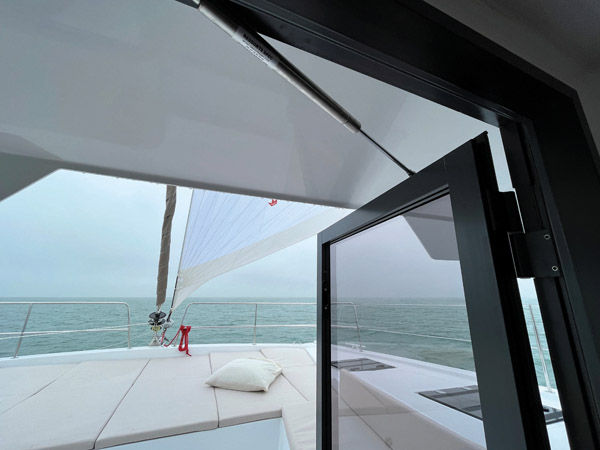 |
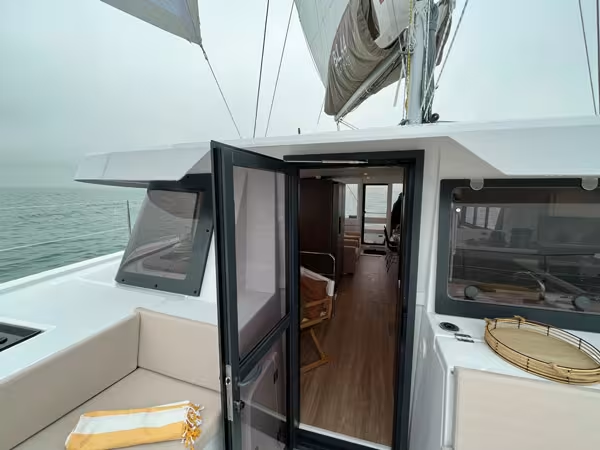
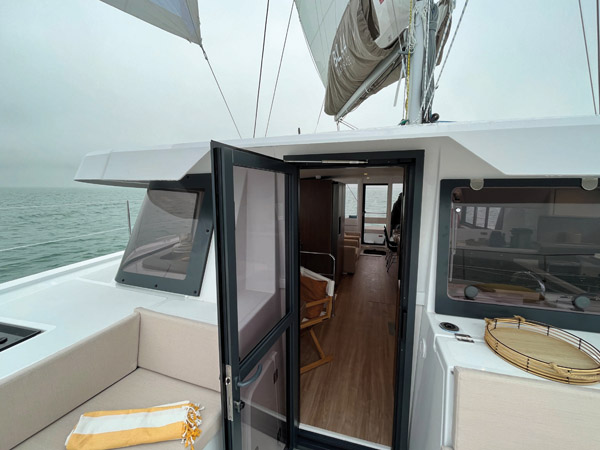
The forward door simplifies circulation on board considerably. The assembly will have to be a little more rigid with a stronger ram for taking on big headwinds without flinching.
Better than at home!
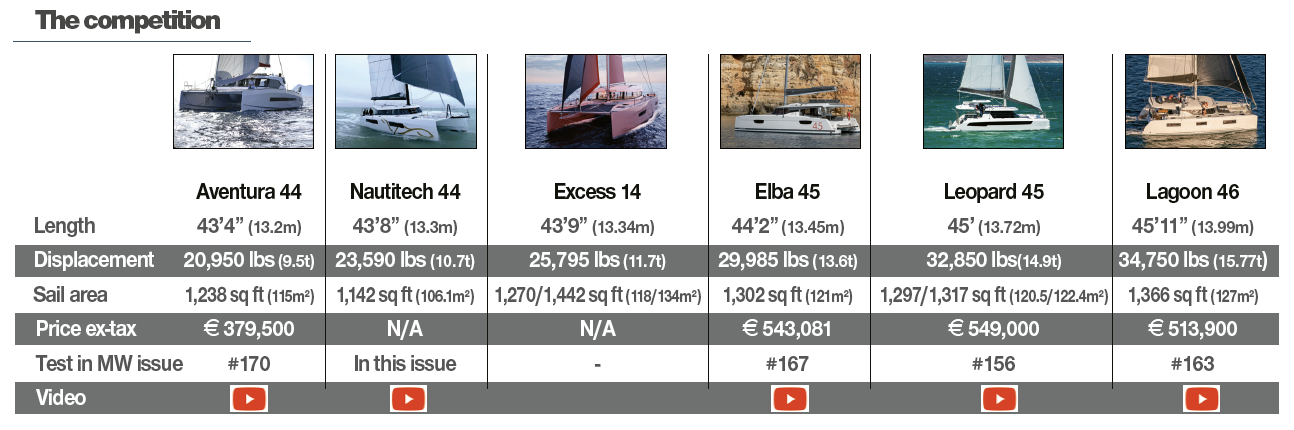
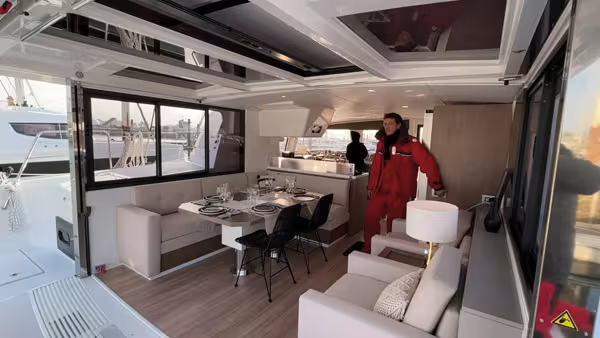
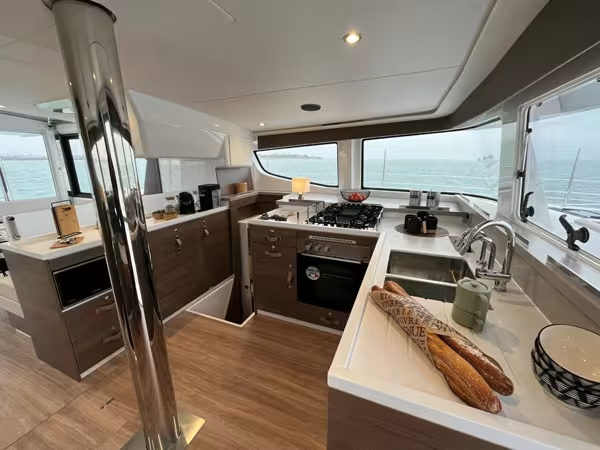
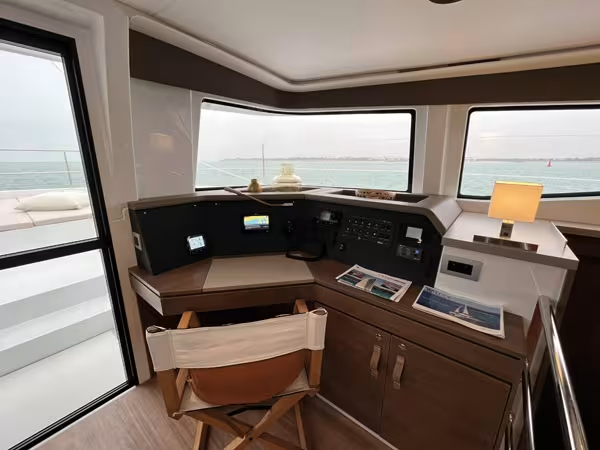
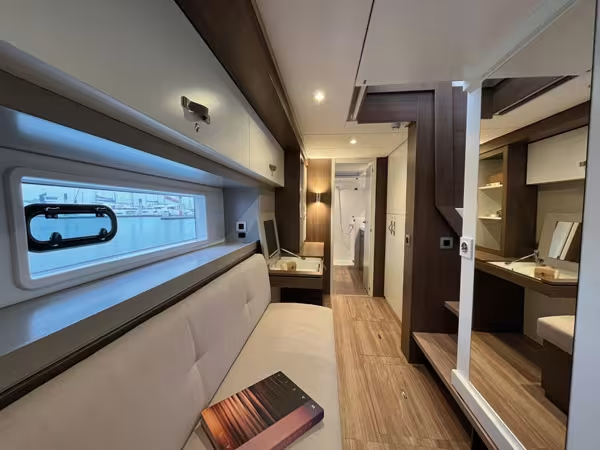
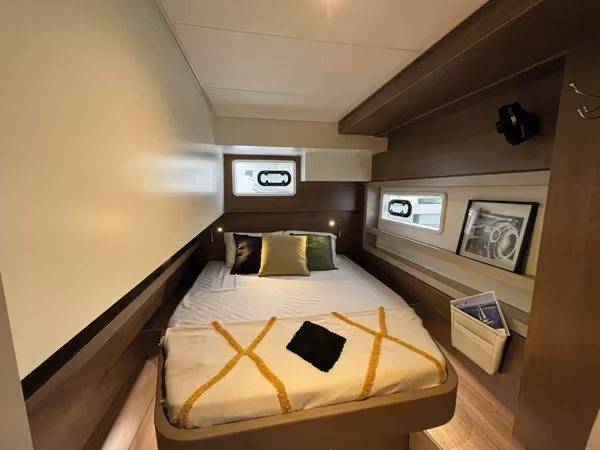
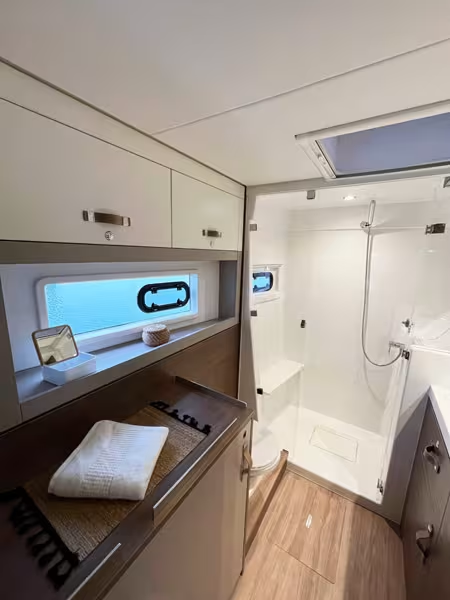
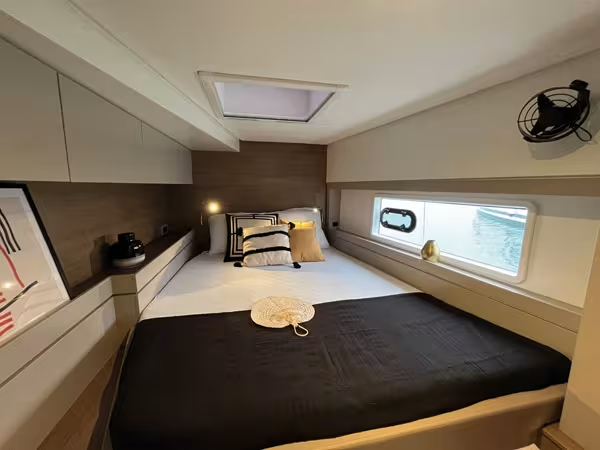
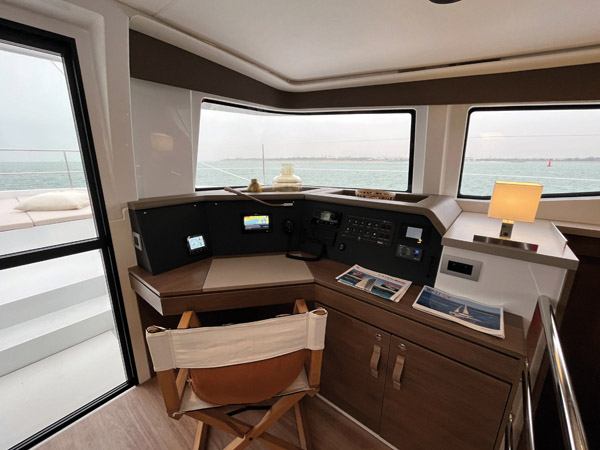
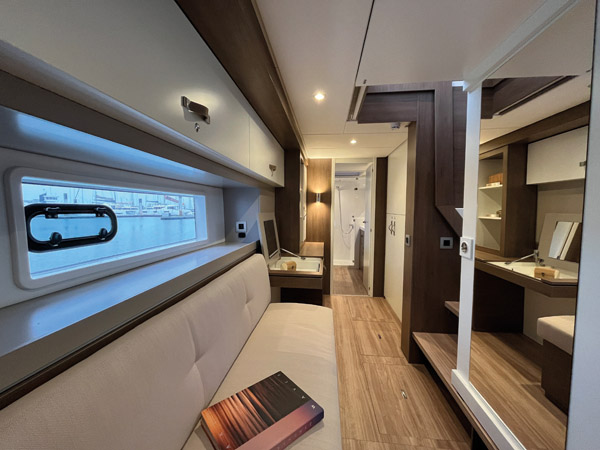
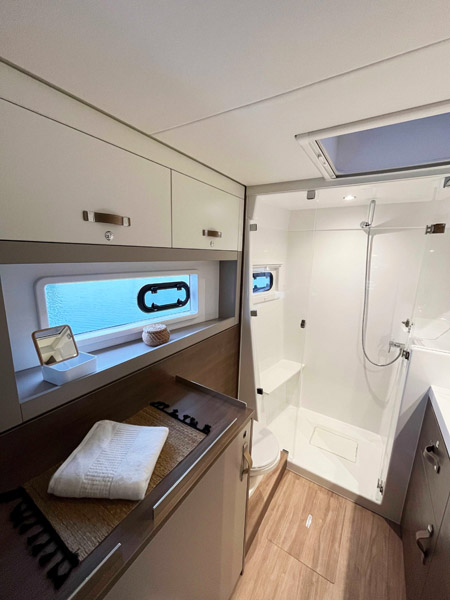
During most of our day of sailing, we stayed warm inside, the perfect view over the water allowing us to keep a close watch and the autopilot remote control did the rest... Obviously, some changes in angle of the wind coming off the coast did force some of the crew up on to the flybridge to make adjustments. For the rest, we were able to taste oysters – the famous Marennes d’Oléron, of course - while making good speed towards the island of Ile d’Aix. The level of comfort inside the nacelle is enhanced by its generous headroom, which varies between 5’6” and 7’3” (1.98 to 2.22 m). The “Elegance” finish on our test boat (a 3-cabin Owner’s model), with its specific upholstery including armrests, two club chairs, and integrated bar and leather handles for the storage spaces, offers a neat Owner’s version touch. The galley features a large L-shaped work surface complemented by a sideboard that almost turns it into a U shape - not to mention the XXLsized refrigerator. The recess for the helm station’s is perfectly integrated into the whole. The table measures 64” by 39” (1.63 x 1 m), though this is larger on the charter version. Forward, to starboard, a chart table (16”/40 cm wide) is fitted. The port hull is entirely dedicated to the Owner and is accessed by heading down a 5-steps companionway (4’2”/1.28 m). Here, you’ll find a big double bunk (6’7” x 5’3”/2 x 1.60 m) configured as an island bed, a dressing table/desk of 33” by 21” (83 x 53 cm), a huge bathroom, large windows in the hull, two opening portlights, and numerous storage spaces. Really, there’s nothing missing!
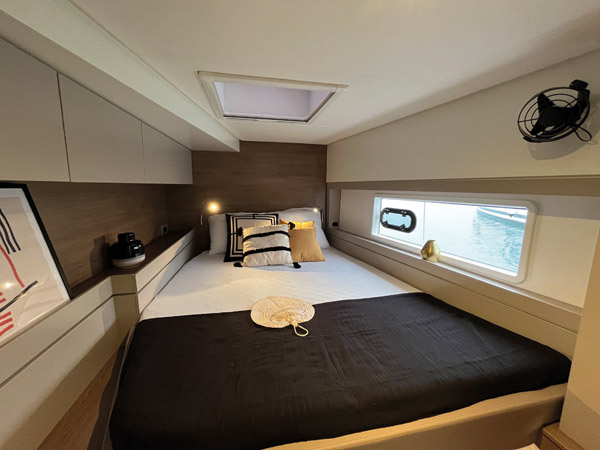
The companionway to the starboard hull has a sturdy handrail, which will be very useful in choppy seas. The aft cabin has the same dimensions as on the port side, with a minimum headroom of 6’5” (1.97 m). There are two bathrooms in this hull, and up forward, the bed is a little narrower at 4’9” (1.46 m) than at the stern, but it is also much higher! It is perched at 35” (90 cm) from the floor – as opposed to 22” (55 cm) in the aft cabin. Small steps have been provided, but they could be larger. As for the rest, there’s nothing to complain about: a sea view thanks to the large hull windows, great ventilation, plenty of storage space: these cabins are a success.
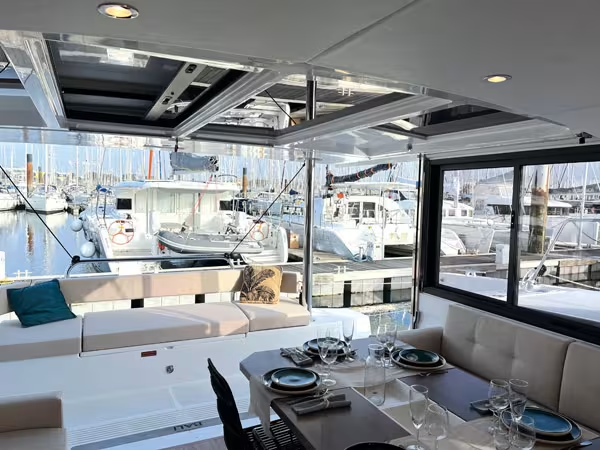
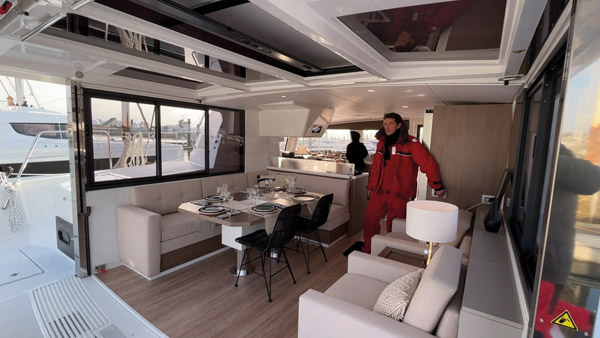
Heading back to harbor at the end of the day, the fog finally deigned to lift, giving way to bright sunlight. It was time check out the open space feature! The small door measuring 5’9” by 26” (1.76 x 0.67 m) gives way to the large Bali door into which it is integrated - this immense rear façade of the deckhouse measures 11’6” (3.50 m) wide by 6’3” (1.92 m) high - and is electrically operated in just under 25 seconds. The entire platform is then open to the rear, while the door at the front leads directly to the foredeck. The circulation is thus very fluid, and the natural ventilation will be particularly effective – or at least it will in warm weather!
 |
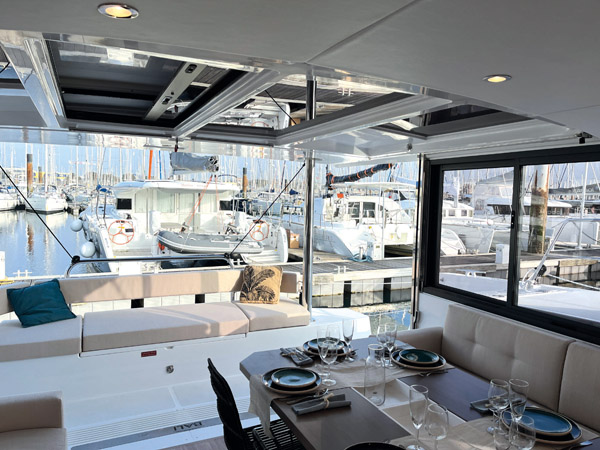 |
The large Bali door, combined with the sliding side windows, make the nacelle exceptionally comfortable.
Conclusion
Les amateurs de louvoyage, de VMG gratifiant et de silhouettes affûtées resteront sans doute sur leur faim avec ce Bali 4.4… ce n’est pas très grave, car ce nouveau catamaran ne s’adresse pas vraiment à eux – quoiqu’on pourrait en reparler après quelques jours d’essai –, mais plutôt à des plaisanciers qui ont envie de disposer d’une plate-forme de vie sur l’eau. Une maison qu’on peut déplacer à sa guise de mouillage en mouillage, et même d’un océan à l’autre. Un concept qui peut paraître iconoclaste pour les « puristes » de la voile. Reste que les chiffres semblent donner raison aux épicuriens : pour ce millésime 2021/2022, ce sont pas moins de 280 Bali qui sortiront des trois usines de Catana Group. 400 unités sont d’ores et déjà prévues pour l’exercice suivant. Loin d’être réservé à un usage tropical ou estival, le concept Bali nous a démontré qu’il pouvait également se décliner avec un climat bien moins souriant. Pas étonnant que la gamme connaisse un certain succès dans les pays scandinaves…
 |
 |
 |
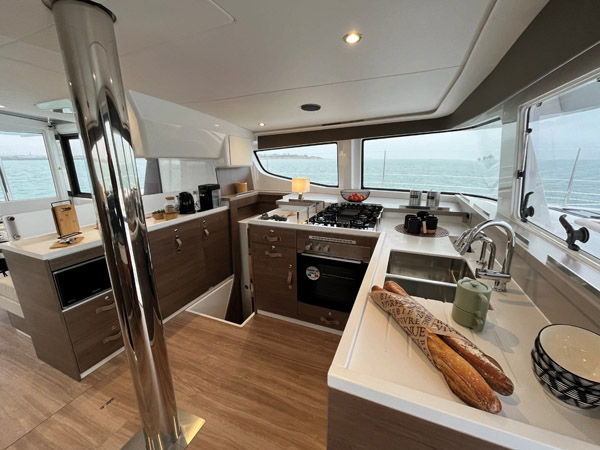
The galley is virtually U-shaped - just spaced by the companionway to the port hull.
Bali remains faithful to the nav station. This can double up as a desk, meaning you don’t have to use the saloon table.
The forward cabin has a relatively large bed... but it’s perched 18” (45 cm) higher than the one in the aft cabin.
THE PLUSES
+ Exceptional comfort
+ Improved standard of finish
+ Convincing performance off the wind in over 10 knots of breeze
THE MINUSES
- Not great at upwind work
- Code 0 sheet leads to be reviewed
- Forecabin bunks very high
 |
 |
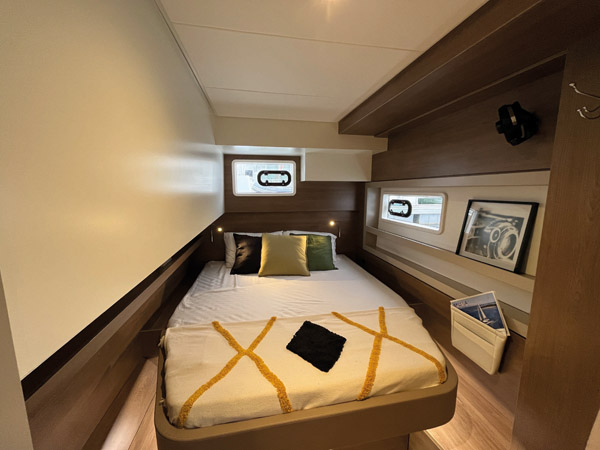 |
The port hull of our test catamaran had a perfect owner’s suite - who said that Balis were exclusively for charter?
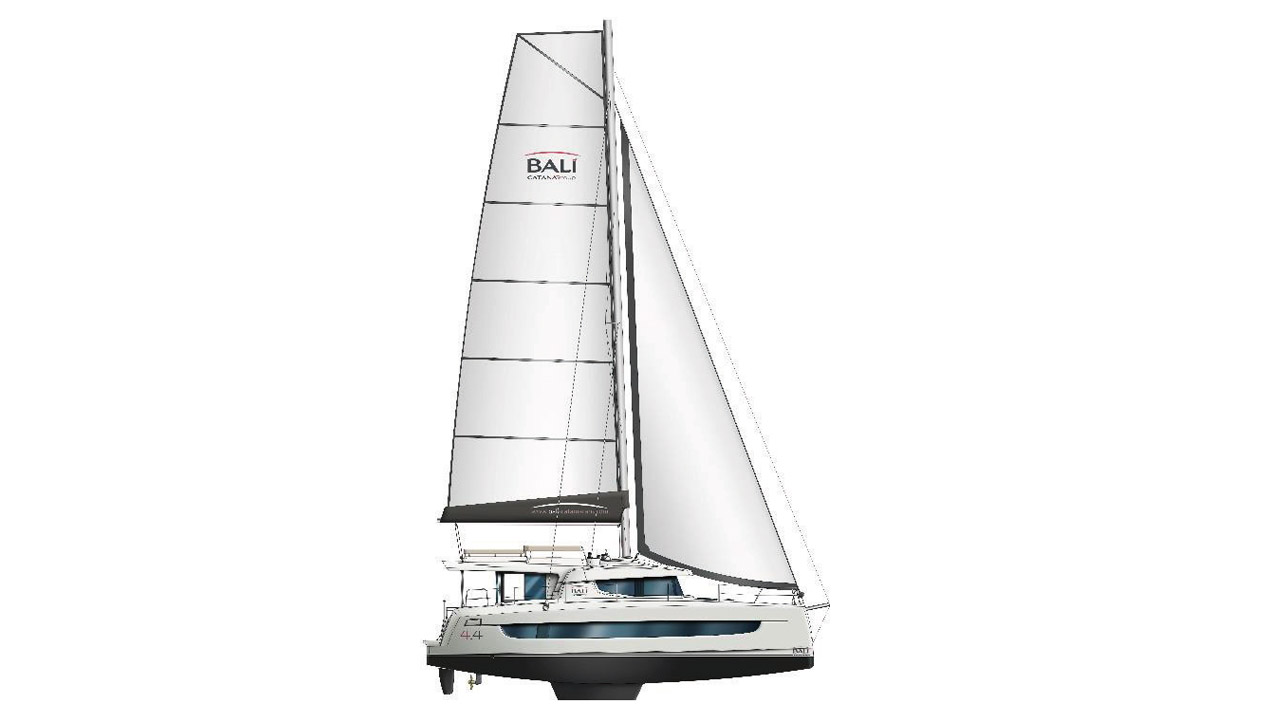
TECHNICAL SPECIFICATIONS
Builder: Bali Catamarans
Designer: Olivier Poncin
Interior design: Lasta Design
Studio Length overall: 44’3” (13.48 m)
Waterline length: 42’6” (12.97 m)
Beam: 24’3” (7.4 m) Draft: 4’2” (1.26 m)
Light displacement: 29,985 lbs (13.6 t)
Max laden displacement: 43,210 lbs (19.6 t)
Sail area: 1,270 sq ft (118 m²)
Mainsail: 818 sq ft (76 m²)
Self-tacking jib: 452 (42 m²)
Code 0: 796 sq ft (74 m²)
Engines: 2 x 40 or 57 HP Yanmar
Fuel: 211 US gal (800 l)
Water: 227 US gal (860 l)
Black water: 2 x 14.5 US gal (2 x 55 l)
Sleeps: 6 to 9
Price for the 4-cabin version: € 516,770 ex-tax
Main options ex-tax 3 cabins instead of 4: €1,750
Excellence Pack: € 56,210
Elegance Pack: € 9,780
Fully battened, square-topped mainsail; solent with UV strip; lazy bag and lazy jacks: € 5,040
Gennaker: € 5,980
Complete Code 0 fittings: € 6,840
Two Yanmar 57 HP motors instead of Yanmar 40 HP: € 5,740
Two additional 12 V 125 A alternators: € 4,540
Three-bladed, folding propellers (2): € 3,120
7 kW 50hz Generator: € 22,560 400
Wp Solar panels: € 4,980
Safety equipment for 8 people including 1 life raft: € 5,610
Opening front window, lockable in ventilation position: € 2,160
Diesel (hot water) central heating, hulls and saloon: € 12,850
12V 27.7 US gal (105 l)/h low consumption watermaker: € 14,270
Seawater pump in galley and on deck: € 1,460
Canvas bimini over the helm station: € 4,190
Fixed forward cockpit table: € 3,340
Flybridge upholstery: € 3,560
Flybridge table with telescopic leg: € 1,450 8½-foot (2.6m)
composite folding passerelle: € 2,960
Blue LED underwater lighting under sugarscoops (4 spots): € 4,640
Plancha grill with gas installation: € 1,960
Electric davits: € 4,190 10’6” (3.2 m)
Hypalon dinghy + 15 HP outboard + painter: € 12,680
Fusion hi-fi radio, 6 speakers, Bluetooth connectivity (saloon, flybridge and forward cockpit): € 2,150
Wi Fi antenna: € 1,670 (in the saloon, flybridge and forward cockpit)
Raymarine Radar with mast bracket: € 4,440
Raymarine remote control for autopilot: € 1,100
Transport from Marans, launching, mast stepping, handover, safety equipment, one week’s port dues: € 13,550