At Multihulls World, we’ve always worked hard to try and ensure that multihull builders don’t leave out the smaller models. While the market for small trimarans is well established, the market for sub-40-foot catamarans has recently been on the verge of extinction... For ten years now, the release of the occasional rare model hasn’t really been enough to reassure us. So, the Bali Catsmart is a strong signal that we obviously want to relay. We hope to see Lagoon release their 38-foot model – one might be on the cards.
Infos pratiques
- Le chantier : Bali Catsmart
- La fiche technique
-
 Découvrez notre vidéo exclusive
- Financez votre Bali Catsmart
- Assuez votre Bali Catsmart
- Articles autour du Bali Catsmart
Conditions: Wind 6 to 10 knots, slight sea
What a ride it’s been since the founding of the Bali brand! Back in September 2014, the Bali 4.5 offered us a new way of living on the water by taking advantage, in terms of comfort, of everything that the catamaran formula could offer. A no-holds-barred approach that made the most conservative boaters cringe... but which has ultimately proven itself with over 1,000 examples built in an 8-year period, including 400 in the last 12 months alone! The range currently includes seven catamarans from 38 to 54 feet, making it one of the most complete ranges on the market and even the most extensive in the sector of sailing catamarans from 36 to 55 feet. The launch of the smallest model - officially presented at the International Multihull Show in La Grande-Motte - could have led to fears of them over-doing it in terms of comfort.
The Catsmart is perhaps even the most Bali of the Balis, since the first model investigated for design was a catamaran under 40 feet before the 4.5 ultimately won the day.
More canvas than on the Catspace
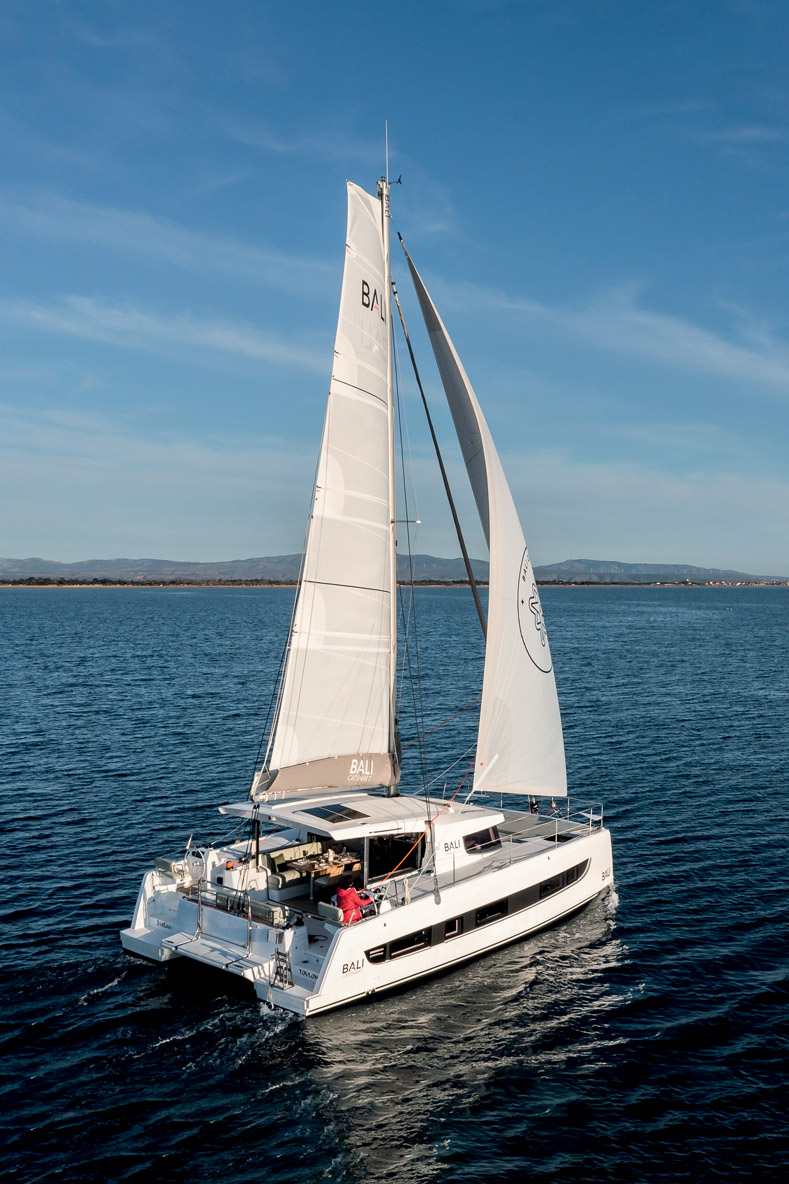
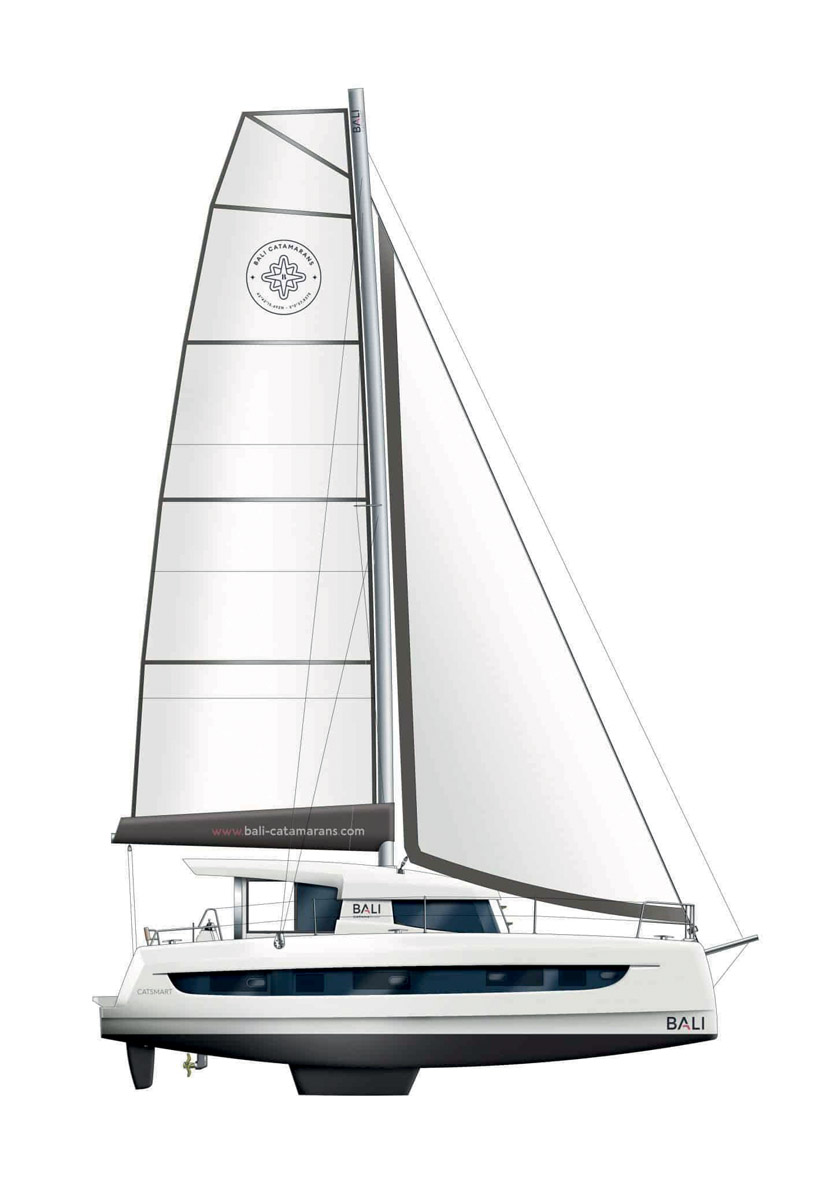
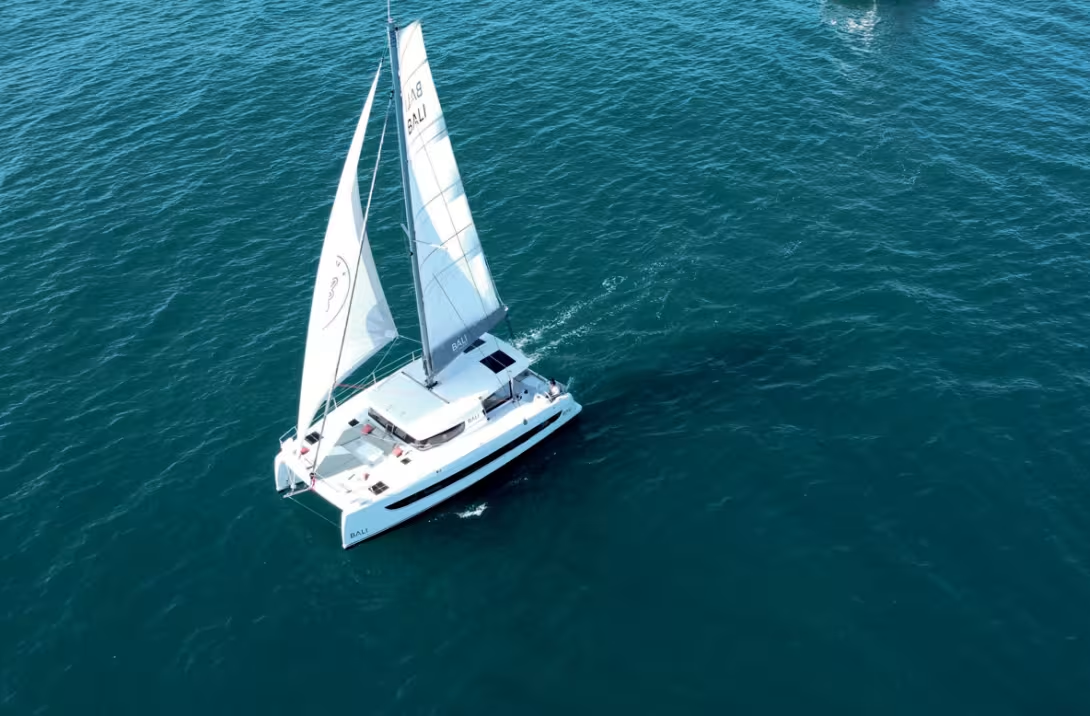
While the Catspace probably owes its name to the fact that Bali 4.0 and 4.1 were already “taken”, the use of “space” is quite judicious because that is exactly what characterizes this catamaran - maximum volume and comfort in just 40 feet. As such, it is a success, but at the price of certain concessions in terms of performance. The Catspace presents not insignificant forward windage and its flybridge cuts well into the mainsail. The result is 850 square feet (79 m²) of upwind sail area, or 883 sq ft (82 m²) if you opt for the square-topped mainsail. On the other hand, the Catsmart, as its name suggests, is a smart boat. By freeing itself from having a flybridge, it gets a mainsail with a much lower boom and above all can accommodate headsail sheets set further aft, allowing for an overlapping genoa. In fact, the sail plan can be up to 933 sq ft (86.7 m²) upwind, nearly 54 sq ft (5 m²) more than the Catspace for a boat displacing 1,765 lbs (800 kg) less. The sail area to weight ratio is 10.32 m²/t compared to 8.91 m²/t for the Catspace. Passing this 10 m²/t mark “in the right direction” is not just symbolic: after 15 years or so, when most mass-produced catamarans have increased more in weight than they have in sail area, the Catsmart marks a significant change of tack. A trend that is likely set to continue in the long term: the next Bali should be lighter and carry more canvas. To better understand the potential of the Bali Catsmart compared to its most direct competitors, it is useful to display their sail/weight ratio: 11.9 m²/t for the Aventura 37, 14.33 m²/t for the C-Cat 37 and finally 9.11 m²/t for the Excess 11 in its Pulse Line version.
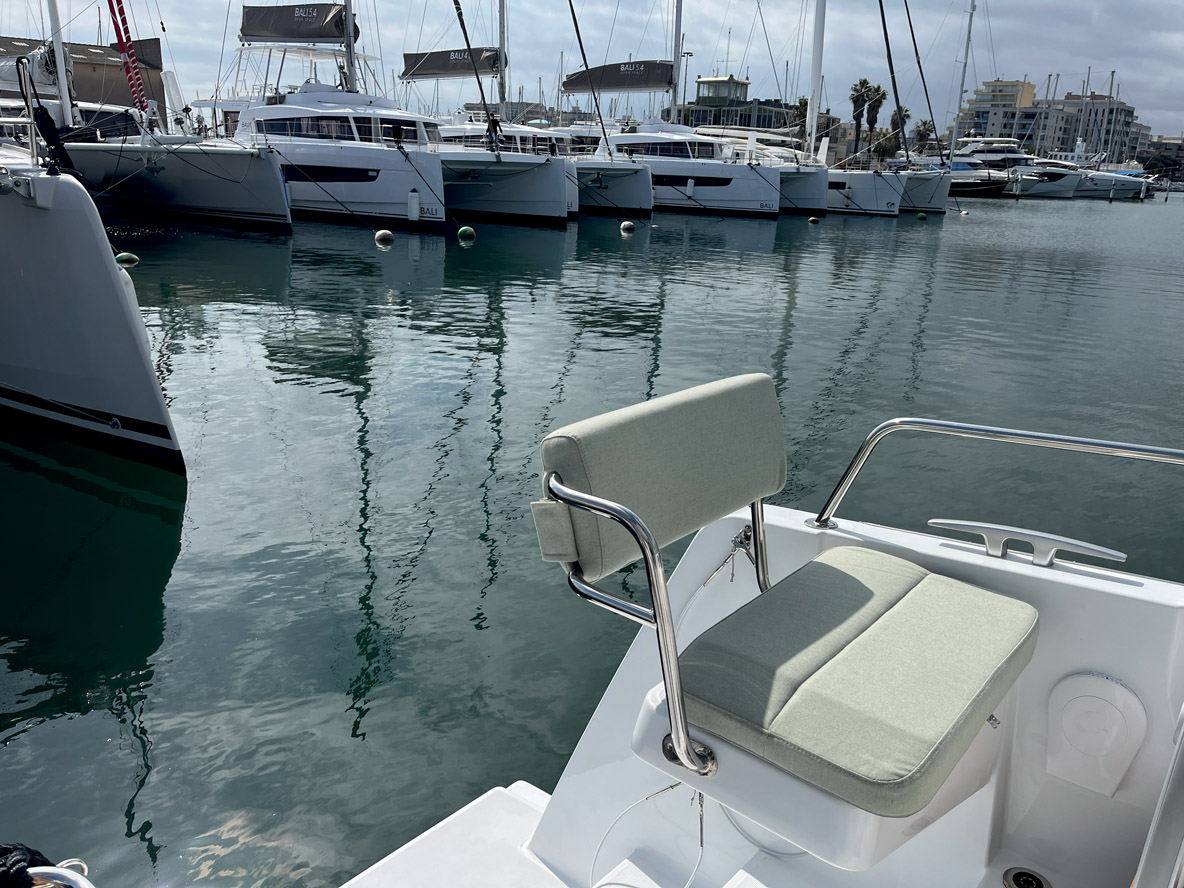
Two helm stations
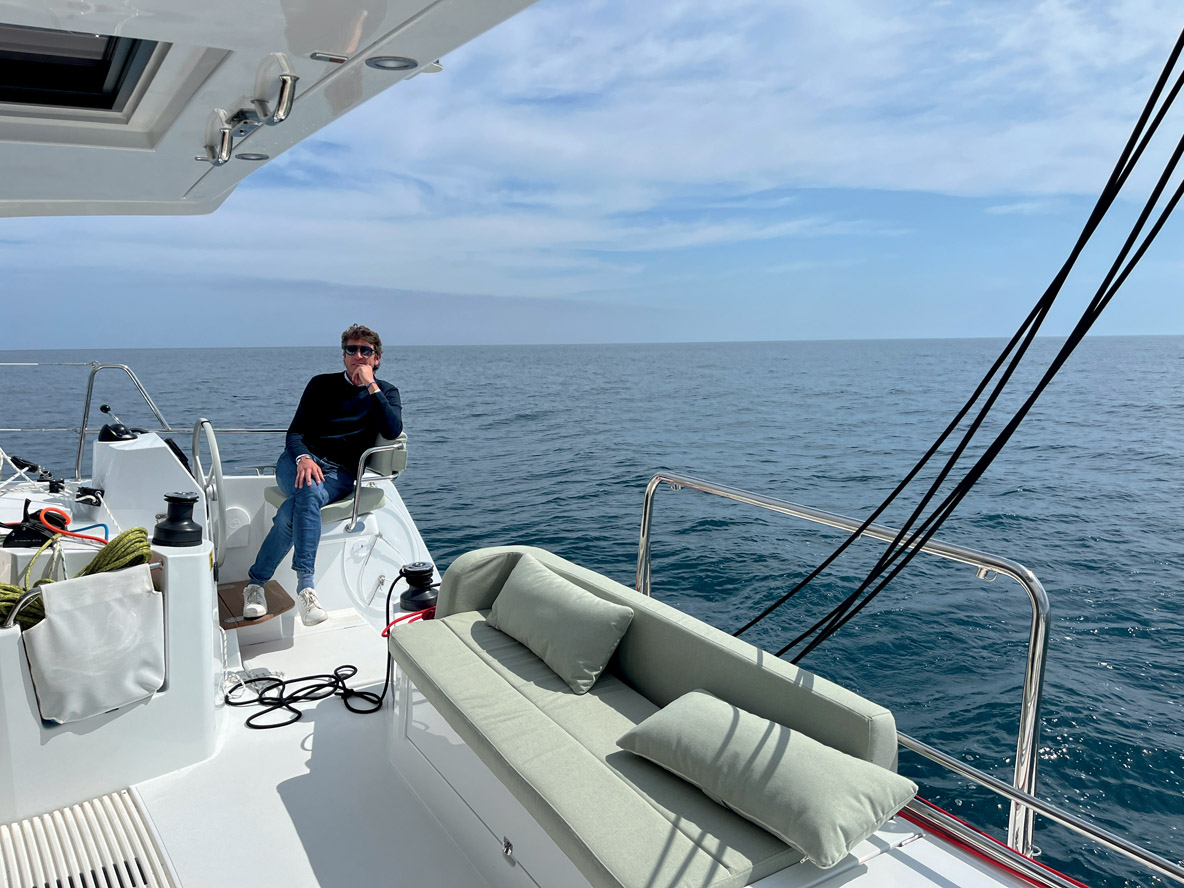
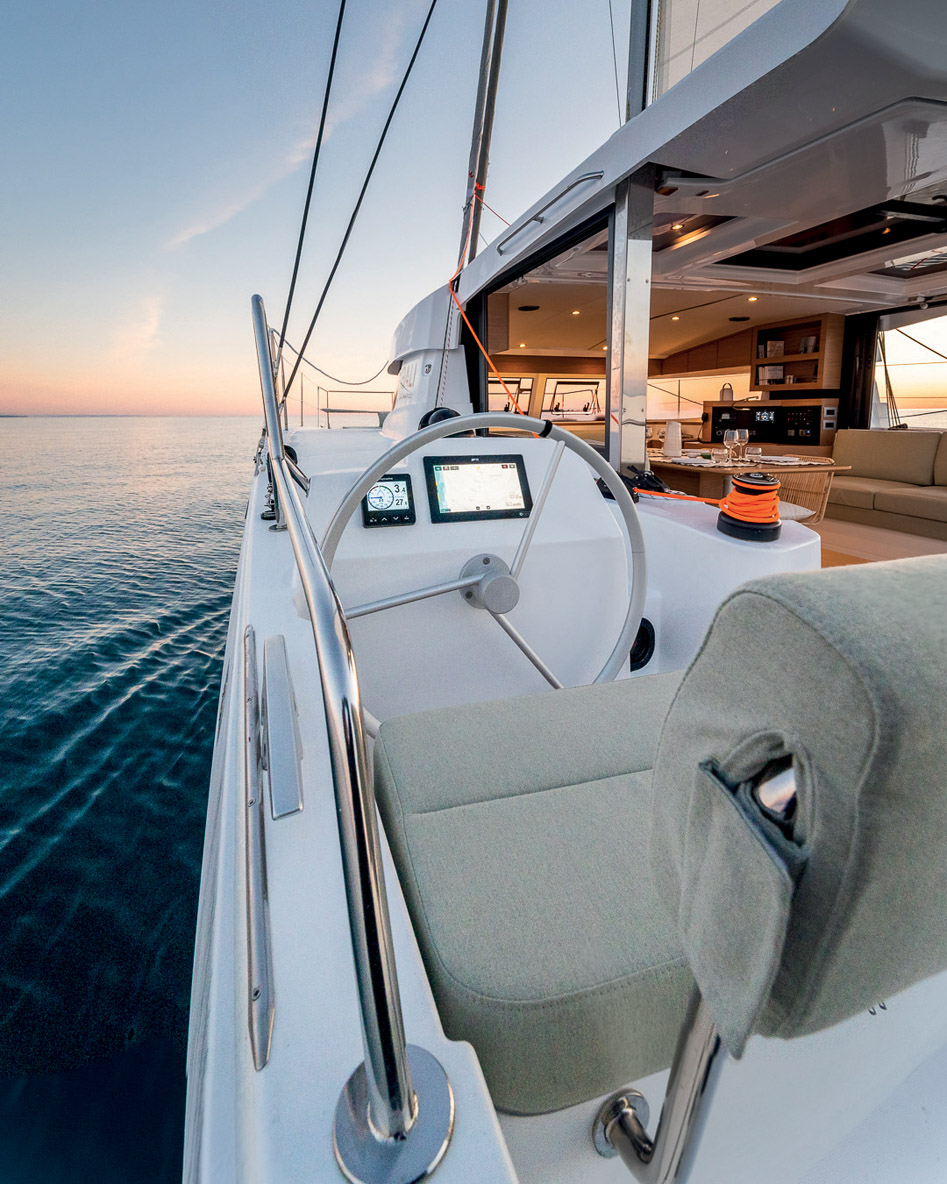
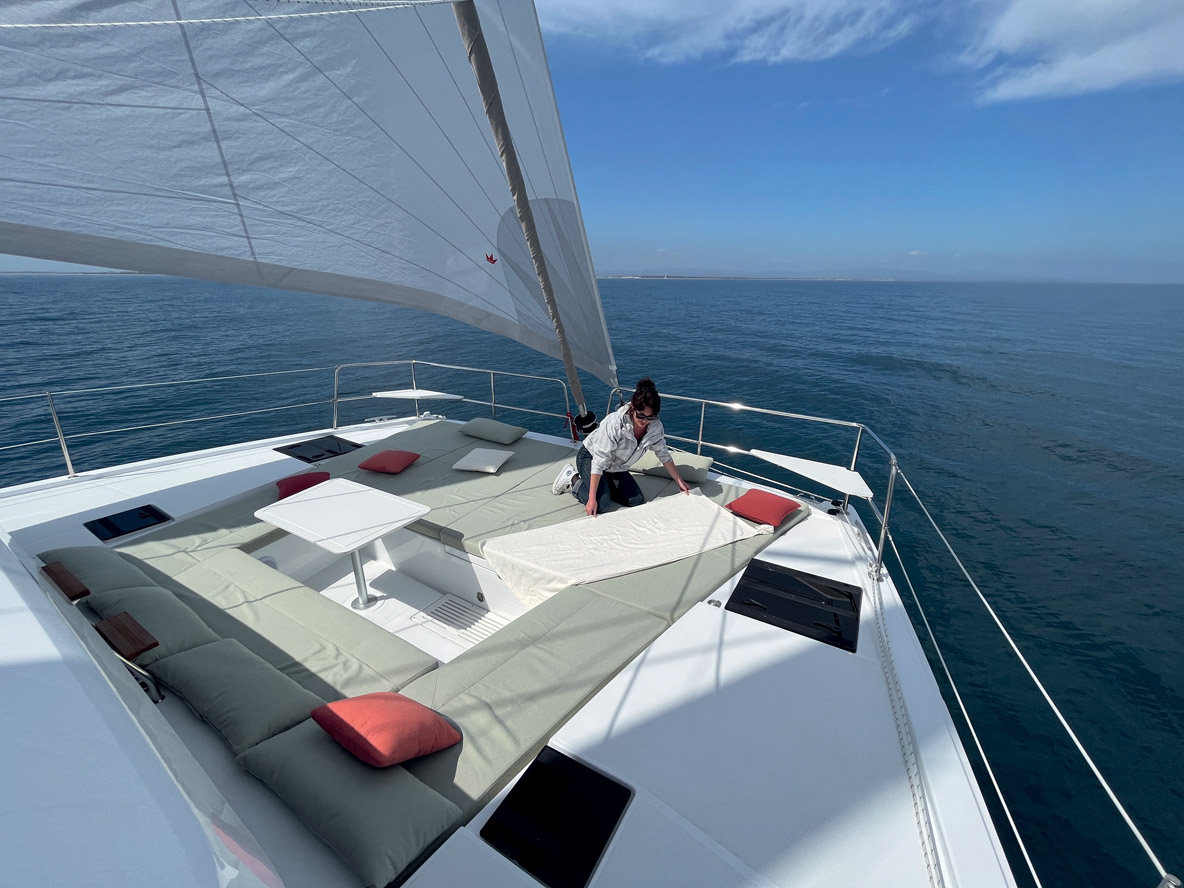
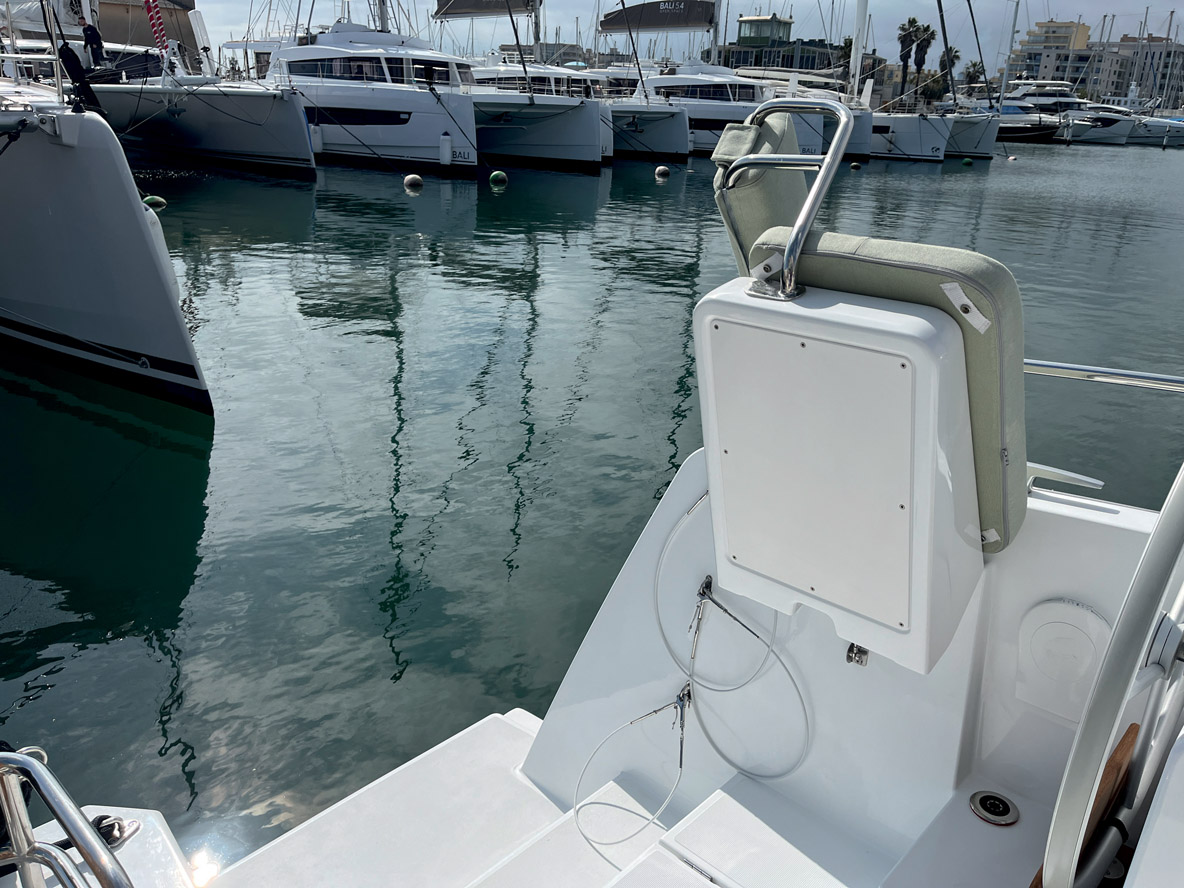
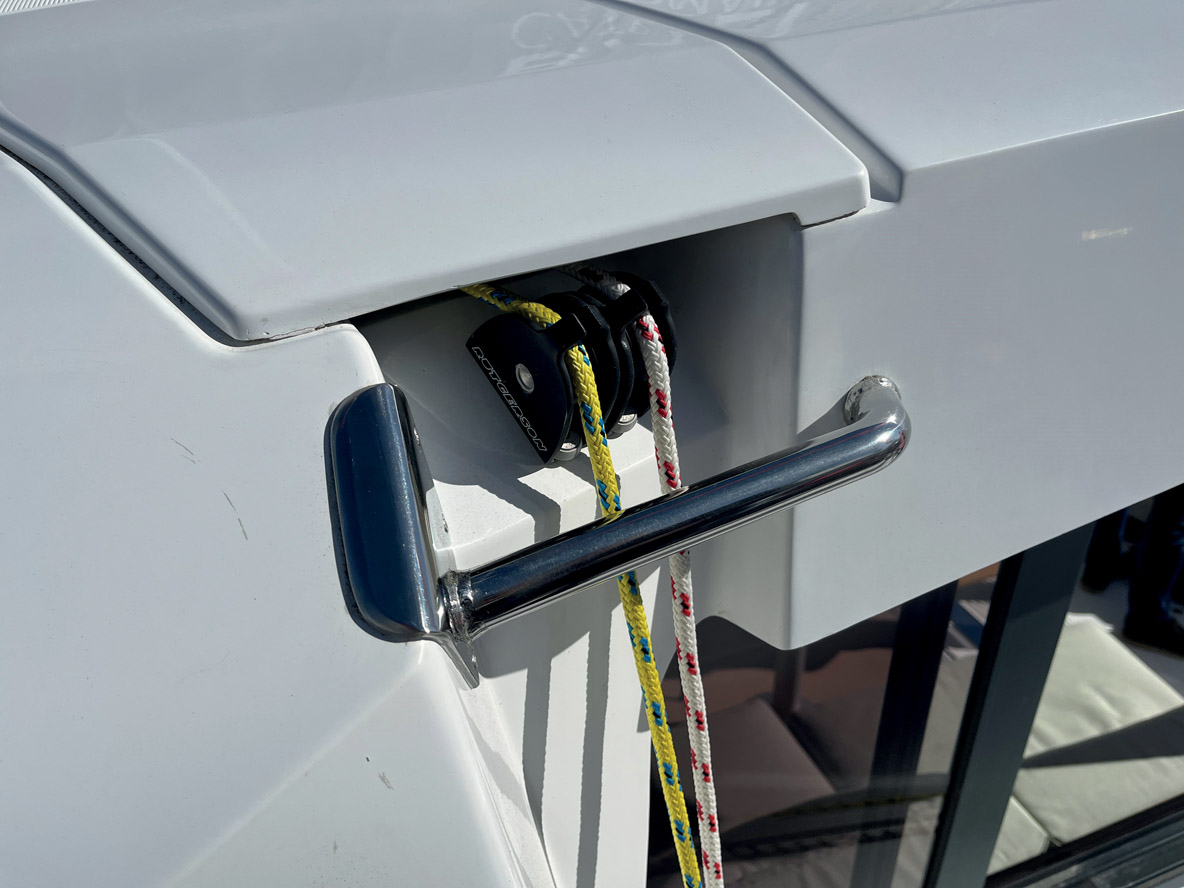
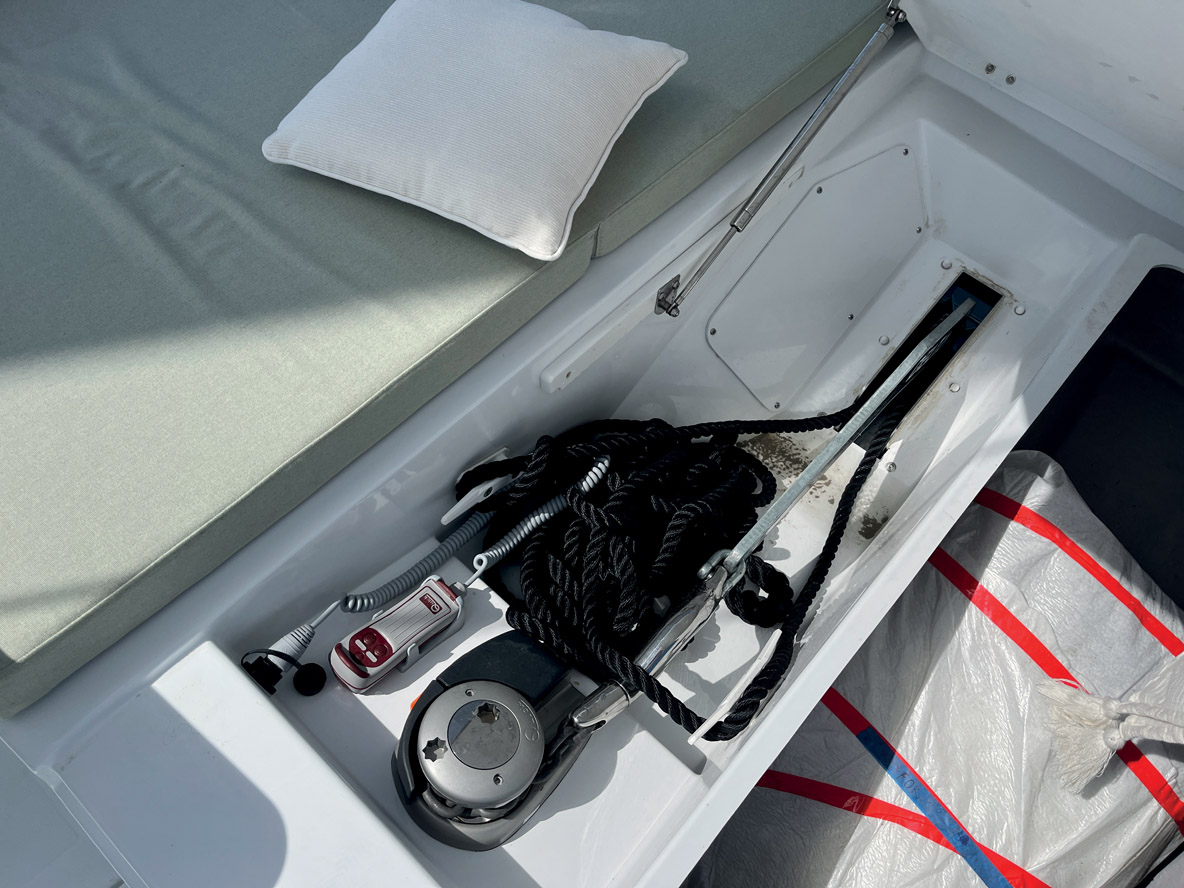
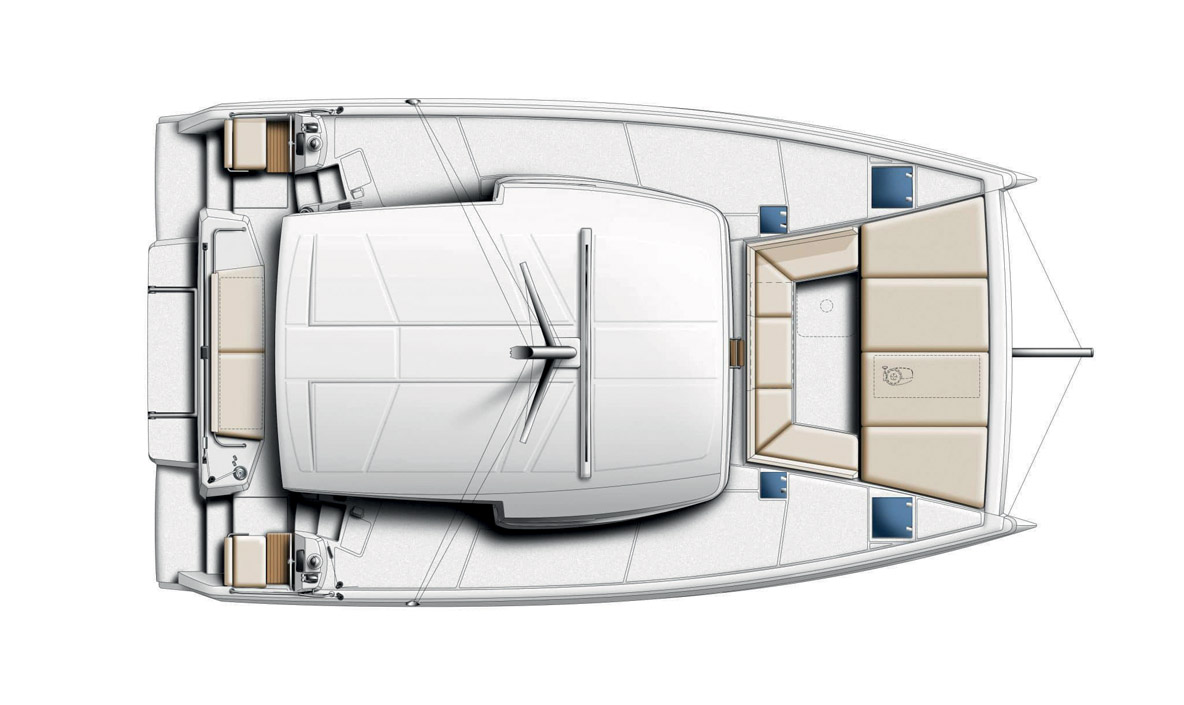
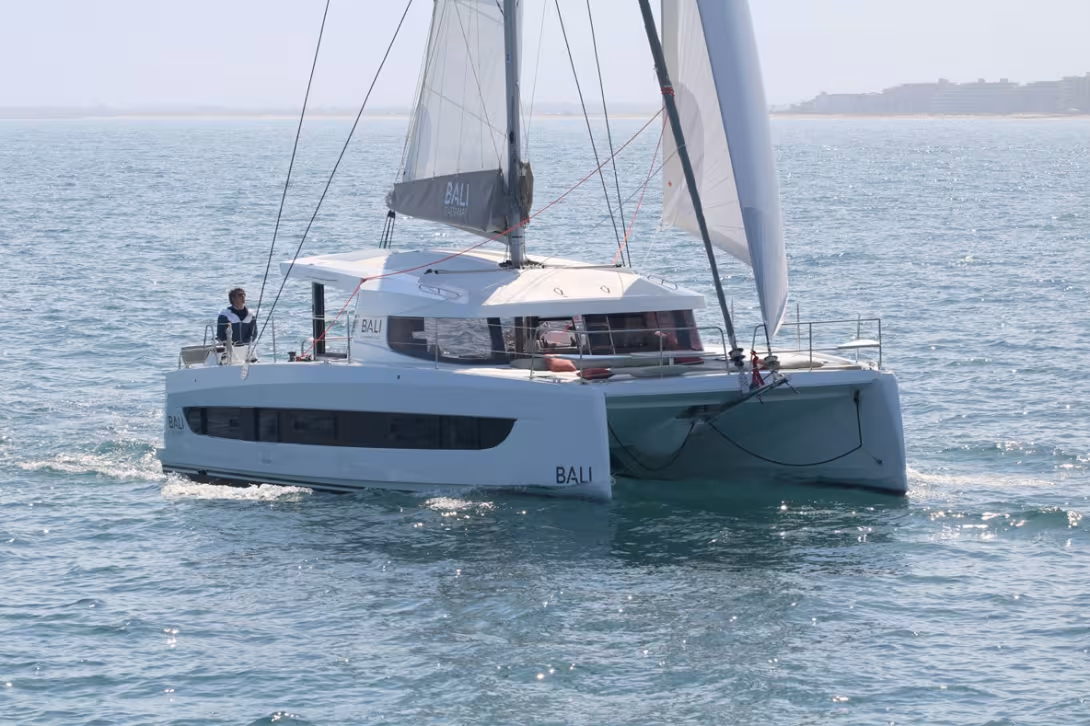
Another striking innovation aboard the Catsmart is that it features twin helm stations, one on each hull. This is in line with the philosophy of Nautitech and Excess, two brands that strongly promote the pleasure of sailing - and of helming. However, in all other respects, we’re dealing with a Bali! For starters, the overall design remains faithful to the other models in the range, with the rig set well back on the coachroof. And, of course, the rigid foredeck. This structure is obviously heavier than a simple trampoline would be, but it has the advantage of offering a large additional “dry” area that can be equipped with sunloungers and tables. Xavier Faÿ, naval architect for the Bali Catsmart, imagined this concept for the Lagoon Power 43 (then the Catlante 600) by considering especially what happens underneath: the “giant ski-shape” effect avoids the bows burying deeply into the biggest waves, relieving pitching, and ensuring dynamic safety in the event of big seas from astern. The windlass and chain locker are installed in a box with a ram-supported locker lid. Combined with a crossbeam set as far aft as possible, the deck offers 710 square feet (66 m²) of usable space. The side-decks are wide and clear. No creaking or flexing felt underfoot - this is a rigid construction. The builder even thought of integrating a small ladder to climb up on the coachroof, though the steps could do to be a little wider. Sailing maneuvers are distributed on each side, which is logical since there are two helm stations. The halyards and reefing lines coming from the foot of the mast are hidden under a false deck to meet the coachroof at right angles, then follow the gunwale. The sheeting point for the headsail is set surprisingly far aft: rather than being taken up on the coachroof, the sheets take advantage of a slight indentation in the bimini to reach the gunwale as well. We’ll talk more about windward angles a bit later on. The mainsheet and its traveler are adjusted from the starboard side, aft, a bit like on a Catana. This configuration contrasts with the “centralization” of all the lines, as seen on most modern catamarans, but it is quite practical and relevant. The cockpit - or at least what is left of it since its boundary with the nacelle is quite blurred - concentrates the two helm stations, a 5’9” (1.75 m) long aft bench seat, and an aft platform that connects and therefore benefits the two compact sugarscoops. The deck is thus a rectangle where the entire surface can be exploited. Some British-built catamarans along with the American Gemini 35 went down this route, though not 100%... behind the mainsheet track, a davit system for the tender.
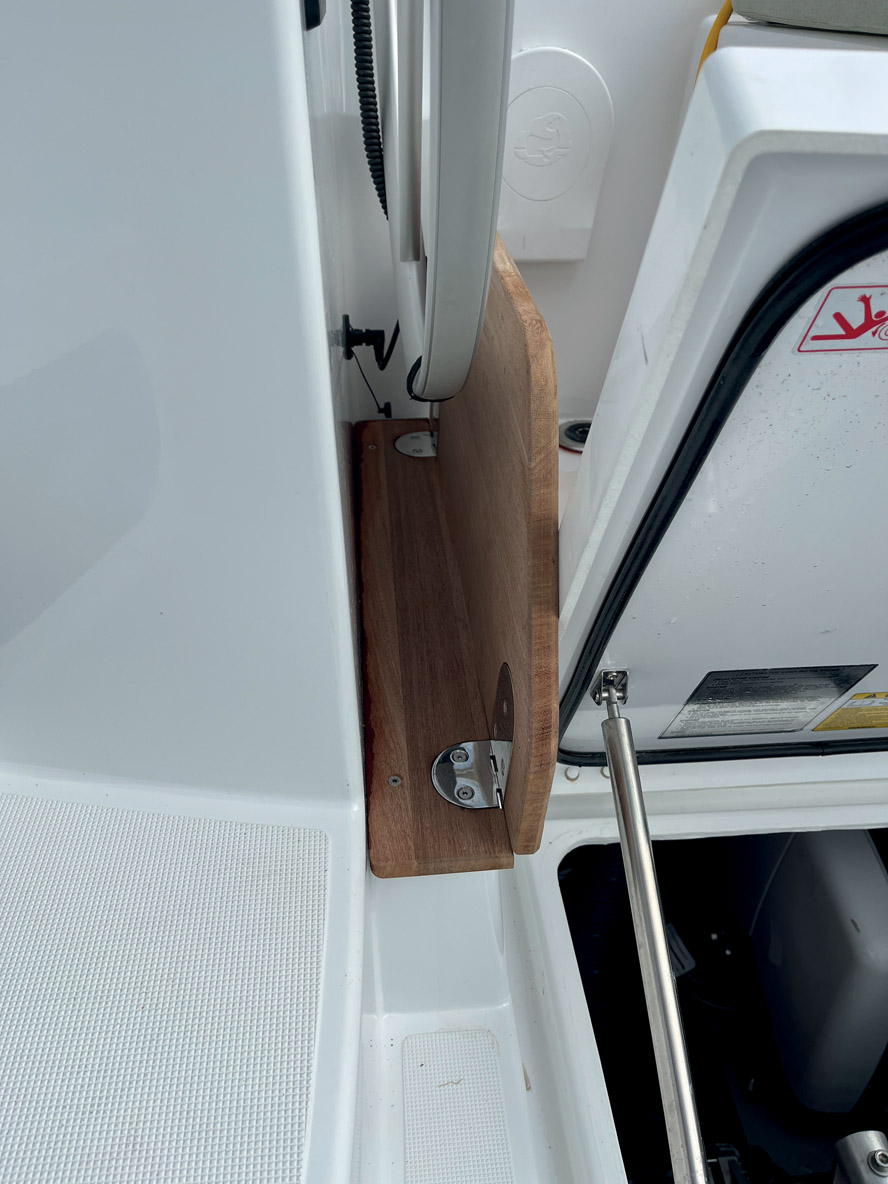
The steering wheels are 29 inches (73 cm) in diameter. In terms of ergonomics, the yard has foreseen that one can helm standing or sitting. A pivoting plywood shelf serves as a footrest - for the inboard foot. The idea is good in principle, but in practice, this panel can bash you in legs when set up and especially risks deteriorating quickly with humidity – I’m thinking of the underside, pressed up against the fiberglass if the panel is not raised. As an option, helm station biminis will be offered.
Lively under sail
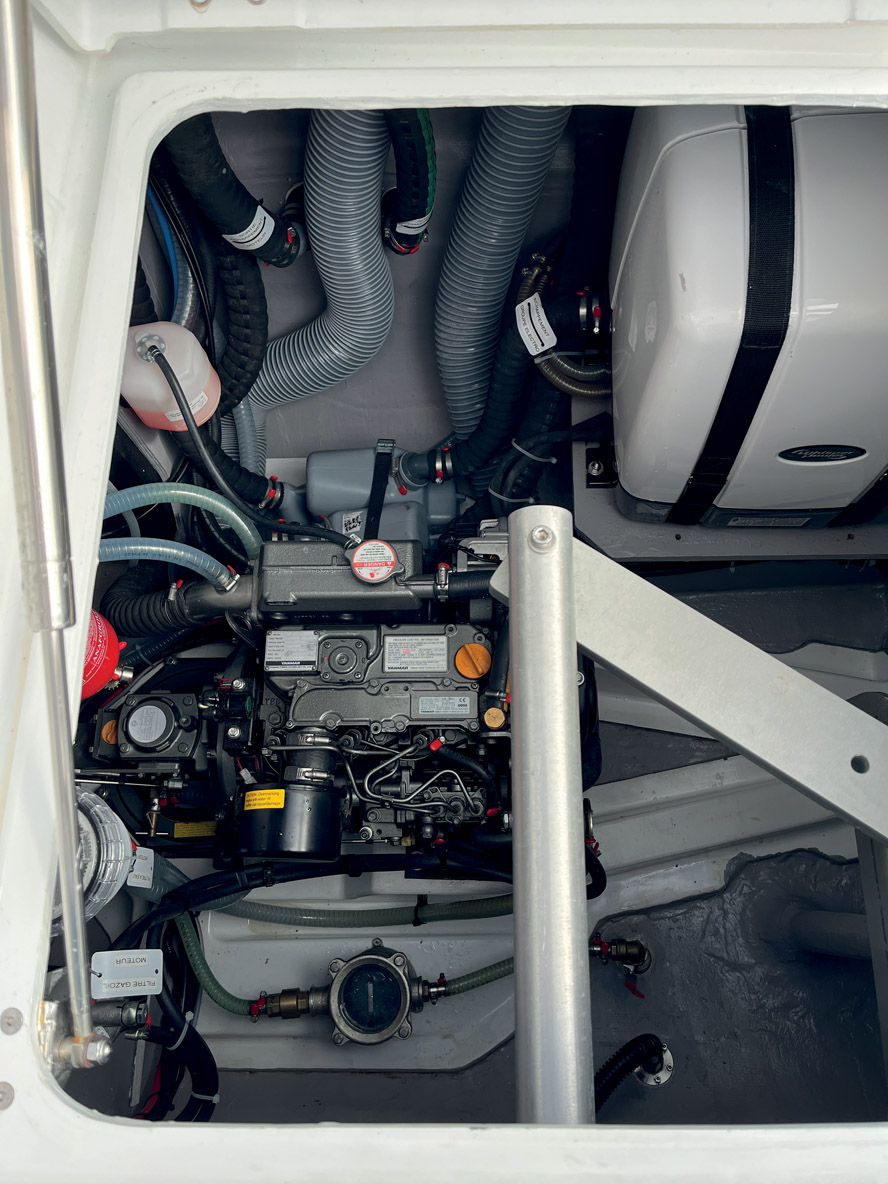
Maneuvering a catamaran under 40 feet is a bit like riding a moped: everything is easy, intuitive and within reach. In addition, there are deep halyard bags... A real pleasure and a guarantee of stress-free sailing. Our test model was equipped with twin 30 HP Yanmar motors - an option we’d recommend. No need for a bow thruster - we maneuver without difficulty and turn on the spot by inversing the throttles (you can double these up at the second helm station). At cruising speed, we reached 8.3 knots.
Hoisting sail is child’s play and is done as soon as you clear the harbor. While there’s a track for a self-tacking jib forward of the mast, our test model benefitted from an overlapping genoa – meaning an extra 135 sq ft (12.5 m²) of canvas. The sheeting points are set so far aft to seem almost out of place. In fact, they are so far back that the sheeting angle is 12.5° where the standard is 11°. In fact, with the genoa trimmed flat, the sheet is in contact with the bimini - a sacrificial stainless steel rubbing strip has been installed since our test. Our heading was 50° off the true wind, though in theory, we could sheet in a little harder with the help of a barber hauler. But this operation wouldn’t really correspond with the program of this catamaran and would only be valid on flat water. In choppy seas, the skeg keels are too shallow to ensure very tight course-keeping and leeway would become more noticeable.
At the helm, whether to windward or to leeward, you can see the water and the sails. You have the feeling of steering a lively and willing catamaran.
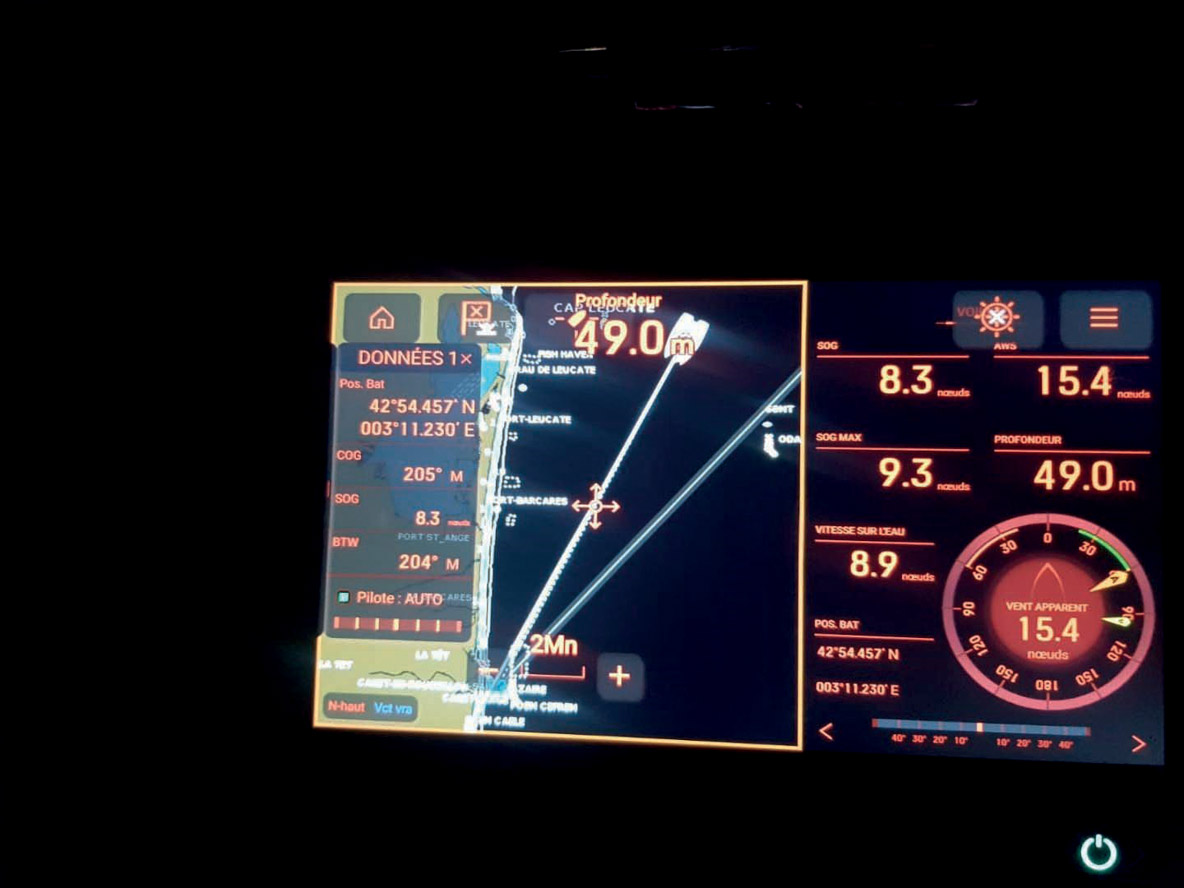
Our hull n°1 weighs, however, a little more (450 lbs/200 kg) than the examples that will follow. The various speed readings we were able to collect are fairly positive: On the delivery trip from Tunisia, with 18/20 knots of true wind, the Catsmart was sailing at 8 knots at 50° to the wind. With a slightly lighter wind of 15 to 18 knots just off the wind, on a fine reach, the average speed was 7.5 knots. The delivery crew also saw a good 25 knots at times, and with 2 reefs in the main and 2 rolls in the genoa, at 90/100° to the wind, the Catsmart was making between 8 and 9 knots with a peak of 12.3 knots. Xavier Faÿ, who was on board for the trip from La Grande-Motte to Canet-en-Roussillon, recorded a peak of 8.9 knots at 62° off an apparent wind of 15.4 knots - it wasn’t difficult for the architect to make a quick trigonometric calculation for us to show a true wind of 13.6 knots at 95°. On our test sail, the wind was more timid - no more than 10 knots. I noted a boatspeed of 5 knots with the wind on the beam under gennaker with only 7 knots of apparent wind. One important thing to note: our test Catsmart had folding propellers.
The unmissable Bali door...
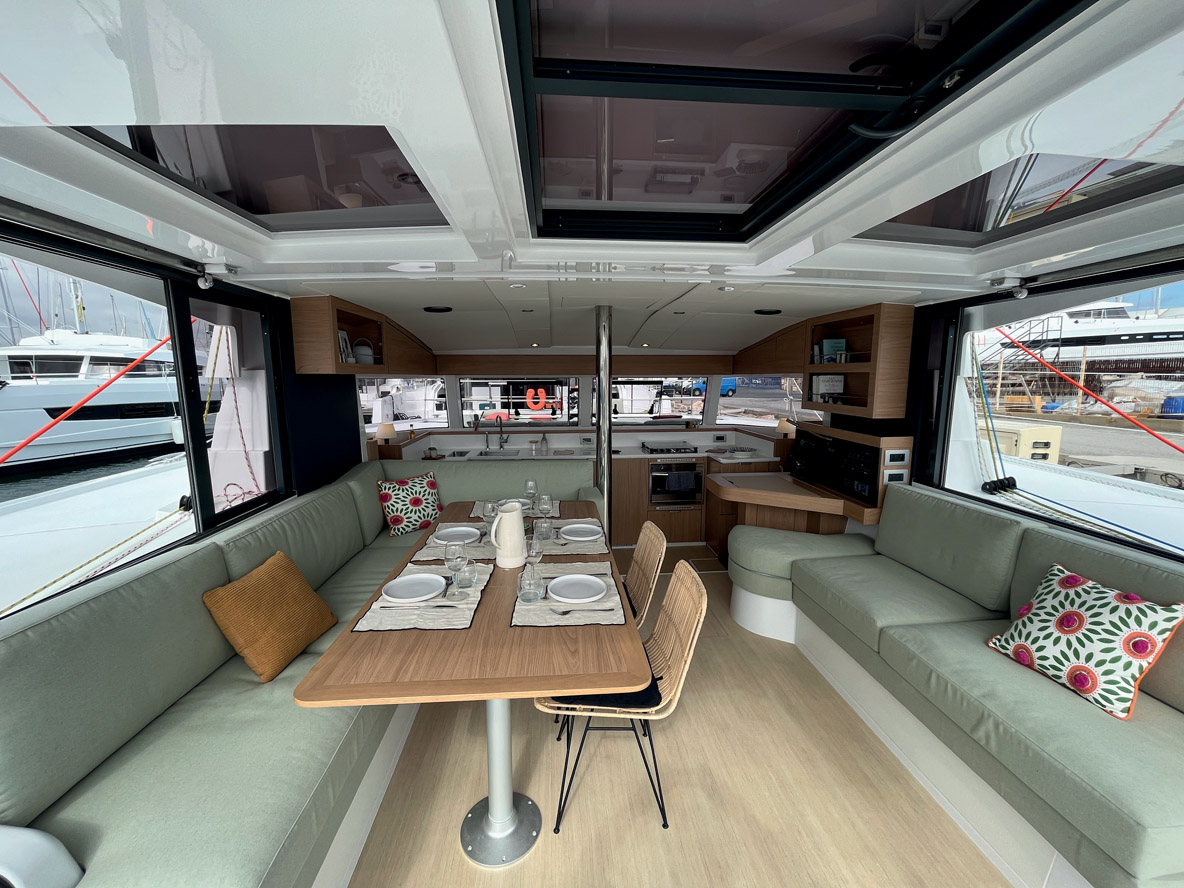
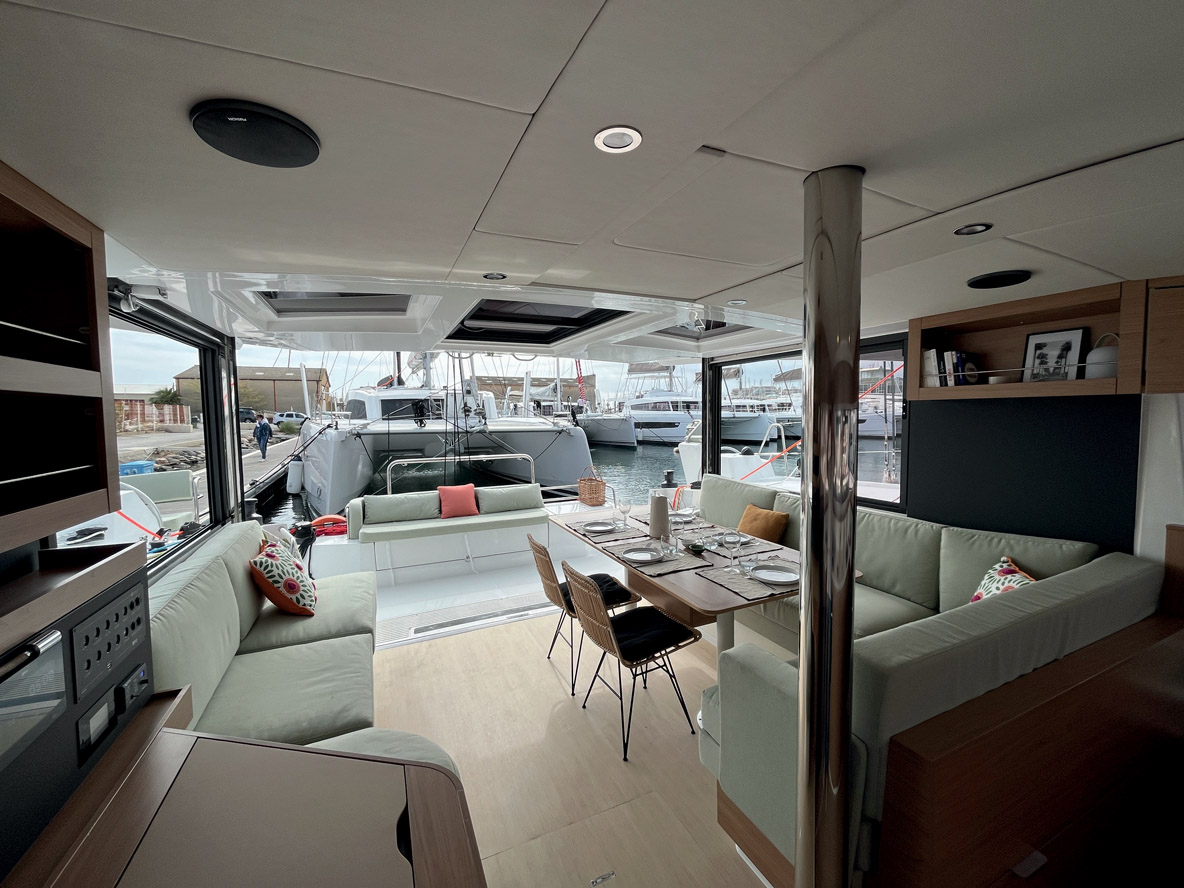
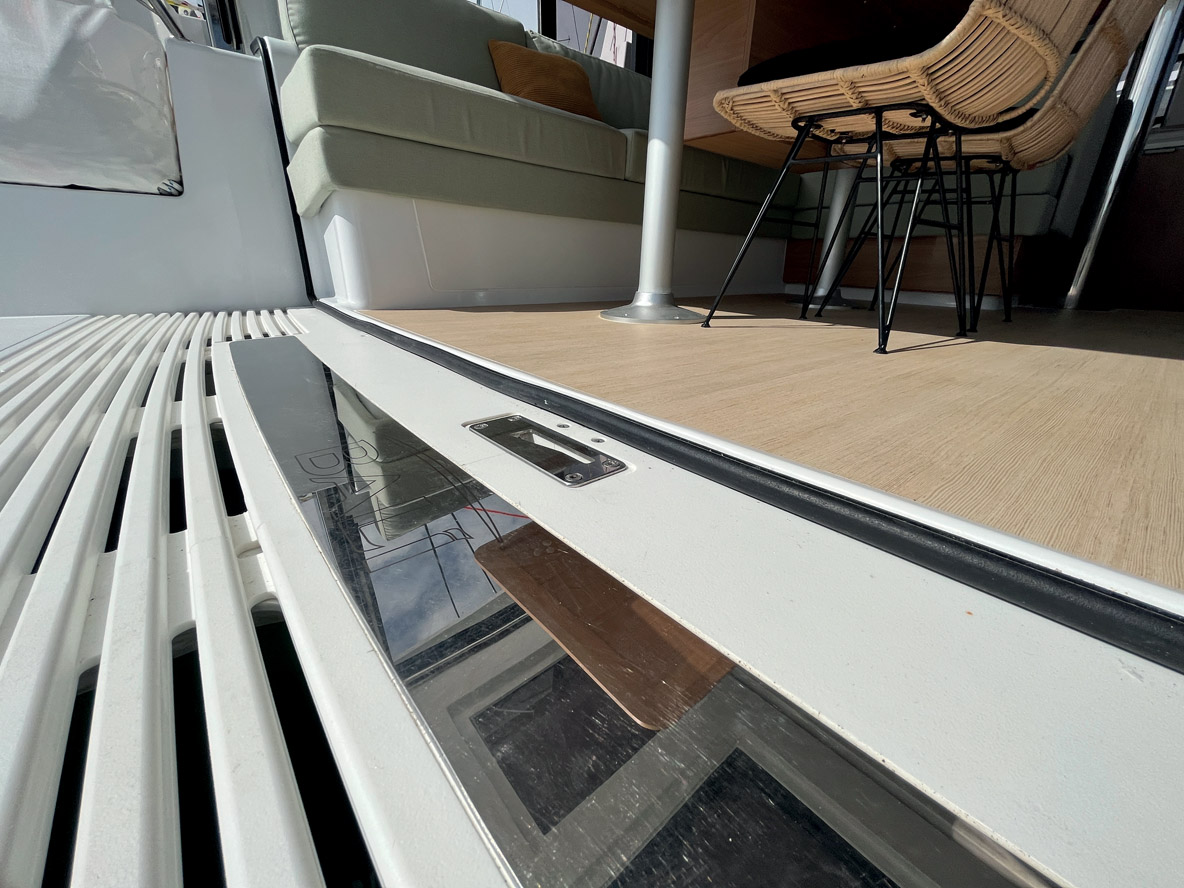
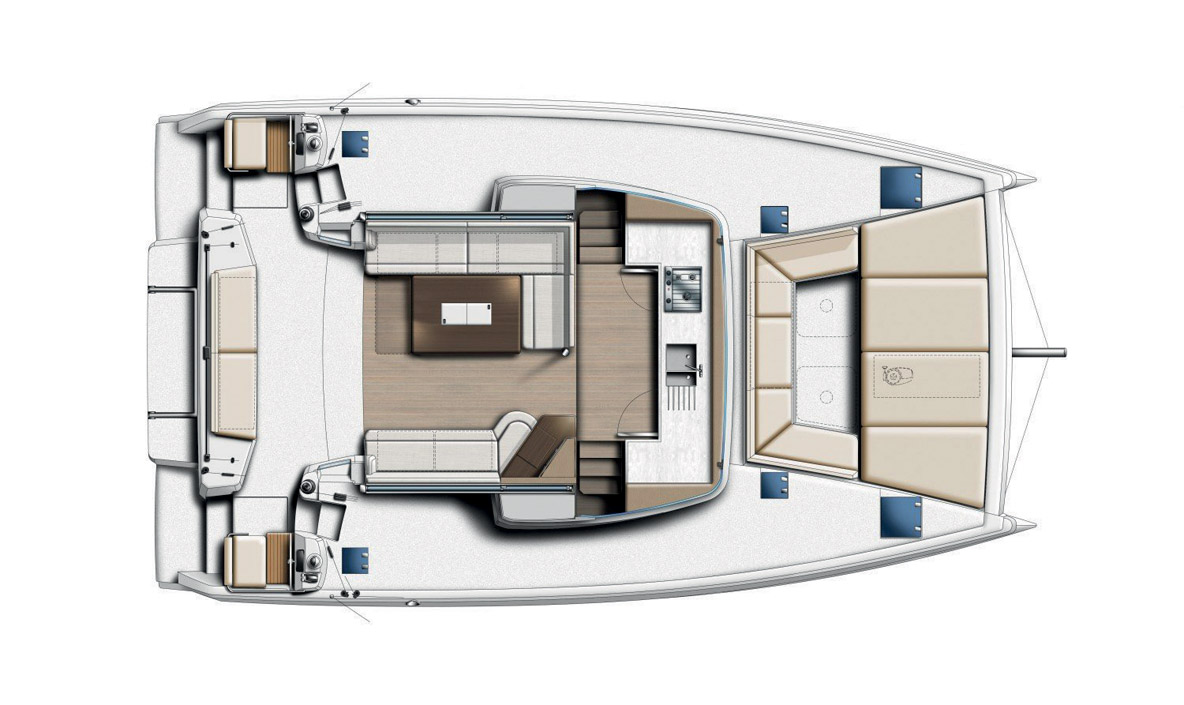
Thanks to the now-famous tilting/pivoting door (appropriately renamed the Bali door) the cockpit and saloon become one. Maneuvering the large panel is easy and radically transforms the atmosphere on board, especially with the sliding side windows that contribute to the open/closed concept. The only regret is that a small one-inch (2.5 cm) sill impacts the free flow of traffic. It’s a pity because the headroom, which is close to 6½ feet (2 m), offers a feeling of XXL-sized volume. The dining area is offset to port and features a large table measuring 69 by 37½ niches (175 x 95 cm) that can seat six people without them feeling crowded. This might be different with the 10-berth option, if they are all occupied. A 110V outlet will be placed under the saloon table, so that you can plug in a laptop or a tablet.
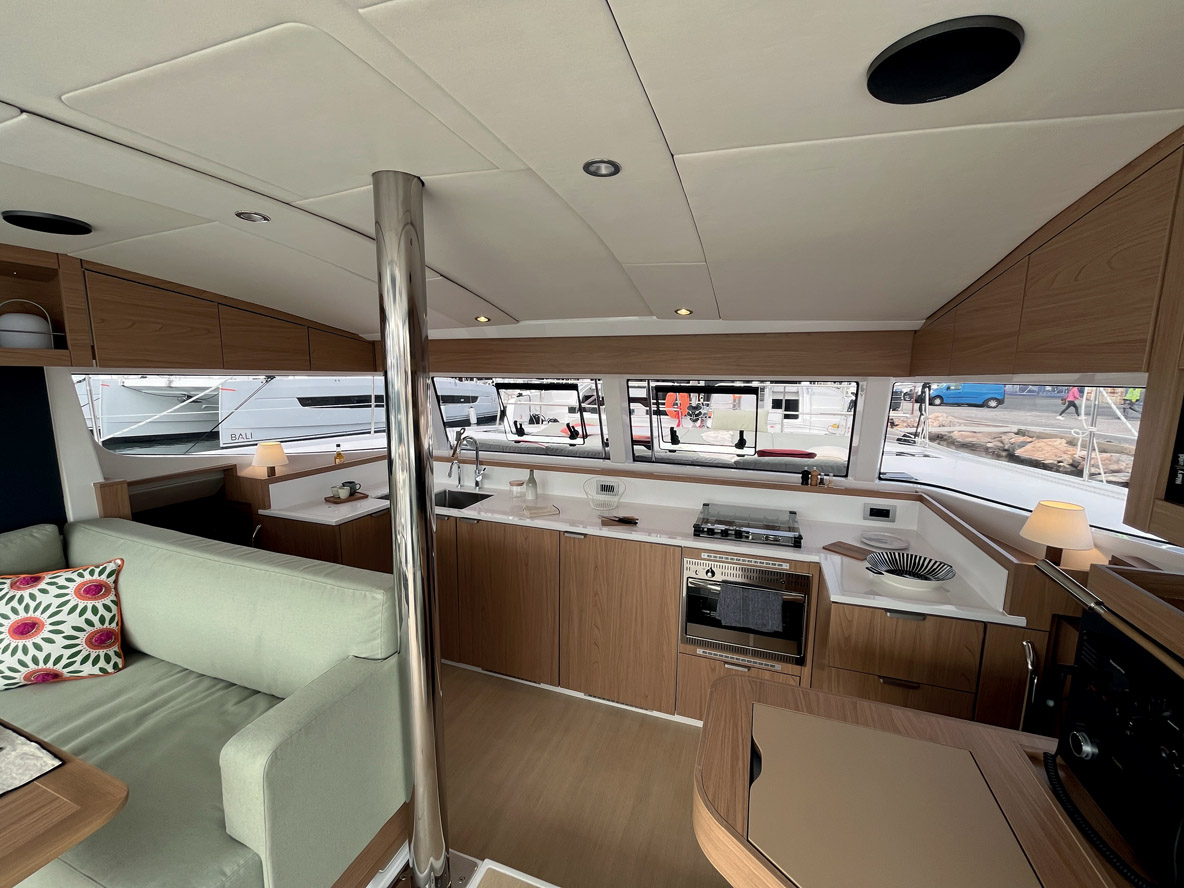
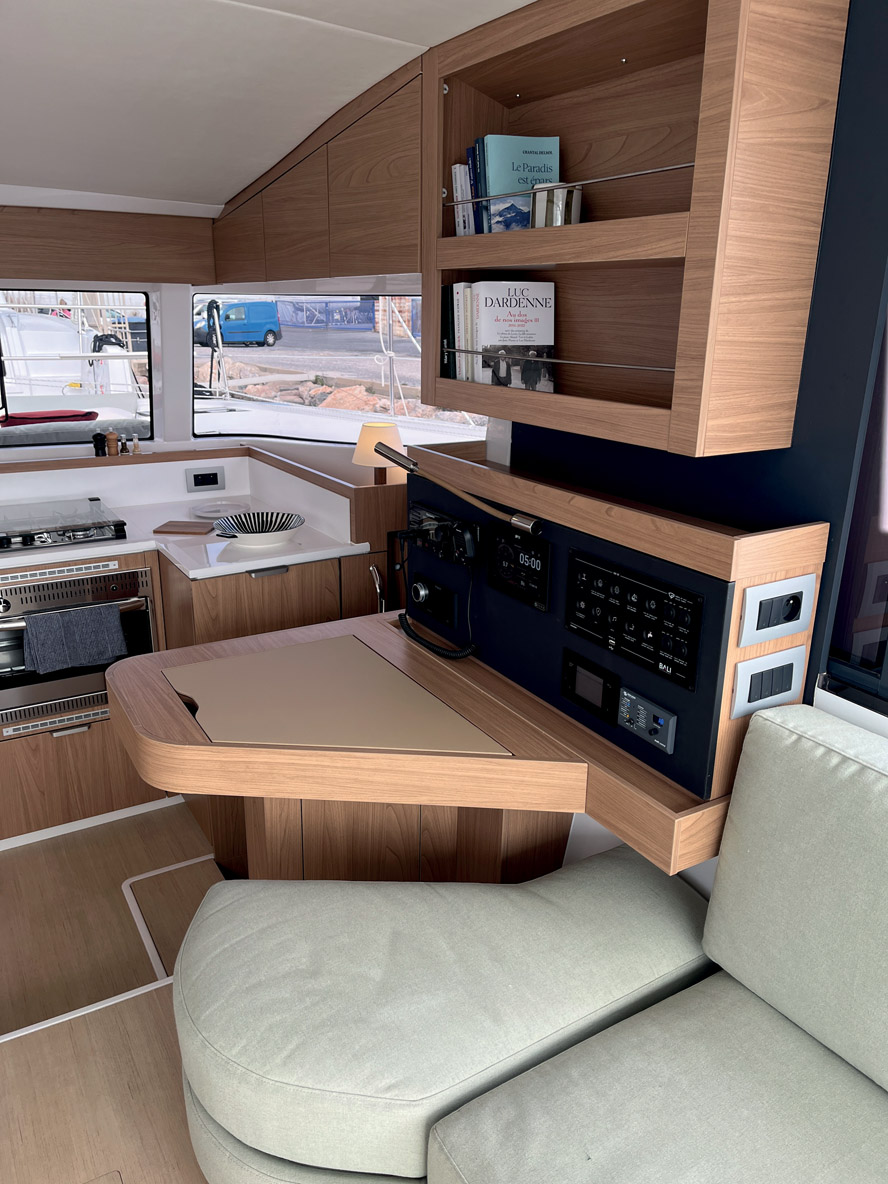
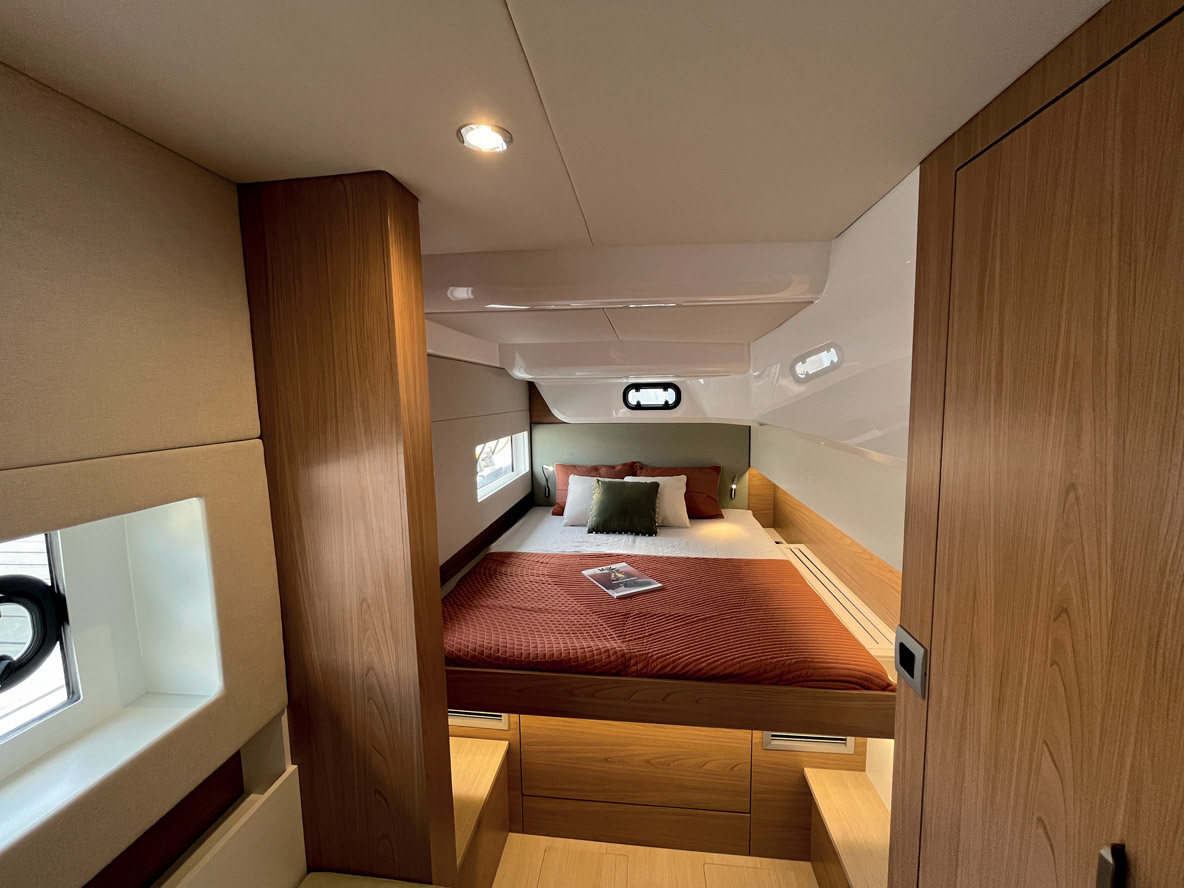
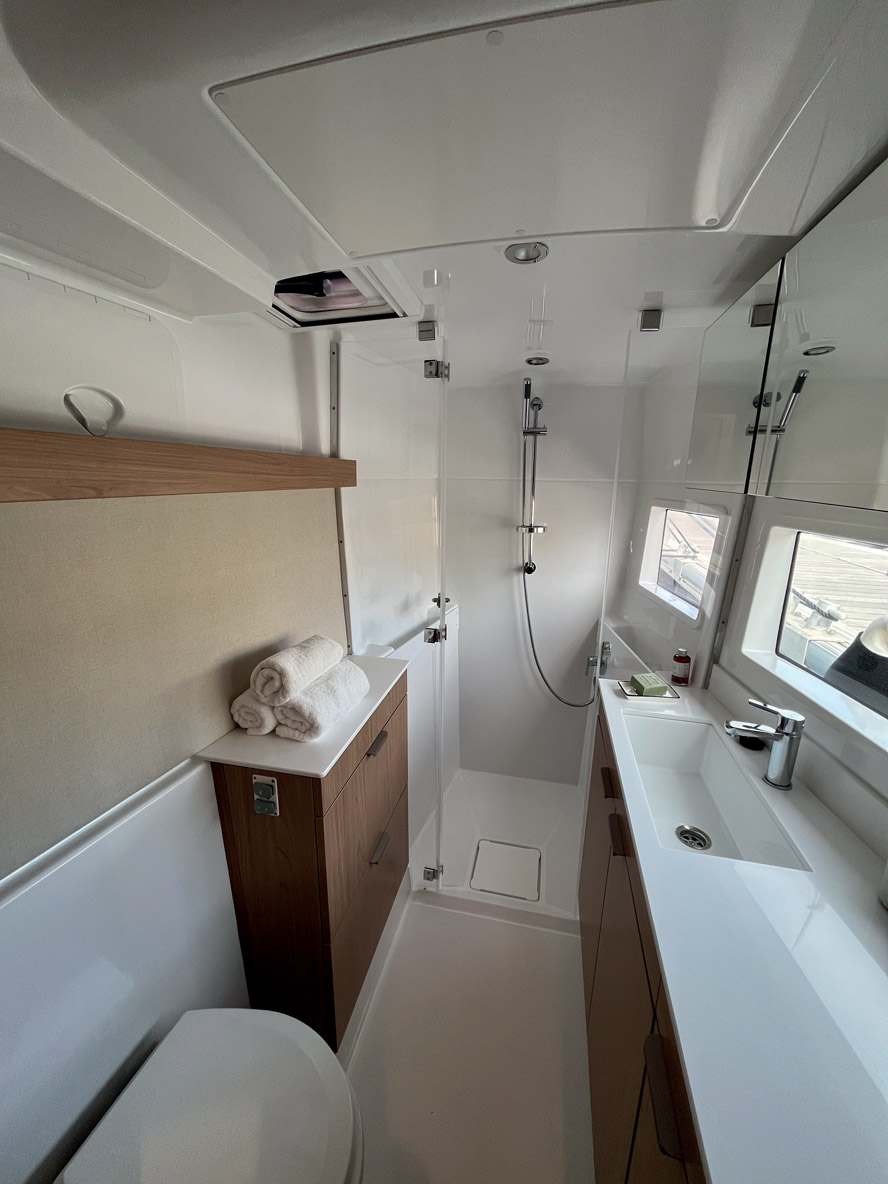
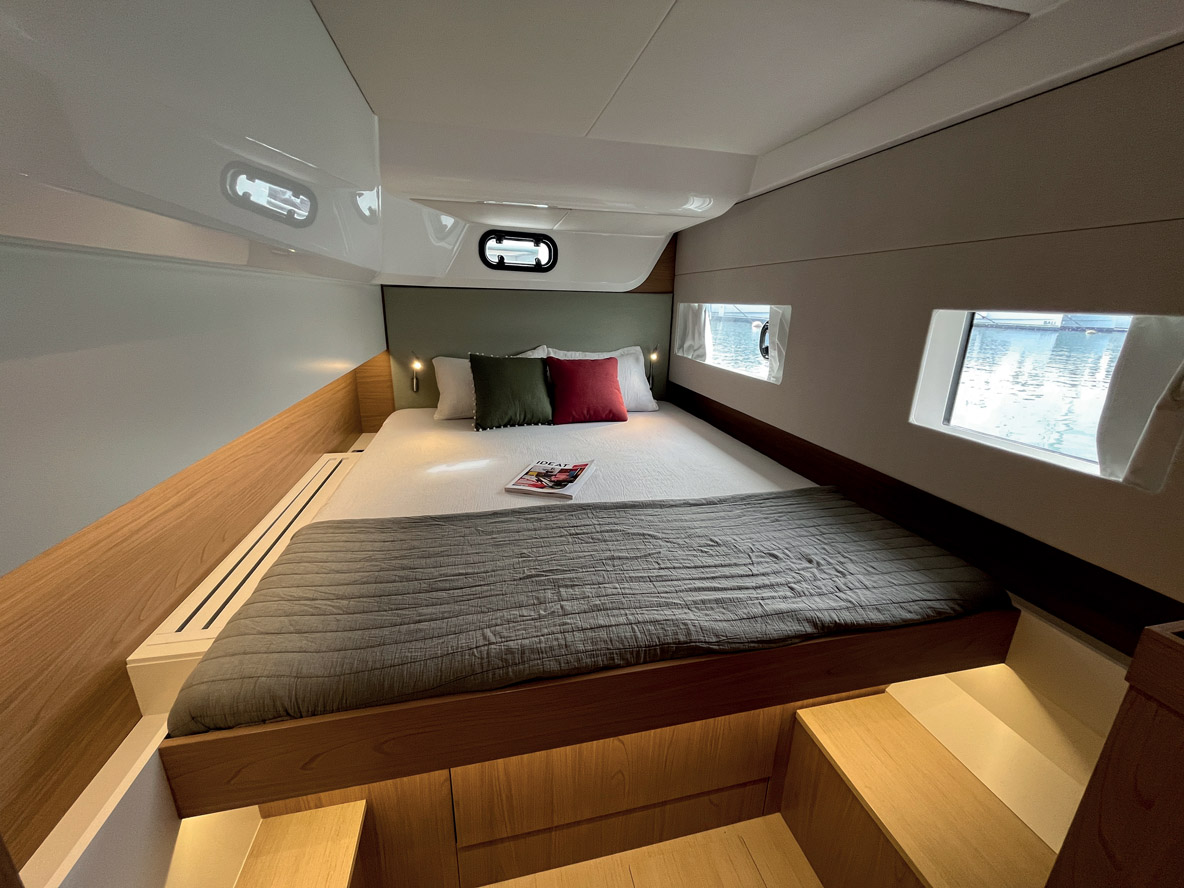
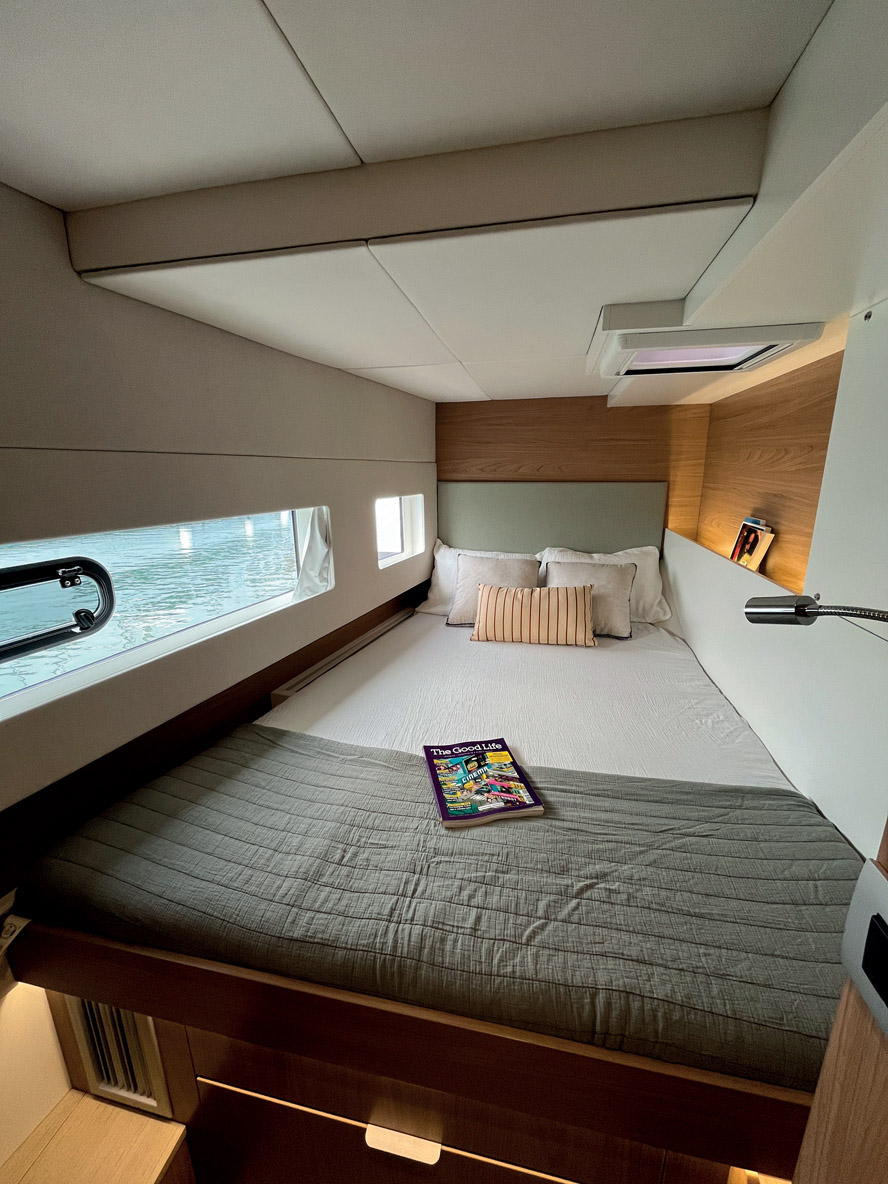
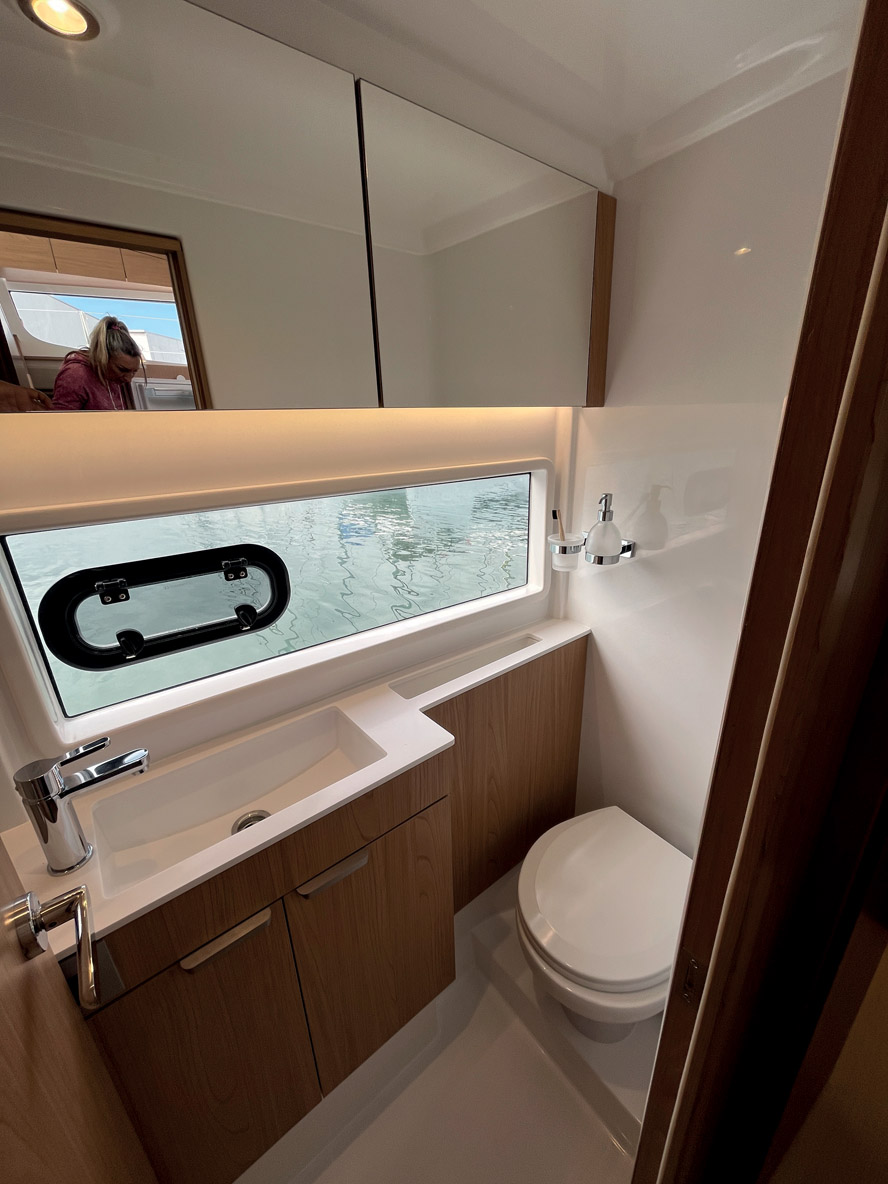
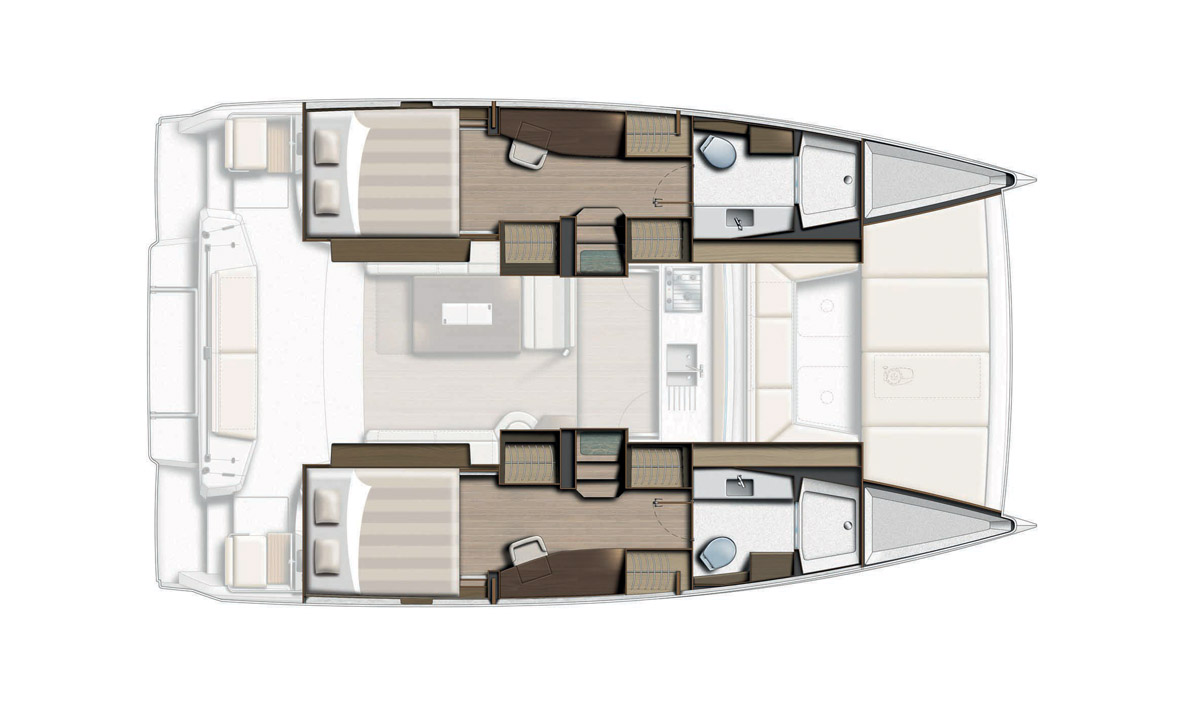
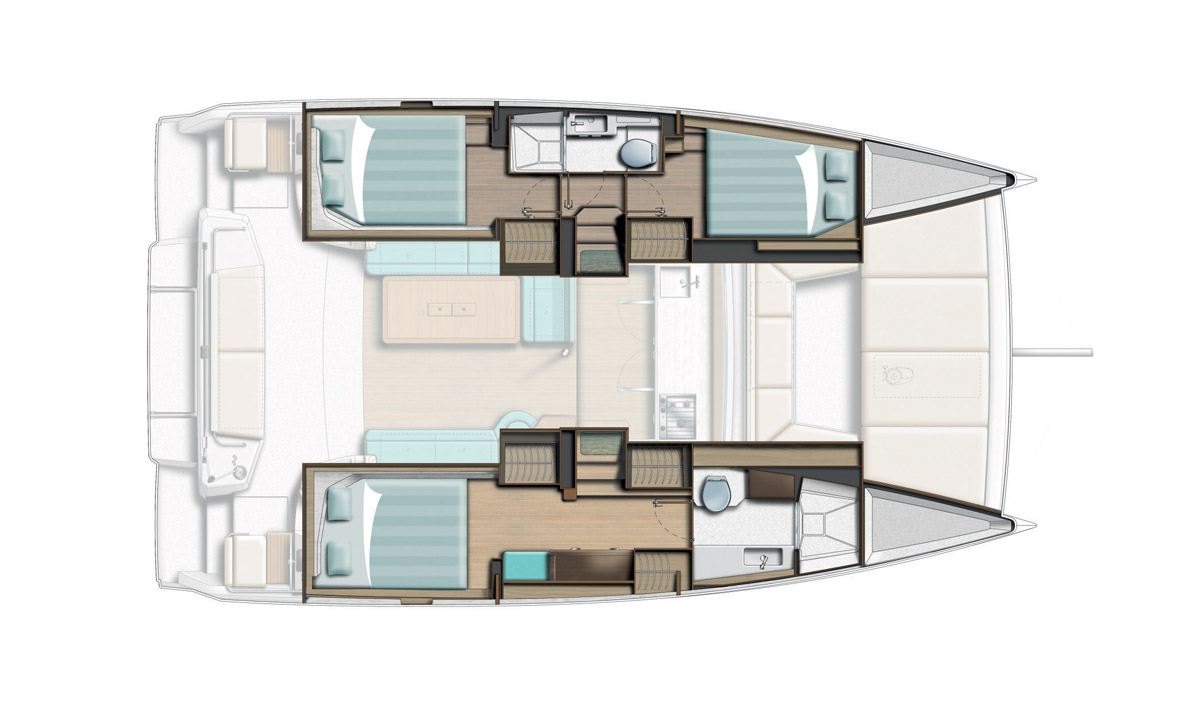
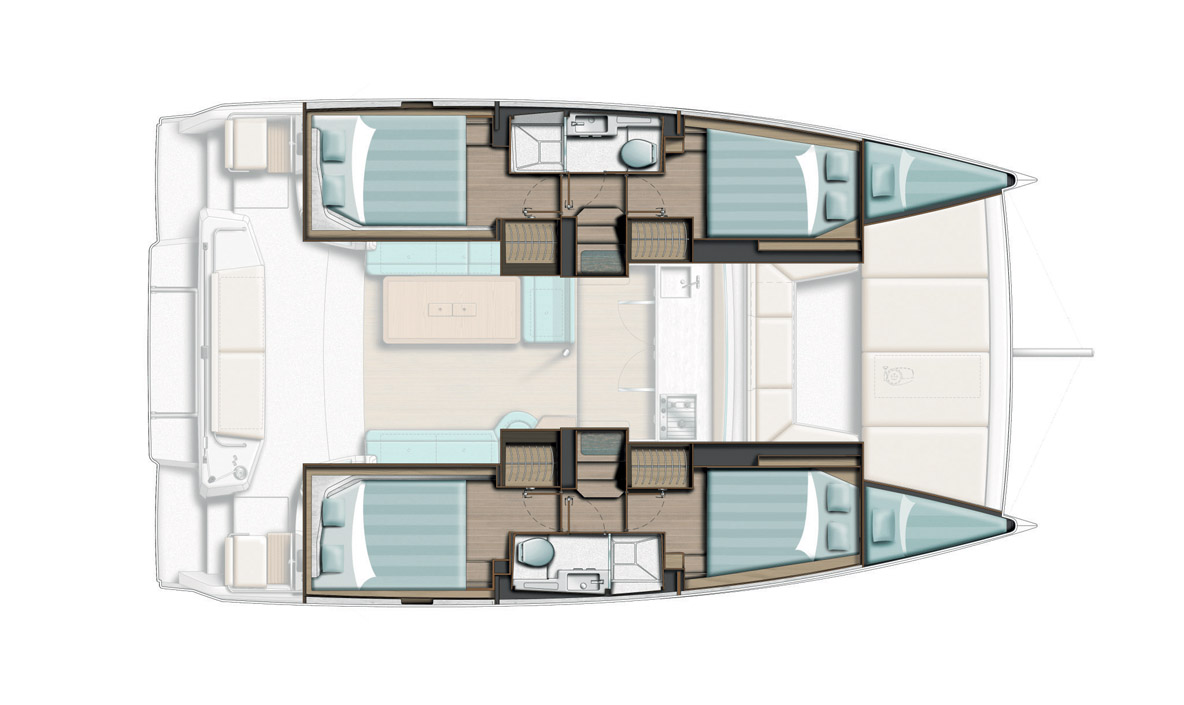
On the starboard side, there is a large seating area. A chart table is fitted diagonally, a little further forward, and it has well-placed power outlets. The U-shaped galley occupies the entire area inside the nacelle - it is huge for a catamaran of only 38 feet and enjoys loads of storage space. The refrigerator and freezer can total 7.6 cubic feet (215 liters). Everywhere, the finishes and materials used show a clear effort that translates into an impression of moving upscale. Only the bare areas of plywood locker lids deserve protection. On each side, four steps (39”/98.5 cm from floor to floor) lead to the hulls. Our test catamaran was in the 3-cabin formula with the starboard hull dedicated to the Owner, and two cabins to port. The builder boasts of offering a new “Double Owner” version that looks particularly attractive on paper. We should temper our enthusiasm somewhat, though, as a version with only two cabins was already offered aboard the Lagoon 380 and the 39. And as for Aventura, their 34 and 37 also offer this formula. While the two manufacturers mentioned above have seen only symbolic orders, Bali can already report more flattering results for the 2-cabin version of the Catsmart. For me, it looks to be the most attractive layout that one can imagine. The passageway, the width of the doors, and the (shared) bathroom logically suffer from narrow dimensions on the two-cabin side, but this isn’t the case in the Owner’s hull, which looks like a luxurious 45-foot catamaran, especially since the headroom is 6’3” (1.92 m). The rear bed is wide (5‘/1.5 m), comfortable and easy to access (28”/71 cm above the floor). I found many storage spaces with three opening hatches to ensure good ventilation. The large hull windows offer a great view of the sea but think of this in the opposite sense - when it comes to your anatomy - in the bathrooms. Curtains might be a good idea in harbor or if the anchorage is busy. Two opening hatches are provided. On the port side, there are only two opening panels per cabin. The bed is perched at 32” (81 cm), and measures 6’6” (2 m) in length, 4’5” (1.36 m) wide at the head and 2’8” (0.81 m) at the feet.
Conclusion
The pre-launch of the Bali Catsmart was promising with already 30 examples sold... by the end of the official launch orchestrated during the International Multihull Show, it was clear that the manufacturer has hit the jackpot, with the orderbook now climbing to 100 catamarans! According to Boris Compagnon, sales director of the Catana Group, this is the best start ever for a new Bali. The Catsmart is probably the multihull that sold the most during the 4 days of the show at La Grande-Motte. And so much the better! Firstly, because this craze proves that many buyers are interested in multihulls under 40 feet in length, and secondly, because this Catsmart is undoubtedly a successful and well-bred catamaran - a favorite that is worth a front cover picture!
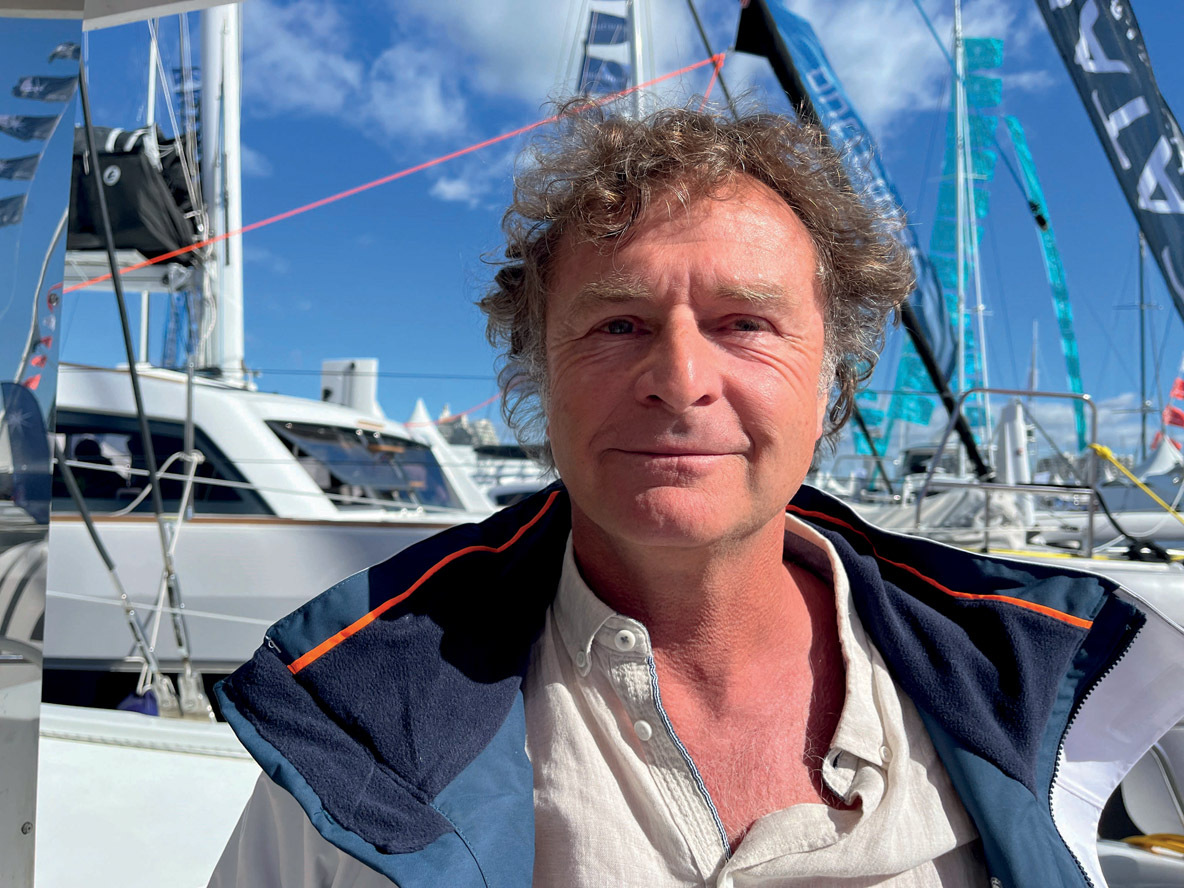
Xavier Faÿ: a word from the naval architect
Xavier Faÿ, the naval architect for all the Balis, is absolutely a member of the team - he was part of the press conference held during the International Multihull Show and wears the same Decathlon watch-keeper’s jacket as all the Bali staff.
“In less than 10 years, Balis have evolved while remaining true to their strong values - rigid foredeck, maximum exploitation of the available surface area, common saloon/cockpit, and generous refrigerated volume. Without the Bali door, the 4.5 felt somewhat restricted. Later models, guided by the charter market, logically gave more. But now, we’ve reached a level of maturity. For me, it’s much more interesting to design a Bali rather than a 100% performance multihull. I like the challenge of offering the best compromise with the means available, in accordance with industrial constraints. I have a very close relationship with the Bali design team, and for the Catsmart, we sought less area by doing away with the flybridge, but as a result, we were able to significantly increase the sail area. This new catamaran is agile and lively: I really enjoyed helming it on the trip back to Canet-en-Roussillon. The Catsmart is definitely the quintessence of Bali Catamarans!”
Available in 2, 3 or 4-cabin versions
Record comfort and habitability for a 38-footer
Narrow doorways in the hull with two cabins
Door sill at the entrance to the nacelle
TECHNICAL SPECIFICATIONS
Designer: Olivier Poncin
Naval Architect: Xavier Faÿ
Interior design: Piaton-Bercault
Overall length: 38’8” (11.78 m)
Waterline length: 36’9” (11.2 m)
Beam: 21’2” (6.46 m)
Draft: 3’7” (1.1 m)
Light displacement: 18,500 lbs (8.4 t)
Max laden displacement: 26,450 lbs (12 t)
Max upwind sail area: 933 sq ft (86.7 m²)
Mainsail: 495/503 sq ft (46/46.7 m²)
Overlapping genoa: 430 sq ft (40 m²)
Self-tacking solent: 296 sq ft (27.5 m²)
Code 0: 570 sq ft (53 m²)
Spinnaker: 1,453 sq ft (135 m²)
Cabins: 2 to 4
Berths: 4 to 8 + 4
Fuel: 105 US gal (400 l)
Water: 174 US gal (660 l)
Engines: 2 x 20/30 HP Yanmar
CE Category: A
Price: € 325,450 ex-tax
Main options in € ex-tax:
2-Cabin version: 2,150
Excellence Pack: 54,500
Elegance Pack: 9,780
Electronics Pack: 10,210
Square-topped mainsail, lazy-jacks and stack-pack: 5,450
Gennaker: 5,710
Bowsprit: 2,380
Spinnaker hardware: 1,680
2 x 30 HP instead of 20 HP: 4,240
Folding propellers: 2,880
5 kW 120V Generator: 22,390
2 x 100 Wp solar panels: 2,540
Nacelle + hull heating: 13,810
Fitted-out forepeak: 2,770
Saloon convertible into a double berth: 1,860
Underwater lighting: 4,580
Gas plancha grill: 2,280
9-foot (2.8 m) Dinghy + 5 HP O/B:
Sound system: 1,300
Radar: 5,170
Preparation and delivery in Tunisia with mooring it and ground tackle: 11,880