For a “standard” boat test, we’re rarely able to stay even a full day on board. Sometimes, depending on the opportunities for a delivery trip, we can manage to sail for a few days. Up until now, only charter companies have allowed us to carry out week-long sea trials. This time, one of the manufacturers - Bali Catamarans - played the game. The result was 400 nautical miles of cruising (sailed at a fairly unhurried pace, it is true) in the western Mediterranean aboard the Catspace.
Infos pratiques
- Le chantier : Bali Catspace (XXL)
- La fiche technique
-
 Découvrez notre vidéo exclusive
- Financez votre Bali Catspace
- Assuez votre Bali Catspace
- Articles autour du Bali Catspace
Total distance: around 400 nm
Wind experienced under way: 0 to 21 knots
Sea state: Calm to moderate
Our XXL-sized adventure wasn’t due to have appeared in this issue of the magazine, but rather in our forthcoming Power Special Edition #17. It was indeed a Bali Catspace Power that we were due to be trying out for a week, but what happened was that a propeller problem deprived us of the powercat, whereupon the yard offered us the same model, but in the sailing version. The crew was already assembled, so remained unchanged. There were seven of us - five adults and two kids, aged 6 and 10. The model we were given was an owner’s version, which features three double cabins. The forecabin on the starboard side has a large bed installed athwartships and an additional single berth, against the topsides. And of course, there are still the large benches in the saloon/cockpit. The date was set for the second week of August. Officially, the shipyard is closed for their annual vacation, but fortunately there are still a few good souls left to deal with customers and the handover of our catamaran - because embarking for our week-long cruise aboard a multihull in the middle of August had little in common with the typical collection of a charter boat... This was a newly-splashed Bali Catspace, a catamaran whose reliability had been confirmed by the delivery trip from Tunisia and whose sails had only just been bent on. These sails included a gennaker as a bonus, but also just added were a toolbox, a first aid kit and safety gear (flares, liferaft, etc.). And that was it. As for a dinghy and outboard, that was up to us to organize... the same went for a hose pipe, and other essentials: pillows, sheets, duvets and bedlinen are of course part of the inventory for the cruising apprentice, as well as galleyware, cutlery, coffee machine and so on. As for the provisioning, it’s normal that we took care of that - this task was delegated to Norbert, while Paul was charged with sorting pots, pans and cutlery. As for me, I took care of the “technical” aspects. We’d embarked aboard Pretty Bali 11 with three carloads and a small trailer of gear to stow on board. Thanks to Maria and our partners Gala Boat, we’d got hold of a tender – a small RIB (see test in issue MW#181, Shopping section. The shipyard had time to inflate the dinghy and hoist it on the davits. All that remained is to fit the 6 HP outboard and tank, borrowed from a little boat 300- odd miles away and various equipment - snap shackles, boathook, hose pipe and fittings etc. I’d also brought a few chandlery items and spare lines, just in case.
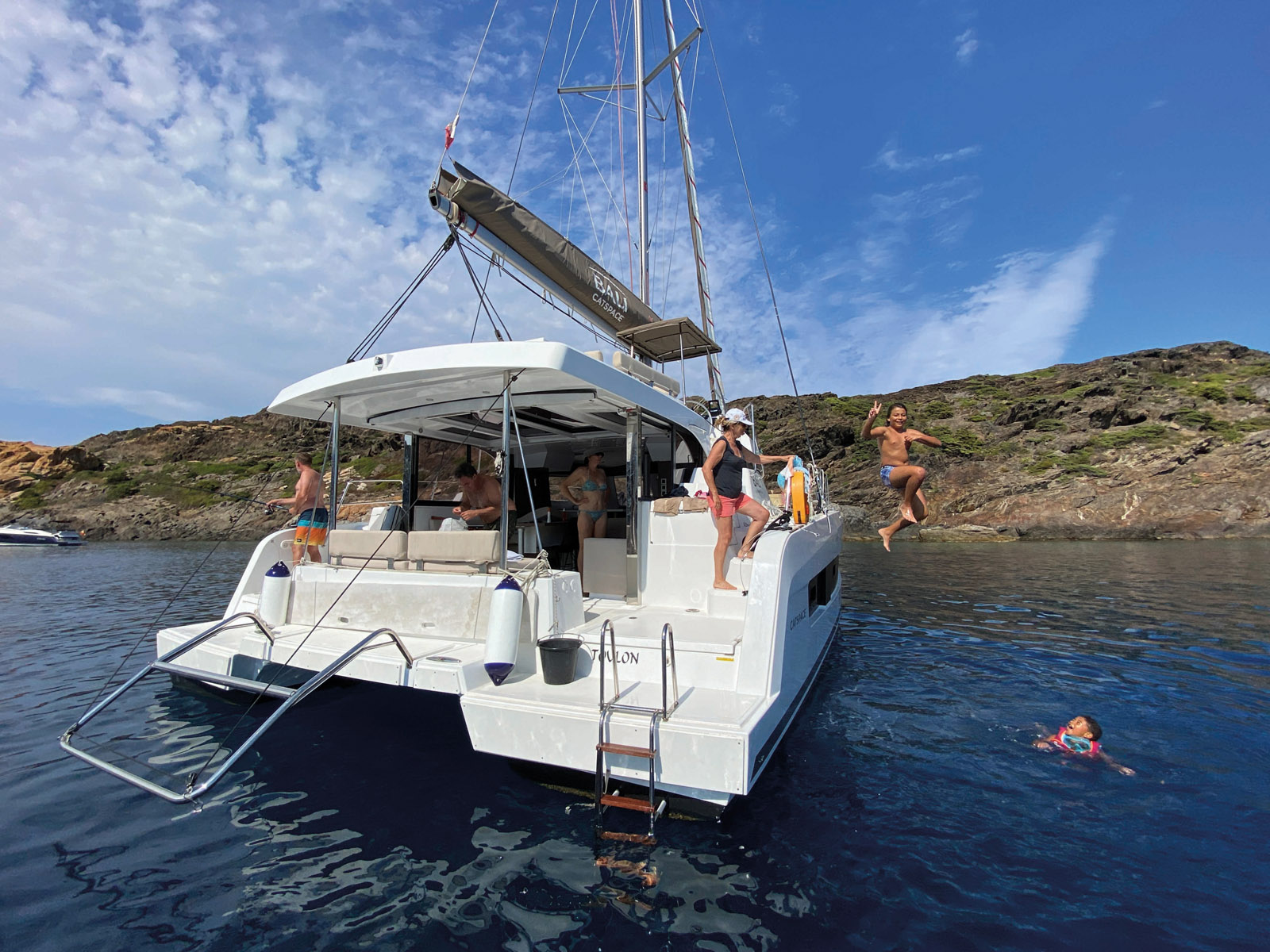
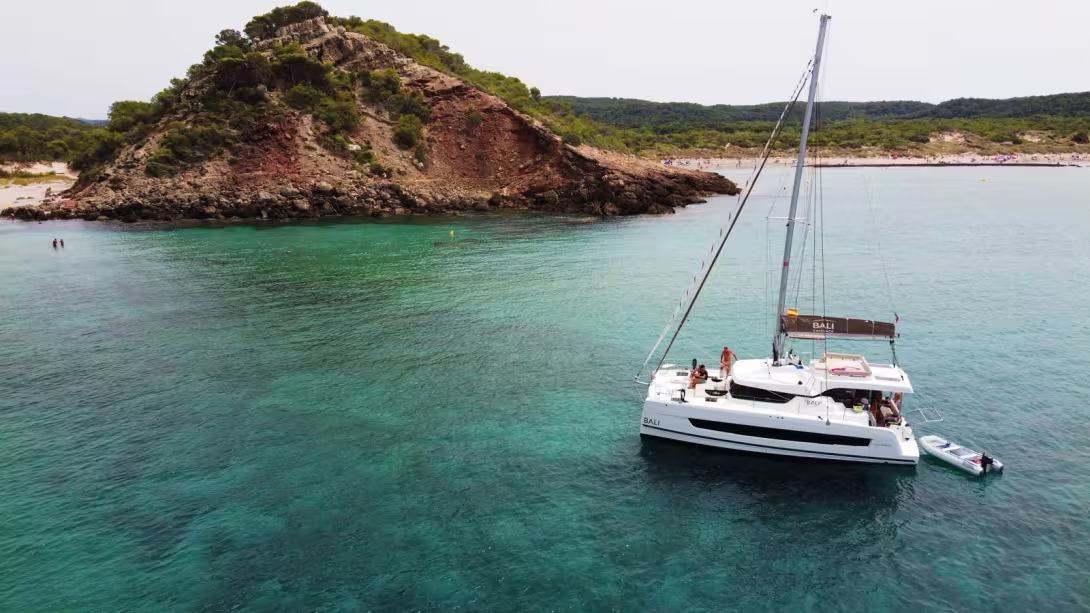
First anchorage in cala Jugadora. The children obviously enjoy a swim, and the Bali gets her waterline and propellers cleaned.
Both the weather and Covid are calling the shots!
Ordinarily, the itinerary of a cruise is dictated by the weather, the size and equipment of the multihull and of course the skill level and desires of the crew. But for more than a year now, Covid-19 has been imposing itself on cruisers’ plans. Through the summer of 2021, the Mediterranean area of Spain as well as France have experienced rising figures of the virus, leading to fears of traffic bans between the two countries. In the end, we were going to be ok. I went to buy a Spanish courtesy flag, determined to hoist it as soon as we crossed the border, 20 miles to our south. The weather forecast announced a clear strengthening of the Tramontana (the dreaded north-north-west wind so typical of this region, and not-quite-identical twin of the famous Mistral) for 24 hours. We took advantage of this to settle in quietly, prepare the catamaran and stow the supplies. First off, the storage space is particularly generous – the forepeaks and the lockers on the deck, cupboards and storage space under the bench seats, bunks and floors. The overall Bali design, original as it is, was welcomed almost instantly by all crew members, experienced or not. My laptop sat on the forward-facing chart table, and this was to become my office for the week... As for the refrigerator, it is as good as to be found ashore. The children went regularly to the beach, which was fortunately very close to the port. Installing the exterior upholstery, which counts about twenty items, is quite laborious - it would be more practical to have cushions and backrests numbered and related to a plan... The following day, the wind was forecast to be north, veering north-east while weakening then temporarily building far south of Canet. Then, no Tramontana for a week. Instead, a heatwave was what we were going to need to worry about – brought about under a “heat dome”. For our sailing catamaran, we decided to stick to the program we’d envisaged with the Catspace MY: to Menorca, Mallorca and back again, a good 400 nautical miles. Of course, this route will require a lot of time under way and at least two nights at sea – so, it’s a proper test... Before setting out, we topped off the fresh water, but then we noticed that the smaller door integrated in the large Bali door didn’t lock. The latch in the door was missing. This part appeared identical to the one in the sliding door of the owner’s cabin, so we took off the one we had, bought two 4 mm bolts and installed it. First try: the door closed fine, but was never to open again! We had now condemned ourselves to “Open” mode... If the weather became really bad, we’d have to use the bay windows to for going back and forth between outside and inside.
 |
 |
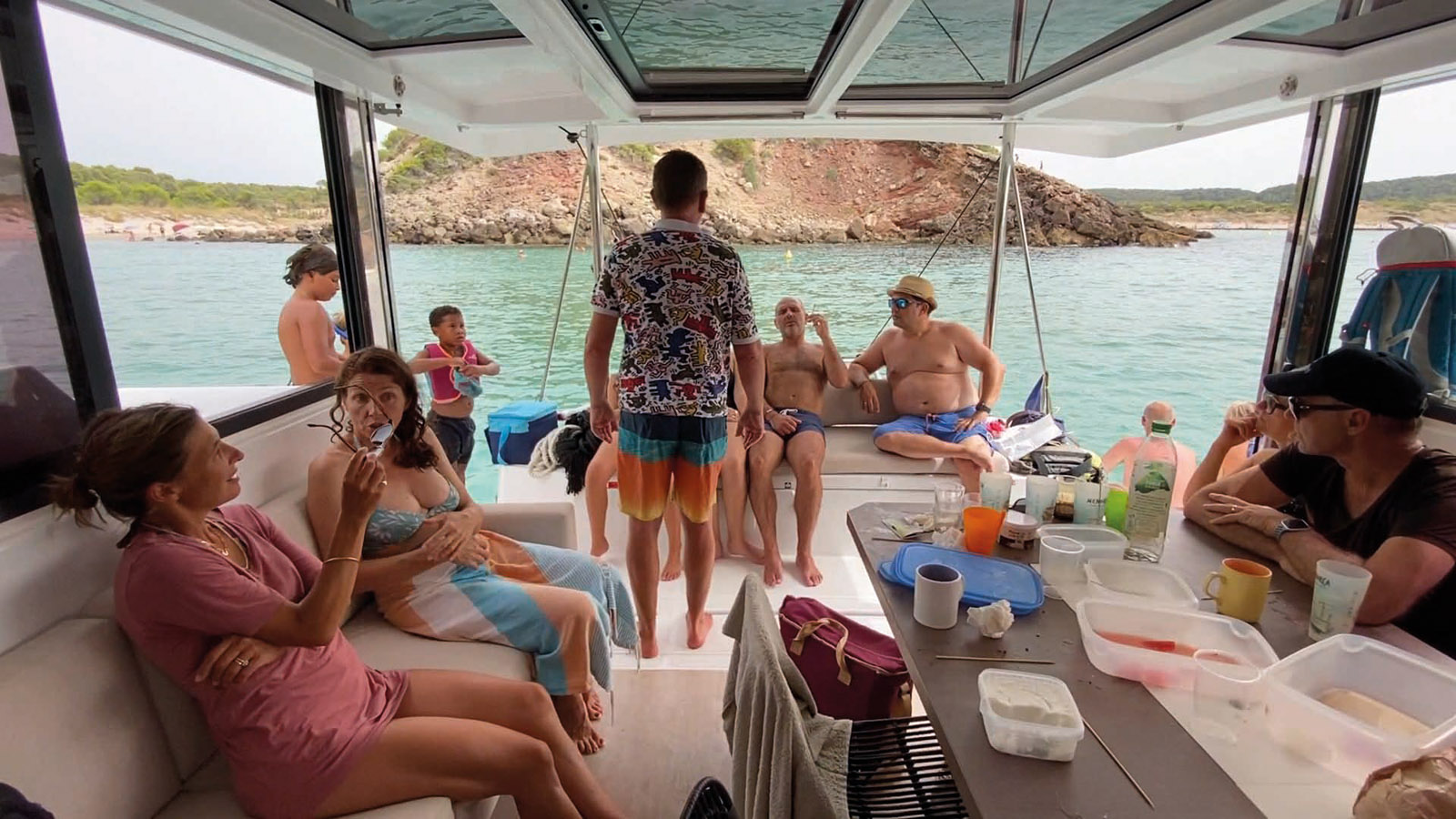 |
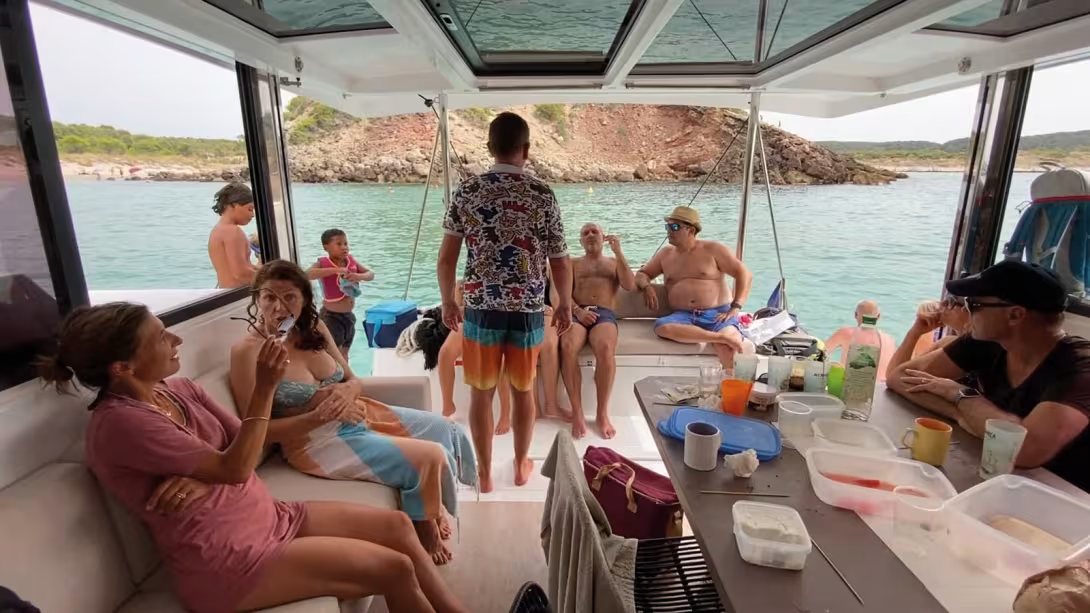
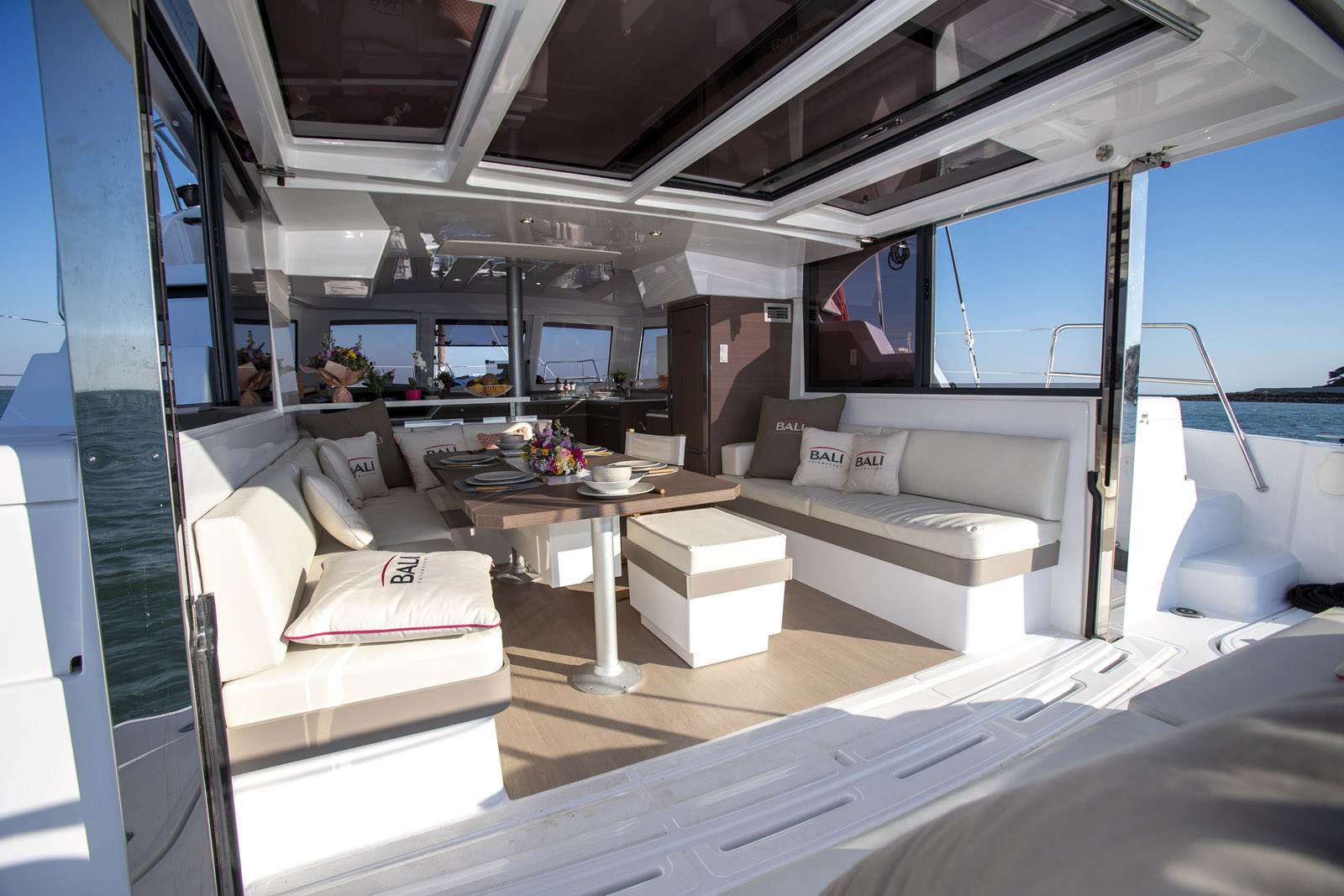
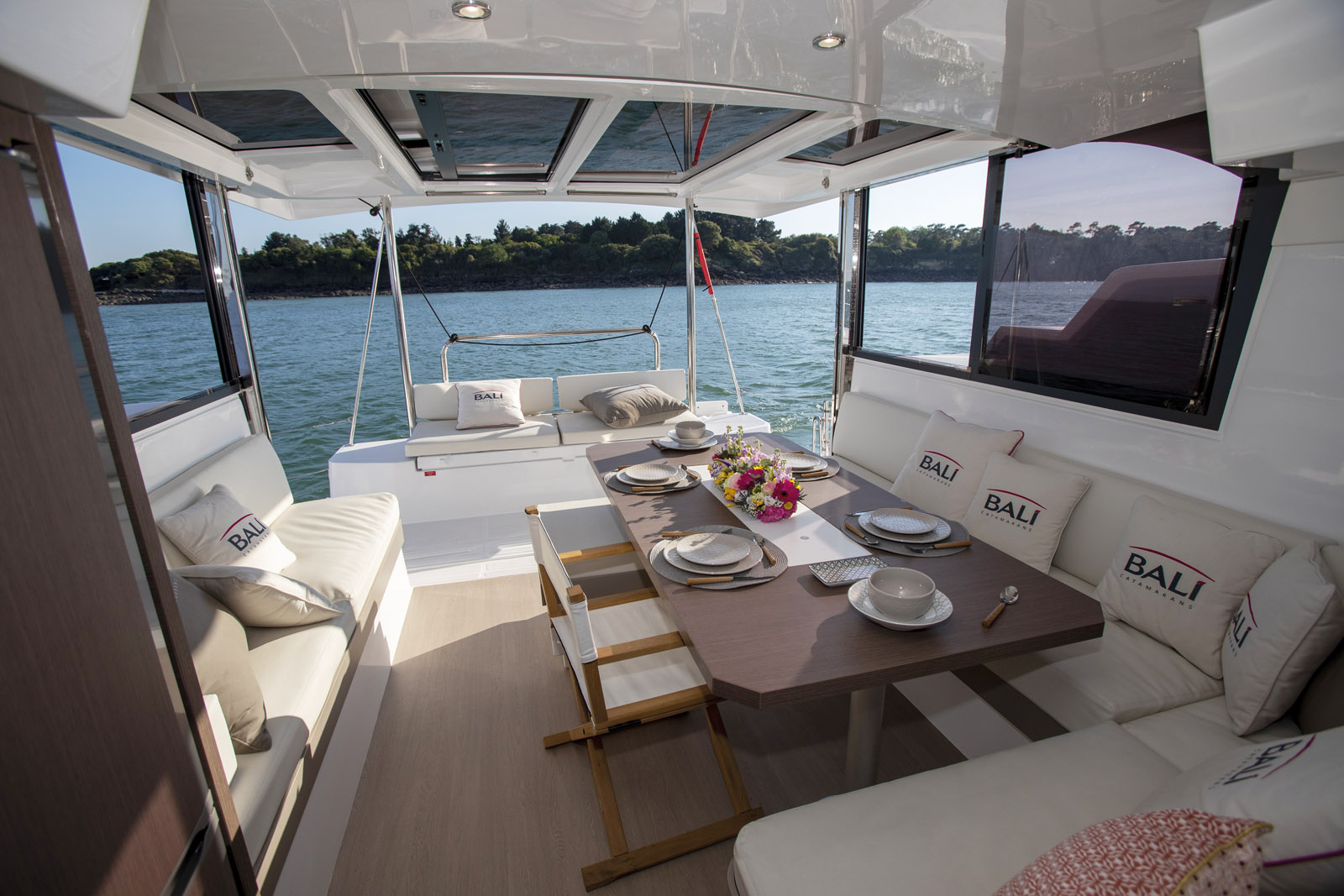
The famous Bali door is a great feature on a cruising catamaran - it feels like you’re living aboard a multihull 5 or 6 feet longer... so much so, that entertaining an extra 12 guests presents no problem!
Getting our bearings on board
The motors were fired up, the shore power disconnected, the springs undone, and we readied ourselves to let the sternlines slip. I recovered the bowlines by almost going swimming: they were tied off on the buoy, though we discovered on the way back that the shipyard has a rustic little dinghy on hand just for this very purpose. I hopped back on the dock, picked up the passerelle and freed the last couple of lines, and we were off! Well, not very far to begin with actually: our first maneuver involved going alongside at the fuel dock. We set sail with full tanks - 2 x 52 US gallons (2 x 200 liters). The light north-easterly was downwind, and the sea was beautiful, motivating us to practice the often-seen motorsailing with the gennaker unfurled. Management of sailing maneuvers is very simple and intuitive. The electric starboard winch is very close to the helmsman - in the end, this winch handles all the maneuvers except the port gennaker sheet. Installed on an angle, it is perfectly aligned to handle the jib and gennaker fur- ling lines to starboard, but also the gennaker sheet - the risk of getting a riding turn is almost non-existent. To port, there’s a second winch at the same angle, this being dedicated to the port gennaker sheet.
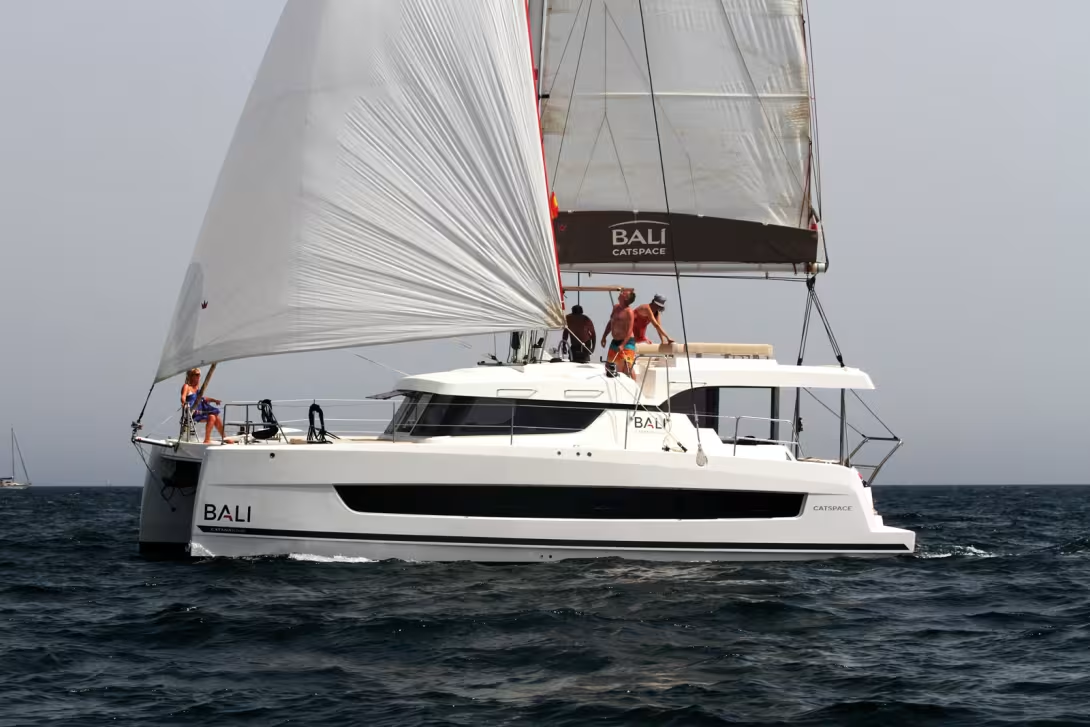
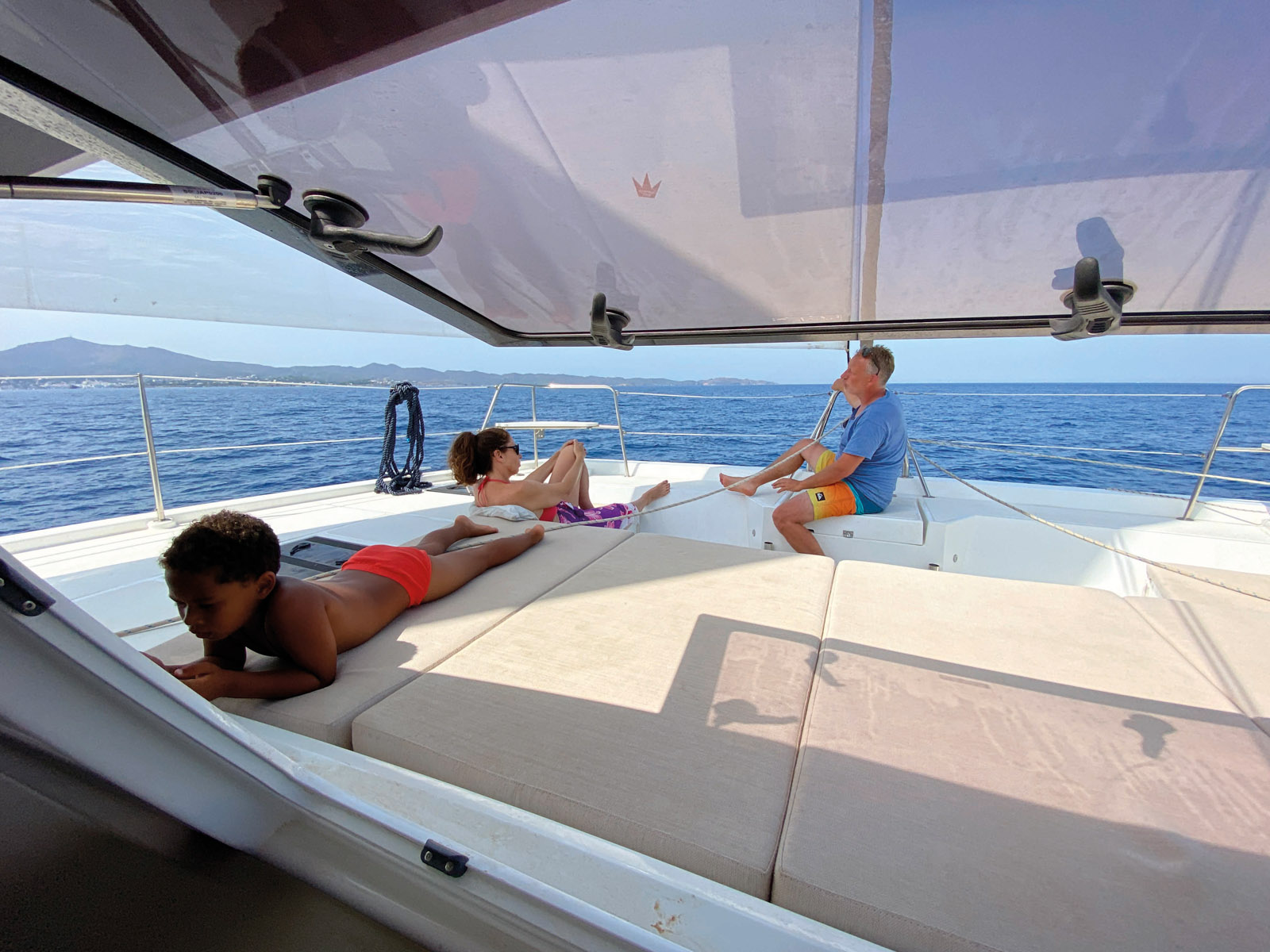
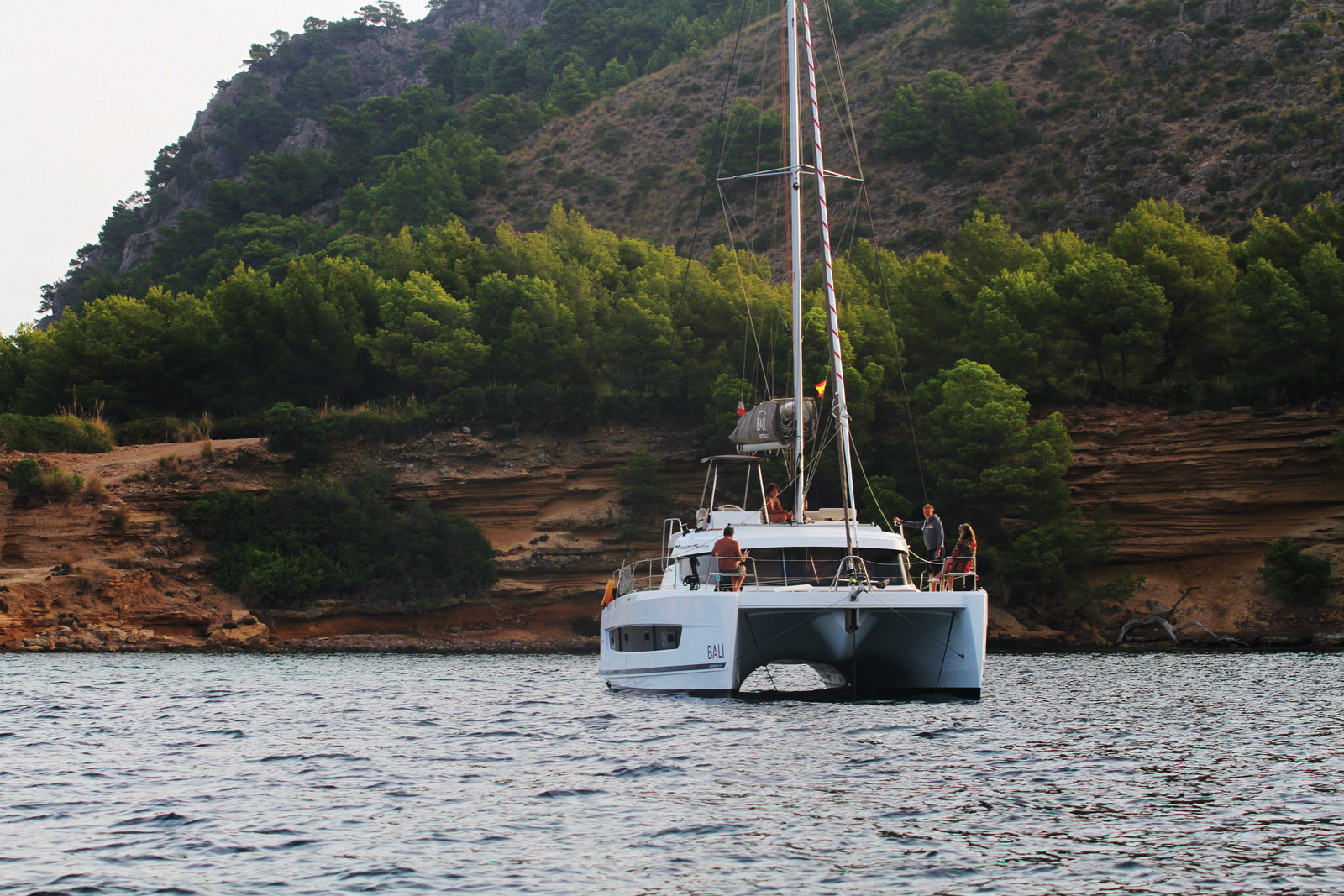
Despite the big engines (our boat featured 2 x 40 HP instead of the standard 2 x 19 or 2 x 30 HP),webarely reached 6 knots and the ca- tamaran was vibrating quite a lot. During these first few hours under way, everyone got their bearings on board. The numerous relaxation areas - foredeck, flybridge, bench seats, and so on allow everyone to settle in with shade or without, in the wind or sheltered from it. From the outset, the surface area available for lounging around on this (only) 40-foot catamaran is amazing. The sunbathing area behind the sail maneuvering station is surrounded by safe backrests - a plus when you have young children aboard.
As for the famous “Bali door”, it allows you to combine the cockpit and saloon into one area, and it’s always perfectly ventilated thanks to the large forward hatch and the side windows. The insignificant swell invited us to pass close to the dreaded Cabo de Creus and to make a short stop in Cala Jugadora. The windlass - apart from the up and down controls being the wrong way round - worked perfectly and the slope of the locker has been welldesigned for flaking the chain. The solid foredeck seriously reduces the size of the hawsepipe where the chain slides in after over the roller, but it’s still possible to clip the bridle on easily. Be careful with your hands, though - don’t give the remote control to someone else. The stainless-steel davits, controlled by one line that can be taken back to the electric winch, make it very easy to handle the dinghy and to raise it when under way. For the children, their first swim – in the few spots where the water was turquoise. The electronics indicated a sea temperature of 72°F (22°C) - still a bit cool... I took advantage of this stop to put on mask, snorkel and fins, and scrubbed the propel- lers and the first 18 inches (50 centimeters) of hull beneath the waterline. Seaweed and especially barnacles have had a good summer. The shipyard, caught short by the change of multihull, hadn’t had time clean the hulls.
 |
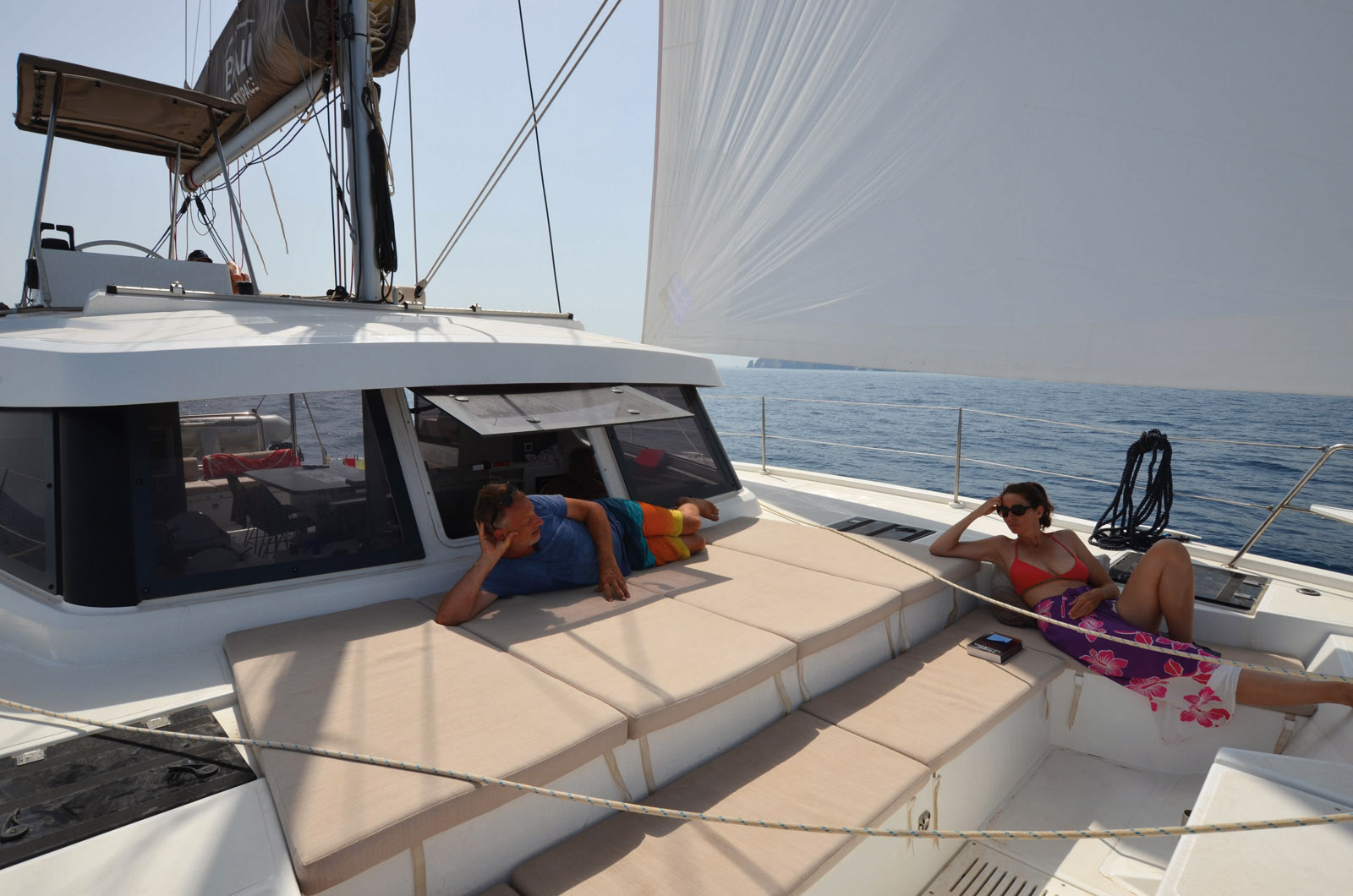 |
No trampoline(s) at the front of the Bali Catspace, but an integral deck fitted out as a cockpit and sunbathing area that’s always dry - or almost.
First night at sea
The sun was beginning to go down in the west, so following our hour and a half break, we were ready to put to sea and spend our first night under way, bound south-southeast towards Menorca. A last check in the engine compartments: no trace of water, oil or fuel. Accessibility in the machine rooms is good: there is space around the engines themselves and the sail drives, which is an advantage for regular maintenance. The quadrant, the bearings, the aluminum inter-rudder link, starter battery, seacocks and strainers, filters - all these elements are easy to identify and correctly accessible. The service battery bank is located beneath the galley floor in a dedicated locker.
Time to weigh anchor! We set out on our 130-mile passage again in gennaker/engine mode... but now, the cleaning of the propellers and hulls had paying off: no more vibra- tions and more than a knot extra boatspeed! The large L-shaped galley on the starboard side with a large central pass-through allows you to prepare the menus of your choice, with an unobstructed view of the sea, of course.
Before nightfall, we organized our watchkeeping system and a “night kit” was put together: a life jacket, a torch stick, and a mini waterproof flashlight. When it was time to go off watch, we had to admit that sleep came quickly under sail, though not under motor, especially for those at the stern. The noise is much quieter in the starboard forecabin. One other disappointment for the sleepers in the starboard aft cabin was that the freshwater system pump is located very close to their ears! For this first night on board, the large door was left open. The deck plan reveals carefully-designed ergonomics: there is a handhold everywhere, especially on route between the cockpit and flybridge. The sea remained generally calm and the wind varying in strength, allowing us sometimes to cut the engines - the deal was if we could sail at 5 knots minimum. The helm is smooth thanks to its hydraulic transmission but without much feel. Additionally, the gearing is very (too much?) reduced, making it less than ideal for maintaining your course in the waves. The autopilot is therefore willingly engaged. The only issue with the flybridge/gennaker combination is that you can’t see much downwind. Ultimately, watchkeeping is easier from the chart table. For some on board, it was their experience of passage-making, leading to a bit of anxiety: for 10 hours, we were out of sight of the coastline (we could just make out the orange glow of Barcelona, to starboard), and there was no cellphone coverage! During my watch from midnight to 03:00, I was lucky enough to see playful dolphins twice - and a single cargo ship, more than two miles away. The water temperature gradual- ly increased to 79°F (26°C) - it eventually reached 80 to 82°F (27 to 28°C) close inshore in the sunnier coves. In the morning, Menorca’s coastline began to emerge from the horizon, and the wind settled down at 15/16 knots on the beam, raising a short chop. We were sailing at 7 knots without pushing it. By 2 p.m., we were an- chored in 10 feet (three meters) of water to the east of the huge, sheltered area of Fornells, near Sabra Salada cove, but the port authorities asked us to move to the other shore, closer to the town. It should be noted that in the Balearic Islands, it is now forbidden to drop anchor on the posidonia, the protected seagrass. You therefore must locate the sandy areas - an exercise that’s not necessarily that easy at night.
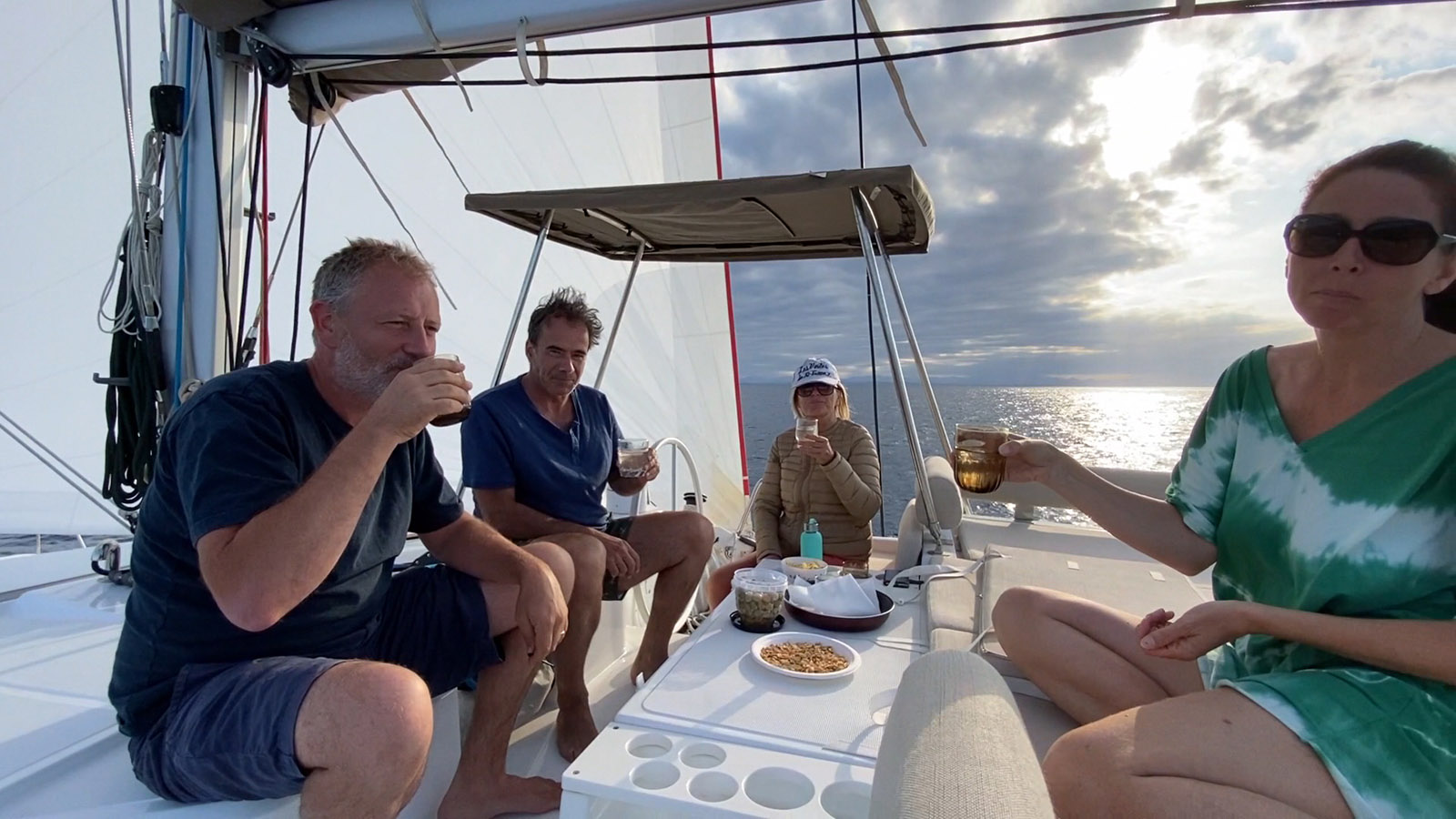
Having a flybridge means that the boom is higher, and the mainsail area reduced... but the conviviality this creates is something else!
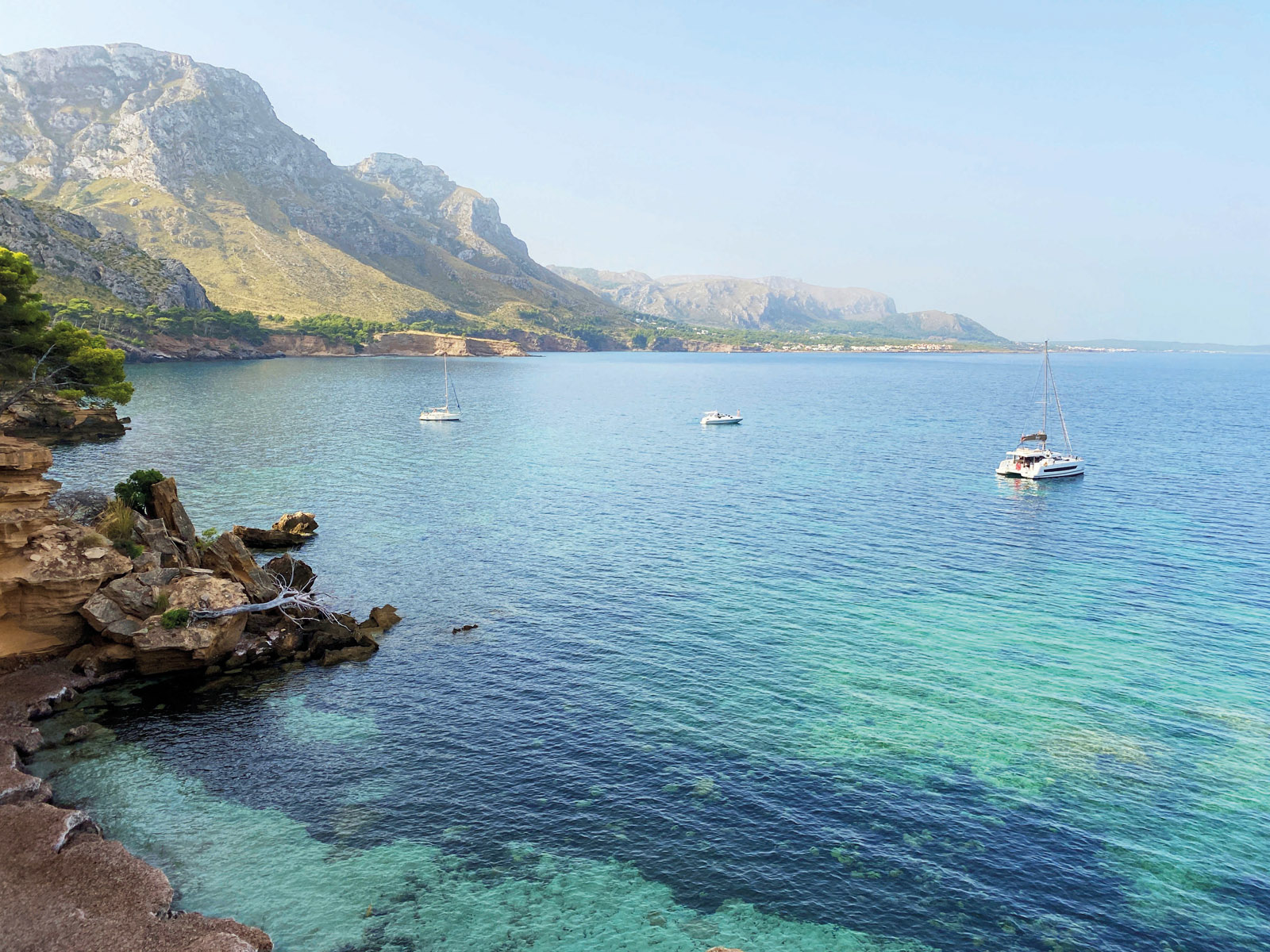
Dream anchorage in Menorca
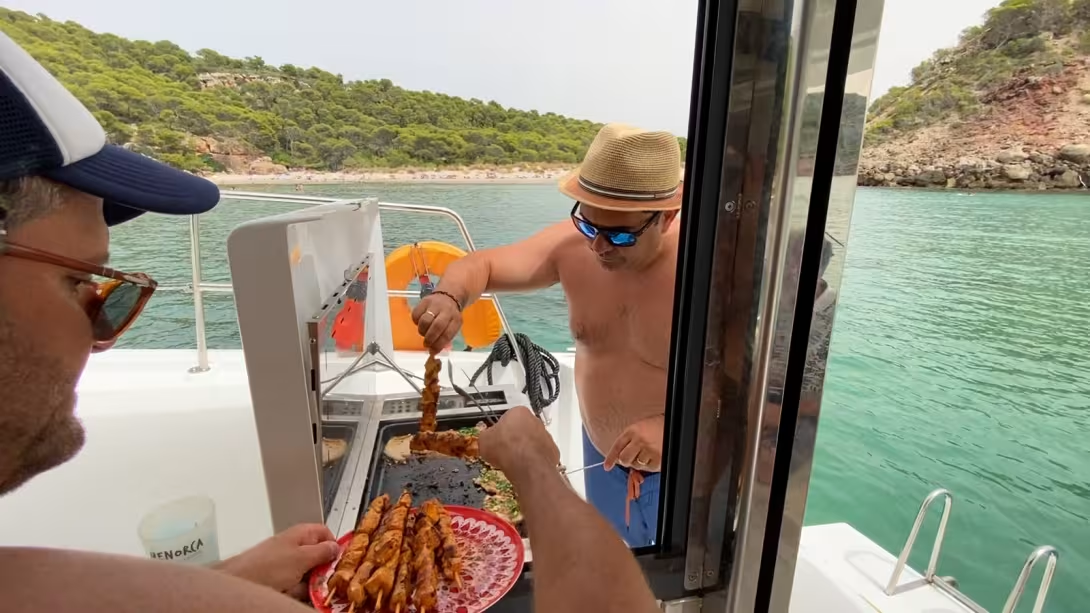
Having the dinghy allowed us to go ashore and enjoy Fornells, a very charming town with its white fi- shermen’s cottages. After a peaceful night, we decided to head west. The low northeasterly swell combined with a northerly wind expected in the afternoon limited access to most of the anchorages; fortunately, the large cove of Algaiarens is more or less protected, especially its easternmost side, where we managed to find a nice spot with less than 15 feet (four meters) of water beneath the keels. Here it was, our first dream anchorage! Paul had buddies vacationing on the island. A meet- up was arranged, and with wives and children included, they numbered 12 for lunch - that they promised to prepare. The perfect opportunity to let them know that the Bali has a plancha grill... With the dinghy, I ferried all our guests’ stuff from the beach - they decided, unanimously, to join Pretty Bali 11 by swimming. There were now 19 of us on board, and the boys took charge of the precious plancha. Everyone settled where they wanted: groups formed on the flybridge, on the bow and of course in the open saloon. We set up the two forward tables but, in the end, they were not used. At no time did we feel cramped. The Catspace was so comfortable with this many visitors that we decided to sail all together to Ciutadella, some 15 miles away. The north-north-east wind had picked up to 15 knots and the sky was laden with ochre sand from the Sahara. A few drops of rain didn’t even manage to cool us down. Despite the number of passengers, maneuvering was not a problem. We were quickly under full main and gennaker: the GPS, despite our impressive load, maintained an average of 7 knots. The double-purchase mainsheet allows for easily adjusting the main – the boom angle, but also the twist in the leech. On arrival in Ciutadella, we requested a slip – but in vain, everything was reserved. We unloaded all our guests on the fuel dock. The attendant was a bit surprised to see so many people disembarking on his pontoon. A few minutes later, while I was filling up, violent gusts of hot air suddenly swept through the town. In a few seconds, the temperature went from 82 to 104°F (28 to 40°C). The Sirocco, or dry tornado according to local explanations, was a phenomenon that seemed to be a consequence of the famous heat dome which was hanging over the southern part of the western Mediterranean. This harsh weather somewhat disturbed the calm of the urban anchorage of Cala Platja Gran - many boats had chased each other in, and then found themselves alongside one another. The forecast, until then very calm, now announced potential gusts exceeding 20 knots from all sectors: not good when you’re trying to anchor! The prevailing wind is still from the east, so we chose the spot of S’Aigua Dolça at nightfall, which is well open to the west in case a hasty departure was called for. It would have been impossible or almost impossible to go ashore - it didn’t matter, Norbert had nominated himself as master chef on board. In the end, apart from the fact that we were forced to re-anchor around midnight due to an anarchic windshift, the night was pretty peaceful. The next day, we opted for a real day of relaxation/swimming. We chose Platja de Son Saura: the anchorage area is wide and relatively wild. The turquoise water is beautiful, but we weren’t alone - some of Paul’s friends joined us with a mo- torboat and took the children to discover the small creeks nearby on the south coast.
 |
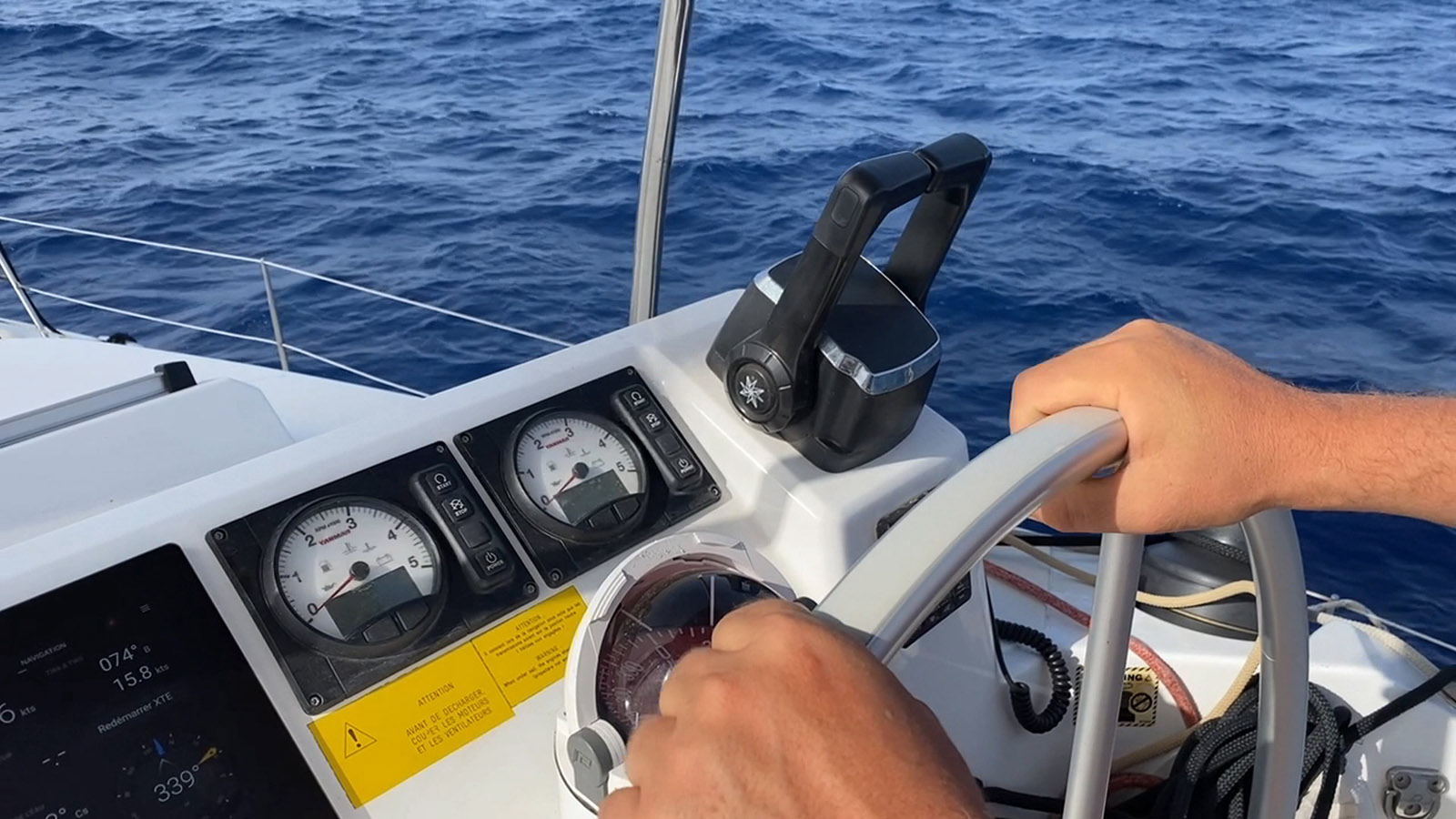 |
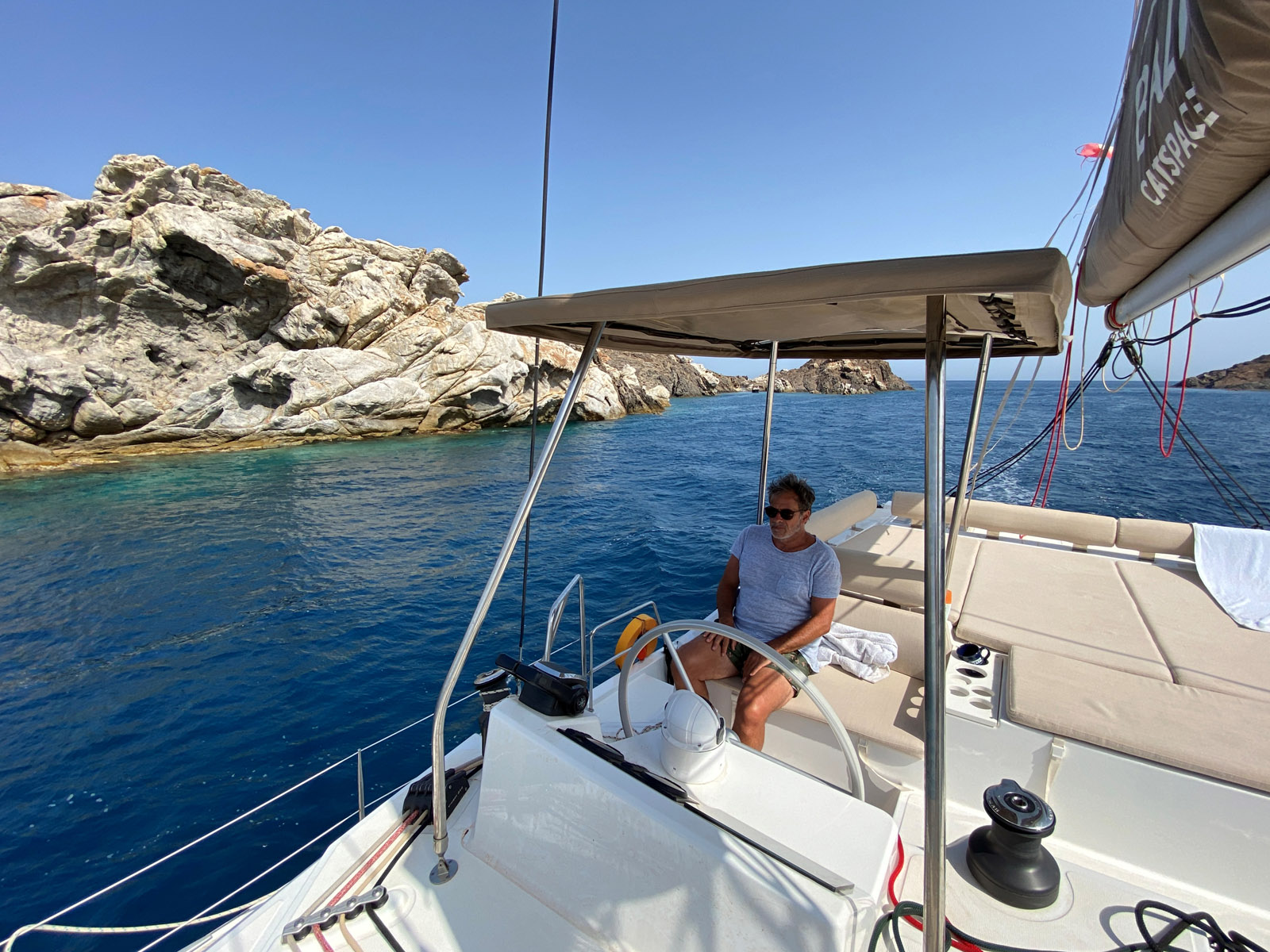
The sail maneuvering and helm station offers an excellent view over the water - except when the gennaker is well sheeted-in.
The Mallorcan cliffs
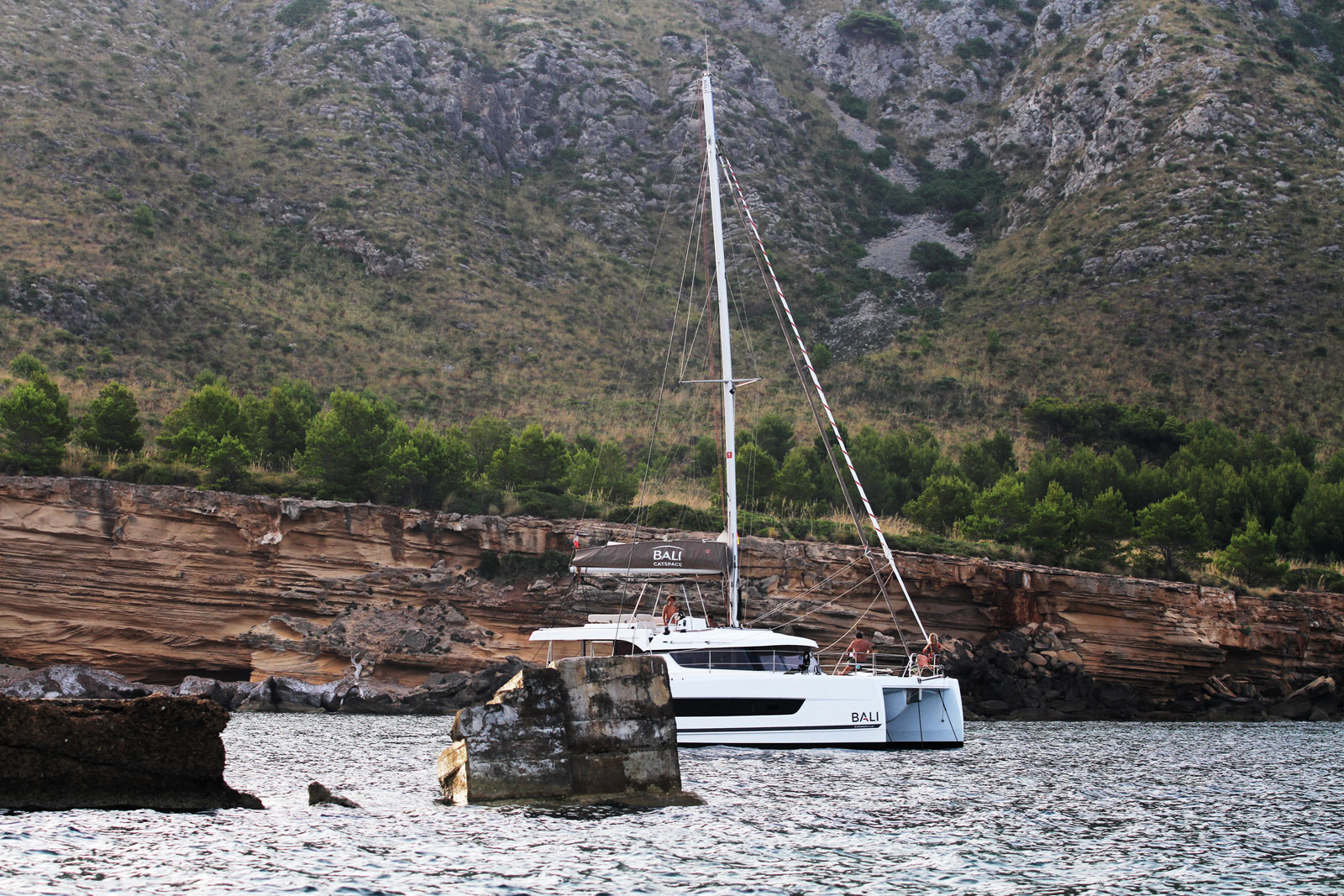
By 6 p.m., the sky was back to its ochre-grey color and the few knots of thermal wind from the south had died away. A north-easterly wind was forecasted for the evening, easing off during the night. We set sail again, heading for Mallorca. I was aiming for Alcudia Bay, where I know there’s good holding as long as the wind isn’t north-westerly. Our 30-mile passage began under motor before switching to sail. As we approached the imposing Cape Farrutx, a bit of a sea kicked up, and the wind increased. The conditions became much more clement as soon as the capes were rounded. At midnight, the half-demolished jetty of the Es Caló anchorage appeared in my flashlight. The water was calm - even though a few williwaws came down without warning from the mountain ridges. A few boats that were anchored for the evening broke camp, leaving us practically alone. In the morning, I got up early to take pictures with the dinghy at sunrise - the sky was finally all blue! We then went ashore - I had promised the crew an incredible anchorage, and I believe they were not disappointed! This small trip led us to meet a guard from the marine park and to walk on an extraordinary path, lined with chamaerops humilis (European fan palms) under the pine trees. Later in the day, we took advantage of a 12 to 15 knot thermal breeze to cross the large bay of Alcudia; it was time to take pictures under sail. Once again, from the moment the boat was let loose under gennaker, the performance of the Bali Catspace, considering its volume and its windage, was surprising - in a good way! On the other hand, sailing under self-tacking jib was understandably less convincing – you’d really need conditions with 15 knots true to exceed 5 knots at 50/55° off the wind. I’d better make it clear, though, that our mainsail wasn’t square-topped, and that our props were fixed three-bladers. We anchored for the afternoon in the lee of Isla Alcanada, just north-east of Alcudia. The anchorage wasn’t in our pilot guide, but was very pleasant all the same. Willy met up with his friend Joseph, on vacation on the island with his mother - both of them spent a few hours on board with us, while Paul tried “wingsurfing” – though wasn’t accomplished enough yet to fly. With the wingfoil deflated, it easily finds its place in the port forward locker, along with the forward cockpit tables. On the starboard side, the water hose, some mooring lines and all the fenders are stored without any difficulty. The only drawback is that there are no steps or a ladder to easily access the bottom of these impressive storage volumes. Late afternoon, we went around Cape del Pinar to anchor off Pollença. The bay offers excellent shelter, especially in the north-east end of the harbor. We took advantage of the evening to treat ourselves to dinner at a restaurant. Isaac, six years old, spent his time playing in the playpark on the beach. Once back on board, the lack of wind translated into an unusual heat. Some of us began our night under the stars, others in the saloon – the cabins were less popular! Note that in the starboard forward cabin, the alignment of the doors means that the bathroom door is not closed, cabin door can be blocked. The only solution is then to go through the hatch if nobody is in the cabin to open it for you...
The next morning, we proceeded to fill up with fresh water - the return trip to France was now on the horizon, especially as the weather forecast announced a weak to moderate south-easterly flow that would be particularly favorable. Maud took advantage of the showers in the port to (finally) enjoy properly shampooing her hair. The crew went for a stroll in town, but it was already very hot. Norbert had an appointment with a couple of friends, and they came on board at the dock, before we anchored again in the bay. A little later, the dinghy made its last rotation. Our final anchorage in Mallorca was to be at Isla de Formentor. The area had had mooring buoys installed not so long ago, but nowadays all visitors anchor. By 4 pm, we were bound for the impressive Cape Fromentor before coming round onto a northerly a course.
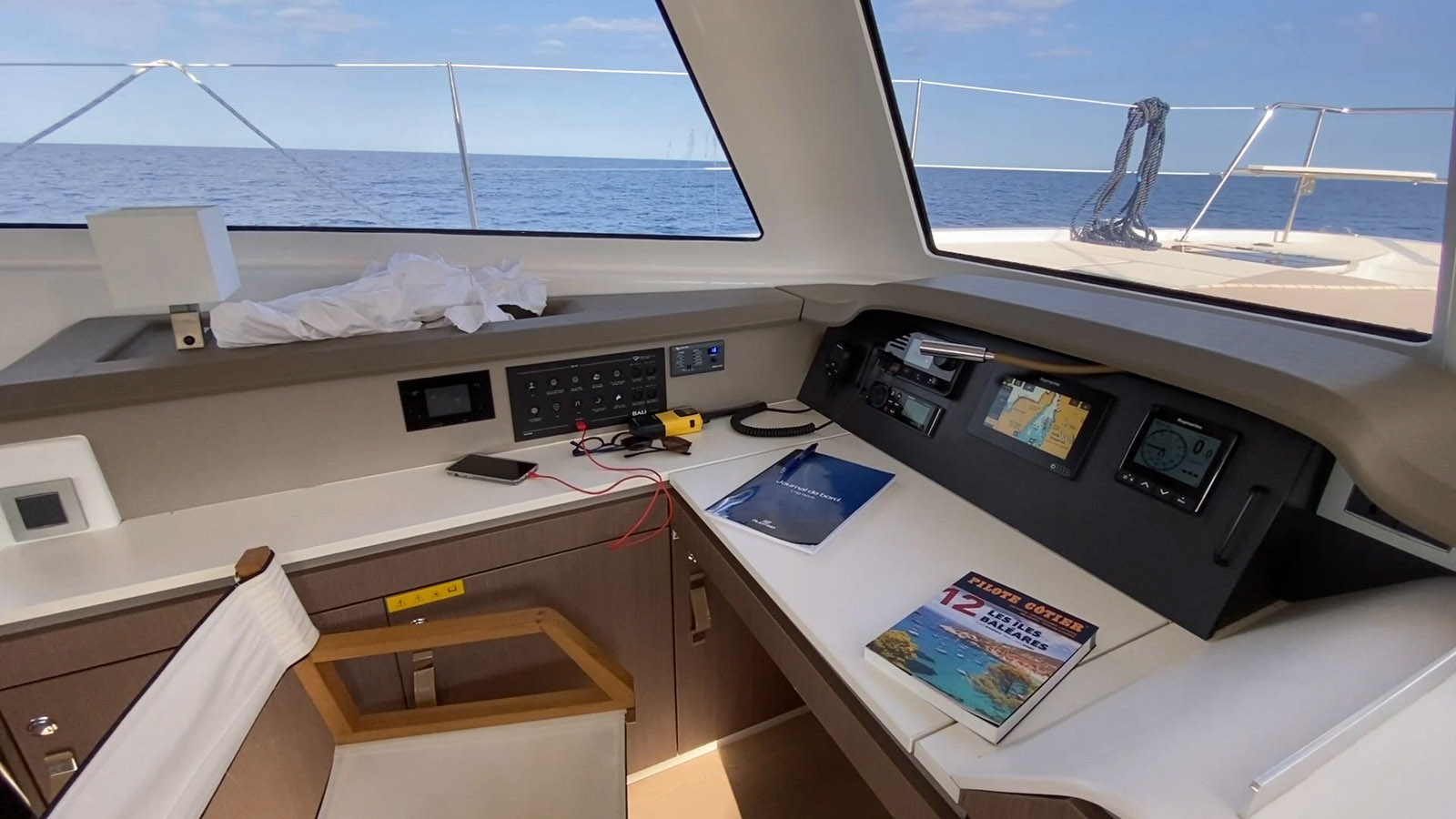
The chart table, facing forward, can be used as an office with a sea view; it also benefits from the coolness offered by the large opening forehatch.
We weren’t alone off Barcelona...
The south-east wind had kicked in: once again, the gennaker was out. The peaks of Mallorca were gradually disappearing over the horizon. This last passage was starting well - good wind, nice sea. The sunset was accompanied by the disappearance of the breeze: the end of the peace and quiet - the engines were fired up again! We picked up the same watches as on the night of our outward journey. But contrary to the first par- ticularly calm crossing, our return is much more challenging: everywhere, lights wandered on the horizon. The AIS allowed us to anticipate most of the trajectories but a sailboat on our starboard side came so close that Paul woke me up to make sure of the right maneuver. Illuminating each other with flashlights, we avoided a collision - sometimes there are other people out there! Quickly, the orange glow of Barcelona appeared over the port bow. At dawn, we closed the coast of Costa Brava at Tossa de Mar.
The landscape is magnificent. Early in the morning, the water was as calm as it was little-frequented, except by a few fishermen. And approaching the big seaside resorts such as Palamos, we were surprised by the effervescence. The calas are beautiful but... already crowded, ashore and in the water. We conti- nued our journey under motor, skipping past the capes and weaving between the few islets. We had a short lunch/swimming break at Cala S’Antiga, south of the Medes Islands, and then in the afternoon, the sea breeze picked up, ensuring us a nice sail north, though time was running short if we wanted to arrive before nightfall in Canet. Rosas, Cadaques and Portlligat all evoke Salvador Dali and would easily justify a few more days of cruising. The same goes for the caves of Cap de Creus - we had just enough time to recognize the one we stopped at on the way out. And just before the sun disappeared behind the first foothills of the Pyrenees, Pretty Bali 11 was moored up in port, closing a long loop of 400 nautical miles of wake...
 |
 |
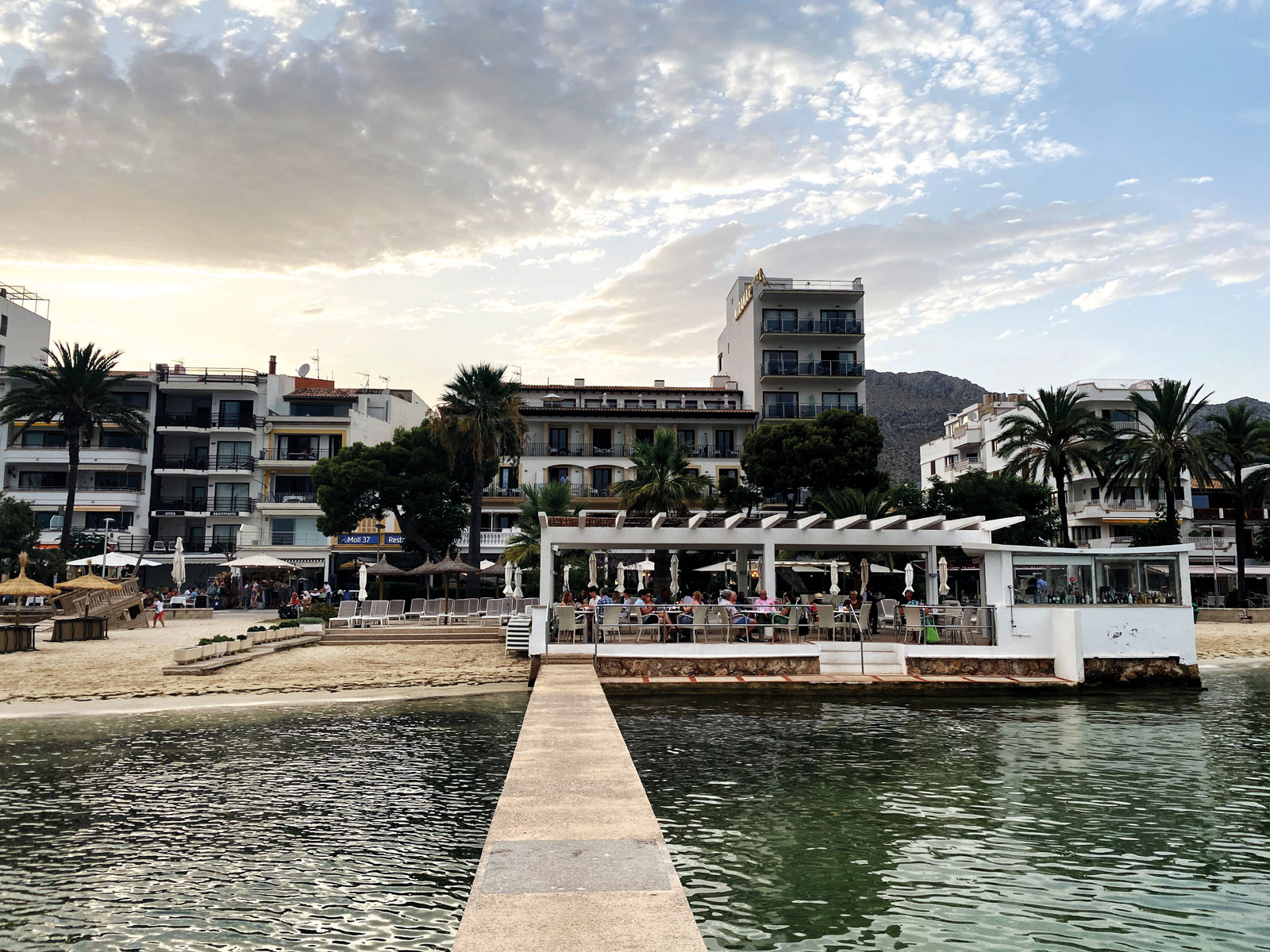
Pollença is a very pleasant coastal town, and in addition to a fairly large harbor, there is a huge anchorage area.
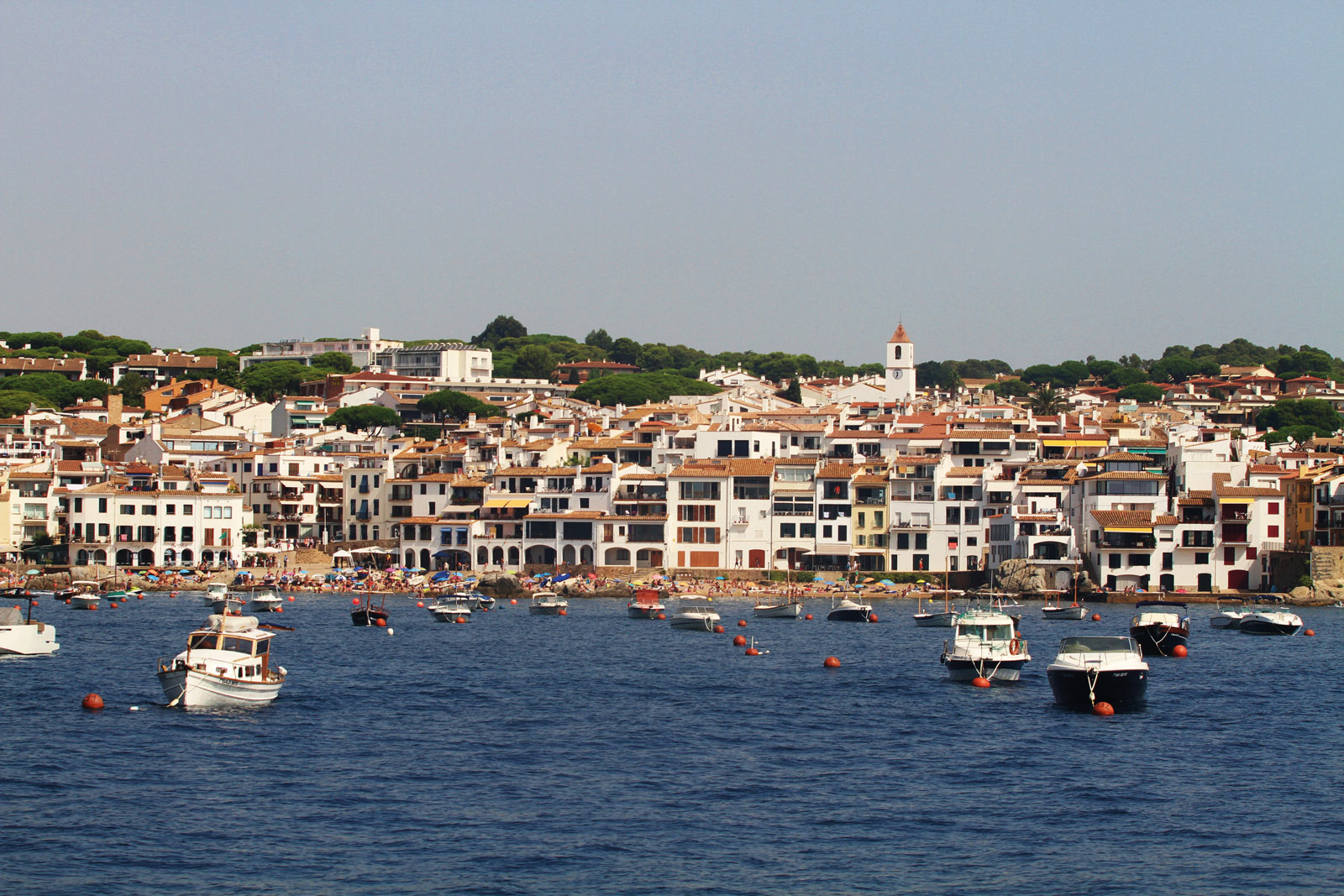
In the heart of the Costa Brava, Calella de Palafrugell is a surprisingly well-preserved and typical village with its white fishermen’s cottages and their fishing boats.
The Pluses
+ Very good performance considering the standard of comfort
+ General ergonomics
+ Ease of handling
+ Incredible capacity for its size
+ Lots of storage space
+Option for more powerful 40 HP engines
The Minuses
- Hydraulic steering transmission gives little feel
- No installation plan for the exterior upholstery
- Insufficient soundproofing of the engine compartments Kinetics of the doors in the forecabin need reviewing
- Waterpump location – close to the head of those sleeping in the starboard aft cabin
- No ladder or steps in forepeaks
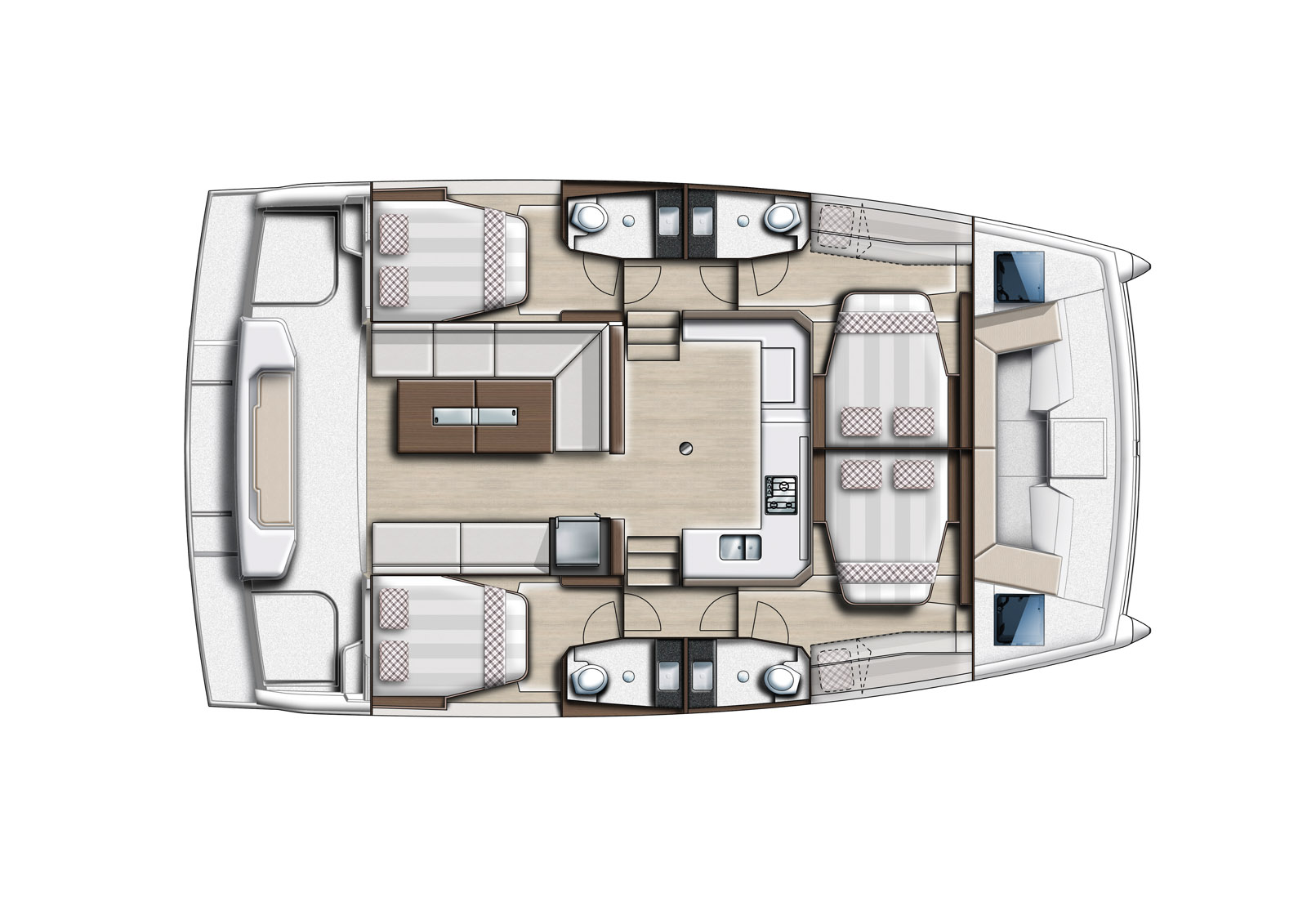
TECHNICAL SPECIFICATIONS :
Builder: Bali Catamarans
Designer: Olivier Poncin
Interior architect: Samer Lasta
Length: 39’6” (12.05 m)
Beam: 21’6” (6.56 m)
Draft: 3’7” (1.10 m)
Light displacement: 20,300 lbs (9.2 t)
Maximum displacement: 28,200 lbs (12.8 t)
Mainsail: 527 / 560 sq ft (49 m2/52 m2) in square-topped version
Self-tacking solent: 323 sq ft (30 m2)
Code 0: 560 sq ft (52 m2)
Asymmetrical spinnaker (option): 970 sq ft (90 m2)
Air draft: 59’10” (18.23 m)
Construction: foam/glass/polyester sandwich (infusion process), vinylester on the underwater hull. Sandwich deck in RTM injection molding.
Engines: Yanmar 2 x 19 or 2 x 30 HP, with saildrives and fixed, three-bladed propellers.
Water capacity: 2 x 92 US gal (2 x 350 l)
Fuel: 2 x 53 US gal (2 x 200 l) Holding tank: 14.5 US gal (55 l) Alternators: 2 x 125 A Batteries: 2 x 130 Ah Fridge-freezer: 9.4 cu ft (265 l) Base Price:
- 3-cabin version: € 314,100 ex-tax - 4-cabin version: € 309,500 ex-tax
Main options in € ex-tax :
- Excellence Pack: 49,200
- Yanmar 40 HP engines instead of 19 HP: 5,260 - Square-topped mainsail with lazy bag and lazy jacks: 5,040
- Code 0 complete with anti-twist cable and sheet: 5,130
- Code 0 fittings (bowsprit, furler, etc): 5,780
- Folding propellers: 2,150
- Solar panels 200 W: 2,320
- Watermaker 28 US gal/h (105 l/h): 14,270
- Delivery, mast-stepping, preparation and handover in Tunisia: 10,210
 |
 |
 |